Investing in Self-Improvement: The ROI of Personal Choices

Daily writing prompt
What is your favorite form of physical exercise?

In today’s fast-paced world, investing in self-improvement has become more important than ever. Personal development is not just about gaining new skills or knowledge; it’s about enhancing the quality of your life and achieving your goals. This blog post explores the concept of self-improvement as an investment and how even small personal choices can yield substantial returns over time.

Photo by Tima Miroshnichenko on Pexels.com

The Power of Personal Investment

Investing in yourself is one of the most rewarding decisions you can make. It encompasses learning new skills, adopting healthier habits, and expanding your mindset. By prioritizing self-improvement, you can unlock a range of benefits, from increased confidence to better career prospects.

One of the most significant advantages of personal investment is the boost in self-confidence. When you commit to improving yourself, you develop a sense of accomplishment and self-worth. This newfound confidence can help you tackle challenges and seize opportunities with determination and resilience.

In addition to self-confidence, investing in personal growth can enhance your career. Acquiring new skills and expanding your knowledge base makes you more valuable in the job market. Employers are always on the lookout for individuals who are committed to continuous improvement.

Setting Clear Goals and Intentions

The first step in investing in self-improvement is setting clear goals and intentions. Without a roadmap, it’s easy to get lost or distracted. Begin by identifying areas of your life you’d like to improve and establish specific, achievable objectives.

Clear goals give you a sense of direction and purpose. They provide you with motivation and a framework to measure your progress. By setting intentions, you are more likely to stay focused and committed to your self-improvement journey.

To set effective goals, use the SMART criteria—Specific, Measurable, Achievable, Relevant, and Time-bound. This approach ensures that your goals are realistic and attainable, making it easier to track progress and celebrate successes along the way.

Cultivating a Growth Mindset

A growth mindset is essential for self-improvement. It involves believing that your abilities and intelligence can be developed through dedication and hard work. This perspective fosters a love of learning and resilience in the face of challenges.

Having a growth mindset allows you to view setbacks as opportunities for growth rather than failures. It encourages you to take risks and step outside your comfort zone, leading to personal and professional development.

Cultivating a growth mindset involves being open to feedback, learning from mistakes, and seeking new experiences. By adopting this mindset, you create a foundation for continuous self-improvement and lifelong learning.

Building Strong Habits

Habits play a crucial role in self-improvement. They are the building blocks of change and can significantly impact your life. Developing positive habits requires discipline, patience, and consistency.

Start by identifying habits that align with your self-improvement goals. Whether it’s exercising regularly, reading daily, or practicing mindfulness, focus on incorporating these habits into your routine.

Building strong habits takes time and effort, but the rewards are well worth it. Over time, these habits become second nature, contributing to your overall well-being and success.

The Role of Education and Skill Development

Education and skill development are integral components of self-improvement. They open doors to new opportunities and help you stay competitive in a rapidly changing world. Whether through formal education or self-directed learning, acquiring new skills is a valuable investment.

Consider enrolling in courses, attending workshops, or pursuing certifications to enhance your knowledge and abilities. These investments can lead to career advancement, increased earning potential, and personal fulfillment.

Remember, learning doesn’t have to be limited to your professional life. Explore hobbies and interests that bring you joy and satisfaction. This holistic approach to education enriches your life and contributes to your overall development.

Prioritizing Health and Well-being

Your health and well-being are fundamental to personal growth. Without a strong foundation of physical and mental health, it’s challenging to achieve your goals and live life to the fullest.

Prioritize self-care by adopting healthy habits such as regular exercise, balanced nutrition, and adequate sleep. These practices boost your energy levels, improve your mood, and enhance your cognitive function.

Mental well-being is equally important. Practice mindfulness, seek support when needed, and engage in activities that promote relaxation and stress reduction. A healthy mind is better equipped to handle life’s challenges and maintain focus on self-improvement.

Building Meaningful Relationships

Relationships are a key aspect of personal development. Surrounding yourself with supportive, positive individuals can inspire and motivate you to grow. Invest time in nurturing meaningful connections with family, friends, and mentors.

Strong relationships provide emotional support, guidance, and encouragement. They offer different perspectives and insights that can enrich your self-improvement journey. By cultivating a network of positive influences, you create an environment conducive to personal growth.

Remember, meaningful relationships are built on trust, communication, and mutual respect. Be open, honest, and empathetic in your interactions to foster genuine connections.

Financial Literacy and Stability

Financial literacy and stability are essential components of personal growth. Understanding how to manage your finances empowers you to make informed decisions and plan for the future.

Invest time in learning about budgeting, saving, and investing. These skills provide you with the freedom and flexibility to pursue your self-improvement goals without financial stress.

Achieving financial stability enables you to invest in experiences and opportunities that enhance your personal development. Whether it’s further education, travel, or hobbies, having control over your finances allows you to make choices that align with your aspirations.

Leveraging Technology for Self-Improvement

Technology offers a wealth of resources to support your self-improvement efforts. From online courses to productivity apps, technology can enhance your learning experience and streamline your personal development.

Explore platforms that offer courses aligned with your goals and interests. Use productivity tools to manage your time and tasks effectively. Leverage social media and online communities to connect with like-minded individuals and share experiences.

While technology can be a powerful ally, it’s essential to use it mindfully. Set boundaries to prevent digital overload and ensure that your tech usage contributes positively to your self-improvement.

Dental Implants in Richland WA and Self-Care

Investing in self-care extends beyond daily habits—it includes taking care of your dental health. For instance, seeking dental implants in Richland WA can significantly enhance your quality of life if you’re dealing with missing teeth. Good oral health is vital for overall well-being and confidence, allowing you to focus more on your self-improvement goals.

Dental implants provide a permanent solution that looks and feels natural, improving your smile and boosting your self-esteem. This investment in your health can lead to better social and professional interactions, contributing positively to your self-improvement efforts.

Measuring Your Progress and Celebrating Success

Tracking your progress is crucial for staying motivated and achieving your self-improvement goals. Regularly evaluate your growth and make adjustments as needed. Celebrate your successes, both big and small, to maintain momentum and build confidence.

Set aside time to reflect on your achievements and the lessons learned along the way. This practice reinforces your commitment to self-improvement and helps you stay focused on future goals.

Remember, self-improvement is a lifelong journey. Be patient with yourself and acknowledge the progress you’ve made, no matter how incremental it may seem.

Conclusion

Investing in self-improvement is one of the most rewarding choices you can make. By prioritizing personal development, you unlock a lifetime of returns in the form of confidence, success, and fulfillment. Whether it’s through setting goals, building habits, or seeking knowledge, the path to self-improvement is filled with opportunities for growth.

Take action today and invest in yourself. Whether it’s enrolling in a course, joining a community, or starting a new habit, every step you take brings you closer to realizing your full potential. Remember, the best investment you can make is in your own future.

Said “I love you” more -Positive thinking

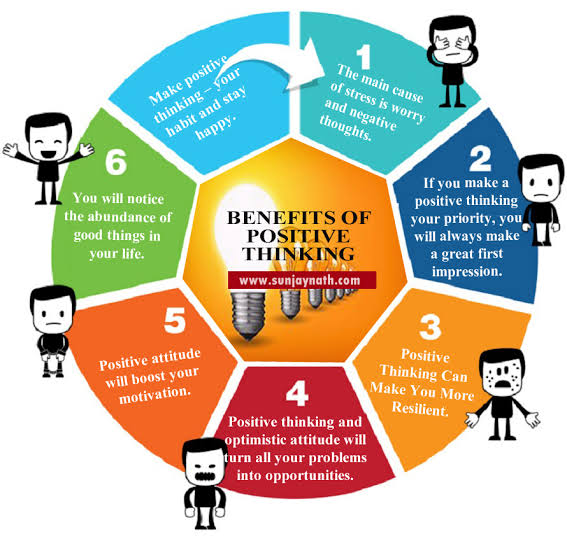
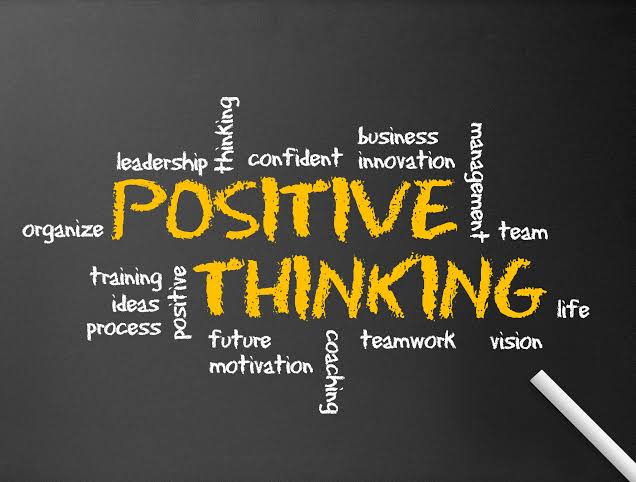
Positive thinking refers to a belief or mental attitude which makes us think that good things will happen eventually and our efforts will pay off sooner or later. It is the opposite of negative thinking which makes our mind full of stress and fear. Thus, an essay on positive thinking will show us how it reinforces thoughts like optimism and hope and works wonders.

Benefits of Positive Thinking

Let it be clear that positive thinking does not mean you do not notice the bad things in life. It means you try to find a solution in a productive way instead of whining about it. There are many benefits of positive thinking.

The first one is better health. Negative thinking gives rise to anxiety, stress, frustration and more. However, positive thinking helps you avoid all this and focus on staying healthy and doing better in life.

Further, it is essential for us to fight depression which positive thinking helps with. Similarly, it will also help us to relieve stress. Positive thinking overwhelms stress and it will allow you to get rid of stress.

As a result, positive thinking helps you live longer. It is because you will be free from diseases that form due to stress, anxiety and more. Moreover, it is also the key to success. Meaning to say, success becomes easier when you don’t bash yourself up.

Similarly, it also gives us more confidence. It boosts our self-esteem and helps in becoming more confident and self-assured. Therefore, we must certainly adopt positive thinking to make the most of our lives.

How to Build a Positive Thinking

There are many ways through which we can build positive thinking. To begin with, we must inculcate the habit of reading motivational and inspiring stories of people who are successful.

All this will help in motivating and inspiring you and showing you the right path. Moreover, it is important to never let negative thoughts thrive in your mind and work towards putting end to this habit.

You can do so by replacing your negative thoughts with constructive and positive reviews. Start to pay attention to your ideas and don’t pay heed to negative thoughts. Further, it is helpful to use affirmations.

These positive statements will truly sink into your subconscious mind and guide you to take better action. It will also help in visualising your dreams and getting the right means to achieve them fast.

Finally, always stay guard and gatekeep your mind to make important changes in life. In other words, do not be afraid to take actions. Keep yourself busy and do different things to avoid becoming cynical and remaining positive.

Conclusion of the Essay on Positive Thinking

To conclude, we must change our attitude and believe that we will succeed one day. Moreover, we also need to implement positive thinking techniques which will help us learn from our failures and stay focused. As positive thinking plays an essential role in our lives, we must make sure to adopt in our lives.

Positive thinking helps you stand back up again when you are knocked down by bad luck or negativity.

. —Tom Laurie

TIME MANAGEMENT

Time management is critical for personal and professional success. Time management refers to the ability to make the best use of one’s time. It is stated that if you master this approach, you can do everything in life, despite the fact that effective time management appears to be as simple as it is difficult. Effective time management necessitates far too much work. Self-discipline is essential for effective time management. When we think of time management, we usually think of personal time management, which is loosely described as managing our time so that we may spend less time doing the things we need to do and more time doing the things we want to do. As a result, time management is frequently thought of or presented as a set of time management skills; the premise is that if we acquire these abilities, we will be more organized, efficient, and happy.

Importance of time management:

Good productivity: Once you’ve devised a strategy, all you have to do now is put it into action. There’s no need to waste time on things you don’t have to do at work; instead, focus on what you need to do next to boost productivity. However, keep in mind that this will only work if you complete your task on time; delaying will have a negative impact on your productivity.

Less Stress: You may become stressed if you do not complete your studies, assignments, or projects. Taking care of one’s mental health is critical for everyone, and students’ poor performance is typically a result of increased stress and anxiety caused by the pressures of academics. Effective time management can help you relieve mental stress while also increasing your confidence and vitality. Time management assists you in completing activities in less time and with less resources. It’s also a terrific approach to relieve stress in this way.

Health Advantages: Your attempts to manage your time have an impact on your health as well. You won’t have to stay up late to complete your responsibilities if you manage your time efficiently. Sleep deprivation causes fatigue, which might disrupt your day’s plans. A good night’s sleep is necessary for your brain and body to replenish, which benefits your health and energy levels.

Syllabus Cramming: Not finishing their course on time is a common issue among students. As a result, they cram all of the chapters right before the tests, resulting in poorer than expected results. Students who use effective time management skills can not only finish their coursework on time, but also have time left over for revisions.
Extracurricular Activities Have More Time: When you have a set timetable for all of your duties for the day, you can estimate how much time you’ll have left once you’ve completed them all. You can organize your tasks so that you have more time to do what you enjoy. This can include activities such as drawing, painting, singing, dancing, photography, and so on, or you can go cycling or jogging to get some fresh air.

Conclusion: Time management is important for everyone, whether you are a student, a housewife, a businessperson, or a working professional. If you are unable to effectively manage your time, you will fall behind on your goals.

Importants of Chess in life

You already know a lot of ways you can improve your brain health. You can exercise to be more productive, eat better brain food, and make sure you get enough sleep by falling asleep. And you can keep your brain in good shape with puzzles and even learning another language.

But what about chess?

It is known worldwide, and it is often associated with tact and ingenuity. But does chess make you more creative?

If you are already a chess lover, the following article should make you feel good about your favorite game. If you are not present, this article may just get you started. Here are 10 ways that chess can make you smarter.

1. Chess can increase your IQ
Chess has always had an image problem, seen as a game for brainiacs and people with high IQ already. So there has been a bit of a chicken and egg situation: Do smart people tend to tackle chess, or does chess make them smarter?

At least one study has shown that moving those knights and rooks around can actually increase the level of human intelligence. In reviewing the educational benefits of chess, Robert Ferguson describes a study of 4,000 Venezuelan students that made a significant increase in IQ schools for boys and girls after four months of teaching chess. Other studies have confirmed these effects of skills transfer.

2. It helps prevent Alzheimer’s disease
Because the brain works like a muscle, it needs to exercise like any bicep or quad in order to stay healthy and prevent injury. Review of the number of key subjects received

A study published in The New England Journal of Medicine found that more than 75 people who engage in brainstorming activities such as chess are less likely to develop dementia than their peers who play the game. As unused tissue is depleted, Dr. Robert Freidland, one of the authors of the study, found that unused brain tissue leads to loss of brain power. So that has more reason to play chess before you turn 75.

These results are confirmed by a major review concluding that chess is a protective factor in dementia.

3. It uses both sides of the brain
In a German study, researchers showed chess experts and novices simple geometric shapes and positions in chess and measured the reaction of subjects to self-identification. They expected to find that the left brain specialist was very active, but they did not expect the right part of the brain to do the same.

The results of the study suggested that novice and experts had the same moments of response in simple situations, but experts were using both sides of their brains to quickly answer chess position questions, and novices were absent.

4. Increase your intelligence
Since the right hemisphere of the brain is responsible for art, it should come as no surprise that activating the right side of your brain helps improve your creative side. Specifically, chess magnifies the real thing.

Robert Ferguson’s four-year study included students from Grades 7 to 9 playing chess, using computers, or doing other activities once a week for 32 weeks to see which activity promoted the greatest growth in artistic thought. The chess team received high marks in all art forms, which is their main source of profit.

5. Improves your memory
Most critical chess players know — at least anecdotally — that playing chess improves your memory. Being a good player means remembering how your opponent has worked in the past and remembering the steps that helped you win before.

But there is hard evidence to support an anecdotal experience. In a two-year study in 1985, young students who were given regular opportunities to play chess increased their grades in all subjects, and their teachers saw better memory and better planning skills in children. The same study made Pennsylvania’s sixth graders get the same results. Even students who have never played chess have improved their memory and speaking skills after playing.

6. Increases problem-solving skills
The game of chess is like one big puzzle that needs to be solved, and solved on a plane, because your enemy is constantly changing boundaries. About 450 fifth graders were divided into three groups in a 1992 study conducted in New Brunswick. Group A was the control group and passed the traditional mathematics curriculum. Group B added numbers with chess orders after first grade, and Group C started chess in first grade. In the standard test, Group C scores rose to 81.2% from 62% and surpassed Group A by 21.46%.

7. Improves reading skills
In a landmark study of 1991, Dr. Stuart Margulies studied the learning style of 53 elementary school students who participated in the chess program and tested them compared to non-chess students in the region and nationally. You have found clear results that playing chess has led to an increase in learning. In a district where middle school students are tested below the national average, children from the region who played the game were tested on it.

8. Improves concentration
The masters of chess may come out as scattered nutty professors, but the fact is that their antics during the games are often the result of intense torture demanded and developed for their players. Looking away or thinking of something else for even a moment can lead to losing the game, as the opponent does not have to tell you how to move if you are not careful. Numerous studies by students in the U.S., Russia, China, and elsewhere have repeatedly shown that young people’s ability to concentrate is sharpened by chess.

[See our great guide to find other ways to improve your focus.]

9. It grows neuron dendrites
Dendrites are tree-like branches that move signals from other neural cells to the neurons attached to them. Think of them as horns picking signals from other brain cells. The more antennas you have and the bigger, the more signals you pick up.

Learning a new skill like playing chess causes dendrites to grow. But that growth does not stop once you have learned the game; interacting with people in challenging activities also increases the growth of dendrite, and chess is a good example.

10. Teaches planning and foresight
Having teens play chess can save their lives. It goes like this: one of the last parts of the brain to develop the prefrontal cortex, the area of the brain responsible for planning, judgment, and self-control. So teens are not scientifically mature until this part grows up.

Strategic games like chess can stimulate the development of the cerebral cortex and help them make better decisions in all areas of life, perhaps preventing them from making stupid, dangerous choices related to youth.

So, yes, there is some good evidence to suggest that playing chess can improve your brain and improve your cognitive skills. If you are interested in other ways to improve your ability, intelligence, and brain health, keep checking EDUindex.

How & What Mindset build a better world?.

As a general rule, it’s more profitable to leverage your strengths than it is to fix your weaknesses.

This is especially true when we are talking about skills: focus on what you do well, and let someone else do the stuff that you struggle with.

There’s one huge exception to this general rule however: bad mindsets.

A bad mindset is not just any ordinary weakness, it is a criticalweakness that will hamstring your effectiveness if you don’t address it.

One example of an unhealthy mindset is the scarcity mindset. The scarcity mindset views things like wealth, success, and fame as something like a pie. There’s only so much to go around and if one person takes too big of a slice, everyone else gets less.

In this worldview, Bill Gates is inherently evil, regardless of how much good that he has done for society, regardless of how much he has helped others, both through his products and through his foundation. He’s evil because he took too big of a slice and didn’t leave enough for the rest of us.

To whatever extent you find yourself resenting rich and successful people, you have a scarcity mindset.

To whatever extent you find it difficult to be truly, genuinely happy for the success of others, you have a scarcity mindset.

The alternative to a scarcity mindset is an abundance mindset . The abundance mindset says that we can create more value for everyone. Instead of viewing wealth and success as a zero-sum game, we can create win-win situations where everyone comes out better than they were before.

If you have a scarcity mindset, you will find it hard to collaborate with others because their gains are your losses. If you have an abundance mindset you will readily collaborate with others because you recognize that you can create more value that way.

That phrase “create value” is crucial to the abundance mindset. Value, and thus wealth, doesn’t just exist, it can be created. We’re not limited to dividing up the pie we currently have. We can make the pie bigger. We can make new pieces.

In fact, if you really want to get ahead, the way to do so is not by looking out only for your interests, but the interests of others.

Instead of suspiciously hoarding all you have to offer until you see an opportunity to leverage it for profit, the best strategy is to be generous. Generous with your time, generous with your knowledge, generous with your skills.

If you really think hard about how exactly the people who are making a full-time living online are doing it, the simplest answer is generosity. They pour their time and energy into creating valuable content that helps people and they build a following of true fans — people who trust them and are grateful for their contributions. When they finally release a product, they have legions of eager customers.

I once heard Darren Rowse, the blogger behind Digital Photography school and a ProBlogger , describe his first product. It was an ebook called “31 Days to Build a Better Blog.” It wasn’t new material. He had already done a series on his blog called “31 Ways to Build a Better Blog” and just added a few things and repackaged it as an ebook.

Why would anyone want to buy something that was available online for free? One reason might be that they value the efficiency of having it all in one place so they don’t have to search through his archives when they want the info. One reason might be that people just like the thought of owning something.

But a surprising reason was revealed through several people who emailed him saying that they knew they could get the info for free, but bought the ebook anyway because it was the first opportunity they had to thank Darren for all he had done for them.

Think about that for a second. His product offered little in the way of new value, but customers happily bought because Darren had created such a surplus of value for them.

Counter-intuitiviley, one of the best strategies for getting ahead is to give generously.

The scarcity mindset is forced to always ask “what do I get from this transaction?” The abundance mindset is free to ask “what can I give in this transaction?”

A really interesting book that I read recently was called Secrets of The Millionaire Mind . This book very closely ties your ability to get rich to your mindset. The idea is that your thoughts and your feelings drive your actions, and your actions determine your results.

He says that people have a “financial thermostat.” Just like a house is set for a certain temperature, each person is programmed for a certain level of wealth. Just like the temperature in a house can fluctuate even with the thermostat on (the temperature outside the house might change rapidly or maybe someone leaves a window open), a persons level of wealth can fluctuate based on external circumstances. But as long as the thermostat is set to a certain level, that is where they will default back to in the long run.

The only way to become truly wealthy in his view is to reprogram the thermostat — to change your mindset as it relates to money.

You need to ditch the ways of thinking that are holding you back and embrace the ways of thinking that can move you forward.


So, have a abundance mindset and go forward in your life. Remember, it always the giver who gets benefits more then who charge for there givings.

See yaa..

Paradox…

A logically self contradicting statement is a paradox. Also known as antinomy. You can say it is a sentence that runs contrary to one’s expectations. Actually it’s just a smart mess. It does have valid reasoning but leads to a self contradictory or a logically unacceptable conclusion. It might seem absurd but is kind of the ultimate truth. That’s what makes it all the more interesting.

Let’s see some of the many interesting paradoxes that exist and try to understand them.

•Achilles and the tortoise 🐢🏃

One of the “greatest” there is. It was put forward by the Greek philosopher Zeno of Elea in the 5th century BC. It so happens that the great hero Achilles challenges a tortoise to a footrace. Being the hero that he is, he allows the tortoise a headstart of 500m. No doubt, when the race starts, Achilles is at a must faster speed than the tortoise such that by the time he has reached the 500m mark, the tortoise has only walked 50m further than him. When he has reached 555m mark, the tortoise has walked another 0.5m, then 0.25m, then 0.125 m and so on. It is a chain of such infinite small distances with the tortoise always moving forwards while Achilles always has to catch up. Now, logically, Achilles can never overtake the tortoise. Except, of course, intuitively he can overtake.

Don’t think of it in terms of distances and races but rather as an example of how finite value can always be divided an infinite number of times, no matter how small its divisions might become!

•Birthday paradox 🎉🎂

This is personal favourite. It is maths based by the way. Probability to be specific. You have already heard of this probably. It goes like this that in a group of 23 randomly selected people there is a 50% chance two of their birthdays match. Interesting? Wait. In a group of 367 random people there is a 100% possibility atleast two of their birthdays match. Sounds like such a small number. It counts as a paradox because we can’t handle such numbers.

•Crocodile paradox 🐊

A crocodile snatches a young boy from the riverbank. Pretty common situation right? Anyways, his mother pleads with the crocodile to return the boy. The crocodile being in a fun mood, wants the mother to guess if he will return the boy or not. Takes one guess to get the boy out safely. It looks simple – the mother guesses he will return the boy, if she is right she gets the boy, if she is wrong, the crocodile gets the boy. If she answers that the crocodile will not return him, however, we end up with a paradox!

If she is right and the crocodile never intended to return her child, then the crocodile has to return him but in doing so breaks his word and contradicts the mother’s answer. And if she is indeed wrong and the crocodile did intended to return the boy, the crocodile must then keep him even though he intended not to, thereby also breaking his word. It’s a brain twisting dilemma.

•Paradox of fiction 🎟️📕

Are you fixated with the harry potter characters? You ofcourse have a crush on the Marvel or DC comic characters. Oh or did you cry when Augustus died?

So here is the paradox. Point 1 People have emotional responses to characters, objects, events etc. which are fictitious. Point 2 In order to be emotionally moved, we must believe that these characters or events by no way exists in real. Point 3 No person who takes characters to be fictional at the same time believes that they are real. All three of these points one at a time can be true. If any two points are considered to be true then the third must be false or else produce a contradiction. There exist various proposed solutions to this paradox such as pretend theory or thought theory or illusion theory.

•The card paradox 🃏

This one is a little bit similar to the crocodile paradox. A little. So I say we have a card with us. On one side, the front side, “the sentence on the other side of this card is TRUE” written on it. You flip and “the sentence on the other side of this card is FALSE”. You take one as true and it leads to a paradox!

Thank you for reading. Have a nice day!🌼

What doesn’t kill you, makes you stronger!

What is Deliberate Practice?

Deliberate practice refers to a special type of practice that is purposeful and systematic. While regular practice might include mindless repetitions, deliberate practice requires focused attention and is conducted with the specific goal of improving performance.

The greatest challenge of deliberate practice is to remain focused. In the beginning, showing up and putting in your reps is the most important thing. But after a while we begin to carelessly overlook small errors and miss daily opportunities for improvement.

This is because the natural tendency of the human brain is to transform repeated behaviors into automatic habits. For example, when you first learned to tie your shoes you had to think carefully about each step of the process. Today, after many repetitions, your brain can perform this sequence automatically. The more we repeat a task the more mindless it becomes.

Mindless activity is the enemy of deliberate practice. The danger of practicing the same thing again and again is that progress becomes assumed. Too often, we assume we are getting better simply because we are gaining experience. In reality, we are merely reinforcing our current habits—not improving them.

Claiming that improvement requires attention and effort sounds logical enough. But what does deliberate practice actually look like in the real world

Deliberate practice always follows the same pattern: break the overall process down into parts, identify your weaknesses, test new strategies for each section, and then integrate your learning into the overall process.

Consider the following example:

Basketball: Consider the following example from Aubrey Daniels, “Player A shoots 200 practice shots, Player B shoots 50. The Player B retrieves his own shots, dribbles leisurely and takes several breaks to talk to friends. Player A has a colleague who retrieves the ball after each attempt. The colleague keeps a record of shots made. If the shot is missed the colleague records whether the miss was short, long, left or right and the shooter reviews the results after every 10 minutes of practice. To characterize their hour of practice as equal would hardly be accurate. Assuming this is typical of their practice routine and they are equally skilled at the start, which would you predict would be the better shooter after only 100 hours of practice?

The Unsung Hero of Deliberate Practice

Perhaps the greatest difference between deliberate practice and simple repetition is this: feedback. Anyone who has mastered the art of deliberate practice has developed methods for receiving continual feedback on their performance.

The Promise of Deliberate Practice

Humans have a remarkable capacity to improve their performance in nearly any area of life if they train in the correct way. This is easier said than done.

Deliberate practice is not a comfortable activity. It requires sustained effort and concentration. The people who master the art of deliberate practice are committed to being lifelong learners—always exploring and experimenting and refining.

Deliberate practice is not a magic pill, but if you can manage to maintain your focus and commitment, then the promise of deliberate practice is quite alluring: to get the most out of what you’ve got.

 A thing to remember always is that if you don’t climb the cliff you won’t ever be able to see the view from top up there all you can see would be a view from the ground and the key to climb that tree is only through practise, the longer you persist it the more you would grow in terms of success.

Everything is a state of mind: Conquer your mind or your mind will conquer you.

Vaishali Singh (Cheenu Singh Rathore)

Everything is possible, if you’re determined to achieve it at any cost (not by bad means, by genuine means only) if you can change your habits, you can change your life.

Never give up, its very natural if you have big dreams then you can fail many times in the process of reaching it, but visualise that day when you’ll get it. It will help you to stay focused and will improve your patience level.

Patience is one of the most important skill in the journey of life, I was a very impatient person in my past life. Although I am not that much patient, but I am trying my best to be the one.

In this particular post I wanna share my journey. I want to share what I have learned in the month of May and June.

It’s all started with a wish of launching my own PODCAST.

I started searching how can I launch my podcast, but I wasn’t getting a correct information, and I had no clue about how to get started, but I didn’t give up, since our childhood we have listened never give up, but sometimes we lose hope and give up very easily, instead of trying another methods, quitting seems more easy. But as they say “what comes easy won’t lasts long, what lasts long won’t come easy”. Although I had faith in all these saying, but to be honest at one point I also wanted to give up, it was my first attempt, I was googling the term podcast and how can I start one. Initially the results I got were not that satisfying, as my heartily wish was to launch my podcast on the world’s leading podcasting platform “APPLE PODCASTS” and “SPOTIFY”. But it seemed nearly impossible to do that, but I decided not to give up, and after doing some little changes in my life, a kind of miracle happened.

Within 3 days I posted my podcast on Spotify, and in less than a week my PODCAST was uploaded on Apple podcasts and from here my life was changed. I realised that not giving up is very necessary, at one point you’ll definitely be succeed in your work, whether it’s as easy as twitting something or as tough as editing a film.

These are some of the things I have learned and experienced very recently, I learned about the power of habits ( not the book), these habits are as follows:-

1. Don’t care about the world around around you, focus on yourself only.

2. Limit your social media usage don’t watch it too much, it roasts your brain, watch and learn some valuable content.

3. Eat clean, and what it means, eat clean means eat natural food and try to avoid processed and packed food items.

4. Do meditation regularly, also practice some yoga and do workout daily.

5. Read good stuff.

6. Drink plenty of water. Try to drink 3 glasses of water right after waking up. (Of your suitable temperature.)

7. Embrace the happiness as you’re alive and if you will noticed every single thing, only then you’ll realise how blessed you’re. In simple words be grateful have some gratitude, gratitude is not for every now and then, it’s for every single day.

8. Love yourself, love your family, love your God, love your surroundings, love this entire “UNIVERSE”.

9. Never give up, (“It doesn’t matter how slowly you go unless you don’t stop.” – Confucius. )

10. Don’t get tensed by your failures, failures are the proves, that you’ve tried something. After every failure you learn a way from which it can’t be done, failures are the best teachers of our lives. Every failure teaches us something. What we should remember is never giving up and learn from them, they make us more wise. “Failure is not opposite of success, it’s a part of success.”

11. DGAF about others, don’t let anybody destroy your peace of mind, there should be only one voice inside you and that voice should be your own voice. Detach yourself from those who are not good for you, the ones who want to make you feel inferior and also the ones who always talk about crap, it’s your life, it’s completely your decision how you want to live it.

12. Get connected to the ones who are way more successful than you, learn valuable things from them. You will learn a lot. It’s good if somebody can make you learn something, so be around such people. If you can’t find them follow them on social media through their posts you can learn a lot.
13. No one is your competitor, you’re your only competition, what’s only matter is: Are you better than yesterday, are you a better version of yourself? That should be your everyday goal. Life is about progressing each day, it’s about learning something every single day, life is not about worrying are you better than him or her, it’s just about improving yourself.

14. Don’t think too much, just execute it. Give your best shot. The rest fall into place.

15. When you start out with something, perfection should not be your goal, execution should be your goal, in the pursuit of perfection you will never be able to execute it. There will always be something that will not be that perfect as you want it to be, but your main focus should be your content and execution not the perfection. Overtime you should also focus upon doing it better than before, so it will definitely help you to improve, and the important thing is that you’ll learn a lot along the way.

16. Always be positive, be optimistic, always think about the positive thoughts, practice some affirmations and visualize them.

17. Value yourself, your work and your dreams and always work hard to fulfil your every single dream. Take that leap of faith and just do it.

18. Have patience ” patience is the key ” as you can’t achieve it in a night, keep working towards it, no matter how fast or slow you’re going, keep going, never give up, it’s your dream and you’re living for it, you can’t give up on it. Just think what the meaning of your will left if you will surrender to your circumstances and stop trying. You have to learn to walk against the TAILWINDS of your circumstances. You can’t postpone it until everything will get better because nothing gets better unless you forget everything and get to work.

19. Learning is a very good thing, and I think it’s the most important thing, it’s as important as eating, drinking water and breathing, it’s a basic need of every single human. You can learn from anyone anytime if you have that learning will.

A tip :- We learn better by listening than reading, so along with reading, focus upon listening as well.

The main problem arises, when you’re determined enough and even you started doing things but later you lose interest or may be you start to face lack of motivation, and you think that you aren’t feeling good but it’s all a state of mind, if you’re determined enough, you’ll conquer your mind, and you’ll conquer your circumstances as well, tell your mind that you don’t care about anything and anybody, you don’t care about how you’re feeling you just care about your dreams and your schedule, stick to it, as you want to achieve your goals, you are going to play the long game not the short one.

Remember, if you will not take control of your mind then it will take control of your life.

SHOR IN THE CEREBRAL CORTEX

The Krakatoa volcanic eruption in Indonesia created the loudest sound ever reported at 180 dB in the year 1883. Do you know what’s louder than that? My mind thinking, producing thoughts faster than the blink of an eye. ‘Writer must be some mad scientist solving scientific equations in her brain’, one might think. On the contrary, the equations my brain analyses are the thousand possibilities of one single situation.

Everyone is looking at me. They are talking about me. Is it my hair? Is it the shirt I’m wearing? I think the world knows about that one time when I mispronounced the word ‘laminate’ as ‘lemonade’ in 6th grade. This is it. Life gave me lemons and the lemonade I made is SOUR.

An organ made of soft tissues and approximately two clenched fists in size has the power to make and break one’s life is a big accusation on our Brains. But who is to be blamed then?

I would like to someday adopt a Fish and a Cat and a Dog. But what if the cat eats the fish and the dog chases the cat and then they all flee my house and I’m left alone with my thoughts again. You would call it unnecessary paranoia and you would be right. I don’t really reside in my body; I’m simply paying rent to it. This rented house of mine has two windows, I call them my eyes. I guess my mind is the prison and I’m never going to get out of it.

I’m a visitor inside my brain and now my thoughts have chained me to my bed and I’m stuck. Hello, is anybody there, you got keys to my cell?

Wait a minute there is nobody here miles and miles away then who really locked the cell from outside? I give it one small push and it opens with a creak. The door to my prison was never locked? I was staying there voluntarily!

The Brain is powerful. How many doors in your life, you think are locked but aren’t? How many times have you been stuck in the mental prison of overthinking? Something that really had a simple solution. There is an old African line that says, ‘When there is no enemy within, the enemy outside can do us no harm.’ Cerebral Cortex is that part of the brain which produces thoughts, the capability of imagining things beyond reality. It is the strongest force in your life. It will force its opinions on you – ‘you are not good enough’, ‘you cannot do it’, ‘what will they say about you?’,’ stop, you are not made for this.’

Dear Mind of mine, thank you for your opinions but every overthinking thought you produce is equivalent to nothing. We bring it to life with the attention we give it. Stressful thoughts knock on our doors and we tell them ‘STAY OUT’. But that makes them knock louder.

BUT HOW DO I CONTROL AND DESTROY THOSE THOUGHTS?

The secret is – don’t mind the mind. This is the natural state of existence. This is the law of universe. In Science, the first law of Thermodynamics states that, ‘You cannot create or destroy energy but you can transfer it from one thing to another.’ Thoughts will arise and yes you will fill them but you don’t have to fight, control or defeat you mind. Just stay neutral in between those thoughts and it will dissolve into silence. A peaceful state of mind.

Or we can order a pizza and transfer the energy we spend on overthinking into the process of eating this slice of cheesy heaven. But why does the circle pizza come in a square box? And why is a slice of pizza triangle? Did mathematicians invent the pizza? Is pizza the SYMBOL OF ILLUMINATI?! WHAT IF…..and just like that the writer fell into her rabbit hole of overthinking and the Shor (noise) in her Cerebral Cortex was louder than the Shor in her city.

Fact about overnight success!

Most of the time, I think our constant quest for overnight success is a trap.

We get so obsessed on the goal that we forget that the system is what matters. We get so obsessed with the outcome that we overlook the repetitions we need to do to get there. We become so focused on the short-term results that we forget to build the long-term habits that make the real difference.

However, there are a few strategies—four of them at least—that will actually accelerate the results you enjoy without ignoring the importance of building better habits. I call these strategies “Behavior Multipliers” because they multiply and enhance your ability to take the right action on a consistent basis.

Let’s talk about these multipliers, how they work, and how they can get you closer to achieving overnight success. 

The Behavior Multipliers

1. Rapid Feedback.

“The best way to change long-term behavior is with short-term feedback.” The more immediate the feedback that you get, the quicker you can make adjustments to your behavior. (This is why it’s important to measure backward.)

My friend shared a good example with me recently. He had a collegue who wanted to improve his posture. That’s a hard thing to do because typically the only feedback you get on posture is if someone tells you that you are slouching or if you see yourself in the mirror. That’s very slow and inconsistent feedback.

Instead, his client stood in an upright position with good posture and placed a piece of tape across his shoulder. When he slouched, the tape pulled just enough on his shirt so that he noticed the change. Suddenly, he had immediate feedback whenever his posture changed and it became much easier to maintain good posture throughout the day.

The most foundational aspect of a new habit is awareness. If you’re not aware of your habits, how can you expect to change them? This is why feedback is so important. Faster feedback leads to faster results.

2. Simplicity.

The best productivity strategy is to eliminate the things that derail your productivity. If you live a life with fewer distractions, it becomes much easier to take effective action.

In many cases, the danger isn’t knowing what the most important task is for the day. The danger is doing the 7th-most important thing before you do the most important thing.

Don’t just identify the 20 percent of strategies that are most effective, eliminate the 80 percent of strategies that are wasteful. When the distractions are taken away from you, it becomes much easier to stay focused.

3. Environment.

In my opinion, this is the greatest success “hack” there is. If you live in an environment that nudges you toward the right decision and if you surround yourself with people who make your new behavior seem normal, then you’ll find success is almost an afterthought.

The world around us shapes our behavior. Consider the home you live in, for example. There are many cues built into your home, probably hundreds or thousands, that shape your behavior in small ways.

  • Is there food sitting on the counter? You’re more likely to pick it up and eat it.
  • Do your couches and chairs face the television? You’re more likely to sit down and turn it on.

And it works the other way too…

  • Are your running shoes and gym shorts laid out the night before? You’ll be more likely to suit up and go for a run tomorrow.
  • Do you work at an office with healthy and fit people? If so, you’ll be more likely to see exercise and activity as a normal way of life.

Every environment promotes some behaviors and prevents others. The key is to be in an environment that supports the results you want to achieve.

The people and places that surround us fill our days with little cues and triggers that can make our habits easier to follow or harder to build. Are you fighting your environment to make change happen? Or does your environment make your new behavior effortless?

4. Ability.

If your skills in a particular area are better, then making sustained progress will be easier.

For example, if you can already do 100 pushups in a row, then developing a habit of doing 10 pushups per day seems relatively easy. If, however, your maximum is 10 pushups in a row, then doing 10 pushups per day is far more taxing.

This is also where talent and genetic potential come into the picture. It is far easier to become an overnight success in basketball if you are 7 feet tall rather than if you are 5 feet tall. Play a game that rewards your skill set and success will come faster.

Overnight Success

I still think overnight success is a myth. There’s no way to avoid one simple fact: you have to put in the work.

That said, these four strategies make rapid success more reasonable:

  1. Get short-term feedback.
  2. Simplify and eliminate distractions.
  3. Surround yourself with an environment that promotes your new behavior.
  4. Play a game that leverages your skill set.

Know where you stand!

Definition: The quality of being conscious of one’s own feelings and character.

Self-awareness is a person’s knowledge of themselves and their worth as a person.

Self-awareness involves being aware of different aspects of the self, including traits, behaviors, and feelings. Essentially, it is a psychological state in which oneself becomes the focus of attention.

Self-awareness represents the capacity of becoming the object of one’s own attention. In this state one actively identifies, processes, and stores information about the self. This paper surveys the self-awareness literature by emphasizing definition issues, measurement techniques, effects and functions of self-attention, and antecedents of self-awareness. Key self-related concepts (e.g., minimal, reflective consciousness) are distinguished from the central notion of self- awareness. Reviewed measures include questionnaires, implicit tasks, and self recognition. Main effects and functions of self-attention consist in self-evaluation, escape from the self, and amplification of one’s subjective experience, increased self-knowledge, self-regulation, and inferences about others’ mental states (Theory-of-Mind). A neurocognitive and socio-ecological model of self-awareness is described in which the role of face-to-face interactions, reflected appraisals, mirrors, media, inner speech, imagery, autobiographical knowledge, and neurological structures is underlined.

self-awareness awareness;

Self-Awareness is having a clear perception of your personality, including stre weaknesses, thoughts, beliefs, motivation, and emotions. Self-Awareness allows you to understand other people, how they perceive you, your attitude and responses to them in the moment.

importance of Self Awareness;

Self-awareness is important because when we have a better understanding of ourselves, we are able to experience ourselves as unique and separate individuals. We are then empowered to make changes and to build on your areas of strength as well as identify areas where we would like to make improvements.

How can you improve your self-awareness?

1. Meditate. Yes, meditate…

2. Write down your key plans and priorities. One of the best ways to increase self-awareness is to write down what you want to do and track your progress. …

3. Take psychometric tests. …

4. Ask trusted friends. ..

5. Get regular feedback at work.

Examples:

Self-awareness helps kids learn that how they see themselves may be different from how others see them. Kids who are self-aware are more able to recognize their strengths as well as their weaknesses. Self-awareness is a skill that helps kids with learning and attention issues learn self-reflection and self-advocacy.

Self-Awareness;

Self-Awareness is having a clear perception of your personality, including strengths, weaknesses, thoughts, beliefs, motivation, and emotions. Self-Awareness allows you to understand other people, how they perceive you, your attitude and your responses to them in the moment.

We might quickly assume that we are self-aware, but it is helpful to have a relative scale for awareness. If you have ever been in an auto accident you may have experienced everything happening in slow motion and noticed details of your thought process and the event. This is a state of heightened awareness. With practice we can learn to engage these types of heightened states and see new opportunities for interpretation in your thoughts, emotions, and conversations.

Having awareness creates the opportunity to make changes in behavior and beliefs.

Why Develop Self Awareness;

As you develop self-awareness you are able to make changes in the thoughts and interpretations you make in your mind. Changing the interpretations in your mind allows you to change your emotions. Self-awareness is one of the attributes of Emotional Intelligence and an important factor in achieving success.

Self-awareness is the first step in creating what you want and mastering your life.

Where you focus your attention, your emotions, reactions, personality and behavior determine where you go in life. Having self-awareness allows you to see where your thoughts and emotions are taking you. It also allows you to take control of your emotions, behavior, and personality so you can make changes you want.

Until you are aware in the moment of your thoughts, emotions, words, and behavior, you will have difficulty making changes in the direction of your life.

Self-Awareness in Relationships;

Having a clear understanding of your thought and behavior patterns help you understand other people. This ability to empathize facilitates better personal and professional relationships.

Power of Positive Thinking ..!

Positive thinking sounds useful on the surface. Most of us would prefer to be positive rather than negative, but, “positive thinking” is also a soft and fluffy term that is easy to dismiss. In the real world, it rarely carries the same weight as words like “work ethic” or “persistence.”

But those views may be changing.

Research is beginning to reveal that positive thinking is about much more than just being happy or displaying an upbeat attitude. Positive thoughts can actually create real value in your life and help you build skills that last much longer than a smile.

The impact of positive thinking on your work, your health, and your life is being studied by people who are much smarter .

What Negative Thoughts Do to Your Brain

Let’s say that you’re walking through the forest and suddenly a tiger steps onto the path ahead of you. When this happens, your brain registers a negative emotion — in this case, fear.

Researchers have long known that negative emotions program your brain to do a specific action. When that tiger crosses your path, for example, you run. The rest of the world doesn’t matter. You are focused entirely on the tiger, the fear it creates, and how you can get away from it.

In other words, negative emotions narrow your mind and focus your thoughts. At that same moment, you might have the option to climb a tree, pick up a leaf, or grab a stick — but your brain ignores all of those options because they seem irrelevant when a tiger is standing in front of you.

This is a useful instinct if you’re trying to save life and limb, but in our modern society we don’t have to worry about stumbling across tigers in the wilderness. The problem is that your brain is still programmed to respond to negative emotions in the same way — by shutting off the outside world and limiting the options you see around you.

For example, when you’re in a fight with someone, your anger and emotion might consume you to the point where you can’t think about anything else. Or, when you are stressed out about everything you have to get done today, you may find it hard to actually start anything because you’re paralyzed by how long your to–do list has become. Or, if you feel bad about not exercising or not eating healthy, all you think about is how little willpower you have, how you’re lazy, and how you don’t have any motivation.

In each case, your brain closes off from the outside world and focuses on the negative emotions of fear, anger, and stress — just like it did with the tiger. Negative emotions prevent your brain from seeing the other options and choices that surround you. It’s your survival instinct.

What Positive Thoughts Do to Your Brain

 When you are experiencing positive emotions like joy, contentment, and love, you will see more possibilities in your life. These findings were among the first that proved that positive emotions broaden your sense of possibility and open your mind up to more options.

But that was just the beginning. The really interesting impact of positive thinking happens later…

How Positive Thinking Builds Your Skill Set

The benefits of positive thoughts don’t stop after a few minutes of good feelings subside. In fact, the biggest benefit that positive thoughts provide is an enhanced ability to build skills and develop resources for use later in life.

Let’s consider a real-world example.

A child who runs around outside, swinging on branches and playing with friends, develops the ability to move athletically , the ability to play with others and communicate with a team , and the ability to explore and examine the world around them (creative skills). In this way, the positive emotions of play and joy prompt the child to build skills that are useful and valuable in everyday life.

These skills last much longer than the emotions that initiated them. Years later, that foundation of athletic movement might develop into a scholarship as a college athlete or the communication skills may blossom into a job offer as a business manager. The happiness that promoted the exploration and creation of new skills has long since ended, but the skills themselves live on.

As we discussed earlier, negative emotions do the opposite. Why? Because building skills for future use is irrelevant when there is immediate threat or danger (like the tiger on the path).

All of this research begs the most important question of all: if positive thinking is so useful for developing valuable skills and appreciating the Big Picture of life, how do you actually get yourself to be positive?

The Power of a Constraint You Believe In

Every decision is made within some type of constraint. Maybe it’s how much knowledge you have. Maybe it’s how much money you have. Maybe it’s how many resources you have. Why not what values you have?

Making better choices is often a matter of choosing better constraints. By limiting your options to those that fit your values, you are taking an important step to ensuring that your behavior matches your beliefs.

Know your principles and you can choose your methods.

How to Put This Into Practice

Most people never take the time to think about their values, write them down, and clarify them. Maybe it sounds too simple or unnecessary. keep pushing. Don’t chalk things up to “just a dream.” It can be something small like making it to the gym or something big like buying that one-way ticket to Buenos Aires, but if you keep pushing enough, it’s going to be a reality instead of a dream.

How to attract people in first 90 seconds- Must read!!!

These are the secrets from an amazing book called “How to Make people like you in 90 seconds or less” by Nicholas Booth Man. Likable people are always open, welcoming and friendly in nature and you can notice their sincerity, trust, and self-confidence in their behavior as well, and you can develop all these qualities in yourself by meeting other people in a regular manner. If other people do not find you interesting in first 90 seconds after meeting you, then they would want to get rid of you as soon as possible.

How to Maintain Communication and Culture as a Growing Startup ...

If you want that people like you more, then you have to invest your efforts from the very beginning, and this starts even before you speak a single word from your mouth. Any new person notices three basic things just after meeting you, these three things are your

  1. Body language
  2. Your eyes
  3. Expression on your face

Thus, it is essential that when you meet anyone, these three elements give the feeling of openness to other people. For doing this, you will have to show your interest in them, along with your body, you will have to move your brain as well toward them. This effort will show your sincerity and commitment and openness in the conversation and in them as well after this, you need to see directly in the eyes of other people, this establishes the trust and as soon as you make an eye contact with other person make sure you give a genuine smile to them before they think or assume anything else about you. Let your positive attitude shine with a broad and genuine smile with this simple action, other people will consider you as a genuine, open and sincere person with this simple effort, you already made a warm and welcoming mood for the situation, and now you need to initiate by introducing yourself. You can do that with a standard greeting, like Hi or hello and you must need to do that in a very pleasant tone. Along with that make sure you share your first name to the other person and it will encourage the other person to introduce themselves for example, you can say,….”Hello, I am Akash”. When you say this, then the other person will also share his or her name with you, and as soon as they share their name, you must need to repeat their name like wise you said… “Hello, I am Sahil” you got response… “Hi, I am Sohil” now you have to say, “Sohil, Nice to meet your Sohil.” In his famous book, “How to win friends and influence people,” Dale Carnage shared the fact that the name of any individual is the sweetest sound in the entire world for that person that is why it is essential that you repeat other person’s name in the conversation as much as possible. This method will increase your acceptance and respect, it will also make it easier for your to memorize their name. And finally, you have to lean forward slightly. Just a little leaning would be enough, just like Mr. Obama is slightly leaning forward in this photo.

How To Give A Proper Handshake - Business Insider

Image source: BusinessInsider

With your slight inclination, other people will assume you are showing interested in them, and you are listening to them carefully, also, it will give you a pleasant appearance. Just look at photo and tell who is looking more generous in both of them. Of course, it is Mr. Obama, because he is using this principle.

Studies proved that people hire those people that are similar to them and even most of the time they date people with similar people because they make them feel safe and comfortable. If you try to pay attention, you will find, you enjoy the company of those people who think like you, who behave like you and those who make you feel comfortable. You can be comfortable for them just by synching your voice with their voice. The synching of voice is a very powerful tool in communication skills for this, you need to speak at the same pace as other people are speaking that means if they talk slow, then you should not run fast and second thing, you shall try to use the same tone similar to them. If they are calm and relaxed, and you will speak loudly or with excitement, then it won’t work well for you. You need to use same volume and you need to relax while talking. With this, other people will think you are like them and they will feel more comfortable while talking to you.

photo of people doing handshakes
Photo by fauxels on Pexels.com

In 1979, Dr. Lisa Berkman did a study on 7000 people, and this study lasted for 9 years with this study, she found that people that do not have more social connections or those who do not meet other people, they get ill more often, and it increased their chances of earlier death as well and who meet other people more often, were likely to live longer. So, go and expand your social circle without having any fear, without any complications.


Time to Act.

There is a common mistake that often happens to smart people — in many cases, without you ever realizing it.

The mistake has to do with the difference between being in motion and taking action. They sound similar, but they’re not the same.

Here it is

Motion vs. Action

When you’re in motion, you’re planning and strategizing and learning. Those are all good things, but they don’t produce a result. Action, on the other hand, is the type of behavior that will deliver an outcome.Sometimes motion is useful, but it will never produce an outcome by itself. It doesn’t matter how many times you go talk to the personal trainer, that motion will never get you in shape. Only the action of working out will get the result you’re looking to achieve.

Why Smart People Find Themselves in Motion

If motion doesn’t lead to results, why do we do it? Sometimes we do it because we actually need to plan or learn more. But more often than not, we do it because motion allows us to feel like we’re making progress without running the risk of failure. Most of us are experts at avoiding criticism. It doesn’t feel good to fail or to be judged publicly, so we tend to avoid situations where that might happen. And that’s the biggest reason why you slip into motion rather than taking action: you want to delay failure.

It’s easy to be in motion and convince yourself that you’re still making progress. You think, “I’ve got conversations going with four potential clients right now. This is good. We’re moving in the right direction.” Or, “I brainstormed some ideas for that book I want to write. This is coming together.”

Motion makes you feel like you’re getting things done. But really, you’re just preparing to get something done. When preparation becomes a form of procrastination, you need to change something. You don’t want to merely be planning. You want to be practicing.

Ideas for Taking Action

I’m sure there are many strategies for taking action, but I can think of two that have worked for me.

1. Set a schedule for your actions.

Every Monday and every Thursday, I write a new article and publish it to the world. It’s just what happens on those days. It’s my schedule. I love Mondays and Thursdays because I know that I will always produce something on those days. I’ll get a result. That’s a good feeling.

For weightlifting, I train on Monday, Wednesday, and Friday. That’s the schedule every week. I’m not planning workout exercises. I’m not researching workout programs. I’m simply working out. Action, not motion.

For on–going goals and lifestyle changes, I think this is the best approach. Set a schedule  for your actions and stick to it.

2. Pick a date to shift you from motion to action.

For some goals, setting a daily or weekly schedule doesn’t work as well.

This is the case if you’re doing something that is only going to happen once: like releasing your new book, or launching a new product, or taking a big exam, or submitting a major project.

These things require some planning up front (motion). They also require plenty of action to complete them. For example, you could set a schedule each week to write each chapter of your book. But for the book launch itself, you could spend weeks or months planning different venues, locations, and so on.

In a situation like this, I find that it’s best to simply pick a date. Put something on the calendar. Make it public. This is when X is happening.

For big projects or one–time goals, I think this is the best approach. Force yourself out of motion and into action by setting a hard deadline.

The bottom line is that it is very important to get into the action and trust the process. Results are not achieved overnight, you see a person at the top you only see his success not the hard work and the dedicated hours the person has put to get over there that is why it is often said process is important than result as you may not get what you want in the first go and if you get it you should set your goals high as you are capable of more and if not getting it in the first time you have the experience this time which is worth very much . So just emphasize on the process and always make things happen rather than thinking about them in your mind.

Creative Approach.

Long time ago, one of the most influential scientists in history was strolling through a garden when he was struck with a flash of creative brilliance that would change the world.

While standing under the shade of an apple tree, Sir Isaac Newton saw an apple fall to the ground. “Why should that apple always descend perpendicularly to the ground,” Newton wondered. “Why should it not go sideways, or upwards, but constantly to the earth’s center? Assuredly, the reason is, that the earth draws it. There must be a drawing power in matter.” 

And thus, the concept of gravity was born.

The story of the falling apple has become one of the lasting and iconic examples of the creative moment. It is a symbol of the inspired genius that fills your brain during those “eureka moments” when creative conditions are just right. What most people forget, however, is that Newton worked on his ideas about gravity for nearly twenty years.The falling apple was merely the beginning of a train of thought that continued for decades.

Newton isn’t the only one to wrestle with a great idea for years. Creative thinking is a process for all of us. In this article, I’ll share the science of creative thinking, discuss which conditions drive creativity and which ones hinder it, and offer practical tips for becoming more creative.

Creative Thinking: Destiny or Development?

Creative thinking requires our brains to make connections between seemingly unrelated ideas. Is this a skill that we are born with or one that we develop through practice.This is not to say that creativity is 100 percent learned. Genetics do play a role.

All of this to say, claiming that “I’m just not the creative type” is a pretty weak excuse for avoiding creative thinking. Certainly, some people are primed to be more creative than others. However, nearly every person is born with some level of creative skill and the majority of our creative thinking abilities are trainable.

Now that we know creativity is a skill that can be improved.

Growth Mindset

What exactly are these “personality factors” that researchers are referring to when it comes to boosting your creative thinking?

One of the most critical components is how you view your talents internally. More specifically, your creative skills are largely determined by whether you approach the creative process with a fixed mindset or a growth mindset.The basic idea is that when we use a fixed mindset we approach tasks as if our talents and abilities are fixed and unchanging. In a growth mindset, however, we believe that our abilities can be improved with effort and practice. Interestingly, we can easily nudge ourselves in one direction or another based on how we talk about and praise our efforts.

Embarrassment and Creativity

How can we apply the growth mindset to creativity in practical terms? In my experience, it comes down to one thing: the willingness to look bad when pursuing an activity.The growth mindset is focused more on the process than the outcome. This is easy to accept in theory, but very hard to stick to in practice. Most people don’t want to deal with the accompanying embarrassment or shame that is often required to learn a new skill.

The list of mistakes that you can never recover from is very short. I think most of us realize this on some level. We know that our lives will not be destroyed if that book we write doesn’t sell or if we get turned down by a potential date or if we forget someone’s name when we introduce them. It’s not necessarily what comes after the event that worries us. It’s the possibility of looking stupid, feeling humiliated, or dealing with embarrassment along the way that prevents us from getting started at all.

In order to fully embrace the growth mindset and enhance your creativity, you need to be willing to take action in the face of these feelings which so often deter us.

CONCLUSION

Creativity is a process, not an event. It’s not just a eureka moment. You have to work through mental barriers and internal blocks. You have to commit to practicing your craft deliberately. And you have to stick with the process for years, perhaps even decades like Newton did, in order to see your creative genius blossom.

The ideas in this article offer a variety approaches on how to be more creative. The things to always remember is that creativity is a process not an event.