The Flying Sikh : The journey of MILKHA SINGH

I was moved to tears by the thought that from being nobody the night before, I had become somebody.

– Milkha Singh

The beginning

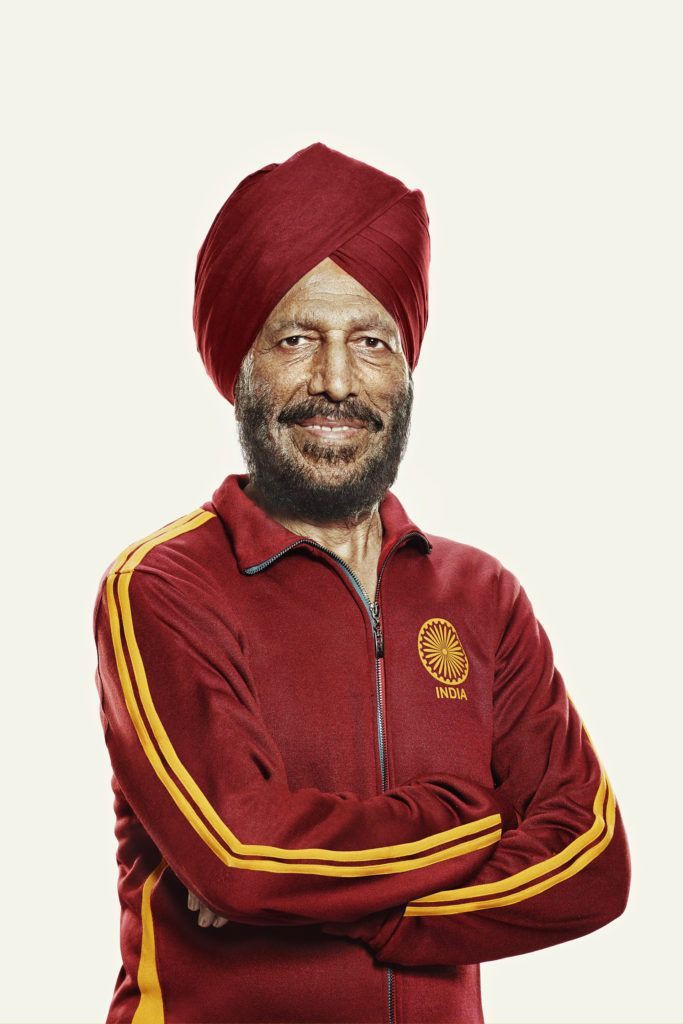
He was an athlete , an army officer and a proud citizen . He won for his motherland and inspired many . Yes , he was an inspiration and served for his nation .

He was born in November 20,1929 in Govindpura , Punjab ( present – Punjab , Pakistan ) . He was one of his 15 siblings from whom 8 died during the partition . In early age , he moved to Delhi , India in 1947 .

He wasn’t interested in army or becoming one but wanted to prove himself and others that he can be the one . It was his forth attempt when he gained access and introduced to the athletic later .

He once said that “I came from a remote village, I didn’t know what running was, or the Olympics”. And that’s where he started his journey as an athlete .
Medal awards and Popularity
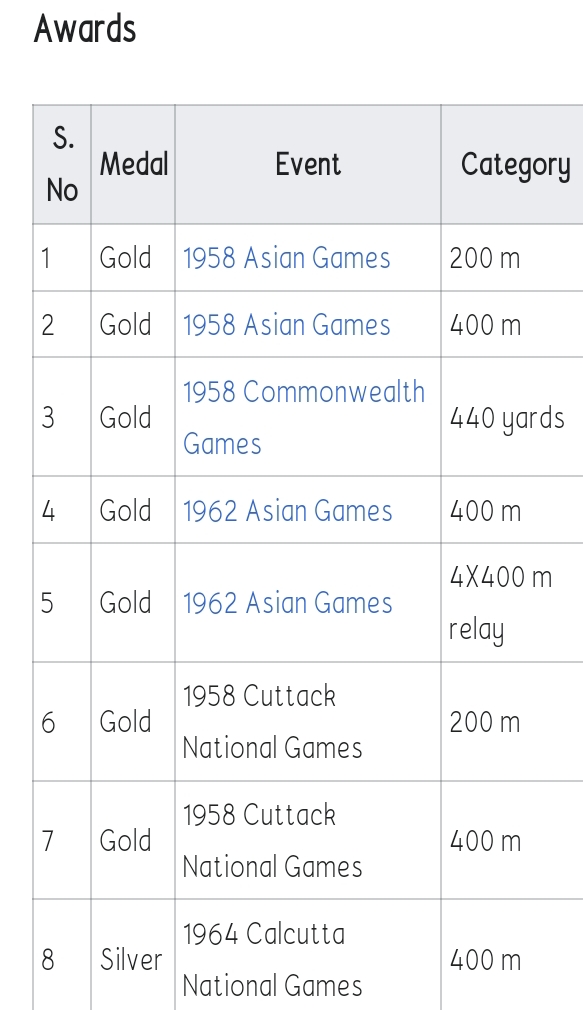
With many Olympic , National and International awards . Rather than his award Milkha Singh was quite popular in media . His powerful aura worked from sports men to the Ministry .

Later in his life he married Nirmal saini , a former captain of Indian women volleyball team and had three daughters and a son .

He became Director of sports in Punjab Ministry of Education and was awarded with Padmashri in 1959. He also turned down Arjuna award in 2001 by saying that it was to be awarded to younger atheletes rather than him.

An inspiration
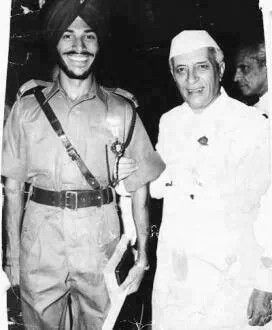
As an athlete , he inspired young aspirants who want to become from Nothing to Something . He shared his ideas that before his first game he was just a runner but after he earn first postion he became Something from Nothing .

” I was moved to tears by the thought that from being nobody the night before, I had become somebody. “

-Milkha singh

He also co- wrote his biography with his daughter “THE RACE OF MY LIFE ” in 2013 . Which inspired “Bhaag Milkha Bhaag ” an autobiography film in 2013 . A trust had been founded for the poor and needy sports people in 2013 due to the recognition of film .

A day of loss
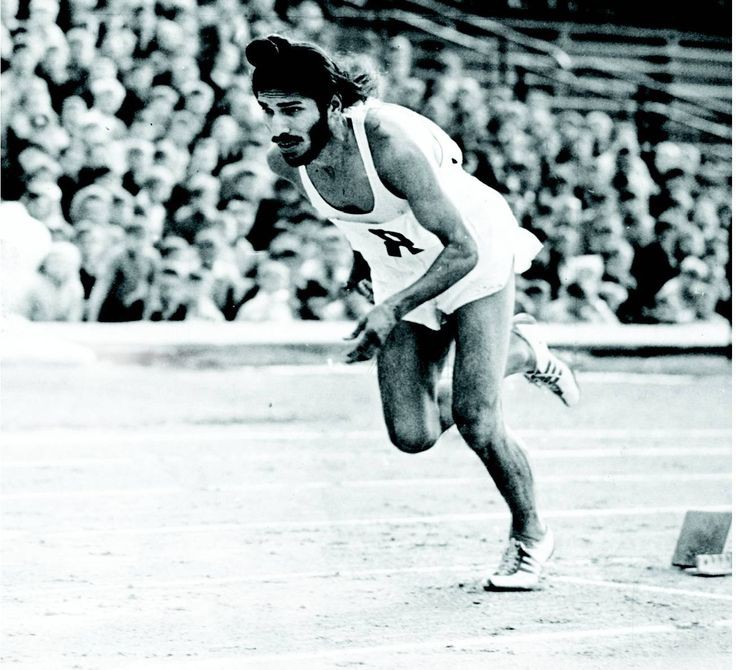
On June 18th ,2021 , we lost one of the legendary Indian icon , an ace of athlete due to the post covid – complication . “We are deeply indebted to the doctors at PGI for their valiant efforts and the love and prayers we received from across the world and from yourselves,” – statment given by his family .

PM Narendra Modi pay a tribute to MILKHA SINGH in his monthly radio program ‘Maan ki baat’ . He urged India to cheer and motivate for forthcoming Tokyo Olympics .

He said “When talking about the Olympics, how can we not remember Milkha Singh Ji. When he get hospitalized, I got a chance to speak to him, I had requested him to motivate the athletes going for Tokyo Olympics”

We lost one gem of our India but we didn’t lost his contribution to his motherland . He has given a lot and it’s our time to remember what gave to us .
Link:

My year reading a book from every country in the world | Ann Morgan |

Something which kept me quite on to the edge was the reading journey taken up by Ann Morgan. It was quite wonderful of her to take up such a wonderful opportunity. As someone who loved to read I felt myself more closer to her perspective. I was able to identify myself with her and the way she spoke and carried herself, the more I noticed, the more I realized her idea of the world. 

The fact that we can understand a person by looking at their book shelf was a quite a point, Because we are what we read upon. What we encounter and read enhance us. They make us who we are. The socialization and books make us realize our potential. A good book is worth a good friend because it moulds you into a better version of yourself.

Reading about various things under the sun and not just sticking to one genre is very important for a reader. He/she must be ready to break the barriers and go beyond their comfort zone because it is only when we explore, we learn about the unknown and hidden and the voiceless. These are very important, because what the world need is a good reader because a good reader knows the world better than anyone else. The person will be objective and not subjective. A good reader knows the bias and learns to be impartial and be more open to the world. They know the  difference between empathy and sympathy. 

What Ann Morgan stresses again is that fact that if we need something so badly, then the whole world will be with us. Just like how Paulo Coelho said in Alchemist that if we really want something then the whole world will conspire. She brings in and stress some long forgotten words and values. 

I hope that more people realize the value of reading in their lives and learn to be better people and change the nation and break away from the stereotypes.

Being in the imagination or live in the realistic world .

Being born in money or torn away by poverty is the world where we live

The Hallucination

Are the money makers living their life without fear ?

Can a poorer get to live more life than its fated ?

Will you ignore the one who hurt you immensely ?

Or like a coward , can you run from the truth ?

If yes , than pray to god for providing you such an imaginary world . Don’t take it seriously but you really need to wake up .

The Truth

The life that we are living is not a game to play . We need be realistic while taking decisions in our life . I don’t want to sound like an arrogant person . But we need to think before taking any decision because it may or may not harm our future . In our life we only focus on materialistic things and grow accustom to them . Which leads to the situation where we become selfish and fiercely jealous to one’s personality .

We judge them regarding to their status , money , power , clothes and their physique . Ding ding …. It’s time for the truth we become impetuous .

So what we learn from OJO -MOJO . 1. Like OJO that donot study and fail in your class. OR 2. MOJO that learn workhard and get award from the school . I choose options 1 (hehe don’t get any ideas I am a hardworker so I will choose my handsome MOJO not an overconfident OJO )


The REALITY

Not against the world of imagination just a believer of reality .

Life is not easy I agree with you but can we make it easy , Is the question only you can answer .

For me , we can only when we are focusing on our work rather than its result . I am not repulsive about getting a promotion on my first day on the work . But I am excited about learning new things and improve my capabilities . That how we need to react . I didn’t get the idea of getting a luxurious jet when I didn’t even have a penny to spend on my health . Well if you can just don’t forget to take me as well ( Huh.. greedy me ) .

I do imagine my life being in the island with some hot people around me ( its a wild imagination) . Well I can’t change that . But what I can change is the accept the reality ( like sitting in my PJ’s , eating popcorn and drooling over Michele Morrone yeah I am fan of 365 days ) .

Conclusion

Life is a series of natural and spontaneous changes. Don’t resist them; that only creates sorrow. Let reality be reality. Let things flow naturally forward in whatever way they like.

Lao Tzu
things that are written in the blog is my perspective of life . i am not taunting anyone . 
its your life you can live according to your rules .

and yes pictures that i used in the blogs are from pintrest .

enjoy your reading .

Motivation – the eternal driving force

What is motivation?

People’s behavior usually has multiple reasons.

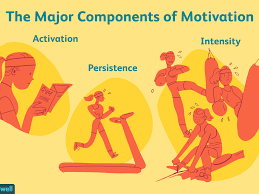
When a person is inspired by external forces, other people, or rewards, the motivation can be external. Motivation can also be internal, so inspiration comes from within, that is, the desire to improve at a certain point in time. Intrinsic motivation tends to motivate people more and achievements are more valuable. The structure used to understand motivation is the pyramid of needs proposed by the American psychologist Abraham Maslow in 1943 and by gradually discovering and satisfying a variety of needs, from the most basic needs (such as food and safety) to the overall need for love, belonging, and self-esteem, to fully realize the potential of self-realization.

Over time, Maslow extended this theory to include the need for self-transcendence: people reach the peak of growth by paying attention to things outside of themselves and find greater goals in life. Although the universality of Maslow’s theory has been questioned, many people believe that it reflects basic truths about human motivation.

How can I stop Procrastination ?
Procrastination is usually caused by underlying stress or fear of tasks. But there are some ways to overcome discomfort and hesitation. You can break the project into smaller, more manageable parts; taking one step will increase your motivation for the next step. You can limit the time spent on preparation or try to complete the task as quickly as possible. You can also set the rewards you get after completing tasks or parts of tasks.

How do you keep up with challenging tasks?

It is natural to get into trouble at some point, especially when dealing with complex tasks, but research shows that several strategies can help. One of them is to focus on the positive results of the work, such as passing a final exam. The other is trying to control his emotions while doing homework, for example, if he thinks of your next vacation while running on a treadmill, while others are trying to track your progress and tracking allows you to proceed to the next step. Try to enrich the task and make it more interesting (called a “temptation set”), such as listening to a podcast while doing laundry.

How can I stay motivated to exercise?

When motivation becomes an obstacle to training, some creative ideas should be considered. One of them is to expand your options: if you don’t have time to exercise in the gym, go for a walk, use your body weight for circuit training, or watch a video about yoga; the other is to make exercise more comfortable, such as B. Listen to one with a tape recorder Book. The other is to make a social contract with a friend or relative; for example, if you give your mobile phone time instead of exercising, you need to donate to the activity chosen by the other party.

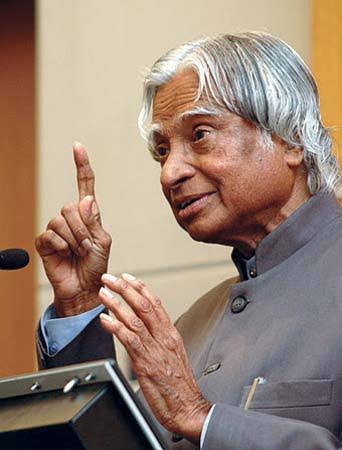
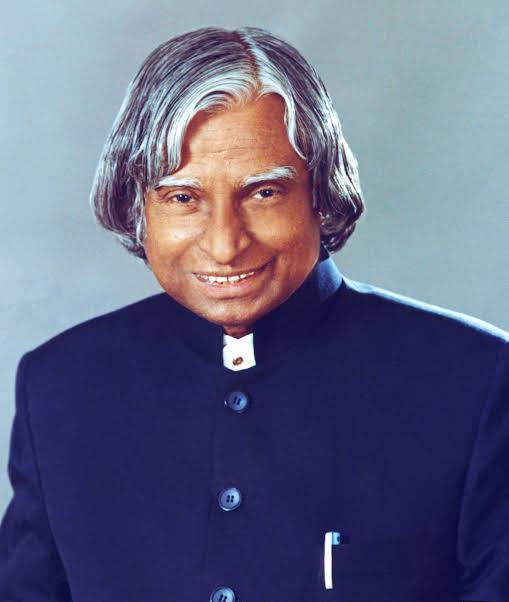
LIFE HISTORY OF APJ ABDUL KALAM

Early life :
His full name is Abul Pakir Jainulabdeen Abdul Kalam. He was born on 15th October, 1931 in Rameswaram, Madras Presidency, British India which is presently known as Tamil Nadu, India. His father’s name was Jainulabdeen Marakayar who was a boat owner and imam of a local mosque. His mother’s name was Ashiamma. She was a housewife. He was the youngest of four brothers and one sister in his family. Even though his ancestors had numerous properties and were wealthy, they lost most of their fortunes by the 1920s. This is why Kalam was born and grew up during poverty.

Education:
He studied in Schwartz Higher Secondary School. Previously he had average grades but later he was described as a bright and hardworking student who had a strong desire to learn. He went to Saint Joseph’s College, Tiruchirapalli, then affiliated with the University of Madras. He graduated in Physics in 1954. In 1955 he moved to Madras to study Aerospace Engineering in Madras Institute of Technology. The Dean was dissatisfied with his lack of progress in a senior class project and threatened to revoke his scholarship unless the project was finished within the next three days. He met the deadline impressing the Dean who later said to him that he was putting Kalam under stress and was asking him to meet a difficult deadline. He narrowly missed achieving his dream of becoming a higher pilot, as he got ninth position and only eight positions were available in Indian Air force.

Career as a Scientist:
After graduating from Madras Institute of Technology in 1960 he joined the Aeronautical Development Establishment of the Defence Research and Development Organisation. He started his career by designing a small hovercraft but remained unconvinced by his choice of job. He was also a part of the INCOSPAR Committee. In 1969 he was transferred to the India Space Research Organisation (ISRO) where he was the project director of India’s first Satellite Launch Vehicle.

Presidency:
APJ Abdul Kalam served as the 11th President of India, succeeding KR Narayanan. He won the Presidential election held in 2002. His term lasted from 25 July 2002 to 25 July 2007.

Books written by Dr. APJ Abdul Kalam:
He played an important role in the second pokhran nuclear test in 1998. He was also associated with India’s Space Program and missile development program. Therefore, he is also called the “Missile Man” of India. He wrote many books. The name of these books are as follows:-
1. India 2020: A Vision for the New Millennium
Publishing year: 1998
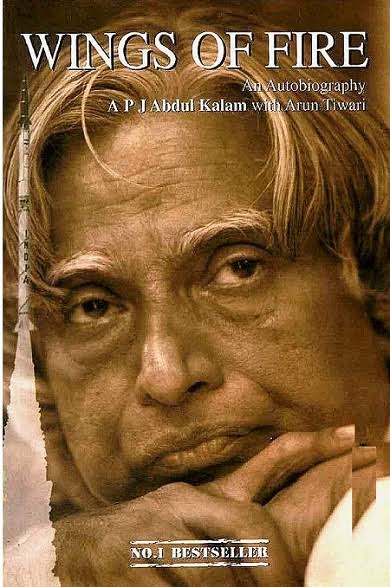
2. Wings of Fire: An Autobiography
Publishing year: 1999
wings-of-fire-biography-kalam
3. Ignited Minds: Unleashing the Power within India
Publishing year: 2002
4. The Luminous Sparks: A Biography in Verse and Colours
Publishing year: 2004
5. Guiding Souls: Dialogues on the Purpose of Life
Publishing year: 2005
Co-author: Arun Tiwari
6. Mission of India: A Vision of Indian Youth
Publishing year: 2005
7. Inspiring Thoughts: Quotation Series
Publishing year: 2007
8. You Are Born to Blossom: Take My Journey Beyond
Publishing year: 2011
Co-author: Arun Tiwari
9. The Scientific India: A Twenty First Century Guide to the World around Us
Publishing year: 2011
Co-author: Y. S. Rajan
10. Failure to Success: Legendary Lives
Publishing year: 2011
Co-author: Arun Tiwari
Ramnath Kovind: 10 facts about 14th President of India
11. Target 3 Billion
Publishing year: 2011
Co-author: ‎Srijan Pal Singh
12. You are Unique: Scale New Heights by Thoughts and Actions
Publishing year: 2012
Co-author: S. Poonam Kohli
13. Turning Points: A Journey through Challenges
Publishing year: 2012
14. Indomitable Spirit
Publishing year: 2013
15. Spirit of India
Publishing year: 2013
16. Thoughts for Change: We Can Do It
Publishing year: 2013
Co-author: A. Sivathanu Pillai
17. My Journey: Transforming Dreams into Actions
Publishing year: 2013
18. Governance for Growth in India
Publishing year: 2014
19. Manifesto for Change
Publishing year: 2014
Co-author: V. Ponraj
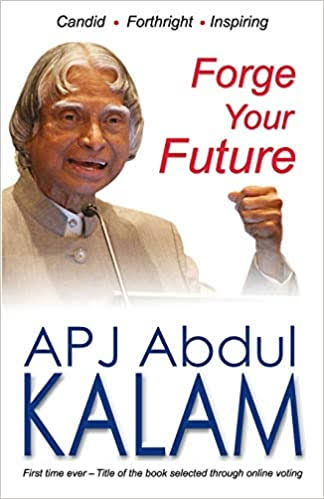
20. Forge Your Future: Candid, Forthright, Inspiring
Publishing year: 2014
21. Beyond 2020: A Vision for Tomorrow’s India
Publishing year: 2014
22. The Guiding Light: A Selection of Quotations from My Favourite Books
Publishing year: 2015
23. Reignited: Scientific Pathways to a Brighter Future
Publishing year: 2015
Co-author: ‎Srijan Pal Singh
24. The Family and the Nation
Publishing year: 2015
Co-author: Acharya Mahapragya
25. Transcendence My Spiritual Experiences
Publishing year: 2015
Co-author: Arun Tiwari

Awards:
He won many awards. The list are as follows:-
1981: Padma Bhushan- Government of India
1990 : Padma Vibhushan- Government of India
1997 : Bharat Ratna- Government of India
1997 : Indira Gandhi Award for National Integration- Government of India
1998 : Veer Savarkar Award- Government of India
2000 : SASTRA Ramanujan Prize- Shanmugha Arts, Science, Technology and Research Academy, India
2013 : Von Brown Award- National Space Society

Death:
Dr. APJ Abdul Kalam breathed his last on 27th July,2015 due to a cardiac arrest while delivering a lecture at th Indian Institute of Management, Shillong.

@track2traininginstitute @track2trainingseminar @edunewsnetwork @pen2prints

TFM: the family man (Indian series)

The family man

The Family Man is an Indian ‘espionage action thriller streaming television series’ on Amazon Prime Video created, directed, and produced by Raj Nidimoru and Krishna D.K. who also co-wrote the story and screenplay with Suman Kumar, with dialogue penned by Sumit Arora and Suman Kumar. The series features Manoj Bajpayee as Srikant Tiwari, a middle-class man secretly working as an intelligence officer for the Threat Analysis and Surveillance Cell (TASC), a fictitious branch of the National Investigation Agency. It also stars Priyamani, Sharad Kelkar, Neeraj Madhav, Sharib Hashmi, Dalip Tahil, Sunny Hinduja and Shreya Dhanwanthary. Samantha Akkineni was hired for the second season of the series making her foray into the digital medium.

And to be honest it’s one of the best series I’ve had ever watched. Manoj Bajpayee is one of the finest actor of all the time. His acting gives a example to our new generation actors and he’s the god of acting for those who wants to become a actor.

From his struggle to his success, he implied all those thing he was willing to. And he has many awards and was nominated for best acting award (national award) for Gangs of Wasseypur. Rather than this all the actors/actresses in TFM1 and TFM2 contributes a huge part to make a series a super hit series of all the time. As in,
Manoj Bajpayee
Priyamani
Samantha Akkineni
Sharib Hashmi
Neeraj Madhav
Pawan Chopra
Kishore Kumar G.
Sharad Kelkar
Devadarshini
Gul Panag
Shreya Dhanwanthary
Sundeep Kishan
Sanyukta Timsina
Sunny Hinduja
Abhay Verma
Shahab Ali
Ashlesha Thakur
Vedant Sinha
Aritro Rudraneil Banerjee.

All these actors/actresses had different roles and they had persued that particular Roel very well with pure perfection. And if you ask who is My favourite among these so I’ll obviously say Manoj Bajpayee. But rather than him I love the role and character of Sharib Hashmi. He had done his job very well and the way he acted was truly unconditional.

And one main point It is only and only streaming of Amazon prime. And if you ask me that ‘it’s a boring day’ what should we do then I’ll recommend you this series to watch both season one and two.

Covid-19: let’s see what’s going to be.

Some experts are also with the opinion that it could become the dominant strain in most of the parts of the world.

Okay, let’s keep this aside but do you think that this unlock would give us the better results, I’m neutral here as, the economy of the India is important I know it’s important but the lives of our Indians is the most important thing. Giving it a basic trail if you’ve have heard about those individuals and who were so happily living their lives who used to sing, dance, cook and etc etc. But after a few days they were no more you might heard it from your parents from your relatives from your friends that, that particular guy isn’t here with us he/she died due to covid and even when they were treated with the best medicines, from our best doctors but we all know from where does it started so let me tell you being careless about this pandemic would make you sit on the bed, so let me tell you my experience around 5-6 days ago me and my friend we were going for a morning walk and he removed his mask saying that he’s strong he won’t be having covid. I mean guys we have to be honest with ourselves that are we giving our best ladies and gentlemen please take care of yourselves:

Make sure you are wearing a proper mask.

Make sure you are washing your hands.

Make sure you are done with your doses (vaccination)

Make sure you are not going outside without any need.

Make sure you and your family are safe. And our nation is your family too.

Take care of yourselves covid is not gone yet.

How anyone can become so productive in their daily life

In today’s world, people always try to find out the better method that they will use to make their life more productive and useful but the problem is they are always following shortcuts and after sometimes they regret and become depressed, so in this post, we discussed some important tips that not only motivate you but also you can easily follow them.

1) Self-motivation

Now these days when we saw someone who is perfect in all fields of life and doing something better in their life we only choose two-path first we become his/her fan and follow them blindly or we feel jealous with his/her that God give them good family, or good life so they are using that benefits but I thought we should not be trapped in these conditions. it is good to inspire someone but not follow them blindly. Do something whatever big or small but inspire from that things. Because that particular work will change your not someone else work.

2) Competite with yourself

Competition is one of the keys in the process of success because whatever you are doing the study, business, etc you have to change with time and these changes will have to be beneficial for the process, so I thought is competition is important but you are free to choose your competitors so I think you should choose yourself because this is the best in all the competition in the world.

3) Time management

This is the basic ingredient without it you are not going to achieve something better in your life. Because life is itself a competition of you with yourself and for this. you have limited time on this planet so I think managing the time is very important for this game. Because without it you have so many tasks to complete but there is no time is available for them. so, manage your time perfectly and use a single moment of your life .

4) understand the concept of life

Life is not an emotional drama it is a perfect game that is designed by God so don’t be trapped in the different levels of life. Enjoy every single second of your life and don’t get sad when there is something not occur according to your will. Understand the basic concept of life that life has some rules and you have to understand all of these if you want to be happy in your life. Sometimes you have to sacrifice the best things in your life so be strong and ready to face all the problems of your life just like a warrior.

5) solve problems

This has become our habit that we are always run from the problems whatever the problem is, financially, socially, in the relationship, etc we always want to find out some shortcut and run away from them. But buddy this is life and the problem with it is that its rules are universal everyone single one who is on this planet has to follow them with or without will.so try to face every problem in your life

These are some rules that will surely help you to find a better purpose in your life and make your life more productive.

Book Review: The Monk Who Sold His Ferrari – A fable about fulfilling your dreams and Reaching Your Destiny


Publisher: JAICO publishing house
Author: Robin Sharma
Published year: 1997
Genre: Motivational Fable
About the Author:
“Robin Sharma is CEO of Sharma leadership international. Author of 11 international
bestseller books such as the monk who sold his Ferrari, who will cry when you die, the secret
letters. Highly influential blogger plus motivational speaker.”

“Everything is created twice, first in the mind and then in reality.”

Robin Sharma

Narration:
The story revolves around conversation between Julian Mantel, an unsatisfied
lawyer in spite of having all things one can imagine and John. Its narrative book that
narrates how he disguised himself and made a journey to India took advantage of all ancient
techniques to master thoughts. And how his journey to India brought change and why he left
and came back to his own country with an aim imparting the knowledge learned by him.

Plot and setting of story:
This book talks about seven virtues that have potential to transform your life within the span
of 21 odd days if practiced daily with dedication. This book supports each and every point with
practical examples that make it more beautiful.Every word, sentences, examples make book so
lively that while reading this book one can connect oneself and imagine oneself as a listener –
John in such a way that whatsoever doubts arise in your mind while reading are answered in book
by Julian while conversing with John and that’s magical. Once you start reading the book,throughout
there will be a smile on your face with a ray of knowledge reflecting within your mind.
So, Yes! That serves the purpose of keeping the plot of the story narrative very well.

Evaluation:
This book have the power that can hit you hard to change your age-old procrastinating behavior.
Language of books shakes you from questions such as – ‘How you can spread love
if you don’t know how to learn oneself.’
This is one of those books which talks about ‘The price of greatness is responsibility over
each of your thoughts.’ which simply makes yourself accountable for dusky days and
shinning nights. This book talks about Indian Monks – who master in the art of living. This
book is a story of a lawyer and his journey from being old to young. Yes! you read that right,
This story is more of realistic fable rather than fairy tales dreams and that’s the reason you
should grab one copy of the book if you are one of those reader like who feel the fragrance of
book first and then read book by highlighting the line you loved the most or else if you are
one who like reading on tab with a coffee and popcorn than you can go through this link:
https://www.apnamba.com/Ebookspdf/The%20Monk%20who%20sold%20his%20ferrari%2 0-%20Robin%20Sharma%20(PDF)%20%5BQwerty80%5D.pdf to read once and make your own review.

Rating:
I would like to give 4 stars out of 5 because of minimal efforts on language but that is not
exactly the case as the idea of living life is so complex that the author wanted to use the
simplest form of language to express complexity of life with a message that, “There is no
quick fix in life.”

By Sonu Chaturvedi

Job satisfaction and motivation

Productivity is defined as the efficient and effective use of resources with minimum waste and effort to achieve outcome. We live in a world that has limited resources. The health care industry faces this limitation more than any other industry. With these challenges facing health care administrators, the concept of productivity, job satisfaction and motivation become very important. Employee satisfaction and retention have always been an important issue for physicians, medical centers and businesses in general. Conventional human resources theories, developed some 50 years ago by Maslow and Herzberg, suggest that satisfied employees tend to be more productive, creative and committed to their employers. People are essential to productivity. The success of productivity improvement strategy is dependent on employee commitment, job satisfaction, skills, and motivation. Maslow’s theory consists of a 5-level pyramid: physiologic or basic survival; physical and mental safety; sense of belonging; accomplishment, creativity, and growth; and self-actualization. Herzberg’s theory suggests there are 2 groups of factors: hygiene (which satisfy) and motivation. The terms “job satisfaction” and “motivation” have, in my experience, become used interchangeably. There is a difference. Job satisfaction is an individual’s emotional response to his or her current job condition, while motivation is the driving force to pursue and satisfy one’s needs. Maslow and Herzberg’s theories can be easily applied to the workplace. Managers can help employees achieve overall job satisfaction, which, with the employee’s internal motivation drive, increase performance on the job.

Motivation and Morale – 2 Major M’s

The key difference between motivation and morale is that morale is a feeling of enthusiasm and encouragement that comes from an individual, whereas motivation refers to an individual’s drive to get a task done. 

Motivation and morale are two concepts for establishing a positive work environment. Both these can ultimately contribute to high productivity, and low staff turnover. However, it is important to understand the difference between motivation and morale in order to make use of these concepts.

What is Motivation?

Motivation is the process of stimulating people to actions to accomplish goals. In other words, motivation involves stimulating desire and energy in people so that they show continuous interest and commitment to a job or role or to make an effort to achieve a goal. Human Resource models describe two types of motivation: intrinsic motivation and extrinsic motivation.

Extrinsic motivation refers to motivation that comes from external factors. For instance, you can motivate employees by offering incentives or promotions. In contrast, intrinsic motivation refers to motivation that comes from self-satisfaction. It is important to note that intrinsic motivation is more favourable than extrinsic motivation.

Factors that motivate people differ from one person to another. However, motivation is something that needs to be activated within the individual.  There are different theories that describe motivation and factors that affect it.

In a workplace with high motivation, employees are willing to work beyond the boundaries of their job description. Enthusiasm, interest or commitment make someone to work beyond his responsibility. Moreover, the employees think in a proactive manner for the betterment of the company. This will increase productivity, efficiency, and quality of work and. Thus, when the staff is highly motivated, businesses are usually geared towards success.

What is Morale?

Morale is a psychological condition or a feeling of a person that determines his or her willingness to cooperate.

There are two states of morale as high morale and low morale. High morale indicates determination at work, which is essential in achieving management objectives. You can see the following features in a workplace with high morale.

  • An enthusiastic team
  • Organizational commitment
  • Proper conflict management
  • Healthy and safe work environment
  • Sense of belonging in the employees’ mind
  • Effective communication in the organization
  • Increase in productivity and efficiency, fewer customer complaints and claims
  • Greater motivation

In contrast, you can note the following features in a workplace with people having low morale.

  • Too many conflicts in the organization
  • A high rate of employee absenteeism and turnover
  • Job dissatisfaction and frustration among employees
  • Poor working conditions.
  • A decrease in productivity, efficiency and high number of customer complaints and claims
  • Lack of motivation

What is the Relationship Between Motivation and Morale?

Both morale and motivation are a fundamental part of creating a positive working environment. Sometimes, both morale and motivation go hand in hand. When employees have high morale, they work harder, and are motivated to achieve goals; there is also an increase in production and quality of work. At the same time, when employees have low morale and low motivation, they tend to work slower; there is a decline in production and low quality of work. However, there are exceptions to this case.

In certain instances, there can be highly motivated employees who work harder to achieve the goals, but with low morale. Negative factors such as job insecurity and fear of supervisor may drive these employees to work harder. In these instances, motivation is high, while morale is low. You can also note cases where morale is high, but motivation is low.

Difference Between Motivation and Morale?

Morale is a  feeling of enthusiasm and encouragement that comes from an individual, whereas motivation refers to an individual’s drive to accomplish a task. So, this is the key difference between motivation and morale. Higher motivation can often lead to higher morale of employees; however, high morale does not essentially result in highly motivated employees as their attitude may not encourage them to work more efficiently. Thus, high motivation leads to higher productivity, whereas higher morale may not lead to higher productivity. Moreover, motivation is considered as an individual concept, whereas morale is a group concept. Therefore, this is another difference between motivation and morale.

Below infographic presents more comparisons regarding the difference between motivation and morale.

Summary – Motivation vs Morale

Although morale and motivation are fundamentals for a positive work environment, there is a distinct difference between motivation and morale. Morale is a  feeling that comes out from an individual to cooperate, whereas motivation refers to an individual’s drive to get a task done. Thus, motivation is considered as an individual concept, whereas morale is a group concept.

Changing towards change

I am about to quit from one of the online course but something made me stick to it. May be its due to the pressure I feel by doing nothing or may be its due to influence of some other mates who quitted from the course. I never had a courage neither to quit nor to admit the fact of dropping. I do nothing and thing of everything. The only thing I last is feeling pressurised by doing nothing.

My scores are low and I stand in last position . Only thing I undergo is scoldings from mentor. Intially I submitted my code by pasting from some other external source and had been in safe zone. One thing my mentor made me realise is that I gain nothing by doing so. So I stopped copying and started nothing which makes me stand in again same position. One of the thing that hit me hard on my face is by seeing the confidence and courage of other mates who are doing problems on their own. I know that confidence is more than enough to live under any circumstances. I was one of them long back and now I feel ashamed of myself to think in a position where I stand.

Some gut feeling inside me is trying to eat me from inside. I want to change but that change is constant. I have to work because I can work. I must work because there is no other alternative. One of the review meeting made me to introspect me. I should work hard for myself. I keep on escaping from everything else. I can withstand in it once I get out of this feeling. I am one of the kind who tries to motivate others but lacking behind in self motivation. I can and I will.

The greatest battle that I am having right now is fighting with myself. I should come out it and face it. I will start working from now because I should never regret for doing so. I never had a feel of feeling regret in future but now the only time my gut feeling is making me so something. If I fail doing so I will definitely regret it later. Something inside me is trying to warn me. Hope I could make it possible because it’s possible.

MASLOW’S NEED FOR HIERARCHY THEORY

Abraham Maslow an eminent US psychologist, offered a theory of motivation called the ‘Need Hierarchy theory’ and he felt that wide range of needs which motivate them to strive for their fulfilment and human can be categorised into five types as- Physiology needs, security needs, social needs, esteem needs, and self-actualisation needs.

HIERARCHY OF NEEDS

Motivation is concerned with the behaviour of a person or group of persons and nay behaviour is need-based, what is this need? A need is  a feeling that something is required and this feeling creates mental tensions and this tension in mind is transformed into want and to satisfy this want the person who feels the need (he or she who is  deprived of something), acts in one or another way to satisfy this want and satisfaction of a particular want releases the tension and then the behaviour to satisfy that want ceases, but in the meantime, some other need may be felt and thus need causing tension, tension causing the behaviour, satisfying the felt-need is a continuous process and needs are of different kinds and these have varying influences on motivation, for example:

Maslow’s hierarchy of needs, a scalable vector illustration on white background

1. Basic Physiological Needs:

  Basic needs such as food, water, clothing, shelter, sleep and sexual satisfaction are included in this set of needs and these are the primary needs for sustaining human life itself and according to Maslow until these needs are satisfied to the extent necessary to sustain life these needs remain the motivating force.

2. Security or safety Needs:

Security is means “the feeling which involves being able to hold on to that one has. Being sure that one will be able to fare as well in future as in the past”. Thus these needs include being free from physical danger and the fear of losing a job, proper food, clothing or shelter.

3. Affiliation or Belonging Needs:

These include the need for love i.e. the need for affection and desire for association with others and the need for affiliation or acceptance becomes more prominent and becomes a motivating force.

4.Esteem Needs:

These needs include the desire to enjoy social approval, self-assertion and self-esteem and such a knowledge (Gratification of need for esteem) contributes to a feeling of self-confidence, worth or capability and it generates satisfaction such as power, prestige and status and status is the relative ranking that a person holds in a group or organization.

5. Self-Actualization Needs:

This refers to the desire for self-fulfilment and achievement and it is the desire to become what one believes to be capable of becoming and he wants to maximise his potential and to accomplish something and this need is regarded by Maslow as the highest in his hierarchy of needs.

ASSUMPTIONS OF MASOW’S THEORY

Maslow’s theory is based on the following assumptions:

  1. People’s behaviour is based on their needs. The satisfaction of such needs influences their behaviour.
  2. People’s needs are in hierarchical order, starting from basic needs to other higher-level needs;
  3. A person moves to the next higher level of the hierarchy only when the lower needs is satisfied; and
  4. A satisfied need can no longer motivate a person; only next higher need can motivate him.

MOTIVATION IN MANAGEMENT

The term motivation is derived from the word motive and motives are expressions of a person’s needs and hence they are personal and internal and in this context, the term need should not be associated with urgency or nay pressing desire for something and it simply means something within an individual that prompts him to action and motives or needs are ‘whys’ of behaviour and they start and maintain activity and determine the general direction of the person and motives give direction to human behaviour because they are directed towards certain goals which may be conscious or sub-conscious. Motives are directed towards the achievement of certain goals which in turn determine the behaviour of individuals and this behaviour ultimately leads to goal-directed activities such as preparing food and a goal activity such as eating food and in other words, unsatisfying needs result in tension with an individual and engage him in search of the way to relieve this tension.

INTERRELATED TERMS

While discussing motivation, we need to understand three interrelated terms- Motive, Motivation, and Motivators.

1. Motive- A motive is an inner state or desire which energies an individual to move o to behave towards the achievement of goal and motive arises out of needs of an individual and it causes restlessness as he wants to fulfil his motive.

2. Motivation- It is a process of inducing people to perform to their best ability to accomplish a goal and it is a psychological phenomenon which arises from the feeling of needs and wants of individuals and it causes a goal-directed behaviour.

3. Motivators- Motivators are the incentives or techniques used to motivate the people in an organization and common motivators used by the mangers are increment, bonus, promotion, recognition, respect etc. 

 Motivations may be defined as the complex of forces inspiring a person at work to intensify his willingness to use his maximum capability for the achievement of certain objectives. According to Koontz and O’Donnell “ Motivation is a general term applying to the entire class of drivers, desires, needs, wishes and similar forces and to say that managers motivate their subordinates is to say that they do those things which they hope will satisfy drives and desires and induce the subordinates to act in the desired manner”

FEATURES OF MOTIVATION

1. Motivation is an internal Feeling/ instinct

Motivation is a psychological phenomenon which generates from within an individual and needs are the feelings arising in the mind of a person that he lacks certain things and such feelings affect the behaviour of that individual and causes him to do work and hence, motivation is the process of making an individual feel his needs.

2. Motivation produces goal-directed behaviour

Motivation is a power which leads the employees to the achievement of their goal and the behaviour of the motivated employees clearly shows that they are inclined towards the achievement of their goal.

3. Motivation can either be positive or negative

Positive motivation provides positive rewards like an increase in pay. Promotion, recognition etc. Negative motivation uses negative means like punishment, stopping increments, threatening etc., which also may induce a person to act in the desired way. 

How Peer pressure influence our lives…

Peer pressure is the influence on people by their peers due to which people start following their opinions and lifestyles. It also refers to considering a person or his opinion above all and give him/her the priority.

Peer pressure can be both positive and negative. Like if a person is peer pressuring you for a good cause like to study, to develop your skull, or achieve something good in life then it is motivation. The person is motivating you to achieve something good in your life which is essential for the growth of a person. But sometimes peer pressure leads you to the disastrous situation if it is for the bad cause.

So there are some advantages and disadvantages of peer pressure:

ADVANTAGES OF PEER PRESSURE

Peer pressure helps you to build your character, develop your skills and get master in a particular field. It also motivates us to do a particular work in a particular field. It forces the person to cross the barriers and achieve something great. It also boost the confidence of a person as our brain consider people’s opinion and makes them priority. Peer pressure also helps in marketing sector. Many salesman and entrepreneurs use this technique to influence people to buy product. Similarly peer pressure can also built the character of a person. The main advantage of peer pressure can be in youth, as we have seen many young person doing great after influence by a person.

DISADVANTAGES OF PEER PRESSURE

It can also harm the person in many ways. If you don’t want to do any task and if you are getting continuous pressure to do that work, then you become frustated. It also hamper students career and studies if they indulge in the bad company and they are so much influenced by them that they involved in habits like drug and smoking. These habits have adverse effects on their growth and career.

So, as we can see that peer pressure has both positive and negative effects, it is very important to think about the outcome of the deed before getting influenced by peers. Apart fron this always keep your thoughts at the priority and peer pressure should always be secondary. In this way we are able to take advantage of the positive effects of peer pressure and avoid negative effects.