E- EDUCATION: AN EDUCATIONAL REVOLUTION

Eeducation or elearning is the delivery of education or training by electronic teaching methods like computers or laptops etc. E- Education means Schools on Web and it consolidates virtual classrooms, laboratories and integrates it with your other enterprise applications. These now supplement the face – 2 – face class room and commonly known as Blended Learning. It is the learning experiences from the online information sources. This E-Learning approach helps the students know, makes them understand how to research more and the students can preserve their online resources posterity. It helps the teacher to provide better materials for the students by doing research on various topics and subjects. It normally works over the internet and provides numerous tools such as for assessment, communications, collaborations, uploading of content etc.

Schools On Web help in connecting people with each other and provides new ways of communications and collaborations with the help of all kinds of information’s being provided by it. The aim is – Learning without Limits- anytime, in any place, and at any pace. It provides a platform where students and parents are connected, administrators are empowered and teachers are inspired.

E- Learning

The technologies of web collaborations helps in real time access to subjects or instructors or topic matters directly from the PC of users. The key communication/ participation tools are: e mail, chat rooms, whiteboards, journals etc.

Some of the key benefits are:

  1. Enable the teaching od new or existing courses wuthin virtual classrooms
  2. Interactive sessions which can be recorded
  3. Effective evaluation of virtual classes
  4. Provide instant accesS
  5. Generate academic reports
  6. Enables to track the progress of individual learner

Experiential Learning

Experiential Learning

Experiential Learning stimulates experiments and boosts the dimensions of interest, involvement, imagination and interaction by virtual laboratories, scenario – based learning activities and tests of different concepts. All these can be incorporated into various teaching approaches as pre-labs, as alternatives to textbooks home work and individual or group activities.

Some of the key benefits are :

  1. Highly Interactive Platform
  2. Provide Learning by Doing
  3. Ensures and promotes high level of cognition and retention
  4. Safety and Security is ensured
  5. Simulates real-life environments

Management System

E-Learning helps in managing fee structure, fee submission, generation of time table and management, library management and other reports. Web based Institute Management software is designed which enables better interaction among students, teachers, parents and managing body. Thus, it helps in customization of the system for respective needs at a reasonable cost.

COVID 19 and E – Education
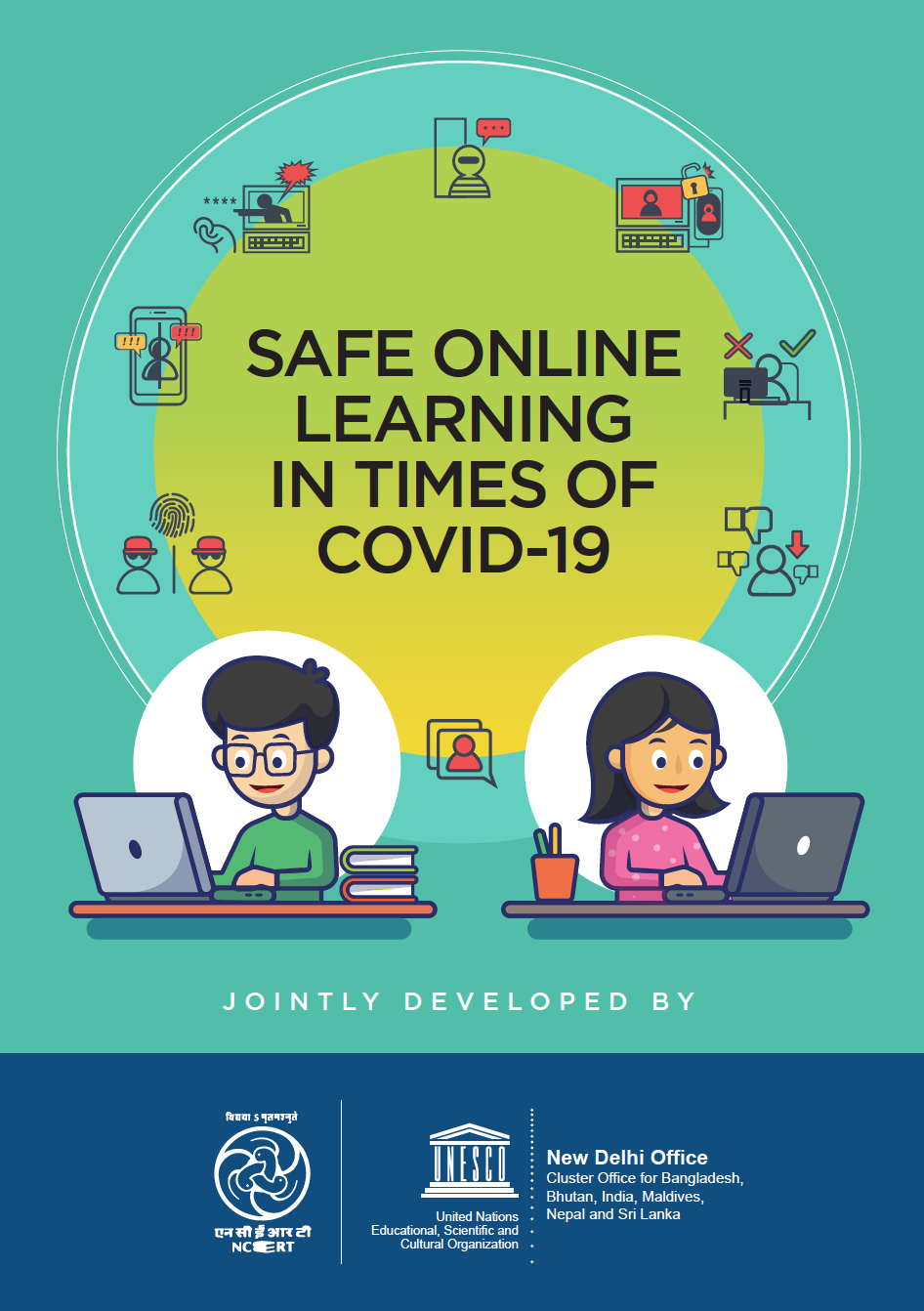
Countries are at different points in their COVID 19 infection rates and worldwide there are nearly 1.2 billion children in 186 countries who are getting affected by school closures due to the pandemic. With such sudden transition and shift away from the classroom many problems and issues have emerged across the globe. In such situations, online learning and e-learning approaches have emerged as solutions and in response to significant demand, many online learning platforms have also moved forward for offering free access to their educational services. With the help of e-learning and online teaching initiatives many issues which were being faced in the field of education have been sorted out but still there are still lots of problems which are associated with the availability of proper infrastructures etc. at each and every corner of the globe which can enable each and everyone to access the facilities of e-learning.
Online education

Due to corona it has been full of online classes even for 1st standard children just to make parents pay the fees even though there is no use of those classes when i say no uses students logging into the classes and they are enjoying , sleeping , eating , so there is no point in having classes for students under 8th standard. But there are many professional courses which are more useful for students now lets see about effectiveness of online education

As with most teaching methods, online learning also has its own set of positives and negatives. Decoding and understanding these positives and negatives will help institutes in creating strategies for more efficient delivery of the lessons, ensuring an uninterrupted learning journey for the students.

Advantages

Online learning offers teachers an efficient way to deliver lessons to students. Online learning has a number of tools such as videos, PDFs, podcasts, and teachers can use all these tools as part of their lesson plans. It allows students to attend classes from any location of their choice. It also allows schools to reach out to a more extensive network of students, instead of being restricted by geographical boundaries. All the course or study materials are available online, thus creating a paperless learning environment which is more affordable, while also being beneficial to the environment. Since online classes can be taken from home or location of choice, there are fewer chances of students missing out on lessons. Every student has a different learning journey and a different learning style. Some students are visual learners, while some students prefer to learn through audio. Similarly, some students thrive in the classroom, and other students are solo learners who get distracted by large groups. The online learning system, with its range of options and resources, can be personalized in many ways. It is the best way to create a perfect learning environment suited to the needs of each student.

Disadvantage

For many students, one of the biggest challenges of online learning is the struggle with focusing on the screen for long periods of time. With online learning, there is also a greater chance for students to be easily distracted by social media or other sites. Another key challenge of online classes is internet connectivity. While internet penetration has grown in leaps and bounds over the past few years, in smaller cities and towns, a consistent connection with decent speed is a problem. Without a consistent internet connection for students or teachers, there can be a lack of continuity in learning for the child. This is detrimental to the education process. Students can learn a lot from being in the company of their peers. However, in an online class, there are minimal physical interactions between students and teachers. This often results in a sense of isolation for the students. Online learning requires teachers to have a basic understanding of using digital forms of learning. However, this is not the case always. Very often, teachers have a very basic understanding of technology. Sometimes, they don’t even have the necessary resources and tools to conducts online classes. Many parents are concerned about the health hazards of having their children spend so many hours staring at a screen. This increase in screen time is one of the biggest concerns and disadvantages of online learning. Sometimes students also develop bad posture and other physical problems due to staying hunched in front of a screen. 

Video games and Education : How to bridge the two

Videos games have become a significant part of our culture for over half the century. They have also lead to many leading artistic and technical endeavors including many innovations in all these years. People have started to recognize the importance of these games as culturally important and the need to curate and store them properly. 

Education is one of the areas that have gone through a transformational change in 2020 and forward. The learning space has transitioned from a physical space to a space that has gone digital. The convergence of various technologies and modalities has given birth to a new space in the education system.

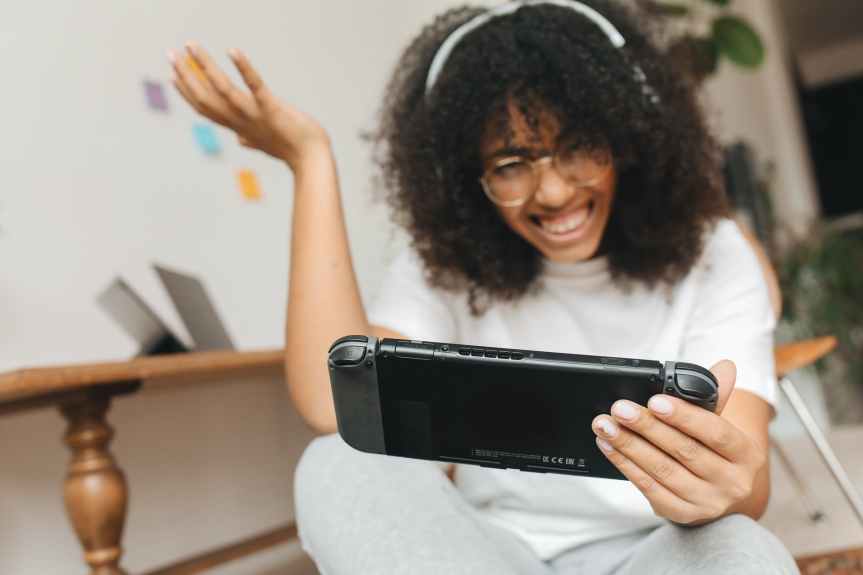
When it comes to Computer games, many used to scoff at them as a mere product for brief entertainment, but the increased proliferation of digital in every individual’s life means that Video games have a more significant role to play than ever before. The increased visual fidelity with better computing power has signified more immersion in the digital world. Online education has been given a push from governments around the globe. The majority of the higher institutions are teaching remotely with the help of different online tools. One of the major challenges that many educators face is the problem of engagement on par with the physical class.

Instead of just looking at online education as an alternative for the physical classes, we have to look at online education as a means of learning that can enhance the experience and engagement of the students than the physical classes as well. The technologies in 2021 clearly indicate that various tools and measures can be added into the experience of not just online learning and but also in the space of cultural heritage and digital tourism. Video games are an important tool that educators can leverage to fulfill these requirements.

Engagement and immersion can be the key factors that can drive the education system forward. There are many instances where students skip a certain subject even before attempting to learn it. This can be due to a poor and unfavorable experience with a certain instructor or wrong assumptions about the difficulty of that subject. Engaging interfaces in the form of creative games, virtual reality, augmented reality, mixed reality can help alleviate these types of issues.

Human-Computer-Interaction is an important field where the aspect of design and technology converge. This area not just deals with technological issues but also with the psychological and socio-cultural problems while designing/building a product or an interface. The interface is an important area that is often overlooked on many platforms. Many Educational platforms don’t offer the freedom that can help students, but they rather use the stingy design philosophy and force the users to a particular behavior while using it. Therefore the interface of games becomes equally important. Games can be used to create a more participatory environment for both the teachers and students alike while increasing the experimentation and systematic thinking in the class.

Video games are usually played to win or accomplish a level. Players are motivated by winning these challenges and this is the key to stay engaged. Games motivate through fun, which is part of the natural learning process in human development with instant and visual feedback.

We can conclude that the implementation of video games in the realm of education can make online learning more engaging and intuitive for learners. This is still a novel field of research and we have a long way to go but we cannot dismiss the numerous possibilities that games can provide us in this area.  

How can we improve online education?


Due to the ongoing pandemic, our laptops have become our teachers. The already backward education system took a serious hit when offline schooling had to suddenly shift to online education. The lack of infrastructure and preparedness for this sudden shift has severely affected the quality of education in today’s world. The reach of the education sector has decreased largely amid the global outbreak of the novel Coronavirus. Private schools have managed to stay afloat with the new developments in this sector, however, public schools have become the Titanic in this situation. With half of the students out of their schools and having minimum access to education, how to improve online education is a topic of utmost importance. To widen the reach of education, we need to make changes simultaneously in multiple directions. 

•Mode of Communication 

Some modifications in our mode of communication can help reach more students. Instead of using video calling apps such as Zoom, Google Meet, Microsoft Team, et cetera which require fast internet network and attendance in real-time, switching to WhatsApp audio notes and sharing worksheets as well as pdfs which require fewer megabytes. This will help them to go over the class multiple times in case they don’t understand a particular topic and will not require them to attend a class at a particular time. 

•Interactive education

After each lesson, an interactive worksheet, homework or test should be administered. When teaching a primary class, interaction works the best. Using pictures, descriptive texts, direct questions and answers, interactive graphics, et cetera would certainly engage students more into their studies. Making teachers available on call for a specific period of time to solve their queries will also encourage them to study and not give up once they fail to understand something. 

•Mental Health

From old to young, all minds have been negatively impacted by the disruption of their routines, lack of human interaction leading to feelings of loneliness, uncertainty in life, fear of a newly introduced deadly virus and much more. The school going students, who are in their formative years, can develop stress and anxiety. Recent news has also brought into light suicide incidents among students because they did not have access to education and felt that their life had come to a halt, along with many other issues. In these days, mental health awareness holds more importance than any other subject. Teaching students about how to improve their mental health, how to seek help, how to identify problematic thought patterns, and other things they ought to know should be made a priority in their syllabus. 

Following a more inclusive approach, to accommodate the underprivileged section of the society is a must in these days. The government should appropriate more funds to the educational sector as they are much needed to build a proper infrastructure for online education. It is the youth that is our future and it is them we should consider our greatest assets. Holistic education would lead to a better society and help in bringing about the changes that are much needed in the world. 

Educate. Empower. 

Online classes results in Eyesight and Ear problems

Most of the students are now undertaking online classes due to the ongoing Coronavirus pandemic. This is indeed a cause of worry for many parents because children spend extra hours on mobile phones and laptops. Experts also speak of the hazardous effects that digital classes can have on eyes of young children. Parents must take precautions and measures to ensure safety of the child’s eyes.

Needless to say, excessive usage of mobile phones, laptops or any other gadgets can affect children in many ways. This can be mental and physical. Eye strain is one amongst the most common problems. Some of its symptoms include excessive blinking, tearing, frequent rubbing of the eyes, dry eyes, headaches from eye strain and even tiredness. Parents must be extremely watchful and careful on how the child spends time online.Most of the classes, especially for children above class 8, goes on for long hours. Parents must cut short their time spent on video games, TV and other gadgets. Only a strict no works with most children!

During the last two weeks, a few school children in the age group of 8-10 came to my clinic with complaints of dryness in their eyes and frequent blinking of eyes. Prolonged reading on the mobile screen and watching it from close range may result in this type of problems,” says G. Hanumantha Rao, an ophthalmologist, who runs his clinic on MVP Double Road. He suggests that a laptop or a desktop with a large screen should be preferred. It also ensures that proper viewing distance is maintained, at least to some extent.

“Prolonged use of earphones can result in noise-induced deafness. It can also cause tinnitus and the child may experience ringing sounds in the ear. Severe exposure may cause inability to hear certain frequencies. The problems depend on the duration and intensity of the sound,” says B. Ramachandra Rao, an ENT surgeon at the Government ENT Hospital in the city.

E-learning during Lockdown

The Corona pandemic has made a global impact in the past weeks and continues to hit most of the sectors, with education being one of the most affected ones. Students across the world are losing valuable time in their education during the imposed lockdown amidst fears of pandemic. The situation has forced the schools to shutdown and students to stay at home.A major factor that frames student life is a set routine comprising school, homework, coaching or tuition classes, co-curricular activities, and more studies with a dash of entertainment thrown in. But this routine has completely been disrupted – the boundaries between study time, play time and me-time having merged these days, owing to the governmental regulations.Nearly 600 faculty members from national, international colleges and universities joined the webinar virtually. The webinar is being organised at a time when all educational institutions are taking the e-learning route to complete the syllabus due to coronavirus lockdown. The COVID-19 has resulted in schools shut all across the world. Globally, over 1.2 billion children are out of the classroom.As a result, education has changed dramatically, with the distinctive rise of e-learning, whereby teaching is undertaken remotely and on digital platforms.Research suggests that online learning has been shown to increase retention of information, and take less time, meaning the changes coronavirus have caused might be here to stay.Students will get more motivated and engaged when you give them a sense of control and ownership. So, give them the choice to choose topics, units, and assignments. This will help them to select relevant content quickly, learn about specific topics, or pick the delivery method that they prefer. Let them select the order in which they want to learn some topics. This will empower and engage your learners.

Are Online Classes Being Able To Replace Traditional Classrooms?

With the rise of the pandemic and the extended lockdown, educational institutions have been prompted to shift towards online teaching. While initially digital classrooms seem to be a great alternative, whether it can successfully replace traditional classroom teaching is a question yet to be answered. Online teaching has also posed a threat to students belonging to the economically backward sections of the society. In a country like India, a great percentage of students do not have the access to such means or find it difficult to avail those options.

Photo by Startup Stock Photos on Pexels.com

According to survey findings there is a noticeable change in behavior and habits following the forced lockdown among the school goers. The sleep cycle and sleeping pattern of nearly 50 per cent children have been disturbed. It also indicates that 13 per cent of children have no regular pattern of sleeping. As a result, 67 per cent of parents think that their child’s screen time has gone up by at least 50 per cent during the lockdown. Increased screen time is known to severely affect concentration levels and leading to insomnia and other sleep disorders. The fear of pandemic has affected children in the worst way, nearly 40 per cent of the children who were surveyed, have been known to have mental health and unaddressed anxiety issues.

Schools and Colleges have set timetable in such a way so that there are breaks in between classes but because of network connectivity issues, students have started logging in earlier, which have lessened the break times. A teacher said in an interview, “In the first month, things were fine but with time students are losing interest and a kind of boredom is setting in even for the bright kids. For students in senior classes or those who will appear for board exams there is pressure from teachers and parents which is taxing.” After attending classes online, many students are also sitting for online tuition or extracurricular activity classes.

Teachers of many schools have reported that students have become “more subdued” in class and their energy levels have decreased than before. According to psychiatrists and teachers, months of being inside and attending classes from within the screen has made students “fatigued” and “demotivated.” Even students who are academically strong have not been responding in class like before, teachers said. They have observed that the “naughty and mischievous” ones who would always be up to some mischief in classrooms have become “quiet and subdued” during online classes.

Photo by Yan on Pexels.com

Psychiatrist Jai Ranjan Ram said to a newspaper, “Teachers are trying but online classes are not the same as what school was for children. No wonder they are feeling demotivated and fatigued. They have to attend continuous classes on the screen, at times not on laptops but on phones. All this while there is monotony of the same environment. It’s difficult to maintain a sense of well-being. In an online class the nuances of non-verbal communication are completely lost.”

Sneha Priya S, Co-Founder & CEO of SP Robotic Works, has said, “Covid has proven to be the turnstile for education in India. The current situation has unearthed the immense potential of platforms with experiential and interactive learning which engage children in practical tasks and logical reasoning.”

In a physical classroom, students and teachers would even discuss things not related to academics and eagerly share their experiences. While there are downsides, there are also some positive aspects to it. Educational institutions have been closed for months at a stretch. With online classes there is the possibility to catch up with studies. Many students feel that at least in an online mode there is some form of interaction which helps them in these trying times. Online classes have made possible for students and teachers to get back to their routines within safe conditions. They also provide students with something to look forward to everyday. But amidst the current social conditions, students long to go back to their campuses. As we adjust to the ‘new normal’ many young people who are at the beginning of their career are also uncertain of what challenges they might face in the future.

8 WAYS Technology is Helping To Fight the CORONA VIRUS 2020

As Corona virus keeps on getting bigger and spreads so is the technology and innovation. It is making peoples life easier in the lockdown by keeping us all virtually connected. Technology is helping the authorities fight this virus.

The Drones in the Skies-

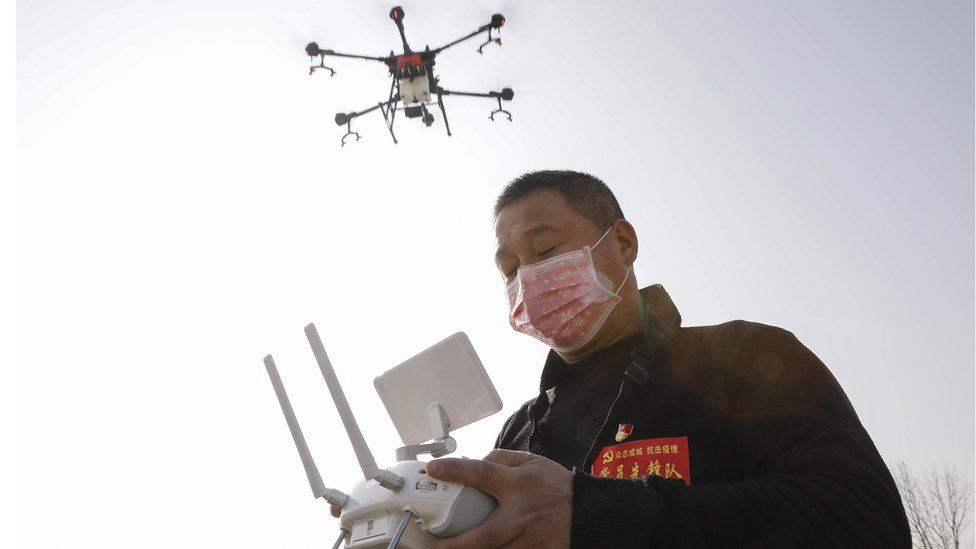
These flying camera birds are helping in patrolling and making sure evrybody is maintaining social distancing. They help the officials check on things and also maintain social distancing at the same time. In remote areas agricultural drones were used for spraying disinfectants. In some parts of the country theyare being used to deliver crucial medical supplies.

Coronavirus: China's tech fights back - BBC News

Online Clinics and Counseling-

Due to this one illness other diseases have lost its importance. People suffering from issues like hypertension and arthiritis are being provided with online medical assistance. Many institutes are also offering online psychological counseling service.

How Technology Has Made Online Medical Consultation Possible ...

Robot nurses and Artificial Intelligence scans

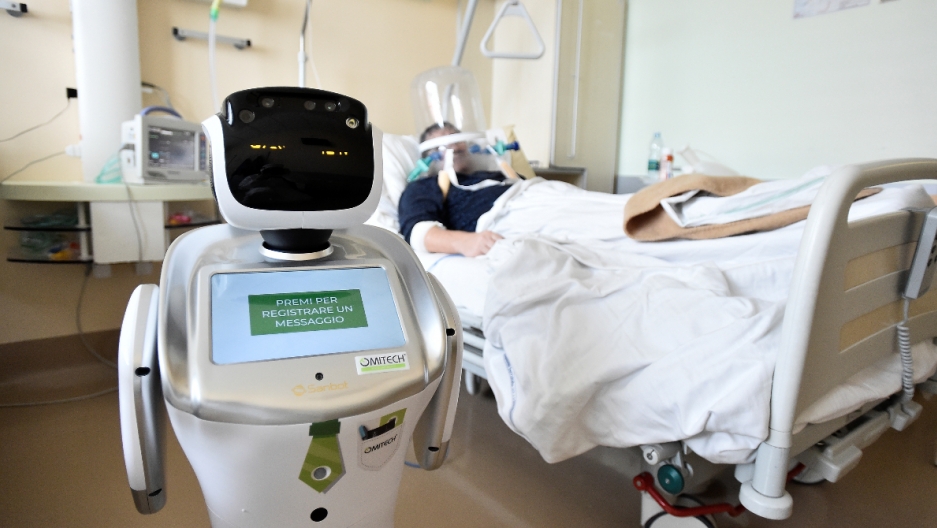
Robots are also used in many Chinese hospitals to deliver food, medicine and other supplies to patients; to disinfect hospitals and other public areas; to check patients temperatures; and to answer common questions. Coronavirus is being   diagnosed using AI, which can read thousands of CT scans in 20 seconds with an accuracy rate of 96%.

Robot nurse helps Italian doctors care for COVID-19 patients

Virtual Classrooms

After weeks of schools being closed, possibly the biggest challenge for parents is keeping children occupied and continuing their schoolwork.  To enable this, many schools have rolled out online learning platforms, where students take courses and teachers give lectures from home, via live-streaming platforms.

With online classes in vogue, schools shift focus to feedback and ...

Research and Development

Within the first few weeks of the virus, China had sequenced the genome. By posting that sequencing online, it trigged a ripple effect in research labs across the world, with a surge in orders for synthetic samples of the virus to build copies of it from scratch. This allowed new treatments to be trialed – even experiments that failed offered vital clues in guiding researchers on where they should focus.

Three TN medical colleges to get virus research labs in 6 months ...

Smartphones and Internet

Smartphones are playing a critical role in reducing exposure. Delivery apps offer contact-less delivery, whereby drivers drop food off at a specific point – including a card stating the temperature of everyone involved in cooking and delivering the food. Another offers users maps marking residential communities with confirmed cases and their proximity to them. Meanwhile, mobile payment apps are reducing transmission along paper money, which can carry viruses for up to 17 days. With the world’s highest penetration of e-wallets and two of the world’s largest mobile pay, Chinese fin-tech is helping to slow the coronavirus spread.

India lockdown throws online delivery out of gear, millions cry

Work From Home

A major challenge during the virus is being able to work.  Several tech companies are offering free online collaborative tools. Other businesses have quickly adopted work-from-home policies, using online meeting software, collaborations platforms and LBS technology to clock in and  ensure employees stay home. At UNDP, the use of Zoom teleconferencing and ERP Platforms have allowed us to keep working.

Coronavirus and Working From Home: How to Keep the Kids Busy - Nelson

Virtually Connected

Compulsory quarantine has disrupted daily life and curtailed social interaction for nearly one fifth of the global population. This is leading millions to meet online instead. Families dine together with relatives in distant cities, raising a glass to each other on camera. Even weddings have been held in Virtual Reality.

Things To Do With Friends While Hanging Out Virtually - Addison ...

While the use of technology can at times present its own challenges, and fuel debates about privacy and public good; in the fight against the coronavirus, it is playing a critical role in offering treatment, information, support, food, schooling and greater safety for many.

“CANCELLING EXAMS”; PROBLEMATIC SOLUTION/REALITY

In the beginning of this pandemic, we didn’t have even the slightest idea of its severity. But as days turned to weeks and weeks to months we came to realise how life-threatening and brutal it has been since. Lockdown after lockdown, so much confusion, the world economy changing dramatically, countries blaming each other, war threats and many more, we saw it all.

But what is bothering the student community is how they can move forward from this situation and work towards their career and education without losing out on much. Schools and colleges took to online platforms to continue the syllabus. They tried their best to switch over from the traditional classroom method. Online classes and assignments were one thing. But online exams are completely unconventional, especially to the Indian education system.


Practically right from class 10th  board exams to the various competitive exam like (JEE /NEET /CLAT) everything came to a standstill.

 Soon the college sector started thinking of ways to conduct exams online. The main focus was on the final year students who had to be taken care of first and sent into the ‘real world’.

The Indian government along with the respective authority bodies like the CBSE Board, the UGC, BCI, etc. took decisions on the various sects of students, i.e., middle school, high school, college, etc.

For college students, except the final years, were considered to be promoted to the next semester based on their internal marks. Authority bodies like the UGC and BCI issued guidelines to the colleges on the same. For final year students online exams were conducted by outsourcing resources for optimum results.

The issue however lies in the fact that this scheme of promoting students based on their previous records is not favourable and fair to all students. Also there is confusion on whether the online exams will take place or not, because every day contradicting statements and ideas come out. This takes a toll on students as well as the parents who are anxious about the course of their future. Even if the previous records are considered and taken as a base to promote students to the next semester, will it have repercussions in the future is also a serious aspect that is bothering the students and parents likewise.

The pattern for online exams is mostly MCQ (multiple choice questions), which not exactly helps in assessing the in depth knowledge of the students.However, promoting students without a proper examination can prove to be dangerous especially for professional courses like medicine, law, engineering etc. Even majorly qualifying exams like NEET, CLAT, GATE, JEE etc. have been postponed.

In these trying times, essentials like education should not take a back seat as it is something that will shape the future of the country. The uncertainty linked with the current situation and delayed exams are terrifying as it hinders the progress of millions of students who are pursuing their higher education. This not only affects the student community, but also impacts on the growth of our economy. Recently the state governments of Karnataka and Delhi decided to cancel exams. Even the CBSE board decided on reducing 30% syllabus for classes 9 to 12 for the academic year 2020-2021 only. The Council for the Indian Certificate Examinations CISCE reduced 25% for classes 10 and 12 for the year 2021 because of the disruption caused by the Covid-19 pandemic. Are these good decisions or not, we can’t exactly say now. We can just hope for the best.

Are products really ‘Made In China’ ???

Made in China. We’ve become accustomed to seeing the label on products manufactured in the world’s second biggest economy. But buying one of these products in China instead of say, the U.S., doesn’t guarantee you’re getting a better price. Chinese tourists have built a reputation for being big spenders abroad, spending a whopping $277 billion in 2018, much more than any other nationality. A lot of times, people think that purchasing something in China will be inexpensive, but that isn’t always the case. So how much of a difference are we talking? If we bring four products from four popular western brands to compare. Starbucks, H&M, Adidas store, a Godiva store. To keep things consistent, we will be using 2019’s average foreign exchange rate. The products compared are:

  1. A standard black t-shirt at H&M.
  2. Starbucks Grande Cappuccino.
  3. Godiva Chocolates.
  4. An Adidas hat.

Now let’s compare:

  1. The shirt at H&M is priced nearly the same in the U.S. and China.
  2. A Grande Starbucks cappuccino will cost you $4.63 in Beijing, but in Los Angles, California, $3.95.
  3. This case of Godiva chocolates, called Pearls, is priced at $7.24 in Beijing, but only $3.95 in LA.
  4. The Adidas hat will set you back $42.27 in China, nearly double the price of a similar hat in the U.S.

This experiment has made clear that pricing are complicated. So much so, that websites have popped up like the Mac Index, a site that compares Apple product prices from around the world. So many ads for Apple here in this area. According to an analysis done by Tech Insights, the cost to make an Apple iPhone 11 Pro is $490.50. Yet according to The Mac Index, the price to buy one is $1,318 in Japan, $1,477 in the U.S., $1,658 in Mainland China and more than $2,000 in Turkey and Peru. Prices vary across countries due to factors like demand, tariffs and tax refunds. And then there’s the supply chain: the network of people, organizations, activities, information and resources involved in the creation of a product.

close up of camera over black background
Photo by ATC Comm Photo on Pexels.com

Apple’s current CEO Tim Cook is considered by some to be a mastermind in supply chain. He first joined Apple in 1998 with a mandate to clean up the company’s manufacturing and distribution. Over time, he closed factories and warehouses, instead opting for contract manufacturers in China. That’s great for Apple’s profit margins, but it’s certainly not praised by President Trump, who has asked Apple to make its products in the U.S. If, say, iPhone production was moved to the U.S., instead of China, different analyses show the price for the consumer could go up from anywhere from $30 or $40 to hundreds of dollars to even $30,000-100,000. That’s partially why, despite Apple pledging to invest more money in American manufacturing, it maintains China as its hub for making its gadgets.

american and chinese flags and usa dollars
Photo by Karolina Grabowska on Pexels.com

That’s Omar Slim, a senior portfolio manager at global asset manager, PineBridge. When you hear about made in this country or that country is really quite relative and it’s a simplification of things because it’s most likely made in a number of countries. Here’s an example. Let’s say we want to make lasagna for dinner. If Jeff cooks the ground beef and prepares the cheese, Sarah makes the tomato sauce and layers the ingredients into a pan; and Blair, who bought all the ingredients, puts it in the oven, who gets the credit for making the lasagna? Now, let’s apply that to Apple’s iPhone. While the phone might say ‘Made in China,’ some of its parts come from other parts of Asia, Europe and even the U.S. Even though an iPhone may be assembled in China, it’s still tariffed in China as a U.S. product because Apple is an American company. The brand makes that clear with by, ‘Designed by Apple in California. How they’re treated in terms of customs, they will be treated as a U.S. product. So regardless of where they come, it’s essentially a U.S. product. Same for Chinese products going into the U.S. and same for, for instance, European cars.

India simply cannot afford to boycott Made in China — Quartz India

China became a popular manufacturing hub in the 1980s after it started to open to the world. It became known for its cheap labor costs, lax regulations and business-friendly environment. As China’s manufacturing sector grew, it took the crown from Germany as the world’s top exporter in 2010. While Made in China has become synonymous with cheap and low-quality products, China is hoping to change that. In 2015, it launched a Made in China 2025 initiative, which aims to shift its economy from low-end manufacturing to high-end, high-tech products. In 2017, Tim Cook said China lost its place as a low labor cost manufacturing nation many years ago. The U.S.-China trade war resulted in a tit-for-tat increase in tariffs on many products.

Petition · Political Parties: Boycott 'Made in China' products in ...

With increasing costs being passed on to consumers, many companies are looking to diversify their supply chain, instead of being so reliant on China. That sentiment has only grown, following the coronavirus pandemic’s hit on the global manufacturing industry. Along that supply chain, there will be some companies, that instead of manufacturing it in China, if they could, they could try to replace. In fact, companies including Apple, Microsoft and Google are reportedly looking into moving some of their hardware production from China to Vietnam or Thailand. But that might be harder than it sounds. The other countries will have a hard time to compete along with the fact that the infrastructure is shown that it’s quite good, along with the fact that in certain countries would not want to compromise the relationship with China.

70 Reasons that makes us Proud to be Made In India - Sanjay Dalmia

The reality today is that a product likely has many components which are sourced globally. A phone may be designed in the U.S, but its screen is sourced from South Korea, the sensors and microchips may be from Taiwan or Germany, with its assembly in China. So, the next time you see a product with the words, “Made in China,” remember that the full story is seldom pure, and never simple.

How Starbucks captured the coffee & the world…!!!

With nearly 30,000 cafes across the world , Starbucks has become over just a household name. From its iconic cups, often adorned with misspelled names, to the espresso inside them, Starbucks has catapulted from one coffee bean shop in Seattle to a sprawling $80 billion business over the last 47 years.

Starbucks has a 'void in innovation' and healthy beverages won't ...

Starbucks sales account for 57 percent of the total cafe market. Yes, 57 percent, nearly two-thirds of all coffee sold at cafes in the U.S. comes from a Starbucks. But this impressive expansion hasn’t come without growing pains. With more than 14,000 locations in the U.S. alone, Starbucks has spread itself too thin. Having too many stores has led to fewer transactions at individual stores. To compensate, the company has raised prices. But doing this too quickly or too often can drive customers away. So how did this happen? And what’s a coffee giant to do about it? The year is 1970.
Three college friends, Zev Siegl, Jerry Baldwin and Gordon Bowker decide to get into the coffee business. They found a mentor in Alfred Peet, founder of Peet’s Coffee and the man responsible for bringing custom coffee roasting to the U.S. He knew the coffee industry inside and out, especially the gourmet end. He was the most educated coffee guy in the country at that time. So with Peet’s help, the three friends open Starbucks, a coffee bean shop and roastery at Seattle’s famous Pike Place Market in 1971. Peet provided the young entrepreneurs with roasted coffee beans and connected them with coffee brokers until they could set up their own roastery and source their own beans. For the first decade, the founders opened five more locations in Seattle. At this point, contemporary coffee consumers might have noticed a glaring absence: actual coffee drinks. But that’s the thing about the 70s coffee culture: it didn’t really exist outside the home. There were no coffee bars nor was there much of a requirement for espresso-based drinks. You purchased coffee beans and you either took them home as beans or we ground them for you in the store. Nobody expected to urge a beverage at a Starbucks coffee store until after 1980.

Starbucks Story - CEO, Founder, History | Coffee Company | Success ...
Starbucks’ initial focus was bringing high quality beans to consumers who were more accustomed to instant or canned coffee, but that changed with the addition of one man. The company hired its first really professional Director of Marketing and Sales, and that man was Howard Schultz. And he couldn’t figure out why we weren’t selling beverages. In 1983, Schultz travels to Italy and returns with an idea: turn the coffee bean stores into cafes. Starbucks served its first latte the next year. The experiment was a success, and four years later, Schultz partnered with investors and bought Starbucks for $3.8 million. He was only 34 at the time. Schultz pursued a strategy of aggressive expansion. By the time the company went public in 1992, it had 165 stores, in 1996 it had opened more than a thousand locations, including its first international cafes in Japan and Singapore.
Growth was so rapid that, just three years later, Starbucks opened its 2,000th location. Schultz switched from CEO to Executive Chairman in 2000, at which era Starbucks operated 3,500 stores in additional than a dozen countries. Between 2000 and 2007, the number of Starbucks cafes more than quadrupled, from 3,500 to over 15,000. During this era , the corporate opened a mean of 1,500 stores per annum , including 2,500 in 2007 alone. Sales shot up from $2 billion to $9.4 billion. Consumers were increasingly ditching their kitchen mugs for these iconic paper to-go cups. But then, Starbucks hit a wall: the 2007 financial crash. That year, its rapid growth screeched to a halt and its stock price plummeted by 50 percent as cash-strapped consumers backed away from pricey coffee habits. So, Starbucks brought back Howard Schultz. This news alone caused Starbucks stock to increase by 9 percent.

Xed Knowledge
Schultz halted growth and focused on customer experience. He shuttered cafes – more than 600 in 2008 and another 300 in 2009 – and laid off around 6,700 baristas. A month after his return, Schultz ordered Starbucks to shut all of its U.S. locations for one afternoon so he could retrain more than 135,000 baristas about how to make its signature espresso. Schultz’s goal was to remind customers what they loved about the brand by making the stores an experience, not just a place to get a quick coffee. They stopped selling breakfast sandwiches and brought back in-house grinding, infusing the cafes once again with that fresh coffee aroma. Schultz even mandated the removal of automatic espresso machines. These made service faster, but removed much of the romance and theatre of watching baristas craft each cup of coffee. Schultz’s makeover worked.

Starbucks | Description, History, & Facts | Britannica
The company’s stock soared more than 143 percent in 2009 and same-store sales rebounded. Starbucks has posted positive same-store sales ever since. During Schultz’s makeover of the cafes, Starbucks barely opened any new stores. But the pace picked up again in 2012. By 2017, Starbucks opened nearly 3,000 more locations, ending the year with 28,000 cafes round the world. However, this brings us back to the first problem: profit cannibalization. Over-saturation, particularly in urban locations, has spread sales thin. Because Starbucks has numerous locations, customers do not have to be loyal to only one. So albeit Starbucks overall sales are growing, its individual same-store sales won’t reflect it. Compounding this problem are changing consumer preferences. People are shying away from sugar-laden calorie bombs. which happens to be one of Starbucks’ staples. These signature Frappuccinos contain an average of 57 grams of sugar. That’s more than double the recommended daily limit of sugar. So, to combat these problems, Starbucks is changing once more . The company announced the closure of 150 stores in 2019. That may seem like a drop in the bucket for a sprawling company like Starbucks.

Starbucks App Users Now Drive 17 Pct Of Sales | PYMNTS.com

The company’s biggest undertaking is its new line of upscale stores: Starbucks Reserve Roasteries. These massive, 20,000-square foot stores are designed to be a tourist destination. Here, Starbucks baristas and bartenders’ experiment with different brewing methods and craft new, innovative beverages. These have proven popular. In the first weeks, the Shanghai Roastery made an average of $64,000 every day, which is double what a regular cafe makes in a week.

“Stop Worrying and Start Living” – Dale Carnegie – Book review

Dale Carnegie’s how to stop worrying and start living so the first big idea is ask yourself what’s the worst thing that can happen I remember the first year in college constantly worrying about my grades what was I getting to do if I got a B+ rather than an a well surely my life would be over and that i would never amount to anything in life like that was seriously the thought process browsing my 17 year old head now fast-forward five years.

How to Stop Worrying & Start Living
Carnegie tells a story of this guy in World War 2 who’s stuck in a submarine and basically knows that he’ll be dying in the next few hours and he sits there thinking about all the stuff he used to worry about at home and how absurd it was and makes a promise to never waste his life again like that if he survives now that might be hard to resonate with so let me give you a more contemporary example people are having their heads chopped off every single day every single day the only reason it’s not you is because you are born in a certain place. They weren’t that’s it now going back to my friend I told him look here’s what I want you to do every day you will start your morning by watching somebody’s head being chopped off and then you’ll go about the rest of the day.
He started freaking out about how he can’t do that and how he doesn’t like blood and whatever now here’s the thing. I know that’s really crass and morbid but I don’t care if you don’t worry about stuff great you don’t have to watch anything but if you’re worried about stupid all the time you have a disease so you either treat yourself or you never ask about how you can stop worrying again ever. Here’s what I will guarantee you if you start your day by watching someone else have their head chopped off nothing and I mean absolutely nothing could possibly happen to you for the rest of the day that you could get pissed off about and not feel like a complete retard yes when you’ve seen someone’s head chopped off you will have a weird feeling inside you as soon as you start to complain about how you deserve to be paid more at your job or what you’re going to do now since you bought a B+ rather than an A or how your washer is broken you’ll realize that.

automatic weapon bullet camouflage close up
Photo by Pixabay on Pexels.com

If the guy had been given the chance to live and wear that same dirty shirt for the rest of his life without ever being able to wash it he would have been the happiest man alive realize the absurdity of it all the third big idea staying busy now I don’t mean the average busy person actually those are the people that worry the foremost the guy who works 12-hour days then comes home and watches Fox all night worrying about whether some guy can marry another guy or about all the foreigners who will come and take his job you know because he’s the only one entitled to that job I’m not talking about that kind of busy here’s how I like to stay busy read a book that I like go to the gym with my girlfriend play around on the piano and compose cook amazing food work on a project. I’m passionate about now here’s what happens when you do that your brain can’t think of two things at one time it just doesn’t have that capability you can try right now if you want you can’t think of your broken washing machine and at the same time think of how much you love playing soccer it’s not how your brain works so the best way to get rid of the negative thoughts in your head is to actually start putting positive thoughts in there get busy with what you love and your brain simply won’t even have the power to stress . Finally, a question that really resonated with me here’s what you’re going to do in your life you’re going to work and worry your entire life so you can gather a bunch of stuff like your house and all the stupid.

woman working girl sitting
Photo by Alexander Dummer on Pexels.com

If you’re lucky after 50 years of all that worry and stress all of your stuff could be worth 1,000,000 dollars here’s the question would you sell your legs for a million dollars let me ask you this would you sell your legs for a billion dollars I wouldn’t and you probably wouldn’t either would you sell your arms for another billion dollars no there you go you have already got something that you simply value at two billion dollars actually hopefully more but you do not need to be all Zen you could be a greedy capitalist like me and understand this now here’s what you’re going to do you’re going to ignore and not utilize something worth two billion dollars because you’re too busy worrying and stressing about the things that might amount to 1 million dollars at the end of your life oh and you’ll be considered really lucky if that happens by the way all right.

cheerful barista in apron and hat with portafilter
Photo by Ketut Subiyanto on Pexels.com

So, I don’t know if you’re seeing how crazy that is but that’s kind of like having a huge mansion a personal jet every single car you ever wished for and not using and enjoying those things because you’re too worried about at some point having the ability to shop for a Corolla that’s crazy and sad you have already got everything that you value at billions and billions of dollars so stop ignoring wasting and treating it like for hours and days so you can worry and bitch about how your phone bill went up from a hundred dollars to a hundred and twenty.

You can buy this amazing book from here ( click here )

Online Learning Platforms And Courses.

What is Online Learning ?

Online Learning, or, e-learning, is the education that is done by, or through the internet. Online learning provides u an institution without the walls, you can learn, study and get certified by just being at your place. It reduces the need of travelling, or the traditional classroom sessions or 8 hours, e-learning gives you the chance to learn from anywhere and at anytime.

Resources you get while learning online:

  • EBooks
  • Videos
  • Recorded Lectured
  • Live Sessions for query
  • Journals
  • Quizzes

Some disadvantages of Online Leaning.

  • Lectures are not downloadable: The lectures available in the online learning platforms are not downloadable, this is not suitable for those who do not have proper network.
  • Multiple devices: The same account can be used by multiple users if the id and password is shared.
  • Only for certifications: Few users opt the courses just for the sake of getting certificate, they do not have to watch the whole lectures, if they have paid, they will get the certificate.

Some Online Learning Platforms.

  1. Udemy: It is an American online learning platform, founded in May 2010. Here, the courses are available in 65 different languages, like, English, Chinese, Dutch, French, German, Japanese, Korean, Polish, and etc. Here are several courses available in the field of design, development, marketing, photography, IT and software, personal development, and many more. Total number of instructors teaching in Udemy: 57K Total number of courses available in Udemy: 150K Total number of enrollments in Udemy: 295M
  2. Coursera: It is founded by Stanford computer science professors Andrew Ng and Daphne Koller in 2012. You can access it through mobile, and download the lectures and watch them offline, this is a boon for those who don’t have proper network in their area. The courses are available in more than 40 languages with subtitles. Total number of courses available in Coursera: 4,300+ Total number of learners in Coursera: 63M
  3. Skillshare: It is an American online learning platform, founded in November 2017, by Michael Karnjanaprakorn and Malcolm Ong.There are courses available for designing, business, photography, and etc.
  4. Byju’s: For students of class 1st to 12th. It was founded in 2011, in India, by Raveendran. It offers learning programs for the students of class 1st to 12th, and aspirants of exams, like, JEE, IAS, NEET.

BEST ONLINE COURSES WHICH WORTH LEARNING.

  • Digital Marketing Course: It means the use of internet, mobile, or social media to reach customers.The basics of digital marketing are, social media advertising, social media management, email marketing, search engine optimization, search engine marketing, content marketing, web analytics.
  • Data Science Course: It is the study of data, which includes, recording, storing and analyzing the data. Work of data scientists is to do data modeling process, create algorithms and predictive models to extract the data.
  • Advanced Microsoft excel: It refers to the features and functions of Microsoft Excel tools, that are required to perform large and complex calculations, data processing, data analysis and better representation of data. In today’s time, many jobs require advanced Excel skills, which includes, data formatting, power query formatting, tables formatting, conditional formatting, advanced charting, and etc.
  • Graphic Designing Course: It involves problem solving through typography, photography, iconography and illustrations. in other words, it is the process of visual communication. The graphic designers need to create visual concepts,to communicate ideas with the consumers.
  • Content Writing Course: It is the process of planning, writing and editing the content, or we can say the web content. It includes, writing blog posts, articles, or content for specific platform.

Reduction in syllabus and instructional hours

Union Minister of Human Resource Development Mr. Ramesh Pokhriyal ‘Nishank’ said in a tweet that the centre is planning to contemplate the option of reduction in syllabus and instructional hours for the coming academic session. The ministry also appealed teachers, academicians, and educationalists to share their point of view on the sudden crisis. COVID-19 has shaken the grounds of existing procedures in the country in the area of academics and education. Universities and schools across the country have been closed since March 16, when the Central Government announced a nation-wide lockdown as a measure to reduce and limit the growth of COVID-19 in the country. The running CBSE class10 &12 was also halted as an emergency measure. Any sudden and unplanned change in the academic schedule has the potential to create chaos and commotion. Hence Manoj Ahuja recently stated that ”We cannot bring sudden changes in the education system and create confusion and uncertainty. The curriculum reforms are going to be in sync with the learning outcomes”. To make up for the loss caused by the pandemic the ministry thus, plans in reduction of the academic syllabus. This was brought in light after a day after Manish Sisodia, deputy chief minister and education minister of Delhi, requested him to reduce the syllabus by 30%. It is a well known fact that online classes can never be seen as a replacement of learning on campus or in school. ”First of all, we need to assure every child irrespective of age and social class that they are important to us and all of them have equal right to the physical and intellectual space of their schools. The notion of online teaching or older children coming to school first and not the youngest ones should be put to rest”, said Mr. Sisodia.

Online classes

The trend of online classes flourished in the wake of the pandemic. Slowly but constantly schools and colleges started conducting classes online. Despite being a substitute and seemingly fulfilling the purpose, online classes does very little to online education. There are various reasons for the incompetency of online classes, the very first being Internet connectivity. The Indian internet penetration rate in the country stood at around 50% IN 2020. Recently, a girl from Kerala committed suicide due to lack of resources in accessing online classes. This case highlights the inadequacy of online educational infrastructure in the nation. Reasons like slow internet connection adds more to the perils. Apart from this basic deficiency, online classes cannot compensate for the lack of school education especially for kids because of potential dangers of internet exposure. Conducting a fair and systematic exams online will moreover become a herculean task for the academic institutions. Lack of accreditation and low quality also makes certain online courses less reliable and authentic. Online education creates a monologue and not a real dialogue between the instructor and the student and the monologue lacks in a personalised conversation leading to lack of interest. Online education also leads to increase in screen time which carries along numerous health issues from eyes to the spinal cord. It requires an increased requirement of self-direction too. Despite the potential pitfalls, online education has become popular because of the flexibility it offers and especially because of non-availability of traditional and conventional methods of teaching.