How to Get Paying Work When Money Is Short

 It is no secret that the cost of living is on the rise the whole world over. Many are already feeling the squeeze and it is only going to get harder to make ends meet. This is when having a little side hustle to your permanent job could be a real benefit.

Photo by Tima Miroshnichenko on Pexels.com

Window Cleaning

If you are not worried about heights, there are plenty of people that are wanting to have their windows, guttering, and fascia cleaned by willing participants. You are not going to want to clean the windows of the high-rise compartments or office buildings as these are much better left to the professionals with the correct gear but working either within an area that has one or two-story residential properties where all you will require is a bucket, ladder, and some cloths could be ideal.

Ad-Hoc Delivery Driver

If you have a vehicle and a clean driver’s license, you could set yourself up to be an ad-hoc delivery driver. There are shipping sites such as https://www.shiply.com/ where you can not only look for shipping services for moving your products and items, but you can also find delivery work that is needed to be carried out, some local and some not so.

As you will be an ad-hoc delivery driver, you will be able to source deliveries to make when you are free with no commitment to any time that you are not.

Handy Person

Within any community, some require a little extra assistance from those around them. Unfortunately, some of these people have no younger or more able friends or family to ask when they require a little help. This is when the role of a handy person will come into play, whether it is in helping them decorate their home, collecting their groceries, or performing some light gardening tasks, you will find that your efforts do not go unrewarded.

Uber Driver

You would be amazed at how easy it is to set yourself up as an Uber driver. In fact, all you need is a four-door vehicle, a clean driver’s license with a certain amount of driving experience, and the willingness to put yourself forward. Different states do have different laws and regulations when it comes to driving, so you will have to make sure that you are aware of these before you offer your services to make sure that you completely comply.

To Wrap It All Up

When it comes to any of the job roles that are mentioned above, you are in control of your hours, how many hours you work for as well as when you work. The main benefit is that should you feel that you require extra money to get you through the month you can put yourself forward for more work, and in addition to this, if you feel that you would like a break or do not need the extra money, you can take your time off to pursue other interests.

Fayol's Principle of Division of Work – Meaning, Example, Explanation

Principle of Division of Work
In context of this article, let’s revise the meaning of following words:Division of something (e.g. an object, a process, work, etc.) means to divide, chop or break it up into smaller parts to facilitate a better understanding, easier handling and operation, and focused observation on a fixed set of goals. It is a way to separate things apart based on some established criteria like quality, quantity, nature of work, so on. It untangles, simplifies, and narrows down various complexities that were involved prior separation. It helps to ease and enhance the efficiency of managing a giant complex task through smaller chunks that are easy to handle.
Work is any assigned job, task, duty, goal or an objective one is supposed to accomplish (achieve) before the deadline (on-time) and as expected at the expense of one’s mental and physical labour to earn the desired reward (usually monetary but not always) in return.
With this understanding, let’s grasp the meaning of division of work:
Image credits © Gaurav Akrani.Division of Work means to divide or break up a single complicated job into different smaller specialised tasks.
Here, each of these smaller tasks is handled separately probably by an expert or a team working under his command.
In case, these tasks are dependent on each other’s completion, they are achieved separately and procedurally one after another.
When all smaller tasks complete as expected, they all together help to accomplish the single complicated job.
Study the following image depicting an example of division of work.
Image credits © Gaurav Akrani.
Consider for an example, for the first time in your life you have planned to construct a beautiful dream house at your favourite location. Before initiating the actual phase of construction work, you do some pre-research regarding how to build a house systematically. You figure out which crucial steps you’ll need to carry out and professional services you’ll need to access, communicate, negotiate and hire. After getting acquainted with the basic construction procedure and having the necessary funds in hand, you start further planning accordingly.
You divide the combined work of house construction as follows:First, you hire an Architect to prepare the layout plan of your house as per your needs.
Once the house plan is ready, you then contact and hire a civil contractor to build your house as per the approved plan.
When primary construction phase ends, you finally hire an interior designer to enhance the beauty or aesthetic feel of your dream house.
The division of work does not stop at the above three steps else it further bifurcates into numerous specialised works as listed below.
Architect divides his work of preparing the layout plan of house among:Draftsman,
3D-Designer,
Structural Designer, etc.
Civil contractor divides his work of house construction among:Civil Engineer,
Supervisor,
Masons,
Labours,
Welder,
Electrician,
Plumber, so on.
Interior Designer realises his creative aesthetic concept from:Carpenter,
False Ceiling installer,
Painter,
Tiler,
Windows installer,
Handyman,
Electrician,
Landscaper, etc.
In fact, efficient completion of each of the above listed numerous specialised works overall helps to progress gradually and ultimately finish the single difficult job of a house construction.
Explanation of Henri Fayol’s Principle of Division of Work:
Image credits © Gaurav Akrani.In French, Henri Fayol originally called it ‘La Division Du Travail’ in his influential book ‘Administration Industrielle et Générale.’
According to Fayol, the ‘Division of Work’ or ‘Specialization’ is of the natural order. That is this principle is present and seen operating in nature too.
It is noticeable in the animal world. If a creature is highly developed, then its organs are also highly differentiated to efficiently carry out numerous specialized bodily functions to sustain the whole body itself. For example, a unicellular animal called Amoeba is physically less complicated than a multicellular Human Being. In other words, the Human body has more specialized organs compared to Amoeba‘s body.
It is also noticeable in our human societies or communities. When society grows from its primitive stage to a developed (civilised) one, new dedicated social organs (agencies) also start appearing and developing within its sphere by dividing and replacing the functions of old organs. For example, when a small town transforms into a giant metropolitan city the role, functions, scale of operation of its local administrative body also expands, divide and becomes much more complicated than its previous stage.
When an entrepreneur starts a company, most of the important business activities at the initial phase of setup are personally managed and handled by himself. However, as the company grows, he hires staff to support such a growth. He assigns his newly appointed staff various duties and some key responsibilities that earlier he was personally handling and managing. In other words, he now doesn’t do the same work he was earlier doing else he now get it done from his qualified staff instead. As the activities of the company expand further, newer branch offices, departments, positions, personnel, etc. also starts expanding and widely replacing the functions of a single person who once founded the business. For example, Mark Zuckerberg, who founded the Facebook.
The objective of the division of work is to get more work done in a better way with the same effort and become productive.
If a person is engaged routinely in the same type of occupation, after some time, as a consequence of his routine he automatically acquires some expertise, skill, sureness, accuracy and precision over how to do it in a better and efficient way. Such an ability develops as a result of his numerous hours of work and regular practice. Knowledge acquired through routine work process makes him more competent than those who lack such an experience.
According to Henri Fayol, when there is a change in individual’s occupation (work) it results in the phase of adaptation that demands efforts for adjusting to the new job. Each change of routine work reduces the output, decreases the yield or productivity of an individual. However, an individual’s performance can be regained through quality training, regular practice, earned experience, and passage of time.
Division of work helps to reduce the number of objects (*) towards whom some attention and efforts need to be focused and directed. It is the best-recognized means (way) to make the best use of individuals and teams (groups of people) in most work-related environments. Note: (*) Here, objects are those individuals whose regular job (duty) has been changed or altered and on whose shoulders newer responsibilities are laden, and are, therefore, going through the phase of adaptation.
The principle of Division of Work not just applies to the technical work. It is also applicable to all other types of jobs where there is a need or demand for less or more individuals who specializes in different areas and have the essential set of skills or talents.
As a consequence, the division of work mainly results in:Specialization of functions – Here, tasks are separated into different functions or roles according to the expertise of one’s nature of work.
Separation of powers – It means there is a distribution of authority.
The advantages of division of work are now universally recognized.
Even though the principle is applicable in most work-related scenarios, it is still subjected to limitations like:Doing the same type of work for a longer period makes it monotonous.
Since labor or work is divided, it greatly increases interdependency.
Also, since the focus in only on executing one’s assigned part of work, there is a lack of the spirit of collective responsibility.
Conscious of such limitations or shortcomings, Sir Henri Fayol, recommended using:The principle of division of labour in moderation and not in excess.
One’s wise judgement earned from years of work experience.
References (2)
Following authoritative books were referred to compile this article and are also recommended for further clarity on the Principle of Division of Work:Henri Fayol. Administration Industrielle et Générale. Part 2. Chapter No.1. Page No.26 and 27.
Constance Storrs. General and Industrial Management, 2013 Edition. Part II. Chapter No.IV. Page No.19 and 20. Martino Publishing. ISBN 978-1-61427-459-9.


How to cope with stress in your daily life

Stress is a natural part of life, and like many things, it’s important to learn how to manage it. If you’re suffering from stress, here are some helpful tips for coping:

Find a hobby

If you’re looking for a way to manage stress and unwind, a hobby can be an excellent option. It doesn’t have to be something specific or intense; you could simply enjoy doing something that inspires you every day.

Whatever it is that makes your heart race with excitement, there’s probably an outlet for it in your life—if not now then at some point in the future. Taking up knitting or painting might seem like an odd choice when you’re stressed out by midterms and finals, but these activities can become routine sources of relaxation as well as hobbies!

When we were kids growing up, many of us were fond of playing sports: football or baseball games were favorite pastimes at our houses during the summer months because they gave us something physical (and occasionally competitive) to do together after school hours were over. Nowadays however there are plenty other ways for parents and kids alike alike enjoy getting involved together outside on weekends – whether through volunteering with community organizations like Habitat For Humanity; going camping together on family camping trips; taking part in organized activities such as dance lessons where everyone learns new moves together while having fun at once too 🙂

Build a daily routine

The first step to managing stress is building a daily routine. A morning routine, afternoon routine and evening routine are all good places to start.

Make sure you have your coffee (or tea) before 7:30 AM. This will help you get going in the morning and prevent late-night cram sessions later on in the day when you’re tired or distracted by something else that needs doing.

Get through at least one workout session per week—even if it’s just walking around campus for 30 minutes with friends or playing basketball with teammates after class! Exercise helps burn off energy so that mentally challenging tasks don’t seem insurmountable anymore; moreover, exercise has been shown to reduce anxiety levels as well as improve moods overall.* Go grocery shopping once per week rather than buying food from convenience stores because they tend to have higher prices than supermarkets do; however replacing fast food with healthy alternatives like salads instead of burgers will save money while still providing nutritious meals throughout each day.* Try not using social media sites like Facebook or Twitter too frequently either during lunch breaks at work because this causes users’ lives outside office hours become blurred together into one giant blur which makes everything seem more difficult than before since now there’s no separation between work life & personal life anymore.

Eat healthy food

Eating a balanced diet is key to managing stress. It helps you feel more energized and less tired, which can help you avoid getting sick or stressed out by hunger pangs. If possible, eat a healthy breakfast every morning—this will give you the energy boost that makes it easier for you to get through your day!

If eating junk food is something that stresses out your stomach (and let’s be honest here: who doesn’t love pizza?), try finding healthier snacks like fruit salad bites or even granola bars instead of sugary ones. The key here is moderation; no one should ever eat too much junk food because this will only make them feel worse afterwards.

Get in touch with your family

Stress is a normal part of life and as such, it’s important to find ways to manage your stress. One way you can do this is by talking with your family about how they can help.

Family members are a great source of support when it comes to helping you manage stress—and they may not even realize how much they’re helping! If you have parents or siblings who live nearby, consider asking them if they’d like some help managing their own lives and those around them. You could even offer up some of your time (or money) in exchange for their assistance so that everyone benefits from their efforts together.

Get enough sleep

Sleep is important for learning and memory.

It’s also linked to stress reduction.

Getting enough sleep can help reduce your stress levels, which will make you more productive at school or work.

Go for a walk

You can get away from the stress of school by going for a walk.

Go for a walk alone or with friends if you’d like, but don’t worry about being seen—the point of walking is just to move your body, not impress others. Listen to music while you walk (or listen in silence), and try to take in some fresh air too. Take your dog for a long walk around the neighborhood; they’ll love it! If possible, try walking at least 10,000 steps each day—that’s equivalent to running one mile per hour continuously for 30 minutes straight! When I was younger and had more energy than I do now as an adult who’s trying everything she can think of not only stay healthy but also keep fit at age 55+.

Listen to music


Music is a great way to relax and de-stress. You can listen to any music you like, but try not to choose something that’s too hard or fast. Music can also help you focus on what’s important in your life, which will help keep things in perspective when they get overwhelming.

Music can also help with sleep! I recommend listening before bed because it helps calm your mind enough so that it doesn’t keep tossing and turning at night because of all the stressors going through your head during the day (or even week).

Meditate

Meditating is a great way to relax and unwind. It can help you deal with stress, anxiety and depression, improve your memory and creativity, even slow down the aging process.

If you’re new to meditation or have never tried it before there are plenty of ways that beginners can begin:

Sit comfortably in a comfortable position (sitting or lying down).

Close your eyes if possible – this might help you focus better on what you are doing (most people choose not to cover their eyes).

Start by breathing normally through both nostrils for one minute without counting the breaths or trying anything else at first; this will help clear any thoughts from your mind so that when they come back again later on during meditation they won’t distract us from our task at hand which is meditating.

Talk to someone about your stressors

Talking to someone about your stressors is an important part of managing them. You can talk to your friends and family, but it’s also helpful to talk about the stressors with a therapist or counselor. If you feel comfortable talking about this issue with a doctor, go for it! The same goes for religious leaders, coaches and mentors who have experience dealing with similar issues in their own lives. And if none of these people are available yet, teachers are usually willing to listen when students come seeking guidance from them (or even just want advice on how they should handle their own problems).

Few more steps to encounter stress

Stress can be caused by a variety of factors including work-related issues, relationships with friends and family members or even just having too much on your plate at once. In order to manage stress effectively there are some steps that you can take:

Start taking breaks from time to time during the day (even if only for 5 minutes). This will help you relax and recharge so that when you return back into work mode again; everything feels fresh again.

Try getting outdoors more often during the day so that there’s less time spent indoors where all these feelings tend to accumulate over time because there isn’t much else going on besides watching TV shows while eating pizza as opposed being outside enjoying nature around us all… You get what I mean? 🙂


I hope this article has given you some useful tips for managing your stress. Remember that the best way to deal with a stressful situation is to stay calm and take action. Use our tips above and find something that helps you relax, like giving yourself time away from your responsibilities or getting some exercise – anything will do.

How to cope with stress in your daily life

Stress is a natural part of life, and like many things, it’s important to learn how to manage it. If you’re suffering from stress, here are some helpful tips for coping:

Find a hobby

If you’re looking for a way to manage stress and unwind, a hobby can be an excellent option. It doesn’t have to be something specific or intense; you could simply enjoy doing something that inspires you every day.

Whatever it is that makes your heart race with excitement, there’s probably an outlet for it in your life—if not now then at some point in the future. Taking up knitting or painting might seem like an odd choice when you’re stressed out by midterms and finals, but these activities can become routine sources of relaxation as well as hobbies!

When we were kids growing up, many of us were fond of playing sports: football or baseball games were favorite pastimes at our houses during the summer months because they gave us something physical (and occasionally competitive) to do together after school hours were over. Nowadays however there are plenty other ways for parents and kids alike alike enjoy getting involved together outside on weekends – whether through volunteering with community organizations like Habitat For Humanity; going camping together on family camping trips; taking part in organized activities such as dance lessons where everyone learns new moves together while having fun at once too 🙂

Build a daily routine

The first step to managing stress is building a daily routine. A morning routine, afternoon routine and evening routine are all good places to start.

Make sure you have your coffee (or tea) before 7:30 AM. This will help you get going in the morning and prevent late-night cram sessions later on in the day when you’re tired or distracted by something else that needs doing.

Get through at least one workout session per week—even if it’s just walking around campus for 30 minutes with friends or playing basketball with teammates after class! Exercise helps burn off energy so that mentally challenging tasks don’t seem insurmountable anymore; moreover, exercise has been shown to reduce anxiety levels as well as improve moods overall.* Go grocery shopping once per week rather than buying food from convenience stores because they tend to have higher prices than supermarkets do; however replacing fast food with healthy alternatives like salads instead of burgers will save money while still providing nutritious meals throughout each day.* Try not using social media sites like Facebook or Twitter too frequently either during lunch breaks at work because this causes users’ lives outside office hours become blurred together into one giant blur which makes everything seem more difficult than before since now there’s no separation between work life & personal life anymore.

Eat healthy food

Eating a balanced diet is key to managing stress. It helps you feel more energized and less tired, which can help you avoid getting sick or stressed out by hunger pangs. If possible, eat a healthy breakfast every morning—this will give you the energy boost that makes it easier for you to get through your day!

If eating junk food is something that stresses out your stomach (and let’s be honest here: who doesn’t love pizza?), try finding healthier snacks like fruit salad bites or even granola bars instead of sugary ones. The key here is moderation; no one should ever eat too much junk food because this will only make them feel worse afterwards.

Get in touch with your family

Stress is a normal part of life and as such, it’s important to find ways to manage your stress. One way you can do this is by talking with your family about how they can help.

Family members are a great source of support when it comes to helping you manage stress—and they may not even realize how much they’re helping! If you have parents or siblings who live nearby, consider asking them if they’d like some help managing their own lives and those around them. You could even offer up some of your time (or money) in exchange for their assistance so that everyone benefits from their efforts together.

Get enough sleep

Sleep is important for learning and memory.

It’s also linked to stress reduction.

Getting enough sleep can help reduce your stress levels, which will make you more productive at school or work.

Go for a walk

You can get away from the stress of school by going for a walk.

Go for a walk alone or with friends if you’d like, but don’t worry about being seen—the point of walking is just to move your body, not impress others. Listen to music while you walk (or listen in silence), and try to take in some fresh air too. Take your dog for a long walk around the neighborhood; they’ll love it! If possible, try walking at least 10,000 steps each day—that’s equivalent to running one mile per hour continuously for 30 minutes straight! When I was younger and had more energy than I do now as an adult who’s trying everything she can think of not only stay healthy but also keep fit at age 55+.

Listen to music

Music is a great way to relax and de-stress. You can listen to any music you like, but try not to choose something that’s too hard or fast. Music can also help you focus on what’s important in your life, which will help keep things in perspective when they get overwhelming.

Music can also help with sleep! I recommend listening before bed because it helps calm your mind enough so that it doesn’t keep tossing and turning at night because of all the stressors going through your head during the day (or even week).

Meditate

Meditating is a great way to relax and unwind. It can help you deal with stress, anxiety and depression, improve your memory and creativity, even slow down the aging process.

If you’re new to meditation or have never tried it before there are plenty of ways that beginners can begin:

Sit comfortably in a comfortable position (sitting or lying down).

Close your eyes if possible – this might help you focus better on what you are doing (most people choose not to cover their eyes).

Start by breathing normally through both nostrils for one minute without counting the breaths or trying anything else at first; this will help clear any thoughts from your mind so that when they come back again later on during meditation they won’t distract us from our task at hand which is meditating.

Talk to someone about your stressors

Talking to someone about your stressors is an important part of managing them. You can talk to your friends and family, but it’s also helpful to talk about the stressors with a therapist or counselor. If you feel comfortable talking about this issue with a doctor, go for it! The same goes for religious leaders, coaches and mentors who have experience dealing with similar issues in their own lives. And if none of these people are available yet, teachers are usually willing to listen when students come seeking guidance from them (or even just want advice on how they should handle their own problems).

Few more steps to encounter stress

Stress can be caused by a variety of factors including work-related issues, relationships with friends and family members or even just having too much on your plate at once. In order to manage stress effectively there are some steps that you can take:

Start taking breaks from time to time during the day (even if only for 5 minutes). This will help you relax and recharge so that when you return back into work mode again; everything feels fresh again.

Try getting outdoors more often during the day so that there’s less time spent indoors where all these feelings tend to accumulate over time because there isn’t much else going on besides watching TV shows while eating pizza as opposed being outside enjoying nature around us all… You get what I mean? 🙂

I hope this article has given you some useful tips for managing your stress. Remember that the best way to deal with a stressful situation is to stay calm and take action. Use our tips above and find something that helps you relax, like giving yourself time away from your responsibilities or getting some exercise – anything will do.

Women organizations and their role in India

Women’s Organisations emerged in India as a result of the spread of education and the establishment of the notion of the new woman. There was an improved level of communication among women which made them aware of the different problems that they faced and their rights and accountabilities in society. This awareness led to the upsurge of women’s organizations that fought for and signified women’s causes

An exclusive feature of the Indian women’s crusade is the fact that early efforts at women’s liberation were set in motion by men. Social reformers such as Raja Ram Mohan Roy, Maharishi Karve, and Swami Dayanand Saraswati challenged the conventional subservience of women, stimulated widow remarriage, and supported female education and impartiality in matters of religion, among other issues. Mahila mandals organized by Hindu reformist organizations such as the Arya Samaj and Brahmo Samaj encouraged women to go out of the boundaries of their homes and interact with other members of society. Pandita Ramabai, who was considered as one of the innovators of the feminist movement, with the help of Justice Ranade established the Arya Mahila Samaj in 1882. She envisioned creating a support network for newly educated women through weekly lectures and lessons at homes, where women could learn and gain confidence through interactions.

Women’s auxiliaries of general reform associations also served as a ground for women to deliberate social issues, express opinions, and share experiences. The Bharata Mahila Parishad of the National Social Conference was the most protruding among such opportunities. Though the National Social Conference was formed at the third meeting of the Indian National Congress in 1887, the Mahila Parishad was launched only in 1905.

These initiatives greatly influenced the social status of women. Early attempts at encouraging women to converse outside their families and local committees thus, stemmed from the broader social reform movement and efforts to upgrade the conditions of women.

The pre‐Independence period saw women’s issues related to the nationalist agenda at various junctures. In this period, a major enhancement of women was in terms of political participation of women, calling for a redefinition of conventional gender roles. Women began openly demonstrating their opposition to foreign control by supporting civil disobedience actions and other forms of protest against the British. Opportunities to organize and participate in agitations gave women much‐needed confidence and a chance to develop their leadership skills. Cutting across communal and religious barriers, women associated themselves with larger problems of society and opposed sectarian issues such as communal electorates. Political awareness among women grew, owing to a general understanding that women’s issues could not be separated from the political environment of the country. During this period, the initial women’s organizations formed within the historical background of the social reform movement and the nationalist movement were as follows.

•The Women’s India Association (WIA).
National Council of Women in India (NCWI).
•The All India Women’s Conference (AIWC) in 1917, 1925, and 1927 correspondingly.
Each of these organizations emphasized the importance of education in women’s progress.
•The WIA, created by Margaret Cousins in Madras, worked widely for the social and educational emancipation of women. •Associated with the Theosophical Society, it encouraged non‐sectarian religious activity and did creditable work in promoting literacy, setting up shelters for widows, and providing relief for disaster victims.
•Women in Mumbai, Chennai, and Kolkata through networks developed during World War I work, allied their associations together, and created the NCWI in 1925. A national branch of the International Council of Women, its most prominent member was Mehribai Tata, who aggressively campaigned against inert charity and advised men to support female education.
•The most important of the women’s organizations of the time was the All India Women’s Conference. Though its initial efforts were directed towards improving female education, its scope later extended to include a host of women’s issues such as women’s franchise, inheritance rights.

The Constitution of India enlisted in 1950 which permitted equal rights to men and women. Rights such as the right to vote, right to education, right to enter into public service, and political offices brought in satisfaction among women’s groups. In this period, there was limited activity in the area of women’s rights. Many women’s organizations such as the National Federation of Indian Women (1954) the Samajwadi Mahila Sabha (1559) were formed to work for supporting the cause of Indian women. Since the country was facing a social, political crisis after British rule, many demands of the women activists were not supported by the Government. But during this period from 1945, the Indian women got an opportunity to participate in confrontational politics.


In post-independent India, the women’s crusade was divided, as the common opponent, foreign rule, was no longer there. Some of the women leaders formally joined the Indian National Congress and took a powerful position as Ministers, Governors, and Ambassadors. Free India’s Constitution gave universal adult franchise and by the mid-fifties, India had fairly liberal laws concerning women. Most of the demands of the women’s movement had been met and there seemed few issues left to organize around. Women’s organizations now observed that there was an issue of implementation and consequently there was a pause in the women’s movement.

Some women organizations such as the Banga Mahila Samaj, and the Ladies Theosophical Society functioned at local levels to promote contemporary ideas for women. These organizations deal with issues like women’s education, abolition of social evils like purdah and Child marriage, Hindu law reform, moral and material progress of women, equality of rights and opportunities.

It can be believed that the Indian women’s movement worked for two goals.

•Uplift of women.
•Equal rights for both men and women.

Currently, there are many women organizations in India:

•All India Federation of Women Lawyers
•All India Women’s Conference
•Appan Samachar
•Association of Theologically Trained •Women of India
•Bharatiya Grameen Mahila Sangh
•Bharatiya Mahila Bank
•Confederation of Women Entrepreneurs
•Durga Vahini
•Friends of Women’s World Banking
•Krantikari Adivasi Mahila Sangathan

The major objective of this organization is:

•Strengthening and building new initiatives, networks, forums, etc., for protecting women’s rights
•Monitoring the Government of India’s commitments, implementing the Platform for Action with special focus on the eight-point agenda discussed at the Conference of Commitment, CEDAW, the Human Rights, and other United Nations Convention.
•Advocacy, lobbying, and campaigning on women-related issues.
•Information Dissemination and Documentation.
•Solidarity and linkages with other regional and global forums.


Another women organization in India is Swadhina (Self-esteemed Women) which was formed in 1986. It is principally a civil society organization focused on the Empowerment of women and Child Development based on Sustainable Development and Right Lively hood. At Swadhina, it is believed that positive social change has a direct effect on the lives of women and that change is possible only through equal and spontaneous participation of Women. Organization members are active in five states across the country in remote tribal districts of Singbhums in Jharkhand, Purulia, and West Midnapur in West Bengal, Kanya Kumari in Tamil Nadu, Mayurbhanj in Orissa, and East Champaran in Bihar.

Due to the women’s movement, several legislations were passed like the Equal Remuneration Act, Minimum Wage Act, Maternity Benefit Act, etc. to ensure equal status to women in society & more importantly at work. However, illiteracy amongst the major women workforce (87% of women are employed in the unorganized sector), fear of losing employment & lack of awareness of the laws enacted to protect them, make it difficult for women to benefit from them.


A girl should be two things:

who and what she wants.

Melting of Glaciers – A topic which should not be avoided.

Glaciers are persistent chunks of dense ice that are constantly moving under their own weight. Glaciers are formed where snow accumulation exceeds its erosion over the years, and often centuries.

Rising global temperatures have undoubtedly been the cause of glacier melting throughout history. Due to the rate at which climate change is occurring today, it can become extinct at record rates.

Some of the other reasons:
Carbon dioxide gases Emissions: Atmospheric concentrations of carbon dioxide and other greenhouse gases (GHGs) produced by human activities such as industry, transportation, deforestation, and burning fossil fuels warm the earth and melt glaciers. Glacier savings can be achieved if CO2 emissions can be reduced by 45% over the next decade before reaching zero by 2050.
Ocean warming: The ocean absorbs 90% of the earth’s heat. This fact mainly affects the melting of sea glaciers near the poles and on the coast of Alaska (USA) and other heavy snow covered areas.

The main consequences of melting glaciers are:
Sea Level Rising- Sea level is rising and covers most of the continental region. This means that which means within years most of the areas can be a complete flooded regions.
Less freshwater – No glaciers also mean less water for population consumption, less hydropower capacity, and less water available for irrigation.
Climate change-The balance between cyclone and anticyclone structure and meteorological patterns is deteriorating.
Food Chain Imbalances-The habitats of some marine and terrestrial species are changing and they may harms to them in maintaining their natural circulation and habitat.

Temperature imbalances, extensive processes of deforestation, and rainfall can be other reasons for global warming that lead to glacier melting.
Glaciologists believe that despite the massive ice loss, there is still time to save the glacier from the predicted disappearance. It can done through to curb climate change and save glaciers from getting extinct. Scientists believe that controlling climate change can prevent glaciers from melting and disappearing.

“The earth has a skin and that skin has diseases; one of its diseases is called man.”

– Friedrich Nietzsche

Destructive Habits: Bias

There are many habits that destroy your mental peace, happiness and mostly you. Some of them are usually with different addictions or because of people but what destroys you as a person depends on how you view things and people around you. Your environment is what shapes you but to be different, you have to do it by yourself. 

The most common habits have become common because we are more focused elsewhere than ourselves. To be a better version of yourself, you need to view your flaws and work on them.

  1. Spotlight Effect: We overestimate how much attention people give to our words and appearance. Imagine you said something but it felt wrong after it came out. In reality, everyone only remembers it for the moment and immediately moves to the next topic. We ponder over it for days, forgetting that others don’t care as much as we do about it.

Example: “The red shoes don’t match the outfit at all! I guess the guys are laughing because of it”

*Red shoes matched the outfit better than you imagined*

Truth: No one cares about you as much as your loved ones do. Everyone is just a temporary traveler in your life and you have to be okay with it. Dress how you want and be how you want to be. 

  1. Status Quo Bias: We prefer for things to be the same; usually change is viewed as a negative aspect of life. If you adopt a new habit that cuts out something from your life, you immediately feel guilty of not being able to manage it, so you quit your new habit for the old one because it feels more comfortable.

Example: “I like to paint, but the classes are on Friday, I won’t be able to party! I can always paint later so let’s party now!”

*Proceeds to miss out on an amazing experience*

Truth: Change is hard. To adapt to a new routine and new place is always difficult and your mind is stuck on the old routine, but only then do you learn more about yourself. You may like to paint now, but when you explore it, you may not want to put the brush down! You need to explore that change for a while to know more about yourself.

  1. Zeigarnik Effect: We focus more on the incomplete tasks than the ones that have been completed. Sometimes, we forget to see that we have accomplished many things on the way, and we focus on the ones that we have not accomplished yet. It pushes you to feel bad that you are not able to do anything. 

Example: “Bro I lost the Table-Tennis Pan-India Semi-finals! I feel so like I can’t do it anymore”

*Came so far by winning championships and tournaments*

Truth: You have to see where you are today. Look behind you and see the different hurdles you had to come across. You didn’t cross them just to go back did you? It does feel bad to not achieve something the first time you try it, but when you achieve it, after toiling for some time, the fruit is incomparable.

  1. Pessimism Bias: We tend to overestimate the possibility of negative outcomes. We always have a small part of your mind that searches for a negative outcome. What you see and ask for, is what you get and have. You will increase the chance of losing the opportunity if all you see is losing it.

Example: “I feel like I will lose this chance to be head of department, there are so many others who are way more qualified.”

*Loses opportunity because it messed with your confidence and screwed your interview*

Truth: What energy you put out, is what you usually get. Sometimes, you lose opportunities, but don’t dwell on the wrong aspects. You may not have the necessary qualifications but the way you portray yourself is what gets you opportunities.

  1. Sunken-Cost Fallacy: We invest more in things that have cost us something, even if we have negative outcomes. We feel that if we invest more, the difference can be recovered with just a little gain.

Example: “My portfolio is down by 25%! I will invest 50% of it so with a 25% gain, I can recover the loss”

*Proceeds to lose more because the stock market is in a bear phase*

  1. Self-serving Bias: Our failures are situational but our success is our hardwork’s result. We view that our failures are determined by external factors and our success is because of us. It is also difficult to ascertain what caused success or failure on the spot so we divide it based on the result.

Example: “I lost the game because the opponent was too strong. I got the best player of the match because I practiced well”

*Opponent won because of your overconfidence in your practice*

“The eyes sees only what the mind is prepared to comprehend.”

~Robertson Davies

Sometimes, we see these habits recurring but we don’t want to change because we feel it will make others dislike us. By changing, you are not making your friends feel bad but giving them a chance to understand that it’s time to improve. It’s time to make yourself the person you always wanted to be. Everyday is a learning step and only then can you improve. These habits of biasing situations have a lot of effect on where you are and where  you want to be.

This post has been inspired by Ankur Warikoo. You can check his post on LinkedIn here!

This was a delight to write about. I hope you have found this article interesting and let me know about your thoughts on this. Keep on smiling!

Destructive Habits: Bias

There are many habits that destroy your mental peace, happiness and mostly you. Some of them are usually with different addictions or because of people but what destroys you as a person depends on how you view things and people around you. Your environment is what shapes you but to be different, you have to do it by yourself. 

The most common habits have become common because we are more focused elsewhere than ourselves. To be a better version of yourself, you need to view your flaws and work on them.

  1. Spotlight Effect: We overestimate how much attention people give to our words and appearance. Imagine you said something but it felt wrong after it came out. In reality, everyone only remembers it for the moment and immediately moves to the next topic. We ponder over it for days, forgetting that others don’t care as much as we do about it.

Example: “The red shoes don’t match the outfit at all! I guess the guys are laughing because of it”

*Red shoes matched the outfit better than you imagined*

Truth: No one cares about you as much as your loved ones do. Everyone is just a temporary traveler in your life and you have to be okay with it. Dress how you want and be how you want to be. 

  1. Status Quo Bias: We prefer for things to be the same; usually change is viewed as a negative aspect of life. If you adopt a new habit that cuts out something from your life, you immediately feel guilty of not being able to manage it, so you quit your new habit for the old one because it feels more comfortable.

Example: “I like to paint, but the classes are on Friday, I won’t be able to party! I can always paint later so let’s party now!”

*Proceeds to miss out on an amazing experience*

Truth: Change is hard. To adapt to a new routine and new place is always difficult and your mind is stuck on the old routine, but only then do you learn more about yourself. You may like to paint now, but when you explore it, you may not want to put the brush down! You need to explore that change for a while to know more about yourself.

  1. Zeigarnik Effect: We focus more on the incomplete tasks than the ones that have been completed. Sometimes, we forget to see that we have accomplished many things on the way, and we focus on the ones that we have not accomplished yet. It pushes you to feel bad that you are not able to do anything. 

Example: “Bro I lost the Table-Tennis Pan-India Semi-finals! I feel so like I can’t do it anymore”

*Came so far by winning championships and tournaments*

Truth: You have to see where you are today. Look behind you and see the different hurdles you had to come across. You didn’t cross them just to go back did you? It does feel bad to not achieve something the first time you try it, but when you achieve it, after toiling for some time, the fruit is incomparable.

  1. Pessimism Bias: We tend to overestimate the possibility of negative outcomes. We always have a small part of your mind that searches for a negative outcome. What you see and ask for, is what you get and have. You will increase the chance of losing the opportunity if all you see is losing it.

Example: “I feel like I will lose this chance to be head of department, there are so many others who are way more qualified.”

*Loses opportunity because it messed with your confidence and screwed your interview*

Truth: What energy you put out, is what you usually get. Sometimes, you lose opportunities, but don’t dwell on the wrong aspects. You may not have the necessary qualifications but the way you portray yourself is what gets you opportunities.

  1. Sunken-Cost Fallacy: We invest more in things that have cost us something, even if we have negative outcomes. We feel that if we invest more, the difference can be recovered with just a little gain.

Example: “My portfolio is down by 25%! I will invest 50% of it so with a 25% gain, I can recover the loss”

*Proceeds to lose more because the stock market is in a bear phase*

  1. Self-serving Bias: Our failures are situational but our success is our hardwork’s result. We view that our failures are determined by external factors and our success is because of us. It is also difficult to ascertain what caused success or failure on the spot so we divide it based on the result.

Example: “I lost the game because the opponent was too strong. I got the best player of the match because I practiced well”

*Opponent won because of your overconfidence in your practice*

“The eyes sees only what the mind is prepared to comprehend.”

~Robertson Davies

Sometimes, we see these habits recurring but we don’t want to change because we feel it will make others dislike us. By changing, you are not making your friends feel bad but giving them a chance to understand that it’s time to improve. It’s time to make yourself the person you always wanted to be. Everyday is a learning step and only then can you improve. These habits of biasing situations have a lot of effect on where you are and where  you want to be.

This post has been inspired by Ankur Warikoo. You can check his post on LinkedIn here!

This was a delight to write about. I hope you have found this article interesting and let me know about your thoughts on this. Keep on smiling!

Importance of Cybersecurity.

Cyber security is the protection of Internet-connected systems such as hardware, software, and data from cyber threats. This technique is used by individuals and businesses to protect against unauthorized access to data centers and other computerized systems.

Cyber security is important because it protects all categories of data from theft and damage. This includes sensitive data, intellectual property data, government and industry information data and systems information,personally identifiable information , protected health information and personal identified information . Without cybersecurity programs, organizations cannot protect themselves from data breaches campaigns and are attractive targets for cybercriminals.
Global connectivity and the use of cloud services such as Amazon Web Services to store sensitive and personal information increase both inherent and residual risks. Along with increasingly sophisticated cybercriminals, widespread misconfiguration of cloud services means an increased risk for businesses suffering from successful cyberattacks and data breaches. Executives can no longer rely solely on off-the-shelf cybersecurity solutions such as antivirus software and firewalls, cybercriminals are smarter, and their tactics are more resilient to traditional cyber defense. It is important to cover all areas of cybersecurity to remain fully protected.
Cyber threats can come from all levels of an organization. Organization should educate employees about common cyber threats such as social engineering fraud, phishing, ransomware attacks and other malware designed to steal intellectual property and personal information. Should include cybersecurity awareness training for.

Types of Cyber Threats :
Malware-This is a type of malicious software that can use arbitrary files or programs to harm computer users. This includes worms, viruses, Trojan horses, and spyware. Ransomware-This is another type of malware. This involves an attacker locking the victim’s computer system files and requesting payment to unlock them.
Social Engineering-This is an attack that relies on human interaction to trick users into breaking security procedures and gaining sensitive information that is normally protected.
Phishing-This is a form of social engineering that involves sending deceptive emails or text messages similar to those from trusted or known sources. Often in random attacks, the purpose of these messages is to steal sensitive information such as credit cards and login information.
Spear phishing – This is a type of phishing attack aimed at targeted users, organizations, or businesses.

Cyber security is very important today. Our society is more dependent on technology than ever before and in today’s digital time data breaches that could lead to the theft of personal information which are easily disclosed to social media accounts. Sensitive information such as social security numbers, credit card information, and bank account details are now stored in cloud storage services such as Dropbox and Google Drive. In fact, whether you are an individual, a small business, or a large multinational company, in today’s time everyone rely on computer systems every day .

Personal Habits: Exercising

Everyone from India has heard the phrase, “ If you get up by 6 in the morning, everything will set in order.” It is a common phrase made for Millennials and Gen-Z. We hear it so often and tried a few times but it didn’t suit your routine. Did you ever wonder why you weren’t able to adopt it? After reading this, do let me know about your thoughts on this.

Exercising in the Morning

Of course, the most common habit among people. Exercising a few hours after you get up is beneficial to your health. It increases blood flow in you as well as trains your muscles. It increases alertness and also energizes you for the day. It’s common to do cardio in the morning with lifting weights before your first breakfast. This helps in burning fat as well as developing your muscle endurance. But why can’t you do it?

Jogging in the Morning increases blood flow and improves body endurance.

The most common reasons are:

  • Sleeping Late: You may have slept late. Even if you have slept around 11PM, if you need 8 hours of sleep then you will get up at 7AM. Your body needs sufficient sleep to get up or it will keep you tired the entire day. You have to plan your sleep schedule in a way you don’t compromise your sleep.
  • Exhausted: If you had a backbreaking day and you are completely exhausted of your energy, then you may not get up the next day at your set time. If this is your regular routine, you may want to change the time you want to get up.
  • Jam-packed daily routine: If your schedule is full on an everyday basis, you need to start prioritizing your work. It may be tough to change your routine but by doing this, you can improve the amount of time you can give to yourself and your new habits.
  • Feeling awkward where you exercise: Am I doing it well? Is my form right? Is my shirt torn? Am I sweating too much? Am I disturbing someone? Are they looking at how bad I am? Are they judging me? It is okay to feel these when you workout. Everyone goes through this and it’s okay. At the beginning it does feel weird to do a workout but we all started as beginners and we also have made mistakes. The only thing that you can do is ask a friend, family or trainer to help you. They may also point out other mistakes that you may have made which you can correct.
  • You don’t want to: Most of the time when you try to build a habit, there is a feeling that says, “This isn’t worth the trouble we are going through” but sometimes, you just don’t want to. You might want to do it to show others or of the stereotypical “healthy person”. If you think clearly by separating your external ideas/thoughts, you will understand why you want to do it.

How can you tackle these problems?

At first, these hurdles feel the hardest to jump over but unless you jump over them, you cannot reach your goal. There will be hurdles along the way and you are the solution to them. You will become better when you start crossing hurdles. Every hurdle you face is a step that you need to conquer and move forward.

  1. Set a Convenient time: 5 AM may be easy for others but it may be difficult for you. It may not agree with your sleep routine, or with your work routine so you quit. Rather, just change the time. If you get up around 7 AM and have to go to work by 10 AM. Make a slot of 1 hour for your workout and complete your morning routine! If you can’t make a slot of 1 hour, carry it to the evening when you come home. 1 hour before dinner, exercise to your heart’s content! 
  1. Change your workout: If you are the ‘No pain, No Gain’ person, sometimes, you may get too sore from your workout which leads to quitting. Rather than quitting, change your workout a bit. You don’t need to change weight, just change what you do. It is very helpful to have a 10-minute cardio session at the end. Not high intensity but something like walking on a treadmill or yoga, will help you recover efficiently.
  1. Get a workout partner: “Sometimes, the fruit tastes better when it’s shared” Get a partner! A friend who wants to workout or a family member who is bored of being alone in the gym, work together at the gym! When you have someone to look out for you, you get more confident and work better. It will also help in improving your form! If you workout with a partner you are comfortable with, you will be able to focus more on your workout than others.
  1. Take Pictures of yourself: When you take pictures of yourself after you workout, you can see the amount of progress that you are accomplishing over time. This way you get to see how far you have come. Every day that you work is a step forward. You and your partner could record each other’s workout and see where you could improve.
  1. 20% of the work gets you 80% of the way: Some days, you don’t feel like working out, you don’t feel like going to the gym but by showing up and doing 10% of your workout makes you feel happy that you came. Just by showing up and starting your workout sets the wheels in motion. By the time you take off your headset, you are halfway through.
  1. Take cheat days/rest days: When you exercise, it’s important to rest so your muscles recover and become stronger. By not taking rest, you are prone to burning out. If the gym is tiring you out way beyond it should, then you need a rest day. Hitting the gym after your rest day feels better because you will feel stronger and work more.

This article is my personal opinion that I have used when I workout and it has worked well for me. Experiment with your workout routines and I am sure you can find something that works well for you. To become better tomorrow, you have to work today. This way, you will become a better version of yourself. All the Best! 

NEW EDUCATION POLICY TO BRING EVOLUTION IN THE EDUCATION SYSTEM.

NEW EDUCATION POLICY:
° Students are currently undergoing school exams conducted by responsible authorities in grades 3, 5, and 8.
° 10th and 12th grade board exams will continue, but will be redesigned for overall development.
° Mathematical reasoning and scientific temperament coding begins in 6th grade .Vocational training begins at school in sixth grade and includes internships.
° The 10 + 2 structure is replaced by 5 + 3 + 3 + 4. The new system consists of grades 12 and 3 years preschool / Anganwadi.
° Until 5th grade, this policy emphasizes the local / regional / native language as the teaching language.
° In schools and universities, Sanskrit is also included as a student option at all levels and consists of three language formulas.
° Under Graduate is now 3 or 4 years, with multiple degree options eligible for this period, such as a 1 year certificate, 2 years diploma, 3 years degree, 4 years bachelor’s degree in research, etc.
° An Academic Credit Bank (ABC) is created to store, transfer, and award bachelor’s degrees from digital learning achievements earned by students from various universities.
° The curriculum has been reduced to essentials for all subjects. They focus on critical thinking, discovery, inquiry, debate, and education based on analytical and holistic learning methods for education.
° Focus on e-learning so you can reduce your reliance on textbooks
Under the new policy, education will receive 6% of GDP, up from 1.7%. This definitely boosts the education system.
° By the end of 2040, all universities should be interdisciplinary institutions with more than 3000 students each. University affiliation will be phased out over the next 15 years.

Foucus on Regional /Mother Tongue Language:
As you know, young children learn new things as soon as they teach in their own language, not in another language they are unfamiliar with. This policy is aware of it, so children will be taught in their native language until the age of 5, but it can change to 8th grade .

NEW CURRICULUM STRUCTURE:
•) Rebuild the school curriculum and teaching methods into new 5 = 3 + 3 + 4 patterns.
•) The new curriculum structure is designed to attract the attention of learners at various developmental stages, such as 3-8 years old, 8-11 years old, 11-14 years old, 14-18 years old.
•) Elementary level lasts 5 years:
3 years before school, 1st and 2nd grade.
The preparatory stage lasts for 3 years: 3rd, 4th and 5th grade.
Middle school or high school lasts 3 years: 6th, 7th and 8th grade.
High school or junior high school lasts four years: 9th, 10th, 11th, 12th grade.
All of the above levels include Indian and regional traditions, ethical thinking, socio-emotional learning, quantitative and logical thinking, digital literacy, computational thinking, scientific manipulation, language and communication skills.

“Learning starts with failure; the first failure is the beginning of education.”

– John Hersey

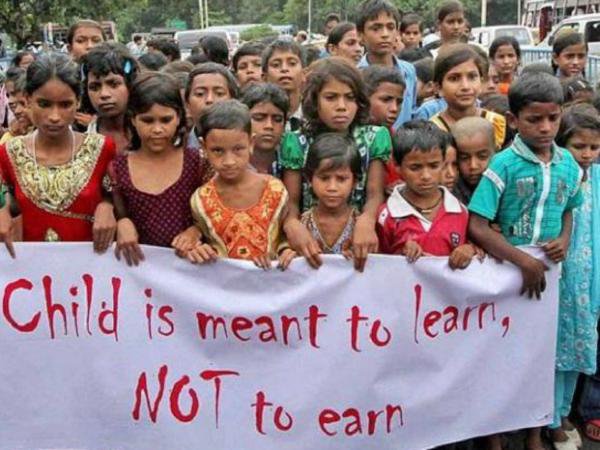
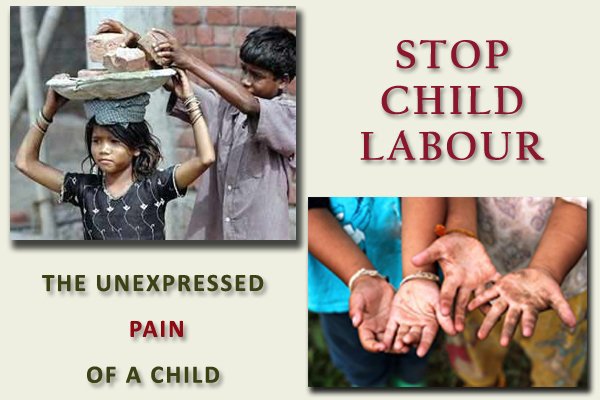
Child Labour in India.

Child labor is the deprivation of children’s childhood, affecting their ability to attend regular school and exploiting them through all forms of work that are mentally, physically, socially and morally harmful.

After gaining independence from colonial rule, India enacted many constitutional protections and child labor laws. The Constitution of India in the principles of basic rights and public policy prohibits child labor under the age of 14 in factories, mines, castles or other dangerous occupations (Article 24). The Constitution also stipulated that by 1960 India would provide all children aged 6 to 14 with the infrastructure and resources for compulsory free of charge education . (Articles 21-A and 45).
In 2011, the Indian Census found that of the 259.64 million children in this age group, the total number of child laborers [ages 5-14] was 10.1 million. The problem of child labor is not unique to India. Approximately 217 million children work worldwide, many of whom work full-time.

In India child labour is defined as the involvement of children under the age of 17 in economically productive activities, with or without compensation and wages . Such participation can be physical, mental, or both. This work includes part-time or unpaid work on farms, family businesses, or other economic activities such as cultivation or milk production for sale or personal consumption. The Government of India divides child labor into two groups. The main workers are those who work more than 6 months a year. And marginal child laborers are workers who work all year round, but less than six months a year. In 1979, the Government of India established the Gurupadswamy Commission to learn about child labor and how to fight it. The Child Labor Probation and Regulation Act was enacted in 1986 on the recommendation of the Commission. A national child labor policy was developed in 1987 focusing on the rehabilitation of children working in dangerous professions. Since 1988, the Ministry of Labor and Employment has established approximately 100 industry-specific national child labor projects to rehabilitate child laborers.

The Government of India has enacted numerous laws, organizations and institutions to combat the issue of child labor. Some initiatives include child labor bans and regulations, laws prohibiting the employment of children in certain occupation and regulating the working conditions of children. The National Child Labor Policy attempts to take a sequential approach with a primary focus on the rehabilitation of children working in dangerous professions and processes of works. The Ministry of Labor and Employment is responsible for providing and supervising a range of child labor policies in India. In addition, as Osment reported, NGOs such as Care India, Child Rights and You, and Global March Against Child Labor were implemented to tackle child labor through access to education and resources. However, these efforts were of little success.

Non-governmental organisations:
Bachpan Bachao Andolan, Child Rights and You, ChildFund, CARE India, GoodWeave India,Talaash Association, Global March for Child Labor, and many other NGOs are campaigning to eliminate child labor in India. increase.

Shortage in Indias Power Supply.

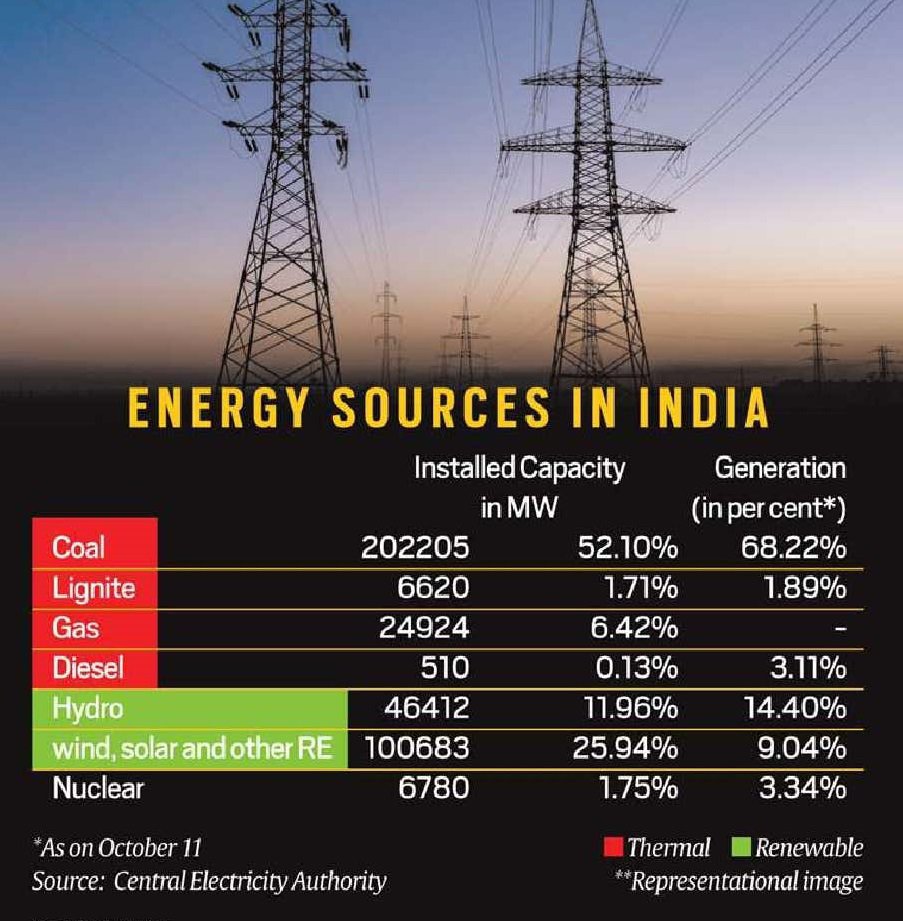
India has the fourth largest coal deposit in the world. It is the second largest fossil fuel producer after China and is home to Coal India, the world’s largest coal mining mine, which accounts for 80% of domestic production. Already allocated coal block mining capacity exceeds expected demand in 2030 by approximately 15% to 20%.


So why are India’s power plants facing coal shortages each year, leading to widespread power outages, exposing parts of the country to darkness and endangering industry?
There are several factors. India has a long time policy of minimizing coal imports. In February 2020, Coal Minister Pralhad Joshi announced that the country would stop importing steam coal from 2023 to 2024.
Mr Joshi said the Ministry of Coal will work with the Ministry of Railways and the Ministry of Shipping to allow Coal India, prisoners and commercial miners to discharge more coal from their supply by 2030. And the coal supply at power plants is running out at an alarming rate. The Department of Energy is currently blaming the decline in coal imports due to the current crisis. In 2018-19, 21.4 million tonnes of coal were imported for mixing, down to 23.8 million tonnes in 2019-20 and 8.3 million tonnes in 2021-22.


Power plant coal inventories have fallen by about 13% since April, reaching pre-summer lows. And for the first time since 2015, Coal India will import fuels used by state-owned and private power companies. The Ministry of Energy said almost all states showed that multiple state bids for coal imports would cause confusion and that the decision was made after calling for centralized procurement by Coal India.
Imported coal costs five times as much as domestic mining, so the center is being pushed back by the state.
Recently, the government has also pressured utilities to increase imports to mix with local coal. Last year, after a two-year break, three tranches of coal auctions were held and nine blocks were successfully awarded.

In September 2021, the Ministry of Coal issued a strict warning to owners of confined coal blocks, stating that their mines should increase production or face restrictions on coal supply by the CIL.
The ministry has discovered that these mines are producing below target.

Of the 43 coal mines outsourced to private companies in the energy, steel and metals sectors, none have met their annual production targets.
On May 6, Coal India announced that it would provide the private sector with 20 closed and abandoned underground coal mines and reopen and operate its revenue sharing model.

According to journalist Shreya Jai the current power supply chain does not seem ready to handle periods of high growth and state discos cannot pay gencos, but the power supply chain starts with state discos and needs repairs. Railroads, on the other hand, are struggling to align the thermal power industry’s demands for faster coal supply with those from other industries. Rakes must be prepared to meet the growing demand for almost all other bulk commodities, from cement and steel to sand and edible grains. By strengthening the value chain of the electric power sector, it is possible to resolve the coal supply-demand mismatch in the long run.

History of Television in India.

Television was founded by John Baird. The first television service was started in 1936 by British Broadcasting Corporation (BBC) of Britain . In 1939, television broadcasts began in the United States. In 1953 the first successful programme in colour was transmitted by Columbia Broadcasting System (CBS) in USA. In today՚s world, television has become one of the most powerful means of mass communication . It can impart education, information and entertainment . Television has end up becoming an necessary a part of our lives.


HISTORY
India’s first television station was established on October 24, 1951, in the Department of Electronics and telecommunications at Government Engineering College in Jabalpur. Television began in India as an experiment on September 15, 1959. It was first started as two hours programmes a week under the authority of AIR. Early programs of these experimental broadcasts were generally educational programs for children and farmers. By 1975, only seven Indian cities were using television services. The Satellite Instructional Television Experiment (SITE) was an important step by India for the use of television for the development of people and the country. Initially, the show was mainly produced by Doordarshan (DD), who was part of AIR at the time. Transmissions were made twice a day, morning and evening. In addition to information on agriculture, health and family planning, other important topics covered in these programs were audience education and awareness raising. Entertainment was also included in the form of dance, music and cinema. In 1976 Television services were separated from radio . Color television was introduced to the Indian market in 1982.


In the late 1980s, more and more people began to own televisions. There was only one channel, but the TV show was saturated. Therefore, the government opened another channel, partly broadcasting nationally and locally. This channel was called DD2 and was later renamed to DD Metro. Both channels were broadcast on the ground. In 1997, Prasar Bharati, was established.Doordarshan, along with AIR, was incorporated into a state-owned enterprise under Prasar Bharati. Transponders of the American satellites PAS-1 and PAS-4 assisted in the transmission and broadcasting of shows on DD. An international channel called DD International was launched in 1995 and broadcasts programs abroad 19 hours a day to Europe, Asia and Africa via PAS-4 and to North America via PAS-1.The 1980s were the prime time for DD, with shows like comedies such as Hum Log (1984-1985), Wagle Ki Duniya (1988), Buniyaad (1986-1987). Epics like Ramayan (1987–1988) and Mahabharat (1989–1990) brought millions to Doordarshan and later on Chandrakanta (1994–1996). Song-based programs for Hindi movies such as Chitrahaar and Rangoli, and crime thrillers such as Karamchand and Byomkesh Bakshi. Children’s shows such as Tenali Rama ,Vikram Betal and Malgudi Days .


Private Channels influence:
The introduction of communication channels was a revolutionary move to reach so many people. It became an opening for Private and Commercial broadcasters in our country. The emergence of private channels began in India in the 1990s after CNN aired the Gulf War. Hong Kong-based STAR (Satellite Telivision Asia Region ) enterned in a contract between an Indian company and Zee TV. It became the first Private Indian Hindi satellite channel. During this time, several local stations have emerged. Apart from local ones various international channels such as Channel, CNN, BBC, Discovery, etc were also available for Indian TV viewers. Their were various categories of channels available for viewers,such as the 24-hour news channel, Religious channels, cartoon channels, movie channels, something for everyone .


Changes and Evolution:
A significant change that has occurred is the use of different methods of delivering television programming. Just a while ago their were satellite-based antennas, but now the mode has converted to dishes. Other shipping methods are are delivery via cable network and direct satellite transmission. Now you can watch TV shows on your mobile phone , the technology behind it is called Internet Protocol Television. The emergence and spread of televisions and computers and the access to content anytime, anywhere, everyone has brought revolutionary change and access to the world of entertainment.

“I always say film is art, theater is life and television is furniture .”

Kenny Leon

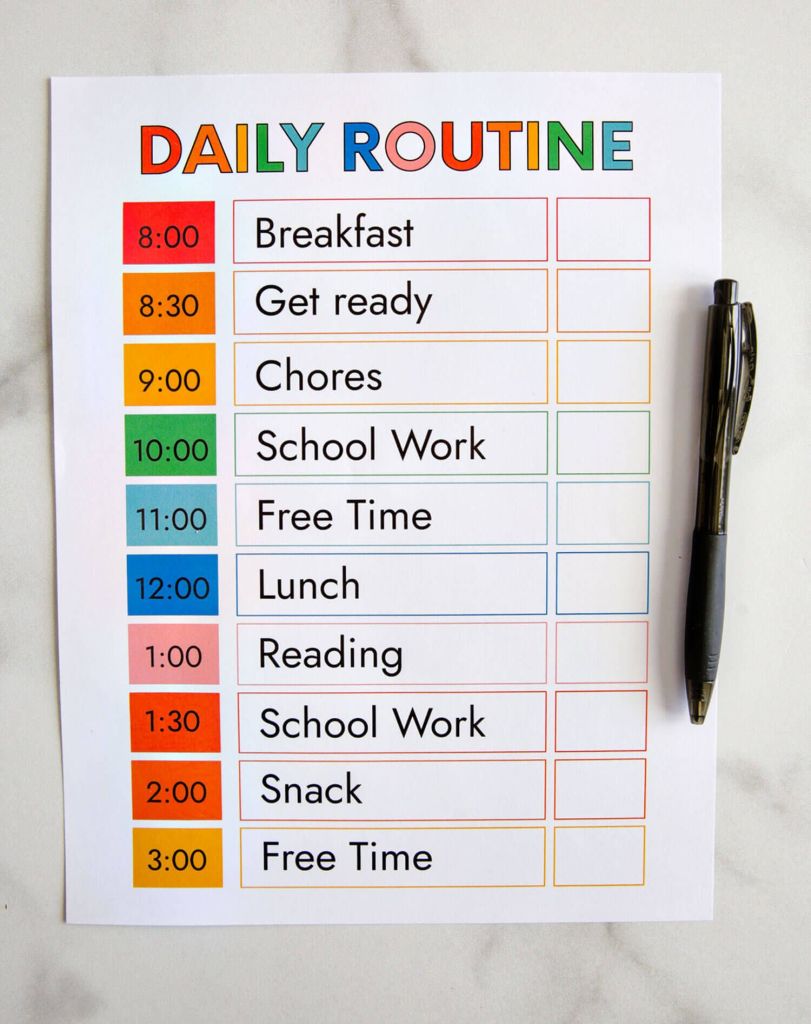
How to properly plan out your week

Become more organized

To be successful and reach your goals, you need to be organized.
One first step in this direction refers to starting your day planning: choosing the agenda that works best for you can be a game-changer.

Practice a lot

Acquiring organizational skills, as in getting better at planning, can take a while. While finding the appropriate agenda is essential, making a habit out of using it is just as important.

Plan important moments monthly

When preparing your schedule monthly, make sure to add not only the daily tasks and objectives but also the big moments.
For instance, integrating your friends’ birthdays can prove both useful and time saving for the future.

Establish a day for planning your schedule

Establishing a certain day, when you can sit and plan your next week can prove extremely useful.
For instance, choosing Friday to be that day, seems pretty clever, as this day marks both the end of a working week and, why not, the beginning of another one.

Manage priorities first

To have successful days at work and not only, make sure you keep track of your tasks. Furthermore, taking care first of the priorities should be on everybody’s calendar.

Necessities are the real thing

Whenever you plan your schedule, write down whatever you need to do, but not everything you need to do.
Some tasks do not require being noted down, as they have become part of a daily ritual and can not be forgotten.

Use colours to plan your agenda or not

You choose how you want your planning to look like, therefore avoid trusting too much others’ opinions, but rather choose to prioritize your own.
For instance, using colour appeals to many individuals, but not to everybody. Just choose your style and get started.

reference

https://www.domino.com/content/how-to-plan-your-week/