The change of administration at the centre in 2014 has brought with it new promises, but it has also brought suffering to the people of India who are being drugged or tranquillized in the hope of long-term benefits. The people of the country will vote for the current government for a second term because they perceive no credible opposition or viable alternative to it.
Although the current government’s administrative efficiency is marginally better than its predecessor’s, the majority of Hindus applaud their radical non-secular approach on specific topics like as the sacredness of the cow or actions against minority appeasement. Furthermore, the minority appeasement approach used by previous Congress-led governments has warped the Indian polity’s secular nature, which must be remedied. However, the BJP government’s work is more of an antithesis to past practises and cannot be termed long-term strategies because it will transform India into a non-secular nation-state with characteristics akin to those of a Fascist state. This is the time for the Left Parties to move forward quietly but earnestly, despite political and economic restraints, and endeavour to enlist the support of the common man. Maharashtra, Gujarat, and Rajasthan are three states that have refused to recognise the Left Parties as an option and have been difficult for the Left to crack for the past seventy-one years.
In Maharashtra, the Indian National Congress (INC), National Congress Party (NCP), and, to a lesser extent, the Shiv Sena are well entrenched, and removing them will be difficult. Except for a brief period under Shankar Singh Vaghela’s leadership, the Bharatiya Janata Party has ruled Gujarat for the past thirty years. Rajasthan has seen five-year transitions between the Bharatiya Janata Party and the Indian National Congress since 1993. In Maharashtra, the sole RED Flag-affiliated party with some clout is the Shetkari Kamgaar Paksha, whose presence and political clout are insufficient to gain an absolute majority in the state legislature. The left must build cadres in these three states over the next few years, as well as re-establish acceptance in West Bengal and Tripura, and attempt a second consecutive inning in Kerala. Along with it, the Communists, or the Left Front, should endeavour to train cadres and prepare for the elections set for 2024, or else aim for an absolute majority in the Lok Sabha elections in 2029.
The road will be rough, but the people of our country require a third option that is superior to both previous and current regimes. This must be a joint effort by all of the Left Parties, i.e.
Except in a few places such as West Bengal, Kerala, and Tripura, the average man in India has not yet developed the needed confidence and faith in the Left Parties, and this has been their most significant disadvantage. There is yet a chance if the Left Parties examine and adjust their approach, making it more inclusive and abstaining from sticking to the Marxist norms that must be abandoned in order to win the trust of the Indian people. A more Machiavellian style, similar to that of Comrade Vladimir Illyich Ulyanov Lenin during the early years of Communist leadership in Russia. Despite the fact that Indian Communism will be relatively different and distinct in light of the country’s economic and social structure, it is the answer, the ultimate answer to equitable and fair governance.
Television rating points have been a much debated issues in india since the present system of TRP’s is riddled with several maladies such as small sample size which is not representative. lack of transparency, lack of reliability and credibility of data e.t.c. shortcornings in the present rating system have been highlighted by key stakeholders that includes individuals, consumer groups , government, broadcasters, advertisers, and advertising shortcomings. in 2008 the ministry of information and broadcasting had sought recommendations of TRAI on various issues relating to TRPs and policy guidelines to be adopted for rating agencies. TRAI, in its recommendations in august 2008 had amongst other things recommended the self regulation through the establishment of an industry led body, that is the broadcast audience research council. the ministry is constituted a commitee under the chairmanship of dr. amith mitra, the then secretary general FICCI in 2010 to review existing TRP System in india. the commitee also recommended that self regulation through the establishment of an industry was the best way forward. since the BARC could not operationalise the TRP generating mechanism the ministry of information and broadcasting sought recommendations of TRAI in september 2003 on comprehensive guidelines mechanism for television rating agencies in india to ensure fair competition better standards and quality of services by television rating agencies. TRAI recommendations on guidelines television rating agencies were received in september 2013, while supporting selfregulation of television ratings through an industry led body like BARC, TRAI recommended that television rating agencies shall be regulated ratings shall be regulated through framework in the form of guidelines to be notified by MIB. it also recommended that all rating agencies including the existing rating agency, shall require registration with MIB in accordance with the terms and conditions prescribed under the guidelines.
SALIENT FEATURES OF THESE GUIDELINES ARE AS FOLLOWS:
all rating agencies including the existing rating agencies shall obtain registration from ministry of information and broadcasting.
the rating agency shall submit the detailed methodology to the government and also publish it on its website.
30 days time would be given to the existing rating agency to comply with the guidelines.
ratings ought to be technology neutral and shall capture data across multiple viewing platforms viz cable TV, direct to home , terrestrial TV e.t.c
Herman Melville (1819-1891), the author of Moby Dick, is recognized today as one of America’s greatest writers, although there was a time when critics as well as readers rejected his writings. He wrote more than ten major novels, based on experiences that he had gone through himself. Some of his adventures in real life were more exciting than the ones he describes in his novels, but none was as strange and thrilling as the story he tells in Moby Dick. Melville was born in 1819 in New York City. His parents, like many other Americans, were of mixed nationality, being partly English and partly Dutch. The Melville family was a well known one, but had become poor at the time of Herman’s birth. He was forced to give up school at the age of fifteen in order to earn his living. He tried his hand at various jobs: farming, teaching at schools, working in offices-in fact, any work that he could find. Finally, in 1839, he went to sea as a common sailor. His first voyage took him to the port of Liverpool, in England. He found life at sea so attractive that he decided to remain in this profession.
In December 1840, Melville joined the crew of a whaling-ship, the Acushnet, and went on a long voyage to the Pacific. After sixteen months on board, he and a shipmate ran away from the ship when it stopped at Nukhera, an island in the group of islands in the Pacific known as the Marquesas. They spent several weeks on this island, where they were in danger of being killed and eaten by cannibal tribes, before returning to America on another ship. Melville described these adventures in two of his novels which became instant hits-Typee and Omoo.
Between 1840 and 1843, Melville worked on two other whaling ships, the Lucy Ann, and the Charles and Henry. His experiences on these ships were used by him in writing Moby Dick. He gave up his sea-going life in 1844 and devoted himself completely to writing. In 1850, he met the great American writer, Nathaniel Hawthorne, who encouraged him to write Moby Dick, and to whom this novel was dedicated.
About the book
Moby Dick is a book with several layers of meaning and can be read at different levels. At one level, it is an exciting tale of adventure. There are many other well known stories of adventures at sea, but what makes Moby Dick special is the fact that it provides a rare glimpse into a particular kind of life-life on a whaling-ship, or whaler, which Melville knew at first hand.
This is the story of Captain Ahab, the captain of a whaling-ship, the Pequod, and his unending battle against a white whale, to which sailors had given the name Moby Dick. Because of its unusual colour and its great size, Moby Dick had become a valued prize for all whale-hunters. But in the case of Captain Ahab, there was an element of personal enmity and a desire for revenge as well. In an earlier meeting with Moby Dick, Ahab had lost one of his legs, which was bitten off by the whale. Thereafter, he had only one goal in life-to kill the white whale. After months of pursuit through the oceans, the man and the whale came together at last; the battle is resumed. The story is narrated by a sailor called Ishmael, who becomes a witness to the battle between Ahab and Moby Dick.
MOBY DICK as an Allegory
It becomes clear from the beginning that the author wants us to read his story as an allegory-a story with hidden spiritual meaning. Almost everything in the book has symbolic value and represents something abstract. The names of the major characters in the story are taken from the Bible, which was a source of inspiration for Puritans, a religious group.
Moby Dick can be read, at one level, as a tale of adventure. However, the fame of this book rests chiefly on the complex spiritual and religious elements that Melville wove into the story. Moby Dick is regarded as an epic, like our own Mahabharat or Ramayan, or the Iliad and the Odyssey, which were written by the Greek poet Homer, thousands of years ago.
An epic is a long tale which presents before us a vast, many-sided picture of human life and nature. Everything in an epic is on a grand scale there may be hundreds of characters, engaged over a long period of time in numerous exciting adventures. Most epics are stories of great battles, in which human beings perform heroic, almost superhuman deeds. These battles often represent wars between the forces of good and those of evil, with the former becoming victorious in the end.
Moby Dick is also an allegory in which ordinary objects, characters and events become ‘symbols’, representing abstract qualities or emotions. In poetry, for example, the rose is often used as a symbol to represent beauty and love, both of which are abstract things. Another common example of a symbol is the national flag of a country-though only a piece of cloth, it can give rise to the powerful but abstract emotion of patriotism. Many men and women have sacrificed their lives to protect the honor of their national flag.
The early American writers were mostly Puritans from New England. The Puritans, who became powerful in England in the sixteenth and seventeenth centuries, belonged to a Christian group which believed that God had created man only to serve and obey Him and that it was the duty of every human being to lead a pure and strict life, avoiding all forms of temptation. For a Puritan, life was a constant struggle against Evil. They believed that they were the only true Christians. In the sixteenth century, a group of Puritans left England and sailed to America, because they felt they did not have the freedom to lead the kind of religious life which they wanted. The part of America where they settled was known as New England.
Herman Melville was brought up as a Puritan and was deeply influenced by other Puritan writers. It was natural for him, therefore, to see life as a struggle between the forces of good and evil. Moby Dick is a powerful expression of this Puritan view of life, although there are other elements in it as well, taken from other cultures and religions that Melville became interested in. When we read Moby Dick as an allegory, symbolizing the battle between good and evil, it is not always easy to decide which qualities a character represents. Is Ahab a symbol of Goodness, and does Moby Dick symbolize Evil? This is what one might think at the beginning of the novel, since Ahab is shown as a heroic character, possessing superhuman courage and determination, while Moby Dick, the whale, is described as a killer. But gradually, we begin to see that there are many sides to both Ahab and Moby Dick. The whale turns into a mysterious supernatural power, which is beyond human understanding, while Ahab appears to become inhuman in the way he ignores the pain and suffering of others in his thirst for revenge. The line separating good from evil is not clear; both good and evil are seen to be parts of a larger design, balancing each other. Here, Melville seems to move away from a Puritan view of life and may have been influenced by other religions such as Zoroastrianism (the religion of the Parsis) as well as Buddhism and Hinduism.
Delinquency is a kind of abnormality when an individual deviates from the course of normal social life this behaviour is called delinquency when a Juvenile below an age specified under a statute exhibits behaviour which may prove to be dangerous to society and or himself he may be called Juvenile delinquent.
Juvenile delinquents are those offenders including boys and girls were normally under 16 years of age
The acts of delinquency may include running away from home without the permission of parents, use of multiple languages, wandering about railroad street, market places, visiting gambling centers, shoplifting, stealing, etc.
Causes of Juvenile delinquency:
Broken homes- The broken homes and families lack of parental affection, security, absence of a loving mother in the childhood or lack of family ties, parental responsibility for all contributory factors to delinquency. Interaction at home is a very important means for socializing the child.
Poverty- A very large proportion of delinquent children come from poor homes. Poverty compels sometimes both of the parents to be outside the home for a very long period to earn their daily bread, the children will be uncared for and they may join hands with the Gangsters and become delinquents.
School dissatisfaction some student get dissatisfied with the school life there is lack of entertainment and sports facilities in schools, indifference of the teachers may contribute to such dissatisfied students become regular absentees in schools and start wandering in streets.
Emotional problems of the individual- Mental troubles and emotional maladjustments are strong factors in delinquency. From the psychological point of view “delinquency is a rebellion and an expression of aggression which is aimed at destroying, breaking down or changing the environment”.
Remedies for juvenile delinquency:
Creating and inspiring a team of work of private and public agencies devoted to preventive work.
Establishing a child guidance clinic to give appropriate treatment to the disturbed children.
The problems of beggary and poverty are to be removed or controlled and the general economic standards of the people must be increased to prevent children from becoming delinquent due to economic exigencies.
Under section 399 of the Indian Criminal Procedure Code convicted young offenders below the age of 15 could be sent to reformatory school established by the state government. Section 562 of the C.P.C. also permitted discharge of certain convicted offenders on probation.
Certified schools are established to give some general education and Technical training to the children here are the children 10 and for the long-term treatment. After their release they are put under the charge of a probation officer or a welfare officer who watches their activities.
A great problem such as Juvenile delinquency cannot be solved by means of legislation and government efforts alone. Government as well as private agencies must work hard with all sincerity and seriousness to find an effective remedy for the problem of Juvenile delinquency. The public attitude towards Juvenile delinquent must also change.
The lambda variant has been detected in 30 countries so far. In the UK, there are six cases of lambda, which has been designated as ‘variant of interest’ by the World Health Organization.
Lambda variant and its history –
The Lambda variant is not a new emergence. It has been around at least since last year, possibly as early as August 2020. In Peru, where it is believed to have originated, it accounts for almost 80% of the infections. It is the dominant strain in neighboring Chile as well. But until recently, it was largely concentrated in a handful of South American countries, including Ecuador and Argentina.
Since the end of March, this variant has been detected in more than 25 countries, although the numbers are still very small. The UK, for example, said it had found this variant in six infected people, all international travelers. Recently, it has also been found in Australia.
Mutations of lambda variant –
According to the WHO, the Lambda variant has at least seven significant mutations in the spike protein (the Delta variant has three) which could have a range of implications, including the possibility of increased transmissibility or enhanced resistance to antibodies, created either through natural infection or vaccination.
A recent study by researchers at the Chile reported that the Lambda variant had greater infectivity than the Alpha and Gamma variants (known to have originated in the UK and Brazil respectively). The study also reported decreased effectiveness of the Chinese Sinovac vaccine (Coronavac) against the Lambda variant.
However, the behavior of the Lambda variant is not very well understood right now.
“There is currently limited evidence on the full extent of the impact associated with these genomic changes, and further robust studies into the phenotype impacts are needed to better understand the impact on countermeasures, and to control the spread,” the WHO said in a statement. “Further studies are also required to validate the continued effectiveness of vaccines.”
But, the designation as a “variant of interest” means that the genetic changes involved are predicted or known to affect transmissibility, disease severity, or immune escape. It is also an acknowledgement of the fact that the variant has caused significant community transmission in multiple countries and population groups.
There are currently seven variants, including the Lambda, that the WHO classifies as “variants of interest”. Another four – Alpha, Beta, Gamma and Delta – have been designated as “variants of concern”, and are considered a bigger threat. These were all recently named after letters of the Greek alphabet to avoid linkage with the country of their origin that had been happening until then.
Should India worry about the Lambda variant?
The Lambda variant has so far not been found in India or neighboring countries. In Asia, only Israel has reported this variant until now. But several countries in Europe from where travel to India is frequent, including France, Germany, UK, and Italy have reported this variant.
The potential of emerging variants to bypass the immunity gained through vaccination means that there could be fresh waves of infections even in populations that were being considered close to reaching community-level protection. That is what is happening in many countries in Europe right now, particularly in the UK. There has been a sharp rise in cases in several countries in the last few weeks.
That means that a country like India, which is still recovering from the debilitating second wave, would need to proactively watch out for, and prevent the spread of any new variant that could trigger a fresh wave.
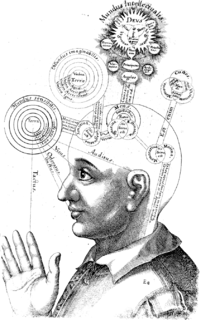
Consciousness, at its simplest, is sentience or awareness of internal and external existence. Despite millennia of analyses, definitions, explanations and debates by philosophers and scientists, consciousness remains puzzling and controversial, being “at once the most familiar and most mysterious aspect of our lives”. Perhaps the only widely agreed notion about the topic is the intuition that it exists. Opinions differ about what exactly needs to be studied and explained as consciousness. Sometimes, it is synonymous with the mind, and at other times, an aspect of it. In the past, it was one’s “inner life”, the world of introspection, of private thought, imagination and volition. Today, it often includes some kind of experience, cognition, feeling or perception. It may be awareness, awareness of awareness, or self-awareness. There might be different levels or orders of consciousness, or different kinds of consciousness, or just one kind with different features. Other questions include whether only humans are conscious, all animals, or even the whole universe. The disparate range of research, notions and speculations raises doubts about whether the right questions are being asked.
Examples of the range of descriptions, definitions or explanations are: simple wakefulness, one’s sense of selfhood or soul explored by “looking within”; being a metaphorical “stream” of contents, or being a mental state, mental event or mental process of the brain; having phanera or qualia and subjectivity; being the ‘something that it is like’ to ‘have’ or ‘be’ it; being the “inner theatre” or the executive control system of the mind.
And that’s why to be health conscious is better than being careless.
Lets start with knowing what is communalism ? Communalism is described as an ideology stating the division between states (people, groups of people or communities) on the basis of ethnicity, religion, beliefs, values, etc . The idea of creating community is to make this world a better place to live but what happened really ?
It has became a significant social issue in countries like India, Bangladesh, Pakistan and Sri-Lanka. Communal conflicts between religious communities in India, especially Hindus and Muslims, have occurred since the period of British colonial rule, occasionally leading to serious inter-communal violence. From 2005 to 2009, an average of 130 people died every year from communal violence, or about 0.01 deaths per 100,000 population.
We live in 21st century but we still hung up on communalism. we still hear news about people brutally murdered due to inter caste marriages will this barbarism come to an end. We cannot blame anyone for this we have to blame ourselves because its us who has been holding om to our community. We require our community to get admission in schools , colleges etc .
How can we end it ? We can end communalism by Interacting and befriending people of different religions.Understanding the political and historical reasons behind fights between people of different religions. understanding the economic and social problem through logic rather than prejudice . However we can come up with many remedies and solutions as i said the can should be brought between us before enforcing into our society. communalism can be only ended by building trust between people of different religious without trust, rumors and fights to develop that trust just remember they are also a human being and think how will you feel when someone treats you like this just because you born in a different mother…
Every year on July 7th, World Chocolate Day allows chocolate lovers around the world to indulge in their favorite treat without any guilt. The day also celebrates all kinds of goodies made from chocolate, including chocolate milk, hot chocolate, chocolate candy bar, chocolate cake, brownies, or anything covered in chocolate.
Chocolate comes from the seed of the tropical Theobroma cacao tree. Cacao has been cultivated for at least three millennia and grows in Mexico, Central America, and Northern South America. The earliest known documentation of using cacao seeds is from around 1100 BC.
Since cacao tree seeds have a very intense, bitter taste, they must be fermented to develop the flavor. Once fermented, processors dry, clean and roast the beans. After roasting, the shell is removed to produce cacao nibs.
The cacao nibs are then ground into cocoa mass, which is pure chocolate in rough form. The cocoa mass is usually liquefied, then molded with or without other ingredients. At this point in the process, it is called chocolate liquor. The chocolate liquor gets processed into two components: cocoa solids and cocoa butter.
Most Common Types of Chocolate
Unsweetened baking chocolate – cocoa solids and cocoa butter in varying proportions.
Sweet chocolate – cocoa solids, cocoa butter or other fat and sugar.
Milk chocolate – sweet chocolate with milk powder or condensed milk.
White chocolate – cocoa butter, sugar, and milk but no cocoa solids.
Most people love chocolate. In fact, nine out of ten people love chocolate. Besides the fact it tastes so good, there are some health benefits of chocolate. Chocolate increases serotonin and dopamine levels, which helps to boost the mood. Dark chocolate can also be especially good for you. Dark chocolate is a powerful source of antioxidants, plus it helps to improve blood flow, lower blood pressure, and reduce the risk of heart disease.
The best way to celebrate world chocolate day is to, of course, enjoy this silky delicacy in your favorite form without any guilt! Now that corona has made it questionable to visit restaurants, you can take this opportunity to make yummy chocolate-based treats with your family. Attempt a recipe that you have never had the courage to try. Or make a box of assorted chocolate treat and gift your best friend or loved one. You can also enhance your knowledge of chocolates by knowing about different varieties, storage techniques and recipes!
Menstrual Hygiene is the area with the least awareness in India. It is pathetic to know that only 18% of women in India have access to better sanitary hygiene. The rest percentage of the women make use of economic alternatives to pads like cloths unaware of the side effects caused by them. This is primarily due to the fact that despite everyone knows about periods, their frequency they consider it a disgrace when discussed in public. Pads that are primarily composed of synthetic material are constantly in contact with the skin surface causing rashes, infections, etc.
The Launch:
Nua women was launched in the year 2017 in Mumbai by Ravi Ramachandran and Swathi Kulkarni with the goal of making the menstruation cycle to be hassle-free. The market of sanitary pads in India enormous due to the population prevailed in here. But it never remained as an untapped market. Amidst the global competitors like Whisper, Stayfree, Nua Women was launched. Hence it was expected to make a Herculean effect to gain the attention of the audience and capture the market.
Novel Nua Women:
While certain startups were hustling to capture the market with their innovative market, Nua women choose either way. Following are the reasons for their triumph in India:
User experience: They understood their customers clearly at the early stage of its launch. Hence they ensured that they would provide not just a product but an experience. They came up with a plan where their users can choose pads according to their flow. Most of the women would have definitely wished for such a plan as the flow varies between day 1 to day 4.
Marketing: While the primary pad brands were advertising with animations of pads, Nua women started to advertise by forming a community. In the community, women expressed thor period concerns, queries, and pains. The engagement was kept active and all their concerns were addressed. Social media played a vital role in the exposure of their product. This was one of the primary reasons for their initial funding by LIghtBox Ventures.
They also partnered with some women influencers and made promotional videos. The videos clearly explained their product and made very women connect it with their life. Their advertisement in partnership with the Youtube Sensation CheekyDNA won the Best Brand Integration Category Award at StreamCon.
Subscription: In the industrious world, everyone is running to balance their work and life. When the product is proven to reduce their time and efforts then it’s for sure a hit in the market. Women normally forget to refill their pads and in such cases, they use pads from their friends or from the sanitary vending machine at their workplaces. The change in brand may cause them discomfort. Hence Nua women came with a subscription plan where they can pay for a period of 3 months and pads will be automatically refilled every month.
Rash-free pads: Rashes are the most primary concern of women while purchasing a pad. Nua women customers are saying the rashes have considerably reduced after its usage.
Stress-free Disposal: If you are the one who is irritated by the disposal of pads, Nua women has got your back. Every pad comes with a disposable cover and the way of disposal is smooth.
Funding Facts:
Initial Funding: Series A funding of 5.4 Million Dollars by LIghtBox Ventures in 2019.
Latest Funding: Pre Series B funding of 7.4 Milion Dollars by LightBox Ventures and Kae Capital in June 2021.
Online study has become a trend and more schools are opting for it with each passing day; more so, in the wake of COVID-19 lockdown.
Advantages
The online method of study has several advantages. It is very convenient as both you and your teacher can interact from the convenience of your respective homes. You can also ask questions and raise queries as you use to do in the classroom.
The online study method becomes more important in case of a natural calamity of emergency. The perfect example in this regard is the recent COVID 19 pandemic that the world is still recovering from. To date, many schools are running online classes, for the safety of students. Online study is indeed a safer alternative to school education.
Disadvantages
Apart from numerous advantages, the online method of the study also presents certain disadvantages. It lacks the filled with enthusiasm kind of environment presented by a classroom. The lively and joyful ambience of a classroom is usually lacking in an online session. Teachers and students interact with each other only on subject matters on one by one basis.
Moreover, overexposure to gadgets presents its own health hazards like headache, weak eyesight and lack of concentration, etc.
Conclusion
Despite the disadvantages, the online study method proved to be beneficial in certain specific conditions. When it is not advisable to leave your home, or it isn’t convenient for you, then in that case online study becomes a blessing in disguise.
Many years ago, the approach toward detention institutions, convicts, and punishment was severe and obnoxious. After a prolonged battle with the government, the principle of recognizing the human being in the convicted perpetrator has been approved. The socio-legal approach is based on peace, mutual respect, and individual human respect. If a person commits a crime, it does not follow that he stops to be a human being and can be denied those components of existence that constitute basic humanity.
Solitary confinement is a type of imprisonment in which an inmate is segregated from other inmates and subjected to strict observation. It has been proved that such confinement is traumatic and has a negative impact on the prisoner’s overall well-being both physically and mentally. Prisoners are kept in solitary confinement for a variety of reasons. When prisoners are kept in solitary confinement as a form of punishment for what is deemed excessive behavior, such as aggression against fellow prisoners, they are usually forced to stay there for a specified period of time as a measure.
Solitary confinement, according to research findings, fundamentally affects a person’s brain, resulting in major and long-term mental health concerns as well as the expansion of deviant and violent behavior. There is a distinction between loneliness (a highly unpleasant experience to perceived isolation and the imposition of social isolation, also known as social pain) and aloneness (a tendency toward being alone/the decision to be alone), and the brain responds in very different ways. Solitary confinement as a form of punishment is akin to torture, having devastating effects for brain health. Prisoners who are isolated endure a range of psychological impacts, including emotional, cognitive, and psychotic disorders.
Prisons are already destructive, and putting people in solitary confinement adds an added layer of pressure that has been proved to create lifelong abnormalities in people’s minds and characters. In fact, long periods without human interaction have been found to physically decrease the part of the brain that plays a crucial role in memory. And, because humans are social animals by nature, denying people of their capacity to socialize can result in “social pain”, which experts define as “the feelings of sadness and suffering that result from negative social situations such as social deprivation, isolation, rejection, or loss.” Social pain impacts the brain in the same manner that physical pain does, and it can trigger much more suffering due to humans’ tendency to remember social pain months or even years afterwards. Even if a person does not enter solitary confinement with a mental disorder, the consequences of isolation may cause them to acquire a distinct psychiatric syndrome.
Life is more than just animal existence. The people incarcerated cannot be denied the same. A prisoner, whether convicted, under trial, or detained, continues to be a human being. They have all of the rights that a free person enjoys, but with some limitations. Being imprisoned does not strip people of their fundamental rights. Even while imprisoned, he has all of his basic fundamental rights. And especially in this pandemic, when many people are left alone or with a cellmate in confined spaces for 24 hours a day, knowing the negative impacts of solitary confinement and reforming these practices is more necessary than ever.
There are a lot of misconceptions about weight loss. If you feel like you have tried all the diets and still can’t lose weight. Then, it may be the time to take the focus of the food and on to something a little less tangible.It’s time to reframe the sabotaging self-talk. Ever had an emotional binge eating on a Friday night and then told yourself the weekend is gone and you’ll start from next Monday, this is sabotaging self-talk. But don’t worry, here are a few tips which might help you in your weight loss fitness journey.
You bite it, You write it- Numerous studies have shown the effectiveness of food journaling for weight loss. It can help you remember what you have eaten that day and it’s one of the most effective ways to track calories. You can also see where you can improve and where you are lacking. It will help you adjust your eating schedule because it will let you see what time of day you typically get hungry. It may help you realise if you are eating out of boredom rather than hunger.
Don’t skip meals– You should always keep in mind that our bodies ultimate goal is to stay alive. Skipping meals can cause your metabolism to slow down which may cause weight gain or make it harder to lose weight. When you skip a meal or go a long time without eating, your body goes into survival mode. This can cause your body to crave food ,which causes you to eat a lot.
Schedule a workout date- As we all know that working out is considered the best way to cut off extra weight. Exercising increases metabolism and burns calories which helps in weight loss, and also help you maintain your weight. Scheduling your workout dates will help you to keep an eye on your workout regime. It will also prepare your body and mind for next workout sessions. So you can plan accordingly and you can set new goals every week for yourself.
Focus on making realistic goals- If you are someone who cannot do without your daily foods like rice and roti, then do not force yourself to not eat them just for the sake of weight loss. These foods contain carbs which will provide you with sufficient energy to follow your day-to-day functions. Follow a diet regime that you can follow for life. Because fitness is not just a goal it’s a way of living life in a better way.
Sleep well during weight loss journey- It might seem a bit weird but there is a connection between sleep and your weight. But there is much to be discovered about the intricate details of how sleep and weight are connected. It is said that poor sleep is a major risk factor for weight gain and obesity. Poor sleep can increase your appetite. So, sleep helps you fight cravings and make healthy choices. It also enhances your physical activity, so you can also focus on your workout in a better way.
Conclusion– Losing weight is quite difficult but by following these steps and tips it can help you throughout the journey.
Disclaimer– Weight loss results vary from person to person. The tapes above mentioned are as per information gained by internet and health professionals. No individual results should be seen as typical.


















You must be logged in to post a comment.