Why use colonial law even after 75 years of independence?

Chief Justice of India N.V. Ramana’s remarks in open court on Thursday sends a strong message to the government that the Supreme Court is prima facie convinced that sedition is being misused by the authorities to trample upon citizens’ fundamental rights of free speech and liberty. The Chief Justice has sent a clear signal that Section 124A (sedition) of the Indian Penal Code may have passed its time. The CJI said “if you look at the history of use of this section 124A of IPC, you will find that the conviction rate is very low.There is misuse of power by executive agencies.

The CJI observed and conveyed his observations to Attorney General, K.K. Venugopal and Solicitor General, Tushar Mehta. The CJI said; “Sedition is a colonial law. It suppresses freedoms. It was used against Mahatma Gandhi and Bal Gangadhar Tilak..Is this law necessary after 75 years of Independence.”

A number of petitions have been filed highlighting the “chilling effect” of sedition on the fundamental right of freedom of speech and expression. The court also observed the need to re-examine its own judgement which withheld section 124A of the IPC; i.e the Kedar Nath judgement.

Origin of the law; section 124A of IPC

Many legal experts argue that the sedition clause is a vestige of British colonial rule, originally introduced to suppress critical voices emanating from the Indian freedom movement. Section 124A of the Indian Penal Code, 1860 (IPC), as we have today, was absent from the original draft of Macaulay’s IPC in 1860, and was only introduced in the year 1870, piloted by James Stephen. This version went through further modification through the IPC (Amendment Act), 1898, since when it has largely retained its form.

Landmark case

The landmark case on this matter was that of Queen-Empress v. Bal Gangadhar Tilak & Keshav Mahadev Bal, (1897) ILR 22 Bom 112. In this case, Bal Gangadhar Tilak was tried for sedition for alleged incitement through speech that led to the killing of two British Officials. In this case, a single judge bench of  the Bombay High Court agreed with the definition of ‘disaffection’ as propounded in Jogendra Chunder Bose and opined that any ‘bad feelings’ towards the government is criminal, irrespective of the level of bad feeling. This way, the High Court virtually disallowed all legitimate criticism. It added that there need not be any material consequence at all to qualify the offence of sedition. The court held that in sedition matters, it is the intention of the offender which is of primacy, and could be presumed based on content, audience and circumstances of their seditious speech.

Events that led to considering the need of sedition law

A case under Sections 124 A (sedition) and 153 B (Imputations, assertions prejudicial to national-integration) has been registered against Ms. Sultana, a native of Chetlat island, based on a petition filed by BJP’s Lakshadweep unit president Abdul Khader. The prosecution case is that that on June 7, during a TV channel discussion, she had allegedly stated that the Centre had used ‘bio-weapon’ against the natives of the islands.

Observing that prima facie the offences, including the sedition charge, alleged against Lakshadweep filmmaker Aisha Sultana are not attracted, the Kerala High Court on Friday made absolute the interim anticipatory bail granted to her in a case registered against her by the Kavaratti police for making a remark against the Central government. Justice Ashok Menon, while allowing her anticipatory bail petition, observed that prima facie the petitioner “did not have a malicious motive to subvert the government established by law by merely using the strong word ‘bio-weapon’, to express her vehemence in disapproval of the subject under discussion

Alibaba.com

Alibaba Group also known as Alibaba.com, is a Chinese multinational technology company specializing in e-commerce, retail, Internet, and technology. It was founded on 28 June 1999. On 19 September 2014, Alibaba’s initial public offering on New York Stock Exchange raised $25 billion, giving the company a market value of US$231 billion and, by far, then the largest IPO in world history. It is one of the top 10 most valuable corporations, and is named the 31st-largest public company in the world on the Forbes Global 2000 2020 list. In January 2018, Alibaba became the second Asian company to break the $500 billion valuation mark, after its competitor Tencent. Alibaba also has the sixth-highest global brand valuation. It is one of the world’s largest retailers and e-commerce companies. In 2020, it was also rated as the fifth-largest artificial intelligence company. It is also one of the biggest venture capital firms, and one of the biggest investment corporations in the world. The company hosts the largest B2B, C2C, and B2C marketplaces in the world. It has also been expanding into the media industry, with revenues rising by triple percentage points yeaafter year.

Alibaba’s mission is to make it easy to do business everywhere. They enable businesses to transform the way they market, sell and operate and improve their efficiencies. They also provide the technology infrastructure and marketing reach to help merchants, brands and other businesses to leverage the power of new technology to engage with their users and customers and operate more efficiently. They aspire to make Alibaba the place where customers meet, work and live. As they continue to expand our businesses from commerce to cloud computing, digital media and entertainment, among other sectors, Alibaba has evolved into an ecosystem that is unique, energetic and innovative. It have set five-year goals to serve over 1 billion annual active consumers and achieve over 10 trillion Yuan in annual consumption through the China consumer business by the end of fiscal year 2024 as they continue on the path of globalization. Alibaba believes the five-year goals put them closer to achieving their vision for 2036: to serve 2 billion global consumers, enable 10 million businesses to become profitable and create 100 million jobs.

China’s 600 million-plus Internet users are migrating to smartphones, setting off a scramble among the country’s Internet giants. Alibaba’s toughest rival is Tencent, which runs the WeChat mobile messaging application, with 355 million users. The companies are spending billions of dollars to invest in businesses that can help them compete. Many brands say Alibaba’s site are rife with counterfeits. Alibaba says it spends millions of dollars a year battling fakes, and some merchants say Taobao has gotten faster at taking down suspect listings. These are some of the challenges that the Alibaba group is facing. But regardless, Alibaba is one of the most successful internet companies today.

Alibaba.com

Alibaba Group also known as Alibaba.com, is a Chinese multinational technology company specializing in e-commerce, retail, Internet, and technology. It was founded on 28 June 1999. On 19 September 2014, Alibaba’s initial public offering on New York Stock Exchange raised $25 billion, giving the company a market value of US$231 billion and, by far, then the largest IPO in world history. It is one of the top 10 most valuable corporations, and is named the 31st-largest public company in the world on the Forbes Global 2000 2020 list. In January 2018, Alibaba became the second Asian company to break the $500 billion valuation mark, after its competitor Tencent. Alibaba also has the sixth-highest global brand valuation. It is one of the world’s largest retailers and e-commerce companies. In 2020, it was also rated as the fifth-largest artificial intelligence company. It is also one of the biggest venture capital firms, and one of the biggest investment corporations in the world. The company hosts the largest B2B, C2C, and B2C marketplaces in the world. It has also been expanding into the media industry, with revenues rising by triple percentage points yeaafter year.

Alibaba’s mission is to make it easy to do business everywhere. They enable businesses to transform the way they market, sell and operate and improve their efficiencies. They also provide the technology infrastructure and marketing reach to help merchants, brands and other businesses to leverage the power of new technology to engage with their users and customers and operate more efficiently. They aspire to make Alibaba the place where customers meet, work and live. As they continue to expand our businesses from commerce to cloud computing, digital media and entertainment, among other sectors, Alibaba has evolved into an ecosystem that is unique, energetic and innovative. It have set five-year goals to serve over 1 billion annual active consumers and achieve over 10 trillion Yuan in annual consumption through the China consumer business by the end of fiscal year 2024 as they continue on the path of globalization. Alibaba believes the five-year goals put them closer to achieving their vision for 2036: to serve 2 billion global consumers, enable 10 million businesses to become profitable and create 100 million jobs.

China’s 600 million-plus Internet users are migrating to smartphones, setting off a scramble among the country’s Internet giants. Alibaba’s toughest rival is Tencent, which runs the WeChat mobile messaging application, with 355 million users. The companies are spending billions of dollars to invest in businesses that can help them compete. Many brands say Alibaba’s site are rife with counterfeits. Alibaba says it spends millions of dollars a year battling fakes, and some merchants say Taobao has gotten faster at taking down suspect listings. These are some of the challenges that the Alibaba group is facing. But regardless, Alibaba is one of the most successful internet companies today.

Dahl and Democracy

Paragraph 1

In Democracies and its Critics, Robert Dahl defends both democratic value and pluralist democracies, or polyarchies (a rough shorthand term for Western political systems). Dahl argues convincingly that the idea of democracy rests on political equality—the equality capacity of all citizens to determine or influence collective decisions. Of course, as Dahl recognizes, if hierarchical ordering is inevitable in any structure of government, and if no society can guarantee perfect equality in the resources that may give rise to political influence, the democratic principle of political equality is incapable of full realization. So actual systems can be deemed democratic only as approximations to the ideal. It is on these grounds that Dahl defends polyarchy.

Paragraph 2

As a representative system in which elected officials both determine government policy and are accountable to a broad-based electorate, polyarchy reinforces a diffusion of power away from any single center and toward a variety of individuals, groups, and organizations. It is this centrifugal characteristic, Dahl argues, that makes polyarchy the nearest possible approximation to the democratic ideal. Polyarchy achieves this diffusion of power through party competition and the operation of pressure groups. Competing for votes, parties seek to offer different sections of the electorate what they most want; they do not ask what the majority thinks of an issue, but what policy commitments will sway the electoral decisions of particular groups. Equally, groups that have strong feelings about an issue can organize in pressure groups to influence public policy.

Paragraph 3

During the 1960s and 1970s, criticism of the theory of pluralist democracy was vigorous. Many critics pointed to a gap between the model and the reality of Western political systems. They argued that the distribution of power resources other than the vote was so uneven that the political order systematically gave added weight to those who were already richer or organizationally more powerful. So the power of some groups to exclude issues altogether from the political agenda effectively countered any diffusion of influence on decision-making.

https://www.google.com/url?sa=t&source=web&rct=j&url=https://en.m.wikipedia.org/wiki/Robert_A._Dahl&ved=2ahUKEwilybne7OfxAhVZzDgGHdOUBFoQFnoECAQQAQ&usg=AOvVaw1m7je4vjO_kQPSVhYbQsjr

https://www.google.com/url?sa=t&source=web&rct=j&url=https://www.annualreviews.org/doi/full/10.1146/annurev.polisci.6.121901.085839&ved=2ahUKEwilybne7OfxAhVZzDgGHdOUBFoQFnoECC8QAQ&usg=AOvVaw26r49rfyW0ZAyxHODvBrYt

Utility software

The Utility Software is system software that helps to maintain the proper and smooth functioning of a Computer System. It assists the Operating System to manage, organize, maintain, and optimize the functioning of the computer system.

Utility Software performs certain tasks like virus detection, installation, and uninstallation, data backup, deletion of unwanted files, etc. Some examples are antivirus software, file management tools, compression tools, disk management tools, etc.

Types of Utility Software

  1. Antivirus
    A virus is a malicious software that enters the system along with a host program. Moreover, it multiplies with time and makes several copies which in turn slows down and corrupts the system.
  2. File Management System
    These utility software are used to manage files of the computer system. Since files are an important part of the system as all the data is stored in the files. Therefore, this utility software help to browse, search, arrange, find information, and quickly preview the files of the system.

Windows Explorer is a default file management tool present in the system. Some other examples of file management tools are Google Desktop, Double Commander, Directory Opus, etc.

  1. Compression Tools
    An important part of a computer is storage space, it is very important to maintain this storage. Therefore, we use certain utility software to compress big files and decrease their size, these are compression tools.The format of the files changes while compressing and we cannot access or edit them directly. In addition, we can easily decompress the file and get the original file back. Examples of compression tools are WinZip, WinRAR, WinAce, PeaZip, 7-Zip, etc.
  2. Disk Management Tools
    These utility software are used to manage data on disks. Moreover, they perform functions like partitioning devices, manage drives, etc.Examples of disk management tools are MiniTool Partition Wizard, Paragon Partition Manager, etc.
  3. Disk Cleanup Tool
    This utility software helps to free up the disk space. In addition, the files which are no longer in use are removed from the disk. Examples are Razer Cortex, Piriform CCleaner, etc.
  4. Disk Defragmenter
    This utility software helps to reduce the fragmentation and hence, reduces the access speed. Defragmenting refers to rearranging files and storing them in contiguous memory locations. Moreover, saves time in reading from files and writing files to disk. Examples of disk defragmenters are Perfect disk, Deflaggler, etc.
  5. Backup Utility
    This utility software helps to back up the files, folders, databases, or complete disks. Moreover, backup refers to duplicating the disk information so that the data can be restored if any data loss happens.

Advantages of Utility Software
The advantages are as follows:

Enhances performance.
Manages space.
Manages files and data.
Helps to customize interface and desktop.
Helps to remove useless files.
Keep the system safe and secure.
Helps to recover files after a loss.

The Complete Memoirs’ Review: Neruda in Full

 is impossible not to feel a thrill of expectation upon opening “The Complete Memoirs” by Pablo Neruda. But once a reader discovers what’s actually on its pages, the title’s claim of completeness—with its promise of juicy restorations and the accretion of long-lost chapters written by the great Chilean poet—seems no better than a gimmick to sell afresh a book that was first published in English translation 44 years ago.

An “editorial note” at the book’s end lists all the additions to Neruda’s original memoirs—while unhelpfully omitting the page numbers that would transport a reader straight to the new material. There are 19 texts added in all, ranging in length from a half-dozen pages of previously unpublished words to the wispiest fragments. Here’s an example of the latter, as vaunted by the editors: “We now publish, for the first time, the only known version in writing of this phrase: ‘What is my poetry? I don’t know. It would be easier to ask my poetry who am I.’ ” Readers who know their Neruda will contend that only one textual addition—which deals plainspokenly with the homosexuality of the Spanish poet Federico García Lorca—truly adds value.

Which is fine, of course, because the original version—let us not call it “incomplete”—is a deliciously self-serving and unabashed narrative account of the poet’s life, loves, grudges, contempt and ideology. It is stunningly vain in places yet always beautiful, and reading it today—in our age of much-curbed masculinity—raises taxing moral questions. What should we think of a man so casually priapic, who never hesitated to use his power—as poet or diplomat—to drive women (who were often vulnerable) to his bed?

Neruda chose to call his book “I Confess I Have lived”—“Confieso Que He Vivido” in the original Spanish. It was published posthumously in 1974, a year after he succumbed to cancer and—some like to think—heartbreak, brought on by the suicide of Chile’s President Salvador Allende only days before Neruda’s own death. Allende was a dear friend and leftist fellow traveler, and Neruda had abandoned his own presidential ambitions—he was the Communist Party’s candidate for Chile’s highest office—so as to throw in his lot with the socialist Allende. The latter appointed Neruda Chile’s ambassador to Paris in 1971—the year in which the poet won the Nobel Prize for literature.

https://www.google.com/url?sa=t&source=web&rct=j&url=https://books.google.com/books/about/The_Complete_Memoirs.html%3Fid%3DylT2DwAAQBAJ%26source%3Dkp_book_description&ved=2ahUKEwiEgr7V6-fxAhXs3jgGHY9XBlIQmhMwBHoECBMQAg&usg=AOvVaw3Ps45PWUjXd8Aw2LoCapKp

https://www.google.com/url?sa=t&source=web&rct=j&url=https://www.amazon.in/Complete-Memoirs-Hardie-St-Martin/dp/0374538123&ved=2ahUKEwiEgr7V6-fxAhXs3jgGHY9XBlIQFnoECBgQAQ&usg=AOvVaw3tdZRgWgQLHkU1aAVw3rT0


PANDEMIC POVERTY AND ITS CAUSES IN INDIA

The word poverty itself kind of making me feel poor. Because that one word alone hold so much pain, sympathy, empathy and so on. Then think about the people who are suffering from poverty. The country we live in is known to be well developing nation with respectable economic growth. But at the same time the poverty is still a major problem.

Especially during this pandemic poverty has hit people in different ways. Middle and lower class people who has managed to survive at the start of the pandemic have completely lost their will to survive in the end. We even heard of some sensitive news that people died of covid not being able to get treated without any access to money. Still some people couldnt able to get food and shelter.

WHAT IS POVERTY?

Poverty refers to a situation when people are deprived of basic needs of life. It is often characterized by inadequacy of food, shelter and clothes. A state of situation when there is a lack of essential needs of subsistence. The study of poverty is a complex one because there is no easy way, or standard definition of who is poor or who is not. The living conditions of people has been widely used to get an idea of their situation. It is situation when someone experience a fundamental loss in well being.

According to Human Rights Commission’s Report, Poverty is seen “As a failure to meet the basic needs or to remain deprived from such needs is a state of poverty. The basic human need include not only food, clothing and dwelling, but also health and education’.

CAUSES:

The continuous problem of poverty in the country is the results of many factors and need to be identified in order to be addressed properly.

1. POPULATION BURDEN:

The growth of population in the country has till now exceeded the growth of economy and also ended up in poverty. India is known to be second most populated country in the world. But this Covid-19 has taken many lives that even may be our loved ones. In this pandemic, in rural areas, size of the family is bigger and that means in lowering the per capita income values and ultimately lowering of standard of living. Still the population is one of the major causes of poverty.

2. POOR AGRICULTURAL INFRASTRUCTURE:

Agriculture is the backbone of India and Indian economy. But old farming practices, lack of proper irrigation infrastructure, lack of knowledge of crop handling has affected the productivity. Sometimes lack of working lead to decreased wages become the reason for attaining daily needs of the labourers family pushing them into poverty. Pandemic have locked us all inside the home. But for the farmers they are being seperated from their soul, their farming land which feeds them and also us.

3. UNEQUAL DISTRIBUTION OF ASSETS:

This occurs with the economy changing directions rapidly. Upper and middle income groups sees a faster increase in earnings than lower income groups. Also assets like cattle, land are distributed disproportionately among the population. In India it is said that 80% of the wealth is controlled by 20% of the population.

4. UNEMPLOYMENT: 

Another big factor which is the cause of poverty in the country. Many youngsters without the job become the major cause of the poverty. Work from home for the people with jobs sounds good to earn and feed their family but what about the people who are unemployed. Even before the covid there were no proper jobs for youngster in the nation.

5. INFLATION:

Inflation is an increase in prices of goods overlapping with the fall in the purchasing value of money. After the long lockdown, the Government has permitted to open the particular stores. This made the consumers to sell the products with a little higher price. Upper and middle class people have survived the situation but lower class people have suffered a lot.

5. EDUCATION AND LITERACY:

Online classes have  become the normal classes. In rural areas, families have managed to provide their child or children the proper education. But not all have enough money to provide their kids education some only have enough resources to feed their children. They have to prefer food than education. Children started to contribute to families by taking up the jobs. On the other hand, lack of education and illiteracy prevent individuals from getting better paying jobs and they get stuck at jobs offering minimum wages.

7. LACK OF SKILLED LABOURS:

Lack of adequate vocational training makes the huge labour force available in India largely unskilled. Lack of education, much lesser higher education is also a factor.

8.GENDER INEQUALITY:

The weak status attached with women, deep rooted social criticism and force fitting, being dominated renders about 50% of the country’s population unable to work. The women of the family as a dependent that needs to be fed instead of contributing to the family income. There is no need to talk about their equality during this situation.

The pandemic also brought out many good wills to help the people suffering from poverty. Its all in the hands of future generation to create a poverty less nation. We are not talking about to give away all your money to poor but just one hand helping another hand. Stay away from corruption.

Insomnia

Insomnia is sleep sickness ,which doesn’t allow the person to sleep.It might be because of poor health, unhealthy eating habits, depression , anxiety,stress or any other medical problem.

Symptoms

The most common symptoms for this diesease is sleep sickness , can’t feel relaxed,staying asleep.

Natural medication

Some natural medicine and herbal plants that helps you get some sleep:

*Glycine

Glycine consists of amino acids allows to lower the body temperature and feel relaxed and get some sleep.

You can have Glycine rich food to maintain the Glycine intake in the body .Some food rich in nutrients are:

Bean,Spinch , cabbage,and some fruits like bananas and kiwis.

*Valerian roots

Valerian is a herbal plant that help you to get proper sleep .

Some other ways

*Exercise

Regular exercise and meditation can gelp you to get proper sleep and helps you to maintain good health.

*Balanced diet

A nutritious and health diet which include all the vitamins and minerals is really very important to have a good sleep.

*Drink Water

Drinking enough water can help you to have proper and healthy sleep routine .One should drink 7-8 glasses of water everyday.It help you to stay healthy and make your skin glow.

Hope this will help to shut your eyes and get a good sleep .

Stay Healthy ,Stay Safe.

Herbarium

Herbarium is a collection of pressed,dried plant specimens mounted on specified sheets, identified and arranged in the order of an approved and well known system of classification.It also refers to the institution where dried plant specimens are maintained and studied.

A twig with leaves, inflorescence or flowers is collected from shrubs and trees.In the case of herbs,the collected plant specimens should contain both vegetative and reproductive parts.They are dried by keeping them between the folds of old newspapers.It is necessary to change these papers at regular intervals,until the plants are well dried.The plant specimens along with their parts are dried in a plant press.It consists of two boards with straps,which help in tightening the newspapers with specimens between the boards.

The dried specimens are pasted on the herbarium sheets of standard size 41cm X 29cm.The process of attaching dried and pressed plant specimens on herbarium sheets is known as mounting of specimens.All the mounted specimens are sprayed with fungicide like 0.1% solution of mercuric chloride.To protect these dried specimens from the attack of insects, pesticides such as naphthalene and carbon disulphide can be used.The heavy parts of plants such as seeds and fruits are kept in packets and attached to the sheets.

These specimens are called type specimens.The name of the family is always based on type genus.These specimens are most valuable part of herbarium and they are handled with special care.They are stored in fire proof cabinets.

Importance of herbarium

⭐ Herbarium is a source of knowledge about the Flora of a region or a locality or a country.

⭐It is a data store in which the information on plants are available.

⭐The type specimens help in the correct identification of plants.

⭐It provides materials for taxonomic and anatomical studies.

Because of its importance, several herbaria have been established at the national and international centres.

Our School Classroom ‘Scene’

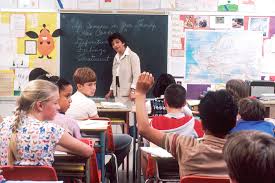
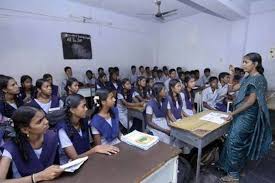
The picture presents before us the familiar sight of a teacher teaching in the classroom. The first bench is paying attention to her. The second bench is busy having fun and so is the third bench. This is my classroom, and that is my class teacher, Mrs Aarti Mishra. She teaches us History and indeed, we are all ears when we listen to her, but some of my classmates do not respect her presence the way they should. Madam tries her best to get them involved in the classroom activities but they usually ignore her. Madam is tremendously talented and goes out of her way to make the class interesting, but more often than not, some students miss out on the solid content that they can learn from her. Ours is a small school where the facilities are limited. For example, we do not have internet in our school, and very few computers. Under these circumstances, the work involved in getting printouts and interesting literature from the Net from a cyber café speaks volumes about our teacher’s dedication.

History can be a very interesting subject when the teacher transforms the classroom into a storehouse of unknown and intriguing facts from the past. This is what Mishra Madam does. The most charming thing about Madam is that she never loses her temper, be it when the backbenchers in the class misbehave or when the Principal simply walks into the classroom ,and starts pulling up students for their indiscipline interrupting an interesting class being given by our teacher. We wish he had the courtesy of respecting the teacher’s presence in the class. But everything changed on that fateful day.

I remember the day clearly. Mishra Madam lost her temper a spoiled brat in our class continuously disturbed the class by whispering, laughing etc. She went and gave the menace a slap on his face and asked him to leave the class. The next day the boy’s influential father came and created a huge scene in front of the classroom. The Principal supported the father instead of our teacher. What was amazing was that the man was abusing the dignity of our school and teacher in public, and he was being allowed to get away with it! Madam left the school premises that very day, never to come back again. Our Principal was nothing more than a servile flatterer. As a peace offering he invited the man to be Chief Guest at our annual function that year. We lost a fantastic teacher, but the school gained a generous ‘friend’ who donated lavishly towards the ‘infrastructural’ development of our school.

At the end of the session, we met Madam Mishra at a neighbourhood library. She smiled cheerfully and welcomed us when we rushed towards her to explain how much we missed her and her wonderful classes. I told her that I wanted to be a teacher like her. She smiled and replied that India is no longer the land where a teacher is treated like God and teaching a religion. She added that my desire to be a teacher would make me swim against the tide. She walked with a pat of encouragement, but to this day I remember her away as a lady who stood apart as a teacher and a human being.

My school is big and has a lot of classrooms. Each classroom is different and special in its own way. For example, we have special classrooms for art, music, history and geography, chemistry, physics and biology, and history and geography. In addition to all this, we have a cabinet of Informational material and gyms.

The largest of all the classrooms for art. It is spacious and transparent and has large windows to make it anything more natural light and walls are white. Benches are placed on the circle so that all of us are sitting next to each other. In the middle of hundreds of teachers of art, as well as her easel, when it from time to time some paint or a draft to show us. On the walls of our work with classes. On Saturdays in the classroom and held an art section in which talented students are leaving and those who love to draw.

Right next to the classrooms for art’s classrooms for music. There is no dock, but only chairs with pads for writing. On the board are drawn lines and it reminds of our sheet music. In the classroom, we also have a grand piano, for which the teacher sits and plays while we sing. There are two speakers, as well as a tape recorder, through which our teacher let various compositions. On the walls are portraits of great artists, such as Mozart, Beethoven, and Vivaldi. Before or after hours, members of the choir of our school here hold their rehearsals with the teacher

In addition to this special classroom, each class has its own, but they are all quite similar. In each of the walls, bright blue curtains are white, almost translucent. Large neon lights, huge green blackboard with chalk and sponges, chair of the teacher and the bench where we sit two by two. In our classroom, we have always Serbian, math and English, and sometimes other items, especially when they are on the wrong control tasks if they have special classrooms occupied.
And finally, a favorite place of all the students, room for a physical in which we play volleyball, basketball or football, gymnastics train, and sometimes table tennis.

START YOUR OWN BUSINESS PART-2

From the previous article, we learned about how important passion and profession are. What are the simplest ways to earn money from some of the businesses and most probably with the lowest investments. In this part, we will uproot some more businesses which can give you a stable income and highly demanded fields.

BAKING BUSINESS:

Baking business is one of the simplest ways to earn money. If you are great at cooking and love to bake this will be the best way for you to follow your passion. You can bake different types of delicious cakes. People always would love to have homemade foods and things. Thus, they will crave cakes too… You can even start this in your kitchen with a regular oven and other materials. You can even do chocolates, cookies. Sweets are the best to gift someone. Thus, there will be no negative statements to this idea. If you are also a creative person you can decorate and wrap them beautifully to attract the audience.

BOOK MERCHES:

Book merches are none other than book-related things and products. for Example, If you are a fan of The Chronicles of Narnia books or movies You can create some bookish merch which is related to the theme of NARNIA. Like, A printed coffee mug with a book theme (A famous quote or picture of the characters in the mug), enamel pins with the image of The Lion Aslan. Badges with the images or the quotes from the books. Postcards stamps, T-shirts even you can do a scarf with the quotes like a newspaper look. Most of the readers would love to have them in their showcase as well as in their Book photographs. And you can sell, key chains, bookmarks, bags, wallets, book sleeves, tote bags, Polaroids photos, watches necklace rings anything and everything related to books. There is a huge demand for these things among book bloggers and collectors. Especially, if you did customized products.

WORKSHOPS:

Conducting workshops is merely like teaching online or offline. It depends on your comfort zone. If you know any of the passions that are mentioned above or upcoming ideas or even any other related ideas you can do them to start your own workshop. For example, If you know mandala artworks you can teach them online or offline and for teaching them you can collect some amount as tuition fees. Remember, teaching is one of the precious Jobs in the whole world knowledge is not free. Even though if it comes free it’s not easy to teach someone. You should have some passion for teaching. And you should provide notes instructions videos and other requirements about the Art that you want to teach. Some of the ideas that you can carry out, if you know any of examples like, Journal makings, skincare products making, baking, Fashion designings, paper making, language skills if you have any bilingual skills like, German, French, Spanish, English, and Japanese, etc You can teach them and can get loads of money. Because students love learning new languages and there is a huge demand for bilingual People.


If you have passion for anything from the above… Start to develop the skill to take up as a passionate business. Most of the billionaires started from nothing. If they can why you can’t? If you can’t then who can? Let’s make our passions into actions.

5 Historical Tourist Places in India

Tourism is one of the main sources of economic strength in any country . Everyone loves visiting new places . People are usually attracted to historical tourist places for their rich history, beautiful stories and unsolved mystery . India also has a very eventful history which is till now remembered as there are many living proofs left behind of time . there are many archaeological sites, monument, buildings in India which holds this historical events in bright light in front of our eyes .Let’s talk about some of them —

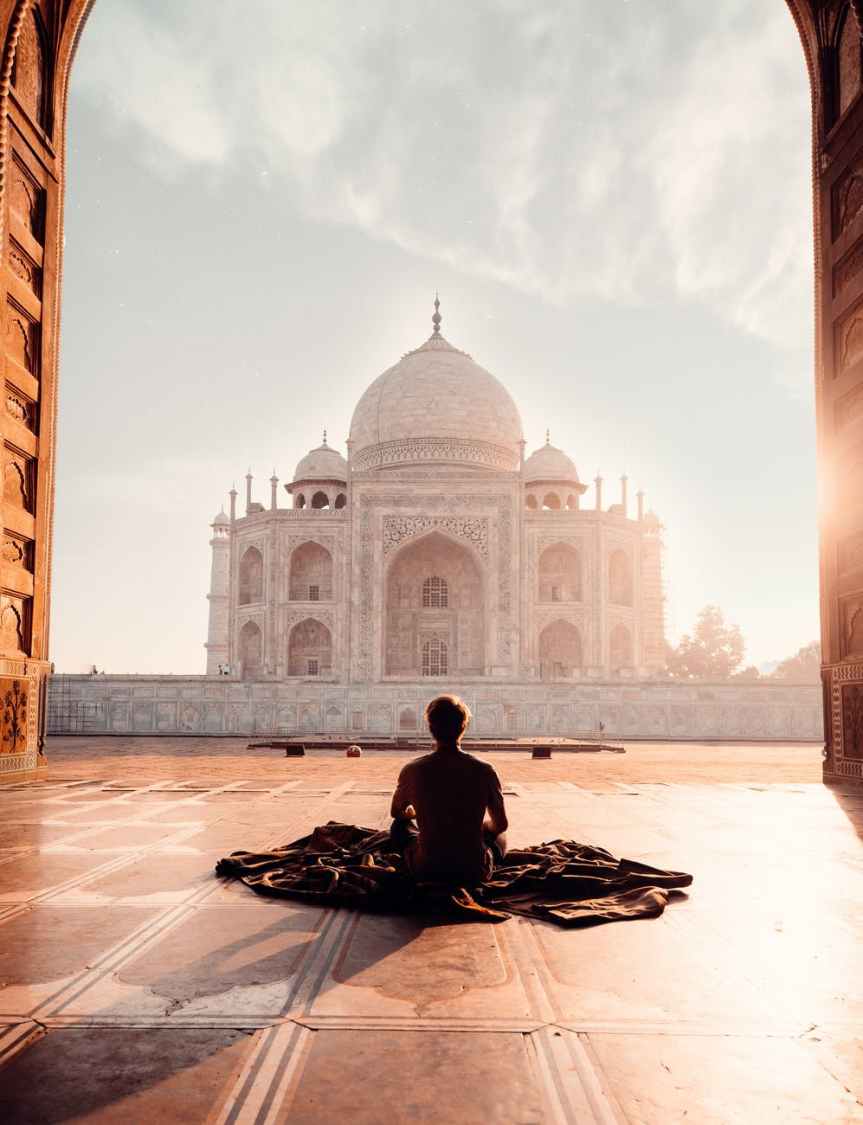
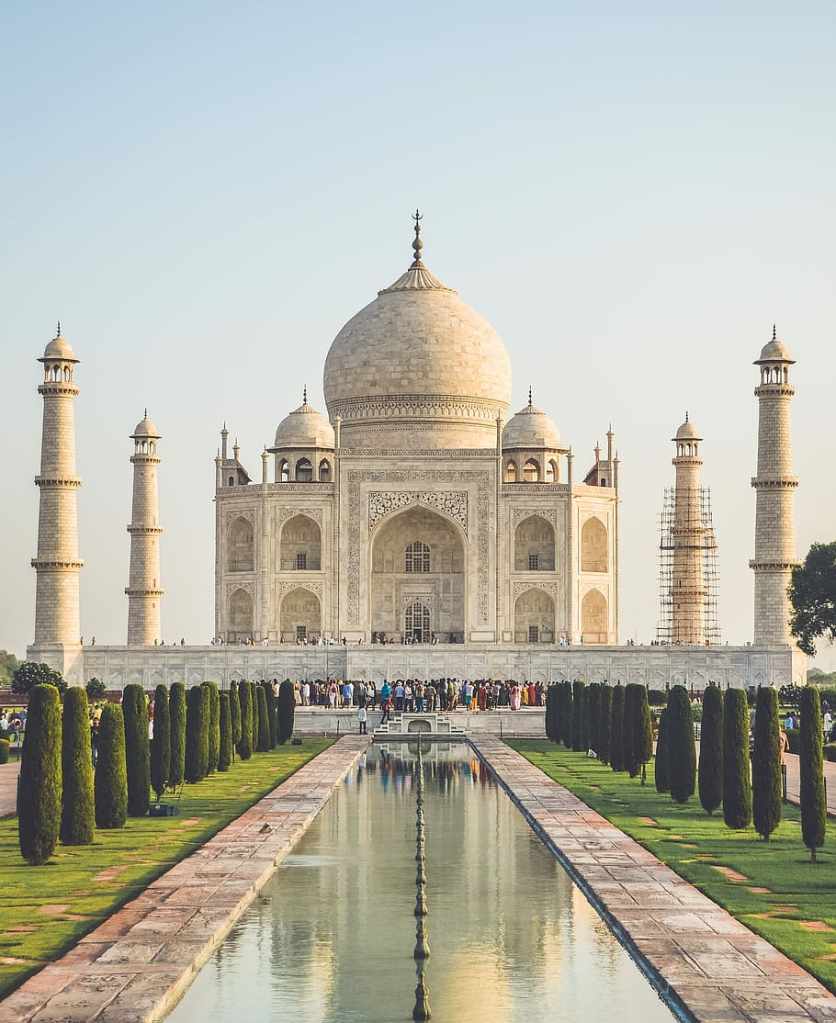
  1. TAJ MAHAL : It is situated in Agra in New Delhi . It is one of the seven wonders of the world .It was acknowledged as a World Heritage site by UNESCO in 1883 . Mughal emperor Shah Jahan built it for the memory of his lovable wife Mumtaz Begum . It is built at the bank of the Jamuna river . Its construction started in 1632 and the whole Taj Mahal Complex was completed in 1653 .The architect of this Majestic Mahal is Ustad Ahmad Lahauri . The measurement of the whole complex is 17 hectares .In the current Indian currency It is 70 billion rupees to build the whole Taj Mahal . Shah Jahan tomb and Mumtaz tomb , both are inside a beautiful chamber of Taj Mahal .
Taj Mahal

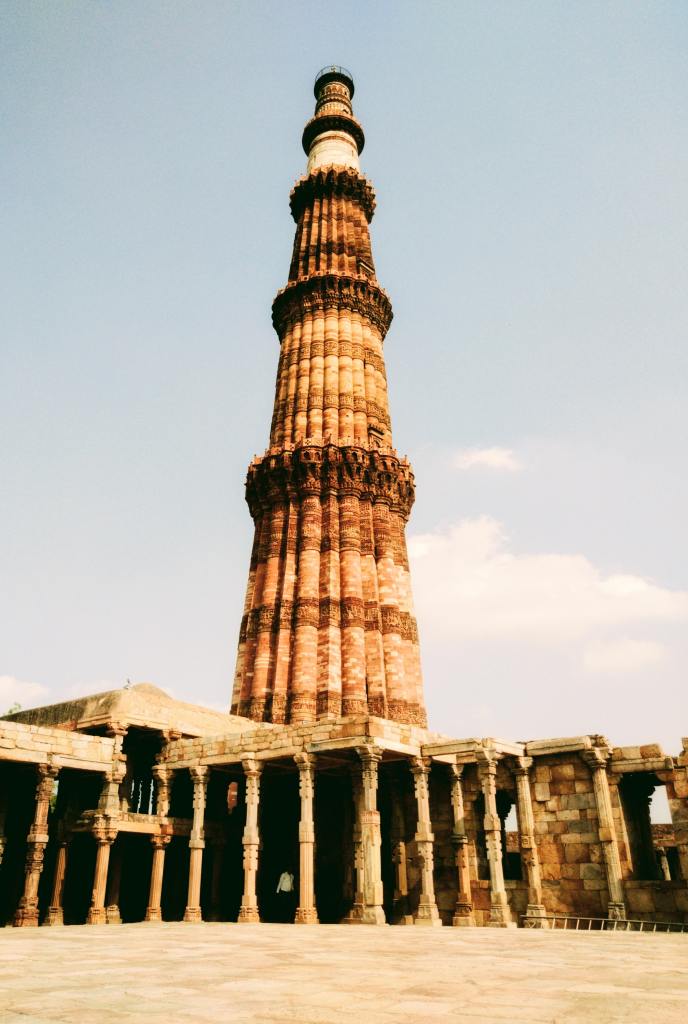
2. KUTUB MINNAR : It is situated in Mehrauli of New Delhi . It is also accepted as a World Heritage site by UNESCO . Its total height is 72.5 and it is the tallest brick made minar in the whole world .Its construction was started in  1199 by the founder of Delhi Sultanate , Sultan Qutb Ud-Din Aibak &  was finished by his son-in-law Iltutmish  in 1220 by adding the upper three additional stories in the minar .It was founded and the victory min for foundation of Delhi Sultanate .

Kutub Minar

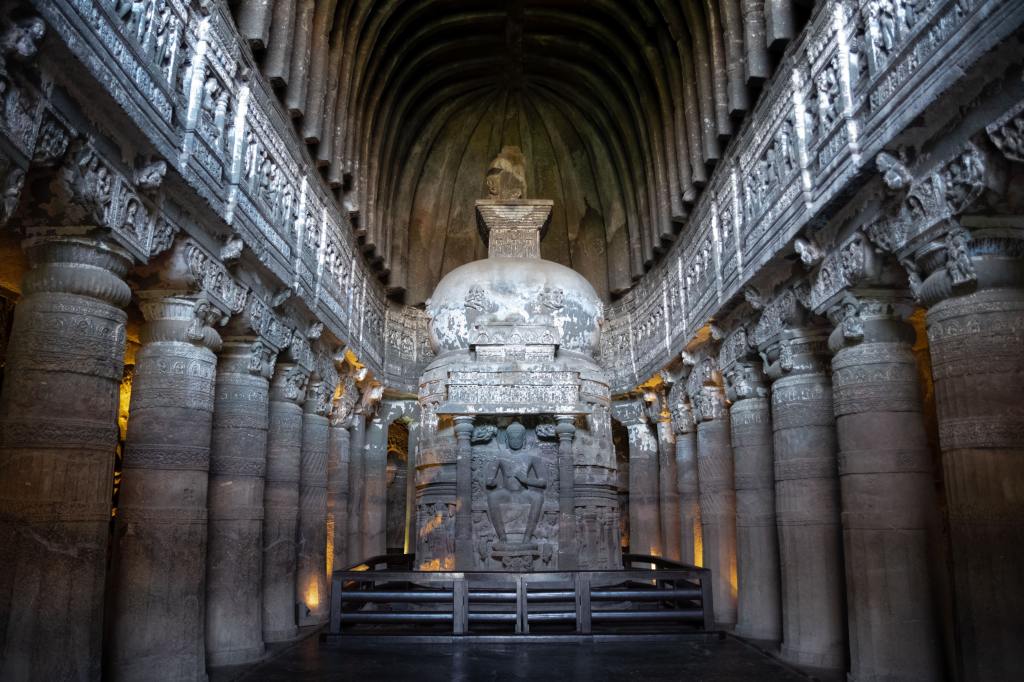
3. AJANTA CAVES: It is situated in Aurangabad, Maharashtra.It is the mixture of Buddhist, Jain and Hindu religion.Mainly Buddhist monuments can be found here. It is also acknowledged by UNESCO as a World Heritage site and now under the surveillance of the Archaeological Survey of India. It was founded in two parts in between the time of 2ndbeforeChrist (BC) to 6th AD. It has more than 29 caves.It depicts the finest art culture of ancient Indian civilization. There are lots of wall paintings and stone sculptures which show important historical events or common daily life events.

Ajanta Caves

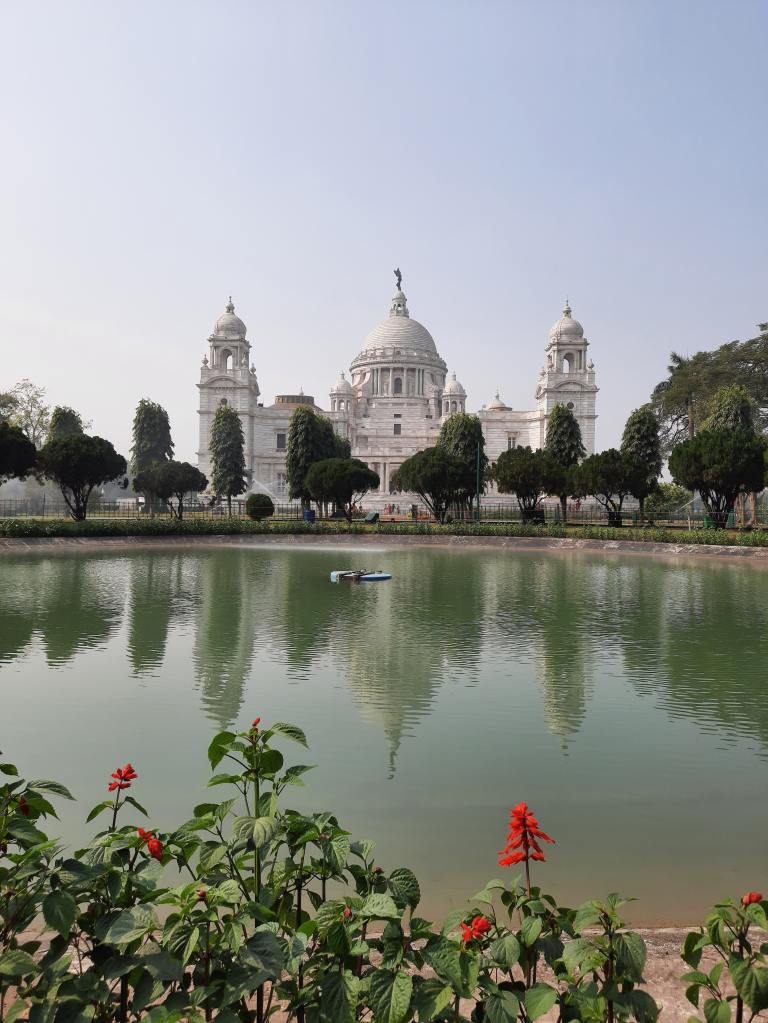
4. VICTORIA MEMORIAL HALL: It is situated at Jawaharlal Nehru road in Kolkata.It is under the survey of ministry of culture. It was built between 1906 to 1621.The architect of Victoria Memorial Hall or William Emerson and Vincent Esch.This Museum is made entirely by white marble. This was founded on the occasion of 25 years rule by a British Queen Victoria all over India.It consists of a beautiful garden and 25 galleries like Royal galleries, portrait gallery,sculpture gallery, which have collections of many antique books,work collections of famous peoples and portraits etc.

Victoria Memorial Hall

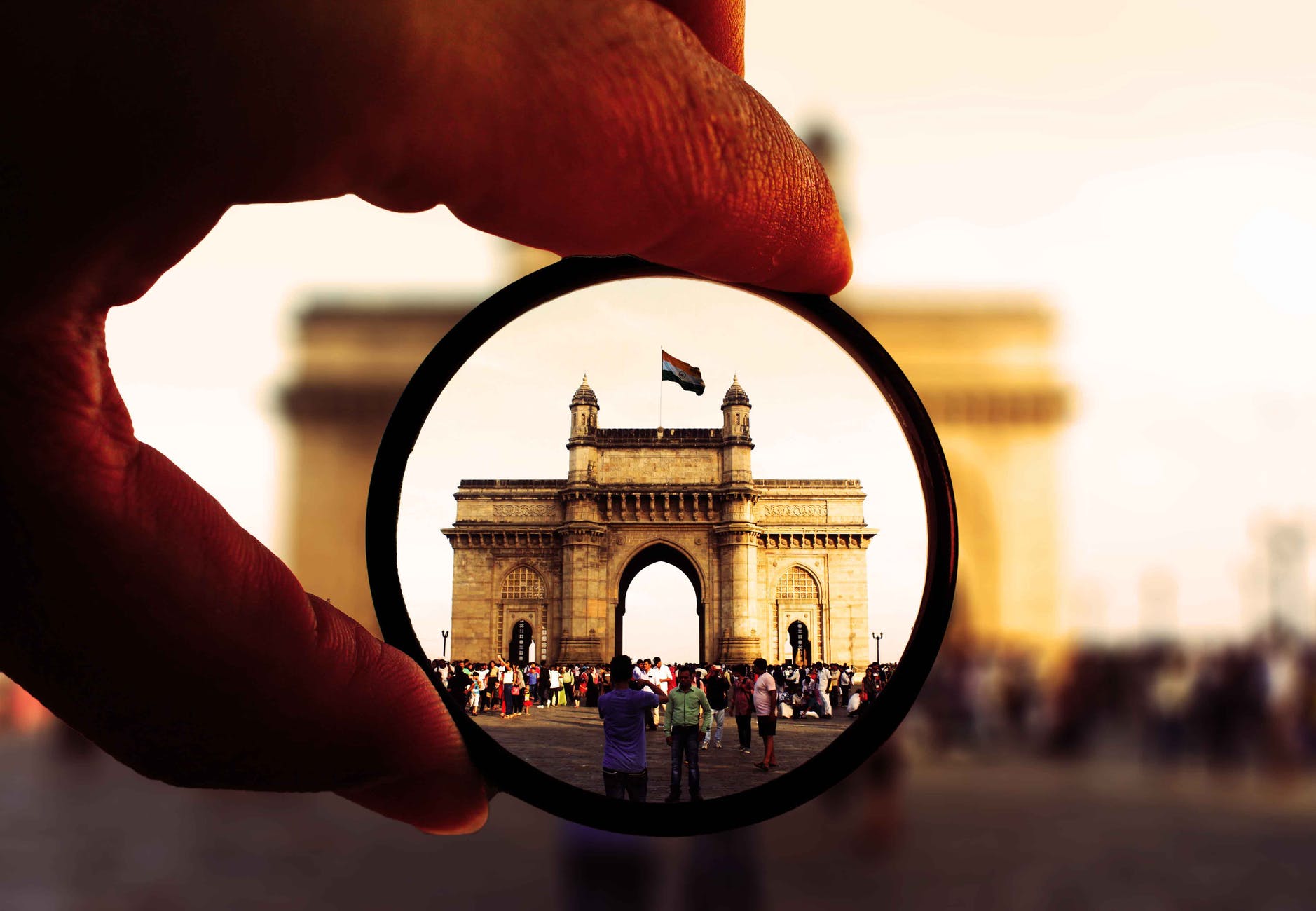
5. GATEWAY OF INDIA: It is situated in Mumbai renowned architect George Wiffet had made the Gateway of India.It was constructed for commemorating the visiting of welling for Pier by Emperor George V and his Emperie Mary in 1911. They were the first British Monarch who visited India.The construction of it finished in 1924 and now owned by Archaeological Survey of India.It is the symbol of Mumbai city.

Gate way of India

A rainy July for 2 Indian cities

Indian monsoon, the most prominent of the world’s monsoon systems, which primarily affects India and its surrounding water bodies. It blows from the northeast during cooler months and reverses direction to blow from the southwest during the warmest months of the year. This process brings large amounts of rainfall to the region during June and July.

After meagre rains were received, Mumbai saw a downpour through the night and in the early hours of July 16th, leading to 27 roads being inundated, 85 bus routes diverted and 250 people evacuated from the Mithi River banks. Extremely heavy rain was recorded at the India Meteorological Department (IMD) Santacruz observatory at 253.3mm, which is the second highest 24-hour rainfall in a decade.

In 2019, the city had recorded 375.2mm which was the highest 24-hour rain in the months between 2015 and 2020. In 2018, it was 184.3mm, 163.4mm (2017), 114.5mm (2016) and 61 mm in 2015.

The meteorological department classifies 15.6-64.4mm in 24 hours as moderate rain; 64.5-115.5mm rain as heavy; 115.6-204.4mm as very heavy; and over 204.5mm as extremely heavy rain. Moderate to heavy rain is likely in the city and suburbs with the possibility of heavy to very heavy rain at isolated places, said the IMD.

The Extremely heavy rain left 27 city roads waterlogged— areas like Hind Mata, Gandhi Market, Sion Road number 24, Wadala Bridge, Chunabhatti, Siddharth Nagar in Goregaon, RCF, Chembur Phatak, Milan Subway, roads leading to eastern freeway. As per the BMC (Brihanmumbai Municipal Corporation) data, between 4am to 7 am, the city recorded 36mm rainfall, 73mm in the western suburb and the highest 75mm in the eastern suburb of Mumbai.

The Mithi River crossed a dangerous mark following which so far about 250 people have been evacuated from Kranti Nagar slum which is located at the bank river. After the rains took a break following the evacuation of people, the water level of the river went down to 2 metres from 3.7 metres. After that, most of the evacuated people returned to their places. The IMD has predicted moderate rain in the city and suburbs with possibility of heavy rainfall at isolated places, the civic official said, adding that the city will witness high tide of 4.08 metres on Friday at 4.26 metres.

Meanwhile, the city of Hyderabad witnessed heavy rains on the night of July 14th, which went on till the next morning. According to the IMD, Hyderabad records, at 69mm, this day was the third rainiest July day for Hyderabad in the last 10 years. The city recorded 115.1mm of rain on July 21, 2012 followed by 86.4mm on July 12, 2013. It was after seven years that Hyderabad witnessed this kind of rain in 24 hrs.

Several localities in the city, including Hayathnagar, Uppal, Saroornagar and Saidabad received heavy rains overnight. Meanwhile, Bandlaguda, Uppal received the maximum rainfall of 212.5 mm, followed by Vanasthalipuram, which witnessed 192.3 mm rain. Kapra, Serilingampally, Khairatabad, Golconda and Marredpally also experienced moderate rains.

Several other districts including Rangareddy, Medchal-Malkajgiri, Yadadri-Bhuvanagiri, Jangaon, Rajanna Sircilla and Jagtial also received heavy rainfall. Chegunta in Medak received the highest rainfall of 227.5 mm on Wednesday. According to the forecast by Indian Meteorological Department (IMD), Hyderabad, the city will witness cloudy sky throughout the day, accompanied with light showers at isolated places.

NEWSPAPER

IF YOU DONT READ THE NEWSPAPER,
YOU ARE UNIMFORMED,
IF YOU READ THE NEWSPAPER ,
YOU ARE MIS-INFORMED.

Meetali soni

Newspaper plays a very important role in our life. Newspaper is a collection of news from all over the world which keeps us up-to-date about everything going outside. We should practice news reading on daily basis. It is a good habit. Newspaper is powerful tool that circulates information to people. It is one of the greatest means of communication between people and the world. They are also a great medium of knowledge. We get our daily dose of news from newspapers early in the morning. A newspaper is a publication printed on paper which gives information and opinions about current events and news. Newspaper contains news of daily, weekly, or at other regular times that provides news, views, features, and other information of public interest and that often carries advertising. The newspaper also contains opinion and editorial columns, weather forecasts, political cartoons, crosswords, daily horoscopes, public notices and more.Newspaper’s circulation started in the 17th century. Different countries have different timelines to start the publication of Newspapers. In 1665, the 1st real newspaper was printed in England. The first American newspaper named “Publick Occurrences Both Foreign and Domestick” was printed in 1690. In the late 19th century, newspapers became very common and were cheaply available. But, in the early 20th century, computer technology started replacing the old labor method of printing. Without news about the country people cannot stay or survive. Its major role is to act as the watch-dog of the nation and its surroundings, besides this basic function it is also an important means to education, and entertainment. In other words it can be said that it is the printed means passing on current information. News paper in India was first published on 29th January, 1780 by James Augustus Hicky under the British Raj and its name was “the Bengal Gazette” or Calcutta General Advertiser or commonly known as the “Hicky’s Gazette”. The period was characterised by strict government control. The year 1857 is known as the emergence year of journalism in India. This year is marked by the division of Indian press and British press and as a result of it Vernacular Press Act in 1876. In the year 1861 the first edition of “The Times of India” was published by Robert Knight. Most importantly, newspapers are published in various languages that make it easier for people of all regions to get news in their local language. Information is a very vital thing as we need to know what is happening around us. It aware us that what is happenings at our surrounding helps us in better planning and decision. Government and other official announcements are done in a newspaper. Government and private sector employment-related information like job vacancies and different competitive related information are also published in the newspaper.


CONCLUSION
Newspapers are a great source of information that can be available at home. Each and everyone must have to develop the habit of reading newspapers in their lives. It is the newspaper which ensures to provide us accurate and verified information. Newspapers are permanent as because they have been able to earn the faith of the people with its validated information. Socially, the newspaper plays an important role in the upbringing and maintaining the society to a larger extent.

Superstitions!

Superstitions in India

The blind belief in omens, augury, magic, magic formulas, useless rituals and superstitions have given rise to a mushroom growth of babas, swamis, tantriks, priests and godmen. There are numerous divine babas – Balti baba, Bhoot baba, Satellite baba, Computer baba, to name a few. Then there are godmen like Surya Swami, Chandra Swami, Mangal Swami, etc. Even in this age of rapid advancement of science and technology, modern man is afraid like his primitive forefather living in the cave and connects his misfortunes with mysterious and unknown forces and seeks help of the tantriks and godmen to avoid them. Such a state of mind gives rise to various types of superstitions, blind faiths, rituals, practices etc which are not only absurd and ridiculous but sometimes quite horrible. Animal and occasionally human sacrifices to appease the unknown black forces reflect man’s intellectual bankruptcy, primitiveness and ignorance. It shows how people are still obsessed with superstitions. They wear stones, rings, armlets, believe in talismanic charms and pay through their nose to the soothsayers, crystal gazers, astrologers, tantriks, babas and godmen.

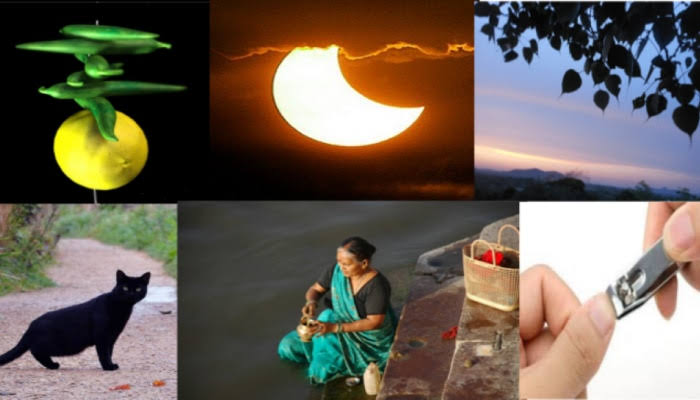
People still believe in omens and auguries. They are afraid of number 13, crossing of their path by a cat, or spilling of the salt. The eclipse of the sun and moon, the sight of a comet or shooting star, cries of owls, ravens, weeping of cats, howling of dogs, and jackals or braying of the donkey at certain hours still send a chill down their spine and they resort to all sorts of foolish practices to ward off the imagined harm and evil. All superstitions have their origin in human psychology of fear of ill luck, insecurity and the dread of inexplicable forces in nature. When some phenomena cannot be understood or explained, people start dreading them and assign them divine, supernatural and mysterious origins. Tantriks, preists, godmen and babas and other vested interests also help in spreading superstition to make fast buck out of gullible and credulous public. Some times ago the rumour and superstition that the idols of Hindu gods and goddesses were drinking offered milk caused quite a flutter and thousands and thousands of people were made fool and a laughing stock.

Superstitions find a fertile soil and breeding ground in human ignorance and lack of scientific knowledge. The less a community is educated and enlightened, the more it tends to be superstitious, backward and gullible. In such communities the astrologers, priests, magicians, babas, godmen and charlatans have a very good business.

Much fraud is being perpetrated in the name of astrology, palmistry, occult science, rituals and so called religious faiths. These weaken the faculty of human reasoning and make men more gullible, credulous, helpless and miserable. Superstitions are great curse. Superstitious fear, ignorance and lack of scientific temper have done immense damage to our progress and development. Superstitions are vile as they deprive us of self confidence, self control and rationality by weakening our will power and spirit.

Man is still afraid, awed and haunted by the fear of the unknown and inexplicable and wants to ward off the imagined trouble and suffering through the observation of the rituals, offering to ghosts, appeasement of the spirits of the dead and the worship of the stars and plants. There are lucky and unlucky numbers, days, animals and birds. A worn out horseshoe fixed the right way up the door of the house is supposed to bring good luck and prosperity. English people still think number 13 as inauspicious and ominous and refuse to occupy room no. 13 in hotels. Belief in charms, supernatural powers, ghosts, goblins, witches, evil spirits, spiritual healing etc have their deep roots in our superstitions.

Fortune telling has become a big business. Newspapers, magazines and periodicals have regular columns on weekly fortune of the readers. No newspaper or magazine can afford to miss it such is its popularity. Superstitions are thriving on a large scale under the auspices of various cults, religious sects, godmen, priests and so called babas swamis and prophets of gods. They prevail in every society, nation and community. Sometimes they are absurd, foolish and ridiculous to the limit of primitive ignorance. All superstitions have common origins. This is the age of reason and science and yet many old superstitions continue. Consequently, astrologers, soothsayers, godmen and priests are in great demand. We are actually the maker or spoilers of our destiny. The heaven or the hell lies within ourselves and yet we blame the stars and the constellations for our misfortune. And the vicious circle continues endlessly.