Augmented reality

Augmented reality (AR) is an interactive experience of a real-world environment where the objects that reside in the real world are enhanced by computer-generated perceptual information.

sometimes across multiple sensory modalities, including visual, auditory, haptic, somatosensory and olfactory. AR can be defined as a system that incorporates three basic features: a combination of real and virtual worlds, real-time interaction, and accurate 3D registration of virtual and real objects. The overlaid sensory information can be constructive (i.e. additive to the natural environment), or destructive (i.e. masking of the natural environment). This experience is seamlessly interwoven with the physical world such that it is perceived as an immersive aspect of the real environment. In this way, augmented reality alters one’s ongoing perception of a real-world environment, whereas virtual reality completely replaces the user’s real-world environment with a simulated one. Augmented reality is related to two largely synonymous terms: mixed reality and computer-mediated reality.

The primary value of augmented reality is the manner in which components of the digital world blend into a person’s perception of the real world, not as a simple display of data, but through the integration of immersive sensations, which are perceived as natural parts of an environment. The earliest functional AR systems that provided immersive mixed reality experiences for users were invented in the early 1990s, starting with the Virtual Fixtures system developed at the U.S. Air Force’s Armstrong Laboratory in 1992. Commercial augmented reality experiences were first introduced in entertainment and gaming businesses. Subsequently, augmented reality applications have spanned commercial industries such as education, communications, medicine, and entertainment. In education, content may be accessed by scanning or viewing an image with a mobile device or by using markerless AR techniques.

Augmented reality is used to enhance natural environments or situations and offer perceptually enriched experiences. With the help of advanced AR technologies (e.g. adding computer vision, incorporating AR cameras into smartphone applications and object recognition) the information about the surrounding real world of the user becomes interactive and digitally manipulated. Information about the environment and its objects is overlaid on the real world. This information can be virtual. Augmented Reality is any experience which is artificial and which adds to the already existing reality or real, e.g. seeing other real sensed or measured information such as electromagnetic radio waves overlaid in exact alignment with where they actually are in space. Augmented reality also has a lot of potential in the gathering and sharing of tacit knowledge. Augmentation techniques are typically performed in real time and in semantic contexts with environmental elements. Immersive perceptual information is sometimes combined with supplemental information like scores over a live video feed of a sporting event. This combines the benefits of both augmented reality technology and heads up display technology (HUD).

Comparison with virtual reality

In virtual reality (VR), the users’ perception of reality is completely based on virtual information. In augmented reality (AR) the user is provided with additional computer generated information within the data collected from real life that enhances their perception of reality. For example, in architecture, VR can be used to create a walk-through simulation of the inside of a new building; and AR can be used to show a building’s structures and systems super-imposed on a real-life view. Another example is through the use of utility applications. Some AR applications, such as Augment, enable users to apply digital objects into real environments, allowing businesses to use augmented reality devices as a way to preview their products in the real world. Similarly, it can also be used to demo what products may look like in an environment for customers, as demonstrated by companies such as Mountain Equipment Co-op or Lowe’s who use augmented reality to allow customers to preview what their products might look like at home through the use of 3D models.

Augmented reality (AR) differs from virtual reality (VR) in the sense that in AR part of the surrounding environment is actually ‘real’ and just adding layers of virtual objects to the real environment. On the other hand, in VR the surrounding environment is completely virtual. A demonstration of how AR layers objects onto the real world can be seen with augmented reality games. WallaMe is an augmented reality game application that allows users to hide messages in real environments, utilizing geolocation technology in order to enable users to hide messages wherever they may wish in the world. Such applications have many uses in the world, including in activism and artistic expression.

Star Trek Beyond: Explained

The third movie in the rebooted Star Trek series, set in an alternate universe where George Kirk died. The film picks up some time after the events of the last film, the USS Enterprise is on an exploratory mission in deep space. The movie pays tribute to Leonard Nimoy who played Spock in the original series, Nimoy passed away a year before the release. The movie is the last performance of Anton Yelchin who plays the lovable engineer Pavel Chekov, Yelchin died in a car crash 6 months before the release.

The movie starts with James trying to broker peace between 2 alien spices, after a brief fight James receives a relic and leaves the planet. The movie picks up as USS Enterprise lands on the star base of Yorktown for supplies and a break from their long exploratory mission. James has applied for a ground position after struggling to find meaning to the missions, he recommends Spock as his replacement. Spock receives the news of his older self’s death from new Vulcan, Spock thinks about resigning from Starfleet to lead his people on New Vulcan. On the base the crew meet their families and spend time on the base, Lieutenant Hikaru Sulu reunites with his family after a long time. The enterprise is dispatched on a recuse mission in a nearby uncharted nebula.

The rescue mission appears to be for an escape pod that broadcasted a distress signal. After docking the pod onto the ship its occupant Kalara request James to help her ship stranded on Altamid a planet in the nebula. As the enterprise moves closer to the planet a swarm of small ships begin to attack. The ships quickly tear the enterprise apart so that their leader could come aboard, the swarms leader Krall boards the ship and wreak havoc. He captures some of the crew and kill the rest in an attempt to find a device known as Abronath, the Abronath was recovered by the Enterprise on a recent mission. Kirk is forced to issue the order to abandon ship to save the surviving crew, the ships remains fall to the planet Altamid.

On the surface Sulu, Uhura and some other survivors are captured by Krall and taken to his camp. Kirk and Chekov land somewhere on the surface and are accompanied by Kalara to the remains of the enterprise, Dr Leonard McCoy and Spock land somewhere close to Krall’s camp. Spock is injured and McCoy attempts to heal him and engages him in conversation to take his attention off the pain, Spock reveals to McCoy that he wishes to leave Starfleet to join new Vulcan and continues his older self’s work. James and Chekov figure out that Kalara was Krall’s spy and defeat her by flipping the Enterprises saucer. Somewhere else Scotty is saved by Jaylah, a scavenger who escaped Krall.

Krall reveals the Abronath is the key to complete an ancient bioweapon capable of destroying civilisations, he showcases his ability to seemingly absorb someone else’s life force. A crew member is forced to give-up the relic after Krall starts killing the crew, Krall then tests the bioweapon on the crew member. James and Chekov are reunited with scotty who’s hiding with Jaylah on an early Starfleet ship the USS Franklin. The Franklin is a lost ship that went missing and lost all contact with Starfleet. The group formulates a plan to save the crew and defeat Krall who wants to destroy Yorktown.

After a successful rescue attempt, the crew powers up the grounded vessel and uses it to chase Krall. They jam and destroy the swarm by broadcasting songs to disrupt the swarms communication, Krall is chased by the Franklin all over in Yorktown. The crew discovers that Krall is the former captain of the Franklin, Balthazar Edison who used alien technology to survive after crashing on the planet. Balthazar aims to destroy the Starfleet and start an intergalactic war against former enemies, he crashes onto the surface of the starbase and is chased by James. James confronts Balthazar in the ventilation system right before he activate the weapon, after a brief fight James ejects the weapon and Balthazar into space sacrificing himself. James is saved by Spock and McCoy who stole a swarm ship, the weapon disintegrates Balthazar in space.

The movie ends with both James and Spock deciding to stay with the Starfellt, Spock renew his relationship with Uhura. Jaylah the scavenger is accepted into Starfleet academy on James’s recommendation.

The movie which seemed to be the final one ends with The crew watches the construction of their new ship the Enterprise A while celebrating James’s birthday. A next movie is set to release in 2023, until then Live Long and Prosper.

YOGA

Yoga is a group of physical, mental, and spiritual practices or disciplines that originated in ancient India. Yoga is one of the six orthodox philosophical schools of Hinduism. There are a broad variety of yoga schools, practices, and goals in Hinduism, Buddhism, and Jainism and there are four paths or types of yoga: Karma yoga, Kriya yoga, Bhakti yoga, and Jnana yoga. Research studies have shown that traditional yoga systems that include breathing exercises and asanas or postures, chants, and meditation can reduce stress and improve immunity and lung functions. Traditional forms and modern methods of yoga are practiced worldwide.

The practice of yoga has been thought to date back to pre-vedic Indian traditions, possibly in the Indus valley civilization around 3000 BCE. Yoga is mentioned in the Rigveda, and also referenced in the Upanishads, though it most likely developed as a systematic study around the 5th and 6th centuries BCE, in ancient India’s ascetic and Śramaṇa movements. The chronology of earliest texts describing yoga practices is unclear, varyingly credited to the Upanishads. The Yoga Sutras of Patanjali date from the 2nd century BCE, and gained prominence in the West in the 20th century after being first introduced by Swami Vivekananda. Hatha yoga texts began to emerge sometime between the 9th and 11th century with origins in tantra.

Yoga gurus from India introduced yoga to the West following the success of Vivekananda’s adaptation of yoga without asanas in the late 19th and early 20th centuries. The term “yoga” in the Western world often denotes a modern form of hatha yoga and yoga as exercise, consisting largely of the asanas. Outside India, it has developed into a posture-based physical fitness, stress-relief and relaxation technique. Traditional yoga, however, includes physical exercise, meditation, and spirituality. Yoga has its own epistemological method, which assumes the ontology and metaphysics of the closely correlated Samkhya darsana.

The ultimate goal of Yoga is Moksha (liberation), although the exact form this takes depends on the philosophical or theological system with which it is conjugated.

In the classical Astanga yoga system, the ultimate goal of yoga practice is to achieve the state of Samadhi and abide in that state as pure awareness.

According to Jacobsen, Yoga has five principal traditional meanings:

  1. A disciplined method for attaining a goal.
  2. Techniques of controlling the body and the mind.
  3. A name of a school or system of philosophy (darśana).
  4. With prefixes such as “hatha-, mantra-, and laya-, traditions specialising in particular techniques of yoga.
  5. The goal of Yoga practice.

According to David Gordon White, from the 5th century CE onward, the core principles of “yoga” were more or less in place, and variations of these principles developed in various forms over time:

  1. A meditative means of discovering dysfunctional perception and cognition, as well as overcoming it to release any suffering, find inner peace and salvation. Illustration of this principle is found in Hindu texts such as the Bhagavad Gita and Yogasutras, in a number of Buddhist Mahāyāna works, as well as Jain texts.
  2. The raising and expansion of consciousness from oneself to being coextensive with everyone and everything. These are discussed in sources such as in Hinduism Vedic literature and its Epic Mahābhārata, Jainism Praśamaratiprakarana, and Buddhist Nikaya texts.
  3. A path to omniscience and enlightened consciousness enabling one to comprehend the impermanent (illusive, delusive) and permanent (true, transcendent) reality. Examples of this are found in Hinduism Nyaya and Vaisesika school texts as well as Buddhism Mādhyamaka texts, but in different ways.
  4. A technique for entering into other bodies, generating multiple bodies, and the attainment of other supernatural accomplishments. These are, states White, described in Tantric literature of Hinduism and Buddhism, as well as the Buddhist Sāmaññaphalasutta. James Mallinson, however, disagrees and suggests that such fringe practices are far removed from the mainstream Yoga’s goal as meditation-driven means to liberation in Indian religions.

White clarifies that the last principle relates to legendary goals of “yogi practice”, different from practical goals of “yoga practice,” as they are viewed in South Asian thought and practice since the beginning of the Common Era, in the various Hindu, Buddhist, and Jain philosophical schools.

BENEFITS OF YOGA

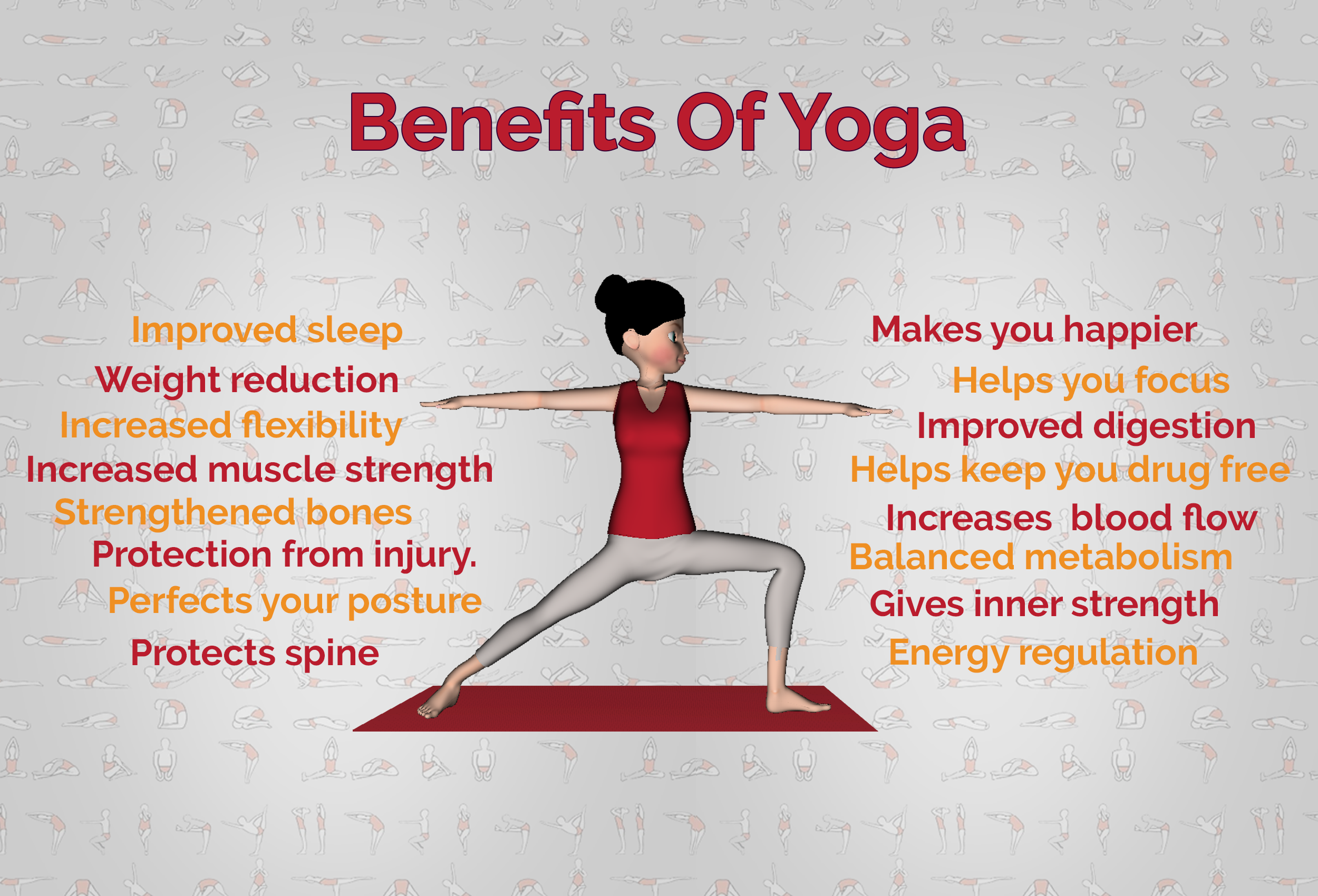
1. Yoga improves strength, balance and flexibility.

Slow movements and deep breathing increase blood flow and warm up muscles, while holding a pose can build strength.

2. Yoga helps with back pain relief.

Yoga is as good as basic stretching for easing pain and improving mobility in people with lower back pain. The American College of Physicians recommends yoga as a first-line treatment for chronic low back pain.

3. Yoga can ease arthritis symptoms.

Gentle yoga has been shown to ease some of the discomfort of tender, swollen joints for people with arthritis, according to a Johns Hopkins review of 11 recent studies.

4. Yoga benefits heart health.

Regular yoga practice may reduce levels of stress and body-wide inflammation, contributing to healthier hearts. Several of the factors contributing to heart disease, including high blood pressure and excess weight, can also be addressed through yoga.

5. Yoga relaxes you, to help you sleep better.

Research shows that a consistent bedtime yoga routine can help you get in the right mindset and prepare your body to fall asleep and stay asleep.

6. Yoga can mean more energy and brighter moods.

You may feel increased mental and physical energy, a boost in alertness and enthusiasm, and fewer negative feelings after getting into a routine of practicing yoga.

7. Yoga helps you manage stress. 

According to the National Institutes of Health, scientific evidence shows that yoga supports stress management, mental health, mindfulness, healthy eating, weight loss and quality sleep.

8. Yoga connects you with a supportive community. 

Participating in yoga classes can ease loneliness and provide an environment for group healing and support. Even during one-on-one sessions loneliness is reduced as one is acknowledged as a unique individual, being listened to and participating in the creation of a personalized yoga plan.

9. Yoga promotes better self-care.

“DWAYNE JHONSON” Biography

“Dwayne Johnson” also known by his ring name “The Rock”. He is an actor and former professional wrestler. He was born in Hayward California, U.S. on May 3, 1972. His father’s name of Rocky Johnson and mother was ata Johnson. His father was a professional wrestler and actor.

He lived in New Zealand for a brief period and attended the Richmond road primary school before returning to the United States. where he enrolled at the freedom High School he was an athletic teenager and participated in several Sporting activities he played football and was also a member of the School track and field and wrestling teams. His favourite sport for football and he received a full scholarship from the University of Miami to play defensive tackle how ever an injury dashed his dreams of a football career he graduated in 1995 with a bachelor of general studies degree in criminology and physiology she decided to trained as a wrestler and received his initial training from his father. Dwayne Johnson made his WWF debut as a rocky Mavia in 1996 and won the WWF intercontinental championship from Hunter Hearst Helmsley on Monday Night Raw the next year. He eventually changed his name to “The Rock” he established himself as a successful professional wrestler with several titles under his belt.

His wrestling prowess combined with this product good looks made him very popular among the female fans and so he started receiving of to appear on the small and the big screen. Dwayne Johnson married his longtime girlfriend Danny Garcia on 3rd May 1997 the couple had a daughter Simone Alexandra a few years later. After appearing in a music video he hosted Saturday night live in 2000. He made his Motion Picture debut as the Scorpion King in the opening sequence of the flim “The Mummy Returns” in 2001. The sucess of the movie led to its spin-off ” The Scorpion King” in 2002 in which Johnson played the role of Mathayus. He played the role of Joe Kingman, a divorced father sports comedy film, “The game plan”, in 2007. The movie opened at No.1 at the box office, grossing $22,950,971 in its first weekend in spite of getting negative reviews from critics. He and his wife separated amicably in 2007. In 2009 he appeared in the science fiction film “Race to witch mountain” based on the novel “Escape to witch mountain” by Alexander key this film to opened at No. 1 and become a huge box office hit. In 2011, Dwayne Johnson appeared in the fifth flim of the Fast and the furious flim series, “Fast five”, as Luke Hobbs, a Diplomatic Security Service agent. The flim grossed over $86 million in its opening weekend and became one of Johnson’s biggest commercial hits. He reprised his role as Luke Hobbs in ” Fast & Furious 6″, the sixth installment in The Fast and the Furious franchise, in 2013. He had Vin Diesel, Paul Walker Gina Carno and John Ortiz as co-stars. The film grossed over $780 million world wide, making it No. 50 on the all-time worldwide list of highest-grossing flims. In 2015 appeared in the seventh installment in the fast and The Furious franchise, “Furious 7″. This film too become a blockbuster like the earlier movie in the franchise and also received critical price for the action sequences. ” BLOOD SWEAT AND RESPECT. FIRST TWO YOU GIVE, LAST ONE YOU EARN” Said by ” DWAYNE JHONSON”.

𝑻𝒉𝒆 𝑷𝒓𝒊𝒏𝒄𝒆 𝒂𝒏𝒅 𝒕𝒉𝒆 𝑵𝒊𝒈𝒉𝒕𝒊𝒏𝒈𝒂𝒍𝒆 – Book Review

𝑨𝒔 𝒇𝒐𝒓 𝒕𝒉𝒆 𝒕𝒘𝒐 𝒍𝒐𝒗𝒆𝒓𝒔, 𝒕𝒉𝒆𝒚 𝒘𝒆𝒏𝒕 𝒕𝒉𝒓𝒐𝒖𝒈𝒉 𝒕𝒉𝒆 𝒂𝒓𝒅𝒖𝒐𝒖𝒔 𝒋𝒐𝒖𝒓𝒏𝒆𝒚 𝒐𝒇 𝒈𝒆𝒕𝒕𝒊𝒏𝒈 𝒌𝒏𝒐𝒄𝒌𝒆𝒅 𝒅𝒐𝒘𝒏 𝒂𝒏𝒅 𝒓𝒊𝒔𝒊𝒏𝒈 𝒖𝒑 𝒂𝒈𝒂𝒊𝒏 𝒐𝒇 𝒍𝒐𝒔𝒊𝒏𝒈 𝒕𝒉𝒆𝒎𝒔𝒆𝒍𝒗𝒆𝒔 𝒂𝒏𝒅 𝒅𝒊𝒔𝒄𝒐𝒗𝒆𝒓𝒊𝒏𝒈 𝒕𝒉𝒂𝒕 𝒍𝒂𝒔𝒕 𝒔𝒉𝒓𝒆𝒅 𝒐𝒇 𝒘𝒊𝒍𝒍 𝒕𝒐 𝒇𝒊𝒏𝒅 𝒕𝒉𝒆𝒊𝒓 𝒘𝒂𝒚.’

‘𝑻𝒉𝒆 𝑷𝒓𝒊𝒏𝒄𝒆 𝒂𝒏𝒅 𝒕𝒉𝒆 𝑵𝒊𝒈𝒉𝒕𝒊𝒏𝒈𝒂𝒍𝒆’ 𝒃𝒚 𝑨𝒃𝒊𝒔𝒉𝒆𝒌 𝑩𝒉𝒂𝒕𝒕

Interpretation

A beautiful book you read recently?

Beautiful song it was! I listened to a beautiful song and then I was wondering, did I just read a book? It’s rhythmical and melodious. The blurb says it’s a ‘tragic tale of two star crossed love’, but it wasn’t. It was balmy and soothing, it uplifted my spirits and delineated a beautiful love story with the aesthetic backdrop of post independence period.

I have read a lot of exhausting and overwritten Indian romance with the backdrop of post independence period, ‘The Prince and the Nightingale‘ is certainly a comfortable read for me, the writing style, character sketch and everything is comforting, reading this book is quite similar to watching a vintage romance movie.

Plotline

The story revolves around Abhimanyu, a prince who has decided to follow his passion after the collapse of princely states in India and Meera, a commoner who struggles to earn a good position in the society, the family roots of Meera intimidate her to follow her passion, when these two different people from different social backgrounds meet, melodious and melancholic song of ‘The Prince and the Nightingale’ commence painstakingly.

If you are looking for a good, refined Indian romance novel, I would certainly recommend this book.

Is love depleting from the world of humans?

Photo by Min An on Pexels.com

“Love will find a way through paths, where wolves fear to pray”, as beautifully quoted by Lord Byron. Indeed “Love”, is one of the purest elements in the whole universe, which makes our world more beautiful.

Why do we love? Is it important to love others? Should we love ourselves? There are endless unexplored questions that make us think about it. For a poet, love is like seeing those dazzling stars at night, for a painter, love is beauty gifted by nature, for a philosopher it is something beyond existence. But one common thought which provokes in every human is that love makes us unite, it gives us harmony and a sense of comfort towards each other.

Love is illusioned in our minds, in our hearts, but yet it is fading somewhere from the world of humans.  Somewhere, we humans have forgotten how to love each other.

 We are living in a generation where humans are rebellious and have detached from the emotional state of being. In the Contemporary world, people have forgotten about love and its profoundness. Whether it is self-love, to love others, Humans are having a neglecting behavior when it comes to love and gratitude.

This era is an era of remorse! An era where we are afraid of each other. Humans are toxic to each other. Where people don’t care for each other.

Gone are the days when the world was a beautiful place with all the precious jewels of mother nature. Now our world is a place filled with hatred, jealousy, evilness towards each other. Humans are in a motive to devastate each other for their desires and to let down other humans.

The love is no more the love that was there in the 18th century when Romeo loved Juliet had an eternal for each other. This was the time when love was the most prominent role for all humans to perform. Humans are the most threatening creature on our earth which is not only depleting love but also depleting humankind.

Love is no more than the love we had!

We have lost all our ethics and norms and living a misleading life. Often, we are living a life that has become a misfortune. We are living beings with shallow hearts. We have created a world where faith and trust no longer exist, and if it all is found we are burdened with societal pressure that we fall apart from our convictions.

Love is considered feeble, rather is one of the most vigorous things in the universe.

But as we say there is always hope for all. Love never dies and so we are alive till love exists. It all depends upon us and our convictions that how we perceive it.

In the end, to conclude we can say that why to deplete such a beautiful thing from the world. Let’s make a world more alluring than it is. Let’s make the world a paradise by loving and caring for each other.

SWIMMING SKILLS

Swimming is a fun and great activity to stay fit. It offers tremendous health benefits, improves mood, decreases anxiety and helps to burn lots of calories. Apart from this, it is also good for those suffering from arthritis and other pain conditions. As per the Centers for Disease Control and Prevention, swimming for just 2.5 hours per week decreases the risk of chronic illnesses.

To swim smoothly, co-ordination of the entire body is a must. One needs to focus on the movement of the legs and arms, as well as breathing control and swimming strokes. So, to expertise the skill of swimming you must start with the basics. Here are 5 basic swimming skills beginners need to learn:

5 Basic Swimming Skills Everyone Needs To Learn:

1.BREATHING:


This is a frequently overlooked basic skill, but it is an important one. If are not comfortable breathing while swimming, you won’t be able to enjoy it completely and learn new things. The basic idea is that you need to breathe out with both your nose and mouth when your head is underwater. Then when you lift your head to the side take a full breath before putting your face back down.

2.FLOATING:

Before you start kicking and stroking, first learn to float in the water. Floating helps you to get used to the habit of moving through water properly. Floating helps to keep your body on the surface of the water. Our body experiences a vertical buoyant force when immersed in water and floating helps to keep your body in a horizontal position. Floating is important because if you accidentally fall in the water you will be able to float on the surface till you are rescued.

3.YOUR BODY MOVEMENT SHOULD BE WELL COORDINATED:

In swimming, all your body parts should be well co-ordinated with each other. You must be able to move the muscles of your lower back, abdomen, and hips in a synchronized way to keep moving forward. Your hands should move and cut through the water first, followed by your elbow and then your body should make way through the water.


4.KICKING:


Kicking is another important skill to learn if you want to master swimming. Kicking helps your body to move in the forward direction. Many swimming coaches use kickboards to support swimmer’s body.


5.STROKES:


Now that you know how to float and kick, it is time to learn some strokes. Strokes are the arm movements that help to pull the body through the water. The front crawl, sidestroke, backstroke, and butterfly are some of the common swimming strokes.

THE KITE RUNNER BY KHALED HOSSEINI

ABOUT THE BOOK:

The Kite Runner is the first novel by Afghan-American author Khaled Hosseini. Published in 2003 by Riverhead Books.

It tells the story of Amir, a young boy from the Wazir Akbar Khan district of Kabul, whose closest friend is Hassan. The story is set against a backdrop of tumultuous events, from the fall of Afghanistan’s monarchy through the Soviet military intervention, the mass transfer of refugees to Pakistan and the United States, and the rise of the Taliban regime.The heartbreaking story of the friendship between a wealthy boy and the son of his father’s servant, The Kite Runner is a beautifully written novel set in a country that is in the process of being destroyed. It is about the power of reading, the price of betrayal, and the possibility of being saved from the sin; and an exploration of the power of fathers over sons, their love, their sacrifices, their lies. The Kite Runner is an unusual and powerful novel that has become a beloved, one of a kind classic.

THE PLOT:

Moving back and forth between Afghanistan and California, and spending almost 40 years, the story begins in Afghanistan in the peaceful 1960s. Our protagonist Amir is a child in Kabul. The most important people in his life are Baba and Hassan. Father Baba is a wealthy indegenous merchant, who is worried about his son who always spend time in writing, he love to do (the mother died giving birth); Hassan is his sweet-natured playmate, son of their servant Ali and a Hazara (Persian speaking ethnic group). Native people have always dominated and kind of degraded Hazaras, so Amir can’t help teasing Hassan, even though the Hazara strongly defends him against neighborhood bullies like the “sociopath” Assef. The day, in 1975, when 12-year-old Amir wins the annual kite-fighting tournament is the best and worst of his young life. He bonds with Baba at last but  Hassan when the latter is raped by Assef. And it gets worse. With the still-loyal Hassan a constant reminder of his guilt, Amir makes life impossible for him and Ali, ultimately forcing them to leave town.  Amir becomes a writer and marries a beautiful Afghan. Baba dies of cancer. Then, in 2001, the past comes roaring back. Rahim, Baba’s old business partner who knows all about Amir’s being taken down for an offence , calls from Pakistan. Hassan has been executed by the Taliban; his son, Sohrab, must be rescued. Will Amir wipe the slate clean? So he returns to the hell of Taliban-ruled Afghanistan and recover Sohrab from a Taliban leader (none other than Assef) after a terrifying showdown. What is Amir going to do with Sohrab? Will he recover from his guilt after all what he did to Hassan and be able to go through all his traumatic past?

FAVOURITE LINES:

”When you kill a man, you steal a life. You steal his wife’s right to a husband, rob his children of a father. When you tell a lie, you steal someone’s right to the truth. When you cheat, you steal the right to fairness. There is no act more wretched than stealing.”

“It may be unfair, but what happens in a few days, sometimes even a single day, can change the course of a whole lifetime.”

“And that’s the thing about people who mean everything they say. They think everyone else does too.”

It is the first time i felt more frustated about the protagonist. Personally, his actions are not likely at first but nearing the climax the development of the character Amir is so amazing. Although the story is more than emotional, sometimes so relaxing and felt warm.

Rags to riches

If there’s one dessert that every person on this planet loves, it’s an ice cream! But one Mumbai-based label is giving every ice cream company a run for its money. Naturals Ice Cream companywhich started with an investment of Rs 2 lakh, now has a turnover of Rs 300 crore. 

Renowned for its cafe-like ice cream parlors, Naturals has 129 stores in all major cities of India, including Mumbai, Bengaluru, Hyderabad, and Delhi

“You don’t have to wait for the ‘big idea’. It is important to start and build upon the small ideas to create the biggest wins,” very well said by Raghunandan Kamath, the Founder of Naturals Ice Cream, hails from Mangaluru. The boy of a fruit vendor, Raghunandan learnt to distinguish good fruits early on. Shortly, his eldest brother came to Mumbai to make it big. He unveiled a cafe in Santa Cruz, and put Raghunandan in charge of the ice cream counter.

Raghunandan soon understood that ice cream was a unique and exotic dessert that grabbed the fancy of the working class, and was a symbol of elitism

In 1983, after getting married, he decided to start something of his own, and thus, Naturals Ice Cream came into existence in 1984.

Today, Raghunandan’s sons, Srinivas Kamath and Siddhant Kamathare assisting him operate the enterprise across India. 

While ice cream comes across as the ultimate sweet-tooth experience, production it is not very tough. For the past 37 years, Kamath has been leveraging small ideas to build his empire. 

At a time when ice creams were a rare, albeit prized possession and only aristocratic families had access to them, Kamath sold Pav Bhaji with ice cream. This pioneering brand also refrained their brand from artificial colours, flavours and preservatives that its competitors were using. 

Kamath keenly observed his surroundings to make ‘Naturals’ a household name — whether it was learning to pick quality fruits like his father, using his mother’s traditional hacks or taking customer feedback seriously.  

Today, his wife, Annapurna and sons, Siddhant and Srinivas also serve on the management board. Their staff of 125 members produce close to 20 tonnes of ice creams daily.

Originally from Puttur taluka of Mangalore in Karnataka, Kamath was the youngest of seven siblings. His mother was a homemaker and his father was a fruit vendor. The family of eight also cultivated some fruits on their one-acre land but their monthly earnings were as low as Rs 100.

The prospect of education looked insubstantial. Students of Classes 1 to 5 in Kamath’s school were taught together and despite failing in his exams, he was promoted. However, it was the lessons outside the classroom that Kamath liked the most. 

The COVID-19 pandemic saw a dip in sales for the brand’s business, but Siddhant, his brother, and their father are not new to challenges. In 1993, an income tax query on the business turned out to be a big blow for the company. “We incurred several losses because my father was not aware of several taxation policies,” Siddhant adds.

However, the family started on its road to recovery by giving out five franchises of the business.

Similarly, in 1991, when the economy had just opened, allowing foreign companies to open a business in India, ice cream companies like Baskin Robbins and Haagen Dazs posed a lot of difficulties for Naturals. 

There were no ‘MBA-level’ tactics used by this courageous businessman who simply wanted to sell fruit-flavoured ice cream. By moving into a niche segment like the ice cream market, which was largely overshadowed by a handful of brands, Kamath took a huge risk and his courage paid off !

reference- https://www.thebetterindia.com/258947/naturals-icecream-order-online-fruit-vendor-raghunandan-kamath-success-story/

https://yourstory.com/smbstory/indian-ice-cream-brands-naturals-ice-cream-mumbai/amp

Why Do Our Brains Require Sleep?

We spend around one-third of our lifetimes sleeping. Sleeping is as crucial to our bodies as having to eat, drink, and breath, and it is critical for sustaining excellent mental and physiological wellness Sleep allows us to recuperate from both mental and physical effort.

Sleep and health are inextricably linked; sleep deprivation increases the likelihood of poor health, and poor health makes it more difficult to sleep. Sleep problems are also one of the earliest symptoms of a health issue. Anxiety and depression, for example, are common mental health issues that are frequently underlying sleep disorders.

Anxiety might lead your mind to rush, making it difficult to sleep. Oversleeping can result from depression, which might cause you to sleep late or sleep a lot throughout the day. If you have disturbing thoughts, it might also induce sleeplessness. Nightmares and night terrors can be caused by post-traumatic stress disorder (PTSD).

These may cause you to wake up and/or make you apprehensive about going asleep. Mania might cause you to feel exhilarated or energised, and you may not feel exhausted or desire to sleep. You may also experience obsessive thoughts that make it difficult to sleep. Medication might cause adverse effects such as sleeplessness, nightmares, and excessive sleep. Sleep issues might also occur after you stop taking your medicine.

We can all gain from bettering our sleeping habits. For most of us, it may simply be a matter of adopting little lifestyle or mindset changes to aid us sleep better. Insomnia (loss of sleep or poor quality sleep) or other sleep issues affect up to one-third of the population.These can have an impact on our mood, energy, and concentration levels, as well as our capacity to stay awake and perform at work during the day.

What factors might contribute to sleep issues?

There are several factors that might influence our sleep. They are as follows:

  • tension or anxiety
  • a change in the sound levels or temperature of your bedroom 
  • a changed schedule, for instance, due to jet lag
  • excessive drinking of  coffee or alcohol
  • consecutive shifts
  • medical or psychiatric issues
  • adverse effects of medications

How to get better sleep?

Often, simple practises might help you sleep better. If they don’t help, talk to your doctor about additional options, especially because sleep disorders might be an indicator of other health concerns.

There are four basic things to think about if you want to recover from a spell of bad sleep:

Health

We know that bad health has an impact on sleep and vice versa. Sleep issues are frequently associated with mental health issues such as sadness and anxiety. It is critical to treat any health problems, for both physical symptoms as well as for any anxieties that may keep you up.

Environment

It is vital to sleep in a comfortable environment, and the bedroom and bed should be the primary areas you connect with sleep. Viewing TV shows playing on your smartphones or other devices, and snacking in bed, especially, all can have an impact on the nature of our sleep. Temperature, excessive noise, and lighting all have an impact on our sleep.

Attitude

It is easy to fall asleep when we can relax and let go of our worries. We’ve all experienced nights wherein we stayed awake and worried. We should attempt to unwind, be less stressed, and calm before going to bed. This might be more difficult than ever these days, but breathing exercises, a hot bath, or meditation can help.

Lifestyle

What you consume might have an impact on your sleep. Caffeine and other stimulants can make it difficult to sleep, and a large or heavy meal close to night can make sleep unpleasant. While alcohol may appear to help you fall asleep, it really lowers the quality of your sleep later on. Exercising during the day is also beneficial to sleep, but because it generates adrenaline, exercising in the evening, however, may be less beneficial.

Central government’s big decision, Central University will be built in Ladakh

The cabinet meeting was held on Thursday under the leadership of Prime Minister Narendra Modi. Union Minister Anurag Thakur informed about the decisions in the press conference

The cabinet meeting was held on Thursday under the leadership of Prime Minister Narendra Modi. Union Minister Anurag Thakur informed about the decisions in the press conference. .

.. According to Anurag Thakur, this university will be built with Rs 750 crore. Local youth will get this decision. The areas of Leh, Kargil, Ladakh will come under the university.

Giving information about the decisions of the cabinet, Union Minister Anurag Thakur said that the first phase of the university will be completed in four years. A bill to amend the Central Universities Act 2009 will also be introduced to ease the way for the creation of a central university in Ladakh.

He said that setting up of a Central University in the Union Territory of Ladakh would help in removing regional imbalances in higher education and ensure all round development of the Union Territory. With the establishment of a central university in Ladakh, students will get more opportunities to pursue higher education.

Significantly, PM Modi in his address on the occasion of Independence Day on 15 August 2020 had announced the establishment of a Central University in Ladakh. This new central university will be a role model for other universities in the region.

Anurag Thakur said that the cabinet has also decided to form an Integrated Multipurpose Corporation to run the development projects of Ladakh in a better way. This corporation will do the work of development of industry and tourism and marketing of local products and handicrafts. It will act as the main construction agency of Ladakh for construction of infrastructure.

With this, the Union Cabinet has decided to form an Infrastructure Corporation in Ladakh, which will decide on trade and other related issues in the local area. Anurag Thakur said that with its establishment, development in Ladakh will be done faster. It has been brought under the Companies Act, the corporation will have a budget of up to Rs 25 crore.

College Life and pandemic.

College life is the most incredible phase of life where we gain innumerable experiences and make memories that last for a lifetime. It is the time we are exposed to the whole new world, the world out of the boundaries that schools build up to provide a safe environment. College life has different meanings for everyone. While some spend their time hanging out with friends having fun and party, others devote their focus towards study to pave the way to a brighter future. Be it a college rockstar or nerd, every individual wants to relive the memory lane of this beautiful arena.

Generally, college life is the time when an individual moves to another city to settle as a newbie as well as a freshman in college. Hence, is the time to learn from real-life experiences and learn to fit in the society as an individual. It is experiences that shapes the narrative of one’s mind and that’s how an individual’s growth is linked to directly to the environment we live in, which is why it is absolutely necessary to live these important years of life.

But unfortunately, batch of 2020 has no such experience and college students are stuck with an online system since March 2020, which is saddening and equally depressing. It is not only about classes that students are missing in this pandemic rather it’s the crucial period of life full of twists, turn and fun in being missed. While college life is shrunk and bottled up on the screen of the laptop and mobile phones, that is the worst possible scenario, life has become equally dull and bland. Attending everything from classes to workshops to fest virtually is a daunting task because it’s tiring to sit on the computer all day and is equally detrimental to health.

This online system is not online only affecting physical health but also provoking mental health issue particularly. In the provided system, fear of being missed out due to social isolation is overpowering young minds gradually, as a consequence of which anxiety and depression are entrapping the youths at a much faster rate in comparison to that of the adults. Like I said it’s the environment that shapes the narrative, and everyone is well aware of this chaotic and challenging online environment.

However, it is rightly said that something is at least better than nothing, so is this whole virtual life system that is allowing us to access education and work from our home.

So, in these trying times, it is necessary for everyone and for students as well to take care of themselves a little more than in the pre-pandemic world by connecting more with your family and developing habits of waking up early to have a moment of silence with yourself in the morning to introspect and meditate to generate the relaxing effect, and to remind the things to yourself that you’re still grateful for even in this pandemic.

Psychological Disorders Part 5

Introduction

In Psychological Disorders Part 4, Eating Disorders were discussed. It is very important to consult a psychologist if you are facing any of the eating disorders as they can be life-threatening. This article will discuss Sleep Disorders.

Sleep Disorders

These disorders involve interruptions in the sleeping pattern which leads to distress and affects the daytime functioning of the person.

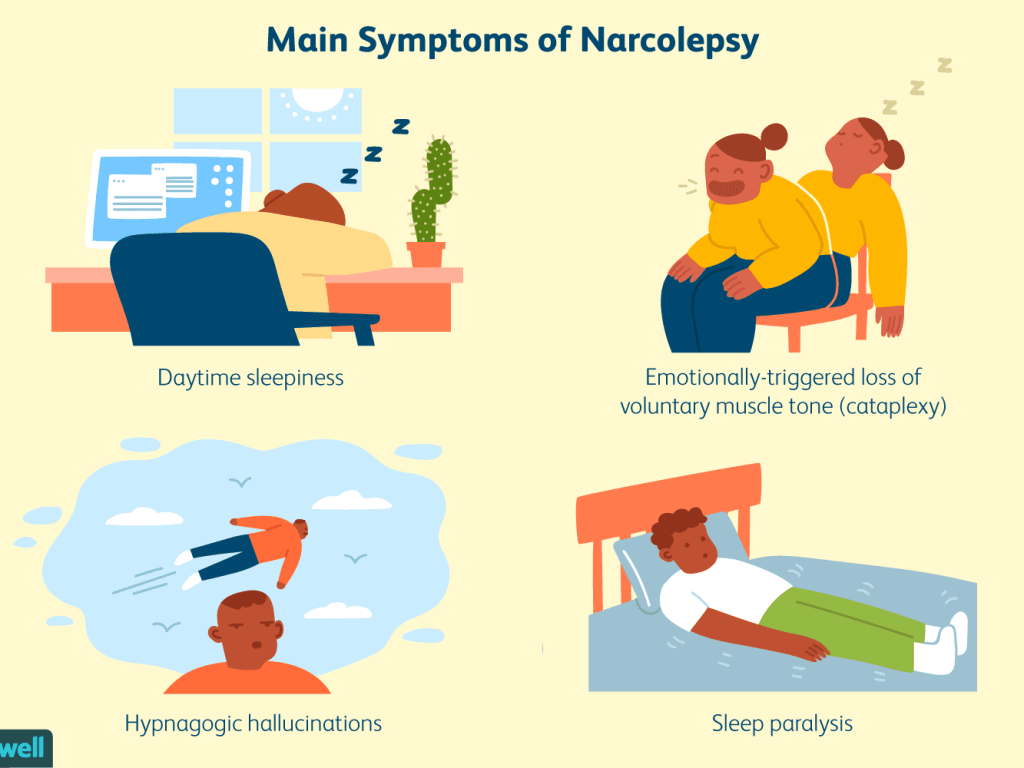
Narcolepsy is a chronic sleep disorder in which the person has overwhelming daytime drowsiness and sudden attacks of sleep. People with this disorder find it difficult to stay awake for long periods and this can cause excessive disruptions in their daily routine. There are two types of narcolepsies, one that is accompanied by a sudden loss of muscle tone, called cataplexy, this is type 1 narcolepsy and type 2 is without cataplexy. The symptoms for this are excessive daytime sleepiness, decreased alertness, sudden loss of muscle tone which can cause slurred speech, sleep paralysis, changes in REM sleep, and hallucinations. This is a chronic disorder so there is no cure for it but it can be managed with medication and some changes in the lifestyle. The cause for this is unknown but it is observed that in type 1, people have low levels of the chemical hypocretin which is important for the regulation of wakefulness and REM sleep.

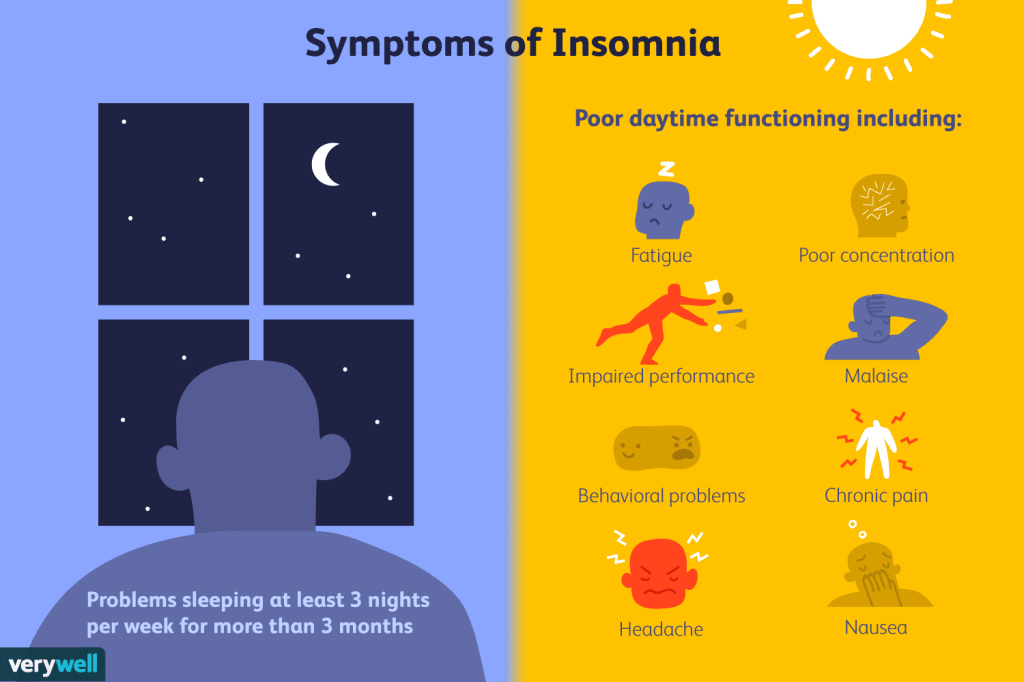
Insomnia Disorder is a disorder in which a person has trouble falling or staying asleep, it can be acute or chronic. There are two types of insomnia, primary and secondary. In the case of primary insomnia, the sleep problems are not related to any other health problem, whereas, in the case of secondary insomnia, the trouble in sleeping is because of another health condition. The causes for primary insomnia can be stress, noise, light, temperature, jet lag. Symptoms of insomnia are sleepiness during the day, grumpiness, problems with concentration and memory, and fatigue. You are more likely at risk of insomnia if you are a woman because of the hormonal shifts.

Hypersomnolence is when a person suffers from excessive sleepiness despite having slept enough. Symptoms for this are falling asleep several times during the day, taking naps to deal with the sleepiness but still not waking up refreshed, sleeping more than 9 hours but still not feeling rested, feeling confused when waking up, having difficulty waking up. This can cause problems at work, school, or other daily routines.

Sleep Apnea is a serious sleep disorder in which breathing continuously stops and starts. There are three main types of sleep apnea; firstly, Obstructive sleep apnea is when the throat muscles relax; secondly, Central sleep apnea is when the brain fails to send proper signals to the muscles which are responsible for controlling breathing; lastly, Complex sleep apnea syndrome is when someone is suffering from the combination of the first and second type of sleep apnea. Symptoms are gasping for air during sleep, loud snoring, episodes in which you stop breathing, morning headache, awakening with dry mouth, hypersomnia, difficulty staying asleep, irritability, and difficulty paying attention while awake.

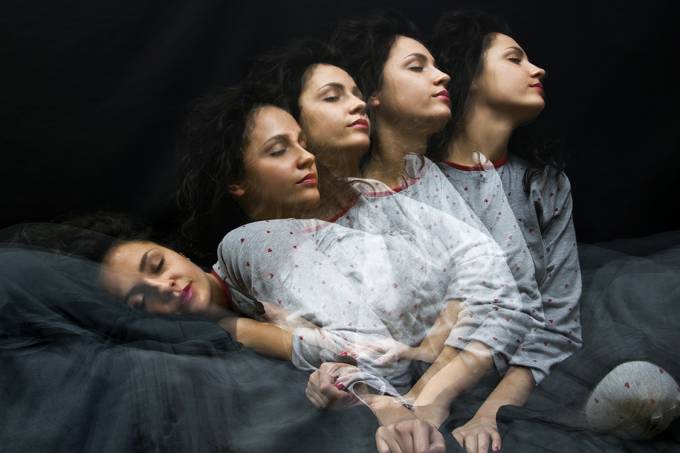
Parasomnia involves unusual and undesirable physical which disrupt sleep. It includes abnormal movements, talk, or other unusual things during sleep. There are two types of parasomnias, Non-REM and REM, this distinction is based on the stage of sleep in which they happen. Parasomnias during Non-REM include sleep terrors, sleepwalking, and sleep-related eating disorders. Parasomnias during REM include nightmare disorder, recurrent isolated sleep paralysis, and REM sleep behaviour disorder. Symptoms are waking up confused or disoriented, being tired during the day, difficulty sleeping through the night, and finding cuts and bruises which you do not remember.

Restless Legs Syndrome causes an uncontrollable urge to move your legs because of an uncomfortable sensation. Symptoms are sensations that begin after rest, relief with movement, worsening of symptoms in the evening, and nighttime twitching.

Conclusion

These sleep disorders are very serious. As we know sleep is very important for our health, it is important to sleep properly for the health of your body and if you think you have any of these sleep disorders, please consult a psychologist who can help you regulate your sleep.

References

Note: this is just Part 5 of the Psychological Disorders series.

WONDERS OF SAFFRON

  1. In Japan, saffron is encapsulated and used in the treatment of Parkinson’s disease, memory loss and inflammation.
  2. Saffron and its components have also been suggested to be useful for cancer prevention.
  3. saffron supplementation could help improve symptoms of depression in adults dealing with major depressive disorder (insomnia). 
  4. A study shows the possibility of the potential efficacy of saffron in accelerating wound healing in burn injuries.
  5. A study done on healthy men showed that daily use of saffron (about 100 mg) could have enhance immunity without any adverse reactions .
  6. Saffron helps reduce the risk of heart disease by strengthening the circulatory system.
  7. Some research suggests that saffron could be useful for patients dealing with liver metastasis.
  8. saffron could be used as a natural UV-absorbing agent. It contains flavonoid compounds like kaempherol and quercetin which is useful for UV absorbtion.
  9. saffron has shown certain complexion promotion effects which may enhance skin whitening.

Caution: Even though it is a herbal plant it is recommended to use it at very minimum level .As we say too much of good is not good – yes, It has some side effects too .

Saffron Dosage And Side Effects:

Some research states that 10.5 grams of saffron a day can cause toxic side effects. These include headache, dizziness, and loss of appetite, weakness and in extreme cases may also be harmful to the lungs and kidneys.

For pregnant women, the daily upper limit for saffron, as per some sources is 5 grams .Taking saffron orally in large amounts during pregnancy can cause problems – it can lead to contractions of the uterus and miscarriage.

Recommended dosage: less than 5 grams or 5 grams .

A STORY FROM FAILURE TO SUCCESS – JACK MA

The Alibaba.com logo at the Alibaba.com headquarters in Hangzhou, China. Alibaba.com is one of the worldÕs leading Internet companies. With its Business-to-Business platform, manufactures and purchasers are connecting and making purchases that otherwise would have gone through state run trading companies. Aliababa.com is allowing small manufactures to take control of their own marketing and reach clients that would have otherwise been unavailable. (Photo by Ryan Pyle/Corbis via Getty Images)

Building one of the biggest online e-commerce platforms, does not require any techniques or specialized knowledge or application and not even a business plan, then what makes your business to run long?

Today we will read a story. A story of man’s life who has transform the economy of China and the internet industry almost alone, single handedly. His life is not less than the story of Robert or Spider that we used to enjoy during kindergarten. Yes, it is the story of Jack Ma.

WHO IS JACK MA?

Jack Ma is the founder, owner of the giant E-commerce platform the Alibaba and he is also a stakeholder at Alipay, company which is an e-payment portal. He is counted in the list of one of the richest men in the world with the net worth of $35 billion. Ma only holds only 7.8% stake in Alibaba and 50% in Alipay.

The beginning can make you to think that the story of self-important and the billionaire has never faced the dark. But do not let these number mentioned above confused you, they can trick anyone. We cannot deny the fact, that Ma has also faced many hard times to reach and achieve all the success and position where he is today.  A true story from being an ordinary man to be the richest, his story is definitely the one that will motivate and inspire you at your darkest.

THE BACK STORY

Ma Yun a.k.a Jack Ma a self-made billionaire was born on 10 September 1964 in Hangzhou in the part of China. He was born and brought up with an elder brother and a younger sister. As a boy Ma did everything, he could do to learn English. At the age of 12 he got an idea to improve his communication in English. Every morning he use to rode bicycle to the international hotel in his hometown and use to wait for tourist to com. He made proposal with tourist. He used to take them around the city and in return they helped him with English.

EDUCATION

During his childhood, Ma failed in Primary School Examination not once but thrice. He also failed the university entrance exam. Later finally he joined Hangzhou Normal University. Ma also failed to get the job in his bachelor’s degree.  He then recalled his one of the worst interview ever “When KFC came to China 24 people came for the interview out of which 23 of them got selected and I was the only guy rejected” , he also applied for the in the police force and he was one of the 5 applicants and again he was the only guy who was not selected and being told “No, you’re no good.”

ENTREPRENEURIAL EXPERIENCE

As being an entrepreneurial, Jack Ma failed in his two initial ventures, but this did not stop him of dreaming big.

THE COME BACK

Finally, after gathering 17 of his friends to invest and to join the e-commerce start up- Alibaba, the apartment became his company. Alibaba started with no single penny in investment from anyone. But later they raised $20 million and $5 million from SoftBank and Goldman Sachs respectively in the year 1999. After being successful at the age of 31 in his first company even having not experience in selling something to anyone, Ma runs one of the biggest E-commerce platforms in the world. Alibaba saw a rapid growth and expanded all over the world.