When we say cheese everyone starts to have water in their month. Everyone in the world likes cheese and they have tasted it at least once in their whole lifetime and there is no denying it .I’m here to talk about the way more different types of cheese available around the world.
most expensive cheese in the world:
pule donkey cheese
Pule is made exclusively at Serbia’s Zasavica Special Nature Reserve located 30 miles outside of Belgrade. At roughly $576 a pound it is the world’s most expensive cheese and its extreme price tag is made all the more surprising when you discover it’s made using donkey milk.
worstcheese in the world : yuck!!!
Casu martzu:
Casu martzu literally rotten cheese .In Sardinian, is a traditional Sardinian sheep milk cheese that contains live insect larvae (maggots). A female P. casei is allowed inside the cheese and it can lay more than 500 eggs at one time. The eggs hatch and the larvae begin to eat through the cheese. The acid from the maggots’ digestive system breaks down the cheese’s fats, making the texture of the cheese very soft by the time it is ready for consumption, a typical Casu Martzu will contain thousands of these maggots. They eat the cheese with that transparent worms inside alive !!
best cheese in the world :
MADISON:
A gruyere from Switzerland has been named the world’s best cheese, chosen from a record number of entrants from 26 nations in the World Championship Cheese Contest in Wisconsin. The cheese from Bern, Switzerland made its maker, Michael Spycher of Mountain Dairy Fritzenhaus a two-time winner. It has a wide variety of cheeses .These cheeses are made from cow milk as well as goat milk.
cheapest cheese in the world :
Cheddar cheese Ireland
Irish cheddar is the most widely recognized type of cheese from Ireland. Irish cheddar is most often made from pasteurized milk. Irish cheddar cheese is made from milk that is curdled and kneaded with salt to drain the whey before the curds are packed into blocks for aging. Kneading the curds with salt is a process called cheddaring.
softest cheese in the world :
Buffalo mozzarella :
mozzarella made from the milk of Italian Mediterranean buffalo. The term mozzarella derives from the procedure called mozzare which means “cutting by hand” is the process of separation of the curd into small balls and serving them in individual pieces . It is appreciated for its versatility and elastic texture and often called “the queen of the Mediterranean cuisine”, “white gold” or “the pearl of the table”.
hardest cheese in the world :
Nepal’s chHurpi:
chhurpi is often called the world’s hardest cheese, a single piece can last mountain folks hours in their mouth: biting, chewing, gnawing, and slowly dissolving into a delicious, and filling, creamy cheese. Traditionally, chhurpi is made out of chauri milk, a mix between a yak and a cow.
The online medium to connect with people in an informal way is the Social Media.It can be your friends, relatives or even strangers.
You can communicate with anyone through this medium. It is not limited to chatting, voice messages or video calls only. The technology is advancing day by day and till now we have found a place for entertainment in The Social Media. People get a chance to showcase their talent through this media. It is accessible to all and easy to use. Even common people can gain popularity in a way; by using such platforms to entertain others’.
During high times of stress or tiredness, it serves a relaxation to people to engage on social media platforms. But is this truly helping out people ? Is it a good way to recover from stress and tension ? Are people using it the way it is meant to be ? These are some of the many questions that may come up in mind.
Now-a-days, people of all ages can be seen using social media for their own reasons but, it is becoming an addiction at the same time. Without needing it, people prefer using it. This has become an escape from the real worldbringing us into a virtual reality where there are real people but communication is online, where there are real feelings but being shared through memes, where there is sadness but covered with fake smileys!
These so called “sources of happiness” are actually leading to bad mental health. Constant use of online media affects not only our eyes due to the screen reflections but, use of mobile phones affects the skin as well. You must have noticed fingers and thumb paining after using smart phones for a long time. The young generations are already using these far beyond what they need it for.
Everything should be consumed in accordance with its need. The mental health is being compromised while using these platforms without any such need. The flood of useless communications and interactions opened while using social media apps puts an impact on the mind of a person. You don’t need to know everything that happens on that platform; it is not mandatory to be aligned with the ongoing trends of social media which is nothing but some stuff created by a random person going viral due to its impact! Also, there is peer pressure-You join such platforms because your friends enjoy being there, active all the time. It can also be that you started it for some work but may end up scrolling content of no use.
These practices grow into addiction and affects the brain making it slow while working. A social media addict can be observed struggling with work. It’s because of disturbance created by the useless (and fake) content in the brain. People make fun of these facts and enjoy being destructed by them. This is however, a serious issue.
So much of mixed content and videos disturb the mind. Although you might enjoy them in the first place but gradually you start using them in an undefined manner. People use it when they are bored or too lazy to work. This affects physical strength besides affecting mental health of a person. And it is not only the case of children but adults as well. There is already work requirements of phones that the focus should be to reduce extra usage for the sake of healthy mind and body. Unfortunately, people understand things but don’t follow them.
Social media is not only a medium of exchange of thoughts and skills but fraud also takes place via the internet. Surely it is beneficial to use but only when you use it productively.Growing business or setting up a new venture, etc. are good to use social media for. And that also should be done carefully. There are no less cases of fraud through social media. It gives rise to crimes as well and these are some more of the reasons for decreasing mental health; when people see such news, they are hurt mentally and many even fear its usage. Personal information often gets leaked. There exist people who keep an eye on the users and target them by various techniques. Getting such fake/fraud calls or messages puts a person in tension and stress. In order to get famous, people apply various ideas to grow on social platforms, often risking their info in unsafe hands.
Therefore, social media should be used with precaution and not more than what is required. If it is a stress-reliever for you, use it, but only to an extent. Control your mind from flickering towards wrong directions and never exchange your data on such platforms.
There are people who find it difficult to manage their usage of social media for entertainment. Here are a few ways to self- control–
Find something interesting–Make yourself busy with some other work so that you don’t get time for this.
Read books- Make a habit of reading books or magazines, journals, etc. so that you getengaging and useful content.
Listen fun music– Listen to music which activates your mind and you no longer need any other entertainment.
Set a target– Close your accounts on such platforms and set a target of not opening them for a number of days. Increase the limit gradually to help control yourself.
Add something valuable– If you are a lot addicted to using your smart phone, then add an app that will teach you something new( related to learning or improving a skill, etc.) and Use it instead of social media.
The govt engaged in the regular behavior of commercial enterprise devotes a good deal of his time to interviewing. However, there is an appalling lack of effort given to systematic tries at constructing enhancements into this age-old process. Interviewing stays one of these things to do which we assume we be aware of all about purely due to the fact we have been doing it so long; we have been lulled with the aid of habit. It appears apparent that a modest effort aimed at an evaluation of our interviewing methods would yield beneficiant returns.
In the wide sense, interviewing is the technique whereby persons (usually two) trade information. The folks may additionally be worried with a job opening, a promotion, a exceptional assignment, a product sale, data for talent purposes, a proposed merger, or different questions. The data exchanged want now not be restrained to facts. In business, particularly, such merchandise of an interview as that means and grasp are commonly greater massive than goal factual statements.
Interviewing in the modern commercial enterprise placing continuously takes vicinity in an environment stuffed with a feel of urgency. The time allotted to the interview is always limited. Consequently, a nondirective method finds little application; it is vital to use the guided interview in the substantial majority of situations. This inherent time constraint on occasion brings about dysfunctional consequences: the interviewer is so preoccupied with budgeting his time that the content material and the motive of the interview are vitiated. Hence, we need to outline what we imply by using an positive interview. For the functions of this article, an high quality interview is one that optimizes the perceived conversation targets of the people involved, with time as the fundamental constraint. We shall focal point on lookup findings concerning:
The acceptable sort of guidance for the interview.
Value of such tactics as having an define of factors to be protected and taking notes.
Use (and misuse) of questions and questioning techniques.
The sort and quantity of manipulate that the interviewer must workout over the discussion.
Analysis and comparison of statistics obtained.
Preparation and Planning
The lack of ample planning for an interview is the best single fault discovered in my research of the interviewing process.1 All too often, the inexperienced interviewer launches into a dialogue solely to discover half way thru that his training is incomplete. A average quantity of preplanning can effortlessly obviate such unlucky occurrences.
When the goal of the interview is commonplace in advance, it is generally a properly exercise to enable the man or woman involved enough time to put together for the discuss earlier than the proper involvement. By indicating, in advance of time and in writing, the factors to be covered, the interviewer offers the interviewee an brought gain and reinforces the precise cause of the session. Too regularly the expectations of the interviewee can also be some distance specific from those of the interviewer. This misunderstanding, if now not corrected, can be disastrous.
On the different hand, too an awful lot preplanning and detailing for an interview can be equally harmful. The interviewee might also then boost conventionally correctsolutions or platitudes which, of course, minimize the informational content material of the interview to absolutely zero. In short, he wishes a guide, a “steer”—but no greater than that.
A written define of necessary factors to be blanketed is no longe railways an indication of rigidity; rather, it displays consideration for all events concerned. When explained, it generates a feeling of self belief as nicely as fairness—particularly if two or extra humans are to be ranked in an evaluation. The define can also even encompass normal questions in order to solicit similar responses. Again, however, a warning in opposition to extra is needed: too tons reliance on a programed questioning strategy is frequently disconcerting to the interviewee and may also lead to stereotyped answers. Ideally, of course, every query need to be designed for the state of affairs and the respondent.
Guiding the conversation
The interviewee is overly touchy to all reactions via the interviewer. Taking benefit of this, the interviewer may additionally without difficulty steer the dialog alongside the most productive channels. Small inflections in the voice supply encouragement. By repeating phrases already expressed, one finds the respondent increasing with small print on a applicable issue. Sometimes, in simple terms restating the reply permits a time for reflection and pretty herbal enlargement or clarification of a factor possibly misplaced in the first verbalization. Phrasing a query with the aid of rewording it into a rhetorical one offers the interviewee a length to assume thru a precise response (although warning need to be located that the “right” phrases are now not put into the thinking of the interviewee). Support given by means of nodding is most effective. Other nonverbal skill of rendering help are equally significant. The use of semi verbal expressions of a meaningless nature—for instance, “Umm…”—can show most useful. Because such utterances supply no direct interpretation, they are acquired as the interviewee needs to obtain them. He then emphasizes or magnifies the factor as he sees fit.
Developing Information
The equipment of the interviewer are his questions. They must be used with dispatch and but with the utmost care. Sarcasm or vague humor need to be averted except the interviewer is high quality that the interviewee perceives them as such. Usually, the latter’s interpretation of such recreation is completely serious; he or she may additionally reply at the time with a semblance of perceived humor, however the actual response is regularly deep situation and suspicion.
Through the really appropriate use of questions, the knowledgeable interviewer now not solely obtains records however additionally publications the speak alongside productive lines. Leading questions or questions designed with built-in responses are typically no longer very effective. Similarly, the double poor kind of interrogation is to be shunned as it tends to evoke anxiety. To keep away from slipping into such traps, even the first-rate interviewer ought to overview his questioning strategies from time to time. Thus, self-analyzing with the aid of tape recording or by way of having a 1/3 man or woman examine an interview for diagnostic functions can forestall bad methods from creating into set procedures. This method may also be prolonged to the use of video tape recordings with proportionately extra good sized results.
Yoga is basically a spiritual discipline which is based on an extremely subtle science that concentrates on bringing harmony between mind and body. It is a science and an art of healthy and sound living. The word ‘Yoga’ is derived from the Sanskrit word ‘Yuj’, signifying ‘to join’ or ‘to combine’ or ‘to unite’. Both Yoga and Ayurveda are historically closely related and have developed in tandem with each other since ancient times. According to Yogic sacred writings the act of Yoga prompts the union of individual consciousness with that of the Universal Consciousness, showing an ideal congruity between the mind and body, Man and Nature. Yoga is believed to balance the three doshas i.e Vata , Pitta & kapha. As indicated by modern scientists, everything in the universe is only an appearance of a similar quantum atmosphere. One who experiences this oneness of existence is said to be in yoga, and is named as a yogi, having achieved a state of freedom alluded to as Mukti, Nirvana or Moksha. Therefore, the prime objective of Yoga is Self-realization, to overcome all types of sufferings prompting ‘the state of salvation’ (Moksha) or ‘freedom’ (Kaivalya). Living with freedom in all aspects of life, health and harmony is the primary focus of yoga practice. “Yoga” likewise alludes to an inward science including an assortment of strategies through which people can understand this union and accomplish authority over their destiny.Yoga, being generally considered as an ‘Immortal cultural outcome’ of Indus Saraswati Valley civilization – going back to 2700 B.C., has substantiated itself taking into account both material and spiritual upliftment of humanity.Basic humane values are the very Identity of Yoga Sadhana.
20 ways yoga Improves health:
1. Builds muscle strength – Strong muscles do more than look good. They also protect us from conditions like arthritis and back pain, and help prevent falls in elderly people. And when you build strength through yoga, you balance it with flexibility. If you just went to the gym and lifted weights, you might build strength at the expense of flexibility.
2. Improves your flexibility – Improved flexibility is one of the first and most obvious benefits of yoga. During your first class, you probably won’t be able to touch your toes, never mind do a backbend. But if you stick with it, you’ll notice a gradual loosening, and eventually, seemingly impossible poses will become possible. You’ll also probably notice that aches and pains start to disappear. That’s no coincidence. Tight hips can strain the knee joint due to improper alignment of the thigh and shinbones. Tight hamstrings can lead to a flattening of the lumbar spine, which can cause back pain. And inflexibility in muscles and connective tissue, such as fascia and ligaments, can cause poor posture.
3. Perfects your posture – Your head is like a bowling ball—big, round, and heavy. When it’s balanced directly over an erect spine, it takes much less work for your neck and back muscles to support it. Move it several inches forward, however, and you start to strain those muscles. Hold up that forward-leaning bowling ball for eight or 12 hours a day and it’s no wonder you’re tired. And fatigue might not be your only problem. Poor posture can cause back, neck, and other muscle and joint problems. As you slump, your body may compensate by flattening the normal inward curves in your neck and lower back. This can cause pain and degenerative arthritis of the spine.
4. Prevents cartilage and joint breakdown – Each time you practice yoga, you take your joints through their full range of motion. This can help prevent degenerative arthritis or mitigate disability by “squeezing and soaking” areas of cartilage that normally aren’t used. Joint cartilage is like a sponge; it receives fresh nutrients only when its fluid is squeezed out and a new supply can be soaked up. Without proper sustenance, neglected areas of cartilage can eventually wear out, exposing the underlying bone like worn-out brake pads.
5. Protects your spine – Spinal disks—the shock absorbers between the vertebrae that can herniate and compress nerves—crave movement. That’s the only way they get their nutrients. If you’ve got a well-balanced asana practice with plenty of backbends, forward bends, and twists, you’ll help keep your disks supple. Long term flexibility is a known benefit of yoga, but one that remains especially relevant for spinal health.
6. Betters your bone health – It’s well documented that weight-bearing exercise strengthens bones and helps ward off osteoporosis. Many postures in yoga require that you lift your own weight. And some, like Downward- and Upward-Facing Dog, help strengthen the arm bones, which are particularly vulnerable to osteoporotic fractures. In an unpublished study conducted at California State University, Los Angeles, yoga practice increased bone density in the vertebrae. Yoga’s ability to lower levels of the stress hormone cortisol may help keep calcium in the bones.
7. Increases your blood flow – Yoga gets your blood flowing. More specifically, the relaxation exercises you learn in yoga can help your circulation, especially in your hands and feet. Yoga also gets more oxygen to your cells, which function better as a result. Twisting poses are thought to wring out venous blood from internal organs and allow oxygenated blood to flow in once the twist is released. Inverted poses, such as Headstand, Handstand, and Shoulderstand, encourage venous blood from the legs and pelvis to flow back to the heart, where it can be pumped to the lungs to be freshly oxygenated. This can help if you have swelling in your legs from heart or kidney problems. Yoga also boosts levels of hemoglobin and red blood cells, which carry oxygen to the tissues. And it thins the blood by making platelets less sticky and by cutting the level of clot-promoting proteins in the blood. This can lead to a decrease in heart attacks and strokes since blood clots are often the cause of these killers.
8. Drains your lymphs and boosts immunity – When you contract and stretch muscles, move organs around, and come in and out of yoga postures, you increase the drainage of lymph (a viscous fluid rich in immune cells). This helps the lymphatic system fight infection, destroy cancerous cells, and dispose of the toxic waste products of cellular functioning.
9. Ups your heart rate – When you regularly get your heart rate into the aerobic range, you lower your risk of heart attack and can relieve depression. While not all yoga is aerobic, if you do it vigorously or take flow or Ashtanga classes, it can boost your heart rate into the aerobic range. But even yoga exercises that don’t get your heart rate up that high can improve cardiovascular conditioning. Studies have found that yoga practice lowers the resting heart rate, increases endurance, and can improve your maximum uptake of oxygen during exercise—all reflections of improved aerobic conditioning. One study found that subjects who were taught only pranayama could do more exercise with less oxygen.
10. Drops your blood pressure – If you’ve got high blood pressure, you might benefit from yoga. Two studies of people with hypertension, published in the British medical journal The Lancet, compared the effects of Savasana (Corpse Pose) with simply lying on a couch. After three months, Savasana was associated with a 26-point drop in systolic blood pressure (the top number) and a 15-point drop in diastolic blood pressure (the bottom number—and the higher the initial blood pressure, the bigger the drop.
11. Regulates your adrenal glands – Yoga lowers cortisol levels. If that doesn’t sound like much, consider this. Normally, the adrenal glands secrete cortisol in response to an acute crisis, which temporarily boosts immune function. If your cortisol levels stay high even after the crisis, they can compromise the immune system. Temporary boosts of cortisol help with long-term memory, but chronically high levels undermine memory and may lead to permanent changes in the brain. Additionally, excessive cortisol has been linked with major depression, osteoporosis (it extracts calcium and other minerals from bones and interferes with the laying down of new bone), high blood pressure, and insulin resistance. In rats, high cortisol levels lead to what researchers call “food-seeking behavior” (the kind that drives you to eat when you’re upset, angry, or stressed). The body takes those extra calories and distributes them as fat in the abdomen, contributing to weight gain and the risk of diabetes and heart attack.
12. Makes you happier – Feeling sad? Sit in Lotus. Better yet, rise up into a backbend or soar royally into King Dancer Pose. While it’s not as simple as that, one study found that a consistent yoga practice improved depression and led to a significant increase in serotonin levels and a decrease in the levels of monoamine oxidase (an enzyme that breaks down neurotransmitters) and cortisol. At the University of Wisconsin, Richard Davidson, Ph.D., found that the left prefrontal cortex showed heightened activity in meditators, a finding that has been correlated with greater levels of happiness and better immune function. More dramatic left-sided activation was found in dedicated, long-term practitioners.
13. Founds a healthy lifestyle – Move more, eat less—that’s the adage of many a dieter. Yoga can help on both fronts. A regular practice gets you moving and burns calories and the spiritual and emotional dimensions of your practice may encourage you to address any eating and weight problems on a deeper level. Yoga may also inspire you to become a more conscious eater. One of the benefits of yoga is how the practices resonate through other areas of your life.
14. Lowers blood sugar – Yoga lowers blood sugar and LDL (“bad”) cholesterol and boosts HDL (“good”) cholesterol. In people with diabetes, yogahas been found to lower blood sugar in several ways: by lowering cortisol and adrenaline levels, encouraging weight loss, and improving sensitivity to the effects of insulin. Get your blood sugar levels down, and you decrease your risk of diabetic complications such as heart attack, kidney failure, and blindness.
15. Helps you focus – An important component of yoga is focusing on the present. Studies have found that regular yoga practice improves coordination, reaction time, memory, and even IQ scores. People who practice Transcendental Meditation demonstrate the ability to solve problems and acquire and recall information better—probably because they’re less distracted by their thoughts, which can play over and over like an endless tape loop.
16. Relaxes your system – Yoga encourages you to relax, slow your breath, and focus on the present, shifting the balance from the sympathetic nervous system (or the fight-or-flight response) to the parasympathetic nervous system. The latter is calming and restorative; it lowers breathing and heart rates, decreases blood pressure, and increases blood flow to the intestines and reproductive organs—comprising what Herbert Benson, M.D., calls the relaxation response.
17. Improves your balance – Regularly practicing yoga increases proprioception (the ability to feel what your body is doing and where it is in space) and improves balance. People with bad posture or dysfunctional movement patterns usually have poor proprioception, which has been linked to knee problems and back pain. Better balance could mean fewer falls. For the elderly, this translates into more independence and delayed admission to a nursing home or never entering one at all. For the rest of us, postures like Tree Pose can make us feel less wobbly on and off the mat.
18. Maintains your nervous system – Some advanced yogis can control their bodies in extraordinary ways, many of which are mediated by the nervous system. Scientists have monitored yogis who could induce unusual heart rhythms, generate specific brain-wave patterns, and, using a meditation technique, raise the temperature of their hands by 15 degrees Fahrenheit. If they can use yoga to do that, perhaps you could learn to improve blood flow to your pelvis if you’re trying to get pregnant or induce relaxation when you’re having trouble falling asleep.
19. Releases tension in your limbs – Do you ever notice yourself holding the telephone or a steering wheel with a death grip or scrunching your face when staring at a computer screen? These unconscious habits can lead to chronic tension, muscle fatigue, and soreness in the wrists, arms, shoulders, neck, and face, which can increase stress and worsen your mood. As you practice yoga, you begin to notice where you hold tension: It might be in your tongue, your eyes, or the muscles of your face and neck. If you simply tune in, you may be able to release some tension in the tongue and eyes. With bigger muscles like the quadriceps, trapezius, and buttocks, it may take years of practice to learn how to relax them.
20. Helps you sleep deeper – Stimulation is good, but too much of it taxes the nervous system. Yoga can provide relief from the hustle and bustle of modern life. Restorative asana, yoga nidra (a form of guided relaxation), Savasana, pranayama, and meditation encourage pratyahara, a turning inward of the senses, which provides downtime for the nervous system. Another by-product of a regular yoga practice, studies suggest, is better sleep—which means you’ll be less tired and stressed and less likely to have accidents. Sleep is one of the key benefits of yoga that nearly every practitioner can experience no matter what their skill level.
Mushrooms are one of the most used vegetables .It is very delicious & nutritious .Mushrooms are also called toadstools . A mushroom is a body of fungus which is able to bear spores . Here we are talking about some edible mushrooms .Mushrooms are usually born above the soil or rotten dead waste & Their growth rate is very rapid .
Mushrooms are from the kingdom of ‘Fungi’ & Under ‘Basidiomycota’ phylum . Mushrooms are divided into 3 body parts — 1) Stem or, Stipe ; 2) Cap or, Pileus ; 3) Gills or Lamellae (It generates microspore & stores them) .The most popular & edible mushroom is Agaricusbisporus .Mushrooms can be edible and non-edible. Non-edibles are poisonous & it harms our body . Some well known edible mushroom species are — Portobello ,Button ,Shiitake(It is also called as “King of Mushrooms”) ,Oyster ,Maitake ,Enoki ,white mushroom & many others .Now, let’s talk about their nutritional value .
AgaricusbisporusEnoki Mushroom Shiitake Mushroom
Nutritional value : nutritional value per 100g raw and uncooked mushrooms are given below —–
1) 4.3 gram carbohydrate
2) 0.1 gram fat
3) 2.5 gram protein
4) Many types of Vitamin B are available ~~ a) 0.1 milligram of Vitamin B1 ;b) 0.5 mg of vitamin B2 ; c) 3.8 mg of vitamin B3 ; d) 1.5 mg of vitamin B5 ; e) 0.11 mg of Vitamin B6 ; f) 25 microgram of Vitamin B9 , g) no amount of Vitamin C .Vitamin B2 ,vitamin B5 and vitamin B3 are in a lots of amount in a mushroom .
5)Various minerals are also presents ~~ a) 18 mg of calcium ;b) 0.4 mg of iron ;c) 9 mg of magnesium ;d) 0.14 mg of Manganese ;e) 120 mg of phosphorus ;f) 448 mg of potassium ; g) 6 mg of sodium ;h) 1.1 mg of zinc .
6) Mushroom body contains 92% water
7) Mushrooms contain a very high amount of 2 important antioxidants — Ergothioneine & Glutathione .
8) It also has lots of folate .
9) Mushrooms give away 94 KJ or 22 Kcal energy .
Effect on Health :
1) Mushrooms contain a lot of calcium which is a main component of our bones . That’s why mushrooms are beneficial for our bone health. It prevents osteoporosis and joint pain problems .
2) It also fights against cancer as mushrooms have Vitamin D and antioxidants .Folate which is also present in mushrooms, helps in the synthesis process of DNA .
3) Mushrooms have a lot of fibre. fibre helps to control the Glucose level of blood. In that way the blood sugar level remains at a safe margin .
4) Potassium, Vitamin C and fibre are good for the cardiovascular system, especially for the heart .Mushrooms have all these elements so it also prevents the risk of heart diseases .
5) Selenium, which is available in mushrooms, increases the immune power of our body and helps to prevent flu and common cold .
6) Mushrooms are a very good diet vegetable .
7) Mushrooms give a lot of energy to our body as it has lots of protein .
8) Folate is present in mushrooms and It helps in the fetal health for any pregnant women .
9) Mushrooms contain two important antioxidants (Ergothioneine & Glutathione) that work against aging of our skin and body .
Glaciers are melting, sea levels are rising, cloud forests are dying, and wildlife is scrambling to keep pace. It has become clear that humans have caused most of the past century’s warming by releasing heat-trapping gases as we power our modern lives. Called greenhouse gases, their levels are higher now than at any time in the last 800,000 years.
We often call the result global warming, but it is causing a set of changes to the Earth’s climate, or long-term weather patterns, that varies from place to place. While many people think of global warming and climate change as synonyms, scientists use “climate change” when describing the complex shifts now affecting our planet’s weather and climate systems—in part because some areas actually get cooler in the short term.
Climate change encompasses not only rising average temperatures but also extreme weather events, shifting wildlife populations and habitats, rising seas, and a range of other impacts. All of those changes are emerging as humans continue to add heat-trapping greenhouse gases to the atmosphere, changing the rhythms of climate that all living things have come to rely on.
What will we do—what can we do—to slow this human-caused warming? How will we cope with the changes we’ve already set into motion? While we struggle to figure it all out, the fate of the Earth as we know it—coasts, forests, farms, and snow-capped mountains—hangs in the balance.
Understanding the greenhouse effect:
The “greenhouse effect” is the warming that happens when certain gases in Earth’s atmosphere trap heat. These gases let in light but keep heat from escaping, like the glass walls of a greenhouse, hence the name.
Sunlight shines onto the Earth’s surface, where the energy is absorbed and then radiate back into the atmosphere as heat. In the atmosphere, greenhouse gas molecules trap some of the heat, and the rest escapes into space. The more greenhouse gases concentrate in the atmosphere, the more heat gets locked up in the molecules.
Scientists have known about the greenhouse effect since 1824, when Joseph Fourier calculated that the Earth would be much colder if it had no atmosphere. This natural greenhouse effect is what keeps the Earth’s climate livable. Without it, the Earth’s surface would be an average of about 60 degrees Fahrenheit (33 degrees Celsius) cooler.
In 1895, the Swedish chemist Svante Arrhenius discovered that humans could enhance the greenhouse effect by making carbon dioxide, a greenhouse gas. He kicked off 100 years of climate research that has given us a sophisticated understanding of global warming.
Levels of greenhouse gases have gone up and down over the Earth’s history, but they had been fairly constant for the past few thousand years. Global average temperatures had also stayed fairly constant over that time—until the past 150 years. Through the burning of fossil fuels and other activities that have emitted large amounts of greenhouse gases, particularly over the past few decades, humans are now enhancing the greenhouse effect and warming Earth significantly, and in ways that promise many effects, scientists warn.
Aren’t temperature changes natural?
Human activity isn’t the only factor that affects Earth’s climate. Volcanic eruptions and variations in solar radiation from sunspots, solar wind, and the Earth’s position relative to the sun also play a role. So do large-scale weather patterns such as El Niño.
But climate models that scientists use to monitor Earth’s temperatures take those factors into account. Changes in solar radiation levels as well as minute particles suspended in the atmosphere from volcanic eruptions, for example, have contributed only about two percent to the recent warming effect. The balance comes from greenhouse gases and other human-caused factors, such as land use change.
The short timescale of this recent warming is singular as well. Volcanic eruptions, for example, emit particles that temporarily cool the Earth’s surface. But their effect lasts just a few years. Events like El Niño also work on fairly short and predictable cycles. On the other hand, the types of global temperature fluctuations that have contributed to ice ages occur on a cycle of hundreds of thousands of years.
For thousands of years now, emissions of greenhouse gases to the atmosphere have been balanced out by greenhouse gases that are naturally absorbed. As a result, greenhouse gas concentrations and temperatures have been fairly stable, which has allowed human civilization to flourish within a consistent climate.
Now, humans have increased the amount of carbon dioxide in the atmosphere by more than a third since the Industrial Revolution. Changes that have historically taken thousands of years are now happening over the course of decades.
Why does this matter?
The rapid rise in greenhouse gases is a problem because it’s changing the climate faster than some living things can adapt to. Also, a new and more unpredictable climate poses unique challenges to all life.
Historically, Earth’s climate has regularly shifted between temperatures like those we see today and temperatures cold enough to cover much of North America and Europe with ice. The difference between average global temperatures today and during those ice ages is only about 9 degrees Fahrenheit (5 degrees Celsius), and the swings have tended to happen slowly, over hundreds of thousands of years.
But with concentrations of greenhouse gases rising, Earth’s remaining ice sheets such as Greenland and Antarctica are starting to melt too. That extra water could raise sea levels significantly, and quickly. By 2050, sea levels are predicted to rise between one and 2.3 feet as glaciers melt.
As the mercury rises, the climate can change in unexpected ways. In addition to sea levels rising, weather can become more extreme. This means more intense major storms, more rain followed by longer and drier droughts—a challenge for growing crops—changes in the ranges in which plants and animals can live, and loss of water supplies that have historically come from glaciers.
All great things are simple and many can be expressed in a single word: love, freedom, justice, bliss, hope. Hope lies in dreams, in imagination and in the courage of each and every one ,who dare to make dreams into reality.
The most important thing that you can do in your life is figure out what you hope for and live inside that hope . Don’t admire your hope from a distance instead live right into it, under it’s shadow.
Hope may not be a magic that happens just like that very simply but when you know ,what you hope for the most and hold it like your soul within you , you can make great things happen, almost like a magic.
Hope recognizes no barrier. It jumps hurdles, leaps fences , penetrates through walls to arrive at your destination. Past is a source to acquire knowledge and future is a source to build up hope. Fear never supports to build up your future but hope does.
Hope is very important for every individual because it can make the present most difficult moment into less difficult to bear , which helps you to move forward. If you have hope believe that tomorrow will be better, you can bare hard moments today with a happy face.
Learn from yesterday,live for today, hope for tomorrow.
As lone as we have hope we have roots all over without any barrier, the energy to move whenever ,and the map to move wherever you want. Hope has no cost but it is not so comfortable or easy . It requires personal risks. It is not about the right attitude ,hope is about right action at right time.
Hope is not any emotion, it is a way of thinking. Hope you have a great way ahead.
Imagine a world where science has perfected long distance space travel, passengers are transported in hibernation pods. The passengers are being transported to a colony on a planet 60 light years away from the earth. Everyone is put into stasis to be able to complete the 120 year journey, 5000 colonists and 258 crew members are being transported this way. The ship is supposed to be self sufficient and can repair itself if required. The members are supposed to be woken up a short while before they reach the colony, but what if one person wakes up 90 years before he was supposed to.
The movie starts when one passenger wakes up 90 years early due to a malfunction, Jim Preston is a mechanical engineer that left his life in hopes of finding a better one at the colony. Initially Jim is happy about being the only one awake, he enjoys the ships facilities and tries to repair his own pod. A year later he grows weary of the isolation, an android bar tender Arthur being the only company. Jim contemplates suicide when he notices a beautiful young woman Aurora Lane in a pod, he is immediately smitten with her and contemplates waking her up.
After struggling with the morality of waking Aurora up prematurely, he does it anyway. She initially tries to go back in the hibernation pod, but after failing she decides to write a book documenting her journey. Jim makes her believe that her pod opened because of a malfunction, Aurora being a higher tier passenger has access to better facilities. They develop a close bond and eventually fall in love with each other. Arthur inadvertently reveals that Jim was the one who sabotaged Aurora’s pod to deal with his own loneliness, this angers Aurora who resigned to her new life begins avoiding Jim.
Some time later, multiple failures occur on the ship. One such failure wakes up Gus Mancuso, the ships chief deck officer. He uses his access to detect multiple failures in the ship which could lead to even worse failures and the deaths of all the passengers. Gus attempts to repair the ship with Jim and Aurora’s help but they face a major setback when Gus falls critically ill. Gus is diagnosed by the ships automatic doctor Autodoc to be dying, he suffers this fate due the condition of his pods malfunction. Before dying Gus gives Jim and Aurora his ID allowing them access to crew only areas to try and repair the ship.
Jim and aurora discover multiple hull breaches caused by the asteroid collision that woke Jim up. All the problems stem from the computer module administering the fusion reactor being critically damaged. The duo replaces the module but Jim is forced to space walk to manually open a vent. A malfunction cause Jim to stay in the tube to open the hatch which would mean sacrificing himself, Jim decides to vent the tube in order to save the ship. Jim is blasted into space along with the vented gas, his tether snaps and his space suite begins losing oxygen. A distraught Aurora manages to retrieve a clinically dead Jim from space and uses the Autodoc to revive him. Jim finds out that he can use the Autodoc to put one person back into hibernation and offers Aurora the chance to reach the new planet and live out her life. Aurora refuses the offer truly understanding Jim’s motivation to wake her up, she accepts the ring Jim fashioned for him and lives out her remaining days aboard the ship.
The crew wakes up on schedule to discover a huge tree, a cabin, vegetation and birds. Aurora’s voice over describes the life she lead aboard the ship with Jim.
A truly amazing movie with a pretty different concept, a must watch for Science Fiction fans. The cast is really amazing with Chris Pratt as Jim, Jennifer Lawrence as Aurora, Michael Sheen as the android Arthur and Laurence Fishburne as Gus.
RABINDRANATH TAGOR is the best poet and writer in India also in world. I love his work very much and many of his poet or writing added in our syllabus. I love to read the poetry as well as songs. The national Anthem written by R.N Tagore.
GITANJALI was written by R.N Tagore and the original poems are written in Bengali, he native language of Tagore. He then translated them (and many other works) to English. What can get better than reading the poems translated by the poet himself? Of course, nothing compares to the beauty of reading them in the original language, but since I do not know the language, I have to settle for the next best.
Tagore was born in Calcutta (now Kolkata), West Bengal, India. He wrote his first poem when he was around eight years old. Songs, sketches, poems, short stories, and prose- Tagore had numerous talents as a musician, polymath, artist, essayist, composer, playwright, and poet.
From his birth to his death (7 May 1861- 7 August 1941), Tagore’s entire life was during the British Raj (British rule) in India. He was a part of the freedom struggle. He wrote and composed the National Anthem of India and Bangladesh [which was then a part of Akhand Bharat (United :and of Bharat)].
The English version of Gitanjali contains 69 poems from the Bengali version of the Book along with rest of his work. He made a few changes, such as clubbing two poems and removing some phrases during the translation. The original Bengali collection was first published in 1910. The translated version was published in 1912, which won him the Nobel Prize for Literature in 1913. He was the first non-European to receive the award.
The second edition of Gitanjali (Song Offerings) has an introduction written by WB Yeats. The core theme of Gitanjali is devotion to the Supreme. The poems are steeped in spiritual essence. The title suits the theme to perfection.
Gita- song
Anjali- offer with the utmost devotion.
The poems are written in the style of the era, where words and spellings are different from today’s English. This period could be called the Indian Renaissance of English language. You will see words like thou, thee, thy, etc. in every poem. While most poems have one-sided conversations with God, some are narrated to fellow villagers, Mother, and even readers. Nature, love (for God), simplicity, devotion, death, graceful acceptance of situations, gratitude, peace, happiness, melancholy, and life are some of the recurring themes of his poems. The imagery is vivid and marvellous. We can feel the hills, the rivers, the open sky, birds flying around. We can hear the sounds of gushing waters, feel the warmth of a kerosene lamp on a twilight evening, and breathe in the scent of night flowers.
The poems are metrical in Bengali. In English, they are lyrical and flow like the waves of a brook. Most of them are about half a page in length. A handful of poems are longer than a page. But the amount of emotion and imagery he packs in each poem is immense.
The Book helped Tagore to achieve the Award Nobel Prize and Tagore became first person to get Nobel Prize in Literature. We all proud of him.
Do you find Tollywood funny because of it’s hilarious fighting scenes? and Do you choose Bollywood over Tollywood? If, yes! Then there are some things you need to know about these both well known film industries. Bollywood is basically a Hindi language movie industry and Tollywood belongs to South India. Tollywood releases movies in various south indian languages such as Telugu, Malayalam, Tamil, etc.
Bollywood is too overrated because of the number of movies it releases every year and also due to some actors who are famous world wide.
But, we all have noticed in past few years, that, the South – Indian movies (Tollywood) makes better movies than Bollywood. The story line given in Tollywood makes more sense than that of the Bollywood. Infact, Bollywood has adapted various stories from Tollywood and made some good remakes, for example, Rowdy Rathore starring Akshay Kumar is adapted from a Telugu movie, Vikramarkudu, Kabir Singh is a remake of Telugu movie, Arjun Reddy, Wanted is also a remake of a Telugu film, Pokiri. So, now you know, that these hit Bollywood movies have come from Tollywood.
We usually tend to compare Bollywood actors with Tollywood actors on the basis of their looks, looks and looks. And we focus on this aspect so much that we forget about the talent, acting skills, and passion seen in them. Tollywood actors are as talented and passionate about their work as Bollywood actors. It is seen that the selection of actors in Tollywood is done more on the basis of their skills rather than their looks.
Tollywood has also produced some of the best actors like the Superstar Rajnikant, Chiranjeevi, Nagarjuna, Mahesh Babu, and many more.
Tollywood movies are getting more recognition than bollywood movies in India like Bahubali and many more which have also got appreciated in international film industry too. Every industry has its own pros and cons.So,its not right to debate on which one is better, both are doing exceptionally great.As to know whether which one is better, it completely depends on the viewer’s preference. The spectators are the one who give the final judgment for all the movies.
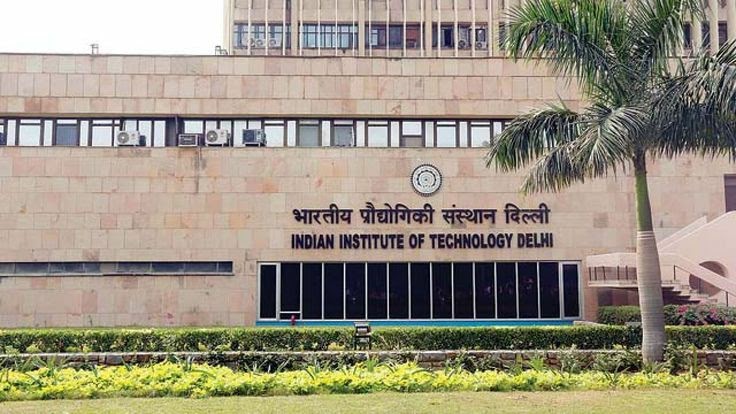
Indian institute of technology (iits) are the most prestigious institution in india. The IITs are autonomous public technical universities located across India students are mostly attached towards iits because of the High package offered in these institutions. It’s quite obvious that the enterance in theses institute need a lot of Hard work and perseverance. The Institutes of Technology Act, 1961 lists twenty-three institutes. Each IIT is autonomous, linked to the others through a common council, which oversees their administration. So here is the list of IITians who excelled in different field like arts, science & technology.
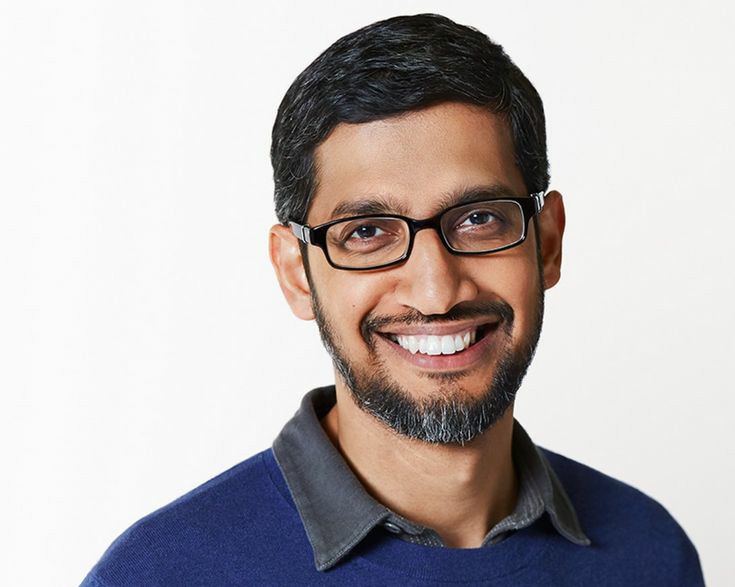
1.Sundar Pichai
Born in Madras, India, Pichai earned his degree from IIT Kharagpur in metallurgical engineering. Moving to the United States, he attained an M.S. from Stanford University in materials science and engineering and further attained an MBA from the Wharton School of the University of Pennsylvania, where he was named a Siebel Scholar and a Palmer Scholar, respectively. Pichai was selected to become the next CEO of Google on August 10, 2015, after previously being appointed Product Chief by CEO, Larry Page. On October 24, 2015, he stepped into the new position at the completion of the formation of Alphabet Inc., the new holding company for the Google company family. He was appointed to the Alphabet Board of Directors in 2017.
2.Arvind Kejriwal
Arvind Kejriwal is the founder of Aam Admi Party (AAP), and Convenor of the same. He is a politician and a former bureaucrat who is the current and 7th Chief Minister of Delhi since February 2015.In 2006, Kejriwal was awarded the Ramon Magsaysay Award for Emergent Leadership in recognition of his involvement in the grassroots level movement Parivartan using right to information legislation in a campaign against government corruption. The same year, after resigning from Government service, he donated his Magsaysay award money as a corpus fund to found the Public Cause Research Foundation, a non-governmental organization (NGO). He was educated at Campus School in Hisar and at Holy Child School at Sonipat.In 1985, he took the IIT-JEE exam and scored All India Rank of 563.He graduated from Indian Institute of Technology Kharagpur, majoring in mechanical engineering.
3.chetan Bhagat
Chetan Bhagat is an Indian author and columnist. He was included in Time magazine’s list of World’s 100 Most Influential People in 2010. grew up in Naraina Vihar, West Delhi in a traditional middle-class Punjabi Hindu family. Bhagat graduated with a BTech degree in Mechanical Engineering from the Indian Institute of Technology, Delhi in 1995. Bhagat then went on to do an master’s of business administration degree in marketing from the Indian Institute of Management, Ahmedabad (IIMA) and graduated in 1997.
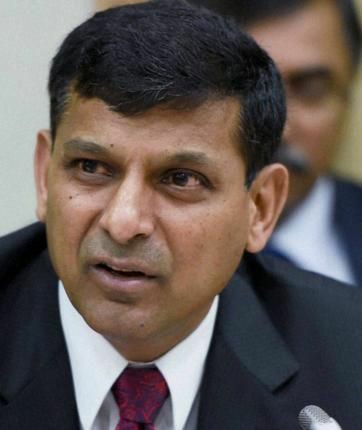
4.raghuram Rajan
Raghuram Govinda Rajan is a indian economist & former governor of the Reserve Bank of India.Between 2003 and 2006 he was Chief Economist and Director of Research at the International Monetary Fund. From September 2013 through September 2016 he was the 23rd Governor of the Reserve Bank of India; in 2015, during his tenure at the RBI, he became the Vice-Chairman of the Bank for International Settlements. In 1981 he enrolled at Indian Institute of Technology Delhi for a bachelor’s degree in electrical engineering. In the final year of his four-year degree, he headed the Student Affairs Council. He graduated in 1985 and was awarded the Director’s Gold Medal as the best all-round student. In 1987, he earned a Master of Business Administration from the Indian Institute of Management Ahmedabad, graduating with a gold medal for academic performance.
5.Jitendra Kumar
Jitendra is one actor who makes it a point to play relatable characters that we just can’t forget. From Jeetu to Gittu, he has starred in series/movies like Kota Factory, Panchayat, Shubh Mangal Zyada Saavdhan. He has won a Filmfare OTT award in the category of “Best Actor Comedy Series (Male) for portraying Abhishek Tripathi in Amazon Prime’s Panchayat. He did his bachelor’s in civil engineering from IIT Kharagpur .While studying civil engineering at IIT Kharagpur Jitendra kumar started liking acting. Kumar has done many stage plays as the Governor of the Hindi Technology Dramatics Society at IIT KGP where he met Biswapati Sarkar who eventually invited him to join TVF in 2012.
Childhood is a stage for us to discover whom we are before the world decides how we should be. Time is very playful, it speeds up when we want it to slow down ,it slows down when we want it to speed up.
I think childhood is the best season of life, it is the one that makes us happy the most. We all miss the eyes that shines brightly even at the simplest things, laughing about the little things and not caring about anything that is happening around in this world.
It is very funny when we compare our yesterday with today nothing changed but when we look back into our childhood, everything is different. We all spent our childhood days wishing we were older and now we are spending our adulthood wishing we were younger.
The best thing about our childhood memories was mostly not about us, it was about people around us. There is something about childhood friends,they just can’t be replaced by anyone in any stage of our life. The people in our childhood are the ones that we will miss the most, when we become adult.
We love those random memories that we spent with our childhood friends, it makes us smile, no matter what is going on in our life right now. The sorrowful part of our life is when we realize that our childhood is done and we have to move on.
We know the only way not to lose our childhood day is to carry the memories with us even when we become older but all that we need is not just memories. The day I can share all my childhood memories with my kids will be the most wonderful day of my life,ever, I know but still…
I wish I would take a one way ticket back to my childhood day to be care free once more…
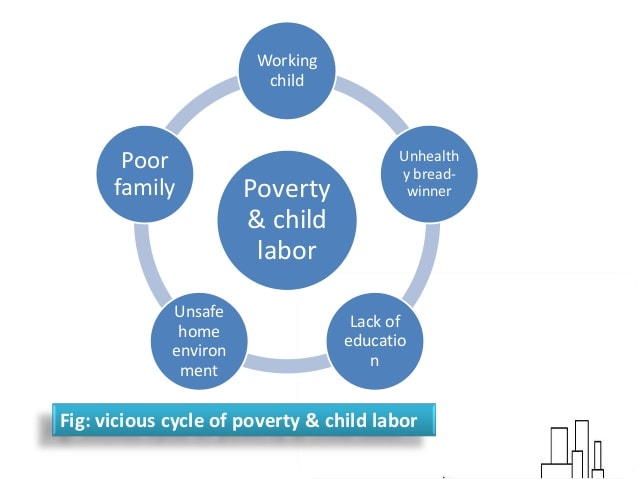
Poverty is consider to be the most important cause of child labour and it deprives children of schooling and acqurining human skill. The poor children grow as unskilled workers and earn low wages in adulthood. So, poverty persists and the parents are forced to send their children to work and a child labour trap is formed.
The econometric analysis using state level panel data in the Indian context demonstrates that poverty, illiteracy and child labour are significantly correlated. The results show that poverty adversely affects children’s schooling and education and results in persistence of poverty thereby creating a child labour trap.
Child labour deprives children of their childhood, their potential and dignity. It is believed to be harmful to their physical and mental development. It hinders in their human capital accumulation.
Less human capital accumulation results in lower productivity. Thus, they earn less and remain poor. When these uneducated, unskilled and poor people become parents they are not able to invest in human capital of their children.
Their income remains very low so they look towards these little hand to do child labour and supplement the household budget. This study investigates the relationship between poverty and child labour.
It also measures the impact of poverty alleviation on child labour. It finds that poverty breeds child labour and child labour perpetuates poverty. At the end it makes some policy recommendations to break this vicious cycle and reduce poverty and labour.
5 Lines on child labour
1. Child labour is a practice of involving children in business activities either by force or by consent.
2. This practice deprives children of their childhood and hampers their physical and mental development.
3. The 2011 census of India reports shows that there were 10.1 million child labours in the age group of 5-14 years.
4. Children agree to work in cheap wages, and it increases the profit of the business which fuels the issue of child labour.
5. The constitution of India does not support child labour.
We may be rich or poor, kind or cruel, beautiful or ugly, smart or weak but still we can accommodate a dream. Most importantly don’t ever have a small dream:)Some people may not agree with this rather they would like to criticize on this.
IT IS POSSIBLE EVEN IN THE HARDSHIPS:
The biggest fear is how to face the dream because of the present situations we might have right now or the threat of the future, but not let the tomorrow’s dream destroyed by today’s situation because of the fear. The biggest fear is how to face the fear. At once, if we face it with full potential, we will able to shape our future. It is all about the small things which creates a great impact on the future.
PAINT YOUR DREAMS:
Painting our dreams is the best way we can do! At once when we come to know what we want at the right time we will be knowing how to get it also. Dreams should be balanced with the holistic vision. With the millions of the resources in the world, plenty of opportunities which we have in the world behind us and it really becomes silly when we start making small or selfish dreams. No one would like to carry waste things in the Audi right! Even though it has the capacity to withstand it, we won’t do it as it does not perfectly. If some things are accepted by many it is not that we are also supposed to do that. Check out your time, area of interest and do great things because we are having power to do that.
DISCOVER YOUR DREAM:
When we come to know about what dream is actually, we can start realizing the true power of it. We start living in it to the maximum. Sometimes, we never realize the amazing talent inside us, we are all only learnt to see others talents and admire them which makes us to behave small and worthless before others. This kind of attitude is to be removed once when you realize at once.
Passion is what your dream is! We are able to distinguish between the real and the fake dream. If so, then we are also able to find the way for our dream. Successful persons are those who have a burning passion with dream inside them and that’s why they are successful today and that success should not be a narcissistic one.
Make a little star in you to shine bright in the darkest times. You are still unique even though we live in the mid of varied of varied people. It is good to dream, but better to dream and work. Faith is might but action is mightier. This is because action speaks louder than words.
NOTHING IS OVER UNTIL YOU RACE!
If you have decided to grow and not ready to face challenges and hard times, there is no liveliness in that. No bird goes to a dry land, no cattle go to the empty field, no human can face a dream without the challenge and this is the bitter truth.
Make your environment suitable for your dream. Have likeminded people around you. No matter how hard the life goes or how people comment on your attitude, it is still good to achieve your powerful dream with broad vision.
Don’t work your boss or leader, work for your dream because that can only give you satisfaction.
Don’t wait for your winter, work to change your summer a super cooled one.
“A gem cannot be polished without fiction, nor man without trials”, start facing your challenges and achieve your dreams.
A novel coronavirus (CoV) named ‘2019 novel coronavirus ’by the World Health Organization (WHO) is responsible of this outbreak of pneumonia that began at the mid of November 2019 near in Wuhan City, Hubei Province, China. The SARS-CoV-2 is a pathogenic virus. Coronaviruses are enveloped viruses with a large, single-stranded, positive-sense RNA genome, which are about 120 nanometers in diameter. They are vulnerable to mutation and recombination and are therefore highly diverse. There are about 40 different varieties which they mainly infect human and non-human mammals and birds. They reside in bats and wild birds, and will spread to other animals and hence to humans. The virus that causes COVID-19 is assumed to possess originated in bats then spread to snakes and pangolins and hence to humans, perhaps by contamination of meat from wild animals, as sold in China’s meat markets. The corona-like appearance of coronaviruses is due to the presence of spike glycoproteins, or peplomers, which are necessary for the viruses to enter host cells. The spike has two subunits, one subunit is S1 which binds to a receptor on the surface of the host cell and the opposite subunit which is S2 fuses with the cell wall. The cell wall receptor for both SARS-CoV-1 and SARS-CoV-2 could even be a sort of angiotensin converting enzyme, ACE-2, different from the enzyme that’s inhibited by conventional ACE-1 inhibitors, like enalapril and ramipril. Viral RNA can be detected by polymerase chain reaction which is sometimes referred to as RT-PCR or real time PCR. In this test, the virus’s single-stranded RNA is converted to its complementary DNA by reverse transcriptase; specific regions of the DNA are marked by primers, are then amplified. This is done by synthesizing new DNA strands from deoxy-nucleoside triphosphates using DNA polymerase.
COVID-19 DRUG DEVELOPMENT
COVID19 drug development is basically a research process to develop preventative therapeutic prescription drugs which may lower the severity of coronavirus disease 2019 (COVID19). Internationally, by November 2020, several hundred drug companies, biotechnology firms, university research groups, and health organizations are trying to develop over 500 potential therapies for COVID19 disease in various stages of preclinical or clinical research. The World Health Organization (WHO), European Medicines Agency (EMA), US Food and Drug Administration (FDA), and therefore, the Chinese government and drug manufacturers were coordinating with academic and industry researchers to hurry development of vaccines, antiviral drugs, and post-infection therapies. Drug development may be a multistep process, typically requiring five years to assure safety and assurance of the new compound. Several national regulatory agencies, like the EMA and the FDA, have approved procedures to expedite clinical testing. Chloroquine is an anti-malarial medication that is also used against some auto-immune diseases. Hydroxy-chloroquine is more commonly available than chloroquine in the United States. Although several countries initially used chloroquine or hydroxy-chloroquine for treatment of people hospitalised with COVID19, the drug has not been formally approved through clinical trials.
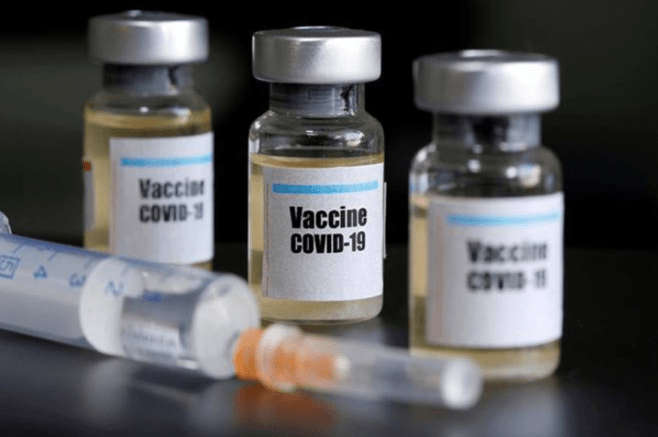
VACCINE DEVELOPMENT
A vaccine for a communicable and pathogenous disease which has never before been produced in several years, and also no vaccine exists for preventing a coronavirus infection in humans. After the coronavirus was detected, the genetic sequence of COVID‐19 was published on 11 January 2020, triggering an urgent international response towards organize for an epidemic and hasten development of a preventive vaccine.
In February 2020, the World Health Organization (WHO) said it didn’t expect a vaccine against severe acute respiratory syndrome coronavirus or the SARS-CoV-2 which is the causative virus, to become available in 18 months. Their development had previously been considered as low priority because the coronaviruses that were circulating in humans caused relatively mild disease. Most coronaviruses encode only one large surface protein, the spike protein, which is responsible for receptor binding and membrane fusion. In the case of SARS-CoV-2 (and SARS-CoV), the spike protein binds to angiotensin- converting enzyme 2 (ACE2) on host cells and is then endocytosed. This step is followed by fusion of viral and endosomal membranes and release of the viral genome into the cytoplasm. Antibodies that bind to the spike protein, especially to its receptor-binding domain (RBD), prevent its attachment to the host cell and neutralize the virus. On the basis of this knowledge, and information gained from preclinical studies with SARS-CoV and MERS-CoV, the spike protein was identified as an antigenic target for the development of a vaccine against SARS-CoV-2 at a very early stage. It has been demonstrated that the spike protein is a strong target of CD4+ T cells, whereas fewer CD8+ T cells are induced by natural infection with SARS-CoV-2 in general. It is important to note that natural infection induces both mucosal intramuscularly or intradermally induce mainly IgG, and no secretory IgA. It is therefore possible that most vaccines currently in development induce disease-preventing or disease-attenuating immunity, but not necessarily sterilizing immunity.
This pandemic which is due the coronavirus requires a rapid and fast action in the field of vaccines and biology and in a short amount of time as the original vaccine making process for any disease requires at least 15 years for the whole procedure and testing trials antibody responses (secretory immunoglobulin A (IgA)) and systemic antibody responses (IgG). The upper respiratory tract is thought to be mainly protected by secretory IgA, whereas the lower respiratory tract is thought to be mainly protected by IgG. Vaccines that are administered and therefore, is a very tedious and lengthy process and work. As this disease requires a very fast process so the first clinical trial of a vaccine candidate for SARS-CoV-2 began in March 2020. Trials were designed in such a manner that clinical phases are overlapping and trial starts are staggered, with initial phase I/II trials followed by rapid progression to phase III trials after interim analysis of the phase I/II data. Currently, several manufacturers have already started the commercial production of vaccines at risk without any results from phase III trials. Although the licensure pathways are not yet completely clear, it is possible that reviews could be expedited and that vaccines could even be approved through an emergency use authorization. The FDA has released a guidance document for the development and licensure of SARS-CoV-2 vaccines, which as well as providing additional details states that an efficacy of at least 50% will be required. It is very important to point out that moving forward at financial risk is the main factor that has enabled the accelerated development of SARS-CoV-2 vaccine candidates, and no corners have been or should be cut in terms of safety evaluation.



































 Eduindex


You must be logged in to post a comment.