Who is the girl with the pearl earring

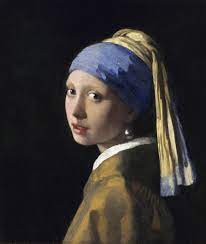
The woman stands, a dark, ill-lit scene surrounds her, making it seem 3D, almost real; that is the girl with the pearl earring. 

Girl with the pearl earring is perhaps one of the most famous paintings to ever exist, also known as The “Mona Lisa of the North” this art piece by the dutch artist Johannes Vermeer is undoubtedly his most recognized work.

Vermeer and his style

Johannes Vermeer, a dutch painter born in 1632, in Delft, Netherlands is one of the most celebrated artists of all time. Although he was not very well known in his time, his work was posthumously recognized by critics.

Vermeer portrayed typical scenes in his art, ordinary everyday scenes. People doing everyday tasks, nothing out of the box,but these scenes were very skillfully painted. The perspective and the orientation of light was all very precise. For instance his painting The Music Lesson (1665), at first glance it seems a pretty simple painting of a teacher giving a piano lesson but there’s always more than meets the eye, the tiles show a perspective leading up to the student, the light coming through the window forces the observer to focus their attention right in the middle. The observer is not conscious of these things but influences them in some way.

What is so special about it?
A painting’s prevalence is not just determined by how good the painting itself is, but what the painting represents,the political environment during the time it was painted, and controversies it is involved in.

Girl with the pearl earring was painted in 1665, which shows a young woman looking directly at the observer. She can be seen wearing a turban, a mustard cardigan and a pearl earring. This painting is different from all of vermeer’s paintings, the lady is not doing any chore rather she just looks at the observer, this along with her inconspicuous eyebrows led to it’s comparison with the Mona Lisa. but it is not a portrait, it is a tronie.

Her lips are slightly parted, her gaze is at the observer. It looks almost 3D. Vermeer used a technique called sfumato for this painting, a technique that involves blending of colors to give a blurry or hazy appearance. Vermeer left out a lot of details,It is a tronie 

This was painted during a time when the church or the royals held power and depicted a working class girl. The pearl earring could be ironic. also the pearl is too big to be real, therefore the critics speculate that he could’ve intentionally painted it that way, to make it seem fake and also 17th century dutch women did not wear turbans.

Later assessment 

Vermeer ‘s work was assessed in the 19th century by a critic, which led to his recognition and became widely mainstream only in the 21st century.

A novel has also been written around this painting called  Girl with the Pearl Earring in 1999, written by Tracy Chevalier and later in 2003, a movie was also made, inspired from the book, with Scarlet Johansen playing the protagonist.

The painting sits Mauritshuis, The Hague, Netherlands

Facebook, Instagram, WhatsApp start reconnecting after nearly 6-hour outage

Thousands of users on Monday reported that they were unable to access the services WhatsApp, Instagram and Facebook. Social media users took to Twitter to report that they were unable to access the services of the aforementioned sites.

Downdetector.com, a website that tracks issues related to traffic on major websites, also saw a spike in number of reports which confirmed that a large number of people are unable to access WhatsApp,Instagram,Facebook

More than 20,000 people have reported that the WhatsApp is not working for them. The web.whatsapp.com is also displaying this error message – 5xx Server Error. Instagram is also showing the same – 5xx Server Error message – message.

The Facebook website shows an error message “Sorry, something went wrong. We’re working on it and we’ll get it fixed as soon as we can.”

The WhatsApp messaging app is unable to send or receive

messages while Instagram and Facebook messaging platforms are also facing an outage.

News agencies Reuters and AFP have confirmed that the outage is faced by users worldwide. The outage has impacted potentially tens of millions of users. 

Candid Wüest, Acronis’s VP of Cyber Protection Research, said the outage may have happened due to issues with the BGP or DNS protocol.

“While there’s no confirmation on what caused the incident from Facebook Inc, it’s possible that the issue lies with the BGP or DNS protocol – which happen to be popular targets among cyber criminals…. Depending on what service is attacked – for example, if it’s a central authentication server shared between multiple brands, like in this case, then such a single outage can lead to multiple brands going offline. To be fair, we must note that most commonly such outages are caused by non-malicious actions – suspect it to be the case here too,” Wüest said in an email statement.

Mother Nature

Mother nature the word we often come across but we don’t give much importance. In this context nature has been given in the respect of a mother. But as we all know that a mother’s presence is so much in a life that at a point we start to ignore her little little things done for us. Similarly we have forgotten the importance of mother nature too.

Just think if we don’t have this nature what would happen of us. None of us would have been alive. We should not be so thankless towards nature who has always helped us in all aspects.

Instead of respecting nature as mother we have started exploiting it. We are taking the resources from nature but we are not giving anything bad to her free just want to full feel handbag letting hands empty.

This change we cannot bring all alone we need the support of all us, but everything starts with a single step if even one starts to respect or do something towards nature everyone else would join. The need of today’s just that one step.

Just take care for nature as if you are caring your own mother then you will start experiencing an aura of happiness. Nature is our everything and we are because of nature so please protect mother nature and mother earth.

Euthymia-Tranquility

Euthymia is a term used in psychology to define a middle state which is neither too maniac nor depressive. Its commonly associated with bipolar disorder.

However, the history of the term goes back to ancient Greece. The term was coined by Democritus, a Greek philosopher. The term ‘ Euthymia’ can be roughly translated to tranquility, serenity and cheerfulness. According to Democritus, Euthymia referred to a state of calmness and steadiness of the soul in absence of fear and passion.

However, the famous Greek philosopher Seneca had later translated the term and defined it as “believing in yourself and trusting that you are on the right path, and not being in doubt by following the myriad footpaths of those wandering in every direction.

How is it useful in today’s generation?

We live in a ‘competitive world’ or maybe we perceive the world to be so. Competition cannot be eliminated but participating in it is upto you.
What is a race? It is a sport wherein every contestant runs for the same goal, on the same path. Life cannot be described through this metaphor, In simple words, we cannot run on the same path as someone else just to prove our superiority or ‘capability’. What worked for them, may not work for us and even if we achieve success on that path, we will never feel the satisfaction and contentment which we expected from it.

Euthymia is a concept which preaches of believing in one’s path. It describes life through a simple metaphor. You don’t compete with others but yourself. Euthymia is calmness over rush, confidence over self doubt and contentment over jealousy.

Some of the common distractions which we face are:

Social Media: Often, while we browse social media, we come across glittering pictures of people around us having fun, living lavishly, ‘enjoying lives’, celebrating their wins or a new job. To be honest, it does demotivate us and we develop feelings of envy. Sometimes, even observing a friend’s progress in life can make us envious towards them. We doubt our own present, our decisions, our path and we lock ourselves in stagnancy. We forget that every person has a different meaning of success and is walking on a different path. We scroll through the posts and with each hour of scrolling through social media, we drown deeper into the sea of self doubt.

If you ever drown in it, ask yourself , ‘What Is Important To Me?’. Knowing what you want assists you in having faith and focus on your path. When you know what you want you will spend your time working on it. Scrolling through others’ profiles will become least of your concerns.


Opportunities And Priorities: Euthymia is awareness about one’s path. About one’s purpose. Awareness of our path helps us in identifying our prioritize and eliminate the rest. It teaches us how to say ‘no’. A person who aims at seeking validation or lives on attention may try to grab many eye catchy opportunities at once and end up failing in them all. Life is filled with opportunities and it often tests our belief and dedication by throwing opportunities as hurdles in front of us. When a person knows what they are doing, they also know how to do it and select opportunities which they truly need to progress.

The foreign opinion: Your path may be unappealing to many. Not many will motivate you on your way. However, everyone has their own opinions but it is your belief, dedication and confidence which will help you walk steadily towards progress. When you walk on YOUR path, validation seems unnecessary.

Ego: Lastly, rushing into opportunities and new ways can be a product of ego. Ego cannot compromise. It wants you to be the best in every sphere which is impossible.
Purpose on the other hand demands compromise. A rather healthy and obvious compromise. You cannot master the world but yourself.

When one is content with their path…jealousy, insecurities,doubts,anxiety, and confusion does not pull his/her will down. Euthymia teaches us the basic principles of awareness,patience,hard work, self belief, faith, dedication and focus which are all virtues of true success.


Dancing to breathe

Dance is freedom for me. Since as long as I could remember, I have been dancing, whether it’s Hip-hop, contemporary, Kathak, folk, or even freestyle, dance has always been a part of my daily routine. I can’t imagine my life without dance, it’s vibrations, it’s amnesty, it’s beauty and the exultance I get from it. Most people get tired by dancing too much, but even if I dance for more than 10 hours a day, I can’t get enough of it. For me, life is empty and hollow without some moves, some music and a smile, and I can assure you, dance does that for me. It is not just a part of my life, but it is my life. Even before going to sleep, my imagination wanders off to choreographing songs, learning the taal of each song or even just dancing supine on my bed. It gets even weirder after this, believe me, you don’t wanna know.

I remember vividly, that, when I was 4, my mother put me into a dance class which I REALLY didn’t wanna join, I was hauled there, while sobbing( not brutally) but who knew, that one decision would become my entire life. I am not extremely good at dance, but I do know, that when I do it, I do it freely, with no stress or regulations at all. Whatever step I like, on whatever music I like, I do it, and I can’t even tell you how much I enjoy it, it’s ineffable.

Why I don’t choose it as a primary profession is something that I learnt while growing up, not that I am a grown up, but, you know what I am saying. It is that I know that I can go beyond dancing to choose my profession. something more essential, required in today’s world, something more arduous, I am not saying that dancing isn’t arduous, NO, NEVER in my dreams I would say that! dancing is one of the most arduous professions ever, but I mean something in a way like a doctor, mentally arduous. Take grey’s anatomy for an example if you are not familiar with a doctor’s life, they are a perfect instance. A highly risky job, with fatal consequences, amazingly crazy days, and being paid for working like a donkey. Immense pressure and stress define their life. For me, dancing is nothing like that, when you dance, you aren’t in pressure or stress, or at least shouldn’t be, when you dance, ACTUALLY, you are not straining your brain into following a specific procedure, a logical algorithm. When you are dancing, it can’t be stressful, it can’t be fatal, except, when you aren’t.

8 Foods For Our Moods

Everything has a vibration. Whatever you do,say,eat and drink has an effect on you. It either builds you up or breaks you down without your knowledge. An unhealthy diet comprising of less vegetables and organic food can effect your mood drastically. Other than obesity, It also attracts sadness, frustration and negativity as a whole.

Having organic food and a balanced diet has a contrary effect.  It makes us feel energetic, refreshed, alive and happy. In simple words, it boosts our mood and lifts our vibes. It assists us in attracting what we desire . Good health and good mind are very closely related to each other. Let us look into some of these uplifting foods:


Green Leafy Vegetables: Leafy Vegetables are organic and the fresher they are, the better. Spinach, chard and other dark leafy vegetables contain magnesium which positively effects serotonin and boosts our mood. Lack of magnesium can cause a risk of anxiety and depression.

Beans: As protein packed foods, beans contribute to our mental health through the fibre present in them. Fibre helps regulate blood sugar which  in turn makes our mood better. Beans are also an excellent source of magnesium, iron, potassium and phosphorus.

Bananas: Bananas appear in every list of food concerning mood boosts. They are high in Vitamin B6 which synthesize feel good neurotransmitters like serotonin and dopamine. Bananas consist both sugar and fibre. Sugar, when paired with fibre, releases slowly into our bloodstream allowing for stable blood sugar levels which stabilizes our mood. Low blood sugar levels may lead to mood swings.

Bananas with a green coloured peel are a great source of probiotics which is a kind of fibre which helps feed healthy bacteria to our gut.

Berries: Berries are packed with a variety of antioxidants. Blueberries are rich in the antioxidant flavonoids which assist in activating brain pathways associated with reduced inflammation and risk of depression. Blueberries and strawberries contain a compound called polyphenolics which improves concentration, memory and attention span.


Salmon: Salmons are rich in omega-3, fatty acids. Especially DHA and EPA. Omega acids are anti inflammatory and are necessary for brain and nervous system development. EPA and DHA have shown to eliminate depression and they can effect our personality and impulse control. Salmons are also high in proteins, Vitamin B12 and D. Vitamin D is linked to better and stable mood. Vitamin B12 on the other hand works in cooperation with folate to help convert amino acids into neurotransmitters which are found in low levels among depression patients.

Almonds: Almonds are rich in protein  including tyrosine for neurotransmitter production It also contains Vitamin E, magnesium and fibre. As an antioxidant, Vitamin E can help fight radical damage in the brain and has shown to improve memory and cognition.Almonds and walnuts have calcium which can help offset hormonal imbalance in women and decrease the symptoms of depression, anxiety, irritability and impaired memory.

Cashews on the other hand, are rich in tryptophan, a neuro chemical which our body turns into serotonin. Vitamin B6 and magnesium present in cashews help to control mood swings. A handful of unsalted cashews are just enough to get the necessary nutrients.

However, not everytime one may feel like indulging in organic foods. In such cases, one may try chocolates! Dark chocolates, to be specific.  Rich in many mood boosting compounds, its sugar is a quick source of fuel to the brain which in return may improve our mood. It helps reducing anxiety and improves the conditions of clinical depression. Dark chocolates with large amounts of cacao can have positive effects on stress levels and even the immunity. It releases feel good compounds such as caffeine and N-acylethanolamine which is chemically similar to cannabinoids that is linked to an improved mood.

Coffee: For some of us, Coffee is a mood saver. Indeed it is. Its high level of caffeine and chlorogenic acid boosts our mood. The caffeine increases our attention by preventing adesnosine from attaching to the brain receptors that promote tiredness.The list of such food goes on. Some examples are oats,lentils,eggs,herbs,spices, fermented foods and tea.

The list of such food goes on. Some examples are oats,lentils,eggs,herbs,spices, fermented foods and tea.


There are  lists of healthy foods,habits,lifestyle,behaviour and practices . What makes them healthy is the vibes and energy which they carry. It is known amongst many that how a vegetarian diet can help to calm down a person. How exercises boosts our mood and how meditation helps us understand ourselves better.

All of these practices are healthy because they help to promote good vibes in us. When we come in contact with something which vibrates at a higher frequency, it improves our vibrations . When we inculcate activities with such  high frequency vibrations, we improve our own vibes. Thereby, attracting positivity.

Tourist Attractions In The City Of Dreams

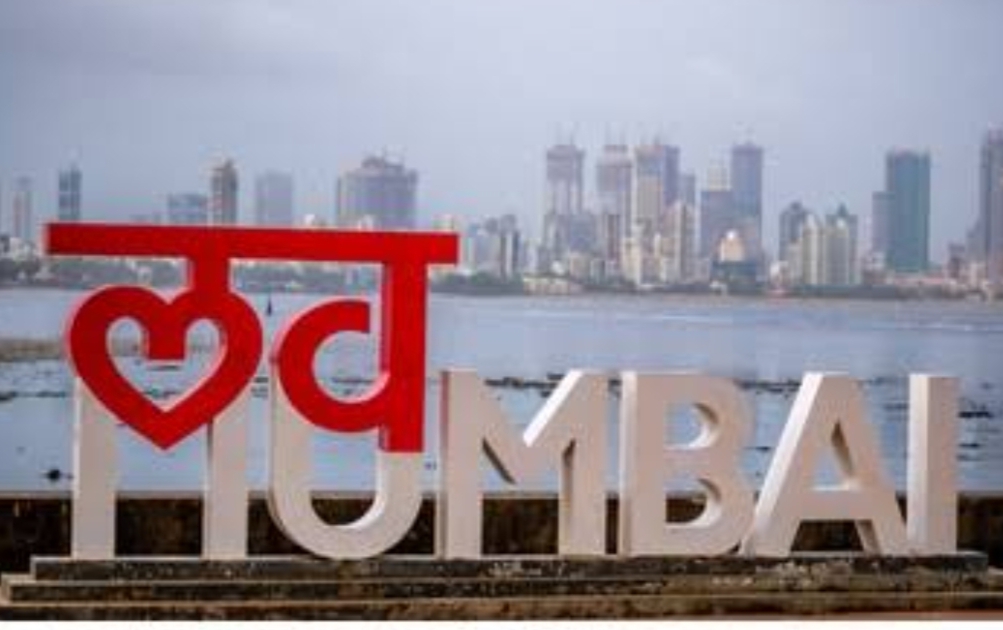
MUMBAI – The financial capital of India is fondly known as the city of dreams and a city that never sleeps. The city has got such sobriquets as migrants from various places enter here in search of better education and job opportunities. It is a home to many people who have come here from across the borders to accomplish their dreams. Even during the wee hours, people can notice the hustle, bustle and euphorious atmosphere here. All this extravaganza adds up to the glory of this city. Let us have a look at the major tourist attractions here.

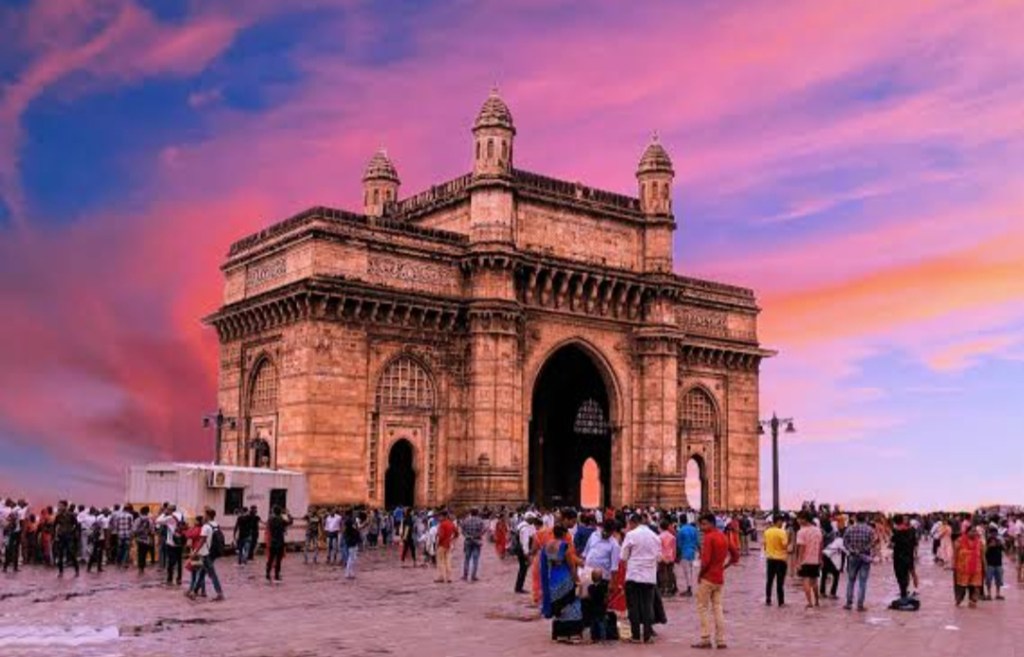
THE GATEWAY OF INDIA

This monument facing the magnificent Arabian Sea in Colaba was built by the British to have it as a symbolic entrance of the colonials into the city. It was also the gate from which the British left India in 1948. The structure is an adaptation of the Arc De Triomphe of Paris. It is a hub for tourists, vendors, historians, vloggers and avid photographers. Two of the five jetties located here are used for commercial ferry purposes and cruises are available too. The Archaeological Survey of India protects the monument and several big firms have come forward to help in restoration of this monument under Corporate Social Responsibilty.

MARINE DRIVE

This 3.9 km long C-shaped stretch in Mumbai is also referred to as the Queen’s Necklace. During the dusk hours, the placement of lights along this natural bay resemble a shining necklace. Cemented sitting spaces allow visitors to have a relaxed time here while facing the waves gently drenching the sand. Plenty of snacking options are available here, ranging from lip smacking Chaat to soothing Ice-creams. Uphill, Tourists can explore the Walkeshwar area (an affluent location with an expensive cost of living) where one can find a number of well built houses and a rich lifestyle. Several sports clubs also exist in the vicinity.

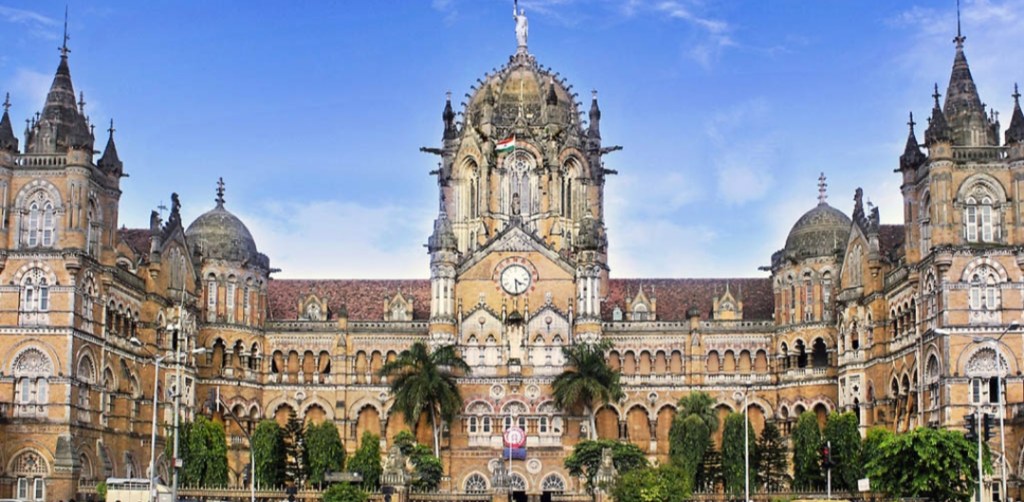
CHHATRAPATI SHIVAJI MAHARAJ TERMINUS

Previously known as the Victoria Terminus, this railway station is included in the UNESCO World Heritage Sites. The completion of the construction was done on the day when Queen Victoria completed 50 years of rule in India. This picturesque structure has been designed in the Victorian Gothic style by students of JJ School of Art. In the year 1996, this place was renamed from Victoria Terminus to Chhatrapati Shivaji Terminus. Later on, the the title of Maharaj (Emperor) was also added. It is the second most photographed monument in Mumbai. There’s a lot to do here. From experiencing a journey in the iconic Mumbai Locals with an unbelievable flurry of passengers to capturing scenic moments in a camera near the Terminus.

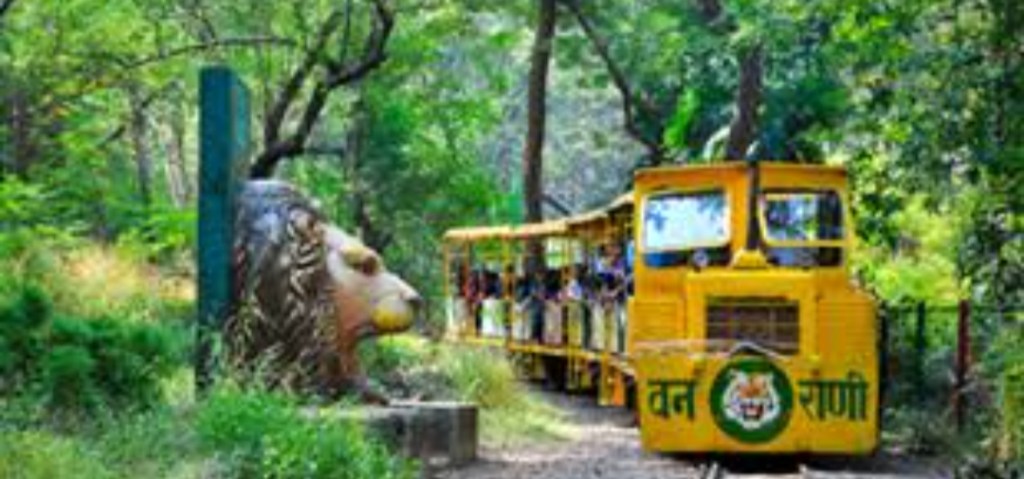
SANJAY GANDHI NATIONAL PARK

This is the most accurate place for fauna, flora and wildlife lovers. Away from the commotion, this place on the outskirts of Mumbai, provides for ample activities. Visitors can visit the Vanrani Forest, lion and tiger enclosures, butterfly garden, enjoy boating in a paddleboat or go hiking in any of the seven nature trails. The 65 mile long park is divided into three different zone – Tourist Area, Buffer Area and Core Area. Tourist guides and bicycles are available for anyone who does not wish to venture solo.

Mumbai has also been given the sobriquet of Tourist’s Paradise. With abundant tourist locations such as places of worship (Haji Ali Dargah, Siddhi Vinayak Temple, Iskon Temple), for having a leisurely family time (Bandra-Sealink, Juhu Beach, Hanging Gardens), for reasearch enthusiasts (RBI Coin Museum, Nehru Planetarium, Nehru Science Centre, Jehangir Art gallery) and many more. About 6 Million people visit Mumbai annually to see the city’s beautiful locations and to experience the culture, cuisines and lifestyle. All this has made Mumbai the 30th most visited place in the entire world.

The Atomic Bomb – How it changed the course of history?

During the World War II the united sates used an unprecedented $2 billion to feed an ultra-secret research and development program, the outcome of which would alter the relationships of nations forever. Known as the Manhattan project, it was the search by the United States and her closest allies to create a practical atomic bomb. It is a single device which capable of mass destruction, the threat of which alone could be powerful enough to end the war. The motivation was simple. Scientists escaping the Nazi regime had revealed that research in Germany had confirmed the theoretical viability of atomic bombs. In 1939, in support of their fears that the Nazis might now be developing such a weapon, Albert Einstein and others wrote to President Franklin D. Roosevelt (FDR) warning of the need for atomic research. By 1941 FDR had authorized formal, coordinated scientific research into such a device. Among those efforts would ultimately unleash the power of the atom was Robert Oppenheimer, who was appointed the project’s scientific director in 1942. Under his direction the famous laboratories at Los Alamos would be constructed and the scientific team assembled. On July 16 1945, in a small town called Alamogordo, New Mexico, the course of human history was changed; the first atomic bomb was detonated that day.

The Little Boy- The world’s first atomic bomb detonated at 5:30 A.M on July 16 1945, Los Alamos, New Mexico

Principle of an atomic bomb

An atom bomb works in the principle that when you break up a nucleus of an atom, a large amount of energy is released. Because it takes a large amount of energy to keep the nucleus bound together. When you split it apart, the energy is released. Scientists chose the biggest and heaviest nucleus that is found in nature to be the best object for splitting. It is uranium, it is unique in that one of its isotopes is the only naturally occurring element on that is capable of sustaining a nuclear fission reaction. A uranium atom has 92 protons and 146 neurons together to give an atomic mass of 238 or U238. A very small portion of uranium, when it is mine, is in the form of an isotope U235, this isotope  has the same 92 protons but only 143 neutrons, or three fewer than U238. U235 is highly unstable, which makes it highly fissionable. When uranium U235 is slammed by a neutron, it becomes uranium 236. In the process of splitting and creating two more stable atoms, a whole bunch of energy is released, along with three more neutrons. These three more neutrons fly out and slam more U235 atoms. And thus, a chain reaction occurs, causing more and more U235 to be split, and ultimately causes a huge explosion. The uranium contains only 0.7% of this U235 isotope, and a whole bunch of it is needed to make one atomic bomb.

Another engineering challenge is to create a vessel with the correct shape and material to contain the neutrons after fissioning, so that they do not escape, but rather cause more atoms to fission. And it is lined with a special mirror so that it forces neutrons back in to the fissionable material rather than escape the vessel. Then the correct amount of fissionable material has to be placed inside this vessel. This is called ‘super critical mass’. There has to be enough mass to sustain an uncontrollable chain reaction resulting in an explosion.  The super critical mass has to be kept apart until you are ready for an explosion. Otherwise an explosion can occur when you don’t want it. The reason is because these isotopes are unstable, and are throwing off neurons randomly. In an atomic bomb, two sub-critical masses are slammed together usually with a conventional bomb contained inside the outer bomb. This conventional explosive charge initiates the chain reaction. This project ultimately created the first, man-made nuclear explosion, which Robert Oppenheimer called “trinity” on July 16, 1945. The concept of an atom bomb is simple but, the process of actually creating a bomb is not so simple.

“Now I am became Death, the destroyer of worlds.” – J. Robert Oppenheimer

How we create equality

While surfing through linkdein I came across a post where a doctor sir Ganeshan, he was providing free medical deliveries to girl. Many people of community have distinct view of it as if it is a right way and right thing.

In my view, this is how we create equality,
there are two ways
first, we share everything we have equally and eventually with time everything gets equalize,
another way is we try balancing both sides like if people are not happy after having girl child we will free them from fee charge(its temporary solution of a big part of solution) and as societies are progressing they will learn and improve with time.
Example of first one is colonized countries they doesn’t got support from developed countries and they got bullied many time but we are slowly progressing toward equality,
Example of second one is solutions for girl equality by indian govt, it involves temporary(situation based) solution like dowry punishment to educating and reservation, the benefits of having second way is it’s fast, and it has lots of temporary solution to big problems like girl foeticide case.

You can see post here

https://www.linkedin.com/posts/ashwini-mahesh_activity-6846473782144630785-ZcoR

Connect me on LinkedIn here

https://www.linkedin.com/in/shivam-soni-a99a4a186

REASON AND IDENTITY

Amartya sen, renowned Indian economist, nobel
laureate(1998) contributed in welfare economics
and social choice theory. India has a long and
multifaceted history of argumentation and public
reasoning. In his magnificent book The
Argumentative Indian: writing in Indian culture,
history and identity. Amartya sen provides this
history with a global context. Public reasoning is
fundamental to both democratic politics and
secular constitutional arrangements, and it is no
accident that India, with its extensive traditions of
tolerance and the admission of dissenting voices
in public discourse.
The chapter named ‘ Reach of Reason’ in which
Amartya sen analyze WB Yeat’s ‘The Geneology
of Morals’, Jonathan Glover’s views, Nietzsche’s
scepticism the writer reached reason and
enlightenment process. He advocates the
possibility of reasoning is a strong source of
discipline confidence in a world darkened by
horrible deeds. We can reason about the right way
of perceiving and treating other people, other
cultures, other claims, and different grounds for

3
respect and tolerance. We can also reason about
our own mistakes and try to learn not to repeat
them. For example, the Japanese Novelist and
visionary social theorist Kenzaburo Oe argues
powerfully that the Japanese nation, aided by an
understanding of its own ‘history of territorial
invasion.’
Intellectual enquiry, is needed to identity actions
and policies that are not evidently injurious but
which have that effect for example, famines can
remain unchecked on the mistaken presumption
that they cannot be averted through immediate
public policy. According to Sen, two pillars of
Enlightenment thinking are sometimes wrongly
merged and jointly criticized: the power of
reasoning, and the perfectability of human nature.
In his view, values such as tolerance, liberty and
reciprocal respect have been described as ‘ culture
specific’ and basically confined to western
civilization. He called this is the claim of ‘ cultural
boundary’.
Sen refers to that what Clifford Geertz has called
‘ culture war’, the subject of ‘the reach of reason’
related to another theme, which had been
important in the anthropological literature. He
sures that the other Indian classical authors who

4
emphasized discipline and order rather than
tolerance and liberty, for example Kautilya in the
fourth century BCE( in his book Arthsastra
translatable as ‘ Economics’. But western classical
writers such as plato and st Augustine also gave
priority to social discipline. He adds that the such
classifications based on the substance of ideas,
different from theises based on culture or region.
One consequence of western dominance of the
world today is that other cultures and traditions are
often identified and defined by their contrasts with
contemporary western cultures or example, Indian
religious literature such as Bhagavad Gita or the
Tantric texts, which are identified as differing from
secular writings seen as ‘western’,elicits much
greater interest in the West than do other Indian
writing, including India’s long history of heterodoxy.
He supposes that the Kamasutra, in which western
readers have managed to cultivate an interest.
When it is thus ‘defined by contrast, divergence
with the West becomes central. Take, for example,
the case of ‘Asian values’, often contrasted with
‘western values’.
Sen is showing how other parts of the world
differ from the West can be very effective and can
shore up artificial distinction. We may be left

5
wondering why Gautama Buddha, or Laozi or
Ashokan or Gandhi or sun Yat-sen was not really
an Asian. And we have a question of why did
Maimonides,in fact, get support as well as an
honoured position at the court of the Muslim
emperor who fought valiantly for Islam in the
crusades. Sen cites about the Emperor Akbar, that
‘the tradition of secularism can be traced to the
trend of tolerant and pluralist thinking that had
begun to take root well before Akbar. For example,
in the writings of Amir Khusrau in the fourteenth
century as well as in the ang non-sectarian
devotional poetry of Jabir, Nanak, Chaitanya and
others. He also practised as he preached –
abolishing discriminatory taxes imposed earlier
Muslims, inviting many Hindu intellectuals and
artists into his court, and even trusting a Hindu
general, man singh, to command his armed force.
Akbar made in his defence of a tolerant
multiculturalism concerns the role of reasoning.
Akbar’s analyses of social problems illustrate the
power of open reasoning and choice even in a
clearly pre-modern society.
Akbar was, for example, opposed to child
marriage. He argued that ‘the object that is
intended’ in marriage ‘is still remote’, and there is

6
immediate possibility of injury’. There was good
sense in Akbar’s insistence that a millenial
occasion is not only for fun and festivities. Akbar’s
emphasis on reason and scrutiny serves as a
reminder that ‘cultural boundaries’ are not is
limiting as it’s sometimes alleged (as, for example,
in the view, discussed earlier,that ‘justice’, ‘right’,
‘reason’, and ‘love of humanity’s, western values).
Many features of the European Enlightenment can
be linked with questions that were raised earlier-
not just in Europe but widely across the world.
In the chapter named ‘Secularism and it’s
Discontents’, Sen describes about the Indian
secularism. He says that intellectual scepticism
about secularism is not confined to those actively
engaged in politics. The nature of secularism as a
principle calls for some clarification as well as
scrutiny. Secularism in the political as opposed to
ecclesiastical- sense requires the separation of the
state from any particular religions order. The first
view argues that secularism demands that the
state be equidistant from all religions- refusing to
take sides and having a neutral attitude towards
them. Secondly, view insists that the state must
not have any relation at all with any religion. In
both interpretation, secularism goes against giving

7
any religion a privileged position in the activities of
the state.
Sen analyzes that the role of secularism in
India, note must taken of its intrinsic
‘incompleteness’, including the problems that this
incompleteness leads too, as well as the
opportunities it offers. Scepticism about Indian
secularism takes many different forms. He
considers it in particular six distinct lines of
arguments such as The ‘ Non-existence’ Critique,
The ‘Favoriticism’ Critique, The ‘Prior identity’
Critique, The ‘Muslim sectarianism’ Critique, The
‘The Anti-modernist’ Critique and The ‘Cultural’
Critique. On the Non- existence Critique, overlooks
how crucial outside perceptions have historically
been to the identity of Indian’s themselves.

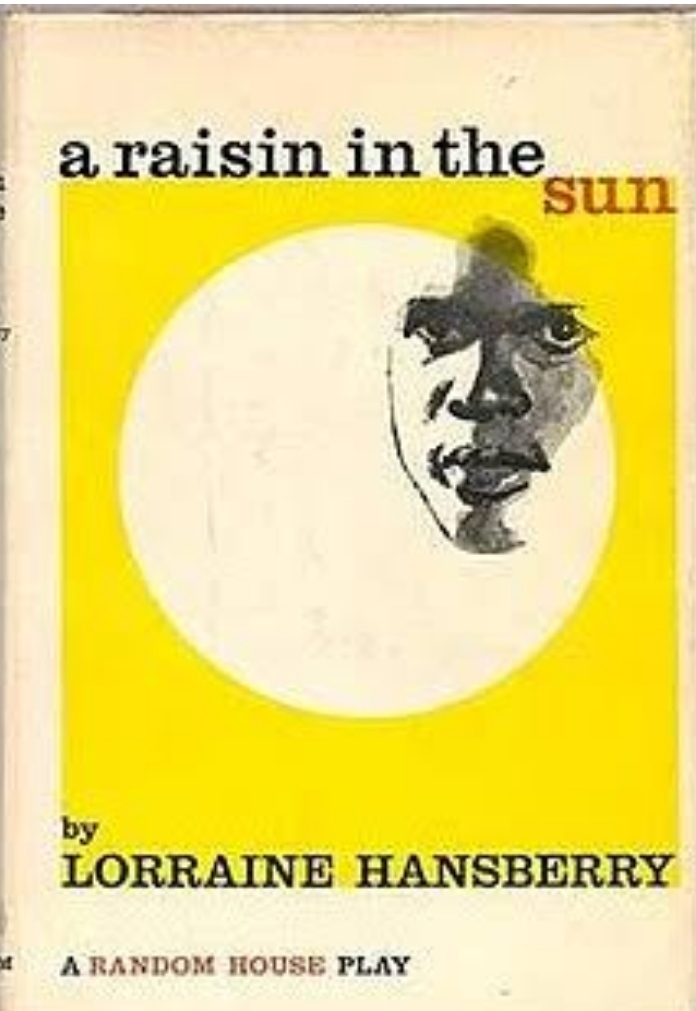
A RAISIN IN THE SUN

A Raisin in the Sun can be considered as a turning point in the American art.
Lorraine Hansberry was the first playwright to create realistic portraits of African-
American life. The play is recognizably autobiographical. Hansberry during her short
period of life has made a remarkable mark on the American theatre. The play
addresses so many issues important during the 1950s in the United States. The 1950s
are widely mocked in modern times as an age of complacency and conformism,
symbolized by the growth of suburbs and commercial culture that began in that
decade. America in the years following World War II roiled growing domestic and
racial tension. The stereotype of 1950s America as a land of happy housewives and
Black people content with their inferior status resulted in an up swell of social
resentment that would finally find public voice in the civil rights and feminist
movements of the 1960s.
A Raisin in the Sun was a revolutionary work for its time. Hansberry creates in
the Younger family one of the first honest depictions of a Black family on an
American stage, in an age when predominantly Black audiences simply did not exist.
Before this play, African- American roles, usually small and comedic, largely
employed ethnic stereotypes. Hansberry however, shows an entire Black family in a
realistic light, one that is unflattering and far from comedic. She uses Black
vernacular throughout the play and broaches important issues and conflicts such as
poverty, discrimination, and the construction of African- American racial identity.
Many people have called Hansberry a visionary and her writing prophetic. She
addressed issues unfamiliar at the time but soon to be at the forefront of discussion.

A Raisin in the Sun explores not only the tension between white and Black
society but also the strain within the Black community over how to react to an
oppressive white community. The play addresses difficult questions about
assimilation and identity. Through the character of Joseph Asagai, Hansberry reveals
a trend toward celebrating African heritage. As he calls for a native revolt in his
homeland, Hansberry seems to predict the anticolonial struggles in African countries
of the upcoming decades and also the inevitability and necessity of integration.
In her portrayal of Beneatha as a fiercely independent, self- assured woman,
determined to succeed in the medical profession, Hansberry addressed feminist
questions ahead of their time in A Raisin in the Sun. Through the character of
Beneatha, Hansberry proposes that marriage is not necessary for women and that
women can and should have ambitious career goals. The feminist theme is enhanced
by the portrayal of the two other women in the play, Lena Younger (Mama) and Ruth.
Mama is the epitome of the self-reliant woman, having worked side by side with her
husband to provide for the family and continuing to be its stabilizing force. Ruth, on
the other hand, seems to hold fairly traditional ideas about motherhood, but she finds
herself, without the counsel of her husband, considering abortion as an alternative to
bringing another child into the world. Thus Hansberry even approaches an abortion
debate, allowing the topic of abortion to enter the action in an era when abortion was
illegal.
A Raisin in the Sun remains important as a cultural document of a crucial
period in American history as well as for the continued debate over racial and gender
issues. The concepts of black beauty, generational conflict, class differences,
feminism and black Americans’ relationship to their African past have discussed
throughout the play. The play also marked the turning point of black artists in

professional theatre. It became a pivotal moment in American cultural history that
opened doors for Black artists, actors, and filmmakers. Thus we can consider A Raisin
in the Sun as a turning point in American art as it addresses so many issues of
importance during the 1950s in the United States.

COVID AND EDUCATION

Covid-19 has forced universities across India, and the world indeed, to suspend physical
classrooms and shift to online classes. In India, while this transition has been smooth for
most private universities, the public ones are still adapting.
As soon as the Covid-19 crisis broke out in India, in Kerala the universities like Kerala
University,Calicut University, MG university all announced the suspension of classes
until March 31. While others waited to see what would happen next, they started
exploring online classes. There are many education startups which got boost during this covid pandemic too.
But as a state like Kerala there are so many Limited conditions that disallow the students
from conducting online mode of education. While technology is enabling, it can also be
limiting, especially in India, and a state called Kerala where we both have and have not
anywhere basic access is a challenge. Not every student has a computer or fast-
streaming internet at home. This leads to issues with attendance and participation in
online sessions. A survey revealed that 100per percent of students were accessing the
materials through the mobile phone where there may not be full data in there phone as
a result they are not able to download material sent by the institute or study online. As a
result around 3 7.5 % students are only studying their online material and 37.5
percentage of students are not able to study the online materials and 25 % of the student
are not even aware of the materials.

Only small percentage of students can only able to
access the materials about 62.5 percentage of students cant able to access the materials
due to the network connectivity problem and around 12.5 per cent due to the insufficient
data and around 12.5 % is due to the unfavorable home conditions that they have and
12.5% they have stress due to the inability to access the materials on time percent of
them had internet connection good enough for streaming real-time lectures. In the
survey about 75 percentage of students have one to five hours online classes are
conducted and about 12.5 percentage of students have for 10 to 15 hours online classes
are conducted in a week as a result of this this online classes this situation of having
stress for the students is highly because about 75 percentage of the students reported
that they have more stress than the offline classes and only 12.5 per cent of the students
said that they have less stress because maybe these students have good favourable
condition at the home and most of the students reported that they have many stress due
to the unfavorable conditions at the home. Most of the students have opted for the online
mode of classes around 50% is to talk about the online mode only 25% is about the
record class. The teacher cares through the online mode of class and in this scenario 62
percent of students have disagreed and 12.5 percent of students have strongly with the
second because the Teacher cannot ensure the full participation of the student in a class.
Most of the students and parents are also feeling tensions about the online conduct of the

exam because in online conduct of the exam the questions are of objective type with the
students not able to write the full answers and the 62.5 percent of students have told that
they are not preparing the objective type of exams. Another important thing that make
the students keep alive and Happy was that of the bonding with their classmates but this
Covid time has destroyed and or the bonding with the classmates in the online platform
37.5 % of students are reported that they are Adjusting for the time being and 50
percentage of reported that they are not satisfied and the 12.5% is a of said that they
have maybe the students were be a group of students who have high network
connectivity and good technology accessibility. Another survey they reported that the
students reported that 87.5%says that online education destroyed their physical health.
These are evidence from the survey which is given by the students from the different
colleges in Kerala.

It is clear that this pandemic has utterly disrupted an education system that many assert
was already losing its relevance. In his book, 21 Lessons for the 21st Century, scholar
Yuval Noah Harari outlines how schools continue to focus on traditional academic skills
and rote learning, rather than on skills such as critical thinking and adaptability, which
will be more important for success in the future. Could the move to online learning be
the catalyst to create a new, more effective method of educating students? While some
worry that the hasty nature of the transition online may have hindered this goal, others
plan to make e-learning part of their ‘new normal’ after experiencing the benefits first-
hand.

LAGUNA LANDSCAPE

Ceremony is a novel written by Leslie Marmon Silko ( Laguna pueblo). The
Laguna Pueblo is a federally recognised tribe of Native American Pueblo people
in west central New Mexico, near the city of Albuquerque, in the United States.
Part of the Laguna territory is included in the Albuquerque metropolitan area.
The name Laguna is Spanish meaning small lake and it derives from the lake on
their reservation. This body of water was formed by an ancient dam that was
constructed by the Laguna people.
The people of Laguna have a long history of residing in and farming the Rio San
Jose in west central Mexico. Laguna history begins long before the advent of
written records in the Southwest. It is a common misconception that the pueblo of
Laguna began in 1699, at the time of construction of the Mission. However,
research of archaeological sites and an anthropological analysis of the Laguna
oral history have firmly proven that the people have inhabited the area ranging
from 6500 B.C. to the present.
The Pueblo of Laguna has a well established Tribal Law system. The Pueblo of
Laguna have participated as a “weed and seed” tribe. This department of Justice
program studied the enforcement of law and effectiveness of social programs on
Native African lands.
Coming to the novel Ceremony, it remains one of the most profound and moving
works of Native American literature, a novel that is itself a ceremony of healing.
Tayo, a second world war veteran of mixed ancestry, returns to the Laguna
Pueblo Reservation. He is deeply scarred by his experience as a prisoner of the
Japanese and further wounded by the rejection he encounters from his people.
His return to the Laguna Pueblo Reservation only increases his feeling of
estrangement and alienation, a kind of post traumatic stress syndrome.While
other returning soldiers find easy refuge in alcohol and senseless violence, Tayo
searches for another kind of comfort and resolution. Tayo’s quest leads him back
to the Indian past. Only by immersing himself in the Indian past, it’s traditions,
beliefs about witchcraft and evil, and to the ancient stories of his people made
him some relief . The search itself becomes a ritual, a curative ceremony that
defeats the most virulent of afflictions despair. Masterfully written, filled with the
somber majesty of Pueblo myth, Ceremony is a work of enduring power.
Importantly for Tayo’s health, he has returned to his homeland, the place of his
birth and upbringing. From the depths of his physical, psychic, and spiritual

disease, Tayo recovers his health throughout the course of the novel in a
ceremony of accretion and remembrance. Tayo re-learns how to interact with the
landscape in healthy and holistic ways. In the novel we can see Tayo’s improving
relationship with nature and demonstrate why that relationship is so important to
his health.
Inorder to understand Tayo and his relationship to the landscape in the novel we
should first explore more general Native American perspective on the
environment. Many of the indigenous cultures of North America perceive their
relationship with the natural world. While these Native Americans acknowledge
the uniqueness of each individual, they simultaneously perceive humans as
equal, intimate, and integral parts of the natural world. This perspective contrasts
with the historically predominant Euro American view point of human dominion
and control over the environment, this position asserts that humans are distinct,
separate, and superior to the rest of the natural world. On the other hand, the
dominant Native American attitude towards nature, or mother earth as it is often
termed, strongly supports the conjointment of self with non- self, humans are not
some distinct entity separated from or superior to the organic, physical world.
Many Native Americans, including the Navajo and the pueblo Indians, neither
construct a hierarchy of natural elements or entities, not do they perceive a
“boundary” between humans and the rest of the natural world.
Laguna Relationships with the Land
The Laguna people consider themselves intimately connected to the
environment. In her influential work The Feminine Landscape of Leslie Silko’s
Ceremony, the Laguna critic Paula Gunn Allen contrasts the dominant western
perspective of authority and control with the Laguna Pueblo people’s more
equitable relationship claiming “the earth is being as all creatures are also being :
aware, palpable, intelligent and alive”.
Silko herself collapses any inferred separation between characters and
landscape pointing out that “the land and the sky and all that is within them – the
landscape – includes human beings”. Adding that “interrelationships in the Pueblo
landscape are complex and fragile, ” Silko points to the vagaries of the weather
and the harsh New Mexican desert as primary reasons her Laguna ancestors
had been so aware of, involved with, and curious about their homeland.
“Survival” , Silko claims, “depended upon harmony and corperation not only
among human beings, but also among all things- the animate and less animate,

since rocks and mountains were known on occasion to move”. Because the
Laguna people have lived in the difficult landscape of west- central New Mexico,
they have learned to work together with their surroundings in order to sustain life,
striving to maintain balance and harmony.

THE SOUND AND THE FURY

The Sound and the Fury, novel by William Faulkner, published in 1929,
that details the destruction and downfall of the aristocratic Compson
family from four different points of view. Faulkner’s fourth novel, The Sound
and the Fury is notable for its nonlinear plot structure and its unconventional
narrative style. William Faulkner’s early work was poetry, but he became
famous for his novels set in the American South, frequently in his fabricated
Yoknapatawpha County, with works that included The Sound and the Fury, As
I Lay Dying and Absalom, Absalom! His controversial 1931
novel Sanctuary was turned into two films, 1933’s The Story of Temple
Drake as well as a later 1961 project. Faulkner was awarded the 1949 Nobel
Prize in Literature and ultimately won two Pulitzers and two National Book
Awards as well. The story is told in four chapters by four different narrators:
Benjy, the youngest Complain son: Quentin, the oldest son : Jason, the middle
son: and Faulkner himself, acting as an omniscient, third- person narrator who
focuses on Dilsey the Compson’s servant.
The chapter April sixth 1928 starts with the morning of good Friday,
the day before Benjy’s narration takes place. Jason Compson IV is in the
Compson house, fighting with his mother and with his niece, Miss Quentin.
Jason thinks back on his family and his own personal history. His sister Caddy’s
marriage to Herbert Head crumbled in 1911, when it became apparent to
Herbert that Caddy’s unborn child was not his. Mrs. Compson refused to take
Caddy in, but Mr. Compson and Dilsey saw to it that the family took in Caddy’s
child, Miss Quentin. Jason assumed control of the household when Mr.
Compson died of alcoholism. Herbert Head had offered Jason a job at his bank,
but rescinded that offer when he divorced Caddy. This retraction left Jason no
choice but to work at the local farm-supply store. Though Mrs. Compson hopes
Jason will own the store one day, Jason is bitter about having lost his bank job

and having been forced to work in the farm-supply store. Now in his mid-
thirties, Jason has grown into a devious and mean-spirited man. He has

concocted an elaborate scheme to pocket the money Caddy sends him to support
Miss Quentin’s upbringing. Mrs. Compson’s poor eyesight and blind love for

Jason have prevented her from detecting his scheme. So far, Jason has stolen
nearly fifty thousand dollars from his sister and niece over the course of fifteen
years. He uses this extra money to play the cotton market and to pay for a
prostitute in Memphis. Caddy is the only one who distrusts Jason and suspects
that he is scheming. At the end of the chapter, Jason sees Miss Quentin go by
with a red tie man. Miss Quentin angrily asks Mrs Compson why Jason behaves
so hostile to her? Then Quentin says that she misbehaves because Jason made
her that way. These events are occurring in this chapter.
The Fourth chapter April Eighth,1928 starts with the Easter Sunday.
Dilsey walks up to the Compson house and manages to get the kitchen up and
running despite the interference of Mrs. Compson and Luster. Luster tells
Dilsey that Jason is angry because someone has broken the window in his room.
Benjy eats his breakfast and whimpers. Jason emerges and testily sends Dilsey
to call Miss Quentin to breakfast. There is no answer from Miss Quentin’s
room. Jason suddenly springs up the stairs, seizes his mother’s keys, and
unlocks Miss Quentin’s door. The window is open and Miss Quentin is gone.
His papers are there, but all his money is gone. Jason calls the police and asks
them to send a deputy to the house. He storms out. Meanwhile, Dilsey takes
Luster, Frony, and Benjy to an Easter service at the local Black church, where
Reverend Shegog gives a boisterous sermon about the life and death of Christ.
When they return to the house, they find that Jason still has not returned. Jason
has gone to see the sheriff to demand help in tracking down Miss Quentin.
At the end of the chapter, Jason comes back to town. Luster
is driving Benjy in the carriage. As they arrive at the cemetery, Luster deviates
from the usual course T.P. used to take, and Benjy begins howling at the
unfamiliar route. Jason comes across Luster and Benjy. He hits Luster across
the head, ordering him never to turn off the route Benjy is used to taking, and
strikes Benjy in an attempt to quiet him. Benjy continues to howl. However, as
Luster drives Benjy home, the familiar façades, doorways, windows, signs, and
trees of the town of Jefferson all appear to Benjy in their ordered place, and he
finally quiets.

About that author- Pablo Neruda

Neftalí Ricardo Reyes Basoalto, more popularly known as Pablo Neruda, was one of the most prominent Latin poets of the 20th century. 

Pablo Neruda was born in 1904, in Chile. He started writing poetry at a very early age. He grew up in Temuco. His father did not approve of his poetry, and did not encourage him of it. His father discouraging him could be the reason why he started publishing under the pseudonym Pablo Neruda.

Even though Neruda did not get any support from his father, he wasn’t completely devoid of support. The major source of encouragement for him was Gabriela Mistral, a nobel prize laureate who won the nobel prize a few years before Neruda. Neruda published multiple poems in local newsletters and magazines.

Literary work

Pablo Neruda published his first work, an essay at the age of 13 in a local magazine. In 1921, he left Chile to move to Santiago to study at the University of Chile in order to become a French teacher. He adopted a different lifestyle in Santiago almost that of a bohemian and was able to complete during that time his first collection of poems entitled Crepusculario (book of twilights) in 1923. A year later, he published another book, Veinte poemas de amor y una canción desesperada which when translated into English means Twenty Love Poems and a Song of Despair published in 1924. Both of these books brought him recognition. For the next few years he dedicated himself fully to writing poetry and continued to publish poems.

But unfortunately, he was unable to make ends meet through just his poetry so he worked as a consul in Myanmar for about 5 years. After that he moved to Sri Lanka. By this time he was quite familiar with South Asian culture and wrote a book called Residencia en la tierra meaning Residence onEarth.  In 1932, after spending time as a consul in Indonesia he moved to Chile with a woman he had married, Maria Antonieta Hagenaar. In 1933, he worked in Buenos Aires, Argentina as a consul. The following years Neruda moved around the world and became involved with the communist parties, also during this time he separated from his wife in 1936. He published another edition of Residencia en la tierra in 1935.

Political career 

He moved back to Chile again in 1937 and became associated with the politics of his country. When he returned to his home country in 1943 from Mexico, he ran for senator and won in 1945 and joined th communist party. In  1948, he was exiled from the position of a senate for writing an open letter against the leader and he left the country so as to not get arrested. He spent his exile travelling around the world writing poems, he published Tercera residencia. 

In 1952, he returned to Chile, again and lived there for the rest of his life. There he campaigned for political leaders and wrote a lot more books.

In 1971, he was awarded the Nobel Prize. He was terminally ill and died in 1973 in his home country of Chile.