

Central Board of Secondary Education (CBSE) has rationalised the syllabus up to 30 per cent for classes 9 to 12 to make up for academic loss during COVID-19 lockdown.
In a series of tweets, Human Resource Development Minister Ramesh Pokhriyal Nishank said, considering the importance of learning achievement, it has been decided to rationalize syllabus by retaining the core concepts.
He said, looking at the extraordinary situation prevailing in the country and the world, CBSE was advised to revise the curriculum and reduce course load for the students of Class 9th to 12th.
Author: Eduindex News
Visit us for more news at https://eduindex.org
India has one of the lowest COVID-19 cases per million in world
India has one of the lowest COVID-19 cases per million in the world. Union Health Ministry said, according to World Health Organization Situation Report, India’s cases per million population is around 505 while the global average is at over one thousand 453.
Chile has witnessed around 15,459 cases of COVID-19 per million population, while US over 8,500, Brazil over 7,419 and Spain witnessed over 5,358 cases per million population. The WHO Situation Report also shows that India has one of the lowest deaths per million population. India’s cases of death per million population is around 14 while the global average is more than its four times, at 68.
The Ministry said, India has ramped up the hospital infrastructure to adequately and effectively manage the cases. The preparedness included arrangement of oxygen support, ICU and ventilator facilities. As on today, there are over 1200 Dedicated COVID Hospitals, two thousand 611 Dedicated COVID Healthcare Centres and nine thousand 909 COVID Care Centres to look after COVID patients from those with very severe to very mild symptoms. Early detection and timely effective clinical management of COVID-19 cases have resulted in increasing daily recoveries.
During the last 24 hours, a total of 15,515 COVID-19 patients have been cured, taking the cumulative figure of recovered cases to more than 4,39,000. The Ministry said, due to coordinated efforts at all levels of the national and State governments for prevention, containment and management of COVID-19 are showing encouraging results with consistently increasing gap between recoveries and active cases. As on date, there are over one lakh 80 thousand recovered cases more than the active COVID-19 cases.
The recovery rate among COVID-19 patients has increased to 61.13 per cent yesterday. Presently, there are over 3, 59,000 active cases and all are under medical supervision.The Ministry said, more than two lakh tests being conducted per day. During the last 24 hours more than 3, 41,000 samples have been tested. With this, the nationwide samples tested for COVID-19 reached to over one crore two lakh.
India has one of the lowest COVID-19 cases per million in world
India has one of the lowest COVID-19 cases per million in the world. Union Health Ministry said, according to World Health Organization Situation Report, India’s cases per million population is around 505 while the global average is at over one thousand 453.
Chile has witnessed around 15,459 cases of COVID-19 per million population, while US over 8,500, Brazil over 7,419 and Spain witnessed over 5,358 cases per million population. The WHO Situation Report also shows that India has one of the lowest deaths per million population. India’s cases of death per million population is around 14 while the global average is more than its four times, at 68.
The Ministry said, India has ramped up the hospital infrastructure to adequately and effectively manage the cases. The preparedness included arrangement of oxygen support, ICU and ventilator facilities. As on today, there are over 1200 Dedicated COVID Hospitals, two thousand 611 Dedicated COVID Healthcare Centres and nine thousand 909 COVID Care Centres to look after COVID patients from those with very severe to very mild symptoms. Early detection and timely effective clinical management of COVID-19 cases have resulted in increasing daily recoveries.
During the last 24 hours, a total of 15,515 COVID-19 patients have been cured, taking the cumulative figure of recovered cases to more than 4,39,000. The Ministry said, due to coordinated efforts at all levels of the national and State governments for prevention, containment and management of COVID-19 are showing encouraging results with consistently increasing gap between recoveries and active cases. As on date, there are over one lakh 80 thousand recovered cases more than the active COVID-19 cases.
The recovery rate among COVID-19 patients has increased to 61.13 per cent yesterday. Presently, there are over 3, 59,000 active cases and all are under medical supervision.The Ministry said, more than two lakh tests being conducted per day. During the last 24 hours more than 3, 41,000 samples have been tested. With this, the nationwide samples tested for COVID-19 reached to over one crore two lakh.
India, US reaffirm their commitment to work towards ensuring free, open & peaceful Indo-Pacific region
India and the US have reaffirmed their commitment to work towards ensuring a free, open, inclusive, peaceful and prosperous Indo-Pacific. They also agreed on the need to deepen cooperation in the United Nations, especially during India’s membership of the United Nations Security Council.
Foreign Secretary Harsh Vardhan Shringla and the US Under Secretary of State for Political Affairs David Hale exchanged views on a number of regional and global issues of shared interests during the virtual foreign office consultations between the two countries yesterday. They reviewed the entire gamut of engagements under the India-US Comprehensive Global Strategic Partnership, including political, economic, commercial, regional and international cooperation.
In the backdrop of the COVID-19 pandemic, they agreed to further strengthen the bilateral health partnership, including on pharmaceuticals and vaccine development. They agreed to remain in touch and move forward on the bilateral agenda through a range of mechanisms like the 22 ministerial that India will host later this year.
Mr Shringla and Mr Hale discussed ways to further enhance mutually beneficial trade and people-to-people ties, including through visa facilitation for students and professionals. Sources said the issue of F-1 visa students attending online-only classes in the US was raised during the meeting. They said the US side took note and said they will keep the best interests of the students in mind and try and mitigate impact. Sources also said that detailed implementation guidelines are yet to come out.
Defence Minister says construction of strategic roads, bridges & tunnels in border areas to be expedited
Defence Minister Rajanth Singh has said that the construction of strategic roads, bridges and tunnels in the border areas will be expedited. Mr. Singh said, Border Roads Organisation (BRO) is working vigorously towards this goal. The Minister reviewed the ongoing infrastructure projects of BRO at a high-level meeting in New Delhi yesterday.
During the meeting, the state of forward connectivity to border areas was reviewed and the consistent need of boosting the ongoing projects and to expedite the construction of strategic roads, bridges and tunnels in the border areas was discussed. The BRO has worked incessantly even during the restrictions imposed due to COVID-19 without affecting the progress of various projects.
Despite unprecedented snowfall, breaking 60 year old record, all strategic passes and roads were cleared this year for traffic about one month before their average yearly opening dates.
While lauding the BRO for its achievements, Mr. Singh exhorted it to continue its work to achieve even greater laurels. The BRO has also inducted latest equipment and machines and has introduced modern construction methods after successful trials to expedite works on surfacing with cementations base, use of plastics, geotextiles, and various techniques for slope stabilisation.
Trials have also been carried out successfully for indigenously produced modular bridges in collaboration. This will revolutionise the bridge laying capabilities in forward areas.
Struggles of big dairy companies in India!!!

India is that the world’s biggest producer and consumer of dairy. In 2018 alone, India produced 186 million metric tonnes of milk — about 410 billion pounds and 22 percent of the milk produced globally. Almost all of that is consumed domestically thanks to India’s dairy-heavy diet — think creamy curries, yogurt drinks, and a popular type of butter called ghee. A quick note before we proceed: this includes milk from buffaloes, which are an important source of milk in many developing countries. the point is that India loves milk.

In 2011, the French dairy company Danone hoped to capitalize on this by opening a division in India. Danone opened its own processing plant in Haryana and tried to capture some of India’s 1.2 billion dairy lovers. But less than a decade later, Danone shuttered their dairy business in India. That same year, the corporate made 28 billion dollars worldwide and was within the top three global dairy companies. With all this success, elsewhere, why did Danone’s dairy business sour in India? Let’s start with some background on Danone. Their business is broken down into three categories:
- 1.specialized nutrition, like supplements and formula for babies;
- bottled waters and seltzers;
- dairy and plant-based alternatives.
That one makes up over half of their global sales, but it’s also the one that failed in India. Danone does still sell specialized nutrition products in the country, but they don’t break out those sales figures separately. This is the same company as Dannon in the U.S. The company decided to rebrand to make the spelling less confusing for American consumers. Anyway, now for some background on India’s dairy industry. There are about 75 million dairy farmers in India. Most of them are women who own one or two buffaloes or cows to supplement the family’s income. Nearly half of India’s milk is not sold, but consumed by the farmers household. This makes India’s dairy industry much more fractured and localized than other countries where Danone operates. Take the company’s native France and one of its biggest customers, the U.S. Each has far fewer dairy farms with herds that dwarf India’s one or two animal average. This was Danone’s first big problem in India: sourcing milk is difficult. Of the half not consumed by farmers’ households, only about 15 percent goes to big organized companies or government run cooperatives. The rest goes to hundreds of small, local milk processors.

The largest companies like Amul, Mother Dairy, and Nestlé have tiny percentages of the market, and they’ve been there for decades. Market research firms Mintel and Euromonitor declined to release specific market share numbers to CNBC. However, a 2016 piece in The Economic Times of India citing Euromonitor put the figures at about 7 percent for Amul, 3.7 percent for Mother Dairy, and 2.9 percent for Nestlé. In short, tapping into the existing dairy infrastructure is effective but time consuming. Imagine the effort of contacting dozens or hundreds of local and regional dairies, processors, or individual farmers. But establishing a separate supply chain altogether is very expensive — a lesson Danone learned the hard way. And when Danone did get milk, the company focused on the wrong products. Danone pushed plain yogurt and flavored yogurt drinks — popular in places like the U.S. and France with high profit margins to boot. But in India around the time when Danone arrived, yogurt comprised only 7 percent of the dairy consumed.
The real money was in ghee, a type of clarified butter, and plain old fluid milk, a product with razor-thin margins dominated by those hundreds of local small-scale producers. Analysts explained to CNBC the simple reason why Indian consumers shunned Danone’s prepackaged yogurt. And if Indian consumers did want to buy premade yogurt, they had a slew of cheaper options than Danone. Dairy never accounted for more than 10 percent of Danone’s sales in India, a far cry from its global 50 percent. Its specialized nutrition arm picks up the slack, and the company announced a renewed focus on that division when it shuttered its dairy operation. Meanwhile, two of their biggest competitors, Amul and Nestlé, made nearly five billion and 750 million from dairy, respectively. But not all hope is lost for Danone’s dairy in India.
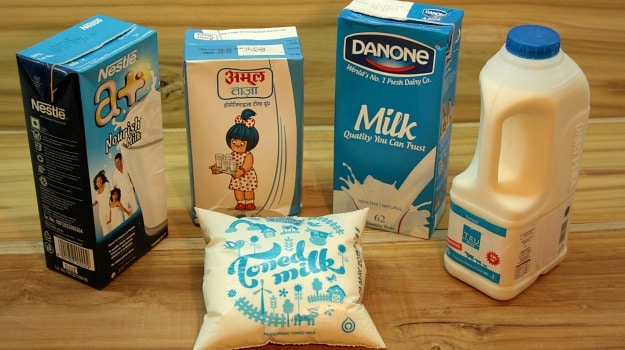
In January 2018, the same time that Danone ended its dairy production there, the investment arm of the company announced its part in a 26.5 million dollar investment in Epigamia, an Indian yogurt startup. This could be a sustainable move for Danone in India’s dairy industry because Epigamia offers consumers products that add value onto the plain yogurt they will make cheaply reception . But perhaps most importantly is this: while much of the population still makes yogurt the old-fashioned way, analysts predict that a growing number of consumers will want to buy premade options as they move into corporate jobs in developing urban centers. Very large numbers indeed. If only 5 percent of India’s 1.35 billion people decides to buy prepackaged yogurt, that’s over 67 million consumers — more than the entire population of Danone’s native France.
Fight your distractions and become successful
Vaishal Singh
Kill laziness, get out of your bed and start working right away for your dreams. Don’t let your emotions consume you, do not let your emotions hinder your decisions because if you’ll let them doing this then everytime you won’t be taking the decisions but your emotions will, so try to control your emotions and overpower them. Though, emotions are associated with your feelings they are not things so it’s not easy to control your feelings but emotions are something which come out of us and we can definitely control them, now, what makes you feel ungrounded or unhappy is failing the execution, something that you decided to do or wanted to do and now it couldn’t got done because your laziness overpowered your mind and told you to procrastinate it and then the burden of not getting what you wanted, starts to put pressure on yourself, the biggest problem of humans is Idealization, we human beings have an inborn tendency of idealizing the things, we create our own world of thoughts where we creates an imaginary world around us and start to assume that whatever we’ve thought would be easy to have, but forget about working towards it, and then overtime the lack of execution kills your dreams and puts pressure on us, even though we, the human beings have an ideal version of ourselves too, we set our ideal self’s standards too high sometimes, that we are unable meet that standard and this creates a pressure on ourselves which ends up leaving us sad. So, to solve this, we should break our long term goal into several short term goals and at the fulfillment of each short term goal we should feel happiness and satisfaction.
Now, the point here is to analyse your priorities in life and work according to them, set your long term goal and break it down into several short term goals, and do not associate your happiness with results, just enjoy the process of doing. And just avoid all the unneccsary things from your life, and learn to tackle your emotions because too much emotions can distract you from reaching your goals.
Harmony Management – Core of The organisation
What will happen if there will be no hormony in the organisation ? What situation will come up when employees will not agree to work together because of the differences based on from where thery come.?
There will be havock right.? Lets understand The importance of Harmony management in the organisation so we can get away easily with these situations easily and make our life situation better.
As we all know an organisation is based on its employees working together in the office. Many religions,castes language,culture come under the one roof for the fulfillment of the company. So, it is imporant that harmony should be maintained in the organisation.
Lets understand what is Harmony, Harmony is an essential benefit. … and Harmony is an ideal path.Harmony mean dealing with disputes and resolving conflicts fairly and properly with neutralization and Middle Way principles to further the welfare of each individual as well as the wellbeing of mankind as a whole.
Now Lets See how Harmony Management can be achieved,
Harmony is the secret principle that controls life – be it at the personal or Organisational level. Harmony manifests itself in good judgment and in the organizational context it means the efficiency or effectiveness of taking right decisions timely and avoiding organizational confrontation and conflict. Conflicts are a natural ingredient of any organization but do not mean there has to be conflict for good management. A man who cannot get along with others is a man who cannot get along with himself. One who finds faults with others does not have a high regard for himself and this loss of self esteem is a cause of disharmony and conflict in organizations. Things are not as they appear to be, thanks to the limited scope of human perception! Instead of getting intimidated by organizational environments and circumstances if you first harmonise the situation with discriminative wisdom in your mind, the outcome will take care of itself! A harmonized mind produces harmony in this world of seeming disharmony; Harmony is a prolific source of power. This is true of any type of organization – any structure that has interacting parts, from nature as a whole to human relationships to corporate businesses and spiritual societies. Harmony is the soul of an organization; disharmony is death. Key words: Harmony in organizations, conflict resolution, ingredient, perception.
10 Myths About Africa


This is unfortunate that Africa is known as the dark continent. But it has the sunniest disposition in all around. Africa had faced its greatest tough time during colonization. It indeed has a little dark because of its weather. There remains a lack of general knowledge which gives way to arise some misconceptions about the country.
Now let’s discuss 10 misconceptions about Africa
One country
Most of the people generalize Africa whenever they travel. But it can’t generalize like we can’t do it with Europe, Asia and so on. Africa is also a vast country with 54 continents. Each landmark status with their glory and history. The continent is larger than the then USA, China, Japan, and the majority of Europe combined.
A content which lacks innovation
Most of the people are about the thought that Africa lacks innovation. And they think Africa lags in comparison to other countries in respect of innovation and technology. So, it is worth noting that in 2013, Nigerian Airforce School Engineers created Nigeria’s first drone which can fly 3,000 feet for nearly 4hrs nonstop.
The language is “African”
Every country possesses diverse so Africa does. There are nearly 2,000 various languages are spoken in Africa in different areas. Moreover, only in Nigeria, approximately 200 types of language variations can be spotted as spoken by the inhabitants.
A country with extreme poverty
The poverty rate is indeed high in Africa but it is also true that among 15 Black billionaires 7 are African. So, the wrong distribution of wealth can be tressed as the root cause of this.
Man and animal live together
It true that if you travel to Africa, you can see rhinos, lions, hyenas are roaming around freely. But there are not there you harm you. They are restricted to the national reservation park.
Africans are dark-skinned
This is one of the popular misconceptions that Africans are dark-skinned. Whilst their skin color differs from region to region and they have different shades of black. In South Africa there a diversity of skin color that’s why it is called Rainbow Nation. Many immigrants possess different colors and pigments which can’t be generalized.
Single culture
Most of the people think Africans share a homogeneous culture. It is believed with ages that Africans share a common culture that they are Africans. But it is wrong. Africa is very rich in culture and diversity. Their common culture is Ubuntu. Each group of people carries a unique culture. Not all can dance like Maasai or run a marathon.
It is a desert
When it comes to Sahara, all we believe, Africa is a desert. But the desert only covers a third of the continent. The rest is full of fertile land, rain forests, etc.
Lack of technology
Africa has almost everything like the rest of the world has. 67% of the population has mobile phones, 27% can avail internet. They are not only a thriving country to experience mobile and internet, but they also can contribute technological preferences to their countrymen to have an easy day to day life.
Africans live in a hut
Commonly assumed that Africans live in a hut made of mud and dung. The rural areas indeed have huts. But the urban areas rapidly growing. There are big cities with the enormous growth of technology, lifestyle connectivity, stone houses, etc.
Many misconceptions should be dismissed about Africa. People should explore this and help the country to develop their image.
The Rise of the Parallels – Feminism and Pseudo-Feminism
“The lesson here is you can’t expect users to learn. There’s too much fun going on out there on the Internet.”
Pete Lindstrom
The internet doesn’t spread misinformation, we the users do. We share anything and everything, without proofing it. We get our news from social media rather than the news media. We have everything at the touch of our fingertips, yet we are too torpid to go the extra mile. It’s that one action that spreads rumors. It all comes down to that one small action on this enormous space.
We are in the 20th year of the 21st Century yet we are too tied to convenience than authenticity. The internet gives us too much exposure but our minds take in very little knowledge. Even more rare is the initiative to catch sight of the truth.
Being “woke” is the new ‘fad’. The internet is the medium through which you can let people know that you are part of (or against) each campaign. It’s more about proving your stand than supporting the cause. I wonder how many people blindly share posts showing their support to every social issue trending each week but hardly spend time educating themselves.
All these might very well be the reasons the difference between feminism and pseudo-feminism is foggy amongst many.
Feminism is a tale as old as time. Feminism might have gotten its name and recognition just a few hundred years ago but it started the day Patriarchy took charge. I would like to believe many were born way ahead of their time, fighting till their last breath trying to give the oppressed gender a voice.
Pseudo-Feminism, however, stems from the hatred and anger of those persecuted for the sex they were born as. Being born anything but a male in this heavily patriarchal world serves you a life-sentence of no freedom. Ironically, doesn’t the man’s sperm determine the sex of the offspring? I guess it’s the years of oppression and the eventual right to speech that have overwhelmed most to surpass feminism right into misandry. One such example is the Ruchika Girhotra Case. Nothing good ever comes out of these strong emotions though.
Whether you’ve accidentally stumbled on this or are here to get my two cents, I’d be happy to clear all misunderstandings and hopefully, by the end, I will have birthed a few feminists.
Pseudo-Feminism desires a world where women make the rules. Where men will be oppressed experiencing the same unjust women faced. A quick Google search will tell you that Misandry is, “dislike of, contempt for, or ingrained prejudice against men.”
While both seem to be the same, there’s a world of a difference. Misandrists dislike/despise men. Pseudo-Feminists believe that they are feminists who can quench their thirst equality by giving the tyrants a taste of their own vengeful medicine.
Feminism fights for equality. A world where both men, women, trans and queer people have every basic human right. It’s a misconception that Feminism fights only for women and their rights. While it may have started as a revolutionary movement just for women. (Real) Feminists all over now fight for every person exploited. Feminism doesn’t care for gender, sexual orientation, religion, or culture. It stands for equal opportunity to make a choice.
While it is easy to get wrapped up into the confusion and emerge out a Pseudo-Feminist, it is important to realize that patriarchy is a system. Men are human beings just like any other, and patriarchy has been instilled in each one of us. Most of us grew up in a patriarchal setting and are accustomed to it. As the oppressed, it was/is much easier for us to start questioning and fighting it. For men, the gender enjoying the comforts of monarchy, it would be a hard thing to lose control of.
Having said that, in this patriarchal world, if it weren’t for a few great men, we women would never have had a chance at education, knowledge and our fight to end this inequality. All we can do is educate ourselves and others properly and stand for what is right. Correct people when they are wrong, be kind, and take back control from men to make this world a safe place for all.
Alchemist: A Magical Book by Paulo Coelho

This book is a journey of a shepherd boy, Santiago from the Spanish province, who dreams to travel in search of treasure. He travels from home to mountains to deserted land, loses each possession but he keeps traveling to get the treasure which he has dreams of. Ultimately, he reaches his aim, but what he learns throughout the journey is the actual treasure. The boy had a deep attachment to his flock, but he did not want to live a conventional life. He did not want to see a beautiful village from a mount’s view, rather he wanted to experience the village by going through it. He experienced many adventures. He met new people. As the story moves the events get connected impeccably. Santiago’s quest for treasure, soon his lucky encounter with old King who strengthens his beliefs about living his destiny, coming across mishaps and encounter with Fatima, a desert girl; all this leads him to the personal legend that converges the idea of ‘conspiring universe’. A personal legend is a key to living a successful and satisfying life as it is the destiny that one dreams of. He receives assistance from an alchemist who helps him understand his quest for accomplishing his dream. By the time his belief grows, and satisfaction nourishes as he is on the right path. He comes to know “when you want something all the universe conspires in helping you to achieve it”. Story deals with an internal conflict between his love and personal dreams. But this novel ends up showing love as a supporting tool for achieving a dream. True love gives the support to live the dream. According to Coelho dreams have a price but not living your dreams has even a bigger price. The idea of the novel is brilliant. It is a story of ‘us’. The story has been web in such a way that we will start to live our dreams. Our fear of failure has been bruised here. Overcoming this is a great victory as Coelho quoted “tell your heart that the fear of suffering is worse than the suffering itself. And that no heart has ever suffered when it goes in search of dreams because every second of the search is a second encounter with God and with eternity”. In the desert, Santiago comes to realize that he can turn base metals into gold. It may seem overrated to some when alchemist turns to lead into gold. You don’t need to agree with each and everything which Coelho has put into the novel. Instead, your reason and rationale may oppose many things. But one must have the ability to read between the lines. Despite being very unreal it is a beautiful fable that has delighted millions around the world because of its thought-provoking ideas of spirituality and destiny. Santiago while traveling understands the relation between man and nature. The setting of the novel is real, but events are magical.
The book is an asset that will help to be in the ‘never give up’ kind of mental state. The whole book is a thought process, a journey towards maturity. The preface of the book is mesmerizing. The progress of the book is a bit slow. Sometimes, reading ten pages seems like reading a hundred pages. This is a must-read book. The book is full of magical moments in real set up which can be the tool of survival in tough times.
Who should choose the career?
Passing high school is very crucial, at the same time “what to do next?” is even more and more important. College life is the best phase of a student’s life. To enjoy this phase and make it more interesting and comfortable , a child should choose a career wisely.
The world is changing a lot and the dreams of each child change accordingly. Every child in this world should be more greatful to their parents. Parents are the one who suffer a lot of difficulties to bring up their kids. It is the desire of every parent to see their kids well settle in their life and thus they have the right to choose a better career for their children. So, always remember that parents are much more experienced in life than their kids.
There are enormous career opportunities available for students in India. There are huge number of options available other than regular courses. Also, one can take up different major in engineering or medicine. For instance, after completing MBBS one need not go to medical field, one can take up management in health care industry and achieve in a different field. Above all, its very essential to know your interest and take a course you wish. So , find what you like and consider your ambition as well as career accordingly.
Parents can guide their kids about the available career options. The decision should be entirely done by the child, because its the child who is more updated about the latest trends going on around and parents being outdated, they tend to follow old conventional thoughts. Every child in today’s world is unique. To each and every kid God has gifted them with unique talents. Based on scores, a child can never be judged. This is where the parents do their mistake. They presume the future of the child based on their scores and underestimate the potential of the child. Every parent has such kind of feeling, its not that they are dominant over kids, perhaps few may. But most of them knows what is good and bad for kids. At the same if your choice is good and also your parents agreed with it, then no misunderstanding crops in.
Children’s may sometimes land up in choosing wrong path in their career. Even if parents didn’t decide their career choice, they can atleast guide their kids to pick a wise decision in their career. If you choose a career as per your parents wish, which is out of your interest, then you have to face lots of obstacles and pressure. On the other hand , if a child doesn’t like what he is studying, then their parents showed a way to hate themselves. To avoid such circumstanes, choose a career in which you’re interested. Finally, it’s always better that parents as well as their kids should decide together on the career they’re willing to persuade.
Review and Revisit to Avatar before the Release of Avatar 2

James Cameron took fifteen years in making the movie Avatar. This is the highest-grossing movie ever made by Cameron, the director, the scripter. It comprehends human conditioning in 2151. Director represents the movie in an eye-popping spectacle with the conflict between idyllic aliens and greedy humans. It is famous for 3D, new art and another pandora world. Pandora itself a big and different world but the movie’s message greater than that. Cameron has taken Pandora (moon) as the medium to convey his message. The movie delivers two messages. In the first five minutes from the beginning, Cameron clears the first message. The movie shows the future scenario that by 2151, the world population will be 22 million, and concerning filling the need people will finish all the resources, and humans will end up making the world as a gas chamber. It shows that the world will be under the mandate of hunger, people will take oxygen through a mask, many animals will get extinct. In a scene, the movie shows that the Bengal Tiger is being cloned back into existence at the Beijing Zoo. If the resources are being finished, so definitely the transportation will be costly. So, the first message of the movie is to make people think about the future generation and make people aware to save the green earth. We know that always the weaker gets relocated by the stronger, the powerful rules the weaker one. In the first scene, the director has shown a scene, where a powerful Male person torturing and beating a female person. The movie says the reason for these discrepancies is the finished resources. So, A powerful organization, RDA, has found out a solution. It has made a highly efficient, room-temperature superconductor,Unobtanium, which can solve the energy crisis but the source of this is on Pandora moon. Here RDA is representing the powerful human world and the Pandora people are representing the smaller community who are being exploited, this scenario represents the colonization era as well as exemplifies all the scattered stories of the mandate. The Unobtanium is representing the precious things for which the stronger country came to colonize the weaker. The movie shows the establishment of RDA on Pandora, how terrible humans can be to fulfill their needs. It says maybe the Pandora people are weaker, but their talent and technology are much they’re than human, but what human does, they try to destroy everything and extract the good rather than preservation and maintain the sustainability of goodness. There are incidents of breaking trust, winning it again. At the end by the leadership of Jake Sully, Navi wins, gets released from suppression.
It an amazing movie to experience. Everyone should for its concept, the depiction of concept, quality of the screenplay. A Worth watching movie.
All we know that Avatar 2 is in its way to come in 2021. It is kind of a review with a recap of the first film of Avatar franchise. I’d suggest all to watch the movie who haven’t seen yet and wait for the next masterpiece to come by James Cameron.
Honest Concurrent User in Trademark
The main contention to prove the honest concurrent use is that the applicant has been using the mark in good faith and/or he didn’t have the knowledge of the earlier registered trademark and thereafter explains the legal requirements to prove the claim of the bonafide user of the trademark.
Introduction
A Trademark which is similar to an already registered trademark would not be recognized. According to Section 11 of the Trade Marks Act, 1999,
a trademark shall not be registered if it is similar to a registered trademark. This provision is there to prevent confusion among the consumers as to the ownership or origin of the goods claimed.
For a trademark to get protection under the Trade Marks Act, 1999, it has to be registered with the Registrar of Trade Mark. Section 12 of the Trade Marks Act, 1999 provides for registration of a trademark in case of honest and concurrent use depending upon the subjective discretion of the Registrar.
The burden of proof under the evidentiary aspect of trademark law says that an applicant needs to establish prima facie contentions that there is no such person using an identical or similar mark, as it is not possible to show conclusively that there is no such person. The registrar may take notice of a state of affairs that would enable it to raise a presumption that according to “the common course of natural events, human conduct, and public and private business” such a situation does not exist. However, if an objection is raised such a presumption would not be raised. Then the burden is on the objecting person to prove his case in accordance with the principle of section 101 of the Evidence Act, 1872 and he must also prove that the registration of the mark would be of material detriment to him. In Concurrent registration of identical or similar marks, heavy burden lies on the applicant to prove the existence of the following conditions, the findings on which are necessarily subjective in nature.
Various Jurisdiction
The quantum of the concurrent use of the trademark in connection with the goods concerned and the duration, area and volume of the trade.
The degree of confusion likely to ensue from the resemblance of the marks, which is to an indication of the measure of public inconvenience.
The honesty of the concurrent use Whether any instances of confusion have in fact been proved. The relative inconvenience, which would be caused if the marks were registered, subject if necessary to any conditions and limitations.
In most jurisdictions, Trade Mark law provides for a Trade Mark of an honest and concurrent user to co exist with another similar mark. The defence of honest and concurrant user was conceived mainly through two cases. Firstly, the case of Dent v Turpin determined that two users of a mark (which had derived from a common predecessor) had a separate right to obtainan injunction against a third person using the mark. Secondly, in Southorn v Reynolds , the Dent case was relied on to come to a conclusion on very similar facts. Though, it should be noted that neither of these two cases was related to dispute between concurrent users. The courts, in these two cases were not protecting the exclusive property rights but restraining a person from misrepresenting his goods as those of another.
In Dr. Reddy’s Laboratories Ltd v M/s. Reddy Pharmaceutical Limited ‘Dr. Reddy’ was a mark adopted and used by Dr. Reddy Laboratories since 1984 and has acquired reputation and goodwill. However, application for registration of this mark was filed only in 2001 under various classes. Reddy Pharmaceuticals Limited, the respondent, was the agent of Dr. Reddy Laboratories for 10 years. This association was terminated on 1st April 2003 and on 17th April 2003 the respondent filed the impugned trademark application for the mark ‘Reddy’. Though the respondent’s application was filed subsequent to the applicant’s application, the mark was registered in favour of the respondent in 2005 under ‘medicinal and pharmaceutical preparations’. The IPAB observed that the applicant was the first to apply for the mark in 2001 and the respondent’s application was subsequent to the applicant’s in 2003. Therefore, the registry erred in accepting the respondent’s subsequent application. The IPAB remarked “The applicant company headed by a scientist/technocrat have indulged in benign neglect of not seeking timely protection for their brand name and are now ruing its decision.” The IPAB further stated “It is true law recognizes and preserves the right which every man has to use his own name including for carrying on trade or business provided such use is not fraudulent.” In the present case it was held that all the facts point towards the fact that the respondent deliberately adopted the impugned mark to deceive the public. It was not a bona fide user and therefore the respondent could not take support of honest and concurrent use under S. 12.
English Law
Quite often a business is advised that a certain trade mark that it wishes to register, or a confusingly similar version of it is already registered in a third party’s name. The trade mark attorneys acting for the business will then, as a matter of course, request details of the use of the mark, if any, What is the significance of this enquiry? The answer lies in section 14(1) of the Trade Marks Act 194 of 1993. It aunty that a mark can be registered, despite its conflict, among other things, with a registered mark, in the case of honest concurrent use, OE o other special circumstances that may make it proper to do so. The obvious INsue that requires attention is the meaning of the concept honest.
Relevant factor under English law were set out in the decision of Piries Application (19331 RPC 147. These include • contingencies of confusion the duration of use, • whether the choice of the mark was honestly made, • the nature of the trades of the respective purtics, and actual confusion.
In the application of these factors, the hardship Involved in refusing registration must also be considered. In practice, the most controversial aspect is probably whether the knowledge vain of a mark excludes protection. The impact of knowledge of a mark featured in Massachusetts at Work 1918 KPC 137, also a British decision. In this matter it was stated that tugh it had been suggested that the use had been other than honest, this use had taken place with full knowledge of the mark.
Registration was thus refused
In George Ballantine & Son Lule Ballantyne Stewart & Coy td|1959) RPC 47, it was said that use was in good faith in Latin, bona fide) if the user was someone ignorant of the conditions in the market and of the state of the register. In the light of such knowledge, the adoption of the mark was held not to be in good faith.
The ruling would also support the inference that knowledge of a mark amounts to an exclusion of good faith. However, in the authoritative Pirie decision, it was held that knowledge of a mark loses its significance once the selection of the mark is property explained.
Conclusion
To conclude, when claiming honest concurrent use after receipt of a similarity objection or opposition, the applicant or the defendant should produce strong evidence to substantiate such claims of extensive, honest and concurrent use of the trademark. Extensive, honest and concurrent use of the disputed mark does not negate but mitigates the likelihood of consumer confusion due to the conceptual similarity of the marks. The primary objective of a Trade Mark is to act as a source identifier, and if two identical or similar marks can exist without any public confusion then the mark can be registered subject to the subjective discretion of the Registrar.
Data Protection
Recently got a chance to attend webinar where Former Justice B.N Srikrishna talking about data protection luckily got great insights and delighted to share with you guys hope it’s helps you to understand everything about Data Protection.
India is not a party to any convention on protection of personal data which is equivalent to the GDPR or the Data Protection Directive. However, India has adopted or is a party to other international declarations and conventions such as the Universal Declaration of Human Rights and the International Covenant on Civil and Political Rights, which recognise the right to privacy.
India has also not yet enacted specific legislation on data protection. However, the Indian legislature did amend the Information Technology Act (2000) (“IT Act”) to include Section 43A and Section 72A, which give a right to compensation for improper disclosure of personal information.
The Indian central government subsequently issued the Information Technology (Reasonable Security Practices and Procedures and Sensitive Personal Data or Information) Rules, 2011 (the “Rules”) under Section 43A of the IT Act. A clarification to the above Rules was issued on 24 August 2011 (the “Clarification”).
The Rules have imposed additional requirements on commercial and business entities in India relating to the collection and disclosure of sensitive personal data or information which have some similarities with the GDPR and the Data Protection Directive.India has introduced a biometric based unique identification number for residents called ‘Aadhaar’. Aadhaar is regulated by the Aadhaar (Targeted Delivery of Financial and Other Subsidies Act) 2016 (“Aadhaar Act”) and rules and regulations issued thereunder.
Entities in regulated sectors such as financial services and telecom sector are subject to obligations of confidentiality under sectoral laws which require them to keep customer personal information confidential and use them for prescribed purposes or only in the manner agreed with the customer.
To better balance privacy and innovation, India’s data protection legislation must be narrowly focused and designed to protect individuals and society against any injury resulting from data processing.In December 2019, the government introduced the Personal Data Protection Bill, 2019, in parliament, which would create the first cross-sectoral legal framework for data protection in India.
A framework for protecting personal data has to be designed on a more precise understanding of the role of privacy in society and of the harms that emanate from violations of individual privacy.The notion of informational privacy has become salient in the past decade.
India has privacy jurisprudence going back several decades. Most of it focuses on privacy in the context of harms caused due to a violation of privacy. This jurisprudence changed in 2017, when the Supreme Court in Justice K.S. Puttaswamy v. Union of India held that the Indian Constitution included a fundamental right to privacy. While deciding the case, though the court listed a long line of jurisprudence, the central deficiency in the existing jurisprudence in the court’s opinion was the lack of a “doctrinal formulation” that could help decide whether privacy is constitutionally protected.
The Personal Data Protection Bill, 2019, follows a long line of privacy jurisprudence in India that has been influenced by global developments as well as the country’s own constitutional jurisprudence.
Though the constitution does not explicitly mention a right to privacy, Indian courts have held that a right to privacy exists under the right to life guaranteed under Article 21.5 However, there was always some ambiguity regarding the exact nature of the constitutional protection of privacy due to the long-standing judgment of the Supreme Court in Kharak Singh v. State of Uttar Pradesh, where the court held that a right to privacy did not exist under the constitution.
The Bill governs the processing of personal data by:
(i) government,
(ii) companies incorporated in India,
(iii) foreign companies dealing with personal data of individuals in India.
Personal data is data which pertains to characteristics, traits or attributes of identity, which can be used to identify an individual. The Bill categorises certain personal data as sensitive personal data. This includes financial data, biometric data, caste, religious or political beliefs, or any other category of data specified by the government, in consultation with the Authority and the concerned sectoral regulator.
The Bill sets up a Data Protection Authority which may:
(i) take steps to protect interests of individuals,
(ii) prevent misuse of personal data,
(iii) ensure compliance with the Bill.
It will consist of a chairperson and six members, with at least 10 years’ expertise in the field of data protection and information technology. Orders of the Authority can be appealed to an Appellate Tribunal. Appeals from the Tribunal will go to the Supreme Court.
Offences under the Bill include:
(i) processing or transferring personal data in violation of the Bill, punishable with a fine of Rs 15 crore or 4% of the annual turnover of the fiduciary, whichever is higher,
(ii) failure to conduct a data audit, punishable with a fine of five crore rupees or 2% of the annual turnover of the fiduciary, whichever is higher. Re-identification and processing of de-identified personal data without consent is punishable with imprisonment of up to three years, or fine, or both.


You must be logged in to post a comment.