Over one crore COVID-19 tests performed in India since pandemic outbreak

India has achieved a remarkable feat  by performing more than one crore COVID-19 tests since the outbreak of Corona pandemic in the country. Starting from less than 100 tests per day, a multiple-fold increase in a few months was made possible by dedicated teams of various stakeholders including research institutions, medical colleges, testing laboratories, Ministries, airlines and postal services. During the last 24 hours, more than 3 lakh 46 thousand COVID samples have been tested in the country.

To effectively deal with Coronavirus, the Government adopted the test-track-treat strategy for early detection and containment of the pandemic. Government promoted the indigenous manufacturers for developing equipment and materials required for COVID-19 testing to become self-reliant. In January this year, India had only one testing laboratory for COVID-19 at National Institute of Virology, Pune. Today, more than 11 hundred government and private laboratories chains are testing Corona virus samples across the country. ICMR is continuously ramping up its facilities by approving new laboratories, RT-PCR kits, True Nat Test, CBNAAT Test for COVID-19 testing. ICMR has also recommended the use of rapid antigen test kits for diagnosis of COVID-19 in containment zones in combination with the RT-PCR test. India is also producing high-quality, low-cost testing swabs which resulted in the production of millions of swabs in record time and at a fraction of the cost of the imported ones.

Former US National Security Advisor says Indo-US relationship will witness new peaks in 21st century

Former US National Security Advisor (NSA) John Bolton has said that China’s behaviour in Eastern Ladakh along the LAC worries the United States of America and every citizen in China’s periphery. In an interview with DD India , Mr. Bolton said that China is known to engage in a range of unacceptable behaviour.

Speaking over a host of other issues , former US NSA Mr. Bolton said, Indo-US relationship will witness new peaks in the 21st century. He also asserted that Indian Prime Minister Narendra Modi is immensely popular among Indian Americans.

Final-year exams in universities to be held by September-end, says UGC

Union Home Ministry has  permitted conduct of examinations by Universities and Institutions.

In a letter to the Union Higher Education Secretary it said that the final Term Examinations are to be compulsorily conducted as per the UGC Guidelines on Examinations and Academic Calendar for the Universities and as per the Standard Operating Procedure  approved by the Union Ministry of Health and  Family Welfare.

Door to door health survey in COVID-19 containment zones completed in Delhi

The Delhi government has completed the door-to door health survey in the city’s COVID-19 containment zones, covering around 3.68 lakh people. Over 1.66 lakh antigen tests have been conducted in 445 COVID-19 containment zones.

On the 29th of last month, the Union Home Ministry had said that the door-to-door survey would be done in containment zones on priority basis by 6th July.

Over four lakh 24 thousand people recovered from Coronavirus so far in the country

The Union Government has said, a total of four lakh 24 thousand 433 people affected by Coronavirus have recovered in the country so far.

In the past 24 hours, 15 thousand 350 people recovered from COVID-19 and with this, the recovery rate reached 60.86 per cent.

The Health and Family Welfare Ministry yesterday said, a total of 24 thousand 248 new cases of COVID-19 were reported in the country during the last 24 hours taking the total number of cases to six lakh 97 thousand 413.

In a single day, 425 deaths were reported taking the nationwide toll to 19 thousand 693. Presently, the total number of active Corona cases in the country is two lakh 53 thousand 287.

India and China agree on complete disengagement of troops along the LAC and de-escalation

National Security Advisory Ajit Doval and Chinese Foreign Minister Wang Yi discussed border issues in a telephone conversation last Sunday. The two Special Representatives of India and China on the Boundary Question had a frank and in-depth exchange of views on the recent developments in the Western Sector of the India-China border areas.

The External Affairs Ministry said that the two Special Representatives agreed that both the sides should take guidance from the consensus of the leaders that maintenance of peace and tranquility in the India-China border areas was essential for the further development of bilateral relations. They also said that the two sides should not allow differences to become disputes.

Therefore, they agreed that it was necessary to ensure at the earliest complete disengagement of the troops along the LAC and de-escalation from India-China border areas for full restoration of peace and tranquility.

In this regard, they further agreed that both sides should complete the ongoing disengagement process along the LAC expeditiously. The two sides should also ensure a phased and stepwise de-escalation in the India-China border areas. They re-affirmed that both sides should strictly respect and observe the line of actual control and should not take any unilateral action to alter the status quo and work together to avoid any incident in the future that could disturb peace and tranquility in border areas. It was also agreed that the two Special Representatives will continue their conversations to ensure full and enduring restoration of peace and tranquility in the India-China border areas in accordance with the bilateral agreements and protocols.

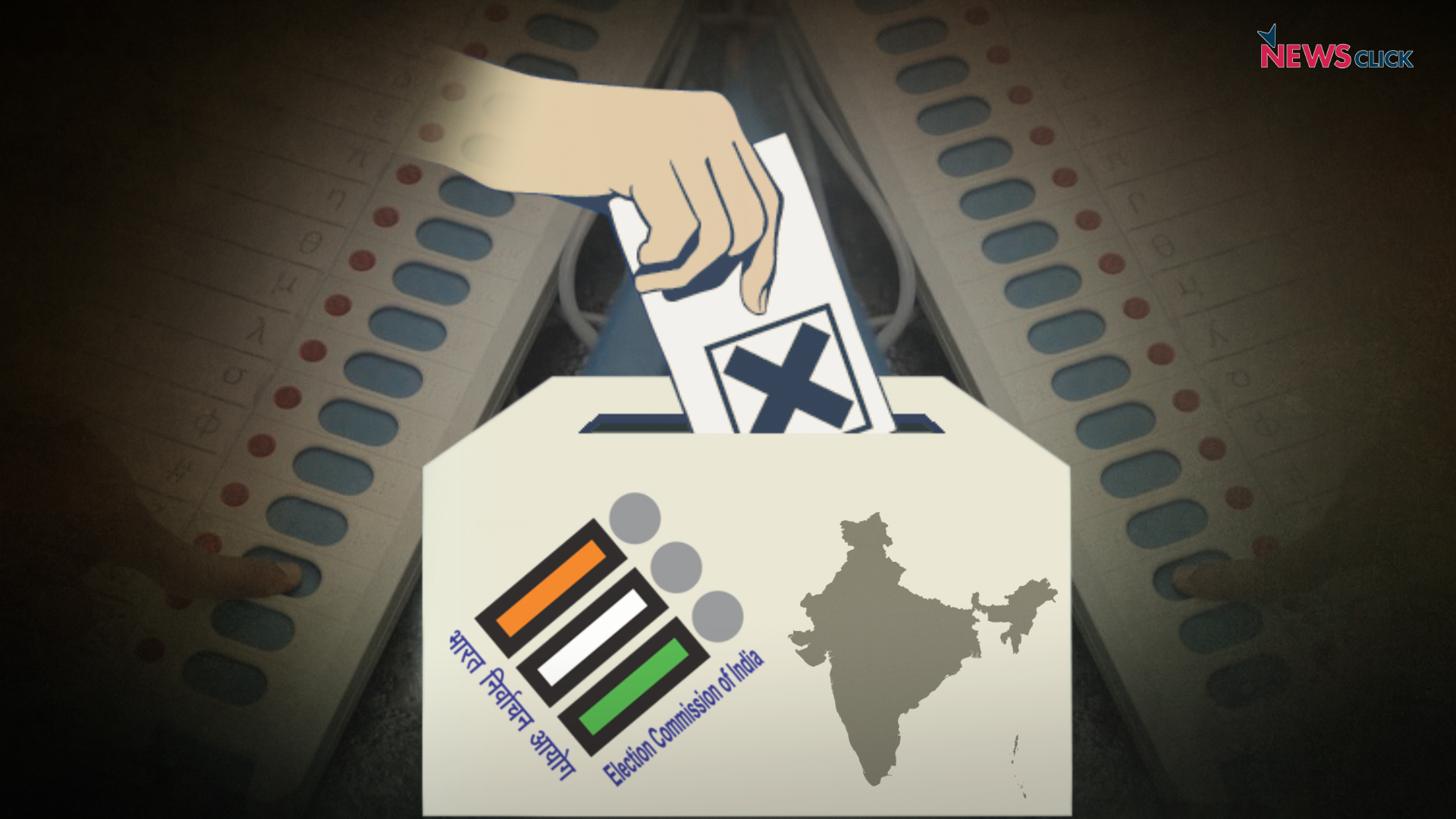
How India’s massive Election System works?

The world’s biggest democracy just had an election. The world’s biggest democratic election It’s a marathon election A mammoth undertaking It’s the world’s biggest exercise in democracy In India, voters picked its central government for the next five years. An eighth of the world’s population was eligible to vote in this election. In the year, 2019, there are 900 million eligible voters in India making this the largest Democratic exercise in the history of humanity.

A vote for reform: Election Commission collaborating with IIT-M on ...

In one of the largest and most populous countries in the world, that isn’t an easy task. India has to reach voters in coastal cities in the south, in the rural regions of the west, and jungles to the east and everywhere in between. And what’s more, they want every Indian citizen to be within 2 km of a voting station. That’s only about 25 city blocks no matter where you are in the country. It’s an incredibly ambitious goal and yet, somehow they’re able to do it. This is the biggest election in the world and I wanted to know how does it work. Every election a team of state officials and security forces, get on a ship within the east of India to require off towards this island. They travel about 100 km to get here, all to securely deliver these Electronic Voting Machines or EVMS, the instrument that logs India’s votes, the heart of this elaborate election process.

Election Commission's crackdown on poll-related monetary ...

India has 2.3 million voting machines for its 900 million voters. So, getting these machines on the brink of every voter may be a big logistical undertaking. That’s why India doesn’t have one polling day , instead, it’s closer to an election month with multiple phases that last weeks. This process takes more than 11 million election officials and security forces, who move from polling station to polling station to polling station from densely populated cities to the rural areas where the majority of Indians live. Once on the island with the EVMs, officials pile on to bike carts and head towards the polling station. Once they arrive, they start setting everything up for the vote.

On Election Day, voters line up, cast their vote, and get their fingers inked to prevent double voting. This is where the process ends for the voters, but for the election officials this is just the beginning. Driving a boat out to a remote island is just one of many ways that officials reach every voter. India’s vast and diverse terrain requires transportation methods of all kinds, like in the jungles of this northern state where elephants transport voting machines to reach a remote town or in the Himalayas where officials hike for hours to bring EVMS for election day. Helicopters, trains, they even use camels. But what makes India’s elections so impressive is not just how they reach everyone in such an enormous country, that’s just half the battle. It’s also the ways they try to include voters of all backgrounds into the process, a challenge that has been a part of India’s elections since the very beginning. India has 22 official languages and hundreds of dialects and when India became an independent nation, less than a quarter of the population could read and write.

Why EC Owes an Answer to the Country Over 'Phantom Votes' | NewsClick

The newly formed Election Commission of India created a range of symbols to correspond to each political party, like an elephant, a lotus, a hand or even an alarm clock so that from the beginning all people regardless of literacy level and language could vote with confidence. Since 1947, the literacy rate has increased significantly, but it’s still only 75 percent, so these symbols are still useful to many when casting a vote. But this is a massive sprawling operation and over the years it’s run into some pretty serious problems like allegations of election rigging and problems with a practice called booth capture, where gangs actually take over polling stations and tamper with the elections. It’s partly because of these problems that the Commission introduced these voting machines in the 1990s.

It also increased security around the elections. These efforts to include all voters and protect elections seem to be working. In 2019, India saw the highest voter turnout yet and for the firsttime women voted just as much as men. India’s elections are only getting bigger and more complicated. India has one among the fastest growing populations within the world. and in 2020, young people will make up more than a third of the country. This is the most important election within the world that takes many officials fanning out across a huge country to assist many millions vote.

Election Commission rejects Opposition demand to tweak VVPAT ...

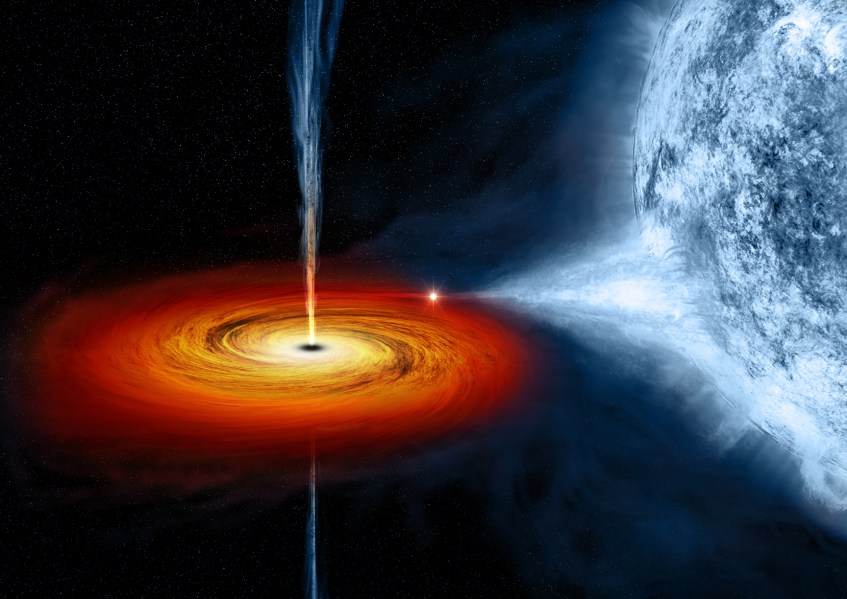
BLACK HOLE: The Singularity

Picture Courtesy: Google

We are always fascinated by stars, planets, universe. We used to think that planets orbiting stars. But they might exist around the supermassive black hole too. People have floated ideas about planets orbiting smaller black holes before, but far less is known about supermassive black holes.

 In 1930 a 20-year-old Indian student named Subrahmanyan Chandrasekhar was sailing from Madras to England to pursue his studies in astrophysics. During the voyage, he toyed with equations describing the stability of stars. And from a few lines of this mathematics, a momentous discovery emerged. Astronomers of the day had only a sketchy understanding of what makes stars tick. They knew that a star is a ball of hot gas engaging in a cosmic balancing act. There is a gas that tries to come out into the vacuum of the surrounding space, but gravity holds it back. In stars like the sun, an equilibrium is achieved, but only if the gas burns fuel to generate heat, which we now know is produced by nuclear reactions in the core. However, uncertainty surrounded the question of what happens when the fuel runs out. It seemed that gravity would inevitably gain the upper hand, causing the star to contract, and the smaller the radius, the fiercer the gravitational force would become at the surface. Astronomers had long been familiar with tiny stars known as white dwarfs, which contain a mass comparable to the sun but squashed into a volume roughly the size of the Earth. These burned-out stellar remnants are so dense that their atoms are pressed cheek by jowl. Further compression would mean the atoms themselves would be crushed, which was initially assumed to be impossible due to the laws of quantum physics. The outermost boundary of the hole is its event horizon.

The event horizon is a point of no return concentrated with energy. Quantum effects at the edge create streams of hot particles that radiate back out into the universe. This is called Hawking radiation, after the physicist Stephen Hawking, who predicted it. As you go deeper into the black hole, space becomes ever curvier until, at the center, it becomes infinitely curved. This is the singularity. Space and time cease to be meaningful ideas and the laws of physics as we know them — all of which require space and time.

It is said until one reaches the center, wouldn’t be able to understand the origin. There is nothing but darkness. The gravity is so strong there that even the light can’t sustain. The general relativity theory by Einstien is very applicable in discussing black hole. There is nothing more interesting and strange thing than the Black Hole theory. It also stretches people’s imagination and thinking capability to another level. Nothing can come out from the black hole’s gravitational force. It says many black holes are there which is surrounded by gas and dust. The stems of gas and dust move in such a way that it seems water is draining down. The particles of black holes run to an infinitely dense point which is very small in size. Many controversies are there among those one says our universe is a latecomer and it also says that there might have universe existed, which contained a black hole.

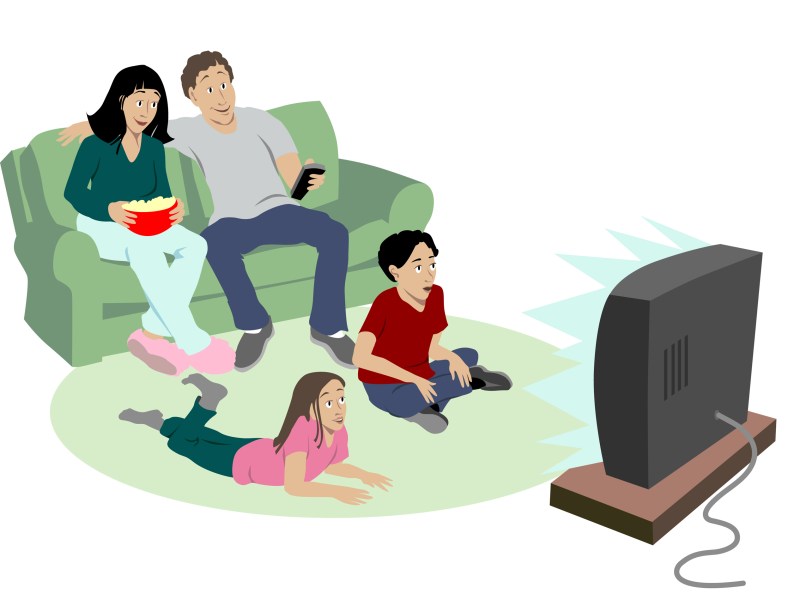
10 Reasons Why TV Consumption is Bad

Picture Courtesy: Google

Television is conquering the media industry with ages. The shows on television leave a major impact on society and the psychology of the audience.

Leaves to time for other works

A study says the average person watches tv for 5 hours and 11 mins, which is 1/5 if the 24 hours. Moreover, we sleep for 7-8 hours per day. So out of 24 hours, we lack time to do something else productive.

Effects on people

Television can conquer the thought and psychology of the people. Television is far from reality. Whatever is shows it highers the expectation of the audience and lead them to think differently without any realistic approach.

Increase health risk

Watching tv too much can higher obesity risks. If one watches TV for a long time sitting down, can be at risk of heart disease. Moreover, it affects eyesight as well. If you sit at the same position and doing nothing the whole day, you won’t burn calories, which is bad for your health

Makes life undisciplined 

TV is a common distraction at home. Running TV always causes distractions, be it study or other home works. Sometimes the distractions cause common accidents.

Negativity 

TV sometimes endorses negativity as well. Continuous watching the daily soaps with household problems and politics can be the cause of negativity. Not only that the action scenes, but crime scenes can also cause psychological problems and negativity to our brains.

Increase shopping habits

The advertisements and television styles encourage people to higher their shopping habits. The kids do not understand monetary problems. Sometimes the desire of the older members overpowers the other problems and higher shopping habits.

Dissatisfaction in life

The TV produces a larger than life image, which is unattainable. So, it brings dissatisfaction to the life of people. People start to believe the unrealistic world and try to deal with a life like that which eventually leaves them unsatisfied with their normal life and ends with unpleasant catastrophes.

People become less social

TV leads people to sit the whole time at a place and do nothing. People who watch TV more, do not talk to others much, and do not interact socially as well. It causes rupture to relationships. People forget to see the people around them who can give them natural happiness, knowledge, and more. Moreover, they can have good moments to nourish in the future.

Alter believes 

TV evolves their script in such a way that it looks attractive. Sometimes in doing so, they misinterpret the facts and beliefs. TV manipulates the audiences thought and alter their beliefs. The visualization is so powerful that people find no way except believing.

Hampers physically 

Mostly kids like to do whatever they watch on the TV in real life. If their favorite hero or heroine doing some risky stuff, they try to do it and end up with bitter experiences.

Watching TV is helpful and harmful as well. Nothing excessive is good for our health. We should keep a balance and time limit while watching TV for a better life.

BILL GATES THE PHILANTHROPIST

Philanthropy is something that is done by the generous and kind people all over the globe and it does not differentiate between anyone regarding his status or any other thing related to the one who requires help and it is not that simple to be a Philanthropist and it depends upon the Philanthropist about his investment of money to a good cause, either he can donate directly to the cause or use it to develop a tool that can eradicate the main problem. This also raises the Philanthropist’s status in society and his popularity among all kinds of people and to make some political or economic decision himself.

We can take the Bill & Melinda Gates Foundation as an example, as they work towards the real cause of the people and they invest a lot and helps millions of people worldwide and are considered as true Philanthropists by the world. Anyone who invests a lot into Philanthropy also needs the Return of Investment and a perfect way to ensure this to invest in the sectors that can deliver back the Investments and also makes the Investing person famous for this Philanthropy effort. A classic example could be the current situation where the Gates Foundation has donated approximately $250 million to develop a vaccine and other for other works and Bill gates has also stepped down from Microsoft board so that he can devote more time to Philanthropy.

There may be someday when everyone has to respond to the answers about the expenditure of the money towards Philanthropy. The charities that help towards Philanthropy need a lot of answers because that money is getting stolen by any political leader or by a terrorist organization or getting stolen through cyber crimes and this does get the notice of the people not until anyone finds about this or by the government. To counter this cybercrime securities have suggested using better ways to secure the money i.e., to use the digital way of money, using Cryptocurrency, Blockchain that uses cryptography or any other way. Blockchain is the fastest growing and safe way for a charity organization to use as it reduces administrative cost, provides more accountability and it shows the investors about their funds and where it is used and to whom and it restores the lost confidence of the investors about investing money in any charity organization. Blockchain is transparent and safe and it is being used by some charity organizations lately, Binance Charity Foundation is using its blockchain-based method to collect donations for Philanthropic work and it ensures that the funds are reached to persons in need and is transparent to find it. Since these are technologies are not expensive these have support from a large number of people and everyone trusts it for its safety, accountability, and transparency. This will growing support will push other charity organization to adapt to this method and if someone does not adapt to it, it will raise a lot of questions and people lose their trust to these organization and leads to other larger problems and people stops calling them as Philanthropist.

 The Gates Foundation is not some charity organization to show the spend money to the investors, they spend their own money but everyone feels that even the Gates Foundation needs to be transparent about the spend, invested money and their return of Investment but if their activities can be shown to the public or the government and this makes Gates popularity even bigger and makes everyone to accept that he is true and honest Philanthropist and he does not use his organization for his personal needs and by using Blockchain method to bring transparency and proves that a “True Philanthropist has a heart of human greatness”. Let’s hope that the Gates Foundation brings this Blockchain way for philanthropy.

10 Reasons for Why Poor Sleep is Dangerous

Picture Courtesy: Google

Sleeping is as important as eating and doing exercise. A good night’s sleep is important to sound health properly. It’s true people now sleep less than they used to do in past. But it is also hampering their digest system and many more. So, let’s know why poor sleep is dangerous.
10 reasons why poor sleep is dangerous
Sleeping less can higher the bodyweight

Short sleep is one of the reasons behind obesity. We see the people with short sleep weigh noticeably in comparison to those who have adequate sleeping habit.89% children and 55% of adults nearly grow obesity due to short sleeping habits. Short sleep can make hormonal disorders also.
Calorie consumption gets lower with adequate sleep
It’s said those who sleep less have higher calories consumption habits. If one deprives sleep it will cause to harm the appetite hormones and lead to poor appetite. It enhances the number of ghrelin hormones which highers the appetite and lowers the leptin hormones which suppress the appetite
Less enhancement of concentration and productivity
Good sleep enhances concentration, productivity, and performance. Sleeping fewer impacts brain which eventually brings errors to work. Sleeping fewer causes similar effects to the brain as alcohol intake does.
Minimize the athletic performance
Good sleep helps to be physically fit and active. It helps the brain to count accuracy, speed, redactions, etc. Poor sleep can result in slower walking, weak grip strength, etc.
Chances of heart disease and stroke
A study showed that sleeping less is harmful to those who sleep less. It can lead to heart disease. Minimum 7-8 hrs sleep is important at night.
Causes insulin sensitivity
If one person restricts sleep to 6hrs for only 4 days, the person will have prediabetic symptoms. Sleeping less affects glucose and increase insulin sensitivity.
Can cause depression
Poor sleep can cause depression. Continually poor sleep causes insomnia. 90% of depressed people complaints about poor sleep. Not only that poor sleep can increase the risk of suicide also. Insomnia or disturbed sleep can be the cause of depression also.
Immune function Deterioration
Lower sleep higher the risks of the immune system. 8hours of sleep a day can even help to fight the common cold. If you monitor for 2 weeks between two who sleep well and who doesn’t by giving the both same medicine for cold allergy, you can see the difference.
Maximize the inflammation
Poor sleep not only causes bowel disease but also causes disease recurrence. Poor sleep is related to long time inflammation. It causes to loss of digestive tracks. It is known as inflammatory bowel disease. Experts suggest good sleep to get rid of inflammatory diseases, without sleep the disease relapses.
Hamper emotions and social interactions
Those who do not sleep well, usually they seem to be irritated with little things. Not only that they become unable to recognize persons and their emotions. It reduces the ability to social responses and creates a bad social image.
So, to this end, we also come to realize how sleeping is important to have a healthy life. At least 7-8 hours of sleep a day can give you a healthy life in all aspects.

The Challenge of Doing Less When You’re Used to Doing More

“I became an overachiever to get approval from the world.” ~Madonna

I have spent my entire life looking for more. More to do, more to achieve, and more to see.

I have always been a planner—meticulously planning everything from vacations to visits with friends to my life months (or years) ahead.

I plan because I’ve always wanted to fit in as much as possible in the finite time I was allotted. I never wanted to feel like time was wasted or opportunities to do or see something were taken for granted.

When plans went awry, my anxiety would overtake my entire body and make me feel like I had failed—even if the change was completely out of my control. I planned because I saw the space in front of me, and I wanted to fill it as perfectly as possible—with colors, themes, and vibrant things.

I never wanted to risk that this space would go empty or uncolored, and maybe that’s a reflection of how I see myself in some twisted way.

I have always been an overachiever—doing the bare minimum has never been an option for me. I started working part-time at sixteen, joined every club I could, and maintained side hustles in college before side hustles were a thing.

I had to add to my responsibilities constantly because I thought that was the only way I could make myself stand out. And, to be fair, it did. I saw the benefits of busting my butt, but I also lamented the chances I missed to slow down and look at the scene and just breathe rather than climbing the mountain relentlessly.

In every job I held, I would walk in each day and ask myself, “How can I go above and beyond?” I was always looking to improve or to impress.

When this was recognized, it was like being dosed with relief like a Gatorade bucket after a football game. Yes, I mattered. Yes, I was seen. So, I kept going, carrying the pressure of constant achievement. With this came that constant worry of, “Is this enough?” Rather than slowing down to find the answer, I’d add more to my plate “just in case.”

I have always been a romantic—and I have royally messed up my relationships with giving far more than I received. Was I doing enough? Could I be doing more? Always trying to be as compassionate and as giving as possible.

Eventually, I toned this down and tried to “play it cool.” But that meant that inside my mind I was reeling wondering if low-key was working. Of course, I was so hyper-focused on someone else’s happiness that I never noticed mine debilitating time and time again. I was so concerned with being “perfect” that I lost who I was when I wasn’t trying to achieve perfection.

I never stopped to ask whether the other person was meeting me in the middle of giving me what I needed. Instead, I felt the weight of the world to hold relationships together.

If I had tried to do less, then maybe I would’ve given them space to do more. Or, maybe, if I had paused, I could’ve seen what was in front of me and saved myself multiple heartbreaks. I found out too late that true love wasn’t found on a to-do list.

I have always been a dreamer—imagining a life that had more than the one I was in. Of course, there’s a lot of beauty in my endless daydreams and fantasies. Some of them came to be, but, honestly, it meant that I was always living in my head or a few chapters ahead.

I was always writing the next book before I finished reading the one I had already started. I couldn’t enjoy the word, the sentence, or even the page I was on. Even if, for a moment, my life was seemingly coming together from all of the overachieving, planning, and romanticizing. Even if all of that paid off, then I was simply daydreaming about galivanting in a new, different life somewhere else.

It was as if my feet never touched the ground, and I’ve spent years running through time—wondering why I’ve never felt whole.

It wasn’t that I don’t believe in being a dreamer, but gosh I wish I let myself enjoy the dreams that had come true and the life that I had built in front of me instead of feeling the need to stick my head back up in the clouds for more.

I have spent my entire life, almost thirty years of it, doing more for the need to be seen, to be validated, to be worthy. I have spent so much time making “the most” of my time and, ironically, have lost so much time because of it. And now? In this weird world where all we have is time and we’re asked to slow down… it’s like I’m coming to a head-on collision with reality.

I’m finally seeing how tired my soul is from this constant running. Honestly, I’m really struggling with slowing down in a way that feels sustainable. I’m still spending way too many minutes wondering, when will this end? And I’m not spending enough time thinking, how can I make this moment I have—right now—enough?

Now, the world put up a speed limit, and it’s showing me just how much I lived in the fast lane.

It’s challenging to slow down on purpose without feeling like I’m wasting time. But maybe that’s why I needed this. So that I didn’t miss the next thirty years of my life seeking more. Because I am forced to see all that I have acquired between the four walls of my heart and the four walls of my home, and there’s a lot of good in that. Because I’ve never really given myself the opportunity to just be happy with what’s in front of me.

It’s a lesson, ironically, in both humility and pride—being happy with the little things, but also being proud of what I was able to achieve to be here.

I have spent my entire life checking things off of a list and running on empty. Now, I finally have the opportunity to stop and consider—what would make me feel full? What would make me feel whole? And the only thing I need to do right now to answer that question is breathe.


BSF and CRPF are ready to welcome transgenders.

Rights of the transgenders have always been an issue in our country. They constantly had to face communal descrimination and people always kept them aside.

Recently, Ministry of Home Affairs has asked for opinion to the five forces that are SSB, BSF, CRPF, ITBP and CISF about the inclusion of transgenders to be an officer.

BSF had already showed it’s consent now CRPF spread their hands to welcome the transgenders to be the change.

Two days after the Union Ministry of Home Affairs (MHA) asked the paramilitary forces for their views on recruitment of transgender people as officers in their ranks, the Central Reserve Police Force (CRPF) has said it is ready make its force “compatible” to the new recruits.

The CRPF communication refers to the April 15, 2014 judgment of the Supreme Court declaring transgender people as the Third Gender. Following this, Parliament passed the The Transgender Persons (Protection of Rights) Act in 2019.

Sources said other forces are also likely to give a positive response.

Disengagement with Chinese Army starts in Galwan Valley as per agreed terms in Corps Commander’s meeting

Disengagement with Chinese Army has started in Galwan Valley as per agreed terms in the Corps Commander’s meeting of the two sides. Army sources said, Chinese forces were seen removing tents and structures at Patrolling Point 14.

AIR correspondent reports that rearward movement of vehicles of Chinese Army seen at General Area Galwan, Hotsprings and Gogra. This development is in line with what the Corps Commanders agreed to on 30th of June at Chushul.

Government sources told AIR News that this is a work in progress and they will have to wait till sunset to see up to what distance the Chinese have retreated. The Indian and Chinese Armies were locked in a standoff in eastern Ladakh recently.