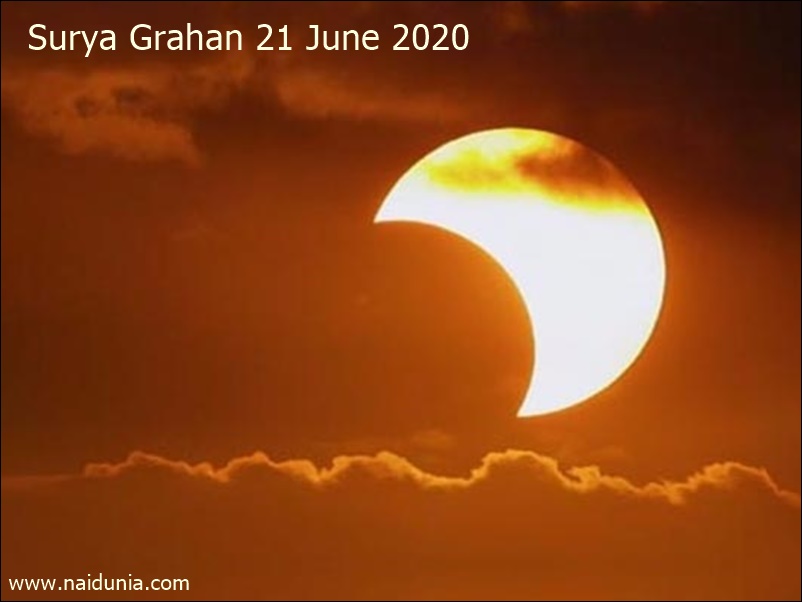
A rare celestial event, annular solar eclipse popularly called as ring of fire eclipse will be visible today. The first solar eclipse of this year takes place on the summer solstice, which is the longest day in the Northern Hemisphere.
People living along the path of annular eclipse passing through Anupgarh and Suratgarh in Rajasthan, Sirsa, Jakhal, Kurukshetra and Yamunanagar in Haryana and Dehradun, Tapowan and Joshimath in Uttarakhand will be able to see the annular phase. People in rest of India can witness a partial eclipse.
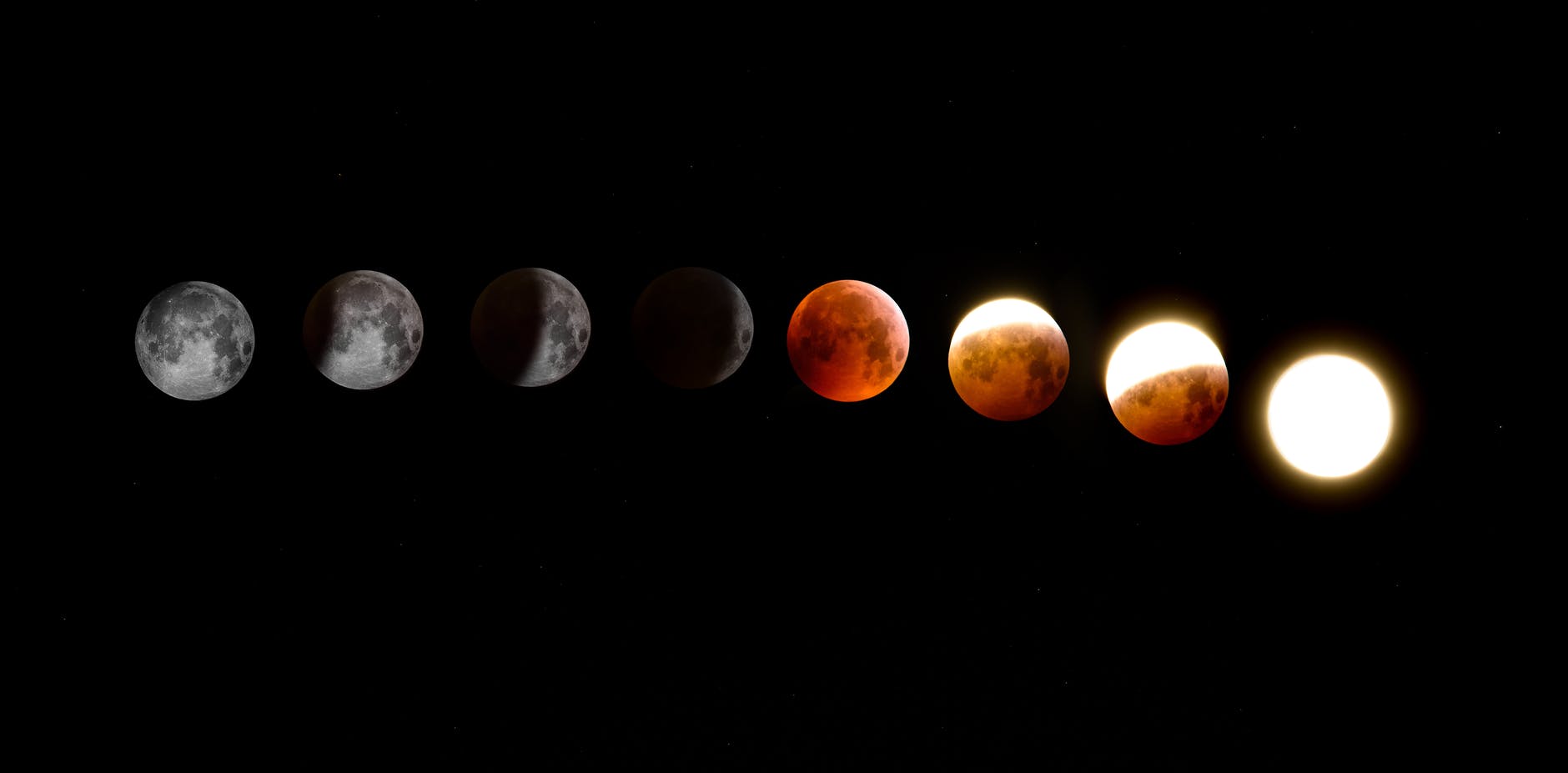
When Moon comes between the Sun and Earth, the shadow falls on the surface of the Earth. The Sun is entirely covered by the Moon for a brief period. Those places that are engulfed by the dark, dense umbral shadow of the Moon experience the total solar eclipse.
In the regions that plunge into the soft diffused penumbral shadow of the Moon experience the partial eclipse. In all solar eclipse the Sun, Moon and Earth may not be perfectly aligned and then there is a partial eclipse. When the three celestial bodies happen to be in a straight line, there is total solar eclipse.
Ministry of Science and Technology has urged people not to use sunglasses, goggles, exposed x-ray sheet or lampblack over a glass as they are not safe. It said, viewing the Sun’s image on the surface of the water is also not safe.
The Ministry said, welders glass 13 or 14 can be used to see the Sun directly with naked eyes. People can make a pinhole in a card sheet and hold it under the Sun, at some distance, keep a screen of white paper. Image of the Sun can be seen on this sheet. By adjusting the gap between the sheet and the screen, the image can be made larger.
People can look at the shadow of a bush or a tree. With the gaps between the leaves acting like a pinhole, numerous images of the eclipsed Sun can be seen on the ground. People can use a strainer for making pinhole images.
People can also cover the compact makeup kit mirror with black paper, with a small hole at the centre. Reflect the image of the Sun on a distant wall in shadow. People can get a projected image of the eclipsed Sun.
Bhuj will be the first town in India to see the beginning of the eclipse 9.58 a.m. The eclipse ends four hours later at Dibrugarh, Assam at 2.29 p.m. Ghersana at the western boundary of India will be the first to witness the annular phase of the eclipse at 11.50 a.m.
It will last for 30 seconds. Kalanka peak in Uttarakhand will be the last major landmark to see the annular eclipse at 12.10 p.m. lasting for 28 seconds.
India has said that attempts by the Chinese side to now advance exaggerated and untenable claims with regard to Line of Actual Control are not acceptable. It said, the position with regard to the Galwan Valley area has been historically clear.
In response to queries on the statement issued by the Chinese Spokesperson on the events in the Galwan valley area, External Affairs Ministry Spokesman Anurag Srivastava said such claims are not in accordance with China’s own position in the past.
He said, Indian troops are fully familiar with the alignment of the LAC in all sectors of the India-China border areas, including in the Galwan Valley.
They abide by it scrupulously and the Indian side has never undertaken any actions across the LAC. In fact, they have been patrolling this area for a long time without any incident.
All infrastructure built by the Indian side is naturally on its own side of the LAC.
The Spokesman said that since early May this year, the Chinese side has been hindering India’s normal, traditional patrolling pattern in this area.
This had resulted in a face-off which was addressed by the ground commanders as per the provisions of the bilateral agreements and protocols.
The Spokesman said, the two sides are in regular touch and early meetings of military and diplomatic mechanisms are currently being discussed.
Delhi Lt. Governor Anil Baijal has rolled back his earlier order of five days mandatory institutional quarantine for COVID-19 patient in the national capital. In a tweet, Mr Baijal said, only those COVID positive cases which do not require hospitalisation on clinical assessment and do not have adequate facilities for home isolation will be required to undergo institutional isolation.
The LG yesterday chaired a meeting of Delhi Disaster Management Authority with Chief Minister Arvind Kejriwal, Deputy CM Manish Sisodia and senior officers.
He informed that DDMA has approved recommendations of High Level Expert Committee for fixing subsidised rates for Covid treatment in private hospitals Delhi.
The 6th International Day of Yoga is being celebrated today. The celebrations commenced with a message from Prime Minister Narendra Modi. In a televised message, Mr Modi said Yoga brings people together and gives a message of universal brotherhood. He said, Yoga has emerged as a force for unity and it does not discriminate and goes beyond race, colour, gender, faith and nations.
Mr Modi said, Yoga enhances our quest for a healthier planet and it has emerged as a force for unity and deepens the bonds of humanity. Prime Minister said Yoga helps in strengthening our respiratory and immune system which plays a crucial part in dealing with diseases.
He said, Yoga gives us not only the physical strength, but also provides mental balance and emotional stability to confidently face the challenges before us. Prime Minister said, Yoga gives us the confidence and will power to overcome challenges in life and it also gives us peace of mind.
Mr Modi said, World is realising the potential of Yoga in this Corona virus pandemic and people affected with corona virus are taking the benefit of Yoga. He said, Corona virus hits our respiratory system and several breathing exercises like Pranayam and Anulom Vilom strengthen our respiratory system. He said, taking part in the My Life-My Yoga video blogging contest during the corona virus pandemic, shows that enthusiasm for Yoga is increasing.
Prime Minister said, this year the theme of Yoga day is, Yoga at home, Yoga with family and when family members perform yoga, an energy flows into the house. Therefore, this time, Yoga day is also a day of emotional Yoga and it is a day to increase our family bonding.
He said, anybody can embrace Yoga and day is not far away when the world will witness the success of health and happy humanity and Yoga can definitely help us make this happen.
He appealed to the people to embrace Yoga as a daily routine activity.
Home Minister Amit Shah said that Yoga is a medium of establishing harmony between body and mind, action and thought and man and nature. In a tweet, he said, this precious gift of Indian culture has been given global acceptance by the efforts of the Prime Minister Narendra Modi.
The observation of International Day of Yoga in the past years has been marked by mass demonstrations of Yoga in public places. Due to the COVID-19 outbreak, this year, the main focus is on encouraging people to do Yoga at their homes with participation of the entire family.
Yoga is found to be a significant activity in the current pandemic situation as its practice leads to both physical and mental wellbeing and increases the individual’s ability to fight diseases in an effective manner.
To promote Yoga, My Life, My Yoga-video blogging contest with attractive prizes is also being organized by Ministry of Ayush in which the people are being encouraged to post their short video clips performing different Yogasanas.
The 6th International Day of Yoga is being celebrated today. The celebrations commenced with a message from Prime Minister Narendra Modi.
Earlier, Mr Modi appealed to the people to perform Yoga at their home with their family members while following all norms of social distancing. He said, Yoga plays an important role in improving the immunity and it enables strong mind and healthy body.
The observation of International Day of Yoga in the past years has been marked by mass demonstrations of Yoga at public places. Due to the COVID-19 outbreak, this year, the main focus is on encouraging people to do Yoga at their homes with participation of the entire family. A report:
Yoga is found to be a significant activity in the current pandemic situation as its practice leads to both physical and mental well-being and increases the individual’s ability to fight diseases in an effective manner. This year, the celebration is centred around the theme “Yoga at Home, Yoga with Family”.
To promote Yoga, ‘My Life, My Yoga’-video blogging contest with attractive prizes is also being organized by Ministry of Ayush in which the people are being encouraged to post their short video clips performing different Yogasanas. Bhupendra Singh, AIR News, Delhi.
The celebration started with the message from Prime Minister Narendra Modi which will be telecast by Doordarshan at 6.30 in the morning.
The streaming will also be available on other digital platforms. After the Prime Minister’s message, team of Morarji Desai National Institute of Yoga will perform a live demonstration of Common Yoga Protocol from 7 A.M. to 7.45 A.M. Discussion with the Yoga expert will be telecast from 7.45 A.M. to 8 A.M.
Speaking exclusively to AIR News, Director of Morarji Desai National Institute of Yoga Dr. Ishwar Basavaraddi stressed on the importance of Yoga to maintain a stress-free life amidst the testing times due to the global pandemic.
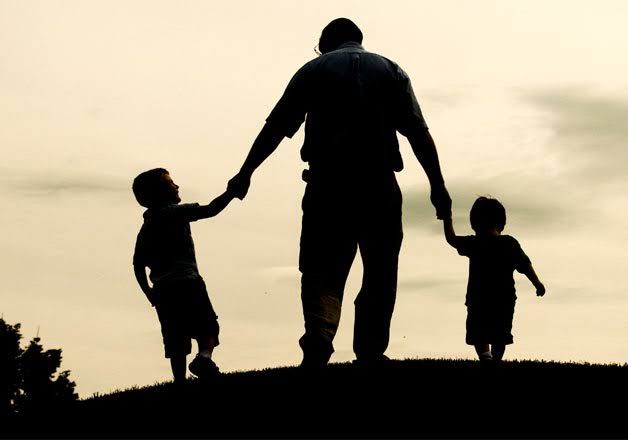
In our society, we celebrate different days about different personalities like Mother’s Day, Teacher’s Day, and women’s Day. The main purpose of celebrating these days is to pay tribute to those personalities, Likewise, every year the father’s day is celebrated on the third Sunday of June. In ancient times, this day had celebrated on 19 of March as Saint Joseph Day, but in present time, every year the father’s day is celebrated on the third Sunday of June this tradition of celebrating Father’s day was started after an incident.
In 1907 many men were died in an explosion occurred in a mine in West Virginia. The Father’s day was started in the remembrance of these men, Sonora Dodd from Washington had introduced this term “Father’s Day” in 1909. Sonora Dodd had very interesting story related to Father’s Day. She used to love her father William Jackson. Her mother died in her childhood, so her father brought her up along with her 5 siblings. William Jackson died in a war. When Sonora Dodd had heard about Mother’s Day, she told the pastor of local Church that
“Similar Day should be celebrated for dads too”.
Therefore, she proposed 5th June for Father’s Day, as that day was her father’s Birthday, but there was not enough time left for ceremony, So pastor denied her proposal and then this ceremony took place on third Sunday of June. At start, Sonora Dodd could not get any success to advertise this Day, so she left advertising it and she went to arts institute of Chicago for studies. In 1930 she came back to her city and started advertising Father’s Day once again. This time she got very success in it, because she got the support of Local Businessmen. Father’s Day was an opportunity to local businessmen. Specially for those who belongs to gift selling businesses. After 1930, Father’s Day become a commercial day.
Islam has also stress on the importance of parents, especially for father, it is said that ” Father’s desire is Allah’s Desire and father’s anger is Allah’s anger “In our society, we openly show our love to Mothers but maybe it is not in the case of fathers. The thing we need to do is that we should not only show our love to our parents but should also take a great care of them in old age. My Friends, the father is only man who sacrifice everything for your need and your desires. Today if your father is alive and he forbid you from anything, then for this blessing you should be very thankful to your GOD. My Friends, the importance of this thing can be asked from those who do not have fathers with them. The father is only man who is the first hero of his son, similarly he is the first love of his daughter.
Today 21 June, The sun sheds light directly on the Tropic of Cancer on June 21. From March to September, the northern hemisphere gets more sunlight than the southern one. June 21 is the day when the northern hemisphere receives the most direct sunlight, which causes the day to last longer than any other day in the year, known as Solar eclipse. This year, the annual solar eclipse will occur on 21 June. According to Time and Date, the eclipse will begin at 9.15 am IST and will end at 15.04 pm. The maximum eclipse will be visible at 12.10 pm. In the Northern Hemisphere, where it is the longest day of the year in terms of daylight, the June solstice is also called the summer solstice.
Why it is the longest day ?, because Since the Earth rotates on the axis, the North of the Equator receives more direct sunlight between the month of March and September, hence Summer is experienced during the time. Is there any effect on humans? yes during the total solar eclipse, the total eclipse may last only a short period of time, and if you are looking towards the sun as the moon moves away from blocking the sun, you might get a solar burn on your retina which can cause permanent damage to your eyes.
The Father’s day
Furthermore, 21 June also celebrated as the father’s day, a person, who makes a path of success for their child, even though he has to suffer from any critical condition. Father’s Day is a day of honoring fatherhood and paternal bonds, as well as the influence of fathers in society. Father’s Day was founded by Sonora Smart Dodd and celebrated on the third Sunday of June for the first time in 1910. It is held on various days in many parts of the world all throughout the year, often in the months of March, May, and June.
To celebrate Father’s Day, try making your dad a card and writing a note inside letting him know how much you appreciate him. we can also surprise him with his favorite meal, whether it’s breakfast in bed or a nice dinner when he gets home from work. it is important and It is necessary because all year we want to do special for mom and dad. These Mother’s Day and Father’s Day remind us to do for our parents. Our parents also feeling special on this day or we are doing that thing to make happy or mesmerizing. This is the best part of Father’s Day our parents wish to fulfill by their children.
On this father’s day don’t purchase any gifts for father, instead, Show and Tell him how much you love him, Create poems using the letters of father’s name as the first letter of each line, or make a list of positive character qualities which begin with each letter of his name, Perhaps there’s a song he always sings halfway through and hums the rest because he doesn’t know the words. Find the lyrics online, print them, and have the family sing along with him and, Have fun with a guessing game in which someone asks the father about his favorite things: his favorite color, recipe, movie, sports team, song, etc.
पापा हर फ़र्ज़ निभाते हैं, जीवन भर क़र्ज़ चुकाते हैं. बच्चे की एक ख़ुशी के लिए, अपने सुख भूल ही जाते हैं.
फिर क्यों ऐसे पापा के लिए, बच्चे कुछ कर ही नहीं पाते. ऐसे सच्चे पापा को क्यों, पापा कहने में भी सकुचाते.
पापा का आशीष बनाता है, बच्चे का जीवन सुखदाइ. पर बच्चे भूल ही जाते हैं, यह कैसी आँधी है आई.
जिससे सब कुछ पाया है, जिसने सब कुछ सिखलाया है. कोटि नम्न ऐसे पापा को, जो हर पल साथ निभाया है.
प्यारे पापा के प्यार भरे’ सीने से जो लग जाते हैं. सच्च कहती हूँ विश्वास करो, जीवन में सदा सुख पाते हैं.
Solar Eclipse a sight is rarely seen on earth.On this day the sun will look like a shining ring.This will be neither partial eclipse nor complete.The shadow of the Moon will cover almost 99% of the Sun rays. Which will cause the side of the sun remain illuminated and the middle part of the sun will be completely covered by the shadow of the moon.
Solar eclipse will be addressed on 21st June 2020 from 10:20 AM to 1:49 PM which will be visible in India and according to astrology this day will be impressive as many planets and constellations will be matching which did not match from past 500 years! Sutak period will start from 10:17 AM on 21 June it self. This solar eclipse will be in Mrigashira, Ardra, Nakshatra and Gemini.During this eclipse, 6 planets i.e. Jupiter, Saturn, Mars, Venus, Rahu and Ketu will be in retrograde state;Rahu and Ketu are always retrograde.Such position of planets will make solar eclipse impressive.According to astrology, eclipses can become a factor of natural disasters, which may cause disaster like earthquake, typhoon or storm.
Precautions should be taken during the solar eclipse every time like; Solar eclipse should not be viewed with naked eyes.During this time the rays emanating from the sun are vary harmful and hence can damage the eyes.Therefore, to see this, special types of equipment should be used like Welding glasses, X-ray sheet keep a not that your face and body should be covered fully as the rays may damage the skin.According to religious beliefs, do not do any auspicious work at the time of eclipse.At the time of the eclipse, neither should you eat or drink anything. It is believed that before eclipse, basil leaves should be put in food and drink to make it safer.In the eclipse period, remembering the Lord, do puja, chanting, charity etc. religious work which will be good for family and ourself too.As soon as the eclipse of the eclipse begins, cover the place of worship in the house during the eclipse.After the eclipse, take a bath and clean the place of worship and sprinkle Ganga water. Pregnant women should be very careful and stay away from the sun full day as it may affect the infant.
It has been a long time since the study of students of lower standard has been put on hold due to this novel Corona Virus.
this is necessary to maintain social distancing to provoke the spreading of the virus among the youth of the country who are considered to be the future of the nation.
Those students with having well educated parental control are getting their studies carried on with the help of their parents.
But those students, whose parents are not well educated, are waiting for good conditions to stroll out to carry on their studies.
Meanwhile students are losing their interest in studying and going out for school education.They are getting addicted to the virtual world of mobile phones and laptops. Which is surely harmful for their mental health as well as eye sight. they are losing what they learned in groups in classes .The feeling of team work which was usually developed in school education being erected from their mind. This erection is very harful to move with the society as well as for co-operation.
besides of this if we talk about graduate and above level students, it doesn’t seem that the students have any representation in education system. they are only considered for examination purpose now.whatever be the condition,corona cases and fear of students but they are getting pushed in exams by our government and universities.
In Universities, Mostly students are of out of cities, districts,states even countries in such situation where the markets are not fully stand up. All the Vendors are establishing their shops again after lockdown in rolling price high, students will have to face all the problems related to living and food and the health issues would be serious concern
Talking about Lucknow University, it has decided to take exams from 7 july. When university is surrounded by active hotspot.the Chief Minister Yogi ji has did very well in fighting with corona but this decision can be more severe.
some corona cases have already been estimated in the campus ,two professers were found positive 10-15 days earlier besides of this University has made the decision to start the exam with previous syllabus and module.
there is no certain infrastructure to deal with it how to resolve the problem if the situation gets critical in mid of the exam. Students are afraid as they would have to take public transport to get the exam and some of them not assured about their lodging and fooding.
Teacher association had already lifted his hands to deal the problem and sent a notice to the CM to cancel the exams for the present crisis in the norms of UGC.
The matter is to get inspected very carefully, as we have already some example of countries of corona spreading in school and colleges due to carelessness.
Everywhere we turn in life, there are expectations placed upon us. From birth, there are ways we are expected to behave, milestones we should achieve, choices we should make.
Who makes these expectations? Other people – virtually everyone we interact with has expectations on what we should do or be.
For the most part, this is all well and good. We are expected to uphold the law and be civilized members of society. If we are invited to an event, it goes unsaid that we are expected to arrive on time.
But what about the more grey areas of life? What about when we don’t want to do something other people want us to do, but feel pressured to do it?
Here are some things we should bear in mind whenever we encounter such situations:
First off, we should recognize that sometimes, expectations are just a figment of our oversensitive and insecure imaginations. The other person may not expect you to do the thing you think he expects you to do (sorry, that was a mouthful). Instead, he may just be offering it as a suggestion or as a piece of advice. It is always good to keep an open mind so that we hear them out, but we should also remember that people don’t give advice based on what’s best for YOU. They give advice based on what THEY would do in your shoes. (At least, this goes for most people.) It may not sound like a big difference, but it is. If you follow their advice and come to regret it later, you’ll only have yourself to blame. Because you did not understand that you and him are different, and what works for him may not necessarily work for you.
Second, if you are sure that it is clearly an expectation, then you must ask yourself: Why do you not want to meet this expectation? To answer this question, it is necessary to do some self-reflection. I am not saying that this feeling of not wanting to meet this expectation is wrong – on the contrary, I think it is an important step to take towards improving one’s self-awareness. Doing so will prevent situations like the one in the preceding paragraph, where you blindly follow advice given by others.
Most probably, you will find that you do not want to meet someone else’s expectation because your interests clash with his. Maybe you feel expected to babysit your nephews on a precious weekend when all you wanted to do was have some me-time after an arduous workweek, simply because your brother’s out of town. To agree or disagree? Or maybe you’re invited to attend the wedding of someone you don’t know very well. To go or not to go?
So assuming you’ve done the first and second steps above, and you’ve concluded that your not wanting to meet this expectation is due to a valid reason on your part (what is valid is up to you. YOU decide. Not others). But you still lack the courage to say no. The need to be liked is very strong in us humans, because we are social creatures. You see apes scratching each others’ backs and grooming each others’ fur? That’s what we are. If you don’t scratch my back and groom my fur, I’ll make you an outcast. That’s how our social fabric works.
To be able to say ‘No’ is not actually a question of having sufficient courage. It, like many other things, can come down to a simple logic test:
First, picture the expectation in your mind and the person who is making the expectation. If you gave in to this expectation, would that make you happy? I don’t think so, otherwise you wouldn’t be considering saying no.
So, if we assume you will be unhappy to give in to this expectation, then we should ask ourselves this question next: Will this person who is expecting us to do this thing still have this expectation, if he knew that we were unhappy to do it?
If the above scenario is true, then I’m sorry to say that this person has no understanding of who you really are, and does not care to know who you really are. All this person cares about is that he gets his way, and your happiness be damned. These are strong words, but the harsh truth is that human nature can be very ugly indeed. And if this is true about this person, we must consider and think real hard about why we are letting such a person determine what we should or should not do.
A person who truly cares about you will understand that you are not him. Therefore, his values are not your values. And it is not his right to impose his values over yours. Sure, he may be slightly disappointed that you may not feel or think the same way that he does, but he recognizes that that is precisely what makes you who you are – what makes you a unique and special person in your own right. And he respects that. If you can find such people in your life, hold onto them, for such empathetic people are truly rare.
There are some people who will read everything I’ve said above and conclude that I am simply trying to justify being selfish. These people completely miss the point because they fail to see that there is infinitely more value in something that is done spontaneously, freely and sincerely than something done out of resentful obligation. They may be proud to have done many things for the sake of others – to wear them as a badge of selflessness, perhaps. But the truth of it is that they valued their own face more than being true to themselves. In the end, they wanted to be liked not for who they were, but simply to be liked. And that is a real tragedy, that people are so willing to sell their own personalities and beliefs for the unattainable allure of universal adoration.
I must emphasize in my conclusion that all of this works both ways. Just as we must remember to stay true to ourselves whenever we are faced with external pressures, we must also remember not to become a source of pressure and expectations upon the people around us. When we are thinking only of ourselves, it is easy to fall into this line of thinking where you expect other people to simply conform to whatever you want them to be. So just as we must recognize this ugly trait in the people around us, we must also be vigilant to prevent any manifestation of it in ourselves. In other words, the Golden Rule applies.
If you skipped all the way to the end, or skimmed everything and forgot most of it, here’s the gist: Don’t become someone you’re not. Don’t blindly do what others want you to do. Recognize your self-worth and your rights and your freedom. Dare to be yourself.
“Be who you are and say what you feel, because those who mind don’t matter, and those who matter don’t mind.” ― Bernard M. Baruch
The origin of scientific management dates back to the year 1832 when Charles Babbage discussed the principles of scientific management in his book “The economy of manufactures”. In real sense, scientific management owes its origin to Frederick Winslow Taylor, who is commonly regarded as the father of scientific management.
MEANING OF SCIENTIFIC MANAGEMENT
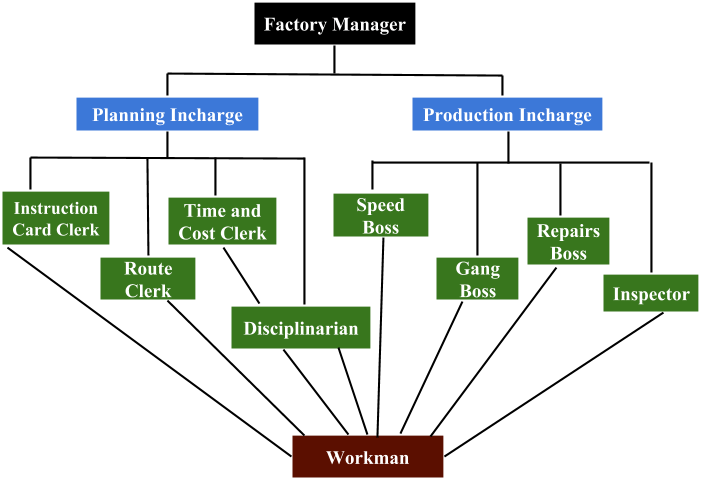
Scientific management may be regarded as a set of scientific techniques that are supposed to increase the efficiency of an enterprise. Under scientific management, the selection of men, machines, materials is made by a scientific approach. Here, all the organizational activities are performed by rationality and proper discipline, this scientific management is a logical approach towards the solution of management and it assumes that the methods of scientific inquiry, analysis and experimentation can be applied to the activities of managers. It means approaching the problems of management in the manner and spirit of scientific research using tools such as definition, analysis, experiments, etc. It is ‘Scientific Management’ as opposed to ‘Traditional Management’ based on the rule of thumb, trial, error. As said by Peter F. Drucker “The cost of scientific management is the organized study of work, the analysis of work into its simplest elements and the systematic management of the worker’s performance of each element”.
We can summarise scientific management as:
Scientific study and analysis of work.
Scientific selection and training of employees.
Standardization of raw material, equipment, and working conditions.
Reasonable remuneration to employees.
Scientific management is an economical method that makes the best possible use by integration and coordination of available resources.
MAIN CHARACTERISTICS OF SCIENTIFIC MANAGEMENT
1. A definite plan: To achieve predetermined definite objectives, management needs a definite plan, and the plan should be goal-oriented.
2. A definite objective: In scientific management, every organization has to establish the basic objectives and efforts are to be made by applying physical and human resources to achieve these predetermined objectives.
3. A set of rules: To make scientific management more effective, a set of rules are framed and these sets of rules are tested and verified as regards their effectiveness in the real business situations by a group of persons.
4. Economy: The main aim of scientific management is to achieve the economy of time, money, and labor, and the technique of economy is used for producing maximum at a minimum cost.
5. Scientific analysis and experiment: Before starting any work, the utility, effectiveness, and suitability of plans are to be tested and analyzed, and thus by scientific analysis and experiment, we can choose the best course of action.
6. Increase in efficiency: The techniques of scientific management help in increasing the efficiency of workers and new techniques and improved tools are used for increasing efficiency.
7. Time study: Time study is concerned with labor productivity and according to it, an estimate is made of the amount of work required to be done to perform a job.
8. Cooperation: In the present competitive situation, efforts should be made to establish a cordial relation between labor and capital. Cooperation is essential for efficient management and group efforts for group benefit can be the active cooperation of each individual.
It is good to see that the Supreme Court just recently on June 18, 2020 in a latest, landmark and laudable judgment titled Subhash Sahebrao Deshmukh vs Satish Atmaram Talekar And Others in Criminal Appeal No. 2183 of 2011 has reiterated yet once again that an accused person has the right to be heard before a court hearing a revision petition against the order of dismissal of complaint filed against him. It would also not be fair to not give an accused an opportunity to be heard as it would also be contrary to the famous legal maxim and latin phrase ‘Audi alteram partem’ which means “listen to the other side” or “let the other side be heard as well”. Very rightly so!
To start with, this noteworthy judgment authored by Justice Navin Sinha for himself and Justice Indira Banerjee sets the ball rolling by first and foremost pointing in para 1 that, “The petitioner, an accused in the complaint case, is aggrieved by the refusal of the High Court to interfere with the order of the Additional Sessions Judge, setting aside the order of the Special Metropolitan Magistrate, dismissing the complaint under Section 203 of the Code of Criminal Procedure (hereinafter referred to as “the CrPC”).”
While elaborating in detail, it is then postulated in para 2 that, “Learned counsel for the appellant submits that respondent no. 1 filed a complaint under Section 156(3) Cr.P.C. alleging offences under Sections 420, 467, 468, 120-B, 114 and 34 of the Indian Penal Code. The Magistrate called for a report from the police. The police, after investigation submitted report that the allegations were false. Notice was issued to the complainant, who then filed a protest petition seeking an order of cognizance and issuance of process. The Magistrate, after hearing the respondent and not being satisfied dismissed the complaint. Aggrieved, the complainant preferred a criminal revision before the Additional Sessions Judge in which the appellant was impleaded as a party respondent. No notice was issued to the appellant. The revision application was allowed and the matter remanded to the Magistrate. Relying upon Sections 399 and 401(2) Cr.P.C, it was submitted that no order to the prejudice of the appellant could have been passed without hearing him after dismissal of the complaint. The Additional Sessions Judge erred in passing the remand order in exercise of revisional jurisdictional placing reliance on Section 398 Cr.P.C. to direct further investigation by the Magistrate. The High Court further erred in holding that no opportunity of hearing was required under Section 398 Cr.P.C. if the direction for further inquiry was being passed after dismissal of the complaint as opposed to a discharge. Effectively, the complaint case was therefore restored to the prejudice of the appellant. Reliance was placed on Manharibhai Muljibhai Kakadia and another vs. Shaileshbhai Mohanbhai Patel and others, 2012 (10) SCC 517.”
As it turned out, the Bench then observes in para 3 that, “Learned counsel for respondent no. 1 submitted that the dismissal of the application under Section 156(3) Cr.P.C. at the pre-cognizance stage does not vest any right in the accused to be heard at the stage of remand in revision for further inquiry. Merely because the Magistrate may have called for a police report, it does not tantamount to taking cognizance. There has been no dismissal of the complaint under Section 203 Cr.P.C., entitling the appellant to be heard in the revisional jurisdiction.”
Needless to say, after hearing both the sides, the Bench then holds in para 4 that, “We have considered the submissions on behalf of the parties. The complaint filed by respondent no. 1 before the Magistrate under Section 156(3) Cr.P.C. alleged that by cheating and forging his signatures on blank papers, he had been shown as the sole proprietor of M/s Shivam Wines, when in fact he was a partner and his resignation from the partnership had also been forged. Consequentially, in the recovery suit filed by the Bank leading to the grant of recovery certificate, his private property came to be auctioned.”
To put things in perspective, the Bench then states eloquently and elegantly in para 5 that, “The Magistrate, under Section 156(3) Cr.P.C. directed the police to register a criminal case, investigate and submit police report in 90 days. The police after investigation submitted a report dated 05.04.2006 under Section 173(2) that the accusations were false. The Magistrate did not consider it necessary to proceed under Section 173(8) and issued notice to the complainant as to why the final report by the police be not accepted. The respondent filed a protest petition which was registered as a complaint case. The Magistrate, after hearing the respondent, and not being satisfied, dismissed the complaint under Section 203 Cr.P.C. on 13.07.2006. It was therefore not a rejection of an application under Section 156(3) Cr.P.C.as was sought to be urged on behalf of the respondent. The Additional Sessions Judge, in a revision preferred by the respondent against the dismissal of his complaint, set aside the dismissal order on 08.10.2007, effectively restoring the complaint case arising out of a protest petition and directed further inquiry by the Magistrate. The High Court declined to interfere with the order.”
Be it noted, it is then aptly envisaged in para 6 that, “In B. Chandrika vs. Santhosh, (2014) 13 SCC 699, this Court observed as follows:
“5. The power of the Magistrate to take cognizance of an offence on a complaint or a protest petition on the same or similar allegations even after accepting the final report, cannot be disputed. It is settled law that when a complaint is filed and sent to police under Section 156(3) for investigation and then a protest petition is filed, the Magistrate after accepting the final report of the police under Section 173 and discharging the accused persons has the power to deal with the protest petition. However, the protest petition has to satisfy the ingredients of complaint before the Magistrate takes cognizance under Section 190(1)(a) CrPC.”” There can be no denying or disputing it!
Most significantly, it is then very rightly and remarkably held by the Apex Court Bench in para 7 without mincing any words that, “The restoration of the complaint by the Additional Sessions Judge was undoubtedly to the prejudice of the appellant. The right of the appellant to be heard at this stage need not detain us any further in view of Manharibhai (supra) observing as follows:
“53…… We hold, as it must be, that in a revision petition preferred by the complainant before the High Court or the Sessions Judge challenging an order of the Magistrate dismissing the complaint under Section 203 of the Code at the stage under Section 200 or after following the process contemplated under Section 202 of the Code, the accused or a person who is suspected to have committed the crime is entitled to hearing by the Revisional Court. In other words, where the complaint has been dismissed by the Magistrate under Section 203 of the Code, upon challenge to the legality of the said order being laid by the complainant in a revision petition before the High Court or the Sessions Judge, the persons who are arraigned as accused in the complaint have a right to be heard in such revision petition. This is a plain requirement of Section 401(2) of the Code. If the Revisional Court overturns the order of the Magistrate dismissing the complaint and the complaint is restored to the file of the Magistrate and it is sent back for fresh consideration, the persons who are alleged in the complaint to have committed the crime have, however, no right to participate in the proceedings nor are they entitled to any hearing of any sort whatsoever by the Magistrate until the consideration of the matter by the Magistrate for issuance of process. We answer the question accordingly. The judgments of the High Courts to the contrary are overruled.””
Before parting, the Apex Court Bench then finally held in para 8 that, “The impugned orders dated 6.03.2009 and 08.10.2007 are held to be unsustainable in their present form. They are therefore set aside. The matter is remanded to the Additional Sessions Judge, Greater Mumbai to hear the revision application afresh after notice to the appellant also and then pass a fresh reasoned and speaking order to his satisfaction. The appeal is allowed.” Very rightly so! It goes without saying that this has to be complied with in totality!
To sum up, the Apex Court Bench has yet once again very rightly reiterated the clear legal position on this. The accused person is certainly entitled to be heard in a revision petition against the order of dismissal of protest petition. It cannot be disputed that the accused person certainly cannot be somehow or the other condemned unheard! Very rightly so!
It is said to be unlucky for men to wear the Koh-i-Noor diamond owing to its long and bloody history. Mughal was found is stone. Kohinoor means the mountain of light, and Its name is derived from the Persian word Koh-i-Noor. Mohammed shah Rangila has the master of this precious diamond in the 18th century. Its magnanimous traits and size make it the most desirable precious stone. Kohinoor was originally 793 carats when uncut which makes the biggest diamond in the world. Mined in Kollur Mine, India, during the period of the Delhi Sultanate, there is no record of its original weight – but the earliest well-attested weight is 186 old carats (191 metric carats or 38.2 g). The diamond was part of the Mughal Peacock Throne. It changed hands between various factions in south and west Asia, until being ceded to Queen Victoria after the British annexation of Punjab in 1849.
Originally, the stone was of a similar cut to other Mughal-era diamonds, like the Darya-i-Noor, which are now in the Iranian Crown Jewels. In 1851, it went on display at the Great Exhibition in London, but the lackluster cut failed to impress viewers. Prince Albert, the husband of Queen Victoria, ordered it to be re-cut as an oval brilliant by Coster Diamonds. By modern standards, the culet is unusually broad, giving the impression of a black hole when the stone is viewed head-on; it is nevertheless regarded by gemologists as “full of life”.
in the past, there are many kings and the Mughals fought for Kohinoor, firstly Babur, the Turco-Mongol founder of the Mughal Empire, wrote about a “famous” diamond that weighed just over 187 old carats – approximately the size of the 186-carat Koh-i-Noor. Some historians think Babur’s diamond is the earliest reliable reference to the Koh-i-Noor. According to his diary, it was acquired by Alauddin Khalji, the second ruler of the Khalji dynasty of the Delhi Sultanate. Babur received the diamond in 1526 as a tribute for his conquest of Delhi and Agra at the Battle of Panipat. Shah Jahan, the fifth Mughal emperor, had the stone placed into his ornate Peacock Throne. In 1658, his son and successor, Aurangzeb, confined the ailing emperor to Agra Fort. While in the possession of Aurangzeb, it was allegedly cut by Hortense Borgia, a Venetian lapidary, reducing the weight of the large stone to 186 carats. For this carelessness, Borgia was reprimanded and fined 10,000 rupees.
In 1739 invasion of Delhi by Nadir Shah, the Afsharid Shah of Persia, the treasury of the Mughal Empire was looted by his army in an organized and thorough acquisition of the Mughal nobility’s wealth. Along with millions of rupees and an assortment of historic jewels, the Shah also carried away the Koh-i-Noor. After Nadir Shah was killed and his empire collapsed in 1747, the Koh-i-Noor fell to his grandson, who in 1751 gave it to Ahmad Shah Durrani, founder of the Afghan Empire, in return for his support. One of Ahmed’s descendants, Shuja Shah Durrani, wore a bracelet containing the Koh-i-Noor on the occasion of Mountstuart Elphinstone’s visit to Peshawar in 1808. A year later, Shuja formed an alliance with the United Kingdom to help defend against a possible invasion of Afghanistan by Russia. He was quickly overthrown but fled with the diamond to Lahore, where Ranjit Singh, founder of the Sikh Empire, in return for his hospitality, insisted upon the gem being given to him, and he took possession of it in 1813.
Ranjit Singh had the diamond examined by jewelers of Lahore for two days to ensure that Shuja had not tricked him. After the jewelers confirmed its genuineness, he donated 125,000 rupees to Shuja. Ranjit Singh then asked the principal jewelers of Amritsar to estimate the diamond’s value; the jewelers declared that the value of the diamond was “far beyond all computation”. Ranjit Singh then fixed the diamond in the front of his turban and paraded on an elephant to enable his subjects to see the diamond.
On 29 March 1849, following the conclusion of the Second Anglo-Sikh War, the Kingdom of Punjab was formally annexed to Company rule, and the Last Treaty of Lahore was signed, officially ceding the Koh-i-Noor to Queen Victoria and the Maharaja’s other assets to the company. Article III of the treaty read: “The gem called the Koh-i-Noor, which was taken from Shah Sooja-ool-moolk by Maharajah Ranjeet Singh, shall be surrendered by the Maharajah of Lahore to the Queen of England. On 1 February 1850, the jewel was sealed in a small iron safe inside a red dispatch box, both sealed with red tape and a wax seal and kept in a chest at Bombay Treasury awaiting a steamer ship from China. It was then sent to England for presentation to Queen Victoria in the care of Captain J. Ramsay and Brevet Lt. Col F. Mackeson under tight security arrangements, one of which was the placement of the dispatch box in a larger iron safe. They departed from Bombay on 6 April on board HMS Medea, captained by Captain Lockyer.
Tribal Affairs Minister Arjun Munda has emphasized on the need to create more awareness about Sickle Cell disease in the county. Addressing a webinar ‘National Sickle Cell Conclave’ in New Delhi to mark the World Sickle Cell Day, Mr Munda said, government is committed to address and find a solution to deal with Sickle Cell disease in India.
He said, in order to collect real time data and provide relevant information related to Sickle Cell, the government has launched a new portal which will act as catalyst in creating awareness.
The portal will have real time data through a dashboard along with registration facility, information about the disease and various government initiatives undertaken. The Minister said, today, people in the rural areas are about COVID19 which happened due to increased awareness towards the disease. He said, the Ministry has also initiated Action Research project under which Yoga dependent lifestyle should be promoted to reduce the complications in the patient suffering from this disease.
Union Minister Dr Jitendra Singh today received COVID feedback from private medical practitioners, from across the country. In over one-and-half hour long Webinar, leading physicians and specialists from various streams of medical science offered their inputs from different Indian cities including Chennai, New Delhi, Mumbai, Nagpur, Patna and Kota.
Presiding over the meeting, Dr Jitendra Singh complimented the medical fraternity of the country for having commendably lived up to the occasion and successfully fought the war against Corona. He said, the medical fraternity as well as health infrastructure of India had proved to the world during this time of its inherent potential and capacity to reorient itself at short notice and successfully discharge its responsibilities to the community.
Dr. A Muruganathan, who moderated the Webinar, spoke about the need to popularize the use of AarogyaSetu and focus on Indian models of prevention and subion based health insurance practised in some of the hospitals, particularly in South India.












You must be logged in to post a comment.