Public Policy relevancy with Social welfare Programmes

Source: Shutterstock

Public Policy is new tool of Government to solve socio economic problems through several policies such as Agriculture Policy, Labour Policy, Health Policy, Education Policy, Wage Policy, Industrial Policy and Foreign Policy etc. Government view public policy as a dependent variable and study as to how society is evolving and Political system shaping the nation.

The field of public policy has emerged comparatively in beginning as traced in early 1950s. The concept of public policy was originated in 1951 from the publication of Harold Lasswell. According to Thomas R Dye, Public Policy is what Government will choose to do or not to do. In indian context, public policy could be government rules and Programmes in the form of political system of laws, ordinance, court decision, executive orders, decisions or even unspoken understanding  of what is to be done.

Paul Appleby, the essence of public administrative decision policy defined as a purposed course of action of an individual a group, an Institution or government to realize a specific objective or purpose, within a given environment. The process of public policy flows both top to bottom and bottom to top or even simultaneously. The policy process is viewed from higher level as execution of Policy and viewing meta Policy meaning  progressive.

After independence, India did not carry a specific structural path for economic development. It was decided that economic development must be based on social, political growth that transmutes human advancements. India adopted the Socio – economic development model in which major areas were industries and agriculture. Planning commission (now NITI Aayog) for the purpose of development initiatives adopted in a five year plan as a major development plan. structure policies Public policy developed as academic pursuit in the 1950s. However, Public Policy was very much evident in 1940, stimulating Government activities and academic organizations. Study of government, policy, Social Science involves political Science, public administration, economics and management.

Dimock stated public policy as “deciding at any time or place what objectives and substantive measures should be chosen in order to deal with particular problems”. Public Policy process structure to maximize and utilize all resources to overcome the catastrophic events. Public Policy is a continuous process, furiously working towards  acquiring best outcomes. Righteous and accurate conditioning helps to bring desired aims. The process requires transparency, decentralization, and effective policy implementation. Public Policy Process is significant to change nation economic, social, and political representation especially in the Case of developing nations.

According to Chandler and Plano, treated public Policy as ” the strategic use of resources to alleviate national problems  or governmental concerns”. Freeman and Sherwoods stated that it is the Public answer to the interest in refining the circumstances. Robert linebewy  emphasized on “it is what governments do and fail to do for their citizens”. Anderson expresses it,” policy is being made as it is being administered as it is being made”.

 Understanding of Public Policy

Source: iass.potsdam.de

 The Public Policy process is a kind of Physics  equation that if finding a small error will cost the huge problem, also diffuses the whole processing mechanism. Public policy processes require pointed manifestation at each level. Hogwood and Gunn (Policy Analysis for the Real World, 1984) concluded nine vital Stages in the policy process: Agenda Setting, object screening issue defining , forecasting alternatives, objectives & priorities, policy implementation, monitoring and control, policy maintenance, succession and termination, these all required for successful policy. As we are aware, policy making is a complex and dynamic strategy, it requires certain tools to resolve the real world problem of economic, financial, economic, social problems. Public Policy enacted by the government or its executives with the help of civil Societies, media, and pressure groups.

 In the Context of public policy process Lindblom stressed on a highly relative and plasticity decision making system characterised by compromise, incrementalism and continual adjustment. Public policy process is conceptualized as in sequence or stages ( Benson, Jordan, 2015). There are (1) sequence follows as – i) Problem emergence 2) agenda setting 13) Consideration of policy options, &) Decision making 5) implementation 6) evaluation (Jordan and Adelle, 2012).

A policy can be simple or complex, explicit or implicit, discretionary or detailed, private or public qualitative and quantitative. Government does not set advisory principles;  it is the Supreme Court who decides and provides new interpretations of the articles of constitution to curve out the new Policy.

Nature of public policy covering wide portion of its activities such as socio- economic development, women empowerment, child labour, equality, education and so on. Nature of Public policy foremost needs Policy making closely related to decision-making. Decision making includes an identification of a problem, sharp analysis, and the ability to see alternatives. Policies have specific goals, It is absolute to expect a policy to indicate the direction towards. where actions are required. The choices of policies or its objectives are frequently mesmerized. Thus, goals and objectives depend on the values of the policy makers. Planning or formulation is a key component to move forward in the public policy process. Administrators must maintain a planner to know the portion of resources, investments because goals cannot be achieved without having proper planning. Policy Analysis is most significant to rectify any problem in process; it is a technique to use in Policy Process. Basically used for problem assessment and monitoring. Before the decisions, Similarly, Policy Management is also familiar with implementation. It deals with policy making and policy preparation process, it ensures it is producing good quality policies.

 Thus, goals and objectives depend on the values of the policy makers. Planning or formulation is a key component to move forward in the public policy process. Administrators must maintain a planner to know the portion of resources, investments because goals cannot be achieved without having proper planning. Policy Analysis is most significant to rectify any problem in process; it is a technique to use in Policy Process. Basically used for problem assessment and monitoring. Before the decisions, Similarly, Policy Management is also familiar with implementation. It deals with policy making and policy preparation process, it ensures it is producing good quality policies.

 Policy management should be considered as a loose point or giving no importance, it is an Icebreaker of Public Process, if you assess anything wrong at this stage, there will be high chance to “trash in” the policy. That is why policy analysis and policy management is interdependent. 


How India Generate Money for the Growth of Economy

Source: VectorStock

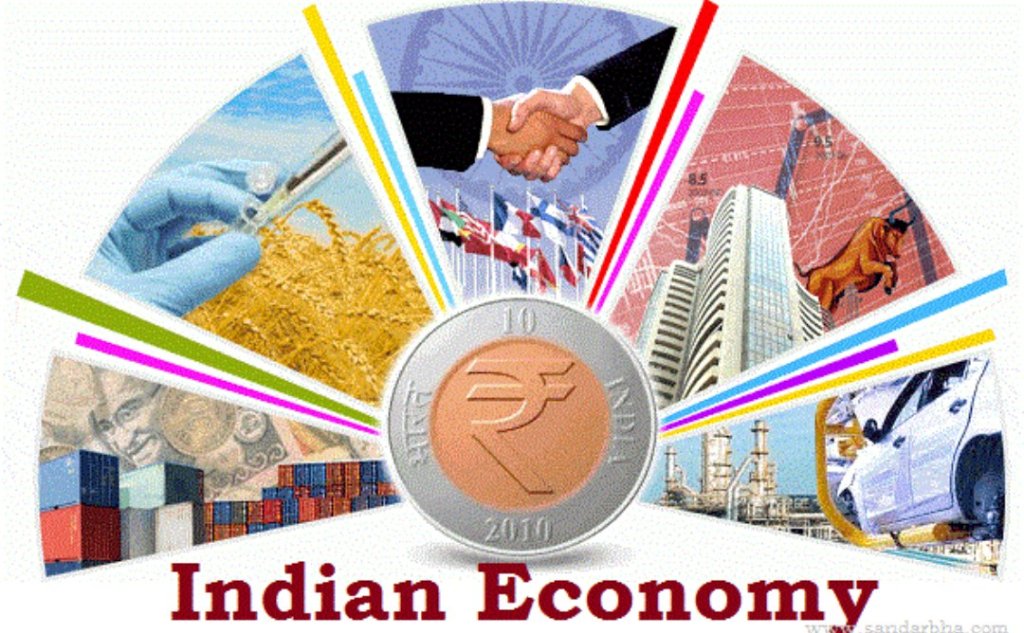
Government of India adopted mixed economy strategy after the independence from British Colonialism. A mixed economy is a system which comprehend the blending elements of market economies with the elements of planned economies with the hint of free market with state intervene such as with private enterprise and public enterprise.

A mixture of markets with state intervention referring to capitalist market economies with strong regulatory oversight, intervening policies and governmental provision of public services.”  This type of economy is apolitical in nature and holding the same substance of private and public enterprise.

In Western world, capitalist economy containing more dominance of private ownership with profit seeking enterprise and accumulation of capital as consider it fundamental driving force for the growth. In such system, markets are tend to flatulent between government and regulatory control which influence indirect macroeconomics influence through fiscal and monetary policies. India has mixed economy culture since independence. The second Five Year Plan infused the economy of socialist pattern for India. Planned Development yielded the socialist strategy for economic planning and Development of public sector. As India adopted mixed economy, Economic planning associated with capitalistic framework. Indian economy augment in Monopoly trends support mixed economy, predominance of

Source: Economic Times

markets mechanism which create the prevalence of markets for goods; this determined the demand and supply created private ownership of production.

Since the mid 1980s, India has opened up its markets through economic reform. Several industrial policies, Indian economy provided space for private sector but before 1980 the participation of private sectors in economy was very low. Indian economy started to become mixed economy in 1980s and India’s International trade started at large scale.

There are few reasons that why India inclined towards mixed economy and got the base of liberalization, pravitalisation and globalization and switching from agrarian economy. The low growth rate of the economy of India before 1980 which was stagnant from 3 to 3.5% from 1950s to 1980s while per capital income averaged 1.3%. At the same time, Pakistan grew by 5% Thailand by 9%, South Korea by 10%. Before 1990s, only four and five working license were given to steel, electrical, power and communication. License owners large enterprises.

A huge power sector emerged as state owned enterprises made large losses. Income taxes and custom department become inefficient in checking tax evasion. Infrastructure investment was poor because of the public sector monopoly. License Raj established the irresponsible bureaucracy and corruption in the enterprises and corruption flourished in this system.

Source: PaperTyari

In 1990, Prime minister PV Narasimha Rao, with Finance Minister Manmohan Singh initiated the Economic Liberalization in 1991. Reforms vanished license Raj, reduced tariffs and interest rates and ended many public monopolies, allowing Foreign investment in many sectors. Through the Economic Reform of 1991, Indian economy introduced liberalization privatization and Globalization as part of Structural Programme.

Liberalization has equated a change of reorganization of institutional space; it is a relationship of economies in the direction of market principles. Liberalization create jobs, increase competition, Private companies buys land and develop cities.

Privatization reduce the government’s political interference. It improve the efficiency of profit incentive; improve operational efficiency in order to reduce their costs and improve on profits. Produce good quality products and provide better services and reduce wastages and utilize the resources.

Globalization encourages producers and consumers to benefit from division of labor. More free market movement between countries. Gains from the sharing of ideas skills technologies across national borders. Opening up of capital markets allows developing countries to borrow money to over a domestic savings gap. Increased awareness among consumers of inequality and climate change. Competition pressure from Globalization may improved the governance.

Actions of State and Non State Actors in Disaster Management

Source: lawwn

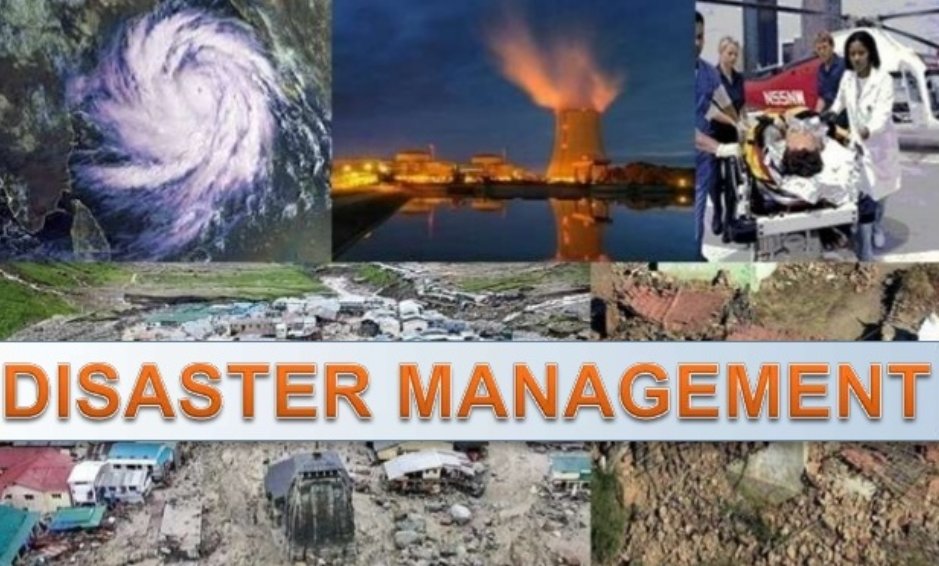
In contemporary time, Managing disasters is a highly dynamic, complex  and multifaceted affair. It is about to coordinated and contributions by a broad range of actors, including states, international organizations, non – governmental organizations, humanitarian organization, charities, private philanthropists, companies and affected local communities.

State Actors must perform some duties related to provide legitimacy to the operation, ensure coordination of various actors, provide information to needy agencies for Operation purpose, determine sufficient deputation of para military yo ensure smooth rescue and relief operation. Proper post disaster rescue and relief operation.

Contribution of Specialized Agencies in Disaster Management

There are several agencies apart from NDRF that play an significant role in Disaster management and hence they maintained in ‘standard operating procedure’ and prescribed definite role.

Civil Defence performance of some or all of the humanitarian tasks intended to protect the civilian population against the dangers and to help to recover from immediate effects of hostilities or disasters and also provide the conditions necessary for it’s survival.

Source: National Health Portal

Management of blackout measures; Rescue, medical services, including first aid and religious assistance, fire fighting are necessary components. Decontamination and take protective measures, emergency accommodation, emergency assistance in the restoration and repair indispensable public utilities. Assistance in preservation of essential objects for survival and complementary activities necessary to carry out any task.

Civil Defence Act 1968, is organized in areas and zones which are tactically and strategically considered vulnerable from the point of aggressive opposite side. Civil Defence activities are restricted to 225 categorized towns spread over 35 States/Union Territories. Civil Defence is primarily organized on voluntary.

The immediate response of any calamity comes straight to Police station. Their immediate help and responsibility is to communicate the information and Provide rescue efforts with whatever resources are available. In disaster management if police is first responder they need to fully equipped with effective resources. Police should involved in the preparation of the local Crisis/Disaster Plan.

The role of home guards is to serve as an auxiliary to the police in the maintenance of internal security, help the community in any kind of emergency such as fire, cyclone, earthquake, epidemic etc help in maintenance if essential services, promote communal harmony and assist the Administration in protecting weaker sections, participation in socio economic and welfare activities and perform Civil Defence duties.

Home guard facility not available in Kerala. Home guards act, rules of the states are the same. They are recruited across the section of the society whoever available for betterment of community. Home guards duties like any other public servant but not in the case of Civil Defence both are like voluntary corps.

Fire services have been set up by the state government with Union government providing technical and financial support. Fire services play prominent role in all types of disaster and fire related crisis. There is an urgent need to train and equip the fire to handle all types of crisis in any multi hazard crisis.

Armed forces have invariably played an important role in rescue and relief operation in all major disasters in the country. The contribution of Specialized NDRF battalions would reduce the pressure on the armed forces. Availability of highly trained dedicated and we’ll equipped human resources and their capability to play a vital role in rescue and relief during all major crises. They should be mobilized for creating a voluntary disaster task force at the local level.

 Contribution of Non State Actors

Non State Actors are those who are first respondents in case of Disaster and considered to perform few tasks like ensuring dissemination of information to the ground level. Promotion of government strategies and policies to counter disaster. Ensure community participation, the corporate or private player must come forward to support the victims financially with the use of corporate social responsibility.

Voluntary services like distributing food, clothes, helping the state in proper rehabilitation work. Full understanding of the disaster and subsequent policies of livelihood of survivors. To aware of human rights to help the survivors without any partisan view.

India’s Disinvestment Policy a New Economic Policy

Source: jagranjosh

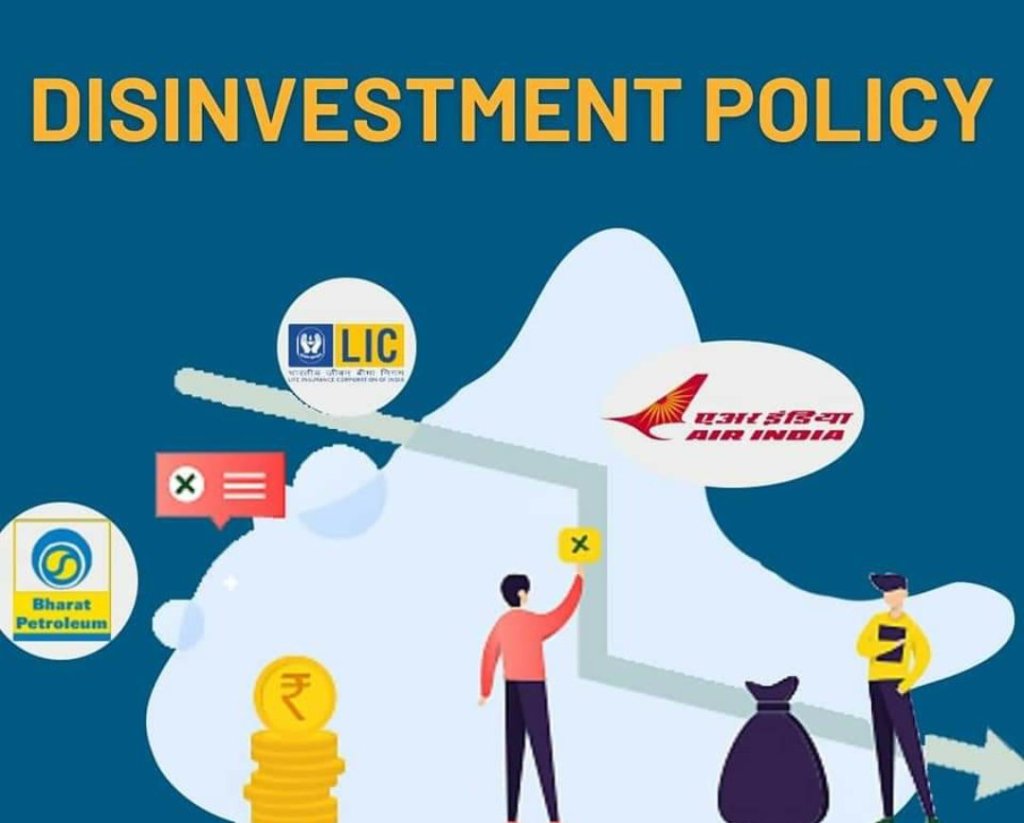
Disinvestment is a philosophy of new economic policy of India. It is complete denationalization of assets. India adopted Disinvestment of government’s equity in PSUs and the opening up of closed areas to private participation. In recent years, the issue of privatization have been brought to the forefront due to the large scale fiscal deficits that the government has been facing.

The New Industrial Policy announced on 24th July, 1991, was an attempt to meet conditionalities imposed by IMF  and World Bank in exchange of loan. The new economic policy was increasing the role and importance of the private sector in Industrial economy of the country and various measures were announced to achieve this purpose.

In August 1996, a five member Disinvestment was set up under the chairmanship of G V Ramakrishna former planning commission member and former chairman of SEBI with an aim to introduce mass ownership and promoting worker’s shareholding. The process was expected to eventually transform the existing state owned enterprises into public owned companies. Before measure the full fledged Disinvestment strategy; there are few terms of reference for the commission as to draw long term investment programme within 5 to 10 years for PSU referred it. To determine the extent Disinvestment in each PSU;prioritize PSUs referred to it by the core group terms if the overall disinvestment programme.

Source: Business Standard

To supervise the overall sale process and take decisions on the instrument as well as pricing. To select the financial advisors for the specified PSU to facilitate the investment process. Ensure the appropriate measures are taken during the investment process to Protect the interest of the affected employees.

Objectives of Disinvestment

The following objectives were stated in July 1991 are :-

• To improve overall economic efficiency

• To reduce fiscal deficit

• To diversify the ownership of PSU for enhancing efficiency of individual enterprises.

• To reduce the financial burden on the government.

• To improve public finance.

• To encourage wider share of ownership.

• To introduce, completion and market discipline.

• To raise funds for technological upgradation modernization and expansion of public sector enterprises

Rangarajan Committee on PSU Disinvestment, Krishnamurthy reconstituted in November 1992 with C Rangarajan as its chairman. To devise criteria for selection of public sector units for disinvestment during1992 – 1993. Advise on limits on the percentage of equity to be sold respect of each unit. To indicate the modus operandi of investment. Lay down criteria for valuation of equity shares of PSUs and make other recommendations related to disinvestment.

Methods of Disinvestment

The policy on Disinvestment has evolved considerably from the time of industrial policy of 24th July, 1991 stated that in order to raise resources and encourage wider public participation, a part of the government’s shareholding in the public sector would be offered to mutual fund, financial institutions, general public and workers.

When minority shareholding of the central government in 30 individual CPSEs was sold to select financial institutions. On recommendation of Rangarajan Committee in 1993 scope for investment continue to increase and evolve over the time To meet the targets traditional modes like IPO (Initial Public Offer) and FPO (Follow on Public Offer).

The government revived schemes like strategic sakes, made significant. Refinements in order to maintain sale through auction methods and over the time introduced new ideas like ETF for CPSEs to broader base choice alternatives available for Disinvestment.

Methods that adopted in 2017 – 2018 for investment

• Offer for Sale (OFS) the kind of sales shares by promoters through stock exchange mechanism adopting auction routes.

• Initial Public Offering are listed in CPSE or sales by government out of shareholding.

• Strategic Sale are substantial portion of the Government shareholding of a Central Public Sector Enterprise (CPSE) along with transfer of management control. Buy their own share by cash rich PSUs. Institutional Placement Program (IPP) only Institutions can participate.

• CPSE Exchange Traded Fund Disinvestment through ETF routes allows sale of government of India stake in various CPSEs across diverse sectors through a single product offering.


Indian Economy after independence

Source: jagranjosh

Indian economy at the time of Independence was in crucial state. This situation occurred due to the British Colonialism. After independence the Government changed plan for economic growth. The area of attention was shifted from agriculture to industry.

The growth of public enterprise generate employment and reduce poverty. In 1991, a revolution came into place in terms of liberalization, privatization and globalization that shaped the face of Indian economy. The Indian have the lowest per capital income and also the lowest consumption in the world.

The low income level consequent into low saving and thus small or no investment which end with low capital formation. Therefore, the dangerous cycle of poverty running in the country. The First Five Year Plan stated that the Indian economy remained more or less stagnant during colonial regime, because the basic conditions of economy was continuously remain the same.

The impact of modern industrialism in the later half of the 19th century was emerged through import of machine made goods from abroad that impact adversely on the traditional pattern of economic life, however unable to create the spark for Development. The conditioning of state led to decline of productivity especially those engaged in agriculture, the adverse effects. The consequence was a continuously increasing of employment. Hence, there could be no economic progress.

At the time of Independence 80% of population living in rural areas were engaged in agriculture for subsistence purposes; using traditional low productive technique for agriculture. The underdevelopment of Indian economy is reflected in it’s unbalanced occupational structure. Illiteracy was 84% , Communicable disease were widespread due to the absence of a good public health services, mortality rate was very high.

Agricultural activity contributed nearly 50% to Indian’s National Income. Mines, factories and small craftsmen work contributed only one – sixth, even lower than the numbers for trade, transport and communication. After independence, the government concern in the sphere of economic policy was to control persistent and severe inflationary pressure and to alleviate shortage of essential food items, which was increased by the partition of the country.

The industrial Policy Resolution of 1948 stamped as fundamental departure from earlier policy of laissez faire. Finally, the concept of planning Development programme under the auspices of the central government, was accepted and the planning commission was set up in March 1950 to make an assessment of the material capital and human resources of the country and to formulate a plan for the most effective and balanced utilisation of the countries resources.

India embarked upon the programme of planned economic development of the country with the formulation of first year plan that covered the period of 1951 – 1956. The second plan that followed was form 1956 – 1961 and third plan from 1961 to 1966. The other plans followed there after. The Eleventh Five Year Plan has been launched from 2007 – 2012; Twelfth Five year Plan was started from 2013 – 2014.


Source: Deccanherald

The first five year plan provided an inclusive general analysis the nature of the country’s Developmental problem and various options for mobilising resources and achieving Development with more equal distribution. There was special emphasis on the role of mass mobilization of idle rural labour and land reform. The plan optimistically project that saving and investment as a proportion of National Income would rise from an estimated 5 – 6% in the early 1950 to 20% by 1968 – 69.

S Chakravarti  had mentioned some shortcomings of Indian economy. Such as

• The basis cause of development was seen as being an acute deficiency of material capital, which prevented the introduction of more productive technologies.

• The limitation on the speed of capital accumulation was seen to lie in the low capacity to save.

• It was assumed that domestic capacity to save and raised by means of suitable fiscal and monetary policies. There were structural limitations preventing conversion of saving into productive investment.

• The inequality in income distribution was considered to a bad thing, a precipitate transformation of the ownership of productive assets was held to be detrimental to the maximization of production and savings.

• Agriculture was subject to secular diminishing returns, industrialization would allow surplus labour currently under employed in agriculture to be more productively employed in industry.


How Development Administration introducing socio economic transformation

Source: leverage.edu

The nectar of development administration is to bring changes through integration, organized and properly directed governmental action. The Administrative shift concern towards development objectives the researchers and practitioners of Public Administration forced to conceptualize the developmental conditions and to bridge the gap in administrative theory.

The term development administration was first coined in UL Goswami an Indian scholar’s article entitled ‘The structure of development administration in india’ published in 1955. George Gant, an american scholar is regarded as the father of development administration, Edward Weidner, Riggs , Ferrel Heady were major contributor to this field.

Conceptual thinking in this area is notably available in the writing of a group of American experts on comparative administration such as Merle Fainsod, Montgomery and Diamant. The writing of these scholars not just talk about foundation not Development Administration but also contributed greatly to its formulation and growth. Emergence of concept of developing countries in Asia, Africa and Latin America due to the liquidation of colonialism and imperialism. Extensive american economic and technicalassistance plans to newly emerged developing countries. Developmental schemes in the developing countries through multilateral technical aid and financial assistance and established Comparative Administration Group.

Source: futurelearn

After the World War Second, countries became politically independent, they have been facing political problem, they have been confronting immense problem if poverty, illiteracy, poor health, low agricultural productivity, lack of industrial development and socio political instability. The immediate action before these countries is to bring about socio economic transformation and nation building through change.

In order to achieve the objectives, the developing countries have under taken various Departmental activities in the economic and the social sphere of society. The term Development Administration is used to refer to the directly government led effort to intervene in the process of socio economic transformation.

The new administration required for the government in both quantitatively and qualitatively difference from the traditional administration. Development Administration is a concept that aim to strengthen the structure and function of developing countries in post world War II.

Objectives of Development Administration are conclude the innovative strategies for the development. Development Administration emphasis on development at the grassroot level. Development has to be need oriented and require self reliant process. It stress on social development and human capital as a major resource. Development has to be viewed not merely as a technological problem but found ideological ground.

Profound and rapid change in order to establish a distriction in  social order. Recognizing and highlighting the unity, effective and efficient use of scarce resources. Creation of a politics administration environment which is oriented towards securing basic needs  of the population. Freedom of administrative machinery to express its values and beliefs without fear or favour on programmes and projects.

The capacity of an administrative system to take decisions in order to meet the increasing demands coming from the environment with objective of achieving larger political and socio economic goals. Specialization and division of tasks and in the professionalism is personnel. Increase in administrative capability and capacity. A pattern increasing effectiveness in the optimum utilization of available resources and increase the Governance capability and capacity. Modernising the bureaucracy by external inducement and transfer of technology and training is necessary.

Development Administration of developing nation’s is rooted in the field as most of the developmental activities take place at field level. Emphasis on decentralization of authority which enables the different field units. Administration encompasses contribution from cultural anthropology and sociology. A wider perspective than the conventional approach based on organizational reforms. Development administration lays emphasis on self reliance and participation of people in the development activities. It stresses decentralized, responsive and accountable management of Developmental plans, policies and programmes.


How Mental Health Counseling help Gender Based Violence Survivor

Source: Alignable

Gender-based violence enormously impacts the mental health of a person. In this case, mental health counseling has a significant role to determine support to gender based violence survivors. Post-violence survivors possibly suffer with depression, anxiety and post traumatic stress disorder. Accurate role of mental healthcare prevents the increasing number of GBV; to reduce negative thoughts. Countries having Gender Based violence prevention based on rigid public health models that do not carry mental health components, though GBV must require concepts, competencies and standards of mental health to interdict the GBV. Inequality of gender, gender stereotypes & prejudice, difference of femininity and masculinity capabilities,  Upbringing in patriarchal society or mindset aggression, male ego are several elements increasing insensitivity and hideousness and intricate to control the GBV.

Source: Forbes Health

1) Mental health professionals well aware of how to help and support the survivors,  what are their emotional & psychological requirements in case of physical,verbal, sexual violences, anxiety and depression mental health professional (MHP) capable to encounter accordingly.

2) Counseling is a faithful forum where anyone can be vulnerable, survivors can find it easy to open up & release themselves emotionally in front of mental health Counselors. MHP can maintain solidarity to survivors, value their experience, understand their needs, ensure faith of confidentiality that no word will go out in fact each word will be taken into consideration.

3) In gender-based violence, survivors evidently confront the issue of acceptance and believing. Professionals competent enough to provide acceptance and build confidence in them

4) Survivors need emotional Support as  Counselors understand it  entrusts  emotional assistance.

5) Mental health counseling significantly helps survivors to uplift their lives by feeling confident that helps them to know about themselves and find sustainability on a financial level. Health professionals may support the idea of a high level of self awareness for themselves for more influential results.

6) Different Mental health counseling Programs and survey research increase the  efficiency and credibility of Counseling for survivors. Research determines the effectiveness of orientation of work,  concluding the conceptual results that enhance the relevance and reliability of surveys.

7) Mental health professionals help survivors to overcome feelings of unwantedness just by listening and understanding their outputs, that give them  sufficient emotional support.

8) Mental health counseling must be provided 24×7 through E – Governance and from NGOs online portals. Government initiatives become extremely important regarding gender Based violence, their women empowerment Policies must confirm the positive results on society that ultimately helps women socially.

9) Determining mental health counseling in rural areas is crucial because women, especially in marginalized communities, find it far more difficult to come out and express their needs because of social structure & norms. Mostly do not know what to do in such situations. At this time, mental health counselors untapped them & make them aware of their legal, social and political rights; moreover their human rights. 

10) Gender based violence survivors do not know what to do now at first, self doubt engraved in them strongly. Mental health professional advisory assistance supports them to better their condition by doing counseling sessions and penetrating positivity.

11) Cognitive behavioral therapy helpful to reduce mental health issues

12) Psychological counseling for survivors

13) Therapeutic counseling addresses issues like self blame, guilt trauma and much more.

14) Empower survivors to adopt adequate strategies to handle violence and protect themselves.

15) Crisis intervention, free legal, shelter care, supportive groups and psychotherapy to both prevent social isolation and social support.

16) Require sensitive the staff; sensitivity to the person and the problem

17) Maintain privacy and safety for clients.

National human Rights commission Report protection the Rights of LGBTQ community in Covid 19

  • No discrimination at health centre, healthcare professionals should be sensitised about it.
  • Skill development programmes
  • Online classes, provision of education without discrimination 
  • All different schemes should take into account of gender diversity and vulnerabilities of LGBTQ in terms of eligibility requirements like ID proofs, ensure transgender and interested covered in schemes.
  • Medico – legal case for survivors of domestic and sexual violence along with timely treatment, psycho- social support.
  • Access to health services at primary health centers, community health and quarantine centers.
  • Mental health treatment/therapies and counseling through all district and local hospitals and medical health centers during pandemic.

 Listen to and believe survivors because the perpetrator is only responsible for actions. Teach in schools what is to be men and make them aware of their emotional side. Call for responses and services require a mandate for solution. Understanding human values is extremely vital as men have a hard time to evaluate those values, learn the signs of abuse and how we can help and talk extensively and exclusively of gender based violence.

Anything that’s human is mentionable, and anything that is mentionable can be more manageable. When we can talk about our feelings, they become less overwhelming, less upsetting, and less scary.” — Fred Rogers

How can Mental Health Counseling help Gender Based Violence Survivor

Mental health professionals well aware of how to help and support the survivors,  what are their emotional & psychological requirements in case of physical,verbal, sexual violences, anxiety and depression mental health professional (MHP) capable to encounter accordingly.

 2) Counseling is a faithful forum where anyone can be vulnerable, survivors can find it easy to open up & release themselves emotionally in front of mental health Counselors. MHP can maintain solidarity to survivors, value their experience, understand their needs, ensure faith of confidentiality that no word will go out in fact each word will be taken into consideration.

 3) In gender-based violence, survivors evidently confront the issue of acceptance and believing. Professionals competent enough to provide acceptance and build confidence in them

 4) Survivors need emotional Support as  Counselors understand it  entrusts  emotional assistance.

 5) Mental health counseling significantly helps survivors to uplift their lives by feeling confident that helps them to know about themselves and find sustainability on a financial level. Health professionals may support the idea of high level of self awareness for themselves for more influential results.

 6) Different Mental health counseling Programs and survey research increase the  efficiency and credibility of Counseling for survivors. Research determines the effectiveness of orientation of work,  concluding the conceptual results that enhance the relevance and reliability of surveys.

 7) Mental health professionals help survivors to overcome feelings of unwantedness just by listening and understanding their outputs, that give them  sufficient emotional support.

 8) Mental health counseling must be provided 24×7 through E – Governance and from NGOs online portals. Government initiatives become extremely important regarding gender Based violence, their women empowerment Policies must confirm the positive results on society that ultimately helps women socially.

 9) Determining mental health counseling in rural areas is crucial because women, especially in marginalized communities, find it far more difficult to come out and express their needs because of social structure & norms. Mostly do not know what to do in such situations. At this time, mental health counselors untapped them & make them aware of their legal, social and political rights; moreover their human rights. 

 10) Gender based violence survivors do not know what to do now at first, self doubt engraved in them strongly. Mental health professional advisory assistance supports them to better their condition by doing counseling sessions and penetrating positivity.

District Administration and Competency of Government

Source: Kahoot

The district is the geographical unit where the complete instrument of administration can be traced. It is the cutting edge level of administration that policies are transformed into action. The success or failure of policies are dependent on the efficiency of District Administration.

It is impossible for union government to manage entire nation in one unit so it is important to distribute the power into different units. Every state is divided into a number of administrative sub centres to needs of the people in the areas comprised in small areas.

According to Willoughby, field administrative organization falls under either of the patterns of areas including territorial, functional or unitary and multiple areas. These areas organized in horizontally , vertically and hierarchically. The office incharge of the area is the head, the head of all other specialized units at that level are his subordinates.

All communication from the field station to the head office and back are routed through him and he has a responsibility for the acts of all other departmental heads. The position is very different in a multiple or functional form of organization, where different division or branches of the headquarters office have their equitable field establishment at different areas and maintain direct contact with them. There is no coordinating or integrating authority at the area level, each service or agency is treated as an independent entity unrelated to other services the line of authority runs direct by from it’s headquarter office.

Luther Gulick described three patterns of field organization as all finger, short Arms long fingers and long Arms short finger. All fingers agencies are controlled by the headquarters office directly. Short arms long fingers patterns, agencies are controlled by the division, they communicate with control field officers in their respective areas.

Long Arms short fingers pattern geographical sub division, to these sub division are located in the central office itself each with an extensive staff and they communicate with the central field office in three respective areas. These districts split into tehsils/Taluks, headed by tehsildars, tehsil lies the pargana/revenue circle under the charge of revenue inspector then primary unit, village official is the patwari or Lekhpal or village accountant.

Constitution of India did not mentioned the term ‘district’ excluding Article 233 mentioned in term of ‘district judge’s. The 73th and 74th Amendment Act of 1992 including the term district at several places under Part IX and IX A dealt with panchayat and muncipalities respectively.


District Administration is the total management of public affairs, within this unit. DA is that portion of Public Administration which functions within the territorial limits of a district as explained by S S khera who is prominent figure in describing District Administration.

District as a unit of administration has a long history from the time of Medieval times. District called Sarkar and headed by Karori faujdar under the direct control of subedar. District administration and the office of district collector existence during the of British East India Company.

After independence the office of the District collector suffered in order to maintain status and authority due to expansion of governmental activities and emerged as Panchayati Raj, replacement of ICS into IAS, influence of pressure Group and Growth of Commissionerate system.

The programme are executed under the supervision direction and leadership of the collector. Development had a top down approach where people brought under the umbrella of one or in other development Programme. District collector’s main responsibility was identification of beneficiary in the development activities. District collector regulate the development.

The task of good District Collector is the ability to work with all people. This requires good human resource management, strategic thinking and financial management. Village Panchayat refer to the councils of the local government of India, look after the administrative affairs of the rural regions. The local government of India are self sufficient and self enabled units that work under the State Government of India. The 73rd and 74th Amendment Act 1992 attach with development of city and village councils in India. Local government have regular elections, fixed five year term and review and augmentation of finance by the State Finance commission.


Magnitudes of Public Sector Enterprise for Policy making

Source: PSU.Watch

Government regulate the business activities of private enterprises for direct participation in business and set up public enterprises in areas like coal industry, oil industry, steel manufacturing, banking, insurance etc. These units are not owned by Central, State or local Government, managed and controlled by them and are termed as public sector enterprises.

Business activities were occupied to individual and organizations and the government was taking care of essential services such as railways, electricity supply, postal services etc. Private sector did not take interest in areas where investment is high and profit margin is low, such as machine building, infrastructure, oil exploration etc. Industries were also focus in some region that have natural advantages like availability of raw material, skilled labour.

Source: shutterstock

Public sector enterprises defined as any commercial or industrial undertaking owned and managed by the government with a view to maximize social welfare and upholds the Public interest. Public enterprises consist of nationalized private sector enterprises such as banks life insurance of India and enterprise set up by Hindustan, Gas Authority of India limited (GAIL) and State trading Corporation (STC).

During the colonial period, economic activities were limited to essential support facilitate for the maintenance and continued Growth of economy and defense such as railway transport, electricity project, ordinance factories, irrigation works, education and training Institutions.

The public sector to control certain key point in the economy such as the financial institutions for collecting saving of millions of individual and organizations making these available for investment.

By 1980s, besides traditional fields, the major banks and financial institutions, electricity undertakings, shipping, civil aviation, bus services and big enterprises in significance modern industries such as iron and steel, heavy machine building, light engineering, electronic, petroleum and Petro chemical, fertilizers, pharmaceuticals, cotton textiles and cement. The growth of investment in the central undertakings by way of contribution to share capital and long term loans. In addition, the central government had made large investment in departmentally run undertakings.

Characteristics of Public Enterprises

The public enterprises are owned and managed by the central or state Government or local authority. The government may either own the public enterprises or the ownership partly be with the government and with the private industrialists and the public. The control, management and ownership remain primarily with the government e.g, Oil and Natural Gas Corporation Limited (ONGC) and National Thermal Power Corporation (NTPC).

Public enterprises get their capital from government funds and the government has to make provision for their capital in it’s budget. Public enterprises are not move by profit motive. Their major focus on providing services or commodities at reasonable prices. GAIL Gas Authority of India and Indian Oil Corporation make available petroleum on subsidised price to the public.

Public sector enterprises concentrate on providing public utility services like transport, electricity, telecommunication etc. PE are governed by the government and are accountable to the legislature. The government rules and regulations force the Public enterprises to observe excessive formalities in their operations.

Role of Public Sector Undertaking in Public Policy

The public sector enterprises has been important role of achieving economic growth with social justice, generating larger social gains and strengthening country’s economy by removing regional disparities and promoting balanced development in different parts of the country. The impact of public sector undertaking on the regional development.

PSE through useful help and services in the development of human resources in underdeveloped areas. Investment in human capital is considered an essential ingredient of development planning. Such development is only possible if rural demographics ready to cope with modern knowledge and science & technology.

A large number of PSU have been set up in the regions or districts in order to capitalize the rural labour by equipping them with vocational education, technical training and managerial skills. The reason behind it is to transform the unemployed rural people to get self motivated and self inspired employment avenues in local areas economies.

PSU working as a vehicle of communication have taken the new learning to village and acted as agents for introducing changes in existing practices, initiating commercial use of appropriate village technologies in agriculture and allied activities, village artisan and handicrafts and local village industry by inducing use of productivity enhancing equipment and light machinery.

Improvement in economic infrastructure in the areas where policies cannot reach through PSU and active participation of PSU. Constructing and improving connection between village to make accessibility by modern means of transport, electricity for domestic use as well as for commercial and Industrial.

Taxation System and Reform of Taxation Policy

Source: thenews.com.pk

Attribution of compulsory taxes by government is main characteristic of financial system. Taxes are levies in every country to generate revenue. Rudimentarily to raise revenue for government expenditure, and for other purposes as well. Without taxes, government would be unable to meet demands of the societal needs. Taxes are crucial because government collect the revenue and use it to finance social projects.

Tax system based on equality module that rich in the society will pay more than the poor. According to Adam Smith’s four principle in his famous book ‘Wealth of Nations’. Adam Smith stated that taxes should be proportional to income, that is everybody should pay the same rate or percentage of his income as tax.

Another important principle of a accurate tax system as per Adam Smith laid a good deal of stress in his cannon theory of certainty. The tax which each individual is bound to pay ought to be certain and not arbitrary. The time of payment, method of payment, the quantity to be paid ought all to be clear and plain to the contributor and to every other person.

 A successful function of an economy requires that the people, especially business class, must be certain about the sum of tax that they have to pay on their income from work or investment. The sum, the time payments of tax should not be certain but the time and manner of it’s payment should also be convenient to the contributor.

The Government has to spend money on collecting taxes levied by it’s collection costs of taxes and nothing to the national product, they should be minimised as  far as possible. If the collection costs of a tax are more than the total revenue yielded by it, it is not worth while to levy tax.

 Productivity of taxes when levied to generate sufficient revenue from the government. If few taxes imposed yield a sufficient funds for the state, they should be preferred over a large number of small taxes which are expensive in collection. Fair elasticity at any the government need of more funds, it should increase it’s financial resources without incurring any additional cost of collection.

Simplicity of tax system must be simple, plain and intelligible to tax payer. System of taxation should include a large number of taxes that is economical. The government should collect revenue from it’s subjects by levying direct and indirect taxes.

 Reforms in Taxation Policy

Source: canarahbsc.life

Tax Policy in India has evolved as an important component of fiscal Policy which had to play core role in the planned development strategy. Taxation Policy cannot be same always it keep on changing with changes in economic scope of the country. To structure and strengthen in taxation Policy various reforms we’re implemented and many are in stream like recent change was good and services tax was country’s biggest reform.

The taxation enquiry commission 1953 was the first comprehensive attempt to review the tax system, it design to structure. Holist tax system for the country; covered central and state also local taxes. In 1985, Government of India introduced long term fiscal policy; this policy led to Modified System of Value Added Tax (MODVAT) in 1986.

Economic crisis of 1991, tax reforms we’re initiated as a part of structural reform process. Tax reform committee recommend major reforms to stabilize economic turbulence in the country. Changes are Reflection of custom duty, Rationalize the capital gain tax and wealth tax, Reduce excise duty, bring the service sector in the VAT tax system, Improving quality of tax Administration, reduction of corporate taxes and reduce the cost of imported inputs.

Reform of Direct Taxes

The government brought consolidated direct taxes. The income tax act was passed in 1961. Direct Taxes Enquiry Committee was constituted to look into affair of direct taxes, tax reform committee (1991) has recommended various point to consolidated direct taxes and task force on tax Policy and administration gave explained path to reform direct taxes in country. National Securities Depository Limited (NSDL) established tax information network to moderate the collection, and monitoring accounting.

Reform of Indirect Tax

The indirect tax Enquiry report in 1977 recommended valuable reform in indirect tax regime. Initiated modified value added tax (MODVAT) for commodities in 1986 to replay the central excise duty, extend to all commodities through Central Value Added Tax (CENVAT). State replace sale tax and have Value added tax.

Effective Control of Parliamentary Committees on the Government

Source: Deccanherald

Parliamentary Committees are established to effectively control the governmental regular and constant activities. Parliamentary Committee is appointed by the house or nominated by the speaker or Chairman, shows its report to the house, work has been completed under the direction of speaker or Chairman. The Parliamentary system grants various ministries that are allotted without the elected Representatives of ministries.

The Constitution of India has mentioned these committees at different places but without making any specific provision regarding structure, tenure and functions. 

Types of Parliamentary Committee 

Parliamentary Committees are of two types : 

Standing Committee

The Standing Committee considers annual reports of ministries/departments. Examine bills pertaining to the concerned ministries. Overlook national basic long term policy documents presented to the houses. It considers the demands for grants of the concerned ministries departments before they are discussed and voted in the Lok Sabha. Report should not suggest anything of the nature of cut motions. It ensure economy and efficiency in Public expenditure for ministries and would be more careful in formulating their demands.

These committees are permanent and work on a continuous basis. These committees are classified into the six categories:

1) Financial committees

• Public accounts committee

• Estimates committee

• Committee on public undertaking

2) Departmental standing committees

3) Committees to inquire

4) Committees to scrutinize and control

5) Committees relating to the day to day business of the house

6) Housekeeping Committees or service committees

Financial Committees

Public Account Committee 

This Committee was set up first in 1921 under the provisions of the government of India Act 1919, which consists of 22 members (15 from Lok Sabha and 7 from Rajya Sabha). The members are elected by the parliament every year. The chairman of PAC is appointed by the speaker from its members.

The Committee examines Public expenditure not only from a legal and formal perspective of economy, prudence, wisdom and brings out the cases of corruption, inefficiency and expenses.

Some important functions of PAC are as under:

• To examine the appropriation accounts and the finance account of the Union Government and any other account laid before the Lok Sabha.

• To examine the accounts of stale corporation, trading concerns and manufacturing projects and audit report of CAG.

• To identify the money spent on any service during a financial  year in excess of the amount granted by the Lok Sabha.

• To formulate the account of autonomous and semi autonomous bodies, the audit which was conducted by the CAG.

Estimate Committee

To suggest alternative policies in order to bring alternative policies in order to bring about efficiency and economy in administration. To report what economies need to improve in organization, efficiency and administrative reforms consistent with the Policy underlying the estimates can be affected. To look how much money is spending out limits of the policy implied in the estimates.

The committee does not exercise its functions in relation to Public undertakings as are allotted to the committee on Public undertakings. It shall not be incumbent on the committee to examine the entire estimates for the year. 

Committee on Public undertakings

This Committee report of the CAG on Public undertakings. To exercise such other functions vested in the public accounts Committee and the estimates Committee in relation to the public undertaking . To examine the reports and accounts of PU and identify the affairs of the PU that are being managed in sound manner.

Departmental Standing Committee

The standing Committee is to secure more accountability of the executive to the parliament in the sphere of financial accountability. The term of office of each standing Committee, 8 work under the Rajya Sabha  and 16 under the Lok Sabha.

Committees to Inquire 

The main objective of this Committee is to identify petitions on bills and on general public importance. Matters associated with Union subjects. It is a semi-judicial system; examine the cases of breach of privileges of the house and its members and recommend action. The committee imposes the code of conduct of members of parliament. Also, look over the cases of misconduct and recommend action.

Committee to scrutinize and Control  

It is a committee that assures, promises and undertakings given by ministers from time to time on the time of house. It was established in 1953. It has the powers to make regulations or conferred by the Constitution. Its functions are to consider the reports of the National Commission for the STs to examine all the matters relating to welfare of SCs and STs like Implementation of constitutional and statutory safeguard. 

Committee Related to the day to day Business of the house

Committee regulates the programme and time table of the house. It allocated transactions of legislative and other business that came into the house or were introduced by the Government. The committee considers the matters of procedure and management in house and recommends necessary amendments. Classifies bills and allocates time for the discussion on bills and resolutions introduced by private members. 

Housekeeping Committees

The committee considers and advises on matters of the house that do not fall within the jurisdiction of any other parliamentary Committee. It deals with residential accommodation of members and other amenities like food, medical aid etc,. Conduct meetings related to the library of parliament and assist members in utilizing the library services. Committee also structure the salary, allowances and pension of members of Parliament Act 1954.

Budget as Powerful Instrument of government

The budget is a vital, principle tool of Financial administration and is most powerful instrument of legislative control. Budget has mentioned important aspects as larger number of Policy questions in the course of making fiscal outputs. The term budget refers to the Financial papers. It has develop in middle ages, which has a feature of Absolute English regime as well as Europe.

The budget was a statement of revenue and expenditure and regarded as business affairs of the king and the state. Revenue was derived from king’s domains. At this time, all governmental expenditure were not subjected to parliamentary control. Full legislative control of main string of the century. Thus, the conception of the budget as the central tool of financial direction and control on monetary standards.

The budget system is the basis of efficient fiscal management. According to W F Willoughby, the real significance of budget system lies in providing for the orderly administration of the Financial affairs of a government. Fiscal management consists continuous chain of operations such as estimates of revenue and expenditure, revenue and appropriation acts, accounts audit and report.

The Public Account Committee states the object of budgeting in the form of “The budgeting is designed to provide for parliamentary control, for Administrative account that the expenditure incurred by the government is in the specific manner by specific authority.

 Objectives of Budget

• To structure delegation of operations as well as financial authority and responsiblity, by providing the basis for central control

• To conduct regular periodic reconsideration or revaluation of government purpose and objectives.

• To provide the framework of public account and fiscal accountability.

• To provide the legal basis for the expenditure of Public funds.

• To facilitate a comparative evaluation of different purposes and programmers in relation to each other and their relative cost.

Functions of Budget

The function of government budgeting is to administer the National finance in organized manner. No haphazard and unplanned expenditure and revenue. Financial operations of the government are to be properly planned and implemented through budgeting.

Functions as instrument of execution of the economic Policy of the government. An approved budget gives the administrator, a zest of the financial environment within which has to work out. During budget, the budget supplies data for decision making and acts as a guide to various departments heads for what they have to do. Budget is an instrument to make elected legislators accountable to the people and to the democratic system. It also secure the economic, social and cultural rights of people.

The also Important as review of the past accomplishment contains the figures of the previous financial years. In order to manage or set budgetary expectations reviewed by previous budget. Budget helps in knowing where Public money has been spent in favour of law and how far objectives has achieved.

Fundamentals of Budget

  • Planning and programming
  • Research of statistics and global conditions
  • Control Supervision
  • Balance Budget
  • Estimation of one year expenditure
  • Executive Discretion
  • Combination of Revenue in one unit

Significance of Budget

The goal of Administration is to attain economy and efficiency and budget plays important role in financial administration. It promotes rational planning effective Policy making and sound Decision Making to give strong foundation for attaining political and social objectives. The budget can help to promote policies and help in redefining the policy structure. Financial allocation of budget identified in physical outputs. Good Budget consider all aspects for financial and economic policies.

Organising the staffing require for creation of budget, all financial department to be included in the budget. To make administration effective need to apply overlapping. Direction with several departments and linkage of communication can strengthen the system. Coordination ensure the avoid of duplication and wastage and increase the effectiveness of implementation of Financial policies.

Reporting budget on widely discussed newspapers and journals for the information to Public for constructing their own opinions. Budget can supplement the efforts of government in supporting the policies for all section of Society. Modern technology helps connect with innovative changes in the areas of leadership, communication, decision making, democratisation of the organization. Above it, it makes possible to introduce and expedite the use of information technology in Financial administration.

Public policy And Politics in India : How institution matterBy kuldeep Mathur, Oxford University Press 2013; ISBN -13: 978-0-19-9466054

Public policy is a new discourse that emerged in the early 1950s. Public policy is designed as goal oriented action to stimulate decision making. Policy mounted on law & regulations, funding management with the concern of governmental representation. It is a discipline to solve the Conflict by making policies such as education Policy, health Policy, employment policy, foreign policy, Agriculture Policy and labor policy.

Public policy developed in the context of the Indian governance scenario; is becoming more and more significant in today’s world. The importance of civil societies, non-profit organizations, and the media have a communicative role in producing policies. 

This book carved out a few questions that needed to be answered like what is the nature of this new style of governance ? How does it affect the role of the state in framing public policy? And this book also delve deep into the nature and role of these networking to determine public policy, promoting the sledgehammer research in this area of public policy.

Kuldeep Mathur, the author of this book put forward his own research essays that focus on an analysis of Indian public policies. The theme of the book also concerned the processes of policy making. Author explores the impoverished aspects of Policies in india; what was lost in the dominant theme pursued by most scholars was that policy was an arena of Contestation – of bargaining & Compromises of politics. 

Questioning the bureaucratic imperative of impersonality and neutrality inhibited an understanding of how policies were formulated and implemented.

Main Content

This book emphasizes on certain Sphere or excessive involvement of political executive, exclusiveness of politics in Policy Making. Discuss the Guidance of Governance in India, Research bases Policy Analysis and how policy research organized in the South Asian region provides the understanding for Supreme Court, Technocrats and populist Politics in india in the sphere of Policymaking, importance of policy evaluation for education Policy. 

The impact of privatization, Liberalization and public sector Enterprises in India, how governance is used as networks between state, Business, NGOs for enhancement of relationships. Development of cognitivism towards strengthening the Bureaucracy: state and  Development in India, enforces the Administrative reform in india as policy fixation and Consequences.

 Following tenets explained by author; Book explained the Policy mechanism of different Commissions, Active inputs of parliamentary Committees, Concentrate on political and Administrative Constraints. Introductory policy Analysis from planning to implementation failure.

Articulation of how formulation of policies differ in South Asia; social political environment and character of Social Science research context that shapes the characteristics of policy research organization, emergence of policy research organization in South Asia. However, South Asian Countries do not have Common model for the growth of such institutions. Below mentioned important outlining from the book.

“Initiative taken by the govt establishing research institution at the beginning of the planning period indicates recognition of the fact that research can contribute to policy making”. Policy failure were seen to be located in the bureaucratic/managerial process rather than in programme design & formulation of objectives.

“The dilemma of increased political participation within a system of limited economic benefit is the major Challenge for policymakers as india enters the second millennium”.Author underline the role of supreme Court in Policymaking; Political Contestation & govt reluctance in implementing what had already long been on the statute books and nature of environmentalist politics. 

Explored the role of various actors in shaping outcomes, the impact of education policy since independence. The significance of privatization emphasis on the virtue of the market is highlighting the weaknesses of the public sector hence the need of privatization political leadership 

promoting economic reform in india, prescribed few reforms and possible reasons for failure lead to desirability of wholesome privatization.

Consideration of the role of legislation in the making of Public Policy has been a relatively neglected area of Political environment. Articulation of Governance as networks with ngos, state & market ponderability of relationship of the state with the corporate sector is based on a transformed view of the role of the state in neo liberal economic framework.

 Also, In this book the author emphasizes strengthening of bureaucracy for ameliorate the Governance. All the following, explanatory principles in the book require the administrative Reforms; changing the intellectual climate that provides understanding of the role & scope of Public Administration propelled this discourse.

Conclusion

I highly recommend this book not only to those who are studying Public Policy but to all who desire to acquire knowledge regarding public policies mechanisms & approaches of Public Policy in India. The language of the book is moderate to understand, easy to absorb and grasp.

Also, This book clear the idea of policy making, social science, economic decision making, necessity of pivotal agencies gravitate our attention towards policy 

processes rather than focus on consequences. Dominant Strategy of development and the state determined development outcomes. Propounded economic reform was a response to the economic crisis and became an instrument of crisis management by the government.

Critical significant stream in the general area of policy studies which here attracted considerable attention of policy evaluation. Critical evaluations of various policies and programmes have sought to identify the factors responsible for policy failures and to suggest what the Government should have done to improve their chances of successful Policy structure. 

Policies could not achieve their objectives without bureaucratic and administrative adequate sophistication. Discussion on little attention was paid to the policies themselves and their appropriateness by Government, Policies began to be assessed in relation to plan models, sectoral relationships and the global economic context. Importance of public policies have primarily focused on the dimensions of efficiency and effectiveness. 

Policies are shaped and designed. Social scientists need to fill the gap in our comprehension of how state institutions function particularly when policy is a political statement and not a techno-rational output of State action. This book provide all kind of reasoning and perception to improve the Public Policy structure.

Recommendations for Gender Based violence

Source: UN Women

Sex Education, Community, media, intervention, gender norms programmes helpful to tackle GBV. Several LGBTQ+ organizations and their programmes initiated in the USA (New York, Washington, California) we’ll discuss below all their activities.

  • Community intervention can address gender norms and attitudes. For example, the combination of microfinance schemes for women. IMAGE microfinance and gender equity initiated in South Africa and stepping stone programmes in Africa and Asia. Well trained facilitators and community ownership appear to boost the effectiveness of the programme.
  • Public awareness campaigns via television, radio, newspapers and other mass media can be effective in altering attitudes towards gender norms.
  • School based programmes consider considerable components to spread words regarding gender norms and attitudes before they become deeply ingrained in children & youth. Positive results have been reported in the US and Canada by Youth Relationship Project.

In Rawada, UNFPA introduced  “one stop centers” to fulfill the diverse physical, emotional and school needs of survivors.

  • Psycho – counseling, helplines and safe houses programmes on sexual reproduction health that should be treated as first place service.

Research – Build Gender sensitivity in male groups  

Men as partners programme from age 10 – 14 years, only all male groups must participate in changing attitude or mindset. Encourage boys to stop domestic and sexual violence towards gender and to become responsible but programme has yet to be in evaluation process.

Youth Relationship Project in Ontario is a community based intervention to help at-risk 14 – 16 year old boys; take a health promotion approach that develops healthy, no abusive relationships by providing education about gender related issues, conflict resolution, communication skills and social action activities. Randomized controlled trials showed that intervention was effective in reducing incidents of physical and emotional abuse.

Another programme in United States, Mentors in violence prevention, provide two hours educational sessions to male and female high school and college student in mixed or single sex groups. Here, students learn about different types of abuse, gender stereotypes and society’s acceptance of violence against women. Evaluation of the programme examined the knowledge and attitudes of participants  after two to five months of implementation. This study indicated that the programme improved participants’ attitudes towards violence against GBV.  

Organizations like GLSEN, Lambda legal, Advocates for youth, Gender spectrum, Centrelink,The Trevor Project are working exclusively for gender sensitivity and inclusive environment, suicide prevention services to young LGBTQ people under 25. Some of the main projects/steps of organizations are:- 

  • Through litigation, education and Policy advocacy protect the rights of LGBTQ people that seek health care and medical professional health and facilities understand their responsibility to treat LGBT patients fairly.

Sports projects as education & advocacy programme.

  • Solidarity week, No name calling week and day of silence are part of the project
  • Supportive educators, comprehensive policies and inclusive curriculum.
  • Train organize and support student survivor activists in challenging their educational institutions to address violence and discrimination.
  • Advocate for Policy change at the campus, state and federal levels to ensure meaningful systematic action to end gender violence.
  • Communities engagement including young people of color, black and Latino and trans color youth; members use social media campaigns, peer education, storytelling and media outreach to raise awareness of interconnection between HIV disparity, racism, homophobia and transphobia determinate for inclusion of youth most impacted by HIV in planning, implementation and evaluation of programs; policies that affect their health and well being.