Dilip Kumar: A tribute to Acting Legend.

Today, July 7, will be a very sad day for Indian Cinema as it lost one of the most popular actors in its history, Dilip Kumar. The 98 year old actor took his last breath in Hinduja Hospital, Mumbai.
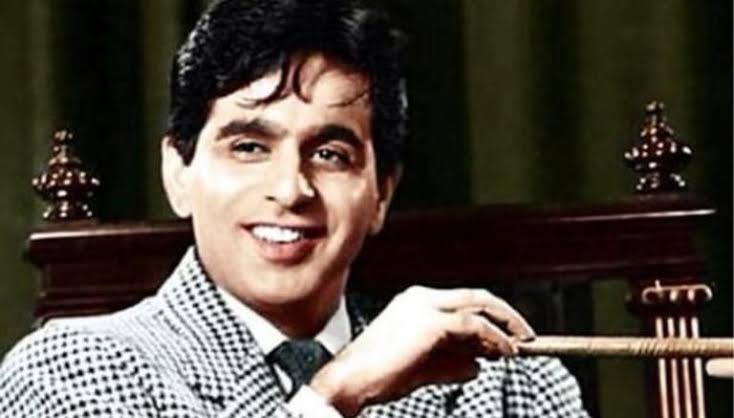
Photo Credits: Republic World.

Mr. Dilip Kumar was born in Peshawar, Pakistan (at the time British India) and was one of the twelve children of his parents. Their family later shifted to Indian state of Maharashtra. Let us remember some of this memorable happenings from his life and pay a tribute to him for his extraordinary work for Indian Cinema.

1) Dilip Kumar and his Peshawar Home.
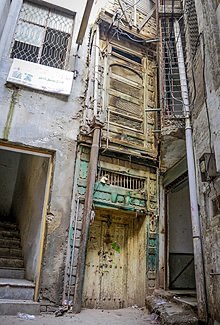
The ancestral home of Dilip Kumar in Peshawar.
(Photo Credits: Dilip Kumar/Twitter)

Dilip Kumar in his old interviews has revealed how his ancestral home in Peshawar was always special to him. On a visit to Pakistan, years after the India-Pakistan partition, Dilip Kumar reportedly fell to his feet and kissed the floor of this childhood home. He also remembered how he used to play and mingle with other friends and family at his home.

2) Joining Bollywood.
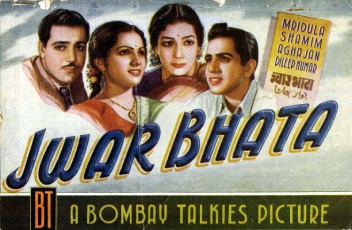
Photo Credits: Bombay Talkies.

Dilip Kumar debuted in Hindi Cinema with the movie Jwar Bhata in 1944. After a string of failures in Indian Cinema, he gained popularity with his film Jugnu in 1947 alongside Noor Jehan which was also his first box office success. He became even popular with films like Shaheed and Mela in 1948.

3) Receiving the title “The Tragedy King”.
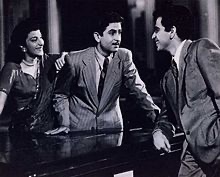
Dilip Kumar with Raj Kapoor and Nargis in Hindi film Andaaz in 1949.

1950s was completely a decade meant for Dilip Kumar in Hindi Cinema. His films such as Deedar, Hulchul, Naya Daur, Devdas, Paigham, Madhumati established his image as “Tragedy King” as these films has a tragic or mournful plot. Dilip Kumar also suffered from depression due to portraying many tragic roles and as a result his psychiatrist suggested him to take up light roles as well.

4) Honours and Recognitions
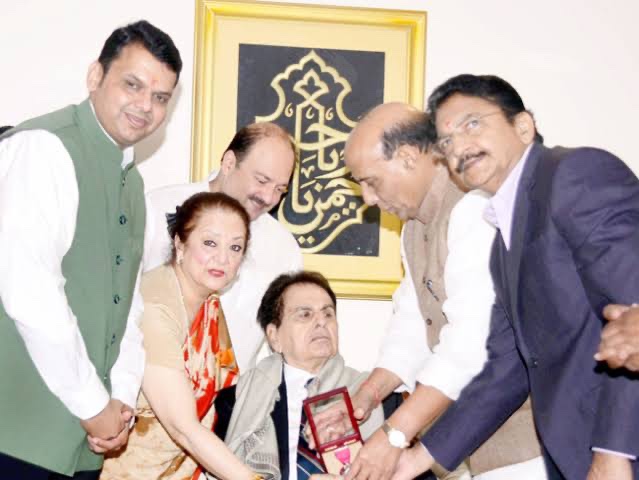
Dilip Kumar receiving Padma Vibhushan in 2015. (Photo Credits: Economic Times).

Dilip Kumar has received several awards and recognitions in his life. He received Padma Bhushan and Padma Vibhushan, the third highest and second highest civilian honours of India in the years 1994 and 2015 respectively. He also received Nishan-e-Imtiaz, the highest civilian honour of Pakistan in 1998. He’s the one of the few actors with highest number of Filmfare awards with about 8 Filmfare awards. He also received Dada Saheb Phalke award in 1994.

Although Mr. Dilip Kumar passed away leaving all of us with a heavy heart, he’ll forever remain immortal in all hearts. Very few have been able to achieve what he has achieved in his life and that’s what we should be remembering always!

BYJU’S: India’s most valuable Unicorn.

Photo Credits: BYJU’s

What’s the business about?,

BYJU’s is an Indian multinational educational company which was founded in 2011 by BYJU Raveendran and Divya Gokulnath. Today, it’s the most valuable unicorn in India and world’s most valuable technological educational company.

History of BYJU’S

In 2011, Mr. Raveendran and Ms. Divya Gokulnath founded an educational company with the help of their students which provided online video based learning programmes for students of kindergarten to Grade 12th.

In 2015, with the help of Think and Learn Ltd., the business firm launched its first ever app named BYJU’s: The learning app. After that, in 2017, BYJU launched its second app for mathematics for kids and subsequently they also launched another app for parents to help them track their child’s learning course.

Rose to fame: BYJU’s

By 2018, BYJU’s had more than 15 million users and 9 hundred thousand paid users. In 2019, BYJU’s won sponsorship rights for Indian Cricket Team jersey. Popular Indian actors Mohanlal and Shah Rukh Khan are the brand ambassadors for Byju.

Major Services provided by BYJU.

Initially, educational content was only made for students from classes kindergarten to 12. But now BYJU also trains students for Indian competitive examinations like IIT-JEE, NEET, CAT, UPSC and it also trains students for international exams like GMAT and GRE.

In 2019, the company announced that it would soon start providing classes to students in their respective regional languages in India. The same year it also announced the commencement of an international app for students living in countries outside of India.

Byju’s also launched its Future School which is a Kids Coding Platform where kids are taught to code online by experts.

The video tutorials in the app are about 12-20 minutes long and they’re digital animation videos for classes 4th to 12th and hence this makes it easy for students to grasp and learn.

Road to most valued start up!

BYJU’s has raised 350 million dollars from UBS, private equity Equity Giant Blackstone and also from Abu Dhabi state fund ADQ, Phoenix Rising and Zoom.

Byju’s has raised over 1.5 billion dollars in last eighteen months because of the increase in online learning and teaching due to the COVID-19 pandemic.

Byju’s has also acquired several other small business in the recent past like White Hat Jr, Scholr, Osmo and Toppr. In fact, it’s latest fundraising comes from popular educational chain, The Akash Educational Services, estimated at about 950 million dollars.

According to Mr. Raveendran, the 21st century illiterates are not those who can’t read and write, but those who can’t learn, unlearn and relearn.

Why society only loves women who sacrifice ?

We must have heard from our relatives and people from our older generation that a good woman or a good wife is the one who knows how to ‘adjust’. We also must have come across conversations where patriarchs have often said things like “to maintain a good relationship, a woman must adjust” or “till the time things don’t go worse a woman should learn to adjust and shouldn’t go for judicial recourse”.

Photo Credits: First Post


These casual patriarchal phrases raise many important questions: do women need to face the worse to get justice? Do women need to tolerate abuse from their partners till the time abuse doesn’t go extremely physical or sexual in nature? Do only women need to give up on their dreams and just look after their families?

Patriarchy apologists, however appraise some women in our society and they are only those women who unwillingly or willingly give up on their dreams and career in order to maintain a ‘happy’ family or women who stay with their ‘cruel’ in laws. This proves that the more a woman sacrifices or the more a woman tolerates abuse, the more she is loved and the more she is considered as an “ideal woman”.

But the moment a woman stands up for herself, the moment she focuses on her dreams and career instead of caring about maintaining a family, the moment she stops adjusting, the same patriarchy apologists start slut shamming her or shamming her simply. In this case, she becomes a “bad example” for all other women just for standing up for her simple basic rights.

This also reminds us about how society has taught us that a mother only becomes “a true mother” when she is sacrificial. In India, people question a mother’s identity even if she chooses to wear a western outfit. Do women now even have to sacrifice on their preferred clothes? Women wearing western are seen “incapable “of raising a child? How does a simple piece of fabric decides a woman’s worth? Mothers are also judged by our patriarchal world for being into a particular profession, for example, those engaged in beauty and wellness or into travelling. How does a mother’s profession makes her “less of a mother”?

Photo Credits: Clipart Library.

It’s high time we stop romanticising women who suffer because of internalized patriarchy. The only thing our patriarchal society has to understand is that a woman’s personal choices are her own fundamental rights and she can exercise them as and when she wants.

Swami Vivekananda: A Tribute to the Godly Figure.

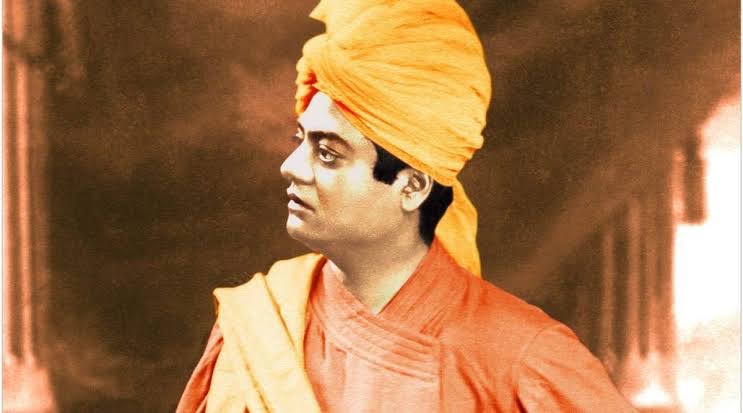
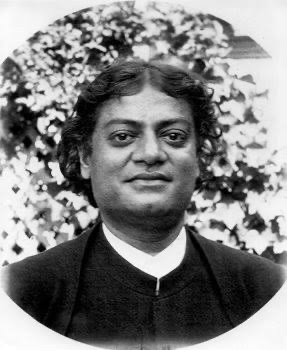
Swami Vivekananda as we all know was born on January 12, 1863 in Calcutta (present day Kolkata). Swami Vivekananda was never religious in his early life but was always interested in spirituality and meditation from young age.

Swami Vivekananda got educated from Calcutta University and had keen interest in subjects like history, religion, social science, philosophy and like. Today, July 4 is his death anniversary and us know five important incidents from his life.

1) Swami Vivekananda at Parliament of World Religions, 1893.

Photo Credits: India TV

Swami Vivekananda became extremely popular when he went to Chicago in 1893 for Parliament of World Religions where he represented India and Hinduism. He addressed Americans as “Sisters and Brothers of America” in his speech which led to widespread appreciation. In this event, he spoke about how the land of Vedas, Yoga and Saints has taught tolerance and universal acceptance to the world.

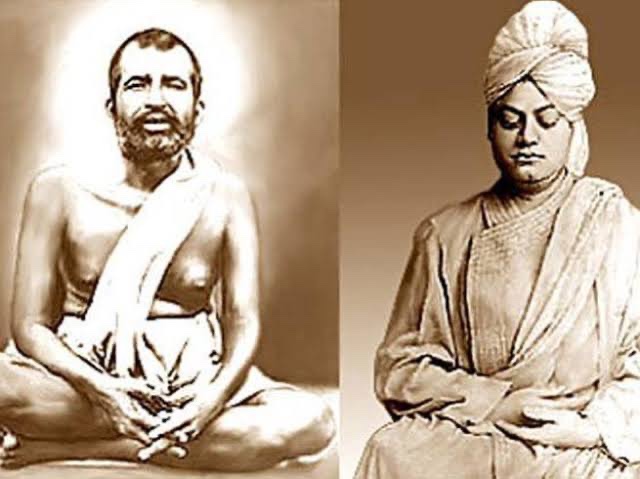
2) First meet of Swami Vivekananda and Ramkrishna Dev.

Photo Credits: Navbharat Times.

Swami Vivekananda met his mentor Ramkrishna Dev first in Dakshineswar Temple in Kolkata where Ramkrishna Dev used to reside but their relationship began when they met at the house of Surendra Nath Mitra. Ramkrishna Dev asked Swami Vivekananda to sing and impressed by his singing talent Ramkrishna Dev invited Swami Vivekananda to Dakshineswar.

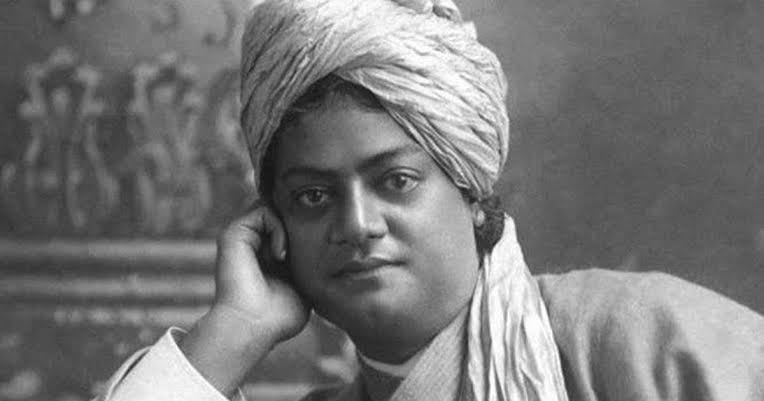
3) Life in Dakshineswar, Kolkata.

Photo Credits: Scroll.

Swami Vivekananda’s constant meetings with Ramkrishna Dev became important and life changing moments for him. Initially, Swami Vivekananda was amused and nervous when he first interacted with Ramkrishna Dev. After giving many tests, Swami Vivekananda finally accepted Ramkrishna Dev as his spiritual teacher in 1882. He remained there until Ramkrishna Dev’s death in 1886.

4) Enlightenment of Swami Vivekananda.

Photo Credits: The Indian Express

Swami Vivekananda once asked Ramkrishna Dev whether there’s any God or not (as Ramkrishna used to keep telling him about God ), to which Ramkrishna Dev replied “I am the proof that God exists”. After three days, Swami Vivekananda retuned to him and asked whether Ramkrishna Dev can show him God or not. Ramkrishna Dev asked a counter question that whether Swami Vivekananda has the courage to see God or not to which Swami Vivekananda replied “Yes”. After this, Ramkrishna Dev placed his foot on Swami Vivekananda’s chest and Swami Vivekananda lost his consciousness after that. He restored his consciousness after twelve hours but he was totally changed by then.

5) Establishment of Ramkrishna Mission and relationship with Sharada Devi.

Photo Credits: Old Indian Photos.

Swami Vivekananda founded The Ramkrishna Mission on May 1, 1897 to honour and recognise the efforts and teachings of Ramkrishna Dev. Swami Vivekananda also had a very respectful and loving approach with Sarada Devi as he went to Chicago in 1893 only after taking her blessings.

At the end let’s apply Swami Vivekananda’s words in real life and as Indians, we should always move towards social equality and individual freedom which were his primary teachings.

6 forgotten things to do in Weekends.

It is very difficult for all of us to pass our time in weekends and especially if weekends fall in between big pandemic lockdowns. For many of us, each day has become like a weekend due to long imposed lockdowns in our respective areas.

We must utilise our time in something productive and productive doesn’t have to necessarily mean learning a new skill or cleaning our house. Being productive is so much more than that! Productive is also when we give times to things that would bring us instant joy.

Let’s get back in time and relive some of the moments that were daily habits for us at some point in time and practise them in these weekends.

1) Take out Old Photo Albums.

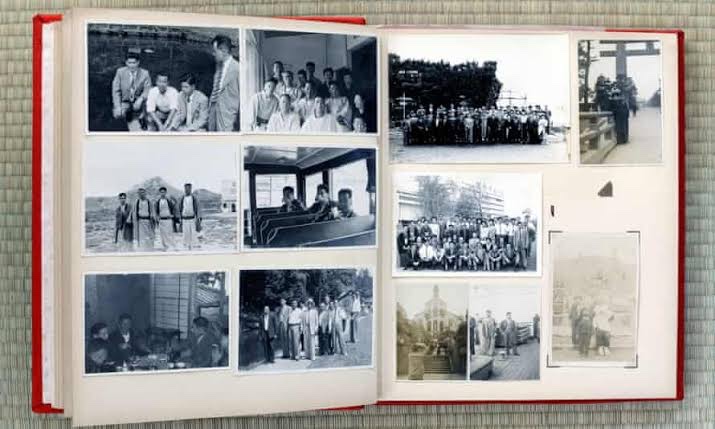
Photo Credits: The Guardian

Remember the time when there used to be only one camera at our homes? A photo album carries so much in itself. From our grandparents’ youth to our parents’ wedding to our own childhood, photo albums are always refreshing even after being so old. It’s always good to visit our family’s old family photo albums and live those old memories yet again.!

2) Write Journal or Diary.

Photo Credits : She The People Tv.

Writing has always been fun, isn’t it? Well, now writing means just WhatsApp or Email or for other professional purposes. It’s time for us to give one day to write happenings around us on a piece of paper in a diary or in a journal like we used to do in our childhood. The time when we used to collect those New Year gift diaries all for diary writing!

3) Solo Indoor Picnic.

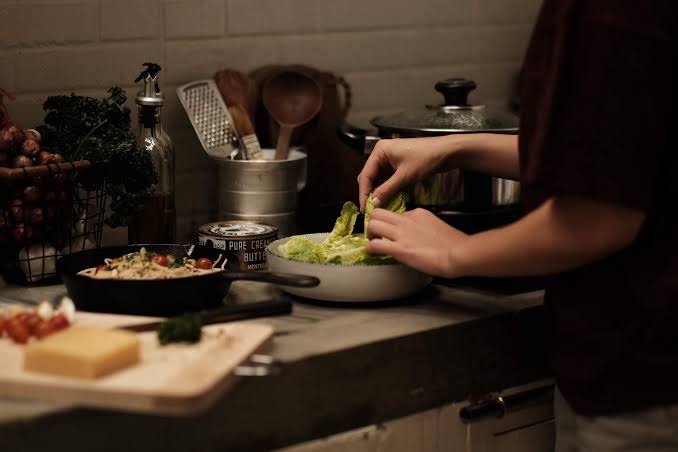
Photo Credits: Medium.

It’s always good to eat and it’s even better when we can eat all the food alone. Although some people might be thinking that this never used to happen in the past. So yes, you’re correct. Solo Picnics never used to happen in the past. Picnic itself means social gathering with friends or families. However, here I’m urging everyone to have a solo picnic indoor because of the ongoing pandemic. Though if you’re living in a nuclear or joint family, go for a picnic indoor with them. Cook great food, eat and chill.

4) Read Old Books and Magazines:

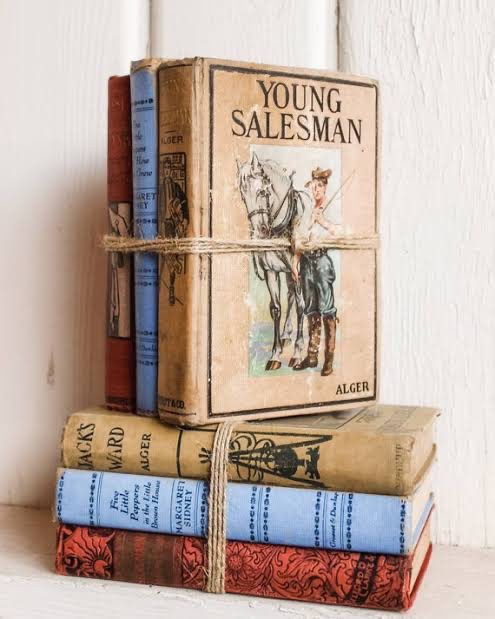
Photo Credits: Etsy

We always have a shelf in our house with full of books and magazines from the past era. We just keep them aside and forget about them after reading them once. There are also our favourite magazines that we used to collect during our childhood, may be because of their content or because they used to have our favourite celebrity on their covers. We can just relive those memories by simply taking out and reading them.

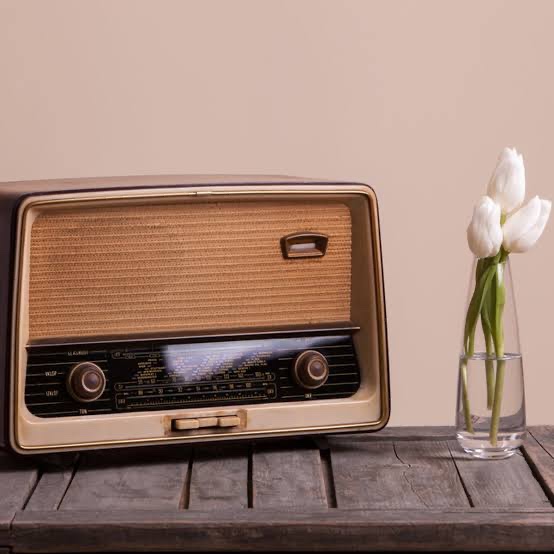
5) Put on the radio!

Photo Credits: The Conversation.

Don’t have a radio? Don’t worry about it at all. There are plenty of mediums in this new era that would give you the feeling of a typical radio. There are also radio stations available on new smartphones, some are even available on normal typing phones! You can always look for radio in these platforms in absolutely no cost. Just listen to the Radio Jockeys narration and listen to news stories and music in that old style.

6) Take out Old CDs

Photo Credits: Britannica

This is somewhat similar to photo albums. Do you also have old compact discs in your home cupboards. Well, then just take them out and watch your old family happenings recorded in them and enjoy!

Yes, lockdown and weekends have always been stressful for each one of us. But we can always find a way to engage ourselves in something that would make us happy and lively! Try these six ways and get nostalgic!

World Sports Journalist Day: a tribute to those who make Sports beautiful!

Sports be it soccer, cricket or baseball or any other has some or the other time played a role in some of our lives. But sometimes we just overlook those who make our sports look more spicy and enthusiastic before us.

Significance:

In 1994, International Sports Press Association established July 2 as “World Sports Journalist Day” as the organisation was found on July 2, 1924 and this was an effort made to honour sports journalists all over the world.

Sports Journalists do a lot of work before, dyeing and after sports matches, all of which are often overlooked. They’ve always played an integral part in transferring the information pertaining to sports to their ever loving audiences.

History of Sports Journalism.

Sports Journalism started in early 1800s when sports was beginning to get itself presented as a separate section in Western Newspapers. In early 1800s only elites could afford newspapers and as a result information relating to sports were restricted to horse riding or boxing , that is, the sports that were typically meant for elites.

In 20th century, New York Herald and New York World were two of the world’s first newspapers to cover sports journalism separately and have a complete full time sports department.

Slowly, the need and love for sports started to increase among the masses and that is why there was the demand for all together separate sports channels in television like ESPN and sports magazines like Sports Illustrated.

Digital Era and Sports Journalism.

Online Sports Journalism started when ESPN created its first ever sports website in the world in 1995. During initial years, only broad topics relating to sports were covered in Digital Sports but as internet expanded all over the world, many big and small bloggers, internet channels, web portals began covering all single and minutest topics relating to sports.

A majority of big and small websites are completely dedicated to sports and they also at times charge subscription fee from their readers. Search Engines like Google or Bing also provide information relating to sports during those days which are important for a particular sport.

Issues faced by Sports Journalists.

1) Deadline Pressures:

Sports journalists face deadline pressures than any other beat reporters as sports matches generally happen in late noon or in the evening and as a result reporters who’re covering sports or writers who’re into sports have to manage completion of work in shortest time possible.

2) Political Pressures

There has been an interlinking of sports and politics in the past. And if this is so, how can the media be kept away? Sports Journalists face lots of threats by certain sports associations that expect the journalists to cover sport matches in their own way and they also expect journalists to shape the public opinion.

3) Accusations of low objectivity:

Sports Journalists have also been accused of favouring or promoting their own favourite teams or players in the past. Some have also been accused of giving more preference to their home teams and this is one more challenge they face in the sports world.

In any way, Sports Journalists do a lot for their audiences to make the sport matches more interesting and entertainment their viewers or readers throughout and even after the matches. It’s important for us to celebrate them and honour them genuinely.

National Doctors Day: Are we doing enough to protect our life savers?

Typically, in an Indian household when a child grows up, Indian parents expect them to be doctors or engineers. But do we respect and love the same children when they actually become our life savers?

July 1, every year, is celebrated as National Doctors Day in India as this date marks both birth and death anniversary of prominent Doctor Bidhan Chandra Roy who was also the Chief Minister of West Bengal in early years of post independent India.

In 1991, Government of India established National Doctor’s Day to recognise the contributions of Dr. Bidhan Chandra Roy and also honour the Doctors nationwide.

Currently, the doctor-patient ratio in India is 1:1445 which is lower than WHO’s prescribed ratio of 1:1000. Doctors work day and night for their patients’ well being and this even increased since March 2020 due to COVID-19. But how much we as citizens give them in return?

India has suffered because of acute shortage of Doctors since the beginning as they never got the remuneration they deserve. This has always led to brain-drain in India as Doctors shift to other developed countries for better career prospects as they receive better salary and opportunities there.

Since the beginning of COVID-19, the only hope to get out of this deadly pandemic were Doctors and health care workers. Whenever our loved ones contract the virus, we immediately look towards our doctors with a helpless eyes, and Doctors without caring about themselves tirelessly give their life and time for us.

Some incidents in the recent past haven’t been so fruitful though. Doctors and other healthcare workers were brutally assaulted during the entire first and second wave and this is another downfall our country has witnessed.

Even on eve of Doctors day, two doctors were assaulted in Delhi yesterday after having a heated argument with two fellows. From an assault in June 2020 in Hyderabad to several such incidents in all parts of the country like Madhya Pradesh, Maharashtra, Assam and many more shows that we as citizens have failed our doctors.

Citizens have to understand by doing such acts of violence, their loves ones whom they lost won’t return. Yes, if any citizen feels their loved ones faced hospital casualties, they’ve a right to protest and they can take the legal procedures but they must not come into emotions and act violently.

Indian Medical Association has held several protests to voice for the rights of doctors. Nearly, 3000 Doctors resigned last month in Madhya Pradesh after High Court declared their strike as “illegal”. Several more prominent as well as junior Doctors in the country have vowed to not serve India as they feel citizens do not treat them with dignity.

If this goes on, India would have a vast decline in doctors per thousand people ratio and all the lives of Indian citizens will be at stake because private hospitals charge a lot and most Indians won’t be able to afford them due to mediocre and low income.

India would face a dangerous phase just like it faced in the second wave of pandemic if things continue like this till the upcoming third wave which will probably hit India by the end of 2021 as predicted by health experts. Stricter parliamentary laws against anyone who assaults doctors and moral policing of citizens can improve the doctor-citizen relationships however.

Media Bias: the shoddy practice

Media Bias is a term used to describe biases and personal prejudices of a journalist in the selection of events that will be reported and the manner in which they’ll be reported.

In earlier times, every media organisation had a political backing, that is, funded by any political party or group. It was only with late 19th century and early 20th century, journalists began to feel the need for a truth and unbiased reporting.

Types of Media Bias:

A) Bias by Omission

This is one of the methods in which journalists wipe out one side of the story or series of facts over a period of time.

B) Bias by Selection of Sources:

In this method, journalists usually approach those sources who will favour their own prejudices. Both sides of a story aren’t given any importance.

C) Bias by Story Selection.

This mostly happens when a media organisation is funded by a political party. In this, journalists only highlight those issues and stories that pertain to one political party. For example, only talking of achievements of a political party and ignoring its failures.

D) Bias by Placement.

This means where an editor places the story and how much they consider the story is important. For example, if a news organisation is supporting a certain political party and there’s a humanitarian crisis in any city because of that political party, in this case, news editor would place the story at the end so that it gets less importance.

E) Bias by Spin.

In this, reporters and journalists give their own “subjective comments” to a factual story and make it appear before the public their own way. These interpretations can be harmful as they divert the minds of public from actual facts.

Some examples of Media Bias:

A) Ethnic Bias:

This is the form of bias which includes racism, nationalism or xenophobia. For example, western media’s portrayal of India as a poverty stricken country with no toilets. Yes, India suffers with poverty but the western media made it look like it’s the only thing India is all about.

B) Corporate Bias:

Media is also extremely biased at times when reporting about corporate misconduct. This is because some media channels are funded by big industrialists and business people.

C) Class Bias

Media houses are extremely bias when it comes to class. Higher class cases are handled with dignity whereas oppressed classes are treated with lack of respect and humanity.

D) Religious Bias

Certain media houses favour one religion according to their own religious ideologies and thus even start supporting or give a biased reporting when their religious community is doing something wrong.

E) Political Bias

Probably the most famous form of bias in which a media house supports a political party right from the beginning of covering their political campaigns to trying to hide their political mismanagements.

Journalists must separate fact from opinions and do an unbiased reporting for a better transportation of news information to the public. This way it would also be able to hold the system responsible.

The Private-Public Distinction: Through a Feminist Lens:

From the beginning to this day, women have always been oppressed be it by men in their family or by the state that was and is still highly patriarchal. Earlier, the private (households) and the public (political, business world) were strictly kept separate. State had no roles in what was happening in the private sphere. And the major factor of this separation was that public was controlled by males and private appeared to be in control of females.

The separation between private (home) and public (work) made a significant difference in the lives of males and females, and of course, it was negative for women. For example, males were expected to work out and hence they dominated the outside world while females were expected to stay at home and decide the household decisions and thus they happened to be the controllers of the households.

However, the above situation was far away from reality. In most cases, as public was controlled by males it used to have a direct influence on the private sphere. And therefore, the then feminists and scholars labelled this distinction as baseless and started demanding for political rights of females like voting rights, reproductive rights and like. It was through the second wave of feminism in 1960s, feminists began to bring up more such marginalised communities and issues into the picture.

Earlier only a “white heterosexual male” normative was followed in the world and especially in western civilisations.
Feminists have rejected the public-private boundary as an acceptable rationale for legal action or inaction. A feminist argument is that such a separation disadvantages women of their rights and advantages privileged groups like white heterosexual males.

Three major arguments that were brought by feminists which aimed to challenge the public-private distinction are, first,
politics and society, both had ignored the domestic sphere, second, public-private distinction is deeply gendered and
sexist as its assigns roles to people based on their biological characteristics and because of this women become the most affected underprivileged group, third, calling “family” a
private sphere was an attempt to hide domination and abuse in the relationships in families from legal discourse.

To put an end to all of this ignorance, women activists fought against the injustices and demanded the states to intervene in household matters like laws against domestic violence, divorce rights to women, abortion rights and other rights to choose. Along with these domestic protection rights, many other rights on the public sphere were also demanded.

Feminists from the second feminist wave asked for equal representation in politics, law-making and other decision making procedures which were of both public and private significance.

Examples:

1) Paid Work:

Even though working environment has
changed nowadays as compared to earlier times, females suffer from hard labour but less payment. From corporate houses to films and television everywhere females are paid less than their male counterparts even though all of them do the same work. At times, female actors do more work as they have dance sequences in addition in the movies but still get paid less for the work. This has witnessed a change in recent times where female actors have begun to charge lump sum amount.

2) Patriarchal State:

States can be extremely patriarchal to
women in terms of legal and political rights. This can happen in two ways- one by creating patriarchal and misogynist laws for women, two by not doing anything progressive for women (because not interfering into women’s rights is also equal to creating misogynist laws for women). Over the past few decades, this has also witnessed a change where we have seen governments making women friendly laws like reservations and special commissions for women or anti dowry and anti-domestic violence rights.

3) Male Violence:

This can mean anything that happens both in public and private sphere. Sexual harassment at workplaces is at peak all over the world. Thanks to social activists and NGOs in India who all fought for implementation of sexual harassment act back in 1990s when a social worker was brutally sexually assaulted for stopping a child marriage in the Indian state of Rajasthan.

At the end, we all as a society collectively need to understand that opposite of patriarchy is gender equality, that is, feminism, nothing else.

The impact of Social Media Influencers on Promotion of a brand

Promotion of a brand involves informing, persuading and keeping the potential consumers for continued and long term engagements. Promotion can be done by informing the public about the features of the product or brand, persuading them to buy the product by telling its unique features and keeping in touch with the customers to convince them to further buy more products of the same brand by providing after-sales-services and by maintaining good producer-consumer relations.

It is also important to note that there is a difference between promoting a product and promoting a brand. Promoting a brand is broader in terms as it focuses on building and maintaining brand image and is related with the promotion of the entire business. Promotion of a product is narrower in terms as it just focuses on promoting a “particular product”. For example, when Loreal Paris uses the tagline “You’re worth it”, it not just promotes a particular product but the entire Loreal brand. However, when it uses “5 problems, 1 solution”, it promotes a particular product (i.e., Total Repair 5) by highlighting the importance of it.

Online Brand or Product Promotion is the method of promoting the brand or product on different social media and online platforms by using the internet to its full potential to reach a wide range of audience. For ages, brands and advertisers have influenced and shaped consumers’ attitudes and behaviours and sometimes we don’t even get to know about it.


There are several ways in which Social Media Influencers impact promotion of a brand or a product:

1) Influencing Purchase Decision of Consumers:

Consumers’ purchase intentions are frequently measured and used by marketing managers as an input for decisions for new and existing products. Social Media Influencers do not put up advertisements but just directly talk about the product or brand in details, how to use their, if they are value for money. So influencers cover the “Frequently Asked Questions” about a product.

2) Convincing customers to buy products:

After influencing the purchase decision of the customers, the main task of influencers is to make their followers buy the products. Actions involving social media influencers help more when there is best personalised advertisement done by the influencers.

3) Distribution of Samples:

This is one of the newest techniques through which social media influencers help business firms in their promotional activities. The influencers take free samples from the producers and further distribute them to their followers in terms of “online giveaways”. This technique of “Online Giveaway” becomes extremely beneficial for those firms which are new in the market. The social media influencers ask their followers to comment, like or share the posts of the business product/firm they’re associated and few lucky winners are the ones who get to take the products in these Online Giveaways. There’s also traditional form of distribution of samples where influencers distribute a business firm’s products which are generally smaller in quantity than the original products so that customers get a first hand experience of the products.

Clearly, social media influencers have had gained and influenced their followers a lot in recent years and especially during the pandemic. People rely on influencers more these days and influencers keep on creating more content for their followers.

Media, Disability & COVID-19

According to United Nations, about 1 billion people all over the world come under the category of “disabled” and that is 15% of the global population. Now, the question is, shall we as a society neglect 15% people in the world just because they happen to be in minority?

Media being one of the crucial facets of society has a major role to play when it comes to disseminating information and making people aware about significant and ignored issues. Now, let us go through what media has done to represent people with disabilities and their issue since the beginning of the pandemic.

1) Disability and Broadcast Media


A Look: Public Broadcasters of various countries

In 2020, the World Federation of the Deaf noted that 80 governments in the world have been providing sign language interpretations while Covid-19 press briefings.

For example, in order to curb Covid-19 pandemic, South Korean government aimed to strengthen the ways disabled people could be informed during the pandemic and other related disasters. The country’s public broadcaster KBS during the pandemic announced that it would work to expand the reach of information in its disaster countries. During the pandemic, the public radio in the country had continued to provide programmes dedicated to disabled community with daily news and health updates and general life advice.

When it comes to India’s public television broadcaster Doordarshan and public radio-All India Radio, very minimal representation of disabled community took place during the pandemic. Even though the objective of the these broadcasters is social welfare, disabled community was one of the most ignored ones as “no special programmes” were held for this community, nor was their issue highlighted specifically anywhere. News Bulletins with sign language were held for the disabled community though. More has to be done to ensure social inclusion of all communities including the disabled ones.

Private Broadcasters: nothing matters, but profits!

Media all over the world, including the Indian ones either portray disabled people as “nothing” or “everything” and both of them are dangerous. In 2019, Ministry of Information and Broadcasting in India directed the private channels to include special schemes for disabled community. Although some channels have started news bulletins for disable people but there was almost equal to zero representation of the disabled community during the pandemic.

There should be open space for the disabled community such as they should be invited for panel discussions and debates relating to different happenings in the world from politics to entertainment and like.

Digital Media: A hope in every way!

This is probably the best when it comes to serving and representing the disabled community during the pandemic. Digital and online media were the perfect mediums through which disabled people got proper spaces to talk about the issues they were facing during the pandemic.

One of the online apps called “News Hook” became increasingly popular among the disabled audience which used sign language specifically for the audience with hearing impairment. It covered headlines relating to technology, politics, entertainment, business and sports during the pandemic. It should also be noted that 65% of the staff here were from the disabled community.

Moreover, web portals of Indian Newspapers like The Indian Express and The Business Standards and many more gave enough of space to the disabled people so that they can talk freely about the issues they faced during the lockdowns.

The same above mentioned media channels also used platforms like YouTube to sensitise the audiences regarding the hindrances faced by the disabled community. Some reporters and even famous YouTube personalities covered the terrible times disabled people in India went through during the pandemic.

It should also be noted that online media was comfortable for disabled people as well as the medium is now more easily accessible with good quality content and also because of its low price rates.

Media, especially the mainstream media should be more responsible and sensitive in dealing with issues relating to the disabled community. More representation about the disabled community should take place in the mainstream media. Disabled people “aren’t incapable” and therefore they should be given proper employment in the media. They should be engaged and involved in live discussions and debates. Together, as society which includes the media we should create an environment which is inclusive, anti- discriminatory and diverse.

GENDER? No, we aren’t supposed to impose it at birth.

The above statement may appear intriguing to some, but that’s what we need to do, at least in 2021. Even today, majority of the world population is not aware about the distinction between ‘sex’ and ‘gender’.

Gender is something that is most often thrown and forced upon us according to the sex we received at birth. We are told to act, dress and behave in a certain way. In more simple words, ‘sex’ is what nature has given us at birth, for example, ‘female’ and ‘gender’ is something that we identify ourselves with as we grow up, for example, ‘woman’.

In this way, we can say that gender is a social construct, that is, gender is a human made concept while sex is a naturally grown system we have on our respective bodies since our birth.

It is also important to note that gender is variant and we would be doing injustice to the gender minorities like agender, non- binary and gender fluid people if we overlook them.

Moreover, we should also keep in mind that, lack of awareness regarding the difference between ‘sex’ and ‘gender’ is one of the main reasons of patriarchy. As mentioned above, since our birth we are expected to behave in a certain way. For example, when a male child is born, we expect them to be tough and physically strong and compare them with wild tigers and lions while when a female child is born we expect them to be soft and pleasant like an angel.

Another example could be, male toddlers are gifted guns and cars whereas female toddlers are gifted doll houses and ‘kitchen sets’, because from the beginning only we have this sexist notion ingrained in us that the male child will grow up and ‘earn’ the bread while the female child will ‘bake’ the bread.

‘Sex’ and ‘gender’ are most often used interchangeably and this also contributes to patriarchy, in fact it shows how patriarchy is deeply ingrained in us. Some of us indulge in patriarchy without even knowing it.

Patriarchy may favour males but it is beneficial to no genders in the world. In global context, gender expressions like ‘feminine’ stereotypically means one needs to be loving and
caring and ‘masculine’ stereotypically means one needs to be daring and challenging. Now here comes the problem- for example- a male who has ‘loving’ and ‘caring’ characteristics and identifies himself as a ‘man’ suffers due to these socially constructed ideas of being ‘masculine’. Similarly, a female who has ‘daring’ and ‘challenging’ characteristics and identifies herself as a ‘woman’ has to suffer due to the culturally made concepts of being ‘feminine’.

Another interesting thing is to note that if a man identifying male has some stereotypically feminine characteristics like caring, being soft and submissive, they are trolled and if a woman identifying female has some stereotypically masculine characteristics like daring, being loud and dominant, they are praised. This proves that the patriarchal world we live in hates femininity and just loves masculinity.

If a man celebrates his masculinity, he is praised but if a woman celebrates her femininity, then she becomes inauspicious for the society. It is important for us to note that femininity and masculinity is subjective and depends on person to person.

Emerging Trends in Social Media

Image Source: Business Today

Over the past decade, social media has managed to secure a special position in our hearts.
Like every other evolutions in the world, the way we use social media platforms also evolves.
With the quick growth of social media, trends change every second day and thus brands and individuals are in a hurry to adopt them fast!

Major Trends…

1) Augmented Reality

Augmented reality (AR) is an interactive experience of a real-world environment where the objects that reside in the real world are enhanced by computer-generated perceptual information, sometimes across multiple sensory modalities, including visual and auditory.

How it is used in different ways in social media?

Now, during the pandemic times, it wasn’t easy for people to go out for shopping and try out the things they wanted to purchase.
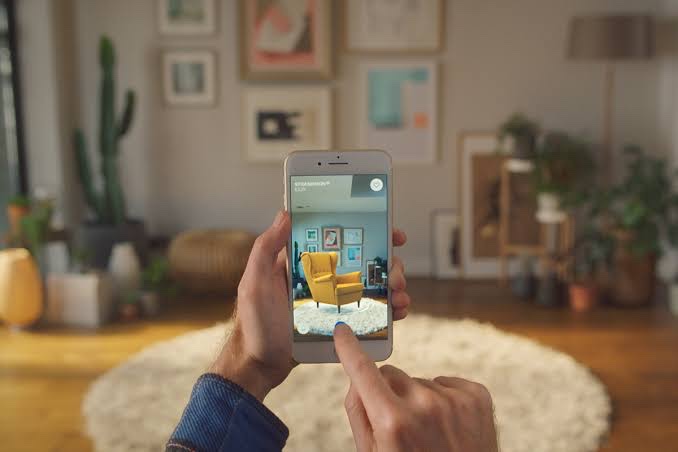
So Augmented Reality became an important feature in social media apps so that consumers can try out the business products from their respective homes.

Popular furniture company IKEA using AR.

MORE COMMON EXAMPLES OF AR IN SOCIAL MEDIA

Mark Zuckerberg, founder of Facebook, recently said Augmented Reality has slowly become the company’s “topmost priority” .
We have already witnessed how social media apps like Snapchat and Instagram have become more AR oriented– all the face filters that we use on such social media apps are nothing but small facets of Augmented Reality.

Credit: The Verge

2)VIRTUAL REALITY

Virtual reality (VR) refers to a computer- generated simulation in which a person can interact within an artificial three-dimensional environment using electronic devices, such as special goggles with a screen or gloves fitted with sensors.
Users have a realistic feeling experience when it comes to Virtual Reality.

VIRTUAL REALITY IN SOCIAL MEDIA

A) VR CHAT
VRChat is a free-to- play massively multiplayer online virtual reality social media platform. It allows players to interact with others as 3D character models.
Users can interact via text chats and then play the games according to their needs.

Credits: Business Insider

B) FACEBBOOK SPACE
It allows an integration with Facebook, which makes it easy to invite our friends and acquaintances to the VR world.
Three people can actually interact using a VR device. This has however now been discontinued.

3)Shopping through Social Media

Many new brands and business firms deal with their consumers entirely though social media platforms like Facebook and Instagram.

Both these social media platforms provide services like a complete e- commerce portal and also allows business firms to show their products on the platforms while attaching a link to the firm’s official website. Customers can view products, see prices and can directly order products from these social media platforms.

Credits: Cosmetics Business

4) News Culture on Social Media

This is one of the most popular trends we tend to see these days on social media. People spent most of their times in social media and therefore many mainstream media channels maintain good interaction with their audiences on social media platforms like Instagram, Facebook and Twitter via video stories, pictorial presentations and like.

Many new media houses are completely based on social media. People mostly get to know about recent happenings through social media.
Twitter as compared to any other social media platform has distinctively been credited for instantaneous news.

Facebook page of ABP News

5) Hash-tag Culture

This is another form of social media trend that can be seen these days where interested groups make a hash-tag phrase (for example: #xyz) regarding their concerned matters.
This has widely been witnessed on Twitter and Instagram where users make their interested topics “trendy” on social media. This is especially done on Twitter to bring anything to public notice.

Credits: Elegant Themes.

Decline of Political participation of Females in India

Since the beginning of rebellious movements against the oppressive British regime in 19th century, women have played an integral part in freedom struggle in India. From Rani Lakshmibai in 1857 to Mantangini Hazra in 1942, women have always upheld the patriotism and love for their nation.

Sarojini Naidu, an Indian political activist, joined Indian Independence movement back in 1905 and later became the Governor of Uttar Pradesh in Independent India, making her India’s first female Governor.

In the post independent India, prominent freedom fighter Sucheta Kriplani became the first female Chief Minister of India for Indian State Uttar Pradesh. In 1966, Indira Gandhi became the first female Prime Minister of India.

But if women participated in Indian politics and independence movements so actively at a time when women weren’t even allowed to walk out freely, why do we see a sudden decrease in participation of women in Indian Politics in 21st Century?

In 1990s, there were about 6 sitting female Chief Ministers in India and in 2021, there is only one sitting female Chief Minister in India, that is, Mamata Banerjee in West Bengal. Let us see the reasons behind lack of participation of females in Indian politics.

Assault on Indian female politicians:

India holds a bad history of torture, discrimination and hostility towards female politicians. From Ms. Jayalalitha who was brutally assaulted in late 1980s to Ms.Mayawati and Ms. Mamata Banerjee who were assaulted ruthlessly in mid-1990s proves that Indian Politics has never been safe for women. These female politicians were assaulted especially by male chauvinists to intimidate them for being a woman and raising voice in politics. These assaults discourage women in India to join politics.

Indian Political Parties are Male-dominated:

Unless a political party is formed by a female, all other political parties be it left, right or centre are by nature male-dominated in India. Females are not given powerful positions in these parties which further lower their self-esteem and this influences other women negatively to not join politics.

Systematic Sexism in Politics:

Even if women are given political positions, they are mostly given those positions that are stereotypically considered “womanly”. Women holding positions are also often harassed by male politicians. Women who want to hold more prominent positions thus get discouraged. Although some things have changed in recent years where we have seen women holding powerful positions in Defence and Finance Ministry, still a lot more has to be done.

Patriarchal Society:

This is a bitter reality that our male-dominated society doesn’t love “dominant female leaders”. For instance, when in 2019, two Female MPs from West Bengal wore a shirt and jeans, they were criticised and shammed for wearing western whereas so many male members in Parliament wearing jeans wasn’t an issue. The fear of getting judged by the society also discourages women to join politics.

What can be done to improve the situation?

First and foremost, we should make a safe political environment for women and listen to the issues they face in politics. Second, society and the government must have a feminist approach so that women come out and lead political movements. And lastly, although India has women friendly laws, these laws aren’t implemented and thus proper implementation of these laws must be done, for example, taking strict action against male politicians who make misogynistic statements, abuse women and like.

INTERNATIONAL WIDOWS DAY: A timeline of lives of Widows in India.

Today, June 23, is a very important day for one of the most neglected sections of our society, and they are none other than the widows. International Widows Day was firstly established by The Loomba Foundation to increase awareness about the tyrannies faced by widows all across the world. June 23 was especially adopted by the Loomba Foundation because it was on this day in 1954 the mother of foundation’s owner became a widow. Later on in 2010, this date was officially adopted by United Nations to focus on issues of widowhood.

Widowhood in India: A brief History.

During ancient times, after the death of a man, their wives were expected to live an execrable and damnable life. Widows were made to wear only white clothes, shave their heads and had limited options for having food of their choice. Untouchability and ostracism of widows were at peak. At some places widows were forced to undergo the Sati practice in which widows had to sacrifice themselves by sitting atop their deceased husband’s funeral pyre. These practices came from the patriarchal idea that if a husband’s life is over, his wife’s life is also over.

Ban of Sati Practice: Prominent Social Reformer Raja Rammohan Roy led the movement against the evil practice of Sati in India and finally on December 4, 1829, Bengal Sati Regulation was passed by Lord William Bentinck.

Widow Remarriage: A significant change!

Indian Social Reformer Ishwar Chandra Vidyasagar from Bengal was one of the major leaders who advocated in favour of remarriage of widows in India. He received support from several dignitaries of that time including Rani Rashmoni of Kolkata to many other government officials in East India Company.

Finally, Hindu Widows’ Remarriage Act, 1856, was drafted by Lord Dalhousie and passed by Lord Canning for remarriage of Hindu Widows in all jurisdictions of India under East India Company.

Did the lives of widows change after the progressive law?

The simple answer to the question above is “no”. Although things have improved in well-read and educated families where widows don’t have to go through the same amount of brutality as before, however things have not changed for millions of widows in India.

Abandonment: A newer problem!

Widows, even in 21st century have to face massive amount of torture from confinement to lack of care in many Indian families who have a patriarchal and out-dated approach.

Most women in India are not financially independent and are dependent on their husbands for daily needs. And thus, when the husband passes away widows become financially vulnerable. Children of the widows do not take the responsibility of their well-being and abandon them. With no options left, widows take shelter in old age homes or take the path of spiritual life and settle in ashrams of holy cities like Varanasi and Vrindavan. There are also some NGOs and private bodies in these holy cities who take care about the wellbeing of the widows including their medical and food expenses. Widows are also encouraged to engage themselves in some relatively easy jobs like stitching and sewing by these NGOs to have financial stability.

There are more than 50 million widows in India and its high time that we as a society and government must step up to protect their rights and make a discrimination free environment for them.