HACCP

“Hazard Analysis and Critical Control Points”.
It is basically a preventive approach to food safety which is used to find and then eliminate the biological, chemical and physical hazards which may or may not be there in production processes and can cause the final products to be unsafe and unhealthy for human consumption. These are certain principles which have been designed by the government to ensure the food quality and safety. It is a various step process that is followed in any food industry.
The HACCP system is followed at each and every level of food chain i.e. in food production and preparation processes which also includes packaging, distribution and even consumption by the consumer. It is therefore known as FARM-TO-TABLE process.
This technique was originated by NASA in the 1960s and US food and drug administration gave a particular definition to this. The main objectives of the HACCP system are –
• Prevention of food-borne diseases so that no one is affected after the consumption of food.
• This system mainly focuses on quality assurance unit i.e. maintains the quality of the food.
• HACCP system tends to reduce the cost of analysis of food.
• It also reduces the losses which occur due to product recall.
• And finally it helps in protecting the reputation of government.

HOW TO CONDUCT A HACCP PLAN??????
Conducting a HACCP plan is a 5 step process as mentioned below –

  1. Collection of HACCP resources and assembling of HACCP team which will look into the all steps.
  2. Description of the product by the team and deciding its method of distribution.
  3. Developing a complete list of ingredients and raw materials which are to be used in the production of the final product.
  4. Developing a flow diagram of the process i.e. how the product will be manufactured, its complete process.
  5. Meeting the requirements for the product to be manufactured safely.

PRINCIPLES OF HACCP
There are 7 main principles of conducting successfully a HACCP plan.

  1. To conduct a hazard analysis is the first step in which all the potential physical, chemical as well as biological hazards in the production of the product are identified.
  2. To determine all the critical control points (CCPs). At this step, all the control measures are thought to be applied. Basically at this step, those points are identified where control measures can be applied for the safety. This step is very essential to eliminate hazards completely from the product.
  3. To establish critical limits is the next step i.e. in this step the control measures are actually applied and also the maximum and minimum limits are set for the preventive measures. To each point found in the last step, a critical limit is applied. These limits assure the food safety.
  4. To establish monitoring procedures is the next step in which all the planning which was done yet is monitored and it should be done on a regular basis. This step assures that there is no mishandling of any procedure of the complete plan.
  5. To establish corrective actions is the next step in which appropriate correct actions are taken if after monitoring it is observed that the critical limits are not met. The corrective actions for each point and limit are already pre-decided.
  6. To establish verification procedures is the next and most important step in which the complete HACCP plan is validated. The complete verification of the plan is required to assure that the precautions and preventions are taken carefully.
  7. To maintain record keeping and documentation procedures is the final step in which the record is maintained and established which must be done regularly. It is necessary for validation procedures.


HRD Minister Calls Exams Mandatory for Final Year Students

DU Exams 2020 : HRD Minister Calls Exams Mandatory for Final Year Students

The Union Minister of HRD, in an interview with the Zee News last night, addressed the speculations concerning the fate of the examinations in the universities and the colleges across the country.

The minister highlighted the formation of a UGC taskforce to receive recommendations in order to orchestrate the examinations of the graduation and the post-graduation courses. He mentioned that the students in their first semester/year of study will be entirely evaluated on the basis of their Internal Assessments. The students in their intermediate semester/year will be awarded a composite grade on the basis of their marks in the previous semester/year and the Internal Assessment marks of the present semester/year. These were the provisions for the promotion of the students to the next academic year.

The minister, however, clarified the stance on the examinations of the final year students and emphasized on the necessity of their examinations to be conducted. He said that though the examinations cannot be conducted in the month of July because of the health crisis across the country, the students will have to appear for their final examinations when the situation improves. The new academic session, he declared, will begin only after the final examinations are conducted.

Swarm Of Locusts Reaches Gurugram, But Will They Enter Delhi?

Houses and trees were covered by locusts in some parts of Gurugram as the swarm continues to advance from west to east with steady wind.

A swarm of locusts, about 3 km in length, has hit Gurugram and it is flying across the city in the NCR region from west to east, according to officials.

The Gurugram administration is sounding sirens and blowing horns to make noises so that the locusts don’t settle on green vegetation and destroy them.

Besides, we have been spraying chemicals through vehicle-mounted pump sets in rural areas,” said Amit Khatri, Gurugram Deputy Commissioner (DC).

There is disagreement amid different administrations over whether the swarm will enter Delhi.

“They are flying across the city West to East due to the steady wind. They will most likely enter Delhi,” said Khatri.

Delhi Air Traffic Control (ATC) on Saturday directed pilots of all airlines to take necessary precautions during landing and take-off of aircraft in view of locust swarms seen near the airport in areas along Gurugram-Dwarka Expressway, news agency ANI reported. A team has been set up to monitor the situation.

However, KL Gujjar, deputy director, Plant Protection, Quarantine and Storage (PPQS), Faridabad, says that it is unlikely that they will reach Delhi because they are moving in East direction. PPQS comes under the Ministry of Agriculture and Farmers Welfare and it is a nodal body to take locust control measures with its various sub-offices across the country.

“They have entered India from Pakistan through Jaisalmer and Barmer border area and reached Jhujhuna. From there, they travelled to Rewari. From Rewari, they came to Jhjhar and from there they have reached Gurugram. Now from here, they will fly to Faridabad and then considering the current wind direction they will move towards Palwal side. I don’t see that they will enter Delhi,” he said.

Meanwhile, Delhi Environment Minister Gopal Rai called an emergency meeting to discuss the situation following a locust attack in Gurugram. The minister also directed the administration to be alert, an official said.

“After the emergency meeting, an advisory will be issued on steps to be taken to deal with the situation,” Rai told PTI.

He asked the officials of the Agriculture department to make field visits to areas close to Gurugram.

On Friday, Gurugram administration reportedly warned its residents about the attack, urging them to keep their windows shut as a precautionary measure. The administration also asked them to make clanging noise by beating utensils to repel the crop-eating insects.

The locust attack has ravaged parts of Uttar Pradesh, Rajasthan, Punjab and few other states for over a month.

Experts say that the present locust crisis that many Indian states are faced with is intense due to the younger population of the insect, swarms of which have entered the country from the north-west areas bordering Pakistan.

A young locust is far more dangerous for crops than a mature and older one. While the mature locusts cover shorter distances and focus more on breeding, the younger ones can fly 150 km in a day and devour more green vegetation.

Experts believe that the current locust invasion was part of the residue population that survived after February 17, 2020, in the deserts of Pakistan and Iran. After 1993, for the first time on May 22, 2019, large swarms of locusts invaded areas bordering Pakistan. Locust controlling units thought that they could finish them by the end of October 2019 but the invasion continued till early February 2020.

“On February 17, 2020, we either killed all the locusts or forced them to go across the border in Pakistan and Iran. We stopped our locust control measures and expected that Pakistan and Iran would take similar measures to eliminate them. But somehow, the residue population continued breeding and in April they attacked,” said Dr Rajesh Kumar, Plant Protection Officer, Jaisalmer.

Is Wearing a Face Mask All Summer Bad for Your Skin?

Look, no one wants to wear a face mask. But even as states open back up and the urge to forget COVID-19 ever happened becomes almost irresistible, it’s good to remember that wearing a mask in public places is not about you, it’s about keeping other people safe from a disease that has killed more than 115,000 people in the U.S. alone.

That said, if wearing a face mask has proved problematic in late winter and spring, it’s going to get much worse when the sweat, sunscreen and sweltering temperatures of summer come into play. You may have already dealt with an unfortunate bout of maskne (that’s mask acne, for people who aren’t keeping up on the new COVID lingo), but when you’re essentially creating a hot box around half your face, strange skin issues will follow.

To help you save face this summer, literally, we got in touch with Dr. Jaime Davis, Board Certified Dermatologist and Medical Director and CEO of Minnesota’s Uptown Dermatology and SkinSpa, who has already been dealing with these conditions among patients.

What sunscreen pairs best with a face mask? What materials should you avoid when buying one? And what issues should men, a generally dermatologically naive bunch, be aware of? Dr. Davis answered all these questions and more.

What kind of face mask should I wear in summer?

Before even talking about the type of mask, Dr. Davis pointed out that many issues are cropping up due to overuse. “Wear the mask when necessary, but remove it as soon as it is not necessary,” she said. “Try to avoid prolonged stretches of mask wearing.” This falls in line with current CDC guidelines that recommend “wearing cloth face coverings in public settings where other social distancing measures are difficult to maintain.” Also, if you have severe breathing issues, it’s important to note that the CDC exempts you from that recommendation.

In terms of materials, Dr. Davis recommends masks with moisture-venting features, which it should be said does not mean cutting a hole in it. While she says that medical-grade options are the most protective, they’re also the most occlusive (in other words, they provide the tightest seal, which is good for stopping virus transmission but potentially bad for your skin); instead, she recommends homemade alternatives “made from tightly woven soft cotton fabric that has been washed in unscented soap, rinsed well of any residual detergent, and dried without fabric softener.”

I’ve developed a rash from my mask. What is it?

While you shouldn’t self-diagnose a rash or other skin irritation, one issue Dr. Davis has dealt with at her practice that people should be aware of is allergic reactions to face-mask materials. She points specifically to “the metal nose bridge (if nickel is in the alloy) or elastic (rubber allergy) or any textile-specific coatings on the fabric.” The nickel issue will be familiar to people who wear earrings or other jewelry, and may be more of a concern for people wearing medical or medical-style coverings.

If you think you’re experiencing an allergic skin reaction, be sure to seek out professional help from a dermatologist. Even if you’re nervous about venturing out to a doctor’s office, Dr. Davis notes that her Minneapolis practice has been offering e-visits which have been, in her words, “freaking fantastic!” She notes that insurance is covering the online sessions, care can be delivered quickly and there’s always the potential for an in-person follow-up, so check with your local dermatologist.

How do I avoid and treat maskne?

Not all acne is the same and it should not be treated the same; the same goes for maskne. Dr. Davis says she’s dealt with both acne rosacea (“inflammatory acne exacerbated by heat and humidity of occlusive masks”) and acne vulgaris (“pimples and plugs from excess oil”) in the current mask-wearing age, but notes people should seek a professional opinion if their acne doesn’t go away. If face wash isn’t part of your regular grooming arsenal, she says to use a mild cleanser like Cetaphil twice a day, which may solve your problem.

What sunscreens go well with masks?

The biggest conversation around sunscreen in recent years has been mineral versus chemical. Basically, chemical sunscreens are the most popular products you’ll find on shelves, available from companies like Banana Boat and Coppertone, but some of them are being banned because they’re unsafe for marine life. Mineral sunscreens are generally considered to be friendlier to oceans and the environment, but in terms of protecting you from skin cancer while wearing a mask, Dr. Davis says you’ll be better off with chemical versions.

“Mineral-based sunscreens sit on top of the skin and could be rubbed off by the mask. Chemical-based sunscreens absorb into the skin and generally provide longer-lasting protection,” she says. “Brands that are generally well tolerated by sensitive skin include Vanicream and Cetaphil.” If you have a favorite brand already, she suggests using SPF 30 or higher for normal daily use. And yes, you should be applying sunscreen on your face every day. However, Dr. Davis also notes that if you’re wearing a snug-fitting or tightly sealed mask, you could develop a sensitivity to the sunscreen.

If you do end up with an unfortunate mask-shaped sunburn, the dermatologist-recommended salve is a cool, moist compress on the burn over a thin layer of 1% Hydrocortisone cream, which is available over the counter at local drugstores.

What other skin issues should I be aware of?

If you’ve got facial hair, you may be having problems with beard folliculitis, which is basically inflammation or infection in the hair follicles, similar to razor bumps. Dr. Davis says men have been experiencing this issue when short whiskers get caught in masks as their facial hair grows out. To avoid it, she advocates for beard commitment: either let it grow out or keep a close shave. “It’s that five o’clock shadow or weekend of not shaving that is the stuff which gets caught and causes folliculitis,” she says.

In a similar vein, the last issue she’s noticed is seborrheic dermatitis, which is a condition that generally leads to dandruff on the scalp but can also manifest in dandruff of the face (yes, 2020 is only getting worse). Thankfully, the solution is generally simple. “People are skipping showers during the pandemic and we’re seeing a lot more dandruff,” Dr. Davis says. So to keep face dandruff at bay just do what she already recommended and wash your face at least once a day.

Copyright © 2020 InsideHook. All rights reserved.

How USA plans to help India, corner China and the real story of Tibet`s repression

In order to counter Chinas Peoples Liberation Army (PLA), the US is reviewing its global deployment of forces in Asia by reducing them from Europe. 

New Delhi: Amid India-China border standoff along the Line of Actual Control in Ladakh, a threat of the Third World War appears to be looming large. The global community seems to have realised this but the United States is the first country to openly criticise China’s aggressive policies.

The US has officially stated that it is reviewing its global deployment of forces to counter the growing Chinese military threat to countries like India, Malaysia, Indonesia, and the Philippines. US Secretary of State Mike Pompeo said this in response to a question during the virtual Brussels Forum 2020 of the German Marshall Fund on Thursday.

In order to counter China’s People’s Liberation Army (PLA), the US is reviewing its global deployment of forces in Asia by reducing them from Europe. American military bases in many European countries were established to deal with the threat of Russia for years. Now, China and its Communist Party have emerged as the biggest threat to the world. Under the force posture review, the US is reducing the number of its troops in Germany from about 52,000 to 25,000.

China has been fast expanding military and economic influence in the strategic Indo-Pacific region, triggering concern in various countries of the region and beyond. China is currently engaged in hotly contested territorial disputes in both the South China Sea and the East China Sea. It has built up and militarised many of the islands and reefs under its controls in the region.

Pompeo also said that China’s PLA was indulging in provocative military actions, while referring to the ongoing military standoff in eastern Ladakh where the PLA killed 20 Indian soldiers on June 15 during a violent face-off, and also cited China’s continued aggression in the South China Sea.

If there arises a situation of the Sino-India war, America may come out in support of India, but it would lead to the third world war. Then the countries like Pakistan and North Korea may side with China, while America, Japan, Australia along with India would oppose China’s aggression. Countries like Russia, however, may face the dilemma of choosing an old friend India or China.

The question arises why should such a situation come. Rather, the world should unite to question China against its expansionist policies and military activities, which if not stopped now, would create a crisis for the world.

US Secretary of State Mike Pompeo’s statement indicates at American strategy to encircle China, but the real siege of the Communist nation will be from Southeast Asia. America has taken the name of countries of this region, especially Vietnam, Indonesia, Malaysia, and the Philippines, which are facing the military wrath of China in the South China Sea.

The US entered into an agreement with the Philippines since 1988, while Vietnam has also come closer to the US amid threats from China and is getting the US Navy’s support in safeguarding its coastline. American defence cooperation with Indonesia and Malaysia has gradually increased, while in Singapore, the US has an agreement to use the latter’s Air and Naval bases.

If America’s military presence in these countries increases further, China is likely to be encircled from all the directions in case of any major confrontation. China is very aggressive in this region as well as in the ​​East China Sea. It had openly issued a military threat to Taiwan by sending its fighter jets, but Taiwan repulsed that move.

The US military does not have a permanent base in Taiwan, but it often comes here for training and patrolling. Currently, three US aircraft carriers are stationed near Taiwan. In the Asia-Pacific region, the US military bases are in South Korea and in Japan to deal with China and its friend North Korea.

In South Korea, over 28,000 troops of the US Army, Air Force, and Navy are already stationed. This region has about 15 small and large US military bases. In Japan, the US has about 23 small and large military bases with over 54,000 troops. The 7th largest fleet of the US Navy, with about 50 warships and 20,000 naval soldiers always remain ready in Japan.

Along with South Korea and Japan, about 5,000 US troops are permanently stationed in Guam, a small island, where the US Air Force has it base.

Meanwhile, China’s real expansionist face can be witnessed in the nations where it has established its authority. Tibet is one such nation that testifies the atrocities committed by the Communist Party of China and its ruthless army. People who ran away from the erstwhile Buddhist nation still remember those atrocities.

In Ladakh, Zee News visited one such village where the refugees, who fled from Tibet, now live there for years. They recall as to how China first enticed Tibetan people with ration and money and then grabbed their land, and destroyed their culture as well as places of worship.

President Lobsang Sangay of Tibet’s government in exile told Zee News how China and its army persecuted Tibetans even today, adding that 10 lakh Tibetans have so far been massacred and 98 percent of their monasteries have been ruined.

After the Chinese occupation of Tibet in 1959, 560 Tibetan citizens reached Ladakh. Currently, there are 7500 Tibetan refugees all over Ladakh. They lived in tents and camps until 1975 but were later settled in Angling, Choklamsar and Jangthang villages of Ladakh.

Although Tibetan refugees are grateful to India, they still aspire for the liberation of Tibet from China’s occupation.


How Important Is Your Sleep?

Our lives are fast. Time does not wait for us and we do not wait for the time. Neither can catch up to each other. There are days when you have so much work and tasks to do that sleep feels like an impossible reality. You have to submit the report to your boss in the office, you have to pick up groceries from the market on your way home, you have to read a bedtime story to your kid and see that they complete their homework. There isn’t enough time left and you end up going to bed late and getting up early. And then there are days when you are determined to get your eight hours of sleep at any cost. You don’t mess around with unnecessary work and end up getting a good night’s sleep.

alarm

Sometimes sleep seems like a perfectly fine waste of time. Why should you spend close to one-third of your life sleeping when instead you could gear up and do something more useful? You could, after all, achieve great success in those lost hours. Not sleeping should be the thing responsible for your body, right?

This is the part where your brain tricks you. Sleep is essential for forming memories. It is responsible for your brain’s physiological maintenance. When your body is asleep, your brain is still awake acting like a mental janitor by clearing out all of the junk that has accumulated as a result of your daily thinking.

Here are a few reasons why should you make sleep a priority

  1. Fatigue: Sleep deprivation results in fatigue, low energy throughout the day, and poor concentration. You have an irritable mood and are inattentive.
  2. Immunity: Your immune system is more likely to break down when you have burned the candle at both ends. It can cause abnormal thyroid function and growth hormone secretion.
  3. Prediabetes: Sleep deprivation causes impaired glucose tolerance, or higher than normal blood sugar levels.
  4. Stress: Not having enough sleep causes elevated levels of cortisol (stress hormone). You are likely to have neurological disturbances including visual illusions, hallucinations, blurred vision, memory lapses, and droopy eyes.

sleepSo the next question automatically becomes how to make sleep a priority? Here are a few suggestions you could practice:
  1. Enticing bed routine: Our brain loves patterns. Save appropriate activities until the minutes leading up to bedtime. This signals your brain that sleep is on the horizons and your brain treats it as a reward.
  2. Streamlined and peaceful bedroom: By re-purposing your sleeping space you are tricking your brain, making it difficult to go to bed. Leave your gadgets, snacks, and work stuff out of the room for a blissful sleep.
  3. Consistent bedtime: Although easier said than done but try to maintain a consistent routine. Research shows that the most beneficial hormone secretions and bodily recovery occur between the hours of 10 p.m. to 2 a.m.
  4. Sleep is an investment: The busier you are during the day, the less time you have to sleep. Re-prioritize your schedule and invest some hours in your sleep. A little extra sleep is instrumental in health and work benefits too.

Image Courtesy: GOOGLE

Google adds more security features, New users to benefits the Most

So Google adds more security features for new users. We all know that Google collects our statistics to make the user journey better. But that is simply the vibrant factor we are looking at. But no longer the security and privacy worry being raised. To make things extra impervious and better, Google has now determined to exchange the way it collects and save users’ data. Hence Google adds more security features. According to these features, it will now delete them by using default.

Google’s attempt for better security

The new Google privacy function will now auto-delete your place History, search, voice and YouTube undertaking records through default. This has been announced via a blog post. So, if you enable get entry to your area history, search history, and extra data, you will be capable to allow the auto-delete alternative. All can be done from the Activity settings. However, if you have already finished that, your settings won’t trade. But instead, Google will give you a regular reminder about the auto-delete controls. By this, you can change them each time and also alternate them every time you desire.

Announcement

Alphabet and Google Sundar Pichai have announced new security improvements. It will keep your information safe. This includes adjustments to its statistics reservation practices throughout core merchandise. This is necessary because it holds much less information by way of default.
Location History is off by default. Your auto-delete option will be set to 18 months by default when you first turn it on. This is starting from today itself.
Web and App Activity auto-delete will also default to 18 months for new accounts.

Flip the setting

“It simply indicates the data will be assembled through all the actions you do. It will then mechanically and continuously deleted right after 18 months. This will be done as a substitute than stored until you select to delete it.
“You can continually flip these settings off. And even trade your auto-delete option as well,” Pichai stated in a statement late Wednesday.

Auto-delete control

Google final the latest year to gave rise to auto-delete controls. This control gives customers the desire to have Google robotically. And it can help continuously delete Location History, search, voice and YouTube history. But it may take from 3 t0 18 months. Google says it’s only possible when location and web history are turned on.

“But we will keep reminding you about the auto-delete controls. This can be done via in-product notifications and emails. Hence you can choose the auto-delete setting that works for you,” stated Pichai.

On YouTube, auto-delete will be set to 36 months via default. But this is only if you create a new account or turn on your YouTube History for the first time.
Current customers can, however, choose the 3 or 18 months auto-delete option.

Is this also applicable for Gmail and Drive?

“Default retention periods will now not follow to other products like Gmail, Drive and photos,” stated Pichai.
Google stated it will make it simpler to access key Google Account controls from Search.

Soon, when you’re signed in to your Google Account, you’ll be able to search for matters. This may include “Google Privacy Check-up” and “Is my Google Account secure?” And discipline only viewed to you will exhibit your privateness and protection settings. This is important so that you can except issues assessment or alter them.

Access to Incognito mode

“We’re also making it less complicated to access Incognito mode in our most popular apps, with the aid of long-pressing on your profile picture in Search, Maps and YouTube,” stated Pichai.

It’s on hand on the Google App for iOS and coming quickly to Android and different apps.

We’re also in progress to make it work to continue to be in Incognito mode. This would be available across Google apps, like Maps and YouTube, and will have greater to share soon,” he added.
Each year, extra than 200 million human beings go to privacy Checkup.
The organization is increasing it to new programming languages entirely of Java and Go. And also releasing additional tools to assist builders to use machine getting to know to beautify privateness protections.

Upcoming features

Furthermore, Google will make Password Checkup (the tool to be aware of if your password has been compromised) a part of Security Checkup (the device to shield your Google account). They will continue to invest in the privacy and security of the users. Google adds more security features will help more in securing our privacy. Already added features as well as the upcoming features, is the parts by which we can take a breath of relaxation for the security of our data.

>Coronavirus update: Record 18,500 new cases in India in 24 hours, 2.9 lakh cured so far

Coronavirus cases in the country have breached the 5 lakh-mark after India registered 18,552 new cases in the last 24 hours. The new cases have crossed the previous record of 17,296 that was registered on Friday. The total number of people in India who tested positive for coronavirus has reached 5,08,953.

The current total includes 1,97,387 active cases. 2,95,881 Covid-19 cases have been cured or discharged from the hospital. The total recovery now stands at 58.13%. The death tally has also increased to 15,685.

Maharashtra continues to be the worst affected state in the country with 1,52,765 cases. Out of the total cases in the state, 79,815 have recovered from the coronavirus disease and 65,844 are still active. The state has reported a total of 7,106 deaths so far.

The national capital is second in terms of total cases. Delhi’s Covid-19 tally now stands at 77,240. The capital has registered 2,492 deaths, so far and 47,091 have recovered out of it. The tally of active cases stands at 27,657.

Delhi Chief Minister conducted a press conference on Friday claiming that the current situation in the capital is under control. He also claimed that the testing rate has been increased by three times.

Tamil Nadu has reported 74,622 total cases of coronavirus and the death tally in the state has grown to 957. Out of the total cases in the state, 32,308 are active and 41,357 have recovered.

Globally, the Covid-19 cases have increased to over 9.4 million and the death toll has reached over 4,80,000, as per the World Health Organisation on Friday. The total increase in cases was over 1,77,000 in 24 hours and the deaths over the same period were reported at 5,116. The United States continues to be the worst affected country with over 4.7 million cases. Brazil is the second-worst affected country with over 1.1 million positive cases. India is fourth in the list.


What Should Parents Know About COVID-19-Related Anxiety in Kids?

The coronavirus pandemic has disrupted the lives of everyone, including children. Vermont’s mental health professionals have seen higher-than-normal numbers of kids experiencing anxiety brought on by the “Stay Home, Stay Safe” order, school closures, canceled extracurricular activities, and curtailed visits with family and friends.

Thankfully, parents can play an active role in reducing their kids’ anxiety, beginning by reassuring them that they live in a very safe place. According to the Vermont Department of Health, the number of youth under the age of 20 who have contracted COVID-19 remains low, and no Vermont children or teens have died from the virus.

Still, if children seem unusually anxious for a prolonged period, there are things parents can do to help. Dr. Lewis First, chief of pediatrics at the University of Vermont Children’s Hospital, shares his expert advice for managing anxiety in kids.

KIDS VT: What is anxiety?

DR. LEWIS FIRST: Anxiety is a normal emotion we all experience at one point or another as part of our natural fight-or-flight response. Having a little stress or anxiety about something new, different or challenging is normal and prepares us to be sharper and more alert to respond. For a child, it may be a big test or athletic competition. But anxiety can become a problem when a child faces a sudden, prolonged crisis — which makes COVID-19 the perfect scenario for causing stress and anxiety. While their stress may not indicate a classic anxiety disorder, it can reach the upper limits of what a child is emotionally able to handle.

KVT: What signs should parents watch for?

LF: Anxiety becomes a concern when a child experiences a persistence of symptoms associated with this condition. Kids may have physiological complaints such as headaches, stomachaches or loss of appetite. Some kids become irritable or agitated. They may become restless, easily fatigued, have trouble concentrating or difficulty sleeping. Some become disruptive or even withdraw from their parents as a way to cope.

KVT: Does anxiety look different depending upon the child’s age?

LF: Kids of all ages, even babies, can show signs of stress or anxiety, which they can sense from their parents’ unease or experience when they’re around people they don’t know. Babies, toddlers and preschoolers may seem clingier, cry more, get upset easily and not want to do things that they previously enjoyed. Older schoolchildren and early adolescents may exhibit more negativity. They may complain of shortness of breath, shakiness, clamminess, a racing heart and feelings of doom, which are all classic signs of a panic attack.

KVT: When should parents be concerned about a child’s anxiety?

LF: First, parents should realize that the vast majority of children who are showing signs of stress right now are not having classic anxiety disorders. To make such a diagnosis, we need to see at least one sign of excessive anxiety occurring more days than not for at least six months, and we haven’t been dealing with COVID-19 for that long yet.

KVT: What can parents do to help?

LF: Kids tend to stress when they sense that their parents are worried. I know it’s hard right now, but parents need to remain calm and manage their own stress as best they can. This is a great opportunity for families to recognize that, even while isolated or as we slowly get out in public more often, this is a special time together. Parents should build in time to be with their child where it’s not about talking at them but really listening to them. With an older child or teenager, sometimes a parent expressing their own concerns will open the door to them feeling it’s OK to vent their own feelings. Parents can ask a child if there’s something they saw or heard about the coronavirus that worries them, then educate them about what is fact versus fiction. Parents can also reassure their children that scientists and medical professionals around the world are working every day to find new medicines and vaccines that will make this virus go away.

KVT: What can kids do themselves?

LF: Children can be made to feel like they’re part of the solution by practicing physical distancing, good handwashing hygiene and staying home when necessary. Parents should focus on all the positive things their kids are doing. Limit children’s exposure to the news or, with an older child, watch it together as a family so that you can discuss what’s going on. One of the most important things you can do to reduce anxiety is create predictability. Uncertainty breeds anxiety and fear, so parents should create a schedule that is predictable yet flexible and includes plenty of group playtime. Communicate with family, friends, teachers and coaches by phone or videoconference. And parents should not loosen the rules too much on healthy behaviors such as consistent bedtimes, good diet and daily exercise.

KVT: What if kids are still struggling with daily anxiety?

LF: If children just aren’t sleeping well most or all nights, are anxious most of the time, or continue to show the signs and symptoms we’ve discussed, then it’s time to talk to a health care professional. They can recommend treatments such as cognitive-behavioral therapy and even medication. A counselor or therapist can be very helpful in teaching a child coping mechanisms such as taking slow, deep breaths; counting backward from 100; and having a safe space to go to in their minds and/or in their homes. Increased anxiety in adults can lead to physical or emotional abuse, so parents need to manage their own stress levels, too.

© 2020 Kids VT

Maharashtra, Delhi, amongst five states to receive the first batch of COVID-19 drug

Hetero Drug Limited, which is one of India’s leading pharmaceutical companies, has the approval to manufacture and market the generic version of the experimental COVID-19 drug Remdesivir. The company has sent 20,000 vials to five states which include Maharashtra and Delhi.

Both Maharashtra and Delhi happen to be the worst affected states when it comes to the coronavirus. Gujarat and Tamil Nadu are the other two states that will receive the first batch of the drug. The drug Remdesivir is being marketed under the brand name COVIFOR in India.

The capital of Hyderabad, Telangana, where the company is based, will also receive the first batch of the drug. The next batch of the drug is to be shipped to Kolkata, Indore, Bhopal, Lucknow, Patna, Bhubaneshwar, Ranchi, Vijayawada, Kochi, Trivandrum and Goa.

According to the pharmaceutical company, a 100-milligram vial of the drug will cost ₹5,400. The recommended dose for both adults and the paediatric patients are said to be 200 mg on day one followed by a maintenance dose of 100 mg for five days.

At the moment, the drug is being manufactured at the company’s formulation facility in Hyderabad. The active pharmaceutical ingredient (API) is being made in the firm’s Visakhapatnam facility, as per reports by a news agency.

The DCGI had earlier approved the generic versions made by Cipla and Hetero for emergency use in severe cases of coronavirus. The treatment was the first to show results in trials conducted on patients suffering from the disease. It has won approval for emergency use in patients from the US, South Korea and has further received full approval in Japan.

Maharashtra, which is the worst affected state in the country because of the pandemic can, therefore, use this drug to treat critically ill patients. The state currently has 1,47,738 cases of coronavirus with 70,878 cases in Mumbai only.

WHO : Astrazeneca leading in Covid-19 vaccine race, Moderna not far behind

The WHO is in talks with multiple Chinese manufacturers, including Sinovac, on potential vaccines

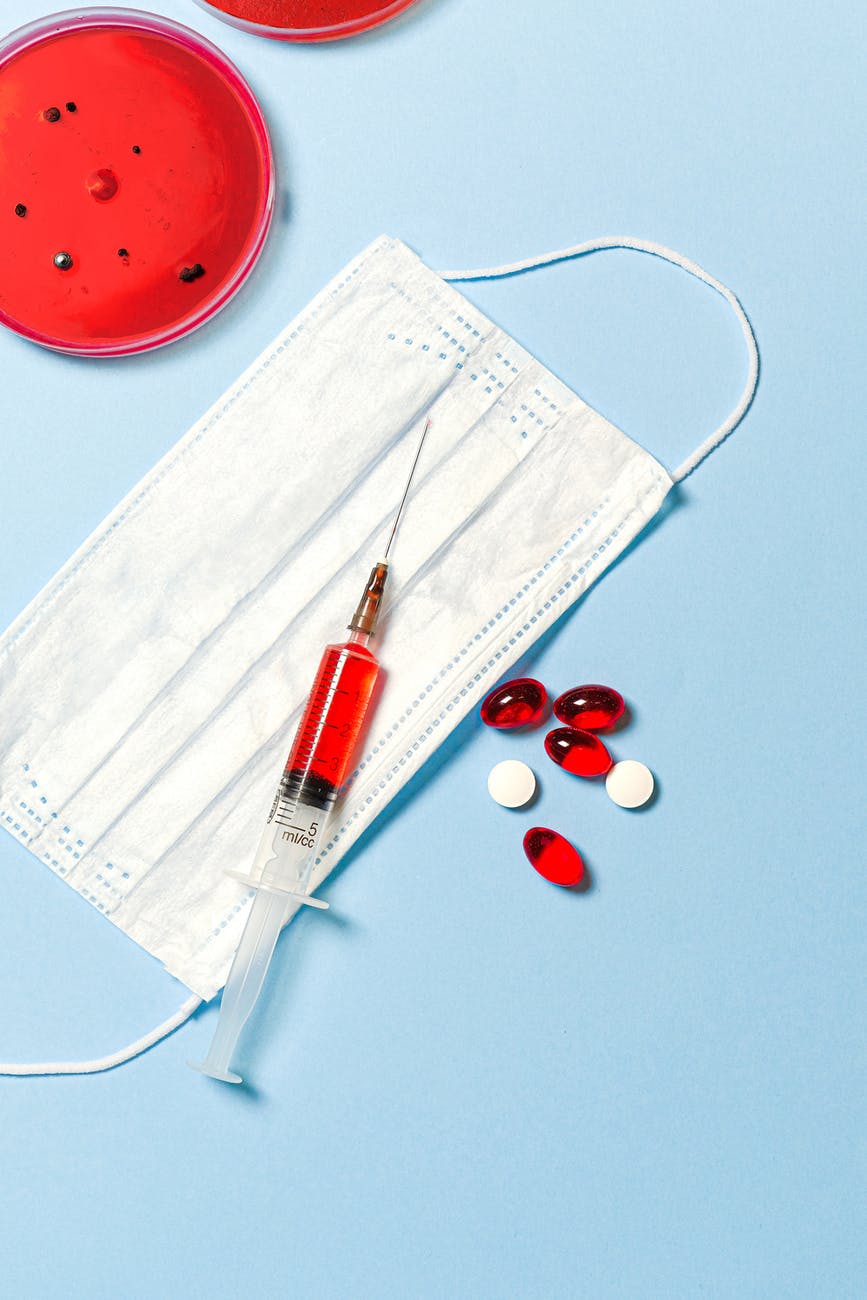
syringe and pills on blue background
Photo by Anna Shvets on Pexels.com

AstraZeneca’s experimental Covid-19 vaccine is probably the world’s leading candidate and most advanced in terms of development, the World Health Organization’s (WHO) chief scientist said on Friday.

The British drugmaker has already begun large-scale, mid-stage human trials of the vaccine, which was developed by researchers at University of Oxford.

This week, AstraZeneca signed its tenth supply-and-manufacturing deal.

“Certainly in terms of how advanced they are, the stage at which they are, they are I think probably the leading candidate,” WHO chief scientist Soumya Swaminathan told a news conference.

“So it’s possible they will have results quite early.”

Swaminathan said Moderna’s Covid-19 vaccine candidate was “not far behind” AstraZeneca’s, among more than 200 candidates, 15 of which have entered clinical trials.

ALSO READ: Coronavirus LIVE: Vaccine tests need over $30 bn in 12 months, says WHO

“We do know that Moderna’s vaccine is also going to go into phase three clinical trials, probably from the middle of July, and so that vaccine candidate is not far behind,” she said.

“But I think AstraZeneca certainly has a more global scope at the moment in terms of where they are doing and planning their vaccine trials.”

The WHO is in talks with multiple Chinese manufacturers, including Sinovac, on potential vaccines, as well as with Indian researchers, Swaminathan said.

She called for drugmakers to consider collaborating on Covid-19 vaccine trials, similar to the WHO’s ongoing Solidarity trial for drugs. A WHO-led coalition fighting the pandemic on Friday asked government and private sector donors to help raise $31.3 billion in the next 12 months to develop and deliver tests, treatments and vaccines for the disease. The initiative is called the ACT-Accelerator.

Andrew Witty, Special Envoy for the ACT-Accelerator, said it was important to consider a “portfolio of research efforts” for vaccines.

“It’s still very early days in this journey, we may be super lucky – which would be terrific – and have an early win,” Witty said. “Even if it takes 12 to 18 months that would be without precedent, the world’s fast development of vaccine.”


India crosses 5,00,000 Corona cases, situation now getting tensed…

In India, the cases of COVID 19 crosses 5 million till now. This is not a good news for all of us. In Maharashtra only 5,000 cases are reported yesterday. It means that this virus is now spreading very vigrousoly. It ‘s a bad sign for our country. We really need to stop it , otherwise this virus can be cmed into fourth phase, which will really destructive for us.

The state and central both government are trying hard to stop the spreading of this virus. But it’s really not working. The whole Unlocking Phase creates this hazardous condition for all of us. But there is not any choice for government other than this. Everyone is now living in a very dangerous environment. And any silly mistake is now dangerous for all of us.

There is no need need to be panic right now and the need is to wear mask outside the home and maintain the social distance. And the most important wash or sanitize your hands at 2 hour interval regularly. And try to be in discipline . A single mistake can make you a patient of this pandemic virus. And we should pray for making the vaccine of this virus as soon as possible….

PandemicXSuicide

In a country like India where already 1 in 5 Indians suffer from depression, this coronavirus pandemic is pushing our country into a mental health crisis.


According to WHO estimates, around 8,00,000 people commit suicide every year in the world. India alone accounts for approximately 30 percent of the world’s deaths resulting from suicide. In 2013, suicide claimed the lives of more than a quarter of a million Indians. That’s five times greater than all global deaths due to war and natural disasters combined.


According to the reports published by World Health Organisation (WHO) in 2018, India is the most depressed country in the world followed by China and USA with highest suicide rate in the South East Asia and by the end of 2020 about 20% of Indian population will suffer from mental illness.


In a large population of approximately 130 crore about 6.5% of Indians suffer from mental illness and because of the stigma attached to it only 10 – 20% of the people with mental illness seek help in India and the rest are forced to suffer in silence.


In a country where mental health budget is 0.05% of total health budget, 21 people die of every 1,00,000 people and 2,83,500 deaths due to suicide take place every year. We have highest number of teenage suicide rates globally. According to data compiled by NCRB every hour one student commit suicide in India, with about 28 such suicides reported daily. Nearly 10,159 students died by suicide in 2018 increasing from 9905 in 2017.


Suicide is one of India’s biggest silent killers and this pandemic is making situation worse for our country. According to an article by Economic Times published on May 5, 2020 about 300 people died due to suicide. 80 of them killed themselves due to loneliness and fear of being tested positive for the virus.


Devastation caused by this pandemic not only include death due to the virus but also loss of jobs, loss of homes, loss of business, pay cuts and the biggest recession of economy.


It is very obvious that this virus isn’t going to leave us soon and social distancing will continue to be a norm in most parts of the world for a long period of time which will place people at greater risk because many won’t find anyone to share their feelings with and many will not be able to take their medications.


The suicides taking place in our country is a wake up call for us to end stigmas attached to mental illness in our country and to take immediate actions to save our loved ones from this epidemic. This pandemic will hit those suffering from mental illness a little harder and we should make sure that they receive support from family members, friends, community, mental health professionals because they are in much need of all this.


One thing we should get straight is that each one of us goes through some mental problems at some point in our life and having a mental problem is not a sin so we should try our best to lift up each other during that phase of life so that they don’t feel alone during this tough time.

Dream big, but start small!

Why is it So Hard to Stick to Good Habits?

Have you ever set out with the goal of actually sticking to a new behavior … only to find yourself not doing it at all one week later?

I know I have.

Why is it so hard to form good habits? Why is it so difficult to make consistent change? How can we have the best intentions to become better, and yet still see so little progress?

And most importantly, is there anything we can do about it?

Your Life Goals are Not Your Habits

Your audacious life goals are fabulous. We’re proud of you for having them. But it’s possible that those goals are designed to distract you from the thing that’s really frightening you—the shift in daily habits that would mean a re–invention of how you see yourself.

We all have hopes and dreams.

And most of the time, we have at least a general sense of what those goals are: the way we want our bodies to look and the good health we want to enjoy, the respect we want to receive from our peers and the important work we want to create, the relationships we want with our family and friends and the love we want to share.

Overall, this is a good thing. It’s nice to know what you want and having goals gives you a sense of direction and purpose. However, there is one way that your hopes and dreams actually sabotage you from becoming better: your desires can easily lure you into biting off more than you can chew.

You know exactly what I mean…

  • You get inspired by The Biggest Loser, head to the gym, bust your butt to the point of exhaustion, and take the next three months off to recover.

.

  • You’re motivated by your friend’s stories of traveling to new countries, so you start to plan your own around–the–world trip, only to end up overwhelmed by all the details and stay at home.

Too often, we let our motivations and desires drive us into a frenzy as we try to solve our entire problem at once instead of starting a small, new routine..

So how do we balance our desire to make life–changing transformations with the need to build small, sustainable habits?.

Dream Big, But Start Small

If you’re serious about making real change — in other words, if you’re serious about doing things better than you are now — then you have to start small.

Imagine the typical habits, good or bad: Brushing your teeth. Putting your seatbelt on. Biting your nails.

These actions are small enough that you don’t even think about them. You simply do them automatically. They are tiny actions that become consistent patterns.

Wouldn’t it make sense that if we wanted to form new habits, the best way to start would be to make tiny changes that our brain could quickly learn and automatically repeat?

What if you started thinking of your life goals, not as big, audacious things that you can only achieve when the time is right or when you have better resources or when you finally catch your big break … but instead as tiny, daily behaviors that are repeated until success becomes inevitable?

What if losing 50 pounds wasn’t dependent on a researcher discovering the perfect diet or you finding a superhuman dose of willpower, but hinged on a series of tiny habits that you could always control? Habits like walking for 20 minutes per day, drinking 8 glasses of water per day, eating two meals instead of three.

I think the following quote, sums this idea up nicely.

If you plant the right seed in the right spot, it will grow without further coaxing.

I believe this is the best metaphor for creating habits.

The “right seed” is the tiny behavior that you choose. The “right spot” is the sequencing — what it comes after. The “coaxing” part is amping up motivation, which I think has nothing to do with creating habits. In fact, focusing on motivation as the key to habits is exactly wrong.

Let me be more explicit: If you pick the right small behavior and sequence it right, then you won’t have to motivate yourself to have it grow. It will just happen naturally, like a good seed planted in a good spot.

How great is that?

The typical approach is to dive into the deep end as soon as you get a dose of motivation, only to fail quickly and wish you had more willpower as your new habit drowns. The new approach is to wade into the shallow water, slowly going deeper until you reach the point where you can swim whether you’re motivated or not.

Focus on Lifestyle, Not Life–Changing

Too often we get obsessed with making life–changing transformations..

  • Running a marathon would be life–changing, running 3 days per week is a new type of lifestyle.
  • Squatting 100 more pounds would be life–changing, squatting 3 days per week is a new type of lifestyle.

Do you see the difference?

Life goals are good to have because they provide direction, but they can also trick you into taking on more than you can handle. Daily habits , tiny routines that are repeatable  are what make big dreams a reality.

.

Life skills: A necessary lesson!

In a world where humanity is slowly degrading, certain life skills need to be imbibed and nurtured into us humans. As life these days are full of twists and turns and numerous hurdles one needs to take smart decisions in the right direction. Life skills can teach one to deal with stressful situations and can abstain one’s self from making hasty decisions.

Life skills will help us deal with the challenges of our ubiquitous life, it will aid us in decision making and will also help us in controlling our mind in inflexible times. One can discipline themselves with the implementation of certain life skills in everyday life. Being a good human and inculcating virtuous values is a long process but not a tough task.

According to UNICEF life skills should be inculcated amongst children from a young age be it empathy, problem solving or even critical thinking, this would help the children in taking the right decisions and thinking in the right way when they glow older especially in work places. Certain life skills will refrain oneself from taking illogical settlements. Life skills can be anything from a simple decision of wearing a helmet on your two wheeler to a decision refraining yourself from using the computer for long hours.

These days the word humanity is heard very frequently be it social media, news articles or just a usual family conversation but when it comes to practising humanity we are definitely greatly lagging behind and we can see that from unbelievable cases happening in and around the world which have shook us all and touched our hearts, questioning our sensibility as human beings.

Just like IQ that is Intelligence quotient, EQ is also important is also equally important and stands for emotional quotient (emotional intelligence), especially in a world where we are more prone to mental illnesses like depression and anxiety disorders. EQ is a great way to measure your emotional intelligence, be it decision making, critical thinking, communication and interpersonal skills or even self-awareness, to improve one’s EQ one has to improve and work on their life skills. The value which emotional intelligence hold is equally as important as the value given to IQ.

Certain life skills are crucial to holistic development and are essential, they are-

  • Decision Making and Problem Solving.
  • Interpersonal skills and Communication
  • Self Awareness and Empathy
  • Critical thinking and Creative thinking
  • Equanimity(self-control) and Assertiveness

These life skills when inculcated in our daily life can help us overcome so many obstacles. They inculcate certain values in us such as goal setting, courage, leadership, persistence, flexibility, confidence and sportsmanship.

Many schools have life skills as a compulsory subject to be taught to the students in their curriculum through interesting and engaging activities. Be it sports or fun activities, which would help them in their journey in the future. I feel it should be included in all school curriculums and should be taught  in middle school(childhood) as it is needed for the adoption of certain vital skills such as decision making, cooperation and empathy.

To induce positive development and good ethics within one’s self, self-work on life skills is needed, especially in a time where life is becoming tedious and can take unexpected turns one needs to look into one’s self care.