Water on Mars: Exploration & Evidence

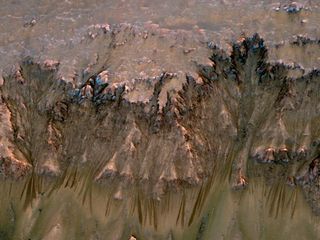
Newton Crater

Liquid water may still flow on Mars, but that doesn’t mean it’s easy to spot. The search for water on the Red Planet has taken more than 15 years to turn up definitive signs that liquid flows on the surface today. In the past, however, rivers and oceans may have covered the land. Where did all of the liquid water go? Why? How much of it still remains?

Observations of the Red Planet indicate that rivers and oceans may have been prominent features in its early history. Billions of years ago, Mars was a warm and wet world that could have supported microbial life in some regions. But the planet is smaller than Earth, with less gravity and a thinner atmosphere. Over time, as liquid water evaporated, more and more of it escaped into space, allowing less to fall back to the surface of the planet.

Where is the water today?

Liquid water appears to flow from some steep, relatively warm slopes on the Martian surface. Features known as recurring slope lineae (RSL) were first identified in 2011in images taken by the High Resolution Imaging Science Experiment (HiRISE) camera aboard the Mars Reconnaissance Orbiter (MRO). The dark streaks, which appear seasonally, were confirmed to be signs of salty water running on the surface of the planet.

“If this is correct, then RSL on Mars may represent the surface expression of a far more significant ongoing drainage system on steep slopes in the mid-latitudes,” a research team member told Space.com in 2012.

In 2015, spectral analysis of RSL led scientists to conclude they are caused by salty liquid water. [Related: Salty Water Flows on Mars Today, Boosting Odds for Life]

“The detection of hydrated salts on these slopes means that water plays a vital role in the formation of these streaks,” the study’s lead author, Lujendra Ojha, of the Georgia Institute of Technology in Atlanta, said in a statement. Vast deposits of water appear to be trapped within the ice caps at the north and south poles of the planet. Each summer, as temperatures increase, the caps shrink slightly as their contents skip straight from solid to gas form, but in the winter, cooler temperatures cause them to grow to latitudes as low as 45 degrees, or halfway to the equator. The caps are an average of 2 miles (3 kilometers) thick and, if completely melted, could cover the Martian surface with about 18 feet (5.6 meters) of water. 

Frozen water also lies beneath the surface. Scientists discovered a slab of ice as large as California and Texas combined in the region between the equator and north pole of the Red Planet. The presence of subsurface water has long been suspected but required the appearance of strange layered craters to confirm. Other regions of the planet may contain frozen water, as well. Some high-latitude regions seem to boast patterned ground-shapes that may have formed as permafrost in the soil freezes and thaws over time. 

The European Space Agency’s Mars Express spacecraft captured images of sheets of ice in the cooler, shadowed bottoms of craters, which suggests that liquid water can pool under appropriate conditions. Other craters identified by NASA’s Mars Reconnaissance Orbiter show similar pooling.

Evidence for water on Mars first came to light in 2000, with the appearance of gullies that suggested a liquid origin. Their formation has been hotly debated over the ensuing years.

But not everyone thinks that Mars contains water today. New research reveals that RSL may actually have formed by granular flows formed by the movement of sand and dust.

“We’ve thought of RSL as possible liquid water flows, but the slopes are more like what we expect for dry sand,” lead author Colin Dundas said in a statement. “This new understanding of RLS supports other evidence that shows that Mars today is very dry.”

That idea may have been washed away by the recent discovery of a possible subsurface lake near the Martian South Pole.

An underground lake?

Researchers made a big splash when they announced that Mars might be hiding a lake beneath its southern pole. The European Mars Express spacecraft used its Mars Advanced Radar for Subsurface and Ionosphere Sounding (MARSIS) to detect the proposed water. Ground-penetrating radar sent radar pulses to the surface, then timed how long it took for them to be reflected. The properties of the subsurface layers affect how long it takes for the beams to return.

MARSIS’ investigation revealed that the Martian south pole is composed of multiple layers of ice and dust to a depth of about nearly 1 mile (1.5 kilometers) spread over a 124-mile-wide (200 km) region.  

“This subsurface anomaly on Mars has radar properties matching water or water-rich sediments,” Roberto Orosei, principal investigator of the MARSIS experiment and lead author of the new research, said in a statement. 

MARSIS also revealed the presence of a subsurface lake among the pockets. According to the radar echoes, the lake is no more than 12.5 miles (20 km) across, buried nearly a mile beneath the surface. The scientists aren’t certain of the lake’s depth, but they have confirmed that it is at least 3 feet (1 meter) deep. According to the researchers, the lake must have salt to keep from freezing.

“This is just one small study area; it is an exciting prospect to think there could be more of these underground pockets of water elsewhere, yet to be discovered,” Orosei said.

Not all researchers are as certain about the presence of liquid water.

“I think it’s a very, very persuasive argument, but it’s not a conclusive or definitive argument,” Steve Clifford, a Mars researcher at the Planetary Science Institute in Arizona, told Space.com. “There’s always the possibility that conditions that we haven’t foreseen exist at the base of the cap and are responsible for this bright reflection.”

More than three decades ago, Clifford proposed that Mars could harbor liquid water beneath its polar caps in the same way that Earth does. On Earth, lakes beneath the Antarctic and Greenland ice sheets are created when heat from within the planets melt the glaciers in patches. Clifford told Space.com that a similar scenario could happen beneath the Martian polar ice caps.

“The bright spot seen in the MARSIS data is an unusual feature and extremely intriguing,” Jim Green, NASA’s chief scientist, said in a statement. “It definitely warrants further study. Additional lines of evidence should be pursued to test the interpretation.”

“We hope to use other instruments to study it further in the future,” Green said.

Liquid gold

Water may seem like a very common element to those of us stuck on Earth, but it has great value. In addition to understanding how Mars may have changed and developed over time, scientists hope that finding water will help them to find something even more valuable — life, either past or present.

Only Earth is known to host life, and life on our planet requires water. Though life could conceivably evolve without relying on this precious liquid, scientists can only work with what they know. Thus they hope that locating water on celestial bodies such as Mars will lead to finding evidence for life.

With this in mind, NASA developed a strategy for exploring the Red Planet that takes as its mantra “follow the water.” Recent orbiters, landers, and rovers sent to Mars were designed to search for water, rather than life, in the hopes of finding environments where life could have thrived.

That has changed, however, with the flood of evidence these robots have returned. Curiosity determined that Mars could indeed have supported microbial life in the ancient past, and the next NASA rover — a car-size robot-based heavily on Curiosity’s basic design — will blast off in 2020 to look for evidence of past Red Planet life.


Short Anime series to binge watch

Most of the popular anime series like Naruto, dragon ball z, one piece etc. have more than 200 episodes. They are all great shows off course but watching them requires a lot of time. Due to this reason some people refrain from getting into these series. There are however, many series out there which are very good too and very short indeed.
Here are some of the short but great anime series. Each of these series have utmost 13 episodes which can be watched in a day or two.

• Erased (2016):
Episodes: 12
Genre: Mystery, sci-fi, thriller

Erased is one of the best short anime series out there. It is a bliss for thrill seekers and for people who like the idea of time travel. The story revolves around a 29 year old man who is sent back in time to erase the events which lead to his mother’s death, which began with a series of kidnappings. The anime has very nice soundtrack and beautiful animation and the plot is very interesting. The characters are well written and overall the series is a must watch.

• Blue Spring Ride (2014) :
Episodes: 12
Genre: coming-of-age, drama, romance

Blue spring ride or more popularly known as ao haru ride, is a very decent slice of life romance anime. It is a coming of age drama and shows how the characters grow and change over time. It depicts very well the internal conflicts characters have and is very relatable to watch. The music in this anime is used very well to emphasise the scenes. Overall it is a must watch for those who are into romance genre.

• Terror in Resonance (2014) :
Episodes: 11
Genre: psychological, thriller

This is anime is rather underrated but nevertheless it is one of the best short anime thrillers out there. This anime serves everything in just 11 episodes. Excellent storyline, great music, top notch animation etc. It depicts terrorism very differently and deals with many of the contemporary issues. This is a must watch for everyone.

• Angel Beats! (2010) :
Episodes: 13
Genre: fantasy

This anime is set in a realm of afterlife where a band of teens fight from being taken to the next level. This is a very nice series and worth your time. It has action, drama, fight sequences, tragedies, music, romance and what not. The concept of this anime is very different and it deals with overcoming the regrets of life. It is an epic journey showcased in just 13 episodes!

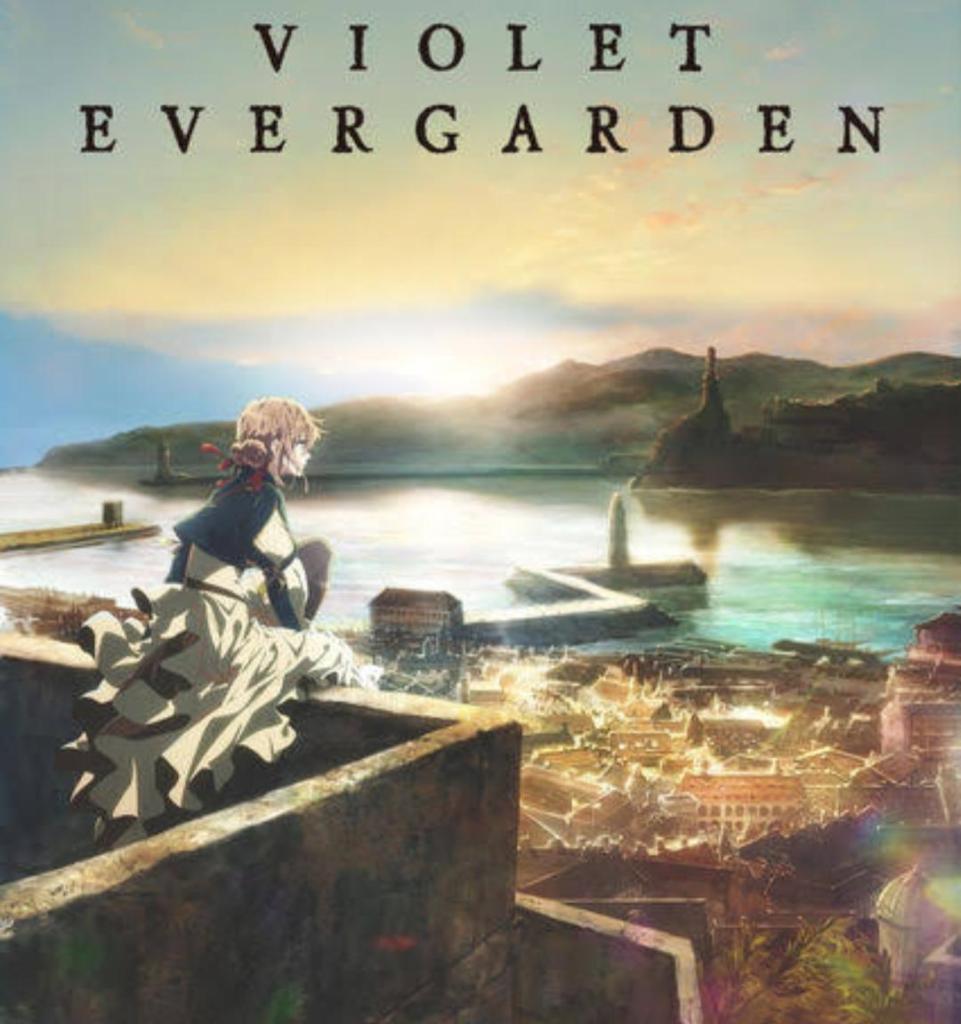
• Violet Evergarden (2018) :
Episodes: 13
Genre: coming-of-age

This is a more recent anime series. The story revolves around the post war life of an emotionally detached soldier who begins to reconnect with her feelings while searching for the meaning behind her commander’s final words. This anime is a masterpiece. The animation, music, pacing, character designs, backstories etc. all are done very well. It is very empathetic and sentimental anime. This anime is a must watch for anyone!!

The Origin Of Vedic Civilization

Early Vedic Age

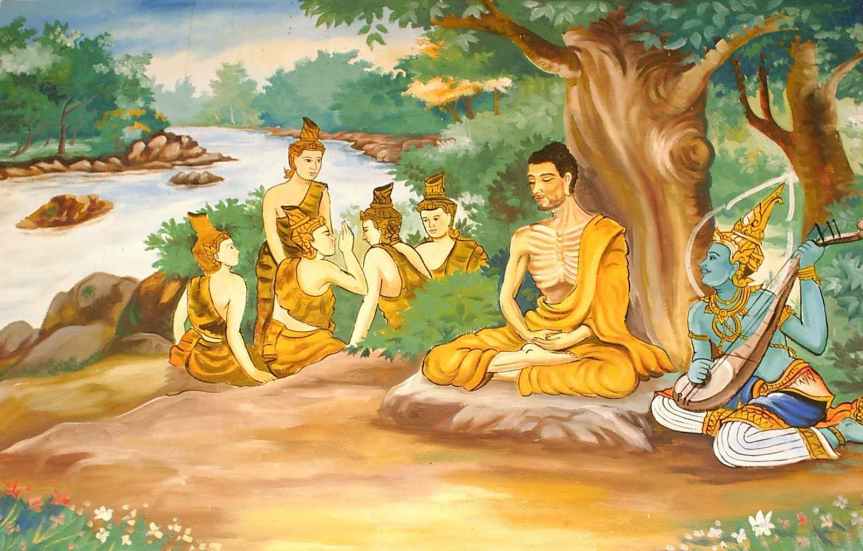
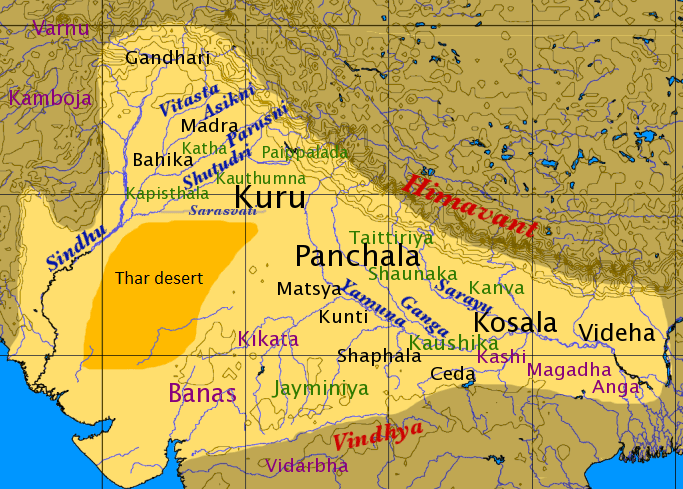
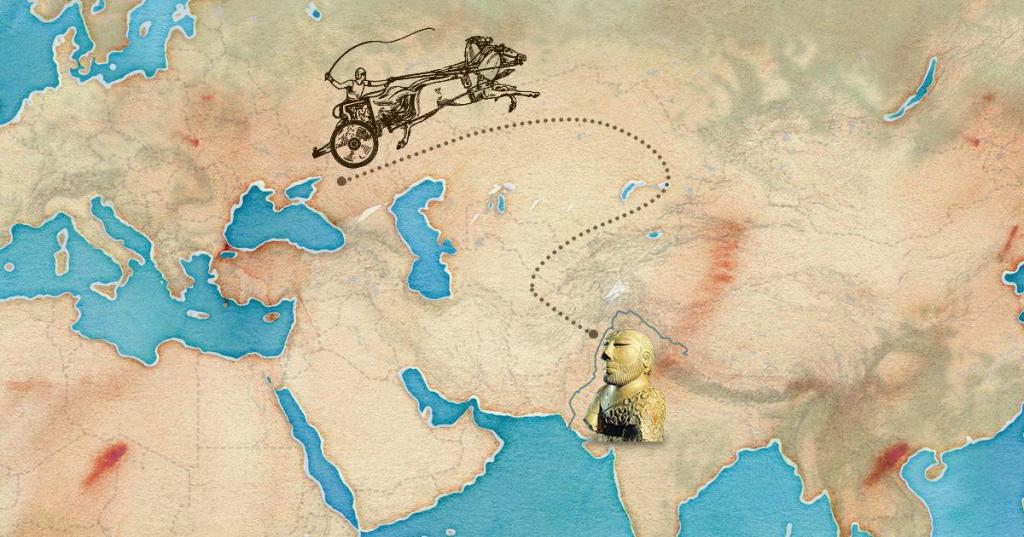
The early Vedic age is historically dated to the second half of the second millennium BCE. Historically, after the collapse of the Indus Valley Civilisation, which occurred around 1900 BCE, groups of Indo-Aryan peoplesmigrated into north-western India and started to inhabit the northern Indus Valley. The Indo-Aryans represented a sub-group that diverged from other Indo-Iranian tribes at the Andronovo horizon before the middle of the 2nd millennium BCE, The Indo-Iranians originated in the Sintashta culture, from which arose the subsequent Andronovo horizon. The Indo-Aryans migrated through the adjacent Bactria-Margiana area (present-day northern Afghanistan) to northwest India, , followed by the rise of the Iranian Yaz culture at c. 1500 BCE, and the Iranian migrations into Iran at c. 800 BCE.

The Indian Civilization an Unbroken Tradition

Indian writers and archaeologists have opposed the notion of a migration of Indo-Aryans into India, and argued for an indigenous origin of the Indo-Aryans. In this view, “the Indian civilization must be viewed as an unbroken tradition that goes back to the earliest period of the Sindhu-Sarasvati (or Indus) tradition (7000 or 8000 BCE).” Though popular in India, and reflecting Indian views on Indian history and religion,the idea of a purely indigenous origin of the Indo-Aryans is outside the academic mainstream.

The Aryans

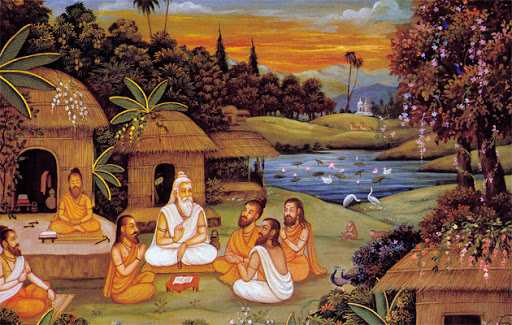
The knowledge about the Aryans comes mostly from the Rigveda-samhita,i.e. the oldest layer of the Vedas, which was composed c. 1200–1000 BCE. They brought with them their distinctive religious traditions and practices. The Vedic beliefs and practices of the pre-classical era were closely related to the hypothesised Proto-Indo-European religion,and the Indo-Iranian religion. Funeral sacrifices from the Sintashta-culture show close parallels to the sacrificial funeral rites of the Rigveda, while, according to Anthony, the Old Indic religion probably emerged among Indo-European immigrants in the contact zone between the Zeravshan River (present-day Uzbekistan) and (present-day) Tajikistan.It was “a syncretic mixture of old Central Asian and new Indo-European elements”, which borrowed “distinctive religious beliefs and practices” from the Bactria–Margiana culture, including the god Indra and the ritual drink Soma.

Dr. Ambedkar’s philosophy of caste in India

In India Caste System consists of two different concepts that are Varna and
Jati, the real concept of Varna has almost disappeared in the present
context and has changed into Jati. Caste is such a deep-rooted and pervasive
concept, it is a rigid form of stratification system, in which mobility of rank
and status is not allowed. The members of backward classes are not a part
of Hindu society even then, they had started observing untouchability
towards Dalits- who themselves have a caste hierarchy.
During his lifetime Dr. Ambedkar had played three roles: caste leader,
untouchable spokesman, and that of a national statesman. He was a guide,
guru, and decision-maker for his caste, the Mahars of Maharashtra.

According to him, no civilized society other than Indian one practices rituals
of the remote past even today. Its religion is essentially primitive, and its
tribal code, despite the advancement of time and civilization, operates with
all its pristine vigor even today. The prevalence of exogamy was well-known
in the primitive world. The caste system has made Hindu society stagnant
which creates hurdles in integration with outsiders. Even internally, Hindu
society fails to satisfy the test of a homogeneous society, as it is just a
conglomeration of different castes. The caste system does not allow lower
castes to prosper which led to moral degradation. The battle for the removal
of untouchability becomes the battle for human rights and justice.
Dr. Ambedkar criticized old Law books like Manusmriti and Arthshastras
who showed the inferiority and bitterness towards the suppressed class. He
also criticized the higher standard of Brahmans who are category above of
all. The Brahmans are somehow responsible for social exploitation and the
backwardness of untouchables.

Hindi a national language ?

There as been many controversy about this but as a south Indian who’s mother tongue is Tamil ,how do we see this thing ?. We are not only the one who is opposing hindi as a national language but this has been framed that we are the one opposing this thing. But practically India is a country which speaks more than 20 languages and tamil is one of the oldest.

the thing is we are not saying that Hindi should not exist but we don’t want them to force on every one if anyone wants to learn hindi they can. But some of them are trying to make people forget Tamil but is that what you think . you cant just make people forget there their mother tongue by forcing a language

I read this in a blog stating south Indian cant speak hindi but we are the people who knows hindi but refuses to speak hindi. The statement they are making is hindi is a profound language then what about Tamil it is the oldest language its is been here over 2000 years but yours is just 70 years old . Its funny right people are translating novels from tamil to their language not from hindi . you cant even compare it.

If you wanna make a language as a national language make English a national language because each and every country speaks English not Hindi . see before speaking about this just try to go through the history and you will know who is the real king and which is the 1st language that is spoken

Covid-19 THIRD WAVE.

Raising the alarm bells for policymakers and citizens, a research report has contended that India may witness the third covid wave from August 2021. The report – COVID-19: The race to finishing line – prepared by SBI Research, claims that the covid third wave peak will arrive in the month of September 2021.

The research report says that India achieved its second wave peak on 7th May. “Going by the current data, India can experience cases around10,000 somewhere around the 2nd week of July. However, the cases can start rising by the second fortnight of August,” the report said.


These are the highlights from the report:

1. Global data shows that on average third wave peak cases are around 1.7 times the peak cases at the time of second-wave.
2. However, based on historical trends the cases can start rising by the second fortnight of Aug’21 with peak cases at least a month later.
3. India has started giving more than 40 lakh vaccination doses per day as shown by 7 DMA.
4. Overall, India has fully vaccinated 4.6% of its population, apart from 20.8% having received one dose. This is still lower than other countries including the US, the UK, Israel, Spain, France among others.
5. The decline in bank deposits in FY21 and concomitant increase in health expenditure may result in further increase in household debt to GDP in FY22.
6. States with high per capita GDP have been associated with higher Covid-19 deaths per million while low per capita GDP are associated with low Covid-19 deaths.
7. Only 4.6 per cent of the population in India is fully vaccinated, while 20.8 per cent have received one dose, much lower compared to other countries including the US (47.1 per cent), the UK (48.7 per cent), Israel (59.8 per cent), Spain (38.5 per cent), France (31.2), among others.

Dystopian Genre: Analysis and its Significance

The dystopian genre can be categorized into a wide group of literary works of speculative fiction. It usually involves a vision of the future, or an alternate world, which is used by an author to comment on and explore ideas about their own society. It’s has been a popular genre for quite some time. Lets analyze why dystopian literature, in particular, is so important.  

Dystopian literature makes important commentary on the world, societies, and our governments. Humans, since the beginning of the organized society, have always been fascinated by a perfect society which is ‘Utopia’. Since Humans are flawed and our societies mirror that, but it’s also in our nature to strive for better, similar to philosophers who focused on political theory. 

During the medieval age, utopia seemed to be a noble idea among the European authors and philosophers. While its main aim was to depict an ideal society, Dystopia on the other hand was a response where authors argued with the Utopian literature. Dystopias are utopias in the real world as these visionary ideas work well, as ideas. When placed in reality they quickly turn into dystopias.

In order to have an ideal society, humans should be devoid of humanistic values. Writers Depict societies that strive for perfection but ultimately fail as they ignore some vital part of humanity, which makes a convincing dystopian world.

Writers look for flaws that exist in our societies today, grounded in truth, and amplify them. A similar reflection of flaws can be seen in Orwell’s 1984 where it paralleled the problems that were ongoing in that period with the depiction of the overt dictatorial elements present in the Soviet Union and Third Reich. He critically pointed out the Government Surveillance, thought police, the constant change of history, and banning of books, which may seem exaggerated. These elements parallel our society albeit in a more subdued manner. Nevertheless, the parallels are present there, hence 1984 is still a very relevant piece of literature today.    

Similarly in Brave new world, Huxley pointed out that there would be no need for banning books as people will be bombarded with too much information and would be critically incapable to decipher reality with information overload. Where pleasure receptors hijack people’s critical thinking    

Within these two instances, we can interpret that one man’s heaven (Utopia) is another man’s hell (Dystopia). And dystopian writers don’t shy away from being political or radical when they try to describe these phenomena to warn readers.

It has also given rise to many similar genres like science fiction and cyberpunk, dystopian literature can share elements with these themes. In recent times, dystopian literature has also been popularized with the help of Movies, TV shows, and Video Games. 

With the advent of the 20th-century dystopian literature evolved and flourished, many of the revered classic literature in the past century has been a part of this genre. Technology and science progressed and new means of government and bureaucratic institutions were established. This gave writers a new method to introspect the societal trend.   

There is a critical need to academically evaluate these literary writings as its getting more relevant in our present society.

References:

Nelson Mandela

Leaders

Leaders – we presumably see or hear about them practically every day from our parents, on television, and at school. The captain of our football team, our classroom teachers, and the individuals in charge of our country are all leaders. Leaders have only one task: to guide their followers toward a shared objective. This aim might be anything from winning a football game to passing an exam to bettering the country. The world would be a chaotic place if there were no leaders.

A Leader’s Recipe

So, what does it take to be a good leader? Many people think that some people are “born” leaders, that they are gifted with unique abilities that no one else possesses. Anyone may become a leader; acquiring the attributes of a good leader is not difficult.

Good Leader:

  • Accept responsibility for their acts.
  • Others should be explained, informed, taught, and guided.
  • When making decisions, show courage.
  • Are determined and compelled to succeed.
  • Are trustworthy and eager to work.
  • Encourage and encourage others to follow in their footsteps.
  • They pay attention to, comprehend, and care for their followers.

Great leaders have ‘charisma.’ It attracts people to listen, to trust, and to follow them.

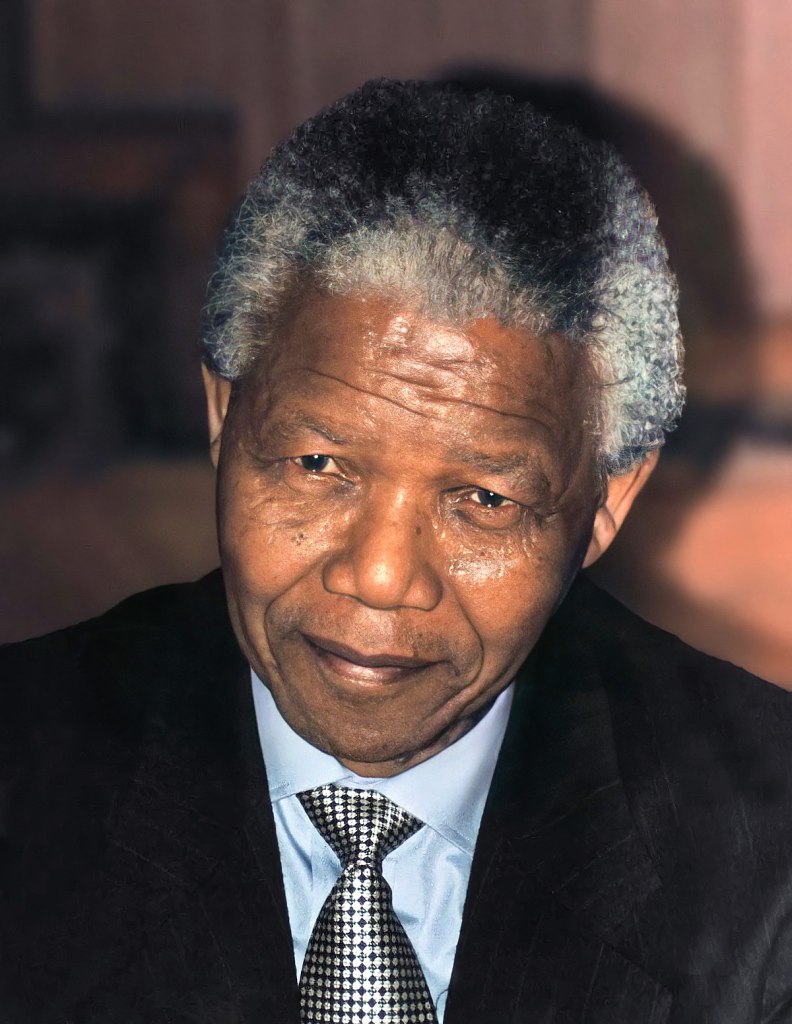
Nelson Mandela is among the greatest statesmen of the 20th century. He fought apartheid in South Africa, where people of color were treated badly by the whites. 

When Nelson Mandela was a young man, apartheid in South Africa prohibited white and black people from doing activities together and forced them to live separate lifestyles.

White people, who were a small part of the population, were in charge of everything in South Africa.

Black people were not allowed to use the same items or go to the same locations as white people, and white people had superior schools and hospitals.

Basic rights, such as the ability to vote in elections, were also denied to black people. Nelson Mandela, on the other hand, felt that everyone should be treated equally.

In 1944, Mandela became a member of the African National Congress (ANC). In 1964, he was imprisoned for life, by the white minority government of South Africa, for conspiracy to overthrow the government.

Photos of Mandela were prohibited while he was in jail, and it was even prohibited to mention him in public.

People from all around the world, on the other hand, pushed for his release.

Even while in jail, Mandela remained a leading representative for the fight for equality. Following global pressure, Mandela was released from prison in 1990. Mandela had spent 27 years in jail and was greeted as a hero on his release. In 1991, the government abolished the laws, which legalized apartheid. Mandela, along with the South African President, Frederick Willem de Klerk, was awarded the Nobel Peace Prize in 1993. In 1994, Mandela was elected South Africa’s first black President, in the nation’s first multiracial election. 

After being elected president, Nelson Mandela set out to bring people of all races together.

South Africa hosted its first big sporting event, the Rugby World Cup, in 1995.

Mandela gave his support to the South African rugby team, made up mostly of white men so that it would unite the country. The team, known as the Springboks, went on to lift the trophy.

Mandela became a global celebrity and one of the most popular leaders in the world, with politicians and celebrities wanting to see him.

Digital marketing

Digital marketing the world become digitalizing day to day.

Every things we can do with digital, we are become digital life’s.

Marketing is main source for improve companies, on before digital life’s there was we have person to person and posters to expose their products and services  

Now , we are in surviving digital life’s . every things will get on internet so the bases of internet ,we  have recognised by Digital marketing .

The digital marketing  it is  high level, digital marketing refers to advertising delivered through digital channels such as search engines, websites, social media, email, and mobile apps.

by help of  these online media channels, digital marketing is the method by which companies endorse goods, brands and services.

On these digital marketing we have a wide range of digital marketing jobs out there meaning there are a huge variety of career options.

  • Video/audio production.
  • Interactive technology (such as AI)
  • Mobile marketing.
  • Search engine optimization (SEO)
  • Search engine marketing (SEM)
  • Social media.
  • E-commerce.
  • Email marketing.

Scopes for digital marketing

The scope of digital marketing is quite good. Anyone who is looking  to learning digital marketing  would surely get a good benefit from it. There are also huge of job opportunities available in the field .

How can you start

There we have many web sites and blogs, start learning digital marketing help of reading books or blogs, enrolling in courses, watching videos on YouTube, listening to podcasts, watching webinars, and more.

SUMER

Sumer was an ancient civilization founded in the Mesopotamia region of the Fertile Crescent situated between the Tigris and Euphrates rivers. Known for their innovations in language, governance, architecture and more, Sumerians are considered the creators of civilization as modern humans understand it. Their control of the region lasted for short of 2,000 years before the Babylonians took charge in 2004 B.C.

Sumerian Civilization

Sumer was first settled by humans from 4500 to 4000 B.C., though it is probable that some settlers arrived much earlier.

This early population—known as the Ubaid people—was notable for strides in the development of civilization such as farming and raising cattle, weaving textiles, working with carpentry and pottery and even enjoying beer. Villages and towns were built around Ubaid farming communities.

The people known as Sumerians were in control of the area by 3000 B.C. Their culture was comprised of a group of city-states, including Eridu, Nippur, Lagash, Kish, Ur and the very first true city, Uruk. At its peak around 2800 BC, the city had a population between 40,000 and 80,000 people living between its six miles of defensive walls, making it a contender for the largest city in the world.

Each city-state of Sumer was surrounded by a wall, with villages settled just outside and distinguished by the worship of local deities.

Sumerian Language And Literature

The Sumerian language is the oldest linguistic record. It first appeared in archaeological records around 3100 B.C. and dominated Mesopotamia for the next thousand years. It was mostly replaced by Akkadian around 2000 B.C. but held on as a written language in cuneiform for another 2,000 years.

Cuneiform, which is used in pictographic tablets, appeared as far back as 4000 B.C., but was later adapted into Akkadian, and expanded even further outside of Mesopotamia beginning in 3000 B.C.

Writing remains one of the most important cultural achievements of the Sumerians, allowing for meticulous record keeping from rulers down to farmers and ranchers. The oldest written laws date back to 2400 B.C. in the city of Ebla, where the Code of Er-Nammu was written on tablets.

The Sumerians were considered to have a rich body of literary works, though only fragments of these documents exist.

Sumerian Art and Architecture

Architecture on a grand scale is generally credited to have begun under the Sumerians, with religious structures dating back to 3400 B.C., although it appears that the basics of the structures began in the Ubaid period as far back as 5200 B.C. and were improved upon through the centuries. Homes were made from mud bricks or bundled marsh reeds. The buildings are noted for their arched doorways and flat roofs.

Elaborate construction, such as terra cotta ornamentation with bronze accents, complicated mosaics, imposing brick columns and sophisticated mural paintings all reveal the society’s technical sophistication.

Sculpture was used mainly to adorn temples and offer some of the earliest examples of human artists seeking to achieve some form of naturalism in their figures. Facing a scarcity of stone, Sumerians made leaps in metal-casting for their sculpture work, though relief carving in stone was a popular art form.

Under the Akkadian dynasty, sculpture reached new heights, as evidenced by intricate and stylized work in diorite dated to 2100 B.C.

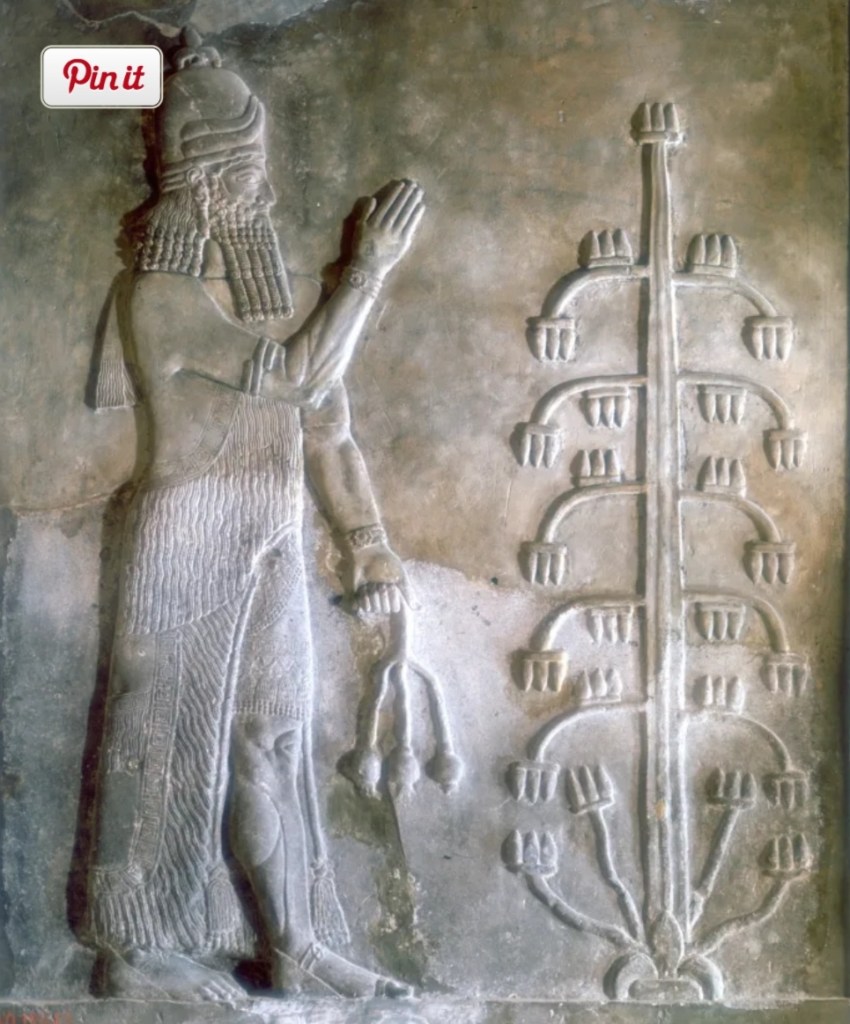
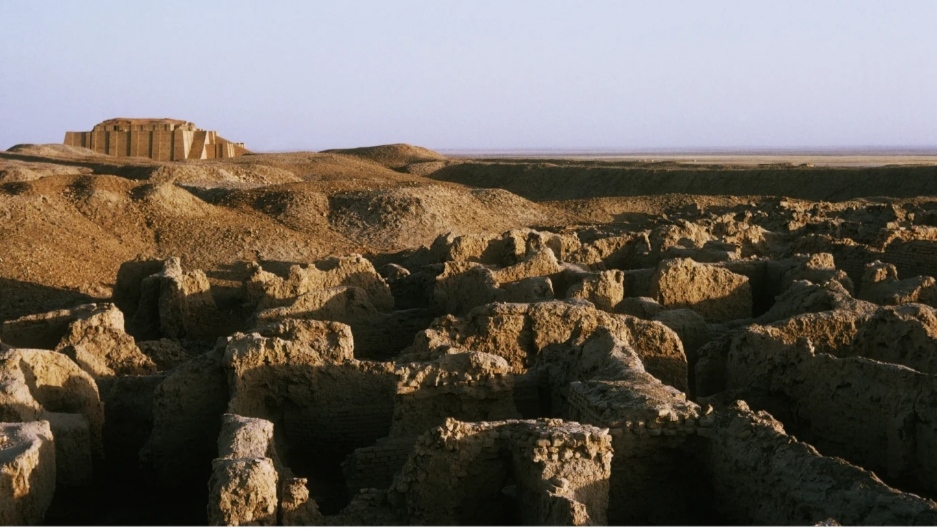
Ziggurats began to appear around 2200 B.C. These impressive pyramid-like, stepped temples, which were either square or rectangular, featured no inner chambers and stood about 170 feet high. Ziggurats often featured sloping sides and terraces with gardens. The Hanging Gardens of Babylon was one of these.

Palaces also reach a new level of grandiosity. In Mari around 1779 B.C., an ambitious 200-room palace was constructed.

Sumerian Science

Sumerians had a system of medicine that was based in magic and herbalism, but they were also familiar with processes of removing chemical parts from natural substances. They are considered to have had an advanced knowledge of anatomy, and surgical instruments have been found in archeological sites.

One of the Sumerians greatest advances was in the area of hydraulic engineering. Early in their history they created a system of ditches to control flooding, and were also the inventors of irrigation, harnessing the power of the Tigris and Euphrates for farming. Canals were consistently maintained from dynasty to dynasty.

Their skill at engineering and architecture both point to the sophistication of their understanding of math. The structure of modern time keeping, with sixty seconds in a minute and sixty minutes in an hour, is attributed to the Sumerians.

Sumerian Culture

Schools were common in Sumerian culture, marking the world’s first mass effort to pass along knowledge in order to keep a society running and building on itself.

Sumerians left behind scores of written records, but they are more renowned for their epic poetry, which influenced later works in Greece and Rome and sections of the Bible, most notably the story of the Great Flood, the Garden of Eden, and the Tower of Babel. The Sumerians were musically inclined and a Sumerian hymn, “Hurrian Hymn No. 6,” is considered the world’s oldest musically notated song.

Gilgamesh

The very first ruling body of Sumer that has historical verification is the First Dynasty of Kish. The earliest ruler mentioned is Etana of Kish, who, in a document from the time, is credited as having “stabilized all the lands.” One thousand years later, Etana would be memorialized in a poem that told of his adventures in heaven.

The most famous of the early Sumerian rulers is Gilgamesh, king of Uruk, who took control around 2700 B.C. and is still remembered for his fictional adventures in the Epic of Gilgamesh, the first epic poem in history and inspiration for later Roman and Greek myths and Biblical stories.

A devastating flood in the region was used as a pivotal point in the epic poem and later reused in the Old Testament story of Noah.

Sumerian Power Struggles

Somewhere around 2600 B.C., a power struggle erupted between the leaders of Kish, Erech and Ur, which set off a “musical-chairs” scenario of rulers for the region for the next 400 years.

The first conflict resulted in the kingdom of Awan seizing control and shifting the ruling body outside of Sumer until the kingship was returned to the Kish.

The Kish kept control briefly until the rise of Uruk King Enshakushanna, whose brief dynasty was followed by Adabian conqueror Lugalannemundu, who held power for 90 years and is said to have expanded his kingdom up to the Mediterranean. Lugalannemundu also conquered the Gutian people, who lived in the Eastern Iraqi mountains and who would later come to rule Sumer.

In 2500 B.C. the only woman to rule the Sumerians, Kubaba, took the throne. She is the only female listed on the Sumerian King List, which names all rulers of Sumer and their accomplishments. Kubaba’s son, Puzur-Suen, eventually reigned, bringing in the fourth dynasty of Kish, following a brief ascendency of Unzi, the first in the Akshak Dynasty.

This last Kish dynasty ruled for a century before Uruk king Lugal-zage-si ruled for 25 years before Sargon took control in 2234.

Sargon

Sargon was an Akkadian whose past is shrouded in legends that some claim were ignited by Sargon himself. The claim is that he was the secret child of a high priestess who placed him in a basket and cast him off into a river, a story that was later utilized for Moses in the Old Testament.

Sumerian tradition says that Sargon was the son of a gardener who rose to the position of cupbearer for Ur-Zababa, king of Kish, which was not a servant position but a high official.

Ur-Zababa was defeated by the king of Uruk, who was, in turn, overtaken by Sargon. Sargon followed that victory by seizing the cities of Ur, Umma and Lagash, and establishing himself as ruler. His militaristic reign reached to the Persian Gulf.

Sargon built the city of Agade as his base, south of Kish, which became an important center in the ancient world and a prominent port. Agade was also home to Sargon’s army, which is considered the first organized standing army in history and the earliest to use chariots in warfare.

Sargon took control of the religious cultures of the Akkadians and the Sumerians, making his daughter Enhedu-anna the head priestess of the moon god cult of Ur. Enheduanna is best remembered for her transcriptions of temple hymns, which she also wrote and preserved in her writings.

Sargon ruled for 50 years, and after his death, his son Rimush faced widespread rebellion and was killed. Rimush’s brother Manishtushu met the same fate.

Sargon’s grandson, Naram-Sin, took the throne in 2292 B.C. Naram-Sin considered himself divine and was leveled with charges of sacrilege.

The Gutians invaded in 2193 B.C. following the reign of the last Akkadian king, Naram-Sin’s son Sharkalisharri. Their era is marked by decentralized chaos and neglect. It was during Gutian reign that the grand city of Agade decayed into wreckage and disappeared from history.

Ur-Nammu

The final gasp of Sumer leadership came in 2100 B.C. when Utuhegal, king of Ur, overthrew the Gutians. Utuhegal’s reign was brief, with Ur-Nammu, the former governor of Ur, taking the throne, starting a dynasty that would rule for about a century.

Ur-Nammu was known as a builder. Figurines from the time depict him carrying building materials. During his reign, he started massive projects to build walls around his capital city, to create more irrigation canals, construct new temples and rebuild old ones.

Ur-Nammu also did the considerable work of constructing an organized and complicated legal code that is considered the first in history. Its purpose was to ensure that everyone in the kingdom, no matter what city they lived in, received the same justice and punishments, rather than rely on the whims of individual governors.

Ur-Nammu also created an organized school system for state administrators. Called the Edubba, it kept an archive of clay tablets for learning.

What Happened to Sumer?

In 2004 B.C., the Elamites stormed Ur and took control. At the same time, Amorites had begun overtaking the Sumerian population.

The ruling Elamites were eventually absorbed into Amorite culture, becoming the Babylonians and marking the end of the Sumerians as a distinct body from the rest of Mesopotamia.

Contributions of Raja Rammohan Roy

Raja Ram Mohan Roy is considered as the pioneer of modern Indian Renaissance for remarkable reforms brought in 18th and 19th century India. Among his efforts the abolition of Sati pratha was the most prominent his efforts were instrumental in eradicating the purdah system and child marriage.

Contributions:

Anti Sati campaign- started in 1818 with the citation from various texts that no religion sanctioned the burning alive of Windows. He also visited cremation ground, filed petitions to the government. His efforts brought about the  abolition of Sati in 1829, by the government declaring Sati a crime.

Women’s rights- He was a campaigner of women’s rights, condemned the general subjugation of women and misconceptions to form the basis of inferior status of women he attacked polygamy and wanted property rights for women and widow remarriage.

Modern Education- He supported David Hare’s effort to establish the Hindu College in 1817.  He established Vedanta college in 1825 where both Indian learning and western social and physical sciences were offered.

Freedom of press- He was a bold supporter of freedom of press and a pioneer of Indian Journalism. About journals like Mirat ul Akhbar in Persian and a Bengali weekly to educate and inform the public and represent their grievances before the government.

As a political activist- He demanded reduction in land revenue in export duties on Indian goods abroad. He vehemently demanded judicial equality between Indians and Europeans and that trial to be held by jury.

Founded Brahmo Samaj- He laid the foundation of Brahmo Samaj which discarded faith in divine Avatars, opposed the rigidity of caste system, believed in unity of all religions and focused mainly on prayers, meditation and reading of scriptures.

Hence, Raja Ram Mohan Roy has been rightly called the ‘father of modern India and father of Indian Renaissance’. There was hardly any aspect of nation building which he left untouched, he started with the Reform of Hindu religion but he also laid the foundation for reform of Indian society.

THE ROGAN ART

Hello guys! Today I am going to tell you guys about a 400 year old art .

Abdul Gaffur khatri’s family is ” the only family in the world” that is keeping this art alive for almost 8 generations.

This art is called “The Rogan Art”.

The palm of the hand is the essential tool for getting this painting technique just right.


These designs were once popular throughout India, but the rise of industrial textiles forced many artisans to leave the craft for more lucrative work.

Rogan means oil in Farsi”

From:roganartnirona

This art starts with castor oil.
It’s the base of the paint.So the art is named after it .

  • In this process the oil should be heated for two days until it becomes a honey-like texture.
  • It’s a dangerous process only a few can handle.
  • After it cools they combine the oil with pigment to create the paint.The above mentioned steps are only for making the paint now comes the main thing.
  • In this art the use of the hand gives the Rogan art it’s unique nature.
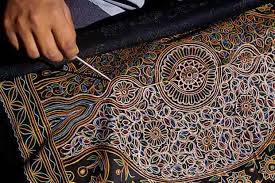
  • The paint needs to be swirled in the palm which in turn creates heat to thin it out after that the thread of paint is floated over the fabric using a metal rod.
From : The Indian express

Using the other hand underneath the cloth to guiding the paint and this process is completely free hand which makes this art more peculiar as the final design is to be anticipated and not ready made before.

Before it dries, they folds the cloth to print the design’s mirror image.which is timesaving and also the design will be symmetric.

From:livemint.com

This art is said to have originated from from Persia400 years ago to India and it was once popular on bedding and ceremonial clothing here in India.

But with the rise of mass-produced textiles in the ’80s,locals lost interest in these more expensive handmade pieces.

Many artisans couldn’t compete with mass manufacturers and dropped their crafts to find other work.

This beautiful art is also going extinct and covid-19 has the greatest impact on these artisans forcing them to leave this and find some other work for their livelihood as before they used to sell their pieces to foreigners but after the pandemic even that income has come to a halt.

We have to encourage them so that the art’s legacy can carry on and our next generations can also see this beautiful art.

Thankyou.

Astronomical Breakthroughs

The first scientifically minded celestial observers included people such as Nicolaus Copernicus (1473–1543), Johannes Kepler, and Galileo Galilei, who began looking at the sky through telescopes they built. Galileo’s view of Jupiter in 1610 transformed our view of the planets. They weren’t just dots of light in the sky. They were worlds. Over the years, more and better telescopes have revealed double stars and nebulae in the sky, and their discoverers set out to figure out what these things were. The science of “natural philosophy” uses mathematics, chemistry, and physics to explain objects and events in the universe. Nicolaus Copernicus came up with the heliocentric solar system, with the planets orbiting the Sun. The laws of planetary motion developed by Johannes Kepler and the laws of physics devised by Sir Isaac Newton helped explain the motions of bodies in space.

Contributions of Famous Scientists and Breakthroughs:

Nicolaus Copernicus – He wrote De revolutionibus orbium coelestium(on the revolution of the heavenly sphere)(1543) in which he proposed the heliocentric theory.

Galileo Galilei– He was the first one to look at the sky with a telescope. In 1610, with a telescope, he watched Jupiter and discovered 4 moons(Galilean moons). He also observed phases of Venus and sunspots. He wrote On motion , Dialogue concerning the two chief world systems and  Discourses and mathematical demonstrations relating to two new sciences .

Hans Lippershey and Zacharlas Janssen (dutch-german opticians)- They invented the telescope(first to patent)

Johannes Kepler – He wrote Mysterium cosmographicum (latin for the cosmographic mystery)(1596) in which he defended copernican heliocentric ideas. In 1609, he published the first 2 laws of planetary motion. 

Kepler’s laws: 1. The path of the planets about the sun is elliptical in shape, with the center of the sun being located at one focus.

2. An imaginary line drawn from the center of the sun to the center of the planet will sweep out equal areas in equal intervals of time.

3. The ratio of the squares of the periods of any two planets is equal to the ratio of the cubes of their semi-major axis.

Kepler’s Publications- Johannes Kepler published treatises about many topics. Here is a list of some of his other astronomy-related works.

1. Astronomia Pars Optica (Optics in Astronomy)

2. Astronomia Nova (The New Astronomy) 

3. Dissertatio cum Nuncio Sidereo (Conversation with the Starry Messenger, an endorsement of Galileo Galilei’s observations)

4. Harmonice Mundi (The Harmony of the Worlds, in which Kepler describes harmony and congruence in geometry and presents his third law of planetary motion)

William Herschel– He deduced that the solar system is  moving, and saw martian ice caps. He created a deep sky catalog and double star catalog and catalogue of 500 nebulae, nebulous stars, planetary nebulae,etc. He discovered uranus (1781). He also discovered infrared light.

Caroline Herschel- she was the first woman paid to do astronomy and she discovered 8 comets.

John Federick William Herschel- He published the general catalog of 10,300 multiple and double stars, and The New General Catalog of Nebulae and Clusters(NGC).

Isaac Newton– He gave the famous three laws of motion. 1.The first law states that an object at rest will stay at rest, and an object in motion will stay in motion unless acted on by a net external force.

2]The second law states that the rate of change of momentum of a body over time is directly proportional to the force applied, and occurs in the same direction as the applied force.

3]The third law states that all forces between two objects exist in equal magnitude and opposite direction.

He also gave the universal law of gravitation. He invented Newtonian reflectors- telescopes with reflecting mirrors.

Henrietta Swan Leavitt– She discovered cepheid variables(period of pulsation of star is related to intrinsic brightness of star), many other variable stars and novas.

Edwin Hubble– He showed that the universe was larger and beyond the Milky Way by showing that Andromeda was outside the milky way. He discovered the universe is expanding. He gave the hubble sequence of galaxy morphologies – spiral, elliptical, lenticular or irregular.

Einstein– He discovered the photoelectric effect, and  wave-particle duality. He published the special theory of relativity and the general theory of relativity.

Jocelyn Bell burnell– The first pulsar that Bell found is called PSR 1919+21, and its signal repeats precisely every 1.33 seconds.It was called LGM-1. 

Vera Rubin– She proved the existence of dark matter.

Clyde Tombaugh – In 1930, He discovered pluto.

Mike brown– He demoted Pluto to dwarf planet and wrote How I Killed Pluto and Why It Had It Coming

https://en.wikipedia.org/wiki/Newton’s_laws_of_motion
https://en.wikipedia.org/wiki/History_of_astronomy

What’s special about Mona Lisa?

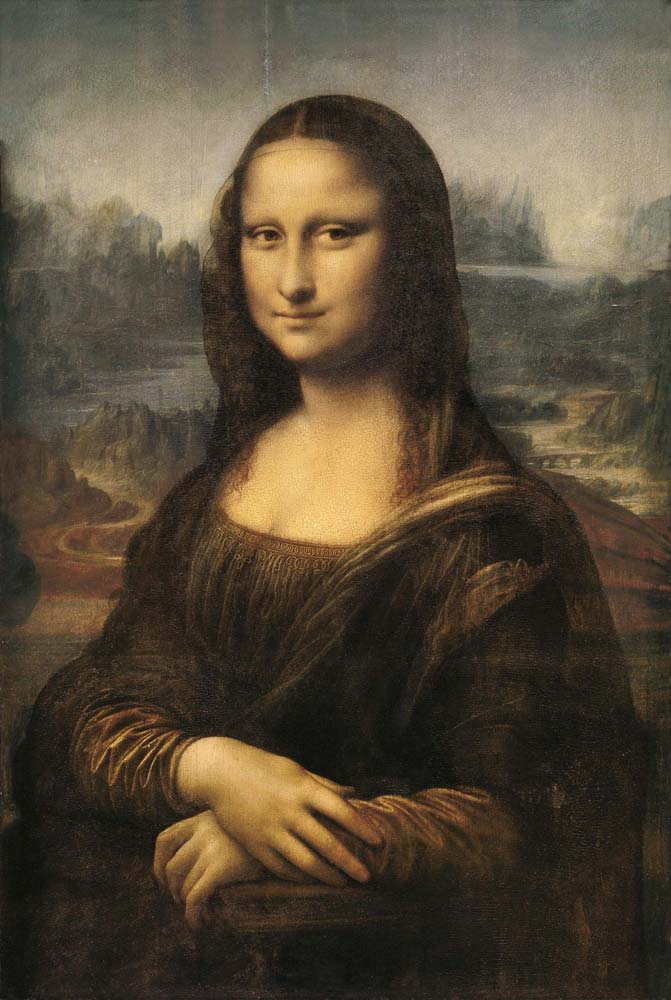
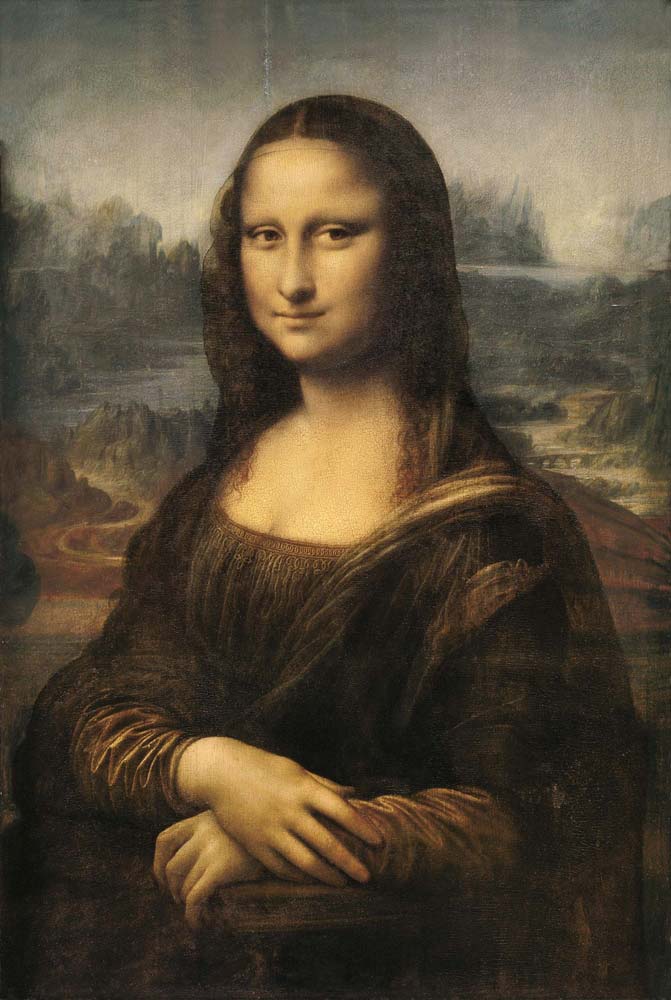
Most people feel disappointed when they see the most famous painting in the world “Mona Lisa”. Questions like ‘Why is this painting famous?’, ‘Is it worthy enough to be called a masterpiece?’, ‘What makes her unique?’ arise in the minds of hundreds. But if we ignore it all and just look at the painting, we see the greatest psychological portrait ever painted. A portrait that is much more ahead of time that we are still trying to figure out.

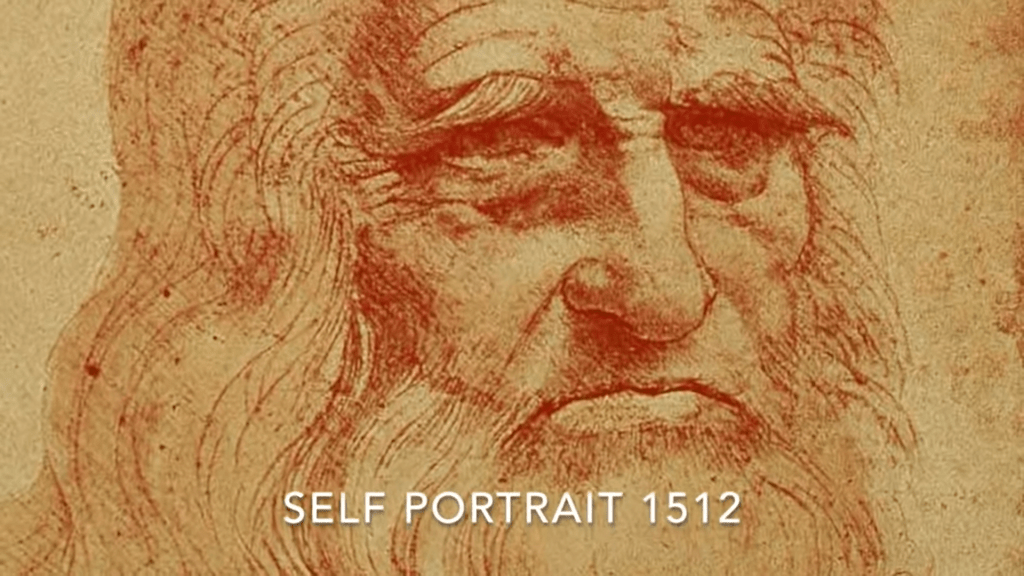
Leonardo da Vinci in his sixties moved to the Chateau of Amboise in France with his sketchbooks and one painting “The Mona Lisa”. Because he knows how important the painting was for him.

Leonardo is one of the greatest inquisitive minds in history, a self-made man with an unquenchable appetite for knowledge, and dedicated his life to studying anatomy, geology, and philosophy.

Leonardo da Vinci

The Painting

Mona Lisa was painted on a thin-grained piece of a poplar tree and a layer of lead white. He used glazes that have a very small amount of pigment mixed with the oil. This brought depth and luminosity as the white undercoat of lead reflects the light through the glazes. He used tiny brushstrokes applied super slowly over years. Leonardo pioneered many brushing techniques which brought the paint to life.

Mona Lisa

Clothes and Jewelry

Unlike any other commissioned portraits of the aristocracy we usually see with expensive outfits, Mona Lisa is a pretty simple wealthy woman with no jewelry, clothes that are nothing special, and simple hair.

Leonardo uses the classic pyramid-shaped composition that was introduced during the renaissance. The structure provides stability and provides a central focus. In this painting, the focus is directed towards her face.

What makes her different?

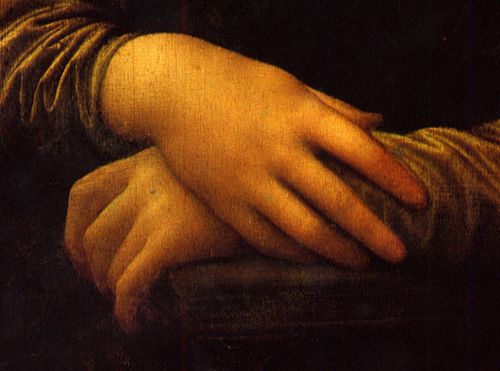
Instead of a full-length pose, Leonardo had painted Mona Lisa in a three-quarter length to cut down the distractions. Today this pose is normal but on those days it was groundbreaking. Previously the people in the portrait are erect, but Mona Lisa is relaxed with hands resting gently.

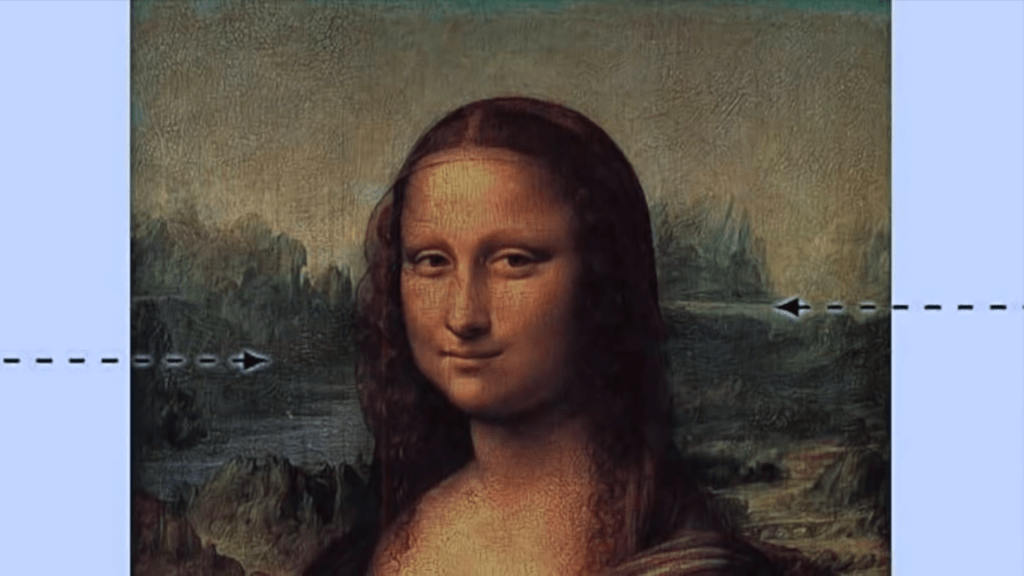
If you look at Mona Lisa’s eyes you see they are staring at you, but women in paintings never did that. The background of any other portrait has a simple background of either an open sky or a room but the background of the Mona Lisa is a complex aerial perspective of a landscape. The curves of her hair and clothing reflect the valleys and river flowing connecting humanity and nature. If you look at the background and compare the horizons on both sides you see it is not lined up. This visual trick gives an illusion of movement.

level of horizons

Her eyes and smile follows you

Leonardo has used the Sfumato technique to paint Mona Lisa’s eyes. It creates a depth near the eyes of Mona Lisa which is unusual in the case of other paintings and sculptures. Leonardo has studied human anatomy, the structure of a human face, and smiles exposing the muscles and nerves. He started researching how a smile works and analyzed every possible movement of the face. Artists never painted a smiling face before, portraits are generally serious. When you look into her eyes first she smiles then she is not. The smile comes and goes as we look deep into her face. When we look away smile stays.

Leonardo from his optic studies observed that the light comes and hits the whole retina instead of hitting at one point. This was the key to her mysterious smile.

The human eye has two different regions for seeing the world one is a central area called the fovea(to read colors) and the other is the peripheral area(to see the black and white motion and shadows). When we focus on the eyes the peripheral vision is on the smile and pick up the shadows from her cheekbones. When you look at her smile directly you cannot see the shadows, and she isn’t smiling but smirking. This is not your imagination, but it is about how you see.

Her eye’s on you!
Inner part of the eye

Sfumato technique

Sfumato is a blending technique for softening the transition between colors to make sure there are no sharp lines, layer by layer he blended everything in Sfumato style.

Chiaroscuro

chiaroscuro is an effect of contrasted light and shadow that gives a 3D effect.

These styles were never seen before Mona Lisa. Hence, seeing Mona Lisa for the first time must have been astonishing. How genius Leonardo da Vinci is that he understood this 500 years ago.

credits to the right owners of the pictures used.

UNIX

UNIX Full Form - GeeksforGeeks

UNIX is a multi-user and multitasking operating system. in a multi-user environment. the computer can receive the commands from a number of end users programs, access files, and print documents simultaneously.

The host computer, which has a UNIX operating system, provides services to the terminal, such as file access services. four terminals are connected to one host computer and all the terminals are sharing resources from the host computer.

Features of UNIX

The general and additional features of UNIX operating system are :

  • File and Processes : file and process are two entities that are supported by UNIX. A file contains information, such as text, code or directory structure that you need to save in the computer, The file is stored in the hard disk of the computer at a particular location, which can be easily remember whereas a process is the name given to a file or a programs that is currently running . UNIX provides various tools that enable you to control a process, change the sequence of the process, and kill the process.
  • Multi-user system: UNIX supports multitasking system as the kernel is designed to handle multiple processes. A single user can run multiple process simultaneously. For example, an end user can print a file and edit another file simultaneously. The kernel handles the multiple processes as foreground and background process. The current process runs in the foreground and the other processes run in the background. This multitasking feature is an advantage for the programmers, as they do not have to close the editor and run the program; this can done simultaneously.
  • UNIX toolkit: The UNIX toolkit provides various tools that are enable you to perform different tasks in UNIX as kernel alone cannot perform every task. The tools that are included in the UNIX toolkit are:

1:- General purpose tools , such as vi editor

2:- Text manipulation utilizes filters that are used to retrieve the output from two or more commands simultaneously .

3:- Compiler and Interpreter .

4:- Network administration and system tools , such as mailx and pine.

  • Pattern Matching :- UNIX supports pattern matching feature that enables you to retrieve the output according to the required pattern . Pattern matching in UNIX can be implemented using a special characters , such as * known as metacharacter .
  • Programming Facility :- UNIX provides a programming facility known as shell that is developed specifically for programmers and not for the users .