How Can Fiction Be Written? Featuring Barbie!

“Imagination and Fiction make up more than three quarters of our life.”

  • Simone Weil

Today’s article discusses an essential factor when it comes to writing fiction I.e how to write it? Barbie aka Barbara Milicent Roberts is our chief guest for today’s discussion.

“Hello Barbie! Warm Welcome Aboard. We are so glad to have you here with us.”

“Thank you for inviting me. I’m pleased to be a part of this discussion as well.”

“So, would you like to tell us the ways of writing fiction? (That for which you are here)”

“Definitely! Fiction is an interesting genre when you come to look at it. It also, comes with a wide range of interesting sub – genres which have been discussed in the earlier article. It can be written insensibly by taking almost any entity that you prefer or make one for yourself by amalgamating two or more entities. There are mostly no constraints in fiction and that is why, writing or working upon this genre doesn’t actually seem a hard task. Yes! I agree that imagining certain factors is a hard task, but we mustn’t overlook the fact that almost everything comes with its own set of hard work! Here, however I am not considering contemporary fiction or that which pertains to reality. I shall be emphasizing on how fiction (fantasy and other related genres) can be written.

Now, let us learn how exactly to write fiction through a step by step approach.

Brainstorm Over The Fictitious Topic You Intend To Choose!

Brainstorming is a process that requires time. So, first and foremost, the thing to be done, is to sit down on your favourite couch and ponder over the best fictitious topic that would definitely seem great if sketched on paper. However, don’t forget to get yourself in the reader’s shoes as stated in our earlier articles. Consider what your readers would love and write in accordance to that.

Think Of The Characters You Wish To Involve!

This is a quintessential factor that makes a story interesting. The characters make a story. However, framing of characters also depends on the sub – genre you choose. If you choose contemporary fiction, then you would definitely make use of real life characters. In such cases, you could ignore this second step and only consider the first. This step is for people who wish to work with the fantasy sub – genre because framing fictitious characters requires certain amount of deep thought processes.

In Case Of Writer’s Block, Approach The Outside World!

  Certain people experience writer’s block while writing fiction because they seem to fall short of ideas. In such cases, it is advisable to approach the outside world as inspiration to your thought processes. Some incident will definitely inspire you to write about it.

Create Strong Characters!

Make sure that the fictitious characters you create are strong enough so that the readers love them. Like, a certain character should show strong traits in personality and not physical strength 😉 Make the characters take risks throughout the story and later help them succeed. This will also deliver a good message and inspire people to take risks! Thus, all that we mean here is, that try creating characters that would also impart a message to the readers. Also, mostly it is advisable to create Round characters. Round characters are those whose traits or personalities throughout the story aren’t easily decipherable. These characters would arouse the interest factor and enhance your write up.

Create Unique Characters!

By this we mean, that when you choose to create fictitious characters, make sure that you don’t use the same repeated mythological supernatural entities revolving around mermaids, aliens and robots. These are widely known and won’t make your story that interesting. You could always create a new character for yourself by amalgamating existent entities, as stated in the earlier article.

Read Other Fiction Books For Ideas!

This is the basic step that would definitely help you to frame your own story easily. Read more and more fiction books by widely renowned authors for amazing techniques of writing a fiction book easily.

Try Fictionalizing Your Daily Life!

This means, fictionalizing your daily chores and duties in an imaginative and creative way. For instance, you are working in the kitchen and see a ladle, now you could create your own fictitious character named Mr. Ladle who could speak throughout the story. He could also be an antagonist or maybe even a protagonist if you decide to create an animated fictitious story.

Be Alert And Aware Of Your Surroundings For Inspiration!

This is extremely important because developing a fictitious story requires complete imagination. So, you need to be alert when you come across such objects which could make your story interesting. After all, if you aren’t alert then that inspiration wouldn’t be accessible to you and would pass you directly, without you acknowledging it. So, remain alert and vigilant.

“These were such essential points to be noted. We heartily thank you for your precious time! Hoping to have you again to speak on such interesting topics in the near future!”

“Please don’t mention it. I’m touched by this honourable gesture of being a chief guest on such an important discussion. Looking forward to yet another invite in the future for sure!”

Thank You So Much Barbie!

Abortion : Life or Choice?

Introduction:
Abortion is ending of the pregnancy by killing the embryo. This could take place for many reasons, the mother may not be ready to take responsibility of the child yet or it could be due to the sex of the child or it could be as there may be abnormalities in the child.

Pro-life v/s Pro choice :
People who choose not to end the pregnancy by getting an abortion are pro-life. People who choose to end their pregnancy for a number of reasons, valid or not, are pro-choice. Free will is definitely a factor in both of these choices. For many reasons, it could be considered ethically and morally wrong but there are equal number of reasons why it should not be a judge of character and there should be an understanding as to why it is done.
Abortion could take place due to a medical issue. There are two ways of aborting a child, namely, non-surgical and surgical methods. Non-surgical methods include abortion pills and morning after pills. Some people may not find this morally right as according to them a life holds a lot of importance. But, what they don’t understand is sometimes it is necessary to get an abortion so that the mothers life is not In danger and everything cannot be morally correct.
Selective abortion sometimes takes place when the parents find out the gender of the child. Sex selective abortion, even though, illegal is still practiced in many places due to the preference for the male child.
Many a times, a child is aborted as it poses a threat to the mothers life. Sometimes, parents don’t want to have a child with an abnormality as it might affect the child later in life and they might have problems coping with it. People argue that it is better to at least give them a chance to shape their life instead of just ending their life.
Sometimes, pregnancy is unintentional and the woman might be using contraception but it may have failed as a measure. When this happens, the parents cannot be blamed for the abortion as they never wanted the child in the first place.
Ethically, people still believe that if the parents weren’t ready for a child then maybe they shouldn’t have been having sexual relations.
The mother could get an abortion as it might affect their lifestyle. The child could be an obstacle for achieving their dream or it was very sudden and it doesn’t exactly work out with what they have planned for their future. Though, people argue that the child has rights of its own and it had the right to live and it should at least be given a chance to have their own life, it still depends on the parents.
Some people think that abortion is a way to punish the man but it is not a fact at all. The mother could be having her own problems or complications with the pregnancy and the man just doesn’t want to accept that as for some men, family means everything. If people think it doesn’t affect the woman at all, they are absolutely wrong. It affects her mentally and physically. So, we just cannot blame the woman without getting to know the root of the problem.
Sometimes, a woman gets an abortion as she mislead the father about the fact that she actually wanted a child or wanted a family. Usually, the man is blamed but in some cases, it isn’t true.

Conclusion:
Personally, I support abortion. Pro-choice is what I believe in. There are many reasons a woman would want to abort a child and it should be up to her to make that decision as free will plays an important role in my life and therefore, I would like to know that every other person, at least, has the choice of their own. People usually look down on women who get an abortion but that shouldn’t be the situation at all. We need to understand their needs and think about all the reasons why they wouldn’t want the child and we should also respect their decision and support them.

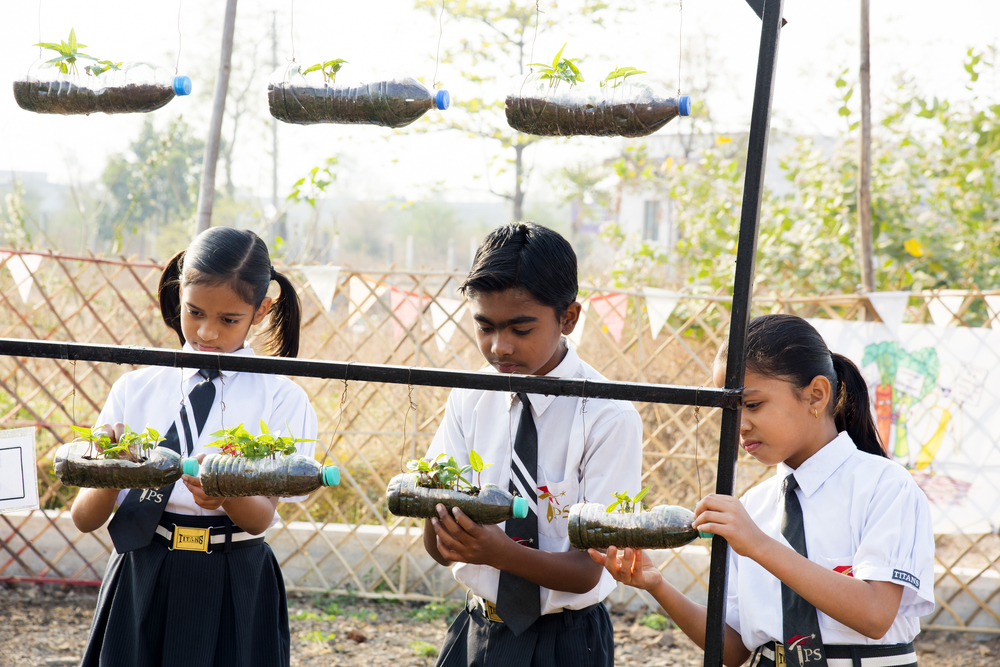
Learning at the school garden

India Requires All Schools to Have Kitchen Gardens
  • A one of its kind initiative, Edible Schools has been launched by MS Swaminathan Research Foundation (MSSRF) in Kalpetta, Kerala in association with Botanical Garden Conservation International (BGCI) to familiarize school children with food crops and family farming. 
  • The aim of this program is to engage the children in food production and farming activities under the guidance of trained and caring leaders, who lead the children into discovery and exploration of soil, water, biodiversity and the science of agriculture production and consumption.

Teaching gardening in schools

  • This project was launched in 2 schools of Waynad – Hill Blooms School, Mananthavady and Government High School, Thrikaipetta, in January, 2021 and it is a huge success till date. The programme was initiated by developing a nutrition garden and fruit garden at both schools following COVID 19 protocols. 
  • These gardens were designed on approximately 870Sq.ft land and fruit trees were planted as part of the campus greening. The nutrition garden has been cultivated with mostly leafy greens such as Amaranthus, Spinach, Curry leaves and Moringa and the commonly consumed vegetables such as Brinjal, Okra, Beans and Cow peas as well as medicinal plants , fruit trees, wild food plants and larval hosts have also been planted. 
  • The first harvesting from the nutrition gardens at the edible schools was done by the students and they were guided by their leaders. They were very excited to see their produce as well as fruit garden saplings of Guava, Custard Apple and Mango seeds growing into healthy trees. 

Although during pandemic the students couldn’t visit the school campuses much, the nutrition gardens have been extended to their homesteads. Training was given to the students for the collection and multiplication of the seeds of wild native trees like Venga, Njaval, Athi etc.  The seedlings planted by the students will be handed over to MSSRF and hence, the students will be a part of the reforestation programme

reference-https://content.ces.ncsu.edu/teaching-from-the-garden-creating-transformative-learning-landscapes-at-schools

https://rodaleinstitute.org/education/school-gardening-curriculum/

5 Indian Food Famous in the World

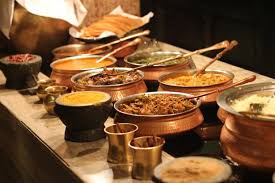
When it comes to food no-one can forget Indian food. Indian foods can be sour, sweet, spicy & tangy altogether. There is no particularity in Indian cuisine as every state of India has its own food cuisine . India is known for its spicy and sweet foods.  If you want to savour that taste of Indian quizzing then these 5 foods mentioned below must be in your bucket list .

  • BIRIYANI
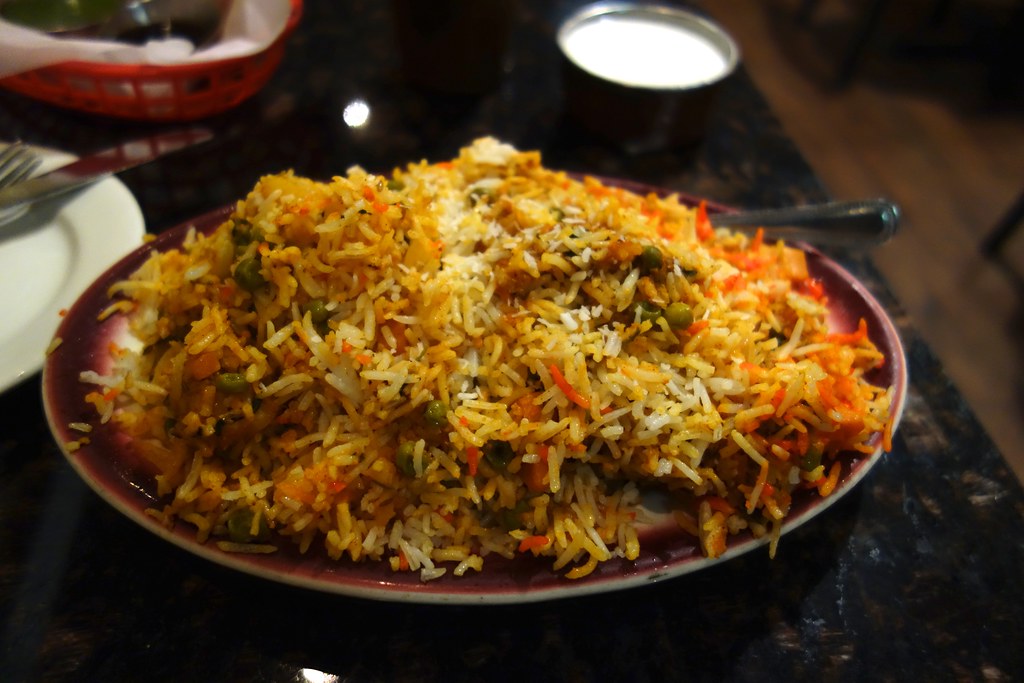
    1. BIRIYANI : It is the most famous food in India . Wherever you go you will be able to see its existence from restaurants to small food stalls on the roadside of India. This food first came to India by Mughals. It is a rice dish with meat and egg and potato pieces with flavour for spices and Saffron mix .There are also various type of biriyani like veg biriyani (With no meat and full of vegetables) , mutton biriyani ( as the meat pieces) ,Chicken biriyani (Chicken meat is added) , bamboo biriyani ( cooked in the piece of bamboo)  etc.  You can also see the variation in the Biryani in the different states of India like Hyderabadi Biriyani, Lucknowi Biriyani, Kolkata biriyani etc. Among all of them Hyderabadi Biriyani is the most famous for its flavour fullness and spiciness .Biriyani is also served with curd salad or Raita .
    GOLGAPPA /PANIPURI/FUUKA

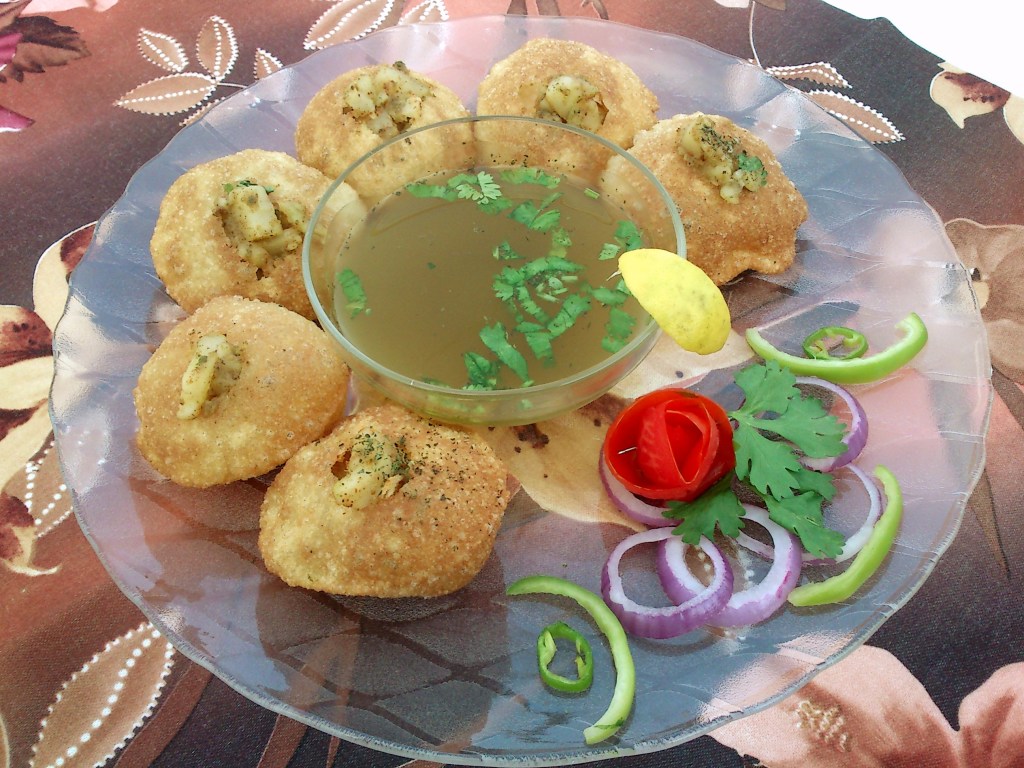
    2. GOLGAPPA /PANIPURI/FUUKA :It is a famous street food in India and you will be able to see it in every corner of India .Even nowadays it is served in restaurants .Golgappa is made of three ingredients —–

    1.  Crispy ball made of Suji
    2.  A spicy aloo/potato filling
    3.  a spicy , tangy and sour water 

                 The spicy potato filling is put inside the crispy balls and then it is filled with the sour flavoured water .This water was made of tamarind or pudina with spices. You can also see the dahi-golgappa which is filled with curd or dahi and some chutney .

    RASGULLA

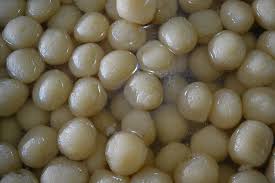
             3.RASGULLA : It is a famous sweet dessert of India . Rasgulla is a sponge like ball with which is immersed in sweet sugar liquid or chashni .Its origin is West Bengal and Orissa .The Rasgulla is made from paneer are Indian cottage cheese (a milk product) which is mixed with some suji and flour and later this mixture is drained of its containing water by special Muslin cloths .Then it is given a shape of ball and dipped in the sugar liquid or chashni . This sweet is white coloured . Some other types of sweets are also made from rasgulla .

    MASALA DOSA

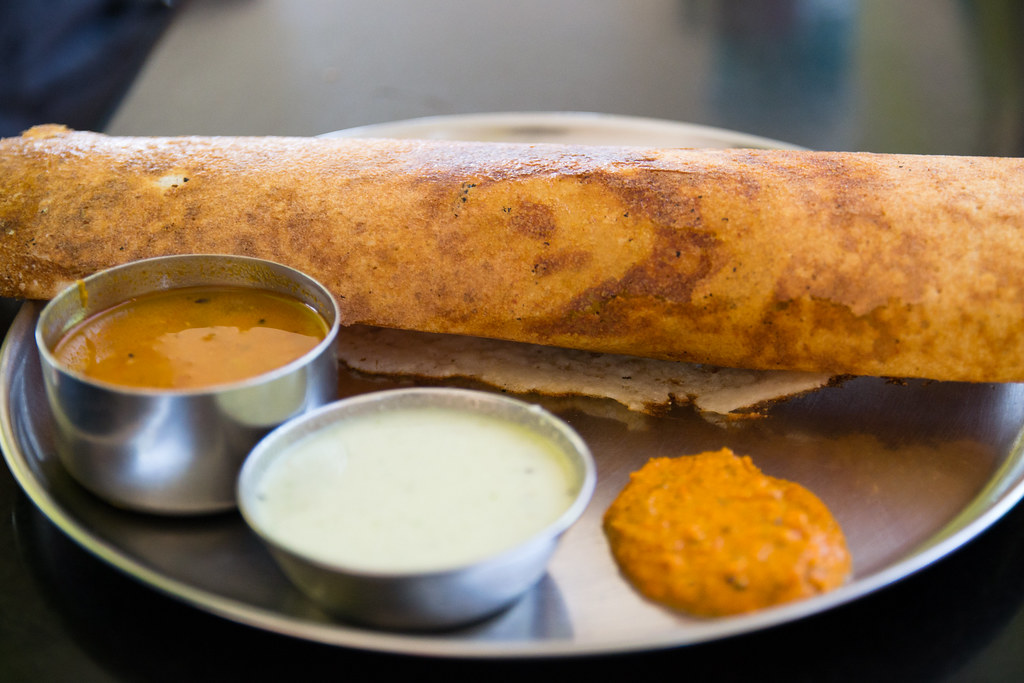
           4)MASALA DOSA : Dosa is a South Indian traditional dish . there are two parts in masala dosa —-

    1. A pancake / roti which is made from a thin batter of rice and black lentils flour . 
    2. A spicy potato and vegetable filling in the middle of the pancake  .  

     It is originally served with a coconut chutney and sambar which is one type of vegetable Dal or soup . There are also various types of dosa like paneer dosa (made of paneer filling), chicken 65 dosa ( ‘chicken 65’ Is a chicken dish which acts as a filling in dosa) and paper dosa etc.

    SAMOSA

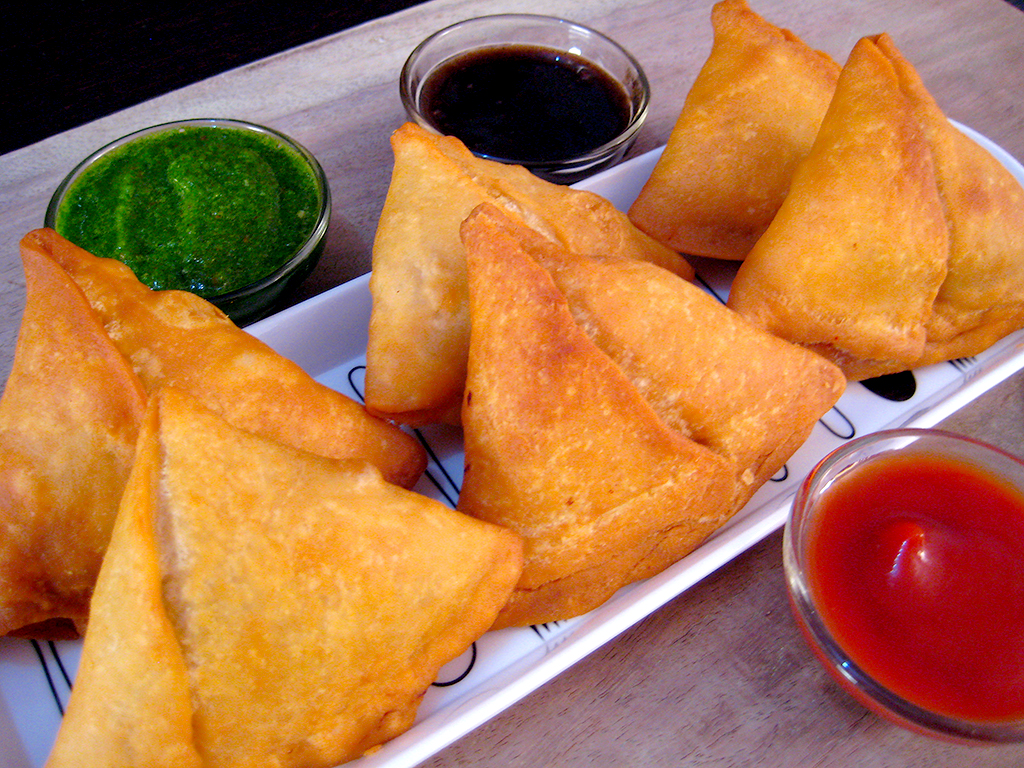
    5) SAMOSA :  it is one of the most famous street foods in India. It also have two parts —

    1. Outside a Crispy dough which is made of maida and deep fried in oil .
    2.  soft and spicy potato onion filling inside 

     It also has a unique conic shape . This food was also introduced to India by Mughal.  Paneer Samosa (filled with paneer), chicken Samosa (filled with chicken), noodle Samosa (filled with noodles) are various types of samosa with different stuffing . It is usually only served with sour sweet chutney or tomato sauce .

    Kalidasa: The Shakespeare of India

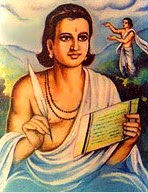
    Kalidasa is known to bethe greatest repository of our national heritage. The serenity of his artistic accomplishment has earned for him a high place in the galaxy of world poets. Kalidasa’s imagination holds in perfect fusion the two elements of natural beauty and human feelings. In his case, both Eastern and Western critics, applying not exactly analogous standards, are in general agreement. He has always been held in high esteem.final hai test

    Kalidasa has continued to display his relevance through the centuries. Surcharged with  wider human sympathy and universal appeal, his character has remained truly Indian. He has influenced the mentors of the middle ages, as well as the pioneers of Indian renaissance like Vivekananda and Tagore. Kalidasa continuous to shine throughout the world as one of the greatest exponents of Indian culture. The keen interest of the Western Orientalists made Kalidasa studies more popular in modern times. Kalidasa has thus gone a long way to help develop a deeper understanding between India and the other countries.

    Popular legends on the life of Kalidasa

    1. Kalidasa, who was first quite a blockhead and was married to a princes, being stung  by the scornful words of his wife, determined to secure the favour of Gauri by penance with the result that the goddess conferred upon him high poetic genius. On his return Kalidasa was asked by his wife -… and the poet taking each of the three words as the beginning of three different works composed the Kumara, Megha and Raghu.
    2. It is said that Kumaradasa, the king of Ceylon, the author of the Janakiharana threw himself on the funeral pyre of his friend Kalidasa who was murdered by a courtesan of Kumaradasa (6th century A.D.) in Ceylon. The story is that Kumaradasa had written the following line –

    on the wall of the mansion of the courtesan, and had promised a handsome reward  to one who would complete the samasya. Kalidasa who happened to see that line immediately wrote-

    Then, the courtesan murdered him and wanted to secure the reward by claiming that she had completed the Samasya the king, however discovered the fraud, but overwhelmed with grief consigned himself to the funeral pyre of Kalidasa.

    Kalidasa’s Profile –

    Place & Date

    It is known to all that Kalidasa is completely silent about himself regarding his date of birth and also the place. Peoples all over India praise to Mahakavi for all the time due to his poetical excellency. Therefore, people from particular place claim that Kalidasa belongs to their area. But if we go through his works thoroughly, we may find that Kalidasa belongs to Ujjain. In Meghaduta, he describes about Ujjain so beautifully where we may find his personal attachment to Ujjain can not be ignored. Scholars of Kalidasa are of the opinion that Kalidasa belongs to Ujjain during between the period of second century BC. to 5th century AD.

    Impact on India and abroad

    Kalidasa is unanimously admitted to be the greatest sanskrit poet and dramatist. In India he is praised by all his followers such as post dated poets and critics namely Mammta, Anandavardhancharya,Abhinav Gupta etc.

    His poetical style influenced to all the post dated poets to the modern poets of this 20th century also.

    In the same manner, we may also find in abroad. It was Sir William Jones who introduced the Shakuntalm to the westerners for the first time in the eighteen century; since then almost all the works of Kalidasa have been translated into various Languages and made known to peoples of different countries, and they have been greatly appreciated by them. There can be no doubt that Kalidasa can justifiably take his seat along with Shakespeare.

    Works of Kalidasa –

    Lyrics
    Ritusanharam
    Ritusamhara is a small lyrical poem of 144 stanzas in 6 cantos, mostly in vamshastha metre (cantos i, ii, v, vi), the variation being vasantatilaka (canto iii) and upendravajra (canto iv). The poem gives a graphic and poetic description of the six seasons of India.

    Meghadutam
    The meghaduta is smaller in extent then Ritusamahara, the first of the Purvamegha having 66 stanzas and the second half or Uttaramegha is having only 55. This is a poem describing the message of departed Yaksha to his wife, to be conveyed through a cloud.
    A Yaksha, servant of lord, Kubera, made some mistake in his duty; Kubera punished him with a curse, banishing him from Alaka in to exile for a period of one year. Therefore, Yaksha sent his message to his wife through a cloud.


    Epics
    Kumarasambhavam
    Kumarasambhava, a classical poem of 17 cantos, is based on the mythological myth of love and marriage of Shiva and Parvati, found in Indian epics. The deputation of Kamadeva – the cupid of Indian mythology – by the gods, to tempt the divine ascetic Shiva, to fall in love with Parvati, the destruction of Kamadeva by Shankara,Parvati’s resolve to win by renunciation and penance, what her beauty and charm failed to achieve by seduction, Shankara’s meeting with Parvati in the garb of an ascetic, their marriage and the birth of son Kumara, who destroyed the god’s’ enemy, the demon Taraka, are the highlights of this classical poem.
    According to A.B. Keith, the well-known British historian of Sanskrit literature, “….to modern taste, the Kumarasambhava appeals more deeply by reason of its richer variety, the brilliance of its fancy and the greater warmth of its feeling”.

    Raghuvansham
    Raghuvansha, a long classical poem of 19 cantos, contains a brilliant account of the illustrious kings of Raghu Dynasty. It is indeed a gallery of brilliant kings – Dilipa, Raghu, Aja, Dasharatha, Rama – painted exquisitely by Kalidasa in which the picture of Rama is undoubtedly the best.
    Writing about Kalidasa and his work, Raghuvansha, the reputed western scholar and critic, Monier Williams says “No (other) composition of Kalidasa displays more the richness of his poetic genius, exuberance of his imagination, the warmth and play of his fancy, his profound knowledge of the human heart, his delicate appreciation of its most refined and tender emotions, his familiarity with the workings and counter workings of its conflicting feelings – in short, more entitles him to rank as the Shakespeare of India”.


    Drama
    Malavikagnimitram
    Malavikagnimitra is a five-act drama based on king Agnimitra’s love for a beautiful girl, Malavika. It is a lighthearted comedy of court life, and depicts the progress of king’s desire for the lovely maiden, through various hindrances. Malavika’s ultimate discovery as belonging to a royal family and the magnanimity of the elder queen, lead to the fulfillment of Agnimitra’s desire. According to the famous critic. R.D. Karmarkar, “Malavikagnimitra is on the whole, an enjoyable play. The plot is a very simple one and the action develops in a surprisingly swift manner and the reader finds that his interest is kept up right to the end”.

    Vikramorvashiyam
    Vikramorvashiya (Uravashi won by valour), a drama of five acts relates the romantic story of the mortal king Pururava and the divine nymph Urvashi. The king, through remarkable display of valour, saves the nymph from the clutches of a demon and falls in love with her, at first sight. The fire of love is fueled by the nymph’s separation as a result of her unavoidable return to heaven. However, in view of the consideration that God Indra, the lord of heaven, had for Pururava, his ally in his wars against the demons, the lovers are united in wedlock; but fate intervenes to separate them again and it is only a miracle that reunites them. The inevitable tragedy of love between the mortal and the celestial being is obvious, but again Indra’s indulgence brings to the royal couple, the lifelong pleasure of living together.
    According to M. Winternitz, the reputed German scholar of Indology, the great popularity that this drama has enjoyed in India, is proved by the fact that there are several versions of its text. It has several times been translated in to German and other European languages. Attempts have been made for adapting it for the stage too.

    Abhijnanashakuntalam
    Abhigyanashakuntala, a drama of seven acts is based on the old legend of Shakuntala, described in Mahabharata. It is the love story of the king Dushyanta and the hermit girl Shakuntala. Their mutual attraction leads to their marriage by the Gandharva form of marriage in the hermitage. The curse of the sage Durvasa makes the king forget all about his wedding but the discovery of the sign ring given by Dushyanta to his bride reminds him of the happenings in the forest grove, leading to his ultimate union with his wife and son in the abode of divine beings.
    Abhigyanashakuntala is, in every respect the most finished of Kalidasa’s dramatic compositions. The play is universally recognised as the best specimen of dramatic art in the entire Sanskrit literature. The reputed German poet Goethe, after reading a translation of the play had exclaimed,
    “Wouldst thou the young year’s blossom and the fruit of its decline, And all by which the soul is charmed, enraptured, feasted, fed?
    Wouldst thou the heaven and earth itself in one sole name combine
    I name thee ‘Shakuntala, and all at once is said”.

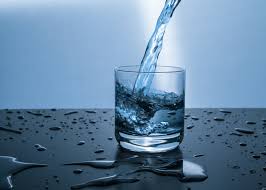
    The importance of water.

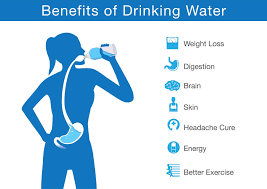
    All plants and animals need water to survive. There can be no life on earth without water. Why is water so important? Because 60 percent of our body weight is made up of water. Our bodies use water in all the cells, organs, and tissues, to help regulate body temperature and maintain other bodily functions. Because our bodies lose water through breathing, sweating, and digestion, it’s crucial to rehydrate and replace water by drinking fluids and eating foods that contain water.

    Water helps by creating saliva

    Water is the main component of saliva. It’s critical for breaking down solid food and keeping your mouth healthy. If you find your mouth is drier than usual, increase your water intake. If that doesn’t work, see your doctor

    • It regulates body temperature

    Staying hydrated is critical to maintaining a normal body temperature. Our bodies lose water when we sweat, and in hot environments. Sweat keeps our bodies cool, but our body temperatures will go up if we don’t replenish the water we lose. That lack of water causes dehydration, which in turn causes levels of electrolytes and plasma to drop

    • Water aids cognitive functions

    Proper hydration is crucial to staying in good cognitive shape. Research has shown that inadequate water intake can negatively impact our focus, alertness, and short-term memory

    • Water protects the tissues, spinal cord, and joints

    Water  helps lubricate and cushion our joints, spinal cord, and tissues. This helps us to be more physically active, and reduces the discomfort caused by conditions such as arthritis

    • It helps excrete the waste in our bodies through perspiration, urination, and defecation

    Our bodies use water to sweat, urinate, and pass healthy bowel movements. We all need water to replenish fluids lost from sweating. We also need water in our systems to have healthy stools and avoid constipation. Drinking enough water helps our kidneys to work more efficiently  thus preventing kidney stones

    • Water maximizes our physical performance

    Drinking plenty of water while working out, taking part in sports or just being on the move, is essential.  Keeping ourselves hydrated also affects our strength, power, and endurance

    • It helps to boost our energy levels

    Drinking water helps to boost our metabolic rate. This boost has a positive impact on our energy levels. Drinking 500 milliliters of water can boost the metabolic rate by 30 percent in both men and women, one study has found. Negative effects of exercising in the heat, without staying hydrated, can result in serious medical incidents. In fact, extreme dehydration can cause seizures, and sometimes, even death.

    • Water prevents overall dehydration

    Dehydration is the result of the body being deprived of adequate water. And,  since water is critical for the successful functioning of many bodily functions, dehydration can be very dangerous. Even leading to fatal consequences. Severe dehydration can lead to serious outcomes, including:

    • swelling in the brain
    • kidney failure
    • seizures

    Make sure to drink enough water to replace what’s lost through sweating, urination, and bowel movements, to avoid dehydration.

    The importance of water.

    It’s pretty obvious that having adequate water in your body  is critical to nearly every part of it. Not only will maintaining your recommended daily intake help you to maintain your current state of good health, it could also improve it in the long run. The amount of water you need will depend on the environment and climate you live in, how physically active you are, and whether you are suffering from an illness, ailment or  any other health problems.

    Here are some ways to make sure that  you drink enough water:

    • Carry a water bottle with you wherever you go. Keep taking sips from it as and when you feel the need
    • Track your water intake. Make sure you consume the optimum amount every day, which is a minimum of half your body weight, in ounces/milligrams

    Chakras

    Have you ever attended a yoga session before? Have you ever heard about these chakras? 

    If yes, that’s great. If not, that’s fine we are going to cover it in this article.

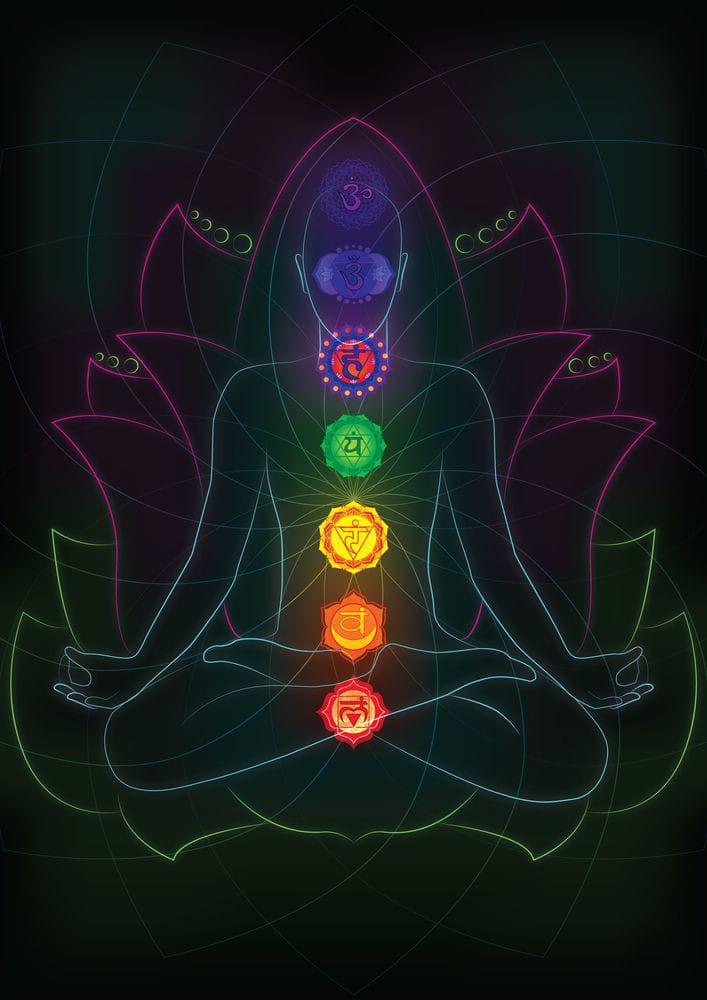
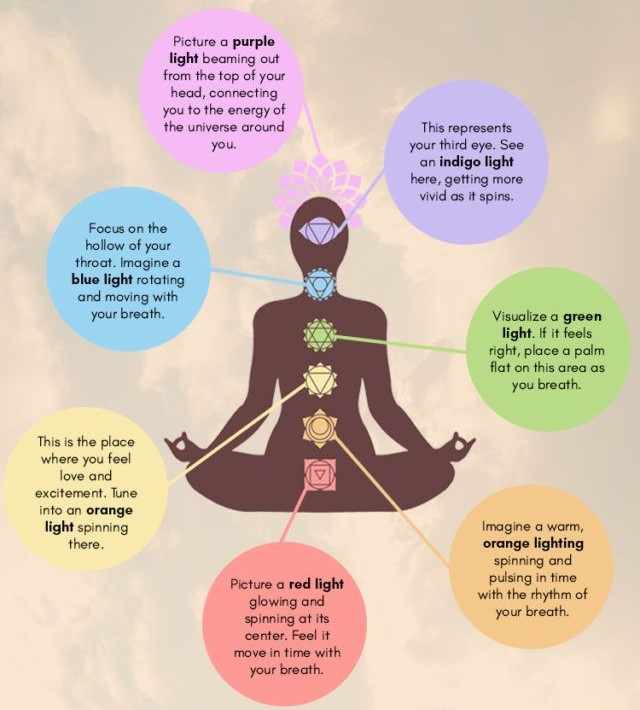
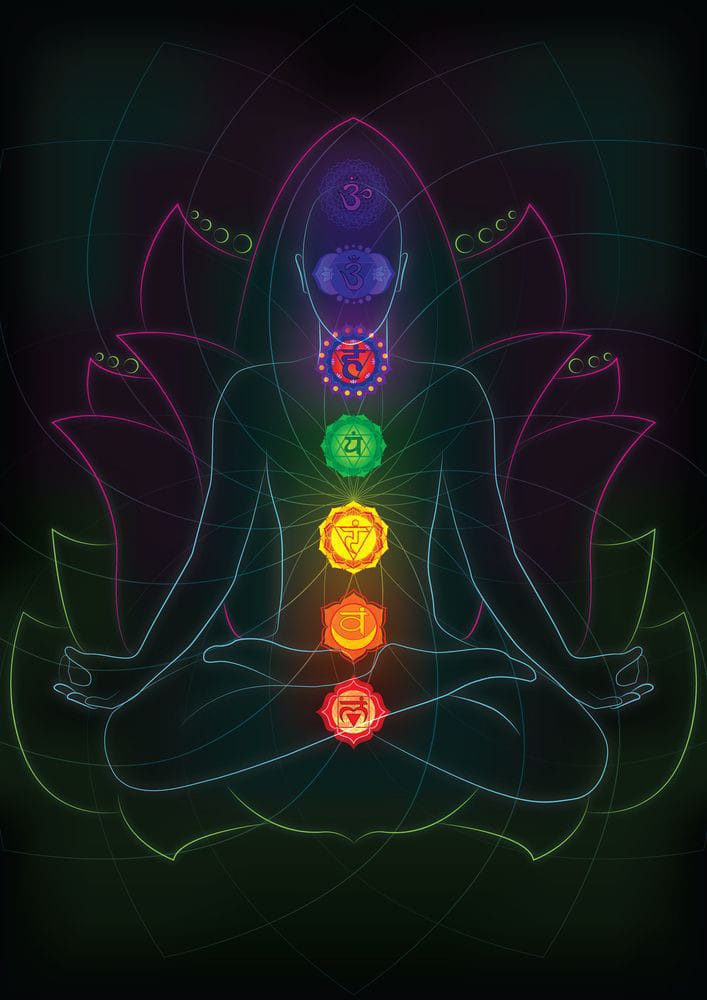
    Chakra is a word that comes from Sanskrit, meaning wheel. There are seven wheels or chakras in a human body. Each is located in sequential order along our spinal cord. 

    Activating these chakras are important to have a physical and emotional balance. If any of them is imbalanced it means that your chakras are blocked and there is a need to activate them.

    But how do we do that? Before answering that question let’s learn about the position and significance of each chakra.

    Okay, let’s start from the bottom.

    1. Root chakra- Muladhara: 

    Color– Red

    Represents– the Earth

    It is located at the bottom of the spine. It provides a foundation for your life. Gives a sense of commitment, energy, vitality, and independence in life. Helps you to stay grounded. 

    If this chakra is blocked. The consequences may be like this- anger, possessiveness, insecurity, fear, low self-esteem, etc.

    How to activate/balance this chakra?

    You can activate this chakra by performing yoga or meditation.

    Hand Mudra
    yoga poses

    2. Sacral Chakra- Swadhisthana:

    Color– Orange

    Represents– Water

    Located below the belly button.

    This chakra deals with one’s creativity, emotional identity, desires, and pleasure. Gives a feeling of compassion, a good sense of humor, intuition, sense of belonging. 

    If this chakra is blocked it gives a sense of shyness, guilt, irritation, lack of creativity, etc.

    How to activate this chakra?

    By following the mudras mentioned below you can balance the chakra.

    Hand Mudra
    yoga poses

    3. Solar plexus chakra- Manipura:

    Color– yellow

    Represents– Fire

    Located in the stomach area. This chakra deals with the sense of belonging and mental understanding of emotions. This makes you feel energetic, confident, intelligent, focused, good digestion, and productive.

    If this chakra is blocked you feel timid, depressed, judgmental, angry, and fear of rejection.

    By following the mudras mentioned below you can balance the chakra

    Hand Mudra
    yoga poses

    4. Heart Chakra- Anahata:

    Color– green

    Represents– Air

    Located at the center of the chest. It reflects a person’s social identity and affection like love, trust, forgiveness, and wisdom. Makes you motivated, compassionate, emphasized, sense of completeness, friendliness, etc.

    If this chakra is blocked you might feel difficulty in love, lack of hope and compassion, mood fluctuations, and feeling low.

    By following the mudras mentioned below you can balance the chakra

    Hand Mudra
    yoga poses

    5. Throat chakra- Vishuddha: 

    Color– Blue

    Represents– Sound

    It is located in your throat. Deals with creativity, effective communication skills, faith, expression, listening skills, and all.

    If this chakra is blocked it may cause indecisiveness, weakening of willpower, lack of expressiveness, low level of creativity, and proneness to addiction.  

    By following the mudras mentioned below you can balance the chakra

    Hand Mudra
    yoga poses

    6. Third eye chakra- Ajna:

    Color– Indigo

    Represents– light

    Located between the eyes. It is responsible for intuition, imagination, wisdom, self-awareness, insight, understanding, and reasoning. It gives clear thinking, a healthy imagination, strong intuition power, good concentration, and focus.

    If this chakra is blocked it results in poor judgment, confusion, fear of truth, poor concentration, and addictions.

    By following the mudras mentioned below you can balance the chakra

    Hand Mudra
    yoga poses

    7. Crown chakra- sahasrara:

    Color– Violet/white

    Represents– Conscience

    Located at the top of the body, the crown chakra is to maintain a spiritual connection and consciousness. Gives a feeling of oneness, open-mindedness, thoughtfulness, etc. 

    If this chakra is blocked you feel a sense of fear, lack of purpose, lack of inspiration, disbelief in spiritual and devotional practices.

    By following the mudras mentioned below you can balance the chakra

    Hand Mudra
    yoga poses

    credits to the right owners of the pictures used.

    sources: pinterest

    Education in the present

    Education is very important in every individual’s life as it is very important for the living. The person who is educated will be well treated by the society and will you have good potential wherever he or she goes. Education as the extra energy to the individual’s life and a moles the individuals character into a good one. It is very important to be educated as the competition in the world is comparatively very high.

    Online classes are the greatest and the biggest task to all the students. It is so difficult for all the students to understand the topics in a detailed manner. Even though the students try their level best to understand the topics during the online class, it is only the 50% of learning but the topics are not understood properly but the students and face lots of difficulties.

    It is also equal difficult to conduct exams to all mine because it’s exams are connected through online then there is a chance formal practices. Basically, students commit malpractices during exams in a view to get good marks but not about the knowledge. So,many of the students commit malpractices.

    Ways to improve the education system

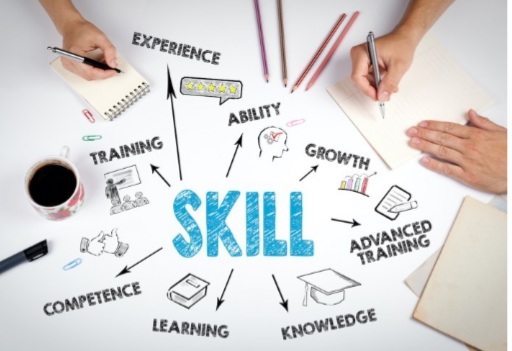
    * skill – based learning :

    As of now , the education system is such that everyone is forced to study science and math. If this system can be revamped to identify the strengths of a student, then they can be given appropriate training in the chosen field. This will ensure that the child shines in that particular field.

    * Rural Education :

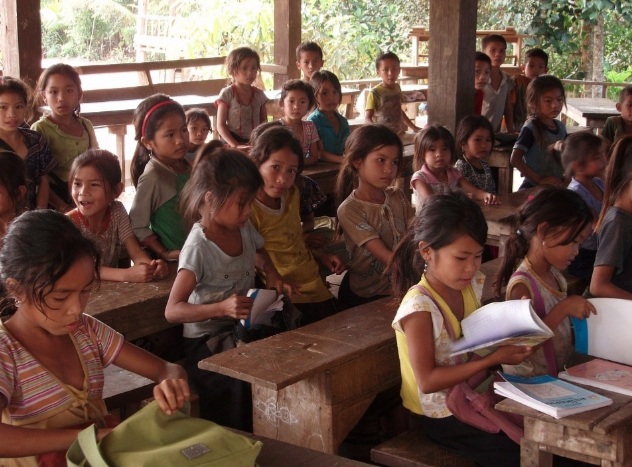
    As the sad thing about the Indian education system is the fact that its focus is only on urban clusters. There are hardly any decent centres of learning in the rural areas. This is especially true in terms of higher education. If a country has to actually develop, urban and rural development have to go hand in hand.

    * Gender Neutral Education :

    The education system has always favoured men over the fairer sex. The major change that must be brought about is to involve women in the same. Particularly subjects that are now considered to be the strength of men alone ( like carpentry, engineering, etc). Should be made more accessible to women. Pioneer women in these fileds should be given due encouragement and appreciation.

    * Teacher Training :

    India has a very good quality of dedicated teachers. However, the sad fact here is the fact that after they join this service, they receive little or no training. In such a situation, giving them periodic training will not just ensure that they are updated with the changing times, but will also improve the entire education scene of the country by leaps and bounds.

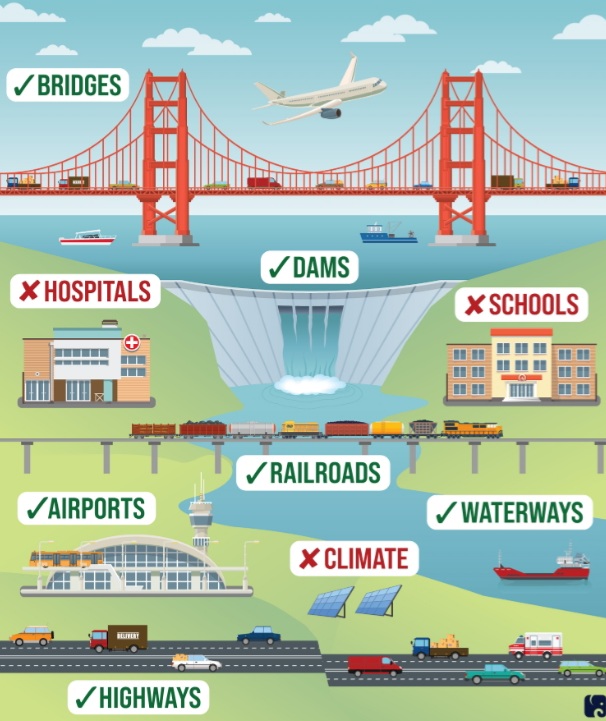
    * Infrastructure :

    As in every other sector, the indian education sector is one that suffers from the acute death of infrastructure. Most of the government schools do not even have proper chairs, tables, restrooms, let alone a playground, libraries and laboratories. Thus ,the first step in revamping the education scene in the country should begin with improving the infrastructure so that the students are given an evironment where they can learn to the best of their abilities.

    * subsidising professional courses :

    It is a sad reality that many meritorious students are not able to afford professional corses because of the sheer expense involved in the same. This is all the way truer in case of students from the general category who do not have access to many scholarships. In such a situation subsidising the cost professional education will ensure that the same is within the reach of deserving students from the lower and lower middle class strata of the Indian society.

    * Basic computing In Rural Areas :

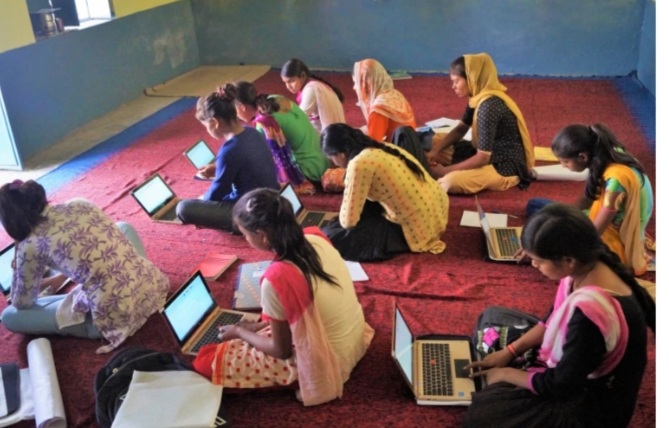
    On one hand , India is a land of IT giants; on the other, rural India is completely digitally ill- equipped, in a sitiation like this, the first change that the education system must bring forward is to start free computing classes for skill development in rural areas. Only then will rural Indian move in the same pace as that of the urban Digital India and the country embark on the journey of development.

    * Make sports compulsory :

    One of the main reasons for the alarming rise in suicide amongst students in the country is the fact that they cannot handle stress. That in turn is because they are subjected to too much mental pressure. By making sports compusory it can be ensured that all the students indulge in some sort of some physical activity. This will lead to their mind performance better and enable them to grasp their theory lessons well.

    * Educate parents :

    Most of the times it is seen that the children’s woes centre atound that of their parents. In the Indian scenerio, parents are the ones who force their wards into a career they do not like. As a result students do not excel and upon failing to meet their parents expectations, they suffer from a number of mental health issues. To prevent such a thing from happening, the first step that must be taken is to educate the parents about the different carrer options that are available to the students and the possible scope of future in them.

    * Remove The Reservation system :

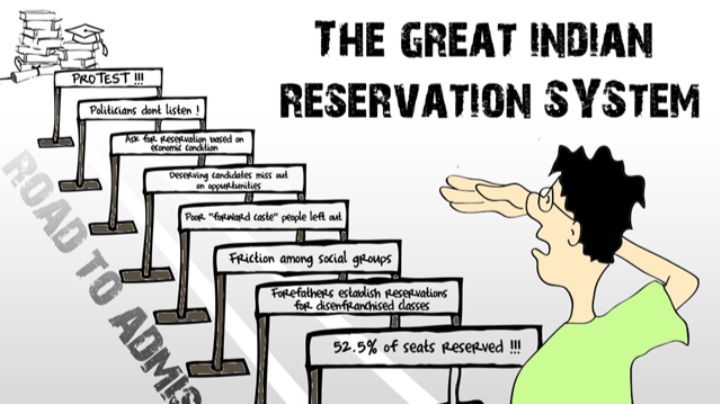
    The reservation system in India has been so obsessed with providing the best of opportunities to the reserved that it misses out on many opportunities for the ones who actually deserve the same. This results in not just personal loss for certain people but also brain drain for the entire country and fosters a massive loss to the nation’s economy.

    Today’s education system may be good to score marks, but fails to retain the knowledge once students have completed their examinations. This leads to young minds being stifled at an age when they should be asking questions, learning and gaining knowledge, and developing a thirst for more knowledge.

    THE WATER ACT 1974

    The water  act was enacted by parliament act, 1974 purpose to provide for the prevention of control of water & the maintaining or restoring of wholesomeness of water. As on day, it is applicable in all the states of India. It extends to the whole of India except the State of Jammu & Kashmir. This Act having 64 sections Divided into 8 chapters.

    OBJECTIVES

    • Prevention  &  control of water pollution
    • Maintaining or restoring the wholesomeness of water
    • Establishment of board for prevention & control of water pollution.
    • An act to provide for the levy & collection of access on water consumed by persons carrying on certain industries & by local authorities.

    Constitution of central Board

    • Chapter   3 deals with Constitution of central Board
    • The terms & conditions of the services of the members, disqualification, holding of board meetings & other committees.
    • Members- Chairperson- Environment expert
    • Officials not exceeding 5- nominated by Central Government
    • Representative not exceeding 3- Agricultural, fishery, industry etc.
    • persons not exceeding 2- companies or cooporatations owned.

    Constitution of State Board

    • Chapter  4 deals with Constitution of central Board
    • The terms & conditions of the services of the members, disqualification, holding of board meetings & other committees.
    • Members- Chairperson- Environment expert
    • Officials not exceeding 5- nominated by state Government
    • Representative not exceeding 5- local authorities functioning with state government.
    • persons not exceeding 3- Agricultural, fishery, industry etc.
    • persons not exceeding 2- companies or cooporatations owned.

    Constitution of Joint Board

    • Two or more states or Union Territory or Union Territories can constitute a Joint Board with agreement for a specific period.
    • Chairman
    • Two Officials- Appointed by state government.
    • One person- Local authority
    • One representative- Agriculture, fishery, trade etc
    • Two persons- companies or cooporatations owned.

    Functions of Central Board

    The central board may establish or recognize a laboratory or laboratories to enable the Central Board to perform its functions under this section efficiently. Central Board may- Delegate any of its functions under this act generally or specially to any of the committees appointed by it. Do such other things & perform such other  acts as it  may think necessary for the proper discharge of its functions & generally for the purpose of carrying into effect the purposes of this act.

    Powers & Functions of Central Board

    • Advice to central government for prevention & control of water pollution.
    • Co-ordinate the activities of the state board & resolve disputes
    • Provide technical assistance
    • Plan & organize the training.
    • Collect, compile & publish technical data
    • Lay down the standards for a stream or well
    • Establish laboratories.
    • Plan & organize nation wide program for prevention & control of water pollution
    • Plan comprehensive program for prevention & control of water pollution.
    • Advice to State government
    • Encourage, conduct & participate in investigations & research relating to problems of water pollution & prevention.
    • Inspect sewage or trade effluents, works & plants for treatment.
    • Lay down, modify or annual effluent standards for the sewage & effluents.
    • Evolve economical & reliable methods of treatment for local conditions.

    Prevention & Control of water pollution

    • Powers of entry and inspection
    • Power to take sample and procedure
    • Report preparation in triplicate.
    • Use of well or stream for disposal is prohibited.
    • Accidents in area, information should be carry to state board.
    • Have powers to close, prohibit, regulate any industrial operation.

    Penalties

    Person held guilty he is punishable with imprisonment which may extend to three months or fine up to 10000 rs. Or both. Any person disposes any polluting matter into any stream or well he is punishable for 6 years with fine.

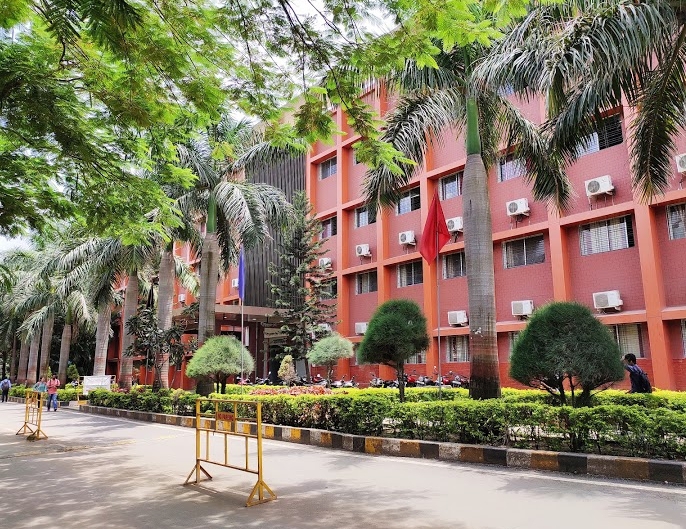
    JSPM’S RAJARSHI SHAHU COLLEGE OF ENGINEERING TATHAWADE

    An Institute which will help you to achieve your “DREAM”.

    Jayawant Shikshan Prasarak Mandal’s Rajarshi Shahu College of Engineering is an autonomous private institute under Savitribai Phule Pune University. (since 2001)

    NAAC Accreditation Grade “A”/ 54th in Top 175 Engineering Institute Ranking Survey 2021 /

    10th in Top 30 Institutes in Research Capability.

    There are a total of nine departments offering UG and PG level programmes in Computer, Electrical, Civil, Mechanical, Electronic and Telecommunications and Information Technology, Engineering Science, Management and IT.

    Infrastructure : The infrastructure of JSPM’S RSCOE is really good. The classrooms are well euipped and also the labs provided to the students are one the best high tech labs in the entire pune with the best instruments and measurements tools.

    Also the hostel rooms here are quite spacious and comfortable. The quality of food at mess is never a topic of concern. They serve the best and variety of menus.

    Electrical Department : Electrical engineering has always been the evergreen branch of engineering. The best thing about this course is it can never get outdated, there is always something new to learn and explore.

    Cultural Activities : JSPM’S RSCOE is not just focuses academics but also on individual’s professional development. Every year technical as well as cultural fests are organised by the students and for the students themselves. The campus surrounds with positive energies and positive minds inspiring lives of students studying here.

    Internship : Every department offers not just national but international internships as well. Students get an opportunity to interact with foreign faculties and assimilate knowledge about various fields of engineering under the Mou with KMITL, Thailand.

    Placement : Placement department trains  students to be job-ready in every way. The number of companies visiting is also increasing rapidly. Training and placement cell also conducts a mock interview and mock tests. Students are eligible for placements from the third-year second semester. The highest salary package offered this year is 36 LPA. From second year college gives free aptitude classes to all the students.

    Faculty : Most of the teachers have completed their PhDs in respective fields of engineering and are really supportive. Faculties try to maintain a healthy faculty-student bond for complete understanding of concepts and ideas. The course curriculum is industry oriented and application based, making the students ready to face the challenges of corporate world.

    Other : Many extracurricular activities like coding competitions, hackathons, and visits to an orphanage are held by the college which helps students to grow in different ways. In the previous year, students visited an orphanage and taught them about computer fundamentals.

    There are many technical and cultural groups created by students for the students themselves, like team Rangbhumi, team curiosity, robotics team and many more.

    So hurry up and apply now…

    Does An Apple A Day Keeps The Doctor Away?

    Ever since our childhood we have been growing up with the say ‘ An apple a day keeps the doctor away.’ But is the say accurate or we have been fallen in the trap?  The phrase was first coined in 1913, it was based on a Pembrokeshire proverb that originated in 1866. The initial adage was “Eat an apple on going to bed, and you’ll keep the doctor from earning his bread.”

    A 100 gram of an apple contains 52 calories with 0.3 gram protein, 13.8 grams carbohydrates, 10.4 grams of sugar and 0.2 grams of fats. It is composed of 86% of water. Although their carb and sugar contents are high, their glycemic index (GI which is a measure of how food affects the rise in blood sugar levels after eating) is low, ranging 29–44. The fiber that an apple contains is very beneficial as it has many health benefits such as improved digestion. It is also rich in various antioxidant plant compounds such as Quercetin, Catechin and Chlorogenic acid.

    Apples are rich in Vitamin C and Potassium. One of the researches revealed that people who eat more apples have comparatively reduced risks of cancer. There is also a reduced risk of diabetes 2. It also leads to less acid secretion and as a result there will be less calcium loss. There is also reduction of coronary heart disease. There is reduced risks of strokes.

    According to one of the study  39.0% of apple-eaters avoided more than one yearly doctor visit, compared with 33.9% of non-apple eaters.

    So we can say that though the adage is not entirely true because a person eating apples may catch a disease, it is apt to say that people eating apples have reduced risks of getting diseases as compared to people who do not eat apples.

    Why should we care about our privacy?

    Privacy in general terms is the right to be left alone or freedom from interference or intrusion. In terms of the internet, privacy is the right to have some control over how your personal information is collected and used.

    More technical innovation gives way to more efficient and advanced technologies. In recent years the information has become the most important component to cultivate this innovation. As many new people are coming on the internet and the amount of information being shared is increased manifold. Every organization or individual is entering the realm of the digital world and data is the entity of this world. Data is also very essential to understand a user or a customer or a client but sometimes there is no limit to the amount of data that an internet corporation is willing to extract. Somewhere there has to be a line that needs to be drawn. In recent years there have been many issues regarding the privacy policy of many tech corporations. Facebook has been in controversy much time. Recently Whatsapp’s privacy policy also raised many questions, then in an ironic move Whatsapp raised the question of privacy by suing the government regarding the new Information technology rules. But this is just the tip of the iceberg and numerous other aspects get overlooked. First, we will need to understand what this privacy means for us as individuals. Only then we can clearly determine the relevance of these rapidly changing developments in this subject.  

    “Arguing that you don’t care about the right to privacy because you have nothing to hide is no different than saying you don’t care about free speech because you have nothing to say.”

    -Edward Snowden

    It’s not that privacy means that there is something to hide; rather privacy is having things you don’t want to show. For instance, people would not like to post their Bank account online or Bank statements. People would also not like to have a public camera inside their homes. Similarly, there are some things that an individual would not like to share online. Privacy can provide secrecy, but there is more to it. Privacy also provides autonomy and therefore freedom to an individual. Well, there is even more to privacy than the freedom that many people do not realize which is that when we think we’re being watched, we make behavior choices that we believe other people want us to make.  Humans intrinsically like to avoid societal condemnation and perception of whether or not we are in private changes the way we behave. This indicates the benefit that a state can have with surveillance and can lead to a conformist population.

    As it is stated by many that data is the oil and for many tech organizations it truly is. We can witness this with the various technological corporations that rely upon user data including Facebook, Google, Amazon etc. But Even Smartphone manufacturers like Xiaomi have realized the lucrative benefits of collecting and selling user data. For these companies, our data is money and they earn billions of dollars with this data. Both the private tech giants have clauses in their privacy policy that allows government agencies and third parties to access the data. The data that gets uploaded on the internet never gets deleted and stays there forever. What we have to realize is that even if the information seems futile today, it may have an importance tomorrow. In conclusion, privacy is not a trivial issue and people will have to understand its importance until it’s too late.

    References:

    DOPING

    To continue the fight against doping - Fondazione Gianni Benzi Onlus

    Doping is not new to the people . In ancient Greece, there were specialists who used to offer athletes nutritional ingredients in order to enhance their physical performance. Those specialists may be compared to the current sports medicine specialists . During the Olympic Games in the third century BC, the athletes tried to increase their sports performance by taking mushrooms and opium . In the Ist centaury AD, the Greek runners used to drink a herbal beverage to increase their strength and become capable to run long distance races. Gladiators are also reported to use various substances for enhancing strength . In the modern era , the use of performance enhancing substances and techniques by the top sportspersons across the world has been a presistent issue in the world of sports for nearly four decades. Since the beginning of the 21st century, many athletes have been engaged in taking such substances. Some of them have been tested positive such as Tim Montgomery, Marion Jones, swimmer Phelps, etc.

    Concept of Doping

    ‘Doping’ is the word, which is used in the field of sports, to refer to the situation when athletes use prohibited substances or methods to unfairly improve their sporting performance. In general terms, doping is the use of performance enhancing substances or methods by athletes to gain an advantage over their competitors . In fact , some athletes take illegal substances to enhance their performance . This activity is known as ‘doping’ . Doping in sports is the deliberate or inadvertent use by an athlete of a substance or method banned by the International Olympic Committee. In fact, the ban or prohibition on such substances is necessary to protect the athletes from the unfair advantage which may be gained by those athletes who use prohibited substances or methods to enhance their performance and also from the possible harmful side effects which these substances or methods can produce. The following definitions of doping may help in understanding its exact meaning:

    According to International Olympic Committee, ‘‘Doping is the use of any method or substance that might harm the athlete, in a quest to gain an unfair advantage, over his/her fellow competitors”. In fact, doping is the use of prohibited substances or methods designed to enhance an athlete’s physical or mental abilities or to mask the use of such substances or methods during preparation for or participation in a sports competition .

    According to World Anti-Doping Agency (WADA) ,” Doping is defined as the occurrence of one or more of the anti-doping rule violations set forth in Article 2.1 through Article 2.8 of the code.”

    RIGHT TO PRIVACY AND PERSONAL DATA PROTECTION BILL

    Protecting its citizens privacy in 21st century is a part of maintaining democratic character of a nation. Right to privacy is not exclusively mentioned in constitution of India but it is considered as a part of Article 21 which deals with right to life and personal liberty. It has been further interpreted by various cases and their judgements through the years.

    Right to privacy is considered basic human right under Article 12 of Universal declaration of human rights act 1948 and India recognizes it through Article 14, Article 19 and Article 21 of Indian constitution which are Equality before law, Freedom of speech and expression and right to life and personal liberty respectively. On occasion India has taken note of importance of Right to privacy through judgements in wiretapping case, Aadhar case, Vineet Kumar case and alike.

    Vineet Kumar case stated that tapping of phones should not be permitted unless it is case of public safety and emergency.

    The recent case of new privacy policy by WhatsApp caused ruckus among citizens regarding protection of their privacy and immediate need of a legitimate way to deal with it. However, India recognized Right to privacy as fundamental right after Puttuswamy v/s Union of India case (2017) but it was under Article 21 itself. Under section 72A of IT act, breach of data privacy is punishable but it is only relevant in the case of corporate sector and to sensitive information.

    India does not have a law dedicated to right to privacy yet. Although Personal data protection bill was put forward by justice Srikrishna committee.

    PERONAL DATA AND PROTECTION BILL

    Personal data and protection bill which was introduced in Lok Sabha in 2019 finally seems to be moving forward now that it has been through parliamentary scrutiny of a joint committee.

    The bill restricts processing of personal data by Government, Companies inside and outside India which are dealing with personal data of Indians. The Bill labeled certain data such as financial data, biometric data, caste, religion and political beliefs as sensitive personal data.

    A data fiduciary who is basically an entity or individual who owns the means to process these data is required to take certain accountability measures which includes implementing security safeguards such as data encryption and preventing misuse of data and instituting grievance redressal mechanisms to address complaints of individuals. They are also required to mechanize age verification and Parental consent if procession personal information of children. Therefore, Bill allows data fiduciary to process personal data if consent is provided by the individual. However, in circumstances where state requires data for providing benefits to individual, legal proceedings and respond to the medical emergency Personal data can be processed without consent.

    The bill further proclaims that individual has certain rights including right to obtain confirmation from the fiduciary on whether their personal data has been processed, (ii) seek correction of inaccurate, incomplete, or out-of-date personal data, (iii) have personal data transferred to any other data fiduciary in certain circumstances, and (iv) restrict continuing disclosure of their personal data by a fiduciary, if it is no longer necessary or consent is withdrawn.

    The Bill seeks to amend the Information Technology Act, 2000 to delete the provisions related to compensation payable by companies for failure to protect personal data. The introduction of personal data and protection bill was a step forward towards democratic data governance and it would further take us closer to constitutionally guaranteed Right to privacy.   

    Photo by Pixabay on Pexels.com

    The reason behind the rising number of old age homes in India

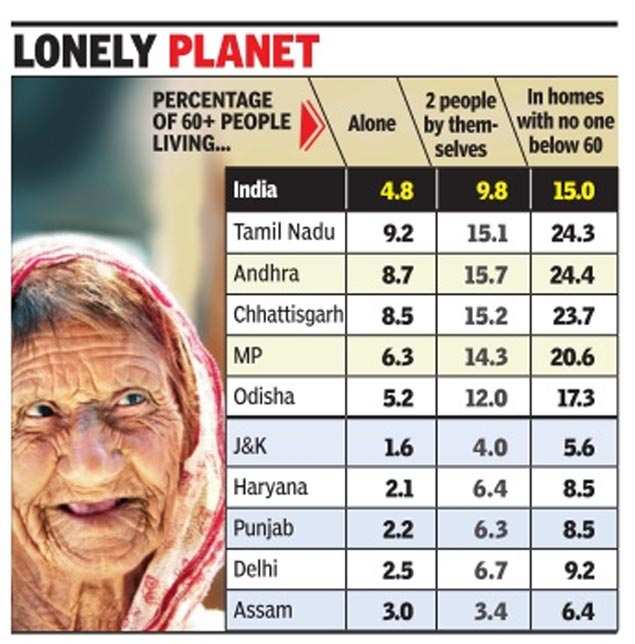
    According to Population Census 2011, there are nearly 104 million elderly persons (aged 60 years or above) in India; 53 million females and 51 million males. A report released by the United Nations Population Fund and HelpAge India suggests that the number of elderly persons is expected to grow to 173 million by 2026. Currently 71% of the elderly population resides in urban areas while 29% are in rural areas. With the changing times, children moves out to different cities or even different countries with the aim of gaining better living aspects leaving behind their parents for whom it is not possible to adjust with the lifestyle changes which migration brings . In some cases while the parents agree to move in with their children , in other cases it is observed that when parents age children starts to see them as a burden and a responsibility that they want to get rid off which lead them in abandoning their own parents.

    Currently there are 728 old age homes in India, with the information available for 547 homes out of which 325 homes accommodates elderly people free of cost, while 95 others charges for the accommodations while nearly 110 other homes have both free as well as pay staying facility available . Kerala , the state which has the highest literary rate in India is also reported to have the highest number of old age homes i.e. 278.

    India has always been a nation of traditions where a child since birth is taught to touch the feet of elders as a mark of respect. It is considered an insult to leave the parents at old age home, to not provide for them in their vulnerable age as many children consider taking care of their aging parents as a forced liability as their growing age weakens their physical ability. This blog will highlight some of the reasons why the number of elderly people in old age homes continuously rising.

    The reasons for the rising numbers

    The families in India few decades back were joint families with parents, grandparents, siblings their wives and children living together under a single roof in a small town or villages. Those were the times when urbanisation had not really hit the sub continent and the aging elders have does not have to worry about someone taking care of them.

    • The migration which the children go through sometimes from a state to another or to another country, makes it difficult for the elders to adjust with their children’s new surroundings as it is very natural to adjust in an experience to which you are foreign almost your entire life. Even if they do adjust they tend to feel very lonely while the children go to work. As the urban system which consists of living in flats or even houses in the cities had made people isolated in their own world owing to their hectic schedules . In these cases , children feel that if their parents will get the company of their own age then they will feel better and will be able to lead a happy retirement.
    • As the times progressed, opportunities increased children started moving away from their parents as the trend of nuclear families came in fashion. Also, the generation gap between the elderly and the young does not allow elders to accept some of their children’s choices like many still have objections to an independent working daughter in law. These issues creates rift in the family dynamics leaving no option other than to move the parents out of their houses. Since in India children never shy away from taking their parent’s savings which they had saved for their old age for their personal benefits and the middle class families can’t afford another place for the parents to live close by, parents ends up in the old age homes . Also, there are some horrific cases reported where children tend to abandon their parents by the excuse of sending them off to pilgrimage or to any other city leaving them stranded. The reason this occurs is because the younger generation refuse to adjust with the older ones by being cruel and mean to them for their limited physical capability. In such cases, the passer by then drop them to the old age homes.
    • While many children move out of their parent’s house for job or education purposes leaving their parents alone, their security always remain their prime issue. Though many youngsters have surveillance cameras and advanced security systems installed in the house , still the rising number of crimes against the elderly where the houses with just elder people becomes a target for robbery even murder is worth worrying. In such cases children feel the environment of old age to be safe.

    The conditions in old age homes

    While many old age homes provide good accommodation and facilities many are reported to provide stale and inadequate amount of food, no medical attention even after taking money for the proper services by the children. Their are instances of cases of violence in the old age homes . Such one instance is a time, when an elderly was reported to be beaten by the management for complaining about the quantity and quality of food served.

    The people in old age homes are not always happy as somewhere or the other they still miss their children who either comes on weekends and important occasions. While there is this other set of children for whom parents are a forced responsibility , who never show up after giving false hopes of coming every weekend. In the latter cases, it is the management of the homes which take care of the medical needs of the elders through donations. There are also cases when children do not even come after the death of their parents.

    Conclusion

    Everything in this world is a part of the vicious cycle of Karma with the proverb “As you sow so shall you reap” being true. When a child is born it is completely dependent on its parents for its needs. Similarly there reaches a time when the human body gives up to age making it difficult for the older people even to do their necessary works. In such cases they become dependent on their children who will have to learn to adjust to the maximum to cater their parent’s needs. Else, when their time would come they would also die in old age homes with their own blood having no care about it.

    Also, government should work on increasing the number of old age homes in states and also upgrade the security making sure that the elders are safe in the homes.