Bullying in School

It makes no difference whether you are a student, instructor, parent of a child or adolescent, or a member of the community.

Everyone plays a part in preventing school bullying, and the majority of individuals have either directly or indirectly participated in, watched, or experienced some type of bullying in schools.

There are multiple sorts of bullying to be aware of, as well as several approaches for educators, schools, and parents to assist in the prevention of bullying at school.

Bullying must meet specific criteria in order to be classified as such.

These include malice, power imbalances, repetition, anguish, and provocation. Bullying can occur in schools, on campus, or outside of school, but it is always the result of relationships formed in those contexts.

Photo by RODNAE Productions on Pexels.com

Types of Bullying

  1. Bullying can take two forms: direct and indirect.
    Direct bullying differs from indirect bullying in that it involves direct interaction with the person who is being bullied. It’s possible that indirect will not work. Throwing something at someone or yelling cruel comments at them is a form of direct bullying. An example of indirect bullying might be spreading rumors about a classmate.
  2. Cyberbullying Cyberbullying is any form of bullying that occurs through the internet. Harmful comments on a personal website or dishonest private messaging are examples.
  3. Physical bullying Bullying that involves physical contact with the other person is always considered physical bullying. This can include hand-to-hand combat, as well as throwing objects, tripping, or inciting others to attack a person physically.
  4. Emotional bullying Emotional bullying is defined as the intentional infliction of emotional distress on another individual. Saying or writing harsh things, getting others to band together against an individual, purposeful ignoring, or spreading rumors’ are all examples of this.
  5. Sexual bullying Sexual bullying refers to any sort of bullying, done in any manner, that is related to a person’s gender or sexuality. Examples can include forcing someone to commit intimate acts, making sexual comments, or unwanted touching.
  6. Verbal bullying Verbal bullying is defined as the use of any form of language to cause distress to another person. Using profanities, abusive language, making unfavorable comments about someone’s appearance, using insulting phrases, or teasing are all examples.
  7. Bullying in Higher School Many individuals mistakenly believe that bullying ends in high school, yet it continues throughout higher education. This can take numerous forms, and it often comes with unique obstacles because students are often living away from home and on their own.

Anti-bullying laws exist in all fifty states of the United States, albeit they differ from state to state. The majority of states have legislation requiring schools to report, document, and investigate occurrences of bullying in the classroom. Bullying prevention is also mandated by law for schools.

Some state laws may stipulate that bullies face sanctions and that bullied pupils receive appropriate counselling.

There are, however, a number of rules in place to assist pupils with learning or other problems. These pupils are guaranteed the right to a “free, adequate public education” under the Individuals with Disabilities Education Act.

It is against federal law to deny a student with an IEP (Individualized Education Plan) access to an appropriate public education.

EFFECTS OF BULLYING

  1. The Resultant Consequences

Bullying victims may suffer from low self-esteem, which can lead to depression. As a result of school bullying, some bully victims experience physical and/or emotional pain. Bullied adolescents are more prone to experience depression later in life.

  1. Victimhood for a Lifetime

Unfortunately, some children are subjected to persistent bullying that occurs on a weekly basis. This is more common in primary school, and it might result in lost days of school.

In order to prevent long-term injury, schools must step in and intervene in cases of chronic bullying.

Photo by Keira Burton on Pexels.com

There are a variety of reasons that can contribute to bullying. Bullying is likely to occur if there are pupils who have bully inclinations and the school climate permits it. Bullying can occur as a result of a challenging family environment, low self-esteem, or poor social skills.

It’s difficult for a parent to learn that their child is being bullied, but know that you can help.

To begin, establish a thorough record of the bullying incident, including as many information as possible.

You should also keep track of your child’s reactions to help the school understand how bullying is harming his or her schoolwork. Check to see if the bullying has broken any laws, and then file a complaint with your child’s school by email.

Bullies usually target students in their own grade, but they can sometimes target students who are older. A youngster with a big network of friends is less likely to be bullied, but a child who is physically weaker, smaller, and less forceful is more likely to be bullied.

Schools must have policies and procedures in place that are followed. Anti-bullying education should be included into all aspects of the curriculum. Language arts teachers, for example, can locate required novels that teach pupils empathy for others.

When it comes to bullying prevention, communication is crucial. When children feel comfortable talking to adults in their community, they are more likely to report bullying and to avoid bullying by verbally expressing their feelings.


BLOGGING

How To Become A Blogger?

Since the advent of internet, people have access to all kinds of information as well as global audience. On the one hand there are people who enjoy reading this information and on the other hand there are people who are taking advantage of the access to global audience to communicate their thoughts and knowledge. These people are known as bloggers. Contrary to popular belief, a blogger is not only a person who writes but someone who uses any medium to communicate their thoughts like a photographer for example.

There are billions of people across globe writing about billions of things and you could be one of them. Being a blogger gives you a sense of freedom to express what’s inside you and let people know that they are not alone. In no time blogging has become one of the most popular career choices among youth. Blogging is original, it’s personal. it offers a fresh perspective, so no wonder it is the choice of majority of people. To become a blogger it is necessary to develop interest in writing. No one is born a writer but this habit is developed over time. A successful blogger is an avid reader. One who reads knows how the writers manipulate their words and proceed with their thoughts. In order to be a blogger you must consider the following points:

  • Pick your genre: You must decide the kind of blogger you want to be. You can be a fashion blogger, a food blogger, a travel blogger, a motivational writer, or any other area that is of your interest.
  • Pick a name: Pick a name for your website that resembles the kind of blogs you wish to write.
  • Register your blog: Next step is to get your blog registered on the website of your choice.
  • Write your first post: Now it is time to write your first blog. Make sure it aligns with the theme of your blog and use as many keywords as possible to attract audience. You can be as creative as possible. Remember it only gets better after your first post.
  • Promote your blog: This is the most crucial step if you wish to advance your career as a blogger. Promote the website as much as you can. Put up social media posts, forward it to your friends, do as much as you can. These efforts will only improve your chances of becoming a successful blogger.
  • Handling writer’s block: There will come a time when you would be short of ideas and you would wish to stop but handling that writer’s block is part of being a writer. Don’t let it discourage you. Keep calm and keep going.

The above points might not feel daunting the first time but the moment you make up your mind to follow through, the real challenge begins. There greater the audience, the greater the responsibility to deliver original content. As a writer, your integrity is at stake and you must refrain from copying and stealing someone else’s work unless you plan on giving them due credit. Be true to yourself and most importantly be true to your audience. It takes a lot of research and reading to write a blog and for this reason it is not everyone’s cup of tea. It does not matter if blogging is your side hobby or your career goal, you must choose to become a blogger only if you are fully committed to it. There are a lot of employment opportunities for freshers as well as established bloggers. So, if you have a knack for writing and coming up with original ideas, blogging is the job for you.

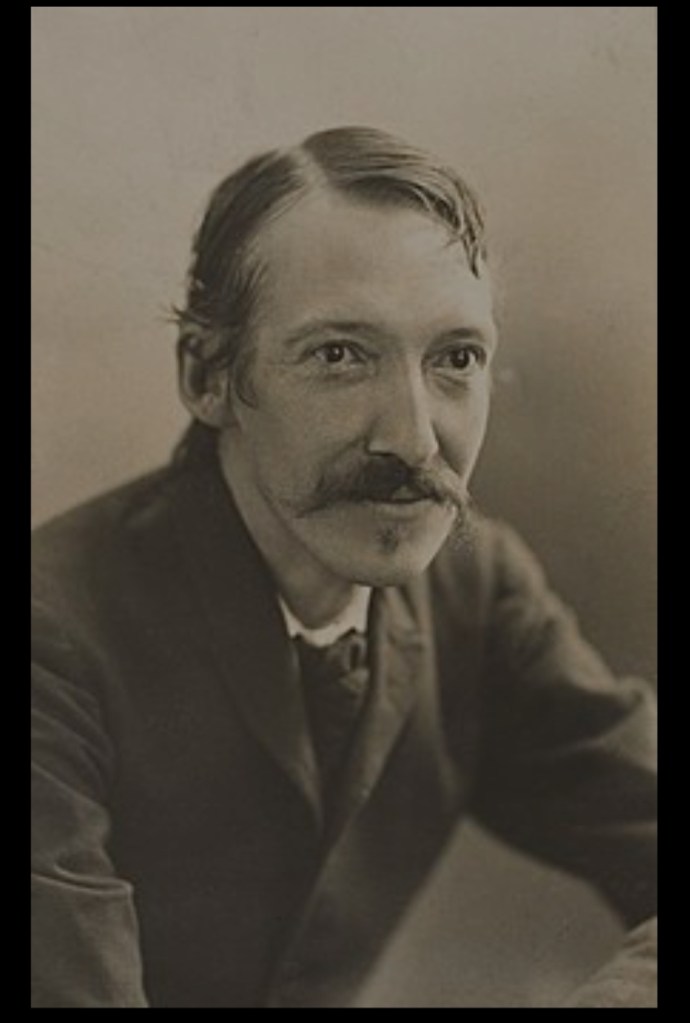
Essay explanation ” El Dorado “by Robert Louis Stevenson

It seems as if a great deal were attainable in a world where there are so many marriages and decisive battles ….” 

                                        – El Dorado by R.L Stevenson.

” El Dorado ” by Robert Louis Stevenson is one of the most famous and inspiring essays about the journey for the travellers .

El Dorado ”  means gilded one in Spanish .

It is a legendary city or historical region of the New World , often thought to be in South America that was fabled for its great wealth of gold and precious jewels and eagerly sought by 16th and 17th century explorers including Sir Walther Raleigh. 

This imaginary land of fabulous gold is a symbol of the unattainable

El Dorado essay by R.L Stevenson is about the journey of  travellers which is more pleasurable than arriving at the destination .

Stevenson, who was fond of traveling , expounds here his philosophy of traveling without ever resting . 

According to him

There is always a new horizon for onward looking men .”

He discovers the secrets of happiness in the fact that our hopes and aspirations striving goes on for life .

” Our hopes are inaccessible like stars and the term of hoping is prolonged until the end of life .”

Incessant striving and perpetual chase for something make life meaningful and fruitful rendering perennial pleasure to a man .

Stevenson says “An aspiration is a joy forever ” . 

Desire and curiosity are two eyes through which man sees the world in the most enchanted and captivating colours .

Desire and curiosity  needs to be satisfied and perpetually renewed to keep up the interest in one’s life .

Stevenson mentions a story of a young fellow who finished the works of Thomas Carlyle and weeped about no book of Carlyle left to read .

Alexander the Great wept because he has no countries to conquer .

He states that one who volume or measure his interest and desire has a fear to come to an end and be left with nothing to accompany his last stage of journey.

Desire and curiosity is what keeps man continuing to exist .

“Interests are only plucked up to sow themselves again ,like mustard “.

Stevenson further says ,

And when we discover a continent or cross a chain of mountains , it is only to find another ocean or another plain upon the further side . “

Life can be thrilling and exciting when we go forward led by desire and curiosity.

“Aspirations “ means desire to have more and more knowledge and experience in life .

Aspirations can keep us going, making our life worth living .

Stevenson points out that even a small corner of earth can offer us something new to start . Life and nature have infinite riches to be explored by curiosity and hence ,the journey of traveling continues life long .

He concludes by advising man to remain engaged in some noble pursuits.

He say, 

To travel hopefully is better than to arrive and the true success is to labour .”

About Robert Louis Stevenson 

Robert Louis ( Balfour) Stevenson was a Scottish novelist ,poet , essayist and travel writer .

He was born in Edinburgh on 13 November 1850 .

His fourth four year life was a nearly constant journey in search of adventure and relief from the agonies of tuberculosis ,with which he was afflicted from early childhood .

Stevenson attempted every species of writing but it is chiefly as an essayist that he continues to live .He was essentially an artist in words .He was an amazing storyteller ,an acute and sensitive critic , a genial and whole hearted lover of life .He was a master of rich , resilient prose style .

There is a kind of primitivism in his writing which wins over the reader by its message of courage and virility – the traits which characterize Stevenson’s own life.

Stevenson As an Essayist 

Stevenson is considered one of the greatest essayists of the Victorian Age .He was influenced by Wiliam Hazlitt .

He was a personal essayist and he himself became the subject matter of his essays .His essays are like mirrors which reflect his personality and show real aspects of his life .

Stevenson’s essays are filled with whimsical paradoxes , keen and witty as those of Bernal Shaw . His work is invariably ethical.

He wrote essays on different topics such as nature , philosophy , morality , children science etc. 

Few of his essays deal with human miseries and problems of human life .

Some of his essays and other works are , 

. Travels with a Donkey, Virginibus Puerisque ,Familiar Studies of Men and Books , New Arabian Nights , Treasure Island ,  Prince Otto,  A Child’s Garden of Verses ,More New Arabian Nights., The Dynamiter. StrangEnglish Case of Dr. Jekyll and Mr. Hyde , Kidnapped , El Dorado , Memories and Portraits etc.

His essays are highly  personal and autobiographical. He was a craftsman and artist who cared passionately about his writings.

Hence , we can say Stevenson was a versatile genius of his age .

___________________________________________

Referral link :- More about R.L Stevenson Read El Dorado online

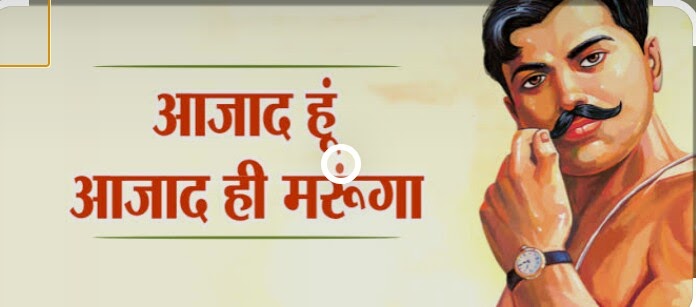
Why Chandra Shekhar Azad is know as “AZAD”, remembering him on his Jayanti

KNOWN FOR HIS BREAVERY & HIS DEVOTION TOWADS THE COUNTRY , AZAD WAS THE MAN OF HIS WORDS.

Every one calls him Chandra Shekhar Azad , but his original name was Chandra Shekhar Tiwari.

Azad was born as on 23 July 1906 in Bhabhra village , in the princely-state of Alirajpur. His forefathers were from Badarka village of Unnao District. His mother, Jagrani Devi, was the third wife of Sitaram Tiwari, whose previous wives had died young. After the birth of their first son, Sukhdev, in Badarka, the family moved to Alirajpur State.

His mother wanted her son to be a great Sanskrit scholar and persuaded his father to send him to Kashi Vidyapeeth, Banaras, to study. In 1921, when the Non-Cooperation Movement was at its height, Chandra Shekhar, then at a tender age of 15 , joined that movement . As a result, he was arrested on 20 December. On being presented before the district magistrate Justice Reverend Tomson Kregat a week later, he introduced himself as “Azad” (The Free), his father’s name as “Swatantrata” (Independence) and his residence as “Jail”. The angry magistrate ordered him to detained to jail for 23 weeks and ordered be punished with 15 lashes a day . his level of devotion towards the country can be measured by his actions , when he was getting lashes , with each lash he said “VANDE MATARAM” & “GANDHI JI KI JAI HO ” . After watching a boy of just 15 , getting lashes as punishment but still shouting VANDE MATARAM , people started recognizing him as “AZAD”

He learnt shooting at a very tender age , he was known for his shooting skills . After the suspension of the non-cooperation movement in 1922 by Gandhi, Azad was disappointed. He met a young revolutionary, Manmath Nath Gupta, who introduced him to Ram Prasad Bismil who had formed the Hindustan Republican Association (HRA), a revolutionary organization. He then became an active member of the HRA and started to collect funds for HRA. Most of the fund collection was through robberies of government property , they property which British govt snatched from Indians. British government was stunned by this behavior of Azad . He didn’t stop here , he was involved in shooting J.P Saunders , who was involved in killing Lala Lajpat Rai , Azad didn’t stop here , he pasted pamphlets on the walls of Lahore’s streets , that revenge of Lala Lajpat rai is taken.

On 27 February 1931, the CID head of the police at Allahabad, Sir J. R. H. Nott-Bower was tipped off by someone that Azad was at Alfred Park and was having a talk with his companion Sukhdev Raj. On receiving it, Bower called on the Allahabad police to accompany him to the park to arrest him. Azad’s old comrades Veer Bhadra Tiwari and Yashpal were also held responsible for tipping off two of the police constables. The police arrived at the park and surrounded it from all four sides. Some constables along with DSP Thakur Vishweshwar Singh entered the park armed with rifles and the shootout began. Sukhdev Raj escaped uninjured. Azad hid behind a tree to save himself and began to fire from behind it. The police fired back. After a long shootout, holding true to his pledge to always remain Azad (Free) and never be captured alive, he shot himself with his last bullet. In the shootout, Bower and DSP Singh were injured in the right palm and jaws respectively. The police recovered Azad’s body after the other officers arrived at the site.

The body was sent to Rasulabad Ghat for cremation without informing the general public. As it came to light, people surrounded the park where the incident had taken place. They chanted slogans against British rule and praised Azad. The park was later on named as Chandra Shekhar Azad park .

This level of love towards the country is hard to find in this era , & on the occasion of Chandra Shekhar Azad ‘s Jayanti we all should remember this great freedom fighter & should take pledge that we will also stand on our country’s side in every situation like Azad .

WOMEN EMPOWERMENT

Women Empowerment is made up of two words women and empowerment. Empowerment means to give power or authority to someone. So, Women Empowerment means power in the hands of women. It signifies that women should be given equal opportunity in every field, irrespective of any discrimination. Our society comprises men and women. In earlier times, men were considered to be the leading members of a family. They were responsible for earning the livelihood and were the decision takers of the family. On the other hand, women were responsible for doing household work and upbringing of the children. So, the roles were mainly based on gender. There was no involvement of women in decision making. If we assess our entire sector, then research says that women’s issues are either focused on her reproductive role and her body or on her economic role as a worker. But none of them is focused on empowering the women.Women can be empowered in various ways. It can be done through government schemes as well as on an individual basis. At the individual level, we should start respecting women and start giving them opportunities equal to men. We should promote and encourage them to take up jobs, higher education, business activities, etc. The Government has come up with various schemes such as Beti Bachao Beti Padhao Yojana, Mahila-E-Haat, Mahila Shakti Kendra, Working Women Hostel, Sukanya Samriddhi Yojana, etc. to empower women. Apart from these schemes, we as individuals can also empower women by abolishing social evils like the dowry system, child marriage. These small steps will change the situation of women in society and make them feel empowered.

Women can be empowered in various ways. It can be done through government schemes as well as on an individual basis. At the individual level, we should start respecting women and start giving them opportunities equal to men. We should promote and encourage them to take up jobs, higher education, business activities, etc. The Government has come up with various schemes such as Beti Bachao Beti Padhao Yojana, Mahila-E-Haat, Mahila Shakti Kendra, Working Women Hostel, Sukanya Samriddhi Yojana, etc. to empower women. Apart from these schemes, we as individuals can also empower women by abolishing social evils like the dowry system, child marriage. These small steps will change the situation of women in society and make them feel empowered.

EACH TIME A WOMEN STAND UP FOR HERSELF, SHE IS STANDING FOR HERSELF.

Positive Psychology

Positive psychology is one of the newest branches of psychology to emerge. This particular area of psychology focuses on how to help human beings prosper and lead healthy, happy lives. While many other branches of psychology tend to focus on dysfunction and abnormal behaviour, positive psychology is centered on helping people become happier. Positive psychology is designed to “complement and extend the problem-focused psychology that has been dominant for decades,” explained the late Christopher Peterson, author of “A Primer in Positive Psychology” and professor at the University of Michigan, in a 2008 article published in Psychology Today. “Positive psychology is…a call for psychological science and practice to be as concerned with strength as with weakness; as interested in building the best things in life as in repairing the worst; and as concerned with making the lives of normal people fulfilling as with healing pathology,” Peterson wrote.

According to leading authorities in the field, Martin Seligman and Mihaly Csikszentmihalyi, positive psychology will help achieve “scientific understanding and effective interventions to build thriving in individuals, families, and communities.” In order to understand the field of positive psychology, it is essential to start by learning more about its major theories, applications, and history.

History of Positive Psychology

“Before World War II, psychology had three distinct missions: curing mental illness, making the lives of all people more productive and fulfilling, and identifying and nurturing high talent,” wrote Seligman and Mihaly Csikszenmihalyi in 2000. Shortly after WWII, the primary focus of psychology shifted to the first priority: treating abnormal behavior and mental illness. In the 1950s, humanist thinkers like Carl Rogers, Erich Formm and Abraham Maslow helped renew interest in the other two areas by developing theories that focused on happiness and the positive aspects of human nature.

General interest in positive psychology has grown tremendously since the concept was introduced. Today, more and more people are searching for information on how they can become more fulfilled and achieve their full potential.

Uses

Positive psychology can have a range of real-world applications in areas including eduction, therapy, self-help, stress management, and workplace issues. Some of the major topics of interest in positive psychology include: Character strengths and virtues, Flow, Gratifications, Gratitude, Happiness, Pleasure, Helplessness, Hope, Mindfulness, Optimism, Positive thinking, Resilience .

Impact of Positive Psychology

Some of the major findings of positive psychology include: Money doesn’t necessarily buy well-being, but spending money on other people can make individuals happier, People are generally happy, Some of the best ways to combat disappointments and setbacks include strong social relationships and character strengths, While happiness is influenced by genetics, people can learn to be happier by developing optimism, gratitude, and altruism, Work can be important to well-being, especially when people are able to engage in work that is purposeful and meaningful.

Potential Pitfalls

Positive psychology is often confused with positive thinking, and misconstrued as self-help tactics rather than research-backed theories. Positive thinking is a way of thinking ourselves into better behavior and greater resilience, rather than behaving our way into a different frame of mind. Positive psychology, on the other hand, is the scientific study of what makes people thrive. It focuses on behaviors that can lead to a more optimized frame of mind as well as on thought patterns that lead to more functional behaviors.

Software Verification Methods

Software Verification : Verification is the process of manually examining / reviewing a document. The document may be SRS, SDD, the program itself or any document prepared during any phase of software development.

The objective of any verification method is to review the documents with the purpose of finding faults. Many methods are commonly used in practice like peer reviews, walkthroughs, inspections, etc. Verification helps in prevention of potential faults, which may lead to failure of software. Verification and validation activities may be performed after the implementation phase. However, only verification is possible in the phases prior to implementation like the
requirement phase, the design phase and even most of the implementation phase.

1) Peer Reviews

Any type of testing (verification or validation), even adhoc and undisciplined, is better than no testing if it is carried out by person(s) other than the developers / writers of the document with the purpose of finding faults. We give the document(s) / program(s) to someone else and ask to review the document(s) / program(s). We expect views about
the quality of the document(s) and also expect to find faults. This type of informal activity may give very good results without spending any significant resources.

Many studies have shown the importance of peer review due to its efficiency and significance. Our thrust should be to find faults in the document(s) / program(s) and not in the persons who have developed them. The activities involved may be SRS document verification, SDD verification and program verification. The reviewer may prepare a report
of observations and findings or may inform verbally during discussions.

2) Walkthroughs

Walkthroughs are more formal and systematic than peer reviews. In a walkthrough, the author of the document presents the document to a small group of two to seven persons. Participants are not expected to prepare anything. Only the presenter, who is the author, prepares for the meeting. The document(s) is / are distributed to all participants. During the meeting, the author introduces the material in order to make them familiar with it. All
participants may write their observations on any display mechanism like boards, sheets, projection systems, etc. so that every one may see and give views. After the review, the author writes a report about findings and any faults pointed out in the meeting.

The disadvantages of this system are the non-preparation of participants and incompleteness of the document(s) presented by the author(s). The author may hide some critical areas and unnecessarily emphasize on some specific areas of his / her interest. Walkthroughs may help us to find potential faults and may also be used for sharing the documents with others.

3) Inspection

Many names are used for this verification method like formal reviews, technical reviews, inspections, formal technical reviews, etc. This is the most structured and most formal type of verification method and is commonly known as inspections. The presenter is not the author but some other person who prepares and understands the document being
presented. This forces that person to learn and review that document prior to the meeting. The document(s) is / are distributed to all participants in advance in order to give them sufficient time for preparation.

Important points are displayed by some display mechanism so that everyone can see them. The moderator, preferably a senior person, conducts such meetings and respects everyone’s views. The idea is not to criticize anyone but to understand their views in order to improve the quality of the document being presented. Sometimes a checklist is also
used to review the document. After the meeting, a report is prepared by the moderator and circulated to all participants. They may give their views again, if any, or discuss with the moderator. A final report is prepared after incorporating necessary suggestions by the moderator. Inspections are very effective to find potential faults and problems in the document like SRS, SDD, source code, etc.

“STARTUP INDIA SEED FUND SCHEME” an initiative by govt for startups

SISFS , was launched by shri Piyush Goyal minister of Commerce & Industry, Consumer Affairs & Food & Public Distribution and Textiles

We all are know to India’s journey of giving opportunity to startups . Though we have may startups firms in India , but they don’t survive in long run , one of the main reason behind this is Indian startup ecosystem suffers from capital inadequacy in the seed and ‘Proof of Concept’ development stage. The capital required at this stage often presents a make or break situation for startups with good business ideas. Many innovative business ideas fail to take off due to the absence of this critical capital required at an early stage. The problem starts with seed funding , here is a short note on what is seed funding :

Seed funding : For growing a tree we need seed , so as to grow our business we need capital , and that is too at an early stage , Seed funding, or seed capital, is a relatively small amount of money that is used to start a business, fund research, or develop a product. The term’s reference to a “seed” is quite fitting. A tiny seed can someday grow into a lush forest. A tiny investment can help a struggling startup grow into a successful enterprise.

About the SISF Scheme: The Startup India Seed Fund Scheme aims to provide financial assistance to startups for proof of concept, prototype development, product trials, market entry and commercialization. On February 5, 2021, the Government of India made an official announcement about the approval of SISFS. It has been approved for a period of four years and was implemented with effect from April 1, 2021. Under the guidance of our honorable prime minister , Shri Narender Modi ji & Shri Piyush Goyal , minister of commerce & industry , this scheme was launched.

  • The Scheme aims to provide financial assistance to startups at the very initial stage of their project
  • It has been approved for a time period of four years, starting from 2021-22
  • Rs. 945 Crore corpus will be divided over the next 4 years for providing seed funding to eligible startups through eligible incubators across India
  • It is expected that the Startup India Seed Fund Scheme shall help over 3600 startups in the country
  • This scheme is in line with the Atmanirbhar Bharat Campaign launched in May 2020
  • Seed Fund to an eligible startup by the incubator shall be disbursed as follows:
    • Up to Rs. 20 Lakhs as a grant for validation of Proof of Concept, or prototype development, or product trials
    • Up to Rs. 50 Lakhs of investment for market entry, commercialization, or scaling up through convertible debentures or debt or debt-linked instruments

Who are eligible for SISFS ?

The eligibility criteria for a startup to apply under the Startup India Seed Fund Scheme shall be as follows:

  • The startup must be recognised by the Department for Promotion of Industry and Internal Trade (DPIIT)
  • It must have incorporated not more than 2 years ago at the time of application
  • Preference would be given to startups creating innovative solutions in sectors such as social impact, waste management, water management, financial inclusion, education, agriculture, food processing, biotechnology, healthcare, energy, mobility, defense, space, railways, oil and gas, textiles, etc.
  • The startup should not have received more than Rs 10 lakh of monetary support under any other Central or State Government scheme
  • Shareholding by Indian promoters in the startup should be at least 51% at the time of application to the incubator for the scheme

How will SISFS work ?

1. Department for Promotion of Industry and Internal Trade

The Seed Fund will be disbursed to eligible startups through eligible incubators across India DPIIT

Nodal Department EAC

2. Experts Advisory Committee

Government Representatives & Industry Experts Incubators

3. Govt assisted/Not-Govt assisted Incubators

Operational for at least 2-3 years Startups

4. DPIIT-recognized Startups

Incorporated less than 2 years ago

Myths about Counseling

Mental health challenges affect millions of people around the world. In any given year, unfortunately, misconceptions and myths around counselling and talk therapy often discourage people from seeking help and contribute to the stigma surrounding mental health issues. The truth is that counselling has the ability to help almost anyone with mental health concerns, social issues and personal development. But another truth is that every person is very unique – they will respond to and experience counselling differently and a method that works for one person is not necessarily going to work for someone else. If you have tried counselling before and didn’t find it helpful we encourage you to try again, with a different counsellor and/or different method.

Myth 1: Counselling is only for major issues or “crazy” people : Yes, counselling can help you through major life issues and traumas but those aren’t the only situations where counselling can work for you. Sometimes we just need someone unbiased to talk to about a situation or feelings we’re having – and that’s okay. It’s normal to seek help for problems large and small or simply when you’re not feeling quite yourself and you don’t know why. Counselling does not need to be used as a reactive measure when life gets hard. It can also be preventative and help provide you mental and emotional tools and strategies to use in future times of stress. We see physicians for prevention through annual check-ups – we can think of counselling in the same way.

Myth 2: Admitting that you need help and going for counselling means you’re weak: The concepts of weakness and vulnerability tend to get confused with each other. There is vulnerability in sharing what you’re going through and what you’re feeling, but that is not a sign of weakness. It is courageous to open up to someone. It’s an act of strength to take steps to better yourself when you’re not feeling your best. Vulnerability is not a weakness but rather a quality to take pride in, not be shameful of.

Myth 3: Counselling doesn’t help or will make the situation worse : Every person is different, and every person has different needs – the results from counselling are not going to be identical for everyone. But most of the time, counselling will provide you with support, new perspectives, and a plan to tackle your problems.

Myth 4: The counsellor doesn’t know me, so they can’t help me : When things aren’t going quite right and we want advice, we turn to our family and friends – people that know us and care about us. Having social connections is extremely important for maintaining mental wellness but our loved ones normally don’t have the skills or the objectivity needed. We’re not recommending that you turn away from loved ones or that their advice can’t be helpful, but counsellors are an excellent additional resource to guide you through difficult times. An unbiased, impartial trained professional can give insight into the situations and feelings that you’re having that you would not be able to get from people that are close to you. Professional counsellor’s training and experience can help beyond the well-intentioned advice of your loved ones.

Myth 5: Counselling takes a long time and costs a lot : The length of time, or number of sessions needed with a counsellor will greatly vary depending on many factors, such as:

  • How long you’ve been dealing with the issue
  • The severity of the problem
  • The time you need to make any necessary changes (i.e. Habits, copying mechanisms, etc.

Myth 6: Couples counselling is only for people that have problems in their relationship : Just like you need to water a plant to make it grow, or practice an instrument to master it, you also need to work on a relationship if you want it to thrive. Take the plant analogy – you wouldn’t just water your plant when its leaves are wilted and it’s near death. You would water it on a regular basis, even when it’s healthy looking and vibrant. Working on skills with your partner like communication, conflict resolution, and intimacy when your relationship is strong, is just as important as building on those skills when times are tough. Having the desire to improve your relationship with some help doesn’t mean your relationship isn’t good or that it won’ last – it means that you care enough about your partner to invest in the relationship.

Myth 7: They will blame my parents for everything : Every struggle you go through is unique. And the process to heal from those struggles is going to vary. Much of your work with your counsellor will be guided by you – the areas of your life you want to focus on: past, present and future. For some situations it can be helpful to analyze your past and see how your environment and the people around you shaped how you respond to things today. Some situations are best solved by looking at current behaviours. Regardless if you and your counsellor analyze your past or your present, the most important thing to keep in mind is that counselling is not about assigning blame, but learning how to have a healthy mental outlook and have healthy relationships with yourself and others.

Myth 8: All counsellors are the same – If you didn’t have success with one, counselling won’t work for you : You don’t “click” with every single person you meet and everyone doesn’t respond the same way to the same exact form of any kind of treatment. Counsellors and counselling treatments are no different and not every counsellor will be a perfect fit for you. That’s okay. We want you to see results from your counselling experience. When you request counselling from Calgary Counselling Centre, we ask many questions to make sure you are assigned to the type of counsellor you prefer and that you’ll receive the type of treatment that is most likely to achieve the best results. If after a few sessions the relationship with you and your counsellor doesn’t seem to be a match, you can request another counsellor. We promise, your counsellor will not be offended by this, on the contrary, they want the best for you.

Artificial Intelligence

Artificial intelligence (AI) refers to the simulation of human intelligence in machines that are programmed to think like humans and mimic their actions. The term may also be applied to any machine that exhibits traits associated with a human mind such as learning and problem-solving.

Artificial intelligence (AI) is intelligence demonstrated by machines, as opposed to the natural intelligence displayed by humans or animals. Leading AI textbooks define the field as the study of “intelligent agents”: any system that perceives its environment and takes actions that maximize its chance of achieving its goals. Some popular accounts use the term “artificial intelligence” to describe machines that mimic “cognitive” functions that humans associate with the human mind, such as “learning” and “problem solving”.

AI applications include advanced web search engines, recommendation systems (used by YouTube, Amazon and Netflix), understanding human speech (such as Siri or Alexa), self-driving cars (e.g. Tesla), and competing at the highest level in strategic game systems (such as chess and Go), As machines become increasingly capable, tasks considered to require “intelligence” are often removed from the definition of AI, a phenomenon known as the AI effect. For instance, optical character recognition is frequently excluded from things considered to be AI, having become a routine technology.

Artificial intelligence was founded as an academic discipline in 1956, and in the years since has experienced several waves of optimism, followed by disappointment and the loss of funding (known as an “AI winter”), followed by new approaches, success and renewed funding. AI research has tried and discarded many different approaches during its lifetime, including simulating the brain, modeling human problem solving, formal logic, large databases of knowledge and imitating animal behavior. In the first decades of the 21st century, highly mathematical statistical machine learning has dominated the field, and this technique has proved highly successful, helping to solve many challenging problems throughout industry and academia.

The various sub-fields of AI research are centered around particular goals and the use of particular tools. The traditional goals of AI research include reasoning, knowledge representation, planning, learning, natural language processing, perception and the ability to move and manipulate objects. General intelligence (the ability to solve an arbitrary problem) is among the field’s long-term goals. To solve these problems, AI researchers use versions of search and mathematical optimization, formal logic, artificial neural networks, and methods based on statistics, probability and economics. AI also draws upon computer science, psychology, linguistics, philosophy, and many other fields.

The field was founded on the assumption that human intelligence “can be so precisely described that a machine can be made to simulate it”. This raises philosophical arguments about the mind and the ethics of creating artificial beings endowed with human-like intelligence. These issues have been explored by myth, fiction and philosophy since antiquity. Some people also consider AI to be a danger to humanity if it progresses unabated. Others believe that AI, unlike previous technological revolutions, will create a risk of mass unemployment.

Artificial Intelligence Characteristics

  • Deep Learning. Deep learning is a machine learning technique that teaches computers to do what comes naturally to humans, to learn by example.
  • Facial Recognition
  • Automate Simple and Repetitive Tasks
  • Data Ingestion
  • Chatbots
  • Quantum Computing
  • Cloud Computing

Following are some sectors which have the application of Artificial Intelligence:

  • AI in Astronomy. Artificial Intelligence can be very useful to solve complex universe problems
  • AI in Healthcare
  • AI in Gaming
  • AI in Finance
  • AI in Data Security
  • AI in Social Media
  • AI in Travel & Transport
  • AI in Automotive Industry

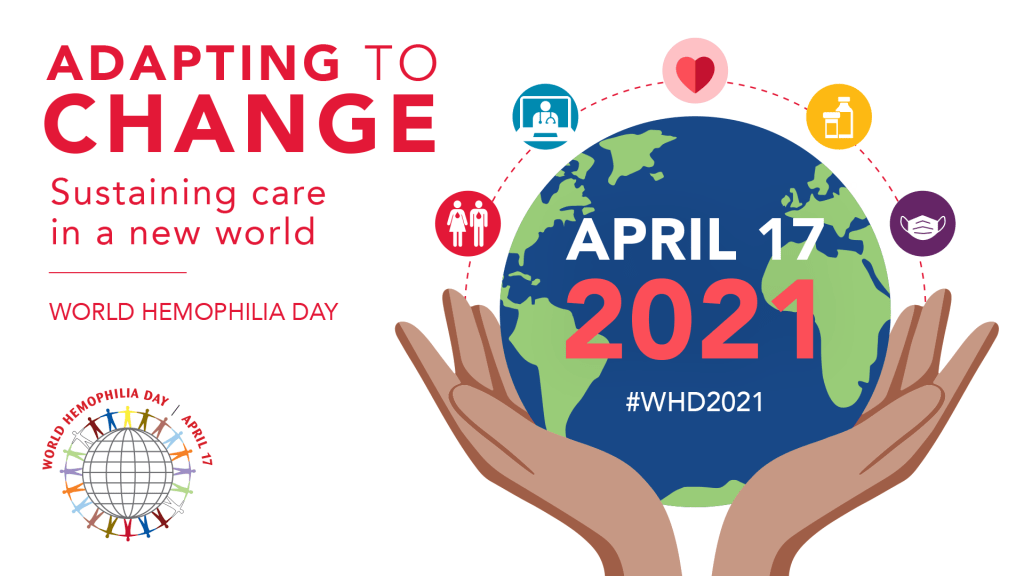
WORLD HEMOPHILIA DAY

World Hemophilia Day is held annually on April 17 by the World Federation of Hemophilia(WFH). It is an awareness day for hemophilia and other bleeding disorders, which also serves to raise funds and attract volunteers for the World Federation of Hemophilia. It was started in 1989, April 17 was chosen in honor of Frank Schnabel’s birthday.

The World Federation of Hemophilia(WFH) was established in 1963 by Frank Schnabel, a Montreal Businessman born with severe hemophilia A. His vision, as he stated, was to improve treatment and care for the “hundreds of thousands of hemophiliacs” worldwide through a new international organization. It educates hemophiliacs and lobbies for improved medical treatment. 75% of people in the world with bleeding disorders do not know it and do not receive care.

WHAT IS HEMOPHILIA?

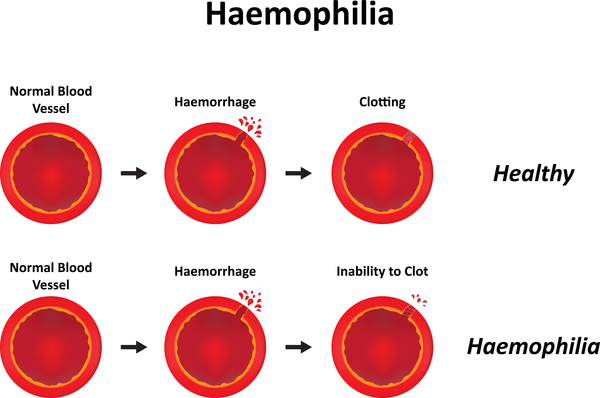
Hemophilia is usually an inherited bleeding disorder in which the blood does not clot properly. This can lead to spontaneous bleeding as well as bleeding following injuries or surgery. Blood contains many proteins called clotting factors that can help to stop bleeding. The severity of hemophilia that a person has is determined by the amount of factor in the blood. The lower the amount of the factor, the more likely it is that bleeding will occur which can lead to serious health problems. In rare cases, a person can develop hemophilia later in life. The majority of cases involve middle-aged or elderly people or young women who have recently given birth or are in the later stages of their pregnancy.

CAUSES OF HEMOPHILIA:-

Hemophilia is caused by a mutation or change, in one of the genes, that provides instructions for making the clotting factor proteins needed to form a blood clot. This change or mutation can prevent the clotting protein from working properly or to be missing altogether. These genes are located on the X chromosome. Males have one X and one Y chromosome(XY) and females have two X chromosomes(XX). Males inherit the X chromosome from their mothers and the Y chromosome from their fathers. Females inherit one X chromosome from each parent. The X chromosome contains many genes that are not present on the Y chromosome. Thus, males can have a disease like hemophilia if they inherit an affected X chromosome that has a mutation in either the factor VIII or factor IX gene.

TYPES OF HEMOPHILIA:-

There are several different types of hemophilia. The following two are the most common:-

  1. Hemophilia A(classic Hemophilia)- this type is caused by a lack or decrease of clotting factor VIII.
  2. Hemophilia B(Christmas disease)- this type is caused by a lack or decrease of clotting factor IX.

SIGNS AND SYMPTOMS:-

  • bleeding within joints that can lead to chronic joint disease and pain.
  • bleeding in the head and sometimes in the brain which can cause long term problems, such as seizures and paralysis.
  • death can occur if the bleeding cannot be stopped or if it occurs in a vital organ such as the brain.
  • bleeding into the skin(which is bruising) or muscle and soft tissue causing a build-up of blood in the area(called a hematoma).
  • bleeding of mouth and gums.
  • bleeding after having shots, such as vaccinations.
  • blood in urine or stool.
  • frequent and hard-to-stop nosebleeds.

INTER-RELIGIOUS HARMONY

Hindu and Muslim residents of Sendhwa town in Barwani district of Madhya Pradesh came together to cremate 75-old-year Sitaram who had no family member left behind. People from both the communities attended his funeral ceremony and cremated him with full honour. This instance depicts inter religious harmony. Religious harmony in India is a concept that indicates that there is love, affection in between different religions. 

The Indian constitution supports and encourages religious harmony. In India, every citizen has a right to choose and practice any religion. Maintaining peace and harmony in a multi-religious and multi-lingual society like India becomes an important administrative responsibility.

Communal harmony is of paramount component for the social, economic and cultural development of any country. Swami Vivekananda has rightly said “Different religions are like the streams which lead to the same ocean”

The factors that breed harmony can be found both in history as well as have to be part of conscious government strategy to maintain tranquillity and an atmosphere of tolerance:

  • Nationalism as feeling of adherence to nation’s ideals helps citizens rise over differences. 
  • Humanity, respect for human life and liberty should be inculcated in every citizen of India.
  • An impartial administration, above all, which all sections especially minorities can bank upon is a must.  

National Foundation for Communal Harmony was constituted in 1992. The vision of the National Foundation for Communal Harmony (NFCH) is to have India free from communal and all other forms of violence, where all citizens especially children & youth live together in peace & harmony.

It provides financial assistance to the child victims of societal violence for their care, education & training, aimed at their effective rehabilitation. It promotes communal harmony and national integration by organizing variety of activities either independently or in association with State Governments, NGOs & other organizations. 

Ways to promote inter religious harmony:

  • Promoting the spirit of the Preamble of Indian Constitution: This reflects the spirit of national integration of our national leaders who fought against British empire, culminating in India becoming free in 1947.
  • Political & Administrative measures: Each ethnic, tribal, religious and linguistic group should have freedom to protect their own culture and freedom, as also envisaged by the Constitution.
  • Set up an Interfaith Dialogue Committee: This will help promote understanding between different religions.
  • Promote Moral Education in Education institutions: This should include the basic teachings of all religions.
  • There is a need to ban all communal parties and communal organisations by which the danger of communalism can be made less serious.

Hence, teachings of different religions should be compiled and distributed among the people of the country, including teachings of Saint Vivekananda and other saints who propagated religious harmony and respect for all religions. Such teachings also need to be integrated in the curriculum of schools and colleges.

ORIGIN OF CASTE SYSTEM

Caste system is an integral part of the Indian social system. It is the arrangement of people in a hierarchy of status where there is negligible mobility up and down the social ladder.

Origin of the caste system:

Caste system is very complex and complicated that is why a number of theories have been given explaining the origin of the caste system. Some of the theories are: 

Racial theory- One very old and important theory about the origin of the caste system is the racial theory. Herbert Risley and D N Majumdar are supporters of this theory. According to Risley before Aryans came to India they were divided into 4 classes which came to be regarded as from different races after their settlement. Majumdar believes that after the Aryans established themselves as superior in India they became a separate race and  called the defeated as the dasas and thus the Aryans the Dasas  became two separate races. This was the beginning of the caste system and once this distinction started it became difficult to narrow down the gap and it still continues.

Political Theory- Some of the thinkers believe that not race but the political convenience and manipulation by those who wanted to retain authority is the basis of the caste system in India. It is said that the Brahmin who wanted to hold authority devised this system. In the words of Dr.Ghurye, “Caste is a brahmanic child of Indo-Aryan culture, cradled In the land of Ganges and hence transferred to other parts of India by brahmanic prospectors.” How the Brahmins, however manipulated is not very clear. Thus, according to the supporters of this theory it has nothing to do with religion, it is a man-made institution and creation of few for the perpetuation of authority. 

Occupational theory-  Nesfield is of the view that occupation is the basis of the caste system. In his view “function and function alone is responsible for the origin of caste structure in India”. Thus, he and his supporters also do not believe that the system has any religious background. According to them occupation was the basis of the caste system. In the beginning when there was no rigidity each individual was free to have occupation of his choice. But gradually with the rigidity in the system changing of occupation became difficult and caste began to come into existence on the basis of his occupation. Those who were doing noble occupations like those of educating the people, fighting on the battlefield, or traders became noble and began to be considered superior caste people and others began to be treated as those belonging to the inferior caste ,example the shudras. The former then began to enjoy social respect which was denied to the latter. The system was continued because that suited the former.

Traditional theory- Exponents of this theory believe that the caste system is not of human but of divine origin. They argue that the main four castes were created by god Brahma whereas the sub-castes came into existence subsequently as a result of inter-caste marriages, etc. Since the purpose of creation of each caste, according to them, is to perform a specific function as such because of human will these castes cannot be changed. They also believe that any change in the system could be brought about only at the cost of winning the displeasure of God. 

The origin of Month July

July is the seventh month of the year. It was originally the fifth month of the Roman calendar, which consists of 31 days. This month was named for a Roman general, Julius Ceaser. Quintils is the roman name of July month. It means fifth. The albeit ruler , Julius was born in this month.its in his honour that month name changed to July.

July belongs to the Zodiac sign cancer and Leo.Those who born between 21June to July 22have the zodiac sign Leo whereas for those who born between July 23 to August 22 have Leo as a Zodiac sign.

July is warmest month in Northern Hemisphere and coolest in Southern Hemisphere.July’s birth flower is water lily and birth stone is Ruby.Ruby is symbol of contentment.The full moon of July month is known as Buck moon.It is also called Thunder moon and Wort moon.

Will the transition to electric automobiles have a positive impact on our environment?

In the present scenario, the mightiest contributor to air pollution is the transport industry. Today we have automobiles zooming past us at an alarming rate. In our country, the previous year i.e., 2020 we saw the sales of passenger cars almost hit 3 million. If this trend continues how it is growing, we might not have a future to live. The possible solution to reduce the emissions from an automobile is to either shift to a Hybrid vehicle or an all-electric one. Let’s see what’s going to happen if we could successfully undergo this transition.

Firstly, let’s take a look at why the people in our country aren’t open to electric vehicles. The major issue is the easiness of refueling the vehicle. Currently, it is very easy to do so with fuel-run vehicles; but if forced to shift to an electric vehicle causes a major drawback in the time taken to refuel the vehicle. Next, we have the affordability; the current average price of a regular automobile ranges from 7.5 lakhs to 8.5 lakhs. The average cost of a hybrid or electric vehicle is approximately situated at 20 lakhs, which makes a major financial hindrance to the con-man of our country.

Although during a drive an electric vehicle produces almost no harmful emissions directly to the environment some indirect emissions cause harm to the environment. To charge an electric vehicle the need for electricity is very essential. Presently, in our country around 60% of the electricity produced comes from burning coal. Burning up fossil fuels results in enormous amounts of carbon emissions into the atmosphere. Here we are trying to reduce the effect of pollution on our environment by just finding new methods to harm our environment.

On the contrary, the emission produced by an electric vehicle is just half of that produced by a fuel-run car annually. This provides a huge amount of relief and satisfaction that we might able to reduce our carbon footprint. But questions arise whether it is possible to make one’s transport almost completely green and harmless to the environment. Possibly, there might be a way to do so. To reduce the amount of electricity generated by incinerating fossil fuels, we must explore other greener sources of energy. One might consider these to be energy produced from solar, wind, geothermal, hydel and many more., these sources might help us in building a better environment.

It is not a feasible approach to drastically switch to an electric approach; it will take immense time to completely switch. Although it seems to be nearly impossible, but with right investment and policies from the government we can ensure a smooth transition. By supporting this transition, we can reduce the emissions from our conventional automobiles. It is clear that the cost of electric automobiles is currently rocket high, but when manufacturing companies see the trend for EV’s they will consider mass production a large scale and then prices will gradually reduce.  

To conclude, EV’s are the future and will surely help reduce the effects of global warming, ozone depletion and many other environmental issues. Currently, a conventional gasoline run automobile can only provide an efficiency of 60-70%. Whereas an electric powered vehicle has an efficiency in the range of 80-90%. Hence the shift to electric powered vehicles, will not only reduce the harm on our environment, but also will be lighter on the pocket.