How we create equality

While surfing through linkdein I came across a post where a doctor sir Ganeshan, he was providing free medical deliveries to girl. Many people of community have distinct view of it as if it is a right way and right thing.

In my view, this is how we create equality,
there are two ways
first, we share everything we have equally and eventually with time everything gets equalize,
another way is we try balancing both sides like if people are not happy after having girl child we will free them from fee charge(its temporary solution of a big part of solution) and as societies are progressing they will learn and improve with time.
Example of first one is colonized countries they doesn’t got support from developed countries and they got bullied many time but we are slowly progressing toward equality,
Example of second one is solutions for girl equality by indian govt, it involves temporary(situation based) solution like dowry punishment to educating and reservation, the benefits of having second way is it’s fast, and it has lots of temporary solution to big problems like girl foeticide case.

You can see post here

https://www.linkedin.com/posts/ashwini-mahesh_activity-6846473782144630785-ZcoR

Connect me on LinkedIn here

https://www.linkedin.com/in/shivam-soni-a99a4a186

READING IN THREE KEYS: How to Write a READING RESPONSE

Active reading involves looking at the text in more than one way.  For your reading responses write using these three “keys,” or methods, of analyzing what you have read: 

Reading responses in this class generally vary from 250 – 400 words. The length required will be specified on the assignment.


 Sometimes you will be asked to post your reading response to the Discussion Board and then follow-up with a response to one of your classmate’s postings. You may respond in any of the three “keys.”  A sample response building on a previous posting might start off with a sentence like this: “I agree with David that advertising objectifies women by portraying them as dehumanized objects, but I wonder whether women benefit from that objectification in any way?”  You can build your ideas on comments others have made.  And feel free to keep chatting with each other.

How Should You Write Your READING RESPONSE?


Why Do It?

The reading response gives you an avenue to invite yourself into the written text and to make a connection with it. In many college courses you will be assigned to write papers about subjects with which you have no personal interest. Reading responses help to generate connections between the reader and text.


How?

The key to writing a compelling academic paper for any college course is being able to forge a personal connection on some level with your subject. You must care in some way about your subject, or else your writing will be lifeless, and your instructor, a human being, will have read a re-hashing of the facts of his/her course a million times before. Or, forget about writing for a college course. What about writing a report in the workplace?  What about proposing a new idea to your boss?  Such careful awareness of audience and tailoring your writing to a specific audience is an aspect of successful writing we’ll work on in this course.  However, you can’t even get to the point of getting someone else to care about what you are writing if you don’t care yourself.


That doesn’t mean you should only write about subjects that interest you.  On the contrary, half of the battle in writing a successful paper is coming up with an idea on a topic which is usually of little interest to you—finding an angle or connection through which you can approach or examine the text. What does it remind you of? Why do you respond emotionally? Or why do you not respond? Ask questions to find avenues into a piece of writing.  The creativity involved in continually forging such difficult connections will help you develop into a writer who can grab a reader’s attention by approaching a topic or subject through your own unique personal lens, that is, by looking at something through an angle no one else can see. 


Through active responding to reading, and examining your responses, you can learn to practice new approaches of interpretation to common themes.  Many of the ideas you generate in the reading responses will prove useful when you sit down to write the short essays (or maybe even your research paper).

KodiSoftware Download For Free | Top sites


Let’s start with knowing that what is Kodi software and why one should have it.

What is Kodi software?

Initially released in 2002 [as Xbox media play], in 2003 [as Xbox media centre]. Kodi software application is developed by the XBMC Foundation, Kodi is a free and open-source media player software application, it’s a non-profit technology consortium. It’s a 10-foot user interface with television and remote controls.

With a view of most streaming media such as podcasts, music, videos and views from the internet, one can access all Common digital media. These are some of its platform PowerPC, IA-36, ARM and x64(x84-64). Available in 12[75 including incomplete translations] language. HTPC it’s is a multi-platform home-theater PC application. Kodi is highly customizable so allow it’s users to stream media content via online services such as Crackle, Amazon Prime Internet Videos, Pandora Internet Radio, Spotify and Youtube.

The later version of kodi has a (PVR) graphic front and end. All these available advantages make Kodi a great software to be utilized.

 Let’s now dive into how to download Kodi for free.

Already millions of people are enjoying this great software for free. Kodi is running on the most common processer architectures, iOS, Android, MOS X and Windows operating systems.

How to download : select your platform

As Kodi supports a large range of devices and operating systems, it is multi flavour. Simply select your platform in which you want to install Kodi on and enjoy Kodi.


9 best vegan Omega-3 Supplements (2021) per Dietitians.

If you don’t have fish on your meal menu doesn’t mean you can’t get all the benefits of omega-3.

Omega-3 is also found in many plant foods, like chia and hemp seeds, in algal oil too. But mostly it is found in fish oil in significant levels.

For your vegan friends, there are plenty of options who wants to intake omega-3 and all of EPA, ALA L AND DHA.

REGARDING CORRECT CERTIFICATE FROM EDUINDEX

From few days I am writing emails to give me certificate of date 16 june to 16 july. since month of july i am doing so but AGAIN and AGAIN I am rcieving wrong certificate. I need to prepare summer internship report. i cant attach wrong certificate. This is my last option to write here. I am in a complusion otherwise I would have not written here.

Its my humble request to everyone who is reading it please like . So that it can come in front of the team.

And if team you are reading this please prepare a certificate from the 16 june to 16 july. In my offer letter too you have mentioned same date. COMMENT ME IF YOU HAVE PREPARED. I WILL SEND U DETAILS.

I am quite depressed with such an unlawful behaviour.

The Toil Which Screams For Justice

Source: Times Of India

A Bharat bandh has been called by the Samyukt Kisan Morcha (SKM) on 27th of September from 6 am to 4 pm. The prime reason behind the protests is pressurizing the government in repealing the three farmer laws passed in the September (monsoon session of the Parliament) of last year.
The ruling Congress in Punjab however, has shown its support to the cause of the Farmer’s Union. The national highways, link roads and railway tracks have been blocked and vehicular movement has been prohibited within the bandh’s time frame in Punjab.
In Noida, Barricades were broken by the protestors who reached the Noida Authority Office in sector-6. The farmers were protesting over their demands and the compensation for their lands which was acquired by the Noida Authority.
In Punjab, farmers have protested in 350 places and in Haryana 25 places have been blocked in the Jind district itself.
The protests led to the vehicular disruption in Jharkhand where the supporters blocked the highways.
Similar demonstrations have been witnessed in Jammu demanding the laws to be repealed. The protest was led by CPI(M) leader MY Tarigami who sat on a dharma and took out a rally. Thereby, blocking the road.
Chaos was witnessed in many parts. In Jalandhar for example, Army vehicles were stopped by the protestors and said that the jawans should support them in their protest. In Bengaluru, on the other hand, a protestor ran his car over the DCP(Deputy Commisioner of Police)and was arrested.
However, states like Arunachal Pradesh and Maharashtra remained unaffected
The BKU leader Rajesh Tikait spoke about how Yogi Adityanath had promised in the manifesto to increase the price of the of sugarcane to Rs 375-450 but ended up being increased by mere Rs 25 and therefore asked for the accountability of the losses faced. However, he also mentioned the Bandh to be successful and the main reason for the protest to talk with the government which is not happening.


Let’s Rewind


What were the farm laws of 2020?

•The Farmers’ Produce Trade and Commerce (Promotion and Facilitation) Bill, 2020
•The Farmers (Empowerment and Protection) Agreement of Price Assurance
• Farm Services Bill, 2020, and The Essential Commodities (Amendment) Bill, 2020


Why were they resented?

The provisions of the new farm law intends to help the marginalized farmers who lack the means to bargain or invest in technology for their farms.
The provision of the act of Agri Market is one of the key reasons for the current protests. It mentions that the farmers can sell their produce to whoever they want, outside than the APMC mandi but however it may lead the commission agents to be deprived of their mandi fees. Better prices were also promised through cost cutting on transportation and competition.

The law on contract farming seeks to help the marginal farmers by the provision which states that the farmers can enter into contract with agri business firms on pre agreed prices of their produce. This will shift the market unpredictability from the farmer to the sponsor.

Why are the farmers resenting the laws?

Firstly, they fear that the companies may change the terms of the agreement and they will have to suffer loses for the crops. The primary fear is the dismantling of the Minimum Support Price (MSP) system.
Secondly, the farmers fear that selling the produce to WHOEVER they want might not provide them with an assured price. The disbanding of the mandi system and the losses of the arthiyas(commission agent who provides farmers with loans) is indeed a fact to be feared of.

What are the farmers demanding?

The farmers are demanding the withdrawal of the three laws which is putting a question on the further existence of the MSP system. The farmer unions are also ready to accept if the MSP is legally assured to stay prevalent.


What is the root of the protest?

It is the system of Minimum Support Price which is prevalent in India. MSP is the minimum price provided by the government to the farmers on buying on their produce. The MSP is decided by the the state-run Commission for Agricultural Costs and Prices (CACP) which consists of 23 commodities which it procures.
The Food Corporation of India on the other hand largely procures only wheat and paddy which it sells to the poor at a subsidized price.

Why change your IP address

Why change your IP address
Changing your IP address can be useful if you want to avoid being attacked by other users who
are targeting your IP address, or if you simply want a new online identity from an IP standpoint.
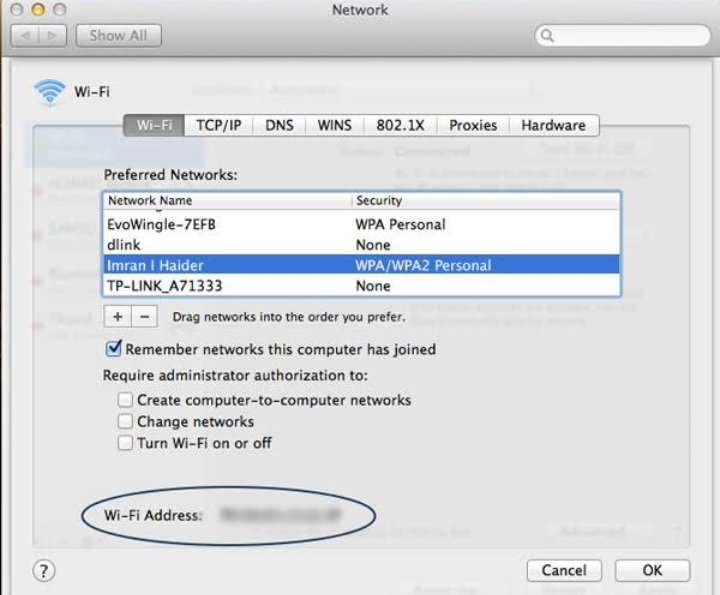
You can change your IP address on a Mac at any time through System.

Don’t worry. Changing your IP address is easy, even if you’ve never done it before.
It’s also perfectly safe and — as long as you’re not using it to break other laws — it’s
legal. Your computer and phone have several types of IP addresses (short for
internet protocol, a unique series of numbers that identify your specific device with
your online browsing), but we’ll focus on the type normally changed to protect your
privacy as you browse, and those which make you appear like you’re in a different
country.

If you just want to change your IP address without the additional privacy boost,
you can either enter your preferred IP manually, or you can just force your
device to retrieve a new one automatically.

Is it even legal to change your IP
address?

Yes, it’s legal to change your IP address in the US. People change their IP
addresses routinely when facing direct attacks on their online security, when
testing a website before it goes live, or when they simply prefer to protect their
privacy. Obviously, this FAQ is in no way offering legal advice and you should
consult a licensed attorney for specific questions, but the legal boundaries on
IP address changes usually start with what you change your IP to, and what
you do with that new IP address.

If you’ve changed your IP to impresonate individual or a business — often
called IP spoofing — you could be running afoul of the US Computer Fraud and
Abuse Act. You might also run into trouble if you’re changing your IP address
to access a website you’ve been banned from. IP spoofing is also a tool used
by some cybercriminals to perform a handful of well-known attacks, most
commonly those related to identity theft and those aimed at crippling websites
with organized distributed denial of service bombardment.

One thousand ways to make $ 1000

HOW TO START YOUR OWN BUSINESS

W
HEN Gustavus Swift, a youngster in knee breeches, dressed and sold his first
calf to the fisherfolk of Cape Cod, he laid the foundation of the largest meatpacking business in the world. The desire to make money—to have a business of
his own—was a driving force in the make-up of young Swift. In Barnstable, he
was known as a chap with a lot of “get up and go” to him. So it was not
surprising that when he felt the desire to make money, he didn’t waste his time
wishing, but took his courage in his two hands and started in the dressed beef
business in his dad’s backyard.

No doubt there were other young men in Barnstable who wanted to make money
too. But while they were wondering how they could make it, Gus Swift cut the
Gordian knot. It meant work for him. It was not a pleasant way to make money.
There was the possibility of his not being able to sell his calf after he had dressed
it. He had to walk miles in order to market his veal, for Cape Cod in those days
was a “spread out” sort of place.

But Swift didn’t care.

He wanted money

The work, the walking and the adventure were fun. And because he regarded
making money as fun instead of work, he later was able to come to Chicago and
start the great Swift packing business. How different from the average young
men of today! They are usually more interested in having a good time than they
are establishing themselves in a business of their own. Being in business is so
confining! So they concentrate on enjoying themselves, serene in their
philosophy that tomorrow is another day. If these people, and they are not all
young people either, worked half as hard at making money as they do at having a
good time, they would be rich.

Then there are people who are willing to work and do work hard at making
money, but they are not successful because they lack a target. They are like the
chap who hunts big game with a shotgun. They do a lot of shooting, but they bag
very little game. Next to being willing to pay the price of success in hard work,
the most important thing is to have a definite, clear-cut objective. Since it is
necessary to crawl before you walk, it is suggested that you make that objective
$1,000.

What you about this story of hard work and dedication

Body parts that you can trade for money

It’s will amuse you to know that you can sell your body parts and People will pay hundreds, and sometimes thousands, of dollars for certain body parts.

Note that “selling” a body part isn’t the same as putting your futon up for sale on Craigslist. Except for selling ad space on your skin, most forms of giving body parts are technically donations, but it’s common practice to be compensated in cash. 

Being compensated for all of the parts listed below is legal, but we don’t necessarily recommend it. There are other — more conventional — ways to supplement your income.

1. Hair up to $1,000

Like blood, hair is easy enough to donate to a good cause (like Locks of Love). But it’s also entirely possible to sell it at a pretty sweet price point.

The trick is to keep it as long and “virginal” as possible. That means no harmful hair dyes or other chemical treatments that could damage the quality. Buyers are likely looking to make wigs, and they’re not going to be interested in your split ends.

According to Wisebread, one woman made as much as $1,000 on her locks in just a week by posting an ad on TheHairTrader.org.

2. Sperm: $ 125 per sample

The going rate: $125 for each acceptable sperm sample — which can add up to about $600 per month — according to the Sperm Bank of California.

You’ll have to meet some very specific qualifications first. Here’s the list of requirements for potential donors at SBC:

• Between ages 20 and 39

• At least 5’7″

• Can make a six to 12 month commitment

• Live within 25 miles of the office

• Can provide a family medical history

• Are able to work legally in the US

• Have completed or are pursuing a college degree

Look for sperm banks near you.

Child Marriage legalised on Rajsthan

Currently, Rajasthan govt released an amendment “Rajasthan compulsory Registration of Marriage Amendment Bill 2021” it allowed registration of child marriages, it’s 21 century and we all are aware of how heinous child marriage is, here are some of my views on this act

In my views law is not wrong
Those who commit or help in child marriage will still be punished, but those who already had marriage were not allowed to have registration and so they were not able to avail all govt schemes and benefits, those saying it will make it easier to do child marriage remember availing govt benefits are everyones fundamental rights.

Those saying it’s illegal look it like this rape is illegal but rape victim and culprit both have some rights that we can’t snatch, like culprit must be allowed to go court etc, ofcourse child marriage is as heinous as rape and here victims are both boy and girl but why they suffer whole life for it, they can’t get rashion, jobs, water, now as everything is more and more digitalizing and you can’t prove you’re married, it will become more hard to avail services like jacha bacha Suraksha and this are thee parents who most need it.

Also one negative point is it will make child marriage easier, but many people will not be able to avail fundamental rights isn’t it totally wrong also we can make child marriage hard by making strong rules. As we have data of child marriage we can ask govt employee who are posted there why they let it happen like police or magistrate, they will become more accountable this way.

If I’m missing some points or you want to share your views here’s my email soni362002@gmail.com

HAVE WE FORGOTTON OUR SHEROES ?

Women have made landmark contributions encompassing various fields.Its time we sing joys of celebration for our sheroes too like we do for men.They have suffered various setbacks in life but emerged powerful as pointed out by Swami Vivekanand ,“Woman has suffered for eons, and that has given her infinite patience and infinite perseverance”.

For celebration we need to know about the milestones they have crossed and the hinderances they’ve overcome.

Their benefactions can be categorized Two folds .First theEducational Sector.

Second the Political and the Social Sector.

In Education:-

When discussing about Economy we cannot rule out the role education.The first female graduates Kadimbini Ganguly and Chandramukhi Bose long broke the stereotypes of Male centric education system.There have been other historic Educationists of India like Ayyalasomayajula Lalitha who became the first Engineer of India back in 1943.

Anandibai Gopalrao Joshi was the first female doctor of India.

SavitriBai Phule along with Mahatma Jyotiba Phule led a movement for education of Girls.

They faced social ostracization and societal pressures but did not stop.In the end, SavitriBai Died while serving the victims of plague.In the field of law which was highly patriarchic Cornelia Sorabji broke all shakles and became India’s first female lawyer.                                                           Durgabai Deshmukh an early lawyer and political activist said-“I had then decided to take up the study of law so that I could give women free legal aid and assist them to defend themselves.”

These woman are not mere inspirations or role models,theybecame game changers and paved the way for education for the upcoming generation.

Polity:-

Politics despite being male dominated ,some Strong Female leaders have made immense contributions to freedom struggle. Going back to the the Delhi Sultanate,Razia Sultan became the first and last Female to ever became sultan in 1236.

After that there were different princely states in which women lead their dynasties. Rani Laxmibai became an epitome of strength along with JhalkariBai giving a strong fight to British.

Uda Devi a ‘Dalit Virangana’ fought the British Bravely in 1857 Battle.

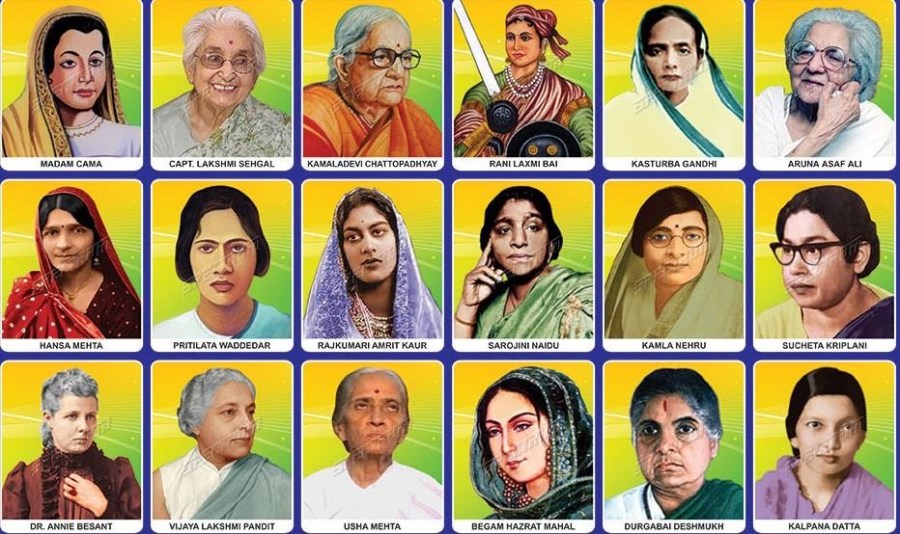
Rani Gaidinliu of Manipur,was imprisoned at a young age of 13 because of her Anti-British Stand.During the 1857 Revolt the participation of Begum Hazrat Mahal of Lucknow is unmatched.AhalyaBai Holkar of Malwa Kingdom is still remembered as one of the Finest Leaders of India.In the modern era of freedom struggle Female Leaders like Sarojini Naidu,Annie Besant,Vijay Laxmi Pandit(First Female President of UNGA),Aruna Asif Ali(Grand Old Lady of Independence) etc fought against the British.        

Be it Anti partition movement of 1906 or Non Co-operation Movement or Civil Disobedient Movement, Women have added by large,the amplitude of struggle.

Revolutionaries like Capt.Laxmi Sehgal lead the Jhasi rani regiment of INA Army made by Subhash Chandra Bose.AlsoPritilata Waddedar,Kalpana Datta took up arms against the British.

Post-Independence Rajkumari Amrit Kaur became the first woman Health Minister of India.

Indira Gandhi not just became India’s First Prime Minister but also was the first female Finance Minister(1970-71),to present a budget.Sucheta Kriplani became the first female to become a Chief Minister of UP,also Sarojini Naidu became the first ever female Governor in UP.

The list of contributions made by our early Women is never ending. Such zeal and sacrifices, on par with those of Men, despite miniscule opportunities, simply motivates us.

It would be appropriate to agree with Mohammad Ali Jinnah when he quoted,

There are two powers in the world; one is the sword and the other is the pen. There is a great competition and rivalry between the two. There is a third power stronger than both, that of the women”.

Mohd Ali Jinnah

GST: Simplified

GST is a destination-based tax on consumption of goods and services. It is proposed to be levied at all stages right from manufacture up to final consumption with credit of taxes paid at previous stages available as set off. In a nutshell, only value addition will be taxed and the burden of tax is to be borne by the final consumer. 

A few important points of consideration are given below: 

The tax would accrue to the taxing authority, which has jurisdiction over the place of consumption which is also termed as place of supply. 

1. The Existing Taxes that are proposed to be Subsumed under GST- 

The GST would replace the following taxes: 

(i) Taxes currently levied and collected by the Centre:

a. Central Excise duty 

b. Duties of Excise (Medicinal and Toilet Preparations) 

c. Additional Duties of Excise (Goods of Special Importance) 

d. Additional Duties of Excise (Textiles and Textile Products) 

e. Additional Duties of Customs (commonly known as CVD) 

f. Special Additional Duty of Customs (SAD) 

g. Service Tax 

h. Central Surcharges and Cesses so far as they relate to supply of goods and services 

(ii) State taxes that would be subsumed under the GST are: 

a. State VAT b. Central Sales Tax

c. Luxury Tax

d. Entry Tax (all forms)

e. Entertainment and Amusement Tax (except when levied by the local bodies) 

f. Taxes on advertisements

g. Purchase Tax

h. Taxes on lotteries, betting and gambling i. State Surcharges and Cesses so far as they relate to supply of goods and services. 

The GST Council shall make recommendations to the Union and States on the taxes, cesses and surcharges levied by the Centre, the States and the local bodies which may be subsumed in the GST. 

2. The Status of Tobacco and Tobacco Products under the GST Regime- 

Tobacco and tobacco products would be subject to GST. In addition, the Centre would have the power to levy Central Excise duty on these products. 

3.Type of GST proposed to be Implemented- 

It would be a dual GST with the Centre and States simultaneously levying it on a common tax base. The GST to be levied by the Centre on intra-State supply of goods and /or services would be called the Central GST (CGST) and that to be levied by the States would be called the State GST (SGST). Similarly, Integrated GST (IGST) will be levied and administered by the Centre on every inter-state supply of goods and services. 

4. Need for Dual GST-  India is a federal country where both the Centre and the States have been assigned the powers to levy and collect taxes through appropriate legislation. Both the levels of Government have distinct responsibilities to perform according to the division of powers prescribed in the Constitution for which they need to raise resources. A dual GST will, therefore, be in keeping with the Constitutional requirement of fiscal federalism.  

5. Authority to Levy and Administer GST-  Centre will levy and administer CGST and IGST, while states will levy and administer SGST.   

6. Benefits from GST-  Introduction of GST would be a very significant step in the field of indirect tax reforms in India. By amalgamating a large number of Central and State taxes into a single tax and allowing set-off of prior-stage taxes, it would mitigate the ill effects of cascading and pave the way for a common national market. For the consumers, the biggest gain would be in terms of a reduction in the overall tax burden on goods, which is currently estimated at 25%-30%. Introduction of GST would also make our products competitive in the domestic and international markets. Studies show that this would instantly spur economic growth. There may also be revenue gain for the Centre and the States due to widening of the tax base, increase in trade volumes and improved tax compliance. Last but not the least, this tax, because of its transparent character, would be easier to administer.  

7. Concept of IGST-  Under the GST regime, an Integrated GST (IGST) would be levied and collected by the Centre on inter-State supply of goods and services. Under Article 269A of the Constitution, the GST on supplies in the course of inter-State trade or commerce shall be levied and collected by the Government of India and such tax shall be apportioned between the Union and the States in the manner as may be provided by Parliament by law on the recommendations of the Goods and Services Tax Council.  

8. Deciding Authority for levy of GST- The CGST and SGST would be levied at rates to be jointly decided by the Centre and States. The rates would be notified on the recommendations of the GST Council.  

Tax reforms must be implemented. To improve revenue performance factors like globalization, large informal sectors and policies of neighboring countries must be considered. 

If Goa has a common civil code, why can’t the whole territory have it?

Since 1965, the state of Goa has a common civil code, which is applicable to all the citizens including the members of different caste, religion or community. Such a question is expected to arise. Even minor girls are victimized by the act of Polygamy and Nikah halala and certain marriage contracts. The country urgently needs a common law to be implemented in the whole Nation. All the developed countries have implemented a common law for the whole territory. It is necessary to implement best practices of all religions and communities for the best development. It is a pertinent fact that Goa has gotten rid of all the inequalities by establishment of a uniform civil code. Until the code is established, the terms like gender equality and gender justice will only exist in papers and words. The right of equality, rights against discrimination and right to life and libertyguaranteed under various Articlescannot be achieved until the implementation of a common law. Therefore, the same code may be amended and adopted as a Common Civil Code throughout the region of India. Also, the Constitution makers poured their mind and soul in the making the laws . They had outlooked for thesecurity and safety of the nation setting forth the socialist secular principles, which created hopes and aspirations of the people. Therefore, it is the duty of the Government to implement the Uniform Civil Code.

Is it a tyranny over the minority community?

The allies object the concept of UCC stating that it is tyranny over the other communities. The statement is completely denied by Ld. Mushi as this: ” Nowhere in the Muslim countries the personal law of each minority has been considered in order to prevent the implementation of the common civil code. For instance in Turkey Or Egypt, no minority has a separate law and are not permitted to practice their own laws. The khojas and Cutchi Memons were highly dissatisfied by the Sharia Law. They followed the Hindu customs since they had become converts, they didn’t want to agree to the Central Legislature where Muslim members  existed who felt Sharia was aneed.

They had to forcefully agree to the central government. In a community to consider the benefits one may acrcue to a common law. The only attempt is to separate the religions from the common legislature of a country.” The religion has nothing to do with the laws of a country  where several communities live. Religions must be restricted to the spheres, which legitimately relate to the religion. The rest of the life must be regulated in a way that the nation evolves as early as possible. The first factor to recreate is the national unity.

“We are not merely a nation because we say so, but also in effect, by the way we live,  by our personal law, we are strong and consolidated nation. ” The implementation will not be a tyranny over the minors but not implementing it would be much more tyrannous to the majority community.

What is Uniform Civil Code?

See the source image

Article 44 directs the state to secure a uniform civil code for the citizens applicable throughout the territory of India. Its main motive is to establish gender justice in India. Even though the state has not shown any efforts towards the enactment of uniform civil code but the judiciary considers it essential to lookout the necessity of the code in the country so as to establish gender justice. Also, the uniformity in the application of laws such as marriage laws, divorce and maintenance laws, etc.    

Article 44 states that, “The state shall endeavor to secure for the citizens a uniform civil code throughout the India.” 

The above article was looked upon by the historical judgment in Sarla Mudgal vs. Union of India[1]. The Court had directed the government through the Secretary of Ministry Law and Justice, to file an affidavit, and issue a Uniform Civil Law. There had been many cases witnessed that involved such incidents. In the cases, the husband of the plaintiff had converted his religion to Islam and married another woman. The problems were not confined to this but had a large scope, for instance in a case the man had married to a Muslim woman and later left her and converted to Hinduism again. By this, the grievance of the woman was that she could not claim and ask for any protection under the Muslim law as she continued to be a Muslim.  In another case, the petitioner was threatened by her husband that he would embrace Islam and marry another woman.  She had asked for a restraining order by the court for preventing her husband to marry another woman.

On the facts, the court held that a Hindu marriage continues to exist even after conversion to Islam. And the husband as declared by the court under the section 494 of IPC will be held liable under the practice of bigamy.

Uniform Civil Code seeks to replace personal laws that were based on the scriptures and holy books and customs of each specific religion and community in India by a common set of rules and law. As discussed before, the list of marriage, divorce and the maintenance comes under the list.

Recently, the Supreme Court considering the judgments held that:

  1. The constitution in Article 44 requires the state to enact the common civil code throughout the but till date no action has been taken in this regard.
  2. The Hindu personal laws have been modified but there has been no attempt to frame a uniform civil code for the citizens of the country.  
  3. Even after the conclusions made and the judgments delivered in the case of Shah Bane in 1985[2], there has nothing been done to enact a common law for all.
  4. The Supreme Court has enshrined the state of Goa as a ‘Shining Example’ where Uniform Civil Code has been implemented for every religion while protecting certain limited rights.

“Goa as a shining example”

Goa has a common civil code for all which follows the Portuguese civil code 1867.  It includes certain provisions:

  1. A Muslim man residing in the state of Goa who has registered marriage in the state cannot practice polygamy.
  2. If a married couple share property equally, in a pre-nuptial order the assets are divided equally between man and woman on divorce.

Personal laws

The laws that are applicabe to a certain class or group of people based on their religion, faith and culture are the personal laws. In a country like India, there are many religions and the people belong to different castes, having their own faith and belief. The set of laws prescribed for their religion is based on their belief. These laws were made considering the customs followed by the people and their religion. In India, people follow these laws since colonial period. Earlier the British had implemented these laws as they were a foreign Nation and it was an approach to prevent any kind of protests that they could have faced by imposing a common civil code for all.

The main subjects of personal law were marriage, divorce and maintenance. The Hindu law, initially had a lot of discrimination towards the women. But later, with the actions and voices raised against, they were largely modified and secularized by the statutory enactments. It was codified by the parliament in 1956 . It was applicable to Sikhs, Jains and the Buddhists too. The Hindu code bill has been split in four parts:

  1.  The Hindu Marriage Act, 1955
  2. The Hindu Succession Act, 1956
  3. The Hindu Minority and Guardianship Act, 1956
  4. The Hindu Adoption and Maintenance Act, 1956

The Muslim personal laws are unmodified and has a traditional approach in their content and laws. They have not been changed considering the opposition. The Muslim laws are governed by the Shariah Law of 1937. There hasn’t been much change in those laws. There are only some enactments till the date. The law clearly states that in the matters of personal disputes, the state shall not interfere and a religious authority would pass a declaration on the basis of interpretation of the Quran and the Hadith.

The Christian and Jews apart from these have their own personal laws.

Are the personal laws Fault-less?

The Supreme Court has recently declared the act  triple-talaaq as illegal which is a big step towards the gender equality and has raised a question on religion-based personal laws in the country.

Thirty-two years ago Shahnaaz Shaikh filed a public interest litigation (PIL) challenging the triple talaq provisions as she was given divorce by her husband at midnight, which acquired attention. The petition stated that Sharia law had given unequal rights to the Muslim women by imposing purdah, also allowing polygamy and the unilateral divorce and depriving the divorced Muslim women of maintenance rights.

The women activists had soon discovered that this kind of discrimination existed for all the personal laws,and all the religions. For instance, the hindu daughters were also deprived of the property rights. They were not entitled to their patriarchal property. After Lata Mittal filed a case in 1985 and won a 20-year legal battle in the Supreme Court was only that Hindu daughters were provided equal rights in the ancestral property.

Similarly, the Christian women were not allowed to divorce their husbands on the claim of adultery committed by their husbands. But on the other hand the Christian men could simply pronounce their wives as adulteress and issue a divorce. It was only a few years ago that the proposal to amend the Christian divorce act, 1869 was accepted.


[1] (1995) 3 SSC 635.

[2] 1985 AIR 945, 1985 SCR (3) 844