National Doctors Day: Are we doing enough to protect our life savers?

Typically, in an Indian household when a child grows up, Indian parents expect them to be doctors or engineers. But do we respect and love the same children when they actually become our life savers?

July 1, every year, is celebrated as National Doctors Day in India as this date marks both birth and death anniversary of prominent Doctor Bidhan Chandra Roy who was also the Chief Minister of West Bengal in early years of post independent India.

In 1991, Government of India established National Doctor’s Day to recognise the contributions of Dr. Bidhan Chandra Roy and also honour the Doctors nationwide.

Currently, the doctor-patient ratio in India is 1:1445 which is lower than WHO’s prescribed ratio of 1:1000. Doctors work day and night for their patients’ well being and this even increased since March 2020 due to COVID-19. But how much we as citizens give them in return?

India has suffered because of acute shortage of Doctors since the beginning as they never got the remuneration they deserve. This has always led to brain-drain in India as Doctors shift to other developed countries for better career prospects as they receive better salary and opportunities there.

Since the beginning of COVID-19, the only hope to get out of this deadly pandemic were Doctors and health care workers. Whenever our loved ones contract the virus, we immediately look towards our doctors with a helpless eyes, and Doctors without caring about themselves tirelessly give their life and time for us.

Some incidents in the recent past haven’t been so fruitful though. Doctors and other healthcare workers were brutally assaulted during the entire first and second wave and this is another downfall our country has witnessed.

Even on eve of Doctors day, two doctors were assaulted in Delhi yesterday after having a heated argument with two fellows. From an assault in June 2020 in Hyderabad to several such incidents in all parts of the country like Madhya Pradesh, Maharashtra, Assam and many more shows that we as citizens have failed our doctors.

Citizens have to understand by doing such acts of violence, their loves ones whom they lost won’t return. Yes, if any citizen feels their loved ones faced hospital casualties, they’ve a right to protest and they can take the legal procedures but they must not come into emotions and act violently.

Indian Medical Association has held several protests to voice for the rights of doctors. Nearly, 3000 Doctors resigned last month in Madhya Pradesh after High Court declared their strike as “illegal”. Several more prominent as well as junior Doctors in the country have vowed to not serve India as they feel citizens do not treat them with dignity.

If this goes on, India would have a vast decline in doctors per thousand people ratio and all the lives of Indian citizens will be at stake because private hospitals charge a lot and most Indians won’t be able to afford them due to mediocre and low income.

India would face a dangerous phase just like it faced in the second wave of pandemic if things continue like this till the upcoming third wave which will probably hit India by the end of 2021 as predicted by health experts. Stricter parliamentary laws against anyone who assaults doctors and moral policing of citizens can improve the doctor-citizen relationships however.
ISRO

• Dr Vikram Sarabhai – Indian National Committee
for Space Research (INCOSPAR)

• INCOSPAR renamed as ISRO (Indian Space Research organization).

• Department of Space.

• Vision of ISRO – Harness space technology for
national development, pursuing space science
research and planetary exploration.

Achievements

Aryabhata – India’s first satellite .

Rohini – first satellite to be placed into orbit – Indian-made launch vehicle SLV-3.

Chandrayaan -1 – unmanned lunar orbiter, success.
• Mars orbiter Mission (MOM)
 India first nation to succeed on maiden attempt to Mars.
 ISRO – Fourth space agency in the world
 First space agency in Asia.

• Astro-Sat


 launched on September 28, 2015, by PSLV-C30
 Space observatory
 First dedicated Indian astronomy mission to studying celestial
sources in X-ray, optical and UV spectral bands simultaneously.

• ISRO launched 104 satellites – single rocket
(PSLV-C37).

• ‘Chandrayaan-2’ – Partial success, Orbiter successfully launched .

Chandraayan 3 – in pipe line.

IRNSS/ NAVIC
 To meet the user requirements of the
positioning, navigation and timing services based on the indigenous system
 Navigation details in the Indian Ocean
regions.

• Upcoming mission – Gaganyaan : Indias
manned space mission

Police Reform in India


The police are a subject that is governed by states under the Constitution. As a result, each of the states has its own law enforcement agencies. The centre is also permitted to maintain its own police forces in order to help states in maintaining law and order. it keeps seven core police units and a few additional police organisations for specialised responsibilities like intelligence collecting, investigation, research and record-keeping, and training.
The primary function of police forces is to uphold and enforce laws, investigate crimes, and protect public safety. To effectively fulfil their function in such a huge and populous country as India, police forces must be well-equipped in terms of people, weaponry, forensics, communication, and transportation support. They also require operational flexibility to carry out their obligations competently, as well as favourable working conditions (e.g., regulated working hours and advancement chances), while being held accountable for bad performance or abuse of authority.


In September 2006, the Supreme Court issued a landmark decision ordering all states and union territories to implement police reforms. The Supreme Court issued a ruling in which it ordered states and union territories to follow seven binding directions that would kick-start changes.

The following are the six directives:

1. Limit political influence: Make sure the state government does not exert undue influence or pressure on the police.

2. Ensure that the Director-General of Police is appointed through a merit-based, transparent process and that he or she has a minimum tenure of two years.
3. Fix a minimum tenure: Ensure that other operational police officers (such as Superintendents of Police in charge of a district and Station House Officers in charge of a police station) have a minimum term of two years.
4. Separate the tasks of investigating and preserving law and order in the police force.

5. Set established a Police Establishment Board to decide and make recommendations on transfers, postings, promotions, and other service-related matters for police officers up to and including the rank of Deputy Superintendent of Police.
6. Establish a Police Complaints Authority in each state: A Police Complaints Authority should be established at the state level to investigate public complaints against police officers with the rank of Superintendent of Police and above in cases of serious misconduct, such as custodial death, grievous bodily harm, or rape in police custody.


A question is Aries “Why we need Police Reforms?”
Let’s look at some of the grounds for police reform in more detail:

Colonial Law: Even though our police are still founded on colonial law, we are aware that the British have used police as an instrument to stifle people’s voices and for personal purposes, and that our revered government is doing the same.

Custodial Death: There have been numerous occurrences of custodial death, which refers to death in police/judicial custody as a result of torture or pressure. The Supreme Court of India issued a guideline against custodial death in the D.K. Basu judgement in 1996-1997.

The “United Nations Convention on Torture” has only been signed by India, but it has yet to be passed by Parliament. Even while there is no formal legislation against torture, we do have judgement.

Political Interference: Due to the interference of political leaders, police officers are unable to carry out their duties. For officers in higher positions, there is no minimal tenure security or even posting security.


Conclusion


At this moment, India requires police reforms so that people perceive police as a resource rather than a burden. However, due to personal interests, the government is not putting it into effect. I hope that the administration recognises the need for police reforms in today’s society and works to implement them.

National Doctors’ Day

National Doctors Day is celebrated nationwide, every year, on the 1st of July. But why? This is to express our gratitude towards doctors and physicians for their service towards our well-being. Legendary physician and the second Chief Minister of West Bengal, Dr Bidhan Chandra Roy was born on the 1st of July in Patna, Bihar in 1882 and coincidentally died on the very same date in the year 1962. In 1961, Dr Roy was conferred with the nation’s highest civilian award, Bharat Ratna. Doctors day in India was established in 1991 in honour of his birth and death anniversary.

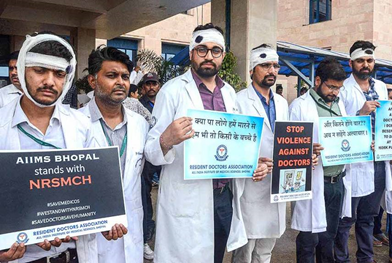
Well, Doctors day is celebrated every year on the 1st of July but this year another day was observed, by the doctors of IMA (Indian Medical Association) on 18th of June, NATIONAL PROTEST DAY. Doctors came together against the assaults on doctors in COVID wards. IMA observed nationwide protests demanding central law to protect doctors against violence.

Doctors and healthcare workers held placards and raised slogans like doctors bachao desh bachao (save doctors, save nation) and save the saviour. Doctors and medical staff at the IMA office in Hyderabad protested wearing black badges. Doctors from AIIMS Delhi and IMA unit, Ludhiana also took part in the agitations. Various state-level protests were taking place for a long time.

Why are these protests taking place? 

 Let me brief you here

  • Bhopal: A local politician was seen screaming at a Bhopal doctor who couldn’t save the life of a patient who was bought to the hospital at an oxygen level of 30. This left the doctor in tears and he was demoralised to the extent that he wanted to resign.
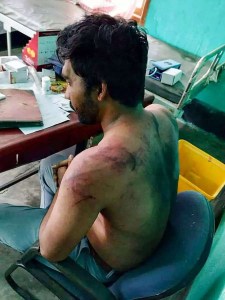
  • Guwahati: A doctor at a coronavirus facility in Assam was punched, kicked, and pounded with metal trash cans and bricks, by the relatives of a Covid patient who had died, allegedly due to oxygen shortage. Locals also assaulted the doctor who was then hospitalised.
  • Kerala: A police official allegedly attacked a doctor in the Alappuzha district. The official is accused of slapping Dr Rahul Mathew, who was working the night shift at the Mavelikkara district hospital, after the former’s mother, a COVID-19 patient, was brought dead to the hospitals. Doctors protest for the non-arrest.

And many more such cases went viral on social media. Assaults on doctors might not make it to the news daily, but take place every day.

What exactly did they do to get such treatment?

Grinded in high school, cracked NEET, spent 7-8 years working hard and studying in college, paid a hefty amount of fees to medical colleges or even took loans for their studies.

Who does that? Their fault, right?

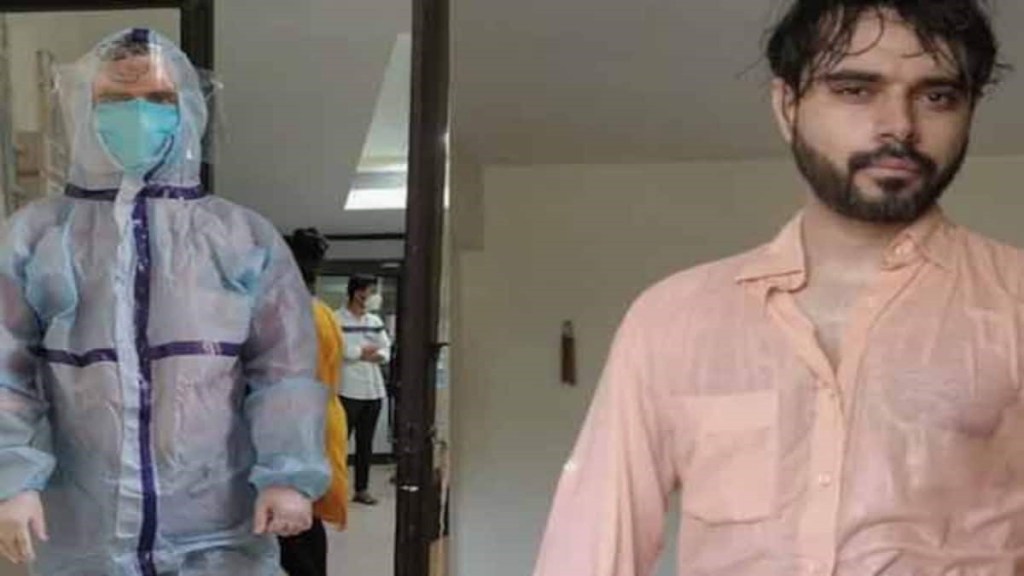
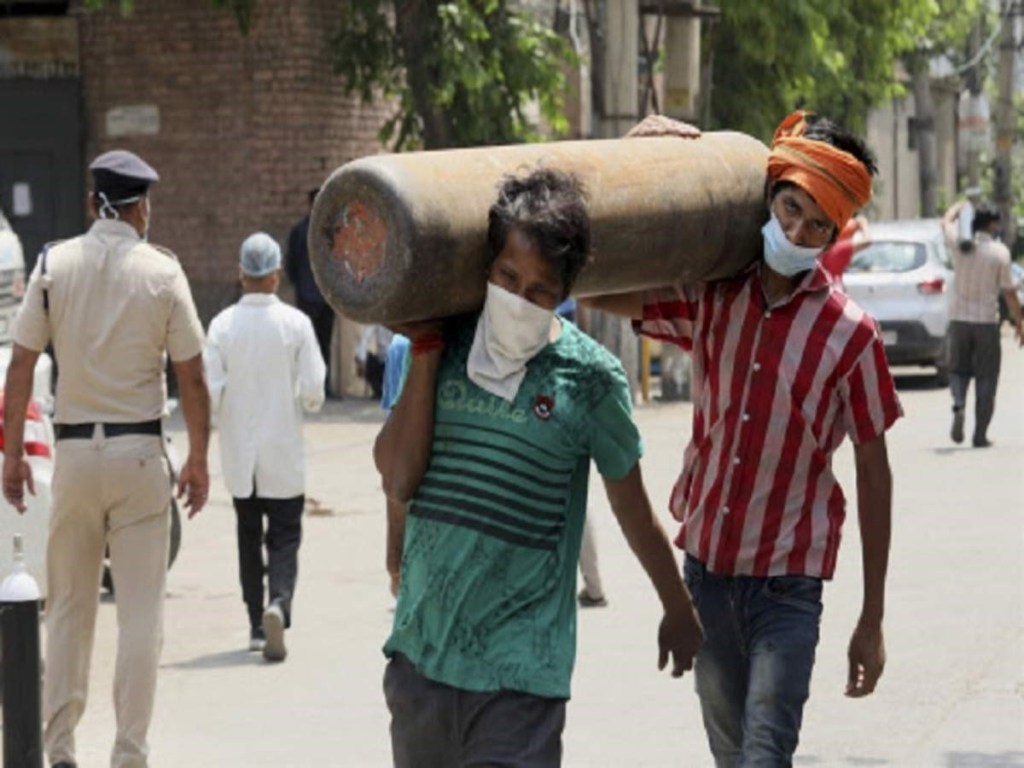
Image source: Google | Image by: BusinessToday.In

During COVID lockdown when most of us were busy making dalgona coffee and baking cakes, they were out there in scorching heat, wearing PPE kits dealing with patients. Burning the candle at both ends, forgetting they have a life of their own, forgetting they have a family waiting for them, isolating themselves from their own family members, in their own houses to protect their families from contracting the virus, more than 500 doctors died during COVID, trying to save our lives. But why, just to save us. Imagine how demoralising it is for them to get beaten up by the ones they’re working for.

What is the probable reason?

  • Lack of infrastructure
  • Manpower
  • Laws in place
  • Security arrangements

Lack of infrastructure

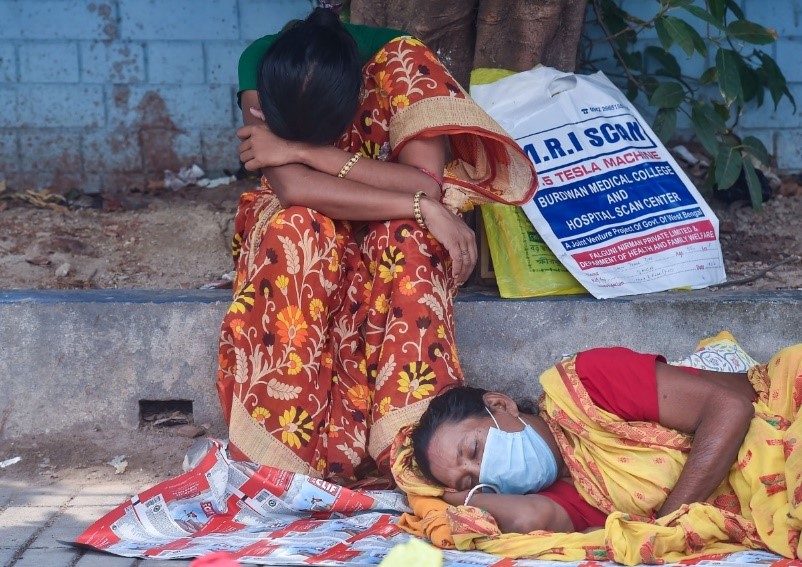
The shortfall of ICUs, no beds for patients, dearth of oxygen support, the inadequacy of medicines, caretakers bound to wait in long queues for medicines at dispensaries, patients gasping outside hospitals, black marketing of almost everything required for a person to recover, our health infrastructure was crippling.

 Manpower

Along with the tools used to help fight COVID, there is a paucity of our warriors too. There should be at least one doctor per 1000 patients according to WHO, whereas in India there is one doctor who attends more than 1445 patients. Not just doctors, the suggested number of nurses per 1000 patients is at least 3, there are just 1.7 in India (43% less than WHO standards). This leads to overworking of doctors and medical staff ignoring their basic requirements like sleep and a proper diet.

Laws in place

Medicare Service Persons and Medicare Service Institutions (Prevention of Violence and Damage to Property) Act, also known as the Medical protection act is there in at least 19 states, which when breached can lead to an imprisonment of up to 3 years and a fine of INR 50,000. Damage to any medical devices and equipment is a punishable offence and offenders are liable to pay twice the amount of the damaged equipment’s cost.

The Act, however, fails to really protect doctors because it features neither in the Indian Penal Code (IPC) nor in the Code of Criminal Procedure (CrPC). This makes it difficult for victims to approach the police for help or the latter to file a complaint against suspects.

Security arrangements

Doctors are not politicians with scores of gunmen and bouncers around them, who will assure their safety? Due to lack of security at hospitals and clinics, doctors and other staff are the soft targets for unhappy relatives and agitated patients.

Stepping into doctor’s shoes

Imagine yourself as a teacher who fears being beaten up to death by parents for their child’s poor performance at a test, will you even be willing to teach anymore with the same zest. I don’t think so. Hospitals are understaffed, doctors are overworked, patients are overwhelmed.

But this isn’t the fault of our doctors. They are going an extra mile in order to save as many patients as they can, making 3 patients share a bed or switching oxygen support among patients, they have our best interest at heart.

Doctors are not supposed to be accountable for the paralyzed infrastructure, that is where the leaders we vote for come into play. They’re made to work for 15+ hours at a stretch that too in a harsh environment, in a place they no longer feel safe or comfortable in. 

What do doctors want?

All they want is for the government to sit with them and consider their problems.

For a law to protect their lives so that they can continue with their duties towards the nation. The implementation of existing laws. 

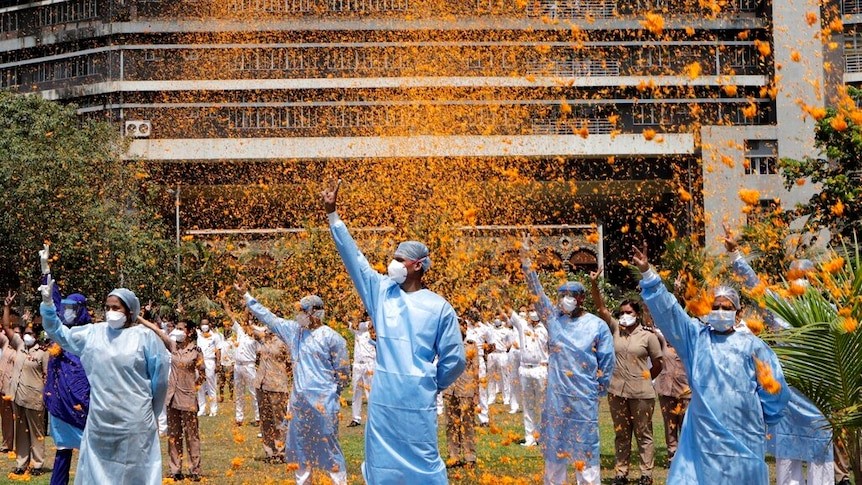
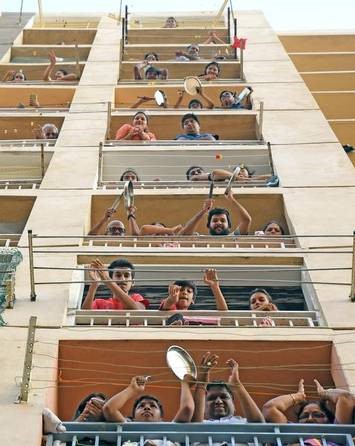
They don’t demand banging of thalis from our balconies or something like that in order to pay our respect, they didn’t ask for showering of flowers upon them for their service, all they’re asking for is to be able to practice in a safe environment where they’re worried for patients’ life, not scared of getting beaten up by sticks.

We were always raised to believe doctors are God on land. Saving our life, giving us a new one at times, while risking their own. What they now want is not godly, but at least a humanly manner.

How can we help?

First and foremost, don’t be someone they need protection from. i.e. don’t be an assaulter.

Secondly, don’t ignore if you see someone being unfair toward them. Raise your voice, report if you see something like this. 

A simple realisation that we can trust our doctors can do wonders.

Lastly, don’t forget they’re humans too. Thank them, pay your respect, or at least, just don’t be a jerk.

This Doctors day, I bet Dr Bidhan Chandra wouldn’t be proud of our country treating its doctors and medical staff like this.

Let’s all come together and promise that we’ll make the world a better place to live for our selfless human beings. We owe them.

Ending here with a salute to any doctor or an aspiring doctor reading this, and a sincere tribute to the warriors that lost their lives.

Kudos, to all of you.

Doctor’s Day

The presence of the doctor is the beginning of the core.Doctor’s day is celebrated on 1st july .It is an occasion to marked to pay tribute to the doctor and their contribution in the society .In india,it is celebrated in honour Dr. Bidhan Chandra Roy’s birth and death anniversary .

Chamoli disaster

Avalanche

• A large amount of snow moving quickly down a
mountain- on slopes of 30 to 45 degrees.

• When it stops, the snow becomes solid – people
may die from suffocation, trauma or hypothermia.

Flash Floods

• Caused by heavy rainfall in a short period of time – generally less than 6 hours.

• Characteristics: raging torrents after heavy rains.
 Rip through river beds, urban streets, or mountain canyons etc.

• Can also occur even if no rain has fallen.
 After a dam has failed/after a sudden release of water by ice jam.

Glacial Lake Outburst Flood (GLOF)

• Glacial lakes: bodies of water influenced by the presence of glaciers.

• Moraine: field of dirt and rocks/debris moving with glaciers- •

When glacier melts, it will change into a lake- moraines act as a dam to the lake.

• When this moraine dam fails- water will be drained through the subsurface tunnels.

• GLOF: release of meltwater from a moraine/ice-dam glacial lake due to dam failure.

Cloudbursts

• A sudden, very heavy rainfall- localised and brief.

• Most cloudbursts occur in connection with
thunderstorms.

• Usually occurs in high altitude areas.
 Formation of a low-pressure zones on
the top of a mountain.

Climate Change

• Long-term change in the average weather patterns that have come to define Earth’s local, regional and
global climates.
 Frequent and intense drought.
 Increased frequency and intensity of storms and heat waves.
 Caused rising sea levels, melting of glaciers and warming of oceans.
 Directly harm flora and fauna, destroy the places they live, and wreak havoc on people’s livelihoods
and communities.

Atlas of Glacial Lakes

• Ministry of Jal Shakti -updated atlas of glacial
lakes that are part of the Ganga River basin.

• Similar inventory of glacial lakes was prepared for the Indus River basin.

• Present Ganga study – Glacial lakes were mapped
using Resourcesat-2 (RS-2) Linear Imaging Self Scanning Sensor-IV (LISS-IV) satellite data.

• Process of lake formation, location, and type of damming material – glacial lakes are identified in
nine different types & majorly grouped into four
categories.

• Bhuvan portal of National Remote Sensing Centre, ISRO.

• Create “comprehensive and systematic” glacial lake database for Ganga River basin.

Ganga River

• Ganga rises in the Gangotri glacier -Uttarkashi district of Uttarakhand.

• Source -Bhagirathi.

 At Devprayag joining another hill stream Alaknanda becomes Ganga.

• Principal tributaries from right – Yamuna, the Son and the Damodar.

• Principal tributaries from left -The Ramganga, the Ghaghra, the Gomati, the Gandak, the Kosi and the
Mahananda.
• The Chambal and the Betwa -important sub- tributaries.

• River Ganga -Uttarakhand, Uttar Pradesh, Bihar, Jharkhand, and West Bengal.

• River basin -Uttar Pradesh, Bihar, West Bengal, Madhya Pradesh, Rajasthan, Jharkhand, Haryana,
Uttarakhand, Chhattisgarh, Himachal Pradesh and the Union Territory of Delhi.

Computers in detail

Definition

A computer is a machine that performs tasks and calculations according to a series of instructions or program operations (circuits, etc.) and software (OS, the underlying software that controls the hardware when the user issues instructions).

Programming

You don’t need a car, its function is the same as a jukebox that keeps playing tracks. For example, they want to tell the music box to play different music every time. They want to program the music box so that it can play different music. This part of the history of computers is called “the history of programmable machines.” “This is a concise sentence in the history of machines. When I speak their language, I can order to do different things.”

The role of computers in daily life

Today’s computers are fast, small and small. Powerful. Computers can save money, time and labor; otherwise it would take months or years to complete in a few seconds with computers. Launch satellites using a simple application on our desktop. According to the requirements, the storage capacity and speed of the computer will be different. For example, NASA and other companies that use high-speed supercomputers, because speed is an important part of your business. Computers are cheaper than smart phones. The essence is in hand. At home, computers provide opportunities to access social networks, read books, or work from home.In the office, they are the most important because they are the most important form of work. Although computers can help with almost everything from shopping to work to taking notes or playing games, people rely heavily on computers for almost everything. Computers make life easier and faster than ever. Large storage rooms are of great help to today’s business. The data received from different systems is stored on the computer for later use. In addition, previous shopping, reading, work, arithmetic, calling appointments and events or activating alarms all occurred in different places. Now everything can be done with our smart phone. If the book is bulky, it would be great to bring ten books. Now; millions of books are within reach. There is no need to check calendars anymore, because they have been replaced by reminders that automatically remind us of important events and clocks that only need to be activated once. These are some basic tasks that are performed daily, and it is difficult to work without a computer. Computers are no longer a luxury, they can be used in different forms on different platforms, for example as smart phones. Computers are also very helpful in medicine and have undergone extensive development in the past decade. Addictive.All in all, we can say that computers have profoundly affected our lives, and changes are no longer associated with ease, habit, and popularity.

The above is a small example of computers, but as far as modern technology is concerned, computers have changed our way of life. Computers are not only used for arithmetic but are now active in teaching, industrial purposes, automated processes, data management, analysis, personal and group entertainment, Music synthesis, professional photo and video editing, hardcore games, research goals, creating new software and applications to make life easier, shopping, banking, marketing, and even participating in the artificial creation of intelligent creatures with deep learning concepts and machine learning.

World social media day

Hello guys!!

Do you know we celebrate world social media day on June 30 th.
Today is a very special day cause today is the day we celebrate the evolution of media from old times till now to the present social media, which made communication lot more easier,accessible,accurate.

Social media is a platform where different kinds of people are connected together .But the security and privacy is still the top most priority of the social media apps

As technology is developing faster and faster the social media applications are also evolving at an
astonishing rate .

Especially during this pandemic
Social media was one of the reasons why people were still able to connect with people at various places.

Social media became extremely essential during these times.we can even say that bonds,relations and specially the connections between people is maintained .

They are even updating their apps constantly so users can benefit from it,the user should not feel alone when they use these apps that is what a successful app must have .

Through social media not only people connect ,but people with similar interests gather together under one roof that is to say at the same place same place and enjoy each other’s company.

Social media acts as a platform where even a small issue can gather lots of attention and raise awareness among people about various issues.It is changing people’s ideals it’s telling what is good and what is not.It is helping us to gain knowledge , entertainment,education,news etc.

Social media has their own advantages and disadvantages based on how we use them.

Social media is both boon and Bane because it is the reason why people who are at different places able to connect and it is also the reason why we are becoming more far to our own families .

So as they say everything should be done in limit,and anything that exceeds the limit is not good .

So even usage of social media should be limited .Even the applications are also updated their apps and added new features where we can view our usage of that particular app so we can limit our usage to certain extent.

So at last what I want to say is every thing is in your hands either to make social media your boon or your Bane depends on you.

Thankyou^^

Mediterranean Sea,Red sea ,and Aegean Sea

Red Sea

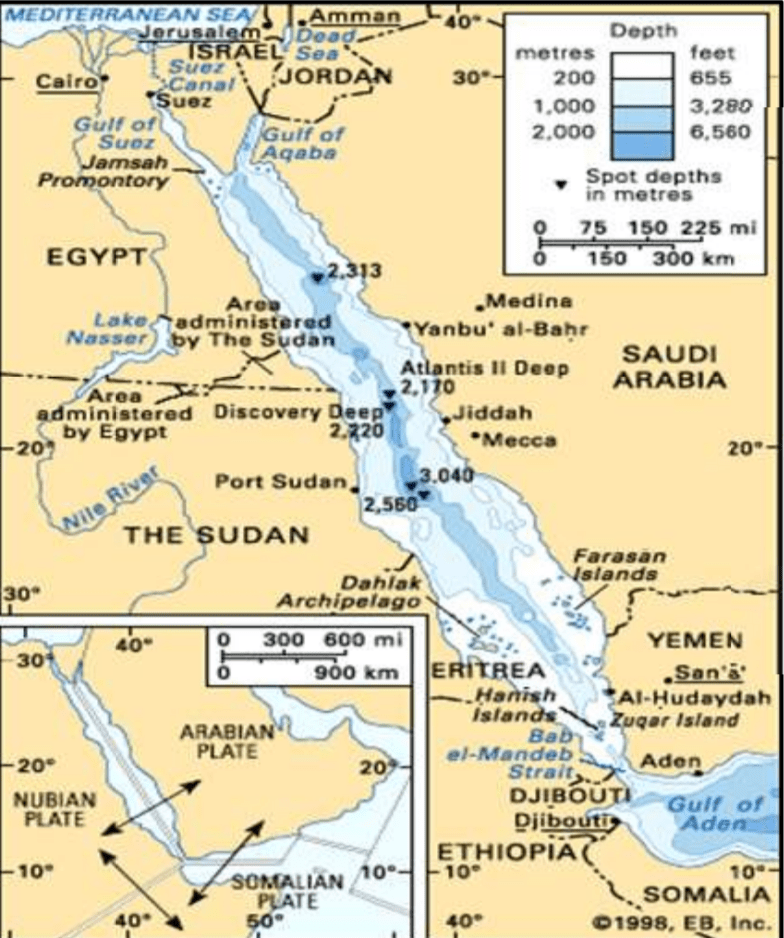
• Extending southeastward from Suez to the Bab el-Mandeb Strait.

• Northern end splits into- the Gulf of Suez to the NW and the Gulf of Aqaba to the NE.

• Separates the coasts of Egypt, Sudan, and Eritrea to the west from those of Saudi
Arabia and Yemen to the east.

• Connected to Mediterranean Sea via the Suez Canal.
 one of the most heavily traveled waterways
in the world.

• Derives its name from the colour changes observed in its waters.
 occasionally populated by the algae Trichodesmium erythraeum.

Mediterranean Sea

• An intercontinental sea .

• Often called the incubator of Western civilization.

• Extends from the Strait of Gibraltar to the Gulf of Iskenderun.

• West- connected with Atlantic Ocean by the
Strait of Gibraltar.

• Northeast- connected with the Black Sea through the strait of Dardanelles, the Sea of Marmara, and the strait of the Bosporus.

• Southeast- connected with the Red Sea by the Suez Canal.

Aegean Sea

• An arm of the Mediterranean Sea- between
the Greek peninsula and Asia Minor.

• Connected through the straits of the Dardanelles, the Sea of Marmara, and the
Bosporus to the Black Sea.

AGNI CLASS OF MISSILES

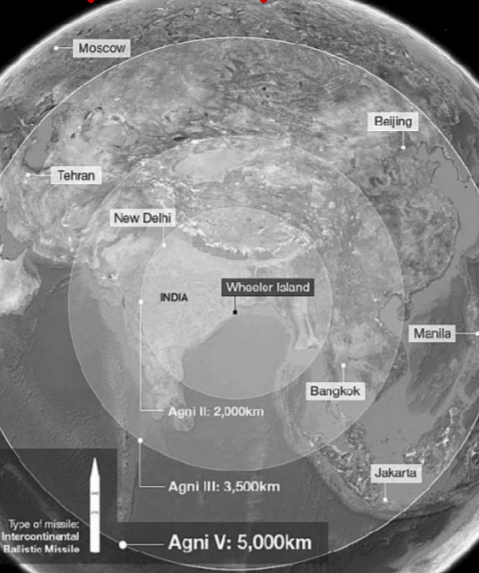
• Agni-1, Agni-2, Agni-3, Agni-4, Agni-5 and Agni-P.

• Designed & developed by DRDO.

• Family of medium to intercontinental range
ballistic missiles.

• can be fired from road- and rail-mobile launchers.

• powered by solid propellants.

• Agni-1 to Agni-5 – product of the Integrated Guided Missile Development Project (IGMDP).

• Inducted into Services to act as deterrence & meet the country’s security requirements – credible deterrence against China and Pakistan.

Agni missile range on map, source-Indiasnucleartraids pdf

Agni-1

• medium-range ballistic missile – range of 700-800 km. • weight – 12 tonnes; length – 15 meters.

• capable of carrying a conventional payload of
1,000 kg or a nuclear warhead at a speed of
2.5 km/s.

• operational with the
Strategic Force Command
of Indian Army.

Source- http://www.drdo.gov.in

Agni-2

• surface-to-surface nuclear-
capable missile.

• Intermediate-Range Ballistic Missile (IRBM) – capable to cover the range of 2,000- 2,500 km.

• length is 20 meters, with the diameter of 1 meter.

• weight – 18 tonnes.

• 2 stages – solid propellant in
both of its stages.

Source- http://www.drdo.gov.in

Agni-3

• It is an IRBM – range of 2500-3,000 km.

• powerful solid propellant in its both stages.

• can carry a warhead of 1.5 tonnes.

• claimed that the missile’s circular error probable
(CEP) lies within of 40
meters – most accurate
and deadliest strategic
ballistic missiles of range
class in the world.

Source- http://www.drdo.gov.in

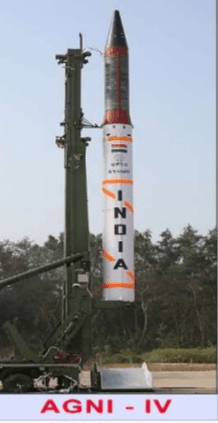
Agni-4

• range of 3500-4000km.

• earlier termed as Agni II
prime

• can carry a warhead of 1
tonne.

• two-stage missile.

• length is 20 meters and
launch weight is about 17
tonnes

Source- http://www.drdo.gov.in

Agni-5

• intercontinental surface-to-surface ballistic missile.

• India’s first ICBM.

• range – more than 5,000 km

• long-range

• Length – 17.5 m; weight – 50
tonnes.

• 3 propulsion stages.

• can carry a warhead weighing more than a tonne. • uses a canister launch missile system or Canisterisation of missile.

Canisterisation of missile

• warheads are pre-mated to the delivery vehicle and kept sealed for storage and transport.

• provides increased readiness – shorter
response time with an ability to launch in “just a few minutes”.

• provides necessary operational flexibility to
the forces.

• enhances missile longevity – protects the solid fuel from the elements.

Agni-P missiles

• successfully test-fired.

• new-generation advanced variant of Agni class of missiles – advanced
version of the ‘Agni-1’ missile.

• designed and developed by DRDO.

• will strengthen India’s credible deterrence capabilities.

Features:
 Nuclear-capable ballistic missile.
 Canisterised missile.
 range – between 1,000 and 2,000 kms.
 surface to a surface missile that can
carry a payload of around 1,000 Kg or a nuclear warhead.
 two-stage missile – composite rocket motors.
 guidance systems equipped with electromechanical actuators.
 solid-fuelled weapon system – state-of- the-art navigation system.
 Can be fired from road and rail-mobile launchers.
 complete technology upgrade in every way possible – improved parameters, manoeuvring and accuracy.
 sleek missile that weighs less than its previous variant – due to the integration of new technologies.

CONSTITUTIONAL BODIES IN INDIA

What is a Constitutional Body?

1. Those bodies whose formation is prescribed by the Indian Constitution itself are known as Constitutional Bodies.

2.They derive their powers and authority from the Indian Constitution.

3. A constitutional amendment is often required to change any powers or functions related to such bodies.

List of Constitutional Bodies in India

  1. ATTORNEY GENERAL OF INDIA

● Article 76 of the Constitution provides for the Attorney General of India.

● He is considered the highest law officer in the country.

● He is appointed by the president and holds office during his pleasure.

● A person who is qualified to be appointed as the judge of the Supreme Court is eligible for the office of Attorney General of India.

Duties of AG:

• To advise the government on the legal matters referred to him by the president.

• To appear on behalf of the GOI in SC in all the cases concerning the government.

• To represent GOI in the references made by the president to the SC under Article 143.

• To appear in HC in the cases concerning GOI when required.

Rights of AG:

• AG has the right to audience in all the courts in the territory of India.

• He has the right to speak and take part in the parliamentary proceedings. However, he doesn’t enjoy the right to vote.

• All the privileges and immunities available to a member of parliament are granted to the AG

2. COMPTROLLER AND AUDITOR GENERAL OF INDIA

● Article 148 of the Constitution provides for an independent office of Comptroller and Auditor General of india.

• CAG is considered as the guardian of the public purse. Along with the Supreme Court, the Election Commission, and the Union Public Service Commission, the office of CAG is treated as one of the bulwarks of the democratic system.

Appointment:

• President of India appoints CAG by a warrant under his hand and seal.

• He holds office for a period of six years or up to the age of 65 years, whichever is earlier.

• CAG can be removed from his office in the same manner as a judge of the Supreme Court.

Independence:

● CAG is provided with the security of tenure.

• His rights cannot be altered to his disadvantage after his appointment.

• All the expenses of the office of CAG are charged on the Consolidated Fund of India.

• His salary is equal to that of a judge of the Supreme Court.

Duties:

● The duties and powers of CAG are mentioned in article 149 of the Constitution.

• All the accounts related to the expenses from the Consolidated Fund of India, Consolidated Fund of the States, and Union Territories are audited by CAG.

● Also, the expenditure from Contingency Fund and Public Account of India and States are audited by CAG.

• CAG acts as a guide, friend, and philosopher of the Public Accounts Committee.

● All the receipts and expenditure of bodies financed from the central or state revenue are also audited by CAG.

• The audits of any other body as and when requested by the President or Governor are audited by CAG.

• Three reports are submitted by CAG to the President. They are:

(1) Audit report on appropriation accounts

(2) Audit report on finance accounts

(3) Audit report on public undertakings

Role of CAG:

• The office of CAG secures the accountability of the executive to the Parliament in the sphere of financial administration.

• The CAG acts as an agent of the Parliament and is responsible only to the Parliament.

● Along with legal and regulatory audits, CAG also conducts propriety audits.

3.ADVOCATE GENERAL OF THE STATE

● Article 165 of the Constitution provides for Advocate General for the states.

● He is considered the highest law officer in the state.

● The Advocate General is appointed by the governor and holds the office during his pleasure.

• A person qualified to be appointed as a judge of a high court is eligible for the office of Advocate General.

Duties and Rights of Advocate General:

• To advise the government of the state on the matters referred to him by the governor.

• To discharge those functions conferred upon him by the Constitution of India.

• He has the right to speak and take part in the proceedings of both the houses of the state legislature. However, he doesn’t enjoy the right to vote.

4. STATE FINANCE COMMISSION

● The governor of a state shall, after every five years, constitute a finance commission.

• Articles 243-1 and 243-Y deal with the formation of this body.

• The composition, qualifications of members, and the manner of their selection is decided by the concerned state legislature.

Functions:

● The distribution of the net proceeds of taxes, tolls, and fees between the state and local bodies.

• The determination of such taxes, duties, and tolls to be assigned to local bodies.

The grants-in-aid to be given to the local bodies from the consolidated fund of the state.

• Measures to be taken for improving the financial position of local bodies.

●Any other matter referred to the commission by the governor of the state.

5.STATE ELECTION COMMISSION

• The elections to the panchayats and municipalities are looked after by the State Election Commission.

● Articles 243-K and 243-ZA deal with the elections to the rural and urban local bodies.

● SEC consists of a state election commissioner who is appointed by the governor.

• The removal of the state election commissioner is the same as that of a judge of the state high court.

6.DISTRICT PLANNING COMMITTEE

• A district planning committee is constituted and given the task to consolidate the plans of both panchayats and municipalities.

• It prepares a draft development plan for the district.

• Article 243-ZD deals with the committee for district planning.

• The composition, manner of election of chairperson and members is decided by the state legislature.

● Four-fifths of the committee are elected by the elected members of panchayats and municipalities.

• The representation of these members is proportional to the ratio of the rural and urban population in the district.

• In preparing the plan, DPC should consider the following:

  1. Matters of common interest between the rural and urban local bodies regarding sharing of resources, infrastructure development, and conservation of environment.
  2. Extent and type of resources available.

7. METROPOLITAN PLANNING COMMITTEE

• A metropolitan planning committee is constituted for every metropolitan area.

• Article 243 -ZE deals with the committee for metropolitan planning.

• The composition, manner of election of chairpersons and members, functions, etc are decided by the concerned state legislature.

There are many other bodies also ….

AGNI:THE FAMILY OF BALLISTIC MISSILES

The name Agni(meaning fire) was given after one of the 5 elements in nature(Agni, Vayu, Prithvi, Akash, Jala). Agni missiles are medium to intercontinental-range ballistic missiles, developed under the Integrated Guided Missile Development Programme, INDIA. The family of missiles consists of AGNI I, AGNI II, AGNI III, AGNI IV, AGNI V, AGNI P, AGNI VI. And here is a brief description of each one of them.

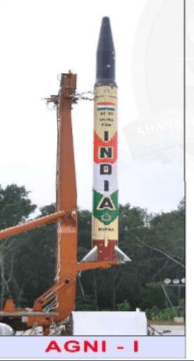
India night-tests Agni-I missile

Agni I:

Agni I is an intermediate-range ballistic missile, it is 14.8 m long, with a diameter of 1.3 meters, and weighs 22,000 kgs. With a maximum payload of 1,000 kgs, the missile could extend its range up to 1,200 km of distance. Agni I is used by the SCF of the Indian Army. It is made of all-carbon composite materials to protect the payload during its re-entry stage. It is designed to be launched from Transporter-Erector-Launcher (TEL) vehicles, either by road or rail-mobile through transportation. The development of this missile began in 1999, and was first tested in January 2002 from a TEL vehicle at the Interim Test Range on Wheelers’ Island of India’s eastern coast. This missile has relatively high accuracy, simplicity, and due to its combination of an inertial guidance system with a terminal phase radar correlation targeting system on its warhead. 

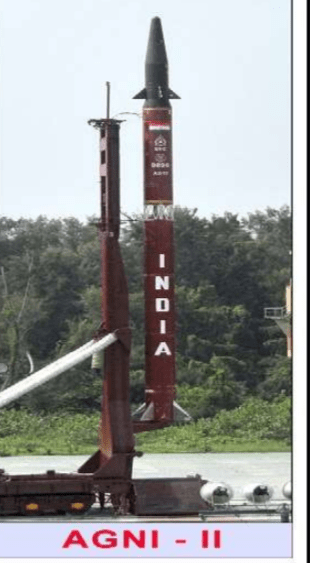
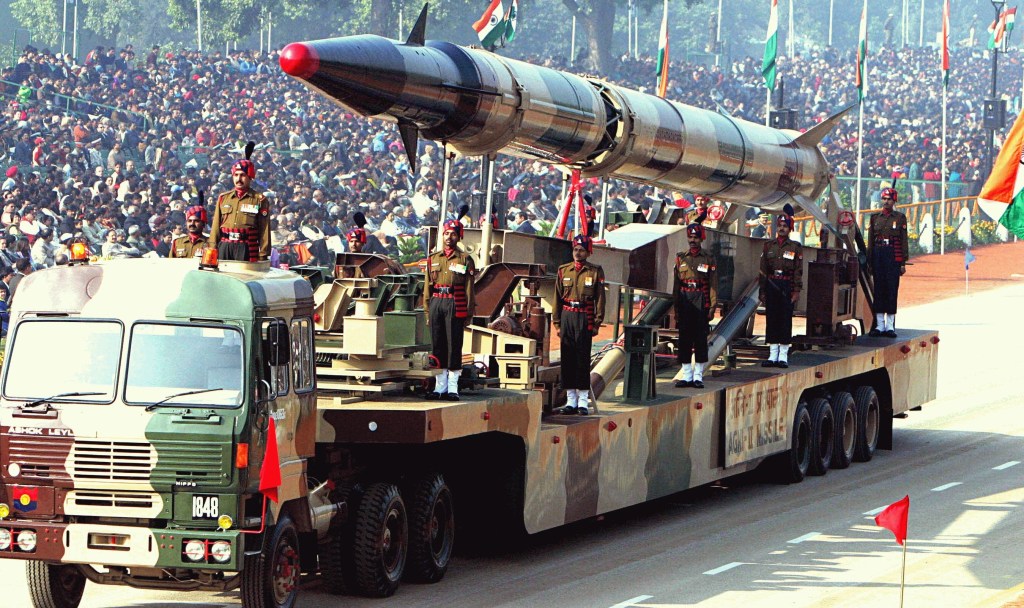
Agni II missile

Agni II:

Agni II is a medium-range, two-and-half-stage solid propellent ballistic missile, and is 20 m long, with a diameter of 1 m, and weighs around 26,000 kg. With a payload of 820-2,000 kgs, the missile could extend its range from 2,000 to 3,500 km. Agni II was first tested on 11th April 1999 at the Wheelers’ Island of the Odisha coast using IC-4 launch pad, over the range 2,000 to 2,200 km. The Agni II uses a combination of inertial navigation and GPS in its guidance module as well as dual-frequency radar correlation for terminal guidance. The 20-meter-long, two-stage ballistic missile has a strike range of 2,000 km to 3,000 km during the night trail of a nuclear-capable intermediate-range ballistic missile on 16th Nov 2019.

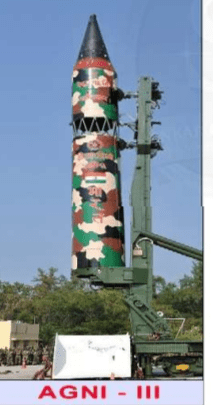
Agni-3 ballistic missile successfully launched by India’s Strategic Forces Command (SFC) from Wheeler Island, off the coast of Odisha on September 21, 2012.

Agni III:

Agni III is an intermediate-range, two-stage solid propellent ballistic missile, it is shorter (17 m and wider and 2 m in diameter) compared to other missiles (Agni I and Agni II), and weighs up to 44,000 kg. With a payload of 2,500 kg, Agni III could extend its range from 2,000 to 3,000 km. It is made using advanced carbon composite materials, while the second-stage booster is made of iron-based steel alloy. Agni-III was first tested on 9th July 2006 from Wheeler Island on the coast of the eastern state of Odisha, by Rail-mobile, possible road-based TEL( Transporter-Erector-Launcher). It was again tested on 12th April 2007 successfully, again from Wheeler Island. The third successive trail-test was fired on 7th May 2008 from Wheelers island, which had a range of 3,500 km, taking a warhead of 1.5 tonnes. It is the most accurate strategic ballistic missile which increases the “kill efficiency” of the weapon. It was reported that with a low payload Agni III and hit a target of over 3,500 km.

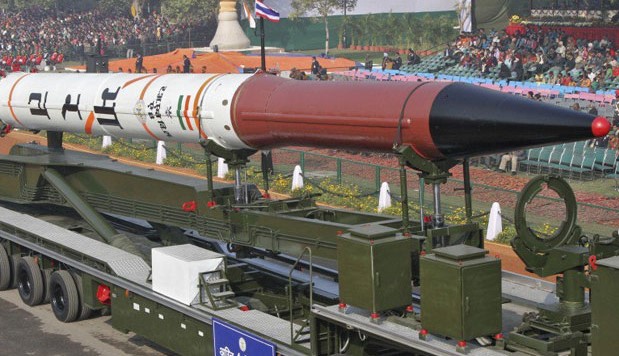
Agni IV missile

Agni IV:

Agni IV is an intermediate-range, two-stage nuclear-capable ballistic missile, it is 20 m long, with a diameter of 1 m, and weighs up to 17,000 kg. It was previously called as Agni II prime. Agni IV was first tested on 15th November 2011 and on 19 September 2012 from Wheeler Island(Abdul Kalam Island) off the coast of the eastern state of Orissa. It could reach the target up to the range of 3,500–4,000 km with a payload of 800–1,000 kg. On 20th January 2014, that is during its third test, the missile was lifted off from the launcher and after reaching an altitude of over 800 km, and impacted near the target in the Indian ocean with a remarkable accuracy carrying a payload of 900 kg. Agni IV is equipped with state-of-the-art technologies, that include indigenously developed ring laser gyro and composite rocket motor.

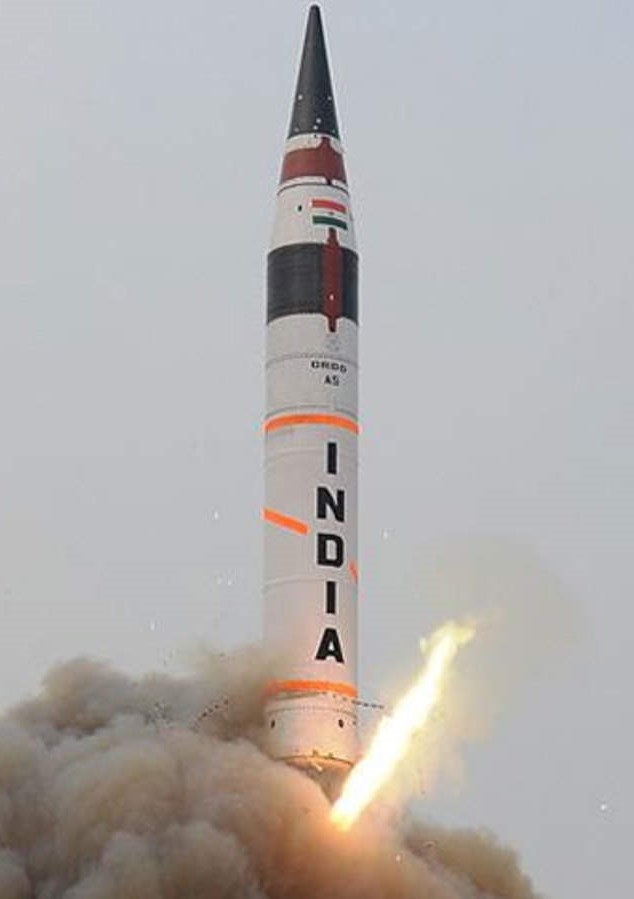
Agni V missile

Agni V:

Agni V is an intercontinental-range, three-stage solid-fuel ballistic missile, it is 17 m long, with a diameter of 2 m, and weighs up to 50,000 kg, developed by the Defense Research and Development Organisation of India. It could reach a target of more than 5,500 km. It was first test-fired on 19th April 2012, from Abdul Kalam Island formerly known as Wheelers Island off the coast of Odisha. It is a canister launch missile system and ensures that it has the requisite operational flexibility and can be swiftly transported and fired from anywhere. The second test launch of Agni-V was completed on 15th September 2013 and the canisterized version was launched in January 2015.

Agni P missile

Agni P:

Agni prime is a medium-range, two-stage solid-fueled ballistic missile, it is half of the weight of Agni III, developed by the Defense Research and Development Organisation, India. Both the first and second stage of the missile was made of composite materials. It could extend its range up to 1,000-2,000 km. As per DRDO, Agni-Prime is a new generation advanced variant of the Agni family, launched on 28th June 2021. “Being a canister-launched missile, Agni-P will give the armed forces the requisite operational flexibility to swiftly transport and fire it from anywhere they want. The test at 10:55 met all mission objectives with a high level of accuracy,” says DRDO. This missile has followed the Textbook trajectory with a great level of accuracy.

Agni VI under development

Agni VI:

Agni VI will be a four-stage intercontinental ballistic missile, currently in the hardware development phase and expected to have a Multiple Independently targetable Reentry Vehicle(MIRV) as well as a Maneuverable Reentry Vehicle(MaRV). It is expected as the latest and most advanced version among the Agni Missiles.

References:

http://www.indianexpress.com/news/india-successfully-testfires-agni-i-ballist/715859/

https://timesofindia.indiatimes.com/india/india-successfully-test-fires-new-generation-agni-p-ballistic-missile/articleshow/83914848.cms

https://en.wikipedia.org/wiki/Agni_(missile)

https://frontline.thehindu.com/dispatches/india-successfully-test-fires-agni-prime-missile/article35022926.ece

credits to the right owner of the images used.

SOCIAL MEDIA

Needs and merits

The ability to build real relationships is one of the most important aspects of social media and a key factor in attracting people of all ages, genders and nationalities. It is an important part of developing healthy social networks and powerful social network tools. People can share their business, products and services with the world as long as they stay connected and use social media. Social networks allow people to communicate, and everyone can update and report at any time. Companies make full use of social media to improve your online reputation and greatly help increase sales and personal income.

  • You need to make sure to use all social media platforms to gain insight into the needs of your customers. To make the most of social media for your business, make sure you have a content marketing plan. If you need content on any social media platform, you can use social media asset management tools to create high-quality content.
  • You can also use social media to track what people say on social media. Although social media is mainly used by the public, the government also uses it to raise public awareness.
  • Although the use of social media for teaching can be distracting, educators can do everything they can to guide students to develop good habits and practices, Benefit. Regarding the advantages provided by social networks.
  • If you consistently and continuously invest time and effort, you will see the real benefits of social media marketing. Social media can give your business a huge advantage by helping you connect with your target audience. It can cover a large number of people, but for social media, it is also a media sharing network.
  • Social media advertising is one of the two components used together to attract potential customers and spread information and brand awareness. Different from classic ads. When you actively post on social media pages, social media marketing is easy.

SOCIAL MEDIA AS A BLESSING

There are some people who actually make a good or can say the best use of the social media. Like if we talk about the young entrepreneurs who have just begun with a start up but is lacking in public attraction and funding so they create a short 30seconds advertisement and attach it with the trending apps which work through network connection . Talking about the awareness ;both the social media and mass media have been playing their roles very well by keeping their viewers updated with the latest screamers , exposing the Scams ,scandals , and even the worse parts of humanity .

Mental Wellness

According to WHO ,mental Wellness means that your mind is in order and functioning in your best intrest .You are able to think ,feel and act in ways that create a positive impact on your social and physical well-being.According to report by WHO , depression is the most common illness worldwide ,with more than 264 million people affected.Close to 800,000 people die due to suicide every year .Suicide is the second leading cause of death in 15-29 years-olds.A friendly reminder to check in on your family and friends to make sure they doing okay and they know you’re there for them .