WOMEN EMPOWERMENT

Hello everyone today we are going to discuss about women empowerment.As we all know when a girl is born first she became daughter of parents then when they grow up they become ladies and do jobs for better future of their family then they become mom, there are some mom who also do jobs and also take care of their child. Women also take care of the child and also the house they do so much for us.If we ask for there rights is this wrong?

Why some men say that women are for doing household works they can’t work outside of the house? I don’t understand why the men are jealous if the lady do a better work. You should be proud as your partner is doing nice work with you. There are also so many thing that man things that they are only capable, ladies can’t do that.In our Indian culture women are given utmost request,but our culture also worship female goddess.Women plays an important role in our society. We should give them equal rights what the men are getting.

Suppose imagine one day you wake up and you don’t found your mother, wife, your daughter, or any ladies those who are working for you, if they suddenly get disappear you don’t find them no where what you will do? You take this two day lightly as it is a joke then later on you will first face problem then slowly you will miss them. If we don’t give them proper equality with us then we are going to loose them. Always women are suppressed by their family members then by their husband and later on by their children.Why we always try to suppress them?Because they do so much for us or it’s there duty!

In order provide women with protection and give them a equal right and minimize the female crime government has passed a bill that is Child and Care Protection in 2015 to decrease the juvenile cases at the age of 16 to 18.

In order to really give the women empowerment to the society, the main cause of evil practices against women that are male-dominated societal structure needs to be understood and abolished.We must be open-minded and have an equal thoughts for male and female.

I hope you like my article and let me know what do you think about Women Empowerment?

Thank you for reading my article and have a nice day!

Accidently Created Radiation Shield around Earth in Deep Space : EMI Test Exclusive …………..//

NASA spends a lot of time researching the Earth and its surrounding space environment. One particular feature of interest are the Van Allen belts, so much so that NASA built special probes to study them! They’ve now discovered a protective bubble they believe has been generated by human transmissions in the VLF range.

VLF transmissions cover the 3-30 kHz range, and thus bandwidth is highly limited. VLF hardware is primarily used to communicate with submarines, often to remind them that, yes, everything is still fine and there’s no need to launch the nukes yet.  It’s also used for navigation and broadcasting time signals.

It seems that this human transmission has created a barrier of sorts in the atmosphere that protects it against radiation from space. Interestingly, the outward edge of this “VLF Bubble” seems to correspond very closely with the innermost edge of the Van Allen belts caused by Earth’s magnetic field.

Credit : Third Party Reference

What’s more, the inner limit of the Van Allan belts now appears to be much farther away from the Earth’s surface than it was in the 1960s, which suggests that man-made VLF transmissions could be responsible for pushing the boundary outwards.

Overall, this seems like an accidental, but potentially positive effect of human activity – the barrier protects the Earth from potentially harmful radiation. NASA’s YouTube video on the topic suggests that understanding this mechanism better could enable us to protect our satellites and space vehicles from some of the harmful effects of the space environment.

A week or two ago we featured a research paper from NASA scientists that reported a tiny but measurable thrust from an electromagnetic drive mounted on a torsion balance in a vacuum chamber. This was interesting news because electromagnetic drives do not eject mass in the way that a traditional rocket engine does, so any thrust they may produce would violate Newton’s Third Law.

Credit : Third Party Reference

Either the Laws Of Physics are not as inviolate as we have been led to believe, or some other factor has evaded the attempts of the team to exclude or explain everything that might otherwise produce a force.

As you might imagine, opinion has entrenched itself on both sides of this issue. Those who believe that EM drives have allowed us to stumble upon some hitherto undiscovered branch of physics seized upon the fact that the NASA paper was peer-reviewed to support their case, while those who believe the mechanism through which the force is generated will eventually be explained by conventional means stuck to their guns. The rest of us who sit on the fence await further developments from either side with interest.

Over at Phys.org they have an interview from the University of Connecticut with [Brice Cassenti], a propulsion expert, which brings his specialist knowledge to the issue. He believes that eventually the results will be explained by conventional means.

But explains why the paper made it through peer review and addresses some of the speculation about the device being tested in space. If you are firmly in one of the opposing camps the interview may not persuade you to change your mind, but it nevertheless makes for an interesting read.

Reference – https://divyanshspacetech.wordpress.com

Developed countries must implement financial and technological commitments under UNFCCC and Paris agreement: Prakash Javadekar

Environment Minister Prakash Javadekar today said, developed countries must implement the financial and technological commitments under UNFCCC and Paris agreement. Representing India at the fourth edition of the virtual Ministerial on Climate Action, Mr Javadekar said, India has taken very significant steps for combating climate change and will continue its efforts in the future also.

He called upon developed country parties, once again, to do their part as envisaged under UNFCCC and Paris Agreement, for extending financial and technological support to developing countries. The Environment Minister said, the promise of one trillion dollars by 2020 has not been fulfilled so far, and expressed hope that in the remaining 5 months of 2020, the promised amount will be mobilized and delivered for further strengthening climate actions in developing countries.

Highlighting India’s efforts, the Environment Minister said, India has achieved reduction of 21 percent in emission intensity of its GDP between 2005 and 2014, thereby achieving its pre-2020 voluntary target. He said, India’s renewable energy installed capacity has increased by 226 percent in last 5 years and stands at more than 87 Gigawatt. The share of non-fossil sources in installed capacity of electricity generation increased from 30.5 percent in March 2015 to 37.7 per cent in May 2020.

He said, Prime Minister Narendra Modi has further announced the aspirational target of increasing renewable energy capacity to 450 GW.

The minister further said that government has provided 80 million LPG connections in rural areas, providing them with clean cooking fuel and healthy environment. India’s total forest and tree cover is 8,07,276 square kilometres which is 24.56 percent of the total geographical area of the country. He said, more than 360 million LED bulbs have been distributed under UJALA scheme, which has led to energy saving of about 47 billion units of electricity per year and reduction of 38 million tonnes of CO2 per year.

Highlighting India’s efforts towards cleaner fuel, Mr Javadekar said that India has also leapfrogged from Bharat Stage-IV to Bharat Stage-VI emission norms by 1st April this year which was earlier to be adopted by 2024. The minister also highlighted how India had levied a coal cess of 400 rupees as, part of one of the most explicit green initiatives and this is now subsumed under Goods and Services Tax

Developed countries must implement financial and technological commitments under UNFCCC and Paris agreement: Prakash Javadekar

Environment Minister Prakash Javadekar today said, developed countries must implement the financial and technological commitments under UNFCCC and Paris agreement. Representing India at the fourth edition of the virtual Ministerial on Climate Action, Mr Javadekar said, India has taken very significant steps for combating climate change and will continue its efforts in the future also.

He called upon developed country parties, once again, to do their part as envisaged under UNFCCC and Paris Agreement, for extending financial and technological support to developing countries. The Environment Minister said, the promise of one trillion dollars by 2020 has not been fulfilled so far, and expressed hope that in the remaining 5 months of 2020, the promised amount will be mobilized and delivered for further strengthening climate actions in developing countries.

Highlighting India’s efforts, the Environment Minister said, India has achieved reduction of 21 percent in emission intensity of its GDP between 2005 and 2014, thereby achieving its pre-2020 voluntary target. He said, India’s renewable energy installed capacity has increased by 226 percent in last 5 years and stands at more than 87 Gigawatt. The share of non-fossil sources in installed capacity of electricity generation increased from 30.5 percent in March 2015 to 37.7 per cent in May 2020.

He said, Prime Minister Narendra Modi has further announced the aspirational target of increasing renewable energy capacity to 450 GW.

The minister further said that government has provided 80 million LPG connections in rural areas, providing them with clean cooking fuel and healthy environment. India’s total forest and tree cover is 8,07,276 square kilometres which is 24.56 percent of the total geographical area of the country. He said, more than 360 million LED bulbs have been distributed under UJALA scheme, which has led to energy saving of about 47 billion units of electricity per year and reduction of 38 million tonnes of CO2 per year.

Highlighting India’s efforts towards cleaner fuel, Mr Javadekar said that India has also leapfrogged from Bharat Stage-IV to Bharat Stage-VI emission norms by 1st April this year which was earlier to be adopted by 2024. The minister also highlighted how India had levied a coal cess of 400 rupees as, part of one of the most explicit green initiatives and this is now subsumed under Goods and Services Tax.

Locust control operations carried out in more than 2.75 lakh hectare area so far: Agriculture Ministry

Union Agriculture Ministry has said that locust control operations have been carried out in more than 2.75 lakh hectare area so far since 11th of April in various states. The States are Rajasthan, Madhya Pradesh, Punjab, Gujarat, Uttar Pradesh, Maharashtra, Chhatisgarh, Haryana and Bihar. The Ministry said, aerial spraying capacity has been strengthened for anti-locust operations.
 
A Bell helicopter has also been deployed in Rajasthan for use in Scheduled Desert Area as per the need. Indian Air Force has conducted trials in anti-locust operation by using an Mi-17 helicopter and the results are encouraging. IAF started participating in anti-locust operations from 5th of this month by deploying the Mi-17 helicopter for aerial spraying in Jodhpur district. This is first of its kind exercise in the history of locust control in India.
 
The Ministry said, further, five companies with 15 drones are deployed at Barmer, Jaisalmer, Bikaner, Nagaur and Phalodi in Rajasthan for effective control of locusts on tall trees and in inaccessible areas through spraying of pesticides. It said, presently 60 control teams with spray vehicles are deployed in State of Rajasthan, Gujarat, Madhya Pradesh and Uttar Pradesh and more than 200 Central Government personnel are engaged in locust control operations. In addition, 20 spray equipments have reached India.
 
The Ministry said, no significant crop losses have been reported in the States of Gujarat, Uttar Pradesh, Madhya Pradesh, Maharashtra, Chhatisgarh, Bihar and Haryana. However, some minor crop losses have been reported in some districts of Rajasthan.

US considering to ban Chinese Apps including TikTok

The United States is looking at banning Chinese social media apps, including TikTok. The US Secretary of state Mike Pompeo said this in an interview with an American news channel.

US lawmakers have raised national security concerns over TikTok’s handling of user data. They were worried about Chinese laws requiring domestic companies to support and cooperate with intelligence work controlled by the Chinese Communist Party.

Pompeo’s remarks also come amid increasing US-China tensions over the handling of the coronavirus outbreak, China’s actions in Hong Kong and a nearly two-year trade war.

Meanwhile, the app, which is not available in China, has sought to distance itself from its Chinese roots to appeal to a global audience and has emphasized its independence from China.

CBSE reduces syllabus for classes 9th to 12th by 30% for academic year 2020-21

Central Board of Secondary Education (CBSE) has rationalised the syllabus up to 30 per cent for classes 9 to 12 to make up for academic loss during COVID-19 lockdown.
 
In a series of tweets, Human Resource Development Minister Ramesh Pokhriyal Nishank said, considering the importance of learning achievement, it has been decided to rationalize syllabus by retaining the core concepts.

He said, looking at the extraordinary situation prevailing in the country and the world, CBSE was advised to revise the curriculum and reduce course load for the students of Class 9th to 12th.

India has one of the lowest COVID-19 cases per million in world

India has one of the lowest COVID-19 cases per million in the world. Union Health Ministry said, according to World Health Organization Situation Report, India’s cases per million population is around 505 while the global average is at over one thousand 453.

Chile has witnessed around 15,459 cases of COVID-19 per million population, while US over 8,500, Brazil over 7,419 and Spain witnessed over 5,358 cases per million population. The WHO Situation Report also shows that India has one of the lowest deaths per million population. India’s cases of death per million population is around 14 while the global average is more than its four times, at 68.

The Ministry said, India has ramped up the hospital infrastructure to adequately and effectively manage the cases. The preparedness included arrangement of oxygen support, ICU and ventilator facilities. As on today, there are over 1200 Dedicated COVID Hospitals, two thousand 611 Dedicated COVID Healthcare Centres and nine thousand 909 COVID Care Centres to look after COVID patients from those with very severe to very mild symptoms. Early detection and timely effective clinical management of COVID-19 cases have resulted in increasing daily recoveries.

During the last 24 hours, a total of 15,515 COVID-19 patients have been cured, taking the cumulative figure of recovered cases to more than 4,39,000. The Ministry said, due to coordinated efforts at all levels of the national and State governments for prevention, containment and management of COVID-19 are showing encouraging results with consistently increasing gap between recoveries and active cases. As on date, there are over one lakh 80 thousand recovered cases more than the active COVID-19 cases.

The recovery rate among COVID-19 patients has increased to 61.13 per cent yesterday. Presently, there are over 3, 59,000 active cases and all are under medical supervision.The Ministry said, more than two lakh tests being conducted per day. During the last 24 hours more than 3, 41,000 samples have been tested. With this, the nationwide samples tested for COVID-19 reached to over one crore two lakh. 

India has one of the lowest COVID-19 cases per million in world

India has one of the lowest COVID-19 cases per million in the world. Union Health Ministry said, according to World Health Organization Situation Report, India’s cases per million population is around 505 while the global average is at over one thousand 453.

Chile has witnessed around 15,459 cases of COVID-19 per million population, while US over 8,500, Brazil over 7,419 and Spain witnessed over 5,358 cases per million population. The WHO Situation Report also shows that India has one of the lowest deaths per million population. India’s cases of death per million population is around 14 while the global average is more than its four times, at 68.
 
The Ministry said, India has ramped up the hospital infrastructure to adequately and effectively manage the cases. The preparedness included arrangement of oxygen support, ICU and ventilator facilities. As on today, there are over 1200 Dedicated COVID Hospitals, two thousand 611 Dedicated COVID Healthcare Centres and nine thousand 909 COVID Care Centres to look after COVID patients from those with very severe to very mild symptoms. Early detection and timely effective clinical management of COVID-19 cases have resulted in increasing daily recoveries.

During the last 24 hours, a total of 15,515 COVID-19 patients have been cured, taking the cumulative figure of recovered cases to more than 4,39,000. The Ministry said, due to coordinated efforts at all levels of the national and State governments for prevention, containment and management of COVID-19 are showing encouraging results with consistently increasing gap between recoveries and active cases. As on date, there are over one lakh 80 thousand recovered cases more than the active COVID-19 cases.
 
The recovery rate among COVID-19 patients has increased to 61.13 per cent yesterday. Presently, there are over 3, 59,000 active cases and all are under medical supervision.The Ministry said, more than two lakh tests being conducted per day. During the last 24 hours more than 3, 41,000 samples have been tested. With this, the nationwide samples tested for COVID-19 reached to over one crore two lakh. 

India, US reaffirm their commitment to work towards ensuring free, open & peaceful Indo-Pacific region

India and the US have reaffirmed their commitment to work towards ensuring a free, open, inclusive, peaceful and prosperous Indo-Pacific. They also agreed on the need to deepen cooperation in the United Nations, especially during India’s membership of the United Nations Security Council.
 
Foreign Secretary Harsh Vardhan Shringla and the US Under Secretary of State for Political Affairs David Hale exchanged views on a number of regional and global issues of shared interests during the virtual foreign office consultations between the two countries yesterday. They reviewed the entire gamut of engagements under the India-US Comprehensive Global Strategic Partnership, including political, economic, commercial, regional and international cooperation.
 
In the backdrop of the COVID-19 pandemic, they agreed to further strengthen the bilateral health partnership, including on pharmaceuticals and vaccine development. They agreed to remain in touch and move forward on the bilateral agenda through a range of mechanisms like the 22 ministerial that India will host later this year.
 
Mr Shringla and Mr Hale discussed ways to further enhance mutually beneficial trade and people-to-people ties, including through visa facilitation for students and professionals. Sources said the issue of F-1 visa students attending online-only classes in the US was raised during the meeting. They said the US side took note and said they will keep the best interests of the students in mind and try and mitigate impact. Sources also said that detailed implementation guidelines are yet to come out.

Defence Minister says construction of strategic roads, bridges & tunnels in border areas to be expedited

Defence Minister Rajanth Singh has said that the construction of strategic roads, bridges and tunnels in the border areas will be expedited. Mr. Singh said, Border Roads Organisation (BRO) is working vigorously towards this goal. The Minister reviewed the ongoing infrastructure projects of BRO at a high-level meeting in New Delhi yesterday.
 
During the meeting, the state of forward connectivity to border areas was reviewed and the consistent need of boosting the ongoing projects and to expedite the construction of strategic roads, bridges and tunnels in the border areas was discussed. The BRO has worked incessantly even during the restrictions imposed due to COVID-19 without affecting the progress of various projects.

Despite unprecedented snowfall, breaking 60 year old record, all strategic passes and roads were cleared this year for traffic about one month before their average yearly opening dates.
 
While lauding the BRO for its achievements, Mr. Singh exhorted it to continue its work to achieve even greater laurels. The BRO has also inducted latest equipment and machines and has introduced modern construction methods after successful trials to expedite works on surfacing with cementations base, use of plastics, geotextiles, and various techniques for slope stabilisation.

Trials have also been carried out successfully for indigenously produced modular bridges in collaboration. This will revolutionise the bridge laying capabilities in forward areas. 

Struggles of big dairy companies in India!!!

India is that the world’s biggest producer and consumer of dairy. In 2018 alone, India produced 186 million metric tonnes of milk — about 410 billion pounds and 22 percent of the milk produced globally. Almost all of that is consumed domestically thanks to India’s dairy-heavy diet — think creamy curries, yogurt drinks, and a popular type of butter called ghee. A quick note before we proceed: this includes milk from buffaloes, which are an important source of milk in many developing countries. the point is that India loves milk.

What is pushing India's small dairy farmers out of business?

In 2011, the French dairy company Danone hoped to capitalize on this by opening a division in India. Danone opened its own processing plant in Haryana and tried to capture some of India’s 1.2 billion dairy lovers. But less than a decade later, Danone shuttered their dairy business in India. That same year, the corporate made 28 billion dollars worldwide and was within the top three global dairy companies. With all this success, elsewhere, why did Danone’s dairy business sour in India? Let’s start with some background on Danone. Their business is broken down into three categories:

  1. 1.specialized nutrition, like supplements and formula for babies;
  2. bottled waters and seltzers;
  3. dairy and plant-based alternatives.

That one makes up over half of their global sales, but it’s also the one that failed in India. Danone does still sell specialized nutrition products in the country, but they don’t break out those sales figures separately. This is the same company as Dannon in the U.S. The company decided to rebrand to make the spelling less confusing for American consumers. Anyway, now for some background on India’s dairy industry. There are about 75 million dairy farmers in India. Most of them are women who own one or two buffaloes or cows to supplement the family’s income. Nearly half of India’s milk is not sold, but consumed by the farmers household. This makes India’s dairy industry much more fractured and localized than other countries where Danone operates. Take the company’s native France and one of its biggest customers, the U.S. Each has far fewer dairy farms with herds that dwarf India’s one or two animal average. This was Danone’s first big problem in India: sourcing milk is difficult. Of the half not consumed by farmers’ households, only about 15 percent goes to big organized companies or government run cooperatives. The rest goes to hundreds of small, local milk processors.

Tainted milk: Branded dairy in India sees 5% increase in ...

The largest companies like Amul, Mother Dairy, and Nestlé have tiny percentages of the market, and they’ve been there for decades. Market research firms Mintel and Euromonitor declined to release specific market share numbers to CNBC. However, a 2016 piece in The Economic Times of India citing Euromonitor put the figures at about 7 percent for Amul, 3.7 percent for Mother Dairy, and 2.9 percent for Nestlé. In short, tapping into the existing dairy infrastructure is effective but time consuming. Imagine the effort of contacting dozens or hundreds of local and regional dairies, processors, or individual farmers. But establishing a separate supply chain altogether is very expensive — a lesson Danone learned the hard way. And when Danone did get milk, the company focused on the wrong products. Danone pushed plain yogurt and flavored yogurt drinks — popular in places like the U.S. and France with high profit margins to boot. But in India around the time when Danone arrived, yogurt comprised only 7 percent of the dairy consumed.

The real money was in ghee, a type of clarified butter, and plain old fluid milk, a product with razor-thin margins dominated by those hundreds of local small-scale producers. Analysts explained to CNBC the simple reason why Indian consumers shunned Danone’s prepackaged yogurt. And if Indian consumers did want to buy premade yogurt, they had a slew of cheaper options than Danone. Dairy never accounted for more than 10 percent of Danone’s sales in India, a far cry from its global 50 percent. Its specialized nutrition arm picks up the slack, and the company announced a renewed focus on that division when it shuttered its dairy operation. Meanwhile, two of their biggest competitors, Amul and Nestlé, made nearly five billion and 750 million from dairy, respectively. But not all hope is lost for Danone’s dairy in India.
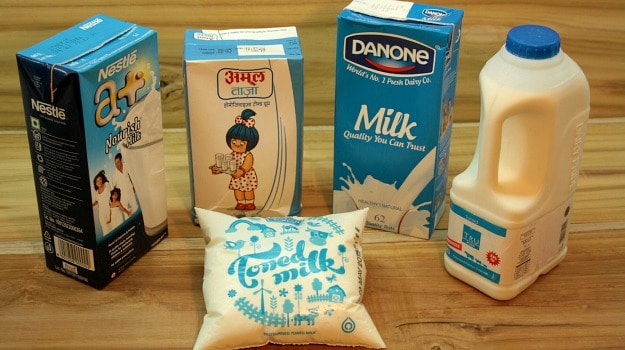
Amul, Nestle, Mother Dairy, Tru & Danone: Which Milk Tastes the ...

In January 2018, the same time that Danone ended its dairy production there, the investment arm of the company announced its part in a 26.5 million dollar investment in Epigamia, an Indian yogurt startup. This could be a sustainable move for Danone in India’s dairy industry because Epigamia offers consumers products that add value onto the plain yogurt they will make cheaply reception . But perhaps most importantly is this: while much of the population still makes yogurt the old-fashioned way, analysts predict that a growing number of consumers will want to buy premade options as they move into corporate jobs in developing urban centers. Very large numbers indeed. If only 5 percent of India’s 1.35 billion people decides to buy prepackaged yogurt, that’s over 67 million consumers — more than the entire population of Danone’s native France.


International Cricket set to return after 117 days

England v West Indies First Test Betting: Tourists vastly ...

After the corona pandemic brought the world and fields of sports to a standstill, cricket finally has got it’s breathing space. After 117 days, players from England and West Indies will play a historic test match at Southampton in England. With the Corona wave setting in as early as March, Australia and New Zealand last played a test on March 13. Cricket has been interrupted by war, terrorist attacks and political crises. But this series, played amid a global pandemic, will be a genuine first

Cricket would be back but the normal would be different. Covid-19 has forced crowds out of the stadium. Saliva can’t be used to shine the ball and the celebratory hugs and handshakes are too banned. Precautions have been taken all way right from the start. The West Indies squad arrived in England in early June and were quarantined and tested multiple times for Covid-19. Both the squad lived and trained under the bio-secure bubble. The number of DRS reviews has been increased and non-neutral umpires would stand-in as suggested by the Anil Kumble Committee. 

How the teams would shape up?

West Indies and England had always had their bowling departments to the full firepower. Shanon Gabriels, Kemar Roach from the WI and James Anderson, Stuart Broad and Jofra Archer would be all set to be in action. The Batting lineups from both the teams would be up for tests. With Joe Root on a paternity leave to attend to the birth of his child, Stokes stands in as the captain. Zak Crawley, Joe Denly, Sibley and Burns would form a new-look Top 4 for the hosts while Shamarh Brooks would fill the Number 4 spot for the visitors. The squads played intra-squad matches for prep and it remains interesting to see how players from both the squads adapt to the new conditions. 

Squads 

England: Ben Stokes (C), James Anderson, Jofra Archer, Dom Bess, Stuart Broad, Rory Burns, Jos Buttler (wk), Zak Crawley, Joe Denly, Ollie Pope, Dom Sibley, Chris Woakes, Mark Wood.

West Indies: Jason Holder (C), Jermaine Blackwood, Nkrumah Bonner, Kraigg Brathwaite, Shamarh Brooks, John Campbell, Roston Chase, Rahkeem Cornwall, Shane Dowrich (wk), Shannon Gabriel, Chemar Holder, Shai Hope, Alzarri Joseph, Raymon Reifer, Kemar Roach. 

Rain showers are expected for the first two days in Southampton. With the new norms and regulations, the contests would be looked excitingly upon but also closely as the future, for now, stands unclear but this series could just be the guiding light for the cricket associations around the world. As they always say, Cricket would be the winner !

Custodial deaths in India

Custodial violence primarily refers to violence in police and judicial custody. It includes death, rape and torture.

The recent death of a father-son duo from Tamil Nadu, allegedly due to custodial violence, has sparked anger across India.

The outrage and debates around the chilling custodial deaths of a father-son duo in Tamil Nadu sound a bit too familiar to Sayyad Khwaja Hussain, 50. It has been happening for years. But nobody seems to care.

Hussain has seen it up close. He has even been at the centre of this discourse. He is the elder brother of Sayyad Khwaja Yunus, an engineer, who allegedly died in the custody of Mumbai Police in January 2003 at the age of 27. “We keep having the same debates after a case but nothing changes on the ground,” says Hussain, “And if the families want justice, the legal formalities take up your life.”Seventeen years since Khwaja Yunus died in Mumbai Police custody, Indian cops still unaccountable for custodial deaths.Deaths in custody are unfortunately not isolated incidents. Police in India routinely use torture and flout arrest procedures with little or no accountability. The magistrate investigating the recent deaths reported that the police did not cooperate during his inquiry, insulted him, and destroyed evidence.

On June 19, police in Tamil Nadu state detained P. Jayaraj, 60, and his son J. Fenix, 31, allegedly for keeping their mobile phone shop open longer than allowed under Covid-19 lockdown rules. Four days later, both were dead.The deaths of Jayaraj and Fenix happened soon after the killing of George Floyd by a police officer in the United States, igniting protests against police use of excessive force against Black people. It has prompted calls for police reform in India as well, including meaningful steps to ensure accountability. India should ratify the Convention against Torture and Other Cruel, Inhuman or Degrading Treatment or Punishment, and strictly enforce laws and guidelines on arrest and detention set out in the Code of Criminal Procedure.

Reasons Behind Custodial Violence:

Absence of Strong Legislation: India does not have an anti-torture legislation and is yet to criminalise custodial violence, while action against culpable officials remains illusory.

  • The Indian state either denies the existence of torture in the country or defends its resistance to enact a law by claiming there are sufficient provisions in the domestic legal framework to prohibit and penalise torture.
  • These claims however remain superficial and without any such protections.
  • Excessive Force: The use of excessive force including torture to target marginalised communities and control people participating in movements or propagating ideologies which the state perceives as opposed to its stature.
  • Constitutional and Legal Provisions:
  • Protection from torture is a fundamental right enshrined under Article 21 (Right to Life) of the Indian constitution.
  • The right to counsel is also a fundamental right under Article 22(1) of the India constitution.
  • Section 41 of Criminal Procedure Code (CrPC) was amended in 2009 to include safeguards under 41A, 41B, 41C and 41D, so that arrests and detentions for interrogation have reasonable grounds and documented procedures, arrests are made transparent to family, friends and public, and there is protection through legal representation.

What should be done?

  • India should ratify the UN Convention Against Torture: It will mandate a systematic review of colonial rules, methods, practices and arrangements for the custody and treatment of persons subjected to any form of arrest, detention or imprisonment.
    • It will also mean that exclusive mechanisms of redress and compensation will be set up for the victim besides institutions such as the Board of Visitors.
  • Police Reforms: Guidelines should also be formulated on educating and training officials involved in the cases involving deprivation of liberty because torture cannot be effectively prevented till the senior police wisely anticipate the gravity of such issues and clear reorientation is devised from present practices.
  • Implementation of Law Commission of India’s 273rd Report: The report recommends that those accused of committing custodial torture – be it policemen, military and paramilitary personnel – should be criminally prosecuted instead of facing mere administrative action establishing an effective deterrent.

how to make an oreo shake

Oreo shake is something that everyone loves in summer, it is very easy to make and is delicious to eat. In this lock down period as we are confined in our houses and are unable to taste our favorite amul, cornetto or magnum ice creams , lets us make this at home, let us ring some of the creative bells inside us or simply get out of the comfort zone and surprise our parents and loved ones by making this.

It is really easy and requires very basic stuffs as the ingredients like chocolate syrups that are melted hot chocolates. Oreo cookies which are available in the markets you just have to divide them. One cup that means we require two hundred and fifty milli litres of milk and two cups of softened vanilla ice cream. W can make oreo milk shake using banana ice cream for that you just require two bananas extra from that of the ingredients of the simple oreo milk shake.

Firstly we will make oreo milkshake using ice cream for that you have to frees the glasses in the freezer for like fifteen minutes that is until it is mildly frost. Then spread the chocolate syrup inside the cup such that it touches all the part of the cup and then swirl it. So now put one scoop of vanilla ice cream in a mixer so that your milk shake is thick, the add milk to it. lastly add some oreo biscuits so that its chocolate and creamy taste can spread throughout the shake and now switch on the mixer. Now put this in the glass which you have frozen and swirled with the chocolate syrup. Now take some oreo biscuits and chop them until they become fine pieces, now put them on the milk shake as its toppings. See how easy it is to make it.

It is your choice to make banana oreo milk shake where the bananas are chopped and added to the mixer so that you can enjoy the taste of banana in it. You can also be creative by adding straw berries or other ice creams flavors like strawberry, chocolate , butter scotch and extra. It is very easy to make this so you can be creative s much as you want.

If you want to make your day special or the work from home routine has becoming tiring , just making this ( as you can see it is very easy to make and the time it takes is just five minutes) drinking the shake can be refreshing for you and can boost energy to do the work. If you are thinking about fitness means how much fat it would add then don’t be afraid it jus adds a hundred and twenty calories which you can loose by walking for just fifteen minutes. You should try making this at home and enjoy you summers with it also this may give you confidence to try out many other food items so that you can become a master chef till the lock down ends.