Pollution And It’s Solution

Pollution is a term which even kids are aware of these days. It is one of the measure considerable is used for whole world in current time. Nowadays it becomes more dangerous or harmful for all of us.Pollution can be referred as some kind of impurity in natural environment that is harmful for all living beings on earth. Majorly 4 types of pollution can be measured as Air pollution, Water pollution, Land pollution and Noise pollution. This world is completely depends on advanced technology and for making technical equipments, factories and mills are opening everywhere. This factories produce harmful gases and chemical liquids as waste materials. Gases convert into air pollution, liquid dissolve in water so create water pollution. Noise pollution arises due to so many things like electrical equipments exsited at home, factories, construction site work, vachile sounds and many more. Pollution always put bad effect on human’s physical and mental health. Many types of diseases regarding people’s lungs and breath related emarge due to growing air pollution all around. Pollution in air, water, land or voice does not only affect human beings but also for birds and animals.

Solution for this huge problem of pollution can be found by the equal support and efforts of all people living all around the world. The only way to control current environmental issue is to implement conservation methods and create sustainable development strategies. We should make smart transportation choices. We should take advantage of public transportation or walk whenever possible. We should conserve energy. Turn off lights when we are not in the room. Small steps lead to huge changes. We should use energy efficient devices. Follow the concept of Reduce, Reuse and Recycle. We must conserve water as much as possible. We must not waste even a single drop of water because each water drop matters. Use of pesticides and herbicides must be discouraged. The masses should be educated on the danger of different types of pollution.Make a good habit of using toilet and spread awareness among all about its benefit. Water tanks, ponds, rivers should be clean on regular basis. Use of solar or hydro energy should be promoted and in spite of using your personal vehicle, use public transport or car pooling to avoid air pollution which increases due to fossil fuel burning. People should know everything about consequences of the environment pollution in order to prevent the worst from happening, Let’s protect the water we drink, the air we breathe and the soil we use to grow our food. Let’s protect our Mother Earth.

Homophobia: A deleterious Disease of the Society

What is Homophobia?

Homobia roughly translates into an approach which leads to a tendency of looking down on homosexual people. It brings about a certain fear. Homophobic people tend to be scared of homosexual acts and behaviours. This homophobic approach leads to certain excessive extents and has emerged to become one of the mail problems of the modern society. It brings about a negative approach that treats homophobic people as less humane.

Causes

The root cause of this phobia can be considered to be an extreme superiority complex that homophobic people happen to have. This complex leads them to regard themselves as the superior beings and consider “others” as less superior or inferior to them. All the prejudices, certain ignorance and hatred are the main reasons to cause homophobic attitudes.
A preconceived ideal conception of being “normal” or “normalcy” is equally responsible to cause this phobia. They happen to nourish the concept that only heterosexual people are “normal” because they continue being traditional and conventional. Homosexual men and women however do not conform to this age old conception and go beyond to achieve and embrace a new lifestyle with a different mindset. This difference is seen as a sin by homophobic people and they simply cannot accept the fact that these people are different and they completely fail to comprehend that it is more than normal to be this way.

Effects

There have been hundreds and thousands of instances when homosexual people have been ill treated with no consequences whatsoever. Over 90% gay men and lesbians have reported to have been verbally and physically abused by their peers for being “different” in their traditional society.
Elders of our society also fail to understand and often ignore the fact that it is absolutely normal to have a different physical orientation which has led to violent incidents from time to time. In third world countries like India, it is still a taboo and a stigma is attached to it so badly that people fail to accept them as their equals in the society.
Apart from being socially and physically abused, homosexual people have to go through an immense amount of mental and psychological stress and abuse on a regular basis in our society. Their peers avoid them for they have a different definition of “normalcy”. It affects them in a huge way which reflects afterwards in their life in a vivid manner. They constantly have to fight against these stereotypical prejudices. A systematic oppression and stigmatization is attached to it so badly that it makes other qualities fade away in absolutely no-time.

What is the cure?

The only way is to talk about it more and more which will eventually help in spreading awareness in the society. There should be more discussions about it in every home and in every public sphere so that the tendency to look at homosexuality changes.
We have to be responsible enough to be able to handle homophobic people in a positive way. We have to try and make them understand the concept clearly and how it is absolutely normal to have a different orientation than them. We have to make them understand they are still as equal and as deserving as the rest of the society and there is absolutely no reason and no excuse whatsoever to cause abuse or stress in any form be it social, psychological, mental or physical. We have to take responsibility and make homophobic people understand that it is high time to realize that we have to be flexible and fluid enough to let others live the way they want to without having them to go through unnecessary judgements and criticisms.

-Suvasree Bandyopadhyay

Directives for career choices.

  • By Tushar Soni

I had a difficult time choosing a career path in college. Its quite irritating that I didn’t even knew about myself, and when people heard that I didn’t know what i wanted to do for living, they would give me advice. Some would say,”What would you do if you didn’t have to worry about money? Turn that into your career.” Others would say,”Pursue a career where you can make the most money from the least amount of work.”

While both of these statements have value, there is a more thorough way to choose a career based on your passions, values, and abilities.

If you,re confused about which career path to follow, consider these few tips to help you find it.

  1. Focus on your strengths

Prepare a list of positives and negatives of the career option you have chosen. Think about how you can eliminate the negatives of your decision if it seems manageable, or else you can rethink about your career option.

2. Consider Your Hobbies

Before you do anything, consider what your hobbies are and write them down. Also think about why you enjoy these hobbies. If you like a bake, perhaps the reason why you like to create, and a creative career like wedding cake design would be a good fit for you.

Or if you enjoy running, maybe it,s because you like challenging yourself and working hard to achieve a goal. A career that demands and rewards hard work with pay raises, promotions, or commissions could be one to consider.

3. Speak to a Career Counsellor

A conversation with a career counsellor may help clear your mind and point you in the right direction. He or she can also tell you about careers you had no idea even existed.

4. Interview Professionals

If you are interested in several great careers, interview people already working in those fields. Call someone you already know in a field of interest or call local businesses and ask to do a quick phone interview. Most people are happy to discuss their day-to-day activities with a willing listener.

5. Shadow Someone

When you conduct your phone interview, ask if you can shadow someone for a day. That will give you a clear idea of what their day is like. If i hadn’t observed people i never have know about many jobs i would like to do and many jobs i wouldn’t.

6. Take a Class

While taking a class in meteorology may not tell you what it is like to be a meteorologist, you will find out whether or not you enjoy the subject. If you think you may be interested in a particular area, sign up for a class to find out for sure.

Final Word

The more effort you put into your search for the right career, the more you’ll get out of it. Diligently invest your time and effort because change like this rarely easy, but often rewarding.

“Choose a job you love, and you will never have to work a day in your life”.

5 secrets of successful person

When we talk about successful persons nearly all of us think that there must be something secret behind their success. May be we think they work hard but don’t we too work hard if yes then why do most of us think or assume that they are not successful in their life. There are no as such secrets behind success but there are surely some values which if we follow regularly become secrets behind our success. Let us learn about some so called unknown secrets of success.

1.successful people have strong self beiief:

This is the most essential quality to be successful. Such persons do sometimes get caught in self doubt but they witty enough to encounter such things. Instead of over analysing of what things could go wrong they focus on their strenghts. Thus to become successful one must have confidence in themself.

2. To be successful you need not be great all time but must be consistently good:

Yes many times people think that to be successful they must be always great in their work but no it is consistently good performance that makes one successful over the time. If you are great in your work it’s totally ok but being consistently good is must.

3.He who conquers the mind conquers the world:

Mind control is the most important thing to be successful, one must be always focused towards their goal in order to achieve success. Mind is like stearing of the vehicle, in order to reach your destination you must take control of it and keep going in the right path. There will be many distractions in the way but to win you must show strong desire and faith with you controlling the mind not your mind controlling your body.

4.Don’t bother about others, If you are clear in your goal:

This fact is always misunderstood sometimes you have to listen to elders and other experts in your field, because geart people are good listeners. However if you think someone is intentionally teasing you or distracting you from your goal, don’t even bother to reply them.

5.Don’t be arrogant or think yourself superior than others and always have faith in god:

One who is arrogant or over-confident has always risk of being failed. Only the ones who know their limits and are aware of their surroundings succeed. Great people never show-off and always know the importance of god and grateful to others. Don’t forget humans are social beings thus one who gains faith of society becomes successful.
Hope this article can help readers to redefine success in a positive way.

The Dark side of Shein

The Dark side of Shein

Due to the ongoing conflict between India and China, The Indian government banned the use of 59 Chinese app in the country. It included many famous apps like Clubfactory, Shareit, Camscanner, Shein, and many more. The one app which left every Indian fashion lover heartbroken is Shein. Shein is an international B2C fast fashion brand and probably one of the most popular apps among girls across the globe, with their cheap prices and quirky styles, they expanded pretty quickly. The company mainly focuses on women’s wear, but it also offers men’s apparel, children’s clothes, accessories, shoes, bags, and other fashion items. The brand was founded in October 2008, and since then it works on the philosophy that “everyone can enjoy the beauty of fashion”.Its business covers more than 220 countries and regions around the world. 

But do you ever wonder how did they succeed in cutting down their costs so much? The same top that you get for around 1000 rupees in brands like H&M and Zara, are easily available for half the price at Shein. This is due to the kind of fabric they use, most of their clothing items are made up of synthetic fabrics like polyester or nylon which are cheaper when compared to cotton or rayon. You must have heard a lot of people complain about their low quality and accountability but apparently, it’s all worth it when it is cheap. 

 Secondly, Shein and other Chinese fast fashion apps were importing their goods under “samples and gifts” because of which they didn’t have to pay any customs. Hence, cutting down their costs. Even though the GOI passed an amendment to India’s foreign trade policy restricting companies from importing “samples and gifts” duty-free. The aim was to keep companies like Shein from using the provisions to evade tax as they have reportedly been underbilling items to get past customs without having to pay the import duty. 

Fast fashion sites like Shein, club factory, etc are also known to use unethical ways like:-

a.) They do not pay their workers a living wage and often use child labor. The reason your dresses from Shein are so cheap is that the person sewing them isn’t paid enough.


b.) Fast fashion is also greatly harming our environment. 85% of the clothing ends up in landfills every year and makes up 10% of global carbon emissions. Fast fashion is also the 2nd largest consumer of our water supply, and it pollutes rivers with micro plastics.

c.) Sites like Shein tricks you into spending more money. It is designed for you to value quantity over quality and buy more, so even though the clothes are very cheap, you end up spending more. 

d.) They disrespect religions, recently Shein has been seen selling the sacred prayer mat used by Muslims to pray as a doormat. Shein has also been stealing designs from Indian culture and giving them their names. Similarly, certain small designers also came up accusing Shein of stealing their ideas and not giving them any credit. 

Even though the app has been banned by the government there’s no guarantee if the ban will be permanent or not. If not, I would like to encourage people not the shop from sites like Shein and club factory and support local Indian brands which will not only help the Indian economy but also help India to achieve “Aatma Nirbharta”. There are certain alternatives to apps like Shein like thrift stores available on sites like Instagram, local Facebook vendors, and many more Indian brands.    

ASIA’S LARGEST SOLAR PLANT IN MP(INDIA):BIG ACHIEVEMENT & PROUD MOMENT

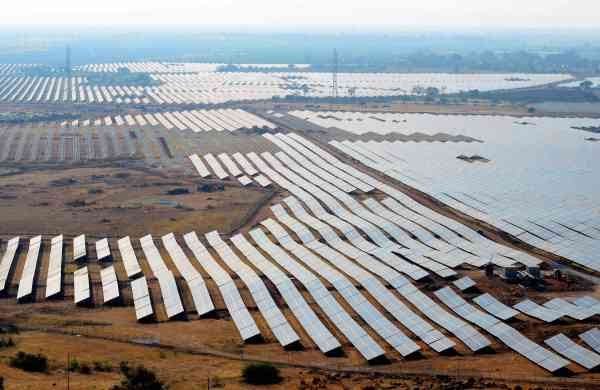
Prime Minister Narendra Modi will dedicate to the nation Asia’s largest 750 MW Rewa ultra mega solar plant in Madhya Pradesh via video conferencing on July 10, Chief Minister Shivraj Singh Chouhan said in Delhi on Sunday. A state government release also quoted that Chouhan has met Union minister of state for energy R K Singh at his residence in the national capital and urged him to attend the inauguration programme. This is great achievement for India. And proud moment for India, this is going to benefit India in all aspects. This project is very successful and take India at next level of development.

India’s solar capacity addition expected to come down by 15% to 5.5 GW in FY21: ICRA

The ratings agency said that the domestic solar capacity addition in FY20 remained lower by 15 per cent than its previous estimate of about 7.5 GW

India’s domestic solar capacity is expected to add about 5.5 gigawatt (GW) during the financial year 2020-21 (FY21) due to the execution headwinds amid lockdown restrictions post-COVID pandemic, according to ICRA.

The ratings agency said that the domestic solar capacity addition in FY20 remained lower by 15 per cent than its previous estimate of about 7.5 GW as a result of various disruptions caused by the pandemic in the fourth quarter in the fiscal year.

“The solar capacity addition during FY21 is expected to come down further by 15 per cent to about 5.5 GW given the execution headwinds amid lockdown restrictions post COVID pandemic. This also assumes the execution delays by about four to five months for many of the under-construction projects and expected normalcy in construction activity during the second half of the current fiscal,” said Girishkumar Kadam, sector head and vice-president, ICRA.

He added that, however, the backlog of the awarded project pipeline continued to remain strong with more than 15 GW of aggregate project capacity providing a visibility on capacity addition over the next two-year period.

According to ICRA, the supply chain disruptions and lockdown restrictions have added to the woes of the sector which continues to remain plagued by various issues such as delays in land acquisition, receipt of evacuation approvals, regulatory delays in tariff adoption, and obtaining financial closure in a tight financing environment.

“With the dip in demand post-lockdown due to the pandemic, revenues and cash flows of the state-owned distribution utilities have been affected leading to an increase in the counterparty credit risk for the sector,” ICRA said.

It added that receivable cycles from Andhra Pradesh, Telangana, and Tamil Nadu remained severely stretched at 10-12 months impacting the overall liquidity position of developers.

“Further, timely resolution of tariff issue, which is still pending at state electricity regulatory commission and divisional bench of High Court in Andhra Pradesh, for the independent power producers in Andhra Pradesh remains extremely crucial for the renewable energy sector,” said Manasa Gopidi, assistant vice-president, ICRA.

However, ICRA said that the liquidity relief scheme notified in May 2020 for the state-owned distribution utilities has been a positive short-term measure which would benefit the IPPs impacted by the long delays in receiving payments from the discoms.

But, there has been limited progress so far and hence, timely implementation for this scheme remains important, it added.

Who should choose the career?

Passing high school is very crucial, at the same time “what to do next?” is even more and more important. College life is the best phase of a student’s life. To enjoy this phase and make it more interesting and comfortable , a child should choose a career wisely.

The world is changing a lot and the dreams of each child change accordingly. Every child in this world should be more greatful to their parents. Parents are the one who suffer a lot of difficulties to bring up their kids. It is the desire of every parent to see their kids well settle in their life and thus they have the right to choose a better career for their children. So, always remember that parents are much more experienced in life than their kids.

There are enormous career opportunities available for students in India. There are huge number of options available other than regular courses. Also, one can take up different major in engineering or medicine. For instance, after completing MBBS one need not go to medical field, one can take up management in health care industry and achieve in a different field. Above all, its very essential to know your interest and take a course you wish. So , find what you like and consider your ambition as well as career accordingly.

Parents can guide their kids about the available career options. The decision should be entirely done by the child, because its the child who is more updated about the latest trends going on around and parents being outdated, they tend to follow old conventional thoughts. Every child in today’s world is unique. To each and every kid God has gifted them with unique talents. Based on scores, a child can never be judged. This is where the parents do their mistake. They presume the future of the child based on their scores and underestimate the potential of the child. Every parent has such kind of feeling, its not that they are dominant over kids, perhaps few may. But most of them knows what is good and bad for kids. At the same if your choice is good and also your parents agreed with it, then no misunderstanding crops in.

Children’s may sometimes land up in choosing wrong path in their career. Even if parents didn’t decide their career choice, they can atleast guide their kids to pick a wise decision in their career. If you choose a career as per your parents wish, which is out of your interest, then you have to face lots of obstacles and pressure. On the other hand , if a child doesn’t like what he is studying, then their parents showed a way to hate themselves. To avoid such circumstanes, choose a career in which you’re interested. Finally, it’s always better that parents as well as their kids should decide together on the career they’re willing to persuade.

Value of family….

The value of family has been deeply ingrained in the Indian society over the ages. This is because we have been fed with mythological stories from great epics like the Ramayana and The Mahabharata, the very early in life. This rich legacy of family values and culture found reflection in the Indian joint family system.

The present generation aping the west has become highly materialistic which has led to the break up of the joint family system. This is because the meagre land holdings can no longer support their livelihood.

The positive fallout has been the end of the internal squabbles and unpleasantness, that are inherent in a joint family. The clash of individual personalities, because of ego or different aspirations have often led to tension and ill will in the family.

The breakdown may be due to economic and social compulsions. However, there is a need to preserve the rich family values, and also strengthen bonds and by showing respect to elders.

Data Protection

Recently got a chance to attend webinar where Former Justice B.N Srikrishna talking about data protection luckily got great insights and delighted to share with you guys hope it’s helps you to understand everything about Data Protection.

India is not a party to any convention on protection of personal data which is equivalent to the GDPR or the Data Protection Directive. However, India has adopted or is a party to other international declarations and conventions such as the Universal Declaration of Human Rights and the International Covenant on Civil and Political Rights, which recognise the right to privacy.

India has also not yet enacted specific legislation on data protection. However, the Indian legislature did amend the Information Technology Act (2000) (“IT Act”) to include Section 43A and Section 72A, which give a right to compensation for improper disclosure of personal information.

The Indian central government subsequently issued the Information Technology (Reasonable Security Practices and Procedures and Sensitive Personal Data or Information) Rules, 2011 (the “Rules”) under Section 43A of the IT Act. A clarification to the above Rules was issued on 24 August 2011 (the “Clarification”).

The Rules have imposed additional requirements on commercial and business entities in India relating to the collection and disclosure of sensitive personal data or information which have some similarities with the GDPR and the Data Protection Directive.India has introduced a biometric based unique identification number for residents called ‘Aadhaar’. Aadhaar is regulated by the Aadhaar (Targeted Delivery of Financial and Other Subsidies Act) 2016 (“Aadhaar Act”) and rules and regulations issued thereunder.

Entities in regulated sectors such as financial services and telecom sector are subject to obligations of confidentiality under sectoral laws which require them to keep customer personal information confidential and use them for prescribed purposes or only in the manner agreed with the customer.

To better balance privacy and innovation, India’s data protection legislation must be narrowly focused and designed to protect individuals and society against any injury resulting from data processing.In December 2019, the government introduced the Personal Data Protection Bill, 2019, in parliament, which would create the first cross-sectoral legal framework for data protection in India.

A framework for protecting personal data has to be designed on a more precise understanding of the role of privacy in society and of the harms that emanate from violations of individual privacy.The notion of informational privacy has become salient in the past decade.

India has privacy jurisprudence going back several decades. Most of it focuses on privacy in the context of harms caused due to a violation of privacy. This jurisprudence changed in 2017, when the Supreme Court in Justice K.S. Puttaswamy v. Union of India held that the Indian Constitution included a fundamental right to privacy. While deciding the case, though the court listed a long line of jurisprudence, the central deficiency in the existing jurisprudence in the court’s opinion was the lack of a “doctrinal formulation” that could help decide whether privacy is constitutionally protected.

The Personal Data Protection Bill, 2019, follows a long line of privacy jurisprudence in India that has been influenced by global developments as well as the country’s own constitutional jurisprudence.

Though the constitution does not explicitly mention a right to privacy, Indian courts have held that a right to privacy exists under the right to life guaranteed under Article 21.5 However, there was always some ambiguity regarding the exact nature of the constitutional protection of privacy due to the long-standing judgment of the Supreme Court in Kharak Singh v. State of Uttar Pradesh, where the court held that a right to privacy did not exist under the constitution.

The Bill governs the processing of personal data by:

(i) government,

(ii) companies incorporated in India,

(iii) foreign companies dealing with personal data of individuals in India.

Personal data is data which pertains to characteristics, traits or attributes of identity, which can be used to identify an individual. The Bill categorises certain personal data as sensitive personal data. This includes financial data, biometric data, caste, religious or political beliefs, or any other category of data specified by the government, in consultation with the Authority and the concerned sectoral regulator.

The Bill sets up a Data Protection Authority which may:

(i) take steps to protect interests of individuals,

(ii) prevent misuse of personal data,

(iii) ensure compliance with the Bill.

It will consist of a chairperson and six members, with at least 10 years’ expertise in the field of data protection and information technology. Orders of the Authority can be appealed to an Appellate Tribunal. Appeals from the Tribunal will go to the Supreme Court.

Offences under the Bill include:

(i) processing or transferring personal data in violation of the Bill, punishable with a fine of Rs 15 crore or 4% of the annual turnover of the fiduciary, whichever is higher,

(ii) failure to conduct a data audit, punishable with a fine of five crore rupees or 2% of the annual turnover of the fiduciary, whichever is higher. Re-identification and processing of de-identified personal data without consent is punishable with imprisonment of up to three years, or fine, or both.

HONGKONG PROTESTS AND CHINESE AUTHORITARIANISM

Currently, the state of Hongkong, formally called the Hongkong Special Administrative Region of the People’s Republic of China, is in complete chaos and rebellion. Hongkong, a metropolitan, is located on China’s southern most coast, 60km east of Macau, on the east side of the mouth of the Pearl River Estuary. It is surrounded by the south china sea on all sides except the north. Hongkong has always been the hub for protests against the authoritarian Chinese leadership since its handover to the People’s Republic of China by the United Kingdom on 1stJuly 1997. With the signing of the Sino-British Joint Declaration, the 156-year-old British rule came to an end. This declaration is extremely fundamental to the Hongkonger’s since it provided that Hongkong would retain its capitalist system and not accede to the socialist system of that of china. The principle of “one country, two system” was agreed by both the UK and China, which is to be followed until 2047. The Joint Declaration gave way to the drafting of the Hongkong Basic Laws, which further provided for several liberties and freedoms to the citizens of Hongkong. According to the Basic law, Hongkong was to have a separate judiciary and legislative system, free from Chinese influence and the citizens too enjoyed certain more liberties like freedom of speech and expression and the freedom to assembly and protest, unlike their Chinese counterpart. 

However, in June 2019, widespread protests were witnessed due to the introduction of the controversial Fugitive Offenders and Mutual Legal Assistance in Criminal Matters Legislation (Amendment) Bill, which allowed extradition of fugitives to Mainland China, Taiwan and Macau, and even with countries it does not have an extradition treaty. This bill not only threatened the semi-autonomous sovereignty of Hongkong but also reduced the independence of its judicial system, with the Mainland Chinese laws taking precedence. Huge criticism was raised by people all over the world stating that the criminals will be subjected to arbitrary detention, unfair trials and torture under China’s judicial system. 

“The proposed changes to the extradition laws will put anyone in Hong Kong doing work related to the mainland at risk,” said Human Rights Watch’s Sophie Richardson in a statement earlier this year. “No one will be safe, including activists, human rights lawyers, journalists, and social workers.”[1]

The fierce movement led by the protesters gave rise to 5 major demands, which was put forward to the government of Hongkong, led by the Executive Chief Carrie Lam.

The demands included-

  1. Fully withdraw the extradition bill
  1. Set up an independent inquiry to probe police brutality
  2. Withdraw a characterization of early protests as “riots”
  3. Release those arrested at protests
  4. Implement universal suffrage in Hong Kong[2]

Only the first demand was conceded by Hongkong leader, Carrie Lam, but the movement had already gained momentum where it could not be stopped. This controversial bill not only highlighted the discrepancies and inefficacy of the Hongkong government but also the high level of influence of Beijing over its territories. This movement was fuelled by the anti-government and pro-democracy patriots, who voiced their opinions for anti-China, by targeting Chinese-owned business and boycotting restaurants that expressed pro-China stance. 

The movement gained wide support from people across the world, such as the UK, US, Canada and Australia, who showed concerns over the growing influence of China, not only on its territory but also around the world.  

A US congressional commission said in May it risked making Hong Kong more susceptible to China’s “political coercion” and further erode Hong Kong’s autonomy.

Britain and Canada said they were concerned over the “potential effect” that the proposed changes would have on UK and Canadian citizens in Hong Kong.

The European Union also issued a diplomatic note to Mrs Lam expressing concerns over the proposed changes to the law.

China’s foreign ministry has refuted such views, calling them attempts to “politicise” the Hong Kong government proposal and interference in China’s internal affairs.[3]

Recently, a new wave of protests erupted in Hongkong over the implementation of the nefarious National Security Law, which conferred wide powers to Beijing, that allowed for the arrest and detention of protesters in Hongkong, who promoted anti-government feelings, with harsh penalties and punishments even leading to imprisonment. The law contains 66 articles, details of which are not revealed, which criminalises any act of subversion, secession, terrorism and collusion with external or foreign forces. Anything that causes disruption to public peace and property such as government building or public property, will be deemed to be an act of terrorism followed with ‘grave’ consequences. The residents of Hongkong believed that this law will not only take away their rare freedoms but also encroach upon its civil liberties, which was awarded to Hongkong in the form of the Basic law. This law will allow the mainland legal system to encroach and intervene in the national security cases of Hongkong, leaving it’s legal system worthless and ineffective. Many experts have expressed deep concerns over this matter. 

“The law is devastating in that it appears to have no bounds,” said Sophie Richardson, the China director at Human Rights Watch. “Hong Kong activists, accustomed to operating in mostly rights-respecting environment, now face a frightening void.”

“As a national security suspect, you can be locked up for as long as six months incommunicado, subject to torture, coerced confession, no access to counsel or family or friends, before the police decide whether to process you for a crime,” said Mr. Cohen, the law professor, speaking about practices common in mainland China.[4]

“It is clear that the law will have a severe impact on freedom of expression, if not personal security, on the people of Hong Kong,” Professor Johannes Chan, a legal scholar at the University of Hong Kong, told the BBC before the passage of the law.[5]

This notorious law violates Article 23[6]of the Hongkong Basic Law, which clearly states that, 

The Hong Kong Special Administrative Region shall enact laws on its own to prohibit any act of treason, secession, sedition, subversion against the Central People’s Government, or theft of state secrets, to prohibit foreign political organisations or bodies from conducting political activities in the Region, and to prohibit political organisations or bodies of the Region from establishing ties with foreign political organisations or bodies.

According to article 38, any foreign help to the protestors in form of fund or donations or those advocating the Independence of Hongkong, other than its citizens, will be arrested upon entering mainland china or Hongkong. Not only is this arbitrary but also shows the authoritarian intentions of the Chinese government over Hongkong. 

The Hongkong government, in 2003, had previously enacted a national security bill of its own but it was soon retracted due to its unpopularity and mass demonstration. 

This new law aims at silencing the criticisms of the party’s policies in Hongkong by activists and journalists, leading to corrosion of the judicial independence of the Hongkong. Many claim this law to be “the end of Hongkong”, and rightly so, due to the extreme measures of the mainland government,  and is likely to be  successful in being able to put off the chances of Hongkong ever achieving full democracy as it was promised. 

Works Cited

Hernández, J. C. (2020, June 30). Harsh Penalties, Vaguely Defined Crimes: Hong Kong’s Security Law Explained. Retrieved from The New York Times: https://www.nytimes.com/2020/06/30/world/asia/hong-kong-security-law-explain.html

BBC News. (2020, June 30). Hong Kong security law: What is it and is it worrying?Retrieved from BBC News: https://www.bbc.com/news/world-asia-china-52765838

BBC news. (2019, December 19). Hong Kong-China extradition plans explained. Retrieved from BBC News: https://www.bbc.com/news/world-asia-china-47810723

Yeung, J. (2019, December 20). From an extradition bill to a political crisis: A guide to the Hong Kong protests. Retrieved from CNN : https://edition.cnn.com/2019/11/15/asia/hong-kong-protests-explainer-intl-hnk-scli/index.html


[1]https://www.bbc.com/news/world-asia-china-47810723

[2]https://edition.cnn.com/2019/11/15/asia/hong-kong-protests-explainer-intl-hnk-scli/index.html

[3]https://www.bbc.com/news/world-asia-china-47810723

[4]https://www.nytimes.com/2020/06/30/world/asia/hong-kong-security-law-explain.html

[5]https://www.bbc.com/news/world-asia-china-52765838

[6] “Basic Law – Chapter 2”. Hong Kong government. Archived from the original on 29 July 2010. Retrieved 20 March 2018

Crimes against women in India : What society we are heading towards?


women held a high place of respect in ancient Indian society as mentioned in the Rigveda and other scriptures. Volumes can be written about the status of our women and their heroic deeds from the Vedic period to modern times. But later on, because of social, political and economic changes women lost their status and was relegated to the background. Many evil customs and traditions steeped in which enslaved the women and tied them to the boundaries of the house.

Domestic Violence
Domestic Violence can be described as when one adult in a relationship misuses power to control another. It is the establishment of control and fear in a relationship through violence and other forms of abuse. The violence
may involve physical abuse, sexual assault and threats. Sometimes it’s more subtle, like making someone feel worthless, not letting them have any money, or not allowing them to leave the home. Social isolation and emotional abuse can have long-lasting effects as well as physical violence.
This form of domestic violence is most common of all. One of the reasons for it being so prevalent is the orthodox and idiotic mindset of the society that women are physically and emotionally weaker than the males. According to United Nation Population Fund Report, around two-third of married Indian women face it.
And now, fuelled by mandatory stay-at-home rules, social distancing, economic uncertainties and anxieties caused by the coronavirus pandemic, It has increased globally.

Rape
In criminal law, rape is an assault by a person involving sexual intercourse with another person without that person’s consent. Outside of law, the term is often used interchangeably with sexual assault, a closely related (but in
most jurisdictions technically distinct) form of assault typically including rape and other forms of non-consensual sexual activity
According to Section 375 of Indian Penal Code, a man is said to commit “rape” who, except in the case hereinafter excepted, has sexual intercourse with a woman under circumstances falling under any of the six following
descriptions:
First: – Against her will.
Secondly: -without her consent.
Thirdly: – With her consent, when her consent has been obtained by putting
her or any person in whom she is interested in fear of death or of hurt.
Fourthly: -With her consent, when the man knows that he is not her
husband, and that her consent is given because she believes that he is
another man to whom she is or believes herself to be lawfully married.
Fifthly: – With her consent, when, at the time of giving such consent, by
reason of unsoundness of mind or intoxication or the administration by him
personally or through another of any stupefying or unwholesome
substance, she is unable to understand the nature and consequences of
that to which she gives consent.
Sixthly: – With or without her consent, when she is under sixteen years of age.

According to the National Crime Records Bureau, one woman is raped every 20 minutes in India. Incidents of reported rape increased 3% from 2011 to 2012. Incidents of reported incest rape increased 46.8% from 268 cases in 2011 to 392 cases in 2012. Despite its prevalence, rape accounted for 10.9% of reported cases of violence against women in 2016.

Sexual harrassment
Sexual harassment is intimidation, bullying or coercion of a sexual nature, or the unwelcome inappropriate promise of rewards in exchange for sexual favours. Sexual harassment in India is termed “Eve teasing” and is described as : unwelcome sexual gesture or behaviour whether directly or indirectly as sexually coloured remarks; physical contact and advances; showing pornography; a demand or request for sexual favours; any other
unwelcome physical, verbal/non-verbal conduct being sexual in nature. The
critical factor is the unwelcomeness of the behaviour, thereby making the impact of such actions on the recipient more relevant rather than intent of the perpetrator. According to India’s constitution, sexual harassment infringes the fundamental right of a woman to gender equality under Article 14 of the Constitution of India and her right to life and live with dignity under Article 21 of the Constitution.

From 2011 to 2012, there was a 5.5% increase in reported assaults on women with intent to outrage her modesty. Madhya Pradesh had 6,655 cases, accounting for 14.7% of the national incidents. From 2011 to 2012, there was a 7.0% increase in reported insults to the modesty of women.Andhra Pradesh had 3,714 cases, accounting for 40.5% of the national accounts, and Maharashtra had 3,714 cases, accounting for 14.1% of the national accounts.

Female foeticide
Female foeticide is a heinous act and an indicator of violence against women. Women in India have suffered a lot and have swallowed
innumerable atrocities for so many generations. Be it wife battering, rapes
or dowry deaths, she has been suffering and subjected to discrimination. The homicide of women exists in various forms in the societies all over. Female foeticide is one of the worst case scenarios which women expect in this country. It is because of this reason that the sex ratio of girls to boys in many parts of the country has dropped to less than 800:1,000. The determination of the sex of the foetus by ultrasound scanning, amniocentesis, and in vitro fertilization has aggravated this situation.

Dowry related marriage and early marriage

In india marriages are preceded by the payment of an agreed-upon dowry by the bride’s family. Failure to pay the dowry can lead to violence.

In Uttar Pradesh, 2,244 cases were reported, accounting for 27.3% of the dowry deaths nationwide. In, Bihar, 1,275 cases were reported, accounting for 15.5% of cases nationwide. Incidents of dowry deaths have decreased 4.5% from 2011 to 2012.

In 2018, still as many as 5,000 dowry deaths are recorded each year.

Early marriage, especially without the consent of the girl, is another form of human rights violation. Early marriage followed by multiple pregnancies can affect the health of women for life.
The report of the Special Rapporteur has documented the destructive effects of marriage of female children under 18 and has urged
Governments to adopt relevant legislation.

Acid throwing

Acid throwing, also called an acid attack, a vitriol attack or vitriolage, is a form of violent assault used against women in India. Acid throwing is the act of throwing acid or an alternative corrosive substance onto a person’s body “with the intention to disfigure, maim, torture, or kill. Acid attacks are usually directed at a victim’s face which burns the skin causing damage and often exposing or dissolving bone. Acid attacks can lead to permanent scarring, blindness, as well as social, psychological and economic difficulties.

Trafficking
Trafficking is defined as a trade in something that should not be traded in for various social, economic or political reasons. Thus we have terms like drug trafficking, arms trafficking and human trafficking. The concept of human trafficking refers to the criminal practice of exploiting human beings by treating them like commodities for profit. Even after being trafficked victims are subjected to long term exploitation.
Women and children from India are sent to nations of the Middle East daily. Girls in prostitution and domestic service in India, Pakistan and the Middle East are tortured, held in virtual imprisonment, sexually abused, and raped.

Every year thousands of women are abducted and traffic to other countries as Sex slaves.

Online bullying

In recent times, social media has gained immense popularity. Often young girls and women are stalked by perverts. They are bullied, trolled and shamed badly.

These were the major crimes against women in India. There are a lot of many other crimes also that women face. All of this are making gender equality a myth in India.

State Duty-Bound To Ensure Well-being

In a commendable and courageous judgment, the Kerala High Court just recently on July 1, 2020 in Jana Samparka Samithy Vs State of Kerala in Case No. : WP(C). No. 27148 of 2015 has minced no words to make it unmistakably clear that the State Government has a duty to ensure well-being, life and liberty of migrant workers also. The State Government cannot abdicate this onerous responsibility under any circumstances. All the State Governments must always pay heed to this what the Kerala High Court has held so elegantly, effectively and eloquently!

                                To start with, the ball is set rolling in para 1 of this latest, landmark and extremely laudable judgment authored by Justice Shaji P Chaly of Kerala High Court and its Chief Justice S Manikumar wherein it is observed that, “W.P.(C) No. 23724 of 2016 is a Public Interest Litigation suo motu registered by this Court on 17.06.2016 on the basis of the common judgment in W.P.(C) Nos. 31925 of 2015 and 15370 of 2016 of a learned single judge of this court portraying the pathetic conditions of migrant labourers in the Labour Camps situated within the State of Kerala. As per the judgment in W.P.(C) No. 31925 of 2015, the Secretary of the Vadavucode Puthencruz Grama Panchayat was directed to seal the buildings of the respondents in the said writ petition, and the District Administration along with the Local Self Government Institutions were directed to take immediate steps to avert nuisance caused by the property, remove the contaminants and restore it to ensure safe habitation of the nearby residents. Other requisite directions were also issued. One of the directions was to the District Collector, Ernakulam to depute an Officer sufficiently senior in the hierarchy to conduct an inspection of the premises and close down the labour camp by providing alternate facilities for accommodating the migrant labourers and collect samples from the well water and to conduct analysis of the same. Since we found that the captioned writ petitions have intrinsic connection, we heard them together on agreement.”

                                            To be sure, it is then stated in para 2 that, “The learned single Judge, taking into account the social ramifications emerged out of the specific instance brought before it in the writ petition, has directed as per an order dated 20.06.2016 to place the judgment before the then Acting Chief Justice requesting to take a decision as to whether a suo motu Public Interest Litigation was to be initiated, along with a memo filed by the learned Government Pleader in W.P. (C) No. 31925 of 2015 and the report of the District Collector with the photographs taken at the time of inspection. It was accordingly that the suo motu proceedings started. Thereafter, as per the order dated 18.07.2016, a Division Bench of this Court impleaded the Kerala State Legal Services Authority represented by its Member Secretary as an additional respondent in the writ petition, in addition to the State, its various Departments, District Collector, Ernakulam, an official of the Labour Department, public sector undertakings like Bharat Petroleum Corporation Limited, Indian Rare Earths Limited, Hindustan Organic Chemicals Ltd. etc. The member Secretary of KELSA was also directed to allot the suo motu case to Smt. Parvathy Sanjay, and with her consent she was appointed as amicus curiae on behalf of the Kerala State Legal Services Authority.”  

                                       While continuing in the same vein, it is then specified in para 3 that, “Thereafter, this Court was issuing periodical directions to the respondents as well as the amicus curiae to submit reports so as to issue directions to the State Government and the officials to take appropriate steps to protect the interest of the migrant labourers. The Secretary of KELSA has filed various reports before this Court pointing out the deficiencies existing in the labour camps, and the deplorable conditions of life of the migrant labourers who have been working in various establishments, especially at Perumbavoor, Ernakulam District where they were employed by the Plywood Manufacturers. Along with the report, KELSA as well as the amicus curiae have produced photographs, which would speak in volumes the pathetic condition under which the migrant labourers were living and the difficulties faced by them due to lack of facilities. To combat these issues suggestions were also placed before this Court.”

                                   Be it noted, it is then envisaged in para 4 that, “The amicus curiae has also produced before this Court emergent reports taking into account the urgent actions to be taken and also seeking appropriate directions to the State as well as the other authorities. Likewise, taking into account the report of the amicus curiae, directions were issued to the public sector undertakings who were found to be the principal employers. The report also demonstrated the unhygienic conditions, and the poor maintenance of the bathroom and toilets in labour camps. Pollution problems were also reported to be persisting in the labour camps, however consequent to the successive orders issued by this Court, steps were taken by the authorities and the public sector undertakings to abate the nuisance. Steps were also taken to decongest the labour camps consequent to such reports. The Panchayat  as well as the other authorities were also given the liberty to inspect each of the labour camps and take appropriate decisions so as to ensure only a minimum number of labourers residing in such labour camps. In fact, on the basis of the report that there was exploitation of the migrant labourers, appropriate directions were issued by this Court, and due to the constant and frequent reports of KELSA, statement filed by the Government and its officials, as also the report of the amicus curiae, and the consequent monitoring by this court, many of the problems that were faced by those migrant labourers could be curbed and other situations were also able to be regulated to a considerable and satisfactory extent. While continuing so, situations have arisen due to the lock-down restrictions on account of the pandemic, Covid-19 vis-à-vis the difficulties faced by the migrant labourers. Due to the closure of the business establishments and the factories, the migrant labourers were faced with various difficulties, including loss of employment and situations with respect to their day-to-day affairs. Thereupon, on the basis of the reports submitted by the KELSA and the amicus curiae, clarifications were sought by this Court from the Government and its officials and after considering the rival submissions, directions were being issued to sort out the difficulties faced by the migrant labourers. In fact, such reports filed by the KELSA and the amicus curiae were extending help to the State Government and its officials to identify the issues specifically, and to take urgent steps to abate the nuisances confronted by the migrant labourers, and also to alleviate the difficulties faced by them due to the unemployment, and the consequential unrest generated.”        

                                         To say the least, it is then elucidated in para 14 that, “After hearing the learned counsel for the petitioner in the said writ petition, learned Sr. Government Pleader, Sri Surin George Ipe, and the learned amicus curiae Smt. Parvathy Sanjay representing the KELSA, we are of the view that the writ petition can be disposed of with appropriate directions taking into account the present situations prevailing in the State of Kerala. Needless to say, the State Government is duty bound to protect the health and welfare of the migrant workers in accordance with the mandate contained under Article 21 of the Constitution of India and the obligations and duties contained under the directive principles which are fundamental in the governance of the State and also the fundamental duties imbibed in every citizens under Article 51-A of the Constitution of India.”  

                                                  As a corollary, it is also then said in para 15 that, “On a conjoint reading of the said provisions of the Constitution of India, we are of the view that, the State has an onerous duty to ensure the well being and life and liberty of every citizen, which includes the migrant workers also.”

                           On the face of it, what is then further underscored in para 16 is that, “Therefore, the State Government has a duty to ensure that the employers are providing appropriate shelter to the migrant workers, a clean environment and a healthy living condition with sufficient ventilation, light etc. along with other basic amenities. It is also the duty of the State Government to see that employers are satisfying the requirements in accordance with the prevailing laws with respect to the wages, contribution to welfare funds etc. of the migrant labourers. So also, adequate measures shall be taken for curbing ill-treatment of the labourers in any manner, by the employers.”

                                           Going forward, it is then stated in para 17 that, “In that view of the matter, there will be a direction to the State Government to ensure that the life and liberty of the migrants labourers are protected envisioned by the framers of the Constitution of India and bearing in mind the responsibilities and the fundamental duties and obligations of the State Government in doing so. If any information is received by the State Government and its officials in respect of any ill-treatment of the migrant labourers from any responsible corners, quick action shall be taken for ensuring their well being and life and liberty. It is also made clear that if any of the migrant labourers expressed his intention to go back to his native State, adequate steps shall be taken by the State Government through its Offices to ensure return of such migrant workers subject to the lockdown restrictions and consequential SOPs issued by the respective Governments. So also, the Government shall always be watchful to ensure that no forcible detention are made by the employers of any migrant workers so as to cause any prejudice to the migrants, and if any such action on the part of the employers are noted by the Government, adequate steps shall be taken to initiate appropriate action against such persons. We also make it clear that the State Government is at liberty to implement the suggestions in Ext. P1 report in W.P.(C) No. 23724 of 2016, if they are genuinely required to improve the health and welfare of the migrant labourers.”  

                                  In essence, this latest, landmark and extremely laudable judgment by a two Judge Bench of the Kerala High Court very rightly accords the topmost priority to the well-being, life and liberty of migrant workers also who always render their invaluable contribution in State’s development in all spheres as we have already dwelt in detail. It enjoins upon the Kerala State Government to ensure that the same is protected always! The Kerala State Government and its officials must comply with accordingly with the directions stated in the judgment without fail! There can be no denying or disputing it!

Sanjeev Sirohi, Advocate,

s/o Col BPS Sirohi,

A 82, Defence Enclave,

Sardhana Road, Kankerkhera,

Meerut – 250001, Uttar Pradesh

Why Apple was not so popular in India???

Apple sells millions of iPhones every year. In the year 2018, the tech giant reported selling close to 47 million units worldwide. But not all markets are created equal. India has been one of the hardest countries to crack for the Cupertino giant. Although it’s been over a decade since Apple began selling iPhones in India, the company can’t seem to get a big bite of the world’s second-largest smartphone market. India is a very price-sensitive market, which means that people pay a lot of attention to what value they are getting out of the price that they are paying for a particular product.

In the case of Apple, there’s a lot of premium being paid for the brand itself, and that’s where the price-conscious Indian consumer thinks about that if they are getting the same kind of features or specs from another phone that they can get a lower price, that makes it tougher to sell something at a much higher premium. Apple is definitely feeling the pressure. Samsung and Xiaomi accounted for the majority of smartphone sales in India in quarter three of 2018, garnering 22 percent and 27 percent respectively of the smartphone market. In contrast, Apple made up only about 1 percent of India’s smartphone market share, trailing behind Chinese phone makers Vivo and Oppo. It’s also worth noting that the premium smartphone market in which Apple operates still makes up less than 5 percent of the overall smartphone market in India.

7 Key Strategies That You Must Learn from Apple's Marketing

Most of the smartphones in India that sell, they are below $200 and Apple does not have any play in that segment. This environment is one that competitors like Samsung have begun to adapt to. The South Korean powerhouse is launching its Galaxy M series budget smartphones to appeal to the Indian market. In contrast, Apple doesn’t seem too keen on changing up its India strategy. I got some ideas for you, OK? I talked to some people at Walmart yesterday. An arrangement with Walmart Flipkart to take over India with a budget phone rather than doing it piecemeal? For us, we’re about making the best product that enriches people’s lives. And so, we’re not about making the cheapest. For us, what we’ve seen is, there’s enough people in every country in the world that we play in that we can have a really good business by selling the best phones. Still, some tech investors see Apple as being out of touch with the India market. You think they are going to slash prices? I think they have to. How can you sell a $1,000 phone in a market like China where the GDP per person is $10,000? In India it’s $2,000. And if you go back to the September earnings release, they talked about the fact that India was way below where they thought.

Apple postpones launch of online store in India - The Economic Times

Well, if your average GDP person is $2,000 and you’re trying to sell a $1,000 phone, it’s gonna be probably pretty hard to sell it. They probably want to eat. Another issue for Apple: stiff tariffs. I think iPhones have a specific disadvantage in the India market because of the local regulation. There is a very high import duty on the phones that are not manufactured locally in India. So for most of the big players in the India market, they are manufacturing locally so they do not have to pay that high import duty. Samsung has been manufacturing phones in India since 2007 and just last year opened the world’s largest mobile phone factory on the outskirts of New Delhi. Chinese phone makers Xiaomi and Oppo have also invested millions of dollars to build manufacturing plants in the country. That’s not to say Apple has completely ignored India.

The tech giant already manufactures its lower-cost iPhone SE and iPhone 6s models locally, through a partnership with Taiwanese manufacturer Wistron. This year, Apple is also expected to move its production of the iPhone X series into Foxconn’s plant in southern India. If you look at how we’ve done over the years, we’ve gone from a $100-$200 million business to last year we had we exceeded $2 billion. That $2 billion was flat year over year after a rapid rapid growth. And so we have more work to do. We’d like to put stores there. We would like some of the duties and so forth that are put on the products to go away. But even with its local hardware production push, Apple still fails to provide Indians with a robust software experience.

Apple iOS 13 Release: Should You Upgrade?

Apple has introduced turn-by-turn navigation for the India market. Before that, that significant part was missing. And beyond that, there’s not a lot of customization that Apple has done for the India market. There are not a lot of apps that specifically cater to the India market. Past complaints for Apple Maps also included missing major landmarks and having very sparse data of cities and towns. But again, Apple is working on a solution. The company has hired thousands of engineers at its mapping facility in Hyderabad to improve its services. Apple Pay is also not an option in India, though similar payment services from Samsung and Google have already been rolled out. Finally, unlike in most other markets, Apple can’t rely so much on its brand recognition to sell devices in India. The other challenge for Apple in India is that it cannot have its own retail stores or own Apple stores because of some regulatory issues, which means it has to have partners on the retail side, whether it’s the Apple premium resellers, which you see in many other countries as well, or with the third-party resellers. In order to have a larger presence in the market.

Apple has to have partnerships with thousands of these resellers, which in a country as big as India, can be challenging. Apple is still a premium status symbol for many Indians, but one that is out of reach for the majority of the population. With phones from Chinese brands like OnePlus, which was India’s best selling premium smartphone brand for the second quarter in a row, offering similar features at a fraction of the cost, Apple may have a very tough time getting a bigger slice of the India market.

Apple - Localizing the Message - Global Marketing Professor

Stressed and Anxious? Here’s How to Stay Emotionally Healthy

“Health is not just about what you’re eating. It’s also about what you’re thinking and saying.”

A virus is spreading across the globe. Schools are shut down. People are out of work. Grocery stores are empty.

Weddings, graduations, vacations, a day in court—canceled.

This is the ultimate test in emotional resilience.

Uncertainty is one of the main reasons we stress, along with a lack of control, and right now we’ve got it in truckloads. I’ve spent the last decade building my mental and emotional resilience to stress and adversity, and yet fighting off the anxiety is still a challenge.

I’m putting all the tools in my toolbox to good use.

And they are working. So I want to share these tools with you.

  1. Talk to someone, but limit the bitching.
    It can be cathartic to share with others the fear, panic, and challenges we’re experiencing. It makes us feel not alone. It validates our feelings and makes us feel connected. So talk to someone about what is stressing you out right now.

But set a time limit to focus on the negative. Maybe ten or twenty minutes each to share. Then it’s time to change the conversation.

Here are some cues:

What is going right?
What are you proud of yourself for?
What are you grateful for?
What are you looking forward to?
Despite the hardships, how are you coping?
How can you encourage and praise your friend?
When we only focus on the negative, we forget what is going well and then all we can see is the bad.

I also find it incredibly helpful to notice how differently my body feels when I’m complaining, angry, and blaming than it does when I’m grateful and optimistic. One feels tight, hot, and heavy. The other feels lighter, looser, and freer.

And as I listen to my husband, mother, or friends share their pain with me, I always make it a point when they are done to change the conversation and ask them what’s going good. I can hear the tone in their voice change as they bring their thoughts to the positive.

  1. Be generous.
    This doesn’t need to be a gift of money!

It can be a roll of toilet paper. It can be an hour Facetiming your grandmother who is held up in her nursing home with no visitors right now. It can be offering to pick up and drop off groceries for a neighbor or making them a plate of enchiladas.

I have a three-month-old and am blessed with an ample supply of breastmilk, so donating some of my freezer stash costs me nothing, but can mean so much for a needy mother and child right now.

Generosity can even come in the form of well wishes or prayers for others dealing with difficult times.

Giving is scientifically proven to be good for your emotional health.

It activates regions of the brain “associated with pleasure, social connection, and trust, creating a ‘warm glow’ effect. It releases endorphins in the brain, producing the positive feeling known as the ‘helper’s high.’”

Giving has been linked to the release of oxytocin, a hormone that induces feelings of warmth, euphoria, and connection to others.

It’s been shown to decrease stress, which not only feels better, but lowers your blood pressure and other health problems caused by stress.

What can you give right now?

  1. Take a mental break.
    It’s so easy to get stuck in mental go-mode all our waking hours. Especially since our brains crave being busy or entertained.

Even when we rest, we flip through Facebook, watch TV, or daydream.

These past few weeks I haven’t been making the time to take my mental breaks. I usually meditate daily, but with a baby who doesn’t yet have an eating and sleeping schedule, plus with all the extra stresses right now, I’ve not given my mind a break!

So I could feel the anxiety creeping in. It started in the body. I felt the tension in my muscles. My jaw was tight. Breathing was shallow. And I was irritable!

I know it’s time for a mental break when something as simple as my husband leaving another towel on the banister makes me want to file for divorce. (Or end up on an episode of Dateline!)

So I put my husband on baby duty, ran on the treadmill trying to focus on my breath and not my to-do list, took a shower, and brought my attention to the warm water instead of worry over how I will get clients. Then I meditated for fifteen minutes zoning in on my breath every time my thoughts turned to worry over daycare and the coronavirus.

I felt like I’d washed my brain. The tension was gone, my mind was clear, and I no longer wanted to strangle my husband.

From our anxious place, we catastrophize as we spin out in our negativity bias. All we can see is the negative.

We need these mental breaks to create space from these ruminating thoughts. We need to hit the reset button.

A mental break is taking anywhere from thirty seconds to thirty minutes to consciously turn our attention inward, away from outside influence, as well as our flow of thoughts.

We can’t stop the flow of thoughts, but we can notice when they’ve taken our attention, and purposefully redirect that attention to something in the present moment like the breath, a mantra or sound, or a visualization.

Here are a few ways to take that mental break:

Breathwork
Meditation
Time in nature
Walking, exercise, or dancing
Practicing mindfulness
Listening to music
Simple mental break breathing:

Start with a re-calibrating big, big inhale, hold it, and breathe out all the way.
Now breathe in slowly to the count of four, then hold for a second.
When you hold, hear the silence between the breaths.
Then breathe out to the count of four and hold for a second at the bottom.
When you hold, feel your mind clearing as you listen for the space between inhale and exhale.
Repeat until you feel relaxed.

  1. Allow all the feels.
    This stress and anxiety feel terrible. And it can be hard to muster up the strength and will to try out some of the items on this list to make yourself feel better.

That’s okay.

But what tends to happen is we want to run from the discomfort, try to suppress it with distraction like TV or social media, or numb it with wine, food, or drugs.

It’s normal to want to avoid pain. We’re naturally geared to avoid it. However, when we block this pain from flowing, when we don’t allow ourselves to feel our emotions, they get stuck.

Emotions are energy in motion. If you stop they, they just bottle up. They don’t disappear.

Try this exercise to allow your emotions to flow:

Take a moment to close your eyes and sit in a quiet space or block out distraction as best you can.
Take a deep breath in and slowly breathe out.
Notice the physical feelings of stress. Where are you holding it in your body? What does it feel like?
On your next exhale, release as much tension as you can.
Repeat:
“I am allowing these feelings to be present.”
“I let these feelings flow through me.”
“These feelings are causing me no harm.”
Now scan your body starting from your head, jaw and neck. Shoulders and hips. Down your legs and feet. Release any tension you find along the way.
Once you’ve allowed these feelings to exist and flow, the following tool is a fantastic next step toward emotional health.

  1. Express gratitude.
    We humans have a natural negativity bias. It’s a mechanism in place designed with the intention of keeping us safe.

Being on the lookout for danger, in theory, might be a better tactic to keep us alive than ignoring any signs of danger for the sake of focusing on pleasantries. Like being on alert for a mountain lion instead of enjoying a bed of flowers.

But 99 percent of the time, or more, our lives are not in imminent danger. Yet the negativity bias remains.

As it turns out, much like generosity, gratitude is also scientifically proven to be good for our emotional health.

It’s shown that people who express gratitude are more optimistic and feel better about their lives. Surprisingly, they also exercise more and have fewer visits to physicians than those who focus on sources of aggravation.

In some studies, it’s also shown people immediately exhibiting a huge increase in happiness scores, as well as improved relationships.

Here are some ways to express gratitude:

Write a thank-you note or email
Thank someone mentally
Try a gratitude journal
Pray or meditate on something you are grateful for

  1. Ask for help if you need it.
    I am so proud of our communities coming together, staying home, helping each other out. If there is something you need, there are whole groups of people ready and willing to help a stranger out. I see it all day on my Facebook feed, people offering up formula or diapers, services to drop off food, or offering homeschooling tools and advice.

Thankfully, this pandemic has come during a time of advanced technological capabilities, allowing us all to connect digitally.

Doctors, teachers and coaches are now available online. From the comfort of your socially distant home, you can find help right at your fingertips.

Ask. It doesn’t make you look weak. You aren’t impositioning anyone. People inherently like to be helpful.

Especially if you need help dealing with the anxiety of our current situation. We don’t make good decisions coming from a place of fear. Now more than ever it is essential to have emotional resiliency to get through this tough time and come out the other end whole and ready to move forward.

We’ll get through this. Together, even though we’re physically apart. Wishing you much love, luck, and light on your journey.


A GIFT FROM ABOVE

Hello everyone today we are going to talk about that most of we dream off. The dream which makes us so much happy to even cry. Can you guess which gift I am talking about?Is the gift is a thing or something else think about!

OK Let’s reveal which gift is the most precious gift we dream off!

By seeing picture you must have guessed correct. Yes the baby is the most precious gift in life which every parents dream. The gift which is actually blessed from god. The mom who keeps the baby in her womb for 9 months by giving the child a new life. The pain and happiness which is felt by the mom comes on 9 months.

I personally think the babies are most precious thing which brings so much of happiness and joy with them.The house becomes full of joy,every family members,relatives friends all become so happy to see the baby. Specially the children get excited to see there new brother or sister. The laugh we see in the baby face feels us so much happy, even if the person is angry if the person see the child laughing face he will suddenly will feel happy.

The cute face of every baby melts our heart. Also it brings so much happiness to our life. All the family members organize the party to welcome the child. When the child is not born the mother experience so many happiness as when the baby first kick in her womb, there are so much happiness.When we start playing with baby we forgot the time and we think time just flew away.The baby who had born and came to our house will in no time grows up in front of our eyes.

This is the moment we all should enjoy it and capture the moments by remembering it.

I hope you like my article.

Let me know in the comment box what you like most about the babies!

Thank you for reading my article and have a nice day!