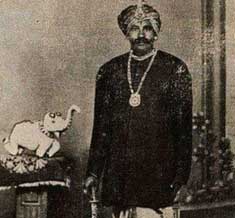
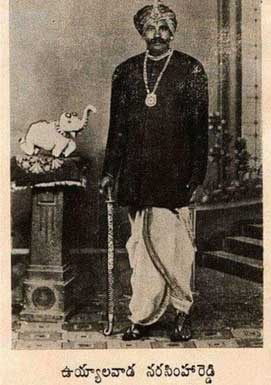
India’s first freedom fighter Narasimha Reddy.

Uyyalawada Narasimha Reddy was an Indian freedom fighter and he was born in Rupanagudi village, on 24 November 1806.

The father of Narasimha Reddy was related to the Palegar family of Uyyalawada in Koilakuntla taluk who had married two daughters of the Palegar of Nossam. He had three sons, of whom Narasimha was the youngest son of the Palegar of Nossam, Seethamma. He married a woman named Siddhamma at the age of 6 .
The British East India Company’s preface to the Chennai Presidency of the 1803 endless agreement, which had first been legislated in Bengal Presidency ten times preliminarily, replaced the agricultural socio- profitable status quo with a further egalitarian arrangement where anyone could cultivate handed that they paid a fixed sum to the East India Company for the honor of doing so.
The Palegars and other advanced- status people who preferred the old agricultural system” represented the decadent social order”, were in numerous cases” arrivistes” and” were also the heirs at law of a social system in which colorful orders of Hindu society were integrated through periods”. These people were ousted of their lands, which were also redistributed, but the primary purpose of the changes was to increase product rather than to restructure the social order. In some cases, it coincided with a discipline because among the dispossessed were those who had lately been involved in fighting the East India Company in the Palegar Wars. Some entered pensions in lieu of the lost lands but at inconsistent rates.


The changes, which included the preface of the ryotwari system and other attempts to maximize profit, deprived vill helmsmen and other advanced- status people of their part as profit collectors and position as lodgers, while also impacting on lower- status tillers by depleting their crops and leaving them impoverished. The East India Company were economically exploiting the people and that those who were dependent on the traditional work were no longer had a means of making a living. As the old order collapsed into disarray, the formerly-authoritative Palegars, including Narasimha Reddy, came the focus of attention from victims, whose pleas fell on deaf cognizance. The Palegars saw a chance to rally peasant opposition both for genuine social reasons.
Narasimha Reddy’s own expostulations too was grounded on their issues. Compared to the Palegar of Nossam, the pension awarded to his family upon their acquisition was paltry and the authorities refused to increase it by redistributing some of the Nossam moneybags when that ultimate family came defunct in 1821. At the same time, some of his cousins were facing proffers for farther reductions in their land rights, including by a reform of the vill policing system.


WAR AGAINT BRITISH EMPIRE
Effects came to a head in 1846 when the Company authorities assumed land rights preliminarily held by colorful people who had failed in the townlets of Goodladurty, Koilakuntla and Nossum. Encouraged by the disgruntlement of others, Reddy came the statuette for an insurrection.
An fortified group, originally comprising those ousted of inam lands around Koilakuntla, was led by Reddy’s Right- hand man Vadde Obanna in July 1846. The Amusement Collector for the area Lord Cochrane, believed that Reddy had material support from fellow pensioners in Bhagyanagar and Kurnool, whose land rights had also been appropriated. The group soon attracted support from the peasantry and was reported by Company authorities to have rampaged in Koilkuntla, taking back the pillaged storeroom there and escaping the police before killing several officers at Mittapally. They also despoiled Rudravaram before moving to an area near to Almore, pursued by the East India Company forces who also girdled them.
A battle between Obanna’s 5000-strong band of revolutionists and a much lower British contingent also took place, with around 200 of the revolutionary being killed and others captured before they were suitable to break out in the direction of Kothakota, Giddalur where Reddy’s family were positioned. He with his family moved to Nallamala Hills . The British offered impulses for information regarding the whereabouts of the revolutionists, who were again girdled amidst reports that uneasiness was now growing in other townlets of the area. In a farther skirmish between the revolutionists and the British, who had transferred for mounts, 40 – 50 revolutionists were killed and 90 were captured, including Reddy. Although there was no substantiation of Obanna’s prisoner, he most conceivably was also a interned along with his leader.
clearances were issued for the arrest of nearly,000 of the revolutionists, of which 412 were released without charge. A farther 273 were bailed and 112 were condemned. Reddy, too, was condemned and in his case entered the death penalty. On 22 February 1847, he was executed in Koilkuntla in front of a crowd of over 2000 people. Reddy’s head on the stronghold wall in public view until 1877.


LEGACY
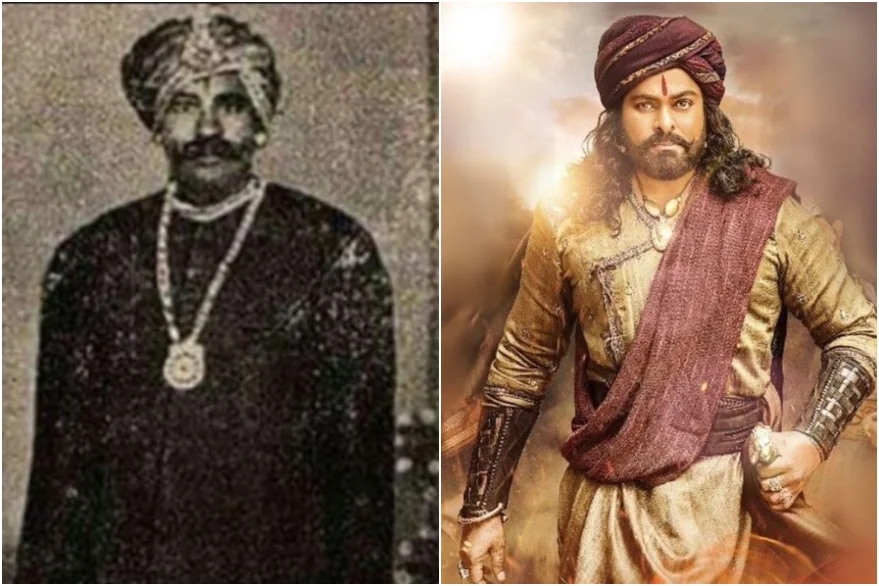
On 2 October 2019 , a film based on the life of Narsimha Reddy’s life named Sye Raa Narasimha Reddy was released . On 25 March 2021 Kurnool Airport at Orvakal was named as Uyyalawada Reddy Airport .
Ipl revenue more than Epl?

After the 15th edition of IPL concluded in 2022 with the recently formed Gujarat elephants, led by Hardik Pandya, securing palm, the Board of Control for Cricket in India( BCCI) chairman Sourav Ganguly has said, “ The IPL generates further profit than the English Premier League”.


The English Premiere League or the Premiere League is considered the most viewed football event in the world. The Premier League, is the top position of the English football league system. queried by 20 clubs, it operates on a system of creation and deportation with the English Football League.
still, Ganguly’s statement comes at a time when media companies are are fighting for the elusive media rights to the IPL, the world’s richest sports league, anticipated to cost up to$ 6 billion. Ganguly further stated that he feels proud to see that the game of justice has been evolving in India. He also comment “ I have seen the game evolve, where players like me earned a many hundreds and now have the eventuality of earning crores. This game is run by the suckers, by the people of this country, and by the BCCI, which was formed by justice suckers. This sport is strong and will continue to evolve.”
The IPL generates further profit than the English Premier League. It makes me feel happy and proud that the sport I love has evolved to come so strong,” Ganguly said at India Leadership Council Event while speaking to Deepak Lamba, CEO, Worldwide Media, President, Times Strategic results Limited. The IPL 2022 was held in a much larger scale than the former seasons.

How IPL made cricketers and BCCI one of the richest in global sport ?
The Indian Premier League( IPL) in a span of just 15 times has managed to come one of the biggest sporting leagues in the world. The initial edition of the IPL was played in 2008 and there has been no looking back ever since as the T20 league continues to witness a massive growth in its fashionability across the globe. IPL is arguably the biggest T20 league in the world and has the stylish players from across the globe playing their trade in the competition.
The Indian Premiere league has created millionaires out of youthful cricketers and made BCCI as one of the richest governing bodies in the world of global sport.
Aruguably, the high- octane, big- hitting carnivalesque event provides a must- see product, driving broadcast subscriptions by the millions and pulling in huge advertising profit.
IPL brigades admit a share of the TV rights and backing plutocrat, and around 10 to 15 percent of ticket deals.
They can also induce their own profit through economic shirt or other auspices.

Profit Creators
The BCCI earned$ 533 million from the IPL in 2020, treasurer Arun Dhumal told Indian media, but its finances are marked in secretiveness.
In its 15th time, the BCCI is anticipated to earn fresh profit of ₹ crore per time( ₹,715 crore for 10 times) from the new brigades besides ₹ 444 crore which it has entered from VIVO as a reassessment figure.
When the event expanded to 10 brigades this time from the original eight, the transaction for the rights to enjoy the new votes drew transnational stab including the Glazer family, who enjoy Manchester United.
They were eventually beaten out by Indian mogul Sanjiv Goenka’s RPSG empire, who paid the BCCI$ 930 million to form the Lucknow Super Giants.
The alternate new ballot, the Gujarat Titans, bring the global adventure fund CVC Capital$ 690 million. The brigades spent nearly$ 75 million in the February player transaction, with Mumbai Indians retaining gate- keeper- batsman Ishan Kishan for$ 2 million and Punjab lords paying England’s Liam Livingstone$1.52 million for his services.

Broadcast rights are the BCCI’s biggest plutocrat- incentive. Star India, possessed by Disney, paid$2.55 billion for a five- time TV and digital rights deal that expires at the end of this season.

Agnipath Scheme

The government unveiled its new Agnipath scheme for recruiting soldiers below the rank of commissioned officers into the three services of the armed forces on 14th June, 2022.Under the new scheme, around 45,000 to 50,000 soldiers will be recruited annually and most will leave the service in just four years. Of the total annual recruits, only 25 per cent will be allowed to continue for another 15 years under permanent commission.

Format of the Scheme :

Aspirants between the ages of 17.5 years and 21 years will be eligible to apply. The scheme is only applicable to personnel below officer ranks. Recruitment will be done twice a year through rallies.The recruitment will be done on “all India, all class” recruitment to the services (from any caste, region, class or religious background). Currently, recruitment is based on ‘regiment system’ based on region and caste bases. There will be a training period of 6 months and deployment for three and a half years. Recruits will get starting salary of Rs 30,000, along with additional benefits which will go up to Rs 40,000 by the end of the four-year service.During this period, 30 per cent of their salary will be set aside under a Seva Nidhi programme, and the government will contribute an equal amount every month, and it will also accrue interest. At the end of the four-year period, each soldier will get Rs 11.71 lakh as a lump sum amount, which will be tax-free. For 25% of soldiers, who are re-selected, the initial four-year period will not be considered for retirement benefits.

Benefits :

• Make the armed forces much leaner and younger: For India’s over 13-lakh strong armed forces, the current average age profile is 32 years. It is envisaged it will come down by about 4-5 years by implementation of this scheme
• Reduce the defence pension bill: The government has either allocated or paid more than Rs. 3.3 lakh crore in defence pension since 2020.As per Army calculations, the savings for the government in this ‘Tour of Duty model’ of recruitment from just one sepoy would be around 11.5 cr (the army initially proposed a 3-year service model).
• Create “future-ready” soldiers: A youthful armed forces will allow them to be easily trained for new technologies.
• Increased employment opportunities and higher skilled workforce: Apart from job opportunities in the army, recruits because of the skills and experience acquired during the four-year service such soldiers will get employment in various fields.The central government will likely give preference to Agniveers in regular employment after their four years stint.

Concerns regarding the scheme:

• Present benefits and security of jobs will be lost: Recruits will not get permanent jobs or promised pension and health benefits even after retirement.
• Doubt about training: 6 months of short training may not be enough to trust them with the same kind of tasks that current troops can be trusted with.
• Erosion of loyalty: “All India, all class” recruitment to the services may lead to the erosion of the loyalty that a soldier has for his regiment.

The Agnipath Scheme will be the only route for recruitment into the military. Personnel recruited under this system are to be called Agniveers , which will be a new military rank. The introduction of the scheme has been criticised for lack of consultation and public debate. The Communist Party of India stated that it strongly disapproved the ‘Agnipath’ scheme that does disservice to India’s national interests. Professional armed forces cannot be raised by recruiting ‘soldiers on contract’ for a period of four years. This scheme, to save pension money, severely compromises the quality and efficiency of our professional armed forces. Samajwadi Party president Akhilesh Yadav called the scheme, “negligent” and potentially “fatal” for the country’s future. Rashtriya Loktantrik Party (RLP) chief said that the people returning after four years of service would cause gang wars in the country. The scheme is scheduled to be implemented from September 2022.This scheme will bypass many things including long tenures, pension and other benefits which were there in old system. Opposition parties in India have criticized and expressed concerns about the consequences of the new scheme. They have asked the scheme to be put on hold and that the scheme be discussed in the Parliament.On 16 June 2022, violent protests erupted in several states in India where the army aspirants angry with the new scheme called for its rollback and damaged public property. By 17 June, 12 trains were set on fire, and the movement of 300 trains were affected. 214 trains were cancelled, 11 trains were diverted and 90 were terminated short of their destination. On 18 June, protesters in Bihar called a strike against the scheme. They clashed with the police and set fire on several vehicles since morning in Bihar. Train services were stopped in Bihar till 8 PM, on 18 June. They will be stopped again from 4AM onwards on 19 June. More than 350 trains were cancelled across India as the violence continued in several states. In Kerala a large protest march was held in Thiruvananthapuram and Kozhikode, against the scheme. The protesters said their strikes would continue till the Centre rolls back its decision and ensured justice.

Sources: The Indian Express and Wikipedia

why is sandalwood and it’s oil so expensive?

Sandalwood is one of the most expensive woods in the world. But its really one portion of sandalwood log that makes it so valuable. To get it, the workers tirelessly chop away the lighter outer layer of sapwood, until they are left with the dark inner core that makes a kilogram of Indian sandalwood cost $200 today.

This is where the sandalwood uniqueness come from. And when its distilled it’s used in all kinds of products I.e., from bath soaps to luxury brand perfumes.

 So, the main question is what makes sandalwood aroma so special? And why the wood is so expensive?

Native to south India, Santalum album or Indian sandalwood was used for hundreds of years before becoming a go to scent for expensive perfumes.

Today it’s also used for wood carvings and medicines and it is even considered a sacred tree in several religions. Once distilled,sandalwood’s sweet, woodsy aroma retains it’s scent for decades.

Hollow heart wood logs are classified as jajpokel I.e., one od the 28 classes of indian sandalwood. Factories can purchase pure heartwood like jajpokel or raw sandalwood logs. But If they buy the raw wood, they will need to break down each log themselves.although machine helps split the sandalwood into more manageable pieces, stripping the logs down to their heartwood core requires the effort of several employees.

In some trees, pure heartwood is easy to extract, because it forms in one circle at the center. In other trees, the heartwood mixes together with sapwood, which impacts the final value of the oil.

A machine breaks down the strips of wood into chips and these are shifted to another area to grab if there are any usable heartwood. Then the pieces are shifted into another machine which makes the wood into powder form. Now distillation can begin. The process is long and it starts injecting steam  into distillation stills. After the oil is extracted, it is left with a large pile of matter which emits a mild smell of sandalwood. This leftover powder is again used in preparation of incense sticks, a dhoop or a common form of incense in india.

During the final stages, workers separate the oil from water and purify it until they are left with a totally clean tank of sandalwood oil.

For distilling one metric ton of oil it takes around one week for normal workforce.

The oil later is sent for testing in labs for the quality checks. Later after the checking is done, it is sent to factories where it will be used to make soaps and other items.

One 10gram bottle of sandalwood oil costs around  5500 rupees or about $74.

Out of 10 sandalwood species, Indian sandalwood and australian sandalwood have the largest commercial value. The difference is the Indian species has higher level of alpha and beta santalol, the components in sandalwood responsible for its lasting scent.

India used to dominate the market for sandalwood oil and oil based products. In recent days, the Indian and Australian sandalwood species has gained significant ground in the market.

Since 2018, the species are considered vulnerable- one level above endangered. Another factor that limits supply and increases the price is  inherent the way the tree grows. Older trees tend to yield more oil which makes them more preferable for oil production

The Growers  will wait around 20years  for the tree to mature.

Indian Farming – Protest Against Farmers Act

Indian Farmers Act Protest 2020 – 2021

In the years of 2020 to 2021, there was a battle raging over just how free market India’s economy should become. In September 2020 the Parliament of India had passed three farm acts. India has seen largest farmer protest of the modern history, where, tens of thousands of farmers across the country were demanding, that the government should revoke this series of reforms that will change India’s agricultural sector.

Agriculture and allied sectors by far are the largest employer in India providing employment to more than 50% of the population and accounting for 17.5% of Gross Domestic Product (GDP). India is the world’s largest producer of many fresh fruits, spices, jute, oil seeds and food staples like, rice or wheat. For decades, the government has shielded farmers from the free market by providing price supports on some crops, running wholesale markets where farmers can sell their goods on Minimum Selling Price (MSP), and rounding up buyers to guarantee sales. But when, the government planned to take a step back, with the hopes that the free market will boost an industry that has stagnated over time, farmers fear they’ll get the raw end of the deal, even if the free market helps the overall economy.

History of Agriculture in India

Agriculture has been an integral part of the Indian Economy, both in before and after Independence periods of India. In the Colonial British Era, agriculture was the only means of subsistence, as more than 85% of the Indian population was dependent on agriculture. Majority Indian peasants lived in poor conditions, due to scarcity of agricultural resources, dependency on unpredictable Monsoons for irrigation, Zamindari System and the taxes imposed by British Raj. This period is marked by several farmer protests in different parts of the country.

After independence, India adopted significant policy reforms in the National Five Year Plans, focusing on the goal of food grain self-sufficiency. It began with Several land reforms, adopting superior yielding, disease resistant crop varieties in combination with better farming knowledge and mechanization to improve productivity. A well-planned irrigation infrastructure was developed, that included a network of major and minor canals from rivers, groundwater well-based systems, tanks, and other rainwater harvesting projects for agricultural activities. This ushered in India’s Green Revolution. The states of Punjab and Haryana, led India’s green revolution and earned the distinction of being the country’s breadbasket.

The Farm Acts

  1. Farmers’ Produce Trade and Commerce (Promotion and Facilitation) Act, 2020
    1. expands the scope of trade areas of farmers’ produce from select areas to “any place of production, collection, aggregation”.
    1. allows electronic trading and e-commerce of scheduled farmers’ produce.
    1. prohibits state governments from levying any market fee, cess, or levy on farmers, traders, and electronic trading platforms for the trade of farmers’ produce conducted in an ‘outside trade area’.
  2. Farmers (Empowerment and Protection) Agreement on Price Assurance and Farm Services Act, 2020
    1. provides a legal framework for farmers to enter into pre-arranged contracts with buyers including mention of pricing.
    1. defines a dispute resolution mechanism.
  3. Essential Commodities (Amendment) Act, 2020
    1. removes foodstuff such as cereals, pulses, potato, onions, edible oilseeds, and oils, from the list of essential commodities, removing stockholding limits on agricultural items produced by Horticulture techniques except under “extraordinary circumstances”
    1. requires that imposition of any stock limit on agricultural produce only occur if there is a steep price rise.

Farmers Protest

Soon after the acts were introduced, unions began holding local protests, mostly in Punjab and Haryana. The methods of protest were Gherao, Dharna, Raasta roko, Demonstration, Suicide. A movement named Dili Chalo began, in which tens of thousands of farming union members marched towards the nation’s capital. The Indian government ordered the police and law enforcement of various states to stop the protesters using water cannons, batons, and tear gas to prevent the farmer unions from entering into Delhi. Various domestic and international NGOs supported the protesters by providing temporary shelters, food and healthcare services. Numerous deaths and fatalities were caused during the protest. All talks between farmers and central government to agree on common grounds remain inconclusive. The Supreme Court of India put a stay on the implementation of the farm laws in January 2021. Farmer leaders cheered and welcomed the stay order

End of the Protests

In late November 2021 the Modi administrators finally repealed the All three farm bills. Hundreds of farmers danced and celebrated the victory, they began removing roadblocks and dismantling thousands of makeshift homes along major highways. The protest was finally declared to be over and the farmers started returning to their homes happily.

Let’s Know About Interior Designing…

“We shape our buildings, thereafter they shape us”.

Interior Designing is the Art and Science of enhancing the interiors of the building to achieve a healthier and more aesthetically pleasing environment for the people using the space.

The person who plans, researches, coordinates and manages such enhancement projects, is an interior designer.

It is an art of creating aesthetically functional spaces pleasing with the client’s choice integration and understanding including the person’s creativity. It is basically underlying the layout of one’s personal choice and preferences of designing and decorating one’s home as per his/her needs and taste.

But for this, interior designers must be highly skilled and professional in their work and adhere to the norms and regulations of their professionalism.

It is essential for interior designers to acquire a deep experience with colors, understand their psychological effects and learn and apply the meaning of each color in different locations and situations in order to create suitable combinations for each place.

Specialties of interior designing includes:

  • Residential
  • Commercial
  • Self-employment
  • Sports
  • Traffic building
  • others

Interior Designing is a professional course requiring a professional experience and required degree to continue with the passion and the work. A formal education program, particularly one accredited by or developed by a professional organization of interior designers, can provide training that meets a minimum standard of excellence and therefore gives a student an education of high standards.

The interior designing requires a wide range of working conditions and golden employment opportunities. Some work on regular basis i.e., some may have a permanent job, enjoying all the perks of professionalism, while others usually work on a contract or per-job basis.

In some cases, licensed professionals review the work and sign it before submitting the design for approval by clients or construction permitting.

Not forgetting some of the famous early interior decorators, here we have name of some:

  • Sibyl Colefax
  • Dorothy Draper
  • Syrie Maugham
  • Elsie De Wolfe

And, last but not the least the foremost important principles of interior designing:

  • Balance
  • Unity
  • Rhythm
  • Emphasis
  • Contrast
  • Scale and proportion
  • Details

The essence of interior designing will always be about people and how they live. It is about the realities what makes for an attractive, civilized, meaningful environment, not about fashion or what’s in or what’s out. This is not an easy job.

“The details are not details. They make design.”

Let's Know About Interior Designing…

“We shape our buildings, thereafter they shape us”.

Interior Designing is the Art and Science of enhancing the interiors of the building to achieve a healthier and more aesthetically pleasing environment for the people using the space.

The person who plans, researches, coordinates and manages such enhancement projects, is an interior designer.

It is an art of creating aesthetically functional spaces pleasing with the client’s choice integration and understanding including the person’s creativity. It is basically underlying the layout of one’s personal choice and preferences of designing and decorating one’s home as per his/her needs and taste.

But for this, interior designers must be highly skilled and professional in their work and adhere to the norms and regulations of their professionalism.

It is essential for interior designers to acquire a deep experience with colors, understand their psychological effects and learn and apply the meaning of each color in different locations and situations in order to create suitable combinations for each place.

Specialties of interior designing includes:

  • Residential
  • Commercial
  • Self-employment
  • Sports
  • Traffic building
  • others

Interior Designing is a professional course requiring a professional experience and required degree to continue with the passion and the work. A formal education program, particularly one accredited by or developed by a professional organization of interior designers, can provide training that meets a minimum standard of excellence and therefore gives a student an education of high standards.

The interior designing requires a wide range of working conditions and golden employment opportunities. Some work on regular basis i.e., some may have a permanent job, enjoying all the perks of professionalism, while others usually work on a contract or per-job basis.

In some cases, licensed professionals review the work and sign it before submitting the design for approval by clients or construction permitting.

Not forgetting some of the famous early interior decorators, here we have name of some:

  • Sibyl Colefax
  • Dorothy Draper
  • Syrie Maugham
  • Elsie De Wolfe

And, last but not the least the foremost important principles of interior designing:

  • Balance
  • Unity
  • Rhythm
  • Emphasis
  • Contrast
  • Scale and proportion
  • Details

The essence of interior designing will always be about people and how they live. It is about the realities what makes for an attractive, civilized, meaningful environment, not about fashion or what’s in or what’s out. This is not an easy job.

“The details are not details. They make design.”

The Maratha king- Chhatrapati Shivaji

Chhatrapati Shivaji Maharaj born on 19 February 1630 at the Shivneri Fort

He was an Indian ruler and a member of the Bhonsle Maratha clan.

Shivaji Maharaj carved out an enclave from the declining Adilshahi sultanate of Bijapur that formed the genesis of the Maratha Empire.

In 1674, he was formally crowned the Chhatrapati of his realm at Raigad Fort.

Over the course of his life, Shivaji Maharaj engaged in both alliances and hostilities with the Mughal Empire, the Sultanate of Golkonda, Sultanate of Bijapur and the European colonial powers.

His military forces expanded the Maratha sphere of influence, capturing and building forts, and forming a Maratha navy.

Chhatrapati Shivaji Maharaj is known as ‘Father of Indian Navy‘

Shivaji Maharaj established a competent and progressive civil rule with well-structured administrative organisations.He revived ancient Hindu political traditions, court conventions and promoted the usage of the Marathi and Sanskrit languages, replacing Persian in court and administration.

His legacy was to vary by observer and time, but nearly two centuries after his death, he began to take on increased importance with the emergence of the Indian independence movement, as many Indian nationalists elevated him as a proto-nationalist and hero of the Hindus

He established a competent and progressive civil rule with the help of disciplined military and well-structured administrative organisations.

He innovated military tactics, pioneering non-conventional methods(guerrilla warfare) and leveraged strategic factors like geography, speed, and surprise.

He focused on pinpoint attacks to defeat his larger and more powerful enemies.

He placed the well-being of his people above everything. A brave and genuinely secular ruler, he respected women and cared for the downtrodden and farmers.

Accession & Reign

  • He made his first military conquest at the age of 16 in 1645 by attacking and capturing Torna Fort in the Bijapur Sultanate, followed by conquest of other forts – Chakan, Kondana, and Rajgad.
  • Fearing his rising power, the Bijapur Sutlan, Mohammed Adil Shah imprisoned his father, following which he halted his conquests and built a stronger army until his father’s release in 1653 or 1655.
  • The Bijapur Sultan sent his general, Afzal Khan, to supress Shivaji in November 1659, who, fearing Afzal’s deceitful plans, came armed with bagh nakh (tiger claw) in one hand and a dagger in the other, and slayed him at the Pratapgar Fort.
  • He was attacked by the army of Adilshah’s general, Siddi Jauhar, while camping at Panhala Fort, near present-day Kolhapur, in 1660, but Shivaji escape to Vishalgad fort to regroup his large army for a battle. Backed by his Maratha sardar Baji Prabhu Deshpande, who wounded himself while holding back the army at the Battle of Pavan
  • Khind, he reached Vishalgad safely, resulting in a truce between him and Adilshah in July 1660.
  • He resumed his raids after his father’s death in 1664-65 and seized the northern parts of Konkon and forts of Purandar and Javali.
  • His peaceful relations with the Mughals saw conflicts in 1657 when he raided the Mughal territories in Ahmednagar and Junnar, following which Aurangzeb sent a 150,000-force under Shaista Khan, in 1660, to chastise him.
  • The Mughal army captured Pune. When they encamped there, Shivaji made a surprise attack killing Mughal soldiers and guards, with Shaista Khan narrowly escaping. Soon after in 1664, he raided Surat and looted its treasure.
  • He made a visit to Agra, along with his nine-year old son Sambhaji, upon Aurangzeb’s invitation in 1666, who planned to send him to Kandahar (now in Afghanistan) to handle the Mughal empire’s northwestern frontier.
  • He was ill-treated by Aurangzeb at his court and offended. He was taken into custody and put under house arrest. However, he managed to escape with his son and spent the next three years strengthening his administration.
  • With the end of the Treaty of Purandar in 1670, he attacked the Mughal forces in Maharashtra and re-captured the forts he had surrendered to them.
  • In 1670, he launched an expedition under Tanaji Malusare to capture Kondana For, which was under Mughal possession, in the Battle of Sinhagad. While the fort was seized, Malusare died and hence, the fort was renamed Sinhagad.
  • He raided Surat for a second time in 1670 and defeated the Mughal army under Daud Khan in the Battle of Vani-Dindori (close to present-day Nasik) while returning back.
  • After spending the early 1670s in capturing land and expanding his domain, he crowned himself as the king of the Marathas at Raigad in 1674, earning the title Kshatriya Kulavantas Sinhasanadheeshwar Chhatrapati Shivaji Maharaj.
  • He went on an extensive campaign of raiding more territories in the later half of 1674, capturing Khandesh, followed by Bijapuri Ponda, Karwar, Kolhapur and Janjira in 1675, and Ramnagar, Athani, Belgaum and Vayem Rayim in 1676.
  • He moved southwards at the end of 1676, seizing the forts at Vellore and Gingee (in present-day Tamil Nadu), once ruled by the Adilshahi Dynasty.
  • Despite being a devoted Hindu, he showed great respect to all religions, including Islam and Christianity, and was unbiased towards other castes and communities.

Why saffron is so expensive????

Even in the expensive world of spices, saffron stands out and the real saffron can cost you over $10000 per kilogram. Sought after for thousands of years as a spice, a dye and a medicine.

For making just 1 gram of saffron you need over 150 flowers. Some times the product we use in name of saffron may be false. So, just what makes this spice so expensive?

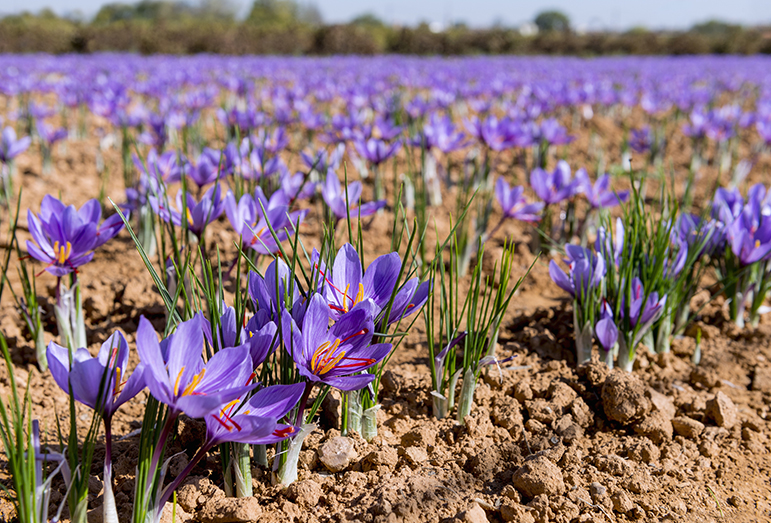
Saffron is the red stigma of the Crocus Sativus. Each crocus have 3 small stigmas, that have to be picked carefully by hand.

This minuscule harvest means that the amount you get from each flower is roughly 0.006 grams. No machine can do this delicate work to harvest these thin threads and it can take 40 hours of hard manual labor to produce just 1 kilogram of high quality saffron.

Growing the plants isn’t exactly easy either. The buds are actually called corms but, they are like a bulb basically like a flower bulb. So, the more flowers per bulb you can get and bigger the flowers are and this all depends on how you look after that, like growing , climatic conditions.

So. Once the flowers started growing, harvesters have to work fast to make sure they can pick it all in time. Almost all the saffron that is planted can flower within one week of the year and to maintain the quality, the flowers are best picked during the morning.  Quality is key when growing such a precise crop and the taste of the saffron depends on the rainfall, temperature and soil.

Kashmir is famed for producing some of the highest quality saffron in the world. In Kashmir, red soil is mostly found and this is fertilized and good for saffron.

 The most  expensive highest grade saffron is generally made up of just the very tips of the Stigma.

In Iran,where over 90% of the saffron is produced. There are 4 grades. The lowest grade is the bunch I.e., the entire strand that’s pulled from the flower, from the dark red tips to the yellow base. In higher grades, the yellow strand is removed leaving a long strand of pure red.

One kilo of saffron is made up of around 4,50,000 strands and you need 1,50,000 flowers and to grow these flowers, it needs a large space.

Over 200 metric tons of saffron threads are harvested worldwide each year. This is the result of over 30billion flowers. The demand for the threads is so high that some might produce fake saffron.Some threads are even made of corn silks, coconut fibers or even horse hair, and to made it look real- synthetic colors are used to dye the lower grade stigmas and sell them as high grade saffron.

 The main reason for the increasing demand of saffron is climate change which is drastically changing. In Kashmir, production has dropped significantly and many farmers are selling their land instead.

Between 2017 and 2018, saffron production in the region fell almost 70% from 16.5 metric tonnes down to 5.2 and with continuing droughts and climate change the current harvest could become even more rare

INSTAGRAM LIKES…

Cut throat competition and consumerism are the bones of the fast-paced modern life, born out of advancement in Science and Technology.

Everyone is busy and focused to secure a career and bright future for themselves. In this business, everyone seems to have forgotten the basic morality and ethics.

It must be kept in mind, if our means are wrong, our ends can never be right. Competition can never bring anyone in seeking. The most valuable treasure in the world is Peace, Happiness and Health. They can be in hand only through righteousness. Competition are antithesis of peace, health and happiness.

So. the most ideal approach to live a great life should be doing one’s best without compromising with the morals and ethics. One must never do mean things; think mean thoughts and speak words of any type.

“The outcome will always be grand if one’s thoughts, words and acts are garnd,”

In recent era, the most hyped and commonly used application which is being used by millions of people all around the world, is namely INSTAGRAM.

It is basically a social networking site service which allows users to upload media that can be edited with filters and organized by hashtags and geographical tagging.

This is done by the people for getting likes and fame on social media in lieu of becoming an influencer or famous among people by show casing their talents and to be more specific by out bursting their thousands and millions of followers.

For increasing name and fame on social media, people especially the youth literally buy likes on their pictures, videos by requesting their followers to re-post, re-share their posts on their stories. They literally allow the strangers to openly and freely invade in their privacy and life and allow them to judge on the basis of their posts and likes.

‘Likes on Instagram’ is rapidly becoming a trend to become popular like the famous celebrities.

People just for few likes on their posts either accept money, offer money or indulge in unfair means just to show how important, supreme or popular they are among millions of people.

While surfing the internet, we can see many sites and applications offering opportunities to people to grow and boost their followers and likes on any social media by paying just a handsome amount of money.’

This needs to stop, as in lieu of boosting followers and likes, many innocent people are trapped and later some are blackmailed too.

Likes from strangers or the people you don’t even know can be dangerous for you only. A few numbers of likes can’t tell how important, good-looking or what you are capable of.

It’s just you and you only.

“Existence wants you to be you.”

INSTAGRAM LIKES…

Cut throat competition and consumerism are the bones of the fast-paced modern life, born out of advancement in Science and Technology.

Everyone is busy and focused to secure a career and bright future for themselves. In this business, everyone seems to have forgotten the basic morality and ethics.

It must be kept in mind, if our means are wrong, our ends can never be right. Competition can never bring anyone in seeking. The most valuable treasure in the world is Peace, Happiness and Health. They can be in hand only through righteousness. Competition are antithesis of peace, health and happiness.

So. the most ideal approach to live a great life should be doing one’s best without compromising with the morals and ethics. One must never do mean things; think mean thoughts and speak words of any type.

“The outcome will always be grand if one’s thoughts, words and acts are garnd,”

In recent era, the most hyped and commonly used application which is being used by millions of people all around the world, is namely INSTAGRAM.

It is basically a social networking site service which allows users to upload media that can be edited with filters and organized by hashtags and geographical tagging.

This is done by the people for getting likes and fame on social media in lieu of becoming an influencer or famous among people by show casing their talents and to be more specific by out bursting their thousands and millions of followers.

For increasing name and fame on social media, people especially the youth literally buy likes on their pictures, videos by requesting their followers to re-post, re-share their posts on their stories. They literally allow the strangers to openly and freely invade in their privacy and life and allow them to judge on the basis of their posts and likes.

‘Likes on Instagram’ is rapidly becoming a trend to become popular like the famous celebrities.

People just for few likes on their posts either accept money, offer money or indulge in unfair means just to show how important, supreme or popular they are among millions of people.

While surfing the internet, we can see many sites and applications offering opportunities to people to grow and boost their followers and likes on any social media by paying just a handsome amount of money.’

This needs to stop, as in lieu of boosting followers and likes, many innocent people are trapped and later some are blackmailed too.

Likes from strangers or the people you don’t even know can be dangerous for you only. A few numbers of likes can’t tell how important, good-looking or what you are capable of.

It’s just you and you only.

“Existence wants you to be you.”

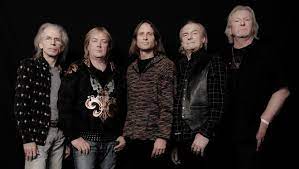
ALLEN WHITE- ‘YES’ DRUMMER

White was born in Pelton, County Durham, England on June 14, 1949. He began piano lessons at age six, took up drums at age 12, and started performing publicly when he was 13. White and the surviving members of Yes were inducted into the Rock & Roll Hall of Fame in 2017. Their hits include “Roundabout” and “Owner of a Lonely Heart.”

‘Yes’ are an English progressive rock band formed in London in 1968 by lead singer and frontman Jon Anderson, bassist Chris Squire, guitarist Peter Banks, keyboardist Tony Kaye, and drummer Bill Bruford. The band has undergone numerous line-up changes throughout its history; 19 musicians have been full-time members. Since May 2022, it has consisted of guitarist Steve Howe, keyboardist Geoff Downes, singer Jon Davison, and bassist Billy Sherwood. Yes have explored several musical styles over the years and are most notably regarded as progressive rock pioneers.

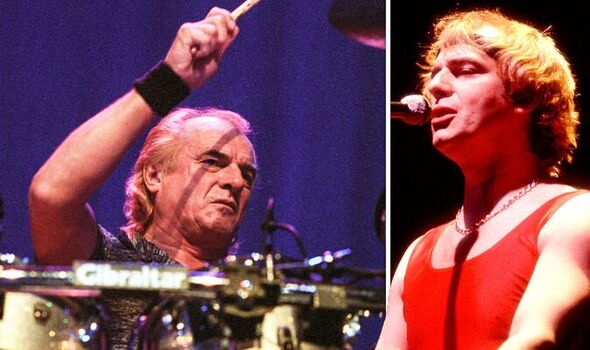
‘YES’ Drummer Alan White died at the age of 72 peacefully at his home after a ‘short illness’, the English prog-rock band announced on 26 May.

Alan is considered to be one of the greatest rock drummers of all time. He was born in 1949 in County Durham and joined YES on 30th July 1972 for the Close to the Edge Tour. He had previously worked with John Lennon’s Plastic Ono band after a phone call in 1969 to play at the Toronto Rock Festival. Alan continued working with Lennon including on the Imagine album and with George Harrison on All Things Must Pass. He also worked with several other musicians over the years, including Ginger Baker’s Air Force, Joe Cocker, Gary Wright, Doris Troy and Billy Preston to name but a few. Alan White was inducted into the Rock and Roll Hall of Fame as a member of YES in 2017.

A number of health setbacks since 2016, had restricted Alan’s time on stage with YES on recent tours with Jay Schellen filling in and Alan joining the band, to great applause, towards the end of each set.

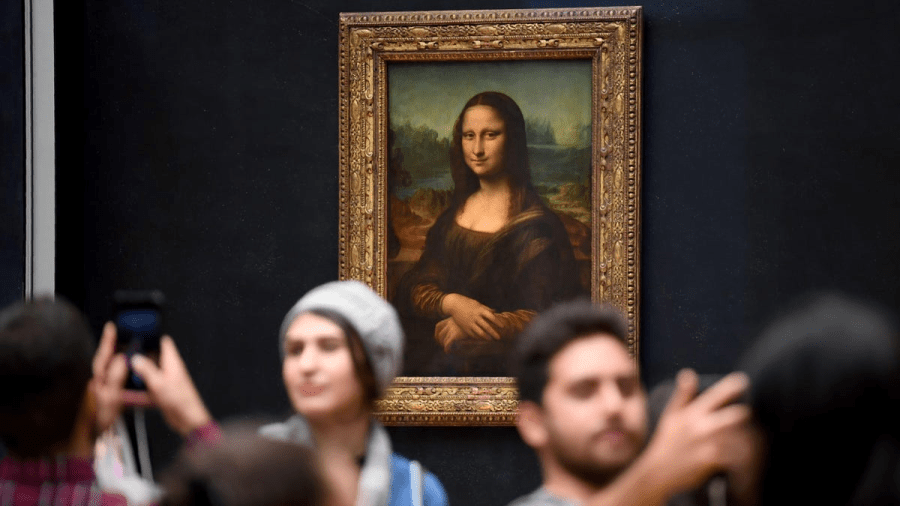
Mona Lisa-The famous painting

Some people are disappointed when they first see the most famous painting in the world.

Maybe at first glance it doesn’t give you the wow factor that other paintings give when you see. But the truth is, when you see how many people are surrounded every time just to see the masterpiece is on different level.

But the fact what we see is quite a contemplative portrait. A portrait which is the greatest psychological portrait ever painted. A portrait so ahead of its time, that centuries later we are still trying to figure it out.

In 1517, the French king, King Francis I offered Leonardo a job, court painter and engineer and architect to the king. Leonardo now in his sixties moved to the chateau of Amboise in France and never went back to Italy. He brought with him dozens of sketch books, but one painting i.e., Mona Lisa. leonardo knew how important it was. He know it was a master piece

Mona Lisa is the end product of the greatest inquisitive mind in history. A self made man with a voracious appetite for knowledge, a man who dedicated himself to the study of anatomy, geology and philosophy

For Mona Lisa he used a thin grained piece of popular tree and applied an undercoat of lead white. he painted with glazes that had a very small amount of pigment mixed with the oil. So, how dark you want your glass to be, depends on how much pigment you use. He used more like a wash, which he applied thin, layer by layer.

As we move around the painting, that light shifts around. he used tiny, almost invisible brushstrokes applied super slowly over months, or in Mona Lisa case, it’s years.

By contrast, on her skin, brush strokes were applied in an irregular way and that makes the grain of the skin, look more life like. All of these techniques pioneered by Leonardo, bring the painting to life. He made sure, we would not be distracted from the face of Mona Lisa.

Leonardo uses the classic pyramid shaped composition that was introduced during the renaissance. It is an important change from the paintings of the 15th century. The structure provides stability but more importantly it provides a clear center of focus and directs your gaze.

In Mona Lisa’s case, it is pulling us into her face. The Mona Lisa is the earliest Italian portrait to focus on the sitter in a 3 quarter length pose, rather than full length. But why? because he completely fills the frame with his subject, making the painting more intimate and cutting down on distractions.

The another thing is, portraits were usually done with an open sky as the background, a monotone background or a simple room. Mona Lisa is in front of a complicated landscape that only existed in Leonardo’s imagination. Paintings that are drawn during that period had both the subject and the background in sharp focus. Whereas the background of Mona Lisa seems to fade or become more blurred and out of focus. This is Arial perspective and Leonardo invented it

CAATSA

The Countering America’s Adversaries Through Sanctions Act (CAATSA) is a US federal law, enacted on 27th July, 2017 and came into effect from January 2018, that has imposed sanctions on Iran, North Korea and Russia. This act prevents trade partners of the United States in entering into bilateral contracts with these three nations. The Act empowers the US President to impose at least five of the 12 listed sanctions on persons engaged in a significant transaction with Russian defence and intelligence sectors. Its ultimate goal is to prevent revenue from flowing to the Russian Government. The Countering America’s Adversaries through Sanctions Act (CAATSA), aims at taking punitive measures against Russia, Iran, and North Korea. The Act primarily deals with sanctions on the Russian oil and gas industry, defenceand security sector, and financial institutions, in the backdrop of its military intervention in Ukraine and its alleged meddling in the 2016 US presidential elections.

Background of CAATSA :

The Countering America’s Adversaries Through Sanctions Act came against the backdrop of three events that would have serious implications regarding geopolitics. They are as follows:
• Iran’s Nuclear Missiles Program: The United States Government believed that any progress in Iran’s nuclear missile program would further destabilize the Middle-East as Iran has repeatedly made threats against Israel, a key NATO and United States ally. The CAATSA gives authority to the President of the United States to impose sanctions against any party involved in the sale and transfer of military technology to Iran.
• Curbing Russian influence: The Russian annexation of Crimea in 2014 and allegations of interventions in the US polls of 2016 was the catalyst for the CAATSA against Russia. Under the act sanctions can be imposed on Russia should the state or private individuals be found involved in activities such as cybersecurity, crude oil projects,  financial institutions, corruption,  human rights abuses etc.
• North Korea and weapons of mass destruction: North Korea has a nuclear weapons military program and as of 2020 it’s estimated missile arsenal includes 30-40 warheads with enough fissile materials to produce 6-7 missiles per year. North Korea has made repeated threats against its South Korea repeatedly and also against the United States.

Types of Sanctions:
The CAATSA contains 12 types of sanctions. There areonly two sanctions that may impact either India-Russia relations or India-US relations.
• Prohibition of Banking transactions: It is likely to have an impact on India-Russia relations.This would mean difficulties for India in making payments in US Dollars to Russia for the purchase of the S-400 systems.
• Export Sanction: The second sanction will have greater consequences for India-US relations. It has the potential to completely derail the India-US Strategic and Defence partnership, as it will deny the license for, and export of, any items controlled by the US.

India’s Concerns :

Seventy per cent of Indian military hardware is Russian in origin. While the US has become its second-largest defence supplier, mainly of aircraft and artillery, India still relies heavily on Russian equipment, such as submarines and missiles that the US has been unwilling to provide. The USA President was given the authority in 2018 to waive CAATSA sanctions on a case by case basis. A waiver of such CAATSA for India has been under consideration since the law had come into force. In fact, India was threatened with sanctions when it decided to buy the S-400 missile launchers from Russia and buy crude oil from Iran. What is also worrying for India is the example of Turkey who, despite being a key NATO ally, was expelled from the US F-35 fighter jet programme when it purchased S-400 missile systems from Russia. Yet India went ahead with the S-400 deal in 2018 with no negative reaction from the United States government. The delivery of the S-400s is expected to finish by 2025. However, the USA has repeatedly stated that India should not assume it will get a waiver. Now India could also face USA sanctions for purchasing the S-400 Triumf missile defense system from Russia under the CAATSA. If implemented stringently, CAATSA would impact Indian defence procurement from Russia. Lately, the United States Government has stated that although a waiver is not possible at this time, a blanket application of sanctions against India for its defence contracts with Russia is also not being considered. India stopped importing oil from Iran in mid-2019 following sanctions on the Persian Gulf nation by the Trump administration.Iran in 2017-18 was its third-largest supplier after Iraq and Saudi Arabia and met about 10% of total needs.Iran getting closer to China is also a serious concern for India.

India needs to balance its relation with both Russia and USA, so that its national interest is not compromised. Russia always saw India as a balancer that’s why Russia facilitated India’s inclusion into Shanghai Cooperation Organisation (SCO) and formation of Russia-India-China (RIC) grouping.The defence procurement for India has become significant amid deadly clashes with China on Line of Actual Control (LAC). Further, Russia is an all weather defence partner of India.India today is in a unique position to have a favourable relation with all great powers.It needs to develop closer ties with the United States, which could balance any moves towards a strategic partnership between China and Russia. Thus, India must leverage this position to help in building a peaceful world order.

Sources : The Hindu and Drishti IAS

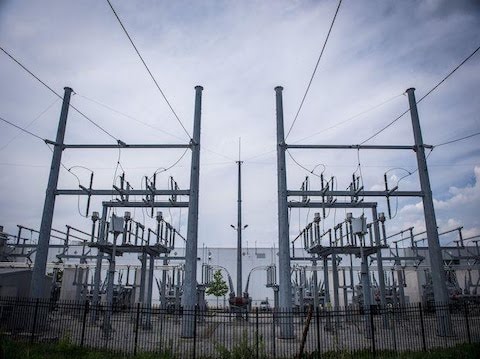
Delhi’s peak power demand reaches record high of 7,334 MW for June

The peak power demand in the national capital rose to 7,334 MW on Wednesday afternoon, the highest ever in June, amid increased use of cooling appliances to beat the intense heat, discom officials said.It is expected to hover around 8,200 MW in the coming days, they added.

“Before June 9, Delhi’s peak power demand had never crossed the 7,000 MW-mark during June.

However, on May 19 this year, it clocked 7,070 MW. It has already crossed 7,000 MW six times in June this year and once in May,” a power distribution company (discom) official said.

The power demand peaked to 7,334 MW at 3.35 pm on Wednesday.Delhi’s power demand crossed the 6,000 MW-mark on every single day this June, the official said.In 2021, it crossed the 6K mark on nine occasions through the month, five-times in 2020 and thrice in 2019.