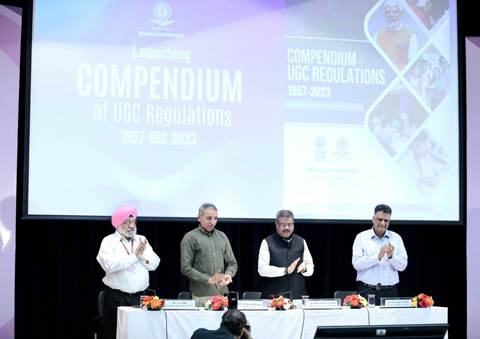
Workshop on Institutional Development Plan for Higher Education Institutes and releases UGC Compendium of Regulations (1957-2023)

Daily writing prompt
What details of your life could you pay more attention to?

Union Minister for Education, Shri Dharmendra Pradhan, inaugurated a one-day workshop on the Institutional Development Plan for Higher Education Institutes. He also released the UGC Compendium of Regulations (1957-2023) as a single, accessible & reliable source of all UGC rules. Shri Sanjay Murthy, Secretary, Department of Higher Education, Ministry of Education; Dr. N.S. Kalsi, Former Chairman, NCVET and Chairman of the Committee working on formulating the IDP Guidelines; Shri M. Jagadesh Kumar, Chairman, UGC; Vice-Chancellors, Nodal Officers, and other dignitaries were also present at the event.

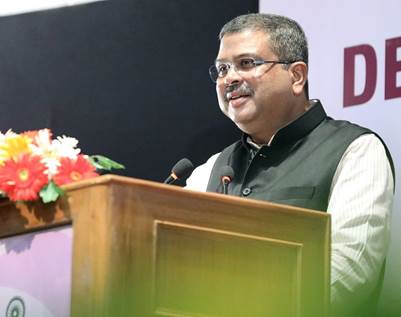
Shri Dharmendra Pradhan, while addressing the audience said the Higher education Institutes of the country will play a crucial role in realising the vision of Prime Minister Shri Narendra Modi of Viksit Bharat by embracing the core values and spirit of NEP 2020.

Image

He also talked about the role of the HEIs in redefining the purpose and structure of education, empowering youth and making them future-ready, doubling the gross enrolment ratio, bringing a vast majority of the population under the higher education net, effectively utilising demographic advantage, achieving academic, research & innovation excellence and also the way forward for transforming 5000 HEIs into centres-of-excellence through holistic and inclusive approaches.

Shri Pradhan also said that education will propel India from being a consuming economy to becoming a producing economy. The institutional development plan should focus on enhancing the competencies of our vast demography, facilitating learner-centric and multidisciplinary education, integrating Bharatiya Bhasha in higher learning, prioritising innovation, entrepreneurship and job-creation as an outcome, capacity building of teachers and achieving the global standard of research & development, he added.

He also said that education must address 21st-century aspirations and create solutions for local and global challenges. The world looks at India’s talent pool for new models and solutions to challenges of our age, he stated He exhorted the academic fraternity to work in a focused and time-bound manner to reinvent their institutions, transforming the higher educational landscape and achieving national priorities.

Speaking on the relevance and importance of the workshop Shri K. Sanjay Murthy elaborated on the ambitious plan the Ministry of Education had presented to the Prime Minister as part of the social group with the vision for the next twenty-five years. Talent and competency would be needed to back up the tremendous work that would take place and the institutions must rise to the demand to meet the talent requirements, he added. He also emphasized the Future of Work and that the IDP must focus on enhancing the quality of the institutes. Introduction of the IDP will also help the institutes to be at par with the universities of the world, he said.

About the Workshop:

The workshop on Institutional Development Plan (IDP) brings together higher education institutions to discuss strategies for institutional growth and development. The compendium will serve as a valuable resource for institutions as they develop and implement their IDP. Over 170 representatives from HEIs across India are participating in this workshop. Aligning with the National Education Policy (NEP) 2020, the IDP provides institutions with a clear roadmap to develop their vision, mission and goals for a future-ready education system.

Through the two thematic sessions, the participants will have the opportunity to learn about governance enablers, financial planning and management, human resources and supportive-facilitative enablers, networking and collaboration enablers, physical enablers, digital enablers, and research and intellectual property enablers, innovative funding models, and curriculum development. Renowned experts from industry, academia, and government will share their insights and experiences on these critical areas.

In each session, different universities will share their best practices for creating their IDP. In a separate Q&A session, Chairman UGC, Former Chairman, NCVET and the speakers from the Panels will address the queries of the participants.

About UGC Compendium:

To provide a single source of reference to all the stakeholders, UGC has prepared a Compendium of all UGC Regulations, Rules and Notifications from 1957-2023. The compendium includes 15 Rules, 87 Regulations, and 28 Notifications covering a wide range of topics, including inspection, the fitness of institutions for grants, return of information, budget and accounts, establishments, affiliation, autonomy, accreditation, admission & fees, specification of degrees, and other miscellaneous matters. The compendium provides a one-stop reference for all regulatory requirements, ensuring that institutions can easily access and comply with UGC guidelines. This is expected to streamline operations and support informed decision-making, creating an environment of compliance and best practices. This compendium having more than 1100 pages, is available in the form of a PDF and e-book on the UGC website.

About IDP:

Institutional Development Plan (IDP) Guidelines were launched by UGC on 6th February 2024. The IDP Guidelines will help institutions make a strategic Institutional Development Plan with the joint participation of Board members, institutional leaders, faculty, students and staff based on which institutions will develop initiatives, assess their progress, and reach the goals set therein.

Visit: https://www.ugc.gov.in/pdfnews/1713699_IDP-Guidelines.pdf

*****

Special Book Publication Offer: Publish Your eBook for Just $50 with EduPub

EduPub is excited to present an exclusive offer for authors! For a limited time, you can publish your eBook for only $50. Whether you’re an academic, researcher, novelist, or a first-time writer, this is the perfect opportunity to share your work with the world.

What’s Included in the $50 Offer:

  • Professional Formatting: Your manuscript will be professionally formatted for digital platforms.
  • ISBN Assignment: Get a unique ISBN for your eBook, ensuring it is recognized globally.
  • Global Distribution: Your eBook will be available on leading platforms such as Amazon, Google Play, and other major online stores.
  • Author-Friendly Rights: You retain full copyright ownership of your work.
  • Dedicated Support: Our team will guide you through the entire publishing process, ensuring a smooth and hassle-free experience.

Why Choose EduPub?

EduPub is a trusted name in academic and professional publishing. We are committed to providing high-quality services at affordable rates, making publishing accessible to all authors.

Take advantage of this special offer and make your mark as an author. Submit your manuscript today and reach a global audience with your eBook!

For more details, visit EduPub or contact us directly at support@edupub.org.

Hurry! This offer is available for a limited time only.

Application Invited for the Award of Gandhi Fellowship

  • Total number of Fellowships: Five (05)
  • Apply on or before October 5, 2024, 11:59 pm.
  • A nominal stipend will be paid to selected fellows every month (not more than 20,000/- Rs. per month)
  • Initially, the Fellowship will be offered for three months. Subsequently, extension may be granted (up to maximum two years) based on performance and recommendation of the competent authority.

Concept Note

Gandhi Smriti and Darshan Samiti (GSDS) is a national memorial dedicated to Mahatma Gandhi. Hon’ble Prime Minister of India is its Chairman. The overarching goal of the Samiti is to take forward the philosophy and thoughts of Mahatma Gandhi to all cross-section of the society.
The Samiti has a large number of programmes reaching out to different stakeholders. In line with this, GSDS is aiming to develop a comprehensive database of Senior Gandhians, Gandhian social workers at grass-root level and institutes/organisations/chairs devoted to Gandhian philosophy. This would facilitate in connecting with like-minded individuals and organizations thereby promoting collaboration for sustainable social impact along Gandhian line.
To accomplish the aforesaid task GSDS hereby launches ‘Gandhi Fellowship’. The primary objective of the fellowship is to inspire and empower the youth to understand and contribute to Gandhian principles by immersing them in the activities of various Gandhians and like-minded organizations.

Under this fellowship programme, the selected fellows will be entrusted with the task of making extensive tour and fieldwork in order to collect the data of Senior Gandhians as well as Gandhian organisations.

Aims and Objectives of the Fellowship Programme:

  • Fellows will travel to different parts of the country, visiting various Gandhian and like-minded organizations. During their visits, they will collect valuable data on organizational structures, activities, and impact of such organisations in prescribed format
  • Fellows will prepare a comprehensive pan-Indian database of Gandhian Institutes/Senior Gandhians.
  • Fellows will also identify and procure the archival material pertaining to Mahatma Gandhi from various Gandhian Institutes.
  • Fellows will simultaneously explore the possibilities of collaboration of other Gandhian institutes with GSDS.
  • Fellows will document their experiences through written reports, audio-visual content, and other mediums, creating a comprehensive repository of information on the organizations visited.

Terms and Conditions of the Fellowship Programme:

  • Eligibility: This Fellowship programme is open to students who have completed post-graduation, preferably in subjects belonging to Humanities and Social Sciences.
  • Preference will be given to candidates pursuing research degree or having experience in fieldwork.
  • Candidates having knowledge of more than one Indian language besides English will be given weightage.
  • Period: Initially, the Fellowship will be offered for three months. Subsequently, extension may be granted (up to maximum two years) based on performance and recommendation of the competent authority.
  • Honorarium: A nominal stipend will be paid to selected fellows every month (not more than 20,000/- Rs. per month).
  • GSDS will bear the TA/DA of the selected fellows during fieldwork.
  • Experience Certificate: A certificate regarding successful completion of Fellowship will be issued to each of the Fellows after the end of the fellowship tenure.
  • Some meritorious candidates will additionally be given ‘Award of Excellence’ for their performance.

Procedure of Selection:

  • Applicants have to submit the attached application form.
  • A one-page note on why the applicant is motivated to undertake this fellowship with GSDS.
  • A one-page note on their understanding of Gandhian philosophy and familiarity with Gandhian organisations.

The above details have to be mailed to the Director, Gandhi Smriti and Darshan Samiti at: 2010gsds@gmail.com on or before October 5, 2024, 11:59 pm.

The shortlisted candidates will be invited for an interaction with a Selection Committee under the chairmanship of the Director.

UGC invites applications for 6 Days’ Basic Training Programme in Indian Knowledge System,

The University Grants Commission (UGC) is going to conduct a ‘6 Days Basic Training Programme in Bharatiya Jnana Parampara (IKS)’ for the faculty members as well as regular research scholars from Higher Educational Institutions (HEls) across the country.

 
Highlighting that the IKS is in keeping with the National Education Policy (NEP) 2020, the UGC notification states, “The National Education Policy (NEP) of 2020 boldly places Bharatiya Jnana Parampara (Indian Knowledge Systems) at the heart of Indian education. It champions our cultural roots, ignites pride in our heritage-both ancient and modern-and envisions an educational landscape deeply steeped in Indian ethos. To breathe life into this vision, the NEP advocates for curricula and teaching methods firmly rooted in the Indian context. Nationwide, an ambitious training program equips faculty members with the tools to seamlessly integrate Indian Knowledge Systems into their teaching practices. Simultaneously, it empowers research scholars to rejuvenate Indian scientific knowledge through a transformed mindset. With this aim, UGC is going to organize ‘6 Days Basic Training Programme in Bharatiya Jnana Parampara (IKS)’ for the Faculty Members as well as Regular Research Scholars from HEls across the country.”
 
HEls (universities/colleges) that are keen may submit the application for conducting the training programme.
 
The last date for submission of application for conducting the training programme is October 2, 2024.
 

The application submission link for faculty members is https://docs.google.com/forms/d/e/1FAIpQLSeyxwCREzDp1SGsYHroGeTvYbXY4awkzoQfnhCx_Risw71cOQ/viewform, and for research scholars, it is https://docs.google.com/forms/d/e/1FAIpQLScTkx80O7pjAFZdPtjva6022pEV7pY-CHYPs6JnvwcfNOOrww/viewform

Sign Language Day

Union Minister for Social Justice & Empowerment (SJE), Dr. Virendra Kumar will be the Chief Guest for the  Sign Language Day-2024 celebrations tomorrow, at Bhim Hall, Dr. Ambedkar International Centre, Janpath, New Delhi. MoS (SJE), Shri B.L.Verma, will be the Guest of Honour on the occasion.

The Indian Sign Language Research and Training Centre (ISLRTC), New Delhi, under the aegis of Department of Empowerment of Persons with Disabilities (Divyangjan) [DEPwD], Union Ministry of Social Justice and Empowerment, will be organising the event.

The theme of this year Sign Language Day-2024 is ‘Sign up for Sign Language Rights’.  The world will once again highlight the unity generated by sign languages. World leaders and other government officials are invited to strive towards a better implementation of the Rights of Person with Disabilities at the national level through the linguistic human rights of deaf people; And, to Sign up for sign language rights by working with our local and national associations to announce the achievement of a concrete goal for deaf communities on Sign Language day.

During the event, the following Indian Sign Language (ISL) terms and Videos will be launched:

  1. Launch of 2500 terms in Indian Sign Language: To expand the existing ISL dictionary, ISLRTC has collaborated with 4 organizations working in the field and jointly developed the 2500 terms in Indian Sign Language. The organizations are YUNIKEE, Hyderabad for 1000 terms, India Signing Hands, Mumbai for 500 terms, Bridge Connectivity Solutions, Delhi for 500 terms and Anuprayaas, Mohali for 500 terms. The 2500 terms covers the various school subjects such as mathematics, science, language, geography and higher education areas such as philosophy, linguistics, computer science, etc., and sports, infrastructure, accessibility, etc.
  2. Launch of 100 concept videos in ISL: ISLRTC in collaboration with YUNIKEE developed 100 concept videos in Indian Sign Language for Hearing Impaired children of class 6th, covering various school subjects such as mathematics, science, social science and language. The special features of concepts videos are detailed explanation in ISL to develop concept clarity, graphical images to promote learning, Audio and subtitles to promote inclusive learning and illustration and examples to improve learning outcomes and academic achievements.
  3. Launch of ISL dictionary in 10 languages: To promote accessibility, the ISL dictionary will be made available in 10 Regional Languages.
  4. Launch of Educational Animated Videos in ISL: To develop morals values and new learning experience among hearing impaired children and to promote inclusive learning environment.
  5. Launch of Deaf Role Model Videos in ISL: To create inspiration, motivation, sense of purpose, moral values and guidance among hearing impaired children.
  6. The Centre conducted 7th Indian Sign Language Competition, 2024 – a national-level competition held for students with hearing disabilities. The students have showcased their creativity and knowledge by participating in the competition. All the winners of the 7th ISL competition will be distributed trophy and certificate during the Sign Language Day 2024 programme.

The ISLRTC celebrates the occasion every year ever since the United Nations declared 23rd September as the International Day of Sign Languages. DEPwD and ISLRTC are making all the possible efforts to bring more citizens, stakeholders, service-providing agencies, schools for deaf, NGOs, activists, deaf leaders, educators, researchers etc. together into the fold of Sign Language Day, in order to create positive awareness about ISL among all sections of our society.

The Day also reminds us of the need and importance of preserving sign languages as a part of linguistic and cultural diversity. All the professionals, parents of deaf, deaf students and institutions working in the field of Indian Sign Language, deaf education and differently-abled people from all walks of life are important target groups to rope into the Sign Language Day celebration.

Dignitaries gracing the occasion would include Shri Rajesh Aggrawal, Secretary, DEPwD; Dr. Sharanjeet Kaur, Chairperson, RCI; Shri Rajeev Sharma, Joint Secretary, DEPwD; and, Dr. Jitendra Sharma, Director, ISLRTC. Representatives from National Association of Deaf, All India Federation of Deaf Women and Indore Deaf Bilingual Academy and other representatives of the Deaf Community will also present on the occasion.

*****

100 Nagar Vans with objective to Enhance Urban Greenery

The activities proposed under Nagar Van Yojana during the first 100 days of the Government was to approve 100 Nagar Vans. With the collective effort of the Central and Sate/UT Governments, this target has been achieved and surpassed, with 111 Nagar Vans being sanctioned within the 100 days. These 111 Nagar Vans are spread across 6 States and 1 UT of the country.

The Ministry of Environment, Forest and Climate Change, Government of India had launched revised Nagar Van Yojana (NVY) in 2020 in an effort to enhance the urban greenery for improving the quality of life and increasing social cohesion in cities. These Nagar Vans will not only be vital environmental resources but also be a space for recreation, environment education, biodiversity conservation and a tool for adaptation towards climate change making the cities climate resilient.

The scheme provides financial assistance of Rs. 4 lakh per hectare for the creation and maintenance of these urban forests, encouraging the involvement of citizens, students, and other stakeholders in the creation and management of these green spaces. Nagar Van areas range from a minimum of 10 ha to 50 ha. The scheme covers all cities with Municipal Corporations, Municipalities and Urban Local Bodies (ULBs). Emphasis is on biodiversity, Planting fruit-bearing, medicinal, and native species to attract wildlife and promote ecological balance. Community participation is central, with opportunities for public engagement through tree planting, educational programs, and sustainable management. Each Nagar Van must have at least two-thirds of its area under tree cover and will feature components like Biodiversity Parks, Smriti Vans, Butterfly Conservatories, and Herbal Gardens and now Matri Van created under Ek Ped Ma Ke Naam.

Presently, the Nagar Van Yojana aims to develop 1000 Nagar Vans by the year 2027 with the financial support of National Fund of National Compensatory Afforestation Management and Planning Authority (National CAMPA). This initiative will help in protecting forest land within and around urban centers from degradation and encroachment and will also address environmental concerns such as air pollution, urban heat islands, the loss of biodiversity, degradation of habitat etc.

Ek Ped Maa Ke Naam, a special country wide Tree Plantation campaign has been launched by Prime Minister Sh. Narendra Modi on World Environment Day on 5th June 2024. Drawing a parallel between the nurturing of nature by Mother Earth and human lives by our mothers, Prime Minister extorted people across the world to plant a tree as a mark of love, respect and honour for their mother also take a pledge for protecting trees and mother earth.

This initiative not only pays tribute to maternal figures but also instills a culture of tree planting among individuals and communities. The campaign emphasizes the dual purpose of environmental stewardship and personal gratitude, symbolizing the nurturing role of both trees and mothers in our lives. The campaign aims at involving everyone in halting and reversing land degradation, building draught resistance and preventing desertification. Under this mass tree plantation special campaign, it is targeted to plant 80 crore trees this year by September end and 140 crores by next year March end. Provision has been made on MeriLiFE portal for uploading details of plantation done by any individual or institution or organization private or government and tracking plantation efforts. More than 75 crore saplings have been planted by now under this campaign and detailed information has been uploaded on MeriLiFE portal.

A Tree Plantation drive was organized on 17th of September, 2024 under Ek Ped Ma Ke Naam in newly approved Nagar Vans in various cities to create Matri Van. Through the active participation of citizens, government agencies, and private entities in the citizen driven special campaign “Ek Ped Ma Ke Naam”, the aim of transforming cities into eco-friendly spaces that promote sustainability and well-being is sought to be achieved.

*****

Swachh Sagar, Surakshit Sagar 3.0

The Ministry of Earth Sciences (MoES) successfully concluded the Swachh Sagar, Surakshit Sagar 3.0 campaign on September 21st, 2024, facilitating beach cleanup drives at more than 80 locations across the country’s coasts, removing more than 60 tons of waste, including plastic, metal, cloth, rubber, and paper and wood debris. The Swachh Sagar, Surakshit Sagar 3.0 campaign is aligned with the Government of India’s ongoing Swachhata Hi Seva initiative under the Swachh Bharat Mission envisioned by the Prime Minister, Shri Narendra Modi. The event witnessed widespread voluntary public participation, generating mass enthusiasm and awareness. The key highlights of MoES Swachh Sagar, Surakshit Sagar 3.0 included the participation of the public, several students, NGOs, and community groups at various locations across the country’s coastline.

Dr M Ravichandran, Secretary, MoES, led the Swachh Sagar, Surakshit Sagar 3.0 campaign with senior officials and staff of MoES and its institutes. Her Excellency Ms. May-Elin Steiner, Norwegian Ambassador to India, joined the Swachh Sagar, Surakshit Sagar 3.0 beach cleanup drive at Thiruvanmiyur Beach in Chennai. “The growing popularity and success of Swachh Sagar, Surakshit Sagar, year on year, catalyses ongoing and future efforts to reduce marine pollution. It is a testament to the power of mass participation and awareness, especially of local communities, to promote sustainable coastal practices”, said Dr Ravichandran.

The Swachh Sagar, Surakshit Sagar campaign, launched in 2022, with successful editions in 2022 and 2023, is a flagship initiative of the MoES aimed at raising awareness about marine pollution, conserving coastal areas, and promoting cleanliness and sustainable practices to protect oceans and preserve marine ecosystems. It also marks the observance of the International Coastal Cleanup Day. The event is a step towards reducing the impact of marine debris on coastal biodiversity. The event inspires the community to adopt eco-friendly habits and become marine conservation advocates by engaging citizens across all age groups.

Dr M Ravichadran, Secretary, MoES, led the Swachh Sagar, Surakshit Sagar 3.0. He was joined by Ms May-Elin Steiner, Norwegian Ambassador to India, with senior officials and staff of MoES, volunteers including students, NGOs, and the public at Thiruvanmiyur beach in Chennai.

Glimpses of beach cleanup drives at various locations across India’s coasts as part of Swachh Sagar, Surakshit Sagar 3.0 campaign.

*****

Sainik School, Jaipur

Raksha Mantri Shri Rajnath Singh will formally inaugurate Sainik School, Jaipur in Rajasthan on September 23, 2024. It is part of the Government’s vision to set-up 100 new Sainik Schools across the country in partnership with NGOs, state governments and private schools. These new schools will be apart from the existing 33 Sainik Schools already functioning under the erstwhile pattern.

Ministry of Defence has accorded approval to 45 new Sainik Schools under the partnership mode. These new schools, besides their affiliation to respective education boards, will function under the aegis of Sainik Schools Society and follow the Rules & Regulations. In addition to their regular affiliated board curriculum, they will impart education of Academic PLUS curriculum to the students of Sainik School pattern.

In September 2023, Sainik Schools Society had signed a Memorandum of Agreement with Shri Bhawani Niketan Shiksha Samiti for the establishment of a new Sainik School at Shri Bhawani Niketan Public School, Jaipur. The school commenced functioning in the present academic year.

***

 ‘Swachhata Hi Seva-2024’ campaign

The Department of Consumer Affairs, Government of India, through its various subordinate offices, attached and autonomous offices observed day 5 of the Swachhata Hi Sewa Campaign 2024, themed “Swabhav Swachhata – Sanskaar Swachhata,” today.

As a part of Prime Minister Shri Narendra Modi’s visionary “Ek Ped Maa Ke Naam” campaign, the Department of Consumer Affairs organised an event under “Swachhata Hi Sewa 2024” .  The main event was organized at the National Test House (NTH), Ghaziabad, on September 21, 2024, in association with NTH, Ghaziabad in which Ms. Nidhi Khare, the Secretary, Department of Consumer Affairs, led the plantation drive and planted a sapling. The senior officers and staff of the department and NTH actively participated in the drive, which included plantation, beautification, and trimming of bushes within the premises. The presence of officials highlighted the department’s commitment to environmental sustainability and beautification efforts. Participants enthusiastically demonstrating their dedication to the cause and contributing to a cleaner and greener environment in line with the Swachhata Hi Seva 2024. In this even, about 80 saplings were planted in NTH, Ghaziabad premises by the Department. Todays, the Department and its subordinate/autonomous/attached offices have collectively planted approximately 925 trees.

(Secretary, Ms. Nidhi Khare, Department of Consumer Affairs along with officials of the Department)

Bureau of Indian Standards (BIS): BIS HQ has planted 40 trees, contributing to a total of approximately 500 trees planted across all regional offices of BIS.

National Test House (NTH): Ek Ped Maa Ke Naam Campaign total 310 number. plantation, by all NTH Region offices .

(Employees and staff of NTH(HQ), Kolkata doing plantation during “एक पेड़ माँ के नाम” Campaign)

NTH Varanasi: Swachchata Hi Seva-2024  “एक पेड़ माँ के नाम ” Campaign at NTH(Satellite Centre), Varanasi. 20 Number of Plant have been planted at different location of NTH Varanasi Campus

NTH(NWR) Jaipur : Swachh Bharat Diwas “Swachhata Hi Sewa” (SHS) Plantation Campaign (Campaign Name –एक पेड़ माँ के नाम) was conducted at NTH(NWR) Jaipur (total Participants 40 number)

RRSL, Bangalore: Employees and staff of RRSL, Bangalore during “एक पेड़ माँ के नाम” Campaign)

RRSL Faridabad: 12 trees have been planted during “Ek Ped Maan Ke Naam “.

IILM, Ranchi: On the occasion of “Swachhata Hi Seva – 2024” a event EK PED MAA KE NAAM has been organised at IILM, Ranchi in which Director of the Institute Dr. Rajeshwar Kumar, Faculty, Staff and trainee officials of Basic Training Course participated very enthusiastically and made this event very successful. 11 number of fruit trees have planted under Ek Ped Maa Ke Naam.

RRSL, Ahmedabad: 10 trees have been planted during ‘Ek ped maa ke naam’ event.

RRSL Bhubaneswar: 2 coconut trees  have been planted under “Ek ped maa ke naam”  event during Swachchata hi Sewa 2024.

*****

Refund of more than ₹ 1 cr. to Aspirants/ Students of various coaching institutes

In its commitment towards protecting consumer rights and ensuring transparency in the education sector, the Department of Consumer Affairs, Government of India, through the National Consumer Helpline (NCH) has successfully intervened at a pre-litigation stage to ensure justice for students and aspirants who enrolled for the UPSC Civil Services, IIT and other entrance examinations.

Following numerous complaints registered in the National Consumer Helpline regarding unfair practices by various coaching centres especially not refunding the enrolment fees of the students/ aspirants, NCH initiated a drive to resolve these grievances on a mission-mode to facilitate a total refund of 1 cr. to affected students from the total demanded refund of 2.39 Cr till date.

This decisive action comes after the National Consumer Helpline received multiple grievances from students who had enrolled in UPSC Civil Services, IIT and other coaching programs but faced issues such as unfulfilled promises, inadequate teaching quality, and abrupt cancellations of courses. Data reveals that during a short span of 12 months i.e. 2023-2024 – 16,276 numbers of students reached out to NCH, once their requests were declined/ rejected/ not specifically redressed to their satisfaction by coaching centres. The analysis of data repository also revealed/highlighted an increasing trend in the numbers of dissatisfied students/consumers lodging complaints at NCH.

The total numbers of grievances registered by the students in the year 2021-2022 are 4,815 followed by year 2022-2023 having 5,351 and 2023-2024 are 16,276. This increase reflects growing confidence and trust of students in NCH as an effective grievance redressal mechanism before opting to knock at the door of Consumer Commissions. In 2024, already 6980 students have reached out to NCH for speedy redressal of their grievances at a pre litigation stage.

Table showing Consistent increase in the number of grievances registered at NCH from year 2021-2024

All these refunds were processed promptly at a pre-litigation stage after the intervention of the department to the affected students from all corners of the country who raised their grievances claiming their refunds against the coaching centres offering classes for “UPSC Civil Services”, “JEE advance”, medical entrance, CA exams and other courses. 

One such success story relates to a student from Bengaluru who had taken a study loan of Rs 3.5 lacs to take admission in a management course offered by an institution from Lucknow. He was forced to opt out of the course on account of unreasonable delays in commencement of course. Even after multiple follow ups, the refund was not granted. Distressed by loan EMIs and inability to enrol anywhere else due to paucity of funds, he approached NCH and was granted refund on department’s intervention.

Similarly, another success story belongs to a student from Bharuch, Gujarat who was granted a refund of 8.36 lacs paid for enrolment once NCH stepped in.

All these students and aspirants registered their grievances at the National Consumer Helpline by calling toll-free “1915” helpline number or registering their grievances at the portal namely “www.consumerhelpline.gov.in”. The Department of Consumer Affairs launched the National Consumer Helpline (NCH) to disseminate information on issues pertaining to consumers and promote consumer welfare. Department extended this service with the launch of Integrated Consumer Grievance Redressal Mechanism (INGRAM) portal : a pre-litigation platform maintained and monitored by NCH for consumers to get their complaints and grievances addressed directly by the companies.

It may be mentioned that CCPA took up class action against malpractices of misleading advertisements and unfair trade practices and has also penalized several Coaching Centres on several occasions. These initiatives reinforced DoCA’s commitment and contribution to empower our society by supporting students as a consumer class. 

Smt. Nidhi Khare, Secretary of DoCA, stated, “We are dedicated to safeguarding the rights of consumers, especially students who invest their precious time and resources in pursuing their dreams. This action reaffirms our commitment to ensure that coaching institutions adhere to fair practices and honour the rights of consumers.”  and emphasized that coaching institutes must present facts truthfully and honestly by clearly and prominently disclosing important information so that consumers can not only notice it easily but also take more informed choice. She underscored the significance of consumer rights and the responsibility of advertisers to ensure they provide accurate information.

Furthermore, this initiative of DoCA is a key-step to strengthen the pre-litigation platform for prompt redressal of grievances across the sectors in alignment with the letter and spirit of the recommendations of NITI Aayog given in its report “Designing the Future of Dispute Resolution: The ODR Policy Plan for India dated October 2021” which acknowledges and reiterates the significance of pre-litigation mechanisms by stating that-

 “Mandatory pre-litigation/ ODR cases involving e-commerce claims, small cause claims and cheque-bouncing issues can be resolved before they reach the courts system. This is extremely critical for Indian judiciary, which has a burgeoning case-load”

It is pertinent to state that the National Consumer Helpline is already undertaking resolution of consumer grievances through pre-litigation measures in an impactful and effective manner. Moreover, the department has directed coaching centres to adopt a more student centric approach and ensure transparency in course offerings and assured quality standards in the sector. This proactive stance not only supports affected students but also sets a precedent for improved practices within the education sector, ensuring that coaching institutions prioritize transparency and accountability in their operations.

***

Clean Economy, Fair Economy, and the IPEF Overarching arrangement under Indo-Pacific Economic Framework for prosperity

India signed and exchanged the first-of-its-kind agreements focused on Clean Economy, Fair Economy, and the IPEF Overarching arrangement under Indo -Pacific Economic Framework (IPEF) for prosperity, on 21st September, 2024 at Delaware USA, in the presence of Prime Minister Shri Narendra Modi who is on 3-day visit to the US for the Quad Summit.

IPEF Clean Economy Agreement (Pillar-III)

The Agreement on Clean Economy intends to promote technical cooperation, workforce development, capacity building, and research collaborations; and collaborate to facilitate development, access, and deployment of clean energy and climate-friendly technologies with the aim to collectively accelerate efforts of IPEF partners towards energy security and transition, climate resilience and adaptation and GHG emissions mitigation.

This Agreement will facilitate investments, project financing including concessional financing, joint collaborative projects, workforce development and Technical Assistance and Capacity Building for industries, in particular for the MSMEs, and facilitate further integration of Indian companies in the global value chains, particularly in the Indo-Pacific region. These activities will be undertaken through joint collaborative actions such as Cooperative Work Programmes, the IPEF Catalytic Capital Fund, the IPEF Accelerator etc.

IPEF Fair Economy Agreement (Pillar-IV)

The Agreement aims to create a more transparent and predictable trade and investment environment across the Indo-Pacific. To achieve these goals, the IPEF partners will collaborate to enhance their efforts in preventing and combating corruption, including bribery, and supporting initiatives to improve tax transparency, the exchange of information, domestic resource mobilization, and tax administration.

It focuses on enhancing information sharing among partners, facilitating asset recovery, and strengthening cross-border investigations and prosecutions. This will also support India’s efforts in fighting corruption, money laundering, and terror financing.

Recognizing the critical role of technical assistance and capacity building (TACB) in achieving the commitments outlined in the proposed agreement and ensuring effective implementation and enforcement of anti-corruption measures, the partners are committed to identifying and implementing TACB initiatives. These initiatives will strengthen anti-corruption efforts and improve the efficiency of tax administration.

Overarching IPEF Agreement

The Overarching Agreement is an administrative agreement establishing an oversight Ministerial-level mechanism. This Agreement seeks to establish a high-level political oversight framework at the Ministerial level over the various individual IPEF agreements while setting general guidance and goals, and guiding Leaders’ vision and mandate for IPEF. This Agreement primarily includes administrative and institutional provisions.

This agreement would provide identity to the group and longevity to the IPEF partnership, by creating a formal mechanism and establishing a forum for Ministerial discussions on emerging issues, etc. This agreement is expected to facilitate the effective implementation of subject agreements (Pillars II-IV), that have the potential to enhance India’s productive capacity, and integration into supply chains, and promote innovation, in line with the concept of Atmanirbhar Bharat.

The Union Cabinet, chaired by Prime Minister Shri Narendra Modi, had accorded the approval earlier this month for signing and ratification of these three agreements focused on the Clean Economy, Fair Economy, and the overarching IPEF Agreement which were signed by other IPEF members on June 6, 2024 in IPEF Ministerial meeting in Singapore, however India did not formally sign the same then as the domestic approval process was still underway.

IPEF to boost investment

Investor Forum: Under Clear Economy (Pillar-III) Agreement, IPEF partners aim to catalyze investment in green technology and reduce GHG emissions through various means including annual business matching events under the Investor Forum.  The First Investor Forum was held in Singapore on 5-6 June, 2024.  One of such efforts was accelerated in the form of a MoU among companies from India, Singapore and Japan following which, Singapore-based Sembcorp will be investing ₹36,238 crore for state-of-the-art green ammonia plant in Thoothukudi.

At the Inaugural Forum, IPEF partners identified USD 23 Billion (₹1.91 lakh crore) of priority infrastructure projects  ~USD 4 Billion (₹ 33,200 crore) from India which offered potential opportunities for investment in some Indian renewable energy companies. The United States International Development Finance Corporation (DFC) committed a total of USD 1.5 Billion (₹12,450 crore) to support energy transition, climate investment, and digital inclusion.

Funds under IPEF: IPEF also provides platforms for technical assistance, concessional funding, and viability gap funding. The IPEF Catalytic Capital Fund, with an initial grant of USD 33 million (₹273.9 crore) from Australia, Japan, Korea, and the United States, aims to catalyze private investments totaling USD 3.3 billion (₹27,390 crore). Additionally, the PGI Investment Accelerator under IPEF has received initial funding of USD 300 million (₹2,490 crore) from the United States International Development Finance Corporation (DFC).

Initiatives under IPEF

IPEF Upskilling Initiative: IPEF Upskilling Initiative was launched in September 2022 to support sustainable and inclusive economic growth and development by providing primarily for women and girls in IPEF emerging and middle-income partner countries with access to digital skills training. Under the initiative, as communicated by the US, 14 participating US companies and the Asia Foundation provided 10.9 million upskilling opportunities in IPEF partners, primarily for women and girls, in the last 2 years, of which India availed 4 million of these opportunities.

Critical Mineral Dialogue: This ongoing dialogue focuses on several key areas, including the comprehensive mapping of mineral resources across IPEF partners to develop an extensive database, promoting trade by mapping trade flows within the IPEF region and enhancing business engagements, and fostering technical collaboration for mineral recovery and recycling in the region. These initiatives are aimed at strengthening the critical mineral supply chain and ensuring sustainable mining practices in the region.

Tech Council: The main objectives of this initiative are coordination and cooperation on key technologies by bringing together IPEF partners to share best practices and standards, enhance the resilience of digital infrastructure, promote investment, and foster innovation through workforce development. The key areas on which IPEF partners are currently collaborating include Cyber Security, Undersea Cables and Artificial Intelligence.

Cooperative Work Program (CWP): Aim of CWP is to facilitate collaborative and cooperative efforts among the interested participating IPEF countries to advance the objectives of the Clean Economy Agreement. Till date, 8 CWP proposals, circulated by several IPEF countries, have been announced in the IPEF Ministerial meetings. These are related to hydrogen supply chains, carbon markets, clean electricity, sustainable aviation fuel, just transition, emissions intensity accounting, small modular reactors, and including India’s proposal on e-waste urban mining.

About IPEF

IPEF was launched on 23 May 2022 at Tokyo, Japan, comprising 14 countries – Australia, Brunei, Fiji, India, Indonesia, Japan, Republic of Korea, Malaysia, New Zealand, Philippines, Singapore, Thailand, Vietnam and USA. The IPEF seeks to strengthen economic engagement and cooperation among partner countries with the goal of advancing growth, economic stability and prosperity in the region.

The framework is structured around four pillars relating to Trade (Pillar I); Supply Chain Resilience (Pillar II); Clean Economy (Pillar III); and Fair Economy (Pillar IV). India has ratified Agreement on Supply Chain Resilience (Pillar II) in February 2024 and has maintained an observer status in Pillar-I.

 ***

Invest India’s Singapore Office

Union Minister of Commerce & Industry, Shri Piyush Goyal today inaugurated Invest India’s new office in Singapore. Today’s office inauguration comes after India’s Hon’ble Prime Minister Shri Narendra Modi announced setting up of an Invest India office in Singapore during his visit to the country on September 4th and 5th, 2024. The Singapore Office is Invest India’s first overseas office. This significant move reinforces India’s commitment to deepening investment partnerships and making it easier for global investors to engage with India. The Singapore office will serve as a dedicated point of contact for companies from the region looking to invest in India, fostering collaboration across sectors.

Speaking at the event, Minister Goyal emphasised, “Singapore is a key strategic partner for India, and this office marks a new chapter in our efforts to strengthen economic cooperation with Singapore and the broader ASEAN region. We plan to open more overseas Invest India offices in the coming months with an aim to provide global investors seamless access to India’s dynamic and growing economy.”

***

Roadmap For U.S.-India Initiative to Build Safe and Secure Global Clean Energy Supply Chains

The United States and India share an enduring commitment to deepen our collaboration on issues of shared national and economic security. As an important aspect of our economic growth agendas, we are committed to working together to capture the benefits of the clean energy transition, including the creation of high-quality jobs for our populations, acceleration of clean energy deployment globally, and achievement of global climate goals.

In support of these objectives, the United States and India intend to elevate and expand bilateral technical, financial, and policy support to expand complementary U.S. and Indian manufacturing capacity for clean energy technologies and components and lay the groundwork for enhanced cooperation in third countries, with a focus on partnerships in Africa. This effort will build on existing clean energy cooperation between the United States and India, including clean energy initiatives launched during Prime Minister Modi’s visit to the United States in 2023, the Strategic Clean Energy Partnership led by the U.S. Department of Energy and Government of India ministries, technical assistance provided by U.S. laboratories, and novel financial platforms such as the Payment Security Mechanism established to support the rapid deployment of electric buses in India. A U.S. and Indian partnership to establish a shared, resilient, and cutting-edge techno-industrial base centered on innovative clean energy manufacturing techniques sets a strong example for the world and positions our countries to lead clean economic development in the 21st century. 

To launch this partnership, the United States and India are working to unlock USD$1 billion in new multilateral finance through the International Bank for Reconstruction and Development (IBRD) for projects that include catalyzing India’s domestic clean energy supply chain buildout. The funding could support supply-side manufacturing capacity expansion for key technology verticals, focusing on solar, wind, battery, energy grid systems, and high-efficiency air conditioner and ceiling fan supply chains. Over time, we seek to mobilize additional financing into priority clean energy manufacturing sectors that harness public and private financial tools and pioneer innovative financial vehicles to meet the rapid demand for flexible climate finance solutions.

The United States and India intend to work with relevant government agencies, civil society, U.S. and Indian private sectors, philanthropies, and multilateral development banks to identify a package of pilot projects across the clean energy value chain that meet our eligibility criteria and meaningfully contribute to supply chain expansion and diversification in identified sectors. The U.S. and Indian governments also pledge to work with industry leaders on the following lines of effort to launch and eventually scale this new partnership: 

Identifying near-term investment opportunities to expand manufacturing capacity for specific clean energy supply chain segments, with initial focuses on the following clean energy components:

Solar wafers and wafer manufacturing equipment & next generation solar cells

Wind turbine nacelle components

Power transmission line components including conductors, cabling, transformers, and next generation technologies

Energy storage components including batteries

Battery packs for 2- and 3-wheel electric vehicles (EVs) and zero-emission e-bus and truck components

High-efficiency air conditioners and ceiling fan components

Collaborating with the private sector to scope eligible opportunities in the above supply chain segments and support an initial package of pilot projects, ideally including one project focused on clean energy deployment to Africa. Additional investments plans and sources of funding can be developed over time. This effort would build on private sector partnerships facilitated by U.S. Development Finance Corporation (DFC) across the solar, wind, battery, and critical minerals sectors to pursue opportunities to finance the manufacture of clean energy components. Such investments may be in scope for India’s Green Transition Fund – which will support renewable energy, storage, and e-mobility investments in India and strengthen demand for localized manufacturing – as well as for Indian private equity fund manager Eversource Capital’s new DFC-supported $900 million fund to invest in clean technologies such as renewable energy, efficient cooling, and electric transportation.

Building trilateral relationships with African partners that have stated political commitments to clean energy deployment, focusing on solar and battery storage opportunities. India and the United States can work multilaterally with African partners to pursue high-potential solar and EV deployment opportunities, understand the conditions required for project success, detail the partnerships and financial model for project success, and implement the project. The United States intends to collaborate with Indian companies to explore investment opportunities and facilitate public-private matchmaking expand partnerships with local African manufacturers. DFC and the U.S. Agency for International Development are anchoring this effort by collaborating with India-based International Solar Alliance to deploy solar and EV charging networks near health facilities.

Collaborating with each other and industry to consult on policies that will strengthen demand certainty for locally manufactured clean technologies. The U.S. Bipartisan Infrastructure Law and Inflation Reduction Act were historic laws designed to invest in the large-scale deployment of clean energy technologies while also reinvigorating the manufacturing capacity of the United States to appropriately onshore clean energy supply chains. Likewise, India’s Production Linked Incentive Schemes have invested over $4.5 billion to catalyze nascent clean energy manufacturing. However, additional policies are vital to expand and protect these investments in the face of global market dynamics and thin profit margins. Both countries acknowledge the importance of sharing insights on how to design policy frameworks to reduce demand uncertainties and ensure sufficient input materials, technological expertise, finance, and other manufacturing enablers are available and secure.

This roadmap is intended to serve as a short-term mechanism for driving initial cooperation on projects, to help inform a long-term roadmap including working together to establish a cadence of meetings and milestones this partnership. This roadmap is not intended to give rise to rights or obligations under domestic or international law.

*********

The Wilmington Declaration Joint Statement from the Leaders of Australia, India, Japan, and the United States

Today, we—Prime Minister Anthony Albanese of Australia, Prime Minister Narendra Modi of India, Prime Minister Kishida Fumio of Japan, and President Joseph R. Biden, Jr. of the United States—met for the fourth in-person Quad Leaders Summit, hosted by President Biden in Wilmington, Delaware.

Four years since elevating the Quad to a leader-level format, the Quad is more strategically aligned than ever before and is a force for good that delivers real, positive, and enduring impact for the Indo-Pacific. We celebrate the fact that over just four years, Quad countries have built a vital and enduring regional grouping that will buttress the Indo-Pacific for decades to come.

Anchored by shared values, we seek to uphold the international order based on the rule of law. Together we represent nearly two billion people and over one-third of global gross domestic product. We reaffirm our steadfast commitment to a free and open Indo-Pacific that is inclusive and resilient. Through our cooperation, the Quad is harnessing all of our collective strengths and resources, from governments to the private sector to people-to-people relationships, to support the region’s sustainable development, stability, and prosperity by delivering tangible benefits to the people of the Indo-Pacific.

As four leading maritime democracies in the Indo-Pacific, we unequivocally stand for the maintenance of peace and stability across this dynamic region, as an indispensable element of global security and prosperity. We strongly oppose any destabilizing or unilateral actions that seek to change the status quo by force or coercion. We condemn recent illicit missile launches in the region that violate UN Security Council resolutions. We express serious concern over recent dangerous and aggressive actions in the maritime domain. We seek a region where no country dominates and no country is dominated—one where all countries are free from coercion, and can exercise their agency to determine their futures. We are united in our commitment to upholding a stable and open international system, with its strong support for human rights, the principle of freedom, rule of law, democratic values, sovereignty and territorial integrity, and peaceful settlement of disputes and prohibition on the threat or use of force in accordance with international law, including the UN Charter.

Reflecting the Vision Statement issued by Leaders at the 2023 Quad Summit, we are and will continue to be transparent in what we do. Respect for the leadership of regional institutions, including the Association of Southeast Asian Nations (ASEAN), the Pacific Islands Forum (PIF), and the Indian Ocean Rim Association (IORA), is and will remain at the center of the Quad’s efforts.

A Global Force for Good

Health Security

The COVID-19 pandemic reminded the world how important health security is to our societies, our economies, and the stability of our region. In 2021 and 2022, the Quad came together to deliver more than 400 million safe and effective COVID-19 doses to Indo-Pacific countries and almost 800 million vaccines globally, and provided $5.6 billion to the COVAX Advance Market Commitment for vaccine supply to low and middle-income countries. In 2023, we announced the Quad Health Security Partnership, through which the Quad continues to deliver for partners across the region, including through the delivery of pandemic preparedness training.

In response to the current clade I mpox outbreak, as well as the ongoing clade II mpox outbreak, we plan to coordinate our efforts to promote equitable access to safe, effective, quality-assured mpox vaccines, including where appropriate expanding vaccine manufacturing in low and middle-income countries.

Today we are proud to announce the Quad Cancer Moonshot, a groundbreaking partnership to save lives in the Indo-Pacific region. Building on the Quad’s successful partnership during the COVID-19 pandemic, our collective investments to address cancer in the region, our scientific and medical capabilities, and contributions from our private and non-profit sectors, we will collaborate with partner nations to reduce the burden of cancer in the region.

The Quad Cancer Moonshot will focus initially on combatting cervical cancer—a preventable cancer that continues to claim too many lives—in the Indo-Pacific region, while laying the groundwork to address other forms of cancer as well. The United States intends to support this initiative, including through U.S. Navy medical trainings and professional exchanges around cervical cancer prevention in the region starting in 2025, and through U.S. International Development Finance Corporation (DFC) openness to finance eligible private sector-driven projects to prevent, diagnose, and treat cancer, including cervical cancer. Australia is announcing the expansion of the Elimination Partnership in the Indo-Pacific for Cervical Cancer Program (EPICC) with support of the Australian Government and the Minderoo Foundation to AUD 29.6 million, to cover up to eleven countries in the Indo-Pacific in helping advance the elimination of cervical cancer and support complementary initiatives focused on cancer prevention, diagnosis, and treatment. India commits to providing HPV sampling kits, detection kits, and cervical cancer vaccines worth $7.5 million to the Indo-Pacific region. India, through its $10 million commitment to the WHO’s Global Initiative on Digital Health, will offer technical assistance to interested countries in the Indo-Pacific region for the adoption and deployment of its Digital Public Infrastructure that helps in cancer screening and care. Japan is providing medical equipment, including CT and MRI scanners, and other assistance worth approximately $27 million, including in Cambodia, Vietnam, and Timor-Leste, and is contributing to international organizations such as the Gavi Vaccine Alliance. Quad partners also intend to work, within respective national contexts, to collaborate in advancing research and development in the area of cancer and to increase private sector and non-governmental sector activities in support of reducing the burden of cervical cancer in the region. We welcome a number of new, ambitious commitments from non-governmental institutions, including the Serum Institute of India, in partnership with Gavi, which will support orders of up to 40 million HPV vaccine doses, subject to necessary approvals, for the Indo-Pacific region, and which may be increased consistent with demand. We also welcome a new $100 million commitment from Women’s Health and Empowerment Network to address cervical cancer in Southeast Asia.

Altogether, our scientific experts assess that the Quad Cancer Moonshot will save hundreds of thousands of lives over the coming decades.

Humanitarian Assistance and Disaster Relief (HADR)

Twenty years since the 2004 Indian Ocean earthquake and tsunami, when the Quad first came together to surge humanitarian assistance, we continue to respond to the vulnerabilities caused by natural disasters in the Indo-Pacific. In 2022, the Quad established the “Quad Partnership on Humanitarian Assistance and Disaster Relief in the Indo-Pacific” and signed Guidelines for the Quad Partnership on HADR in the Indo-Pacific, which enable Quad countries to rapidly coordinate in the face of natural disasters. We welcome Quad governments working to ensure readiness to rapidly respond, including through pre-positioning of essential relief supplies, in the event of a natural disaster; this effort extends from the Indian Ocean region, to Southeast Asia, to the Pacific.

In May 2024, following a tragic landslide in Papua New Guinea, Quad partners collectively contributed over $5 million in humanitarian assistance. Quad partners are working together to provide over $4 million in humanitarian assistance to support the people of Vietnam in light of the devastating consequences of Typhoon Yagi. The Quad continues to support partners in the region in their longer-term resiliency efforts.

Maritime Security

In 2022, we announced the Indo-Pacific Partnership for Maritime Domain Awareness (IPMDA) to offer near-real-time, integrated, and cost-effective maritime domain awareness information to partners in the region. Since then, in consultation with partners, we have successfully scaled the program across the Indo-Pacific region—through the Pacific Islands Forum Fisheries Agency, with partners in Southeast Asia, to the Information Fusion Center—Indian Ocean Region, Gurugram. In doing so, the Quad has helped well over two dozen countries access dark vessel maritime domain awareness data, so they can better monitor the activities in their exclusive economic zones—including unlawful activity. Australia commits to boosting its cooperation with the Pacific Islands Forum Fisheries Agency to enhance regional maritime domain awareness in the Pacific through satellite data, training, and capacity building.

Today we are announcing a new regional Maritime Initiative for Training in the Indo-Pacific (MAITRI), to enable our partners in the region to maximize tools provided through IPMDA and other Quad partner initiatives, to monitor and secure their waters, enforce their laws, and deter unlawful behavior. We look forward to India hosting the inaugural MAITRI workshop in 2025. Furthermore, we welcome the launch of a Quad maritime legal dialogue to support efforts to uphold the rules-based maritime order in the Indo-Pacific. In addition, Quad partners intend to layer new technology and data into IPMDA over the coming year, to continue to deliver cutting edge capability and information to the region.

We are also announcing today that the U.S. Coast Guard, Japan Coast Guard, Australian Border Force, and Indian Coast Guard, plan to launch a first-ever Quad-at-Sea Ship Observer Mission in 2025, to improve interoperability and advance maritime safety, and continuing with further missions in future years across the Indo-Pacific. 

We also announce today the launch of a Quad Indo-Pacific Logistics Network pilot project, to pursue shared airlift capacity among our nations and leverage our collective logistics strengths, in order to support civilian response to natural disasters more rapidly and efficiently across the Indo-Pacific region.

Quality Infrastructure

The Quad remains committed to improving the region’s connectivity through the development of quality, resilient infrastructure.

We are pleased to announce the Quad Ports of the Future Partnership, which will harness the Quad’s expertise to support sustainable and resilient port infrastructure development across the Indo-Pacific, in collaboration with regional partners. In 2025, we intend to hold a Quad Regional Ports and Transportation Conference, hosted by India in Mumbai. Through this new partnership, Quad partners intend to coordinate, exchange information, share best practices with partners in the region, and leverage resources to mobilize government and private sector investments in quality port infrastructure across the Indo-Pacific region.

We applaud the expansion of the Quad Infrastructure Fellowships to more than 2,200 experts, and note that Quad partners have already provided well over 1,300 fellowships since the initiative was announced at last year’s Summit. We also appreciate the workshop organized by the Coalition for Disaster Resilient Infrastructure in India, working to empower partners across the Indo-Pacific to strengthen power sector resilience.

Through the Quad Partnership for Cable Connectivity and Resilience, we continue to support and strengthen quality undersea cable networks in the Indo-Pacific, the capacity, durability, and reliability of which are inextricably linked to the security and prosperity of the region and the world. In support of these efforts, Australia launched the Cable Connectivity and Resilience Centre in July, which is delivering workshops and policy and regulatory assistance in response to requests from across the region. Japan will extend technical cooperation to improve public ICT infrastructure management capacity for an undersea cable in Nauru and Kiribati. The United States has conducted over 1,300 capacity building trainings for telecommunication officials and executives from 25 countries in the Indo-Pacific; today the U.S. announces its intent, working with Congress, to invest an additional $3.4 million to extend and expand this training program.

Investments in cable projects by Quad partners will help support all Pacific island countries in achieving primary telecommunication cable connectivity by the end of 2025. Since the last Quad Leaders’ Summit, Quad partners have committed over $140 million to undersea cable builds in the Pacific, alongside contributions from other likeminded partners. Complementing these investments in new undersea cables, India has commissioned a feasibility study to examine expansion of undersea cable maintenance and repair capabilities in the Indo-Pacific.

We reaffirm our support for the Pacific Quality Infrastructure Principles, which are an expression of Pacific voices on infrastructure.

We underscore our commitment to an inclusive, open, sustainable, fair, safe, reliable and secure digital future to advance our shared prosperity and sustainable development across the Indo-Pacific. In this context, we welcome the Quad Principles for Development and Deployment of Digital Public Infrastructure.

Critical and Emerging Technologies

Today, we are proud to announce an ambitious expansion of our partnership to deliver trusted technology solutions to the broader Indo-Pacific region.

Last year, Quad partners launched a landmark initiative to deploy the first Open Radio Access Network (RAN) in the Pacific, in Palau, to support a secure, resilient, and interconnected telecommunications ecosystem. Since then, the Quad has pledged approximately $20 million to this effort.

Quad partners also welcome the opportunity to explore additional Open RAN projects in Southeast Asia. We plan to expand support for ongoing Open RAN field trials and the Asia Open RAN Academy (AORA) in the Philippines, building on the initial $8 million in support that the United States and Japan pledged earlier this year. The United States also plans to invest over $7 million to support the global expansion of AORA, including through establishing a first-of-its-kind Open RAN workforce training initiative at scale in South Asia, in partnership with Indian institutions.

Quad partners will also explore collaborating with the Tuvalu Telecommunications Corporation to ensure the country’s readiness for nationwide 5G deployment.

We remain committed to advancing our cooperation on semiconductors through better leveraging of our complementary strengths to realize a diversified and competitive market and enhance resilience of Quad’s semiconductor supply chains. We welcome a Memorandum of Cooperation between Quad countries for the Semiconductor Supply Chains Contingency Network.

Through the Advancing Innovations for Empowering NextGen Agriculture (AI-ENGAGE) initiative announced at last year’s Summit, our governments are deepening leading-edge collaborative research to harness artificial intelligence, robotics, and sensing to transform agricultural approaches and empower farmers across the Indo-Pacific. We are pleased to announce an inaugural $7.5+ million in funding opportunities for joint research, and welcome the recent signing of a Memorandum of Cooperation between our science agencies to connect our research communities and advance shared research principles.

The United States, Australia, India, and Japan look forward to launching the Quad BioExplore Initiative—a funded mechanism that will support joint AI-driven exploration of diverse non-human biological data across all four countries.

This project will also be underpinned by the forthcoming Quad Principles for Research and Development Collaborations in Critical and Emerging Technologies.

Climate and Clean Energy

As we underscore the severe economic, social, and environmental consequences posed by the climate crisis, we continue to work together with Indo-Pacific partners, including through Quad Climate Change Adaptation and Mitigation Package (Q-CHAMP), to enhance climate and clean energy cooperation as well as promote adaptation and resilience. We emphasize the significant benefits of transitioning to a clean energy economy for our people, our planet, and our shared prosperity. Our countries intend to strengthen our cooperation to align policies, incentives, standards, and investments around creating high-quality, diversified clean energy supply chains that will enhance our collective energy security, create new economic opportunities across the region, and benefit local workers and communities around the world, particularly across the Indo-Pacific.

We will work together, through policy and public finance, to operationalize our commitment to catalyzing complementary and high-standard private sector investment in allied and partner clean energy supply chains. To this end, Australia will open applications for the Quad Clean Energy Supply Chains Diversification Program in November, providing AUD 50 million to support projects that develop and diversify solar panel, hydrogen electrolyzer and battery supply chains in the Indo-Pacific. India commits to invest $2 million in new solar projects in Fiji, Comoros, Madagascar, and Seychelles. Japan has committed to $122 million grants and loans in renewable energy projects in Indo-Pacific countries. The United States, through DFC, will continue to seek opportunities to mobilize private capital to solar, as well as wind, cooling, batteries, and critical minerals to expand and diversify supply chains.

We are pleased to announce a focused Quad effort to boost energy efficiency, including the deployment and manufacturing of high-efficiency affordable, cooling systems to enable climate-vulnerable communities to adapt to rising temperatures while simultaneously reducing strain on the electricity grid.

We jointly affirm our commitment to addressing the challenges posed by climate change and ensure the resilience and sustainability of port infrastructure. Quad partners will leverage our learning and expertise to forge a path towards sustainable and resilient port infrastructure, including through the Coalition for Disaster Resilient Infrastructure (CDRI).

Cyber

In the face of a deteriorating security environment in the cyber domain, Quad countries intend to enhance our cybersecurity partnership to address common threats posed by state-sponsored actors, cybercriminals, and other non-state malicious actors. Our countries commit to taking concrete steps to increase our collective network defense and advance technical capabilities through greater threat information sharing and capacity building. We plan to coordinate joint efforts to identify vulnerabilities, protect national security networks and critical infrastructure networks, and coordinate more closely including on policy responses to significant cybersecurity incidents affecting the Quad’s shared priorities.

Quad countries are also partnering with software manufacturers, industry trade groups, and research centers to expand our commitmentto pursuing secure software development standards and certification, as endorsed in the Quad’s 2023 Secure Software Joint Principles. We will work to harmonize these standards to not only ensure that the development, procurement, and end-use of software for government networks is more secure, but that the cyber resilience of our supply chains, digital economies, and societies are collectively improved. Throughout this fall, Quad countries each plan to host campaigns to mark the annual Quad Cyber Challenge promoting responsible cyber ecosystems, public resources, and cybersecurity awareness. We are constructively engaging on the Quad Action Plan to Protect Commercial Undersea Telecommunications Cables, developed by the Quad Senior Cyber Group, as a complementary effort to the Quad Partnership for Cable Connectivity and Resilience. Our coordinated actions to protect global telecommunications infrastructure as guided by the Action Plan will advance our shared vision for future digital connectivity, global commerce, and prosperity. 

Space

We recognize the essential contribution of space-related applications and technologies in the Indo-Pacific. Our four countries intend to continue delivering Earth Observation data and other space-related applications to assist nations across the Indo-Pacific to strengthen climate early warning systems and better manage the impacts of extreme weather events. In this context, we welcome India’s establishment of a space-based web portal for Mauritius, to support the concept of open science for space-based monitoring of extreme weather events and climate impact.

Quad Investors Network (QUIN)

We welcome private sector initiatives—including the Quad Investors Network (QUIN), which facilitates investments in strategic technologies, including clean energy, semiconductors, critical minerals, and quantum. The QUIN is mobilizing a number of investments to promote supply chain resilience, advance joint research and development, commercialize new technologies, and invest in our future workforce.

People-to-People Initiatives

The Quad is committed to strengthening the deep and enduring ties between our people, and among our partners. Through the Quad Fellowship, we are building a network of the next generation of science, technology, and policy leaders. Together with the Institute of International Education, which leads implementation of the Quad Fellowship, Quad governments welcome the second cohort of Quad Fellows and the expansion of the program to include students from ASEAN countries for the first time. The Government of Japan is supporting the program to enable Quad Fellows to study in Japan. The Quad welcomes the generous support of private sector partners for the next cohort of fellows, including Google, the Pratt Foundation, and Western Digital.

India is pleased to announce a new initiative to award fifty Quad scholarships, worth $500,000, to students from the Indo-Pacific to pursue a 4-year undergraduate engineering program at a Government of India-funded technical institution.

Working Together to Address Regional and Global Issues

Today we reaffirm our consistent and unwavering support for ASEAN centrality and unity. We continue to support implementation of the ASEAN Outlook on the Indo-Pacific (AOIP) and are committed to ensuring the Quad’s work is aligned with ASEAN’s principles and priorities.

We underscore ASEAN’s regional leadership role, including in the East Asia Summit, the region’s premier leader-led forum for strategic dialogue, and the ASEAN Regional Forum. As comprehensive strategic partners of ASEAN, our four countries intend to continue to strengthen our respective relationships with ASEAN and seek opportunities for greater Quad collaboration in support of the AOIP.

We recommit to working in partnership with Pacific island countries to achieve shared aspirations and address shared challenges. We reaffirm our support for Pacific regional institutions that have served the region well over many years, with the PIF as the region’s premier political and economic policy organization, and warmly welcome Tonga’s leadership as the current PIF Chair in 2024-2025. We continue to support the objectives of the 2050 Strategy for the Blue Pacific Continent. We and our governments will continue to listen to and be guided at every step by Pacific priorities, including climate action, ocean health, resilient infrastructure, maritime security and financial integrity. In particular, we acknowledge climate change remains the single greatest threat to the livelihoods, security and wellbeing of the peoples of the Pacific and applaud Pacific island countries’ global leadership on climate action.

We remain committed to strengthening cooperation in the Indian Ocean region. We strongly support IORA as the Indian Ocean region’s premier forum for addressing the region’s challenges. We recognize India’s leadership in finalizing the IORA Outlook on the Indo-Pacific (IOIP) and express our support for its implementation. We thank Sri Lanka for its continued leadership as IORA Chair through this year and look forward to India’s assuming the IORA Chair in 2025. 

As Leaders, we are steadfast in our conviction that international law, including respect for sovereignty and territorial integrity, and the maintenance of peace, safety, security and stability in the maritime domain, underpin the sustainable development, and prosperity of the Indo-Pacific. We emphasize the importance of adherence to international law, particularly as reflected in the United Nations Convention on the Law of the Sea (UNCLOS), to address challenges to the global maritime rules-based order, including with respect to maritime claims. We are seriously concerned about the situation in the East and South China Seas. We continue to express our serious concern about the militarization of disputed features, and coercive and intimidating maneuvers in the South China Sea. We condemn the dangerous use of coast guard and maritime militia vessels, including increasing use of dangerous maneuvers. We also oppose efforts to disrupt other countries’ offshore resource exploitation activities.We reaffirm that maritime disputes must be resolved peacefully and in accordance with international law, as reflected in UNCLOS. We re-emphasize the importance of maintaining and upholding freedom of navigation and overflight, other lawful uses of the sea, and unimpeded commerce consistent with international law. We re-emphasize the universal and unified character of UNCLOS and reaffirm that UNCLOS sets out the legal framework within which all activities in the oceans and the seas must be carried out. We underscore that the 2016 Arbitral Award on the South China Sea is a significant milestone and the basis for peacefully resolving disputes between the parties.

Together, with our global and regional partners, we continue to support international institutions and initiatives that underpin global peace, prosperity and sustainable development. We reiterate our unwavering support for the UN Charter and the three pillars of the UN system. In consultation with our partners, we will work collectively to address attempts to unilaterally undermine the integrity of the UN, its Charter, and its agencies. We will reform the UN Security Council, recognizing the urgent need to make it more representative, inclusive, transparent, efficient, effective, democratic and accountable through expansion in permanent and non-permanent categories of membership of the UN Security Council. This expansion of permanent seats should include representation for Africa, Asia, Latin America and the Caribbean in a reformed Security Council.

We stand for adherence to international law and respect for principles of the UN Charter, including territorial integrity, sovereignty of all states, and peaceful resolution of disputes. We express our deepest concern over the war raging in Ukraine including the terrible and tragic humanitarian consequences. Each of us has visited Ukraine since the war began, and seen this first-hand; we reiterate the need for a comprehensive, just, and lasting peace in line with international law, consistent with the purposes and principles of the UN Charter, including respect for sovereignty and territorial integrity. We also note the negative impacts of the war in Ukraine with regard to global food and energy security, especially for developing and least developed countries. In the context of this war, we share the view that the use, or threat of use, of nuclear weapons is unacceptable. We underscore the importance of upholding international law, and in line with the UN Charter, reiterate that all states must refrain from the threat of or use of force against the territorial integrity and sovereignty or political independence of any state.

We condemn North Korea’s destabilizing ballistic missile launches and its continued pursuit of nuclear weapons in violation of multiple UN Security Council resolutions (UNSCRs). These launches pose a grave threat to international peace and stability. We urge North Korea to abide by all its obligations under the UNSCRs, refrain from further provocations and engage in substantive dialogue. We reaffirm our commitment to the complete denuclearization of the Korean Peninsula consistent with relevant UNSCRs and call on all countries to fully implement these UNSCRs. We stress the need to prevent any proliferation of nuclear and missile technologies related to North Korea in the region and beyond. We express our grave concern over North Korea’s use of proliferation networks, malicious cyber activity and workers abroad to fund its unlawful weapons of mass destruction and ballistic missile programs. In that context, we urge all UN Member States to abide by the relevant UNSCRs including the prohibition on the transfer to North Korea or procurement from North Korea of all arms and related materiel. We express deep concern about countries that are deepening military cooperation with North Korea, which directly undermines the global nonproliferation regime. As the mandate of the UN Panel of Experts tasked with monitoring violations of North Korea-related UNSCR sanctions was not renewed, we reiterate our commitment to continued implementation of the relevant UNSCRs which remain in full force. We reconfirm the necessity of immediate resolution of the abductions issue.

We remain deeply concerned by the worsening political, security and humanitarian situation in Myanmar, including in Rakhine State, and again call for an immediate cessation of violence, the release of all those unjustly and arbitrarily detained, safe and unhindered humanitarian access, resolution of the crisis through constructive and inclusive dialogue among all stakeholders, and a return to the path of inclusive democracy. We reaffirm our strong support for ASEAN-led efforts, including the work of the ASEAN Chair and the Special Envoy of the ASEAN Chair on Myanmar. We call for full implementation of all commitments under the ASEAN Five-Point Consensus. The ongoing conflict and instability have serious implications for the region, including increases in transnational crime such as cybercrime, the illegal drug trade, and human trafficking. We restate our appeal to all States to prevent the flow of arms and dual-use material, including jet fuel. We remain resolute in our support for the people of Myanmar and commit to continuing to work with all stakeholders in a pragmatic and constructive way, to find a sustainable solution to the crisis in a process which is led by the people of Myanmar and returns Myanmar to the path of democracy.

We call upon all States to contribute to the safe, peaceful, responsible, and sustainable use of outer space. We remain committed to fostering international cooperation and transparency, as well as confidence-building measures with the goal of improving the security of outer space for all States. We reaffirm the importance of upholding the existing international legal framework for outer space activities, including the Outer Space Treaty, and the obligation of all States Parties to the Treaty not to place in orbit around the Earth any objects carrying nuclear weapons or any other kinds of weapons of mass destruction, install such weapons on celestial bodies, or station such weapons in outer space in any other manner.

The Quad reaffirms its commitment to fostering a resilient information environment including through its Countering Disinformation Working Group by supporting media freedom and addressing foreign information manipulation and interference, including disinformation, which undermines trust and sows discord in the international community. We recognize these tactics are intended to interfere with domestic and international interests, and we are committed, together with our regional partners, to leverage our collective expertise and capacity to respond. We reaffirm our commitment to respect international human rights law, strengthen civil society, support media freedom, address online harassment and abuse, including technology-facilitated gender-based violence, and counter unethical practices.

We unequivocally condemn terrorism and violent extremism in all its forms and manifestations, including cross-border terrorism. We are committed to international cooperation and will work with our regional partners in a comprehensive and sustained manner to strengthen their capability to prevent, detect and respond to threats posed by terrorism and violent extremism, including threats posed by the use of new and emerging technologies for terrorist purposes, consistent with international law. We are committed to working together to promote accountability for the perpetrators of such terrorist attacks. We reiterate our condemnation of terrorist attacks including the 26/11 attacks in Mumbai and in Pathankot, and our commitment to pursuing designations, as appropriate, by the UN Security Council 1267 Sanctions Committee. We welcome the constructive discussions held at the first Quad Working Group on Counter-Terrorism and the fourth tabletop exercise in Honolulu last year, and look forward to Japan hosting the next meeting and tabletop exercise in November 2024.

We share great interest in achieving peace and stability in the Middle East. We unequivocally condemn the terror attacks on October 7, 2023. The large-scale loss of civilian lives and the humanitarian crisis in Gaza is unacceptable. We affirm the imperative of securing the release of all hostages held by Hamas, and emphasize that the deal to release hostages would bring an immediate and prolonged ceasefire in Gaza. We underscore the urgent need to significantly increase deliveries of life-saving humanitarian assistance throughout Gaza as well as the crucial need to prevent regional escalation. We urge all parties to comply with international law, including international humanitarian law, as applicable. We welcome UNSCR S/RES/2735 (2024), and strongly urge all parties concerned to work immediately and steadily toward the release of all hostages and an immediate ceasefire. We call on all parties to take every feasible step to protect the lives of civilians including aid workers, and facilitate the rapid, safe and unimpeded humanitarian relief to civilians. We also encourage other countries, including those in the Indo-Pacific, to increase their support in order to address the dire humanitarian need on the ground. We underscore that the future recovery and reconstruction of Gaza should be supported by the international community. We remain committed to a sovereign, viable and independent Palestinian state taking into account Israel’s legitimate security concerns as part of a two-state solution that enables both Israelis and Palestinians to live in a just, lasting, and secure peace. Any unilateral actions that undermine the prospect of a two-state solution, including Israeli expansion of settlements and violent extremism on all sides, must end. We underscore the need to prevent the conflict from escalating and spilling over in the region.

We condemn the ongoing attacks perpetrated by the Houthis and their supporters against international and commercial vessels transiting through the Red Sea and Gulf of Aden, which are destabilizing the region and impeding navigational rights and freedoms and trade flows, and jeopardize the safety of vessels and people on board including sailors.

We reaffirm our commitment to the implementation of the 2030 Agenda and the achievement of its Sustainable Development Goals (SDGs). We underscore the importance of achieving the SDGs in a comprehensive manner without selectively prioritizing a narrow set of such goals, and reaffirm that the UN has a central role in supporting countries in their implementation. With six years left, we remain steadfast in our commitment to the full implementation of the 2030 Agenda for Sustainable Development and accelerating progress toward all the SDGs in a comprehensive manner that is balanced across three dimensions – economic, social and environmental. From global health to sustainable development and climate change, the global community benefits when all stakeholders have the opportunity to contribute to addressing these challenges. We affirm our commitment to contributing to and implementing the Women, Peace and Security (WPS) Agenda and to achieving gender equality and the empowerment of all women and girls. We underscore our commitment to strongly engaging constructively in the discussion on advancing sustainable development, including at the Summit of the Future. The Quad continues to realize a safe and secure world where human rights and human dignity are protected, based on the central premise of the SDGs: “Leave no one behind.”

We, the Quad Leaders, remain dedicated to working in partnership with Indo-Pacific countries in deciding our future and shaping the region we all want to live in.

Enduring Partners for the Indo-Pacific

Over the past four years, Quad Leaders have met together six times, including twice virtually, and Quad Foreign Ministers have met eight times in the last five years. Quad country representatives meet together on a regular basis, at all levels, including among ambassadors across the four countries’ extensive diplomatic networks, to consult one another, exchange ideas to advance shared priorities, and deliver benefits with and for partners across the Indo-Pacific region. We welcome our Commerce and Industry ministers preparing to meet for the first time in the coming months. We also welcome the leaders of our Development Finance Institutions and Agencies deciding to meet to explore future investments by the four countries in the Indo-Pacific. Altogether, our four countries are cooperating at an unprecedented pace and scale.

Each of our governments has committed to working through our respective budgetary processes to secure robust funding for Quad priorities in the Indo-Pacific region to ensure an enduring impact. We intend to work with our legislatures to deepen interparliamentary exchanges, and encourage other stakeholders to deepen engagement with Quad counterparts.

We look forward to the next Quad Foreign Ministers’ meeting hosted by the United States in 2025, and the next Quad Leaders’ Summit hosted by India in 2025. The Quad is here to stay.

*********

The United States and India Continue to Expand Comprehensive and Global Strategic Partnership

Today, United States President Joseph R. Biden and Indian Prime Minister Narendra Modi affirmed that the U.S.-India Comprehensive Global and Strategic Partnership, the defining partnership of the 21st century, is decisively delivering on an ambitious agenda that serves the global good. The Leaders reflected on a historic period that has seen the United States and India reach unprecedented levels of trust and collaboration. The Leaders affirmed that the U.S.-India partnership must be anchored in upholding democracy, freedom, the rule of law, human rights, pluralism, and equal opportunities for all as our countries strive to become more perfect unions and meet our shared destiny. The Leaders commended the progress that has made the U.S.-India Major Defense Partnership a pillar of global security and peace, highlighting the benefits of increased operational coordination, information-sharing, and defense industrial innovation. President Biden and Prime Minister Modi expressed unrelenting optimism and the utmost confidence that the tireless efforts of our peoples, our civic and private sectors, and our governments to forge deeper bonds have set the U.S.-India partnership on a path toward even greater heights in the decades ahead.

President Biden expressed his immense appreciation for India’s leadership on the world stage, particularly Prime Minister Modi’s leadership in the G-20 and in the Global South and his commitment to strengthen the Quad to ensure a free, open, and prosperous Indo-Pacific. India is at the forefront of efforts to seek solutions to the most pressing challenges, from supporting the global response to the COVID-19 pandemic to addressing the devastating consequences of conflicts around the world. President Biden commended Prime Minister Modi for his historic visits to Poland and Ukraine, the first by an Indian Prime Minister in decades, and for his message of peace and ongoing humanitarian support for Ukraine, including its energy sector, and on the importance of international law, including the UN charter. The Leaders reaffirmed their support for the freedom of navigation and the protection of commerce, including critical maritime routes in the Middle East where India will assume co-lead in 2025 of the Combined Task Force 150 to work with Combined Maritime Forces to secure sea lanes in the Arabian Sea. President Biden shared with Prime Minister Modi that the United States supports initiatives to reform global institutions to reflect India’s important voice, including permanent membership for India in a reformed U.N. Security Council. The Leaders voiced their view that a closer U.S.-India partnership is vital to the success of efforts to build a cleaner, inclusive, more secure, and more prosperous future for the planet.

President Biden and Prime Minister Modi applauded the success of the Initiative on Critical and Emerging Technology (iCET) in deepening and expanding strategic cooperation across key technology sectors, including space, semiconductors, and advanced telecommunications. Both Leaders committed to enhance regular engagements to improve the momentum of collaboration in fields such as artificial intelligence, quantum, biotechnology, and clean energy. They highlighted ongoing efforts to strengthen collaboration with like-minded partners, including through the Quad and a U.S.-India-ROK Trilateral Technology initiative launched earlier this year to build more secure and resilient supply chains for critical industries and ensure we collectively remain at the leading edge of innovation. The Leaders directed their governments to redouble efforts to address export controls, enhance high technology commerce, and reduce barriers to technology transfer between our two countries, while addressing technology security, including through the India-U.S. Strategic Trade Dialogue. Leaders also endorsed new mechanisms for deeper cyberspace cooperation through the bilateral cybersecurity dialogue. The Leaders recommitted to expand the manufacturing and deployment of clean energy, including finding opportunities to expand U.S.-India cooperation in solar, wind and nuclear energy and the development of small modular reactor technologies.

Charting a Technology Partnership for the Future

President Biden and Prime Minister Modi hailed a watershed arrangement to establish a new semiconductor fabrication plant focused on advanced sensing, communication, and power electronics for national security, next generation telecommunications, and green energy applications. The fab, which will be established with the objective of manufacturing infrared, gallium nitride and silicon carbide semiconductors, will be enabled by support from the India Semiconductor Mission as well as a strategic technology partnership between Bharat Semi, 3rdiTech, and the U.S. Space Force.

The Leaders praised combined efforts to facilitate resilient, secure, and sustainable semiconductor supply chains including through GlobalFoundries’ (GF) creation of the GF Kolkata Power Center in Kolkata, India that will enhance mutually beneficial linkages in research and development in chip manufacturing and enable game-changing advances for zero and low emission as well as connected vehicles, internet of things devices, AI, and data centers. They noted GF’s plans to explore longer term, cross-border manufacturing and technology partnerships with India which will deliver high-quality jobs in both of our countries. They also celebrated the new strategic partnership between the U.S. Department of State and the India Semiconductor Mission, Ministry of Electronics and Information Technology in connection with the International Technology Security and Innovation (ITSI) Fund.

The Leaders welcomed steps our industry is taking to build safe, secure, and resilient supply chains for U.S., Indian, and international automotive markets, including through Ford Motor Company’s submission of a Letter of Intent to utilize its Chennai plant to manufacture for export to global markets.

The Leaders welcomed progress toward the first joint effort by NASA and ISRO to conduct scientific research onboard the International Space Station in 2025. They appreciated the initiatives and exchange of ideas under the Civil Space Joint Working Group and expressed hope that its next meeting in early 2025 will open additional avenues of cooperation. They pledged to pursue opportunities to deepen joint innovation and strategic collaborations, including by exploring new platforms in civil and commercial space domains.

The Leaders also welcomed efforts to enhance collaboration between our research and development ecosystems. They plan to mobilize up to $90+ million in U.S. and Indian government funding over the next five years for the U.S.-India Global Challenges Institute to support high-impact R&D partnerships between U.S. and Indian universities and research institutions, including through identifying options to implement the Statement of Intent signed at the June 2024 iCET meeting. The Leaders also welcomed the launch of a new U.S.-India Advanced Materials R&D Forum to expand collaboration between American and Indian universities, national laboratories, and private sector researchers.

The Leaders announced the selection of 11 funding awards between the National Science Foundation and India’s Department of Science and Technology, supported by a combined $5+ million grant to enable joint U.S.-India research projects in areas such as next-generation telecommunications, connected vehicles, machine learning. The Leaders announced the award of 12 funding awards under the National Science Foundation and Ministry of Electronics and Information Technology, research collaboration with a combined outlay of nearly $10 million to enable joint U.S.-India basic and applied research in the areas of semiconductors, next generation communication systems, sustainability & green technologies and intelligent transportation systems. Furthermore, NSF and MeitY are exploring new opportunities for research collaboration to enhance and synergize the basic and applied research ecosystem on both sides.

The Leaders celebrated that India’s Department of Biotechnology (DBT) along with National Science Foundation of the United States announced the first joint call for collaborative research projects in February 2024 to address complex scientific challenges and innovate novel solutions that leverage advances in synthetic and engineering biology, systems and computational biology, and other associated fields that are foundational to developing future biomanufacturing solutions and advance the bioeconomy. Under the first call for proposals, joint research teams responded enthusiastically and results are likely to be announced by the end of 2024.

The Leaders also highlighted additional cooperation we are building across artificial intelligence (AI), quantum, and other critical technology areas. They highlighted the second convening of the U.S.-India Quantum Coordination Mechanism in Washington in August and welcomed the announcement of seventeen new awards for binational research and development cooperation on artificial intelligence and quantum via the U.S.-India Science and Technology Endowment Fund (IUSSTF). They welcomed new private sector cooperation on emerging technologies, such as through IBM’s recent conclusion of memoranda of understanding with the Government of India, which will enable IBM’s watsonx platform on India’s Airawat supercomputer and drive new AI innovation opportunities, enhance R&D collaboration on advanced semiconductor processors, and increase support for India’s National Quantum Mission.

The Leaders commended ongoing efforts to build more expansive cooperation around 5G deployment and next-generation telecommunications; this includes the U.S. Agency for International Development’s plans to expand the Asia Open RAN Academy with an initial $7 million investment to grow this workforce training initiative worldwide, including in South Asia with Indian institutions.

The Leaders welcomed progress since the November 2023 signing of an MOU between the Commerce Department and the Ministry of Commerce and Industry to enhance the two countries’ innovation ecosystems under the “Innovation Handshake” agenda. Since then, the two sides have convened two industry roundtables in the U.S. and India to bring together startups, private equity and venture capital firms, corporate investment departments, and government officials to forge connections and to accelerate investment in innovation.

Powering a Next Generation Defense Partnership

President Biden welcomed the progress towards India concluding procurement of 31 General Atomics MQ-9B (16 Sky Guardian and 15 Sea Guardian) remotely piloted aircraft and their associated equipment, which will enhance the intelligence, surveillance and reconnaissance (ISR) capabilities of India’s armed forces across all domains.

The Leaders recognized the remarkable progress under the U.S.-India Defense Industrial Cooperation Roadmap, including ongoing collaboration to advance priority co-production arrangements for jet engines, munitions, and ground mobility systems. They also welcomed efforts to expand defense industrial partnerships, including the teaming of Liquid Robotics and Sagar Defence Engineering for the co-development and co-production of unmanned surface vehicle systems that strengthen undersea and maritime domain awareness. The Leaders applauded the recent conclusion of the Security of Supply Arrangement (SOSA), enhancing the mutual supply of defense goods and services. Both Leaders committed to advance ongoing discussions on aligning their respective defense procurement systems to further enable the reciprocal supply of defense goods and services.

President Biden welcomed India’s decision to set a uniform Goods and Services Tax (GST) of 5 percent on the maintenance, repair, and overhaul (MRO) sector, including on all aircraft and aircraft engine parts thereby simplifying the tax structure and paving the way for building a strong ecosystem for MRO services in India. The Leaders also encouraged the industry to foster collaboration and drive innovation to support India’s efforts to become a leading aviation hub. The Leaders welcomed commitments from U.S. industry to further increase India’s MRO capabilities, including for the repair of aircraft and unmanned aerial vehicles.

The Leaders hailed the teaming agreement on the C-130J Super Hercules aircraft recently signed between Lockheed Martin and Tata Advanced Systems Limited, the two companies that co-chair the U.S.-India CEO Forum. Building on longstanding industry cooperation, this agreement will establish a new Maintenance, Repair and Overhaul (MRO) facility in India to support the readiness of the Indian fleet and global partners who operate the C-130 Super Hercules aircraft. This marks a significant step in U.S.-India defense and aerospace cooperation and reflects the two sides’ deepening strategic and technology partnership ties.

The Leaders lauded the growing defense innovation collaboration between our governments, businesses, and academic institutions fostered by the India-U.S. Defense Acceleration Ecosystem (INDUS-X) initiative launched in 2023, and noted progress achieved during the third INDUS-X Summit in Silicon Valley earlier this month. They welcomed the enhanced collaboration between the Indian Ministry of Defence’s Innovations for Defence Excellence (iDEX) and US Department of Defence’s Defense Innovation Unit (DIU) through the Memorandum of Understanding signed at the Silicon Valley Summit. The efforts via the INDUSWERX consortium to facilitate pathways for defense and dual-use companies in the INDUS-X network to access premier testing ranges in both countries, were appreciated.

The Leaders also recognized the clear fulfillment of the shared goal to build a defense innovation bridge under INDUS-X through the launch of “joint challenges” designed by the U.S. DoD’S DIU and the Indian MoD’s Defence Innovation Organization (DIO). In 2024, our governments have separately awarded $1+ million to U.S. and Indian companies that developed technologies focused on undersea communications and maritime intelligence, surveillance, and reconnaissance (ISR). Building on this success, a new challenge was announced at the most recent INDUS-X Summit that focused on Space Situational Awareness (SSA) in the Low Earth Orbit (LEO).

The Leaders welcomed ongoing efforts to deepen our military partnership and interoperability to maintain a free and open Indo-Pacific, noting that India hosted our most complex, largest bilateral, tri-service exercise to date during the March 2024 TIGER TRIUMPH exercise. They also welcomed the inclusion of new technologies and capabilities, including a first-ever demonstration of the Javelin and Stryker systems in India, on the margins of the ongoing bilateral Army YUDH ABHYAS exercise.

The Leaders welcomed the conclusion of the Memorandum of Agreement regarding the Deployment of Liaison Officers, and the commencement of deployment process of the first Liaison Officer from India in US Special Operations Command (SOCOM).

The Leaders commended work to advance cooperation in advanced domains, including space and cyber, and looked forward towards the November 2024 bilateral cyber engagement to enhance the U.S.-India cyber cooperation framework. Areas of new cooperation will include threat information sharing, cybersecurity training, and collaboration on vulnerability mitigation in energy and telecommunications networks. The Leaders also noted the second U.S.-India Advanced Domains Defense Dialogue in May 2024, which included the first-ever bilateral defense space table-top exercise.

Catalyzing the Clean Energy Transition

President Biden and Prime Minister Modi welcomed the U.S.-India Roadmap to Build Safe and Secure Global Clean Energy Supply Chains, which launched a new initiative to accelerate the expansion of safe and secure clean energy supply chains through U.S. and Indian manufacturing of clean energy technologies and components. In its initial phase, the U.S. and India would work together to unlock $1 billion of multilateral financing to support projects across the clean energy value chain for renewable energy, energy storage, power grid and transmission technologies, high efficiency cooling systems, zero emission vehicles, and other emerging clean technologies.

The Leaders also highlighted the U.S. International Development Finance Corporation (DFC)’s partnership with India’s private sector to expand clean energy manufacturing and diversify supply chains. To date, DFC has extended a $250 million loan to Tata Power Solar to construct a solar cell manufacturing facility and a $500 million loan to First Solar to construct and operate a solar module manufacturing facility in India.

The Leaders lauded the strong collaboration under the Strategic Clean Energy Partnership (SCEP), most recently convened on September 16, 2024 in Washington DC to strengthen energy security, create opportunities for clean energy innovation, address climate change and create employment generation opportunities, including through capacity building, and collaboration between industry and R&D.

The Leaders welcomed collaboration on a new National Center for Hydrogen Safety in India and affirmed their intent to utilize the new Renewable Energy Technology Action Platform (RETAP) to enhance collaboration on clean energy manufacturing and global supply chains, including through public-private task forces on hydrogen and energy storage.

The Leaders also announced a new Memorandum of Cooperation between the U.S. Agency for International Development and the International Solar Alliance aimed at promoting more responsive and sustainable power systems that leverage diverse renewable energy sources.

The Leaders reaffirmed their commitment to accelerate the development of diverse and sustainable supply chains for critical minerals under the Minerals Security Partnership targeting strategic projects along the value chain. The Leaders looked forward to the signing of the Critical Minerals Memorandum of Understanding at the forthcoming U.S.-India Commercial Dialogue and pledged to hasten bilateral collaboration to secure resilient critical minerals supply chains through enhanced technical assistance and greater commercial cooperation.

The Leaders welcomed the progress made on joint efforts since 2023 for India to work toward IEA membership in accordance with the provisions of the Agreement on an International Energy Program.

The two Leaders reaffirmed their commitment to accelerating the manufacturing and deployment of renewable energy, battery storage and emerging clean technology in India. They welcomed the ongoing progress between India’s National Investment and Infrastructure Fund (NIIF) and the U.S. International Development Finance Corporation to provide up to $500 million each to anchor the Green Transition Fund as well as encourage private sector investors to match these efforts. Both sides look forward to the expeditious operationalization of the Green Transition Fund.

Empowering Future Generations and Promoting Global Health and Development

The Leaders welcomed India’s signature and ratification of the Agreements under Pillar III, Pillar IV and the overarching Agreement on the Indo-Pacific Economic Framework for Prosperity (IPEF). The Leaders underscored that IPEF seeks to advance resilience, sustainability, inclusiveness, economic growth, fairness, and competitiveness of the economies of its signatories. They noted the economic diversity of the 14 IPEF partners that represents 40 percent of global GDP and 28 percent of global goods and services trade.

President Biden and Prime Minister Modi celebrated the new U.S.-India Drug Policy Framework for the 21st Century and its accompanying Memorandum of Understanding, which will deepen collaboration to disrupt the illicit production and international trafficking of synthetic drugs and precursor chemicals, and deepen a holistic public health partnership.

The two Leaders signaled their commitment to the objectives of the Global Coalition to Address Synthetic Drugs Threats and work towards combatting the threat of synthetic drugs and their precursors through mutually agreed initiatives to promote public health through coordinated actions.

The Leaders applauded the first-ever U.S.-India Cancer Dialogue held in August 2024, which brought together experts from both countries to increase research and development to accelerate the rate of progress against cancer. The Leaders applauded the recently launched Bio5 partnership between the United States, India, ROK, Japan, and the EU, driving closer cooperation on pharmaceutical supply chains. The Leaders applauded the Development Finance Corporation’s $50 million loan to Indian company Panacea Biotech to manufacture hexavalent (six-in-one) vaccines for children, reaffirming our joint commitment to advance shared global health priorities, including bolstering support for primary healthcare.

The leaders welcomed the signing of Memorandum of Understanding (MoU) between the Ministry of Micro, Small and Medium Enterprises and Small Business Administration for promoting cooperation between U.S. and Indian small and medium-size enterprises by improving their participation in the global market place through capacity building workshops in areas such as trade and export finance, technology and digital trade, green economy and trade facilitation. The MoU also provides for the joint conduct of programs for women entrepreneurs to empower them and facilitate trade partnership between women-owned small businesses of the two countries. The Leaders celebrated that, since the June 2023 State visit, the Development Finance Corporation has invested $177 million across eight projects to support Indian small businesses and drive economic growth.

The Leaders welcomed enhanced cooperation on agriculture between the U.S. Department of Agriculture and India’s Ministry of Agriculture and Farmers Welfare, in areas such as climate-smart agriculture, agriculture productivity growth, agriculture innovation, and sharing best practices related to crop risk protection and agriculture credit. The two sides will also enhance cooperation with the private sector through discussions on regulatory issues and innovation to enhance bilateral trade.

The Leaders welcomed the formal launch of the new U.S.-India Global Digital Development Partnership, which aims to bring together U.S. and Indian private sector companies, technology and resources to deploy the responsible use of emerging digital technologies in Asia and Africa.

The Leaders welcomed strengthened trilateral cooperation with Tanzania through the Triangular Development Partnership, led by the U.S. Agency for International Development and India’s Development Partnership Administration to jointly address global development challenges and foster prosperity in the Indo-Pacific. The partnership focuses on advancing renewable energy projects, including solar energy, to enhance energy infrastructure and access in Tanzania, thereby bolstering energy cooperation in the Indo-Pacific. They also desired to explore the expansion of the triangular development partnership in areas of health cooperation, particularly for critical technical areas of mutual interest including digital health and capacity building of nurses and other frontline health workers.

The Leaders acknowledged the July 2024 signing of a bilateral Cultural Property Agreement that will facilitate implementation of the 1970 Convention on the Means of Prohibiting and Preventing the Illicit Import, Export, and Transfer of Ownership of Cultural Property. The agreement marked the culmination of years of diligent work by experts from both countries and fulfills President Biden’s and Prime Minister Modi’s commitment to enhance cooperation to protect cultural heritage highlighted in the joint statement when they met in June 2023. In this context, the leaders welcomed the repatriation of 297 Indian antiquities from the U.S. to India in 2024.

The Leaders look forward to building on India’s ambitious G20 presidency to deliver on shared priorities for the G20 Leaders’ Summit in Rio de Janeiro, including: bigger, better, and more effective MDBs, including by following through on Leaders’ pledges in New Delhi to boost the World Bank’s capacity to help developing countries address global challenges, while recognizing the imperative of achieving the sustainable development goals; a more predictable, orderly, timely and coordinated sovereign debt restructuring process; and a pathway to growth for high-ambition developing countries that are facing financing challenges amid mounting debt burdens by increasing access to finance and unlocking fiscal space taking into account country specific circumstances.

*****