BIOMIMICRY

Kira hunt is a landscape technologist working in Canada and specializing in park design, structural detailing, and heritage interpretation. Now, she works on biomimicry and learning strategies from nature that can improve our cities and bring us closer to the natural world.

WHAT IS BIOMIMICRY?

Biomimicry means to imitate life, i.e., design inspired by nature. This is a kind of approach that can be used in various forms of fields such as anthropology, architecture, etc.

The creation of Velcro

  • Velcro was inspired by the burrs of the Burdock plant. In 1941 a Swiss engineer named George de Mestral was hunting in the Jura mountains in Switzerland when he noticed small burrs from what was later identified as the Burdock plant stuck to his pant legs and covering his dog’s fur. Hence the hooks of the burr were replicated into the Velcro and hence a reusable fastener was created.
  • But this isn’t considered a biomimicry success as Velcro is harmful to nature because of its plastic content, so it could be better as it harms the environment. She calls it a shallow example of biomimicry.

The principle of circularity

Most Biomimicry practitioners follow life’s principle of circularity. They compound the resources and energy of nature. It is believed that energy is never exactly used up by a single product, only stored for a period of time. So recycling products can help the division of that energy and eventually lead it back to its source.

Similarly, if we protect the earth, care for the living systems, and green the society, the favor would be returned. We would get fresh and clean air, water, diverse food, and healthy places for people to live in. If we harm nature, by the principle of circularity we are harming ourselves. n life do to keep the earth life-sustainable?

To prevent this, what should humans do?

Mass manufacturing of short-termed usage products causes an increase in landfills. The circular economy works on this sector of designing products that have minimal to no wastage or pollution. Reusing the products will lead to healthy natural systems.

A good design always follows THE THREE Rs:

  • Reduce: Reduce purchasing and creating products that contain chemicals and particles that are harmful to the environment.
  • Reuse: try to reuse a product in multiple ways. Reusing natural resources leads to lesser consumption and a more sustainable way of living.

Recycle. Recycle a product to continue with existing materials.

How does life support life on earth?

The chemicals and combinations used by nature are friendly. The simplest elements are used the most. The human industry uses double the number of elements that are more toxic. Nature’s elements are biodegradable.

For example, the manufacturing industry uses plastic, foil, and paper and glues them together because of their different contributions for a cup. Individually, these components can be recycled, but when bonded together, they are impossible to be recycled. Whereas, a crab shell- retains moisture, is sturdy, and protects the crab. The only difference between the two products is that the crab shell is biodegradable and a single unit.

Do we really need to import products and resources from the other side of the world when we could make do with recycling waste materials itself?

We are at a unique point in time where we have the tools necessary to find the strategy of nature and to emulate the structures of the living world. Finding new materials to use would be a big sustainability win. 

  • Using products that can be made using biomass. This can help support regenerative and circulative economies. Using biomass for 3d printing can help us focus on different regions that can have their own niches. Coastal cities can take advantage of seafood waste, etc.

Conclusion

Kira Hunt advises engineers and designers to look for organisms that are solving problems that they want to solve and learn from them. We can bring in new ideas and reimagine the human activity with the living system that supports us!

Training and Internship

A young kid after his first encounter with a fictional world passionately years for more of it. Then, with the benefit of accessibility, voraciously consumes the stories be it books or cinema. This engagement not only feeds the young mind with new ideas, but also teaches it how to express. After umpteen fictional experiences, the mind learns the art of restrain and silence. Now the quietened mind begins to observe the aesthetics of a fictional world and the seeds of creation are sown in the mind. An artist is born.
This allegory in a way helps us to understand the role and importance of training and internship. A fledgling equipped only with knowledge and curiosity enters the place where it can fly. The opportunity to work in a practical setting teaches it the art of application and restrain. Here at this point, I believe l, it is important for it to experience a state called the ‘Flow’. The obligation of presenting the environment conducive to experience this state, a concept borrowed by me from Kalam’s autobiography, lies on the organization and the mentor.

The mentor’s role is to hold the hand of the intern so that his mind frees itself from fear and doubt and is in a better position to experience the Flow. Now the quietened mind learns the art of working in and observing an organizational setting. The observation results in creative output. The experience of the Flow builds the qualities of passion for work, commitment and effort. This ideal training benefits the organization through the performance of the intern and production of quality workforce. The person gains practical skills and builds his character through his experiences of working with others in an organizational setting. The fire is bestowed with the wings to fly.

Heart of Man

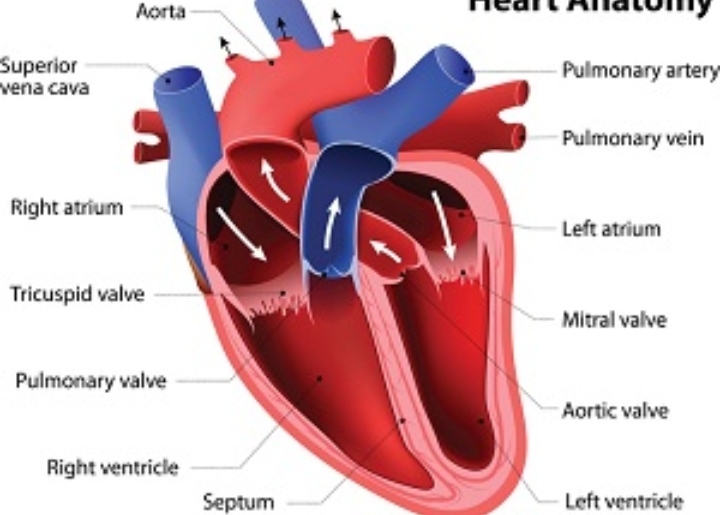
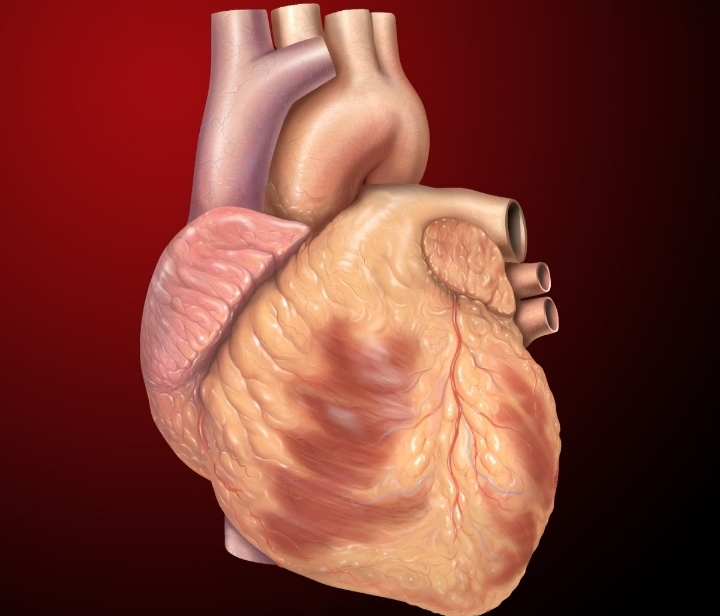
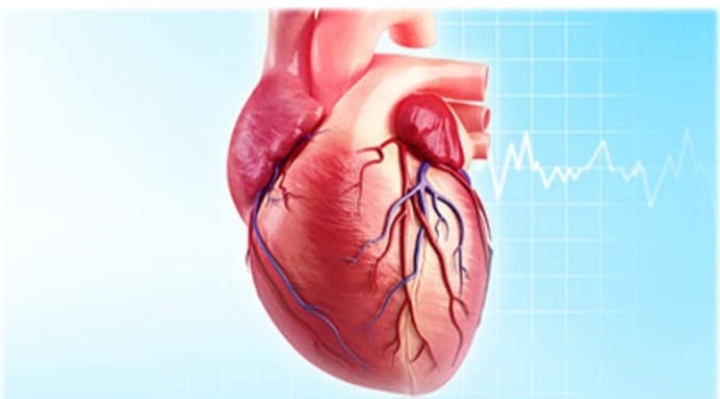
The heart is a four chambered muscular pump located inside the chest .It is ‘heart’ of circulatory system. The heart is conical in shape. The heart is a mesodermal derivative. The adult human heart is roughly about the size of a closed fist. It is a myogenic heart. The heart is covered by a fibrous sac called pericardium. The wall of the heart is primarily made up of cardiac muscles called myocardium. The inner surface of the heart is lined with a thin layer of epithelial cells called endothelium. The heart is formed of four chambers, namely two auricles and two ventricles. The auricles are named as right and left auricles. The ventricles are named as right and left ventricles. The right and left auricles are separated by a fibrous partition called interatrial septum. Similarly, the two ventricles are separated by an interventricular septum. The auricles are separated from the ventricles by an auriculoventricular septum.

The right auricle opens into the right ventricle by a right auriculo ventricular aperture. Similarly, the left auricle opens into the left ventricle by a left auriculo ventricular aperture. The right auricle receives deoxygenated blood through three veins, namely inferior vena cava, superior vena cava and coronary vein. The left auricle receives oxygenated blood from the lungs through pulmonary veins. Two main blood vessels carry blood from the ventricles. One large aortic arch carries blood from the left ventricle to the various parts of the body except the lungs. The pulmonary aorta carries blood from the right ventricle to the lungs. The heart contains three types of valves. They are bicuspid valves , tricuspid valves and semilunar valves. The left auriculoventricular aperture is guarded by a valve called bicuspid valve . It has two flaps and hence the name ‘bicuspid’. The right auriculoventricular aperture is guarded by a tricuspid valve containing three flaps. Both bicuspid and tricuspid valves are fastened to small conical muscles called the papillary muscles on the ventricular wall through several tendinous strands, the chordae tendinae.

TRAVELLING


Man is a traveler by nature. He does not
like to keep static at a place for a long time. So, people like to visit new
places whenever they find time and opportunity. People travel for different
purposes. Some travel for getting an education and some travel for pleasure.
Many people also travel for business and employment. Travelling is, indeed,
very pleasant. It is useful too. By traveling to new places we can know new
people and learn many new things. Travelling opens new vistas of experience and
understanding for us. When we go to a new place all of our senses and instincts
become awake.

Travelling plays an important part in
making us feel relaxed and rejuvenated. It also brings positive changes in our
life and keeps us alive and active. Travelling gives us practical experience of
things we have studied in the books and surfed on the internet. So a person who
does not travel at all does not find any meaning in the name of India Gate or
Ganga River. However, if he has traveled to these places, he can truly relate
everything he has studied and will always remember each and every detail of
that place.

Nowadays, many people like travelling as
they want to explore the world and watch everything they have read about. And
this seems to be quite justified as practical knowledge is way more essential
and effective than the theoretical one. People like to visit historical places
present in different parts of the world and gather information on the same to
write books and stories.
Travelling has become
easier due to advancement in technology and transportation. Earlier people use
to travel by road or sea and it takes many days to reach from one place to
another, however, now the scenario has changed and people travel to far off
places within hours and minutes-thanks to well-built roads and aeroplanes.

Traveling – The First Thing on Your To-Do
List

There is nothing quite like traveling,
like seeing a new place for the first time or returning to a favorite one.
People of all ages, from all around the world, go to foreign places for
different reasons – mainly, for work, family, and leisure. Whether by plane,
train, ship or by automobile, traveling is generally a pleasurable experience,
at least for the people who can financially afford comfortable and safe methods
of travel. But it has more benefits than satisfying one’s need to make money,
like, for example, to see loved ones and enjoy oneself on vacation. There are
other benefits of traveling worth mentioning and trying out. Many poets,
writers, and painters travel to different places to capture some of the best
things of nature and express them in the form of paintings or poems. People
also travel for business purposes so as to expand and gain profit from their
business. Students travel for educational purposes so everyone has a unique
reason to travel. Therefore, travelling is an important part of human life and
it instils knowledge and offers various benefits to mankind.

Key Elements of Good Web Design

Web design is at the center of providing a satisfactory online experience. Modern web design has come a long way. Websites cannot afford to look like the Classified section of a newspaper. No site stands a chance if it cannot look sophisticated and function flawlessly.

Effective web design does not just create visual appeal but also implements favorable SEO optimization techniques to help the site rank higher on Google searches. While there are hundreds of design elements to choose from, a few of them are indispensable.

Key Elements of Good Web Design

This article will narrow down these elements to seven essentials, the elements that must be fixtures in every web design blueprint.

1. Mobile-Friendly Layout

This trend is only set to increase as more people take to their phones as their primary source of online access. Consequently, a mobile-friendly layout lies at the core of modern web design.

Primarily, a mobile-friendly layout refers to the usage of responsive website design. Responsive web design refers to a design strategy that lets websites ‘adapt’ to different screen sizes without compromising usability and user experience. Text, UI elements, and images rescale and resize depending on the viewport.

85% of adults think that a company’s website, when viewed on a mobile device, should be as good or better than its desktop website. That means any website not incorporating responsive design will offer an unsatisfactory user experience, leading to loss of traffic, revenue, and credibility. You can see the example of Website design Charleston SC.

2. Clean and Bold Typography

Modern website design must feature safe, clean, and bold typography – a pillar of minimalist design.

Clean typography must include the following:
Appropriately sized text, which is usually larger than 16px
Black/gray typography, in accordance with the background hues or images
Web-standard fonts
Adequate space between lines to facilitate easy reading

Most organizations use a particular font or typography as part of their brand identity. For example, The New Yorker uses Adobe Caslon to create its highly recognizable typeset. Consider adopting a font for your website that will remain consistent across pages and other online resources you may provide.
3. Hamburger Menus

Most websites offer a long menu of options and features for users to choose from. While this may make for more straightforward navigation (since the user can go directly to whatever option they want from the home page), it also takes up a lot of screen space – especially on mobile devices.

Solve this quickly with a hamburger menu – a button that opens up to a broader menu or navigation drawer. This saves space, keeps the interface clean and uncluttered without removing navigational ease for website visitors.

4. Optimization for Speed

Web pages that load within five seconds experience a bounce rate of 38%. A 100-millisecond delay in load time can cause conversion rates to drop by 7%. Numbers like these should depict the significance of speed in modern web design – both on desktop and mobile devices.

In the age of instant gratification, websites are expected to load immediately, or they will be abandoned. Fortunately, building website design aligned with high page load speed is not a difficult task. A few simple steps to achieve this would be:
Optimize all images, regardless of size.
Choose a robust hosting environment, be it VPS hosting, shared hosting, or even a server dedicated to your site.
Use compression to keep files smaller.
Minimize HTTP requests in Chrome’s Developer Tools.

5. White Space

As an element of minimalist design, white space is essential for modern homepage design. Since the internet subjects every user to an infinite barrage of information, they can quickly reach a point of intellectual exhaustion. Using a balance of white space and content ensures that the site looks clean, organized, readable, and easy to navigate. Let your website breathe.
6. SEO Optimization

Modern website design elements can go a long way in improving a site’s SEO-based ranking. Quite a few of them are invisible, such as meta tags, heading tags, and other HTML coding hacks that belong to the website’s back-end code. Insert, tweak, and optimize these elements so that the website can reap the full benefits of Google’s SEO algorithm.

7. Cross-browser and device compatibility

Every design element being coded into a site needs to be displayed and function perfectly on every device and browser that the site is viewed with. The only way to achieve this level of consistency is iterative testing on real browsers and devices. That means every batch of design pushed into staging must be verified on real browser-device-OS combinations.

Look through a few modern website design examples, and notice how the pointers outlined above play a role in making them highly functional and appealing. Since every website must compete with thousands, sometimes millions of options online, it cannot afford to release anything but the most effective and aesthetically pleasing design. When discussing design plans, use these guidelines as a set of best practices, and continue to build creatively without excluding these stipulations.

Apple Products

Successful long term innovative companies have a broad vision mantra. Apple’s is “How do we make your life easier.” The main vision for apple product designers is observed to be improved accessibility, simplicity, and increase in functionality. In fact, the design seems to be of utmost importance in apple products that they appear to ignore manufacturing practicalities.

Apple design is more than the way something looks but the way it works on so many levels. Design defines experience because simplicity, clarity, and efficiency depict beauty. The designers work on bringing order to complexity. Almost all Apple products have a unique Unibody software that is thinner, resilient, all made out of a piece of aluminum. Each product is designed from the very beginning, its software.

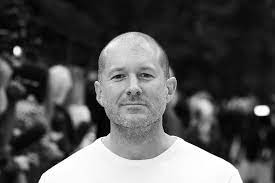
Each product is identified with ways to be better, perhaps even before they are released. As they progressed the products became more intuitive and easy to understand and learn. To quote Jony Ives, “The best designs aren’t reserved, they’re used immediately”.

For example, the Macbook has the most efficient design possible, inventions across many disciplines, new MacBook is thinner and precise, butterfly mechanism, single led is used to illuminate keys, refined from glass to pixels, any moving parts(vents and fans) are eliminated to allow it to operate in silence and it’s extremely portable.

Within a visibly small amount of time, the Macbook Pro was released. It’s built for the extreme level of performance, remarkably portable. Most of the larger apple products give viewing content priority. Apple has a unique quality highlighted in the Macbooks and iMacs are the asymmetric fans that ensure even the lowest frequency of sounds to be heard.

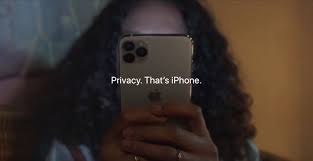
Similarly, the iPhones, iPads, even Operating Systems were continuously developed. The changes and developments were tracked; they were observed and then developed. Most recreations in a more portable and smaller size weren’t reduced from the original version, rather, the main functions were concentrated into the new ones.

The video shares how much extensive research goes into a product to fit the user in the best way possible. The apple smart watch’s display time was consulted with multiple professionals before adapted into the watch itself. The watch could be highly personalized to fit the user. Self-expression was permitted via – multiple watch faces, different straps, each strap made of different materials, the hardware of aluminum, steel, and gold, wrist locks were made of different designs as well.

As the products progressed, they only became more successful, leaving little to none defective characteristics. Each product became more reliable and relatable. New ideas were easy to adapt.

Apple didn’t advertise its products in comparison to other branded products, but it’s own. The newest additions or improvements were announced first and then the relatability and familiarity are created using older products.  The consistently high-quality products from this brand are one of the reasons why Apple is successful.

IPCC Report: Need for Climate Action

 The latest sixth assessment report released by the Intergovernmental Panel on Climate Change on 9th August, 2021, indicates some key areas of concern related to climate change. According to the report, 1.5 degree celsius warming is likely to be experienced before 2040. The report says that warming is inevitable and immediate climate action is needed to achieve the best case scenario and minimise the level of warming.

A future of Extreme Events

The report pointed out that the increase in intense heat waves, extreme rainfall, dangerous rise in sea-levels, frequent droughts and melting of ice are a direct consequence of human activities. The scientists involved in the assessment have warned about a rise in such extreme events in the present and future. At 2 degrees of global warming, the heat can impact human health as well as agriculture. 

The report also indicated the possibility of rise in “compound events” in the future, as a result of global warming. Compound events are severe and deadly. The lake bursts and landslides that happen in the Himalayan region is an example of a compound event. 


Climate Action and Net-Zero Target

The IPCC report addresses the question of how long it will take to see the results after the immediate implementation of the Climate Action plan and whether good results can be experienced by lowering the carbon emission. The report has suggested immediate cuts in greenhouse gases. This has pressured many countries to renew their Climate Action Plan or the Nationally Determined Contributions(NDCs) decided in the Paris agreement. 

This has triggered the countries to take up the net-zero target. More than 100 countries have agreed to achieve the net zero target by the middle of this century, including the US, China and European Union. Net zero is also known as carbon neutrality. It does not mean cutting the carbon emissions to zero. It means a state in which the carbon emission of the country is compensated by absorption and removal of greenhouse gas from the atmosphere. The gases are absorbed by creating more carbon sinks like forests. 

India is the third largest emitter in the world and a lot of pressure is being built on the developing nations to take up the net-zero target. The report says that global net-zero targets can keep the temperature rise in its best case scenario, and it is not possible without wider cooperation by the countries. 

Alok Sharma, the UK minister who will be presiding over the climate change talks in Glasgow said “The science is clear, the impacts of climate crisis can be seen around the world and if we do not act now, we will continue to see the worst effects, impact lives, livelihood and natural habitat.”


LESSONS ON BEING WRONG

As a rule, we are incredibly hard on ourselves when it comes to being wrong and making big decisions in life.

  • If our first five relationships end with a break up, we think we’re destined to be alone forever.
  • If we go to school, get a degree, and spend years training for a job that we end up hating, we feel like a failure for not having it all figured out.
  • If we have a dream of writing a book or starting a non-profit or creating something of value and we stumble on the first try, we say that we’re not cut out for this.

In cases like these, when we are attempting to do something that is complex and multi-faceted, I believe that being wrong is actually a sign that you’re doing something right.

Here’s why…

First Choice vs. Optimal Choice

For some reason, we often expect our first choice to be the optimal choice. However, it’s actually quite normal for your first attempt to be incorrect or wrong. This is especially true of the major decisions that we make in life.

For example…

  1. Finding the right person to marry. Think of the first person you dated. Would this person have been the best choice for your life partner? Go even further back and imagine the first person you had a crush on. Finding a great partner is complicated and expecting yourself to get it right on the first try is unreasonable. It’s rare that the first one would be the one.
  2. Choosing your career. What is the likelihood that your 22-year-old self could optimally choose the career that is best for you at 40 years old? Or 30 years old? Or even 25 years old? Consider how much you have learned about yourself since that time. There is a lot of change and growth that happens during life. There is no reason to believe that your life’s work should be easily determined when you graduate.
  3. Starting a business. It is unlikely that your first business idea will be your best one. It probably won’t even be a good one. This is the reality of entrepreneurship

When it comes to complex issues like determining the values you want in a partner or selecting the path of your career, your first attempt will rarely lead to the optimal solution.

5 Lessons On Being Wrong

Being wrong isn’t as bad as we make it out to be. I have made many mistakes and I have discovered five major lessons from my experiences.

1. Choices that seem poor in hindsight are an indication of growth, not self-worth or intelligence. When you look back on your choices from a year ago, you should always hope to find a few decisions that seem stupid now because that means you are growing. If you only live in the safety zone where you know you can’t mess up, then you’ll never unleash your true potential. If you know enough about something to make the optimal decision on the first try, then you’re not challenging yourself.

2. Given that your first choice is likely to be wrong, the best thing you can do is get started. The faster you learn from being wrong, the sooner you can discover what is right. For complex situations like relationships or entrepreneurship, you literally have to start before you feel ready because it’s not possible for anyone to be truly ready. The best way to learn is to start practicing.

3. Break down topics that are too big to master into smaller tasks that can be mastered. I can’t look at any business and tell you what to do. Entrepreneurship is too big of a topic. But, I can look at any website and tell you how to optimize it for building an email list because that topic is small enough for me to develop some level of expertise. If you want to get better at making accurate first choices, then play in a smaller arena. As Niels Bohr, the Nobel Prize-winning physicist, famously said, “An expert is a person who has made all the mistakes that can be made in a very narrow field.”

4. The time to trust your gut is when you have the knowledge or experience to back it up. You can trust yourself to make sharp decisions in areas where you already have proven expertise. For everything else, the only way to discover what works is to adopt a philosophy of experimentation.

5. The fact that failure will happen is not an excuse for expecting to fail. There is no reason to be depressed or give up simply because you will make a few wrong choices. Even more crucial, you must try your best every time because it is the effort and the practice that drives the learning process. They are essential, even if you fail. Realize that no single choice is destined to fail, but that occasional failure is the cost you have to pay if you want to be right. Expect to win and play like it from the outset.

The Girl on the Train – A bewildering tale


                                                                       (Photo: Twitter)

The Girl on the train is the story of Rachel Watson’s life, post-divorce. She is an alcoholic who rides on a train aimlessly. On her way, she travels past an old house where she and her then-husband, Tom used to live. However, there is one house that she waits to see each day. She watches Megan in her seemingly perfect relationship with her husband. Then one day Rachel sees Megan cheating on her husband. So, she decides to communicate with her. However, she has a blackout and is awaken with bruises in her apartment. Soon she learns that Megan is missing and detective Rilly interrogates her since she was seen wandering in the area.

The language used in this book is simple, understandable, and subtle which makes the readers get interested in reading the book. The themes of the novel are that of gaslighting, manipulation through questioning or validating a person’s sanity as the three women are abused by the men in their lives. It also deals with a very strong theme that some things are not always what they seem to be. In some respect, the novel is a connectional mystery.

Rachel Watson is the titular girl on the train and novel’s protagonist. She is complicated and an invaluable character. She is a divorced and deeply depressed person because of her impotence and failed marriage. Megan Hipwell is a young, sensitive woman with a dark past. Megan is not at all the model wife that Rachel imagines her to be. Megan begins dwelling into the depth of her trauma of losing her baby. Anna Watson is threatened by Tom’s ex-wife for calling and texting Tom all the time. She fails to see the unearthed trauma and pain in Rachel’s odd behavior and views her as a loser. Tom Watson disguises himself as a loving husband but in reality, he is a liar, cheater, murderer, and antagonist of the novel.

The Girl on the Train is a 2015 psychological thriller novel by Paula Hawkins. The novel debuted in the number one spot on The New York Times Fiction Best Sellers of 2015 list dated 1 February 2015, and remained in the top position for 13 consecutive weeks. In January 2016, it became the number 1 best seller again for two weeks. The book has also sold 15 million copies around the world. The readers of this book loved it warm-heartedly. The author did a really great job with the three character’s voices. It deals with powerful themes all the while weaving the story into a heart wrenching tale of obsession and madness. One cannot help but get reeled into the chaos of it all, questioning oneself at times of who is what, and whether everything is as it is.

There is no need of any suggestions for this novel as it is one of its kind. The writing is quite masterful as the writer gives away only enough with each chapter. Hence, this novel is perfectly paced.

The Scout Movement

Student hood is a time of honoring. One of the student organizations that helps is The Scout Movement. Let’s think about that a bit here.

Background, Origin and Development

The Scout Movement originated in South Africa. The Boer War took place. The city of Mafeking ( now called Mahikeng ) was surrounded. The task of guarding the city was entrusted to Robert Baden-Paul. He co-founded many of the 12- to 17-year-olds. He taught them the lessons of patriotism, virtue, companionship, first aid, collective responsibility, living according to circumstances, and understanding the gestures of others. He was involved in espionage, Won.

Swami Vivekananda said, “Give me 100 energetic young men and I shall transform India.” Similarly, the Scout Movement, founded in South Africa by Robert Baden-Paul with twenty young men, is growing like a tree with millions of ideal volunteers in many countries around the world today. 

The Scout Movement in India

The Scout Movement was started by Annie Besant long before Indian independence. After the liberation of India, it became known as the The Bharat Scouts and Guides. There are two divisions in this movement: Boy scouts and Girl scouts.

Pledges and Terms

The scout boy must make these promises.

1. I will fulfill my duties to god, the king, the mother, the father, and the elderly.

2. I will be ready to help others.

3. I will abide by the laws of the scout movement.

The scout’s salutation with three fingers signifies these promises.

There are ten rules. They are,

1. Being Honorable: A scout should not deviate from the truth, no matter what trials may befall him. 

2. Devotion: Must have devotion to God, devotion to Guru etc.

3. Benevolence: Always be ready to help others. The goal of this campaign is to ‘be ready’. If he is healthy, he can harm others. He also need to know how to give first aid to the injured.

4. Brotherhood: Everyone should be treated as a brother. Caste should be secular. The poor should not discriminate between the rich. 

5. Treat everyone with respect.

6. Compassionate attitude

7. Self-control

8. Courage 

9. Have thrift.

10. Requires purity of mind, vote, action.

Benefits

As students join the army, they will develop qualities such as devotion to God, love, humility, respect, discipline, generosity, and benevolence and will be good to their parents and others. Will provide first aid to the injured. Will organize meetings. Will do many more favors.

All students should take part in such a charitable charity and engage in charitable work for the country.

International Youth Day- 12th August 2021

Theme 2021, why do we celebrate this day? Importance to speak up for the coming youth. Movies for youth, what else is celebrated today!

 Theme: “Transforming Food Systems: Youth Innovation for Human and Planetary Health”

The main aim is to highlight that every action which needs to be taken for the better of life on Earth, cannot be achieved at a global level without the contribution of the youth. With, Increasing population the need for not only a larger volume of healthier food more sustainably will not ensure human and planetary wellbeing but also poverty reduction, social inclusion, health care, biodiversity conservation, and climate change mitigation.

 The United Nations in 1999 after a recommendation was made by the World Conference of Ministers Responsible for Youth. Then the first International Youth Day took place in the summer of 2000.

 It is mainly to empower young people to participate in public life so that they can have opportunities to contribute to society’s development across the world and be heard completely. It is not just to protect them, but to incorporate them in the development of communities regardless of their ethnicity, background, and status. It honors the traits of young people and acknowledges the challenges that today’s ferocious youth face.

Youth with the support and wisdom of old are the torch-bearers of this world.

Examples:

In partnership with UNDP, Bibliothèque sans frontières (Libraries Without Borders) young staff travel across Burundi, are disturbing knowledge through e-books, paperbacks, educational games, internet-ready mobile devices and so on.

Mercy and Shetuuka, sibling farmers working to reduce hunger. Also, create jobs in Namibia through eco-friendly farming.

In Egypt, a group of tiny activists has been traveling village to village, determined to end female genital mutilation in their country.

One of UNDP’s 600 transportation projects to promote economic development in rural Afghanistan, encouraging more boys and girls enrolling in primary school, while addressing safety concerns on the village’s main road.

The list is endless and we need support, we need to be heard, and taken seriously irrespective of our age. Youth brings many issues which violate basic human rights to surface and fight for them.

https://undp.medium.com/17-ways-youth-are-changing-the-world-505a489e91dc

 Movies putting forward importance of youth participation and their situation:

Into the Wild (2007,Must see)

The Perks of Being a Wallflower (2012).

The Edge of seventeen.(2016)

Moxie.(2021)

Love, Simon. (2018)

Quotes:

Older men declare war. But it is the youth that must fight and die. —Herbert Hoover

The duty of youth is to challenge corruption. —Kurt Cobain

“The surest way to corrupt a youth is to instruct him to hold in higher esteem those who think alike than those who think differently.”
—Friedrich Nietzsche

“In youth, it was a way I had,
To do my best to please.
And change, with every passing lad
To suit his theories.

But now I know the things I know
And do the things I do,
And if you do not like me so,
To hell, my love, with you.”


― Dorothy Parker, The Complete Poems of Dorothy Parker

Other Days Celebrated Today:

Black Womens Equal Pay – United States

World Elephant Day – Canada, United Kingdom, United States & South Africa

Music Of India

India is rich in various types of music played in different traditions, cultures, being played since ages. There are mainly 3 types of music: Classical music, Folk music and Modern music.

Classical Music

It includes Carnatic music and Hindustani music. The basic concepts of this music includes Shruti (microtones), Swaras (notes), Alankar (ornamentations), Raga (melodies improvised from basic grammars), and Tala (rhythmic patterns used in percussion). Thereare seven svaras are Sa, Re, Ga, Ma, Pa, Dha and Ni respectively.

Folk Music

It consists the music according to the state and regions. Some of them are:

Dandiya and Garba

Dandiya or Raas is a form of Gujarati cultural dance that is performed with sticks. The present musical style is derived from the traditional musical accompaniment to the folk dance. There is also another type of dance and music associated with Dandiya/Raas called Garba.

Haryanavi music

The folk Music of Haryana spread because of the Bhats, Saangis, and Jogis. It is sung and played in the state of Haryana, parts of western UP and neighboring districts of Rajasthan and Punjab.

Himachali

Himachal’s folk music varies according to the event or the festival. One of the most popular style of music is Nati Music, where nati being the traditional dance that is done on the song. Nati Music is usually celebratory, and done in fairs or other occasions such as marriages.

Qwallis

It is the traditional form of Islamic songs practiced Northern India. It is also linked to the Sufi tradition and performed with one or two lead singers with several musical instruments like harmonium, tabla, dholak, etc.

Rajasthani music

It is one of the most popular forms of music in India. The essence of Rajasthani music originates from the creative symphony of string instruments, percussion instruments, and wind instruments accompanied by melodious renditions of folk singers.

Gazals

t is a type of music with a short poem with a series of couplets. Each couplet is an independent poem.

Body Neutrality: What is it and how is it different from Body Positivity?

Body positivity has been around for years now, and it deals with challenging society’s view on the “ideal body type.” It refers to the assertion that all people deserve to have a positive body image, regardless of other’s opinions. 

Body Neutrality is, however, a relatively newer term coined somewhere in 2015 by bloggers, celebrities, etc., to disconnect the relationship between physical appearance and self-worth.

It is a philosophy that one should focus on what their body can do for them rather than what it looks like.

“The body positivity movement urges people to love their bodies no matter what they look like, whereas body neutrality focuses on what your body can do for you rather than what it actually looks like,” said Chelsea Kronengold, the associate director of communications at the National Eating Disorders Association.

While people that practice body positivity might say, “I love my legs, cellulite and all; they are beautiful.”

A person practicing body neutrality might say, “I love my legs because they help me run.”

Body neutrality is difficult to navigate when we have been taught that physical beauty can create happiness. But suppose a person recognizes a more petite physique or nose job won’t instantly make them happier. In that case, they can find body peace both before and after they change their body.

“When people become overly invested in changing their bodies to change their experiences of the world, it becomes a really dangerous sort of thing that perpetuates itself,” Wassenaar said. “Because oftentimes I find that you can’t ever change your body enough to make yourself happy.”

Dr. Wassenaar has also talked about how diet and fitness plans that require restriction or pushing our body past its boundaries are not body neutral. Those plans force a person to hold the diet or fitness plan’s specific rules above their body’s natural hunger or physical activity cues.

Body neutrality helps one recognize and prioritize how they feel in their body. This might mean moving your body because it feels good, and you enjoy the movement, and not to “burn off” the food you’ve eaten. It also means you listen to your body to know when to stop or take a day off.

Body Neutrality doesn’t encourage indulging in unhealthy choices; instead, it means that meals usually feature fresh, whole foods, but you also eat intuitively. That one does not have to resist the urge or suppress their cravings or “make up’ for a heavy meal by limiting yourself to salad the next day.

Why you should watch/read MONSTER?

MONSTER is the magnum opus of mangaka Naoki Urasawa and a Cold War psychological thriller – it is a seinen manga manga also adapted into an anime following the whole story exactly. It follows a Japanese neurosurgeon, Dr. Kenzo Tenma, who has residence in Germany to work at Eisler Memorial. Engaged to his boss’ daughter and with optimistic prospects in his medical career, Tenma’s values soon hijacks any stable life as a darkly dramatic irony – he was only trying to do the right decision(s) morally: a tragic statement that ‘right’ doesn’t entail the best results. His life is sidetracked into revolutionary conspiracies from the Soviet bloc, violent machinations of a criminal underworld and a boy, Johan, who’s a nihilistic catalyst of chaos; all these intense affairs are to the backdrop of relatively ordinary existence as a shocking duality showcasing the thin veil between horror and normalcy as is also applicable to our own nature. Stylishly European in every day as an atmospheric overture, with the location rife for intrigue as close to the Iron Curtain, MONSTER is an incisive examination of human nature – the cause of ‘evil’, why and who is truly responsible; the whole work, too, acts as a character study in conscientiously designed personalities who’re palpable as representations to the human condition.

A difficult choice

Dr. Kenzo Tenma sacrifices his career to save Johan as a child in a dilemma of choosing a patient for his expertise – the town’s mayor or an innocent boy shot in the head – and although demanded to save the mayor for financial reasons, he opts for Johan as he arrived first in the staunch belief ‘all lives are equal’. These philosophical and moral systems are the root of MONSTER – how these inform and challenge one’s life choices to the darkness we may encounter as aberrant of all we thought as usual; beliefs are easier in a vacuum of a solitary life or with a confirmation bias. Tenma’s choice would have unforeseen, destructive ramifications for which he takes responsibility, too, for which no attitude could prepare him – he had saved a boy who would evolve into a ruthless, charismatic leader of mass destruction. If he knew of the outcome, would he still have performed his duty as a doctor and thought of Johan as ‘equal’ – this is the central concept that tests Tenma’s view on the worth of lives, his right, too, to intervene and act. As he’s demoted for his failure with the mayor, and his lover leaves him as no longer financially secure, the senior staff at the hospital responsible for his punishment all coincidentally die in a poisoning while the boy, Johan, disappears.

The investigation leads to nowhere and Tenma is restored in his role, he subsequently becomes the Chief of Surgery at the hospital nine years later. Destiny would have him reencounter Johan who’s an adult, however, who callously executes a patient as a clear reality the boy he rescued was indeed evil. This refocuses the old investigation onto Dr. Kenzo Tenma who benefited the most – a detective, Inspector Lunge, of a federal agency is convinced Tenma is behind all these crimes, ‘Johan’ a mere persona of his. Escaping from his normal life as the police seek to frame him, and determined to resolve his responsibility of ‘Johan’, Tenma embarks on a tenacious journey as a fugitive.

Excellent Characters

Supported with a vast cast, who are each developed in an immaculate fashion, and each embroiled into extensive subplots concerning these, MONSTER is a ‘coup de maître’ as a psychologically intimate drama with an array of emotions from these characters as an expository fiction of humanity – powerful from the complex dilemmas and philosophical challenges we see engage them throughout the voluminous narrative. Deliberately meticulous in characterization, contemplative in tone and purposeful in each plot point, MONSTER is a crafted tale sure to resonate with audiences for a long time at a fundamental level – it indulges in themes perpetually inherent to society, no matter the current state. Patience is rewarded in appreciation of the story as an emotive tale crafted into an intricate character study.

Themes

The plot structure is a slow-burn of side plots and miscellaneous errands to establish a vibrant world consisting of of various personalities, agendas and their interactions: no man is the same – each one has their own history – and valid perspective along with sympathetic emotions. The characters and situations are also not limited to the overpowering arc of a showdown between Johan and Tenma – people have their own multifaceted lives to not merely be props for the plot. As a result, Naoki Urasawa’s depicted world is tangibly immersive, both in the depth and also sober art, which explores darkness in a manner that’s not crudely exploitative, it is innocently inquisitive: a treatise of our morals in conflict to the worst of humans.

MONSTER accomplishes itself as a darkly philosophical work on society, people and their beliefs – it is the finest psychological horror, mystery drama and crime thriller in the history of manga as a comprehensive feat; it is a multi-layered narrative – little contrived or for some cheap ulterior purpose – with equally compelling characters. The setting of Eastern Europe in the throes of the oppressive Iron Curtain is unique an aesthetic that feels authentic – a dangerous regime where the authorities are unreliable and a sense of overbearing danger throughout from leadership which does not truly care for the people. I would rank MONSTER on level with Fyodor Dostoevsky’s ‘Crime and Punishment’ as a testament to the quality and feel only the medium, manga/anime, besets a prejudice on qualifying MONSTER to the canals of worthy artistic heritage.