The iPhone is a line of smartphone designed and introduce by apple inc.. that use apple’s iOS mobile operating system.the first generation of iPhone was announced by formar apple ceo Steve jobs on January 9th,2007 . Since then apple has annually released new iPhone models and iOS updates as of November 1 ,2018 , more the 2.2 billion iPhones are sold ..
Development of what was to become the iPhone become in 2004 , when apple started to gather a team of 1000 employees led by hardware engineer Tony fadell , software engineer scoot forstall and design engineer sir jonathn Lev to work on the highly confidential “project purple”. Apple ceo Steve jobs steered the original focus away the tablet towards a phone . Apple created the device during a secritive collaboration with Cingular wireless ( which becomes AT&T mobility) at the time _at an estimated development cost of us$150 million over thirty months according to Steve jobs “I”means “i mac” (and therefore “iPod “, “iPhone”, and” iPad “)which stands for individual , internet ,instruct , inform , and inspire
The iPhone runs an operating system known as iOS (formally iPhone os) . It is varient of the Darwin operating system core found in macos . Also included is the ” core animation ” software component from Mac os x v10.5 leopard . Together with the graphics hardware (and on the iPhone 3GS, openGL ES 2.0), it is responsible for the interfaces motion graphics.the iPhone comes with a set of bundled applications developed by apple , and supports downloading third party application through the app store .apple provides free updates to the operating system for the iPhone either wirelessly or through I tunes major new updates have historically accompined with new models
And then finally apple rejected the ” design by committee “
There many programming languages in this world written in many languages. Different companies uses different programming languages. What is actually a programming language ? A programming language is a set of commands, instructions and other syntaxes to computer to perform a specific task. In this blog, I am going to tell you the most popular and top programming languages in this world.
PYTHON
There is no doubt that python is the number one programming language. Python is powerful and easy language to learn. It is very easy to read and understand. Python is the trending programming language in the world. It is the favorite language for many beginners. Python is used in many trending subjects like Artificial Intelligence, Data Science and Machine Learning. It has great libraries like Numpy, PyTorch, Pandas which makes machine learning very easy. In python, you can easily find bug or error in your code. It is used for scientific and computational applications like FreeCad and Abacus. The popular websites like Google, MicrosoftYouTube, Pinterest, and Instagram use it. The average salary of python developer is $100,000.
2. JAVASCRIPT
JavaScript is thought to be the most consistentprogramming language, because it demand never goes off. You can use JavaScript to build web applications, desktop apps, mobile apps and many more. Millions of the websites in the internet depend on JavaScript. Giant tech companies like Google, Facebook, Microsoft and Uber use JavaScript. JavaScript is best option for you along with HTML and CSS. The average salary of JavaScript developer is $84,000.
3. JAVA
Java is a popular programming language since 2000’s. Java is a independent platform runs on a virtual machine(JVM). Just like python, java is also easy to learn. Java is fundamentally object-oriented. Those who want to learn android development, then java is right option for you. Java language is continuing creating new jobs in tech field. Giant companies like Google, Amazon and YouTube use java. Around 40 percent of developers use java. The average salary of java developer is $80,000.
4. C / C++
C language is considered to be the mother of all other programming languages. C is a perfect language for a beginner to learn. Comparing to the other languages c just have 32 keywords. Being one of the oldest programming language it demand hasn’t down yet. Around 23 percent of the developers use C language. Giant tech companies like Google, Apple, intel use C / C++. The average salary of a C / C++ developer is $78,000.
5. KOTLIN
Kotlin is a open source and general purpose language. Within short period of time it gained full popularity. According to a survey Kotlin is one of the fivemostpopularlanguage. Kotlin is best language for android development. Kotlin is designed to interoperate fully with java and JVM version of Kotlin library. Around 60 percent of the android developersare using Kotlin. Some of the most popular apps that are built using Kotlin are Tinder, Square, Evernote. Giant tech companies that use Kotlin are Google, Amazon, Netflix and many more. The average salary of a Kotlin developer is $77,000.
All these are the most popular and top programming languages. If you like my work, please like it and rate it. Thank you.
The internet of things, or IoT, is a system of interrelated computing devices, mechanical and digital machines, objects, animals or people that are provided with unique identifiers (UIDs) and the ability to transfer data over a network without requiring human-to-human or human-to-computer interaction.
A thing in the internet of things can be a person with a heart monitor implant, a farm animal with a biochip transponder, an automobile that has built-in sensors to alert the driver when tire pressure is low or any other natural or man-made object that can be assigned an Internet Protocol (IP) address and is able to transfer data over a network.
An IoT ecosystem consists of web-enabled smart devices that use embedded systems, such as processors, sensors and communication hardware, to collect, send and act on data they acquire from their environments. IoT devices share the sensor data they collect by connecting to an IoT gateway or other edge device where data is either sent to the cloud to be analyzed or analyzed locally. Sometimes, these devices communicate with other related devices and act on the information they get from one another. The devices do most of the work without human intervention, although people can interact with the devices — for instance, to set them up, give them instructions or access the data.
Do you want to become an avid reader? But you don’t seem to find the zeal to sit and start a book? Or do you not like to read at all? Well, maybe it’s because you have been submerging through the wrong bookshelves, and are yet to find the right direction to your world of imagination, adventure and learning.
At a young age, we hear and read many short stories, comics or fairy tales from our elders. Those books are filled with colorful illustrations, beautiful fonts and simple language to attract us and give shape to our imagination. But as we grow up the books become more black and white with tough vocabulary and equal to no pictures. Along with a wider choice to look from. Due to this and the lack of encouragement from our surroundings, we tend to give up on our reading habits and conclude it to be boring eventually.
But isn’t that the very reason why the books become so? So that as we grow up, we fill our own colors, illustrations, and meaning to the words written by the authors in our minds; develop our power of imagination, expand our dictionary and deepen our journey between the lines. And soon become a sailor to the treasure of words, in an island of books brimming with adventure and experiences. The best part being, there is absolutely no age restriction to pick up a book and give some exercise to your brain. You can be 45 and still love to read rom-com or learn a new language!! The books aren’t judging you after all.
So, before you buy a book, it is necessary to find the ‘right book’ for you and this requires some research to be done to make a smart and worthy purchase. To begin with, know your purpose to buy a particular book because this helps you to be motivated throughout the reading. For instance, if you have a role model in life you can opt for their biography or autobiography, or if you want to polish any of your skills you can go for self-help books. Likewise, there are many other genres, such as – action and adventure, romance, classics, comic books, detective and mystery, fantasy, historical fiction, etc. The next step is to keep in mind your budget. These days, much to our advantage, we can find books both online (e-books) or offline, new or used, paid or free on various apps and bookstores. Google it! You can even borrow books from a local or school library just in case you don’t want to spend money on your first purchase. Furthermore, it is always recommended to check for book reviews and summaries online or through friends, to avoid impulsive buying just by finding the cover page attractive. Once you have brought down the list to a minimum number by following the above steps, you are ready to make the final purchase with confidence! In the end, make sure that when you sit down to read, have a pencil/pen/highlighter to mark your favorite quotes or lines or unfamiliar words, even a diary to note them down and remember in the long run. Do not forget to have a beverage on the side!
Stick to these tips and no one is stopping you from being an avid reader and to live a thousand lives. Learn from other’s experiences. Find yourself and your peace of mind. And become a better person with every book you close with a little heavy heart but many more beautiful memories swirling in your mind.
🌟The relationship between the two British colonies of Natal and Cape Colony and the two independent Boer states of the Transvaal and the Orange Free State had long been unfriendly. 🌟The discovery of gold in Transvaal ,in 1886 ,led to large numbers of British miners settling in and around Johannesburg.
🌟The Boers hated these people whom they referred to as Uitlanders. 🌟The Boers taxed them heavily apart from denying political rights. 🌟The question was whether the British or the Boers were to be Supreme in South Africa.
🌟Fearing attacks from the British, the Boers armed themselves and decided to attack. 🌟The Boer War lasted for three years,1899 – 1902. 🌟Initially, the Boers were successful.But by the first half of 1900,the Boer army was defeated. 🌟Pretoria was occupied.
🌟The Boers took to guerrilla fighting. 🌟In retaliation the British destroyed farms and crops. 🌟They set up internment camps for Boer women and children. Shortage of food,medical and sanitary facilities caused the death of 26,000 people.
🌟The British annexed the two Boer states. Boers were however promised self-government in due course. 🌟In 1907 full responsible government was given to the Transvaal and the Orange Free State. 🌟The four states formed into a union and the South Africa Act passed by the British Parliament in 1909 provided for a Union Parliament at Cape Town. The Union of South Af6came into being in May 1910.
The home were the new end and the new beginning starts. Those known faces gonna fade away and the new ones gonna blossom.
Think of the very first day your family leaving you in that situation, it is the foot prints that are drawn with the sharpen nail on your cardiac heart and that may be the inner scars that will never fade away for those left.
They said the room is air conditioned, with the good foods and snacks and with other stuffs. They also gave them someone who gonna take care that alone souls. Everything was fine but the orphan souls don’t have the ability to accept these painful lists. The silent is the hiking king here.
Though the visitors are welcome, but their sobbing eyes and the kind face towards them was both healing and killing them a side as they visit.
The four walls with the spinning fan always used to remember them of their blissful spinning year’s out the orphanage home.
And of course they got the new friends, who have experienced the same feeling’s at different clips at their own spinning time’s.
Most of their final wish was to set their soul rest with the setting sun, but sun never thought of taking them these evening’s. The nature is the master here to have them or not.
The counting day’s are the only hobby of the unknown orphan there. It say’s at times the orphan disease is ok but being orphan is worst, even the disease have the drug but not them.
Seeing the funding agencies, NGO’s, government funding and of course the common human’s help towards these places makes the humanity to live. The every drop fall’s from the eye and the every curve the mouth makes say’s the words that sound could not.
Every orphanage home is the place were the innocent soul lives and every blessed child’s live, it is not just a place but the home were the unknow makes the new family and friends.
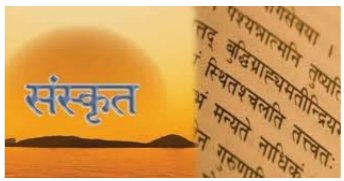
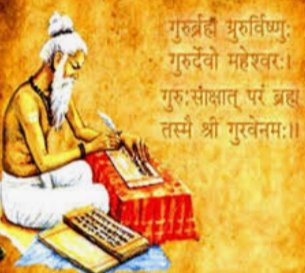
Sanskrit was considered as “Dev Bhasha”, “Devavani” or the language of the Gods by ancient Indians. The word sanskrita, meaning “refined” or “purified”, is the antonym of prakrita, meaning “natural,” or “vulgar. The corpus of Sanskrit literature encompasses a rich tradition of poetry and drama as well as scientific, technical, philosophical and dharma texts.
Sanskrit is the most ancient language and perfect among the great languages in the world.It is the greatest treasure given to the world by ancient India.
Sanskrit is the primary sacred language of Hinduism, and has been used as a philosophical language in the religions of Hinduism, Buddhism, and Jainism. Sanskrit is a standardized dialect of Old Indo-Aryan, originating as Vedic Sanskrit as early as 1700-1200 BCE.
Vedic Sanskrit is the language of the Vedas, the most ancient Hindu scripts, compiled c. 1500-500 BCE. The Vedas contain hymns, incantations called Samhitas, and theological and philosophical guidance for priests of the Vedic religion. Believed to be direct revelations to seers among the early Aryan people of India, the four chief collections are the Rig Veda, Sam Veda, Yajur Vedia, and Atharva Veda. (Depending on the source consulted, these are spelled, for example, either Rig Veda or Rigveda.)
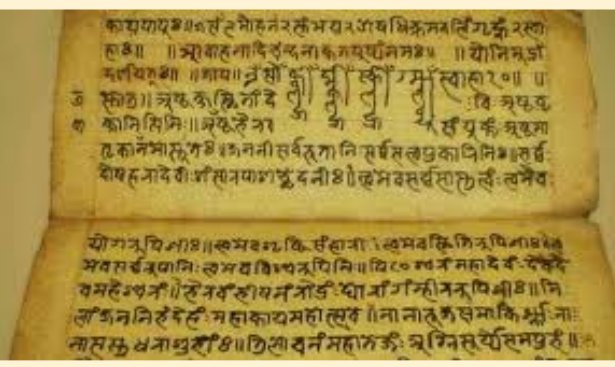
Vedic Sanskrit was orally preserved as a part of the Vedic chanting tradition, predating alphabetic writing in India by several centuries. Modern linguists consider the metrical hymns of the Rigveda Samhita, the most ancient layer of text in the Vedas, to have been composed by many authors over several centuries of oral tradition.
Sanskrit Literature began with the spoken or sung literature of the Vedas from c. 1500 BCE, and continued with the oral tradition of the Sanskrit Epics of Iron Age India, the period after the Bronze Age began, around 1200 BCE. At approximately 1000 BCE, Vedic Sanskrit began the transition from a first language to a second language of religion and learning.
Around 500 BCE, the ancient scholar Panini standardized the grammar of Vedic Sanskrit, including 3,959 rules of syntax, semantics, and morphology (the study of words and how they are formed and relate to each other). Panini’s Astadhyayi is the most important of the surviving texts of Vyakarana, the linguistic analysis of Sanskrit, consisting of eight chapters laying out his rules and their sources. Through this standardization, Panini helped create what is now known as Classical Sanskrit.
As we approach the change of times and as Indians rediscover their roots in their collective consciousness, we begin to reflect why and how the Europe-centric mind-set has pervaded and distanced us from our own languages, culture, traditions and knowledge. More and more countries are popularising the study of Sanskrit, not just for the spiritual, cultural and literary interest in the language, but also for the wealth of scientific knowledge available in Sanskrit texts.
Sanskrit is vital to Indian culture because of its extensive use in religious literature, primarily in Hinduism, and because most modern Indian languages have been directly derived from, or strongly influenced by, Sanskrit.
Knowledge of Sanskrit was a marker of social class and educational attainment in ancient India, and it was taught mainly to members of the higher castes (social groups based on birth and employment status). In the medieval era, Sanskrit continued to be spoken and written, particularly by Brahmins (the name for Hindu priests of the highest caste) for scholarly communication.
Today, Sanskrit is still used on the Indian Subcontinent. More than 3,000 Sanskrit works have been composed since India became independent in 1947, while more than 90 weekly, biweekly, and quarterly publications are published in Sanskrit. Sudharma, a daily newspaper written in Sanskrit, has been published in India since 1970. Sanskrit is used extensively in the Carnatic and Hindustani branches of classical music, and it continues to be used during worship in Hindu temples as well as in Buddhist and Jain religious practices. Sanskrit is a major feature of the academic linguistic field of Indo-European studies, which focuses on both extinct and current Indo-European languages, and can be studied in major universities around the world.
The corpus of Sanskrit literature encompasses a rich tradition of poetry and drama as well as scientific, technical, philosophical and dharma texts. Sanskrit continues to be widely used as a ceremonial language in Hindu religious rituals and Buddhist practice in the forms of hymns and mantras. The one country that still regards Sanskrit as a classical language containing merely religious literature is India. Sanskrit is a treasure and very relevant in the modern knowledge-society and is perhaps the future for science and technology.
Many universities in Europe and America are raising the level of Sanskrit proficiency in their departments, while India is still treating it as a third language meant to enhance scores in school transcripts, without real application. If there is one language that can be called the language of the future, it is undoubtedly Sanskrit.
UNIX is a multi-user and multitasking operating system. in a multi-user environment. the computer can receive the commands from a number of end users programs, access files, and print documents simultaneously.
The host computer, which has a UNIX operating system, provides services to the terminal, such as file access services. four terminals are connected to one host computer and all the terminals are sharing resources from the host computer.
Features of UNIX
The general and additional features of UNIX operating system are :
File and Processes : file and process are two entities that are supported by UNIX. A file contains information, such as text, code or directory structure that you need to save in the computer, The file is stored in the hard disk of the computer at a particular location, which can be easily remember whereas a process is the name given to a file or a programs that is currently running . UNIX provides various tools that enable you to control a process, change the sequence of the process, and kill the process.
Multi-user system: UNIX supports multitasking system as the kernel is designed to handle multiple processes. A single user can run multiple process simultaneously. For example, an end user can print a file and edit another file simultaneously. The kernel handles the multiple processes as foreground and background process. The current process runs in the foreground and the other processes run in the background. This multitasking feature is an advantage for the programmers, as they do not have to close the editor and run the program; this can done simultaneously.
UNIX toolkit: The UNIX toolkit provides various tools that are enable you to perform different tasks in UNIX as kernel alone cannot perform every task. The tools that are included in the UNIX toolkit are:
1:- General purpose tools , such as vi editor
2:- Text manipulation utilizes filters that are used to retrieve the output from two or more commands simultaneously .
3:- Compiler and Interpreter .
4:- Network administration and system tools , such as mailx and pine.
Pattern Matching :- UNIX supports pattern matching feature that enables you to retrieve the output according to the required pattern . Pattern matching in UNIX can be implemented using a special characters , such as * known as metacharacter .
Programming Facility :- UNIX provides a programming facility known as shell that is developed specifically for programmers and not for the users .
In anywhere of labor , be it a construction site, office block , factory or similar, there are both legal and moral obligations to make sure those that work and visit are adequately protected within the event of a fireplace .While automated fire systems are obligatory in most locations, there are some instances when their use won’t be possible or provide adequate protection, and therefore the use of trained fire watch guards becomes necessary. In addition, many locations utilize both an alarm and fire watch guards to make sure the last word levels of safety.
A “fire watch” may be a temporary situation during which a trained professional hired by a landowner to see for fires ongoing or for very hazardous fire situations. Marisa Swanson described the services they supply this way: “Fire watch personnel do their work when the likelihood of a fireplace outbreak is high. This includes “hot work” on a building, or construction activities that involve welding, sparks or hot materials. The duties of fireside watch personnel vary between jobs and site sites, but basic tasks accompany each position. They may work with municipal or volunteer fire departments.”
There are several reasons which warrant the hiring of a fire watch guard , some of them are mentioned below.
# Using their expertise for spotting potential problems not only through the sense of sight but also smell and touch. Fire watch guards search for what might be a fireplace risk before there’s an actual problem.
#Providing 24-hour patrol and continually monitoring your commercial site with walkthroughs in and around it.
#Fire safety compliance is important, and the firefighters that come to your business will make recommendations on how to best protect your business. These professionals offer long-term solutions and plans which will keep your business and its employees safe if a fireplace breaks out.
# Not only will firefighters be keeping logs and making recommendations, but these professionals come fully equipped the instant they step foot onto your property. Dangers are going to be identified quickly, and fire safety solutions are going to be dispatched.
If any safety systems got to get replaced or repaired, these professionals offers their assistance in putting out fires, or helping employees or customers get to safety.
Also, to mention the reasons rely on the job that a fir watch guard does, that may include Avoiding injury and loss of life to workers or visitors to the site.
In addition with Preventing and limiting damage to commercial property or construction sites by early detection. Address any potential fire risks before they become a problem.Keep logs and records of relevant fire risks and hazards that have been encountered. The logs are often required by insurance companies and authorities.Check all of the equipment, including monitoring systems, to ensure full functionality.
To sum up, a fire watch guard can hold immense responsibility to save your assets and many lives that makes it worth considering and and very useful in the time of crisis .
Bloating is the condition usually caused by excess gas production or disturbances in the movement of the muscles of the digestive system.
Bloating is when for few peoples it occurs after eating or for few like it is part of their life. So here we are going to discuss little more about bloating.
Bloating can be caused by eating less. People think that if we eat less bloating will go away but its not true but there will be more gas produced in our gastrointestinal tract which is also one of the causes of bloating.
Burbs, when there is too much of gas in gastrointestinal track then we produce more burbs.
Stomach rumbling.
What causes bloating?
Certain food habits can cause bloating.
People allergic to some food.
Fast eating.
Chewing gum.
Using straws while drinking.
Dairy products (if they do not suit you, cannot be digested easily)
Smoking.
Constipation
Non hydration, non-fibrous food, overeating, not eating on time.
Excessive sugar intake: at times when we buy sugar free products go check ingredients on its label there will be written alcohol sugar, sugar syrup etc. avoid that also.
Obesity: If you are consistently gaining weight and have become obese them try to lose weight.
Excessive salt intake: excess amount of sodium intake can cause bloating.
How to prevent bloating?
Improve your lifestyle; make few changes into your lifestyle.
Include some sort of physical activity into your daily routine it may be dancing, running, HIIT, or just simple walk. If you are in work from home jibs where you have you sit for too long after small-small intervals walk for at least 4-5 minutes.
Practice Yoga; there are simple yoga asanas which can help you with this.
Foods to avoid.
Cabbage, Cauliflower, broccoli, beans, lentils (except Vigna radiate), soyabean, wheat roti(If doesn’t suits you), dairy products it not suitable.
Lifestyles changes to prevent bloating.
Eat slowly.
No screen time while eating.
Avoid straws.
Avoid smoking and alcohol.
Avoid artificial sugar.
Less salt intake.
Stay hydrated.
Eat fiber rich food.
Avoid eating junk food.
Remedies
1 tablespoon fennel
4-5 mint leaves
Boil both in water and after straining it drink it whole day.
1 tablespoon dill seeds
Boil it with water. After straining drink, it the whole day.
After waking up empty stomach in the morning have a small cube size of jaggery, let it melt slowly.
Carom seeds with black salt.
Massage with peppermint oil.
Place heating pad.
Asafetida with little amount of water and place it into your belly button.
Medical conditions that can cause bloating.
Infection to certain foods.
Irritable Bowels Syndrome (IBS) which is common now a days.
Inflammation.
Cancer.
Visit a doctor if.
Vomiting, Nausea, fever, diarrhea, unwanted weight loss, weakness etc.
Bloating is somehow common among us tough it can be cured with home remedies but there may be some medical issues which caused bloating, people can consult the doctors and get them ready their diet chart which can help them with it.
To check if you allergic to certain products them go get your test done.
VEHICLE: Atlas V 551 first stage, Centaur second stage, STAR 48B solid rocket third stage.
LOCATION: Cape Canaveral Air Force Station , Florida.
PATH: To via Jupiter gravity assist.
REASON FOR STUDY:
There are 2 main reasons why they wanted the mission to start early. They are Since 1908, Pluto has been moving faraway from the sun by which it gets colder and finally freezes out as per reports. So they wanted to study about it as early as possible. The other reason is that Pluto and Charon never sees sun in decades as it will be shadowed by “artic nights” which leads to inability of taking pictures.
PATH:
By launching on Jan 2006, it took the advantage of a gravity assist from Jupiter. Then it passes Jupiter and ended upon Pluto on July 14,2015. During this course of time observed studied KUIPER BELT OBJECT(KBO) by which the space craft could fly further after reaching Pluto. Basically KBO are icy bodies that orbit beyond Neptune.
THE VOYAGE:
EARLY ENCOUNTER: The first encounter included space crafts checkouts, rehearsals for Jupiter encounter. New horizons passed the orbit of mars on April 7,2006, it also tracked a small asteroid which was later names as APL on June 2006.
JUPITER ENCOUNTER: Closest approach on Feb 28, 2007. New orbiter flew about three to four times closer to Jupiter than the Cassini space craft.
INTERPLANETARY ENCOUNTER: Activities during these eight years included trajectory corrections, instruments check outs and Pluto encounter.
During this course, new horizons also crossed the orbits of Saturn, Uranus and Neptune.
PLUTO ENCOUNTER:
In Jan 2015, it entered first of several approach with first close up fly by of Pluto on Jan 14,2015.The space craft came about 7750 miles from Pluto and about 17900 miles from its largest moon, Charon.
BEYOND PLUTO – KUIPER BELT:
New horizons are designed to fly beyond Pluto system and explore Kuiper belt. It carries extra fuel for KBO fly by. Its system can work far beyond Pluto and even work in dim light conditions. In 2014, new horizons team members found 3 KBO with a billion miles beyond Pluto. In 2015, it also worked with NASA on a small KBO named as 2014 MU69, which is also a billion miles beyond Pluto. NASA also accepted the proposals for the extended mission by new horizons.
JUPITER ENCOUNTER:
New horizons passes Pluto in 28 Feb, 2007. It was the eighth space craft to explore Jupiter and discovered various details that no probe has ever did before such as lighting near planets pole, structure inside volcanic eruption on moon and several other things. The Jupiter system was constantly monitored as it was always changing and new horizons was in the correct position and time to have an eye on it. Apart from that, new horizons also captured clear image of tenuous Jupiter ring system. New horizons spied on 11 different volcanic plumps of varying sizes, three of which were seen the first time. It also spotted infrared light of at least 36 volcanos and also measured lava temperature of over 1900 degree Fahrenheit.
PLUTO SYSTEM REAVELED:
This it turned out to be a new beginning, revealing for the first time the potential complexity of the Kuiper belt. Pluto was revealed to be a geologically and meteorologically active world. As of now, Pluto remains the physically largest world in the Kuiper belt. Pluto’s atmosphere was measured by New Horizons UV solar and radio occultations. The relativities and surface compositions of Pluto’s small moons are quite different from most Kuiper belt objects in their size class, which are much darker and spectrally featureless, but are consistent with being debris from the giant impact that created the Pluto-Charon binary at the beginning of solar system history.
Music has been used as a therapeutic tool for centuries and has been shown to affect many areas of the brain, including the regions involved in emotion, cognition, sensation, and movement. This fact, combined with the engaging nature of music and the diversity of music forms, makes music uniquely effective in the treatment of a wide array of physical and mental problems, including depression, anxiety, and hypertension.When traveling music groups played for hospitalized veterans during and after both World Wars, doctors and clinicians began to realize the powerful effects that music has on the healing process and requested that professional musicians be hired by the hospitals. This created a need for specialized training in the appropriate delivery of music as a therapeutic method.
Gradually, colleges and universities began to include music therapy as part of their curriculum, beginning with Michigan State University in 1944. In 1950, the first major professional organization for music therapists was formed, and it became known as the National Association for Music Therapy (NAMT). In 1998, the American Music Therapy Association (AMTA) was formed out of a merger between the NAMT and the American Association for Music Therapy. The AMTA focuses on increasing awareness of and access to music therapy services while promoting the advancement of education, training, professional standards, and research in the field of music therapy.
WHO CAN BENEFIT FROM MUSIC THERAPY?
Music therapy can benefit many individuals. The diverse nature of music means it can be applied in the treatment of concerns both physical and psychological. In some instances, the therapeutic use of music has been able to help people in ways that other forms of therapy have not, as it can sometimes elicit responses that may not appear through more traditional forms of treatment. When people find it difficult to express themselves verbally, they may display a greater degree of interest and engagement in music therapy than they would in a more traditional form of therapy. No background in music is required for a person to benefit from this approach.
Because music can evoke positive emotions and stimulate reward centers in the brain, music therapy is often able to alleviate symptoms of mental health concerns such as:
Music therapy can both assess and enhance cognitive, social, emotional, and motor functioning, and studies have shown positive results among individuals who have intellectual or physical difficulties, brain injuries, or Alzheimer’s. This type of therapy has also been used in the treatment of physical ailments such as cancer and hypertension.
The positive effects of music therapy are not limited to those coping with severe or long-lasting physical and psychological problems, and this therapy can benefit people in a variety of situations. Music is frequently used to reduce stress levels and pain perception among mothers in labor and has been associated with improvements in self-esteem, self-concept, verbal communication, prosocial behavior, socialization skills, group cohesion, and coping skills.
WHAT HAPPENS IN A MUSIC THERAPY SESSION?
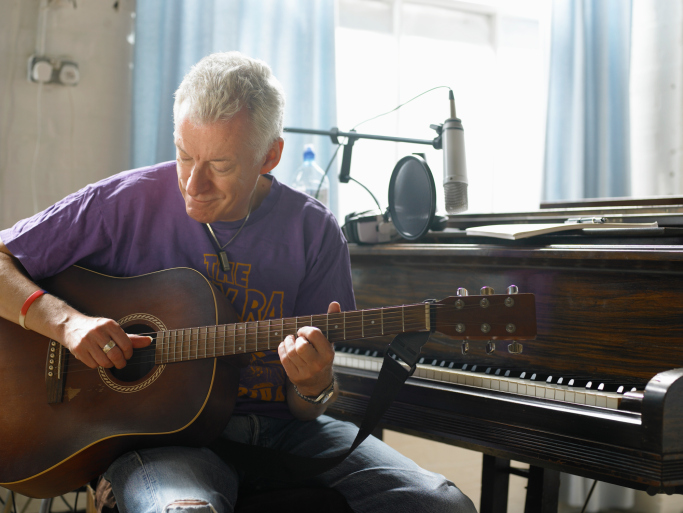
The intervention methods employed in music therapy can be roughly divided into active and receptive techniques. When a person is making music, whether by singing, chanting, playing musical instruments, composing, or improvising music, that person is using active techniques. Receptive techniques, on the other hand, involve listening to and responding to music, such as through dance or the analysis of lyrics. Active and receptive techniques are often combined during treatment, and both are used as starting points for the discussion of feelings, values, and goals.
Music therapy can be conducted with individuals or in groups, and the music may be chosen by the therapist or by the person in therapy. A music therapist will generally ensure the type and mode of the chosen form of music, as well as the timing of the music intervention, are appropriate for meeting the needs and goals of the individual in therapy.
When introducing music, therapists often base their selections on the Iso principle, which states music is more likely to have influence if it matches an individual’s current condition. Therapists therefore try to ensure the lyrics and melody of a selected piece of music are well matched with the mood and psychological state of the person in therapy.
Songwriting is commonly used in music therapy and may involve writing original songs or modifying existing ones, with the latter being a more structured approach to writing. A person might modify a song by changing some of the words or lines, adding new verses, or writing entirely new lyrics to match the existing tune. In cases when songs are freely composed, the therapist may provide an emotion or topic to serve as a starting point.
Music therapy can be used in a variety of ways:
When a person experiences difficulty communicating after a stroke, singing words or short phrases set to a simple melody can often enhance speech production and fluency.
A person with impaired motor skills might improve fine motor skills by playing simple melodies on a piano or tapping out a rhythm on drum pads. Listening to a rhythmic stimulus, such as a metronome, can also help a person initiate, coordinate, and time their movements.
A therapist might play a piece of music for children with autism who have limited social skills and ask them to imagine the emotional state of the person who created the music or the person who is playing it. Doing so can help a person with autism develop or strengthen the ability to consider the emotions others are experiencing.
Group drumming circles have been used to induce relaxation, provide an outlet for feelings, and foster social connectedness among members of a group. Group members might sit in a circle with a hand drum while the therapist leads them in drumming activities that may involve group members drumming one at a time or all at once. Those who are part of the circle may be asked to express how they feel by playing a rhythm on their drum or the group might be asked to improvise music as a means of increasing group cohesiveness.
Music might be incorporated into guided imagery or progressive muscle relaxation techniques to enhance the effectiveness of these methods.
TRAINING FOR MUSIC THERAPISTS
Those wishing to become a music therapist must have at least a bachelor’s degree in music therapy from an institution approved by the American Music Therapy Association (AMTA). Music therapy programs involve coursework as well as an internship in an educational and/or health care facility. After successfully completing one of the AMTA-approved programs, individuals must take the national examination offered by the Certification Board for Music Therapists (CBMT). If they are successful in the examination, they receive the credential Music Therapist-Board Certified (MT-BC), which is required for professional practice. Board certification is renewed every five years, and in order to maintain this credential, music therapists must retake the CBMT examination or complete 100 recertification credits within each five-year period.
LIMITATIONS OF MUSIC THERAPY
Music therapy generally produces positive results, but it is not recommended as a stand-alone treatment for serious medical and psychiatric issues. While music may help to alleviate some of the symptoms of these conditions, other forms of treatment such as medication, physical therapy, or psychotherapy may also be necessary.
Further, while it is possible for any form of music to be used effectively in music therapy, not all individuals will find each type of music to be therapeutic. The benefit of a particular type of music will often depend on an individual’s preferences and the condition experienced by that individual, and some music forms may actually cause agitation. To achieve success with music therapy, a therapist will likely need to ensure the musical preferences of the individual in treatment are taken into consideration.
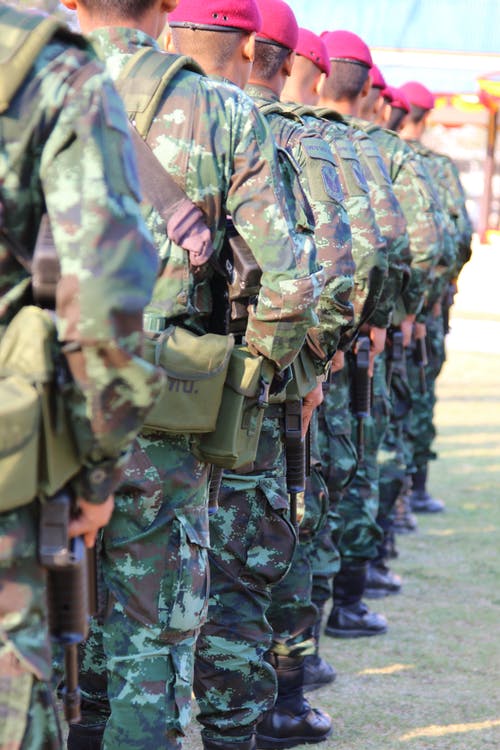
India has many special forces ( SF ). The three branches of Indian armed forces have special forces units. There are other special forces which are operated by the civilian organization. Small groups from the military SF units are deputed in the Armed Forces Special Operations Division, which has a unified command and control structure. Research and Analysis Wing, the external Intelligence agency of India, has separate special forces under its control, namely the Special Group and the Special Frontier Force.
Para commandos :
The Indian Army has 7 units that are a part of a larger parachute regiment. This unit was created in June 1966 in the aftermath of the 1965 Indo-Pakistani war. An impromptu commando unit called Meghdoot Force, which took part in the 1965 war, formed the first nucleus of the permanent Para commando battalion which was to be raised under the Parachute Regiment. By 1969, the unit had grown into 2 battalions, viz. the 9 Para and the 10 Para. The unit’s first combat missions were conducted during the 1971 Indo-Pakistani war in which they undertook raids against Pakistan’s military. They are trained to carry out intelligence collection subversion and sabotage of vital enemy infrastructure and communication through deep penetration and surgical strike behind enemy lines. In 2002, the 2 Para (SF) participated in Operation Khukri in Sierra Leone to rescue 223 soldiers of the Indian Army’s 5/8 Gorkha Rifles who were deployed as UN peacekeepers but were surrounded by militants from the Revolutionary United Front of Sierra Leone. Some of the later reported missions carried out by Para (SF) include the 2016 ′Surgical Strikes′ and the 2015 Operation Hot Pursuit, purportedly undertaken inside Myanmar.
The list of PARA (SF) Battalions is as follows: 1. 1 PARA (SF) 2. 2 PARA (SF) 3. 3 PARA (SF) 4. 4 PARA (SF) 5. 9 PARA (SF) 6. 10 PARA (SF) 7. 11 PARA (SF) 8. 12 PARA (SF) 9. 21 PARA (SF)
MARCOS ( Marine Commandos ) :
The special force unit of Indian Navy, is modelled on the US Navy SEALS. It was established in 1987. Months after their creation, MARCOS were deployed in Sri Lanka against the Liberation Tigers of Tamil Eelam (LTTE) in July 1987.
Some main operations of MARCOS:
1. Operation Tasha (1991) against the LTTE,
2. Operation Zabardust (1992) against a ship that was smuggling arms, 3. In support of the United Nations in Somalia (1993), 4. Participated in 1999 Kargil War, 5. MARCOS had participated in efforts against the 2008 Mumbai attacks.
After a 10 week long basic training, MARCOS are sent to train alongside Indian Army’s Para commandos for 3 weeks. Advanced training follows, during which MARCOS learn skills such as sky-diving, weapons training, counter-insurgency, languages and warfare in different terrains, among other things. Each MARCOS squad, called Prahar, is composed of 8 soldiers.
Garud Commando force :
The Garud commandos are the special forces of the Indian Air Force (IAF). Their tasks include counter-terrorism, hostage rescue, providing security to IAF’s vulnerably located assets and various air force-specific special operations. First conceived in 2002, this unit was officially established on February 6, 2004. It gets it name from Garuda ( A Hindu mythological God/bird ) .
All Garuds are volunteers who are imparted a 52-week basic training, which includes a three-month probation followed by special operations training, basic airborne training and other warfare and survival skills. The last phase of basic training sees Garuds been deployed to get combat experience. Advanced training follows, which includes specialised weapons training.
Special frontier force :
The Special Frontier Force is a confidential special forces unit of the Research and Analysis Wing which was created on 14 November 1962, to conduct covert operations behind Chinese lines in the event of another Sino-Indian war. It works under the operational command of Indian RAW. The units personnel are derived from Tibetan resistance fighters. Is a dedicated mountain and Jungle warfare unit.
National security guard or Black cats :
The National Security Guard, which is a specialized counter-terrorism Federal Contingency Force. The NSG was formally created in 1986. It is modelled on the basis of the British Special Air Service and the German GSG 9. The commandos are trained to conduct counter terrorist tasks, including counter hijacking on land, sea and air, bomb disposal, post blast investigation and hostage rescue missions.
Special protection group :
Formed in the 1988, SPG is tasked with proximate security of prime minister, former PMs and their immediate family members. They carry some of the most sophisticated weapons that include the FN Herstal (Assault rifle ), Glock pistol and FN Herstal ( P90 ) .
PSARA stands for Private Security Agency Regulation Act 2005 which came into force on 15 March 2006. The foremost purpose of the PSARA Act is to provide a safety services with adding the security guards training. This Act suggest that the security agency which are private in nature will not launch or start a business as well as it may not provide a security guard according to the license of PSARA Act. According to PSARA Act the companies which have private security agencies are desired to appoint supervisors. They are essential plus responsible for all the work of the security guards.
The PSARA Act basically deals with the authority as well as health circumstance of the security guards. The arrival of this Act made the license mandatory for carrying on business of private security agency. According to Act 29 of 2005 “The Private Security Agencies Regulation Bill” should been passed by both the Houses of Parliament received the assent of President on 23rd June, 2005. It came on the Statue Book as THE PRIVATE SECURITY AGENCIES (REGULATION) ACT, 2005 (29 of 2005). The PSARA Act, 2005 is the reason for establishment of this Act.
As time changed there is increase in number of business establishments due to it the demand for social security is rapidly increasing and this can be the prior reason for establishment of The PSARA Act, 2005. The Private Security Agencies helped in providing the security needs of the business. The Union Government is accountable for the regulation and functioning of these private security agencies. There are certain Private Multi-national security agencies which have been established their branches in the country. Controlling Authority means the controlling Authority appointed under sub section (1) of section 3.
It can be also define in the bare act were Private Security means security provided by a person other than a public servant to protect or guard any person or property or both and includes provision of armoured car service. Private Security Guard means a person providing private security with or without arms to another person or property or both which also includes a superintendent.
Private Security Agency refers to a person or a body other than a government agency department or organization engaged in the business which aims to provide private security services including the training and development of private security guards or their supervisor as well as providing Private Security Guards to any industrial or business undertaking or a company or any other person or property.
The State Government shall by notification designate an officer not below the rank of a Joint Secretary in the Home Department of the State or an equivalent Officer to be the controlling Authority, for the purpose of this Act.
The Private Security Agencies Regulation Act is extends to whole of India except the State of Jammu and Kashmir. The PSARA Act 2005 is one of the most vital Acts for the country.
PSARA License
This Act is considered mandatory for a private security business in India. Under this Act it was mentioned that the security agency which are private in nature will not commence or start a business and may not provide a security guard according to the license of PSARA Act. The Private Security provided by a person other than a public servant to protect or guard any person or property or both and includes provision of armored car service. The Private Security Agencies are controlled by the Private Security Agency Regulation Act, 2005 and to commence any business the security agency has to obtain the license from the State Controlling Authority. The PSARA Act shall be operating in one or more district of one state.
Under this Act any individual of a partnership firm and private company will become eligible for making the application of PSARA License. The verification of the applicant is requisite to be an Indian and also having a financial standing. In the Private Security Agencies Regulation Act License is valid for five years and then it have to re-establish over again for next five years in installments. The eligibility to obtain PSARA License is prescribed under the PSARA License Act 2005. The following are some important factors for receiving the PSARA License:-
1. Sole Proprietorship
2. Partnership Firm
3. One Person Company
4. Private Limited Company
All the above mentioned business entity can file their application to the concerned authority of the State. Therefore the PSARA License Act is very important factor for providing the License to the business. No person shall carry on or commence the business or private security agency, unless he holds a license issued under this Act and this can be mentioned in the Bare Act of PSARA (Private Security Agency Regulation Act) 2005.
The 1997 Booker Prize winner, The God of Small Things is set in 1960s Kerala. Author Arundhati Roy talks about different aspects of life in late 20th century Kerala, caste system, Keralite Syrian Christian lifestyle and communism. Although the protagonists, Estha and Rahel, were loved by their mother, the rest of the family hated the twins as they were half-Hindus and made their childhood miserable. The family blamed them for every misfortune that happened. To quote a line from the book, “This was the trouble with families. Like invidious doctors, they knew just where it hurt”. The siblings realized at a very young age the scary reality of life and the world. Their tortured childhood shaped their adult lives, making them more immune to the lies and hardships of the world around them.
Though the novel begins with Estha and Rahel, it also contains stories of their parents, relatives, friends of the family and political events happening at that time, which would shape the future of Kerala. Roy talks about the Indian post-colonial situation, and opinions of many Indians about the former British rulers. Estha’s and Rahel’s mother, Ammu dislikes her father for his blind devotion to the British. Ammu’s brother, Chacko explains to the twins that they come from a family of Anglophiles, or lovers of British culture, In Chacko’s words, “trapped outside their own history and unable to retrace their steps”.
Roy uses various techniques to represent the children’s point of view. She capitalizes certain words and phrases to give them significance. The children also say things that adults say, in a childish way, making short poems of dialogues they heard the adults say to each other. This shows the children’s way of looking at the world, distinct from the perspective of the grown-ups who surround them.
This book shows that how small things in life can affect a person’s life but there is always a ray of hope sent by the Almighty himself. This book is narrated brilliantly from the third person point of view and also through Rahel’s eyes. The book’s beauty lies in its way of narration and the author’s unique way of writing. A simple story of the highly complicated Ipe family set in the backdrop of social discrimination, communism and caste system, this book is mainly based on the betrayal and reading this book we can’t help but think, ‘Can we trust anyone? Can we trust ourselves?’. A stunning book, highly recommended for anyone who wish to read something different and have a great reading experience.


















You must be logged in to post a comment.