

Former indian captain and currently BCCI president ,the legendary cricketer ,who considered as the revolutionarise of this indian cricket , Saurabh Ganguly .Ganguly can into limelight when scored 113 runs against England . Fastest to reach 9000s runs in ODIs. He scored 16 centuries in test matches .He truely the best captain of indian cricket team . He is popularly know as The maharaj .
Category: News
Comprehensive, up-to-date news coverage, aggregated from sources all over the world by EduindexNews.
Believe it or not
A tree in uttar pradesh bears 121 varities of mango. Definately a good news for mango lovers.
15-year-old tree at Saharanpur district in UP is known for its mangoes. Horticulturists in Uttar Pradesh have managed to grow 121 different varieties of mangoes through grafting on a single tree. Grafting means the branches of different types of mangoes were planted on the branches of this 15 year old tree, when it is 10 years old. This was done for researching new varieties and taste of mangoes. The tree chosen for the research was 15 years old. Saharanpur is already famous for it’s mango production.

There are different varieties of mangoes found on that tree which include Dasheri, Chaunsa, Ramkela, Amrapali, Saharanpur Arun, Rataul, Kalmi Maldah Mango, Bombay etc. Horticulturists working on new species so that better varieties of mangoes can be produced. The tree has been grown in a very special way. This year, tree started producing 121 different varieties.
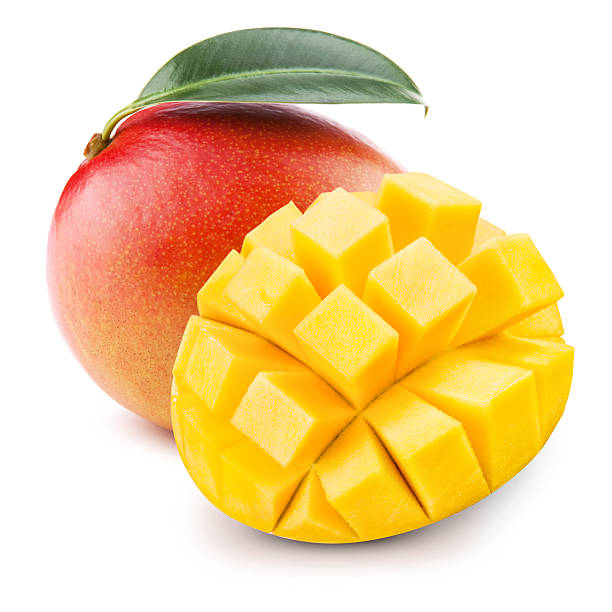
In India, there are around 1,500 mango varieties. Each state has their own specific variety, which is loved by people of that state.
Different types of mangoes are found on all the branches of this tree. According to research experts people can also use this technology.
PSYCHOLOGICAL ASPECTS OF WOMEN ATHLETE


Over the past several decades , the role of women has changed drastically .However , gender beliefs and stereotypes still do exist across the world especially in sports . Most of the people in our society consider that sports are not meant for females but only for males .Social tradition , customs and cultures have great influence upon the psychology of women . In a male dominating society , males are expected to be aggressive , independent , dominating , robust and confident , whereas females are expected as well as considered to be emotional , sensitive , cooperative , sympathetic , loyal , etc. It is a well – known fact that participation of women in sports is increasing year after year .With this enhancement in female participation in sports , there is also renewed interest in the psychological characteristics of the female athletes and the effects of athletics on women . The various psychological traits of women athletes are stated below .
- Gender Role Orientation : It is an established fact that there has been an increase in the level of women’s participation in the types of sports that have been traditionally limited to only males , e.g., wrestling , weightlifting , kick boxing , body building , etc . However , many sports have been still considered inappropriate for women . For a long time it was considered that women should not take part in athletics because of the potentially harmful masculinising effects of sports .
- Competitiveness : It is evident that in the field of sports , both men and women are competitive in their own fields . In fact , women are more goal oriented and perform magnificently in artistic activities such as gymnastics . However , a number of research studies indicate that females who take part in sports are more competitive in comparison to the females who do not participate in sports .
- Confidence : As mentioned earlier , due to social pressures , women tend to have less confidence than men . Participation in sports , competitive environment , awards and recognitions increase confidence levels of sportspersons . However , a significant difference may exist between sportswomen and non- sportswomen .
- Self-esteem : Most of the research studies indicate that training plays a vital role in performance . Self -esteem improves with good performance . In the field of sports , intensive training helps in enhancing self-esteem . Research studies also show that those people who engage in sports have high self-esteem in comparison to non-participants .
- Aggression : Aggression is a forceful , goal- directed action that maybe verbal or physical . Participation in sports has many positive aspects which usually involve aggressive behavior . Various studies of aggression show that athletes who participate in contact sports , i.e., football players , judos or wrestlers are more aggressive than the athletes who participate in less contact sports . However , females who participate in contact sports show more aggression in comparison to females who do not participate in sports at all.
How caffeine boosts your workout
Studies have shown that Caffeine benefit endurance performance, high-intensity exercise and power sports. There have been enumerable researches on the effectivness and safety of caffeine. It is the most studied supplement out there. Caffeine has health benefits, but the performance benefits are discussed in this article.

4 reasons why caffeine makes workouts better
1 – MORE ENERGY – the first reason why caffeine makes your workouts better is, it increases your energy levels. Here, energy means alertness. The way caffeine works in your brain is as a central nervous stimulator, it blocks certain receptors to increase the levels of adernaline, dopamine, epinephrine. The increased levels of epinephrine, dopamine and adernaline give you the drive and a little bit of euphoria. The “drive” that you get makes a large difference between a good workout and a bad workout.
2. MORE STRENGTH – the second reason why caffeine makes your workouts better is, it increases your muscle strength. The research on caffeine shows that “one dose” of caffeine before workout can have an effect on your strength and increase your strength immediately. One dose implies a high enough amount of caffeine, i.e 300mg or more. The main way it does this is by stimulating the nervous system. The nerves which activate muscle fibres, with the intake of caffeine now activate those muscle fibre’s with even more force . More force on muscle fibre’s equals more strength.
3. MORE ENDURANCE – the third reason why caffeine makes your workouts better is, it increases your endurance during workouts. There are several ways through which caffeine increases your endurance. The first way is, by increasing fat burning levels during workouts. This means that when you train with caffeine, you burn more fat.That spears muscle glycogen which means you have more energy later on in the workout, when you need it. Another way by which caffeine increases your endurance is by boosting nitric oxide levels. Research actually shows that caffeine can enhance vessel dilation. It makes your blood vessel’s wider, which ensures in greater blood flowing through muscles. More blood flowing through muscles delivers more oxygen and more nutrients, which indeed increase endurance during workouts
4. LESS MUSCLE PAIN – the fourth and final reason why caffeine makes your workouts better is, it decreases muscle pain during workout. Research actually shows that caffeine works better than ibuprofen for blunting your muscle pain during workouts. With less muscle pain, you can go off limits with your workout and hit those extra reps which wouldn’t be possible without caffeine. More reps equals better results.
Performance benefits research
In a research conducted by National Library of Medicine with the purpose of studying the duration of caffeine’s ergogenic effect and whether it differs between users and non users of the drug, where Twenty-one subjects (13 caffeine users and 8 nonusers) completed six randomized exercise rides to exhaustion at 80% of maximal oxygen consumption after ingesting either a placebo or 5 mg/kg of caffeine. Exercise to exhaustion was completed once per week at either 1, 3, or 6 hours after placebo or drug ingestion.
Exercise time to exhaustion differed between users and nonusers with the ergogenic effect being greater and lasting longer in nonusers.
In conclusion, both the duration and magnitude of the ergogenic effect that followed a 5 mg/kg dose of caffeine were greater in the nonusers compared with the users.
*ibuprofen – Ibuprofen is a medication in the nonsteroidal anti-inflammatory drug class that is used for treating pain, fever, and inflammation*
Captain Cool turned 40 yesterday!

Can any Indian forget Ravi Shastri’s words from the commentry box?
“Dhoni finishes off in style. Magnificent strike into the crowd. India lifts the World Cup after 28 years.”
– Ravi Shastri, World Cup 2011
These are words that will remain engraved in our hearts and minds forever. MS Dhoni smashed the winning six to help India defeat Sri lanka and win World cup 2011 at Wankhade stadium. This World Cup winning moment is still cherished by every Indian cricket fan. Not only did Dhoni give millions of Indians a memory worth revisiting throughout their lives, but also transformed himself into a formidable “finisher”, one with ice in his veins.

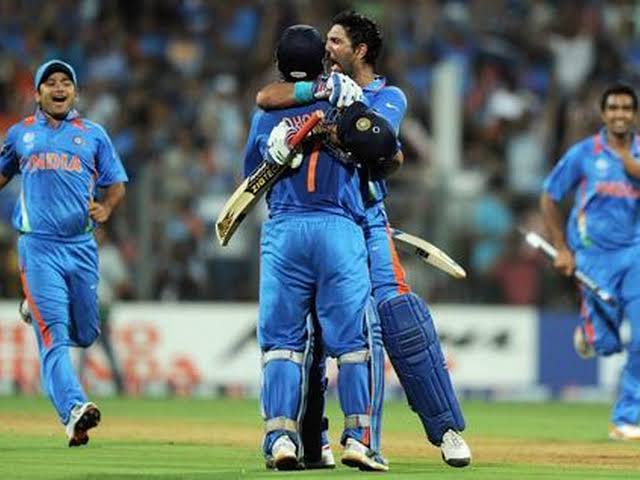

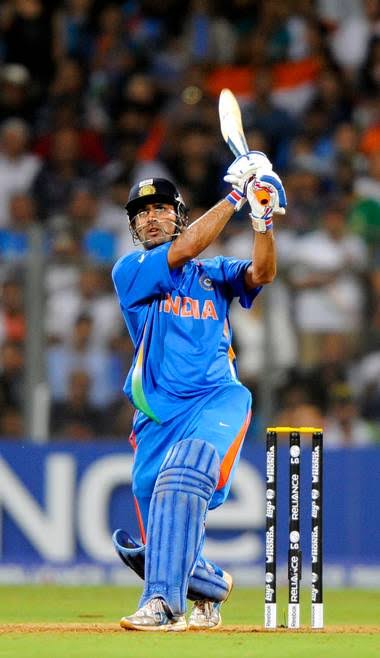
The player with the most captaincy caps in international cricket, Dhoni is the only skipper in history with all 3 ICC titles (excluding WTC as it started after his retirement). He played 90 Tests, 350 ODIs and 98 T20Is before quitting international cricket in August 2020. He had quit the longest format in December 2014. India’s semi-final exit in the 2019 World Cup, a heartbreak against New Zealand, turned out to be Dhoni’s last appearance in the blue jersey. Dhoni, almost a year ago, drew curtains on an illustrious international career. He announced his retirement from all forms of international cricket on 15 August 2020. Dhoni, however, is yet to contemplate retirement from franchise cricket. He will be seen in action when CSK battles for yet another title in the remainder of IPL 2021 this year. Amid growing calls over not-so-young Dhoni’s ability to deliver with the bat, all we can say is — “Enjoy It While It Lasts”.
The “Captain Cool”, India’s beloved skipper who has won all major cricketing accolades that one can achieve during his playing stint, and is still a fan favourite amongst all age group celebrated his 40th birthday yesterday with his family and friends.

Since the former India captain lives a private life and doesn’t make public appearances, the fans hadn’t been able to get a glimpse of their favourite player on his birthday. Dhoni lives a private life in Ranchi with his wife, daughter and parents. Dhoni also stays away from social media and the fans have to wait for Sakshi’s posts to get a glimpse of the icon. Dhoni has a staggering social media following but he hardly uses any of the platforms.
A fan managed to get his pic which has now gone viral on social media. The India legend can be seen holding a placard, which has a birthday wish for him. Dhoni is sporting his latest moustache look, a bold army one.

The former Indian Captain – who holds the honorary rank of Lieutenant Colonel in the Territorial Army — would like to spend more time with his unit in the Army now after his retirement, said the news agency PTI.
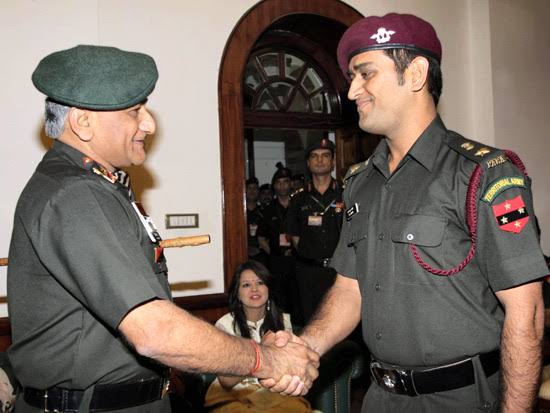
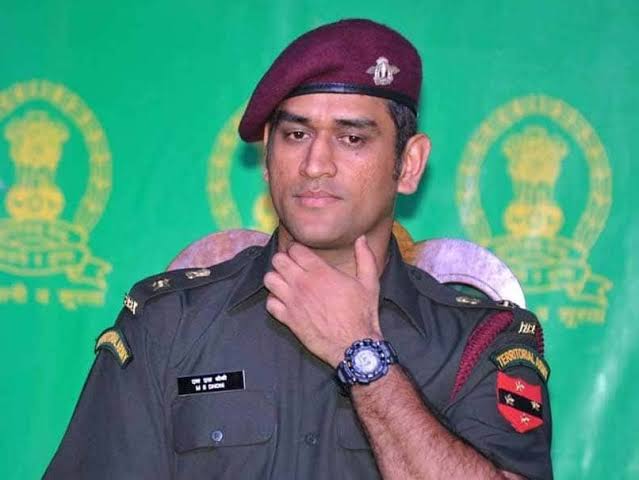
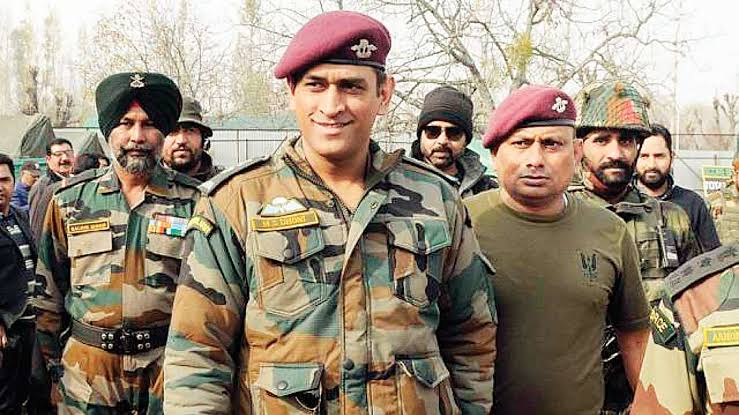
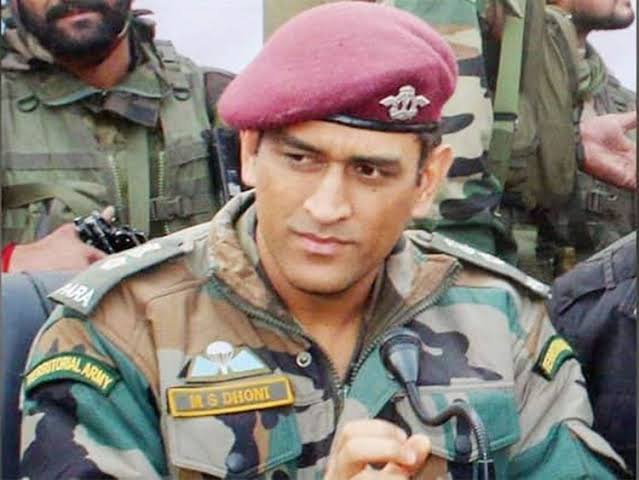
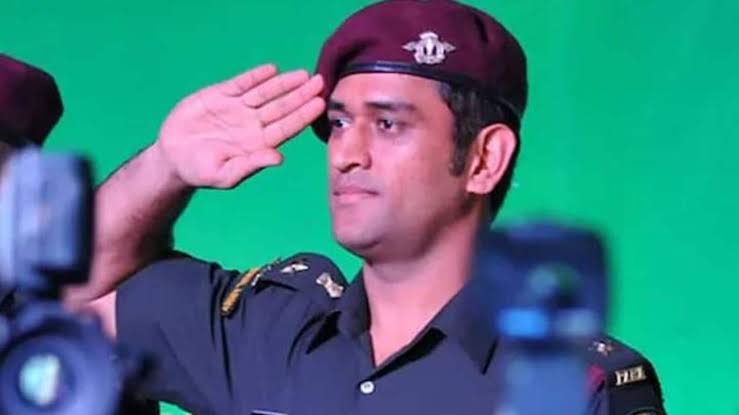
“One thing is for sure, he will be spending more time with the Army. He will also give time to his commercial ventures and other commitments. We will sit down soon and decide the way forward.”
Mahendra Singh Dhoni to the news agency
As our beloved Mahi turned 40, wishing him a great year ahead with lot more success in every step he takes. Hope his retirement life be brighter than the one before.
Wishing you a belated birthday Sir. Hope your smile never fades. It affects a million Indian hearts.

Environmental pollution
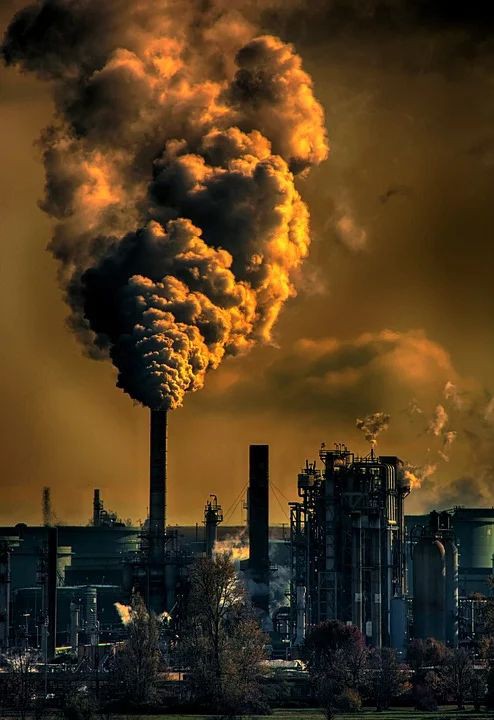
“Humankind has not woven the web of life. We are but one thread within it. Whatever we do to the web, we do to ourselves. All things are bound together. All things connect.”
~ Chief Seattle
What is environmental pollution ?
Is it degrading our lifestyle ?
How can we improve our environment ?
Let’s get through the topic .
Introduction
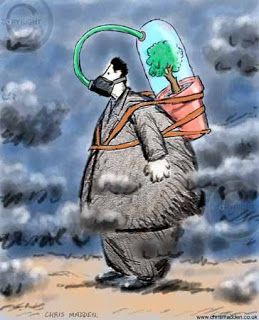
One of the greatest problems that the world is facing today is that of environmental pollution, which is causing grave and irreparable damage to the natural world and human society with about 40% of deaths worldwide being caused by water, air and soil pollution and coupled with human overpopulation has contributed to the malnutrition of 3.7 billion people worldwide, making them more susceptible to disease.
Environmental pollution is defined as “the contamination of the physical and biological components of the earth/atmosphere system to such an extent that normal environmental processes are adversely affected.”
From: Environmental Management, 2017
We all are well known about the word Environmental pollution . It is not some kind of new phenomenon , yet it is a greatest problem facing by our society . Still , people are avoiding the topic to its utmost.
Environmental pollution is one of the most serious global challenges. Wild-type organisms have a slower degradation rate of hazardous materials.
Both developed and developing nations share this burden together, though awareness and stricter laws in developed countries have contributed to a larger extent in protecting their environment.
Reasons behind environmental pollution
- The Burning of Fossil Fuels. Industrial Emission.
- Indoor Air Pollution.
- Wildfires.
- Microbial Decaying Process.
- Transportation.
- Open Burning of Garbage Waste.
- Construction and Demolition.
- Urbanization and industrialization. Since the era of industrial revolution, man has continued to introduce hazardous materials into the environment at an alarming rate.Mining and exploration.
- Agricultural activities.
- Particulate matter.
- Plastics.
- Energy production.
- Deforestation.
- Mining.
- Over population.
- Increase in global average temperature.
Effects of environmental pollution

Environmental pollution is an incurable disease . It can only be prevented.
Barry commoner
1. Effects on Humans. The effects of environmental pollution on humans are mainly physical, but can also turn into neuro-affections in the long term. The best-known troubles to us are respiratory, in the form of allergies, asthma, irritation of the eyes and nasal passages, or other forms of respiratory infections. Other rarer diseases include hepatitis, typhoid affections, diarrhea, and hormonal disruptions.
2. Effects on Animals . Environmental pollution mainly affects animals by causing harm to their living environment, making it toxic for them to live in.
3. Effects on plants . As for animals, plants, and especially trees, can be destroyed by acid rains (and this will also have a negative impact on animals as well, as their natural environment will be modified), ozone in the lower atmosphere block the plant respiration, and harmful pollutants can be absorbed from the water or soil.
Solutions for environmental pollution.
- Evironment planning.
- Shifting to eco-friendly transportation.
- Air pollution must involve moving away from fossil fuels, replace them with sustainable fuels .
- Solar power .
- Wind power.
- Go green.
- Storage facilities for solid waste.
- Environmental friendly products.
- Policies implimentation for environmental pollution.
- We also need to work on electromagnetic radiation (ER) reduction.
- Awareness through mass media.
- More green parks and areas.
- Environmental education, etc,.

“We say we love flowers, yet we pluck them. We say we love trees, yet we cut them down. And people still wonder why some are afraid when told they are loved.”
~ Paul Morley
Link
What are the Rules of Differentiation?
Differentiation is easy to deal with the following rules. It is considered to be easier than solving integrals. Most of the integrals can be evaluated using an antiderivative calculator while derivatives have some rules that students should grasp on priority.
These rules should be applied to according to the equation or underlying problem. We will explain the basic rules for students so that they can solve derivative problems like a pro.

1. Power Rule
The power rule is applied to polynomial functions. The formula is:
The example of f(x2) we solved to learn derivatives is a perfect representation of the power rule. But for more understanding, see another example:
Example:
Derivative of x6. Solve this using limits as well as power rules.
Solution:
Solving using limits.
Step 1: Add delta x i.e and expand the equation.
= (x + )6
f(x + )6 = (x6 + 6x5
+ … +
6)
Step 2: Apply the formula of the slope.
=
=
= … cancelling x6
=
= 6x5 + 15x4 x + … +
x5
Step 3: Apply limit.
f’(x6) =6x5 + 15x4
x + … +
x5
= 6x5
Solving using power rule.
Step 1: Write the function.
f(x) = x6
Step 2: Identify the components and apply the power rule.
As yn = nyn-1, (we formed the formula with y to remove any confusion.)
Here, y = x
n = 6
Applying the rule;
f’(x6) = (6)x6-1 = 6x5
The results of both methods are the same. This proves that the power rule is true for any n.
2. Sum & Difference Rule
Two functions in addition or difference are also eligible for a differentiation rule. The rules applied in such situations are;
f + g = f +
g
f – g = f –
g
Solution:
Step 1: Apply derivative.
= ( 2x + 3x2)
Step 2: Apply the rule.
= 2x +
3x2
= 2.1x1-1 + 3.2x2-1 applying the power rule.
= 2 + 6x
3. Product Rule
When the derivative of two functions in multiplications is computed, we then use the product rule. An example of such a function will be 4x4(3x + 9).
The formula of product rule is:
f(x)g(x) = f
g + g
f
What is the derivative of 4x4(3x + 9)?
Solution:
Step 1: Apply derivative.
=4x4(3x + 9)
According to the product rule.
=4x4(3x + 9) + (3x + 9)
4x4
Step 2: Solve for (3x + 9).
=(3x + 9)
Apply sum rule.
=3x +
9
= 3 + 0 … (power rule for 3x and constant rule for 9)
= 3
Step 3: Solve for 4x4.
Using power rule;
= 4.{(4)x4-1}
= 4.4x3
= 16x3
Step 4: Put the values and simplify.
= 4x4.3 + (3x +9)16x3
= 12x4 + 48x4 + 144x3
= 60x4 + 144x3
= x3(60x + 144)
4. Constant Rule
It is probably the simplest derivative rule. When we don’t have a variable in a function e.g y=4, then the derivative is 0.
f’(c) = 0
Where c is a constant number. This rule makes sense if you try to visualize it.
Since x = 0, hence there is no slope. And the graph is a straight vertical line. But let’s see this with the help of differentiation.
Example:
What is the derivative of f(x) = 5.
Solution:
Step 1: Add delta x.
f(x + ) = 3 +
= 3
Step 2: Apply formula.
=
=
= 0/ = 0
5. Quotient Rule
We have a formula for product but do we have a formula for division? Yes! And It is called the quotient rule. It is mainly derived from product rule for differentiation.
=
A quotient equation looks something like this: . To find its derivative, it is divided into two parts;
. You can see that actually, we have to perform the product rule.
= f(x)
+
f
All we need to do is to find the derivative of 1/g(x). Following all the familiar process of applying formula and limit, we will get:
Note that is the
with a negative sign.
Or it can be written as:
Now on putting this value in the product formula we discussed above:
=
+
Taking LCM.
=
=
This is the quotient rule.
Find the derivative of (x – 3)/(x3 + x).
Solution:
Directly apply the quotient rule.
Step 1: Find the derivative of (x-3).
=(x-3)
= 1
Step 2: Find derivative of (x3-x)
=(x3-x)
Using the rules discussed above;
= 3x2 – 1
Step 3: Use these in the main equation.
After simplifying;
6. Chain rule
Last but not the least, we have the chain rule. It states that:
or f(g(x)) = f’{g(x)}g’(x)
This is for simplicity’s sake. When a function has many mathematical operations, it is better to convert it in terms of two functions e.g, we have a function:
f(x)= (X2 + 6)4
Let g =X2 + 6, then
f(g) = (g)4 where g =X2 + 6
f(g(x)) = (X2 + 6)4
To find its derivative, you first find the difference of f with respect to g and then g’(x). After that, multiply.
Solution:
Let g(x) = x2 + 6
And f(g) = g4
So the derivative of f(g(x)) = f(g(x)) =f’(g(x)).g’(x).
Applying the chain rule.
Step 1: Find the derivative of g(x).
= x2 + 6 … using power rule for x2 and constant rule for 6
= 2x
Step 2: Find the derivative of f(g).
= g4
= 4g3
Step 3: Putting in the formula and multiplying.
= 4(x2+6)3. 2x
= 8x.(x2+6)3
Wrapping up
<
p class=”MsoNormal” style=”line-height: 22px”>All of the above listed rules of derivatives are most common rules that students have to deal with during their academic course. You should practice these rules to avoid any step backs during your exams. You should also try differentiation calculator after practicing these rules. This tool will help you out in solving derivatives while performing differentiation.
Whether people should solve their problems or accept them?
Many people think it is better to accept a situation the way it is even if it is not up to their expectation whereas, others are of the opinion that it is important to solve such problems. In my opinion the best case scenario is to make such situations better so that a person has no regrets.
To embark on, people accept a bad a situation because they fear that if they do not accept it they would not get another opportunity and will have what they have. Another reason why people do not improve their condition is because they do not have any other option and accepting it is the last resort. For an instance, an uneducated person working at a tea stall is not happy with his job and is not satisfied with the salary but he cannot do anything as he is uneducated and it the only source of income for him. Therefore it is impossible for him to improve his situation as he has no other option and even if he tries to do something else he might end up loosing everything. Hence the risk of loosing everything often makes a people stick to what they have even if they are not happy with it.
However many people believe that it is important to improve such situations because if a person does not try to make situations better they may end up regretting it in the later phase of their life. Furthermore if a person is not happy with what he is doing he may not do the same to his fullest potential and may end up loosing that opportunity. For example a person doing a job in which he is not happy and has no interest may end up loosing his job. Hence, not making a change will worsen the conditions.
According to me, it is very important to make things right so as to make full use of the opportunities . It is very important to at least try so that one does not have any regret.
To encapsulate, a person ought not accept a bad situation and must try to make it better to make the full use if the opportunities given. This will result in making life better and easier for some people.

England knocks out Denmark (EURO 2020 Semis)
England reach the final of a major tournament for the first time since 1966 after defeating Denmark after extra-time. Mikkel Damsgaard put the Danes ahead at Wembley with a stunning free-kick to breach the Three Lions’ defence for the first time of the tournament. An own goal from Simon Kjaer levelled the scores before half-time. Neither team could find a winner in 90 minutes, sending the contest to extra-time. Raheem Sterling drew a foul from Joakim Maehle, earning his team a penalty. Harry Kane missed the spot-kick as Kasper Schmeichel produced the save. However, luck was on the side of England as Kane converted the rebound. It was enough to send the Three Lions through to the final.

England will take on Italy in the European Championship final at Wembley on Sunday. Denmark deserve a huge amount of plaudits for their run in the competition in light of the circumstances following Christian Eriksen’s life-threatening collapse in their opener. They leave with their heads held high and return to action on September 1 against Scotland in their World Cup qualifying campaign.

Absurd Play
Absurd theatre came about as a reaction to world II. It took the basis of existential philosophy and combine it with dramatic element to create a style of theatre which presented a world which cannot be logically explained.
The absurdist play was initially created because critics and reviews were used to be more conventional: realism in practice. the absurd play departs from the realistic characteristic situation and all of the associated theatrical conventions. Time, place, and identity are ambiguous and fluid and even basic causality frequently breaks down. Meaningless plots repetitive or nonsensical dialogues and dramatic non-sequence are often used to create dreamlike or even nightmare life moods. There is a fine line, however between the careful and artful use of chaos and non-realistic elements and true, meaningless chaos. while many of the places described by this seem to be quite random and meaningless.
The character in the absurdist play is lost and floating in an incomprehensible universe and they abandon rational devices and discursive thought because these approaches are inadequate. Many characters appear as automatons stuck in runtime speaking only in cliche. Characters are frequently stereotypical, archetypal, or flat characters. In an absurd play, characters may also face the chaos of a world that science and logic have abandoned.
The plot of many plays features the character in interdependent pairs, commonly either two males or a male and a female. The two characters may be roughly equal or have a begrudging interdependence. One character may be dominant and may torture the passive character.
Language plays the most important role. Despite its reputation for nonsense language, much of the dialogue in the absurdist play is naturalistic. The movements when character restores their senses, when words appear to have lost their denotative function, thus creating misunderstanding among the characters. In other cases, the dialogue purposefully elliptical; The language of absurdist theatre becomes secondary to the poetry of the concrete and objectified image of the stage.
AWS technology

The AWS technology is enforced at server farms throughout the planet, and maintained by the Amazon subsidiary. Fees square measure supported a mix of usage (known as a “Pay-as-you-go” model), hardware, OS, software, or networking options chosen by the subscriber needed accessibility, redundancy, security, and repair choices. Subscribers will pay for one virtual AWS pc, an avid physical pc, or clusters of either. As a part of the subscription agreement,[9] Amazon provides security for subscribers’ systems. AWS operates from several world nations together with half-dozen in North America.[10]
Amazon markets AWS to subscribers as some way of getting giant scale computing capability a lot of quickly ANd cheaply than building an actual physical server farm.[11] All services square measure beaked supported usage, however every service measures usage in variable ways that. As of 2017, AWS owns thirty third of all cloud (IaaS, PaaS) vi whereas subsequent 2 competitors Microsoft Azure and Google Cloud have eighteen, and Sep 11 severally, in step with natural process cluster
AWS is close to launch fifteen a lot of of their accessibility zones and {again|once a lot of} individually 5 more zones in Australia, India, Indonesia, Spain, and Swiss Confederation.[10]
Each region is entirely contained among one country and every one of its information and services keep among the selected region.[9] every region has multiple “Availability Zones”,[101] that carries with it one or a lot of separate information centers, every with redundant power, networking and property, housed in separate facilities. accessibility Zones don’t mechanically offer further quantifiability or redundancy among a section, since they’re deliberately isolated from one another to stop outages from spreading between Zones. many services will operate across accessibility Zones (e.g., S3, DynamoDB) whereas others is organized to copy across Zones to unfold demand and avoid period of time from failures.
AWS launched AWS re/Start within the uk to assist young adults and military veterans retrain in technology-related skills. In partnership with the Prince’s Trust and therefore the Ministry of Defence (MoD), AWS can facilitate to supply re-training opportunities for youth from deprived backgrounds and former military personnel. AWS is functioning aboard variety of partner firms together with Cloudreach, Sage Group, EDF Energy
The Battle of Saragarhi
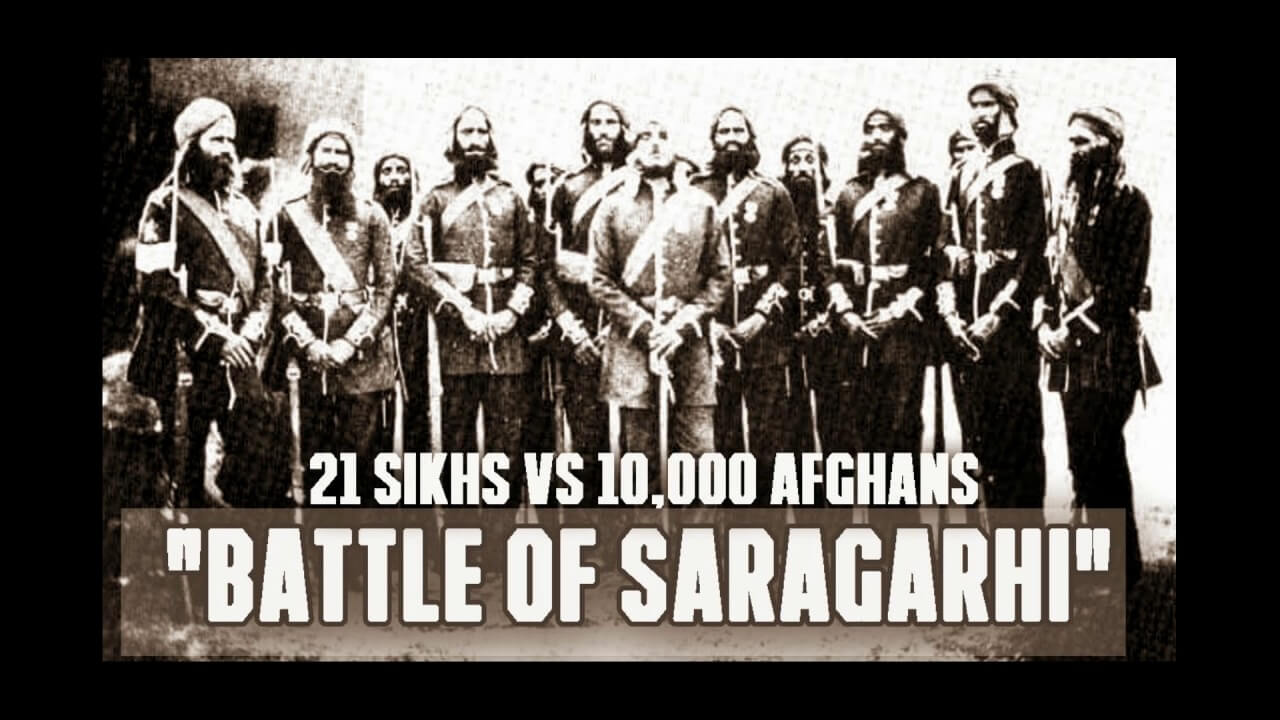
The Battle of Saragarhi was a last-stand battle fought before the Tirah Campaign between the British Raj and Afghan tribesmen. On 12 September 1897, an estimated 12,000 – 24,000 Orakzai and Afridi tribesmen were seen near Gogra, at Samana Suk, and around Saragarhi, cutting off Fort Gulistan from Fort Lockhart. The Afghans attacked the outpost of Saragarhi where thousands of them swarmed and surrounded the fort, preparing to assault it. Led by Havildar Ishar Singh, the 21 soldiers in the fort—all of whom were Sikhs—chose to fight to the death, in what is considered by some military historians as the greatest last stand in history. The post was recaptured two days later by another British Indian contingent. The Indian Army’s 4th battalion of the Sikh Regiment commemorates the battle every year on the 12th of September, as Saragarhi Day.
Saragarhi was a small village in the border district of Kohat, situated on the Samana Range, in present-day Pakistan. On 20 April 1894, the 36th Sikhs of the British Indian Army was created under the command of Colonel J. Cook, entirely composed of Jat Sikhs. In August 1897, five companies of the 36th Sikhs under Lieutenant Colonel John Haughton were sent to the northwest frontier of British India (modern-day Khyber Pakhtunkhwa) and were stationed at Samana Hills, Kurag, Sangar, Sahtop Dhar, and Saragarhi.
The British had partially succeeded in getting control of this volatile area, but tribal Pashtuns continued to attack British personnel from time to time. Thus, a series of forts, originally built by Ranjit Singh, the ruler of the Sikh Empire, were consolidated. Two of the forts were Fort Lockhart (on the Samana Range of the Hindu Kush mountains), and Fort Gulistan (Sulaiman Range), situated a few miles apart. Fort Lockhart is located at 33.5562°N 70.9188°E. Due to the forts not being visible to each other, Saragarhi was created midway, as a heliographic communication post. The Saragarhi post, situated on a rocky ridge, consisted of a small block house with loop-holed ramparts and a signalling tower.
A general uprising by the Afghans began there in 1897 and, between 27 August and 11 September, many vigorous efforts by Pashtuns to capture the forts were thwarted by the 36th Sikhs. In 1897, insurgent and inimical activities had increased, and on 3 and 9 September Afridi tribesmen, allied with the Afghans, attacked Fort Gulistan. Both the attacks were repulsed, and a relief column from Fort Lockhart, on its return trip, reinforced the signalling detachment positioned at Saragarhi, increasing its strength to three non-commissioned officers (NCOs) and eighteen other ranks (ORs).
Having destroyed Saragarhi, the Afghans turned their attention to Fort Gulistan, but they had been delayed too long, and reinforcements arrived there in the night of 13–14 September, before the fort could be captured. The Pashtuns later admitted that they had lost about 180 killed and many more wounded during the engagement against the 21 Sikh soldiers. Some 600 bodies are said to have been seen around the ruined post when the relief party arrived (however, the fort had been retaken, on 14 September, by the use of intensive artillery fire, which may have caused some casualties). The total casualties in the entire campaign, including the Battle of Saragarhi, numbered around 4,800.
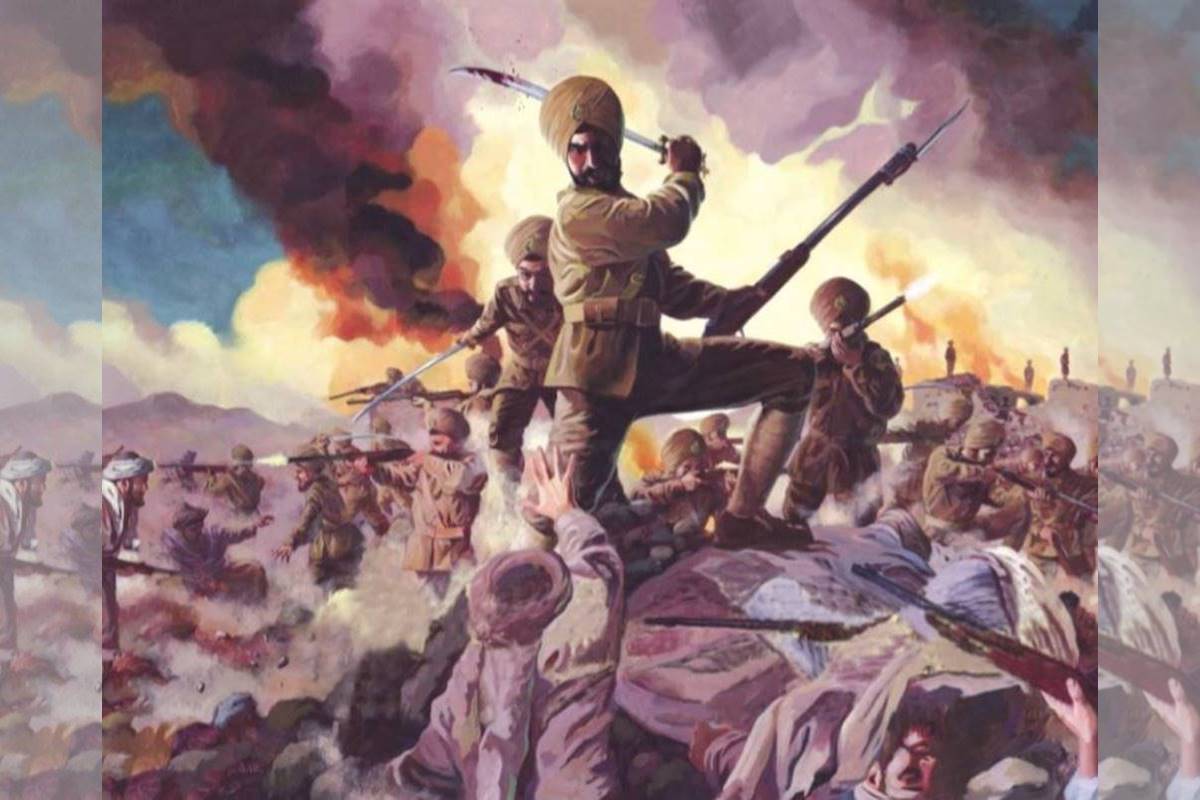
The names of those 21 sikh soldiers are:
- Havildar Ishar Singh
- Naik Lal Singh
- Lance Naik Chanda Singh
- Sepoy Sundar Singh
- Sepoy Ramm Singh
- Sepoy Uttar Singh
- Sepoy Sahib Singh
- Sepoy Hira Singh
- Sepoy Daya Singh
- Sepoy Jivan Singh
- Sepoy Bhola Singh
- Sepoy Narayan Singh
- Sepoy Gurmukh Singh
- Sepoy Jivan Singh
- Sepoy Gurmukh Singh
- Sepoy Ram Singh
- Sepoy Bhagwan Singh
- Sepoy Bhagwan Singh
- Sepoy Buta Singh
- Sepoy Jivan Singh
- Sepoy Nand Singh

In 2019, a Bollywood movie “Kesari” directed by Anurag Singh was made on the events of the Battle of Saragarhi.

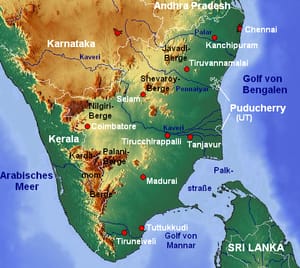
THE WESTERN GHATS AND THE EASTERN GHATS
The Western Ghats
Western Ghats extend from the Nilgiris in the north to Marunthuvazh Malai at Swamithope in Kanyakumari district in the south. Height of the Western Ghats ranges from 2,000 to 3,000 meters. It covers an area of about 2,500 sq.km. Though the Western Ghats is a continuous range, it has some passes. The passes are Palghat, Shencottah, Aralvaimozhi and Achankoil. The Nilgiris, Anaimalai, Palani hills, Cardamom hills, Varusanadu, Andipatti and Agasthiyar hills are the major hills of Western Ghats.
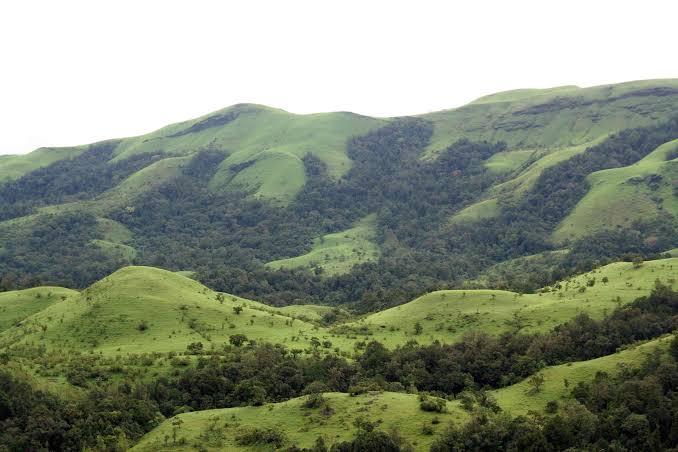
Nilgiri Hills
The Nilgiri hills is located in the Northwestern part of Tamil Nadu. It consists of 24 peaks with more than 2,000 meters height. Doddabetta is the highest peak (2,637 meters) of this hills followed by Mukkuruthi (2,554 meters). Ooty and Coonoor are the major hill stations located on the hills. It has more than 2,700 species of flowering plants and the state animal Nilgiri Tahr is found in this hill.
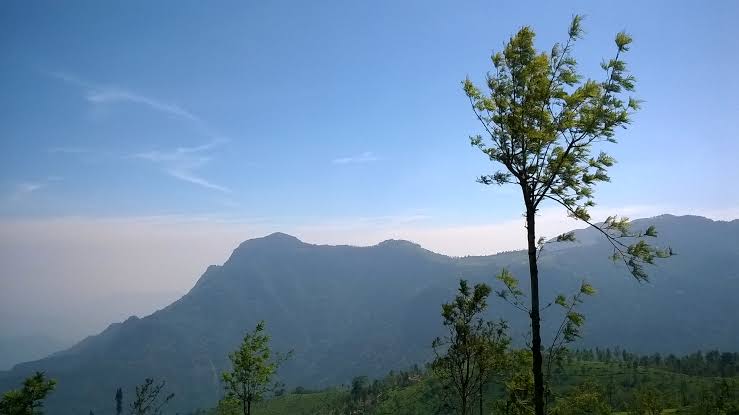
Anaimalai
Anaimalai is located in the border of Tamil Nadu and Kerala. It is located to the south of Palghat Gap. Anaimalai Tiger Reserve, Aliyar Reserved Forest, Valparai hill station, Kadamparai hydroelectric Power Plant are located on this hills. Aliyar and Tirumurthy dams are located at the foothills of this range.
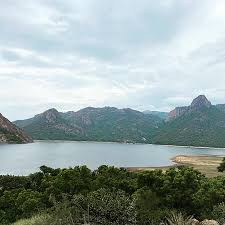
Palani Hills
Palani hills are the eastward extension of the Western Ghats. These hills are located in Dindigul district. Vandaravu (2,533 meters) is the highest peak in the Palani hills. Vembadi Shola (2,505 meters) is its second highest peak. The hill station of Kodaikanal (2,150 meters) lies in the south central portion of the range.
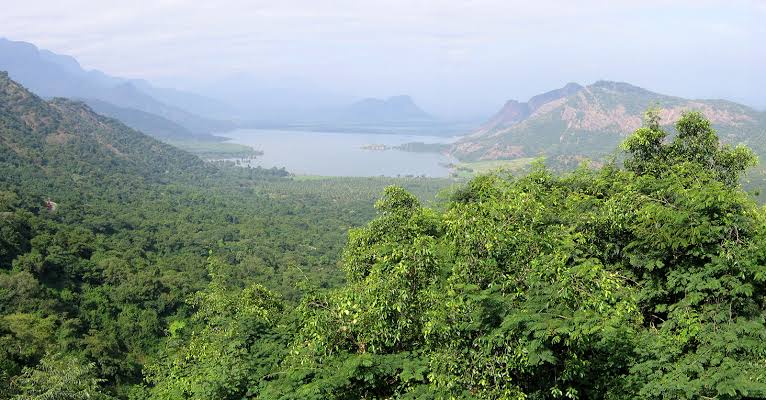
Cardamom Hills
These hills are also known as Yela Mala hills located in the southwestern part of Tamil Nadu. It acquires its name from the cardamom spice, which is commonly grown here. Pepper and coffee are the other crops cultivated over the hills. They meet the Anaimalai hills in the northwest, the Palani hills in the northeast and Varusanadu and Andipatti hills in the southeast.
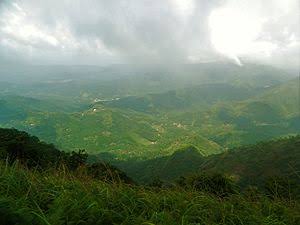
Varusanadu and Andipatti Hills
Another eastward extension of Western Ghats is Varusanadu and Andipatti hills. Megamalai (the highway mountain), Kalugumalai, Kurangani hill station and Suruli and Kumbakarai waterfalls are found on these hills. Srivilliputhur Grizzled Squirrel Wild life Sanctuary is located in the southern slope of these hills in Virudhunagar district. Vaigai river and its tributaries originate in this region.
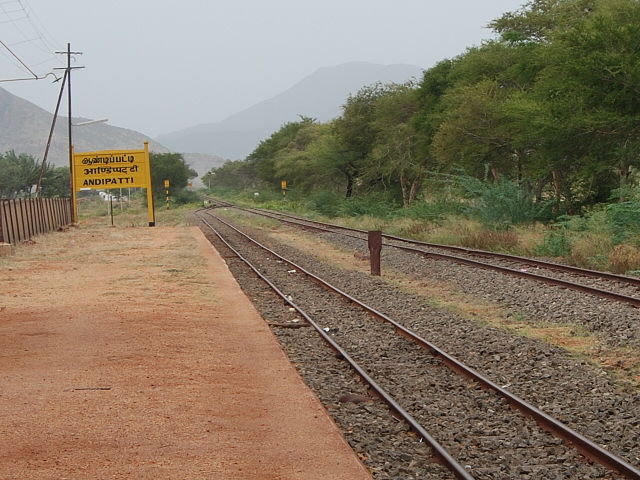
Pothigai Hills
It’s major part lies in Tirunelveli district with its southern slope in the Kanyakumari district. Pothigai hills are called with different names such as the Shiva Jothi Parvath, Agasthiyar hills and Southern Kailash. These hills feature richest biodiversity in the Western Ghats. This area is known for its rich evergreen forest, waterfalls and ancient temples. Kalakkad Mundanthurai Tiger Reserve is located in this region.
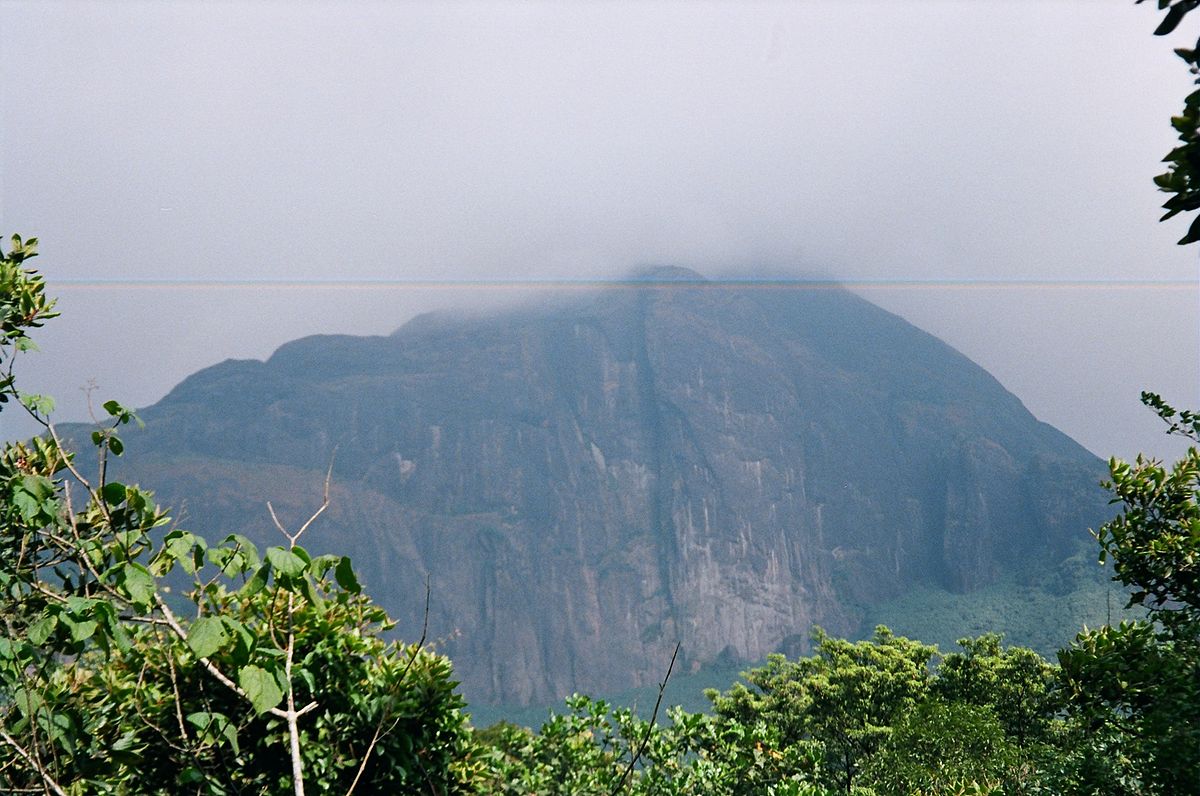
Mahendragiri Hills
This continues range is situated along the border of Kanyakumari and Tirunelveli districts and is a part of the southern range of the Western Ghats. It’s average height is 1,645 meters.
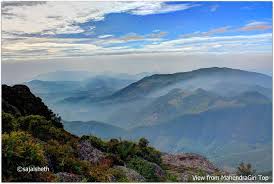
The Eastern Ghats
Unlike Western Ghats, Eastern Ghats is a discontinuous and irregular one. It is dissected at many places by the rivers, which drain into the Bay of Bengal. It’s height ranges from 1,100 to 1,600 meters. These hills separate the plains from plateaus. Javadhu, Servarayan, the Kalrayan, Kollimalai and Pachaimalai are the major hills of the Eastern Ghats of Tamil Nadu and are located in northern districts of the state.
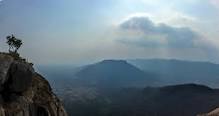
Javadhu Hills
Javadhu hills are an extension of the Eastern Ghats spread across parts of Vellore and Tiruvannamalai districts and separates these two districts. Many peaks with the height of 1,100-1,150 meters are located in this range. Melpattu is its highest peak. Many parts of this range are covered with bluish grey granites. It is noted for its fruit bearing trees, medicinal herbs and sandalwoods. Due to illegal logging, sandalwood trees are disappeared now.
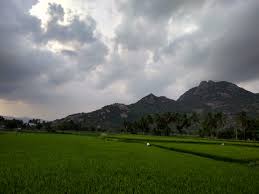
Kalvarayan Hills
The name ‘Kalvarayan’ comes from the word ‘Karalar’, the ancient name of the present tribes. It is another major range of hills in the Eastern Ghats of Tamil Nadu. This range, along with the Pachaimalai, Aralvaimozhi, Javadhu and Servarayan hills, separate the river basins of Cauvery and Palar. The height of this hill ranges from 600 to 1,220 meters.
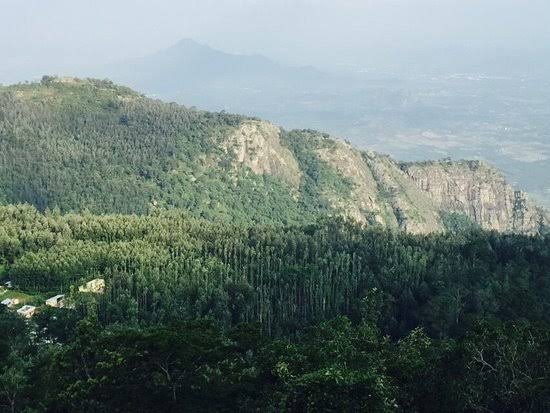
Servarayan Hills
It is a mountain range located near the Salem city with the height ranging from 1,200 to 1,620 meters. The name of the range comes from a local deity, Servarayan. The highest peak in the southern part of the Eastern Ghats located in this range. The peak is Solaikaradu and its height is 1,620 meters. The hill station Yercaud, which is known as poor man’s Ooty, is located on this range. Servarayan temple is its highest point (1623 meters).
Kolli Hills
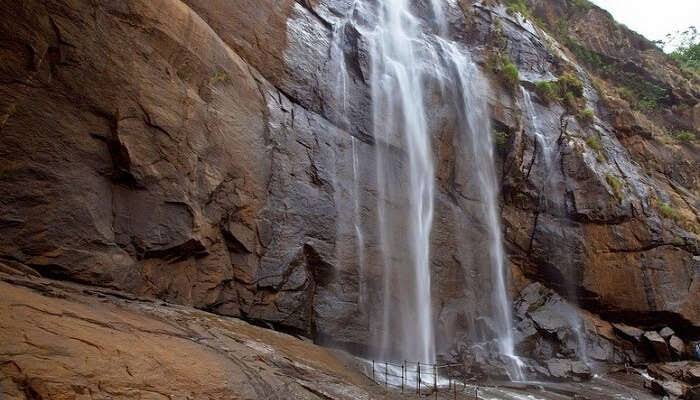
It is a small mountain range located in Namakkal district. It covers an area of about 2,800 sq.km . It rises up to 1300 meters. This is a mountain range that runs almost parallel to the east coast of South India . Arpaleeswarar temple located on this range is an important pilgrims centre. It has the largest cover of evergreen or shola forest when compared to other parts of the Eastern Ghats. Several coffee plantations, fruits, flowers and silver-oak estate are found in this region.
Pachaimalai
It is the lowest hill range , spreads over the districts of Perambalur, Tiruchirapalli and Salem. In Tamil language, pachai means green. The vegetation in this range is greener than the vegetative cover of the other hills in this region. Hence it is named as ‘Pachai malai’. Jackfruit is a popular seasonal agricultural product of this hills.
STAGES OF A RELATIONSHIP:
Attraction :
Every couple experiences this phase. In this stage, you only focus on the good things and similarities between each other. You spend a lot of time together and imagine that you both are made for each other. You avoid fights, and it seems that fights will never happen.

Photo by Bethany Ferr on Pexels.com
Reality :
You start finding flaws in your partner. It doesn’t mean that you don’t love your partner, but things are not as beautiful as initially. You start fighting and doubting if you are really in love. The spark in the relationship seems declining.

Anger and stupidity :
You start getting angry because of little things. You know that fights can ruin your relationship, but at the end of the day, you fight anyway. And in this higher stage of a relationship, you think of stupidity like breaking up and leaving each other by blaming each other for no reason.

Photo by RODNAE Productions on Pexels.com
Acceptance :
You know you both are totally different persons, you both have other qualities and flaws, but you both accept each other. You realize that things can’t be run in a fantasy world for a lifetime there comes a time when you have to act with maturity.

Photo by Samson Katt on Pexels.com
Commitment :
With time you get to know each other completely. Your involvement in each other ripes up and brings a thought in your heart that you only need that particular person in your life. You fall in love with that person forever. And this is the most natural and honest thing in any relationship.

Photo by cottonbro on Pexels.com
THANKS FOR READING.PLEASE SHARE YOUR REVIEWS.
ENVIRONMENTAL PROTECTION LAWS – Wildlife Act

Environment protection is practice of protecting the environment, on individual, organizational or governmental & (or) humans. Protection of the environment is needed due to various human activities.
Why laws are implemented?
- Protect and preserve the environment.
- The law prescribes Responsibilities of the State for protecting the national environment.
- Determine who can use natural resources and on what terms.
- Create rules for how people can use natural resources.
- Governments have determined to strengthen their judicial capacity to enforce environmental laws.
Wildlife Act (1972)

The wild life protection Act, 1972 is an Act of the Parliament of India enacted on 9 Sept 1972. It provides for protection of wild animals, birds, plants and for matters connected therewith. It extends to whole India, except Jammu and Kashmir. It has six schedules which give varying degrees of protection.
Definitions
- Animal- Amphibians, birds, mammals
- Animal Article- Articles made from wild animal
- Hunting- Capturing, Killing, poisoning, trapping, injuring animals etc
- Trophy- Whole or part of animal which been preserved.
- Wildlife- Any animal, bees, butterflies, crustacean, fish & moths;
Authorities appointed
Central government may appoint A Director of wild life preservation, Assistant Directors of wild life preservation, Other officers & employees as may be necessary.
State government may appoint A chief wild life warden, Wild life wardens, One Honorary wild life warden in each district, Other officers & employees as may be necessary.
Wild life Advisory Board
- The Act enforces & enables the state governments & the administrators of the union Territories to constitute a wildlife Advisory Board in each state & Union Territory.
- Areas to be declared as sanctuaries, national parks, or closed areas & their administration.
- Formulation of policy for protection & conservation of wildlife.
- Amendment of any schedule.
- Any other matter referred by State government.
Hunting of wildlife animals
Hunting of wild animals is permitted in certain cases – If the animal has become dangerous to human life or beyond recovery. Killing or wounding in good faith in defense of oneself or any other person.
Grant of permit for special purpose like Education, Scientific research, Scientific management, Collection of specimen for zoos, museums & similar institute, Derivation, collection or preparation of snake- venom for manufacture of life saving drugs.
Protection of specified plants
No person shall Willfully pick, uproot, damage, destroy, acquire, or collect any specified plant from any land & any specified area by Central government. Possess, sell, offer for sale, or transfer by way to gift or otherwise, or transport any specified plant whether alive or dead.
Penalties
Imprisonment varying from six months up to seven years and/ or ranging from rs. 500 upto not less than rs. 10000 depending upon on the nature or seriousness of the offence committed regarding the specified wildlife.


You must be logged in to post a comment.