Overview of Absalom and Achitophel

The neo-classical age place the epic at the top of the hierarchy of various poetic compositions. This leads the poets of the late 17th and early 18th century to attempt to write Epic poetry. Dryden instead chooses a mock-heroic trend as a means of representing and satirizing especially different socio-political ages. A mock-epic or the mock-heroic imitates the elaborate form and ceremonious style of the epic genre but usually applies them to a commonplace or trivial subject matter.

Poetic style

Dryden wrote this poem in an eloquent flexible, cogent yet controversial poem. According to David Daiches Dryden build on the ‘Reform of our members’ the perfect wase poetic style. Dr. Johnson Heiled Dryden and said that Dryden was the founder of the “new verification” and with him, it is apparent that English poetry has did not tend to revert to its former savageness. Johnson also remarked that before Dryden no poetical diction, no refined use of words was appropriated to arts. Critics have stated that it was in Dryden’s prologue and epilogue two places that he achieved that great strength. He could be Ironic, satirical, critical, humorous, or indent in a variety of ways. Absalom and Achitophel is a famous example of Dryden’s clear summative statement and the greatest achievement of his argumentative verse. The style of poem is essentially heroic which means that the plot, the character, the wit, the passion, and the description are all amplified above the level of common conversation. The style is best adapted to the biblical allegory and a narrative of great political evils during 17th century England.

Polish plot

Charles II had no legitimate son after him his brother James was supposed to sit on the throne. The plot was made to exclude him from the throne and create the atmosphere to make the Duke of Monmouth sit on the throne, this controversy was called the Popish plot by Titus Oatis.

Absalom and achitophel was published in 1681. Absalom and Achitophel was a contribution to the debate on public affairs in the form of verse satire. Dryden’s reason and intents were all on the side of legitimate and settled government so that the whig agitation to exclude from the succession. Charles II heir and his brother James on the ground that he was a Roman Catholic. And to encourage Charles’s legitimate son the Duke of Monument to assert his claim found Dryden on the Jory side. Supporting legality and the true succession protectants whig agitation in favor of exclusion of James from the succession was led by Earl of Shaftesbury and the Duke of Buckingham. Dryden took the biblical story of the rebellion of Absalom against his father King David and applied it to the contemporary situation with Charles II.


Alleviating poverty through education

In 2019, Abhijeet Bannerjee, Esther Duflo and Michael Kremer received the Nobel Prize in Economics for their experimental approach to alleviating poverty. Poverty is one of the biggest issues faced by mankind. It is associated with social problems such as malnutrition, poor education and health. Poverty alleviation is the method of systematically reducing poverty by improving peoples’ education and job opportunities and in turn drastically improve their standard of living.

Their approach was very simple. To tackle the big problem of how to remove poverty, break it down into smaller, manageable questions. Once you find those questions, try to answer each one of them with a field experiment. A field experiment is a randomized controlled trial in which participants make choices in their normal day-to-day environment. Some of these experiments were carried out to find out how exactly education plays a role in reducing poverty.

Michael Kremer rounded up a large number of schools that needed some kind of support and split them up into groups. These schools were given resources that they were not receiving before. These resources varied from textbooks to free school meals. The outcome of the resource distribution was randomised. Due to this, researchers could find a connection between the various types of resources and how it helped children learn better. Surprisingly, textbooks and free school meals proved to make no difference in the learning of the students. It was observed that lack of resources was not the major problem that the low-income schools were facing. The biggest problem was that the teaching happening in these schools was not in accordance with the students’ needs. Banerjee and Duflo analysed remedial tutoring in Mumbai and Vadodara by providing schools with teaching assistants who helped students that had special needs. They discovered that helping the weakest student was a very effective measure in increasing the quality of education.

These experiments showed us that teachers lacked incentive and accountability, which showed in a high level of absenteeism. Reforms had to be made to bring teaching in line with students’ needs and the experiments showed that extra resources are of very limited value.

After the field experiment, this is what Banerjee and Duflo had to say on education policy formation:

  1. They believe that if the cost of schooling decreases, it would lead to a sizeable increase in school enrolment. If some financial barriers and non -financial barriers (e.g: distance to school) are removed it would certainly result in better school participation,
  2.  Awareness about the benefits of education should be spread. If the underprivileged know that there is a wage gap between the educated and uneducated, they would certainly want to be educated. Providing information about jobs would lead to an increase in education investment.

3. More attention should be paid to weaker students. Teaching assistants should be provided to make sure all students are able to cope with the level of teaching and should ensure no child is left behind.

This was how field experiments in education proved to be useful in alleviating poverty.

Global Warming a threat to Life

The process of rising average air temperatures near the Earth’s surface during the past one to two centuries is known as global warming. Climate scientists have been collecting extensive data of numerous weather events (such as temperatures, precipitation, and storms) and associated effects on climate (such as ocean currents and the chemical makeup of the atmosphere) since the mid-twentieth century. The Intergovernmental Panel on Climate Change (IPCC) was established in 1988 by the World Meteorological Organization (WMO) and the United Nations Environment Program (UNEP) to give voice to a growing conviction within the scientific community (UNEP).  Human beings and human activities have been responsible for a worldwide average temperature increase of between 0.8 and 1.2 °C (1.4 and 2.2 °F) of global warming since preindustrial times, according to a special report published by the IPCC in 2018, and most of the warming observed in the second half of the twentieth century can be attributed to human activities.

Climate change since last glaciation

Changes in the sum of qualities that constitute climate change are referred to as global warming. Changes in precipitation patterns, winds, ocean currents, and other aspects of the Earth’s climate are all examples of climate change. A federal assessment on the implications of climate change on the future of the United States has been issued. According to recent research from the Geological Survey, climate change has been more relevant over the industrial age of the previous two centuries. The climate of the Earth has changed across different periods, from a single human life to billions of years. Significant fluctuations in the worldwide extent of glaciers and ice sheets were seen throughout the Pleistocene glacial era (about 2,600,000 to 11,700 years ago). Changes in the geometry of Earth’s orbit around the Sun drove changes in the distribution of solar radiation over the planet’s surface. According to a new study, these changes occurred across tens to hundreds of millennia. 

The most recent ice age, or glacial era, ended 21,000 years ago, and is known as the Last Glacial Maximum. Continental ice sheets stretched deep into Europe and North America’s middle latitude areas during this period. The global annual mean temperature appears to have been 4–5 degrees Celsius (7–9 degrees Fahrenheit) lower than it was in the mid-twentieth century. During the last ice age, Earth’s climate was marked by more cooling at higher latitudes and very less cooling across broad portions of the tropical waters (around the Equator). The Holocene is the term used to describe the most recent period of Earth’s history. The Holocene Epoch is an era in which humans have had a significant impact on climate. However, other scientists suggest that the Holocene ended very recently and that the Earth is now in the Anthropocene Epoc, a climatic gap that might be named the Anthropocene Epoc. Since the end of the ice age, people have had a major effect on climate throughout this time period.

Causes of Global Warming

  1. The greenhouse effect

A balance of solar and terrestrial radiation keeps the Earth’s average surface temperature constant. Because the frequencies of the radiation are very high and the wavelengths are relatively short, solar radiation is sometimes referred to as “shortwave” radiation. Terrestrial radiation, on the other hand, is classified as longwave radiation due to its low frequencies and long wavelengths. The total energy of incoming solar radiation is approximately 1,366 watts per square metre each year. Approximately 30 units of incoming solar energy are reflected back to space by clouds, the atmosphere, or reflecting areas of the Earth’s surface for every 100 units of incoming solar radiation. Earth’s planetary albedo is the reflective capacity of the planet, and it does not have to remain constant throughout time. Earth must emit these same 70 units back into space to preserve thermodynamic equilibrium. Some of the infrared light emitted by the Earth’s surface is absorbed by greenhouse gases. As a result of this absorption, some of the initial 70 units are unable to reach space. The presence of greenhouse gases in the atmosphere causes the surface and lower atmosphere to warm up.

  1. Radiative forcing

Solar radiation and greenhouse gases in the atmosphere may change the      temperature of the Earth’s surface and lower atmosphere. According to Dr. David Frum, “radiative forcing” might be thought of as “radiative force” or “radiative forcing.” The quantity of downward-directed radiant energy impinging on the Earth’s surface is measured by radiative forcing, which is a measure of the effect of a specific climatic component. Climate variables that contribute to the warming of the Earth’s surface are known as “positive forcing,” whereas forces that cool the Earth’s land surface are known as “negative forcing.” According to the IPCC, there is no question that human-caused greenhouse gas emissions are driving global warming. Each square metre of Earth’s surface receives around 342 watts of solar energy each year on average. This amount can be linked to a change in the Earth’s temperature. Changes in the distribution of terrestrial radiation (that is, radiation emitted by Earth) within the atmosphere can cause temperature changes at the surface. Radiative forcing has a natural cause in some situations, such as during volcanic eruptions when expelled gases and ash block some of the sun radiation reaching the surface. It has an anthropogenic, or purely human, origin in other situations. Anthropogenic increases in carbon dioxide, methane, and nitrous oxide, for example, are predicted to cause positive radiative forcing of 2.3 watts per sq metre. 

  1. The influences of human activity on climate

Human activity has affected global surface temperatures through altering the radiative balance that governs the Earth on a variety of temporal and geographical scales. The most substantial and well-known anthropogenic effect is the increase in greenhouse gas concentrations in the atmosphere. Humans also have an impact on climate through altering aerosol and ozone concentrations and changing the land cover of the Earth’s surface.

Stress management

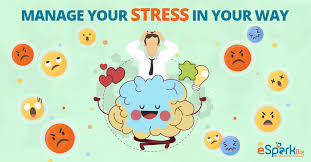
It may seem that there’s nothing you can do about your stress level. The bills aren’t going to stop coming, there will never be more hours in the day for all your errands, and your career or family responsibilities will always be demanding. But you have a lot more control than you might think. In fact, the simple realization that you’re in control of your life is the foundation of stress management.
Managing stress is all about taking charge: taking charge of your thoughts, your emotions, your schedule, your environment, and the way you deal with problems. The ultimate goal is a balanced life, with time for work, relationships, relaxation, and fun – plus the resilience to hold up under pressure and meet challenges head on.

Identify the sources of stress in your life:
Stress management starts with identifying the sources of stress in your life. This isn’t as easy as it sounds. Your true sources of stress aren’t always obvious, and it’s all too easy to overlook your own stress-inducing thoughts, feelings, and behaviors. Sure, you may know that you’re constantly worried about work deadlines. But maybe it’s your procrastination, rather than the actual job demands, that leads to deadline stress. 
Think about the ways you currently manage and cope with stress in your life. Your stress journal can help you identify them. Are your coping strategies healthy or unhealthy, helpful or unproductive? Unfortunately, many people cope with stress in ways that compound the problem.
Unhealthy ways of coping with stress:
These coping strategies may temporarily reduce stress, but they cause more damage in the long  run:
• Smoking
• Drinking too much
• Overeating or undereating
• Zoning out for hours in front of the TV or computer
• Withdrawing from friends, family, and activities
• Using pills or drugs to relax
• Sleeping too much
• Procrastinating
• Filling up every minute of the day to avoid facing problems
• Taking out your stress on others (lashing out, angry outbursts, physical violence)

Learning healthier ways to manage stress:
If your methods of coping with stress aren’t contributing to your greater emotional and physical health, it’s time to find healthier ones. There are many healthy ways to manage and cope with stress, but they all require change. You can either change the situation or change your reaction. When deciding which option to choose, it’s helpful to think of the four As: avoid, alter, adapt, or accept.
Since everyone has a unique response to stress, there is no “one size fits all” solution to managing it. No single method works for everyone or in every situation, so experiment with different techniques and strategies. Focus on what makes you feel calm and in control.
Not all stress can be avoided, and it’s not healthy to avoid a situation that needs to be addressed. You may be surprised, however, by the number of stressors in your life that you can eliminate.
●Learn how to say “no” – Know your limits and stick to them. Whether in your personal or professional life, refuse to accept added responsibilities when you’re close to reaching them. Taking on more than you can handle is a surefire recipe for stress.
●Avoid people who stress you out – If someone consistently causes stress in your life and you can’t turn the relationship around, limit the amount of time you spend with that person or end the relationship entirely.
●Take control of your environment – If the evening news makes you anxious, turn the TV off. If traffic’s got you tense, take a longer but less-traveled route. If going to the market is an unpleasant chore, do your grocery shopping online.
●Avoid hot-button topics – If you get upset over religion or politics, cross them off your conversation list. If you repeatedly argue about the same subject with the same people, stop bringing it up or excuse yourself when it’s the topic of discussion.
●Pare down your to-do list – Analyze your schedule, responsibilities, and daily tasks. If you’ve got too much on your plate, distinguish between the “shoulds” and the “musts.” Drop tasks that aren’t truly necessary to the bottom of the list or eliminate them entirely.
●Express your feelings instead of bottling them up. If something or someone is bothering you, communicate your concerns in an open and respectful way. If you don’t voice your feelings, resentment will build and the situation will likely remain the same.
●Be willing to compromise. When you ask someone to change their behavior, be willing to do the same. If you both are willing to bend at least a little, you’ll have a good chance of finding a happy middle ground.
●Be more assertive. Don’t take a backseat in your own life. Deal with problems head on, doing your best to anticipate and prevent them. If you’ve got an exam to study for and your chatty roommate just got home, say up front that you only have five minutes to talk.
●Manage your time better. Poor time management can cause a lot of stress. When you’re stretched too thin and running behind, it’s hard to stay calm and focused. But if you plan ahead and make sure you don’t overextend yourself, you can alter the amount of stress you’re under.
●Focus on the positive. When stress is getting you down, take a moment to reflect on all the things you appreciate in your life, including your own positive qualities and gifts. This simple strategy can help you keep things in perspective.
●Set aside relaxation time. Include rest and relaxation in your daily schedule. Don’t allow other obligations to encroach. This is your time to take a break from all responsibilities and recharge your batteries.
●Connect with others. Spend time with positive people who enhance your life. A strong support system will buffer you from the negative effects of stress.
●Do something you enjoy every day. Make time for leisure activities that bring you joy, whether it be stargazing, playing the piano, or working on your bike.
●Keep your sense of humor. This includes the ability to laugh at yourself. The act of laughing helps your body fight stress in a number of ways.

Learn the relaxation response:
You can control your stress levels with relaxation techniques that evoke the body’s relaxation response, a state of restfulness that is the opposite of the stress response. Regularly practicing these techniques will build your physical and emotional resilience, heal your body, and boost your overall feelings of joy and equanimity.

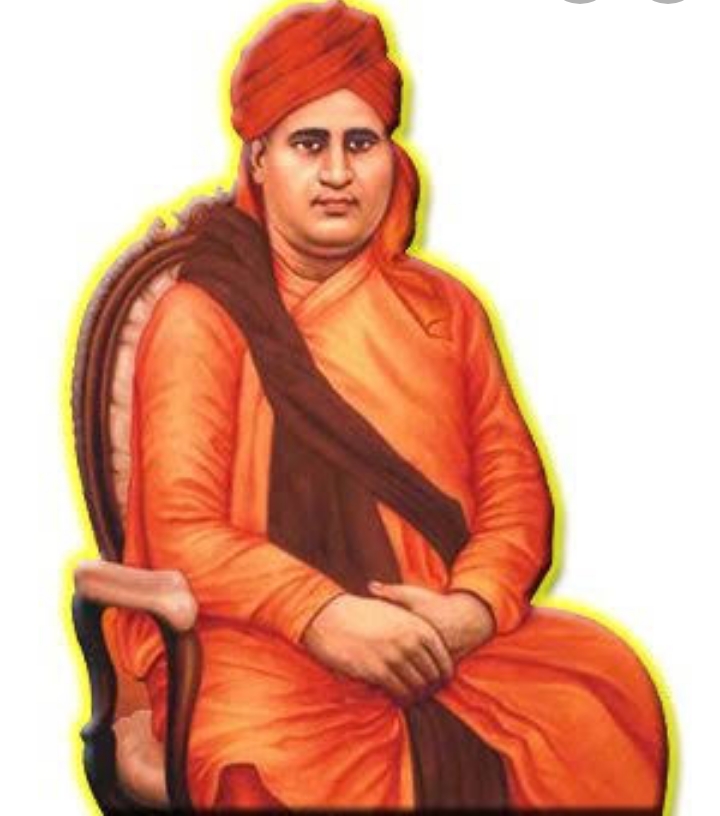
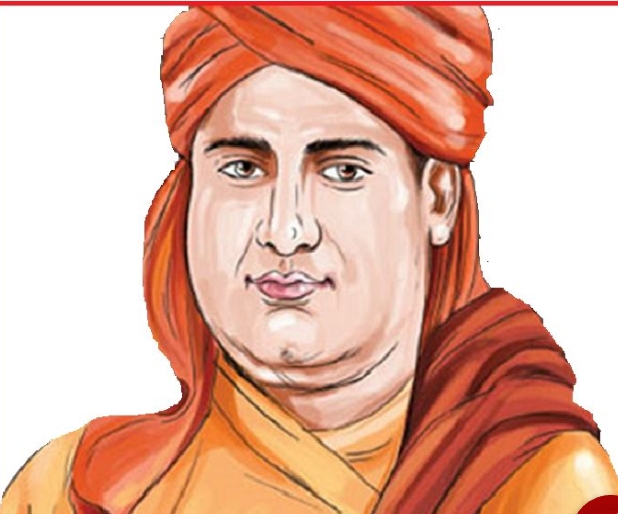
Swami Dayananda Saraswati

Dayananda Saraswati was an Indian philosopher, social leader, and reform movement of the Vedic dharma. He was the one who first gave the call for Swaraj as “India for Indians” in 1876, a call later taken up by Lokmanya Tilak.

As per the traditional Hindu calendar, Dayanand Saraswati was born on the Dashami Tithi of Phalguna Krishna Paksha. In India, all the Vedic institutions and religious establishments celebrate this day with great pomp and enthusiasm. Several schools and academic institutions hold debates, essay competitions etc.

The founder of the Hindu reform organisation Arya Samaj, Swami Dayanand Saraswati was born as Mool Shankar Tiwari on February 12, 1824, in Gujarat. He was named Mool because he was born when the Mool Nakshatra prevailed. His father was Karshanji Lalji Kapadi, and his mother was Yashodabai.

He was deeply devoted to God and translated the Vedas from Vedic Sanskrit to Sanskrit and Hindi so that the common man could also read them. He brought about a revolution in the social life of Indians to spread Vedic teaching and his ideas he travelled all over India and he roundly condemned the caste system, he was bitterly opposed to untouchability. “Untouchability is a dreadful curse of our society every living being has a soul, which deserves affection, in every human being there is a soul worthy of respect, one who does not know this basic principle cannot understand the true meaning of the Vedic religion.” Though acknowledged to be one of the greatest men of his age, even by those who differed with him on many points, Swamiji was simple and unostentatious in his habits and tastes.

He always laid stress on female education, equal rights and pure conduct in life. In his opinion over the centuries, with the passage of time some wicked customs had crept into Hinduism, these customs dimmed the greatness of this religion.

He was the among the first great Indian stalwarts who popularized the concept of Swaraj- the right to self-determination vested in an individual -when India was ruled by British. It was his philosophy which inspired nationalists in the mutiny of 1857 as well as champions such as Lala Lajpat Rai and Bhagat Singh. Dayananda’s Vedic message was to emphasize respect and reverence for other human beings, he related Atma with Param Atma. In the 10 principles of the Arya Samaj, he enshrined the idea that ” All actions should be performed with the prime objective of benefitting mankind”. Dayananda’s ‘Back to Vedas’ message influenced many thinkers, Sri Aurobindo who decided to look for hidden psychological meaning in the Vedas, Many Padri’s , Sanyasi’s were influenced by Swamiji’s updesh, Maharaja Ranbir Singh of Jammu and Kashmir went to see Swamiji during the Darbar which was held at Agra (November,1866 A.D.).

Swami Dayanand wished that his work of social reform should continue even after his death, so he founded an institution called ‘Arya Samaj’ at Mumbai on April 10,1875. It grew into a huge institution spread beyond the shores of India. Millions of Hindus were influenced by Arya Samaj, which rendered boundless and unequalled services to society, through its religious centres, gurukuls, schools, colleges, women orphanages and asylums for women. He was fully convinced that Indian could’t prosper unless education spread. He said that, there should be a law to compel the parents to send every boy or girl who is eight years old to school. The King’s son and the farmer’s son should be equal in a gradual. They should all be made to work and live alike in Gurukuls.
The chief objective of Swami Dayananda’s teaching are that all should be treated with love and justice. One should always be ready to accept truth and give up untruth, be good to the world, i.e., to make physical and social improvement. To achieve these we should dispel ignorance and diffuse knowledge.

He had a sensitive and compassionate heart that melted at the sufferings of the poor. ‘To love the creation of God is to love God Himself- so he taught people. He always advocated that those Hindus who had gone to other religions and wish to come back into the Hinduism fold by performing purification rites for them.

OCEANS

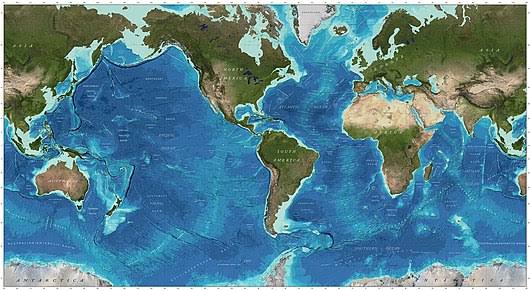
The continents and oceans are however, not evenly distributed in the northern and the southern hemispheres. The northern hemisphere holds 61% of land whereas the southern hemisphere holds 81% of water. It is because of this pattern of land and water distribution, the northern hemisphere is called as the land hemisphere and the southern hemisphere is called as the water hemisphere.

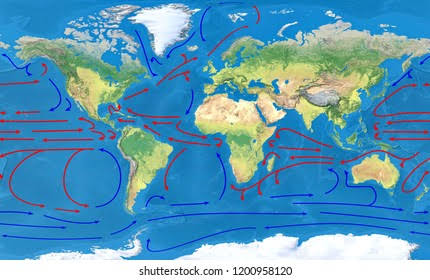
Oceans and seas are considered as resource bowl of the earth because of the immense availability of food, minerals etc., Present distribution of the world’s oceans and major seas are illustrated in the map.

Relief of the Ocean Floor

The ocean basins are characterized by the following major relief features:

✓Continental shelf
✓Continental slope
✓Continental rise
✓Deep sea plain or Abyssal plain
✓Oceanic deep
✓Oceanic ridge

Continental Shelf

A shallow and gently sloping platform extending out from the adjoining continental land mass into the sea is called Continental Shelf. It is almost a uniform zone of sea bed with a gentle gradient.

Continental Slope

A steep slope which descends from the edge of the continental shelf to the deep ocean-bed is called continental slope. It forms a boundary between the Continental Crust and the oceanic crust. This zone is free from deposits as they are steep. The most important characteristic of continental slope is the presence of deep canyons and trenches. Due to the low penetration of sunlight, the slope has nearly freezing temperature. Hence aquatic life has very slow rate of metabolism.

Continental Rise

At the base of the continental slope is a gently sloping layer of sediments which merge into the deep-sea floor. This underwater feature found between continental slope and abyssal plains is called the continental rise. It consists of submarine fans which are similar to the alluvial fans found on land.

Deep Sea Plains or Abyssal Plains

The deep sea plains or abyssal plains are underwater plains found on the deep ocean floor. These plains extend from continental rise to the mid oceanic ridges. The gradient of the slope is very gentle and it appears as a uniform flat and featureless plain. These plains are usually covered by the thick layer of sediments composed of clay, slit and sand, brought by the rivers. These are often characterized by features like abyssal hills, sea mounts, guyots, coral, atoll etc.

Oceanic Deeps

Trenches are the deepest part of the ocean and occupy about 7% of the total relief of the ocean floor. The ocean temperature in the trench is slightly cooler than the freezing temperature. As they are sediment free, most trenches are V-shaped with steep sides. Epicentre of the great earthquakes are all found in the trenches.

Oceanic Ridge

Oceanic ridge is a continuous submarine mountain chain. They are made of young basaltic rock formed when two tectonic plates moves apart. The mid – ocean ridge is probably the most extensive single feature of the earth ‘s topography. Two of the most well known mid – ocean ridges are the Mid – Atlantic Ridge and the East Pacific Ridge. The Mid – Atlantic Ridge is the largest unbroken oceanic ridge.

Movement of the Ocean Water

The ocean water is dynamic. Temperature, salinity, density, external forces of the sun, moon and the winds keep the ocean waters in movement, both horizontally and vertically. Waves and currents are in horizontal motion while tides have vertical motion.

Waves

Of the all movements of the oceans, sea waves are considered to be the strongest. Sea waves are ripples on water caused when winds blow over the sea. The height of these waves depends on the speed of wind, its duration and the direction from which they blow. Sometimes waves are also caused by tremors felt on the ocean floor. Such waves are quite destructive and called Tsunami.

Tides

The periodic rise and fall of water due to the gravitational pull of the sun and moon on earth are called tides. They are classified broadly into Spring tides and Neap tides.

When the Sun, Moon and Earth are aligned in the same line, the collective gravitation pull of the sun and moon on earth’s water strengthens to form a high tide known as spring tide. Such tides always occur on full moon and new moon days.

Ocean Currents

The movement of oceanic water on the surface and at the depths in a definite direction is called ocean current. Ocean currents are in clockwise motion in the northern hemisphere and in the anti – clockwise motion in the southern hemisphere.

The factors that generate ocean currents are :

  • Earth’s rotation
  • Prevailing winds and
  • Differences in temperature and salinity of ocean water.

5-month-old baby girl in UK ‘turning to stone’

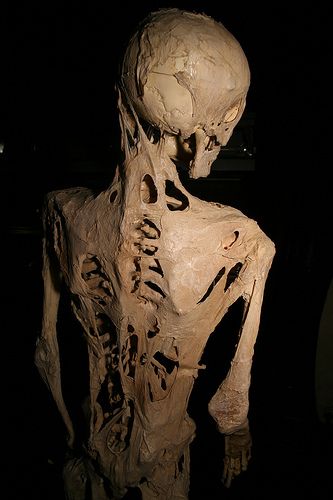
The effects of fibrodysplasia ossificans progressiva, a disease which causes damaged soft tissue to regrow as bone.

Lexi Robins, 5 month old from the UK is “turning to a stone”due to an extremely rare genetic condition Fibrodysplasia Ossificans Progressiva (FOP) that turns muscles into bones.

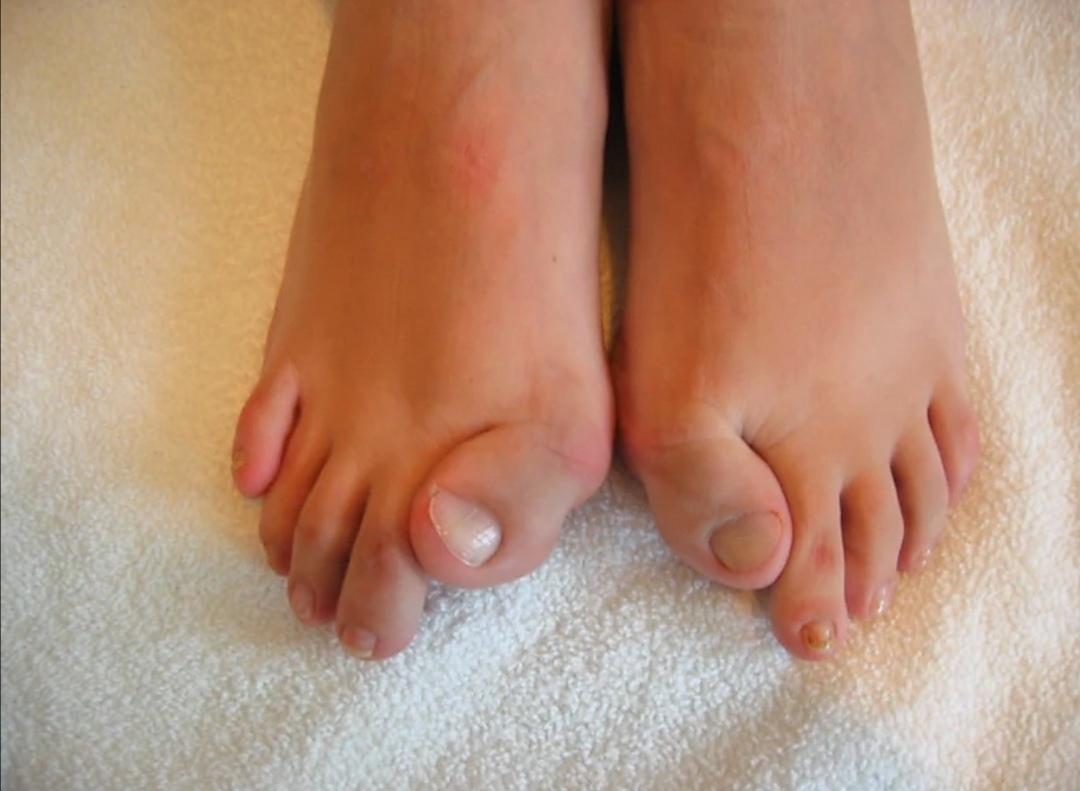
Lexi Robins was born on January 31 and seemed like any other normal baby, except she didn’t move her thumb and had bigger toes.

Lexi was diagnosed with a life-limiting disease called Fibrodysplasia Ossificans Progressiva (FOP), which affects just one in two million.

Due to the disorder, Lexi’s condition may worsen rapidly if she suffers any minor trauma, as simple as falling over. She cannot receive injections, vaccinations and dental care and cannot give birth.

Post by Alexandera robins https://www.instagram.com/tv/CQnwqnTIUlV/?utm_source=ig_embed&utm_campaign=loading.

FOP is a severe, disabling disorder with no current cure or treatment. It is the only known medical condition where one organ system changes into another. Fibrodysplasia ossificans progressiva is caused by a mutation of the gene ACVR1.

The FOP can lead to bone formation outside skeleton and restrict movement. It is believed to replace muscles and connective tissues, such as tendons and ligaments, with bone. Thus, it is generally perceived that the condition turns a body into stone.

People with this disease, which has no proven treatment, can be bedridden by the age of 20 and their life expectancy is around 40 years.

It has no current cure.

Rape crisis in India

Anatomy of Rape

Sexual assault on women is a common phenomenon in our country. Under sexual assault comes; molestation, eve-teasing, child sex abuse, rape, marital rape, domestic violence.

Of all these crimes, Rape is the most violent crime which is committed against women. According to Section 375 of the Indian Penal Code, Rape means an unlawful intercourse done by a man with a woman without her valid consent.

Rape outrages a woman’s modesty. After a rape incident, a woman lives a pathetic life which includes fear, depression, guilt complex, suicidal action and social stigma.

In recent times, Rape incidents have increased manifold. According to statistics, two women are raped in the country every hour. If further statistics are to be believed, every 10 hours a girl of age 1-10 is being raped in India.

It appears that the rapists are not scared of laws. Also, cases are being reported where minors and elderly women are being raped. The recent incident which shook the nation was the gang rape of a 23 year old para-medical student in a moving bus on the streets of Delhi.

The cruelty which was shown towards the girl by the rapists filled every Indian with wrath. So much so was the anger, that thousands of people poured into the streets to demand justice for the young lady.

The protests compelled our leaders to sit up and think and now amendments of the laws concerned with sexual assault on women our underway.

Every day the newspaper reports of rape incidents. In majority of rape cases the accused is known to the victim. The accused may be a friend, a relative, neighbor.

Some cases are a rude shock to humanity like that of a five year innocent girl being raped by her neighbor. Not only he raped her, but damaged her internal organs beyond cure. Some cases have come into light wherein teachers have raped their students.

Causes of Rape

The important question which arises when we talk of rapes is what causes rape. Why rape cases are increasing at an alarming rate? First and the foremost cause of increasing rape cases is the lack of public safety. Women are not safe outside their homes and why only outside they are not safe even inside their homes.

A number of cases have been reported wherein the guilty has committed the crime in the very house of the victim. Rapes are being done in moving vehicles also which raise a question on the effectiveness of the traffic system of our country. Another important reason is the dearth of police officials and female police officers in particular. According to the Times of India, there is 1 officer for every 200 citizens.

Studies show that rape victims are more likely to report sex crimes if female police officers are available. Lack of female police further aggravates the problem.

Another very important reason is a sluggish court system of India and few convictions. India’s court system is painfully slow and for rapes that do get reported, the conviction rate is not more than 26%.

As the accused is not convicted, others think that they can go around freely and rape whosoever they like. Stigmatizing the victim and encouraging the victim to compromise gives a further impetus to this horrendous crime.

In many rural areas, the victim is pressurized to drop charges against the guilty. Not only this they are encouraged to marry their rapist by telling them that nobody will marry them now and it will bring shame to her family.

In recent times, prominent leaders and experts have blamed women’s clothing as responsible for increasing rape cases which is totally wrong. No clothing is an invitation to rape.

Remedies

The dire need of today is to curb this violent crime. The most important step to be taken in this direction is the strengthening of laws dealing with sexual assaults.

Death penalty should be imposed on a rape accused.

A woman’s squad should be formed in every district which would exclusively deal with problems of women.

Fast track courts must be established so that justice is given as early as possible.

Some NGO should start Rape Crisis Centre where victim can approach by calling a toll-free number or physically visiting the local centres. Such centre should play a vital role in supporting rape victims to cope up with the psychological trauma and also guide them to obtain legal remedy.

Conclusion

Women are wonderful daughters, sisters, wives, and mothers. They should be loved, cared, respected and should be protected.

Bose-EinsteinCondensate The 5th Matter

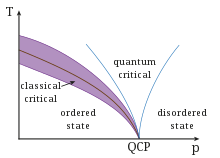
QuantumPhaseTransition.svg

In condensed matter physics, a Bose–Einstein condensate (BEC) is a state of matter (also called the fifth state of matter) which is typically formed when a gas of bosons at low densities is cooled to temperatures very close to absolute zero (−273.15 °C or −459.67 °F). Under such conditions, a large fraction of bosons occupy the lowest quantum state, at which point microscopic quantum mechanical phenomena, particularly wavefunction interference, become apparent macroscopically. A BEC is formed by cooling a gas of extremely low density (about one-hundred-thousandth (1/100,000) the density of normal air) to ultra-low temperatures.

This state was first predicted, generally, in 1924–1925 by Albert Einstein following and crediting a pioneering paper by Satyendra Nath Bose on the new field now known as quantum statistics.

This transition to BEC occurs below a critical temperature, which for a uniform three-dimensional gas consisting of non-interacting particles with no apparent internal degrees of freedom is given by:{\displaystyle T_{\rm {c}}=\left({\frac {n}{\zeta (3/2)}}\right)^{2/3}{\frac {2\pi \hbar ^{2}}{mk_{\rm {B}}}}\approx 3.3125\ {\frac {\hbar ^{2}n^{2/3}}{mk_{\rm {B}}}}}{\displaystyle T_{\rm {c}}=\left({\frac {n}{\zeta (3/2)}}\right)^{2/3}{\frac {2\pi \hbar ^{2}}{mk_{\rm {B}}}}\approx 3.3125\ {\frac {\hbar ^{2}n^{2/3}}{mk_{\rm {B}}}}}

where:

{\displaystyle \,T_{\rm {c}}}is the critical temperature,
\,nthe particle density,
\,mthe mass per boson,
\hbar the reduced Planck constant,
{\displaystyle \,k_{\rm {B}}}the Boltzmann constant and
\,\zeta the Riemann zeta function; {\displaystyle \,\zeta (3/2)\approx 2.6124.}\,\zeta(3/2)\approx 2.6124. 

Interactions shift the value and the corrections can be calculated by mean-field theory. This formula is derived from finding the gas degeneracy in the Bose gas using Bose–Einstein statistics.

Superfluidity of BEC and Landau criterion

The phenomena of superfluidity of a Bose gas and superconductivity of a strongly-correlated Fermi gas (a gas of Cooper pairs) are tightly connected to Bose–Einstein condensation. Under corresponding conditions, below the temperature of phase transition, these phenomena were observed in helium-4 and different classes of superconductors. In this sense, the superconductivity is often called the superfluidity of Fermi gas. In the simplest form, the origin of superfluidity can be seen from the weakly interacting bosons model.

OYO ROOMS STARTUP

OYO Rooms (stylized as OYO), also known as OYO Hotels & Homes, is an Indian multinational hospitality chain of leased and franchised hotels, homes, and living spaces. Founded in 2013 by Ritesh Agarwal, OYO initially consisted mainly of budget hotels. The startup expanded globally with thousands of hotels, vacation homes, and millions of rooms across more than 80 nations including India, Malaysia, UAE, Nepal, China, Brazil, Mexico, UK, Philippines, Japan, Saudi Arabia, Sri Lanka, Indonesia, Vietnam, the United States and more.

The company’s investors include SoftBank Group, Didi Chuxing, Greenoaks Capital, Sequoia India, Lightspeed India, Hero Enterprise, Airbnb, and China Lodging Group.

In 2012, Ritesh Agarwal launched Oravel Stays to enable listing and booking of budget accommodations; he renamed the firm OYO in 2013.

OYO partners with hotels to offer similar guest experiences across cities. Shortly after launching Oravel Stays, Ritesh Agarwal received a grant of $100,000 as a part of the Thiel Fellowship from Peter Thiel. OYO currently has over 17,000 employees globally, of which approximately 8000 are in India and South Asia. OYO Hotels & Homes maybe a full-fledged hotel chain that leases and franchises assets. the corporate invests in Capex hire GMs to oversee operations and customer experience also generating around 1,000,000 job opportunities in India and South Asia alone. OYO has also founded 26 training institutes for hospitality enthusiasts across India.

In April 2021, it had been claimed by several news reports and social media posts that OYO had filed for bankruptcy, but CEO Ritesh Agarwal clarified it to be untrue. However, he admitted that the National Company Law Appellate Tribunal (NCLAT) initiated an insolvency resolution process on OYO Hotels on the idea of a hotelier’s petition over a monetary dispute with the corporate.

THE FOUNDER’S STORY

The teenage boy – Ritesh Agarwal is that the young Founder & CEO of OYO Rooms – the fastest-growing branded network of hotels offline & online. a university dropout, who once wanted to take a seat for an engineering exam, Ritesh today heads among the foremost valuable start-up by any individual who never studied beyond school. The journey of our hero began rather early than normal!

Ritesh was born to a business class family in Bissam Cuttack in Orissa and attended the Sacred Heart School in Rayagada, Orissa. During the growing up days in Rayagada, Odisha, it had been all about fun and learning for him but his ways were rather unconventional from those of other kids. His fun elements included screwing around with the pc and trying hard to seek out opportunities to form mistakes in order that he could learn new stuff. And doing that he gained a keen interest in software!

This started with the thought of it, moved on to understand about it then the hunger just went on increasing. To quench his thirst, he borrowed his elder brother’s books for programming. a number of the essential languages like Basic and Pascal were taught within the school itself and therefore the rest he managed to find out from Google. He even sold sim cards to survive, afraid his family would end his entrepreneurial dreams and summon him back home to Odisha if they knew of his struggles.

In Kota(Rajasthan), where he was ostensibly preparing for his IIT entrance exams, Ritesh says he couldn’t wait every weekend to slide bent Delhi and meet those doing their own thing. This 19-year-old had traveled for months staying at budget hotels, attended customer calls a day, and immersed himself in every possible experience to find out about budget hotel customers and their expectations. That was the type of on-the-ground learning that helped him pivot Oravel to Oyo.

Quitting sugar and benefits

We people have been into sugar like we eats sugar every now and then, there are some people who has formed a ritual like to eat sugary foods or items after every meal.

You have known by now that eating excesses sugar may results in various health related issues.

But there are two forms of sugar present. That is natural sugar and added sugar.

You might have also heard that natural sugar is good or better than added sugar. But do you know that both natural sugar and added sugar there is no different chemical difference between them. They are made of the same molecules — glucose and fructose.

There is no such difference between in foods that contain this sugar. The food present with natural sugar comes up with more healthier components like fiber and nutrients, that helps our body well nutrients and help sugar function in better way. But Adder sugar does not come up with these all-rounder nutrients which are available in natural sugar.

Sugar is not bad for you, but excessive amount of sugar intake will result in various health problems. Because in our body there are various organs which performs various functions in our body and one such function is that in our body there is a hormone released that is insule which controls our blood sugar level. If it is less sugar in your body o excessive sugar in your body both will harm you.

Some of the benefits of eating less sugar: –

  1. It will reduce your chances of various chronic illness or diseases.

Those who eats more sugar then required results in various health problems in body some chronic disease. Chronic diseases are diseases which are not of shorted duration like few days it lasts for about 3months to lifetime.

  • Reduce obesity in your body.

Obesity is that when a person gains too much fat in their body which may results in various health problems, so by eating less added sugar you actually reduces amount of excess calory intake in your body which may help in getting rid of obesity.

  • Eating less sugar will reduce your craving for more sugar.

It is might like eating sugar will reduce your craving, but it is actually opposite eating more sugar will increase your craving for more sugar and will also increase you craving for more sugar.

  • Helps in type 2 diabetes.

Type 2 diabetes is basically when the blood sugar level increases in you body to the excessive level. Thus, by eating less sugar it will help reducing the chances of you having type 2 diabetes.

Although it will be tough at starting to quit sugar but latter as days will pass you will get use to not eating sugar. There will be even more benefits of not eating sugar. Like there will be less chances of having an acne porn skin and many benefits. Do not directly jump into quitting sugar from your life at extreme level try to reduce more and more day by day, replace added sugar with natural sugar.

But there is a difference in the foods that contain these sugars. Foods with natural sugars come with other healthy components, like fiber and nutrients, that offer your body well-rounded nutrition and help your body process sugar in a healthier fashion. On the other hand, added sugar doesn’t offer these benefits and, when consumed in excess, does more harm than good.

 Recommended books

ARE INTROVERTS MORE PRONE TO DEPRESSION THAN EXTROVERTS?

To begin with we first need to understand what exactly introversion and extroversion is. Introverts become exhausted when they are with other individuals, but when they are alone, they restore their vitality, whereas extroverts are the people who gets energetic when they are surrounded by people but when they are alone, they grow exhausted and gloomy. We must understand that there is nothing wrong with being either especially  the people who are introverts because they are the one’s  who are often looked down upon because of their personality traits of being diffident and timid. But they are the ones who have creative and original mind and are a great problem-solvers. 

However, a prominent symptom of depression is withdrawal from people which is also a personality trait of introverts who likes to be in solitude away from others. Thus, someone who doesn’t know the introvert well might believe that the person have depression or social anxiety based on these traits. But a closed one can motivate the introvert to seek professional help. 

REASONS WHY INTROVERTS ARE MORE PRONE TO DEPRESSION

1.BRAIN ACTIVITY IN INTROVERTS

Introverts don’t want or crave more stimulation from other people because they already have a lot on their minds. Because of which their brain activity is significantly higher than that of extroverts, according to neurological research. But this has a negative as well as positive aspect since such brain activity can be used as strength because introverts typically are brilliant thinkers and creators but but it can also be a disadvantage because they may overthink certain ideas and emotions especially overthinking negative emotions like guilt, embarrassment, and helplessness as a result of social isolation can cage their minds and make them more vulnerable to mental health disorders.

2. Traits of being a perfectionist and self-assertive 

There are many self-help books which claim that being a perfectionist will not help you in gaining power over others or do not exhibit self- confidence instead it develops negative emotions. Introverts do have this personality trait of being a perfectionist and are very self-assertive because of which they feel unsatisfied with themselves and with their lives of not doing good enough. And it leads to mental exhaustion and creates anxiety and they become more prone to depression. So, a gentle reminder to all the people who are being harder on themselves, to relax and be gentler and cautious of these traits.

3.Tendency of being alone

Being at ease with oneself and enjoying alone should be viewed as a strength but As we all know that excess of everything is dangerous. So, Excessive seclusion is a harmful habit that can lead to depression and other psychological problems and is the one thing the introverts should be mindful about.  

Many studies were conducted to see the linkage between introversion and depression, and it has been found out that introversion contribute to the onset of depression. A research was conducted in 2017 which suggests that people with lower extroversion tends to have more social anxiety and depressive thoughts such as suicide because they have higher levels of neuroticism which means experiencing negative feelings. 

So people with introversion are more likely to have a higher risk of depression and if someone is suffering from depression or other mental health condition should seek mental health professional help in order to correctly diagnose, treat, and analyze such diseases because recovery takes time and asking for help is a brave move.

SMOKING IS INJURIOUS TO HEALTH


In these modern days about half of the population of
any country is addicted to smoking the worst part in it is even youngsters
including girls are dependent on these cigars. 

These cigarettes play a vital
role when their emotions are to be expressed more aggressively. Certain people
use them as a stress buster as a result slowly it becomes an addiction to the
core so which it can’t be forgot or avoided just like that. 

People are unable
to accept the fact that smoking is not a reason for cancer it is the cause for
it. It is a slow poison which affects each and every precious organ in our body
finally causing fatality. A healthy person will lose his period of lifetime so
quickly if he becomes a smoker.

 The vapors from these cigars not only affects
but also people surrounding us. Chain-smokers rate of deaths are increasing day
by day. If a person smokes 16-25 cigarettes per day Type 2 Diabetes are much
eager to affect you.
 

In a health study conducted by US recently, proves that
nearly 50-60% people are at risk of developing diabetes. Firstly, it decreases
the oxygen level in the lungs leading to heart problems followed by storage of
unwanted impurities in our body finally increases the glucose and pressure in
the blood.


In fact, the studies of researchers prove that it
after our genetic structure (DNA) and causes defects in their genes and for
their children. “Keep the key of your life in your hands don’t give it to
tobacco”
,
All the adults
relish it very much, they don’t know how harmful it is.
 

Cigarette
smoking is one of the major killers in the world. The biggest side effect from
smoking is cancer. Cancer is a group of many related diseases. All forms of
cancer involve out-of-control growth and spread of abnormal cells.
 

The risk of dying from lung cancer is 22 times
higher for males, and 12 times higher for female smokers as oppose to non
-smokers.
” The smoker’s life is always in tobacco’s hand”.  Additionally, smokers are at an increased risk
for cancer of the larynx, oral cavity, oesophagus, bladder, kidney and
pancreas
. 


There is a boom in the popularity of smoking cigars. The health
risks of cigar smoking are, again, ignored in this effort of making cigars look
‘cool’ or better than cigarettes’. 

But cigar smoking also increases the risk of
several cancers, including cancer of the oral cavity (lip, tongue, mouth,
throat), oesophagus, larynx, and lung. Cigar smoking may be linked to the
cancer of the pancreas as well. Daily cigar smoking, especially for people who
inhale, also increases
the risk of heart disease and a type of lung disease
known as chronic obstructive pulmonary disease or COPD.
 

When a cigarette
is smoked, about one-half of the smoke generated is side stream smoke that
comes from the burning cigarette between puffs. This side stream smoke contains
many of the same
carcinogenic (cancer-causing) and toxic agents that have been
identified in the main smoke inhaled by the smoker. 

“AS CIGAR TURNS INTO
ASHES LIFE ALSO TURNED INTO ASHES” –                  SEVERINA DSOUZA

A product that
increases its brand by using people’s life to survive is a very horrible way to
think. 

Inspite of knowing the causes people hesitate to sacrifice to for a
healthy and disease-free surrounding. It is especially harmful for children, and
senior citizens or pets, even if the smoking isn’t done near them. 

I recommend
smokers to think and act wisely before you lose some precious ones or yourself
for this silly tobacco. We can avoid them by using tablets, chewing gums and
engaging
yourself in other works which will help us improve from the idea of smoking
and gives relief. 


Teenagers should be monitored carefully and support from
parents will help them a lot to overcome this habit. Elders can motivate them
in a positive way and create awareness among them so they regret if they even
think about it again. I advise people to help yourself and live happily instead
of losing your life for an unworthy thing or object.


Kapil Dev

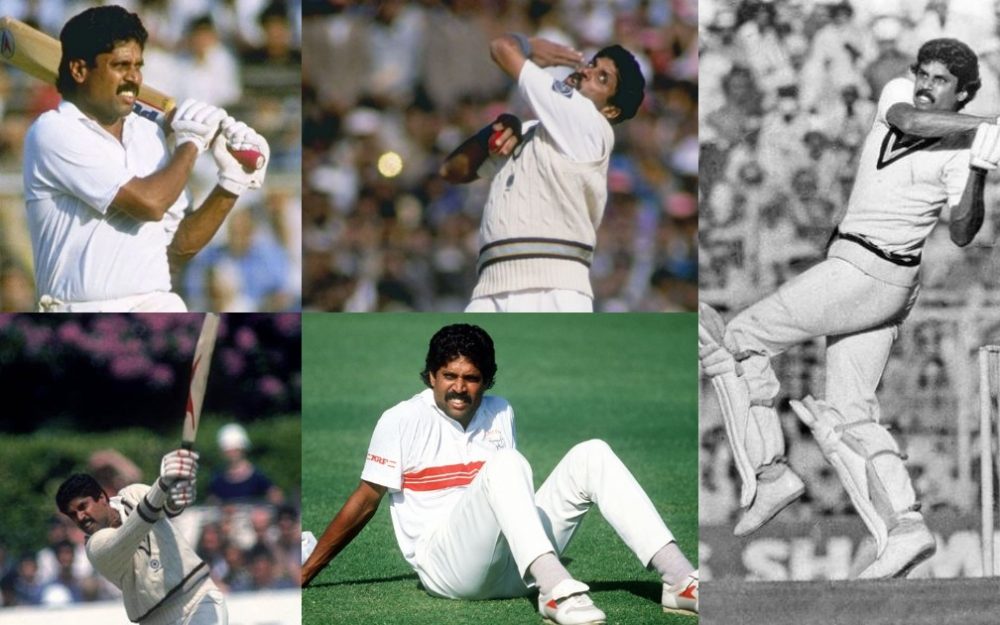
Kapil Dev(Full Name:Kapil Dev Ramlal Nikhanj), regarded as the greatest Indian all-rounder and one of the best all-rounders in the history of cricket, was born on 6th of January, 1959 in Chandigarh, India. He represented India and Haryana at national and state level respectively. He also played for Northamptonshire and Worcestershire during his career. He is known for being the only cricketer to have scored more than 5000 runs and picked over four hundred wickets. His greatest achievement was leading an underdog Indian to glory in the 1983 ICC Cricket World Cup.  

Kapil Dev entered the scene of professional cricket with his debut for his state team Haryana in first-class cricket. His debut match was against Punjab in the Ranji Trophy in 1975-76. He impressed by picking 6 wickets for 39 runs in this match. He started bowling as a spinner in this match and later switched to fast medium bowling. He batted right-arm and bowled right-arm fast medium pace. He was a middle-order batsman with tremendous power and was known for power hitting. His ability to bowl and bat fast racked to the national team. He made his debut for the Indian national cricket team during the 1978-79 series against Pakistan. In his debut appearance, he picked seven wickets in the series. He was nicknamed as ‘Haryana Hurricane’.

Kapil Dev was the sixth child in his family. His parents were Ram Lal Nikhanj and Raj Kumari Lajwanti, who had moved from Rawalpindi to Chandigarh during the Partition. His father ran a construction and timber business. Right from a young age he was interested in games than academics. He gained attention at a higher level when he was just thirteen years old. He asked to fill up a spot in one of Chandigarh sector teams. His performances led to repeated call ups. This attracted selectors from the state level and was picked in the state team. At his time, he was the only true fast bowler India possessed. Throughout his career, he played with aggression and matchless passion. He was filled with energy and self reliant even when he was young. Kapil Dev regards his father as his role model and idolised G. R. Vishwanath when growing up. G. R. Vishwanath was a match winner in those days and is regarded as one of the greatest Indian batsmen. The Indian team never lost a match whenever Vishwanath scored a century. 

There were many highlights during his career: leading the Indian to victory in 1983 World Cup, his match saving knock of 175 not out including 22 boundaries against Zimbabwe, becoming the youngest player to score two thousand runs and pick two hundred wickets. At the end of his international test career, he boasted a record 434 wickets including 23 five-fors (which was later broken by Courtney Walsh) and 5000 runs with the bat. In one day internationals, he managed to score 3783 runs and pick 253 wickets which consisted of one hundred and one five wicket haul. His first class record is equally impressive with the numbers of 10,800 runs including sixteen centuries and 815 wickets. He was declared as the Indian cricketer of the century by Wisden magazine in 2002. Since his retirement, he has been involved in cricket administration and broadcasting roles.

References:

Cricbuzz

SELF-LOVE

See the source image

Self-love is a state of appreciation for oneself that grows from actions that support our physical, psychological and spiritual growth. Self-love means having a high regard for your own well-being and happiness. Self-love means taking care of your own needs and not sacrificing your well-being to please others. Self-love means not settling for less than you deserve. When you love yourself, you have an overall positive view of yourself. This doesn’t mean you feel positive about yourself all the time. That would be unrealistic! For example, I can temporarily feel upset, angry, or disappointed with myself and still love myself. If this is confusing, think about how this works in other relationships. I can love my son even though I sometimes feel angry or disappointed with him. Even in the midst of my anger and disappointment, my love for him informs how I relate to him. It allows me to forgive him, consider his feelings, meet his needs, and make decisions that will support his wellbeing. Self-love is very much the same. Which means, if you know how to love others, you know how to love yourself!

Self-love can mean something different for each person because we all have many different ways to take care of ourselves. Figuring out what self-love looks like for you as an individual is an important part of your mental health. Self-love means accepting yourself as you are in this very moment for everything that you are. It means accepting your emotions for what they are and putting your physical, emotional and mental well-being first.

Ways to practice self-love include:

  • Becoming mindful. People who have more self-love tend to know what they think, feel, and want.
  • Taking actions based on need rather than want. By staying focused on what you need, you turn away from automatic behavior patterns that get you into trouble, keep you stuck in the past, and lessen self-love.
  • Practicing good self-care. You will love yourself more when you take better care of your basic needs. People high in self-love nourish themselves daily through healthy activities, like sound nutrition, exercise, proper sleep, intimacy and healthy social interactions.
  • Making room for healthy habits. Start truly caring for yourself by mirroring that in what you eat, how you exercise, and what you spend time doing. Do stuff, not to “get it done” or because you “have to,” but because you care about you.

Why is self-love important

If you grew up without any models for self-love or anyone who talked to you about the importance of being good to yourself, you might question its value. Well, without self-love, you’re likely to be highly self-critical and fall into people-pleasing and perfectionism. You’re more likely to tolerate abuse or mistreatment from others. You may neglect your own needs and feelings because you don’t value yourself. And you may self-sabotage or make decisions that aren’t in your own best interest. Self-love is the foundation that allows us to be assertive, set boundaries and create healthy relationships with others, practice self-care, pursue our interests and goals, and feel proud of who we are.