A film review

 The Sleepover (2020)

       Director- TRISH SIE

       Genre– Exciting,Action, Adventure,Family features.

   A very simple family of Modern era living with their life old fashioned limitations like not allowing the phone to their children even if they jumped in higher class, they do not have permitted to attend any party with their friends,Not allowed to go out in late night.Their mother a housewife made these rules But we all know that there is always reasons of restrictions, the same are here with those two siblings of this exciting family.Both are studying in a same school and everyday their father use to receive and drop them,eating foodings made by dad bakery, play video games and sometimes spend times in sleepover.Cavin the little boy has sharp mind and he enjoy the imaginary world more than real. 

   One day a neighbour’s parents come with his child to leave him for the night. That boy also has some list by his mother about what to do or what to don’t.But as he is in another house with another rule and restrictions nothing from the list could be done right from his list.In loan area Cavin’s dad fixed a tent for their sleepover and left them to sleep. And in the same night her daughter tries to escape from home with her friend for one night to attend the party invited by her senior.

At late night tiem to sleep ,Ninjas enter in the house and attack on her housewife mother to take her with themselves for a mission.They took up both husband and wife with them for a robbery. After knowing their mother’s real identification that her mother was the head robber many years before her marriage in the bachelors age;their children decided to find their parents and went out for an overnight adventure. 

Their mother was a witness protection lady who was caught by the police but allowed to be free with a new identification by letting no one know her real identity.

Following the signs Including their dog’s neck belt left by her mother at every steps they followed and in not finally but at end of getting signs they met her mother’s younger sister who is also a robber; she gave them the direction to reach their mother and they followed.Finally they reached the destination and saw their simple housewife mother extraordinary actions and looks that were never been seen before.And also they saw her mother’s fiance who was a robber man,charm and dashing.

But there and then her mother become with a new identification and living her life as a normal person with family this mission was not her choice.They escape brilliantly from this leaving behind all this stuff if past and came back to home safely creating this adventurous night.And the boy who has very quite talent to make stories of imagination,he does the same in front of police too,reached all back to home safely.

Next morning, the neighbour came to take their child who was left for a sleepover and found the child safe and that child went home too.

Everything happened, the restrictions,the limitations came across with a very valid reason why kids of this family faced too many rules and regulations other than others.Now they understand and respect the situations and their family especially her mother.

So,The conclusion comes here with a brief mentality of parents and children.

Parents never want to grab or tie their own children with restrictions. If they do there must be the reason for their safety that’s important more than anything for any parents.

Children like that boy who live in his imagination are brilliant so to make success and happiness in their life it’s necessary to promote and support your child according to their way of interests.

And the last but not least ,the priority matter a lot for a family person no matter who you are,mother or father or sister or you are a brother,if you are in a family you must put your priorities first for them other than anyone no matter how complications has  started ,how it is difficult to deal or to resolve it but things will become smoother as soon as one put family on prior.Stay tied to the family is one of the best weapon to fight against any circumstances, situations,or any difficulty.

Snapshot taken from the movie “THE SLEEPOVER”.


Inner Voice Episode 1

I never wanted that to be happening. Never wanted me to want someone more than myself. It just happened that I started believing in someone more than myself. And every time, no one turned out to be worthy of me. Repeatedly getting cheated, caught dumbed & ditched, people changed one after the other. I thought that this person would not betray me, so I went ahead.

Whereas the one who cheated earlier realized his flaws and wanted to come back I didn’t allow it only because of my belief that the one who had betrayed me once then it not tough to do that again. But Even when I got attached to another person in this world I was also getting that hurt, tears, and even afraid of getting betrayed….Why???

People of this world made me ask “Why” Then why God would answer? I’m pretty sure people would be answerable and have to pay for their Karma.

It’s not possible for a human being to leave and forget someone but every time another human forced me to act like and accept this tough lesson. To be honest I’m not learning too much from these all but yes it’s broken me into tiny pieces inside.

There & then it’s God’s will for my goodwill, right??? I forgot God then what are you and who to enlighten??

It’s my bad as everyone is the same instead of me.

Superstition

A landscape appearance, not too far but a meeting of impossible possibility

Not contradictory, it’s all about God’s plan for Creativity

A thin line like a sword’s edge

Only differentiating two orbital cage

One might be Immortal while another is mortal

From Mortal I belong and you are also giving hats off to mortals having the guts to challenge immortal

Instantly, a blank dark sheet floated over my head

There and then full of lightning vibing around I’m sitting upon my bed

Twinkling like stars which is in reality all signs of having scar

A star, only the sparkle of that headed film

There could be more but it’s today’s night theme.

Why can’t you, if they are Alive

…Just in front of me sitting up with my Cozy Posture

A door that opens in the balcony has a building closer,

Besides my vision looks a bit left for no reason

That building of more than five stories holding up too much weight of floors has a plant of sesame

I found it there, stems cracking the wall and they are strong enough, grown long grasping many leaves

Leaves …are floating with the blow of the wind

They are Alive, They seem to be happy and have a smile

Cuddling together, kissing each other looking at no complaints they have about what isn’t right or it’s not fair

I observed their roots… scrambling out on the wall appears as their foots

It’s too easy to grow in soil but their fate took them up on walls where it’s nearly impossible to uproot

They are Alive, their Green flicks shouting their victory of life

Why can’t you if they are alive…

Self-Improvement Month

If you’re reading this, then chances are that you are looking for some way to improve your life. Maybe you need help with personal development or maybe you’ve been thinking about starting a new job or volunteering at an organization. Whatever your reason for wanting to make changes in your life, it’s important that we keep our eyes open and try new things so we can be successful in achieving our goals.

Without encouragement, it is difficult to change.

Without encouragement, it is difficult to change. You need to believe in yourself and think that you can improve your life by making positive changes. The first step is believing that you can improve for the better—that’s because it will make all the difference. If you do not believe that things can get better, then no one else will either.

If someone says they are going through hard times or struggling with something difficult right now, try giving them some words of encouragement as a way of showing them how much strength there is inside themselves despite their circumstances (or lack thereof). This could mean saying something like “I know what it’s like when things keep getting worse instead of better.” Or maybe even just “I’m sorry about everything happening right now.” These small gestures go a long way towards helping those around us feel supported during times when we feel isolated from others’ understanding due to our own struggles.

You are most likely to succeed if you focus on one change at a time.

The key to success is to focus on one change at a time. This can be as easy as focusing on improving your diet, or it may be more complex—it depends on what you’re trying to accomplish and how long it will take for you to reach your goal.

For example: If you want to lose weight, then focus on eating healthier food and making more exercise a part of your daily routine. Once that’s accomplished and needs adjusting (such as adding more fruits or vegetables), move onto the next step by increasing the amount of exercise in your schedule again until all of these changes have been completed successfully.

Changing your life takes time and daily effort.

Changing your life takes time and daily effort. You can’t change a habit overnight, nor can you expect to change your lifestyle or attitude overnight.

You have to commit to making positive changes in the way you think and act for them to stick. This includes changing negative beliefs about yourself and others, as well as changing other people’s perceptions of you—for example, by doing something nice for someone else instead of taking advantage of them.

The changes you make will have an impact on other people, so talk to them about what you are doing.

Make sure you have a support network:

You can’t do it alone! You need people who believe in you and want to help support your goals.

Be honest with yourself:

Don’t let yourself get discouraged by results because they won’t always be immediate or easy to achieve; this is just another step in the process of self-improvement.

You are more likely to change your behavior if you write down your goals and track your progress toward them.

If you want to make changes in the way that you live your life, it’s important to write down your goals. The more specific and detailed they are, the easier it will be for you to stay focused on achieving them.

You can use a notebook or spreadsheet as a place where you put down all of the things that matter most to you—including what motivates each goal and any additional details about how long until completion or other deadlines associated with achieving each goal (if applicable). Then once per month or so (depending on how often progress is made toward those goals), go back through this list of ideas and see where there are still opportunities for improvement or new additions which may help bring about change faster than otherwise would be possible otherwise.”

Sometimes people need a second or third try before they can achieve their goals.

Change is a process that can happen gradually if we give ourselves permission to not be perfect.

It’s okay to fail. You don’t have to make every mistake in the world, but you do need to take risks and learn from them. If you’re going through a difficult time, it may feel like everything is stacked against you, but remember: You’re stronger than that! Don’t let anyone else dictate what your limits are; set boundaries for yourself so that everyone around you knows where they stand with respect toward how much weight/pressure/stressors they bring into your life (and vice versa).

You can’t change everything at once! Change takes time and effort—you might not see results right away on day one of starting something new at work; sometimes there are things we need practice doing before learning how good our new skills actually feel like coming out of our mouths (or fingers). Make sure whatever goal(s) this month has been focused on has been well-thought out beforehand so as not waste valuable resources unnecessarily trying out half-baked ideas prematurely – because even though change doesn’t happen overnight…it does happen eventually 

Conclusion

If you are ready to start changing your life and make some changes in your life, then this is the right time. Start now.

How to cope with stress in your daily life

Stress is a natural part of life, and like many things, it’s important to learn how to manage it. If you’re suffering from stress, here are some helpful tips for coping:

Find a hobby

If you’re looking for a way to manage stress and unwind, a hobby can be an excellent option. It doesn’t have to be something specific or intense; you could simply enjoy doing something that inspires you every day.

Whatever it is that makes your heart race with excitement, there’s probably an outlet for it in your life—if not now then at some point in the future. Taking up knitting or painting might seem like an odd choice when you’re stressed out by midterms and finals, but these activities can become routine sources of relaxation as well as hobbies!

When we were kids growing up, many of us were fond of playing sports: football or baseball games were favorite pastimes at our houses during the summer months because they gave us something physical (and occasionally competitive) to do together after school hours were over. Nowadays however there are plenty other ways for parents and kids alike alike enjoy getting involved together outside on weekends – whether through volunteering with community organizations like Habitat For Humanity; going camping together on family camping trips; taking part in organized activities such as dance lessons where everyone learns new moves together while having fun at once too 🙂

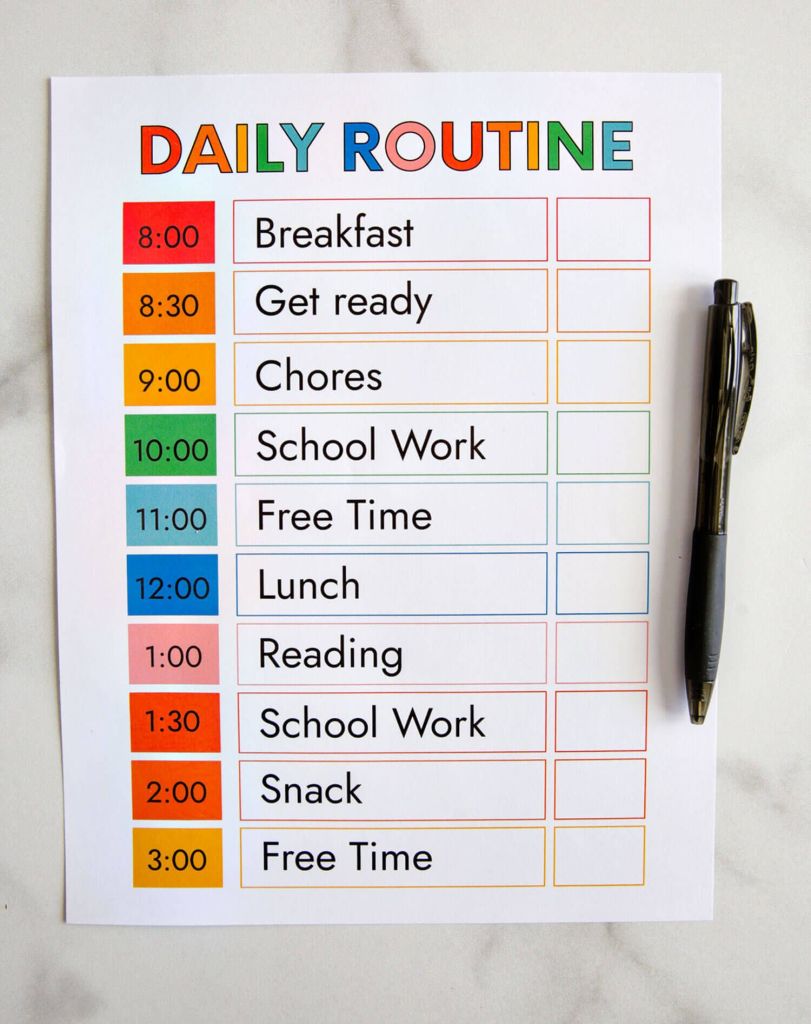
Build a daily routine

The first step to managing stress is building a daily routine. A morning routine, afternoon routine and evening routine are all good places to start.

Make sure you have your coffee (or tea) before 7:30 AM. This will help you get going in the morning and prevent late-night cram sessions later on in the day when you’re tired or distracted by something else that needs doing.

Get through at least one workout session per week—even if it’s just walking around campus for 30 minutes with friends or playing basketball with teammates after class! Exercise helps burn off energy so that mentally challenging tasks don’t seem insurmountable anymore; moreover, exercise has been shown to reduce anxiety levels as well as improve moods overall.* Go grocery shopping once per week rather than buying food from convenience stores because they tend to have higher prices than supermarkets do; however replacing fast food with healthy alternatives like salads instead of burgers will save money while still providing nutritious meals throughout each day.* Try not using social media sites like Facebook or Twitter too frequently either during lunch breaks at work because this causes users’ lives outside office hours become blurred together into one giant blur which makes everything seem more difficult than before since now there’s no separation between work life & personal life anymore.

Eat healthy food

Eating a balanced diet is key to managing stress. It helps you feel more energized and less tired, which can help you avoid getting sick or stressed out by hunger pangs. If possible, eat a healthy breakfast every morning—this will give you the energy boost that makes it easier for you to get through your day!

If eating junk food is something that stresses out your stomach (and let’s be honest here: who doesn’t love pizza?), try finding healthier snacks like fruit salad bites or even granola bars instead of sugary ones. The key here is moderation; no one should ever eat too much junk food because this will only make them feel worse afterwards.

Get in touch with your family

Stress is a normal part of life and as such, it’s important to find ways to manage your stress. One way you can do this is by talking with your family about how they can help.

Family members are a great source of support when it comes to helping you manage stress—and they may not even realize how much they’re helping! If you have parents or siblings who live nearby, consider asking them if they’d like some help managing their own lives and those around them. You could even offer up some of your time (or money) in exchange for their assistance so that everyone benefits from their efforts together.

Get enough sleep

Sleep is important for learning and memory.

It’s also linked to stress reduction.

Getting enough sleep can help reduce your stress levels, which will make you more productive at school or work.

Go for a walk

You can get away from the stress of school by going for a walk.

Go for a walk alone or with friends if you’d like, but don’t worry about being seen—the point of walking is just to move your body, not impress others. Listen to music while you walk (or listen in silence), and try to take in some fresh air too. Take your dog for a long walk around the neighborhood; they’ll love it! If possible, try walking at least 10,000 steps each day—that’s equivalent to running one mile per hour continuously for 30 minutes straight! When I was younger and had more energy than I do now as an adult who’s trying everything she can think of not only stay healthy but also keep fit at age 55+.

Listen to music


Music is a great way to relax and de-stress. You can listen to any music you like, but try not to choose something that’s too hard or fast. Music can also help you focus on what’s important in your life, which will help keep things in perspective when they get overwhelming.

Music can also help with sleep! I recommend listening before bed because it helps calm your mind enough so that it doesn’t keep tossing and turning at night because of all the stressors going through your head during the day (or even week).

Meditate

Meditating is a great way to relax and unwind. It can help you deal with stress, anxiety and depression, improve your memory and creativity, even slow down the aging process.

If you’re new to meditation or have never tried it before there are plenty of ways that beginners can begin:

Sit comfortably in a comfortable position (sitting or lying down).

Close your eyes if possible – this might help you focus better on what you are doing (most people choose not to cover their eyes).

Start by breathing normally through both nostrils for one minute without counting the breaths or trying anything else at first; this will help clear any thoughts from your mind so that when they come back again later on during meditation they won’t distract us from our task at hand which is meditating.

Talk to someone about your stressors

Talking to someone about your stressors is an important part of managing them. You can talk to your friends and family, but it’s also helpful to talk about the stressors with a therapist or counselor. If you feel comfortable talking about this issue with a doctor, go for it! The same goes for religious leaders, coaches and mentors who have experience dealing with similar issues in their own lives. And if none of these people are available yet, teachers are usually willing to listen when students come seeking guidance from them (or even just want advice on how they should handle their own problems).

Few more steps to encounter stress

Stress can be caused by a variety of factors including work-related issues, relationships with friends and family members or even just having too much on your plate at once. In order to manage stress effectively there are some steps that you can take:

Start taking breaks from time to time during the day (even if only for 5 minutes). This will help you relax and recharge so that when you return back into work mode again; everything feels fresh again.

Try getting outdoors more often during the day so that there’s less time spent indoors where all these feelings tend to accumulate over time because there isn’t much else going on besides watching TV shows while eating pizza as opposed being outside enjoying nature around us all… You get what I mean? 🙂


I hope this article has given you some useful tips for managing your stress. Remember that the best way to deal with a stressful situation is to stay calm and take action. Use our tips above and find something that helps you relax, like giving yourself time away from your responsibilities or getting some exercise – anything will do.

History of India & Indian National Movement.

Early times the Indian subcontinent appears to have provided an attractive habitat for human occupation. Toward the south it is effectively sheltered by wide expanses of ocean, which tended to isolate it culturally in ancient times, while to the north it is protected by the massive ranges of the Himalayas, which also sheltered it from the Arctic winds and the air currents of Central Asia. Only in the northwest and northeast is there easier access by land, and it was through those two sectors that most of the early contacts with the outside world took place.

Within the framework of hills and mountains represented by the Indo-Iranian borderlands on the west, the Indo-Myanmar borderlands in the east, and the Himalayas to the north, the subcontinent may in broadest terms be divided into two major divisions: in the north, the basins of the Indus and Ganges (Ganga) rivers (the Indo-Gangetic Plain) and, to the south, the block of Archean rocks that forms the Deccan plateau region. The expansive alluvial plain of the river basins provided the environment and focus for the rise of two great phases of city life: the civilization of the Indus valley, known as the Indus civilization, during the 3rd millennium BCE; and, during the 1st millennium BCE, that of the Ganges. To the south of this zone, and separating it from the peninsula proper, is a belt of hills and forests, running generally from west to east and to this day largely inhabited by tribal people. This belt has played mainly a negative role throughout Indian history in that it remained relatively thinly populated and did not form the focal point of any of the principal regional cultural developments of South Asia. However, it is traversed by various routes linking the more-attractive areas north and south of it. The Narmada (Narbada) River flows through this belt toward the west, mostly along the Vindhya Range, which has long been regarded as the symbolic boundary between northern and southern India.

India’s movement for Independence occurred in stages elicit by the inflexibility of the Britishers and in various instances, their violent responses to non-violent protests. It was understood that the British were controlling the resources of India and the lives of its people, and as far as this control was ended India could not be for Indians.

On 28 December 1885 Indian National Congress (INC) was founded on the premises of Gokuldas Tejpal Sanskrit School at Bombay. It was presided over by W.C Banerjee and attended by 72 delegates. A.O Hume played an instrumental role in the foundation of INC with an aim to provide Safety Valve to the British Government.
A.O Hume served as the first General Secretary of INC.
The real Aim of Congress is to train the Indian youth in political agitation and to organise or to create public opinion in the country. For this, they use the method of an annual session where they discuss the problem and passed the resolution.
The first or early phase of Indian Nationalism is also termed as Moderate Phase (1885-1905). Moderate leaders were W.C Banerjee, Gopal Krishna Gokhale, R.C Dutt, Ferozeshah Mehta, George Yule, etc.
Moderates have full faith in British Government and adopted the PPP path i.e. Protest, Prayer, and Petition.
Due to disillusionment from Moderates’ methods of work, extremism began to develop within the congress after 1892. The Extremist leaders were Lala Lajpat Rai, Bal Gangadhar Tilak, Bipin Chandra Pal, and Aurobindo Ghosh. Instead of the PPP path, they emphasise on self-reliance, constructive work, and swadeshi.
With the announcement of the Partition of Bengal (1905) by Lord Curzon for administrative convenience, Swadeshi and Boycott resolution was passed in 1905.


ONE INDIVIDUAL MAY DIE; BUT THAT IDEA WILL, AFTER HIS DEATH, INCARNATE ITSELF IN A THOUSAND LIVES.

-Netaji Subhash Chandra Bose

Personal Habits: Over-Apologizing

How would it feel when a person you know apologizes for something which isn’t their fault? If someone dashed into him, he would apologize saying, “ I am sorry, I didn’t see you coming my way.” There is a limit for everything and after a while it feels weird to hear them say sorry for so many things. 

There are so many factors that lead you to apologize for things. It could be how you have been raised or it’s something you have seen your family do, maybe it’s how you see the world. Apologizing is good for finding peace in conflicts or relationships. You say sorry for the mistake you have made so you don’t repeat it again. It reassures a person that you genuinely didn’t expect the outcome that has come and you want to amend your mistake. 

You should not apologize for something you have not done or you have done for something that needed help. When you dash into someone, you apologize because you should have seen him coming, but you shouldn’t apologize for someone who dashed into you when you have been standing quietly. 

A lot of people apologize for the reason of avoiding conflict or because they feel that they made the other person feel bad. It usually is either of them. Sometimes, it’s guilt that drives them. Guilty for joking/pranking, guilty for ignoring them, guilty for not asking them or the feeling of guilt for putting themselves first.

Reasons why you feel like apologizing:

  1. You were taught to put others first: When you were a kid, you saw someone fall down. You rush to their aid and lift them up with your itty-bitty strength, and they thank you for helping them. You are praised by your family and the incident’s talked about at various family gatherings. It gives you the feeling of responsibility and makes you feel that you have to put others first and it should be your priority over anything. Fast forward to now, your friends ask for your help on their project, and you rush. You complete their project but yours gets delayed. Your sir calls you out in front of the class saying that you delay your work because of your laziness and your friend doesn’t stand up. Neither do they tell the sir after nor give you credit. You don’t say anything because your friend was first even if you were called out. You apologize to sir because you couldn’t finish it and not for helping your friend before yourself.

Truth: By putting others first, you don’t gain much but you do lose out on time that you could have used for yourself. If you had taken time to complete yours along with theirs, the work would have been completed quickly and efficiently with time to go over errors.

  1. You were taught to help others without seeing what you need: You always gave your grandpa medicine on time, you helped your mother in cooking, you would take the newspaper to your dad along with his morning tea/coffee, and you were always told to help people. Today, you help someone, no matter how much stress/workload you have. They ask for anything and you help them out. Sometimes, it’s just a text to their crush on how to ask out and you help them, despite the deadline of your project. So you apologize when you can’t help them because you are placing yourself first.

Truth: You need to see what help you need first so you can complete the necessary task at hand. The text can be sent anytime but your deadline can only be given once. You need to help others but you need to see if it is something that actually needs help.

  1. Scolded when you placed more importance on yourself: A lot of children are told to share and to not be selfish. If you have 2 chocolates, give it to your friend because you are a “good boy/girl”. After growing up, whenever you need new shoes or your family needs a new appliance, you choose the second option because it feels like a need but yours feels selfish.

*Appliance is used twice and placed for “Future Use”*

Truth: Sometimes, being selfish is good. You need new shoes and your home has enough appliances. By getting new shoes, you will stop getting the foot ache that you have been facing for the past 2 months. If you get new shoes, then you can work with more focus and more energy. 

  1. Avoiding Conflict: In most cases, when you were a kid, your tantrums would cause your parents to scold you and you would face punishment, or your friends would distance you because you get angry frequently. The last one pushes a child to socializing issues and causes anxiety on how others perceive them for every single action they take. So, they apologize whenever someone raises their voice a little bit, no matter what the conversation is about. They want to avoid the conflict because they don’t want to face what happened earlier and become outcasted.

Truth: You will face conflicts in future, either in relationships or friendships, you need to understand why you should apologize and for what you should stand your ground. Conflicts are what brings people closer to understand the other person better by learning their needs. If you never have a fight, how will you know what the other person actually feels?

  1. Harmed someone in childhood: When a kid unknowingly harms someone, they get scared and cannot move because they don’t know what to do. Their mind goes blank and they freeze because this feeling is new to their system and it’s hard to know what to do next. The kid is then scolded and constantly lectured over and over again to the point the kid feels anxious to touch a person. When they grow, the anxiety grows with them and it constantly pricks them. What if the casual punch hit harder than it should? What should I do if I dash into someone a little too hard? Should I give them a handshake or fist bump? What if I punch them too hard? Let’s go with the handshake so I don’t hit them too hard.

Truth: It’s okay to give a fist bump or handshake or high-five to a person whom you know. You just need to relax your mind. If you want to touch the person but are scared of the force you put into it, then show a sign of initiation. For a handshake, raise your hand out in the form of a handshake, and wait for them to accept it. By showing initiation, you let the other person engage and guide you through the conversation.

Saying sorry is well and good but exceeding it drains you of your self-confidence. You are a person at the end of the day and you need to stop saying sorry for that. You are existing which means that you will make mistakes and you will learn, but saying sorry for things that don’t require an apology then it will just drain you. It’s not going to get fixed overnight because you have taken years to build this habit. It will be fixed if you work on it every time you notice it happening.

Thank you for reading this article. It is something I have faced and I have learnt how to overcome it. Leave a comment on how has overaplogizing affected your life and how have you overcome it or trying to overcome it.

How to avoid self doubt?

Photo by cottonbro on Pexels.com

Self doubt may be outlined as a state of uncertainty concerning the reality of something. It may well be concerning our thoughts, beliefs, emotions, opinions, decisions, self views or any “truth”. We tend to hold in our minds. We have a sense that we are not stable. However, researchers suggests that self doubt involves questioning on our own self competence. There are many adverse psychological effects of self doubt’s which calls for an immediate measure to counter it. Some of the ways in which one can avoid self doubt are:

  1. Practice Self Compassion: If self doubt is holding you back from taking a leap with your career or in another side of your life, it helps you to recollect that we all are humans. We tend to create mistakes along our path, and it’s ok to do so. Therefore, when we doubt our skills, it’s actually because we don’t wish to form any area for mistakes. However mistakes are the medium for us to learn and grow. We will mitigate self doubt and fear of failure by being kind to ourselves, no matter the result.
  2. Take A Break And Get A Boost Of Optimism: Sometimes the longer we feel stuck in a scenario or feelings, the more stiff it becomes for us to come back out. Just take a flash to relax and shift your focus to something completely different. By doing so, it will enable us to filter out mind and look at things from a n and fresh perspective. If you would need an boost, try create an inventory of things you are grateful for. This will naturally shift your thoughts in a more positive direction.
  3. Try Not To Compare Yourself To Others: They say that comparison is the thief of joy. This saying rings true in many ways. If you are experiencing self-doubt as result of your afraid that you won’t accomplish something at constant level as somebody else, then it is often a paralyzing feeling. Everyone’s journey and concepts of success are different. What we can manage and control and target is our own path and where we want to take it, regardless of where other people are at or what they have done.
  4. Spend Time With Supportive People: The friends and members of the family in our lives who believe in us and everything that we are capable will always be on our side. When you are feeling self doubt, surround yourself with these individuals. They will inform and remind you how talented and resilient you are during times you are not feeling that way about yourself.
  5. Remember You Are The Harshest Critic: Would you doubt a friend who took on a new job or the for the manner they parent their kids the similar manner that you doubt yourself? The solution is probably no. We are going to continuously be the harshest critique for ourselves. It’s a pleasure reminder to treat ourselves with a similar kindness and compassion that we have got for others, rather than being therefore vital on ourselves.
  6. Keep A Journal: Journaling is often not therapeutic exercise to follow. Writing down your thoughts of self doubt or experiences with Imposter Syndrome onto paper can be an honest unharness. You will even understand once you see your issues written down that they may not be as prejudicial as you thought they were. This could facilitate to gradually overcome self-doubt.
  7. Raise Your Self-Awareness: Self awareness is one of the foremost powerful personal development tools in your arsenal. Make use of it by understanding the foundation of your cause for your self doubt. What specific things trigger bouts of self doubt? If it is lack of ability or skill in a section, resolve to try and do something concerning it.
  8. Stop Asking For Validation: Seeking others input and recommendation is useful. However, if you are within the habit of endlessly asking others what they think before making decisions on vital matters, you may be weakening your faith in yourself. For example, if you are functioning on a presentation, setting up an internet site or undertaking a new project, and you continue to change what you have created based on the feedback you receive, you might end up losing your voice and the end product becomes diluted version of you. Take some advice, but at some point make a decision what feels right to you.
  9. Look To The Past And Awash Yourself In The Memories: Be real with yourself and raise yourself this necessary question : How many times after I doubted myself or feared something would happen? Did that negative thing inherit reality when I still took action? The answer on behalf of me and possibly for you too isn’t very often at all. Self doubts are most often simply monsters in your head that your mind could use to keep you from creating changes and to keep you within the comfort zone. If you look to your past experiences and see how well things have gone persistently despite those self doubts, then it become easier to let go to of them or ignore them, to reduce fear of failure and to focus. on probably positive outcome and to take action.
  10. Talk To Someone About It: When you keep your thoughts on the inside, they’ll become distorted, exaggerated, and not very much in line with reality or reasonable expectations. This is abundantly true once it involves thoughts and feelings of self doubt. So allow them to vent out and saying them loud can often help you to hear how exaggerated these thoughts have become. So let them out into the light. Talk to someone close to you like a good friend about yourself doubts. And by talking regarding those doubts with someone that is supportive you’ll get a modification and change in perspective.
Photo by Andrea Piacquadio on Pexels.com

Post-traumatic Stress Disorder.

Post-traumatic stress disorder (PTSD) is an phychological disorder that a person can face who has experienced or witnessed a traumatic event such as a natural disaster, terrorist attack, war/combat, rape, or death, sexual violence or serious injury.

People with PTSD have intense and annoying thoughts and feelings associated with their experience that last long after the traumatic event is over. One may relive the event through flashbacks and nightmares. They may feel sad, afraid, or angry. And they may feel separated or alienated from others. People with PTSD can avoid situations and people that are reminiscent of traumatic events and have a strong negative reaction to mundane things such as loud noises and accidental contact.

According to reports in context to United States, about 3.6% of people about 5.2 million adults develop PTSD in time of last year , and an estimated 7.8 million Americans will develop Women are more likely to develop PTSD than men. This may be because their are high chances that women are more likely to be victims of domestic violence, abuse and rape.

Symptoms:
• Intrusive thought: Intrusive thoughts such as repeated involuntary reminders. A miserable dream; or a flashback of a traumatic event. Flashbacks are so vivid that people feel like they are remembering or seeing the traumatic experience in front of them.
• Avoidance: Avoiding the memory of traumatic events may include avoiding people, places, activities, objects, and situations that can cause disastrous memory. People may try not to remember or think about traumatic events. They may resist talking about what happened and how it makes them feel.
• Mood changes and Behaviour : Negative thoughts and feelings that lead to persistent and distorted beliefs about oneself and others, such as not being able to remember important aspects of traumatic events. Distorted thoughts about the cause or effect of an event can lead to false accusations of yourself or others. Persistent fear, fear, anger, guilt, or shame. There is much less interest in the activities that I enjoyed before. Feeling alienated or alienated from others; or unable to experience positive emotions (lack of happiness or satisfaction).

Treatment:
It is important to note that not everyone who experiences trauma develops PTSD, and not everyone who develops PTSD requires psychiatric treatment. For some people, the symptoms of PTSD disappear over time. Others are better with the help of their support system (family, friends,etc) . However, many people with PTSD need specialized medical treatment to help recover from psychological stress. It is important to remember that trauma which causes the PTSD can lead to serious distress. The sooner a person is treated, the more likely one can recover fast from PTSD.
Psychiatrists and other mental health professionals use several effective ( authorized and proven) methods to help people recover from PTSD. Both talk therapy and medical dosage provide effective evidence-based treatment for PTSD.

Destructive Habits: Bias

There are many habits that destroy your mental peace, happiness and mostly you. Some of them are usually with different addictions or because of people but what destroys you as a person depends on how you view things and people around you. Your environment is what shapes you but to be different, you have to do it by yourself. 

The most common habits have become common because we are more focused elsewhere than ourselves. To be a better version of yourself, you need to view your flaws and work on them.

  1. Spotlight Effect: We overestimate how much attention people give to our words and appearance. Imagine you said something but it felt wrong after it came out. In reality, everyone only remembers it for the moment and immediately moves to the next topic. We ponder over it for days, forgetting that others don’t care as much as we do about it.

Example: “The red shoes don’t match the outfit at all! I guess the guys are laughing because of it”

*Red shoes matched the outfit better than you imagined*

Truth: No one cares about you as much as your loved ones do. Everyone is just a temporary traveler in your life and you have to be okay with it. Dress how you want and be how you want to be. 

  1. Status Quo Bias: We prefer for things to be the same; usually change is viewed as a negative aspect of life. If you adopt a new habit that cuts out something from your life, you immediately feel guilty of not being able to manage it, so you quit your new habit for the old one because it feels more comfortable.

Example: “I like to paint, but the classes are on Friday, I won’t be able to party! I can always paint later so let’s party now!”

*Proceeds to miss out on an amazing experience*

Truth: Change is hard. To adapt to a new routine and new place is always difficult and your mind is stuck on the old routine, but only then do you learn more about yourself. You may like to paint now, but when you explore it, you may not want to put the brush down! You need to explore that change for a while to know more about yourself.

  1. Zeigarnik Effect: We focus more on the incomplete tasks than the ones that have been completed. Sometimes, we forget to see that we have accomplished many things on the way, and we focus on the ones that we have not accomplished yet. It pushes you to feel bad that you are not able to do anything. 

Example: “Bro I lost the Table-Tennis Pan-India Semi-finals! I feel so like I can’t do it anymore”

*Came so far by winning championships and tournaments*

Truth: You have to see where you are today. Look behind you and see the different hurdles you had to come across. You didn’t cross them just to go back did you? It does feel bad to not achieve something the first time you try it, but when you achieve it, after toiling for some time, the fruit is incomparable.

  1. Pessimism Bias: We tend to overestimate the possibility of negative outcomes. We always have a small part of your mind that searches for a negative outcome. What you see and ask for, is what you get and have. You will increase the chance of losing the opportunity if all you see is losing it.

Example: “I feel like I will lose this chance to be head of department, there are so many others who are way more qualified.”

*Loses opportunity because it messed with your confidence and screwed your interview*

Truth: What energy you put out, is what you usually get. Sometimes, you lose opportunities, but don’t dwell on the wrong aspects. You may not have the necessary qualifications but the way you portray yourself is what gets you opportunities.

  1. Sunken-Cost Fallacy: We invest more in things that have cost us something, even if we have negative outcomes. We feel that if we invest more, the difference can be recovered with just a little gain.

Example: “My portfolio is down by 25%! I will invest 50% of it so with a 25% gain, I can recover the loss”

*Proceeds to lose more because the stock market is in a bear phase*

  1. Self-serving Bias: Our failures are situational but our success is our hardwork’s result. We view that our failures are determined by external factors and our success is because of us. It is also difficult to ascertain what caused success or failure on the spot so we divide it based on the result.

Example: “I lost the game because the opponent was too strong. I got the best player of the match because I practiced well”

*Opponent won because of your overconfidence in your practice*

“The eyes sees only what the mind is prepared to comprehend.”

~Robertson Davies

Sometimes, we see these habits recurring but we don’t want to change because we feel it will make others dislike us. By changing, you are not making your friends feel bad but giving them a chance to understand that it’s time to improve. It’s time to make yourself the person you always wanted to be. Everyday is a learning step and only then can you improve. These habits of biasing situations have a lot of effect on where you are and where  you want to be.

This post has been inspired by Ankur Warikoo. You can check his post on LinkedIn here!

This was a delight to write about. I hope you have found this article interesting and let me know about your thoughts on this. Keep on smiling!

Success and mental health

Photo by Daniel Reche on Pexels.com

Mental health is a major concern worldwide these days and India is not far behind in sharing this. India is considered as one of the depressed countries in the world during the pandemic by WHO. Currently, the students are stressed, worried and anxious about the uncertainties of the future. One in seven Indians between 15-24 years of age feel depressed and lack interest in doing things. While the impact on children’s lives is incalculable, the economic loss due to mental health conditions between 2012-2030 is estimated to be USD 1.03 trillion in India, according to WHO 2020. This excessive online presence or screen time during the pandemic itself has created mood swings, irritability, social withdrawal, changes in sleeping and eating patterns, difficulty with attention, focus and concentration, and further detachment from family or the real world. Studies have shown that one third of the young people display poor knowledge of mental health problems. Regular fitness exercises like morning walks, yoga, and meditation have proved to be great medicine for curing mental health. Besides this, it is imperative to have a good diet and enough sleep. A person needs 7 to 9 hours of sleep every night on average , we should also stay connects with our friends and family , do what Piques our interest , be active and the most important we should reduce our screen time. When someone is tired yet still can’t sleep, it’s a symptom that their mental health is unstable. In students low self esteem , irritability, sudden anger, frequent absence, thoughts of suicide, reckless behavior, crying etc. could be some of the symptoms of depression.

As we speak, there is one suicide attempt every 3 seconds and one demise by suicide every 40 seconds by our youth and in most cases the causes are mental health problems.

The major cause of mental health problems in Indian students is seen due to academic pressure and the pressure created my families specially parents which ultimately leads to anxiety, over thinking and depression among students. This academic pressure is also driving kids to suicide.

Social standing is a big and also the main cause of parental pressure. Caring more about how the world perceives them, can render parents ignorant about the true talents of their children. Parents often generalize the definition of success and excellence, depending on how others are doing.

Majority of the Indian parents never try to understand why their children are not able to perform good in their academics or other fields. They never want to sit down with their children and talk about their problems with their children. Instead they prefer to scold or even beat their child which is somehow much more demoralizing and rather acts towards increasing the child’s stress level to a great extend. Kids who feel like they are under constant pressure can experience constant anxiety. Parents think that their only duty is to earn and pay for their children expenses but what they should really do is that they should build their relationship stronger. This means meeting there childs physical as well as emotional needs by taking care of them. They need to constantly instill into their next generation the importance of ‘resilience’ which is the inner strength. But parents are not the only one to blame or to take care of the children but we ourselves should take proper care of our mental health and should not ignore it.

If all these aspects are addressed at an earlier age and stage of a student’s life, it will not only make them emotionally stronger and healthier but also prepare them for future life with more mindfulness, respect, gratitude and strength.

Personal Habits: Exercising

Everyone from India has heard the phrase, “ If you get up by 6 in the morning, everything will set in order.” It is a common phrase made for Millennials and Gen-Z. We hear it so often and tried a few times but it didn’t suit your routine. Did you ever wonder why you weren’t able to adopt it? After reading this, do let me know about your thoughts on this.

Exercising in the Morning

Of course, the most common habit among people. Exercising a few hours after you get up is beneficial to your health. It increases blood flow in you as well as trains your muscles. It increases alertness and also energizes you for the day. It’s common to do cardio in the morning with lifting weights before your first breakfast. This helps in burning fat as well as developing your muscle endurance. But why can’t you do it?

Jogging in the Morning increases blood flow and improves body endurance.

The most common reasons are:

  • Sleeping Late: You may have slept late. Even if you have slept around 11PM, if you need 8 hours of sleep then you will get up at 7AM. Your body needs sufficient sleep to get up or it will keep you tired the entire day. You have to plan your sleep schedule in a way you don’t compromise your sleep.
  • Exhausted: If you had a backbreaking day and you are completely exhausted of your energy, then you may not get up the next day at your set time. If this is your regular routine, you may want to change the time you want to get up.
  • Jam-packed daily routine: If your schedule is full on an everyday basis, you need to start prioritizing your work. It may be tough to change your routine but by doing this, you can improve the amount of time you can give to yourself and your new habits.
  • Feeling awkward where you exercise: Am I doing it well? Is my form right? Is my shirt torn? Am I sweating too much? Am I disturbing someone? Are they looking at how bad I am? Are they judging me? It is okay to feel these when you workout. Everyone goes through this and it’s okay. At the beginning it does feel weird to do a workout but we all started as beginners and we also have made mistakes. The only thing that you can do is ask a friend, family or trainer to help you. They may also point out other mistakes that you may have made which you can correct.
  • You don’t want to: Most of the time when you try to build a habit, there is a feeling that says, “This isn’t worth the trouble we are going through” but sometimes, you just don’t want to. You might want to do it to show others or of the stereotypical “healthy person”. If you think clearly by separating your external ideas/thoughts, you will understand why you want to do it.

How can you tackle these problems?

At first, these hurdles feel the hardest to jump over but unless you jump over them, you cannot reach your goal. There will be hurdles along the way and you are the solution to them. You will become better when you start crossing hurdles. Every hurdle you face is a step that you need to conquer and move forward.

  1. Set a Convenient time: 5 AM may be easy for others but it may be difficult for you. It may not agree with your sleep routine, or with your work routine so you quit. Rather, just change the time. If you get up around 7 AM and have to go to work by 10 AM. Make a slot of 1 hour for your workout and complete your morning routine! If you can’t make a slot of 1 hour, carry it to the evening when you come home. 1 hour before dinner, exercise to your heart’s content! 
  1. Change your workout: If you are the ‘No pain, No Gain’ person, sometimes, you may get too sore from your workout which leads to quitting. Rather than quitting, change your workout a bit. You don’t need to change weight, just change what you do. It is very helpful to have a 10-minute cardio session at the end. Not high intensity but something like walking on a treadmill or yoga, will help you recover efficiently.
  1. Get a workout partner: “Sometimes, the fruit tastes better when it’s shared” Get a partner! A friend who wants to workout or a family member who is bored of being alone in the gym, work together at the gym! When you have someone to look out for you, you get more confident and work better. It will also help in improving your form! If you workout with a partner you are comfortable with, you will be able to focus more on your workout than others.
  1. Take Pictures of yourself: When you take pictures of yourself after you workout, you can see the amount of progress that you are accomplishing over time. This way you get to see how far you have come. Every day that you work is a step forward. You and your partner could record each other’s workout and see where you could improve.
  1. 20% of the work gets you 80% of the way: Some days, you don’t feel like working out, you don’t feel like going to the gym but by showing up and doing 10% of your workout makes you feel happy that you came. Just by showing up and starting your workout sets the wheels in motion. By the time you take off your headset, you are halfway through.
  1. Take cheat days/rest days: When you exercise, it’s important to rest so your muscles recover and become stronger. By not taking rest, you are prone to burning out. If the gym is tiring you out way beyond it should, then you need a rest day. Hitting the gym after your rest day feels better because you will feel stronger and work more.

This article is my personal opinion that I have used when I workout and it has worked well for me. Experiment with your workout routines and I am sure you can find something that works well for you. To become better tomorrow, you have to work today. This way, you will become a better version of yourself. All the Best! 

A piece of mind

Photo by Miguel u00c1. Padriu00f1u00e1n on Pexels.com

Your mind is a garden, your thoughts are the seeds, the harvest can either be flowers or be weeds.

– William Wordsworth

Mind, as psychology defines is broadly, all intellectual and psychological phenomena of an organism, encompassing motivational, affective, behavioral, perceptual, and cognitive systems; that is, the organized totality of an organism’s mental and psychic processes and the structural and functional cognitive components on which they depend. In simple words, our mind is what we are and what we perceive. All of our actions and reactions are the result of what our mind thinks is the best to do being in a particular situation. Our mind is no doubt an indispensable part of our body and no human being on the face of earth can function properly without being in the “correct/ right state of mind”, as said by many.

Every single person present on the surface of the earth has a mind of his own. People think differently, talk differently, react to a same thing differently and so on. Everything we do differs from the other person. It is all because we have different minds. For example, some people like to listen slow songs whereas some prefer upbeat songs, some like to watch football whereas others watch cricket and the list goes on. Even while being in the midst of a discussion, we find many different opinions and ideas from the people present in the discussion. This is how different and varied our thoughts or our minds are. It is not that we are not aware of this fact that all people have a mind of their own and it is hard for any two people to be totally alike in their thoughts and perceptions, but still here we are fighting for the superiority of our thoughts and beliefs.

This blog is not about staying quiet even if you see something very wrong happening or someone with wrong beliefs imposing himself on you/ others. This blog is about what actually we should fight for. These days it is very clear from the ongoing scenarios that how fragile our minds have become and how we live in the constant fear that someone might come at us telling that our thoughts are wrong, because we all believe that our beliefs are free from any flaws. We get angered by small disruptions in our thoughts and vent in out on anyone who differs with our opinion. These all may seem very complicated to understand and anyone reading it must feel this to be some sort of rubbish. But all I ask of you is to take a moment and sit quietly for a moment, put our egos aside and retrospect what we are fighting for. Let’s put ourselves in the place of the other person and think why he/she feels that they are correct and what would we have done being in their place. It is very easy to point fingers at others and do our level best in proving someone wrong just to get the euphoria of being correct but it is very difficult to get to the mind of the other person and understand his thoughts and beliefs. I am not saying this justifies the crimes committed by a criminal or it justifies the actions of any violent protester burning the vehicles in road just to prove that what they believe in is true in all forms and there should be no debate about it. What I want to convey with this is know what you are fighting for, ask yourselves whether it is worth arguing others, ask yourselves what you will gain from proving yourselves correct and try to understand the other’s point of view before jumping into an argument. I know it I not easy to understand someone, but what I know is being patient will help a lot in this regard. It will take a lot of time to be able to actually put ourselves in someone’s shoes. But it is not impossible to do. Although it will take some time, I hope we all grow up from the constraints of our thoughts and be the one in command of our mind.

Photo by Arthur Brognoli on Pexels.com

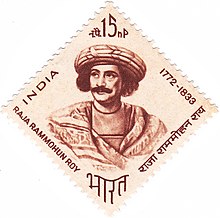
Raja Ram Mohan Roy

Raja Ram Mohan Roy was the father of Modern India’s Renaissance and a tireless social reformer who inaugurated the age of enlightenment and liberal reformist modernisation in India.

Life:

  • Raja Ram Mohan Roy was born on 22nd May 1772 in Bengal. His early education included the study of Persian and Arabic at Patna where he read the Quran, the works of Sufi mystic poets and the Arabic translation of the works of Plato and Aristotle.
  • From 1803 to 1814, he worked for East India Company as the personal diwan first of Woodforde and then of Digby.
  • In 1814, he resigned from his job and moved to Calcutta in order to devote his life to religious, social and political reforms.
  • In November 1830, he sailed for England to be present there to counteract the possible nullification of the Act banning Sati.
  • Ram Mohan Roy was given the title of ‘Raja’ by the titular Mughal Emperor of Delhi, Akbar II whose grievances the former was to present before the British king.
  • In his address, entitled ‘Inaugurator of the Modern Age in India,’ Tagore referred to Ram Mohan as ‘a luminous star in the firmament of Indian history’.

Ideology:

  • Ram Mohan Roy was greatly influenced by western modern thought and stressed on rationalism and modern scientific approach.
  • He believed that religious orthodoxies have become causes of injury and detrimental to social life and sources of trouble and bewilderment to the people, instead of tending to the amelioration of the condition of society.
  • He believed in social equality of all human beings and thus was a strong opposer of the caste system.
  • Ram Mohan was attracted to Islamic monotheism. He said that monotheism is also the fundamental message of Vedanta.
  • His idea of a single, unitarian god was a corrective to the polytheism of orthodox Hinduism and to Christian trinitarianism. He believed that monotheism supported one universal model for humanity.
  • Raja Ram Mohan Roy believed that unless women were freed from unhuman forms of oppression like illiteracy, child marriage, sati, purdah, Hindu society can not progress.
  • He characterised sati as the violation of every humane and social feeling and as symptomatic of the moral debasement of a race.

Contributions

Religious reforms:

  • Raja Ram Mohan Roy’s first published work Tuhfat-ul-Muwahhiddin (a gift to deists) published in 1803 exposed irrational religious beliefs and corrupt practices of the Hindus as the belief in revelations, prophets, miracles etc.
  • In 1814, he founded Atmiya Sabha in Calcutta to campaign against idolatry, caste rigidities, meaningless rituals and other social ills.
  • He criticized the ritualism of Christianity and rejected Christ as the incarnation of God. In Precepts of Jesus (1820), he tried to separate the moral and philosophical message of the New Testament, which he praised, from its miracle stories.

Social reforms:

  • Raja Ram Mohan Roy conceived reformist religious associations as instruments of social and political transformation.
    • He founded the Atmiya Sabha in 1815, the Calcutta Unitarian Association in 1821, and the Brahmo Sabha in 1828 which later became the Brahmo Samaj.
    • He campaigned against the caste system, untouchability, superstitions and use of intoxicants.
    • He was well known for his pioneering thought and action on the emancipation of women and especially on the abolition of sati and widow remarriage.
    • He attacked child marriage, illiteracy of women and the degraded state of widows and demanded the right of inheritance and property for women.

Educational reforms:

  • He supported David Hare’s efforts to the Hindu College in 1817, while Roy’s English school taught mechanics and Voltaire’s philosophy.
  • In 1825, he established Vedanta college where courses in both Indian learning and Western social and physical sciences were offered.

Economic and Political Reforms:

  • Civil liberties: Roy was impressed and admired the British system of constitutional government for the civil liberties it gave to the people. He wanted to extend the benefits of that system of government to Indian people.

Press freedom: 

Through his writings and activities, he supported the movement for free press in India. When press censorship was relaxed by Lord Hastings in 1819, Ram Mohan found three journals- The Brahmanical Magazine (1821); The Bengali weekly, Samvad Kaumudi (1821); and the Persian weekly, Mirat-ul-Akbar.