Asteroids- The Floating Rocks

Asteroids, sometimes called minor planets, are rocky remnants left over from the early formation of our solar system about 4.6 billion years ago. The current known asteroid count is: 1,100,048. Most of this ancient space rubble can be found orbiting our Sun between Mars and Jupiter within the main asteroid belt. Asteroids range in size from Vesta – the largest at about 329 miles (530 kilometers) in diameter – to bodies that are less than 33 feet (10 meters) across. The total mass of all the asteroids combined is less than that of Earth’s Moon.

See the source image

Composition

The three broad composition classes of asteroids are C-, S-, and M-types.

  • The C-type (chondrite) asteroids are most common. They probably consist of clay and silicate rocks, and are dark in appearance. They are among the most ancient objects in the solar system.
  • The S-types (“stony”) are made up of silicate materials and nickel-iron.
  • The M-types are metallic (nickel-iron). The asteroids’ compositional differences are related to how far from the Sun they formed. Some experienced high temperatures after they formed and partly melted, with iron sinking to the center and forcing basaltic (volcanic) lava to the surface.

Asteroid Classification

Main Asteroid Belt: The majority of known asteroids orbit within the asteroid belt between Mars and Jupiter, generally with not very elongated orbits. The belt is estimated to contain between 1.1 and 1.9 million asteroids larger than 1 kilometer (0.6 miles) in diameter, and millions of smaller ones. Early in the history of the solar system, the gravity of newly formed Jupiter brought an end to the formation of planetary bodies in this region and caused the small bodies to collide with one another, fragmenting them into the asteroids we observe today.

Trojans: These asteroids share an orbit with a larger planet, but do not collide with it because they gather around two special places in the orbit (called the L4 and L5 Lagrangian points). There, the gravitational pull from the Sun and the planet are balanced by a trojan’s tendency to otherwise fly out of orbit. The Jupiter trojans form the most significant population of trojan asteroids. It is thought that they are as numerous as the asteroids in the asteroid belt. There are Mars and Neptune trojans, and NASA announced the discovery of an Earth trojan in 2011.

Near-Earth Asteroids: These objects have orbits that pass close by that of Earth. Asteroids that actually cross Earth’s orbital path are known as Earth-crossers.

Potentially hazardous asteroids- NEAs that are of greatest threat to Earth, which have chances of colliding with Earth are listed as potentially hazardous asteroids or PHAs.

Missions to asteroids

  • OSIRIS-REx – Sample Return Mission to Asteroid Bennu (2016)
  • Hayabusa2 – JAXA Sample Return Mission to Asteroid Ryugu (2014)
  • PROCYON – JAXA Small Satellite Asteroid Flyby Mission (2014)
  • Dawn – NASA Orbiter of Asteroids Ceres and Vesta (2007)
  • Rosetta – ESA Comet Mission, flew by asteroids Steins and Lutetia (2004)
  • Hayabusa (Muses-C) – ISAS (Japan) Sample Return Mission to Asteroid 25143 Itokawa (2003)
  • Genesis – NASA Discovery Solar Wind Sample Return Mission (2001)
  • Stardust – NASA Comet Coma Sample Return Mission, flew by asteroid AnneFrank (1999)
  • Deep Space 1 – NASA Flyby Mission to asteroid Braille (1998)
  • Cassini – NASA/ESA Mission to Saturn through the Asteroid Belt (1997)
  • NEAR – NASA Near-Earth Asteroid Rendezvous with 433 Eros
  • Galileo – NASA Mission to Jupiter via asteroids Gaspra and Ida

https://en.wikipedia.org/wiki/Asteroid
https://solarsystem.nasa.gov/asteroids-comets-and-meteors/asteroids/overview/
The Conspiracy of “Bulbs”

Do you know for how long a light bulb can last? 1000 hours, 1500 hours, 3000 hours? What if I say there is an light bulb lasted for more than 120 year and still counting, you will definitely say are you kidding me?, mine doesn’t last for more than 1000 hours. Or you may ask which machine has manufactured it? But what if I say it is hand made. Read on full article to know why life span of light bulbs are made to decrease by some giant light bulb manufacturers…

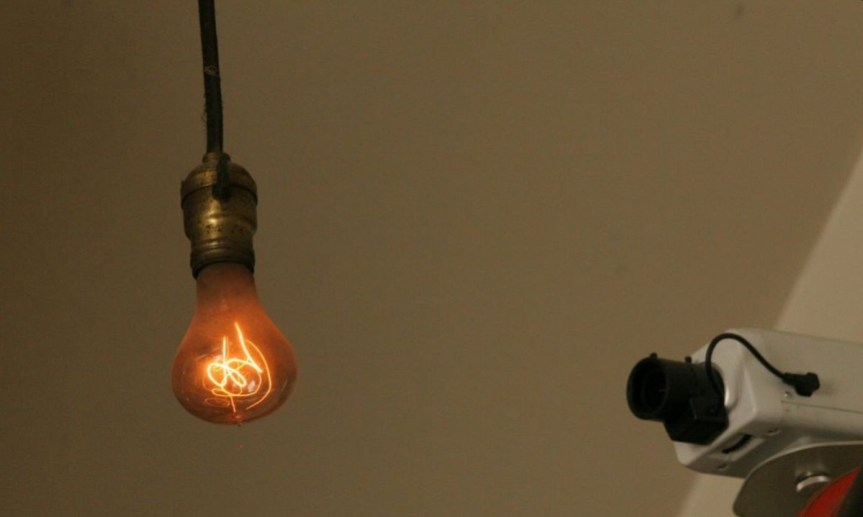
In Livermore Fire station 6 there is a light bulb active from more than 120 years hand made. The light doesn’t have a switch but it has battery back an a power generator. The bulb is never switched off as by cooling and heating up again there act stress on filament which decreases the life span of bulb.

When everyone is trying to make a filament they failed the filament burned with contact of oxygen, so in 1840s Warren De La Rue told to put the filament in vacuum so if there is no contact of oxygen and no burn. In 1879 Thomas Edison invented a perfect light bulb by making filament of carbon, from then onwards everyone tried different filament to increase the life span and then come up with tungsten. And in 1920s the life of bulbs were at peak lasting from 2000 hours to 2500 hours normally.

But at these time the sales were at least for the bulb manufacturers for example OSRAM sold 63 million bulbs in 1923, and in 1924 only 28 million. So the giant manufacturers of that come with a meeting. In 1924 at Geneva, Switzerland before christmas the giants Philips, International General Electric, Tokyo Electric, OSRAM from Germany, UK Associated Electric(AEI) formed a cartel named Phoebus Cartel after the name of Greek God of light.

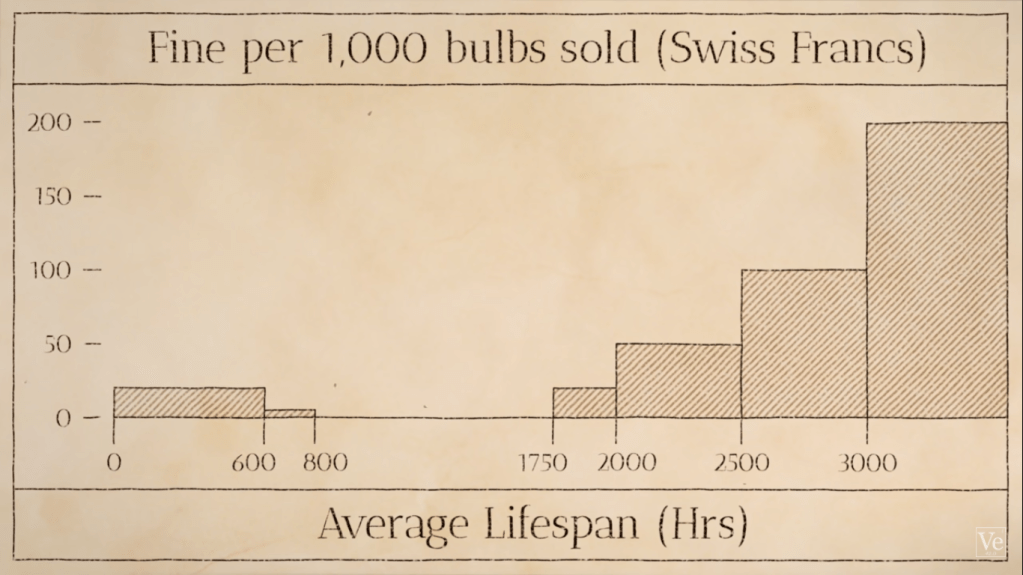
They agreed to decrease the life of bulbs to 1000 hours, the same way engineer discovered to increase, they told their engineers to decrease the life of bulbs. But, due to lack of trust they agreed to send bulbs from every factory to a lab for test. If the bulb lasts for 1000 hours is fine, but if it lasts more than 3000 hours then there is a fine of 200 Swiss Francs for every 1000 bulbs sold.

There again one question of will every manufacturer will follow or not? So they divided the area of sales. They were successful in there plan. The life of light bulbs decreased and there increased tremendously. They sold with same price to increase the profit.

-Sales – life of bubs

The cartel was made to last till 1955 but it ended in 1930s. However there were allegations on cartel, but they said that cartel in established for improvements in the bulb. The screw thread in bulbs are introduced by them.

The light bulb of Livermore is made before the formation of cartel that’s why it is there.

These is not the end of this case as there is still this type of work is going on.

In 2003 the video of Casey Neistat was gone viral as he tried to protest against apple. Apple launched IPod having non removable memory which lasts only for 18 months, and after that you have to give 250$ to refurbish it. So there was a case in court against this which Apple settled outside court.

Leonardo Da Vinci’s Human Powered Helicopter Becomes Reality

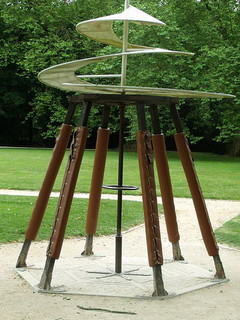
Leonardo Da Vinci's Aerial Screw

It would be hard to call Leonardo Da Vinci anything other than a man ahead of his time.  Between 1452 and 1519, Leonardo did just about everything. He is most famous today for his skills as a painter, where he painted some small works- like the Mona Lisa and The Last Supper. His sketches of man were the most anatomically correct to date (The Vitruvian Man). He was also a famed sculptor, musician, architect, anatomist, geologist, cartographer, botanist, writer mathematician, engineer and inventor. He conceptualized things far beyond his time, including concentrated solar power, a calculator, the double hull for ships, a tank and, most interesting to those of us in the aviation industry, a helicopter.

Over 420 years before the first helicopter was built, Leonardo Da Vinci sketched out what he called the Aerial Screw. This aerial screw was a man powered helicopter that required four men to spin cranks fast enough to generate enough lift to get off the ground.

Now, fast forward to 1980, 461 years after Leonardo passed away.  The American Helicopter Society sought to finally see the first human powered helicopter take flight. To win the prize money, which started at $10,000, the helicopter needed to reach at least 3 meters in the air (9.8 feet) for 60 seconds while being stable enough to have the center of the helicopter stay within a 10 x 10 meter box (32.8 x 32.8 feet). It would take 9 years from then before the first human powered helicopter even got off the ground when students at Cal Poly San Luis Obispo got their human powered helicopter 8 inches off the ground for all of 7.1 seconds. In the next 20 years, not much progress would be made so the Sikorsky Aircraft Corporation pledged additional prize money to try to see if that would inspire more innovation.

Sure enough, it did. Two teams, one from the University of Maryland and the other AeroVelo, were locked in a tight race to win. The university of Maryland got their man powered helicopter to fly for 65 seconds but it only reached 8 ft (about 1.8 feet short of where they needed to be) in August of 2012.

Finally, this July in Toronto, Aerovelo took the $250,000 in prize money with this flight:

While we don’t expect to see these Atlas human-powered helicopter’s flying around a city near you soon, this was a remarkable achievement. Congratulations to the Aerovelo team! And, over 480 years later, Leonardo Da Vinci’s vision of a human powered helicopter came to fruition.

THE FIRST ‘LIGHT BULB’ AND ITS INVENTION

The electric light bulb has been known as the most important invention since man-made fire. The light bulb helped to establish social life after sunset, extended the workday well into the night, and allowed us to navigate and travel safely in the dark. Without the light bulb, there would be no nightlife.

The electric light, one of the everyday conveniences that most affects our lives, was not “invented” in the traditional sense in 1879 by Thomas Alva Edison, although he have created the first commercially practical incandescent light. He was neither the first nor the only person trying to invent an incandescent light bulb. However, Edison is often credited with the invention because his version was able to outstrip the earlier versions because of a combination of three factors: an effective incandescent material, a higher vacuum than others were able to achieve and a high resistance that made power distribution from a centralized source economically.

EARLY LIGHT BULBS AND HISTORY:

In 1802, Humphry Davy invented the first electric light. He experimented with electricity and invented an electric battery. When he connected wires to his battery and a piece of carbon, the carbon glowed, producing light. His invention was known as the Electric Arc lamp. And while it produced light, it didn’t produce it for long and was much too bright for practical use.

Over the next seven decades, other inventors also created “light bulbs” but no designs emerged for commerical application. In 1840, British scientist Warren de la Rue enclosed a coiled platinum filament in a vacuum tube and passed an electric current through it. The design was based on the concept that the high melting point of platinum would allow it to operate at high temperatures and that the evacuated chamber would contain fewer gas molecules to react with the platinum, improving its longevity. Although an efficient design, the cost of the platinum made it impractical for commercial production.

In 1850 an English physicist named Joseph Wilson Swan created a “light bulb” by enclosing carbonized paper filaments in an evacuated glass bulb. And by 1860 he had a working prototype, but the lack of a good vacuum and an adequate supply of electricity resulted in a bulb whose lifetime was much too short to be considered an effective producer of light. However, in the 1870’s better vacuum pumps became available and Swan continued experiments on light bulbs. In 1878, Swan developed a longer lasting light bulb using a treated cotton thread that also removed the problem of early bulb blackening.

THOMAS ALVA EDISON AND HIS FIRST ‘LIGHT BULB’ :

Thomas Alva Edison was born on February 11, 1847, in Milan. He was the seventh and last child born to Samuel Edison Jr. and Nancy Elliott Edison, and would be one of four to survive to adulthood. Thomas Edison received little formal education, and left school in 1859 to being working on the railroad .

In 1878, Thomas Edison began serious research into developing a practical incandescent lamp and on October 14, 1878, Edison filed his first patent application for “Improvement In Electric Lights”. However, he continued to test several types of material for metal filaments to improve upon his original design and by Nov 4, 1879, he filed another U.S. patent for an electric lamp using “a carbon filament or strip coiled and connected to platina contact wires.”

Edison focused on inventing a safe, inexpensive electric light to replace the gaslight–a challenge that scientists had been grappling with for the last 50 years. Edison set up the Edison Electric Light Company and began research and development. He made a breakthrough in October 1879 with a bulb that used a platinum filament, and in the summer of 1880 hit on carbonized bamboo as a viable alternative for the filament, which proved to be the key to a long-lasting and affordable light bulb. In 1881, he set up an electric light company in New york.

Although the patent described several ways of creating the carbon filament including using “cotton and linen thread, wood splints, papers coiled in various ways,” it was not until several months after the patent was granted that Edison and his team discovered that a carbonized bamboo filament could last over 1200 hours.

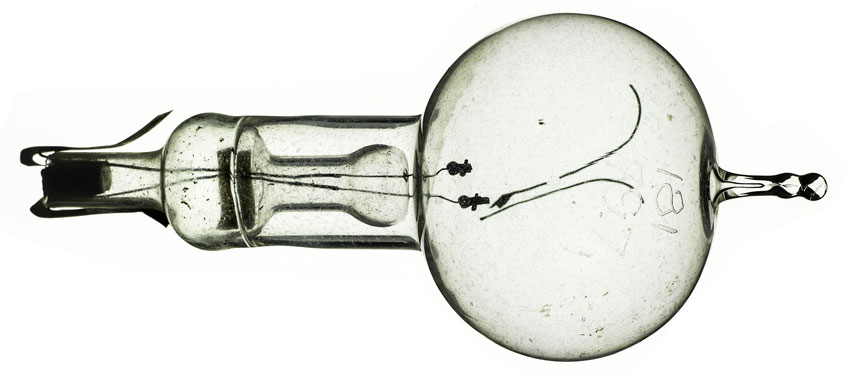
Original Edison Bulb
Original carbon-filament bulb from Thomas Edison

THE FIRST INCANDESCENT LIGHT BULB :

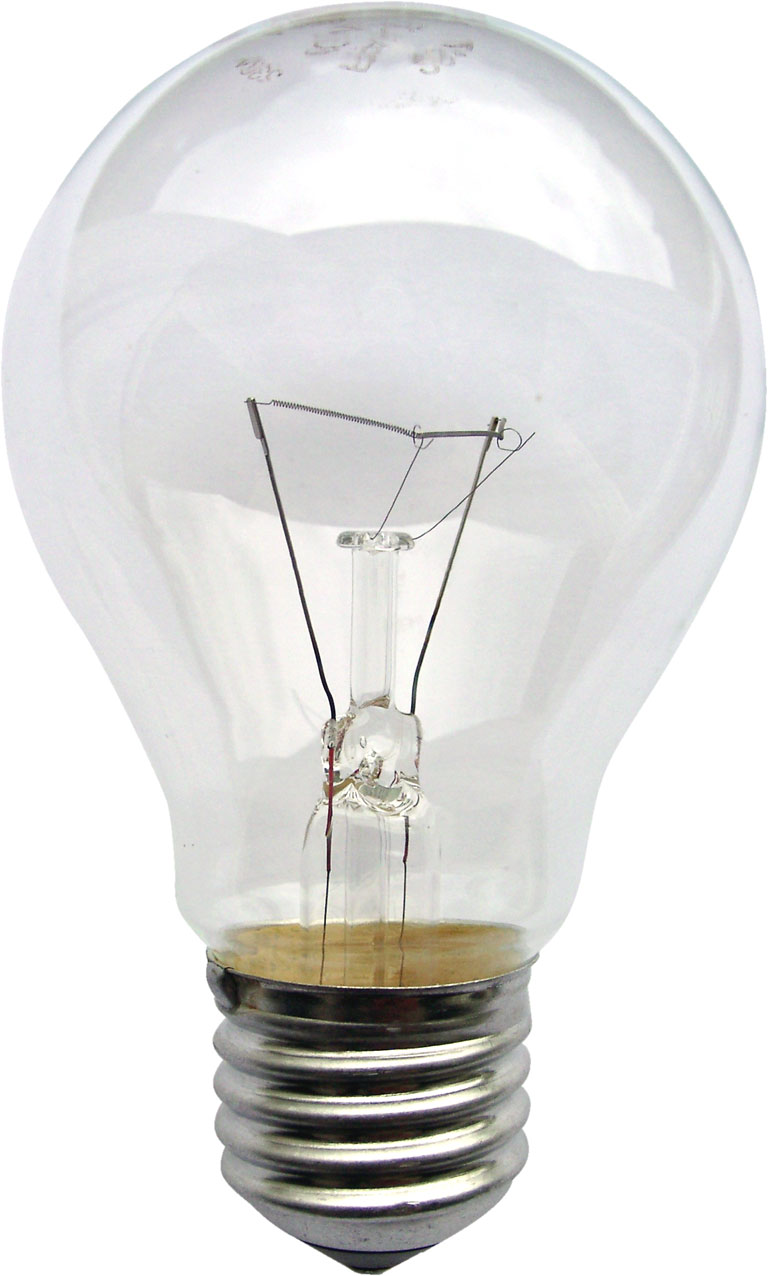
Incandescent light bulb use electricity to heat a carbon or metal base filament inside a glass bulb until it becomes hot and emits a radiant glow. A vacuum keeps the filament from burning up too quickly and blackening the interior of the glass bulb. Many of the first incandescent light bulbs faced the same challenges – a poor vacuum design, inferior or expensive filaments, and bulb blackening. However, these early experiments were pivotal in the development of the first commercially viable incandescent light bulb.

Incandescent bulbs are manufactured in a wide range of sizes, light output, and voltage ratings, from 1.5 volts to about 300 volts. They require no external regulating equipment, have low manufacturing cost, and work equally well on either alternating current or direct current. As a result, the incandescent bulb became widely used in household and commercial lighting, for portable lighting such as table lamps, car headlamps, and flashlights, and for decorative and advertising lighting.

THANK YOU !

Meteors Vs Meteoroids Vs Meteorites

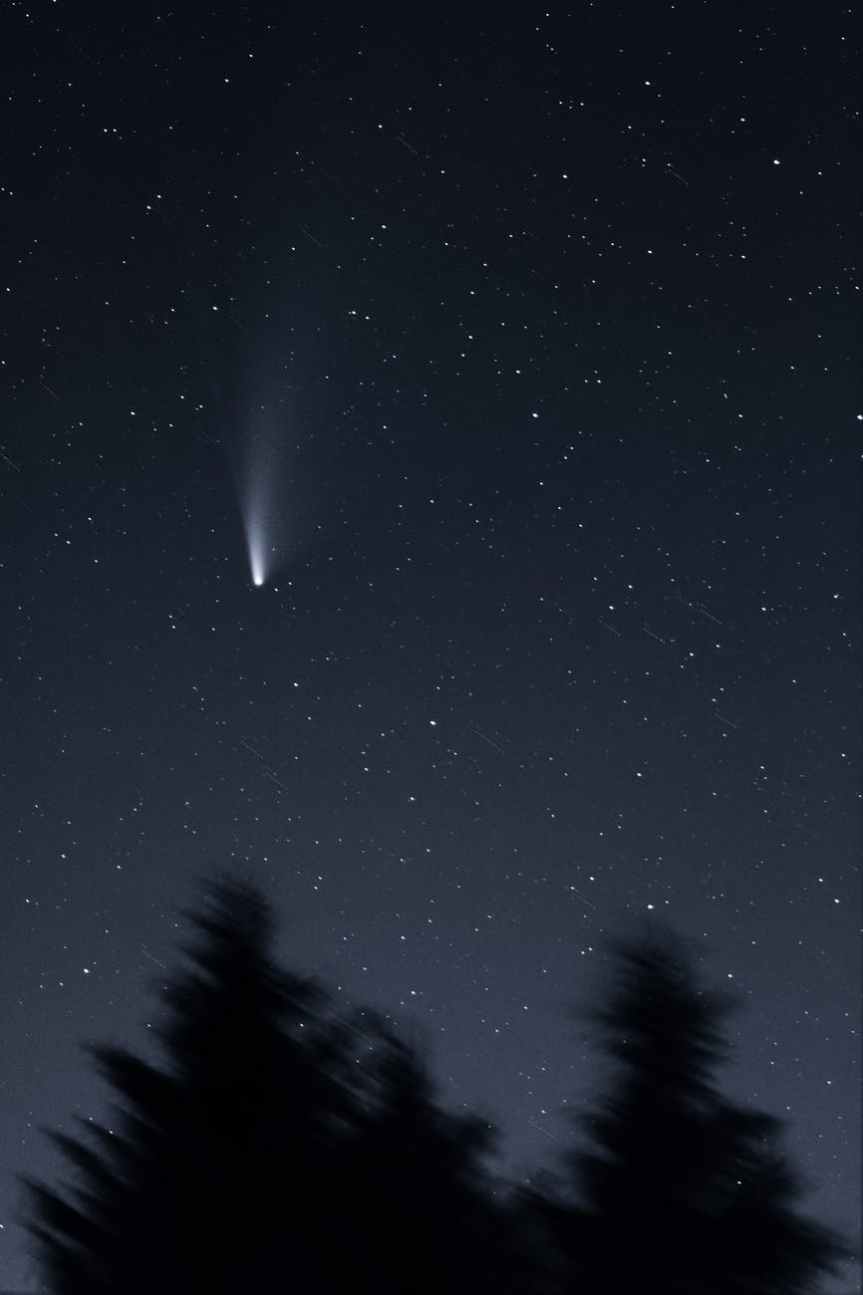
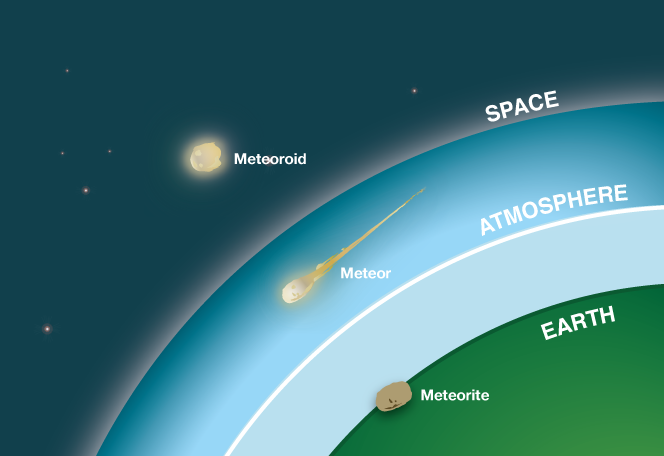
Meteors, Meteor showers, Meteoroids and Meteorites, sounds very confusing right? They all sound similar but have different meanings. A meteoroid is a small rocky or metallic body in outer space. Most are pieces of other, larger bodies that have been broken or blasted off. Some come from comets, others from asteroids, and some even come from the Moon and other planets.When meteoroids enter Earth’s atmosphere, or that of another planet at high speed and burn up, they’re called meteors. This is also when we refer to them as “shooting stars.” Sometimes meteors can even appear brighter than Venus — that’s when we call them “fireballs.” When a meteoroid survives its trip through the atmosphere and hits the ground, it’s called a meteorite. I hope you are clear with the difference now. To know further about them, and the type of meteor showers, read ahead.

See the source image

Meteoroid

In 1961, the International Astronomical Union (IAU) defined a meteoroid as “a solid object moving in interplanetary space, of a size considerably smaller than an asteroid and considerably larger than an atom”. Meteoroids are significantly smaller than asteroids, and range in size from small grains to one-meter-wide objects.Objects smaller than this are classified as micrometeoroids or space dust. Most are fragments from comets or asteroids, whereas others are collision impact debris ejected from bodies such as the Moon or Mars.

Almost all meteoroids contain extraterrestrial nickel and iron. They have three main classifications: iron, stone, and stony-iron. Some stone meteoroids contain grain-like inclusions known as chondrules and are called chondrites. Stony meteoroids without these features are called “achondrites”, which are typically formed from extraterrestrial igneous activity; they contain little or no extraterrestrial iron.

Meteor

A meteor, known colloquially as a shooting star or falling star, is the visible passage of a glowing meteoroid, micrometeoroid, comet or asteroid through Earth’s atmosphere, after being heated to incandescence by collisions with air molecules in the upper atmosphere, creating a streak of light via its rapid motion and sometimes also by shedding glowing material in its wake. Although a meteor may seem to be a few thousand feet from the Earth, meteors typically occur in the mesosphere at altitudes from 76 to 100 km (250,000 to 330,000 ft). Millions of meteors occur in Earth’s atmosphere daily. Most meteoroids that cause meteors are about the size of a grain of sand.

A fireball is a brighter-than-usual meteor that also becomes visible when about 100 km from sea level. The International Astronomical Union (IAU) defines a fireball as “a meteor brighter than any of the planets” (apparent magnitude −4 or greater).

Meteor Shower

A series of many meteors appearing seconds or minutes apart and appearing to originate from the same fixed point in the sky is called a meteor shower. A meteor shower is the result of an interaction between a planet, such as Earth, and streams of debris from a comet or other source. The passage of Earth through cosmic debris from comets and other sources is a recurring event in many cases. 

Meteor showers throughout the year:
January: Quadrantids
April: Lyrids 
May: Eta Aquarids 
June: Arietids and Bootids
July: Southern Delta Aquarids
August: Perseids 
October: Orionids 
November: Leonids 
December: Geminids
Each of these, except the Geminids, is caused by Earth moving through a stream of comet debris. The Geminids come from a stream of debris from the Asteroid 3200 Phaethon, which is probably a dead comet.

Meteorite

A meteorite is a portion of a meteoroid or asteroid that survives its passage through the atmosphere and hits the ground without being destroyed. Meteorites are sometimes, but not always, found in association with hypervelocity impact craters; during energetic collisions, the entire impactor may be vaporized, leaving no meteorites. Geologists use the term, “bolide”, in a different sense from astronomers to indicate a very large impactor. Meteorites can be very useful in studying the history of the Solar System to other planets.

https://solarsystem.nasa.gov/asteroids-comets-and-meteors/meteors-and-meteorites/in-depth/ http://en.wikipedia.org/wiki/Meteoroid

Organic Manure

Organic manure usage in agriculture is becoming more and more famous day by day. Organic manure, as the name suggests are the natural nutrients from sources like Human and animal excreta, decomposing vegetable wastes and leftovers of agricultural practices. Plants extract the nutrients from the soil for their growth and organic manure helps in restoring that nutrients by undergoing decomposition easily and getting mixed with the soil perfectly. By restoring the nutrients, manure increases the fertility of the soil. Regular usage of organic manure maintains the level of soil organic matter.

sources of organic manure
  • Cattle wastes like cow dung and urine, slurry from biogas plant, Human wastes like sewage, sludge can be used in organic manure preparation.
  • Dry leaves, stubble, sugarcane trash, crop residue and some other agricultural wastes can be used.
  • oil cakes, vegetable processing wastes wheat straw and bran are agriculture industry byproducts and these are also sources of organic manure.
  • Slaughterhouse wastes like blood and bone meal are also can be the sources.
methods of preparing manure at your home

POT COMPOSTING CAN BE DONE: Pot composting can be done using wastes from kitchen. Take a container and add some pebbles and soil at the bottom. Take dry wastes like paper and dry leaves and add them. Collect all the wet wastes from kitchen. They may include food leftovers, fruit peels etc. Put them in the container after the dry waste. You can make 3-4 layers like this. Sprinkle water to keep them moist. Keep this arrangement away from rain. Keep on mixing the layer everyday. And keep it moist. After 30-45 days compost will be ready.

THE VERMICOMPOSTIING: Verm compost is the droppings of the earthworm after they consume the organic waste. Take container or you can make a separate large concrete tubs if you want to produce in large quantity. Put first layer of soil and pebble. On that add the organic wastes that are collected. Put handful of worms in the tub. Water is sprayed to them on daily basis to keep everything moist. Earthworms will produce the droppings which can be used as the manure.

USING BOKASHI METHOD: In this method, collect some kitchen waste in an airtight drum and add some Bokashi powder. Bokashi powder is inoculated with microbes which help in decomposition, made of bran based material. After 15 days fungus growth will be seen indicating fermentation has happened. Put this fermented waste in a trench and wait for 3 weeks. Black compost which can be used as manure will be ready.

benifits of using organic manure

Organic manure provides all the nutrients to the soil and maintains its fertility. They also improve soils physical properties like texture and structure and also improve aeration. organic manure increases the water holding capacity of the soil and helps in retaining rain water. Soil pH is also maintained. Organic manure usage increases the microbe population in the soil resulting in increased biological activity. Carbon nitrogen ratio will be well maintained.

Usage of organic manure is economically beneficial also. The production can be extended as a small scale business and it requires less investment. Hence it will be a very profitable business.

Stone baby

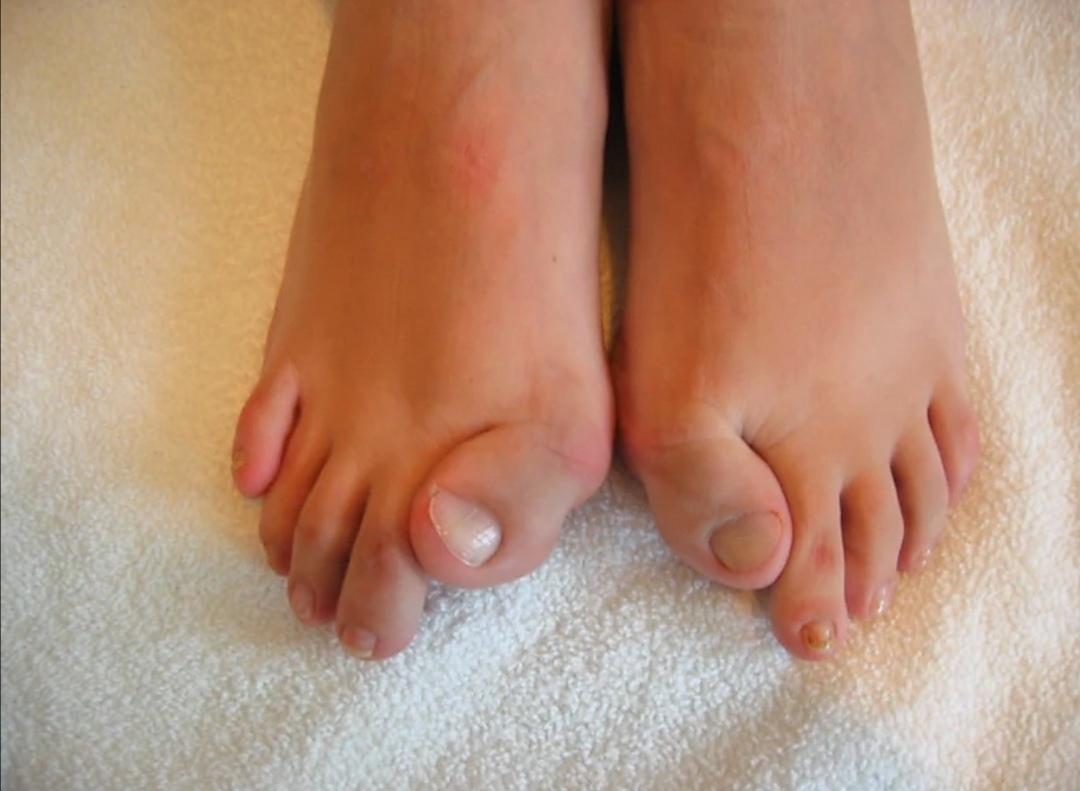
In UK ,a five month old, baby is turning into a stone due to some unusual diesease. Lexi Robin born on 31 January is ‘turning to a stone’ due some extremely rare genetic diesease .Her X-ray in April shows that she has bunion on her feet and double -jointed thumb.This condition is known as Fibrodysplasia ossificans progresiva (FOB) which turns muscle into bones.Its perceived that such conditions generally turns a body into stone.

YOGA AND LIFESTYLE

In a first for East India, Visva Bharati varsity commences PG diploma  course in yoga studies - Education Today News

Indeed , it is an astonishing fact that a yogic tradition , which is more than five thousand years old , has recently become a popular way of life . Presently , people consider that yoga is a significant means to achieve a healthy as well as a positive lifestyle . In fact , the power of yoga lies in its simplicity , flexibility and diversity . As a matter of fact , yoga helps in improving our flexibility , lowers our stress level and increases our confidence and finally contributes to a healthier lifestyle on the whole . There are various lifestyle diseases like obesity , diabetes , asthma , hypertension , back pain , migraine and depression which can be prevented and treated up to some extent with the help of certain yogic exercises .

Asanas As Preventive Measures

52,455 BEST Yoga Poses Male IMAGES, STOCK PHOTOS & VECTORS | Adobe Stock

According to Patanjali , asana means , “sthiram sukham aasanam “ i.e,. ” that position which is comfortable and steady ” . In Brahamanopanishad , “ To sit in a comfortable position or posture for everlasting period is called asana “. Asana is that state of body in which the body may be positioned easily . As a matter of fact , the ability to sit comfortably for an extended period of time in any position is called asana . In asanas , body is kept in various positions in such a way that the activities of organs and glands of body become more effective and eventually the health of mind and body is improved .

In fact , asana is a means through which physical and mental development is achieved . Prevention of diseases and delay in ageing are the desired effects that can be achieved through yogic exercises .

There are different types of asanas which include meditative asanas , relaxative asanas and corrective asanas . Regular practice of the above- mentioned asanas significantly affects various systems or organs of our body . Asanas can be used as preventive measures because they provide the following physiological benefits , which ultimately help us in avoiding various lifestyle diseases such as diabetes , obesity and cardiovascular diseases .

Understanding Luminous Pollution.


Many of us are taking steps to reduce carbon footprints. We responsibly recycle glass, metal, paper, plastic waste each week. However, unknowingly we are contributing to carbon emissions through light pollution which intrudes the delicate ecosystem. Light pollution in many countries is neglected and not regulated. 

The excessive, misdirected, or unnecessary use of artificial outdoor lighting is known as Light pollution a.k.a Luminous pollution, or Photopollution. Light pollution alters the color and contrast of the nighttime sky, natural starlight, and disrupts the circadian rhythms, which affects the environment, inhabitants, and astronomy research.

As countries are developing, the need for artificial outdoor lighting has also increased and light pollution has spread into suburban and rural areas. 

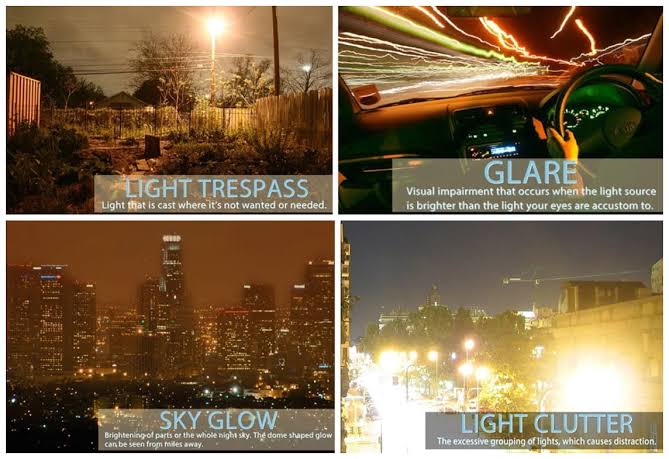
Types of light pollution:-

1) Light Trespass

2) Glare

3) Sky Glow

4) Light Clutter

What are the causes of light pollution?

Poorly designed residential, commercial and industrial lights contribute significantly to luminous pollution. Also, the use of unnecessary outdoor artificial lights contributes to luminous pollution. Approximately about 30℅ of light is wasted due to poorly designed artificial outdoor lights. 

Let’s have a look at the effects of light pollution.

As mentioned above, light pollution has effects on our environment and its inhabitants, and also on astrology. Mentioned below are some of the known effects of light pollution:-

Effect on the environment:                Excessive nighttime lighting releases more than 12 million tons of carbon dioxide every year into the atmosphere, which would take around 702 million trees to absorb. 

Luminous pollution also increases air pollution by resisting a natural occurring radical that cleans the air at night, called Nitrate radical. 

Effect on wildlife:                                    Light pollution can alter the feeding, mating, sleeping, and migration cycles of the entire wildlife. Wildlife can also feel the disorientation of time due to excessive light pollution.

Effect on energy:                            According to a study by IDA( International Dark-Sky Association) in 2007,  it is estimated that about 30% of the light emitted by public outdoor light fixtures is wasted, which equals 22 TWh/year of energy wastage. That is equivalent to the following:

★About 3.6 million tons of coal per year.

★ About 12.9 million barrels of oil per year.

Effect on Astronomy:            Astronomers are most affected by luminous pollution. As it makes it harder to view and find extraterrestrial bodies for the astronomers even with the aid of a telescope.

Effect on Humans:                                  Like plants and animals, humans are also regulated by circadian rhythms. The rhythms respond to the light and darkness around any organism, which when altered can result in various health hazards like sleeping disorders, depression, diabetes, cancer, cardiovascular disease, obesity, etc.

How to prevent light pollution?

Given below are some ways to prevent light pollution:-

I) By using warm white lightning as it scatters less.

II) By using shielded outdoor light fixtures.

III) By picking the right exterior light fixtures with the right cutoff angle, which prevents light from escaping above the horizontal plane.

IV) By using motion sensor outdoor fixtures.

V) By using IDA-certified light fixtures. 

Wannacry Cyber Attack

What was the cyber attack?

The WannaCry ransomware attack was a worldwide cyber attack in May 2017 by the WannaCry ransomware. It propagated through EternalBlue, an exploit developed by the United States National Security Agency (NSA) for older Windows systems. WannaCry is a ransomware cryptoworm, which targeted computers running the Microsoft Windows operating system by encrypting data and demanding ransom payments in the Bitcoin cryptocurrency. The worm is also known as WannaCrypt, Wana Decrypt0r 2.0, WanaCrypt0r 2.0, and Wanna Decryptor. It is considered a network worm because it also includes a transport mechanism to automatically spread itself. This transport code scans for vulnerable systems, then uses the EternalBlue exploit to gain access, and the Double Pulsar tool to install and execute a copy of itself. WannaCry versions 0, 1, and 2 were created using Microsoft Visual C++.

When did it happen?

The attack began on Friday, 12 May 2017, with evidence pointing to an initial infection in Asia at 07:44 UTC. Within a day the code was reported to have infected more than 230,000 computers in over 150 countries. Officially the initial outbreak was from 12 May 2017 to 15 May 2017. Organizations that had not installed Microsoft’s security update from April 2017 were affected by the attack.

How did it happen?

The vulnerability WannaCry exploits lies in the Windows implementation of the Server Message Block (SMB) protocol. The SMB protocol helps various nodes on a network communicate, and Microsoft’s implementation could be tricked by specially crafted packets into executing arbitrary code. It is believed that the U.S. National Security Agency discovered this vulnerability and, rather than reporting it to the infosec community, developed code to exploit it, called EternalBlue. This exploit was in turn stolen by a hacking group known as the Shadow Brokers, who released it obfuscated in a seemingly political Medium post on April 8, 2017. Microsoft itself had discovered the vulnerability a month prior and had released a patch, but many systems remained vulnerable, and WannaCry, which used EternalBlue to infect computers, began spreading rapidly on May 12. In the wake of the outbreak, Microsoft slammed the U.S. government for not having shared its knowledge of the vulnerability sooner.

Who did it?

The US and UK governments have said North Korea was responsible for the WannaCry malware attack affecting hospitals, businesses and banks across the world in May 2017. Ironically, it was allegedly developed as a cyber-attack exploit by the US National Security Agency. Although they were reported to have known of the tool’s vulnerabilities, the NSA didn’t bring it to Microsoft’s attention until the hacker group called Shadow Brokers leaked EternalBlue to an obscure website. Further analysis of the attack by companies such as Symantec revealed links to the Lazarus group who in turn have been linked to North Korea although the attack does not bear the hallmarks of a nation-state campaign.

Which security services were violated?

WannaCry spread using an exploit called EternalBlue, created by—and subsequently stolen from—the U.S. National Security Agency (NSA). EternalBlue enabled attackers to discover vulnerable computers on the target network. WannaCry also leveraged an NSA backdoor called DoublePulsar to install WannaCry on the networkThe WannaCry ransomware attack hit around 230,000 computers globally .A third of NHS hospital trusts were affected by the attack. Terrifyingly ambulances were reportedly rerouted, leaving people in need of urgent care in need. It was estimated to cost the NHS a whopping £92 million after 19,000 appointments were canceled as a result of the attack. As the ransomware spread beyond Europe, computer systems in 150 countries were crippled. The WannaCry ransomware attack had a substantial financial impact worldwide. It is estimated this cybercrime caused $4 billion in losses across the globe.

Affected organizations

  • Andhra Pradesh Police, India
  • Automobile Dacia, Romania
  • Boeing Commercial Airplanes
  • Cambrian College, Canada
  • Hitachi
  • Honda
  • Instituto Nacional de Salud, Colombia
  • Portugal Telecom
  • Pulse FM
  • Renault
  • Russian Railways
  • University of Milano-Bicocca, Italy
  • Vivo, Brazil

5-month-old baby girl in UK ‘turning to stone’

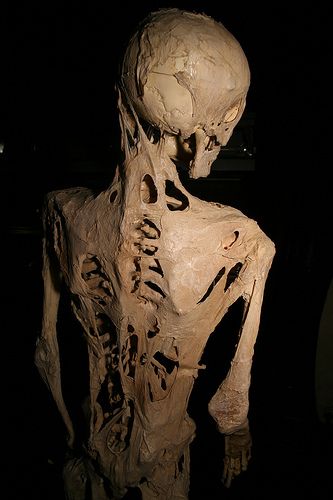
The effects of fibrodysplasia ossificans progressiva, a disease which causes damaged soft tissue to regrow as bone.

Lexi Robins, 5 month old from the UK is “turning to a stone”due to an extremely rare genetic condition Fibrodysplasia Ossificans Progressiva (FOP) that turns muscles into bones.

Lexi Robins was born on January 31 and seemed like any other normal baby, except she didn’t move her thumb and had bigger toes.

Lexi was diagnosed with a life-limiting disease called Fibrodysplasia Ossificans Progressiva (FOP), which affects just one in two million.

Due to the disorder, Lexi’s condition may worsen rapidly if she suffers any minor trauma, as simple as falling over. She cannot receive injections, vaccinations and dental care and cannot give birth.

Post by Alexandera robins https://www.instagram.com/tv/CQnwqnTIUlV/?utm_source=ig_embed&utm_campaign=loading.

FOP is a severe, disabling disorder with no current cure or treatment. It is the only known medical condition where one organ system changes into another. Fibrodysplasia ossificans progressiva is caused by a mutation of the gene ACVR1.

The FOP can lead to bone formation outside skeleton and restrict movement. It is believed to replace muscles and connective tissues, such as tendons and ligaments, with bone. Thus, it is generally perceived that the condition turns a body into stone.

People with this disease, which has no proven treatment, can be bedridden by the age of 20 and their life expectancy is around 40 years.

It has no current cure.

Bose-EinsteinCondensate The 5th Matter

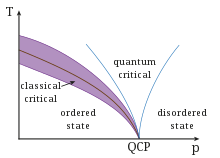
QuantumPhaseTransition.svg

In condensed matter physics, a Bose–Einstein condensate (BEC) is a state of matter (also called the fifth state of matter) which is typically formed when a gas of bosons at low densities is cooled to temperatures very close to absolute zero (−273.15 °C or −459.67 °F). Under such conditions, a large fraction of bosons occupy the lowest quantum state, at which point microscopic quantum mechanical phenomena, particularly wavefunction interference, become apparent macroscopically. A BEC is formed by cooling a gas of extremely low density (about one-hundred-thousandth (1/100,000) the density of normal air) to ultra-low temperatures.

This state was first predicted, generally, in 1924–1925 by Albert Einstein following and crediting a pioneering paper by Satyendra Nath Bose on the new field now known as quantum statistics.

This transition to BEC occurs below a critical temperature, which for a uniform three-dimensional gas consisting of non-interacting particles with no apparent internal degrees of freedom is given by:{\displaystyle T_{\rm {c}}=\left({\frac {n}{\zeta (3/2)}}\right)^{2/3}{\frac {2\pi \hbar ^{2}}{mk_{\rm {B}}}}\approx 3.3125\ {\frac {\hbar ^{2}n^{2/3}}{mk_{\rm {B}}}}}{\displaystyle T_{\rm {c}}=\left({\frac {n}{\zeta (3/2)}}\right)^{2/3}{\frac {2\pi \hbar ^{2}}{mk_{\rm {B}}}}\approx 3.3125\ {\frac {\hbar ^{2}n^{2/3}}{mk_{\rm {B}}}}}

where:

{\displaystyle \,T_{\rm {c}}}is the critical temperature,
\,nthe particle density,
\,mthe mass per boson,
\hbar the reduced Planck constant,
{\displaystyle \,k_{\rm {B}}}the Boltzmann constant and
\,\zeta the Riemann zeta function; {\displaystyle \,\zeta (3/2)\approx 2.6124.}\,\zeta(3/2)\approx 2.6124. 

Interactions shift the value and the corrections can be calculated by mean-field theory. This formula is derived from finding the gas degeneracy in the Bose gas using Bose–Einstein statistics.

Superfluidity of BEC and Landau criterion

The phenomena of superfluidity of a Bose gas and superconductivity of a strongly-correlated Fermi gas (a gas of Cooper pairs) are tightly connected to Bose–Einstein condensation. Under corresponding conditions, below the temperature of phase transition, these phenomena were observed in helium-4 and different classes of superconductors. In this sense, the superconductivity is often called the superfluidity of Fermi gas. In the simplest form, the origin of superfluidity can be seen from the weakly interacting bosons model.

TACHYON A PARTICLE THAT HELPS US TO TIME TRAVEL…

Tachyonhypothetical subatomic particle whose velocity always exceeds that of light. The existence of the tachyon, though not experimentally established, appears consistent with the theory of relativity, which was originally thought to apply only to particles traveling at or less than the speed of light. Just as an ordinary particle such as an electron can exist only at speeds less than that of light, so a tachyon could exist only at speeds above that of light, at which point its mass would be real and positive. Upon losing energy, a tachyon would accelerate; the faster it traveled, the less energy it would have.

The name ‘tachyon’ (from the Greek ‘tachys,’ meaning swift) was coined by the late Gerald Feinberg of Columbia University. Tachyons have never been found in experiments as real particles traveling through the vacuum, but we predict theoretically that tachyon-like objects exist as faster-than-light ‘quasiparticles’ moving through laser-like media. (That is, they exist as particle-like excitations, similar to other quasiparticles called phonons and polaritons that are found in solids. ‘Laser-like media’ is a technical term referring to those media that have inverted atomic populations, the conditions prevailing inside a laser.)

an experiment at Berkeley to detect tachyon-like quasiparticles. There are strong scientific reasons to believe that such quasiparticles really exist, because Maxwell’s equations, when coupled to inverted atomic media, lead inexorably to tachyon-like solutions.

“Quantum optical effects can produce a different kind of ‘faster than light’ effect (see “Faster than light?” by R. Y. Chiao, P. G. Kwiat, and A. M. Steinberg in Scientific American, August 1993). There are actually two different kinds of ‘faster-than-light’ effects that we have found in quantum optics experiments. (The tachyon-like quasiparticle in inverted media described above is yet a third kind of faster-than-light effect.)

“First, we have discovered that photons which tunnel through a quantum barrier can apparently travel faster than light (see “Measurement of the Single-Photon Tunneling Time” by A. M. Steinberg, P. G. Kwiat, and R. Y. Chiao, Physical Review Letters, Vol. 71, page 708; 1993). Because of the uncertainty principle, the photon has a small but very real chance of appearing suddenly on the far side of the barrier, through a quantum effect (the ‘tunnel effect’) which would seem impossible according to classical physics. The tunnel effect is so fast that it seems to occur faster than light.

“Second, we have found an effect related to the famous Einstein-Podolsky-Rosen phenomenon, in which two distantly separated photons can apparently influence one anothers’ behaviors at two distantly separated detectors (see “High-Visibility Interference in a Bell-Inequality Experiment for Energy and Time,” by P. G. Kwiat, A. M. Steinberg, and R. Y. Chiao, Physical Review A, Vol. 47, page R2472; 1993). This effect was first predicted theoretically by Prof. J. D. Franson of Johns Hopkins University. We have found experimentally that twin photons emitted from a common source (a down-conversion crystal) behave in a correlated fashion when they arrive at two distant interferometers. This phenomenon can be described as a ‘faster-than-light influence’ of one photon upon its twin. Because of the intrinsic randomness of quantum phenomena, however, one cannot control whether a given photon tunnels or not, nor can one control whether a given photon is transmitted or not at the final beam splitter. Hence it is impossible to send true signals in faster-than-light communications.

Pin on The Laws of Relativity

Pet.

A pet, or companion animal, is an animal kept primarily for a person’s company or entertainment rather than as a working animal, livestock or a laboratory animal. Popular pets are often considered to have attractive appearances, intelligence and relatable personalities, but some pets may be taken in on an altruistic basis (such as a stray animal) and accepted by the owner regardless of these characteristics.

Two of the most popular pets are dogs and cats; the technical term for a cat lover is an ailurophile and a dog lover a cynophile. Other animals commonly kept include: rabbits; ferrets; pigs; rodents, such as gerbils, hamsters, chinchillas, rats, mice, and guinea pigs; avian pets, such as parrots, passerines and fowls; reptile pets, such as turtles, alligators, crocodiles, lizards, and snakes; aquatic pets, such as fish, freshwater and saltwater snails, amphibians like frogs and salamanders; and arthropod pets, such as tarantulas and hermit crabs. Small pets may be grouped together as pocket pets, while the equine and bovine group include the largest companion animals.

Pets provide their owners (or “guardians”) both physical and emotional benefits. Walking a dog can provide both the human and the dog with exercise, fresh air and social interaction. Pets can give companionship to people who are living alone or elderly adults who do not have adequate social interaction with other people. There is a medically approved class of therapy animals, mostly dogs or cats, that are brought to visit confined humans, such as children in hospitals or elders in nursing homes. Pet therapy utilizes trained animals and handlers to achieve specific physical, social, cognitive or emotional goals with patients.

People most commonly get pets for companionship, to protect a home or property or because of the perceived beauty or attractiveness of the animals. A 1994 Canadian study found that the most common reasons for not owning a pet were lack of ability to care for the pet when traveling (34.6%), lack of time (28.6%) and lack of suitable housing (28.3%), with dislike of pets being less common (19.6%). Some scholars, ethicists and animal rights organizations have raised concerns over keeping pets because of the lack of autonomy and the objectification of non-human animals.

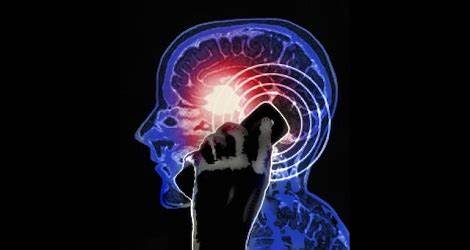
Precautions to Reduce Exposure of Mobile Phone Radiation

If you are concerned about your exposure to RF radiation, you may take the following steps to decrease it:

  • Choosing a phone with a low specific absorption rate (SAR), which refers to how much RF radiation is absorbed by human tissues.
  • Being careful of claims that protective equipment or “shields” may minimize RF radiation exposure; there is no proof that these devices function. In reality, they can increase RF radiation since the phone will immediately boost its RF output to counteract the shield’s effects and provide the greatest possible connectivity.
  • Carry your phone away from your body. Manufacturers of mobile phones cannot guarantee that the quantity of radiation you are exposed to is safe.
  • While driving, do not chat on the phone or text. This raises the chances of a car accident. When walking or doing other activities, use caution when talking on the phone or texting. Injuries caused by “Distracted Walking” are also on the rise.
  • If you want to see a movie on your phone or tablet, download it first and then watch it in airplane mode to minimize unwanted radiation exposure.
  • Keep an eye on the strength of your signal (i.e. how many bars you have). Y our phone has to work harder and it will emit more radiation if the mobile signal is weaker. It is preferable to use your smartphone after you have a stronger signal.
  • Avoid making phone calls when in a car, elevator, train, or bus. Because the phone has to work harder to get a signal through metal, the power level rises.
  • Make use of your landline phone. Use your landline instead of your cell phone if you have one at home or at work.
  • When you’re not using your phone, turn it off or set it on airplane mode. It’s tough, but not impossible, to follow. You may turn it off or put it on airplane mode whenever you don’t need constant data access for a few hours. As much as feasible, do it. It’s something you can do before going to bed.
  • When chatting on the phone, it is preferable to utilize a hands-free speaker or earbuds. Make it a habit to do so. Remove your earbuds once you’ve finished speaking. Keep your phone 1-2 cm away from your ear if you don’t want to utilize hands-free. Bluetooth should not be used.
  • To reduce the amount of radiation you are exposed to when sleeping, turn off your phone. Also, keep your phone away from your head, such as beneath your pillow. Radiation is reduced by 95% when you keep your phone 20 inches away from you.
  • The skulls of children are thinner than those of adults. Radiation has the potential to infiltrate their brains and cause additional harm. To avoid further problems, limit your children’s screen usage completely.
  • Don’t chat on the phone while it’s charging since the quantity of radiation it emits is ten times higher at that time.
  • When your phone’s battery is low, avoid using it. When your phone’s battery is low, avoid using it since the radiation level rises.