Many people believe that being physically healthy is a sign of good health, but do they even consider their mental health? Today I am going to discuss this particular topic called “Mental health of a human being”.
Today youngsters and even old people are very particular about their physical health. They join gyms, participate in various cardio activities to make themselves physically fit but what about their mental health? How people would understand whether they are mentally fit or not? And if they know, then how will they overcome it? Today in this era of competition in everything, being in studies or fashion or anything else, everyone is running a race and is trying to outshine each other. Because of this, they have forgotten that their mind should also be taken care of like anything else.
Anxiety and depression have now became a common issue for every individual. Some people try to hide their anxiety by talking too much or by remaining extremely quiet.
Have you ever wondered, everybody, talks about an illness like cancer, heart attack, migraine, etc very freely but when it comes to mental health, they often hide from everyone and consider it a shameful thing? No one openly talks about their mental illness because somewhere they think that it is shameful to share it with anyone. Even, if he/she talks about it openly then they get very little support and is stabbed by their friends in tougher times, which makes them weaker and lonely even when surrounded by a crowd. Nowadays there are some who understand this problem and openly help such victims. Else, earlier they used to tag that person insane and didn’t look after them.
But I want to convey to such people to come out, express yourself whatever you are feeling, either share it on your social media or talk with your loved ones, there are definitely people who will help you to overcome it. This is not something to be ashamed of, it is also a part of your health. Never feel low because of love failure, study stress or family problems, etc.
You are not alone in this. Your loved ones are standing behind you to support you.
And in the end, I would like to convey my message to those who take mental health for granted that please don’t judge people in any way. You have no idea about what a person is going through. So, LIVE AND LET LIVE.
When a young person uses the Internet or technology to harass, threaten, embarrass, or target another person, this person is called a cyberbullying. Typically, cyberbullying involves tweens and teens; but it’s not uncommon for adults to experience cyberbullying and public shaming as well. Even if someone deletes a mean post, chances are it’s still available in some form such as in a screenshot or a shared text message. Worse yet, those targeted by cyberbullies often don’t know who is bullying them, so they often have no way to bring it to an end.
Impact of Cyberbullying
If your child is being targeted by cyberbullying, it’s important that you work with them to report the cyberbullying and do everything you can to get the victimization to stop. Additionally, you should talk to their pediatrician or a mental health professional about what your child is experiencing. Expecting your child to cope with the cyberbullying on their own is not realistic. Cyberbullying also can lead to increasing levels of anxiety and depression. One study found that as many as 93% of kids victimized by cyberbullies reported feelings of sadness, hopelessness, and powerlessness.
Coping with Cyberbullying
Encourage your child to reclaim control. Cyberbullying can make teens feel like their lives are out of control. For this reason, you want to give them opportunities where they feel like they have some control. One way to do this is to encourage your child to use what they have experienced and turn it into something good like helping others going through the same thing.
Focus on learning from the experience. Whether your child needs a boost to their self-esteem or they need to learn to think positively, help your child identify what they can learn from this experience. You also can help them reframe their experience and focus on the good that has come from it rather than the pain that it caused.
Education administration is a fast-changing field that requires knowledge of modern classroom practices and insights in student behavior. My experiences in education and administration make me the ideal candidate for this position.
The position listing for principal stated that you were searching for a candidate who could develop and maintain curriculum standards. I served as a teacher for seventeen years before entering administration and am keenly aware of the state and local standards for curriculum development.
I might not have sparkling marks and dazzling grades up to post graduation due to many reasons, but nevertheless, this lacuna always has kept me awaken and stimulated to impart updated education to my students at every level of their academic growth and aspiring career to score big, achieve high.
Close to 19 years of sound academic experience in more than one school has accustomed me to various teaching-learning and working experience. Employed in various capacity right from common teacher to HOD English to academic coordinator and finally to an esteemed post of a Principal has given me ample space, time, authority and opportunity to groom my pedagogic skill, academic quality, planning ability, leadership efficiency, administrative proficiency and management capacity, appropriately.
As a School Principal, I am nurtured, experienced and accumulated with vital information related to School leadership, Operation, Management, Administration, Marketing, Teaching, Training, planning and community relationship building. Being a priest of English, Sound writing and communication skills have always assisted me to be resourceful and updated at every level of my progress.
Educational requirements change quickly, and principals often act as liaisons between the state and the teaching staff. My experience in curriculum development has helped me be able to interpret state standards and communicate them efficiently to my colleagues. As a principal, I would be comfortable holding everyone accountable for these rapidly changing standards.
My resume highlights specific examples of my administrative and leadership duties, my strong problem-solving, creative thinking, and long-range planning abilities. Additionally, I am adept in communicating with a diverse population.
I relish the range of challenges that are part of this job and enjoy working with students, parents, and teachers. My interests, strengths and abilities, along with my experience, I believe, are exactly what you want for this position. I hope you will give me the opportunity of a personal interview to help me understand your needs better and explain to you in greater detail how I can contribute to your school system.
Everyone has a profession or two that they aspire to be when they grow up. Some children, for example, want to be firefighters, while others want to be physicians or professors and lots more. This is where everything starts. Dreaming is what gives a child the wings to fly, the hope to survive and the will to become successful in future. Childhood and early adulthood experiences may mould and mould these dreams. Many of these children grow up to abandon their childhood ambitions whereas some of these children, continue on their road to pursue their aspirations and become the professionals they’ve always wanted to be.
My Childhood Aspirations When I reflect on my life, I realize how wonderful it has been. I had an absolutely fantastic childhood and consider myself to be quite fortunate. I grew up in a home with two loving parents who have been there for me through thick and thin, and for that I am eternally grateful, forever. My parents instilled in me the belief that I could be anything I wanted and that I could do everything I set my mind to, they made me believe that nothing is impossible and you can gain what you want if you work hard. As I grew older and developed into the person I am now, my dreams evolved.
DREAMS AS ADULTS
When people consider their life dreams, they frequently consider whether or not they are childlike fantasies. Adults are continually influenced by what is considered juvenile or practical, as well as how others would see them if they pursue their aspirations. Most people who are going to follow all of their childhood aspirations are emotionally immature in some way. Bringing this down to the level of students has a similar effect. After all, when children reach a certain age, the adults in their lives dismiss their dreams as infantile or kiddish which is very much seen among the people in the current generation. Despite the fact that it can drive someone’s willingness, childishness is usually regarded as negative or problematic in some way. People can be motivated by a variety of emotions that are considered juvenile, such as wrath, sadness and many more.
When broken down by gender, it appears that gender stereotypes were still present in the minds of today’s adults when they were children. Pilot (13 percent), Athlete/Olympian (10 percent), and Police Officer or Detective (6 percent) were the most popular dreams for boys, while Vet (12 percent), Teacher (11 percent), and Dancer/Choreographer were the most popular ambitions for girls (6 percent). I’ve had a range of interests and occupations throughout my life that have given me a lot of pleasure. But when it came to my work and something I’d be doing for the rest of my life, I couldn’t think of anything that would make me truly happy.
Some people have an easier time moving on from their “childhood aspirations” than others. As they become older, they develop interests behind the scenes or in theater administration, which they can turn into an internship, which could lead to a full-time job. That’s just fine with them but this is not fine by me.
“A person lives a single life, but a reader lives multiple lives”. A quote that inspired me to get into reading. How do you define reading? Well, Wikipedia defines it as “A process of taking in the sense or meaning of letters, symbols, etc., especially by sight or touch”. But is that all a habitual reader goes through? Obviously not. This is just a definition that describes the generalized view. If you call a bibliophile to describe reading, He or she may say ” Reading is a journey, an experience filled with all the emotions and knowledge”.
Reading is not only for experience, But there are many benefits of making reading a habit:
it empowers your brain
Many researches have shown that reading involves a complex process in your brain. There are complex networks in brain which strengthen through reading. It keeps you mentally stimulated. Reading is an exercise to your brain. And these exercises will make you smarter. Reading improves brains connectivity.
it gives new ideas
Reading helps in detecting patterns, solving puzzles and problems. You are actively thinking while reading. This will arise new ideas to the problems you were having trouble to solve or it may show a new approach to the same. You may get situations in life where references from the books you have read will guide you or solve your problem.
it helps you to write better
When you read a good book, which is well written and executed, brain absorbs that technique. reading multiple types will increase your skill. These skills you acquired while reading, that technique you appreciated when you noticed it will unknowingly show up in your writing. This will increase the quality of your writing.
it influences your world view
While reading you are thinking using the writers mind. He will provide a new view to a same situation. Good things that you accumulated during reading process will reflect in your opinions. They influence and improve the way you approach the world. It broadens your perspective and makes you question and reexamine your beliefs and judgements.
reading increases your knowledge
When you love a specific genre or a type of book, you effortlessly gain all the knowledge given within the book. This will make you smarter effortlessly. Books will have information about history, economics, science, culture, customs and what not. You will get all of these information without taking courses in colleges.
reading reduces stress
When you read a good book, it will help you reduce all your stress either from work or from personnel issues. Many researches have also proven the same. Reading can ease tension in your muscles. It is like a mini break but without taking a break!
reading improve vocabulary
Reading more and more will introduce you to more and more new words. Unknowingly these words make their way in your daily vocabulary improving your language skill. A person with good conversational skill is preferred everywhere and a good vocabulary will increase your confidence also. This will definitely help in having a good career.
If all these things are not motivating you to read, here is another fact. Bill gates, one of the worlds richest man takes a braked named “Think break” where he isolates from the other distractions of the world and just reads to have new ideas. He takes this break twice a year and you don’t need a proof to show how they end up.
A self-help book is one that is written with the objective to help its readers on solving personal problems. For those interested in becoming a better version of themselves, self-help books are a must-read. The term self-help is derived from a 19th-century book of the same name by Samuel Smiles, a Scottish author.
Although these books aren’t any sort of miraculous solutions to instant happiness, but they do provide a window into new ways of thinking, relating, loving and problem-solving. The first and foremost benefit of reading self-help books is that the experience puts the reader on a path to read, practice the strategies learned, and make improvements in their lives without asking others for help.
However, all self-improvement books are not equal. Some help to start out your journey, while others give a boost when you’ve achieved experience in certain areas.
Here are some of the best ones from my library that I recommend you to read no matter how old you are.
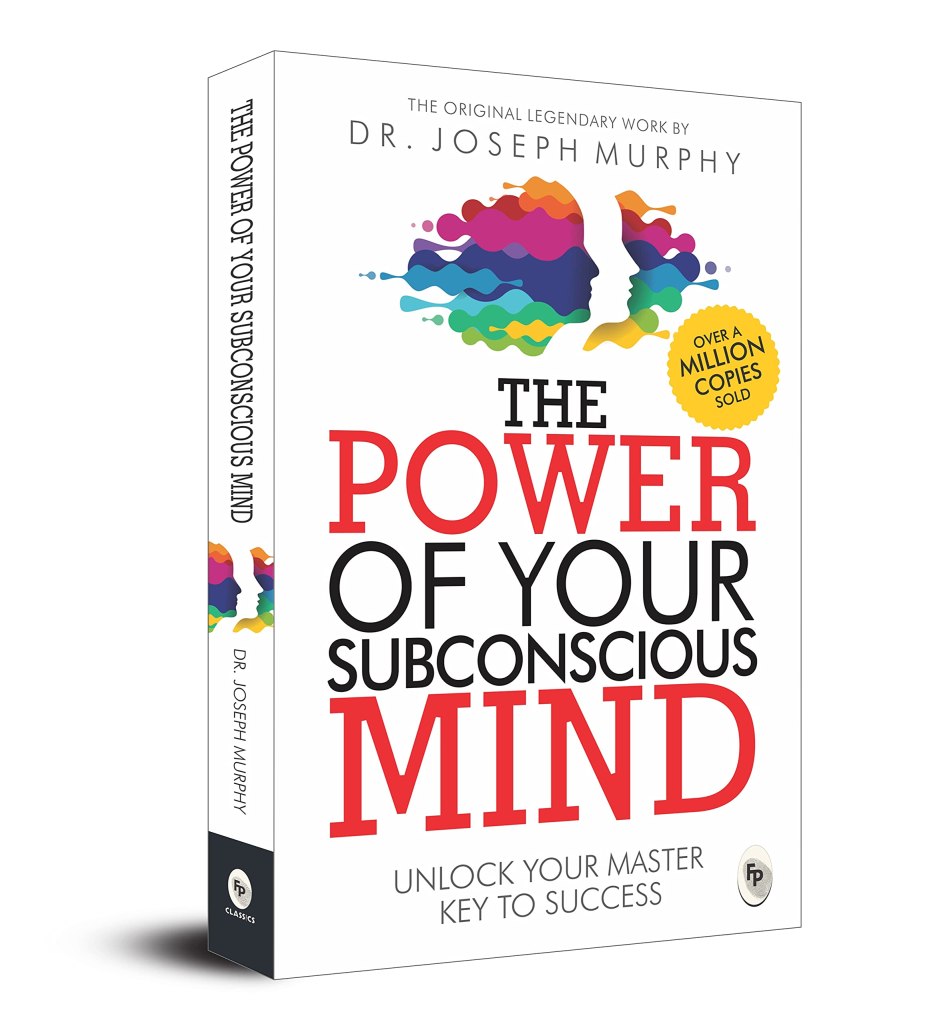
The Power of Your Subconscious Mind by Joseph Murphy
As is evident from the title, it is a book that promises to be an insightful look into powers beyond the scope of our daily prowess.
Since its first publication in 1963, It has been a bestseller, selling many millions of copies. It is among the most loved self-help works of all time which can help you heal yourself. The techniques provide inside the book are very simple to apply and results come quickly. You can work it out to improve your relationships, your finances, your physical well-being, and whatnot.
The author of this book, Dr. Joseph Murphy, explains that life events are a result of the workings of our conscious and subconscious minds. He suggests practical techniques to change our destiny, principally by focusing and redirecting this miraculous energy. Years of research and studying the world’s major religions convinced him into believing that some Great Power lay behind all spiritual life and that this power is within each of us.
The Alchemist by Paulo Coelho
Written by Brazilian author Paulo Coelho in 1988, The Alchemist, is one of the best-selling books in history. Initially written and published in Portuguese, It has now been translated to more than 70 languages. The theme of the book is to find one’s destiny or purpose in life.
It is the magical story of an Andalusian shepherd boy, Santiago, who wants to travel in search of an extravagant treasure. This story portrays the essential wisdom of listening to our hearts, learning to read the signs along life’s path, and, above all, following our dreams as the treasure, the boy finds on his journey.
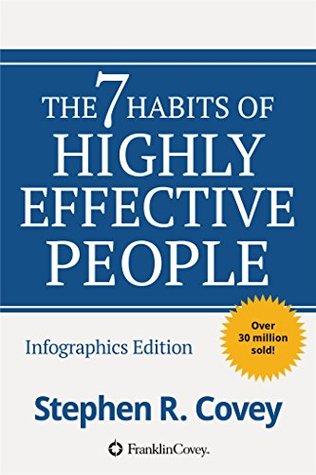
The 7 Habits of Highly Effective People by Stephen Covey
First published in 1989, The 7 Habits of Highly Effective People, is a business and self-help book written by Stephen R. Covey. This book changed the world of self-improvement forever and quickly became an international bestseller and a go-to resource for anyone who wanted to improve themselves.
This book is centered around the average person’s personal and professional habits. The prime focus of the book is ‘habits’ because it is these habits that make up a person’s character. The book focuses not only on eliminating bad habits but also on building up good ones. It reveals a pathway to live with fairness and human dignity giving us the power to adapt to change and to take advantage of the opportunities that change creates.
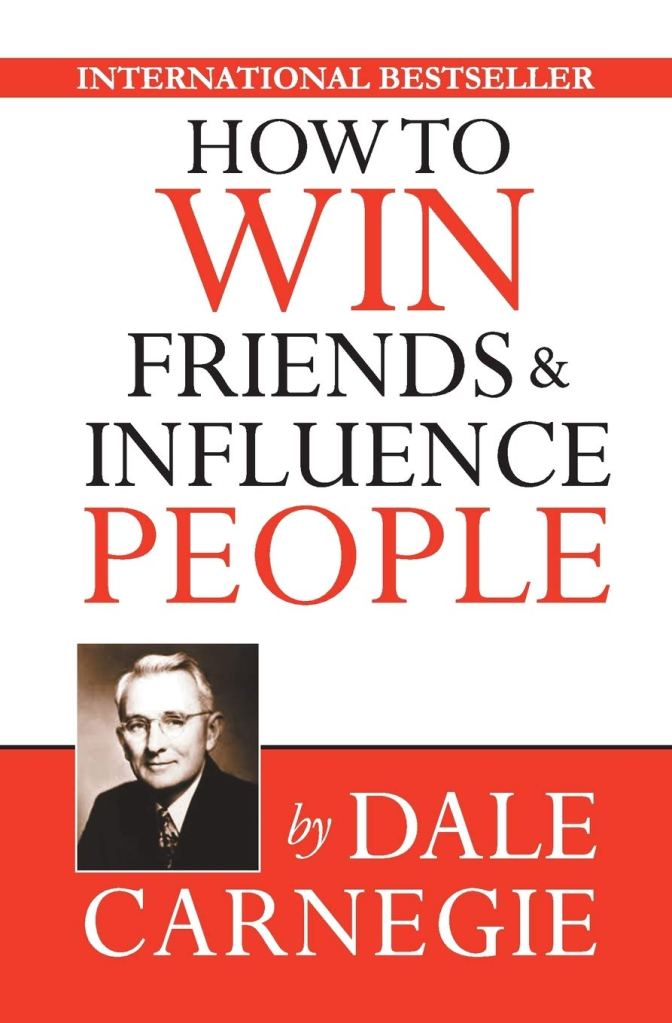
How to Win Friends and Influence People by Dale Carnegie
Released in 1936, How to Win Friends and Influence People, is one of the most timeless self-help books ever written and has sold more than 15 million copies till date. It’s an eternal text which proves that people still want the same thing they have always wanted – friends and influence.
The Author Dell Carnegie believed that the most essential component to being successful is the ability to communicate effectively and have brilliant insights. The book teaches these skills by demonstrating how to value people and help them feel appreciated rather than manipulated. It’s a classic self-help book that will help in building self-esteem, become a better communicator, and connect with people like never before.
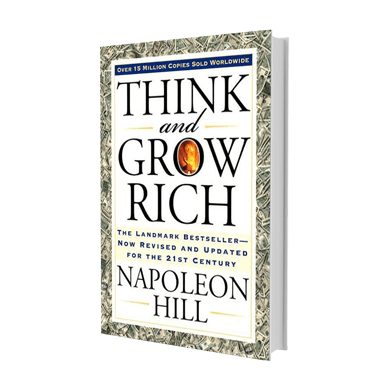
Think and Grow Rich by Napoleon Hill
Written by Napoleon Hill in 1937, Think and Grow Rich is one of the most powerful books which develops thinking power and provides the best rules for success. It was promoted as self-improvement and a personal development book.
This book has been able to withstand the destruction of time and is incredibly relevant even today. From basics such as planning, decision making, and persistence to more advanced techniques such as auto-suggestion, transmutation, It covers all the aspects.
This is not a grow-rich book, but a timeless guide to find out what actually matters. As it says clearly in the beginning ‘Riches can’t always be measured in money!’
Imagine human mind as a bank account. In order to withdraw money from an account, we need a basic primary balance and we need to deposit from time to time in order to make future withdrawals. Similarly, human mind and body needs equal deposits of self-love, care and compassion in order to reflect that upon others. You cannot pour water from an empty pot. So, it is necessary to fill your pot before you pour it out.
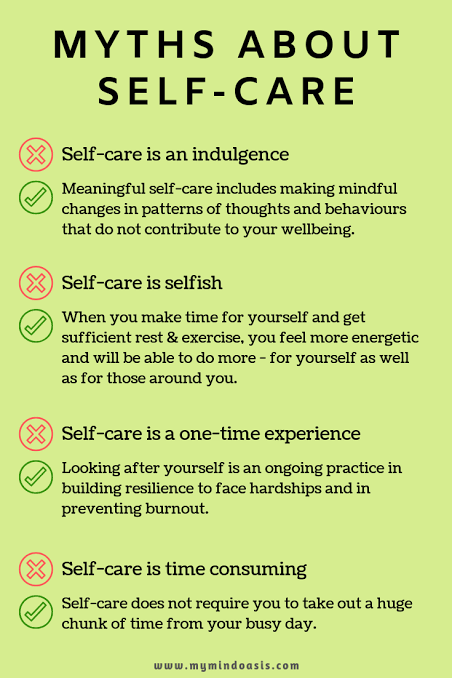
The Social – Media and Magazine definition of self includes Hair-Care, Skin-Care, Spa sessions, etc but we often forget the most important part of our body that requires equal care and nurturing. Yes, our Mind. Our mind works 24/7 unlike our body, hence this calls for a special day to celebrate it’s success and hard work. Self-care is a broad term. It involves any and everything that makes you happy. Be it having an ice cream, putting on a good hair mask or dancing in your bedroom to silly item numbers. The best part about itisthat it doesn’t have to make sense to others.
It is okay to take a day off just to sit with yourself and do nothing. It is okay to binge watch the new show you always wanted to see but never got enough time to do so. It is okay to avoid social gatherings if it’s getting too much for you. It is okay to sleep early and miss out on parties and night-life. It is completely okay to avoid that person, phone call or that text to maintain the sanity of your mind. It is okay to not be okay all the time
But what’s not okay, is to not listen to your heart and letting others decide what you do with your life. Self-care involves standing up to your beliefs unapologetically and living on your terms. It might not always be right but its worth a try. After all life’s too short to not live and sadly most of us are working on auto-pilot mode. So, get up with the sun. Eat your favourite breakfast, binge on your most awaited show, go for long walks and dance to your favourite song till you sleep.
As far as we currently know, there is a single expanding blob of spacetime speckled with trillions of galaxies – that’s our Universe. If there are others, we have no compelling evidence for their existence.
That said, theories of cosmology, quantum physics, and the very philosophy of science have a few problems that could be solved if our blob of ‘everything’ wasn’t, well, everything.
That doesn’t mean other universes must exist. But what if they do?
What is a universe?
It should be a simple question to answer. But different areas of science will have subtly different takes on what a universe even is.
Cosmologists might say it describes the total mass of stuff (and the space in between) that has been slowly expanding from a highly concentrated volume over the past 13.77 billion years, becoming increasingly disordered with age.
It now stretches 93 billion light years from edge to edge, at least based on all of the visible (and invisible) stuff we can detect in some way. Beyond that limit, there are either things we can’t see, an infinite expanse of nothingness, or – in the unlikely scenario that all of space bends back around on itself – a round-trip back to the start across a hyperspherical universe.
If we’re talking quantum physics, though, a universe might refer to all fields and their particles, and their combined influences over one another. As a general rule, a universe (like ours, at least) is a closed system, meaning it can’t suddenly lose or gain a significant sum of energy.
Philosophically speaking, a universe might be a discrete set of fundamental laws that governs the behavior of everything we observe. A universe would be defined by its own rules that set its unique speed for light, tell particles how to push or pull, or space how it should expand.
What is a multiverse in cosmology?
A century of astronomical observations has told us a lot about the age, size, and evolution of galaxies, stars, matter and the four dimensions we sum up as spacetime.
We can theoretically squeeze all of the matter of the Universe down to a point where the concentration of energy reduces atoms to a soup of simpler particles and forces combine until we can’t tell them apart. Any smaller than that? Big shrugs.
If we go with what’s known as a cyclic model of cosmology, the parent universe preceded ours in some way. It might even be a lot like this one, only running in reverse compared with ours, shrinking over time into a concentrated point only to bounce back out for some reason. Played out for eternity, we might imagine the respective universes bounce back and forth in an endless yo-yo effect of growing and collapsing.
Or, if we go with what’s known as a conformal cyclic model, universes expand over trillions upon trillions of years until their cold, point-like particles are so spread out, for all mathematical purposes everything looks and acts like a brand new universe.
If you don’t like those, there’s a chance our Universe is a white hole – the hypothetical back end of a black hole from another universe. Which, logically, just might mean the black holes in our Universe could all be parents, pinching off new universes like cosmic amoebae.
What is a multiverse in quantum physics?
Early last century, physicists found theories that described matter as tiny objects only told half of the story. The other half was that matter behaved as if it also had characteristics of a wave.
Exactly what this dual nature of reality means is still a matter of debate, but from a mathematical perspective, that wave describes the rise and fall of a game of chance. Probability, you see, is built into the very machinery that makes up the gears of a universe like ours.
Of course, this isn’t our daily experience as vast collections of atoms. When we send a bucket of molecules called a rocket to the Moon as it zooms past 300,000 kilometres away, we’re not rolling dice. Classical old physics is as reliable as tomorrow’s sunrise.
But the closer we zoom in on a region of space or time, the more we need to take into account the possible range of measurements we might find.
This randomness isn’t the result of things we don’t know – it’s because the Universe itself is yet to make up its mind. There’s nothing in quantum mechanics explaining this transition either, leaving us to imagine what it all means. https://www.youtube.com/embed/dzKWfw68M5U?ab_channel=PBSSpaceTime
In his 1957 doctoral dissertation, American physicist Hugh Everett suggested the range of possibilities are all as real as one another, representing actual realities – separate universes, if you like – just like the one we’re all familiar with.
What makes any one universe in this many worlds interpretation distinct is how each wave correlates with a specific measurement taken of other waves, a phenomenon we call entanglement.
What ‘we’ means, and why ‘we’ experience one entangled set over waves over another, isn’t clear, and in some ways presents an even bigger problem to solve.
What is a multiverse in philosophy?
One of science’s most fundamental starting assumptions is that in spite of what your mother tells you, you’re not special. Nor is any other human, or our planet, or – by extension – our Universe.
While rare events occur from time to time, we don’t answer The Big Questions with ‘it just happened that way’.
So why does our Universe seem to have just the right tug-of-war of forces that allow not just particles to appear, but to congeal for long enough periods into atoms that can undergo complex chemistry to produce thinking minds like ours?
Philosophically speaking, the anthropic principle (or principles, since there are many different ways to spin the idea) suggests we might have it backwards. Without these conditions, no minds would have arisen to consider the amazing turn of events.
If just a single universe ‘just happened that way’ early one spring morning, it’d be one big coincidence. Too big really.
But if there were infinite universes, with infinite combinations of forces pushing and pulling, some would inevitably give rise to minds that just might ask ‘are we part of a multiverse?’
Will we ever discover other universes?
Given the very definition of a universe relies on some kind of physical fence keeping influencing factors apart, it’s hard to imagine ways we might ever observe the existence of a sibling for our universe. If we did, we might as well see it as an extension of our own Universe anyway.
That said, there could be some cheats that could give us a glimpse.
Any experiment to find one would have to rely on that ‘fence’ having some holes in it that allow particles or energy to leak across, either into ours, or away from it. Or, in the case of universes existing in our past, monumental events that left enough of a scar that not even a rebirth could erase.
For now, we still have no good reason to think our blob of everything is anything but unique. Given we’re still learning how our own Universe works, the current gaps in physics could yet be plugged without any need to imagine a reality other than ours.
In countless other versions of this article scattered throughout the multiverse, however, the question of whether we are alone just might have a different answer.
Soft skills… Every one of us has heard this phrase. Also, you might have heard from employees, grad students, millennials, school students, or young people complaining that they lack certain soft skills.
There is a wide range of skills that falls under the term “Soft Skills”. These skills are also known as “transferable skills”.
A definition of Soft Skills:-
Soft skills are certain sets of traits and interpersonal skills that don’t depend on the acquired knowledge. Soft skills include common sense, the ability to deal with people, a positive flexible attitude, or how you approach life and work.
The good news is one can learn and enhance their soft skills over some time. Though it is often hard to do so. Like Hard skills, one can work on their Soft skills and can make themselves capable of using them. One can’t measure Soft skills by any exam, the only way to measure the development of one’s Soft skills is by knowing how one manages relationships around them.
What are the most important Soft Skills?
Well, there are a lot of Soft skills. But, mentioned below are five skills that you need to learn/enhance:-
★ Communication Skills
The most essential skills include Communication skills. People with good communication skills can maintain/build good relationships around them. Also, they are likely to avoid misunderstandings and can make any workplace better.
★ Decision Making
Being able to make decisions is a crucial part of life. Everyone one of us has to make decisions in our day-to-day life from what we want to eat to what we should wear. But sometimes the actual decision doesn’t seem to matter; what matters is that you have made one and moved on.
★ Time management
Time management can help you finish any work within the deadline. Time management is sometimes described as having a ‘good work ethic’. Also, it is very useful for organizing family or team.
★ Leadership skills
These skills are needed to take the lead when necessary. These skills include the ability to manage and motivate others, and to commissioner work. One can learn leadership skills by enrolling in many leadership training courses.
★ Creativity and problem-solving skills
These skills are as highly valued as leadership skills because they are hard to develop. Although it is being believed that creative thinkers are born not made. But like any other skill, these skills can also be developed.
The skills mentioned above along with other Soft skills are required in every field whether you are a student, an employee/employer, a business owner, etc. You can reach to various programs to develop and enhance your soft skills.
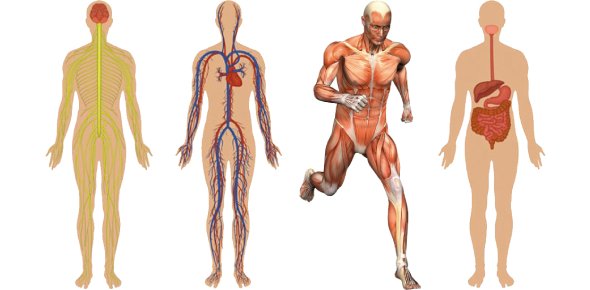
Anatomy is the study of the shape and structure of the body of organisms or living beings. The word anatomy is derived from the Greek words ‘ ana ‘ and ‘ tomy ‘ where ‘ ana ‘ means ‘apart’ and ‘tomy ‘ means ‘to cut’. In physiology, the functions of various system such as respiratory system, digestive system, nervous system, skeleton system and muscular system of organisms are studied. It can be said that physiology is the study of how the body and all its part function. It consists of two word, namely, ‘physio’ and ‘ ology’ where ‘physio’ means ‘nature ‘ and ‘ ology ‘ means ‘ study’. Here ,we will study human anatomy and human physiology.
Definition of Human Anatomy
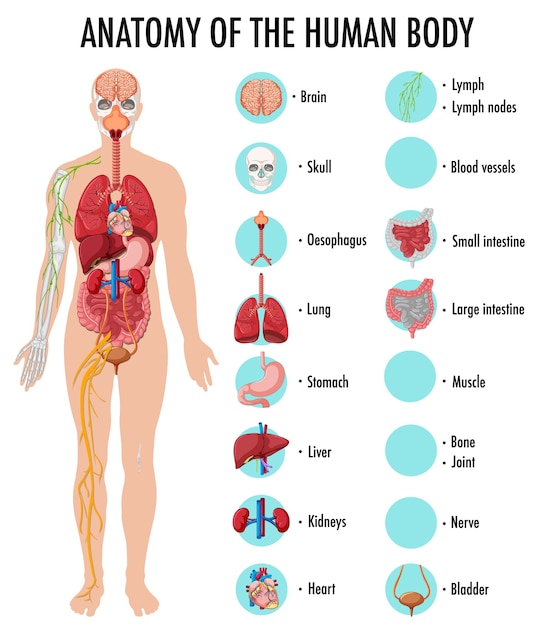
Human Anatomy is the study of structure ,shape, size , weight and location of all the organs of human body. A detailed knowledge of the structure of various system of human body is provided in human anatomy . For example , the shape, size, weight, structure and location of all the organs of the excretory system such as lungs, kidneys, large intestine, liver, skin, etc. are studied in human anatomy. Human anatomy can be defined as the science dealing with human body structure and relationships among structures.
Importance of Anatomy
The importance of anatomy and physiology is mentioned below.
Anatomy Provides the Knowledge of Structures of Various Organs : Human anatomy provides the detailed knowledge of the structure of various organ body . We get the knowledge of structure, shape, size, location and weight of organs of all the systems of our body. We come to know about the length of various organs such as the length, size and shape of the bones. With the help of anatomy , we get the knowledge of the percentage of white fibres and red fibres present in an individual. As a result of such knowledge , the teacher and coaches working in the field of physical education and sports may easily select the suitable sports according to the traits of students. For example, weightlifting is more appropriate for short statured students, who have more percentage of white fibres i.e., fast twitch fibres in comparison to red fibers i.e., slow twitch fibres can perform better in sprinting events instead of endurance events.
“Testing is the process of executing a program with the intent of finding faults.”
Testing is an important aspect of the software development life cycle. It is basically the process of testing the newly developed software, prior to its actual use. The program is executed with desired input(s) and the output(s) is/are observed accordingly. The observed output(s) is/are compared with expected output(s). If both are same, then the program is said to be correct as per specifications, otherwise there is something wrong somewhere in the program. Testing is a very expensive process and consumes one-third to one-half of the cost of a typical development project. It is largely a systematic process but partly intuitive too. Hence, good testing process entails much more than just executing a program a few times to see its correctness.
Testing is the process of demonstrating that errors are not present.
The purpose of testing is to show that a program performs its intended functions correctly.
Testing is the process of establishing confidence that a program does what it is supposed to do.
Customers may use the software in different and strange ways. Their involvement in testing may help to understand their minds and may force developers to make necessary changes in the software. These three terms are related to the customer’s involvement in testing with different meanings.
Alpha Testing
These terms are used when the software is developed as a product for anonymous customers. Therefore, acceptance testing is not possible. The alpha tests are conducted at the developer’s site by the customer. These tests are conducted in a controlled environment and may start when the formal testing process is near completion.
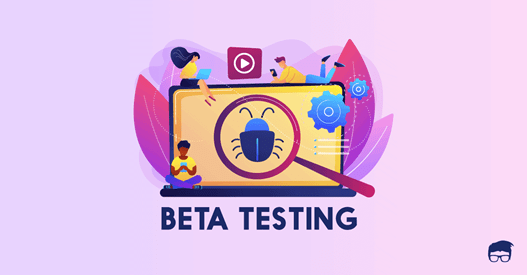
Beta Testing
The beta tests are conducted by potential customers at their sites. Unlike alpha testing, the developer is not present here. It is carried out in an uncontrolled real life environment by many potential customers. Customers are expected to report failures, if any, to the company. These failure reports are studied by the developers and appropriate changes are made in the software. Beta tests have shown their advantages in the past and releasing a beta version of the software to the potential customer has become a common practice. The company gets the feedback of many potential customers without making any payment.
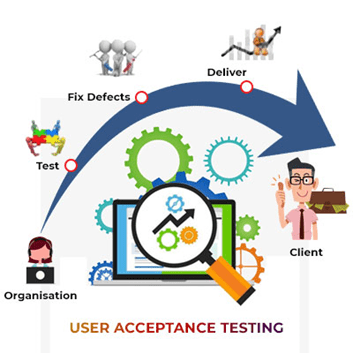
Acceptance Testing
This term is used when the software is developed for a specific customer. The customer is involved during acceptance testing. He/she may design adhoc test cases or well planned test cases and execute them to see the correctness of the software. This type of testing is called acceptance testing and may be carried out for a few weeks or months. The discovered errors are fixed and modified and then the software is delivered to the customer.
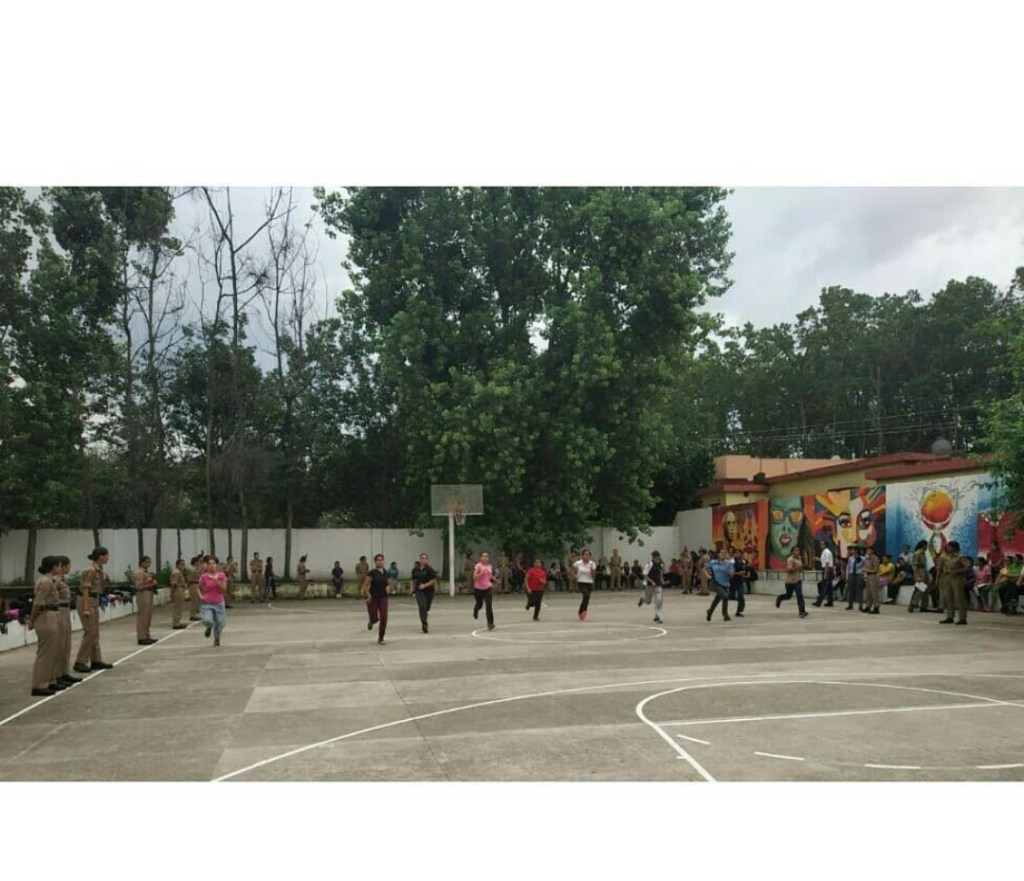
NCC- National Cadet Corps had been my acquaintance for 3 years and I have gained so much from that organisation which I don’t think could have been achieved from any other institution. My journey started when I took admission in Graphic Era Hill University. I have always been inclined towards sports and extra curriculum from my school so when I joined college, I opted NCC for taking my first step towards joining the defence forces.
NCC has given so much which has prepared me for my life. During my first year I felt totally different as I got introduced to different things like Drill, Ragda (Punishment), a uniform which only a few were able to dawn. I had never come across to these things before in my life. When I wore that uniform, I used to get a feeling of pride and fulfilment. The most important values that I learned in NCC are Discipline, Punctuality and Unity. In my first year I attended CATC camp where several competitions were held like Public speaking, Dance competition, Group song, Drill selection test and many more, this camp made me realize that NCC is not just about being physically active rather it’s about the overall development of a person. Those 10 days of CATC can never be forgotten.
After completing my 1st year, I was promoted to the rank of corporal in my 2nd year which was my 1st step towards knowing what leadership is all about. Various rallies and walkathon were organized by us to make mass aware of various concerned issues like cancer, blood donation, Drugs, cleanliness and “Beti bachao beti padhao” initiative. Cadets used to walk long distances to spread the awareness. The 2nd year was a two-sided opportunity where I got trained as well as trained my juniors.
When I got into my 3rd year I was promoted to the rank of sergeant. My mates and I did selection of new cadets and it gave us a sense of responsibility. In the CATC camp I was the Master of Ceremony. After that I attended Advance Leadership Camp which was held at Malout, Punjab by 6 (Pb.) girls battalion for 12 days, 5 cadets from Dehradun were selected and I got the opportunity to be in that group of 5. Cadets from different states of India participated in the camp and we all made a great bond with one another. There were training sessions on leadership as well as SSB. Activities like lecturette and Group Discussions were organized in groups. Cultural competition was also held in which Uttarakhand directorate won 1st and 2nd prize in dance and singing competition respectively. In Tug of war Uttarakhand Directorate stood 2nd. It was overall a worldliness camp where I represented my State, my unit and my college and it was so overwhelming for me to leave that camp with so much of experience, it gave me a sense of pride.
This was all about my journey in NCC. I passed out with Alpha grading in my ‘C’ certificate examination and most importantly I became a self-confident, an outspoken and a learned person who aspires to touch the sky with glory.
Everyone is gifted with a unique personality. Every personality has both good and bad traits. However, what sets a personality apart from the rest is how one presents itself to the world.
Improving your personality is not changing who you are but its about becoming a better self. It polishes your existing and hidden traits.
Today’s world is competitive and demands a confident and eloquent speaker that promises to represent the company, college or any organization with an impressive personality.
Here’s how you can improve your personality.
Be confident
Being confident is about having faith in yourself and expressing your views no what matter people think. Never doubt yourself. Often people tell you that your idea is poor and does stand a chance. If you think it does, go ahead with it and have confidence.
Be a good listener
It is very important to be a good listener. You should listen to other person with the intent to understand rather than listening with the intent to reply. It is a great way to understand people’s views and thoughts on certain things. This way you get to know people better.
Make new connections
Talking to new people is observed to be hard for those who are not socially active but making an effort in engaging in a conservation will provide you with great knowledge. You will get to know about other people’s experiences. New connections will expose you to numerous ideas and opinions. It will expand your mind.
Have an optimistic attitude
Be positive. Nobody wants to be around a negative person. People prefer to be around who are energetic and cheerful. Despite the challenges you face always have an optimistic approach. Positivity enhances your personality.
Be a conversationalist
The more you read, the more knowledge you receive. When you are well versed with what’s happening in the current world, you are more confident to express your views. Start conversations and share knowledge. You get an opportunity to learn a lot from real world experiences of the people.
Treat people with respect
Treating with respect is how you earn respect. In order to earn respect, you should be honest and truthful. If you make a promise, always be sure that you fulfill it. Not staying truthful to your words and being disrespectful will reflect an unpleasant personality.
Improve your presentation skills
Effective presentation skills are required in school, college and workplace. It is necessary in every field. You should have the needed creativity and fluency.
Have an opinion
People admire who have an opinion and have a certain way of looking at things. Having uncertain opinions can make you look indecisive. If you have uncommon and strong opinions, don’t be afraid afraid to express them as people find it interesting.
Be yourself
Never try to be someone you are not. Copying somebody else does not show the real you. Embrace your uniqueness. The more you try to be somebody you are not, the more fake you are perceived by everyone around you.
Personality Development Sessions
There are sessions conducted with a small group of people or if you want there are even one on one sessions. They initially take your personality test. According to the test, they guide you through the process of personality enhancement through various activities and provide you with a safe environment where you can express yourself freely.
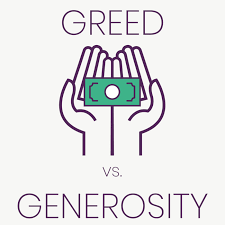
Many people think that in the professional world, selfishness and greed are the characteristics that pay dividends. But the truth is, excepting win-lose situations, that the most successful people in the medium and long term are those who are the most generous in their business and personal lives.
Ambition is a desire to take on more than you can realistically accomplish, to constantly strive for improvement, to grow both personally and professionally, and, of course, the desire to generate more income. However there comes a time when ambition crosses a line, and when that happens it becomes greed. Greed is the desire to chew more than you can eat, a desire that distracts you from realistically possible goals. Greed is wanting to get more than what you have actually earned, obtaining maximum profit at minimum cost, or as an old adage has it: “Grasp all, lose all.”
Today there is an abundance of courses and books on finance, limitless knowledge on hand with a simple click. But to know what is right, to subdue the pirates of greed and to follow your trading plan- this is another story. People who look for easy money invariably find that there is no such thing, paying a heavy price for this lesson. Ego, vanity, and revenge play a part, causing people to fail on their trading accounts. This is one of the factors that explains why people might not fall into the exclusive 10% that ‘win’, and find themselves one of the 90% that lose.
Literature and film are full of greedy and stingy characters, and the moral of films like ‘A Christmas Carol’ or ‘The Wolf of Wall Street’ is always the same: the fate of the greedy is heartbreaking. Their addiction to work means that they live a lonely life, and their search for wealth means that at the end of their lives, they have only the sober memory of their friends from the Stock Exchange.
GIVE AND TAKE
People do not realize that giving without expecting something in return could be a competitive advantage, as well as making ones outlook more positive. Studies have shown that the most successful people are generous. At least this is the affirmation of Adam Grant, a psychologist and professor at Wharton and author of “Give and Take”.
A generous person builds bigger and stronger networks, improves communication with their existing contacts, and also finds it easier to interact with people outside of their core network- this gives them access to new contacts and valuable sources of information. Generous people inspire in others a predisposition, or positive receptivity, to reconnect with them, as well as a greater willingness to collaborate.
Moreover, being a giver encourages persistence because givers are able to enthusiastically motivate people, inspiring confidence, because they are liberal with praise. They create a generally positive environment. Talent is important, but the most important factor in success is persistence. And what’s even more interesting is that being a giver has an energizing effect that increases levels of happiness.
According to Bill Williams, famous trader and writer of “Trading Chaos”, people with a ‘giving’ mindset enjoy more happiness and success. For example, later in his career Bill always traded two accounts, one for himself and one for his charities. The charity account always made more money, even though he traded using the same method with both accounts. In the charity account he never veered from his strategy, while in his own account he would sometimes take a trade based on a “feel”, or get in a trade before the actual signal. This shows us the importance of sticking to a plan, but also the importance of being a ‘giver’.
Giving distracts us from our problems, adds meaning to our lives and helps us feel valued by others. This explains why avidity and egoism are the trader’s worst enemy. Having a benevolent mindset while trading helps the trader to increase performance. Happy people earn more money on average, score higher yields, make better decisions and contribute more to their organizations. Furthermore, traders who are givers are at the top of the most successful trading operations.
THE GREED EFFECT
Focusing only on money results in the ‘greedy effect’, something that all professional traders know. In fact, one of the most common pieces of (rarely followed) advice that newbies receive is to shift their focus from trade results to the trading process, analyzing and following the rules of their trading system. Another suggestion is to start reasoning in pips and ticks instead of dollars. This reduces the greedy mindset and develops a more reliable attitude.
However we can make a further effort to improve our performance by shifting our focus to be more generous. One example is trading for charitable purposes like the aforementioned Bill Williams, another could be simply committing a small part of your monthly or annual profit to microcredits, which promote a world of stability and self-sufficiency, key to overcoming poverty.
Material things can be recovered, but feelings of guilt, helplessness and loneliness cannot be solved with money. If humans would be more understanding of and generous to others, the world would be a very different place. And that is why those who practice generosity, making it part of their daily lives, experience an uplifting of their mental and emotional state, and are generally filled with more satisfaction in their professional and personal lives.
In conclusion, we see that generous people are the most successful in their daily trading performance for the reasons described above. Having a giving mindset helps professionals become part of that exclusive group, the 10% of winners.













 (
(







 Eduindex
You must be logged in to post a comment.