How To Be More Assertive

I learned to be assertive from my mother. She always expresses her feelings, is comfortable with saying no, acts in her family’s best interest, and also thinks about the common good.

She’s the most assertive person I know. No one can take advantage of her. If you try, she will let you know about it. And you won’t like it. 

What is assertiveness actually? Robert E. Alberti and Michael L. Emmons are considered the lead experts in this field. Their book Your Perfect Right, first published in 1970, is considered a classic on the topic. They define assertive behavior as follows:

“Behavior which enables a person to act in his own best interests, to stand up for himself without undue anxiety, to express his honest feeling comfortably, or to exercise his own rights without denying the rights of others.”

In general, there are three types of behavior:

  1. Passive: Indirect, dishonest, does not take control, is nice at all cost, focuses on others.
  2. Assertive: Direct, honest, self-worth, to the point, focuses on the self, respects others.
  3. Aggressive: Harmful, egocentric, will to win at any cost, justifies the means, wants to control others.

If you watch our society, most behavior happens at the extremes. How often do you experience dishonesty at home, with your friends, and at work? It’s not always because people have evil intentions. Too often, it’s because most people are passive. They are afraid of the confrontation, and instead, they prefer to lie. 

But there are also a lot of aggressive people. People say that aggression is becoming more common in the world. I don’t know about that, but I do know that no one wants to be around aggressive people. 

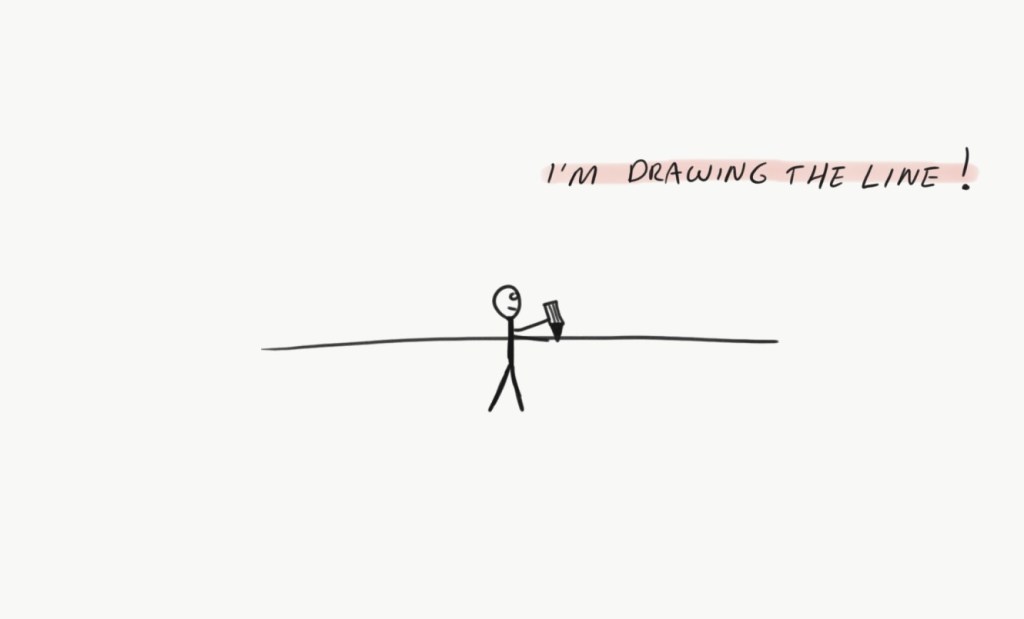
The middle is where you want to be. You want to be respectful, firm, and not aggressive. That’s what assertiveness is all about.

An Assertiveness Technique 

But how do you become more assertive? Like anything in life you want to improve, you must practice. And the best way to practice is on aggressive people and in confrontational situations. 

Next time you experience a stressful situation or when you must deal with an aggressive person, do the following: Detach from the person and situation. Tell yourself you’re observing the situation. 

You never want to get emotionally involved. That’s the most important thing if you want to be more assertive. And once you’re detached, you simply get to the point. I know this sounds vague, so let me give you an example.

The other day I called a construction company that’s supposed to fix a leakage problem I had at my apartment. The guy tried to brush me off and wasn’t too subtle about it: “We don’t have anyone right now.”

I paused, detached from the situation, realized it wasn’t personal, and said: “What am I supposed to do? Let everything go to waste when it rains? What would you do?” 

It went on like that for a while until he finally said, “Alright, fine, I’ll come by myself.” Two hours later, he came to my apartment and fixed the leakage. Problem solved. 

Often, we escalate situations that are not necessarily bad. That’s because we allow them to become personal. But we must realize that other people have their own issues. It’s never personal. Or, we do the opposite: We do everything to avoid escalation. But that only works against us.

In the past, if something like this happened, I would say, “Okay. When can you send someone over?” And then I had to wait. That’s classic passivity.

In this world, you have to be assertive to get what you want. You don’t have to act like a bully, but you have to be a little demanding. I see it as honesty. I was simply honest with that guy. I had a problem that needed to be fixed.

It’s All About Practicing

When we become more assertive, we need to be careful not to overdo it. Otherwise, we risk becoming aggressive or overly dominant. Recent research showed that informal leaders were more liked and respected when they had “a moderate amount of assertiveness and warmth.”

That’s very accurate. When we are too nice, we risk that people take advantage of us. When we are too aggressive, we push people away. But if we’re direct and are respectful to people at the same time, we can get much more done together.

Unfortunately, you only become more assertive by being more assertive. You must practice. What helps is to see every social situation as a negotiation.

I highly recommend reading Never Split The Difference by Chris Voss. In fact, I learned the “How am I supposed to do that?” technique from that book. When people give you a proposal you don’t like, ask them that question. In my case, I changed it to “What am I supposed to do?” 

You put the ball in the other person’s court. That’s a good way to deal with difficult situations. Let others come up with a solution. But sometimes, people need a little push to make that happen. And that’s exactly what assertiveness is: A little push in the right direction.


INS vikraant

• Named after its predecessor – procured career.
 India’s first Majestic Class aircraft carrier
 Formerly called Hercules – acquired from Britain in 1957
 commissioned in 1961 as INS Vikrant
 1997 – decommissioned .

• First airbase reinforced warship of India .

• Also known as Indigenous Aircraft Carrier 1 (IAC-1).

• IAC boasts nearly 75% indigenous content.

• Informally called INS Vikrant 2.

• Currently under construction and conducting trials by Cochin Shipyard Limited in Kochi, Kerala

Specification

• Weighs up to 40,000 tonnes • Can carry up to 40 aircraft.

• To operate MiG-29K fighter aircraft, Kamov-31 Air Early Warning Helicopters, the soon-to-be-inducted MH-60R multi-role helicopter, and the indigenously manufactured Advanced Light Helicopters.

• Third air craft career INS Vishaal – expected to be commissioned in 2030.

Project Sea bird

• Largest naval infrastructure project for
India .

• 3 billion dollar programme. • Upon completion- largest naval base on the west coast and also the largest naval
base east of the Suez Canal.

• Project sea bird: project for creation of a naval base at Karwar on the west coast of India.

• Aims at providing fleet support and maintenance
of warships.

• Will be able to support several major warships and at least 30 vessels submarines and yard crafts .

• Naval Air Base will also have a maintenance
section.

• Totally spread across over 11,000 acres .

• Located on hilly terrain along the coast and by reclaiming the part of sea.

STOP PROCRASTINATING

The Merriam-Webster dictionary utters the word ‘procrastination’ is to put off intentionally and habitually the doing of something that should be done.

If we procrastinate, we keep delaying things we should do until later, often because you do not want to do them. It is the opposite of ‘punctuality’ which means doing something at the agreed or proper time. It is rightly called the ‘thief of time’ because a procrastinator never gets time again to complete his work.


No matter how disciplined and dedicated we are, chances are that we have found ourself spend hours in a slow and usually foolish way on trivial quests like watching TV, updating our Facebook status, shopping online, chatting on WhatsApp when we should have been spending that time on work or school-related projects.


Whether we are rescheduling the start of a venture for work, evading homework assignments, or overlooking household chores, delaying a visit to a doctor for compulsory regular check-up, or postponing an educational video shoot for YouTube, procrastination in each case can have a major impact on our career, our rankings, and our life.


The lost health can be regained by good food and lost wealth by hard work, but lost time, under the shadow of procrastination, is unreturnable.

CAUSES


Procrastination is caused by laziness, delayed action and the illusion of unlimited time in future. There are many men who are lazy by nature. They lack enthusiasm for work. They delay action thinking that today’s work will be done tomorrow. But their tomorrow never comes. The illusion of unlimited time in future is also one of the causes of procrastination. Many men are of the opinion that life is a long span of days, weeks, months and years. So, there is no need of being in haste. Such an opinion about the unlimited time in future encourages them to delay or postpone action.

PROCRASTINATION IS HARMFUL

Procrastination or delayed action and illusion of unlimited time in future ruin a man’s life. His success and progress become uncertain. He loses many good opportunities in life. His work remains unfinished and so the burden of work becomes unbearable. It creates tension in the mind. Postponement of work till another time more often may keep us left without its benefits, which might have accumulated had we done that on time. His life becomes a sequence of sorrow. That is why everyone should try to be punctual which alone can unveil the face of success. The necessity of cultivating punctuality is thus very important in life.

HOW TO OVERCOME

  • We plan our day in advance, set a priority list on our activities.
  • Break down the objects on our list into small, controllable steps so that our tasks don’t seem so threatening. We must complete the work and accumulate the confidence.
  • We must ask ourselves what distracts us the most—whether WhatsApp, Instagram, Facebook updates, or something else. We must shut them off quickly, only to open on necessities.
  • We must be ready for action and start quickly into a workday. By doing something important as early as possible, we will work at a higher level of productivity and efficiency all day long.
  • Last but not the least, in case we find ourselves procrastinating, we must start chanting,

“DO IT NOW!    DO IT NOW!     DO IT NOW!”

This ‘dynamic mantra’ will penetrate deep into your subconscious mind where it serves as an activator to get you going and keep you moving.

THE GOLDEN childhood DAYS

The golden days of childhood will never comeback.

The irony is when we are children we want to grow up fast but when we are an adult and we have to make choices, take decisions and bear responsibilities we want to return to our golden childhood days

I say it golden because it so precious and valuable to us when we talk about childhood days we always remember it as our best time in our life.

Do you guys remember how we used to bunk school when it rains ,and how happy we used to feel when the school used to declare holiday on weekdays unexpectedly

I know most of you also tried to fool your mother by saying you have stomachache or fever, so that you can stay at home but in vain they easily catch our tricks. we are the fools to think we can fool our parents.

we used to love when teachers give us free sports period so that we can play, we used to play so many games, playing rock paper scissors ,hand cricket, ice or water, hide and seek.

when we used to win prizes in events conducted by school and we used to do projects, we used to go to trips to museums, zoo and parks.

Especially sharing food in break time and trying different varieties was also memorable.

We feel so elated by thinking that we made a masterpiece by drawing whatever we used to feel and as you guys already for making a masterpiece the paint should be everywhere else except on the paper.

Photo by Sharon McCutcheon on Pexels.com

I used to love playing with bubbles, especially playing with balloons, and flying kites on the occasion of sankranthi.

I used to love the time we used to spend playing word games, singing songs in bus while coming home ,and not to forget the card games and board games .Racing with bicycles and skating also used to be my favourite leisure time.

How can we forget all the kinds of snacks like pichu mithai(sugar candy), coconut toffee, biscuits, so many varieties and also the figurines we used to win

Waking up early mornings to watch your favorite cartoon was always so fun, but we used to be always late for school. I know we have got our own priorities first ,hehe

Do you guys still remember how we use to use glitter pens ,sketch pens ,stickers and various types of things to decorate our projects, and the pride we used feel when our drawing or project are displayed on the notice board ,participating in quiz competitions, debates were also fun

Every time we used to think of new stories to write in the exam and end up writing film stories > <

Photo by Helena Lopes on Pexels.com

Those days where running even a small errand for mother and bringing back the exact amount was a matter of pride and was always excited to run errands for them unlike. The things which we used to do happily are a hassle now.

I know we are grown ups and we should understand and be more matured about the situations

But its ok to miss those days and bring out our memories into our present. Its ok to enjoy the things that we like and enjoy, age doesn’t matter.

People can still spend some time on themselves, on their own happiness and don’t care about this whole” you are an adult you cant like these thing at your age, you can’t do this at your age”.

Child hood is a phase that everyone goes through and that golden time will never comeback, but we should never forget lessons learnt in our childhood.

The main thing, the essence of our childhood that is the pure happiness we feel from encountering smallest things is our golden time although short but definitely sweet

Thankyou^^ and keep smiling.

ONLINE VS OFFLINE CLASS – WHICH MAKES BETTER SENSE?

We all live in a society where education is taught in schools and colleges in the classroom environment. We have been following this method of teaching from a very old time. Suddenly we were forced to face a situation like a pandemic and were told to make ourselves ready for whatever is going to happen next. As a result of the lockdown schools, colleges and all other educational institutions were shut. The government advised the institutions to take up classes through online mode. When all the students and teachers heard this, it created a mere shock. But we had no other option to choose. So, we started to adapt ourselves to the situation. It has been almost more than a year by now since schools and colleges started to function online. Having a year of experience taking up classes online, I would like to describe the pros and cons of both online and offline classes that I have understood.

ONLINE CLASS 

Starting with the advantages we gained through online classes, all of us would have felt that we got more time for relaxing and engaging ourselves in doing our hobbies. When we had offline classes, we would spend time dressing up and traveling to school or college. But online, we don’t have to spend our time on all that and we could use it effectively. Also, the training or lectures can be conducted from anywhere in the world. Participants are just needed to log on to their internet from anywhere. Online learning is more flexible as it is offered through many platforms. Another advantage that I felt personally is that people who were reluctant to open up and speak in the classroom gained some confidence and interacted in the online mode. This would help introverts to come out of their cages. It would also help them to build their interpersonal skills and come out of their comfort zone. In online teaching, the lectures are taken through videos, presentations, or activities which is more interactive than the conservative classroom environment and encourages students to engage with interest. 

OFFLINE CLASS

Although we have considerable advantages in online learning, we always prefer offline classes as we are conditioned to listen to lectures in that way from our childhood. Maybe online classes would be comfortable for kids even after when they grow since they are practiced to that way of learning. If we ask ourselves a question, whether we are comfortable with online class, we would say no but yes, we got used to it by now. Not only this we have many advantages in offline learning. The concepts related to mathematics and algorithms were clearer when it was taught in the board-chalk method and it would be easier for us as students to clarify our doubts. The student-teacher relationship is developed better in offline classes than on virtual platforms. The subjects that needed laboratory training would be possible only through offline mode. In offline classes, we would be made to sit in one place to listen to the lessons and we are not allowed to move from there. This would make something go into our heads as we have to look at the teacher’s face and make eye contact frequently. So even if we are not in the mood to listen, we would end up listening in one way or the other. But in the online way of teaching, there is no one to monitor us and our activities. We can do whatever we wanted to whenever it’s a boring session. This would affect only us as the students during their exams and skill test. Another one is that we couldn’t spend time with our friends virtually as we do in our schools and colleges. Those moments that we share in between the classes and breaks are heavenly and nothing can replace the joy that we get through chitchatting and roaming around with our gang.

So, both offline and virtual learning have their advantages but the online mode cannot provide as much pleasure and enjoyment as the real meetings. Let us hope and pray to get things better and come back to our normal lives with a bang.

Career options in English Literature

Today, we mainly communicate through the language of English. It may be between teacher and students, or between colleagues or between office employees also sometimes may be between friends. So there is a growing need of English in our world .

A lot of career options are there for the students who opt English honours for their bachelor and post graduate degrees. All over the world a great scope for job opportunities are there if you have a degree in English honours. The following are the jobs which can be done after completing the graduation or post graduation:

I. Teacher : This is a great career option after doing English honours. The graduates can apply in different government or private schools for this job, or they can apply for different government or private colleges. Once their job gets permanent they are then ready to enjoy a lot of advantages.

II. Content writer : This is a career for those who are interested in writing. People who have an interest in writing or say creative writing, should apply for this job as if you excel in this field you can go into a great height and can become an author or a writer in the long run. Those who love to explore and write about different topics, this job is the best advised one.

III. Translator : The graduates who have knowledge in other languages than English for example; Bengali, Hindi, Marathi, Tamil, French, German, Japanese, etc can apply for this job because they can show their knowledge and talent about knowing different languages in this workspace. Sometimes the translators are even hired by the government officials and government courts and houses.

IV. Blogger : The people who have a liking in blogging and wants to write about anything creatively by exploring the world can apply for this job as in this internet world blogging is a good way of earning money and writing about anything to make it reach to a large section.

V. Editor : The students who have an interest in the field of publishing can apply for this job as according to their interest in publishing this is one of the best job to apply for.

VI. Journalist : This job is for those who are ready to travel anywhere and know about that place and have a great proficiency in speaking English. They can explore the places and the stories and everything related with that place.

VII. Writer : This is for those who can write about anything or say can create any verse or poems or anything creative with any topic. The topic can be about anything but who have a great vocabulary and knowledge about most of the things.

VIII. Author : People who have a talent of creating great stories can begin their journey through this field so that one day they can achieve their goal of becoming an author by writing a masterpiece.

Apart from these, there are a lot of job opportunities for the students who want a future in English honours.

The International Yoga day

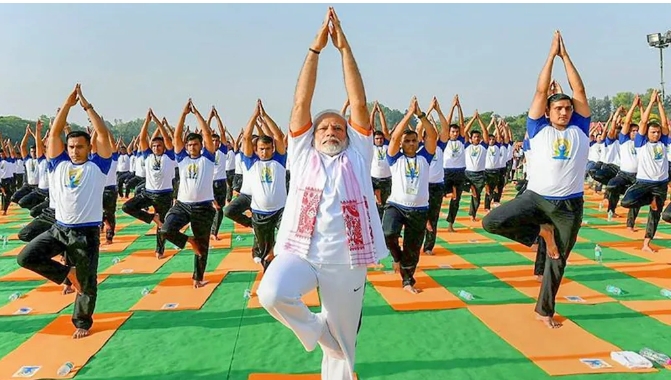
Since 2015 the international yoga day has been celebrated on 21 June every year. Following its inception in the United Nations General Assembly in 2014. It was proposed by Prime Minister Narendra Modi in his speech at the United Nations General Assembly (UNGA) on September 27, 2014. It is celebrated to spread awareness about the importance and effects of yoga on the health of the people.

‘Yoga’ word is derived from Sanskrit which means to join or to unite

* Benifits of doing Yoga everyday:

1. Doing yoga regularly helps in de-stressing and in calming the mind and body. 2. Yoga helps in breathing problems. 3. Helpful in eradicating toxins and impurity from the body, makes your skin glow naturally as you become healthy from inside. 4. Practicing Bhujangasana helps in many ways, like stress or fatigue. Also helps in making the skin glowing. 5. Regular yoga also helps in weight loss and also contributes to anti-aging. * But be consistent with your routine if not then it will not help, regularly practicing yoga is necessary for getting the benefits.

Yoga makes you fit physically as well as mentally

According to the United Nations, yoga can also help with COVID-19 anxiety. Yoga is also playing a significant role in the psycho-social care and rehabilitation of COVID patients in quarantine and isolation. It is particularly helpful in allaying their fears and anxiety.

Prime Minister Narendra Modi along with several other prominent dignitaries used to organise massive events in order to promote and encourage people towards yoga every year, but since the world witnessed the deadly Corona viruse in 2020, PM Modi urged people to observe the day from their homes itself due to the Corona virus outbreak.

PM Modi in a yoga event before Corona outbreak in 2019

“Yoga is not just about exercise, it is a way to discover the sense of oneness with yourself, the world and the nature. Yoga is an invaluable gift from our ancient tradition” said PM Modi on the opening of the 69th session of the General Assembly.

World Health Organization has also urged its member states to help their citizens reduce physical inactivity, which is among the top ten leading causes of death worldwide, and a key risk factor for non-communicable diseases, such as cardiovascular diseases, cancer and diabetes.

Yoga is divided into six branches namely Hatha yoga, Raj yoga, Karma yoga, Bhakti yoga, Jnana yoga, Tantra yoga. Also there are 7 chakras of yoga styles these are Sahasram chakra, Ajna chakra, Vishuddha chakra, Anahata chakra, Manipura, Svadhishthana and muladhara chakra.

Men who teach yoga are called Yogis and if women teach teach they are called Yoginis . Yog sutra is a 2000 year old book, this is the only book where written evidence of yoga has been found. Yogic philosophy is described in this book.

Surya namaskar

Real-time Operating System (RTOS)

A real-time operating system (RTOS) is a type of operating system designed to support real-time applications that process data as it arrives, with hardly any buffering. Processing time requirements in an RTOS are determined in tenths of seconds increments of time. It’s a time-constrained system, or we can say with fixed time limitations. Processing must take place within the stated limits in this system. Or else, the system will be useless.

Advantages of RTOS

  • Less Downtime: An RTOS ensures that the system uses more resources while keeping all devices idle. As a result, RTOS-based systems have relatively less downtime. Also, hosting firms should use RTOS to achieve the best possible outcomes.
  • Efficiency: One application is focused at a time in an RTOS. This program will almost always be the one that is already executing. All the rest in the line will be kept in the waiting stage. As a consequence, important activities may be completed on time and within the specified deadline, resulting in the exact outcomes required.
  • Reliability: Real-time operating systems, particularly those that are based on hard RTOS, are error-free. It guarantees that mistakes be dealt with more effectively. Furthermore, operating systems suffer from jitter, a problem in which the number of mistakes between loops is monitored. An RTOS may be programmed in such a way that it experiences fewer jitters if it is properly programmed. 
  • Task Management: It takes less time for a real-time operating system to go from one job to another. Shifting tasks usually take 3 microseconds or less. Critical procedures may be completed on time with this sort of quicker task management.
  • Availability: An RTOS achieves maximum outcomes, that is why it is a system that is accessible 24 /7. As a result, it is best suited for applications that must run at all times. Aside from that, an RTOS system may handle a variety of MCU systems.

Disadvantages of RTOS

  • Multitasking: Although an RTOS has the ability to focus on certain programs, this is not the same as multitasking. They’re just meant to do a handful of the duties. As a result, it’s not a good idea to use it on systems that demand to multitask.
  • Task Focus: An RTOS concentrates on a single application at a time. This is mostly done to ensure accuracy and minimize mistakes. All other applications with a low priority should be put on hold. They will be on stand-by for an unlimited amount of time.
  • Driver Requirement: Signal disruptions are unavoidable in a real-time operating system. As a result, the appropriate drivers must be loaded on the computer in order to get consistent performance. With the assistance of drivers, an RTOS will be able to respond rapidly whenever an interruption occurs.
  • Complexity: An RTOS interface have complex algorithms behind it. These algorithms will be tough to write for a typical user. Only a skilled programmer will be able to write and comprehend them.
  • Program Crashes: When working with a real-time operating system, program crashes are common. An RTOS, unlike a traditional operating system, is incapable of effectively separating memory regions. As a result, procedures will struggle to deal with them.

How to make professionally design CV to get selected

HOW TO MAKE PROFESSIONALLY DESIGN CV TO GET SELECTED 

Studies have shown that on average a recruiter spends just 7 seconds looking at a CV before deciding whether a candidate is suitable for the job role and even in some cases your CVS are checked and selected by AI intelligence robots. Your resume is the first impression in front of the interviewer. 

So ,here are some effective tips to show up your CV from the crowd- 

  • Make sure you meet the requirements –  Make sure you have at least the minimum required qualification to be considered. Otherwise it’s just a waste of time. Start with a summary of relevant skills and key accomplishments. The profile which shows personal information is a very important part of your CV. So you need to make the right impression.
  • Emphasised results rather than responsibilities- Instead of just listing your past responsibilities, emphasise your results, by using quantifiable data to show your accomplishment and skills which are related and helpful for the job you are applying for.
  • Make a connection to a job – Customise your CV for the job you want. Respond directly to the subscription and explain exactly why you are a perfect candidate for the job role. 
  • Add key points related  to the job – This is probably the best way to make your CV stand out from the crowd. Add the key points and words related to the job you’re applying for and use this in an efficient way. Don’t overuse the words and phrases. 
  • Don’t use unprofessional language- Resume is a very professional thing. You need to make sure that you don’t use unprofessional words like comfortable, afraid or any kind of key words which are considered slang in a professional way. Try to avoid grammatical mistakes.

So, here are few things which you can consider before making CV. 

Saying “no”

We often come across situations where we have trouble saying no to people. We feel pressured to say yes to everything. We think it is our duty to say yes because if we say no we are “bad people”.

Let’s look at why we often have trouble saying no:

It makes us look bad: We as human beings always try to please people or try to stay in everyone’s good books. We think if we say no people won’t like us anymore.

No seems like a rejection: growing up our parents would often say no to a lot of things. They did it to protect us but we took it personally. So, now while saying no we think people will take it personally and consider it a rejection.

We feel guilty: we mostly say yes to everything but sometimes, when we do manage to say no, we tend to die with guilt later. We are more affected by the no than the person who asked for our help. That person would have moved on, asked another person, or figured something else out but we keep feeling guilty.

Here are some tips that could help you say no:

  1. Give them an explanation: when people ask us for help they are going to be prepared for a yes or no answer. So we need to remember that they expect a no too. Now an effective way to saying no is by giving an explanation. Providing them an explanation shows that we are considering their feelings.
  1. Adding but after no: Another way you can say no is by using but after it. If someone asks you for help with their work. You can politely reply “no, but I know someone who can help” or you can try saying “no, but I will be able to help on Saturday”. In this way, you are telling them no but with a possibility of helping them out.
  1. Decline politely: Yes, this article is about saying no. But, I am not asking you to be rude. You can politely decline by using phrases like “I would love to help, but I am booked right now”.
  1. Understand your relationship: we have trouble saying no because we think the other person will feel bad and would not like us anymore. That’s when the need to evaluate our relationship with them comes in. If they are really your friend or someone that cares about you, they would understand that you are just busy. They would not have any hard feelings. If they feel bad after a no, think again if you need such people in your life.  
  1. Prioritize your needs: if prioritizing your needs is considered selfish; I don’t see the harm in it. We know that if we can help we would. But, if it something that will consume our time and drain our energy, we need to say no.

Life is going to give us more situations where we will have to decline politely and move on. We need to learn how to say no and feel okay saying it.

IT ACT 2000

IT ACT 2000 AND CYBERCRIME IN INDIA

WHAT IS CYBERCRIME

Cybercrime in the age of technology is common. with every work done by a single click ,this one click invite crime to your door.

The term cybercrime related to all those activities related to the computer , information technology and the internet.

example of cybercrime are fraud ,forgery ,DOS, consumption of  limited resources,cyber terrorism, IPR violation ,credit card fund ,hancking ,gambling , phishing and many more.

Information Technology Act, 2000

To combat cybercrime , the Government launches Information Technology Act,2000 which was later amended in 20008.

The original Act contained 94 section , divided into 13 chapters and 4 schedules.

Preamble OF IT ACT  ,2000

IT ACT 2000 Preambles  include :-

To provide legal recognition for transaction carried out by means of electronic data interchange and other means of electronic communication commonly referred to as “electronic commerce “, which involve the use of alternatives to paper-based methods of communication and storage of information.

To facilitate electronic filing of document with the Government agencies and further to amend the Indian Penal Code , the Indian Evidence Act ,1872 ,the Bankers’ Books Evidence Act  ,1891 and the Reserve Bank of India Act, 1934 and for matters connected therewith or incidental thereto

SILENT FEATURES OF INFORMATION TECHNOLOGY ACT

The Act gives legal recognition of Electronic Documents.

The Act gives legal recognition of Digital Signatures.

It describes and elaborates Offerses, penalities and Contraventions.

It gives outlines of the Justice Dispensation Systems for cybercrimes.

The Act also provides for the constitution of the Cyber Regulations Advisory Committee,which shall advice the government as regards any rules ,or for any other purpose connected with the said act.

The said Act also proposed to amend to; The Indian Penal Code ,1860, The Indian Evidence Act ,1872,The Bnakers’ Books Evidence Act,1891, The Reserve Bank of India Act ,1934etc..

list of offences and the corresponding penalties:-

According to section 65:

offence – tampering with computer source documents.

penalty – imprisonment up to three years,or/and with fine up to rs 200,000.

According to section 66:

offence – hacking with computer system.

penalty – imprisonment up to three years or with fine up to rs 500,000.

According to section 66B:

offence- Receiving stolen computer or communication device.

penalty- imprisonment up to three or with fine up to rs 100,000.

According to section 66C :

Offence – using password of another person .

penalty-imprisonment up to three years or with fine up to rs 100,000.

According to section 66D:

Offence -cheating using computer resource.

penalty-  imprisonment up to three years or with fine up to rs 100,000.

According to section 66E:

Offence- publishing private images of others.

penalty-imprisonment up to three years or with fine up to rs 200,000.

According to section 66F:

offence -Acts of cyberterrorism

penalty-imprisonment up to life.

According to section 67:

Offence – publishing information which is obscene in electronic form.

Penalty – imprisonment up to five years , or with fine up to rs 1,000,000.

According to section 68:

Offence -failure to comply with orders.

Penalty – improvement up to 2 years , or with fine up to rs 100,000.

According to section 69:

Offence-failure to decrypt data.

Penalty – imprisonment up to seven years and possible fine.

According to section 70:

Offence – securing access or attempting to secure access to a protected system.

Penalty – imprisonment up to ten years , or with fine.

According to section 71:

Offence – misrepresentation

penalty- imprisonment up to 2 years , or with fine up to rs 100,000.

 According to section 72:

Offence – breach of confidentiality and privacy.

Penalty – imprisonment up to 2 years, or with fine up to rs 100,000.

According to section 72A:

Offence – disclosure of information in breach of lawful contract.

Penalty – imprisonment up to 3 years, or with fine up to rs 500,000.

According to section 73:

Offence – publishing electronic signature certification false in certain particulars

Penalty – imprisonment up to 2 years , or with fine up to rs 100,000.

According to section 74:

Offence – publication for fraudulent purpose .

Penalty – imprisonment up to 2 years, or with fine up to rs100,000.

  •  Amendment

Section 66A was introduced by amendment made in 2008 .

The amendment was passed on 22 December 2008 by signature of Pratibha Patil .

It penalized sending “ offensive messages”.

agriculture

Agriculture is both art and science of cultivating plants and livestock i.e., growing crops and raising livestock. The cultivated plant and animal products are marketed for people use. Agriculture provides the most of world`s food and fabrics. It also provides leather, wood and paper products also.

Before agriculture, humans were filling their stomach by searching for food here and there, wandering and hunting like every other animals. But 11,500 years ago humans gradually stared learning growing cereals and roots and started to settle down in one place. They also started domestication of animals around 10,000 years ago. according to scholars first domesticated plant was rice or corn. And first domesticated animal would be dog , which helped for hunting. After dogs, sheep, goats, pigs and cattle were also domesticated. first animal domestication was for meat but then gradually usage of milk and fur also started. Oxen were then domesticated for pulling and transportation.

” You know, farming looks mighty easy when your plow is a pencil, and you’re a thousand miles away from the corn field.”

Dwight D. Eisenhower

Agriculture enabled production of large amount of food which may have motivated humans to settle down and shift to agriculture for survival . But scholars think climate change made that shift happen. Production of in large amounts may have introduced the concepts of stocking for future and trading. Barter system, the exchange of products and services arose and this may have promoted growing different products. Wherever the agriculture flourished, humans came in groups and the economy and trade grew, small villages were formed and civilizations happened.

“When tillage begins, other arts follow. The farmers, therefore, are the founders of human civilization.”

Danial Webster

Development of tools are also one of the things that accelerated the growth of agriculture. Fire is one of the greatest invention and earliest tool used in agriculture. Small equipment like axes of bone, stone, iron, bronze were invented. To store the products, pots and vessels were made. Around 5500 BCE Mesopotamian farmers developed simple irrigation. A not so famous tool called shaduf, was important for irrigation and now also it is used in some parts of the world. Jethro Tull from England invented horse drawn seed drill which helped to replace planting seeds with hands. Cyrus McCormick invented mechanical reapers that helped to modernize grain cutting process.

Now, new inventions of science and technology have revolutionized agriculture. Some of the ancient cultures knew breeding of animals and plants from centuries. Gregor Mendel’s experiments then proved that crops can be improved through implementation of techniques of genetics. Scientific advances of the modern world increased the yield to an another level. introduction of gasoline and electricity and machinery powered by them replaced animals.

Further introduction of chemicals to control pests and protect crops from getting ruined increased the shelf life of the food products. Synthesis of fertilizers with elements that are essential for plants growth like potassium, nitrogen, phosphorus further increased yield. Development of different and new strains by genetic modification lead to the green revolution. Dr. Norman Borlaug is father of green revolution of the world. For India, M. S. Swaminathan, popularly known as father of green revolution, lead to the latter by producing a new strain of wheat.

agriculture is the backbone of any economy. growing population of every region will have basic necessities to be fulfilled and agriculture is holds the power to provide all that. Improvement in agriculture increases food security of the country and hence its prosperity.

5 marketing strategies adopted by nike

Nike was initially founded as Blue Ribbon Sports. It was almost named Dimension Six. Later the company was named Nike, after the Greek winged goddess of victory. Nike is a name that is easily recognizable by consumers, describes the premium quality, and fits with a global linguistic audience.

Nike’s marketing strategy is an important component for the sports giant’s success. It positions as a premium brand, selling well-designed and expensive products. Their products are considered highly effective and comfortable to the athletes. Nike shoes are designed for professional athletes and the craze for extreme sports and the fantasy towards sports personalities have been growing.


Brand Strategy

Nike has an iconic slogan JUST DO IT which resonates with just about everyone. It creates a relationship between their customers and the brand. The catchphrase has spread from fitness world to everyday life. Nike empowers their target audience especially women. They advertise their brand through women with the same amount of power as men with so much inspiration. Nike reminds everyone that women too are powerful, competitive and passionate.

Nike makes fewer commercials but has it balanced out by heavily focusing on digital marketing. The company is without a doubt ahead of its competitors when it comes to social engagement. The brand has the most number of followers and subscribers on all social media channels.

Here’s a detailed breakdown of Nike’s social media engagement.

Nike has mastered the art of creating amazing content that reflects its empowering branding online.


Pricing

  • Value based pricing strategy

Nike uses value-based pricing strategy to set its prices according to its consumer perceptions about the value of their products. The company focuses on delivering the highest quality products at the right price to ensure the best customer experience.

  • Price leadership strategy

This strategy is suitable for an oligopolistic market. Nike determines its product prices, uses competitive prices, and sets attractive prices for different market segments according to its market dominance.

  • Premium pricing strategy

Nike makes has its products priced higher than the ones offered by its competitors based on their product quality. The company owners and the employees know that these prices will not only reflect the quality of their company’s products but also the image which will be portrayed by the consumers who wear the Nike logo.

  • Skimming pricing strategy

Nike uses this strategy whenever it produces expensive products especially when they are limited editions. The company tries to skim money from the customers who want the product and are willing to purchase it at that price. After a newly designed product has been out in the market for a while, Nike lowers the price of those products.


Marketing campaigns

Nike’s audience are versatile. It consists of rockers and rappers, artists and thinkers, entrepreneurs, athletes and other individuals.

Nike’s ad campaigns uses a voice to which their consumers are likely to respond.

Nike : Find Your Greatness, a campaign which highlighted unlikely individuals showing their true capabilities.

Nike ads have promoted well known athletes such as Serena Williams, Lebron James and regular, everyday people to show their skills.

Nike-Dream Crazy. A powerful quote “don’t  ask if your dreams are crazy, ask if your dreams are crazy enough. ”


Marketing plan and budget

Nike has positioned itself in the mind of its target customers as a leader in sports shoes. They have enhanced athletic lifestyle in the consumers. They have an appealing style and a positive attitude along with their unique quality level of their valuable products.

YearNike Marketing expenses ($million)
2020$3,590
2019$3,753
2018$3,577 
2017$3,341 
2016$3,278 
2015$3,213 

Nike spends the same amount of money on marketing that Under Armour makes in sales.


Business development

Nike embraces new technologies. The company developed a shoe that will auto lace when you put your heel in the shoe. They have done things to make the shoe lighter and sturdier such as the flyknit.

Nike provides a wide variety of products to large number of sports to capture a great market share. In addition to shoes they provide apparels and accessories. They value the consumer and the importance of providing quality product. The product quality and durability are critical parts of their strategy to be able to command high prices for their products.

Nike also buys out competing sports product brands.

Nike owns 48% of the athletic footwear market in the United States. Their sales revenue in 1996 was $6.4 billion and has grown to $39.11 billion.

Nike stays ahead of its competitors. The brand was the first sports brand to launch a website and to utilize social media.


LAKSHADWEEP ISSUE

India’s smallest Union Territory, Lakshadweep is an archipelago consisting of 36 islands with an area of 32 sq km. It is directly under the control of the Centre through an administrator.

The Capital is Kavaratti and it is also the principal town of the UT. Pitti island, which is uninhabited, has a bird sanctuary.

ITS SOCIETY-

The society in all islands is matriarchal. The religion is Islam of the pristine Shafi school of law. When Islam came to the islands is debated. Fishery is the main occupation here. It is ruled by a lieutenant governor, Praful Khoda Patel.

THE ISSUE- GOONDA ACT:

The people of Lakshadweep have also opposed the administrator of trying to interfere in the traditional life by introducing a ban on buying or selling beef products, The Goonda Act being introduced in the island that has negligible crime rate and revoking of restrictions on alcohol for benefit of tourism also have attracted criticism from the islanders, Other initiatives by the administrator include panchayat rules designed to restrict the population growth in a territory where, according to the National Health and Family Survey-5 (2019-20), the total fertility rate is 1.4 (which is far behind the national average of 2.2) and relaxing prohibition, extant in the Union Territory because of public demand, Deliberations of the IDA wanted that Lakshadweep, with its land ownership constitutionally protected, be opened to international tourism not as a means of generating wealth for investors from the mainland but to bring prosperity to the islanders.

THE DECISION-

A clear policy must include conservation and natural resource management arrived at after wide consultation, eminently possible within the existing infrastructure of the Union Territory, and also taking into account climatic compulsions.

Maldives is hardly a suitable model. Water bungalows — an expensive concept and also hazardous to the coral favored by the NITI Aayog, would collapse in Lakshadweep’s monsoon.

The Government should recognize the need to develop policies for enhancing employment opportunities, environment-friendly management of fisheries, sanitation, waste disposal and widening access to drinking water, with the youth, having acquired a modern education, preferring salaried jobs over pursuing traditional occupations.

Lakshadweep | History, Map, Religion, Capital, & Administration | Britannica

5 courses every upcoming entrepreneur must do

In the current business environment, one must always be eager to adapt and learn new skills in order to survive and grow. Here’s a list of 5 courses a budding entrepreneur must do to flourish in the current environment, keeping in mind the trends and skills essential in the present scenario.

1. Digital Marketing

With businesses taking over social media platforms to increase their reach and improve their customer relations, Digital Marketing is the need of the hour. It is a brilliant way to interact, build and promote the brand. The traditional ways of advertising like print, radio and tv ads are not as effective as email marketing, targeted ads, paid searches, etc. It is the new way of doing business and every entrepreneur must know how to grow their business this way.

On some business-friendly platforms like Instagram and Facebook, one can also use analytical tools to know more about their audience like geographical location, age range, gender etc which can give helpful insights about the target audience of the business.

The course includes Social Media Marketing, Email Marketing, Search Engine Optimisation, Google ads and Google analytics.

2. Successful Negotiation: Essential Strategies and skills

Starting a new business requires efficient communication and negotiation skills. Whether it’s negotiating prices and contracts with vendors, suppliers or the customers, pitching the business plan to potential investors, communicating with the stakeholders of the company, it always comes in handy.

In order to grow a business, every entrepreneur should know how to negotiate and build profitable relationships for the business. This course not only improves the business communication skills of the entrepreneur but also, helps him/her in identifying the interests of the other party while negotiating which successfully helps them in finding a middle ground efficiently.

3. Start-up funding

The first step of officially starting a new business is getting funding, convincing investors, banks, financial institutions that the business plan is viable and has the potential to grow. It is important for an entrepreneur to work on his/her pitching skills in order to communicate effectively with the potential investors of the business. He/she should also know the process of getting the funding and the different sources and instruments he/she can select from according to the nature of the business and the funds required.

4. Business Modelling/Strategy

This course is not only essential for the success and future of the business but also needed to pitch the business plan to potential investors. The mere idea, concept and product/service is not enough to attract investors. Such investments generally involve huge amounts of seed capital and therefore, investors like to study the business model to assess the risk, returns, viability, market research analysis, cost structure of the business to determine its potential.

5. Brand Management

In a world where customer loyalty and retention are the priority, this course would help an entrepreneur learn how to retain and build a relationship with its customers. With every brand’s focus on customer relations, this will give the entrepreneur an edge over its competitors if applied effectively.

Customers value brands that are transparent, environment friendly and ones that value their customers and their feedback. Brand Management not only helps in retaining customers but also helps in building long-term relationships with them, thus establishing a stable and loyal consumer base.