There are several countries where Indians are not required to have a visa to travel. A total of 58 countries allow you a visa-free travel with your Indian passport.
>Indonesia
Indians travelling to Indonesia can go visa-free for 30 days. If the duration of travel is more than 30 days Indians can apply for visa after their arrival in Indonesia.
>Ecuador
Citizens of India don’t need a visa in advance to travel to Ecuador. The facility of visa-free stay here for Indians is of duration of 90 days. The travelers, though, need to carry their financial documents and passport with a validity of 6 months along with their return ticket and travel insurance.
>Serbia
Indian citizens can stay upto 30 days visa-free in Serbia from the date of entry within a year. A stay exceeding the mentioned duration would require a temporary residence permit.
>Montserrat
Indian citizens can travel visa-free for 30 days in Montserrat without a tourist visa.
>Macau
Indians can stay visa-free in Macau given the stay should not exceed 30 days. Visitors are required to ensure their passport validity upto 6 months from the date of visit.
>Svalbard
You don’t need a visa to travel, work and reside permanently in Svalbard.
>Nepal
Indians don’t need to have a visa to stay in Nepal. However, it is important to register to the Indian Embassy in Kathmandu after a stay of 6 months.
>Haiti
Haiti doesn’t ask for a tourist visa to Indian travelers who can live upto 90 days there. All non-Haitian traveler are, though, required to pay a tourist fee of 10USD on arrival and validate their passports of 6 months validity from the date of arrival.
>Turks and Caicos
A tourist visa is not needed to travel to Turks and Caicos. All you need is a valid visa for entry and exit.
>Jamaica
Indian visitors can travel to Jamaica visa-free for upto 30 days. A stamp on the passport by the immigration officer on arrival acts as a tourist visa for Indians.
Covid 19 pandemic hit the globe unprepared – and then we were forced to transition into the working from home setups. Not being able to physically meet at the workplace, we’ve started to accept having get-togethers and meeting via online video communications platforms. Though we have to accept that the work-from-home scenario has helped in a lot of ways, especially in connecting people from different parts of the globe and connecting them when they were not able to physically travel because of the lockdown. Despite all its advantages, we will have to agree that working from home isn’t equal to the earlier times when we worked inside the office premises. Like every coin has two sides, along with its pros, working from home has its disadvantages. Let’s have at look at them –
A lesser balance between work and personal life – When working from the office it’s easier to strike a balance between work and personal life – mostly once you left the office building you didn’t engaged in office work again till the next day. But now with work from home – we find ourselves always busy on a work call even later than office hours. With the physical transition of traveling to the office missing, the line between our work and personal life is also blurred.
Lack of social life and feeling isolated – Not getting to meet our colleagues face to face, lesser social and human interaction end up making us feel isolated. More than half of the people have also reported increased loneliness because of working from home.
Decreased motivation levels – You would generally make efforts to wake up early and look presentable while you were travelling to office every day. On the contrary, when at home we might just laze around in our pajamas all day, maybe sleep in the time we earlier used to dress up and get ready. This decreases our motivation, and we are generally less interested in the X-factor in the day – as the routine is pretty much the same each day.
Lack of teamwork- Evidence finds that working from home can have negative effects on our thinking abilities as a team. When physically together, it’s easier to collate the brilliant ideas from each person in the team, help each other, and build rapport with the members. These seem to be missing when the only mode of communication for the team virtual.
Presence of domestic distractions – Working from home has added difficulties, including the distractions from our home and the surroundings. Maybe you have someone in your family watching the TV in in front of you, or your children are demanding your time when you are in the middle of an important meeting. These distractions are absent while you are on the office premises which is designed in a way to let you work at your highest level of productivity.
Decreased productivity and increased coordination costs – A study has shown that even though the number of hours worked while working from home has increased post the pandemic, the productivity levels have decreased. Extra efforts have to be made for the communication, coordination, and collaboration between the team in the virtual setting – affecting the productivity levels of the employees.
Though being safe and at home is definitely the priority right now, I’m sure most of us can’t wait to get back to our offices once the pandemic is over. Even with the few cons of working from home, we cannot be less appreciative of it and how it has let us to continue working in these difficult times.
The 20th and 21st century have seen ginormous revolution and advancements in the field of industrialization and technology. The volume and amount of technological products and services that we use today and the vast scale of industrial development have surely made our lifestyle luxurious and hassle-free, but this face of evolution has surely taken its toll on the environment. Here, we discuss what is carbon footprint, the causes, how it affects climate change and a few ways and methods to decrease it.
What is Carbon Footprint?
According to WHO, “A carbon footprint is a measure of the impact your activities have on the amount of carbon dioxide produced through the burning of fossil fuels and is expressed as a weight of CO2 emissions produced in tonnes”. The New York Times describes it as “A carbon footprint is the total amount of greenhouse gas emissions that come from the production, use and end-of-life of a product or service. It includes carbon dioxide — the gas most commonly emitted by humans — and others, including methane, nitrous oxide, and fluorinated gases, which trap heat in the atmosphere, causing global warming.” These emissions are a result of an individual’s usage of basic amenities like transportation, housing and food and other technologies. For millions of years, these greenhouse gases present in proportion in the Earth’s atmosphere have kept the climate warm and conducive for habitation, but their huge emission levels have ended up heating the Earth beyond safe limits and have drastically affected its climate. Greenhouse gases trap heat released mostly from human activities like burning fossil fuels for heat, electricity, transportation, industries as well as agricultural, commercial and domestic activities. These unwanted levels of greenhouse concentrations cause complex shifts in the normal environmental cycle, leading to climate change and rising temperatures on the planet. Climate change has adverse effects on the environment resulting in extreme weather effects, shifting wildlife populations, melting glaciers, rising sea levels, change in precipitation, ocean acidification due to acid rains and a number of respiratory diseases from smog and air pollution due to entrapment of carbon dioxide, monoxide and other gases in the atmosphere.
How can we bring about reduction in the carbon footprint?
Well, a lot of efforts will go into almost restoring the natural balance of the environment and climate. But as they say, charity begins at home! Every individual can take small steps to reduce their carbon footprint and make a huge difference in the years to come. For instance, we can keep a daily check on our personal and household carbon footprint via Carbon Calculators, make a plan based on the provided reduction recommendations, and act upon solutions like limit unwanted use of electricity, heat and other products. LED lights are known to use 85% less energy and run 25% longer than conventional incandescent lights. Switching to energy efficient sources will surely help reduce our greenhouse emissions. Choosing to buy sustainably also helps. We can minimize the use of resources emitting greenhouse gases, reduce discarding non-biodegradable products and create awareness amongst our colleagues and co-workers about the same at our workplace.
Various reports stated that carbon emissions from transportation surpassed emissions from electricity generation as a top source of greenhouse gases. Going carless for a year could save about 2.6 million tonnes of carbon dioxide, according to 2017 study from researchers at Lund University and the University of British Columbia — that’s a little more than a roundtrip transatlantic flight. So, to reduce these emissions effectively, we can minimise the use of personal vehicles, keep maintenance of the vehicles regularly, travel by public transportation as much as possible or car-pool to the workplace, or invest into a better option – electric (green) vehicles!
A lot of energy is used up for our food production and consumption methods. We can reduce this energy usage by eating better and less processed food, lessening wastage, using decomposable plates and utensils rather than plastic ones, etc.
On a greater scale, optimizing industrial processes and changing to more sustainable ways of manufacturing goods, adopting renewable energy sources for daily use and creating policies to bring about reduction in the carbon footprint are necessary to reverse detrimental effects to the environment and climate in the coming decades.
A sonnet is a fourteen line poem with a fixed rhyme scheme expresses one single thought or emotion and were usually written in iambic pentameter. Sonnet was originated in the Italian poetry which was composed at the court of Holy Roman Emperor Fredrick ll in Sicily. The term sonnet was derived from the word sonneto which means ” a little sound or strain”. It was invented in 13th C by Giacomo da Lentini who was the head of Sicilian school. By the 13th C, this poem followed strict rhyme scheme and structure. During the Renaissance time , sonnet was the choice mode or expressing romantic love. Later, Dante, a genius used it in the latter half of 13th C. He may have been the predecessor of writing sonnets.
There are various types of including Italian sonnets, spenserian sonnets and Shakespearean sonnets.
Italian sonnets:
The other name for this sonnet is Petrarchan sonnet and also known as classical model because later it was followed by many other countries in the world. This sonnet is divided into two parts. The first eight lines are called octave and the next part consists of six lines called as seset.The octave has two rhyme say a and b. The rhyme scheme for the octave is abbaabba. The seset sometimes has three rhymes sometimes different from those which employed in the octave.Eg: cdecde. At the end of the octave, there is a well marked pause called caesura which is indicated by a punctuation or command or fullstop. The caesura is followed by Volta which means a change in thought or summarized. Milton followed this type of Italian sonnet in his few works. In the hands of Milton, the scope of sonnets were greatly widened and it included within its range all human feelings and experience.
Shakespearean sonnets:
Sonnets was introduced by Thomas Wyatt in the first half of the 15th Century. Along with Wyatt, Henry Howard , Earl of surrey were the poets who made some changes in the Italian sonnets. Surrey in particular adopted a different rhyme scheme. His rhyme schemes were ababcdcdefefgg. Concluding lines are called as couplets which is gg. There is no structural connections . Later, Shakespeare followed his own form and it became famous after him. Italian sonnets have pause, comma or Volta but in the Shakespearean sonnets, there is no pause or change in thought. Only in the final couplet where the highest peak of the poet’s emotions are reached. The following sonnet by Shakespeare named “Remembrance ” is the model for the Shakespearean sonnets. There was no set range of subjects for sonnets but Shakespeare limited its theme to love . Most of his sonnets celebrates his attachment to his young friend to whom they are dedicated. Shakespeare wrote 154 sonnets which were all published together in ‘quarto’ in 1609.
Spenserian sonnets:
This type of sonnets are structurally interconnected with three quatrains and it’s rhyme schemes are ababbcbccdcdee. There is a change of theme or meaning in the poem that usually occurs in the nineth line of the sonnet. Among the three types of sonnet, this type of sonnets are little bit difficult to write. Spenserian sonnets requires two fewer rhymes. Best example for spenserian sonnet is ” One Day I Wrote Her Name Upon The Strand”.
“Books are the quietest and most constant of friends; they are the most accessible and wisest of counselors, and the most patient of teachers.” – Charles William Elliot
I’m certain that many of you will acknowledge what Charles William Elliot said. No one can deny the degree of power that books hold within itself and what lasting prints it leaves on us. People usually pick up non-fiction books relating to- self-help, business, health, the lifestyle which are undoubtedly great to widen one’s horizons of knowledge. But fictions, on the other hand, are in a way an untapped reservoir of knowledge, wisdom, understanding, emotions, and countless other things.
If one wishes to develop an exceptional personality then he/she must inculcate the act of reading fiction. These are the most robust way of exercising your brain muscles and being more creative apart from developing a sense of understanding.
Reading fiction is like living many hundreds of life and experiencing all the heat and rain of it.
Ernest Hemingway said, “All good books have one thing in common — they are truer than if they had really happened, and after you’ve read one of them you will feel that all that happened, happened to you and then it belongs to you forever: the happiness and unhappiness, good and evil, ecstasy and sorrow, the food, wine, beds, people, and the weather.” And only a fiction reader can relate to what Hemingway has said. While reading fiction the protagonist’s life gets affixed with the readers and whatever happens to him is experienced by the reader within himself and this is how the not-the-real story becomes an experience for the reader and it carries this experience throughout his life.
READING FICTION MAKES YOU MORE CREATIVE-
According to research conducted at the University of Toronto, it was found out that the students who read fiction experienced less need for “cognitive closure” (the human desire to eliminate ambiguity and arrive at definite conclusions ) than non-fiction readers. Reading fiction novels makes the brain active and enables the reader to broaden his creativity and think of a situation or a thing from many different ways and angles.
FICTION HELPS UNDERSTAND OTHERS PERSPECTIVE-
You must have sensed while reading a fiction book a connection between you and the character. You see the situation through the character’s view and not from yours. That is where you blend yourself with the character and understand his perspectives, the way he opines, his actions, his arguments, and his justifications.
A good fiction runs deep in the dominion of psychology and philosophy. You start to accept and justify the other person’s viewpoint.
READING FICTION GIVES YOU WISDOM AND EXPERIENCE-
Many different books have many different stories. Each time you pick a book you are transported back to a completely different time and space. That is the power of reading fiction books.
You experience tragedies, happy endings, downfall, success, and whatnot. And while these experiences, you widen the realm of your wisdom. You clearly see the distinction between true and untrue, good and evil. “You can never be wise unless you love reading”, says Samuel Johnson, an 18th CE English writer.
For instance, while reading a history academic textbook you just gulp down the fact and dates. But when you read historical fiction you walk down that path, experience the time and surrounding. And after you have put down your book you feel as if you are back in your time with a bagful of experiences and long-lasting impact. “A good book is an event in my life.” is what Stendhal, a 19th-century French writer feels about reading.
FICTION HELPS YOU UNDERSTAND THE BIGGER PICTURE-
Fiction in its narration exhibits the bigger picture in a minuscule and detailed manner. It familiarises the readers with the ground situation and gives them a wholesome experience.
In the book “The Thousand Splendid Suns”, Khaled Hosseini portrays the life journey of a young girl to becoming an old woman in Afghanistan from the time of Soviet invasion to the reign of Taliban to post-Taliban rebuilding. Through this deep-moving chronicle, the author teaches its reader about the life of common Afghanistani during the time, the hardships she goes through, and a beautiful, gripping description of her feelings and emotions.
Hosseini, through his book, tries to make his readers experience while sitting on their couch the turns and turmoils in the protagonist’s life and learn from the story the life morals, values, and virtues to hold on to.
All in all reading fiction gives you ‘EXPERIENCE’ of many lives and thus helps you in your overall personality.
In the recently released India Happiness Report 2020 Mizoram has been announced as the happiest Indian state followed by Andaman and Nicobar Islands and Punjab among the top three. It was the first time that all the union territories were surveyed along with the states.
The Happiness Survey was conducted between March and July 2020. The parameters of happiness index were:
>Personal relationships- family and friends
>Work related issues- income level, work pressure and growth
>Physical and mental health
>Social issues
>Impact of COVID-19
Further, it was observed that the above mentioned parameters are positively related to happiness.
Myanmar also called ‘The golden land’ a country famous for its Buddhist culture and tradition is located in Southeast Asia. Thousands of Buddhist temples embellish it and the serene white beaches magically ornate the land. It is the 10th largest country in Asia in terms of its area with 54 million people residing, mostly Buddhist but also Muslim Rohingyas. It shares its border with China in the northeast, Thailand in its east and southeast, Bangladesh and India to its northwest, and Andaman sea and Bay of Bengal to its south and southwest.
History-
Myanmar also called Burma became a territory in the 19th century after it lost 3 Anglo-Burmese wars. It gained independence from Britain in 1948 and was rules by armed forces under the Burma socialist programme party from 1962 to 2011. Due to increasing pressure from the western countries Myanmar’s military regime decided to transition the country towards partial democracy from 2010. Although Myanmar became democratic but the army still continued its authority and control over the territory.
In 2015 Aung San Suu Kyi’s party National league for democracy formed the first elected government by winning majority and ushered in a booming transition towards full democracy.
Military coup-
On 1st February 2021 Aung San Suu Kyi and her anointed president Myint, was arrested by the military and detained under house arrest. The Burmese army general Min Aung Hlaing accused the party of voting fraud in the parliamentary elections of 2020 and imposed a state of national emergency for 1 year. The election commission reported that no record of fraud was found.
Reasons cited for the military coup include the constitutional amendments which the democratically elected government Aung San Suu Kyi was about to make in the coming term abolishing the power and control of military rule in Burma. Just after the military rule was imposed the general commented that he was on people’s side would form a ‘true and disciplined democracy’. It would hold a free and fair election once the state of emergency was over.
People’s reaction-
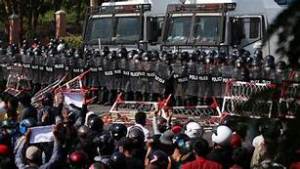
People of Myanmar have taken the streets and raised their voice demanding the reversal of military coup. But the military seemed hesitant on backing down, making the overall situation violent and deadly.
The military put restrictions on people’s gatherings. It used water cannons, rubber bullets, live use of fire and opened fires on more than 40 places to suppress the people revolting against them. It took control of country’s infrastructure, suspended domestic and international flights, stock market and commercial banks were also closed. More than 400 people have dies due to this absurd violence.
Global response-
United stated of Americas has imposed sanctions on Myanmar and also prohibited access to $1bn of government funds to military coup. China’s foreign ministry spokesperson said “ China is a friendly neighbor of Myanmar’s. We hope that all sides in Myanmar can appropriately handle their differences under the constitution and legal framework and safeguard political and social stability “ United Kingdom also spoke against the coup and asked the army to release Aung San Suu Kyi and the president. It also issued orders stating the British residents their to come back to UK unless and until they have an important task in Myanmar. India being an immediate neighbor of Myanmar and a democratic country is supporting the democratic government. India should share its experiences in dealing with constitutionalism and federalism with Myanmar and support it in all aspects.
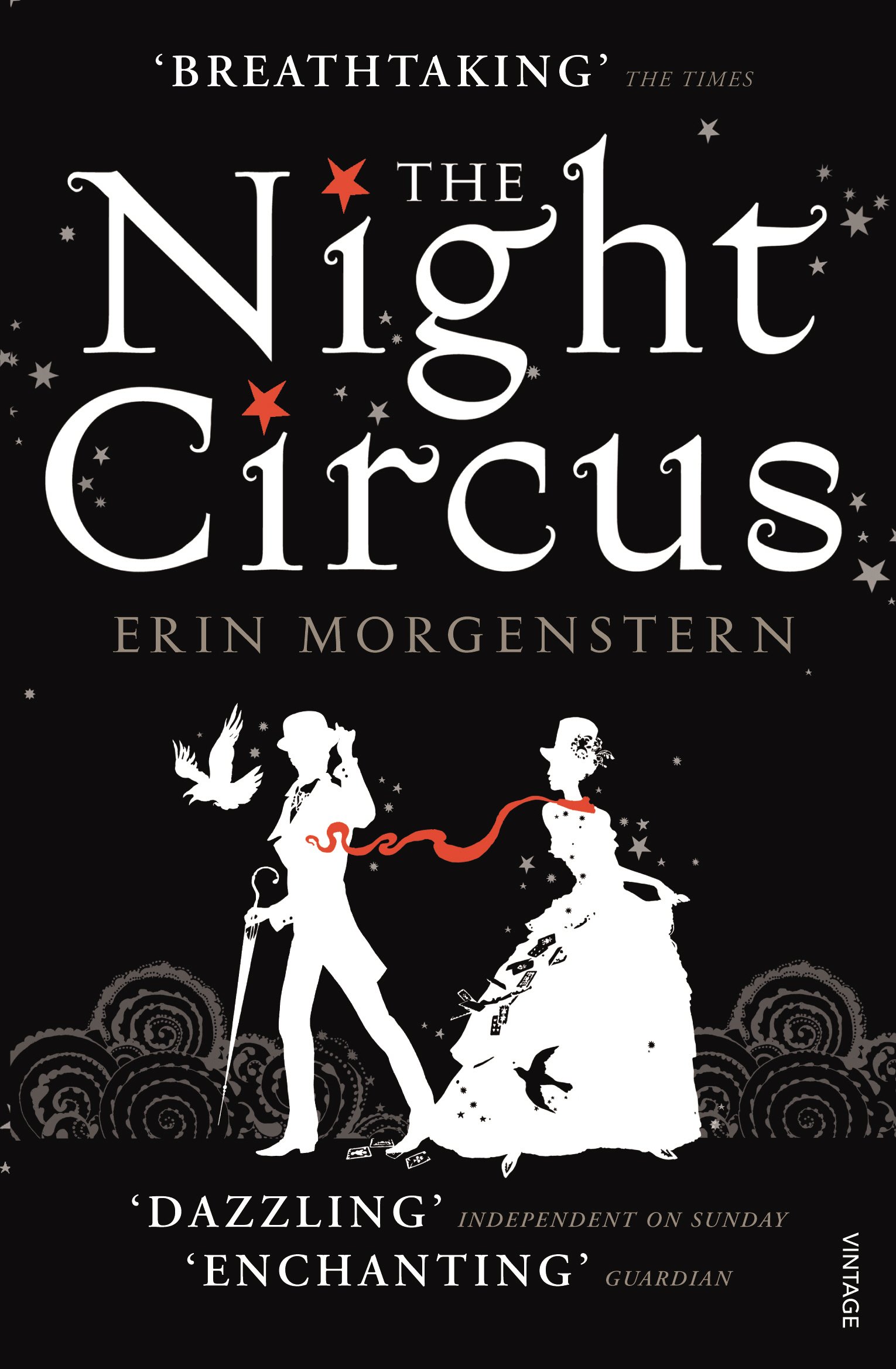
The Midnight Circus is a 2011 historical fantasy by Erin Morgenstern and revolves around the lives of Celia Bowen and Marco Alisdair. Set in Victorian-era London, the book follows a magic duel between the apprentice of Prospero the Enchanter and Mr. Alexander. The duel is intended to be a test of their respective teaching methods. Celia Bowen is the daughter of Prospero and is trained under his watchful eye. What starts as an involved mentorship, turns into a toxic relationship. Prospero doesn’t see Celia as a daughter, but as a contestant, one who is capable of winning him a duel he has lost until now.
Marco is taught differently. Alexander rarely interacts with him. He lives alone in an apartment with only books to keep him company.
After their respective training, they are both sent to work at the Midnight Circus, Celia as an impressionist and Marco as the proprietor’s assistant.
This is where the story really begins. Due to its non-linear narrative, this book does make for a confusing read, but Morgenstern’s beautiful descriptions and masterful storytelling more than makeup for this. The book has a somewhat gothic aesthetic but oh! does it own it. At no point in the story does the reader feel alienated or disconnected.
Balancing multiple narratives while simultaneously creating an engaging narrative, Morgenstern really doesn’t disappoint. The twists are unpredictable and leave the reader exhilarated.
I would strongly recommend this book to lovers of historical fantasies who don’t mind a bit of a challenge.
“Mothers are like glue. Even when you can’t see them, they’re still holding the family together.”
—Susan Gale
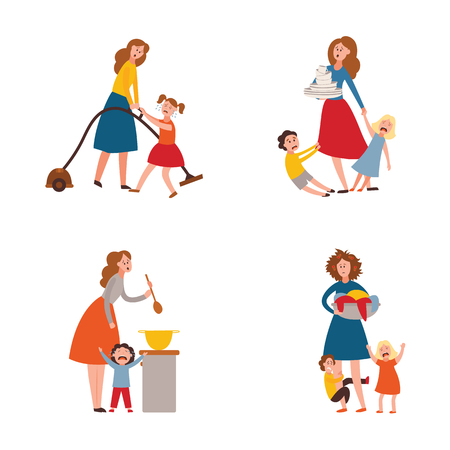
The COVID-19 pandemic started almost two years back and since then we’re under lockdown. There have been so many changes in the world, so many people have been affected physically and mentally and the most affected ones are Mothers. Everyone being present at home, hardly gives them time for themselves.
As the classes are conducted online, a mother has to ensure that her child pays attention and thus she sits with her child. Normally if the pandemic wouldn’t have happened, the child would have gone to school and she could rest at home at that time. Her family members are present at home all the time so now she’s got extra work and less time for herself. She has to cook for her family and do other household chores while her child is asking for something or disturbing her.
Working mothers suffer too. They have to work from home as well as take care of her family. Her children are present all the time which makes it really difficult for her to concentrate on her work while the pressure from the boss just increases. Same scenario with the single moms.
We don’t even realize how much they have to sacrifice for us. Few days back I saw a post where a mother was breathing through a portable oxygen cylinder and simultaneously cooking for her family. Her love is unconditional, her sacrifices are beyond comparison; so high time we understand this and help them out. It’s time that we acknowledge their misery and give them what they deserve the most – love, help and understanding.
MORTGAGE : According to Section 58 (a) of the Transfer Of The Property Act,1882, a ‘mortgage‘ is the transfer of an interest in specific immovable property for the purpose of securing the following :
the payment of money advanced or to be advanced by way of loan,
an existing of future debt, or
the performance of an engagement which may give rise to a pecuniary liability.
In simple words, mortgage means taking of loan in place of some security (immovable property).
PARTIES OF MORTGAGE : Two parties are involved here which are as follows :
The person who transfers an interest is called the mortgagor.
The person in whose favor the interest in property is being transferred is known as the mortgagee.
INSTRUMENT :
The instrument by which the transfer is effected is known as the mortgage deed.
MORTGAGE-MONEY :
The principal money and interest of which payment is secured for the time being is called the ‘mortgaged-money’.
ELEMENTS OF MORTGAGE :
Transfer of an interest
Specific immovable property
Consideration of mortgage
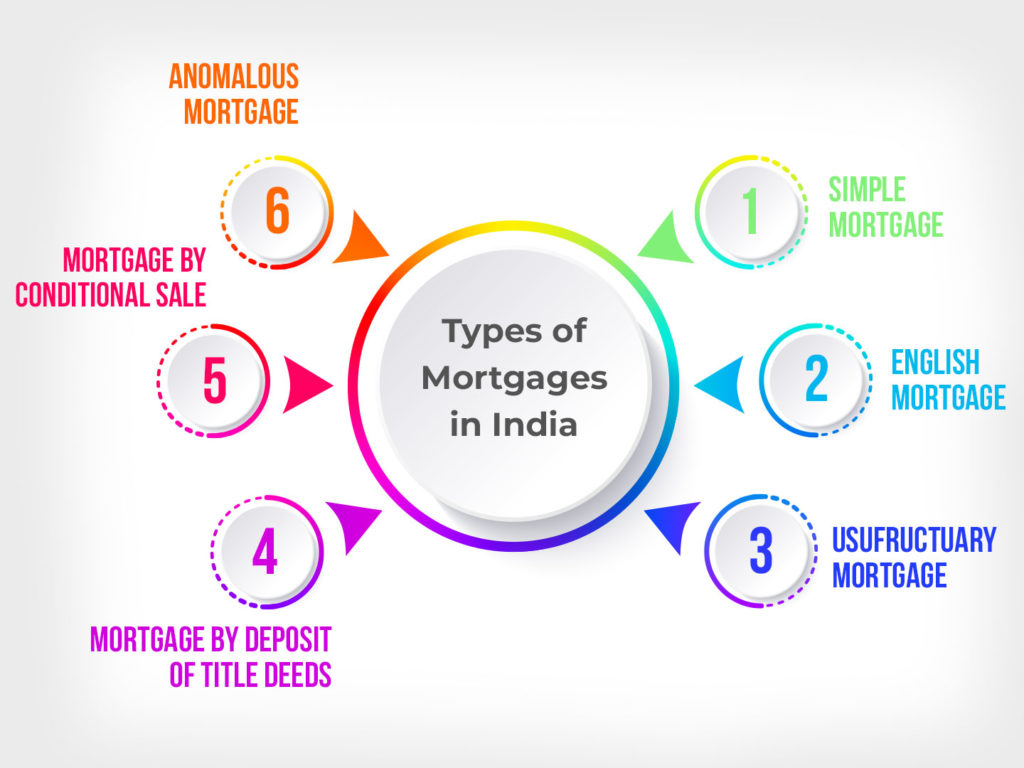
6 TYPES OF MORTGAGES :
SIMPLE MORTGAGE :
It is a kind of mortgage where the mortgagor binds himself to repay the mortgage-money. No possession of the property is transferred in case of Simple Mortgage. It should be done by registered deed. The mortgagee can exercise his right to make the sale of that specific immovable property by the intervention of the court.
MORTGAGE BY CONDITIONAL SALE :
It is a kind of mortgage where the mortgagor ostensibly sales his property on conditions :
on the repayment of such loan taken, the sale become void and the property will be retransferred by the mortgagee in the favor of the mortgagor,
in case of failure of payment of mortgage-money on certain time, the ostensible sale will become absolute.
In case of mortgage by conditional sale, the mortgagee has the right of foreclosure.
USUFRUCTUARY MORTAGAGE :
Usufructuary Mortgage is such a kind of mortgage where the possession of the property is being transferred in favor of the mortgagee so that the mortgage-debt or interest can be satisfied out of the rents or profits of that property. In such kind of mortgage, the mortgagee can neither have a right of sale nor of foreclosure.
MORTGAGE BY DEPOSIT OF TITLE DEEDS :
It is popularly called an ‘equitable mortgage’. It is a kind of mortgage where there is a delivery to the mortgagee, documents of title to immovable property with intent to create a security thereon. It requires neither a registration nor an attestation.
ENGLISH MORTGAGE :
An English Mortgage is a transaction in which the mortgagor binds himself to repay the mortgage-money on a certain date and transfers the mortgaged property absolutely to the mortgagee but subject to the condition that he will retransfer it to the mortgagor upon payment of the debt.
ANOMALOUS MORTGAGE :
In such a mortgage, the possession may or may not be delivered. A mortgage which is not a simple mortgage, a mortgage by conditional sale, an usufructuary mortgage, an English mortgage or a mortgage by deposit of title deeds within the meaning of section 58 is called an anomalous mortgage.
RIGHTS OF THE MORTGAGOR AND MORTGAGEE
RIGHTS OF THE MORTGAGOR:
Right to redeem the mortgage.
Right to inspection and production of documents relevant to the mortgage transaction.
Right to redeem the mortgage separately or simultaneously.
Right to appropriate accessions, if any, to the mortgaged property.
Right to appropriate improvements, if any, to the mortgaged property.
Right to renewal of lease where the mortgaged property is leasehold.
Right to effect lease of the mortgaged property.
RIGHTS OF THE MORTGAGEE :
Rights to foreclosure or sale of the mortgaged property in default of non-payment of debt.
Right to sue mortgagor for the recovery of mortgage-money.
Right to exercise power of sale if given under the mortgage-deed.
Right to get a receiver appointed.
Right to accession to mortgaged-property.
Right to have the benefit of renewed lease if mortgaged property is leased out.
Right to spend money in preserving the property, defending mortgagor’s title or in renewal of lease if the property is in possession.
Right to receive proceeds of revenue sale of the mortgaged property.
DUTIES OF THE MORTGAGOR AND MORTGAGEE
DUTIES OF THE MORTGAGOR :
Liability to guarantee his title in the mortgaged property.
Liability to defend his title in the mortgaged property.
Liability to make payments of public.
Liability to pay rents if the mortgaged property is leased hold and mortgagee is a lessee.
Liability to discharge prior encumbrances on the mortgaged property.
DUTIES OF THE MORTGAGEE :
Liability to manage the property with ordinary prudence.
Liability to collect rents and profits with due diligence.
Liability to pay the government dues in case there is no contract to the contrary.
Liability to spend money for necessary repairs in the mortgaged property.
Liability not to commit waste on the mortgaged property.
‘Will never forget the help given to us by India’ says US promising help to India in its Covid fight: Indan minister of external affairs S Jaishankar who was in his official trip to US became the first cabinet minister to visit it since Joe Biden was appointed as US president i.e January 20th. On Saturday external affairs minister gave an statement related to expand production of vaccines in India with assistance from the United States. He gave this statement after lot of discussion with some officials of US regarding Covid pandemic and vaccines.
“The primary focus of the visit obviously was on the relationship with the new administration. It is a very important relationship. Also, to engage with the senior cabinet members here,” said the external affairs minister while revealing reason of his visit to Indian reporters after concluding successfully most of his engagements. The minister further added “There was also of course the COVID-19 context because of the vaccine partnership between India and the US, and also Quad-based discussions on vaccines. That was also one of the important subjects. In fact, in many ways, I would say the most important subject of my discussion,”.
Over the last two days Jaishankar met many officials and cabinet ministers of US. He met Secretary of State Antony Blinken, Defense Secretary Lloyd Austin, National Security Advisor Jake Sullivan, US Trade Representatives Katherine Tai and Director of National Intelligence Avril Haines and some others. Jaishankar had some wide ranging talk with his counterpart from US i.e Anthony Blinken. He discussed many important issues with him and expressed his gratitude for Biden administration for it’s strong support and solidarity with India at a moment of great difficulty and for helping India in fighting with this deadly Covid 19 pandemic.
Blinken also expressed his gratitude for the help given to US by India while welcoming Jaishankar to the state department. He said that they will never forget that India was with US in the early days of Covid. He addressed to state department that “Now we want to make sure that we are there for and with India,“.
In the joint media interaction between the two leaders while addressing the reporters, Jaishankar said that “We have a lot of issues to discuss. I think our relations have grown stronger over the years and I’m very confident that it’ll continue to do so. I also want to take the opportunity to express to the Secretary, through him to the administration, (and) to the United States for the strong support and solidarity and at the moment of great difficulty (for us),” .
“We are united in confronting COVID-19together…We are united in dealing with the challenge posed by climate change and we are partnered together directly through the QUAD and other institutions in the United Nations in dealing with many of the challenges that we face in the region,” Blinken said emphasising on the unity of India and United States in supporting each other and fighting such challenges.
After running for eight wonderful years, the creators of Brooklyn Nine-Nine have announced that they will be airing their final season in August of this year. After shooting nearly 150 episodes, the show has called it quits.
The show boasted of an impressive cast with SNL legend Andy Samberg, the hilarious Chelsea Peretti, the talented terry crews, the award-winning Andre Braugher, and several others. The premise of the show revolved around the lives of the detectives at the 99th precinct in Brooklyn.
Not only did they have a talented cast, but it was also a diverse one. Out of the 9 main cast members, only 4 were caucasian males. Melissa Fumero plays Amy Santiago, an aspiring captain. The show follows her journey and we can only hope she achieves this goal in the final season.
The most amazing thing about the show was the way it addressed social issues while still maintaining a comedic tone. Covering issues such as racial profiling, sexual harassment, and homophobia, the show never shied away from uncomfortable topics. The elegance with which these topics are handled is truly respectable.
The eighth season will air in August and will be covering recent events such as the murder of George Floyd and the Covid pandemic. Hopefully, we’ll see more of Cheddar too!
The only way to fight this deadly pandemic is by vaccinating ourselves. People are people’s cure. With so many companies releasing Covid-19 vaccines, people get confused as to which parameter is to be used while comparing them. Most of them start comparing vaccines based on their efficiency. There is a strong reason behind why you shouldn’t do that.
Parameters to consider
Covaxin, Covishield, Sputnik V (left to right)
Let us consider the three most used vaccines in India: Sputnik V, Covaxin, Covishield. The efficacy rates of the three are:
Sputnik V- 92%
Covaxin-81%
Covishield-70%
Based on this data, one may conclude that Sputnik V is the best and Covishield the worst. But before reaching this conclusion, let us consider some more important specifications.
Sputnik V vaccine:
Sputnik V is an adenoviral based Russian made vaccine, used against Covid-19. It works by introducing a weakened virus into the body so that they don’t immediately replicate and cause disease. Instead it prepares our immune system so that when the real virus attacks, the severity can be minimum to none. It requires two doses, with a 21 day interval between.
The trials were conducted on volunteers from Russia from June 2020 to Nov 2020 against the original and UK variant Covid-19. 19,000 volunteers from Russia participated in the trial, so trials were not done on Indian people.
Covaxin:
Covaxin was developed by India’s National Institute of Virology (NIV). It works by introducing a dead Covid virus into the body, thus enabling the immune system to develop a response, and this method is often considered safe. It was first trialed on animals, and then proceeded to human trials. It requires two doses, with a 4-6 week interval between.
The trials were conducted on volunteers from India from June 2020 to Jan 2021 against both the original and UK variant virus. Trials were done on a total of 26,000 volunteers.
Covishield:
Covishield was developed by Oxford University and AstraZeneca. It works by introducing a weakened version of a common cold adenovirus into the body and triggers an immune response. It requires two doses, with a 4-8 week interval between.
The trials were conducted on volunteers from USA from August 2020 to December 2020 against the original virus only. Trials were done on a total of 30,000 volunteers.
As it can be observed, all three vaccine trials were conducted under different time periods, in different countries, on people of different nationalities on different variant viruses. Thus comparing them solely on the efficiency rates alone is not fair.
So which one to choose?
The answer to this question is that all three do their jobs as specified. There is no single ‘perfect’ vaccine. So instead of waiting for a vaccine with higher efficiency rate, try to vaccinate yourself as soon as possible. The goal of a vaccine is not to prevent you from getting Covid-19, but to reduce its severity, thus reducing severe symptoms and death.
Evidently, no vaccinated individual during the trials were hospitalized when they got Covid-19. The intake of medicines prescribed by their doctors, good food and isolation cured them. Hence this is proof that vaccination reduces the severity of the virus. Do not be under the false pretense that once vaccinated, Covid-19 cannot affect you and hence do not roam out. You maybe vaccinated, but other may not be. So do not be the cause of their attack.
This post was written with the intention of debunking the false hope of people that better efficiency rate equals better vaccine. So vaccinate yourself when you get the chance instead of waiting for the perfect vaccine. Be safe and be home. Let us together win this battle and soon return back to normal.
India has crossed a major landmark in Covid-19 vaccination. More than 21 Crore Cumulative Vaccine Doses have been administered in the country so far. Health Ministry said, vaccination is an integral pillar of the comprehensive strategy of the Government for containment and management of the pandemic, along with Test, Track, Treat and COVID Appropriate Behaviour.
The Ministry said that more than 28 lakh nine thousand beneficiaries were inoculated with Covid-19 vaccine doses yesterday. Out of which more than 25 lakh 11 thousand beneficiaries were vaccinated for 1st dose and around three lakh beneficiaries received 2nd dose of the vaccine. The Ministry said, more than 14 lakh 15 thousand beneficiaries of the age group 18 to 44 years received their first dose of COVID vaccine yesterday and more than nine thousand beneficiaries of the same age group received their second dose of vaccine.
Cumulatively, over one crore 82 lakh persons across 37 States and Union Territories have received their first dose since the start of Phase-3 of the vaccination drive. The Ministry said, Bihar, Delhi, Gujarat, Madhya Pradesh, Rajasthan and Uttar Pradesh have administered more than 10 lakh beneficiaries of the age group 18-44 years for the first dose of COVID vaccine.
Centre has enhanced and liberalised the insurance compensation schemes under Employees State Insurance Corporation and Employees Provident Fund Organization with a view to mitigate the financial difficulties faced due to death of single earning member in the family. The decision on the relief measures were taken by Prime Minister Narendra Modi in an important meeting held in New Delhi yesterday.
Under the relief measures announced, benefit of ESIC pension scheme for employment related death cases has been extended to even those who have died due to COVID. Dependent family members of such persons will be entitled to the benefit of pension equivalent to 90 per cent of average daily wage drawn by the worker as per the existing norms. This benefit will be available retrospectively with effect from 24th of March of last year and for all such cases till 24th of March next year.
Additionally, the insurance benefits under the Employees’ Deposit Linked Insurance Scheme (EDLI) have been enhanced to seven lakh rupees. The provision of minimum insurance benefit of two lakh 50 thousand rupees has been restored and will also apply retrospectively from 15th of February last year for the next three years. To benefit families of contractual and casual workers, the condition of continuous employment in only one establishment has also been liberalized.
The benefit under the relaxed norms will be made available to families of even those employees who may have changed jobs in the last 12 months preceding their death.













 Eduindex
You must be logged in to post a comment.