Global Diplomacy: The United Nations.

  • The name “United Nations” appears true only in books but in reality it seems like a contest for nations to prove their dominance and power individually. The diplomacy comes off to be biased. The World today is owned by corporate and the UN follows through. The actual role of united nations should be to rise above the competition and work as ONE UNITED PLANET towards climate change, global pandemic, poverty and financial slavery.

Though it is non-arguable that UN has helped bring forward issues like Women Empowerment, Poverty, Health, Education, etc. on a global platform. The real question is, are these issues solved or they have been piled upon by newer issues day by day.

But on a positive note, the UN has made progress in its peace making strategies and providing financial and healthcare aids to the countries in need. If not for this organisation then there would have not been a diplomatic relationship between nations and war would be the ultimate solution to all inter-nation problems.

Just because a medicine has side-effects does not mean it cannot be used for treating the illness in hand. Similarly, it is easy for anybody to make war but only the united front can make peace and prosperity!

  • The UN came from the minds of some of the renowned politicians of the western countries. When the super power nations felt their security and peace was under threat they collaborated with like-minded ones against the equally powerful nations. Powerful only in military and vengeance and the greed to conquer. According to human psychology (basic), a man desires power more than water for thirst.

From all the glorifications I read about this organisation, UN rose from the ashes of the war like a phoenix bird. Very beautiful and powerful bird- a phoenix-their tears have healing powers. One can say that United Nations came into existence to act as the panacea to diseases like violence, death and fading humanity.

But is the origin really important to determine its worth in the present scenario is something to ponder upon. Today UN works for a cause which it was originally built upon; irrespective of its results, – promotion of peace with its symbol the white dove soaring high, its wings flapping, freeing itself from the shackles of slavery of power, money, greed and hate.

Born in times of desperate times it can be regarded as an invention by man in the time of dire need. As we all know – “NECESSITY IS THE MOTHER OF ALL INVENTIONS!”

  • The UN Security Council consists of 5 permanent members and 10 temporary members all with a right to vote however only the permanent five have the right to veto. The word itself suggests that the council was made to resolve the security concerns of nations and to make peace among them.

 Today, the Council responds to three types of situations:

  • (1) chemical, biological, radiological and nuclear weapons proliferation; (2) international conflict; and (3) intra-state conflict. More recently, the Council has also developed a (4) cross-cutting and (5) quasi-legislative agenda.

The above decisions and powers in the hands of the council sounds safe however it is not the situation in reality. There has to be an expansion of the members instead of giving all the authority in the hands of the few. This will help in avoidance of partiality or constant disagreement that has been happening since the council has been formed. Though it has never successfully managed to make any notable reforms , it is one of our best option to resolve the security threats and war like situations in many countries and their estranged borders.

  • Human rights are the rights we are all entitled to irrespective of the place of birth or the time of birth. The core of United Nations is built upon the protection and service towards human rights and its associated freedoms. However due to international politics and superpower nations greed to stay on top of others and world domination has endangered the human rights of developing and under developed nations. Human rights have become a selective freedom provided to only those who can afford it without any restrictions. In my country citizens think that they are not worthy of having human rights as they think only the rich and developed nations are fortunate enough to have human rights that too the basic one’s. In recent events of racism ad discrimination on the basis of colour and financial status, what is the united nations enforcing laws to stop the fights  to avail basic human rights. People have to come on streets and protest later developing into riots in order to practise their rights and enjoy the freedom of being born as a human on this planet.
  • The united nations in the past has failed in crisis management because of the disagreement between it’s member nations and security councils. Due to the interference of the security council the  situation was aggravated rather than being put out or quite down. Rather than focusing on the crisis at hand it focuses on the political relations of that country with the members of the united nations and then it takes the necessary actions that too not quick or decisive but slow and of poor quality. However by putting the past back the united nations can improve on its crisis management skills by being in constant touch with the country and states local administration and education people on a personal and more localised manner rather than representing it as a political agenda or foreign policy which puts the civilians in a mind-set of confusion and feeling of unsafe and non trustable environment.
  • Today a question arises on the future of the United Nations and will it still prevail in the modern world where people are becoming rather too aware and will want a more secular council, one which works one which provides solutions, one which is actually true to its purpose of being formed.
  • During the 2020 Global Pandemic the true face of UN is being put to test and how it acts now to maintain peace among nations will say a lot about its existence in the future or will it be left to be just pages in history textbooks.

Just wishing for once if we had leaders who cared about the upliftment of the entire nation and not just the name of their political agenda and parties. The world needs educated and selfless leaders and hopefully in the future with my generation in the front we will represent a better council than these old ways and barbaric wars.
‘Glee’ Actress Naya Rivera Found dead while Saving Her Son, Body Found in California Lake

Naya Rivera, a singer and actor who played a gay cheerleader on the hit TV musical comedy Glee, was found dead on Monday in a Southern California Lake. She was 33.

Rivera’s body was discovered six days after she disappeared on Lake Piru, where her son, Josey, was found on July 8, alone on a boat the two had rented, the Ventura Country Sheriff’s office said. The Sheriff’s office confirmed that the body was Rivera’s.

According to the police working on Rivera’s case, the actor died trying to save her son.

Rivera’s son, Josey Hollis Dorsey told the police that after the two went swimming. Rivera pushed him into the boat but when he turned around to see her, she had disappeared underwater.

The sheriff, Bill Ayub said during a conference that Rivera gathered enough energy to help her son, but not to save herself. The cops believe that the actor had been trapped by vegetation beneath the surface of the lake, which is why it took six days to find her.

Family members chatted with Rivera via FaceTime when she was on the boat, and search crews watched those videos for clues to where she might have gone down, Ayub said ” It has been an extremely difficult time for her family throughout this ordeal.” “We share their grief” he added.

Rivera’s untimely and tragic demise has sent shock waves around the world. The fact that the actor had died while trying to save her son was what broke her fans’ heart.

HOW TO KEEP YOURSELF HAPPY AND FIT IN THIS LOCKDOWN?

As many of us are being told to hunker down in our residences and houses, and limit trips outside and social contact, matters are feeling pretty “real” at this point. Aside from the overall worry, people might also have about their bodily fitness as they digest the information from around the sector and here at home.

Here are some of the mental health practices to make sure to hold doing—or start doing, for a number of us—during the lockdown period.

Have a routine

We realize how vital habitual is, especially for children, under regular conditions. And when schools are closed and lots of humans are running from home or informed to live at domestic. But it’s simply a whole lot higher for anybody’s mental fitness to strive to maintain a routine going, as tons as possible.

Start at-domestic exercise recurring

Working out at home in those instances is glaringly a desirable way to live healthy and kill indoor time. There are plenty of options, from the 21st-century ones to the old fashioned ones. Many online workout assets are offering loose get right of entry to or longer free trial periods at some point of this time, which is probably worth searching into. 

Get out of doors—in nature—if you could

This is tons easier in the united states of America or suburbs, but if you’re inside the city and it’s feasible, shimmy beyond your constructing neighbors and go for a walk within the park. 

study

And there are some superb motives to do so. Lots of new studies reveals that spending time in nature is a boon to both intellectual and bodily fitness. For instance, multiple studies have determined that time in inexperienced and blue areas is related to reduced anxiety and melancholy, and the connection may be a causal one.

But what’s captivating is that it doesn’t seem to need to do with simply the more pastime, the sunshine, or the air quality (even though these sincerely play a role). Forest bathing may in reality help the immune system: One mechanism is a concept to be through the chemical substances that trees release, phytoncides—some research has discovered that folks who spent more time in nature had a greater hobby of immune cells called natural killer cells.

Decorate your home

Working on your house if you have time can be a precise manner to feel efficient and in control. “Take the possibility of the extra time by using decluttering, cleansing, or organizing your home,” says Serani, referencing the book Trauma-Informed Care. “Studies say the predictability of cleaning not most effective gives an experience of control within the face of uncertainty, but also gives your thoughts frame and soul a respite from traumatic stress.”

Meditate, or just breathe?

Meditation has lots of studies at the back of it, as most people with the aid of now know—it’s been shown to reduce signs of depression and anxiety, and even grow the extent of positive areas of the brain. 

But if meditation isn’t for you, just breathing slowly might be. Controlled breathing has been used for millennia to calm the thoughts—and a look at some years in the past showed the mechanism that would provide an explanation for it. 

Maintain community and social connection

As mentioned, we’re fundamentally social creatures, and at some point of crises, it’s herbal to want to gather. Social connectivity is the possibly the finest determinant of health there is, as this landmark 80-year-lengthy examine from Harvard reported, and one in every of our most simple mental needs. 

Be of provider, from a distance

Being of provider is one of the quality matters we will do for society—and on a more egocentric note, for ourselves. Studies have repeatedly found that serving others, even thru small acts of kindness, has strong and on the spot intellectual fitness benefits. And feeling a experience of purpose has additionally been proven to help humans get over negative events and build resilience.

Practice gratitude

This isn’t always the easiest aspect to do in these instances, mainly if you’ve felt the more brutal results of the pandemic, like activity or enterprise loss, or illness. But practicing gratitude for the things we do have has been shown over and over to be hugely useful to intellectual health. 

.

Let yourself off the hook

This might be the most vital factor to keep in thoughts—don’t beat yourself up when things aren’t going perfectly on your household. On the pinnacle of the whole thing else, being disillusioned with yourself is definitely counterproductive. If the children watch too much 

Delhi: Man stabbed to death by teens for objecting to bike stunts

New Delhi: A 25 year old man was allegedly stabbed to death by a juvenile and his two friends after the victim warned them to not to do bike stunts in West Delhi’s Raghubir Nagar, police said on Monday.

The victim has been identified as Manish, a resident of Raghubir Nagar. He worked as a private car driver.

Police said that the three people involved in the murder are teenagers (aged 17), they have been arrested in connection with the incident. They said that the incident took place on July 8.

The entire incident was captured in CCTV cameras. In one footage, the main accused appeared to be stabbing the victim several times on the busy streets of Raghubir Nagar with his friends. “Even when one of his friends tried to take him away, he again ran to stab the man” said the police officer. Deputy commissioner of Police (west) Deepak Purohit said that a case of murder has been registered at Khyala police station.

The three teenagers who escaped were identified with the help of CCTV footage and local intelligence and later apprehended. Police said that the weapon used in the crime has also been recovered.

” On 8 July, we received information from DDU Hospital about the admission of an unknown person, who was declared dead. our staff rushed to the hospital and found that the person was suffering from multiple stab wounds. Later, he was identified as Manish.” The officer said.

The victim sustained 28 stab wounds including severe injuries to his chest and torso, other minor wounds on his arms and legs, the police added.

While doing the investigation, it was revealed that the main accused engaged in bike racing and stunts. He rode his bike at high speed and often passed through the streets of Raghubir Nagar, where the victim lived.

The victim objected to the bike stunts and racing. He also warned the accused against riding on the streets of Raghubir Nagar again, the DCP said,

Even after that, the victim rode through the same street again following which the duo got into a fight.

In order the teach the victim a lesson, the juvenile arranged for two knives on July 8, came along with his two friends, and when they found Manish roaming on the streets alone, executed the assault.

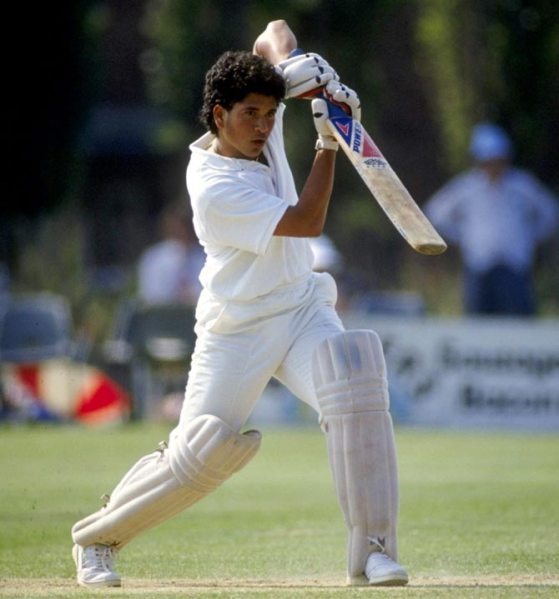
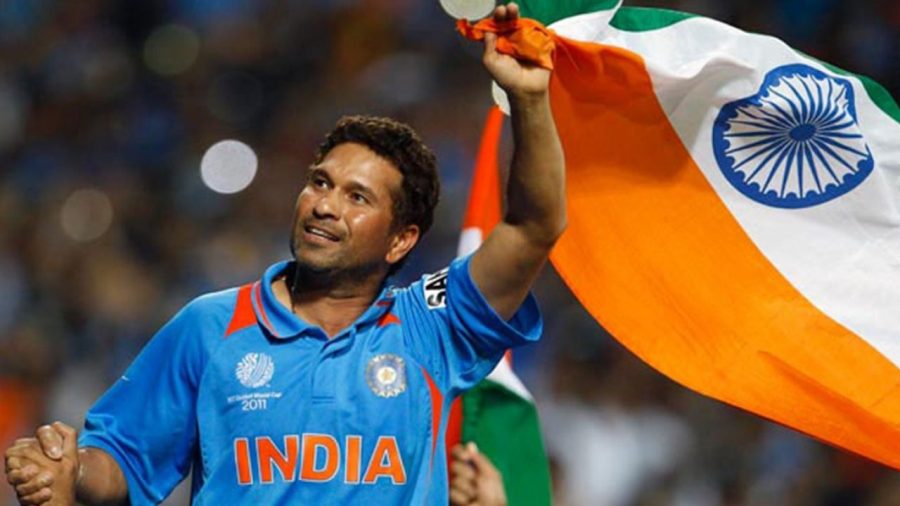
Sachin Tendulkar

Sachin Ramesh Tendulkar, popularly referred to as the God of cricket is a former international cricketer from India and former captain of the Indian national team. He is considered as the greatest batsman in the history of cricket. The famous batsman had set many records in his 24 years long and illustrious career. He is the only player to have scored one hundred international centuries, the first batsman to score a double century in a One Day International (ODI), the holder of the record for the most runs in both Test and ODI cricket, and the only player to complete more than 30,000 runs in international cricket.

Early life

Tendulkar was born at Nirmal Nursing Home in DadarBombay on 24 April 1973 to a Maharashtrian family. His father, Ramesh Tendulkar, was a well-known Marathi novelist & poet and his mother, Rajni, worked in the insurance industry. Ramesh named Tendulkar after his favourite music director, Sachin Dev Burman. Tendulkar has three elder siblings: two half-brothers Nitin and Ajit, and a half-sister Savita.

 Ajit introduced the young Sachin to cricket in 1984. He introduced him to Ramakant Achrekar, a famous cricket coach and a club cricketer of repute, at Shivaji Park, Dadar. Achrekar was impressed with Tendulkar’s talent and advised him to shift his schooling to Sharadashram Vidyamandir High School, a school at Dadar which had a dominant cricket team and had produced many notable cricketers. Achrekar was the man who helped him to shape his career as a cricketer.

Career

Sachin made his International debut at the age of 16 in the year 1989 against arch rivals Pakistan, scoring 15 runs before being bowled by Waqar Younis. In his ODI debut, he was dismissed for a duck by Waqar against Pakistan in Gujranwala in 1989.

Tendulkar’s performance through the years 1994–1999 coincided with his physical peak, in his early twenties. He opened the batting at Auckland against New Zealand in 1994, making 82 runs off 49 balls. He scored his first ODI century on 9 September 1994 against Australia in Sri Lanka at Colombo. Tendulkar’s rise continued when he was the leading run scorer at the 1996 World Cup, scoring two centuries. He was the only Indian batsman to perform well in the semi-final against Sri Lanka. 

In the 2003 World Cup, Tendulkar helped his team advance as far as the finals. Though India was defeated by Australia, Tendulkar, who averaged 60.2, was named the man of the tournament. A tennis elbow injury then took its toll on Tendulkar, leaving him out of the side for most of the year, coming back only for the last two Tests when Australia toured India in 2004. This was a major low point in his career.

Later in his career, Tendulkar was a part of the Indian team that won the 2011 World Cup, his first win in six World Cup appearances for India.

Records and achievements

Sachin Tendulkar is the leading run scorer in Tests, with 15,921 runs, as well as in One-Day Internationals, with 18,426 runs. He is the only player to score more than 30,000 runs in all forms of international cricket (Tests, ODIs and Twenty20 Internationals). He also holds the record of the highest number of centuries in both Tests (51) and ODIs (49) as well as in Tests and ODIs combined (100). On 16 March 2012, Tendulkar scored his 100th international hundred. It came against Bangladesh in the league matches of Asia Cup 2012. He is also the only player to score fifty centuries in Test cricket, and the first to score fifty centuries in all international cricket combined. He also holds the world record for playing the highest number of Test matches (200) and ODI matches (463). In November 2011, he scored a historic “double century” in a contest against South Africa, becoming the first man in history to record 200 runs in a single innings of ODI play.

Tendulkar recieved the Rajiv Gandhi Khel Ratna award in 1997, India’s highest sporting honour, and the Padma Shri and Padma Vibhushan awards in 1999 and 2008, respectively. In 2012 Tendulkar became a member of the Rajya Sabha, the upper chamber of the Indian parliament—the first active athlete to join that body; he was nominated to the post. In 2014, he became the first sportsman to receive India’s highest civilian honour, the Bharat Ratna.

Retirement

In December 2012, Tendulkar announced his retirement from ODIs. He retired from Twenty20 cricket in October 2013 and subsequently retired from all forms of cricket on 16 November 2013 after playing his 200th Test match, against the West Indies in Mumbai’s Wankhede Stadium.

Gamophobia: A Fear of Marriage or Commitment

Source: Google

The decision is marriage is very crucial to take. Many people have the fear of taking responsibility. It may be a dream for one but also a nightmare for another. We come across many who used to say “I am scared if marriage”, “I am not ready for marriage” etc. But gamophobia is a fear of marriage which the person develops with time and some incidents also can fuel to grow the fear. “Gamos” means marriage or relationship or commitment. To this opposite, there is ‘Anuptaphobia’ which means the fear of being single. In gamophobia, one person likes or love another person, but when they come to see that the opposite person is also liking them back and attempting to be together, the person’s attitude might change to the other person they were liking. They might start to hate the person.

Reasons for the phobia

  • Growing up in an unhappy family and experiencing bad times in family can lead to fear of marriage.
  • If a person lives alone for a long time, anxiety triggers thinking of sharing the house with someone else, the person gets used to with the sort of life.
  • Living with a happy family sometimes the thought of the fear occurs that they won’t be able to achieve happiness as their parents did 
  • There are many certain and uncertain things lies. One might get scared to commit by thinking that what if it doesn’t work. In that case, there remains an option of divorce, but most of the time people can’t decide on divorce due to family pressures. So, the fear of not being able to come out is threatening.
  • The traditional practices of getting married might disturb some.

The ways of dealing with the fear

Each person faces the time of marriage and thinking about the same make them feel anxious. So, the fear also can be dealt with in the same way the other fears get handled. The resolution and the will power can help to deal with the problem.

To survive this problem, the person needs to trust others and shouldn’t possess any kind of selfishness to sharing things with others. Well regulated and orderly life is the keynote of personal success.

  • One should avoid the misunderstanding and should know themselves well.
  • Learn to share things with a partner 
  • Respect the individuality of your partner. Keep in mind that being committed doesn’t provide the disappearance of your self.
  • If you think that you can’t overcome the dear of getting married alone, you consult an expert for the same.

This problem is related to personality disorder and neuroses. Most of the phobias are socially created and found as a psychological disorder. Now not all person is ready to face their weakness and vulnerability and bad side. Continuous avoidance of the bad self or vulnerability is another sign of personality disorder. Gamophobia is not only the fear of marriage, it is fear of commitment. The reaction formation is also a neurotic defense. This is also known as the fear of commitment phobia.

6 Ways to Improve Concentration

Source: Google

Concentration is very important to get success in different spheres of life. Concentration is a process of taking off your mind from other things and putting them on one. Many things around us distract us from doing the needful. Now let’s know about 10 ways to increase concentration 

Decide the thing on which you want to focus

Many times we remain unsure about the fact that on which we want to focus. Firstly decide on which you want to focus on. Fix your goal. It happens that we sit to do something important and end up doing something else. So, be careful and well structured about what you want to do.

Have coffee 

Caffeinated beverages can leave a positive impact on your concentration and lead you to stay focused. One has to take the beverages in moderation so that caffeine’s cognitive enhancing properties can get. But if one drinks too much of it can end up having anxieties, nervousness, etc.

Remove distractions 

When you start to do something different distractions come. To get rid of such problems, you can move to a quiet area and bring your concentration back. The closing door of your office room or your study room and telling others not to disturb you can help. Moreover, one of the most distracting tools is mobile. So, if you can turn all your notifications and programming apps off, it will help a lot.

Fuel yourself 

Hunger and anger are the deadened combination. People do mistakes when they are hangry. Try to balance healthy facts curbs, protein, and keep yourself fueled. Have snacks, veggies, and plenty of water to keep yourself full and hydrated accordingly. Don’t skip meals. Always keep yourself fueled so that your brain can stay focused and your energy level remains up always.

Get enough sleep

Not getting enough sleep with a week can leave a negative impact on your life. It can hamper your short and long term memory. For the aged 18-60 years 7 hours or lore, a night of night sleep is important. Older adults may need 9 hours per night. Avoid caffeinated beverages after lunch, keep the bedroom cool and quiet, read the book, or listen to music, switch off all electronic devices. These all might help to have a good sleep which consequently helps to bring better concentration.

Pomodoro technique

Work can be done quickly if one stays focus. But it is not easy to do. One can try the Pomodoro technique while wrestling with concentration. One can set a timer and get to work. If any notification comes to fix 5 mins to check, then get back to your work setting the alarm. Once you are done with all your work take a break of 25-30 mins.

There are many ways through which concentration can be increased. The setting goal, putting social media off, taking short mental vacations, making a list or work plan, etc. Even taking similar tasks can help to be concentrated, because most of the time jumping from one work to another doesn’t work well. One psychological report says multitasking can reduce productivity as much as 40 percent. So, it is important to follow some tricks to stay focused and get success.

Media Convergence


The construction of a high capacity network in the 1990\’s, called the internet, is emerging as delivery vehicle of choice for any and all media products. The technological basis called digital is distinctive. Message, whether text, audio, image or a combination are broken into millions of bits of data. The bits are transmitted one at a time over the internet, which has incredibly high capacity and speed, then reassembled for the reception at the other end. The process is almost instaneous for text, whose digital bits of data are small and easily accommodated. Audio and visual messages are also delivered in a same manner. A digitalization revolution, called media convergence, is in progress. 
Unique features of Media Convergence are-
  • Distribution
  • Devices
  • Distinctions
  • Production
  • Democratization
  • Compactness


Convergence of the various mass media, computers and telecommunication technologies now became possible, reaching its acme in the multi- media system, so common today for the transfer and exchange of information, data, graphics and sound. One could now watch films and video on computer screen, or surf internet on phone screen. One could also use the computer for sending and receiving fax messages, electronic mails, for surfing the internet and even using the Net phone for calling, television and video conferences. Digitalization was the key here, aided by miniaturization, satellite communication, digital compression, optical fibre and comparatively low-costs and user friendliness. 

In the recent years, with the advent of different applications, different requirements of livelihood has converged on the fingertips of an individual. One can shop, book an appointment, watch a movie, buy tickets, get admission, do online classes, buy groceries, make payments, do banking and lot other through their mobile smartphones or laptops. Thus with the emerging technological developments life will get even faster, much simpler and easier as well. 

Are Parents able to do Work From Home?

Consider a 35 year old woman staying with her husband, 37 and her two children – aged 3 and 6 in Bangalore. She works as Project Manager in a top multinational corporation. Her husband is also working as a Project Manager, though of another firm. One of their child, aged 3, is starting with his kindergarten and demands for the utmost attention of his parents. And the other, aged 6, is starting her primary school. She has seen her parents working for most of the times and hence she is bit aware of managing herself.

Things were just going on as expected, until on 24th March, our Prime Minister called for a nation-wide lockdown. And then things just changed.

Should Work-from-Home Parents Hire Help with Child Care? | FlexJobs

Let me now give you a tour of how this woman spends her day. She wakes up to her alarm at 5:30 in the morning. Starting her day with 15 minutes meditation and yoga, she completely immerse herself in doing the household chores. Since the lockdown she has cancelled the maid, cook and nanny services. After her domestic work, she gets ready for the morning meeting with her team members and thus kick starts her 9 to 5 or rather whole day of work. But then wait, she has two children who also needs to get ready for their school. After attending a couple of meetings, she gets up, prepares her children, set up the desktops and login to their school webinar sessions. This continues till the work-chain is intervened by the lunch time. During the lunch hours, she needs to feed her younger one and at the same time, caters to the needs of her elder one. After that, they both go off to sleep and she resumes her work. Some days this workflow gets interrupted by unprecedented events such as poor internet connection, household emergencies and so on and so forth. Apparently as she described, the best time for her to work is about 2 hours in the afternoon and about 2-3 hours at night, when her children go to their beds.

Now this is just one instance. Apparently, this is what most parents are facing while they are working from home. Since the lockdown, they are not just a mom and an employee. Being a maid, a nanny, a mom, a cook, an advisor, a nurse, a repair-woman and a mediator, her life is not just only about being an employee. She is trying to manage everything, trying to subdue all the resistance and challenging all the obstacles on her path. While for others, Work From Home might be a boon or a blessing in disguise but for the parents, especially for a mother, it is a challenge, an everyday obstacle or rather, a bane. Managing her husband, her children, the household as well as her work has never been easy. For her, especially now, there is no distinct boundary between home and work. But the hardest fact of all is that, she was not prepared for this life-changing instrument.

Working from home and juggling family? Tips for WFH parents, from ...

It is of utmost importance that the employers should take this scenario into consideration and by partnering up with Human Resource Team, they should implement policies which can elevate the motivation level of mothers. A few suggestions from my end would be to give them few extra hours each day, especially during the afternoon to attend to her children. To allow them to complete their work by 6 in the evening, so that they can spend the night-time with their children. Parents should be allowed to attend the business meetings with their children and they should not be embarrassed if something comes up in between work which needs their utmost attention. Parents are having a very hard time, juggling in between work and home and employers should be empathetic while dealing with their situations.

Employers should be all big ears while listening to the issues of the parents. They should have high emotional intelligence and should be empathetic enough to not judge them, but to provide them with empathetic solutions. If a parent says that today she will not be able to work for the entire team because her child is facing some issues, the employer should give her the benefit of doubt, trust her and cooperate with her. It is very important for the employer to keep an open mind and be receptive to the problems. They should understand it takes a lot of courage, especially for the female employees to express their problem, fearing that she will be seen as weak and might be displaced. At this moment, the employer should not despise her, but to communicate with her and provide her with the necessary arrangements.

One things is very important which should always be kept in mind – Parents, especially mothers, can sacrifice for their children and hence the employers must give the required amount of importance to them. Especially the importance that the hard-working parents deserve.

Source: https://hbr.org/2020/03/a-guide-for-working-from-home-parents

‘Lord’ came to court for ‘Justice’

‘Lord’ came to court for ‘Justice’
When a person becomes hopeless & depressed in his life, he usually seeks shelter in the supreme power, the almighty. But when that almighty gets in trouble he comes to court..ahem..quite literally. I am referring to those cases which involve GOD as the litigant. I will give you a glimpse into such interesting suits but first let’s start with the recent one, The Padmanabhaswamy case.

The Padmanabhaswamy case


The padmanabhaswamy temple in Kerala is one of the richest shrine in the world. The historical temple is dedicated to lord Padmanabhaya, an incarnation of lord Vishnu. This temple has six underground chambers, known as Vault A, Vault B, Vault C, Vault D, Vault E and Vault F. These vaults are full of royal treasure worth in billions. Apart from the treasure the shrine gets crores in donation every year from devotees around the world. Understandably controlling the administration of the temple was the cause of the dispute. On July 13, reversing the Kerala High Court judgement, the Supreme Court of India upheld the rights of the former royal family to run the administration of the 8th century built temple. In 2011, Kerala High Court had given the administration power to the state government.
Originally the temple was maintained by the Travancore Royal Family. The tiff started over the maintenance and legal rights of the historic temple after the death of the last ruler Chithira Thirunal Balarama Varma, in 1991. There had been a critical question on whether his younger brother Utradam Thirunal Marthanda Varma can control and manage the Padmanabhaswamy Temple administration as the “ruler of Travancore”.
By carefully examining the Travancore-Cochin Hindu Religious Institutions Act, 1950, the Supreme Court decided to allow the Travancore royal family to claim ownership and manage the ancient Sree Padmanabha Swamy Temple. And along with the controlling rights, the Apex Court has also passed the ball in the court of the royal family to decide whether the mysterious ‘vault B’ be open or not. However, the royal family had argued against the opening of the secret vault as they claim it would bring misfortune to the entire state.

The Ayodhya case


After decades of litigation and political-nonpolitical, religious movements, the famous Ram Janmabhoomi matter dispute was finally settled by the Supreme Court of India. On 9 November 2019, a five member bench headed by the then CJI Ranjan Gogoai had also passed the historical verdict on the matter. The apex court upheld the title right of Ram Lalla, the presiding deity, over the disputed 2.77 acre land in Ayodhya, Uttar Pradesh. The court had also directed the government to allocate a separate 5 acre land for the construction of a mosque.


The Sabrimala verdict


The Sabarimala Temple, considered the abode of Lord Ayyappa, is located in the Periyar Tiger Reserve in the Western Ghat mountain ranges of Kerala. According to the centuries old custom the temple does not allow the entry of women in their ‘menstruating years’ (between the age of 10 to 50). In 2006, a PIL was filed by Indian Young Lawyers Association before the Supreme Court, challenging the custom. The Association argued that the custom violates the rights to equality under Article 14 and freedom of religion under Article 25 of female worshippers.
On 28th September 2018, a five member bench of the Apex Court delivered the controversial judgement on the Sabrimala Temple. The 4:1 majority held that the custom of not giving entry to the Shrine of Lord Ayappa is unconstitutional. Though the only female judge in the bench, Justice Indu Malhotra dissented with the verdict.
The Constitution bench also suggested the larger bench to look into pending cases in relation to the entry of Muslim women to a dargah/mosque; Parsi women married to non-Parsis and their entry to a fire temple; and issues relating to female genital mutilation in the Dawoodi Bohra community. The apex court observed that a common policy needs to be formulated to deal with recurring cases related to similar issues of faith and religion.
Challenging the judgment a review petition is still pending in the court.

ANALYSIS OF INTER- COUNTRY ADOPTION

INTRODUCTION

Adoption signifies a socio- legal practice of taking another child into own family. More specifically, in adoption child belonging to one family acquire ties with a new family i.e. adoptive parents, leading to the termination of relationship with biological or natural parents.

International adoption or transnational adoption or Inter-country adoption is a form of adoption in which an individual or couple becomes the lawful and perpetual parents of a child who is a domestic citizen of another nation. In general, potential adoptive parents must fulfil the essential requirements for legal adoption of their country of residence and of the country of nationality of the child. The laws of countries differ in their inclination to permit international adoptions. Some countries, such as China and South Korea, have comparatively well-settled rules and procedures for international adoptions, while some other countries explicitly prohibit it. African nations, have prolonged residency requirements for adoptive parents that in result rule out most international adoptions.

BIRTH OF INTER- COUNTRY ADOPTION

The statutory process of inter-country adoption gained momentum around the mid-1940s and came into force as a human response to the dilemma of war orphans and the abandoned kids and off- springs of servicemen in World War II, the Korean War and the Vietnam War. However, in the countries who give their children for adoption; lack of contraception, society’s attitudes to birth of illegitimate children and extreme poverty are the key elements leading to the dereliction of children to organisations. The concept of “male” child which is an unfortunate reality in our own country also leads to the abandonment of the girl child.

In the case of Lakshmi Kant Pandey v. UOI[1]

The Supreme Court in its judgement, pronounced that, “every child has a right to love and be loved. Only if a child is brought up in a family will he grow in an atmosphere of love, and secure ethical and material security. But if it is not potential of the biological parents or anyone about looking after the child, or if the child is abandoned by his/her family, then adoption of the child will be best for the security of the child.”

The rise in the number of children adopted by families from other nations has also resulted in a significant rise in public policy issues, leading to The Hague Convention and the International Adoption Treaty, with a range of nations changing their internal legislation, guidelines and policies to govern inter-country adoption practices. This has also contributed to a significant reduction in the prospects for hundreds and thousands of kids who need families to have this opportunity or to take advantage of this opportunity early enough in their lives to avoid the depredations, institutionalization, poverty and lack of educational opportunities.

THE LEGAL FRAMEWORK

On the international level, the Convention on the Rights of the Child (CRC) deals with inter-country adoption issues. This is also governed by the Hague Convention on the Protection of Children and Cooperation in the area of Inter-Country Adoption, 1993 (HC) and has been ratified by around 90 countries.

CRC Article 21 includes the obligation to “ensure that the child concerned in inter-country adoption enjoys safeguards and standards equivalent to those existing in the case of national adoption.”

As regards violation of the inter-country adoption criteria, in several countries the Committee on Children’s Rights, which ensures that CRC is complied with, expressed concern and recommended to certain countries that the Hague Convention should be ratified by them as means of addressing the matters.

The Hague Convention on the Protection of Children and Cooperation in Respect of Inter-Country Adoption, 1993 proposes two core principles, both specifically aimed at protecting the child from unethical activities related to inter-country adoption and not at encouraging the practice as such:

  • Establishing of safeguards to ensure that transnational adoption is in the best interest of the child.
  • To establish a system of cooperation between the contacting states to ensure that the safeguards are respected.[2]

ADOPTION LAWS IN INDIA

India is a signatory of both the CRC and the Hague Conventions. The Hindu Adoption and Maintenance Act, 1956 (HAMA) is the primary law which concerns the issue of adoption under the Hindu system.

The Juvenile Justice (Care and Protection of Children) Act, 2000 and all Amending Acts guarantee the rights of an adopted child recognized in the Hague Convention. However, the 2000 Act did not describe adoption and the concept was applied to the 2006 amendment. It has been a significant development, as the Guardians and the Wards Act of 1890 directed the introduction of a non-Hindu.

Central Adoption Resource Authority (CARA) is an autonomous body established under the Ministry of Women and Child Development and is responsible for intra-country and inter-country adoption. The CARA Guidelines state that any foreign couple wishing to adopt an Indian child must be funded by a child welfare organization, or by a social institution, approved for its residence by the government. According to the CARA Guidelines and the Juvenile Justice (Care and Protection) Amendment Act 2006, only three kinds of children are eligible for adoption:

Those children who were given up.

Those abandoned.  

Those orphaned and cared for by a professional adoption agency.

CASE LAWS

In the case of Re Rasiklal Chhaganlal Mehta[3]

 The court ruled that inter-country adoptions under Section 9(4) of the Hindu Adoptions and Maintenance Act, 1956 should be legally enforceable under the laws of both states. Adoptive family must comply with the requirements of the law on adoptions in their country and must have the requisite authorisation to be adopted by the appropriate authority, thereby ensuring that the child does not suffer from immigration and obtain nationality in the country of the adoptive parent.

In the case of Mr. Craig Allen Coates v. State [4]

Through the Indian Council for Child Welfare and Welfare Home for Children, the court ruled that, in the event that the adoptive parents fail to provide clear reasons for the adoption of a child from another country, the adoption process would be prohibited and declared to be unfaithful and that CARA should provide for stricter guidance in this regard.

ISSUES ARISING DUE TO INTER-COUNTRY ADOPTION

Child trafficking: child being sold, once taken out of the native state.

Post adoption negligence in taking care of the child.

Post adoption identity problem: child is not found with the actual adoptive guardians rather with some other person(s).

CONCLUSION

Inter-country adoption or international adoption means the adoption by parents of some other nation of the Child of one nation, also referred to as cross-border adoption. Inter-country adoption is an alternative for those children who do not have or cannot have a parent in between countries, so that these children can be chosen to give under inter- country adoption.

Agencies may be complicit in abuse if they systematically refuse to function within the framework of systems, which clearly violate international rules. In order to address transnational adoption, India also needs better guidance and legislation. It is important that child safety is ensured not only within the country but when he or she is taken out of the country.


[1]1984 AIR 469, 1984 SCR (2) 795

[2] Hague Convention, Preamble and Article 1

[3] AIR 1982 Gujrat. 193

[4] 162(2009) DLT 605

Does Pandemics Reset Humanity?

Outbreak of novel corona virus toward the year’s end 2019 have halted the entire world on the wheels, the infection is in discriminatory to such an extent that it did not separate any nation whether created like China, Europeans, Canada and creating like India. It Would never look whether you are rich, a clergyman, a spouse of a president , a poor a matured or a kid. its pace is spreading to such an extent that inside two or multi month it became pandemic started from a city in china.

A virus, which is catastrophic too, has arrive at all over the world however something important called to be HUMANITY is absent and escaped the reach of masses. a contamination of a virus could enter , go starting with one individual then onto the next however Humanity which can be spread , learn develop , rehearsed is elusive and battling for worldwide effort. like the notorious COVID-19. we have seen mayhem everywhere throughout the world , the major on are talked about however list are perpetual in the decade.

To settle on reset humankind, we should comprehend the significance of the term pandemic uninvolved of different terms episode, plague. A flare-up is spreading a malady in a specific region, plague is spreading for huge scope in a nation and pandemic is a worldwide scale occasion of spreading the sickness. for example Covid 19 began as flare-up in Wuhan area, China and turned as pestilence when complete China is affected, at last WHO declared it as Pandemic when rest of the world like Spain, USA, India, Korea are affected and nonstop spreading.

Out of enduring have risen the most grounded souls; the most monstrous characters are burned with scars As statement expressed, pandemic like covid 19 brought sufferings financially( workforce deficiencies, low gracefully) socially( self separation) assemble quality towards greater condition cordial. With pandemics diminishing carbon dioxide outflows into air because of low transportation and gracefully, expanded force slices because of increment request on the way towards sustainable power source, expanded disengagement towards developing of greens at homes is only resetting needs of people.

These difference in needs are not constrained to condition just, yet in addition monetarily, low interest prompts builds quality and diminishing costs, political objective of social prosperity with most noteworthy need, Individually, expanded communication with family, diminished relocation and upgraded asset usage, broadly, expanded social reconnaissance for containing the pandemics, low loan fees for money related help, universally, common exchange on social circle than financial circle.

Does pandemics reset humanity and priorities in the end always

With serious outcomes, danger of national security, loss of jobs, day pay misfortune for normal .laborers, increment clinical expenses on isolation, increase everyday costs by social removing are on one hand, where worldwide reaction of protectionism by restricting air travel from specific nations, lock down of vacationer puts because of pandemic impacts the nations severely.  After the Spanish influenza in 1918, with huge loss of populace, the recharged intrigue has given to wellbeing segment with expanded innovative work for immunizations, observing for tainted. Be that as it may, it doesn’t halted the expanded industrialization with helpless sanitation urban bunches. Be that as it may, in contemporary world, the nations like India, endemic with pandemic like intestinal sickness which is significant reason for high number of passing’s, government has started different plans like Mission Indradhanush for immunization, swachh bharat for sanitation has demonstrated outcome by decreasing the quantity of cases and force of spread. Despite the fact that the changed needs like intestinal sickness free India ought to go with increment wellbeing spending plans, framework, specialist persistent proportion where India must core interest.

As Hegel said in his persuasive strategy, each proposal have absolute opposite and join produce blend, Pandemics like Covid 19 resets the needs, resetting mankind required long haul endeavors from political and individual on equivalent balance. Worldwide settlements, for example, International Treaty on Climate, Refugees, Epidemics ought to be followed in letter and soul, innovative work ought to keep the worldwide norms, customary qualities, for example, Korean welcome of welcome, Indian Namaste ought to be advanced.

Is Media a fourth pillar of democracy?

16 December 2012: A severe assault and murder, prevalently known as “NIRBHAYA GANG-RAPE CASE”, shocked the country. A student, in Delhi, was coming back to home, late night, with a companion. Shockingly, when they couldn’t discover a vehicle late night, they took a transport, which had just six individuals other than them. She was severely assaulted by these six who were tanked, including one who was under 18 years and was generally ruthless among all. Her companion was additionally beaten and left oblivious. Them two were tossed out of the transport, stripped, after the episode. This case offended individuals and entire country saw numerous fights and rallies. Introductory numbness of the individuals passing by and organization intensified the circumstance. Media assumed an essential job for this situation. This weight made by individuals and media got a critical change Indian enactment on Rape cases. It corrected Justice Juvenile Act, and decreased the age bar from 18 to 16, to be considered as a grown-up. Government in association spending plan 2013, given to setting up a Nirbhaya budget. Comparative cases are the ongoing Unnao assault case, Kathua assault case. These cases made a great deal of revisions in different acts like JJ act, POCSO act.

KM NANAVATI versus Province of Maharashtra is another milestone choice, which got a ton of media inclusion and the jury was supposed to be impacted by it. KM NANAVATI was a maritime official. At the point when he came back from a task, he finds about his wife affair with  Prem ahuja, who expected to wed her. He leaves his wife, Sylvia and their child at a theater and went to go up against Prem Ahuja. He asks Prem if he accepts Sylvia and take care of their child, which Prem refuses. In this heated moment, Nanavati shot him dead.

Nanavati was at first announced “not guilty” by a jury however later Bombay high court condemned him to life detainment. In any case, later, vijayalaxmi pandit, recently selected senator absolved Nanavati. This case obviously shows how media’s essence can impact the free organ of Indian democracy- judiciary.

At the point when we consider characterizing democracy , a crucial definition that comes in our psyche is the one which was given by Abraham Lincoln at his popular Gettysburg address. He portrayed democracy as “of the individuals, for the individuals and by the individuals”. The essential thought behind popular government is individuals practicing power. They are the preeminent position.  Associating individuals gets significant at this stage. With increment being used of innovation, individuals are having better associations. Online networking is perhaps the best stage for it. From discussions to offering thoughts and perspectives, different instructive, wellbeing and different applications, media is exceptionally critical. Digitalization and innovation has reached to pretty much every edge of the world. This utilization has carried individuals to a typical foundation of correspondence. They can either interface in local or worldwide dialects. Media isn’t just about reporting.

In any case, in ongoing decades, media is viewed as a lessened organ of majority rules system. It has lost its believability. News channels order themselves as per either ideological group. They, rather than introducing reality, continue charging each other for either issues. More often than not, these channels show insignificant and strange stuff. At the point when they speak to the national TV, they have more noteworthy desires. The method of introduction now and then befuddles the crowd about the phoniness, the suppositions and reality.  Horde lynching cases in news, due to whatsapp counterfeit news is another issue to be centred around. This is upsetting that individuals are moved by these phony news, harming guiltless lives. This is darker side of web-based social networking. Media probably won’t be exclusively answerable for it, yet absence of mindfulness is. Viable utilization of this stage to make mindfulness can maintain a strategic distance from such occurrences.  Now and again political nearness enormously influences the self-governance of press. Media is intended to contact individuals without biasness. At the point when limitations forced, it may adversely influence the working of this body.It keeps a check and parity on government choices. Its self-governance is its quality, giving, it too, requirements to possibly be kept an eye on its activities.

It is as yet as amazing as it was before. Limitations have consistently been forced in past. It generally had a few downsides. Be that as it may, it ought to consistently serve the individuals, the individuals who really oversee. Media has consistently assumed dynamic job in covering numerous issues in past. It has secured touchy issues yet in addition brought and still carries our thoughtfulness regarding issues that we are either unconscious about or oblivious towards them. It has consistently been persuasive. In the event that it presents phoniness, that as well, is acknowledged by individuals. This is the place it has lost its actual sense and believably. It should adhere to its basic standards. Right off the bat, it should consistently table reality without outside impact. Also, it ought to abstain from advancing irrational stuff. It ought not overlook the intensity of pen. It is consistently the fourth mainstay of vote based system keeping a hold on working of other three columns the official, the enactment and the legal executive. We have seen in nirbhaya case how revisions occurred after the occurrences and in Nanavati case, how it, for some time, affected the legal executive. These cases would have gone unnoticed without media-support. Incredible elites have dreaded the intensity of media. Kailash sengar, primary charged BJP MLA in Unnao assault case, was removed out of the gathering after individuals shock and media pressure. This weight on influential individuals and political offices mirrors the quality of media. Yet, there exists nothing without defects. With such an impact and quality, it is still significant mainstay of our vote based system. We can see the critical change that it brought till date.

Republic day

India celebrates Republic Day on January 26 annually with a lot of pride and fervor. It is a day that is important to every Indian citizen. It marks the day when India became truly independent and embraced democracy. In other words, it celebrates the day on which our constitution came into effect. On 26 January 1950, almost 3 years post-independence, we became a sovereign, secular, socialist, democratic republic.

History of Republic Day

While we got independence from British rule on August 15, 1947, our country was still lacking a concrete constitution. Moreover, India also did not have any experts and political powers which would help in the functioning of the state affairs smoothly.  Up until then, the 1935 Government of India Act was basically modified in order to govern, however, that act was more bent towards the colonial rule. Therefore, there was a dire need to form an exclusive constitution that would reflect all that India stands for. Thus, Dr. B.R. Ambedkar led a constitutional drafting committee on August 28, 1947.  After drafting, it was presented to the Constituent Assembly by the same committee on November 4, 1947. This whole procedure was very elaborate and took up to 166 days to complete. Moreover, the committee organized sessions were kept open to the public. No matter the challenges and hardships, our constitutional committee left no stone unturned to include rights for all. It aimed to create the perfect balance so all citizens of the country could enjoy equal rights pertaining to their religions, culture, caste, sex, creed and more. At last, they presented the official Indian constitution to the country on January 26, 1950.

Moreover, the first session of the India Parliament was also conducted on this day. In addition to that, 26th January also witnessed the swearing-in of India’s first president, Dr. Rajendra Prasad. Thus, this day is very important as it marks the end of the British rule and birth of India as a Republic State.

Republic Day Celebrations

Indians celebrate January 26 each year with lots of enthusiasm and zeal. On this day, people forget their religion, caste, creed, sex, and more. It brings together the country as a whole. It truly shows the diversity of our country. The capital city of India, New Delhi, celebrates it with a Republic Day Parade that showcases the might of the Indian Military and the cultural diversity of our country.These parades take place in other cities as well, where a lot of schools participate in. It is a delight to watch the children and professionals put in so much effort. The way they grace the parade makes one proud of their country.  We also do National Flag Hoisting on this day. In New Delhi, after the President of India hoists our National Flag, 21 guns salute follow it with the national anthem played by the military band.Further, in schools, March Past takes place and it is mandatory for every student to attend the celebrations. In many schools, they distribute sweets on this day as well. While it is a very joyous day, we must not forget the struggle of freedom that our forefathers took part in. Moreover, it is a day to celebrate the spirit of freedom and make sure to help India reach greater heights in the future.

10 best places to visit in Mcleodganj

If you are planning to have a plan on visiting Mcleodganj then we are ready to be your guide and help you choose the best way to have a pleasant spend. There are many places you could definitely miss beside visiting many. You should be clever enough to make a wise choice among the tough calls.

Start your day by visiting Triund hill. Starting your day with a hill station gives you a kick start. Spending at the cool place never make you leave too early. So starting a day in a cool place makes your day cool and you can have a great start. The have a visit to Bhagsu waterfall and have a bath. Spend a pleasant time and have a fresh day by refreshing yourself in waterfall. After becoming wet it’s time to go and enjoy the view point and become warm. In Naddi view point you can have hot tea and breakfast and can view the entire place in a glance. In the mid afternoon you can have a visit to museums and temples. You can start with Tibetan Museum where you could know more about their culture and ancient history. Kalachakra temple has its own importance in its existence. I don’t reveal it, it’s your job to find out its importance in the history. Guna devi temple and Bhagsunath temple will take you to peace island. You can have a pleasant and calm time there. Tsechokling Gompa will make you stay there for a while. Don’t be hurry because it’s a place you never feel to leave. Spend some additional time there and you can have a short nap if you wish or you can meditate for a while. Dal lake is a place where you can spend your late afternoons by having lunch. Small tides and music of waves take you to trauma. But it’s better to start from there before sunset. Quick is too late there. No one feels to leave the lake. But missing sunset point will not complete your trip.

Have a great trip and never plan to have a plan to miss something. Everything is something there. But IIf you plan your visit 3-4 days, you can have a complete visit. But don’t forget to visit the mentioned. Visit the best places to make your trip the very best.