US considering to ban Chinese Apps including TikTok

The United States is looking at banning Chinese social media apps, including TikTok. The US Secretary of state Mike Pompeo said this in an interview with an American news channel.

US lawmakers have raised national security concerns over TikTok’s handling of user data. They were worried about Chinese laws requiring domestic companies to support and cooperate with intelligence work controlled by the Chinese Communist Party.

Pompeo’s remarks also come amid increasing US-China tensions over the handling of the coronavirus outbreak, China’s actions in Hong Kong and a nearly two-year trade war.

Meanwhile, the app, which is not available in China, has sought to distance itself from its Chinese roots to appeal to a global audience and has emphasized its independence from China.

CBSE reduces syllabus for classes 9th to 12th by 30% for academic year 2020-21

Central Board of Secondary Education (CBSE) has rationalised the syllabus up to 30 per cent for classes 9 to 12 to make up for academic loss during COVID-19 lockdown.
 
In a series of tweets, Human Resource Development Minister Ramesh Pokhriyal Nishank said, considering the importance of learning achievement, it has been decided to rationalize syllabus by retaining the core concepts.

He said, looking at the extraordinary situation prevailing in the country and the world, CBSE was advised to revise the curriculum and reduce course load for the students of Class 9th to 12th.

India has one of the lowest COVID-19 cases per million in world

India has one of the lowest COVID-19 cases per million in the world. Union Health Ministry said, according to World Health Organization Situation Report, India’s cases per million population is around 505 while the global average is at over one thousand 453.

Chile has witnessed around 15,459 cases of COVID-19 per million population, while US over 8,500, Brazil over 7,419 and Spain witnessed over 5,358 cases per million population. The WHO Situation Report also shows that India has one of the lowest deaths per million population. India’s cases of death per million population is around 14 while the global average is more than its four times, at 68.

The Ministry said, India has ramped up the hospital infrastructure to adequately and effectively manage the cases. The preparedness included arrangement of oxygen support, ICU and ventilator facilities. As on today, there are over 1200 Dedicated COVID Hospitals, two thousand 611 Dedicated COVID Healthcare Centres and nine thousand 909 COVID Care Centres to look after COVID patients from those with very severe to very mild symptoms. Early detection and timely effective clinical management of COVID-19 cases have resulted in increasing daily recoveries.

During the last 24 hours, a total of 15,515 COVID-19 patients have been cured, taking the cumulative figure of recovered cases to more than 4,39,000. The Ministry said, due to coordinated efforts at all levels of the national and State governments for prevention, containment and management of COVID-19 are showing encouraging results with consistently increasing gap between recoveries and active cases. As on date, there are over one lakh 80 thousand recovered cases more than the active COVID-19 cases.

The recovery rate among COVID-19 patients has increased to 61.13 per cent yesterday. Presently, there are over 3, 59,000 active cases and all are under medical supervision.The Ministry said, more than two lakh tests being conducted per day. During the last 24 hours more than 3, 41,000 samples have been tested. With this, the nationwide samples tested for COVID-19 reached to over one crore two lakh. 

India has one of the lowest COVID-19 cases per million in world

India has one of the lowest COVID-19 cases per million in the world. Union Health Ministry said, according to World Health Organization Situation Report, India’s cases per million population is around 505 while the global average is at over one thousand 453.

Chile has witnessed around 15,459 cases of COVID-19 per million population, while US over 8,500, Brazil over 7,419 and Spain witnessed over 5,358 cases per million population. The WHO Situation Report also shows that India has one of the lowest deaths per million population. India’s cases of death per million population is around 14 while the global average is more than its four times, at 68.
 
The Ministry said, India has ramped up the hospital infrastructure to adequately and effectively manage the cases. The preparedness included arrangement of oxygen support, ICU and ventilator facilities. As on today, there are over 1200 Dedicated COVID Hospitals, two thousand 611 Dedicated COVID Healthcare Centres and nine thousand 909 COVID Care Centres to look after COVID patients from those with very severe to very mild symptoms. Early detection and timely effective clinical management of COVID-19 cases have resulted in increasing daily recoveries.

During the last 24 hours, a total of 15,515 COVID-19 patients have been cured, taking the cumulative figure of recovered cases to more than 4,39,000. The Ministry said, due to coordinated efforts at all levels of the national and State governments for prevention, containment and management of COVID-19 are showing encouraging results with consistently increasing gap between recoveries and active cases. As on date, there are over one lakh 80 thousand recovered cases more than the active COVID-19 cases.
 
The recovery rate among COVID-19 patients has increased to 61.13 per cent yesterday. Presently, there are over 3, 59,000 active cases and all are under medical supervision.The Ministry said, more than two lakh tests being conducted per day. During the last 24 hours more than 3, 41,000 samples have been tested. With this, the nationwide samples tested for COVID-19 reached to over one crore two lakh. 

India, US reaffirm their commitment to work towards ensuring free, open & peaceful Indo-Pacific region

India and the US have reaffirmed their commitment to work towards ensuring a free, open, inclusive, peaceful and prosperous Indo-Pacific. They also agreed on the need to deepen cooperation in the United Nations, especially during India’s membership of the United Nations Security Council.
 
Foreign Secretary Harsh Vardhan Shringla and the US Under Secretary of State for Political Affairs David Hale exchanged views on a number of regional and global issues of shared interests during the virtual foreign office consultations between the two countries yesterday. They reviewed the entire gamut of engagements under the India-US Comprehensive Global Strategic Partnership, including political, economic, commercial, regional and international cooperation.
 
In the backdrop of the COVID-19 pandemic, they agreed to further strengthen the bilateral health partnership, including on pharmaceuticals and vaccine development. They agreed to remain in touch and move forward on the bilateral agenda through a range of mechanisms like the 22 ministerial that India will host later this year.
 
Mr Shringla and Mr Hale discussed ways to further enhance mutually beneficial trade and people-to-people ties, including through visa facilitation for students and professionals. Sources said the issue of F-1 visa students attending online-only classes in the US was raised during the meeting. They said the US side took note and said they will keep the best interests of the students in mind and try and mitigate impact. Sources also said that detailed implementation guidelines are yet to come out.

Defence Minister says construction of strategic roads, bridges & tunnels in border areas to be expedited

Defence Minister Rajanth Singh has said that the construction of strategic roads, bridges and tunnels in the border areas will be expedited. Mr. Singh said, Border Roads Organisation (BRO) is working vigorously towards this goal. The Minister reviewed the ongoing infrastructure projects of BRO at a high-level meeting in New Delhi yesterday.
 
During the meeting, the state of forward connectivity to border areas was reviewed and the consistent need of boosting the ongoing projects and to expedite the construction of strategic roads, bridges and tunnels in the border areas was discussed. The BRO has worked incessantly even during the restrictions imposed due to COVID-19 without affecting the progress of various projects.

Despite unprecedented snowfall, breaking 60 year old record, all strategic passes and roads were cleared this year for traffic about one month before their average yearly opening dates.
 
While lauding the BRO for its achievements, Mr. Singh exhorted it to continue its work to achieve even greater laurels. The BRO has also inducted latest equipment and machines and has introduced modern construction methods after successful trials to expedite works on surfacing with cementations base, use of plastics, geotextiles, and various techniques for slope stabilisation.

Trials have also been carried out successfully for indigenously produced modular bridges in collaboration. This will revolutionise the bridge laying capabilities in forward areas. 

Struggles of big dairy companies in India!!!

India is that the world’s biggest producer and consumer of dairy. In 2018 alone, India produced 186 million metric tonnes of milk — about 410 billion pounds and 22 percent of the milk produced globally. Almost all of that is consumed domestically thanks to India’s dairy-heavy diet — think creamy curries, yogurt drinks, and a popular type of butter called ghee. A quick note before we proceed: this includes milk from buffaloes, which are an important source of milk in many developing countries. the point is that India loves milk.

What is pushing India's small dairy farmers out of business?

In 2011, the French dairy company Danone hoped to capitalize on this by opening a division in India. Danone opened its own processing plant in Haryana and tried to capture some of India’s 1.2 billion dairy lovers. But less than a decade later, Danone shuttered their dairy business in India. That same year, the corporate made 28 billion dollars worldwide and was within the top three global dairy companies. With all this success, elsewhere, why did Danone’s dairy business sour in India? Let’s start with some background on Danone. Their business is broken down into three categories:

  1. 1.specialized nutrition, like supplements and formula for babies;
  2. bottled waters and seltzers;
  3. dairy and plant-based alternatives.

That one makes up over half of their global sales, but it’s also the one that failed in India. Danone does still sell specialized nutrition products in the country, but they don’t break out those sales figures separately. This is the same company as Dannon in the U.S. The company decided to rebrand to make the spelling less confusing for American consumers. Anyway, now for some background on India’s dairy industry. There are about 75 million dairy farmers in India. Most of them are women who own one or two buffaloes or cows to supplement the family’s income. Nearly half of India’s milk is not sold, but consumed by the farmers household. This makes India’s dairy industry much more fractured and localized than other countries where Danone operates. Take the company’s native France and one of its biggest customers, the U.S. Each has far fewer dairy farms with herds that dwarf India’s one or two animal average. This was Danone’s first big problem in India: sourcing milk is difficult. Of the half not consumed by farmers’ households, only about 15 percent goes to big organized companies or government run cooperatives. The rest goes to hundreds of small, local milk processors.

Tainted milk: Branded dairy in India sees 5% increase in ...

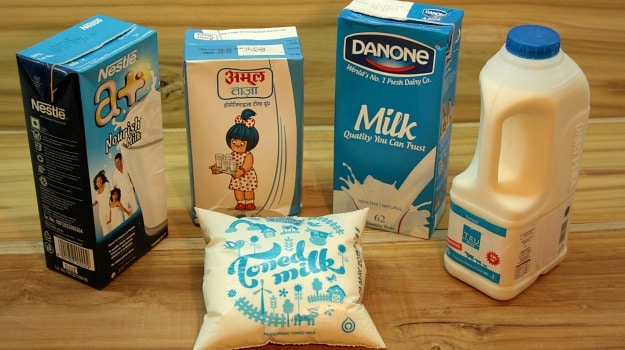
The largest companies like Amul, Mother Dairy, and Nestlé have tiny percentages of the market, and they’ve been there for decades. Market research firms Mintel and Euromonitor declined to release specific market share numbers to CNBC. However, a 2016 piece in The Economic Times of India citing Euromonitor put the figures at about 7 percent for Amul, 3.7 percent for Mother Dairy, and 2.9 percent for Nestlé. In short, tapping into the existing dairy infrastructure is effective but time consuming. Imagine the effort of contacting dozens or hundreds of local and regional dairies, processors, or individual farmers. But establishing a separate supply chain altogether is very expensive — a lesson Danone learned the hard way. And when Danone did get milk, the company focused on the wrong products. Danone pushed plain yogurt and flavored yogurt drinks — popular in places like the U.S. and France with high profit margins to boot. But in India around the time when Danone arrived, yogurt comprised only 7 percent of the dairy consumed.

The real money was in ghee, a type of clarified butter, and plain old fluid milk, a product with razor-thin margins dominated by those hundreds of local small-scale producers. Analysts explained to CNBC the simple reason why Indian consumers shunned Danone’s prepackaged yogurt. And if Indian consumers did want to buy premade yogurt, they had a slew of cheaper options than Danone. Dairy never accounted for more than 10 percent of Danone’s sales in India, a far cry from its global 50 percent. Its specialized nutrition arm picks up the slack, and the company announced a renewed focus on that division when it shuttered its dairy operation. Meanwhile, two of their biggest competitors, Amul and Nestlé, made nearly five billion and 750 million from dairy, respectively. But not all hope is lost for Danone’s dairy in India.
Amul, Nestle, Mother Dairy, Tru & Danone: Which Milk Tastes the ...

In January 2018, the same time that Danone ended its dairy production there, the investment arm of the company announced its part in a 26.5 million dollar investment in Epigamia, an Indian yogurt startup. This could be a sustainable move for Danone in India’s dairy industry because Epigamia offers consumers products that add value onto the plain yogurt they will make cheaply reception . But perhaps most importantly is this: while much of the population still makes yogurt the old-fashioned way, analysts predict that a growing number of consumers will want to buy premade options as they move into corporate jobs in developing urban centers. Very large numbers indeed. If only 5 percent of India’s 1.35 billion people decides to buy prepackaged yogurt, that’s over 67 million consumers — more than the entire population of Danone’s native France.


International Cricket set to return after 117 days

England v West Indies First Test Betting: Tourists vastly ...

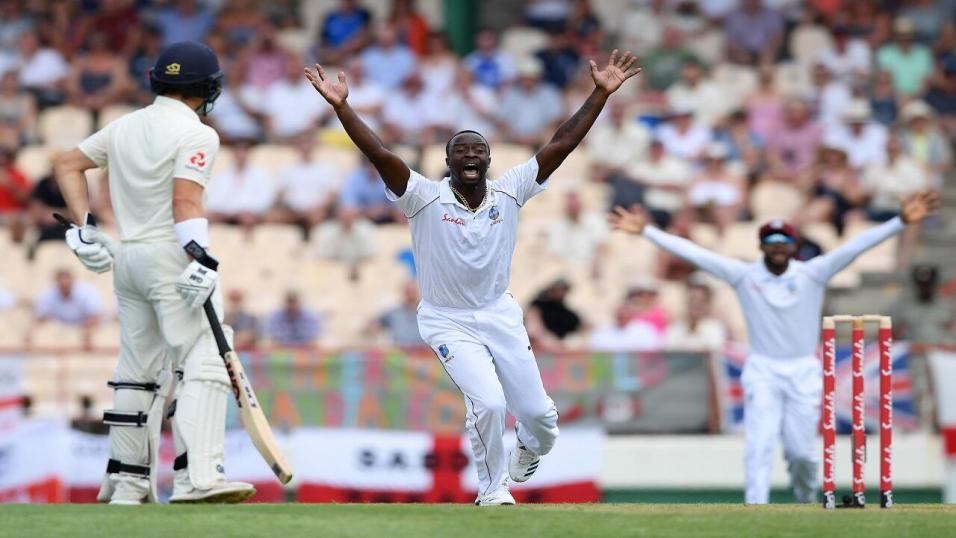
After the corona pandemic brought the world and fields of sports to a standstill, cricket finally has got it’s breathing space. After 117 days, players from England and West Indies will play a historic test match at Southampton in England. With the Corona wave setting in as early as March, Australia and New Zealand last played a test on March 13. Cricket has been interrupted by war, terrorist attacks and political crises. But this series, played amid a global pandemic, will be a genuine first

Cricket would be back but the normal would be different. Covid-19 has forced crowds out of the stadium. Saliva can’t be used to shine the ball and the celebratory hugs and handshakes are too banned. Precautions have been taken all way right from the start. The West Indies squad arrived in England in early June and were quarantined and tested multiple times for Covid-19. Both the squad lived and trained under the bio-secure bubble. The number of DRS reviews has been increased and non-neutral umpires would stand-in as suggested by the Anil Kumble Committee. 

How the teams would shape up?

West Indies and England had always had their bowling departments to the full firepower. Shanon Gabriels, Kemar Roach from the WI and James Anderson, Stuart Broad and Jofra Archer would be all set to be in action. The Batting lineups from both the teams would be up for tests. With Joe Root on a paternity leave to attend to the birth of his child, Stokes stands in as the captain. Zak Crawley, Joe Denly, Sibley and Burns would form a new-look Top 4 for the hosts while Shamarh Brooks would fill the Number 4 spot for the visitors. The squads played intra-squad matches for prep and it remains interesting to see how players from both the squads adapt to the new conditions. 

Squads 

England: Ben Stokes (C), James Anderson, Jofra Archer, Dom Bess, Stuart Broad, Rory Burns, Jos Buttler (wk), Zak Crawley, Joe Denly, Ollie Pope, Dom Sibley, Chris Woakes, Mark Wood.

West Indies: Jason Holder (C), Jermaine Blackwood, Nkrumah Bonner, Kraigg Brathwaite, Shamarh Brooks, John Campbell, Roston Chase, Rahkeem Cornwall, Shane Dowrich (wk), Shannon Gabriel, Chemar Holder, Shai Hope, Alzarri Joseph, Raymon Reifer, Kemar Roach. 

Rain showers are expected for the first two days in Southampton. With the new norms and regulations, the contests would be looked excitingly upon but also closely as the future, for now, stands unclear but this series could just be the guiding light for the cricket associations around the world. As they always say, Cricket would be the winner !

Custodial deaths in India

Custodial violence primarily refers to violence in police and judicial custody. It includes death, rape and torture.

The recent death of a father-son duo from Tamil Nadu, allegedly due to custodial violence, has sparked anger across India.

The outrage and debates around the chilling custodial deaths of a father-son duo in Tamil Nadu sound a bit too familiar to Sayyad Khwaja Hussain, 50. It has been happening for years. But nobody seems to care.

Hussain has seen it up close. He has even been at the centre of this discourse. He is the elder brother of Sayyad Khwaja Yunus, an engineer, who allegedly died in the custody of Mumbai Police in January 2003 at the age of 27. “We keep having the same debates after a case but nothing changes on the ground,” says Hussain, “And if the families want justice, the legal formalities take up your life.”Seventeen years since Khwaja Yunus died in Mumbai Police custody, Indian cops still unaccountable for custodial deaths.Deaths in custody are unfortunately not isolated incidents. Police in India routinely use torture and flout arrest procedures with little or no accountability. The magistrate investigating the recent deaths reported that the police did not cooperate during his inquiry, insulted him, and destroyed evidence.

On June 19, police in Tamil Nadu state detained P. Jayaraj, 60, and his son J. Fenix, 31, allegedly for keeping their mobile phone shop open longer than allowed under Covid-19 lockdown rules. Four days later, both were dead.The deaths of Jayaraj and Fenix happened soon after the killing of George Floyd by a police officer in the United States, igniting protests against police use of excessive force against Black people. It has prompted calls for police reform in India as well, including meaningful steps to ensure accountability. India should ratify the Convention against Torture and Other Cruel, Inhuman or Degrading Treatment or Punishment, and strictly enforce laws and guidelines on arrest and detention set out in the Code of Criminal Procedure.

Reasons Behind Custodial Violence:

Absence of Strong Legislation: India does not have an anti-torture legislation and is yet to criminalise custodial violence, while action against culpable officials remains illusory.

  • The Indian state either denies the existence of torture in the country or defends its resistance to enact a law by claiming there are sufficient provisions in the domestic legal framework to prohibit and penalise torture.
  • These claims however remain superficial and without any such protections.
  • Excessive Force: The use of excessive force including torture to target marginalised communities and control people participating in movements or propagating ideologies which the state perceives as opposed to its stature.
  • Constitutional and Legal Provisions:
  • Protection from torture is a fundamental right enshrined under Article 21 (Right to Life) of the Indian constitution.
  • The right to counsel is also a fundamental right under Article 22(1) of the India constitution.
  • Section 41 of Criminal Procedure Code (CrPC) was amended in 2009 to include safeguards under 41A, 41B, 41C and 41D, so that arrests and detentions for interrogation have reasonable grounds and documented procedures, arrests are made transparent to family, friends and public, and there is protection through legal representation.

What should be done?

  • India should ratify the UN Convention Against Torture: It will mandate a systematic review of colonial rules, methods, practices and arrangements for the custody and treatment of persons subjected to any form of arrest, detention or imprisonment.
    • It will also mean that exclusive mechanisms of redress and compensation will be set up for the victim besides institutions such as the Board of Visitors.
  • Police Reforms: Guidelines should also be formulated on educating and training officials involved in the cases involving deprivation of liberty because torture cannot be effectively prevented till the senior police wisely anticipate the gravity of such issues and clear reorientation is devised from present practices.
  • Implementation of Law Commission of India’s 273rd Report: The report recommends that those accused of committing custodial torture – be it policemen, military and paramilitary personnel – should be criminally prosecuted instead of facing mere administrative action establishing an effective deterrent.

how to make an oreo shake

Oreo shake is something that everyone loves in summer, it is very easy to make and is delicious to eat. In this lock down period as we are confined in our houses and are unable to taste our favorite amul, cornetto or magnum ice creams , lets us make this at home, let us ring some of the creative bells inside us or simply get out of the comfort zone and surprise our parents and loved ones by making this.

It is really easy and requires very basic stuffs as the ingredients like chocolate syrups that are melted hot chocolates. Oreo cookies which are available in the markets you just have to divide them. One cup that means we require two hundred and fifty milli litres of milk and two cups of softened vanilla ice cream. W can make oreo milk shake using banana ice cream for that you just require two bananas extra from that of the ingredients of the simple oreo milk shake.

Firstly we will make oreo milkshake using ice cream for that you have to frees the glasses in the freezer for like fifteen minutes that is until it is mildly frost. Then spread the chocolate syrup inside the cup such that it touches all the part of the cup and then swirl it. So now put one scoop of vanilla ice cream in a mixer so that your milk shake is thick, the add milk to it. lastly add some oreo biscuits so that its chocolate and creamy taste can spread throughout the shake and now switch on the mixer. Now put this in the glass which you have frozen and swirled with the chocolate syrup. Now take some oreo biscuits and chop them until they become fine pieces, now put them on the milk shake as its toppings. See how easy it is to make it.

It is your choice to make banana oreo milk shake where the bananas are chopped and added to the mixer so that you can enjoy the taste of banana in it. You can also be creative by adding straw berries or other ice creams flavors like strawberry, chocolate , butter scotch and extra. It is very easy to make this so you can be creative s much as you want.

If you want to make your day special or the work from home routine has becoming tiring , just making this ( as you can see it is very easy to make and the time it takes is just five minutes) drinking the shake can be refreshing for you and can boost energy to do the work. If you are thinking about fitness means how much fat it would add then don’t be afraid it jus adds a hundred and twenty calories which you can loose by walking for just fifteen minutes. You should try making this at home and enjoy you summers with it also this may give you confidence to try out many other food items so that you can become a master chef till the lock down ends.

How did menstruation become taboo?

Why don’t we call menstruation by its name? why? it is untouchable? why girls are not allowed to go temple kitchen ? is it her fault?

Menstruation stigma is a form of misogyny. Negative taboos condition us to understand menstrual function as something to be hidden, something shameful. And by not naming a thing, we reinforce the idea that the thing should not be named.

Some menstrual customs can act as tools that enhance female autonomy, granting social control and relief from work, among other benefits.

symptoms of periods

  • Abdominal or pelvic cramping.
  • Lower back pain.
  • Bloating and sore breasts.
  • Food cravings.
  • Mood swings and irritability.
  • Headache.
  • Fatigue.
  • Do you ever think how painfully we are tolerating this in this condition you are saying please don’t go in the kitchen n all why? please just because of this you all are here and there is nothing to hide .
  • Menstruation is the natural part of the reproductive cycle in which blood from the uterus exits through the vagina. It is a natural process that first occurs in girls usually between the age of 11 and 14 years and is one of the indicators of the onset of puberty among them. Despite being a phenomenon unique to girls, this has always been surrounded by secrecy and myths in many societies. Taboos surrounding menstruation exclude women and girls from many aspects of social and cultural life. Some of these are helpful, but others have potentially harmful implications.

Many girls and women are subject to restrictions in their daily lives simply because they are menstruating. Not entering the “puja” room is the major restriction among urban girls whereas, not entering the kitchen is the main restriction among the rural girls during menstruation. Menstruating girls and women are also restricted from offering prayers and touching holy books. The underlying basis for this myth is also the cultural beliefs of impurity associated with menstruation. It is further believed that menstruating women are unhygienic and unclean and hence the food they prepare or handle can get contaminated.

Such taboos about menstruation present in many societies impact on girls’ and women’s emotional state, mentality and lifestyle and most importantly, health. Large numbers of girls in many less economically developed countries drop out of school when they begin menstruating. This includes over 23% of girls in India.

In Delhi, there are an estimated 132 public toilets for women, only 8% the number of the 1534 for men.

Low cost sanitary napkins can be locally made and distributed particularly in rural and slum areas as these are the areas where access to the product is difficult. Government of India has approved a scheme to improve menstrual hygiene for 1.5 Crore adolescent girls by distributing low cost sanitary napkins in rural areas under the National Rural Health Mission since 2010.

it is becoming clear that multi-sectoral approaches are needed. We need to link physical infrastructure and water and sanitation projects to health education and reproductive health programs and address the issue in more holistic ways.Menstruation is nothing but a very normal biological phenomenon, and adolescent girls and women should understand that they have the power of procreation only because of this virtue.

Women complain about premenstrual syndrome, but I think of it as the only time of the month that I can be myself.

Indian Railways with new idea of booking tickets

Divya Patni

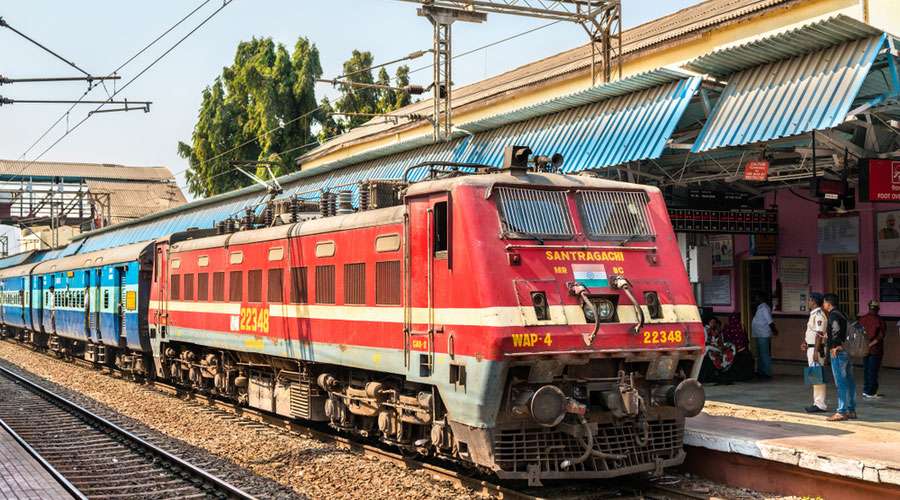
Indian Railways came-up with a new idea as soon as airline customers can book their desired seat for their convenience and comfort. Railways recently floated a Qualization request inviting private organizations to use passenger trains on its network. The decision to charge passengers for these services will be for private use, officials said. In the document, he said that the taxpayers, depending on their financial situation, would have to provide the bulk of the proceeds of the proposal in the process. While Railways has given private players the freedom to adjust the fare to be paid to passengers, they will have the freedom to explore new revenue generating methods, according to the RFQ. Interpretation of the revenue, considered is as below. Any money that comes to a concessionaire a private corporation from passengers or other company from the provision of the following passenger services as a result of rushing trains under the concession agreement: the amount printed on the ticket purchase price from the various seats, luggage, luggage, luggage, package (if not included in the ticket ticket) means the RFQ. Price from on-board services such as – catering, roll roll, complimentary Wi-fi content if not included in the ticket ticket. Any amount resulting from the concessionaire due to advertising, branding and naming rights in accordance with the implied consent agreement. The chairman of the Railway Board at a press conference expressed concern that the prices of private train tickets would be expensive and said that they would be marketed and subject to competitive pricing. In its first railway initiative, Indian Railways has requested proposals from private companies to run 151 modern passenger trains of national routes across the project that will cost the private sector a total of Rs 30,000. The private organization will be free to purchase trains and trains from a source of choice, provided that those trains and trains comply with the specifications and standards specified in the consent agreement. However, the permit agreement will include provisions relating to the demand for compelling domestic product in India for a period of time. Railways also said that the running time taken by a private train from the train station to its destination would be comparable to the fast train running between the same stations. The railway lines will provide non-discriminatory access to trains operated by private entities without the aforementioned new train leaving between the same stations within 60 minutes from the private train. Each train must have at least 16 trainers equal to 384 meters in length, buffer to buffer and a maximum of the longest passenger train operating on that route. These trains will be run at the speed of 160 kmph so, the passengers can reach their destination faster than before and more efficiently. Also, People can see significant improvement in the railway community department and will be able to book tickets online rather than standing for hours at ticket counter, This will help Indian Railways as well as its consumers to use services in a more polished way and faster access to it. Indian Railways will include internet connectivity in all coaches so that people can access online content such as surfing internet or watching their favorite movies on the go.

Fight your distractions and become successful

Vaishal Singh

Kill laziness, get out of your bed and start working right away for your dreams. Don’t let your emotions consume you, do not let your emotions hinder your decisions because if you’ll let them doing this then everytime you won’t be taking the decisions but your emotions will, so try to control your emotions and overpower them. Though, emotions are associated with your feelings they are not things so it’s not easy to control your feelings but emotions are something which come out of us and we can definitely control them, now, what makes you feel ungrounded or unhappy is failing the execution, something that you decided to do or wanted to do and now it couldn’t got done because your laziness overpowered your mind and told you to procrastinate it and then the burden of not getting what you wanted, starts to put pressure on yourself, the biggest problem of humans is Idealization, we human beings have an inborn tendency of idealizing the things, we create our own world of thoughts where we creates an imaginary world around us and start to assume that whatever we’ve thought would be easy to have, but forget about working towards it, and then overtime the lack of execution kills your dreams and puts pressure on us, even though we, the human beings have an ideal version of ourselves too, we set our ideal self’s standards too high sometimes, that we are unable meet that standard and this creates a pressure on ourselves which ends up leaving us sad. So, to solve this, we should break our long term goal into several short term goals and at the fulfillment of each short term goal we should feel happiness and satisfaction.

Now, the point here is to analyse your priorities in life and work according to them, set your long term goal and break it down into several short term goals, and do not associate your happiness with results, just enjoy the process of doing. And just avoid all the unneccsary things from your life, and learn to tackle your emotions because too much emotions can distract you from reaching your goals.

https://images.unsplash.com/photo-1519834785169-98be25ec3f84?ixlib=rb-1.2.1&ixid=eyJhcHBfaWQiOjEyMDd9&auto=format&fit=crop&w=1000&q=80

How did menstruation become taboo?

Why don’t we call menstruation by its name? is it ashamed ?

A girl who has periods cannot enter temple because she is impure ,A girl who has periods cannot touch anything that is offered to god but Isn’t periods given by god himself ?

so how the is it impure.

Menstruation is the natural part of the reproductive cycle in which blood from the uterus exits through the vagina. It is a natural process that first occurs in girls usually between the age of 11 and 14 years and is one of the indicators of the onset of puberty among them. Despite being a phenomenon unique to girls, this has always been surrounded by secrecy and myths in many societies. Taboos surrounding menstruation exclude women and girls from many aspects of social and cultural life. Some of these are helpful, but others have potentially harmful implications.

Culturally in many parts of India, menstruation is still considered to be dirty and impure. The origin of this myth dates back to the Vedic times and is often been linked to Indra’s slaying of Vritras. For, it has been declared in the Veda that guilt, of killing a brahmana-murder, appears every month as menstrual flow as women had taken upon themselves a part of Indra’s guilt. Further, in the Hindu faith, women are prohibited from participating in normal life while menstruating. She must be “purified” before she is allowed to return to her family and day to day chores of her life. 

Many girls and women are subject to restrictions in their daily lives simply because they are menstruating. Not entering the “puja” room is the major restriction among urban girls whereas, not entering the kitchen is the main restriction among the rural girls during menstruation. Menstruating girls and women are also restricted from offering prayers and touching holy books.

World Menstrual Hygiene Day is observed on May 28. The main idea behind marking this day is to change the social stigma associated with menstruation.

The date May 28 was chosen to observe the day because on an average the menstrual cycle for most women is 28 days and the menstruation period for most women is for five days. Hence, the date was kept as 28/5.

What are the symptoms of menstruation?

  • Abdominal or pelvic cramping.
  • Lower back pain.
  • Bloating and sore breasts.
  • Food cravings.
  • Mood swings and irritability.
  • Headache.
  • Fatigue.

Do people ever think what the situation we all girls are facing during periods time ? No but still they have to speak useless .

at this movement you have to support by giving chocolates or whatever she wants just because of her mood swings.

There are health and hygiene issues also to consider relating to girls and menstruation. Over 77% of menstruating girls and women in India use an old cloth, which is often reused. Further, 88% of women in India sometimes resort to using ashes, newspapers, dried leaves and husk sand to aid absorption. Poor protection and inadequate washing facilities may increases susceptibility to infection, with the odor of menstrual blood putting girls at risk of being stigmatized. The latter may have significant implications for their mental health.we have to be very careful in this sanitary is a basic needs for us.

it is becoming clear that multi-sectoral approaches are needed. We need to link physical infrastructure and water and sanitation projects to health education and reproductive health programs and address the issue in more holistic ways. Menstruation is nothing but a very normal biological phenomenon, and adolescent girls and women should understand that they have the power of procreation only because of this virtue.

OnePlus launches its Tv at affordable prices in India

Divya Patni

Jaipur: OnePlus kicked off its competition in the market in the department of TV journey with the debut of premium QLED smart TVs earlier last year. However,  Pricing in India will be consciously well put together market, and OnePlus seems to behave finally understood this. Thus, OnePlus has decided to take the real competition against Xiaomi, Vu, and others in the budget segment market with the launch of its U0 and Y- series smart TVs in India nearly about this week. The new U- and Y- series joins the existing OnePlus TV Q1 series. They do not include QLED panels in it. The Y- series includes a 32-inch and 43-inch variants while the U- series would be official will only with a single 55-inch smart TV. If we talk about the star of the segment, the 55-inch 4k OnePlus TV U1, followed bt the Y-series in India.

OnePlus TV U1:55-inch 4K TV

The Chinese manufacturer OnePlus may be looking to price its smart TVs more aggressively in the market but it’s not losing out the premium factor. Will be featuring a bezel-less LED panel in the front with a thicker bottom bezel to accommodate the Oneplus branding. The rear of the TV looks similar to the Q1 series of TVs with a brushed metal finished up-top and a carbon fiber cover at the bottom on the TV.

Display Specs

This television will grab its attention with its display at its front, The OnePlus TV U1 will include a 55-inch 4k LED panel with a  resolution of 3840×2160 display resolution with 95 percent of screen to body ratio and 93 percent of DCI-P3 color gamut support. It also has HDR10+ as well as Dolby Vision certification. That’s not all though. One Plus has also included the same Gamma Engine found internationally in the Q1 series to offer features like MEMC, dynamic contrast Super Resolution, noise reduction, and more. MEMC also is known as Motion Estinatimation, Motion Compensation. It’s a feature that helps smoothen out the frames ad comes in super handy for viewing cricket matches and other sports or playing games on it.

Internals and Software

Under the hood, the 55-inch OnePlus TV U1 is powered by a quad-core Cortex A53 MediaTek MT8587 processor clocked up to 1.5GHz and Malu-G51 MP4 storage, along with Android TV 9.0 out of the box. It’s the stock Android TV UI that we’ve seen with the Q1 series, with Oxygen Play, a new Data Save Plus feaure, and a slew of pre-installed media streaming apps such as Netflix, Prime Video, Disney+ Hotstar, MX Player, Jio Cinema, and more application will be pre-installed in the firmware of the TV. OnePlus TVs also come with music streaming apps, including JioSaava and Spotify pre-installed. The company seens to have expanding its partnership to include more apps out of the box and lower the cost for itself. This is a good tie to reveal that the OnePlus TV U1 is equipped with 30W speakers and four units rotated at 90-degrees, with two full-range full speakers and two dedicated tweetrs to cover high frequencies.

The Television itself can get the responses from the audience itself by its aggressive pricing and market strategies in the Indian Market in front of brand like Xiaomi, Vu and many more other brands that are playing well in the budget television market.