Collapsing Indian Healthcare Governance

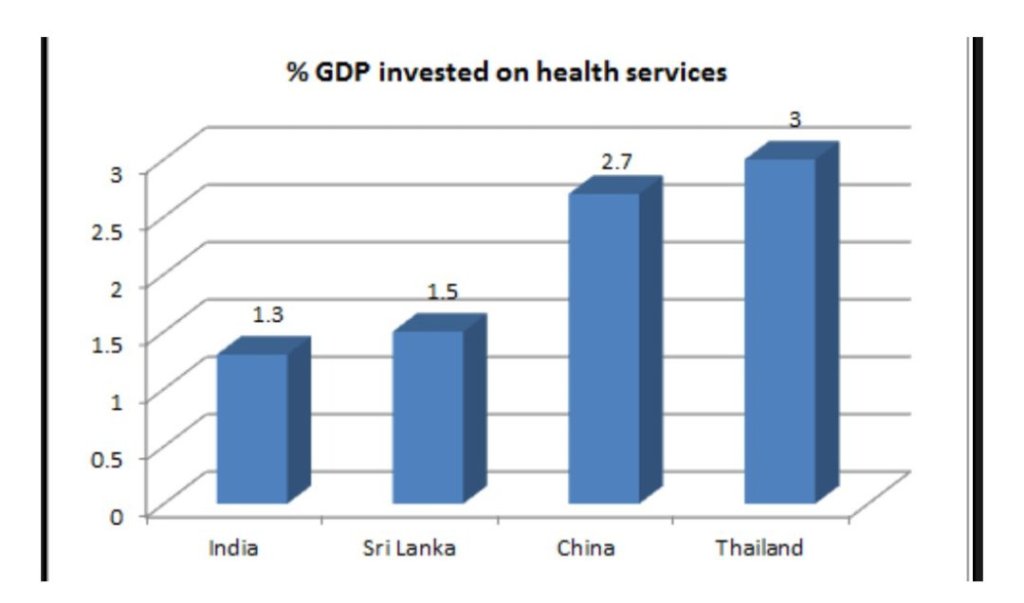
Public health is a core components of democracy. Contemporary Health policies are unenable to build coherence with SDGs. It reflected the major execution constraints. Health Policies of India always been a disappointment point; the indecisive nature of Governance dragged country on the dangerous edge. According to world bank, India spend in Public health 3.54% of their GDP on 136.64cr demographic capacity. It is the lowest budget in World. Comparing to countries like Nepal, Myanmar, Haiti, South Sudan, Algeria and Cuba invested more than India; all spend at least 6% of their GDP in public health. Other developed nations like UK, Germany, France spend more than 10% and USA give 16% of their GDP to health care sector.

Source: Commonwealth health hub

National health policy suggested that expenditure on health by states should be increased to up to 8% but none of the states ready to invest more than 5.4% of total budget in healthcare system. Spending less in health sector decrease our capacity to fight against the pandemic in most difficult times. We require to spend more, design appropriate Policy and most importantly implement and monitor those policies in structured manner for fruitful results.

National health mission was to provide health benefits in Rural(2005) & Urban (2013). Main functions of this programme are strengthening health system, prevention of communicable and non – communicable diseases, and create universal accessibility , affordable & quality healthcare service to all citizens in urban and rural areas. This programme was extended because of the tremendous outcome which only displayed on papers but still governance needs to played their proper role in designing and implementing accurate policy. India faces several challenges in the path of addressing health crisis; India lacks strategic Policy, constructive concepts, regulation and work ethics.

Source: ncbi.nih.gov.in

National health policy 1983 was the failure; cannot Considered to revive the healthcare crisis. Infact, liberalization opened the direction to move towards the public private partnership to achieve health services to all. To providing Healthcare services to urban poor is as essential as in rural areas. ORF mention in their report on URBAN HEALTH GOVERNANCE IN INDIA: A POLICY ROUNDTABLE addressing health as central component of urban planning and governance. Migration from rural to urban areas becoming extremely important aspect of urbanization, where people believes urban healthcare services are far more better than rural; but the urban system as crucially defected as the rural area, it raises question on the governance structure. Indian Health system cannot deal with diseases like tuberculosis, malaria, HIV+AIDS , deficiency of vitamins. Governance have to acknowledge the basic problem in health sector then only can able to build the health policy.

PUBLIC HEALTH ISSUES LEAD TO THE HEALTH CRISIS

National health policy 1983, 2002 and 2017 unleash to achieve an acceptable standard of good health system by upgrading infrastructure in existing public health; but it did not acquired the beneficial results out of these policies because Problem lying in Health Governance. Regulatory mechanism, Monitoring and evaluation of health policy aspects are not effectively pressuring for powerful outcomes. In India, 23% of sick population, 7% below poverty line population are not capable to afford Healthcare.
Source: Overview

According to spending in healthcare, India rank extremely low, estimation of spending Rs 3 per person on per day that count 1.02% of the GDP, meanwhile other countries average spending is 6%. WHO in Health financing profile 2017 depicted 67.78% of aggregate expenditure was paid out of pocket, on the other hand, the world average is 18.2%. let’s examine state – wise spending in public health.

Source: Overview

Bihar spend Rs 491 per capita on health (on 12.7cr population) less than half the Indian average spending 1.33. Madhya Pradesh spend Rs716 (on 86.8cr demography) and Uttar Pradesh Rs 733 (on 24.6cr population). On the contrary, we see complete different picture in Mizoram who spend Rs 5,862 of 4.2 % of it’s GDP (12.6cr population), Arunachal Pradesh Rs 5,177 (1.6% population) and Sikkim Rs 5126 (6.63 lakh). Two different spectrum in one country where few states neglect their public healthcare whereas others more inclined towards ensuring public health to their people.

Due to neglection of health sector, states who spend less suffering the most during Covid -19. These states had to faced the situation like lack of beds, hospital services, medical staff and medical equipments. This problem occurred because of years of neglection in health sector, health policy evaluation process was not used as weapon to counter the health crisis in India.

Lack of allocation to healthcare and lack of Governance capability caused the much bigger crisis. Covid -19 is global pandemic but it made Indian healthcare system came on it’s knees; when capital of country facing run out of beds, desperate hunt for oxygen cylinder, medical supplies it’s showed Indian healthcare system is rotten, toilsome and intricate.

Our Government and Governance is solemn enough to diminishing the health crisis. Capital of country not capable to fight against sudden health crisis then we can presuppose the conditions in rural areas. In this situation, Governance need to evaluate their mistakes that’s how Governance will play it’s sophisticated part, need some measures to ensure the public healthcare in entire country, should not resisted to only urban health centres.

Corruption in health sector, lowest quality health programme, poor cooperation between public & private sectors, lack of health awareness and no accessibility to medicines or testing machine services created cluster in health sector; which  reflected as more weakness during Covid -19. When India became epicenter of global pandemic during dangerous second wave; India made international headline. The scenes of families from hospital were horrified. It also depicted how Government failed us.

Government and bureaucrats have no capability to overturn the crisis and find relevant solution in serious conditions in country. Indian government lack leadership quality, Political will. Governance cannot work until top political leaders and bureaucrats show some credibility to disperse the crisis. India estimated 4.34 lakh death due to covid-19. Health crisis is not new in india, Government never capable to find dynamic Policy to eradicate diseases like Tuberculosis, Malaria, HIV+AIDS. Tuberculosis  caused 220,000 death every year. WHO estimated 2.64 million TB cases in 2020. KPMG report revealed that 74% doctors practice in urban areas this simply means rural area lack primary healthcare treatment facility. India has huge scarcity of doctors, nurses, paramedics and testing machines especially in rural areas. That’s how migration become prominent from rural to urban. WHO also suggested 1 doctor for 1000 people meaning 1:100 but India has 1:1445.

National TB Elimination Programme was not as effective as thought to obliterate the deadly disease from the country; where all other nation found the way to kill the health crisis. We need to revive the health policy structure and find new future oriented health policy to counter any sudden global health crisis. Let’s discuss few criteria to resist the health crisis in India.

RECOMMENDATIONS TO BUILD COLLAPSING HEALTH SYSTEM

PUBLIC PRIVATE PARTNERSHIP

Last two years shook Indian healthcare system, demanded to take evident steps in healthcare sector. This is a accurate time to transform the ancient health policy and bring unique & innovative public health programme concerning the target population. Two main components of health crisis are affordability and accessibility which majority of population cannot reach to. Well governed PPP is the direction to improve the Indian healthcare system; through PPP India have seen success in the fields such as education, urban development and infrastructure.
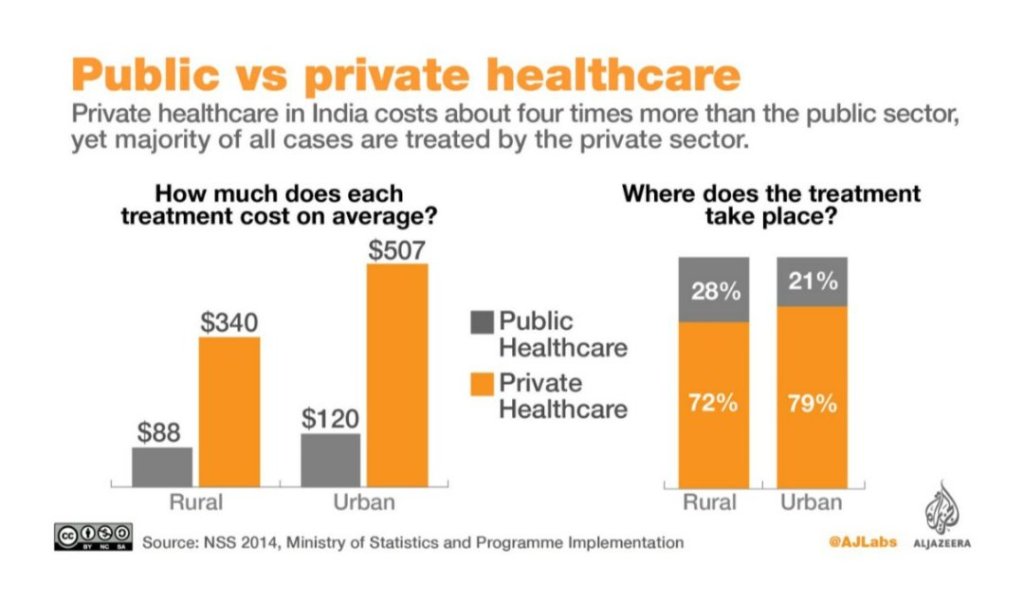
Source: Alijazeera

• PPP provide resources to Government, which will bring experience and finances of the private sector. It will create a bridge between affordability and accessibility to all citizens.

• PPP ensures the expertise, finances, affordability, technology, specialist doctors.

• Now, one aspect need to consider that Public – Private sector will bring the resources but how, where, what to utilize at what place and in how much quantity for that Non – Government Organization can play the role of agent to fulfill the necessary requirements & provide research to private sector.

• Non – government organization can play essential role to ensure the PPP goals spread to all citizens. These organization overlook the formulation, Implementation and functioning of PPP. It can be great gap filler between affordability and accessibility.

• But, PPP should manage in control manner make sure by Governance it’s roles and functions otherwise PPP increase the burden of expenditure on common citizen. Governance needs to evaluate time to time the working mechanisms of PPP.

• Also, it is necessary to collaborate with non profit organization to maximize the result of PPP. Need to tackle down the any coming vagueness in PPP, maintain regulation.

INCREASE ALLOCATION TO HEALTHCARE

India must increase the spending on public healthcare. It should not differ state to state. Each state has to spend good  amount of their GDP in Public health. Centre Government construct one same Affordable healthcare Programme for all states. Through INTER – GOVERNMENTAL RELATION center Government ensure overlapping authority model to communicate. Govt should spend at least more than 6% of their GDP. It will provide huge access to necessary medical services in the country.

NATIONAL FREE MEDICATION AND COUNSELING

Center and state government incite medication facility including counseling and spread awareness regarding health issues of human body. Make citizens more conscious about their body. Now, this method has challenging step concerning in rural areas with help of NGOs, ASHA workers, door to door awareness is necessary to spread the words about the sanitation, coronavirus precautions, HIV+AIDS awareness and TB awareness programme. In digitalized world, Mobile clinic can play great  outlay of serving information of diseases to the people. Lunch effective powerful awareness programme in urban and rural areas Ensuring the awareness reaching to all citizens in country.  

Center and state government incite medication facility including counseling and spread awareness regarding health issues of human body. Make citizens more conscious about their body. Now, this method has challenging step concerning in rural areas with help of NGOs, ASHA workers, door to door awareness is necessary to spread the words about the sanitation, coronavirus precautions, HIV+AIDS awareness and TB awareness programme. In digitalized world, Mobile clinic can play great  outlay of serving information of diseases to the people. Lunch effective powerful awareness programme in urban and rural areas Ensuring the awareness reaching to all citizens in country.

CONCLUSION

Health Governance is one kind of Governance that we must deal with caution. Good Public Health Governance reflect the sincerety of Government ; it ensure the transparency, accountability and promote citizen centric Approach. Government determine universal Public healthcare no resistance to PAN areas. Providing Healthcare to citizens consider as enriching the immunity of country. Policy makers recite properly the Implementation part while performing the health policy; Keep the track of Monitoring then only we can decisively conclude the success of health policies.

Source: Twitter

April 22 Earth Day: A Few Points from Academic Points of View

Every year 22 April is celebrated as Earth Day across the world.  Earth Day symbolizes the anniversary of the birth of the modern environmental movement in 1970. The theme of this year Earth Day 2022 is Invest in Our Planet.

We all are surviving and eking out our livelihoods from this earth so the earth is nurturing us and we must be grateful to earth. In all religions,​the importance of earth has been highlighted.  In Hindu ‘Bhumi Puja/Pujan’ is known to many. In general,​it means the tradition of offering prayers to Mother Earth before beginning construction work.

A few lines about the earth on Earth Day I am highlighting from the website nationalgeographic.com for the benefit of readers.

With a radius of 3,959 miles, Earth is the fifth largest planet in our solar system, and it’s the only one known for sure to have liquid water on its surface. Earth orbits the sun once every 365.25 days. Since our calendar years have only 365 days, we add an extra leap day every four years to account for the difference.

Though we can’t feel it, Earth zooms through its orbit at an average velocity of 18.5 miles a second. During this circuit, our planet is an average of 93 million miles away from the sun, a distance that takes light about eight minutes to traverse.   Almost 70 percent of Earth’s surface is covered in oceans of liquid water that average 2.5 miles deep. These bodies of water contain 97 percent of Earth’s volcanoes and the mid-ocean ridge, a massive mountain range more than 40,000 miles long (nationalgeographic.com).

According to the website earthday.org/ for Earth Day 2022, we need to act (boldly), innovate (broadly), and implement (equitably). The Great Global Cleanup is a worldwide campaign to remove billions of pieces of trash from ​neighbourhoods, beaches, rivers, lakes, trails, and parks — reducing waste and plastic pollution, improving habitats, and preventing harm to wildlife and humans. It is also evident from the website that the fashion industry is responsible for over 8 percent of total greenhouse gas emissions.  Sustainable Fashion refers to a clothing supply chain that is ecologically and socially responsible. Now is the opportunity to shift the industry and consumers away from the fast fashion model and toward sustainable practices in sourcing, production, distribution, marketing, and consumption. While discussing Earth Day a case from Hyderabad may be referred (earthday.org/).   

In the context of Earth Day, a case from Hyderabad, India may be highlighted.  Pragati Resorts was established by a dynamic Telugu person Dr. G.B.K Rao presently CMD of the Pragati Resorts Group gets enormous credit as this bio-diversity park was established in 1994 near Hyderabad city which was totally barren with the awful climatic conditions before 1994. The water in the area was at an awfully low level due to the mining of limestone which made the land unfit for cultivation even. Dr. G.B.K Rao selected the land-based on three criteria – i) it is away from the city and also away from the highway, ii) the area is totally non-cultivable /barren, and iii) totally very low level of water. Now, the area has been turned into heaven and the people call it “Pragati is Heaven on Earth”. Around 800 varieties of herbal heritage and medicinal plants, other rare mother plants, and trees inter alia are Kalpavriksha (also known as Kalpataru), have been planted in Pragati. This is spread over an area of 2500 acres.  In the Resorts, there is a provision of ‘Amrutha Ahaaram’ (meaning Amrita/lifesaving foods), and this special 3-day package has been designed to boost immunity levels naturally to fight against any type of virus or bacteria.

On Earth Day, 2022 a famous name from India who is an eminent environmentalist also should be mentioned. He is Professor K. Purushotham Reddy, a former Professor of Osmania University, Hyderabad. In many forums across the country, he has highlighted the importance of the environment for the survival of human beings by discarding the water, air, and noise pollution.  And for this, he organized peaceful agitation also to save mother Earth.

On Earth Day, 22 my Salute to the people, who have been working to make Earth Clean and Green and also helping to make it free from pollution.  In this regard, two names which I have already mentioned, I am reiterating Dr. G.B.K Rao and Professor K. Purushotham Reddy. 

April 22 Earth Day: A Few Points from Academic Points of View

Every year 22 April is celebrated as Earth Day across the world.  Earth Day symbolizes the anniversary of the birth of the modern environmental movement in 1970. The theme of this year Earth Day 2022 is Invest in Our Planet.

We all are surviving and eking out our livelihoods from this earth so the earth is nurturing us and we must be grateful to earth. In all religions,​the importance of earth has been highlighted.  In Hindu ‘Bhumi Puja/Pujan’ is known to many. In general,​it means the tradition of offering prayers to Mother Earth before beginning construction work.

A few lines about the earth on Earth Day I am highlighting from the website nationalgeographic.com for the benefit of readers.

With a radius of 3,959 miles, Earth is the fifth largest planet in our solar system, and it’s the only one known for sure to have liquid water on its surface. Earth orbits the sun once every 365.25 days. Since our calendar years have only 365 days, we add an extra leap day every four years to account for the difference.

Though we can’t feel it, Earth zooms through its orbit at an average velocity of 18.5 miles a second. During this circuit, our planet is an average of 93 million miles away from the sun, a distance that takes light about eight minutes to traverse.   Almost 70 percent of Earth’s surface is covered in oceans of liquid water that average 2.5 miles deep. These bodies of water contain 97 percent of Earth’s volcanoes and the mid-ocean ridge, a massive mountain range more than 40,000 miles long (nationalgeographic.com).

According to the website earthday.org/ for Earth Day 2022, we need to act (boldly), innovate (broadly), and implement (equitably). The Great Global Cleanup is a worldwide campaign to remove billions of pieces of trash from ​neighbourhoods, beaches, rivers, lakes, trails, and parks — reducing waste and plastic pollution, improving habitats, and preventing harm to wildlife and humans. It is also evident from the website that the fashion industry is responsible for over 8 percent of total greenhouse gas emissions.  Sustainable Fashion refers to a clothing supply chain that is ecologically and socially responsible. Now is the opportunity to shift the industry and consumers away from the fast fashion model and toward sustainable practices in sourcing, production, distribution, marketing, and consumption. While discussing Earth Day a case from Hyderabad may be referred (earthday.org/).   

In the context of Earth Day, a case from Hyderabad, India may be highlighted.  Pragati Resorts was established by a dynamic Telugu person Dr. G.B.K Rao presently CMD of the Pragati Resorts Group gets enormous credit as this bio-diversity park was established in 1994 near Hyderabad city which was totally barren with the awful climatic conditions before 1994. The water in the area was at an awfully low level due to the mining of limestone which made the land unfit for cultivation even. Dr. G.B.K Rao selected the land-based on three criteria – i) it is away from the city and also away from the highway, ii) the area is totally non-cultivable /barren, and iii) totally very low level of water. Now, the area has been turned into heaven and the people call it “Pragati is Heaven on Earth”. Around 800 varieties of herbal heritage and medicinal plants, other rare mother plants, and trees inter alia are Kalpavriksha (also known as Kalpataru), have been planted in Pragati. This is spread over an area of 2500 acres.  In the Resorts, there is a provision of ‘Amrutha Ahaaram’ (meaning Amrita/lifesaving foods), and this special 3-day package has been designed to boost immunity levels naturally to fight against any type of virus or bacteria.

On Earth Day, 2022 a famous name from India who is an eminent environmentalist also should be mentioned. He is Professor K. Purushotham Reddy, a former Professor of Osmania University, Hyderabad. In many forums across the country, he has highlighted the importance of the environment for the survival of human beings by discarding the water, air, and noise pollution.  And for this, he organized peaceful agitation also to save mother Earth.

On Earth Day, 22 my Salute to the people, who have been working to make Earth Clean and Green and also helping to make it free from pollution.  In this regard, two names which I have already mentioned, I am reiterating Dr. G.B.K Rao and Professor K. Purushotham Reddy. 

India’s friendship with Russia: Myth or reality

Russia and india Images, Stock Photos & Vectors | Shutterstock
Russia and India Images, Stock Photos & Vectors | Shutterstock

India and Russia is said to share cordial relations and let us check the reality of this friendship

International relations have gained immense significance since time immemorial. India also handles its external relations with due importance. This has made India a significant player in international relations by establishing close relations with biggest nations of the world. One of the most important relation among them are India’s close ties with Russia.

 Russia and its forefather USSR have always stood with India since independence. There were several instances when the socialist nation has offered support both ideologically as well as in person. Let us look into some such instances:

IRIGC

The Indo-Russian Inter-Governmental Commission (IRIGC) is a significant institution that manages the intergovernmental activities between both countries. It is considered as the steering committee of Indo-Russia relations. It has two wings, the first covering Trade, Economic, Scientific, Technological and Cultural Co-operation and is normally co-chaired by the deputy prime minister of Russia and the External affairs minister of India. The second wing of the commission deals with Military Technical Co-operation and is co-chaired by the respective Defense ministers of two countries. Both parts of IRIGC meet annually.

SPACE SECTOR

Historically, there has been a long history of cooperation between the Soviet Union and India in space. Examples include Aryabhata , India’s first satellite, was launched by the Soviet Union on 19 April 1975 from Kapustin Yar using a Kosmos 3M launch vehicle. Under Interkosmos space program, Rakesh Sharma was also launched by the Soviet Union. 

DEFENCE ASSISTANCE

The Soviet Union was an important supplier of defense equipment for several decades, and this role has been inherited by the Russian federation. Russia 68%, USA 14% and Israel 7.2% are the major arms suppliers to India (2012-2016), and India and Russia have deepened their make in India defense manufacturing cooperation by signing agreements for the construction of naval frigates, Twin engine utility helicopters, Brahmos Cruise missiles and such joint venture initiatives. The co-operation is not limited to a buyer-seller relationship but includes joint research and development, training, service to service contacts, including joint exercises.

TRADE PARTNERSHIP

Bilateral trade between both countries is concentrated in key value chain sectors. These sectors include highly diversified segments such as aerospace, machinery, electronics, fertilizers, precious stones, oil, etc. Both Governments have jointly developed an economic strategy that involves using a number of economic components to increase future bilateral trade. Also, a Joint study group has been appointed to study the prospects of free trade.

POLITICAL RELATIONS

Irrespective of the changing government policies both countries have supported each other in political matters. Non participation of India in UN meetings to condemn Russian invasion of Ukraine and USSR’s support during Bangladesh war of 1971 are few examples. The socialist idea of planning is also an example of India’s relation with Russia and USSR.

NUCLEAR DEALS AND ENERGY SECTOR

On 7 November 2009, India signed a new nuclear deal with Russia apart from the deals that were agreed upon by the two countries earlier. India and Russia are in discussion for construction of two more nuclear power units at Kudankulam. Two units of the Kudankulam nuclear power plant are already operational. Similarly, several initiatives have been taken up by these nations collectively to ensure energy efficiency.

RUPEE ROUBLE AGREEMENT

Recently Russia has signed an agreement by which imports from Russia could be paid in Rupees. This was in response to India’s support for Russia even during trade restrictions from nations around the world. For the rupee-rouble mechanism to be implemented, Indian importers would pay for goods to the accounts of Russian banks in India and they in turn would make the payment in roubles to the Russian exporters.

The countries have agreed to carry forward a special and privileged strategic relationship. Irrespective of the changing governments both nations have stood in support of each other during the hardest times.

Reference: Wikipedia

India’s friendship with Russia: Myth or reality

Russia and india Images, Stock Photos & Vectors | Shutterstock
Russia and India Images, Stock Photos & Vectors | Shutterstock

India and Russia is said to share cordial relations and let us check the reality of this friendship

International relations have gained immense significance since time immemorial. India also handles its external relations with due importance. This has made India a significant player in international relations by establishing close relations with biggest nations of the world. One of the most important relation among them are India’s close ties with Russia.

 Russia and its forefather USSR have always stood with India since independence. There were several instances when the socialist nation has offered support both ideologically as well as in person. Let us look into some such instances:

IRIGC

The Indo-Russian Inter-Governmental Commission (IRIGC) is a significant institution that manages the intergovernmental activities between both countries. It is considered as the steering committee of Indo-Russia relations. It has two wings, the first covering Trade, Economic, Scientific, Technological and Cultural Co-operation and is normally co-chaired by the deputy prime minister of Russia and the External affairs minister of India. The second wing of the commission deals with Military Technical Co-operation and is co-chaired by the respective Defense ministers of two countries. Both parts of IRIGC meet annually.

SPACE SECTOR

Historically, there has been a long history of cooperation between the Soviet Union and India in space. Examples include Aryabhata , India’s first satellite, was launched by the Soviet Union on 19 April 1975 from Kapustin Yar using a Kosmos 3M launch vehicle. Under Interkosmos space program, Rakesh Sharma was also launched by the Soviet Union. 

DEFENCE ASSISTANCE

The Soviet Union was an important supplier of defense equipment for several decades, and this role has been inherited by the Russian federation. Russia 68%, USA 14% and Israel 7.2% are the major arms suppliers to India (2012-2016), and India and Russia have deepened their make in India defense manufacturing cooperation by signing agreements for the construction of naval frigates, Twin engine utility helicopters, Brahmos Cruise missiles and such joint venture initiatives. The co-operation is not limited to a buyer-seller relationship but includes joint research and development, training, service to service contacts, including joint exercises.

TRADE PARTNERSHIP

Bilateral trade between both countries is concentrated in key value chain sectors. These sectors include highly diversified segments such as aerospace, machinery, electronics, fertilizers, precious stones, oil, etc. Both Governments have jointly developed an economic strategy that involves using a number of economic components to increase future bilateral trade. Also, a Joint study group has been appointed to study the prospects of free trade.

POLITICAL RELATIONS

Irrespective of the changing government policies both countries have supported each other in political matters. Non participation of India in UN meetings to condemn Russian invasion of Ukraine and USSR’s support during Bangladesh war of 1971 are few examples. The socialist idea of planning is also an example of India’s relation with Russia and USSR.

NUCLEAR DEALS AND ENERGY SECTOR

On 7 November 2009, India signed a new nuclear deal with Russia apart from the deals that were agreed upon by the two countries earlier. India and Russia are in discussion for construction of two more nuclear power units at Kudankulam. Two units of the Kudankulam nuclear power plant are already operational. Similarly, several initiatives have been taken up by these nations collectively to ensure energy efficiency.

RUPEE ROUBLE AGREEMENT

Recently Russia has signed an agreement by which imports from Russia could be paid in Rupees. This was in response to India’s support for Russia even during trade restrictions from nations around the world. For the rupee-rouble mechanism to be implemented, Indian importers would pay for goods to the accounts of Russian banks in India and they in turn would make the payment in roubles to the Russian exporters.

The countries have agreed to carry forward a special and privileged strategic relationship. Irrespective of the changing governments both nations have stood in support of each other during the hardest times.

Reference: Wikipedia

The Rashomon Effect

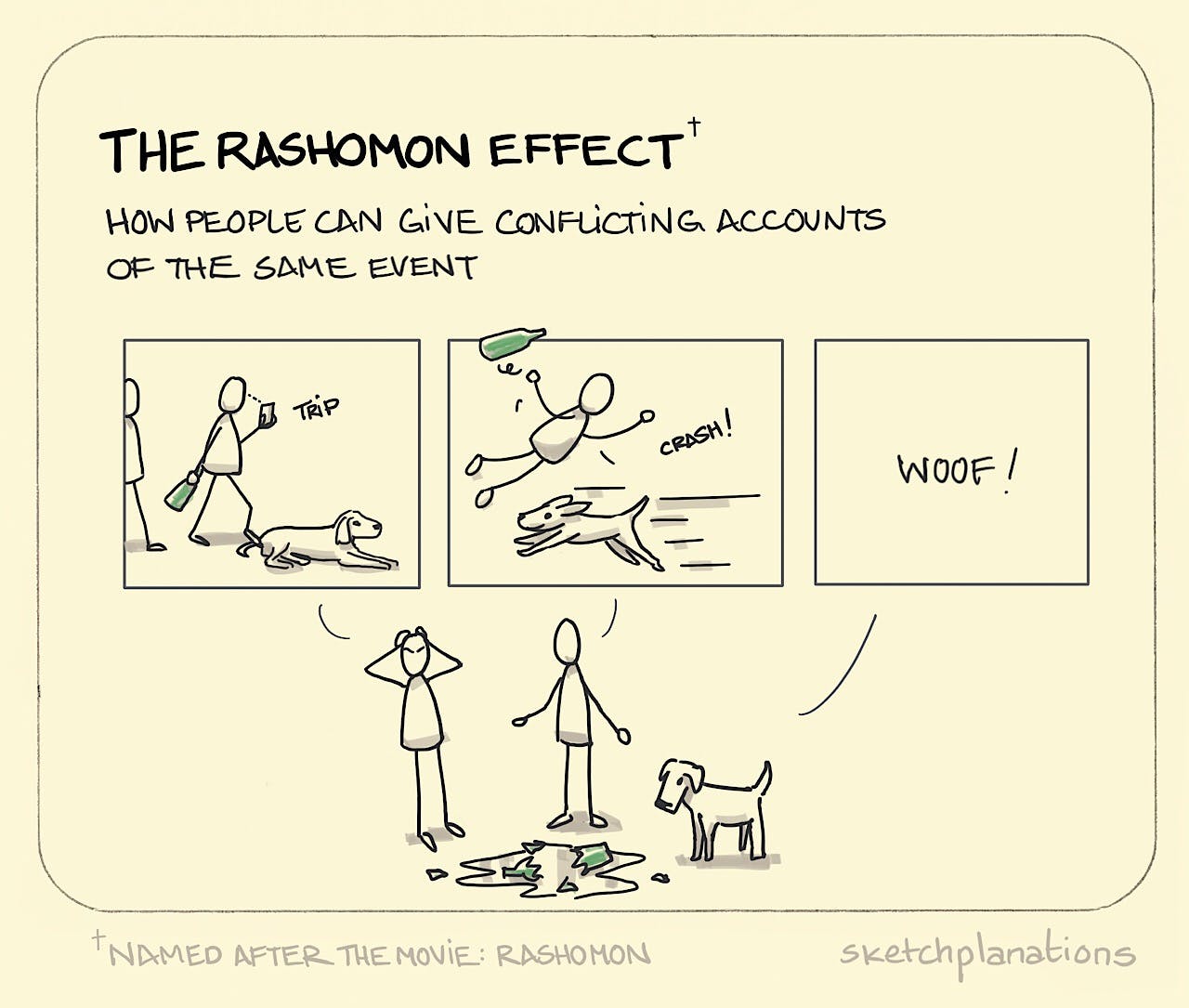
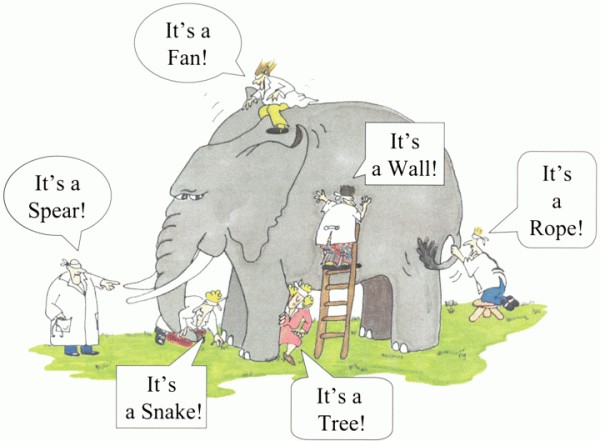
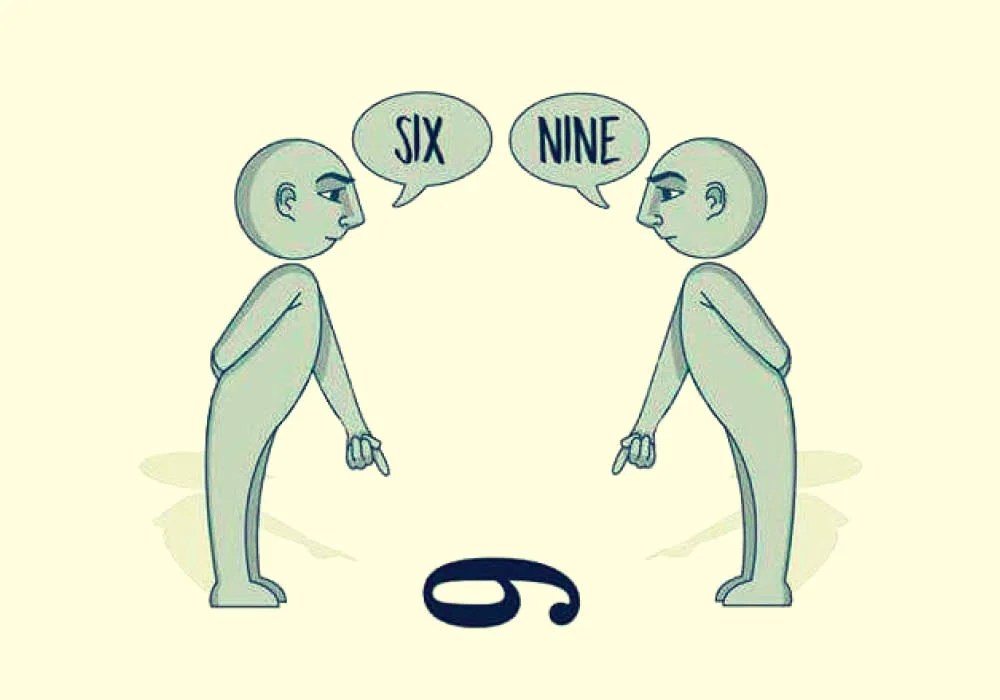
Ever heard multiple sides to a story from eye witnesses and had a tough time deciding which one is true or which to believe? Such a conundrum is brought about by subjective views, observer bias, perspective and memory of the observer. All these parameters can be summed into a single word known as The Rashomon. The Rashomon effect refers to an instance when the same event is described in significantly different (often contradictory) ways by different people who were involved.

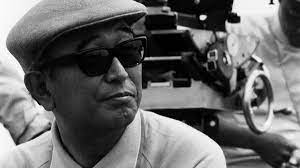
This phenomenon first came to be observed in a book called “in a grove “by Japanese author, Reyonosuke Akutagawa written in the early 1920’s. This was later adapted and made into a movie, by Japanese filmmaker Akira Kurosawa, who directed the 1950 film Rashomon, giving the effect its name. The plot revolves around which four different people provide contradictory accounts of a samurai’s murder, despite all having witnessed the crime. Each witness tale is varied from another, yet so very plausible, that a definite conclusion cannot be drawn, embroiling all of them.

The film explored the issues of the unreliability when depending on witness testimony explores a situation using a similar literary device, wherein the story is told through the viewpoints of different characters who supply conflicting stories. Whether the people’s competing explanations are different because of the fallacy of memory or because of self-serving interests varies. This film became revolutionary with how one understands the human mind, justice and the truth. It since then has become a cultural metaphor and is synonymous with happenings of everyday events as it’s not a sci-fi or an abnormal event, but a very natural course of nature that seems very striking .

Conditions and characteristics.

Not every story will have The Rashomon effect. It mostly occurs when there is no gripping and final evidence but a lot of eyewitnesses and when there is a pressure to achieve closure and coercion to find the truth. In both the movie and the book, no side of a person’s view is given more emphasis and all are shown in an equal scale, each testimony bearing its own truth and plausibility. The script and story writing does tell the audience how to feel or what to believe. The audience had to decide that for themselves making it engaging and deceiving at the same time. Such a premise has conflict as a driving. Conflict in a story drives a plot forward, reveals character, and engages an audience. The Rashomon Effect is based on contradicting reports of the same event and search for the truth through these reports can be a driving force of conflict for a story. The use of an unreliable narrator is another feature, opposed to the presentation from a more objective point of view. This allowed audiences to see the characters as they were and value neutral. To top it off, an ambiguous ending after such a mind boggling series of events, looks like the right justice to this type of storytelling. Our realization that none of the witnesses are reliable leaves us with more questions than answers. While most films at the time had a clear ending, the ending of Rashomon has no clear resolution. This unconventional decision left audiences baffled.  It can be frustrating to some as it subverts from its unorthodox counterparts but , it is not ambiguous for the sake of mystery or confusion, but rather to reiterate themes and larger concepts like the intricacy of the human brain.

Conclusion

Research studies have found that when people form a memory, a visual experience is often influenced by external cues, internal prejudice and past experiences. While a few are completely individualistic, most are universal. An example of this is egocentrism, i.e., having a positive view on their actions but disregard to the other person . it is a subconscious act , most of the times, and these psychological phenomenon means that the rashomon effect can  pop up anywhere.

The Rashomon effect finally boils down to the minutiae and can range from studies of anthropology and biology to the general public analyzing a historic world event. In conclusion this broke a psychobiological barrier of having the right answer to every crisis and rather shifted the focus to versions of the same event that can tell us about the time, place and people involved, how to go about different mind-sets, backgrounds and biases. It emphasized on the fact that sometimes, the objective truth cannot always be obtained and that it is normal to have an obscure, vague ending, which should be embraced and valued in certain circumstances.

The Rashomon Effect

Ever heard multiple sides to a story from eye witnesses and had a tough time deciding which one is true or which to believe? Such a conundrum is brought about by subjective views, observer bias, perspective and memory of the observer. All these parameters can be summed into a single word known as The Rashomon. The Rashomon effect refers to an instance when the same event is described in significantly different (often contradictory) ways by different people who were involved.

This phenomenon first came to be observed in a book called “in a grove “by Japanese author, Reyonosuke Akutagawa written in the early 1920’s. This was later adapted and made into a movie, by Japanese filmmaker Akira Kurosawa, who directed the 1950 film Rashomon, giving the effect its name. The plot revolves around which four different people provide contradictory accounts of a samurai’s murder, despite all having witnessed the crime. Each witness tale is varied from another, yet so very plausible, that a definite conclusion cannot be drawn, embroiling all of them.

The film explored the issues of the unreliability when depending on witness testimony explores a situation using a similar literary device, wherein the story is told through the viewpoints of different characters who supply conflicting stories. Whether the people’s competing explanations are different because of the fallacy of memory or because of self-serving interests varies. This film became revolutionary with how one understands the human mind, justice and the truth. It since then has become a cultural metaphor and is synonymous with happenings of everyday events as it’s not a sci-fi or an abnormal event, but a very natural course of nature that seems very striking .

Conditions and characteristics.

Not every story will have The Rashomon effect. It mostly occurs when there is no gripping and final evidence but a lot of eyewitnesses and when there is a pressure to achieve closure and coercion to find the truth. In both the movie and the book, no side of a person’s view is given more emphasis and all are shown in an equal scale, each testimony bearing its own truth and plausibility. The script and story writing does tell the audience how to feel or what to believe. The audience had to decide that for themselves making it engaging and deceiving at the same time. Such a premise has conflict as a driving. Conflict in a story drives a plot forward, reveals character, and engages an audience. The Rashomon Effect is based on contradicting reports of the same event and search for the truth through these reports can be a driving force of conflict for a story. The use of an unreliable narrator is another feature, opposed to the presentation from a more objective point of view. This allowed audiences to see the characters as they were and value neutral. To top it off, an ambiguous ending after such a mind boggling series of events, looks like the right justice to this type of storytelling. Our realization that none of the witnesses are reliable leaves us with more questions than answers. While most films at the time had a clear ending, the ending of Rashomon has no clear resolution. This unconventional decision left audiences baffled.  It can be frustrating to some as it subverts from its unorthodox counterparts but , it is not ambiguous for the sake of mystery or confusion, but rather to reiterate themes and larger concepts like the intricacy of the human brain.

Conclusion

Research studies have found that when people form a memory, a visual experience is often influenced by external cues, internal prejudice and past experiences. While a few are completely individualistic, most are universal. An example of this is egocentrism, i.e., having a positive view on their actions but disregard to the other person . it is a subconscious act , most of the times, and these psychological phenomenon means that the rashomon effect can  pop up anywhere.

The Rashomon effect finally boils down to the minutiae and can range from studies of anthropology and biology to the general public analyzing a historic world event. In conclusion this broke a psychobiological barrier of having the right answer to every crisis and rather shifted the focus to versions of the same event that can tell us about the time, place and people involved, how to go about different mind-sets, backgrounds and biases. It emphasized on the fact that sometimes, the objective truth cannot always be obtained and that it is normal to have an obscure, vague ending, which should be embraced and valued in certain circumstances.

EVOLUTION OF CONTENT DRIVEN CINEMA IN INDIA

Source: Mindscreen

Good content driven movies are not new phenomena in indian cinema. We have already encountered since 60s but like change is part of any civilization or human life same occurred in Indian cinema which eventually turned out only in Bollywood. Firstly we need to understand Bollywood is not sole representer of Indian cinema infact it is just a entity of ocean. Why I am saying content had it’s own long back story with filmmakers like Bimal Roy, hrishikesh Mukherjee, shyam benegal, guru dutt.

We had tendency to watch good cinema but off course how human evolve too fast in peculiar manner as no other species able to do. That’s how ‘Art of filmmaking ‘ appeared to distorted in 80s and 90s.

What is content?
First, we need to track down the meaning of CONTENT that what do we mean by content ?

Information , experience of our surrounding ; expressing through the medium of writing , speech, poster and film. The main components are here – Information and experience. When any filmmaker portraying real life challenges , situations what happens people feel attach to those situations audience ready to believe what writers wants us to believe audience feels like he/she like me it okay not to be okay.

Content is something when filmmaker become successful to build that bond between script and audience which was result of real life experiences.

Golden age of Cinema

60s and 70s was the time when Indian cinema was on it’s peak of content driven script best part was audience love those movie. Let’s talk about few movies from that time – A kannada film Malaikkallu (1954) beautiful love story , Bedara kannapa. Bimal Roy was one of the finest filmmaker in india. He made movies on class struggle, casteism. For instance Do bigha zameen (1953) which was story of misuse of Power, Sujata( 1959), Bandini (1963). Each film has their own questions to the Society. These are not critical claim movies but real entertainment even in 21th century.

Hrishikesh Mukherjee who introduced new blend of entertainment and depicted the real life difficulties beautifully like in Anand (1971), Anari ,Abhimaan (1973) these films has its own substance to deal with filmmaking. If we talk about Abhimaan , Mukherjee was depicted as love, bliss, anger, ago, heartbreak and reunion of love again.

Now, the man who inspires and motivates young filmmakers to work on their ideas makes us all love his movies that is one and only satyajit Ray who changed the entire experience of filmmaking. The Apu trilogy (1955- 59) , The music room (1964) even though these films are in Bengali Language but language couldn’t switch off the impact.

Guru dutt another renowned filmmaker who made such incredible films – pyasa, kagaaz ke phool, chaudhvin ka Chand. Shyam benegal is one of understated filmmaker in modern time and for millennials. He gave Nishant , ankur, manthan( Indian’s first crowdfunded film by farmers who donated 2 rupees each) & terikal. Nishant was emphasize on during the time of feudalism in India, rural elite and sexual exploitation of women. This movie selected for Palme d’or 1976 Cannes film festival. The treatment of movie was so real that appeared very much real even in today’s time.

One element was common in 60s and 70s that filmmaker were not afraid to make good cinema, those makers knows how to write script that turned into great screenplay. Remember this is all happening in 60s where no use of excessive technology or no business Mongols of Bollywood.

Emphasis of Bollywood

From the time of 80s the style of filmmaking was changed or more likely to say distorted. Now, in 90s the explosion of star power corrupted the scripts , producers more inclined towards taking big stars in their movies without thinking about script and screenplay.

In 80s & 90s most common script pattern was “love story” and STARS like we don’t have mind to understand other kind of genres. Movies like – Tezaab, lamhe, raja hindustani , Dil toh pagal hai Chandni and kuch kuch hits hair, Hum aapke hair kon an d Hum sath sath hai etc. Now, we are not saying these were the only type of movies at that point of time exist ; there was also good movies like parinda, arth, sparsh, masoom, ek doctor ki maut, Drishti.

Reign of the good movies

After the gangs of wasseypur (2012) Bollywood discovered new and improved love for content driven cinema. After that Bollywood flooded with good filmmakers but old, rotten content still not vanished but level was decreased.

Queen, gangs of wasseypur, Hindi medium, The lunchbox , Vicky donor, udta Punjab , Shahid, talvar , piku are the movies which got tremendous account of love from audience as well as critical claimed movies. So now happened producers started to invest their money in fresh and fine scripts distributors had to turned their sides.

Let’s talk about web series if we talking about content web series culture changed the whole market for digital media. Where filmmakers are ready to play with screenplay, giving twist and turn. In this process , actors who are talented but put on backfoot now got their fair chance and basically employment.

When Content became Business

Movie business is unknown to commoners but insiders (families of Bollywood) knows really well how this business runs , have their production house. The whole idea is big production house grabs more screens on the basis of big stars only. Distributors are all set to do whatever these big house demands for example Thugs of Hindustan. In terms of box office collection masaan was flop but not literally. Ishqzaade, jab Tak hai jaan , rowdy rathore, ek tha tiger, agneepath, cocktail , Chennai express were all big blockbusters but as far as we see content was in dry and ancient well.

Regional Cinema of India

Regional Cinema has vast variety of exploration , big spectrum of ideas most importantly courage to implement their ideas in better screenplay. Veedu , sairat, chumbak, jogwa naal, aamas , visaranai, baaram all these movies has their different way to deal with society norms which wrapping in entrainment.

Conclusion

We should start praising good movies, audience (we) are everything in show business. If we find bad scripted film good because of stars then we are at the wrong side. We are investing our money at wrong recreation in terms of movies. Now we have to decide what we want in our entrainment list. Create a kind of environment for stars that if they produce and feature in trash films we not going to watch then stars will also take serious measures in the departments of script, writers and audience.

Remember we make them stars so, we are more responsible!!

EVOLUTION OF CONTENT DRIVEN CINEMA IN INDIA

Source: Mindscreen

Good content driven movies are not new phenomena in indian cinema. We have already encountered since 60s but like change is part of any civilization or human life same occurred in Indian cinema which eventually turned out only in Bollywood. Firstly we need to understand Bollywood is not sole representer of Indian cinema infact it is just a entity of ocean. Why I am saying content had it’s own long back story with filmmakers like Bimal Roy, hrishikesh Mukherjee, shyam benegal, guru dutt.

We had tendency to watch good cinema but off course how human evolve too fast in peculiar manner as no other species able to do. That’s how ‘Art of filmmaking ‘ appeared to distorted in 80s and 90s.

What is content?
First, we need to track down the meaning of CONTENT that what do we mean by content ?

Information , experience of our surrounding ; expressing through the medium of writing , speech, poster and film. The main components are here – Information and experience. When any filmmaker portraying real life challenges , situations what happens people feel attach to those situations audience ready to believe what writers wants us to believe audience feels like he/she like me it okay not to be okay.

Content is something when filmmaker become successful to build that bond between script and audience which was result of real life experiences.

Golden age of Cinema

60s and 70s was the time when Indian cinema was on it’s peak of content driven script best part was audience love those movie. Let’s talk about few movies from that time – A kannada film Malaikkallu (1954) beautiful love story , Bedara kannapa. Bimal Roy was one of the finest filmmaker in india. He made movies on class struggle, casteism. For instance Do bigha zameen (1953) which was story of misuse of Power, Sujata( 1959), Bandini (1963). Each film has their own questions to the Society. These are not critical claim movies but real entertainment even in 21th century.

Hrishikesh Mukherjee who introduced new blend of entertainment and depicted the real life difficulties beautifully like in Anand (1971), Anari ,Abhimaan (1973) these films has its own substance to deal with filmmaking. If we talk about Abhimaan , Mukherjee was depicted as love, bliss, anger, ago, heartbreak and reunion of love again.

Now, the man who inspires and motivates young filmmakers to work on their ideas makes us all love his movies that is one and only satyajit Ray who changed the entire experience of filmmaking. The Apu trilogy (1955- 59) , The music room (1964) even though these films are in Bengali Language but language couldn’t switch off the impact.

Guru dutt another renowned filmmaker who made such incredible films – pyasa, kagaaz ke phool, chaudhvin ka Chand. Shyam benegal is one of understated filmmaker in modern time and for millennials. He gave Nishant , ankur, manthan( Indian’s first crowdfunded film by farmers who donated 2 rupees each) & terikal. Nishant was emphasize on during the time of feudalism in India, rural elite and sexual exploitation of women. This movie selected for Palme d’or 1976 Cannes film festival. The treatment of movie was so real that appeared very much real even in today’s time.

One element was common in 60s and 70s that filmmaker were not afraid to make good cinema, those makers knows how to write script that turned into great screenplay. Remember this is all happening in 60s where no use of excessive technology or no business Mongols of Bollywood.

Emphasis of Bollywood

From the time of 80s the style of filmmaking was changed or more likely to say distorted. Now, in 90s the explosion of star power corrupted the scripts , producers more inclined towards taking big stars in their movies without thinking about script and screenplay.

In 80s & 90s most common script pattern was “love story” and STARS like we don’t have mind to understand other kind of genres. Movies like – Tezaab, lamhe, raja hindustani , Dil toh pagal hai Chandni and kuch kuch hits hair, Hum aapke hair kon an d Hum sath sath hai etc. Now, we are not saying these were the only type of movies at that point of time exist ; there was also good movies like parinda, arth, sparsh, masoom, ek doctor ki maut, Drishti.

Reign of the good movies

After the gangs of wasseypur (2012) Bollywood discovered new and improved love for content driven cinema. After that Bollywood flooded with good filmmakers but old, rotten content still not vanished but level was decreased.

Queen, gangs of wasseypur, Hindi medium, The lunchbox , Vicky donor, udta Punjab , Shahid, talvar , piku are the movies which got tremendous account of love from audience as well as critical claimed movies. So now happened producers started to invest their money in fresh and fine scripts distributors had to turned their sides.

Let’s talk about web series if we talking about content web series culture changed the whole market for digital media. Where filmmakers are ready to play with screenplay, giving twist and turn. In this process , actors who are talented but put on backfoot now got their fair chance and basically employment.

When Content became Business

Movie business is unknown to commoners but insiders (families of Bollywood) knows really well how this business runs , have their production house. The whole idea is big production house grabs more screens on the basis of big stars only. Distributors are all set to do whatever these big house demands for example Thugs of Hindustan. In terms of box office collection masaan was flop but not literally. Ishqzaade, jab Tak hai jaan , rowdy rathore, ek tha tiger, agneepath, cocktail , Chennai express were all big blockbusters but as far as we see content was in dry and ancient well.

Regional Cinema of India

Regional Cinema has vast variety of exploration , big spectrum of ideas most importantly courage to implement their ideas in better screenplay. Veedu , sairat, chumbak, jogwa naal, aamas , visaranai, baaram all these movies has their different way to deal with society norms which wrapping in entrainment.

Conclusion

We should start praising good movies, audience (we) are everything in show business. If we find bad scripted film good because of stars then we are at the wrong side. We are investing our money at wrong recreation in terms of movies. Now we have to decide what we want in our entrainment list. Create a kind of environment for stars that if they produce and feature in trash films we not going to watch then stars will also take serious measures in the departments of script, writers and audience.

Remember we make them stars so, we are more responsible!!

DO YOU WHAT IS ZOOLOGY?

Zoology, the branch of biology that studies animals, seeks to understand the sum total of all the properties of animals and animal populations. As a discipline, zoology is similar to others with major subdivisions that include anatomy, physiology, genetics, and interrelation.

JOB FOR AN ZOOLOGY STUDENT:

Photo by David Selbert on Pexels.com

Academic researcherAnimal nutritionistEcologistEnvironmental consultantEnvironmental education officerHigher education lecturerMarine scientistNature conservation officerScience writerZookeeperZoologist

Animal physiotherapist

Environmental managerField trials officerMarine biologistResearch scientist (life sciences)

Toxicologist

Veterinary nurse

Veterinary surgeon

•Not only by studying the subject of zoology make us a zoologist, we have work on that field study about animals and their behaviour, go for the internships Learn how to work gain advance knowledge make us a good zoologist.

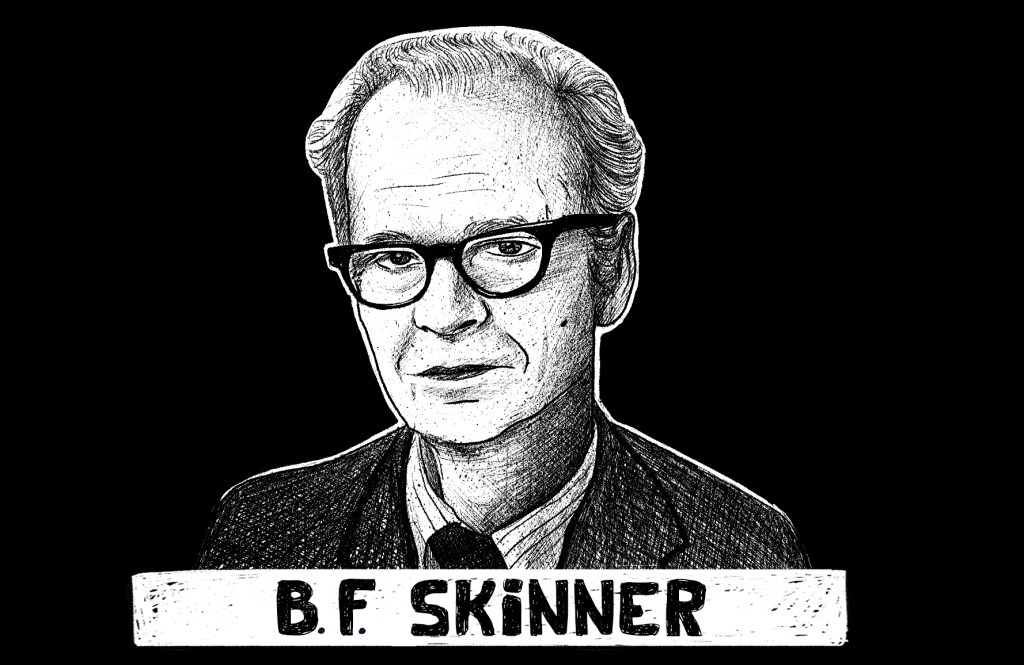
Operant conditioning by B.F Skinner

B.F Skinner is considered one of the most influential psychologist of this era. He studied human aspects and behaviourism of the day to day life that most of us fail to observe and put it into theory .His discovery are used till date to treat, diagnose and find solution to psychological problems. B. F. Skinner was an American psychologist best-known for his influence on behaviourism.

Early life

Burrhus Frederic Skinner was born and raised in the small town of Susquehanna, Pennsylvania. His father was a lawyer and his mother a homemaker. During high school, Skinner started to develop an interest in scientific reasoning from his extensive study of the works of Francis Bacon. After earning his undergraduate degree he decided to become a writer, a period of his life that he would later refer to as the “dark year. He wrote short newspaper articles and receiving some encouragement and mentorship from the famed poet Robert Frost. While working as a clerk at a bookstore, Skinner happened upon the works of Pavlov and Watson, which became a turning point in his life and career. Inspired by these works, Skinner decided to abandon his career as a novelist and entered the psychology graduate program at Harvard University.

He Best Known for Operant conditioning, Schedules of Reinforcement, Skinner Box Cumulative Recorder, Radical Behaviourism. Among his many discoveries, inventions, and accomplishments were the creation of the operant conditioning chamber (aka the Skinner Box), his research on schedules of reinforcement, the introduction of response rates as a dependent variable in research, and the creation of the cumulative recorder to track these response rates. Skinner’s operant conditioning process, an operant referred to any behaviour that acts on the environment and leads to consequences. He contrasted operant behaviours (the actions under our control) with respondent behaviours, which he described as anything that occurs reflexively or automatically such as jerking your finger back when you accidentally touch a hot pan.

Operant conditioning and experiments

Skinner identified reinforcement as any event that strengthens the behaviour it follows. The two types of reinforcement he identified were positive reinforcement (favorable outcomes such as reward or praise) and negative reinforcement (the removal of unfavourable outcomes).Punishment can also play a role in the operant conditioning process.

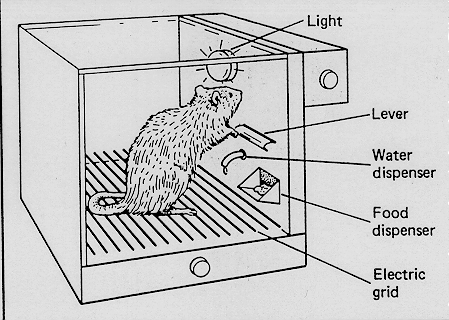
Skinner distinguishes between two types of behaviour respondent and operant. Respondent behaviour is directly under the control of a stimulus. Operant behaviour appears to be spontaneous rather than a response to specific stimulus .Stimulus that may influence operant behaviour is called discriminative stimulus the word operant derived from the fact that operant behaviour of the rates and the environment to produce some effect. Thus, the telephone rings going to where it is and receiving our operant acts that lead to a telephonic conversation. To demonstrate operant conditioning in the laboratory, a rat is placed in a box called the skinner box that is deprived of food for some specified period and so was assumed to be motivated by hunger drive inside the Skinner box there is a protruding bar with the food dish beneath that small light bulb above the bar can be lit at the experimenters discretion. Left alone in the box, the rat move absolutely restlessly and by chance occasionally presses the bar. The rate at which it first pushes the bar defines the preconditioned of operant level of bar pressing after establishing the opponent level the experimental attaches the food dispenser so that every time the rat presses the bar, a palette of food falls into the dish. The rat eats and soon presses the bar again. The food reinforces by pressing and the rate of pressing increases dramatically. If the food dispenser is disconnected and pressing the bad no longer no longer delivers would the rate of bar pressing will diminish .Experimenter can set up a discrimination by presenting food if the bar is pressed while the light is on and not giving these reinforcement if the response is made in the dark. Selective reinforcement leads to the rats pressing the bar only in the presence of light operant conditioning refers to the increase in the probability of response in a particular stimulus environment by following the response with reinforcement. Usually reinforcement is something that can satisfy a basic drive like food to satisfy your hunger. Operant behaviour is consequences that lead to change in voluntary behaviour person.

Operant conditioning is not just something that takes place in experimental settings while training lab animals. It also plays a powerful role in everyday learning. Reinforcement and punishment take place in natural settings all the time, as well as in more structured settings such as classrooms or therapy sessions. Examples in real life include-     Homework Completion-A student tends to complete his/her homework daily; because he/she knows that he/she will be rewarded with a candy (action) or praise (behaviour). Incentives and Bonus-Workers are often offered with the incentives and bonus in return of completing their targets in time or for regular attendance. It makes the workers to perform better, so that, they can continuously get those incentives and bonus.

Operant conditioning by B.F Skinner

B.F Skinner is considered one of the most influential psychologist of this era. He studied human aspects and behaviourism of the day to day life that most of us fail to observe and put it into theory .His discovery are used till date to treat, diagnose and find solution to psychological problems. B. F. Skinner was an American psychologist best-known for his influence on behaviourism.

Early life

Burrhus Frederic Skinner was born and raised in the small town of Susquehanna, Pennsylvania. His father was a lawyer and his mother a homemaker. During high school, Skinner started to develop an interest in scientific reasoning from his extensive study of the works of Francis Bacon. After earning his undergraduate degree he decided to become a writer, a period of his life that he would later refer to as the “dark year. He wrote short newspaper articles and receiving some encouragement and mentorship from the famed poet Robert Frost. While working as a clerk at a bookstore, Skinner happened upon the works of Pavlov and Watson, which became a turning point in his life and career. Inspired by these works, Skinner decided to abandon his career as a novelist and entered the psychology graduate program at Harvard University.

He Best Known for Operant conditioning, Schedules of Reinforcement, Skinner Box Cumulative Recorder, Radical Behaviourism. Among his many discoveries, inventions, and accomplishments were the creation of the operant conditioning chamber (aka the Skinner Box), his research on schedules of reinforcement, the introduction of response rates as a dependent variable in research, and the creation of the cumulative recorder to track these response rates. Skinner’s operant conditioning process, an operant referred to any behaviour that acts on the environment and leads to consequences. He contrasted operant behaviours (the actions under our control) with respondent behaviours, which he described as anything that occurs reflexively or automatically such as jerking your finger back when you accidentally touch a hot pan.

Operant conditioning and experiments

Skinner identified reinforcement as any event that strengthens the behaviour it follows. The two types of reinforcement he identified were positive reinforcement (favorable outcomes such as reward or praise) and negative reinforcement (the removal of unfavourable outcomes).Punishment can also play a role in the operant conditioning process.

Skinner distinguishes between two types of behaviour respondent and operant. Respondent behaviour is directly under the control of a stimulus. Operant behaviour appears to be spontaneous rather than a response to specific stimulus .Stimulus that may influence operant behaviour is called discriminative stimulus the word operant derived from the fact that operant behaviour of the rates and the environment to produce some effect. Thus, the telephone rings going to where it is and receiving our operant acts that lead to a telephonic conversation. To demonstrate operant conditioning in the laboratory, a rat is placed in a box called the skinner box that is deprived of food for some specified period and so was assumed to be motivated by hunger drive inside the Skinner box there is a protruding bar with the food dish beneath that small light bulb above the bar can be lit at the experimenters discretion. Left alone in the box, the rat move absolutely restlessly and by chance occasionally presses the bar. The rate at which it first pushes the bar defines the preconditioned of operant level of bar pressing after establishing the opponent level the experimental attaches the food dispenser so that every time the rat presses the bar, a palette of food falls into the dish. The rat eats and soon presses the bar again. The food reinforces by pressing and the rate of pressing increases dramatically. If the food dispenser is disconnected and pressing the bad no longer no longer delivers would the rate of bar pressing will diminish .Experimenter can set up a discrimination by presenting food if the bar is pressed while the light is on and not giving these reinforcement if the response is made in the dark. Selective reinforcement leads to the rats pressing the bar only in the presence of light operant conditioning refers to the increase in the probability of response in a particular stimulus environment by following the response with reinforcement. Usually reinforcement is something that can satisfy a basic drive like food to satisfy your hunger. Operant behaviour is consequences that lead to change in voluntary behaviour person.

Operant conditioning is not just something that takes place in experimental settings while training lab animals. It also plays a powerful role in everyday learning. Reinforcement and punishment take place in natural settings all the time, as well as in more structured settings such as classrooms or therapy sessions. Examples in real life include-     Homework Completion-A student tends to complete his/her homework daily; because he/she knows that he/she will be rewarded with a candy (action) or praise (behaviour). Incentives and Bonus-Workers are often offered with the incentives and bonus in return of completing their targets in time or for regular attendance. It makes the workers to perform better, so that, they can continuously get those incentives and bonus.

Why is it so difficult to reach towards Humane level?

Today I will ask some questions to you and to myself because I was at that phase of life where I saw the time which was extremely uncomfortable and faced constant heavy stress.

Why we always wants to win why we cannot focus on process and learning something new?

Why we cannot stop judging others why we cannot believe anybody can inspire us whether it is a merchant or a homeless because one must learn from the unspoken or unheard experience of others?

Why we think only “successful” can motivate us?

Why we cannot help anybody just only because that person need help?

Why we think too much about success what is a meaning of success? Materialistic happiness or inner happiness?

Why we constantly avoid the real human interaction why we are not bother about the person & how this person is feeling?

Why judgements become prominent in our society why we love degrading and humiliating others?

Why we lost faith in love and humanity. Why we fake our love to others why we cannot love anybody genuinely?

Why we always trying to prove a point that we are worthy via social media?

Why validation is significant and criticism is insignificant?

Why we loosing Empathy why saying something good to others demands that we need to be close to that person?

Why we have several kinds of uncertain modes. I would call this modes because these expression of mouth and gestures cannot be emotions.

I will not give you any advice :

Be kind
Have compassion
Think before speak blah blah…
Because we already knows these traits but somehow forget to feel. I can understand we are living in really fast pace world where nobody doesn’t bother or interested to know anything about others unless we are not indulge in one incredible activity “Gossip”.

In the end, I just say this is a life we all fail and rise at some point of it. So stop judging. Make mistakes but never forget to learn and improve. Don’t be afraid to fail big to dream big , but remember dreams without goals just dreams and they ultimately fuel disappointment – Denzel Washington”

” Don’t be afraid to fail big to dream big , but remember dreams without goals just dreams and they ultimately fuel disappointment – Denzel Washington”

Why is it so difficult to reach towards Humane level?

Today I will ask some questions to you and to myself because I was at that phase of life where I saw the time which was extremely uncomfortable and faced constant heavy stress.

Why we always wants to win why we cannot focus on process and learning something new?

Why we cannot stop judging others why we cannot believe anybody can inspire us whether it is a merchant or a homeless because one must learn from the unspoken or unheard experience of others?

Why we think only “successful” can motivate us?

Why we cannot help anybody just only because that person need help?

Why we think too much about success what is a meaning of success? Materialistic happiness or inner happiness?

Why we constantly avoid the real human interaction why we are not bother about the person & how this person is feeling?

Why judgements become prominent in our society why we love degrading and humiliating others?

Why we lost faith in love and humanity. Why we fake our love to others why we cannot love anybody genuinely?

Why we always trying to prove a point that we are worthy via social media?

Why validation is significant and criticism is insignificant?

Why we loosing Empathy why saying something good to others demands that we need to be close to that person?

Why we have several kinds of uncertain modes. I would call this modes because these expression of mouth and gestures cannot be emotions.

I will not give you any advice :

Be kind
Have compassion
Think before speak blah blah…
Because we already knows these traits but somehow forget to feel. I can understand we are living in really fast pace world where nobody doesn’t bother or interested to know anything about others unless we are not indulge in one incredible activity “Gossip”.

In the end, I just say this is a life we all fail and rise at some point of it. So stop judging. Make mistakes but never forget to learn and improve. Don’t be afraid to fail big to dream big , but remember dreams without goals just dreams and they ultimately fuel disappointment – Denzel Washington”

” Don’t be afraid to fail big to dream big , but remember dreams without goals just dreams and they ultimately fuel disappointment – Denzel Washington”

Reasons for the failure of the Policy Implementation

Policy Implementation is the soul of Administration and Public Policy, one of the problem with Policy making in India is extreme fragmentation in the structure that fragmentation fails to acknowledge the action taken in one area have implications on another and may work at Cross purpose with policies of other sector. Implementation is not automatic that is more structured and scheduled. Implementation works as make or break the deal of Public Policy.

Effective implementation requires a chain of command, and the capacity to coordinate and control; often there are shortfalls in this exercise, more so in a developing country like India. Problem in the implementation of Policy are common in all countries, be they developed or developing. Even with relatively good administrative structure, Public Policy does not have it’s intended impact due to conceptual and political problem. Implementation deficit may be due to insufficiency of the requisite resources – of time, money or manpower.
Let’s discuss the implementation problem under the headings:

1) Conceptualization Issue of Policy Implementation

Conceptual Problem become the most crucial step in Policy Implementation that holds the high capacity to hinder the implementation. Understanding the nature of contextual problems, acknowledgement to those kind of policies and procedures which can address the inside problems. These conceptual problem majorly related to Policy design and anaylsis conflicts.

• Policy Design Conflict

Hogwood and Gunn stressed if at the stage of Policy design, attention is given to potential problems of implementation; successful outcome will increased. In order to avoid major shortcomings in implementation take care of few preposition that prescribed by Hogwood and Gunn and Policy makers must ensure that:

A) Adequate time and sufficient resources are made available to the programme

B) No constraints in terms of overall resources, and even at each stage in the implementation process.

C) Policy must based on valid theory of cause and effect.

D) Single implementation agency that need not depend upon other agencies for success.

E) Good communication among co – ordination, various elements involved in the programme

The problem of Policy design in Poli design include ambiguous and ill – defined objective and inappropriate measure to achieve the stated goals. Lack of adequate political will, sufficient social support are other reason. For example, National Water Policy (NWP) adopted by Water Resource Council in 1987 was a wanted step in the direction of evolving national consensus. But, because of poor design remained unimplemented. NWP lacks the blue print

• Policy Analysis Conflict

Implementation of Public Policy has also been hampered by conceptual weaknesses of Policy anaylsis. For instance, National health Policy (1983) was adopted without considering alternative Policy option. This inability to set priorities and evolve appropriate strategies for reduction in health problems by the state department

• Policy Statement Conflict

Policy statement announced by the government contain ambiguous and contradictory terms, posing problems in implementation. The implementers at the field level often face a variety of issues because the policy statement lack clarity. Consequently, implementers use their own discretion while implementing them or they refer the statement back to the higher paths of Administration for clarification.

2) Political Pressure

Political Pressure in implementation always been evident and complex. This kind of pressure cannot let bureaucracy to work efficiently.

• Centralisation of Policy Process

Tassel between Central and state government relation has affected the policy implementation process adversely. Environment protection is heavily centralized. Although the central government has been enthusiastic in adopting innovative population, health, education and environmental policies and programmes as a result, health or environment quality has hardly improved in terms of availability of safe water, clean air, and provision of healthy living conditions.

• Unionisation of Bureaucracy

Another important of failure of Policy implementation is due to the Unionisation of civil services, at the lower level in particular. This has destroyed not only the work culture and discipline, but it also demoralized considerably the supervisory levels into withdrawal and promoting them to take least resistance. Higher and middle levels of bureaucracy are not so powerful and marginalized to give any relief to citizen in cases of corruption. Further, political interference by the political executive has compounded the marginalisation of higher bureaucracy thereby undermining it’s capacity to implement Public policies effectively.

• Politics of Interest Group

Many times, it is observed that the policies are not implemented because of to satisfy the interest groups. For example, several industries have little concern about environmental consequences of sitting decisions; industrialist influence the environmental Policy implementation process either directly or through business lobbies and representative of the business interests concerned. Pressure by industrial association during consideration of Environmental Protection Act in parliament resulted in a weakening of government and also forced the government to delay enforcement of enacted legislation. They are links with elites of ruling parties. It’s is, common for exertion of political influence in the environmental Policy process.

3) Bureaucratic Incompentency

Christopher Hood uses the term ‘Perfect administration’ in comparison to comparison to ‘Use of Perfect Competition’. He defines ‘ Perfect administration’ as a condition in which external elements of resources availability and political acceptability combine with administration to produce Perfect policy implementation.

• Lack of Adequate Institutional Capacity

The institutional structure and administrative capabilities for implementation of environmental laws and policies, for example, by no means Adequate in terms of political, social, and economic problem. Institutional structure includes the whole system of rules and regulations by which administrative tasks and responsibilities are clearly defined and juxtaposed with the capabilities of the administrators concerned. Let’s understand by example, when 30 industrial units, including few MNCs in West Bengal failed to comply with environment laws, the supreme Court had to play the role of the executive. In 1995 two judge bench of supreme Court expressed ” these multinational concerns have huge resources yet they are not bothered about protecting the environment”.

• Lack of Personnel and Financial Resources

Many policies will diffuse because of insufficient staff and lack of financial resources. Policies in developing nation have not been implemented in full scale owing to lack of trained staff. Well structured policies fail to attain the proper goals without competent Personnel. Implementation implies allocating personnel resources to the appropriate tasks and activities tasks and activities, motivating them to do well rewarding them for action. Regardless of their status, specialized knowledge, experience and qualifications, the programme personnel need to work as a cohesive team for the purpose of achieving policy results.

• Working under heavy pressure of Time

Pressure of time often creates the implementation gap. While fixing the time frame, the policy formulators do not take into consideration the prevailing conditions. The implementation agencies under pressure are unable to fulfill the targets allocated under the said Policy.

• No Administrative Will and Motivation

Without the conscious cooperation of implementers, nothing can be done. It is responsiblity of government to ensure the working conditions for implementers so that they will not lost their interest. Social policies have remained unimplemented largely for lack of administrative will and motivation. In current environment, officials are not likely to feel enthusiastic about implementing policies. Even when officials willing to implement environment laws, government undermined by manoeuvre of industrial bigwigs. Many of them fall to the dominance of economic interests and monetary temptations end up in formal enforcement of the regulation.

• Cooperation and Coordination

Poor coordination and missing links among the administrative agencies have stood in the way of adequate and appropriate Policy actions. For example, at the administrative level, different department are concerned with implementing policies related to poverty alleviation programme. Gap in Policy implementation are found in population and family planning programme.

• Lack of people’s participation

Public involvement in Policy Implementation such as education, population control, health, pollution control and forest conservation etc have tremendous pressure on administrative staff to cultivate results. By demonstration, protest and Public has tried to offset the power base of interest groups and lobbies that influence Policy Implementation in their favour.

The strength and endurance of the people’s movement for implementing and enforcing regulations have not been a link to that vests interest.

Conditions for proper implementation

W. William inakes an attempt to identify ways in which Policy failure can be prevented. He exhorst policy makers to pay more attention to implementation capacity like must underline few questions:

I) How capable are Policy makers in developing meaningful guidelines for and assistance to implementers?

II) How capable are implementers to do their work efficiently?

III) How well implementer articulated the Public Policy?

Mazmanian and Sabatier formulate a sufficient conditions of effective implementation;

I) The enabling legislation mandates Policy objective that are clear and consistent or at least provides substantive criteria for resolving goal conflicts.

II) The leaders of the implementing agency possess substantial managerial and Political skills. They are committed to statutory goals.

III) The programme is actively supported by organized constituency groups and key through out the implementation process, with the courts being neutral and supportive.

IV) The relative priority of statutory objective is not undermined overtime by emergence of conflicts of Public policies or by changes in relevant socio – economic conditions that weaken the statute’ s casual theory or political support.

Conclusion

Policy Implementation requires a wide variety of actions, including issuing Policy directives that are clear and consistent; creating organisational structure and assigning personnel with the information and authority necessary to administer the policies; coordinating personnel, resources and expenditure to ensure benefits for target groups and evaluating actions of personnel regarding implementation. Therefore, serious efforts are required for Policy Implementation at the level of Policy making itself, because it’s starts from beginning right from the policy making stage.

There’s tremendous gap between Public opinion and Public Policy – Noam Chomsky