War is not completely about the action, in fact, to execute the fight, there is a vast economical, logistical factor and many budget constrans. Management plays a key role in such situation more than a day to day business, as every decision a person makes is associated with many lives and there is many stakeholder bodies to answer to.
People usually never fail to respect people in the navy, especially social media has been favoring them for their effort, but it is sad that their life in camps and other navy office workers is not completely transparent which leads to many false assumptions which usually underestimates their work portfolio and the work load, this leads to a lot misunderstanding from the reality. Let’s discuss some reality of War,
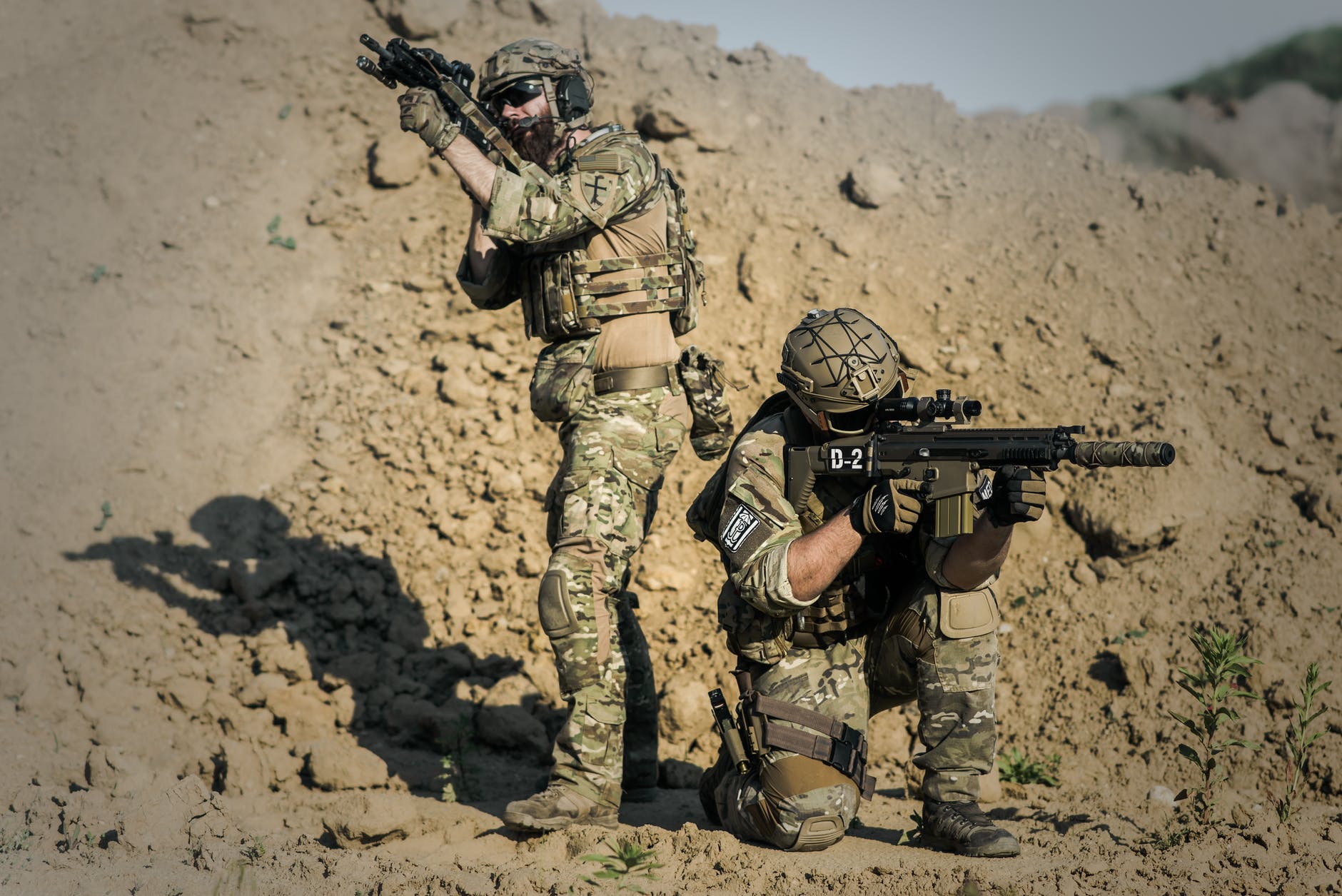
People die, not as obvious as its sounds, not on a bed or a hospital but in a survival situation where you either die or cut your hurt arm with a Swiss knife slowly feeling your own bone for the first time to live. Soldiers in action experience practical Paranoia, war never happens often but when it happens lot of trainees will on the field facing foreign men trying to kill by all means and act just as higher officials say who would let you die if it is necessary. There will be a lot of confusion despite the training, if you put your head over the barrier will you be seen or shot? Where are the enemy? Are they behind you? As you are fighting hand to hand, what are the odds you dying instead of him?
Migrations are always difficult: ask any drought, any plague; ask the year 1947. Ask the chronicles themselves: if there had been no migrations would there have been enough history to munch on?
Going back in time is also tough. Ask anyone back-trekking to Sargodha or Jhelum or Mianwali and they’ll tell you. New faces among old brick; politeness, sentiment, dripping from the lips of strangers. This is still your house, Sir.
And if you meditate on time that is no longer time – (the past is frozen, it is stone, that which doesn’t move and pulsate is not time) – if you meditate on that scrap of time, the mood turns pensive like the monsoons gathering in the skies but not breaking.
Mother used to ask, don’t you remember my mother? You’d be in the kitchen all the time and run with the fries she ladled out, still sizzling on the plate. Don’t you remember her at all? Mother’s fallen face would fall further at my impassivity. Now my dreams ask me If I remember my mother And I am not sure how I’ll handle that. Migrating across years is also difficult.
The writer Keki Daruwalla, starts right off referring to general crisis to help the readers to relate to his point of view (ask any…). He continues adding points that evokes a sense of a dramatic event (ask the chronicles). He slowly turns his narrative tone to a descriptive tone in order to deliver the sentiment right (Going back in time…sentiment dripping).
On the very next paragraph the writer talks about how difficult and sad it is to forget their good times in a creative manner with beautiful use of metaphor (like the monsoons gathering)
On the final paragraph, he brings the readers a step closer to his feelings by talking about family, flashing a dull theme on their minds. He explains how hard is to forget how his mother even looks and realizing how his mother would have felt when she asks the writer if he remembers her mother. This sentence also explains how long the entire partition process took. He finishes off his poem with these final words, “migrating across years is also difficult” where he clarifies all doubt and clearly states that it was all about the psychology effects and issues which trouble the people more than the migration itself.
Overall his poem talks about the leftover side of the “Partition” and adds weightage to it on the histories of India!
We don’t know who was the first human to take birth on this earth. For a human to take birth, it would require two other human beings. It is a classic chicken and egg problem.
Scientifically humans didn't take birth; they evolved from a single cellular amoeba found in deep oceans. As we know, monkeys and chimpanzees were our ancestors. We have evolved from them.
Either mammals, birds or reptiles in any category of living creatures the birth is always given by females. Female birds lay eggs. Female reptiles lay eggs. A female mammal keeps her baby in the womb and gives birth to the young one. So is with humans.
A female human body too lays eggs in her ovary duct every month but the eggs cannot get fertilized on their own. They need an external source i.e sperm of a male. When it enters into the ovary and collaborates with the egg, it forms a fetus which after 9 months grows into a complete baby in the mother's womb.
If the eggs are not fertilized, a layer of blood breaks down and comes out of the body every month and lasts for minimum 3 days and maximum 7 days. This is called the menstruation cycle.
When a girl attains puberty at the age of 13, that means now she is biologically eligible for giving birth to a baby, she has started to lay eggs in her body. Her menstruation cycle has begun.
Blood comes out of the body for 4-5 days on an average, and that's uncertain so a girl has to use sanitary pads and napkins to control that blood. If she doesn't use that, controlling the flow becomes difficult and it seems to be very unhygienic.
Nowadays sanitary pads are available in the market, which gives comfort and hygiene to the girls. In early times no such pads were available and hence those 4 days were hard to pass. Women have to remain seated most of the time. Especially in the context of India.
Even today in many villages of India, these pads are unavailable. Ladies and girls aren't aware of using these products as well as their hygiene. Many NGOs in India are working to spread awareness among the rural areas. They distribute pads free of cost, and teach them how to use it.
In ancient times this cycle was considered as a subject of shame and something which is very impure and dirty. A girl who was in this cycle of period, was given a corner of the house to sit. She was given a separate mat to sleep on, a plate to eat, and a glass of water to drink, which nobody would touch. She cannot sit beside anyone in the house. Entering into kitchens and temples was also restricted. It was believed that if a girl who is on her periods touched anything, that thing would become impure.
Looks like no matter how educated we may be, we continue to surrender to the ancient system and culture especially when it is related to religion.
The people of earlier times were uneducated and unfamiliar with this biological concept and hence they would have assumed according to their level of understanding.
People in India are never ready to accept the change, except very few. People don't want to change according to time's demand. Even if they are enlightened with the knowledge they cannot leave those old rules and rituals which were created because of lack of knowledge.
Even today except a few families all follow the same thinking which is mentioned above. The sad thing is that this is despite being educated, familiar with the reality of this process, well known about the biological process behind this. These people are more illiterate than those who were in earlier times. They are educated but uneducated fools.
For some girls this is something to be shameful of. If accidently she faces leakage and stain it becomes something shameful for them. She feels insecure because people around them make her feel so.
People here need to understand that it's not an easy task to give birth to any woman. From the age of 12-55 she has to face the pain she faces during this menstruation cycle, and above that feel isolated from family members and insecure among society. After this when she carries a baby in her womb for 9 months the problem she has to face is out of our imagination. The pain she experiences while delivering a baby is the most painful experience one can bear. It needs so much courage to face that, and a woman faces it, which is really appreciable.
Menstruation is not a subject of shame. It's the most necessary biological cycle without which no reproduction is possible. The people on this earth are partial but this universe has always been unbiased. It has made the sperm of men equal to the egg of women. Both are useless without each other, both need each other for reproduction.
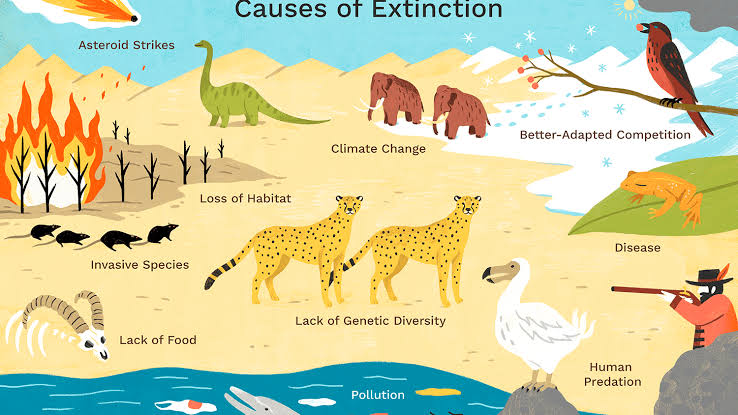
Climate change is real and happening rapidly causing our ecosystem to change drastically. As a result of this and poaching many animals can go extinct in next thirty years if we don’t do something about it. Scientists have said that this mass extinction might be the worse one our planet has had since the disappearance of dinosaurs.
Here is a list of few animals which can go extinct by 2050 if changes aren’t made.
Rhinos
All species of Rhinos face a risk now due to illegal poaching as their horns hold great value. Northern white rhino has only three left and Javan Rhino has merely 60. Steps need to be taken to protect them and it’s possible. The white Rhino was also on verge of extinction but due to conservation programs of South Africa their numbers have grown up to over 20,000. So donate and volunteer to make change.
Polar Bears
They may not yet be listed in endangered but their species are the one which is affected by climate change the most. Due to melting of ice they are forced to migrate for food and hence their habitat can soon be completely destroyed if nothing is being done about it. Evidence also states that some of them started mating with grizzly bears after migrating to less tropical zones and hence their pure species might as well go extinct. One important step people can take is participate in programs to reduce emission of greenhouse gases.
Gorillas
Currently four species of gorilla are listed as endangered. Cross river gorilla at less than 300, Eastland lowland gorilla whose population have gone down by 50 percent, and the mountain gorilla whose population is less than 900. The biggest threat to them is considered poaching, and habitat loss— due to mine digging. Western lowland gorillas are considered in critical state of being endangered due to Ebola virus, poaching and habitat loss. WWF organization helps to their cause and you can provide your assistance through donations.
Cheetahs
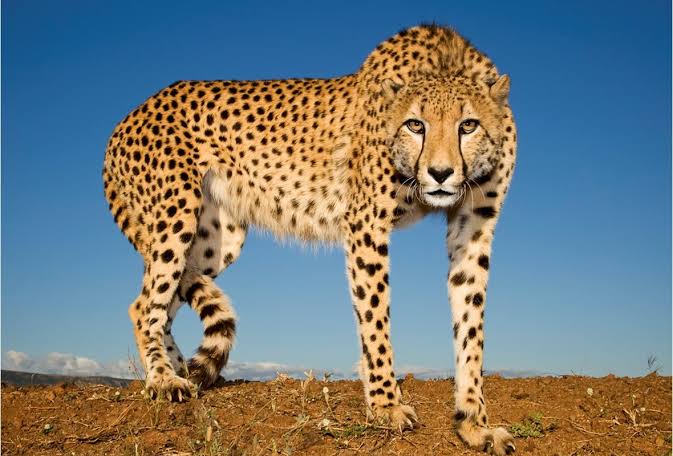
In over a century the total number of cheetah have gone down from over 100 thousand to less than ten thousand. The main threat to them is habitat loss. Cheetah conservation fund helps to their cause and you can volunteer and donate to give your assistant.
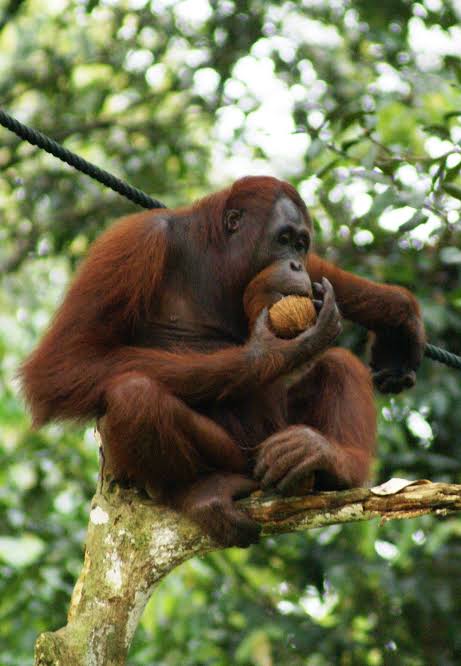
Orangutans
Both the species of Orangutan; Sumatran and Bornean are considered as endangered due to deforestation, hunting for bushmeat and wildlife trade. To support to the cause you can assist Orangutan foundation by donating and volunteering.
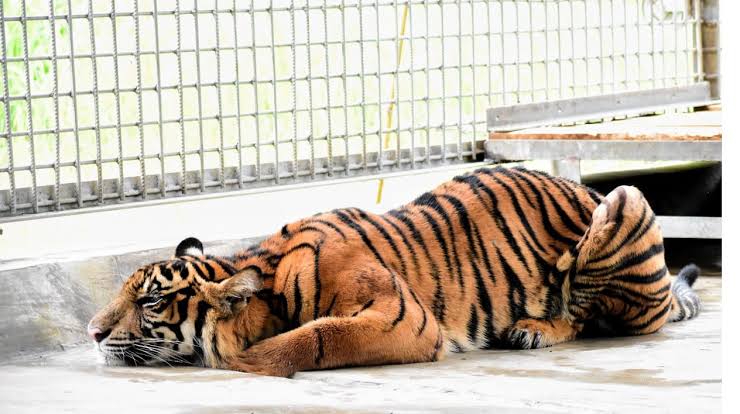
Sumatran Tigers
Their number is merely less than 500 now and due to habitat loss they are extremely endangered. They are a common victim of illegal poaching and wildlife trade. To help them Leonardo DiCaprio foundation and WWF came together for combined effort of doubling up the number of tigers by 2022. You can assist the cause by donating and volunteering.
The world has developed too much, everybody is running in the race of achieving success. Everybody wants to earn, achieve their dreams, and lead a good standard of life.
Earlier the population of the world was not so large and in that most of the people lived in rural areas doing a small job of agriculture, some of them would go to urban areas and cities for doing work or for their studies.
Earlier there was not much competition for getting a job, for being successful, or for earning. Living a life was not so difficult for the people of that era.
As the time passed the world developed, the race for earning and getting a job, getting success became too hard. In today’s time no one is less than anybody. Everybody is developing along with the technology. Everyone has one unique talent. Everybody is trying to be the best.
Everybody on this earth faces struggle. A student struggles to get into a good college. A graduate struggles to get a job. An employee struggles to get a promotion. An employer struggles for the best employee. Each one of us has to face difficulties in our life.
While dealing with all this stuff of life one has totally forgotten the importance of health both physical as well as mental. As people are getting technologically advanced the health issues are also increasing. People cannot maintain themselves emotionally and mentally fit. Fitness has become a least priority for everybody.
Those who can earn well, are financially strong, may be suffering from so many diseases. Some may have cancer. Some may have diabetes. Some may be heart patients. Some may be having other mental issues. All these have led to a decrease in the number of years of living.
It is said that earlier people used to live in an environment of fresh air in the village as there was no urbanization and industrialization at that time. People used to eat fresh vegetables which were harvested by zero fertilizers and pesticides, grown totally organically. Also people used to drink natural milk, and eat pure butter made at home. They used to eat all the grains which were grown totally naturally.
Nowadays as people have shifted towards urbanization and population is increasing day by day so is the demand for all the edible goods and goods. Hence nothing is available pure and organic. Everything which is available in the market, whether it is milk, curd, butter, grains, wheat, vegetables, food and many more things consists of chemicals in some quantity.
Your eating habits as well as your daily schedule has a very high impact on mental and physical health. One must always be concerned about what he/she is eating. One must always follow a proper diet which consists of all the essential nutrients. So that body doesn't face any kind of deficiency.
Everything on this earth should be balanced. One must eat everything in a balanced quantity. It should not be like eating salad everyday. It should also not be like eating junk food all day. In both conditions the body is affected.
Earlier when our parents were kids, they didn't have shops or edibles like pizza, burger, maggie, French fries, momos and many more things which are foreign products. When they go to the market, the best thing their parents could buy them is sweets and that made them so happy.
Nowadays kids and teenagers are attracted towards all the junk foods which are also not India originated and they have made it a habit. They don't like vegetables, salad, chapati and fruits. All they want is pizza, burger, pasta and noodles, which affects their health so badly. The taste of these foods has been stuck on their tongues.
It is said that if a person eats well at a young age, has a healthy diet and has got all the essential nutrients, he/she will not face any of the big diseases in his life, because what you eat in childhood and the nourishment you get when your metabolism, muscles, tissues and bones are growing lasts forever till the end of your life.
A good diet helps you to increase your immune system which supports your body and cells to fight against any of the diseases and infected viruses attacking your body. In this pandemic time when coronavirus has affected everybody's life, lucky are those who have fought with the virus even without getting admitted. It's all because of a good immune system. Many times when the season switches specially in India, some people's bodies adapt to the changing environment easily and some get sick. This non adoption is because of a low immune system.
In the Indian history and vedas, the importance of yoga and asanas is very much highlighted. The Hindu saints do penance in the mountains of himalayas and have led a life of more than 150 years. One who has practiced yoga and exercise in his/her life is always a fit human physically as well as mentally. Yoga is one of the best forms to burst up your stress. It keeps you fresh and active.
Walking 10,000 steps a day never allows your heart to fail. It never allows your body to slow down . Doing exercise in the early morning makes you happy and makes your day a better day. It makes you work with enthusiasm the whole day.
One should be disciplined in how much he/she is eating, when he/she is eating, when he/she is sleeping, when he/she is waking. It is said early to bed, early to rise, makes one healthy and wise. If one wants to be fit and stress free with no pain and headaches, he/she must sleep on time and wake up on time because when you inhale fresh air in the early morning and get sun rays of sunrise it keeps you calm and shining the entire day.
For being fit and being healthy one must have willpower, dedication and sincerity towards the schedule and exercises he/she is doing. Laziness is the biggest enemy of a human. Even if one initiates to be a fitness freak, continuing it and not skipping a single day is the biggest challenge. Starting to exercise is quite easy for once but maintaining it consistently is so difficult.
As technology is developing people are losing their health. Each year lakhs of people die because of fat in their body. Many people lose their life due to various other diseases which can be avoided by just implementing some seriousness towards health, dedication towards schedule and leading a disciplined life.
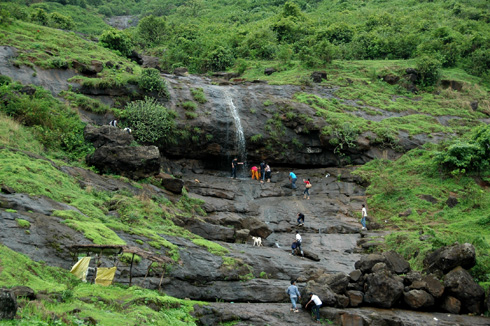
Sinhagad is a hill fortress located at around 35 km southwest of the city of Pune, India. Some of the information available at this fort suggests that the fort could have been built 2000 years ago. The caves and the carvings in the Kaundinyeshwar temple stand as proofs for the same.
The trek is tricky but invigorating and quite easy, You can the eeriness of the fort and have a really good time being at the top, engulfed by breeze and pure nature vibes.
Ramparts, Lohagad Fort, Malavali near Pune Pune India
PICS BY: Divya Nagavi
Situated near Wagholi, Para plateau is one of the uncongested places in the list. It serves as a great sunset and sunrise points with its ever so cooling breeze and the greenery that envelops one into ease. The trekking can be done by anyone so if u r looking for a family picnic spot this might be it.
Ramparts, Lohagad Fort, Malavali near Pune Pune India
Baner Hill is a hill that separates two suburbs of Pashan and Baner in the city of Pune. Serving as the 3rd highest point in the city of Pune, one can view the whole of Pashan and Baner on opposite sides of the hill. On the Northen of the hill, a small temple is located.
Ramparts, Lohagad Fort, Malavali near Pune Pune India
Kavdi Pat is the small bird watching place near Pune, Maharashtra which have many water birds in the month winter season. A significant place must visit for photograher and bird lovers. Many types of birds have been spoted and some of the rare ones are listed below
Lookout for:
White-throated kingfisher Black drongo Indian spot billed Duck
Ramparts, Lohagad Fort, Malavali near Pune Pune India
Visapur Fort is a hill fort near Visapur village in Maharashtra, India. It is a part of the Lohagad-Visapur fortification.
Built during 1713 CE by Balaji Vishwanath(the 1st Peshwa) it has become a famous tourist location in Pune. Unlike the inner structure, majority of its wall is still intact. At a moderate pace, it takes two hours to walk along the winding Visapoor walls.
Dighi hill lies between Pune city And Pimpri-Chinchwad. There’s parking area for bikes at the base of hill for free. Once you reach the base of hill you can go to hill top by walking. Trekking time will take approximately 30 minutes. On the top of hill there’s a temple Of Shankar and a Dargah of a Muslim Saint.
A perfect place for hiking and photography with friends and family followed by excellent views and greenery.
Ramparts, Lohagad Fort, Malavali near Pune Pune India
Vetal Hill is popularly known as Vetal Tekdi is in the city limits of Pune, India. The hill is the highest point within the city limits, with an elevation of 2600 ft. There is a temple of Vetala located on the top of the hill from which the hill derives its name.
The hill is dotted with chirping birds, peacock, rabbits, falcons and colourful butterflies. Apart from the famous Vetal temple the Chaturshringi temple too finds its place here.
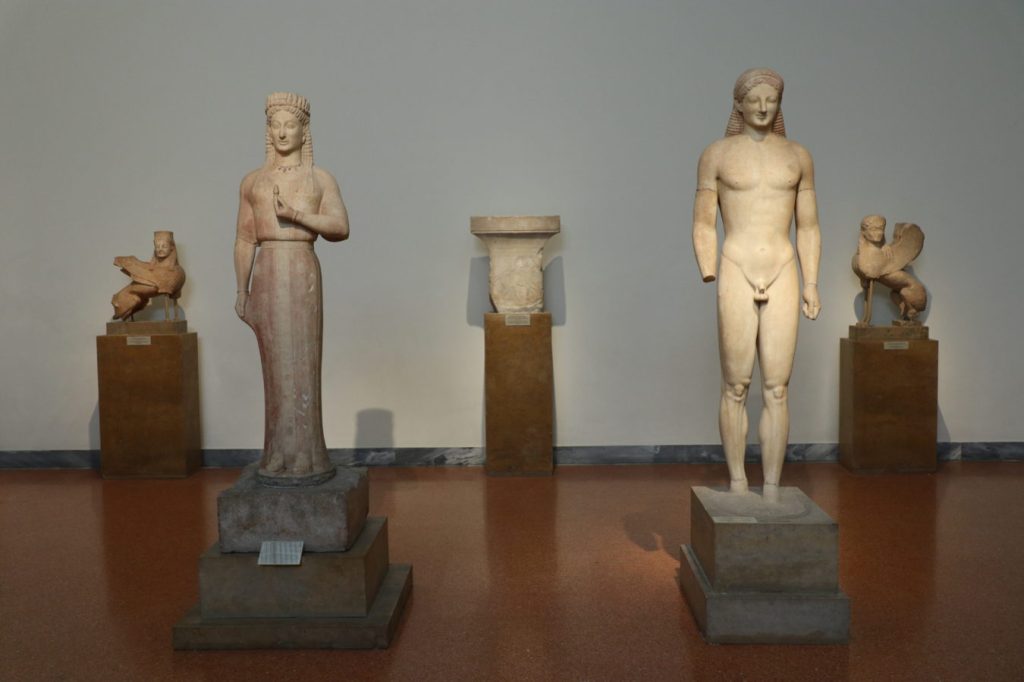
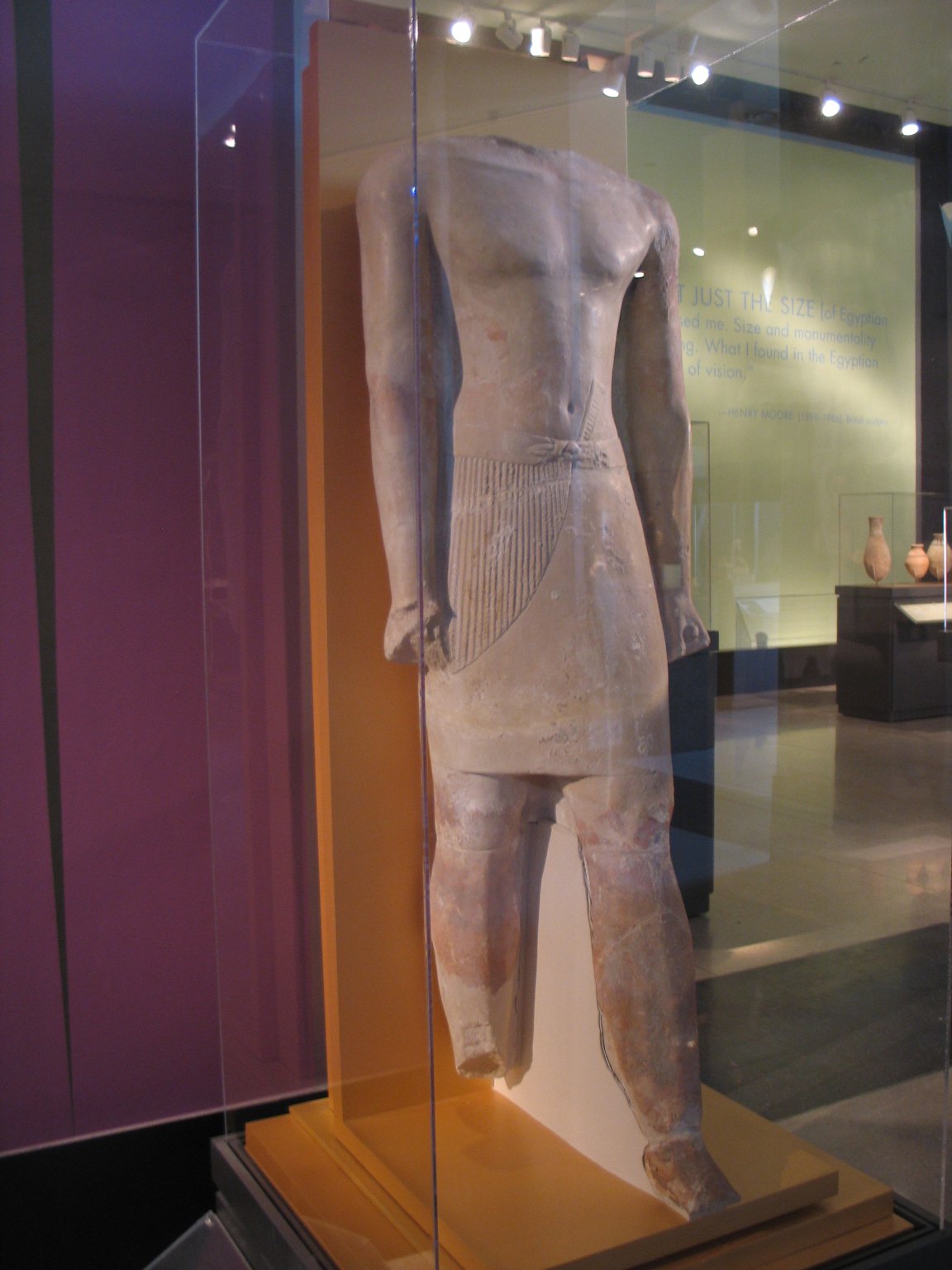
The earliest enormous stone figures (kouroi – naked male adolescents and kore-dressed female figures) were inflexible as in Egyptian fantastic sculptures with the arms held directly along the edges, the feet are practically together and the eyes gaze vacantly ahead with no specific outward appearance. These fairly static figures gradually developed however and with ever more prominent subtleties added to hair and muscles, the figures started to become animated.
Gradually, arms become somewhat bowed giving them solid pressure and one leg (as a rule the right) is put marginally more forward, giving a feeling of dynamic development to the sculpture. Magnificent instances of this style of the figure are the kouroi of Argos, committed at Delphi (c. 580 BCE). Around 480 BCE, the last kouroi become perpetually life-like, the weight is carried on the left leg, the correct hip is lower, the posterior and shoulders looser, the head isn’t exactly so inflexible, and there is a trace of a grin. Female kore followed a comparable development, especially in the chiselling of their garments which were delivered in an always practical and complex manner. A more regular extent of the figure was additionally settled where the head got 1:7 with the body, independent of the genuine size of the sculpture. By 500 BCE Greek stone carvers were at long last splitting ceaselessly from the unbending principles of Obsolete applied workmanship and starting to recreate what they really saw, all things considered.
In the Traditional time frame, Greek artists would sever the shackles of the show and accomplish what nobody else had ever before endeavored. They made a daily existence size and life-like model which celebrated the human and particularly bare male structure. Considerably more, was accomplished than this, however. Marble ended up being a magnificent mechanism for delivering what all stone workers make progress toward that is to cause the piece to appear to be cut from within instead of etched from an external perspective. Figures become exotic and seem solidified in real life; it appears to be that lone every second prior they were really alive. Appearances are given more articulation and entire figures strike a specific mindset. Garments too become more inconspicuous in their delivery and stick to the shapes of the body in what has been depicted as ‘wind-blown’ or the ‘wet-look. Simply, the models no longer appeared to be designs except for were figures ingrained with life and verve.
Be it any field, any job, or any work we are about to do. Always be cautious and be careful of frauds. This information is purely based on providing you dome platforms to know about.
Trivium is a process outsourcing company focused on the Education Vertical. Trivium was founded in 2010 by the Master franchisee of The Princeton Review In India. Trivium offers services in assessment development, eTutoring, hand grading and content support to education companies globally. Our key markets currently are the US,UK and India.
People have had good experiences with them and the salary is said to be good compared to other SME jobs. You do have learn everything about jobs on your own. Like every first job, you will have dedicate yourself completely and work hard.
WorkNhire
About them: WorknHire.com, a product of WorknHire Technologies Pvt Ltd, has been created to bridge the gap between Freelancers and Client in India by bringing them under one roof. The idea of WorknHire came to us seeing the demand generated by the numerous start-ups and small business to find freelancers/contractors for their work and hence a customized solution for the Indian market.
Projects can be posted and found on various categories like IT & Programming, Graphic Design, Content Writing, Data Entry, Finance and Sales & Marketing. Creating an account, finding work or posting a project is free of cost on WorknHire.
It is mainly based in India. It’s free for clients to register on Worknhire.com. There are fees to post jobslike 200(INR) fee to post a job and few more for it to be featured. Worknhire charges a 5.6% service fee on all invoices.
Guru
Guru.com is an expression of our beliefs that we hold close to our hearts. It’s one thing to simply provide a platform where Employers and Freelancers can work together. It’s another to do it in our own unique way. We strive to be the premier platform where professionals go to connect, collaborate, and get work done.
We strive to be the premier platform where professionals go to connect, collaborate, and get work done. We believe that the best work is done in a flexible and secure environment. With transparency comes trust, and with a community that’s built on meritocracy, people are eager to set aside differences in geography, politics and religion to share and profit from economic opportunities.
Since 1998, we have been working tirelessly out of our offices in Pittsburgh, PA and Noida, India to turn these aspirations into reality. We have developed a close bond with our users. As their needs have changed, we have evolved our platform to provide the tools and support they want. Our users teach us, we learn and we grow. We invite you to become a part of our expanding community!
– Guru
They do charge fees, you will be charged 8.95% on your earnings. People have found jobs with adequate pay. It can be confusing but there’s flexibilty.
Youth4Work
Founder: Rachit Jain Founded: 2012
About: We at Youth4work, help the youth to improve their talents and use them for professional achievements, through self-assessment. We strive to use the connected human needs, enabling the transparent flow of hiring demands and talents supply. By helping the companies into insights of the young talent, Youth4work enables the seamless engagement and interaction of the users, through an online assessment program
It is a platform are aiding the youth right from their education and preparation, and eventually in their career journey and professional growth.
Areas: India, Argentina, Mexico, Chile, Columbia, and Peru.
It is a good platform which provides means to study, clear their doubts regarding various topics, self study time, exam tips, find jobs as a student. People have cracked their entrance exams through this and applied for various jobs as well.
Working Nomads
WorkingNomads.co curates lists of the most interesting remote job offers in many professional career areas. We connect professionals who want to work remotely with innovative companies offering independent positions. Working nomads is a remote job board with a curated list of reliable remote positions from around the world.
Working Nomad has several fields of jobs. You can find new updated job postingsevery day in many different areas such as development, management, marketing, design, sales and so on. You have choice of temporary projects or regular employment. A remote career is flexible kind of work and most of their job postings are fully remote with availability to work from anywhere in the world. For recruiters, one job posting costs $149 and a free service for job seekers.
The reviews have been positive till now. Yet, always remain cautious about the information you give, clear every suspicion without fear, and be within safe limits by keeping in touch with HR.
Agra was also known as Akbarabad in the Mughal era. The name was coined by the emperor Shah Jahan, in honour of his grandfather Akbar.
AKBARABAD
Top Things to do in Agra!!
1.TAJ MAHAL:
One of the seven wonders of the world, Taj Mahal is located on the banks of River Yamuna in Agra. It was built by the Mughal Emperor Shah Jahan as a memorial for his third wife, Mumtaz Mahal. It also houses the tomb of Shah Jahan himself. Constructed entirely out of white marble in the 17th century, Taj Mahal is one of the most beautiful monuments in the world. Every year visitors numbering more than the entire population of Agra pass through the magnificent gates to catch a glimpse of this breathtaking monument!
2.FATEHPUR SIKRI:
Located at a distance of 40km from Agra, Fatehpur Sikri is a town in the Agra district and a famous tourist attraction. A city predominantly made of red sandstone, Fatehpur Sikri was founded in 1571 century by Mughal Emperor Akbar. It is essentially a fortified city built by the king and had been the capital of his Empire for fifteen years. Now a UNESCO world heritage site, it is home to Jodha Bai’s Palace, Jama Mosque, Buland Darwaza, and Tomb of Salim Chisti among many other famous monuments. Derived from Arab and central Asian tent encampments, the Imperial Complex is a work of pavilions arranged in formal geometry on a piece of land.
3.JAMA MASJID AGRA:
This relatively simple mosque built almost entirely in red sandstone was built by Jahanara, the daughter of Shah Jahan. Seen in itself, this is still an imposing piece of architecture and one of the largest mosques in the country. This is still used as the main mosque in the city.
From the Taj Mahal to the Kinari Bazar, here are eight famous places in Agra that everyone should consider having on their travel itineraries.
Taj Mahal. Architectural Landmark, Historical Landmark. …
Lionel Messi officially has a new team, joining French power Paris Saint-Germain following 21 years spent with Barcelona. Messi signed a two-year contract with PSG with the option of an extra year, and he will reportedly earn $41 million annually.Messi, 34, will wear the number 30, the number he had when he began his professional career at Barca, and is set to be unveiled by PSG at a press conference they have called for 11:00 am (0900 GMT) Wednesday.
“I am excited to begin a new chapter of my career at Paris Saint-Germain,” he said in a statement on the club’s website
Messi, who was a free agent after his shock departure from boyhood club Barcelona last week, landed at Le Bourget airport to the north of Paris on Tuesday afternoon.There he was greeted by hundreds of PSG supporters who had gathered hoping to catch a glimpse of their new signing.Those fans also gathered outside the club’s Parc des Princes home and near a plush hotel in the city where Messi along with wife Antonella and their three children are expected to be staying.Messi waved to crowds while sporting a Paris t-shirt on his arrival at the airport before being taken for his medical.
Barcelona sent shockwaves across the soccer world when it announced five days prior that it couldn’t afford to re-sign the 34-year-old, and PSG moved quickly to secure the services of the six-time FIFA Player of the Year.Messi joins close friend and former Barcelona teammate, Neymar, as well as rising star Kylian Mbappe at PSG, along with a host of other big names assembled by the deep-pocketed PSG ownership group. The goal is clear: Help PSG win a UEFA Champions League for the first time in club history.
“I am impatient to start a new chapter of my career in Paris”, Messi told the PSG website . “The club and its vision are in perfect harmony with my ambitions. I know how talented the players and staff are here. I am determined to build, alongside them, something great for the club and for the fans. I can’t wait to set foot on the Parc des Princes pitch.”
“I am delighted that Lionel Messi has chosen to join Paris Saint-Germain and we are proud to welcome him to Paris, with his family,” said Nasser Al-Khelaifi, the club president.
“He did not hide his desire to continue to evolve at the highest level and to win trophies. The ambition of the club is of course identical. The addition of Leo to our world-class team confirms the relevance and success of our recruitment. Together with our great coach and his staff, I look forward to seeing our team make history for all of our supporters around the world.”
Messi’s father Jorge, who is also his agent, had earlier confirmed the inevitable as he arrived at Barcelona’s El Prat airport to board a flight to France.Asked by reporters if his son would sign for the French club, he replied: “Yes”.
PSG’s move for Messi had been an open secret for days, although reports in Spain on Monday night talked of a “final offer” by Barcelona to try to keep the player.Instead, the six-time Ballon d’Or winner will join a PSG attack already featuring Neymar and Kylian Mbappe.Qatar-backed PSG see Messi as the missing piece in their jigsaw as they chase the Champions League, the trophy they want more than anything else.”Back together,” Neymar, who played with Messi at Barcelona before moving to PSG in 2017, posted on Twitter.
Messi left Barcelona as the club’s record scorer with 672 goals, having also helped them to seven Copa del Rey titles and three Club World Cups during his 17-year career at the Catalan club.
Messi’s next move has been a topic of heated debate ever since he handed in a transfer request at Camp Nou at the end of the 2019-20 campaign, with Manchester City, Inter Milan and MLS club Inter Miami all reportedly interested in prying him away from the Spanish club.Messi reluctantly stayed for an extra season at Barcelona, refusing to take the club to court to get out of the contract, and he helped Barcelona win one final title, the Copa del Rey. When his contract expired on June 30, it made him a free agent and eventually led to the end of his 21-year career in Catalunya.
The Argentina international’s vast experience and insatiable hunger for major silverware could prove invaluable for PSG as it bids for success on both domestic and European fronts in 2021-22.Head coach Mauricio Pochettino will be expected to wrestle the Ligue 1 title back from Lille and take the club all the way in Europe, with Messi set to complete a mouth-watering front three alongside Neymar and World Cup winner Mbappe.
Right within the first ten minutes of this movie, you could tell that this wasn’t just going to be another generic war movie with heavy reliance on explosions or the excitement of the protagonist killing some Nazis. This film is meant to truly depict the horrors of wars and not just Hollywoodize the whole experience. Steven Spielberg helms this project beautifully, in the sense of not only accurately depicting what took place on that fateful day but also the mental stature of the soldiers going through it all. I also thoroughly enjoyed some of the artistic elements that Spielberg had to offer. I thought the eerie silence amidst all the explosion and gunfire panning across the casualties added a new degree of morbid realism. Though most of this movie is pretty dreary (as it is meant to be), whenever there is even a glimmer of hope for our protagonist there is just a profound feeling of happiness. This movie just magnifies your emotions that even the simplest laugh or just listening to a song just puts a smile on your face. Tom Hanks puts on a wonderful performance really depicting what a Captain might be going through physically and emotionally, at a time like this, coupled with his interesting character arc and characteristics . I felt the score by John Williams was strategically used, only to add more weight to a scene when it needed it, and not vacuously like so many other movies. The last thing I would like to praise is the masterful camera work and the adroit use of the hand held cam, adding to the realism. My only problems with the movie is that it appeared to drag a bit towards the end and its expandable crew.
1. Software Developer/ Programmer Software developers obtain compensation of Rs 2,73,617 per year on the minimum level and Rs 8,58,340 per year on the maximum level. The average salary of a software developer is Rs 4,84,968 annually.
2. Data Warehouse Developer Annually, the minimum and maximum salary for a data warehouse developer are Rs 2,93,821 and Rs 9,47,472 respectively. The average compensation for the candidates is around Rs 5,30,472 per year.
3. Software Testing Engineer/ Test Automation Engineer Software testing engineers obtain a salary of Rs 4,74,120 per year. The minimum and maximum compensations are Rs 2,43,227 and Rs 8,11,764 respectively depending on the experience of the candidates.
4. Tech Architect On average, the salary of a tech architect is Rs 12,04,353 per year. The minimum and maximum compensation depending on the experience of the candidate are Rs 3,31,666 and Rs 23,38,366 annually.
5. Software Quality Assurance Analyst Software quality assurance analyst compensation is around Rs 4,70,236 per year on average. The minimum compensation is Rs 2,52,693 per year and the maximum is Rs 8,02,490.
A portion of the report ranks programming languages by their correlating developer salary. If you’re looking to get paid well, it might be worth your time to learn Clojure and maybe not Dart
Image: GettyImages/RyanJLane
On Monday, Stack Overflow published the results of its 2021 Developer Survey. The findings highlight a range of sentiments and economic information such as developer attitudes toward specific “dreaded” languages and how much certain programming languages pay on average. So, which programming languages do developers love, and which one should you learn if you want to get paid top dollar?
Top programming languages: Loved, hated and wanted
Overall, the results are based on a global survey conducted in May and June of this year involving more than 83,000 software developers. Rust topped the list in terms of languages developers love versus the options they dreaded, with 86.98% of responses saying they loved Rust compared to the 13% of responses who dreaded it. Clojure ranked No. 2 in this regard with 81% of respondents saying they loved the language versus 18.88% who dreaded it.
Interestingly, there’s a marked drop-off between the top two and the rest of the field. TypeScript ranked third with 72.73% of respondents saying they loved the language versus 27.27% who dreaded it. In order, Elixir, Julia, and Python round out the top six.
On the other end of the spectrum, Cobol ranked at the least loved programming language, with 84.21% of respondents saying they dreaded it, versus 15.79% who loved it. In order, VBA, Matlab, Objective-C, Groovy and Assembly sat at the bottom of the list as the top six most dreaded programming languages.
A portion of the report identifies the programming languages developers wanted to have in their arsenal. Stack Overflow determined these languages based on the percentage of “developers who are not developing with the language or technology but have expressed interest in developing with it.” Python topped the list by a wide margin with 19.04% of respondents wanting the programming language, followed by runner-up TypeScript (15.29%). In order, JavaScript (14.59%), Go (14.54%), Rust (14.09%) and Node.js (11.9%) round out the top six most wanted programming languages.
“Rust is the “most loved” language for the sixth straight year, and Python was the “most wanted” for the fifth straight year. Though it’s not as “new” as Rust, Python is easy to learn and applicable across industries. It’s one of the most widely implemented languages, and programs tend to be clear and readable,” said Khalid El Khatib, SVP of marketing communications at Stack Overflow.
Top paying programming languages
A section of the report ranks programming languages by their correlating developer salary. To determine this figure, the survey asked respondents to list their total compensation. Clojure topped the list at $95,000 nearly $14,000 higher than runner-up F# ($81,037). Elixir and Erlang both garnered the same pay ($80,077) followed by Perl and Ruby, with both also earning the same pay ($80,000). On the economic flip side, Dart sat at the bottom of the list at $32,986, just a few grand below PHP ($38,916).
Greediness is the path of destruction of people. When people are greedy, they are blinded by the wrong actions and never be able to come of from that without a constant effort. To make you understand easier, I brought you a story written by C. Rajagopalachari who is was the last Governor-General of India.
The protagonist of the story is Rammaya. He is a simple man living with his wife in a nice house made of tiled roof in a small town. Though he is not rich, he could take care of this family well. There lived two sparrows in the nice spot of the tiled roof of Rammaya’s house adn the mother bird has laid its eggs in the nest.
The male sparrow asked the female why Ramaya’s wife often quarrel with Rammaya. The female replied how could I know and told the male to mind its own business. Then the male sparrow said, you are always self-centered and also asked whether thy could help Rammaya. The female sparrow replied aggressively “don’t talk about the matter that does’nt concern us. It is enough for us if the cat doesn’t come to us”. Here comes the main twist.
The male sparrow picked a diamond nose-jewel somewhere from the land. As soon as picking it, went to its nest and asked the female bird ” Do you like it?” The female replied, what could I do with this diamond jewel. It scolded the male to bring food for the young ones. this male bird dropped the diamond jewel in the house and went to search food for the young ones.
Rammaya’s wife noticed the stud while sweeping the floor. She didn’t think of anything and with delight she wore it. Ramaya became angry and asked her how did she get that diamond stud. She replied causally that she found it and so she wore it. Rammaya insisted her to hand it over to the village magistrate. He also said, if police come and search for it, it will be a disgrace for us.
In the neighbourhood, the talk begun about the lost diamond-stud. The owner of the stud is Meenakshi Ammal’s daughter. She consoled the little girl and also said not to tell her father. If he knows he would in rage, said Meenakshi Ammal. But this talk was heard by the little girl’s father and it has to be admitted. The suspect was the maid-servant Kuppayi. The police searched her but could find nothing. After hearing this, Rammaya was very timid and his wife put the diamond ring in a safe place. Soon after that she had severe fever and was kept in the bed. So no one searched their house.
The male sparrow said, the lady of the house is scared and is down with fever. Replied the female sparrow, it is solely due to your doing. THe male answered bravely, “Did I ask her to steal it?” THis is because the humans are bound to be greedy. The female appreciated the male and said that we should never be greedy for what belongs to others.
The story came to an end by, Rammaya and his wife lived their whole life with the fear of being caught. THe diamond-stud may be with them but the fear of getting caught is more than that.
The thing I understand from the story is, We humans have six sense yet we don’t have conscience. We are greedy and not being truthful and helpful to others. We know birds have only five senses. Do think about the birds and humans. The birds aren’t greedy forwhat doesn’t belong to them. But the humans are greedy.
Even if you don’t help otherrs, try not to be greedy!!!
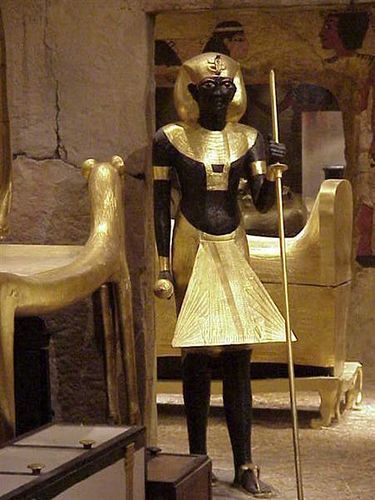
Egyptian craftsmen, whose aptitudes are best exemplified in form, viewed themselves basically as craftspeople. Inferable from their control and exceptionally created stylish sense, nonetheless, the results of their speciality have the right to rank as craftsmanship extraordinary by any principles.
A great part of the enduring model is funerary—i.e., sculptures for burial chambers. The greater part of the rest of made for setting in sanctuaries—votive for private people and custom for imperial and awesome portrayals. Regal monsters were custom and furthermore served todeclare the greatness and intensity of the lord. Without anyone else, in any case, a sculpture could speak to nobody except if it conveyed a recognizable proof in symbolic representations.
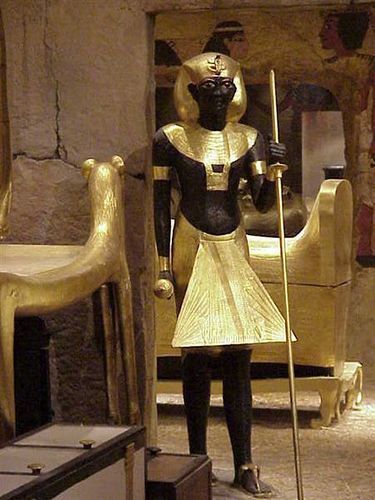
The standing male figure with left leg progressed and the situated figure was the most widely recognized sort of Egyptian sculpture. Hints of wooden figures found at Ṣaqqārah show that the principal type was being made as ahead of schedule as the first tradition. The soonest situated figures are two of Lord Khasekhem of the second administration, which, albeit moderately little, as of now epitomize the basic monumentality of all regal models.
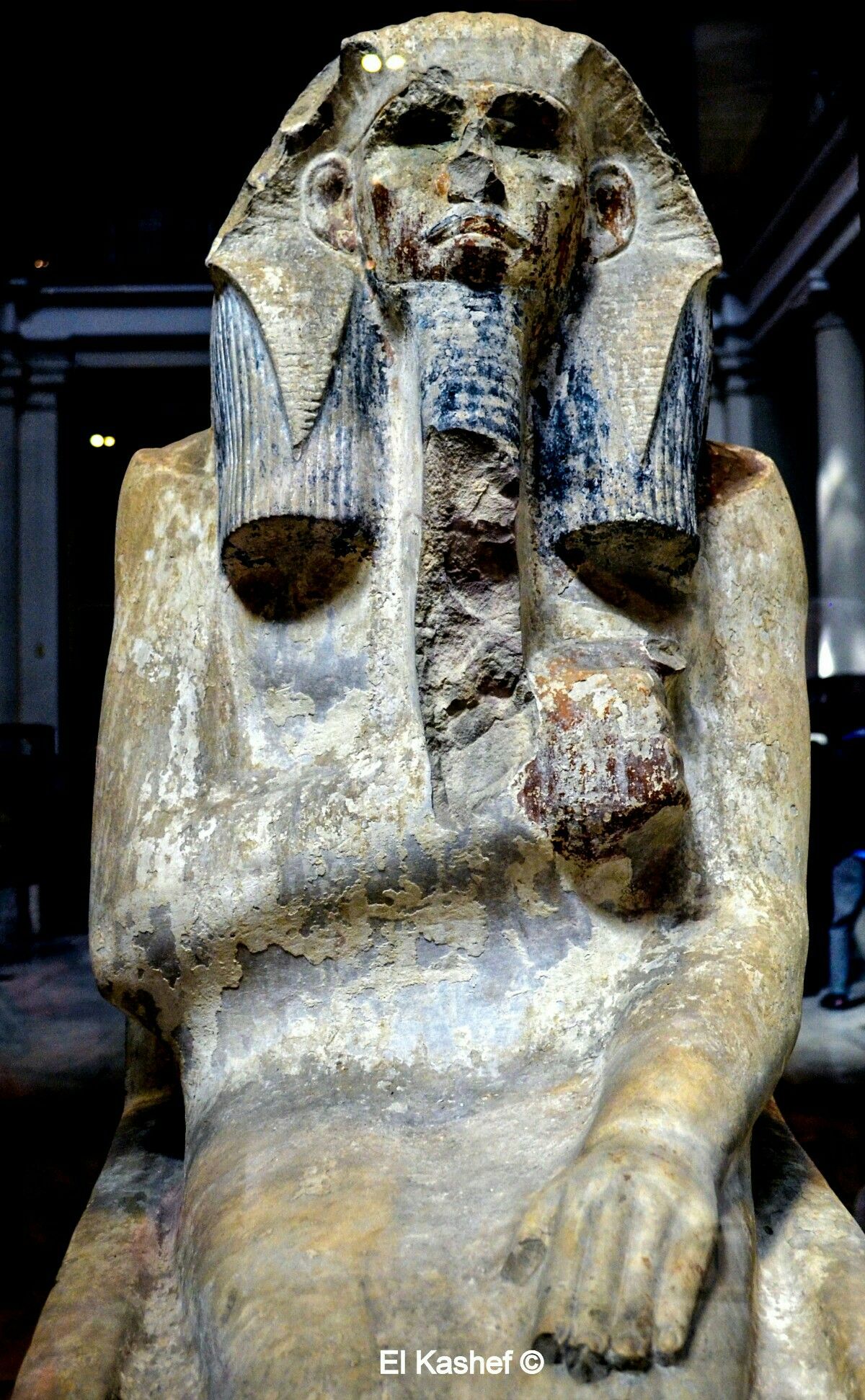
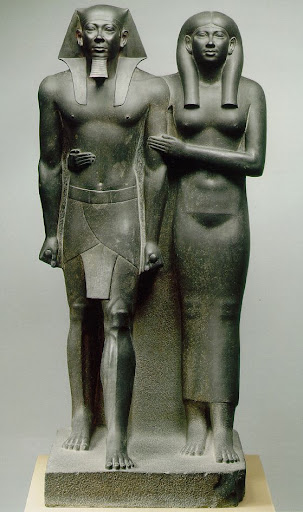
The preeminent sculptural capability was accomplished strikingly rapidly. The enormously noteworthy life-size sculpture of Djoser guided the path toward the eminent imperial figures from the fourth tradition pyramid buildings at Giza. For nuance of cutting and genuine glorious pride, hardly anything of later date outperforms the diorite sculpture of Khafre. Barely less fine are the models of Menkaure (Mycerinus). The pair sculpture of the lord and his significant other epitomizes brilliantly both respect and conjugal love; the groups of three indicating the ruler with goddesses and nome (common) gods display a total authority of cutting hard stone in numerous planes.
This association of ability and virtuoso was accomplished in nonroyal sculpture just as in the painted limestone sculptures of Ruler Rahotep and his better half, Nofret, which additionally show the Egyptians’ amazing aptitude in decorating eyes into models, expertise further exhibited in the wooden figure of Kaʿaper, known as Shaykh al-Balad, the very encapsulation of the affected authority.
Among increments to the sculptural collection during the Old Realm was the scribal sculpture.


























You must be logged in to post a comment.