PLASTIC ROADS

Plastic roads also offer several benefits. These roads have better durability compared to traditional asphalt concrete roads, they can withstand water better, have smoother surfaces, develop lesser cracks and potholes which means lesser maintenance costs. The environmental benefits are an add-on to this.

To construct a single lane road stretch of 1 kilometer, 10 tonnes of bitumen is used. In a plastic road, this composition can be altered to 9 tonnes of bitumen and 1 tonne of plastic. So, on an average, 1 tonne plastic consisting of more than 10 lakh (1 million) waste plastic bags can be consumed in a single kilometre. Considering that the world has millions of kilometres of roads, imagine the amount of plastic waste that can be re-used or recycled for surfacing or building new roads.

Road construction provides a solution to the problem of plastic waste. Of the 8.3 billion tonnes of plastic produced over the last 70 years, less than 10% has been recycled. That proportion can go up dramatically, with the use of discarded and waste plastic in road construction. India generates about 15,000 tonnes of plastic waste every day, only 7,000-9,000 tonnes is recycled. To increase the recycling rates, in 2015, the central government made the use of plastic waste in road construction mandatory — shredded waste plastic is mixed with bitumen at high temperatures. Not all plastic can be used, the guidelines list plastic film (carry bags, cups), hard foam, soft foam and laminated plastics (packaging for biscuits, chocolates and chips). Several Indian cities such as Pune, Indore, Surat, Chennai — are already constructing roads using the plastic-bitumen mix. These roads are longer lasting, and do not develop cracks and potholes, which account for one-tenth of the road deaths in the country. Depending on the quality of tar, plastic waste can replace 10-30% of conventional material.

 The issues highlighted above throw light on the urgent needs for re-examining and formulating new guidelines/specification with regard to design and construction of concrete roads in India. The issues raised become more pertinent in the context of the large scale construction of cement concrete roads at the anvil. Feedback from the various construction agencies and from research and development fraternity can lead to meaningful contribution in solving many issues at stake in the field of design and construction of concrete roads in India. The polymer coated aggregate bitumen mix forms better material for flexible pavement construction as the mix shows higher Marshall Stability value and suitable Marshall Coefficient. Hence the use of waste plastics for flexible pavement is one of the best methods for easy disposal of waste plastics.Plastic roads would be a boon for india’s hot and extremely humid climate where durable and eco-friendly roads which will relieve the earth from plastic waste. As the population increases, the solid waste also increases proportionally. The best alternative is the usage of waste as construction material assuring a good disposal. As this method is economic the practice would be on satisfactory extent aiding the future generations for a good solid waste management

Studies show plastic waste can last three times more than usual materials used for roads today. They produce lower transportation and labor  costs. Moreover, they reduce flooding and incidences of potholes.

 ADVANTAGES OF PLASTIC ROADS :

  • A light weight pre fabricated construction
  • Faster construction and less maintenance  time
  • Higher quality and loger life span
  • Little to no maintenance required .The material is virtually impervious to conditions such as the weather and weeds
  • The innovation is considerably  more sustainable
  • The goal is to make plastic road out of 100%  recycled plastic and to make it fully reusable . It is perfectly in line with the cradle to cradle philosophy and the principles of the circular economy
  • Double use of space . The hollow space in the design can be used to store water or as a space for cables and pipes
  • The possibility of constant safety and water drainage
  • Everything on and around  the road can be prefabricated
  • The concept offers opportunities for further innovation .Examples include solar heated roads, light poles,  traffic loop sensors
  • Contibution to the social problem of plastic waste

OLIGOPOLY MARKET

Oligopoly is a market situation in which there are a few firms selling homogeneous or differenti­ated products. It is difficult to pinpoint the number of firms in ‘competition among the few.’ With only a few firms in the market, the action of one firm is likely to affect the others. An oligopoly industry produces either a homogeneous product or heterogeneous products.

The former is called pure or per­fect oligopoly and the latter is called imperfect or differentiated oligopoly. Pure oligopoly is found primarily among producers of such industrial products as aluminium, cement, copper, steel, zinc, etc. Imperfect oligopoly is found among producers of such consumer goods as automobiles, cigarettes, soaps and detergents, TVs, rubber tyres, refrigerators, typewriters, etc.

CHARACTERISTICS OF OLIGOPOLY

  • Interdependence

There is recognised interdependence among the sellers in the oligopolistic market. Each oligopolist firm knows that changes in its price, advertising, product characteristics, etc. may lead to counter-moves by rivals. When the sellers are a few, each produces a considerable fraction of the total output of the industry and can have a noticeable effect on market conditions.He can reduce or increase the price for the whole oligopolist market by selling more quantity or less and affect the profits of the other sellers. It implies that each seller is aware of the price-moves of the other sellers and their impact on his profit and of the influence of his price-move on the actions of rivals.

Thus there is complete interdependence among the sellers with regard to their price-output policies. Each seller has direct and ascertainable influences upon every other seller in the industry. Thus, every move by one seller leads to counter-moves by the others.

  • Advertisement

The main reason for this mutual interdependence in decision making is that one producer’s fortunes are dependent on the policies and fortunes of the other producers in the indus­try. It is for this reason that oligopolist firms spend much on advertisement and customer services.As pointed out by Prof. Baumol, “Under oligopoly advertising can become a life-and-death matter.” For example, if all oligopolists continue to spend a lot on advertising their products and one seller does not match up with them he will find his customers gradually going in for his rival’s product. If, on the other hand, one oligopolist advertises his product, others have to follow him to keep up their sales.

  • Competition

This leads to another feature of the oligopolistic market, the presence of com­petition. Since under oligopoly, there are a few sellers, a move by one seller immediately affects the rivals. So each seller is always on the alert and keeps a close watch over the moves of its rivals in order to have a counter-move. This is true competition.

  • Barriers to Entry of Firms

As there is keen competition in an oligopolistic industry, there are no barriers to entry into or exit from it. However, in the long run, there are some types of barriers to entry which tend to restraint new firms from entering the industry.

They may be:

(a) Economies of scale enjoyed by a few large firms

 (b) control over essential and specialised inputs

(c) high capital requirements due to plant costs, advertising costs, etc.

 (d) exclusive patents and licenses; and

(e) the existence of unused capacity which makes the industry unattractive. When entry is restricted or blocked by such natural and artificial barriers, the oligopolistic industry can earn long-run super normal profits.

  • Lack of Uniformity

Another feature of oligopoly market is the lack of uniformity in the size of firms. Finns differ considerably in size. Some may be small, others very large. Such a situation is asymmetrical. This is very common in the American economy. A symmetrical situation with firms of a uniform size is rare.

  • Demand Curve

It is not easy to trace the demand curve for the product of an oligopolist. Since under oligopoly the exact behaviour pattern of a producer cannot be ascertained with certainty, his demand curve cannot be drawn accurately, and with definiteness. How does an individual seller s de­mand curve look like in oligopoly is most uncertain because a seller’s price or output moves lead to unpredictable reactions on price-output policies of his rivals, which may have further repercussions on his price and output.The chain of action reaction as a result of an initial change in price or output, is all a guess-work. Thus a complex system of crossed conjectures emerges as a result of the interdependence­ among the rival oligopolists which is the main cause of the indeterminateness of the demand curve.

  • No Unique Pattern of Pricing Behaviour

The rivalry arising from interdependence among the oligopolists leads to two conflicting motives. Each wants to remain independent and to get the maximum possible profit. Towards this end, they act and react on the price-output movements of one another in a continuous element of uncertainty.On the other hand, again motivated by profit maximisation each seller wishes to cooperate with his rivals to reduce or eliminate the element of uncertainty. All rivals enter into a tacit or formal agreement with regard to price-output changes. It leads to a sort of monopoly within oligopoly.They may even recognise one seller as a leader at whose initiative all the other sellers raise or lower the price. In this case, the individual seller’s demand curve is a part of the industry demand curve, having the elasticity of the latter. Given these conflicting attitudes, it is not possible to predict any unique pattern of pricing behaviour in oligopoly markets.

MONOPOLY MARKET

Monopoly is a market situation in which there is only one seller of a product with barriers to entry of others. The product has no close substitutes. The cross elasticity of demand with every other product is very low. This means that no other firms produce a similar product. According to D. Salvatore, “Monopoly is the form of market organisation in which there is a single firm selling a commodity for which there are no close substitutes.” Thus the monopoly firm is itself an industry and the monopolist faces the industry demand curve.

The demand curve for his product is, therefore, relatively stable and slopes downward to the right, given the tastes, and incomes of his customers. It means that more of the product can be sold at a lower price than at a higher price. He is a price-maker who can set the price to his maximum advantage.

However, it does not mean that he can set both price and output. He can do either of the two things. His price is determined by his demand curve, once he selects his output level. Or, once he sets the price for his product, his output is determined by what consumers will take at that price. In any situation, the ultimate aim of the monopolist is to have maximum profits.

CHARACTERISTICS OF MONOPOLY

The main features of monopoly are as follows:

1. Under monopoly, there is one producer or seller of a particular product and there is no differ­ence between a firm and an industry. Under monopoly a firm itself is an industry.

2. A monopoly may be individual proprietorship or partnership or joint stock company or a co­operative society or a government company.

3. A monopolist has full control on the supply of a product. Hence, the elasticity of demand for a monopolist’s product is zero.

4. There is no close substitute of a monopolist’s product in the market. Hence, under monopoly, the cross elasticity of demand for a monopoly product with some other good is very low.

5. There are restrictions on the entry of other firms in the area of monopoly product.

6. A monopolist can influence the price of a product. He is a price-maker, not a price-taker.

7. Pure monopoly is not found in the real world.

8. Monopolist cannot determine both the price and quantity of a product simultaneously.

9. Monopolist’s demand curve slopes downwards to the right. That is why, a monopolist can increase his sales only by decreasing the price of his product and thereby maximise his profit. The marginal revenue curve of a monopolist is below the average revenue curve and it falls faster than the average revenue curve. This is because a monopolist has to cut down the price of his product to sell an additional unit.

The above two conditions between themselves make the average revenue curve of the individual seller or firm perfectly elastic, horizontal to the X-axis. It means that a firm can sell more or less at the ruling market price but cannot influence the price as the product is homogeneous and the number of sellers very large.

DISINVESTMENT POLICY OF INDIA

•Disinvestment of a percentage of shares owned by the Government in public enterprises emerged as a policy option in the wake of economic liberalization, globalization, and structural reforms launched in 1991. •Initially, it was not conceived as the privatization of existing public enterprises but as limited sales of equity/shares with the objective of raising some resources to reduce the budgetary deficit and ensuring market discipline to boost the performance of public enterprises. •Disinvestment is defined as the action of a government aimed at selling or liquidating its shareholding in a public sector enterprise in order to get the government out of the business of production and increase its presence and performance in the provision of public goods and basic public services such as infrastructure, education, health, etc. •Funds from disinvestment would also help in reducing public debt and bring down the debt-to-GDP ratio while competitive public undertakings would be enabled to function effectively.

METHODS OF DISINVESTMENT

STRATEGIC SALE

 In a strategic sale, management control is transferred to strategic partner and company no longer remains a Government company. In case of PSUs, the transfer of shares involves bringing down Government share holding below 51%. In strategic sale, a sale agreement is signed and Government ensures that the agreement signed with strategic partner properly safeguards the interests of Company, of Government and of Employees. Strategic sale is suitable for non-strategic companies or where Government want to transfer management control to buyer. The successful examples of strategic sale are MFIL, BALCO, CMC, HTL. VSNL, IBP, HZL, PPL, IPCL, etc. One of the significant advantages of strategic sale is the chances of getting maximum price because of transfer of management control. But the process is quite time consuming and has issues relating to management, land & labour to be reserved. In non-strategic companies Government has given more emphasis on strategic sale.

CAPITAL MARKET

Offer for Sale to Public at Fixed Price: Under this method, an issue of equity shares is made which are held by GOI to public at a pre determined price. Interested party gets the offer of sale. This method is suitable for profit making companies. This is a quite quick and transparent method. Example is offer of 1 million share of VSNL @ Rs.750 per share. •Offer for sale to Public through Book Buildings: Under this method, equity shares of companies under disinvestment are issued to public at large but price is discovered through bidding by interested investors. Bidder making highest bid gets the companies. Precedents of this method are Hughes software Ltd., HCC Technologies Ltd. and Bharati Televentures in private sector. Other methodologies under capital market are secondary market operation, international offering, private placement of equity and auction etc.

WAREHOUSING

The target investor set is institutions under this method. This method is regulated by RBI restrictions on Bank Investments. Under this method, GOI sells shares at a discount to market price. As such no warehouser is interested to invested. There are no examples of this method being implemented in PSUs till now.

REDUCTION IN EQUITY

This method is regulated by Companies Act, SEBI Buyback regulations. •Under this method, company buy its shares back from other shareholders and cancel them. There are two ways further in this method: · Buy-back can be made through tender route with a fixed price. •It can be made through book building where price is determined through bidding by interested investors.

CONCLUSION

The present disinvestment policy in India has gone under many phases and now the Government has decided the path of strategic sale to be adopted for disinvestment in Public Sector Units (Non Strategic). The Disinvestment process works on three-tier mechanism consisting of CCD, CGD and IMG. Disinvestment Commission to make the process transparent, free from bias gave valuable recommendations regarding valuation of PSUs under disinvestment. Recommendation to standardize the methodologies has also given to facilitate the accurate valuation of a PSU. The financer observed that the Disinvestment and Privatization are useful economic tools. He said „We will selectively employ these tools, consistent with the declared policy‟. The Government has now decided not to privatize profit making PSEs and focus is now on to disinvest non-strategic (not financially sound) companies through strategic sale.

ABSOLUTE LIABILITY

ABSOLUTE LIABILITY

INTRODUCTION TO ABSOLUTE LIABILITY

The concept of absolute liability evolved in India after the case of M.C Mehta vs Union of India[1] famously known as “Oleum Gas Leak case”. This is one of the historic cases in the Indian Judiciary. The Supreme Court, while deciding the

Oleum gas leak case of Delhi in 1986, found strict liability woefully inadequate to protect citizens’ rights in an industrialised economy like India and replaced it with ‘the absolute liability principle’

The case of M.C Mehta is based on the principle of strict liability but with no exception were given and the individual is made absolutely liable for his acts.  It is based under this principle that the defendant won’t be allowed to plead defence if he/she was at fault as it was laid down in Ryland vs Fletcher case. After the Bhopal gas leak case many people lost their lives and are suffering from some of the fatal diseases through the generation and because of this there was an urgent need to develop a rule under strict liability which had no exceptions available to the defendant to escape from the liability.

The rule laid down by the Honourable Supreme Court of India is much wider with respect to the rules laid down the House of Lords in the case of Ryland vs Fletcher. Absolute liability does not require the cause of incident or the ‘consent’ of the facility’s operators to be known to make any enterprise liable. The liability is triggered by the mere escape of hazardous substances, irrespective of the cause. It was propounded by the Supreme Court that where an enterprise is engaged in a hazardous or inherently dangerous activity and if any harm results to anybody on account of the accident in operation,  the enterprise would be held strictly and absolutely liable to compensate to all those who are affected by the accident.

Under the absolute liability principle, the apex court held that a company in a hazardous industry cannot claim any exemption.

  1. It has to mandatorily pay compensation, whether or not the disaster was caused by its negligence. The court said a hazardous enterprise has an “absolute non-delegable duty to the community”.
  2. The principle of absolute liability is part of Article 21 (right to life). 

No Need to Show Negligence

For them to be held responsible, there is no need to show they were negligent, or did something which caused the leak – the very fact that it happened from their plant is enough.

There are no exceptions or defences whatsoever to this ‘absolute liability’, which is what makes it makes it stronger than the legal standard that is generally followed in other countries

Scope of New Rule of Absolute Liability

The Scope of new rule is very wider in all terms than old rule.

-Do not have any exception

-Very wide scope.

-Cover not only public negligence or fault but cover even personal injuries caused due to the negligence of neighbour.

 -Now cover not only the occupier of land but also non occupier of the land.

ABSOLUTE LIABILITY :

A JOURNEY FROM STRICT LIABILITY 

a) Doctrine of Strict Liability

In  the curious case of strict liability, the aforementioned concept of ‘fault’ is absent, along with intention and motive. This is because there are many activities which are so dangerous that they constitute risks to persons and property, and responsibility must be borne by some person in case of any harm. The law allows the potentially harmful activities to be carried on for the sake of social utility, but only in accordance with safety measures and the doctrine of strict liability – called so because the liability arises even without any negligence on the part of the defendant.

The doctrine of “strict liability” evolved in  Fletcher v. Rylands[1]. In this case, Rylands hired contractors to build a reservoir on his land. While building it, the contractors discovered some flaws and left them unfixed. After some time, Rylands’s reservoir burst and flooded Fletcher’s adjoining mine causing £937 worth of damage.  Blackburn, J. opined that any person who for his own purposes brings on his land and collects and keeps there anything likely to do mischief, if it escapes must keep it at his peril and if he does not do so, is prima facie answerable for all the damage which is the natural consequence of its escape[2].

The Rule in Rylands v. Fletcher[1] :

The rule in this case rests on the idea of foreseeability­ of damage; the person who is the source of damage is penalized for failing to avert the reasonably foreseeable damage.

Facts: Rylands and Fletcher were neighbours. Fletcher owned a mill, for the energy purposes of which he hired independent contractors and engineers to construct a water reservoir on his land. It so happened that there were old unused shafts under the site of the reservoir which the engineers failed to notice and block. Due to the negligence of the contractors, when water filled Fletcher’s reservoir, the water entered Rylands’ coal mine and caused huge loss, for that is where the shafts led. Subsequently, Ryland filed a suit against Fletcher. The defendant claimed that it was the fault of the contractors’, and the cause of damage was unknown to him.

Issues: The issue was very concise – Can the defendant be held liable, even if it was the act of someone else due to which an entity on his land escaped? It was notable because there was no negligence or intention on part of the defendant.

Judgment: The House of Lords rejected the plea of the defendant and held him liable for all the damages to Rylands’ mine. According to the rule set by this case, if a person brings on his land and keeps there any dangerous thing, a thing which is likely to do mischief if it escapes, he will be prima facie answerable to the damage caused by its escape even though he had not been negligent in keeping it there. Despite there being no fault or negligence on the part of the defendant, he was held liable because he kept some dangerous thing on his land and the said dangerous thing has escaped from his land and caused damage.       Image

Essentials of Strict Liability

Certain qualifications were given to decide whether a liability is strict liability or not. Only after these essential qualifications are satisfied, can a liability can be termed as strict liability. These essentials, which are elucidated upon further on, are:

  • Some dangerous thing must have been brought by a person on his land.
  • The thing thus brought or kept by a person on his land must escape.
  • It must be non-natural use of land.

1.Dangerous thing

This simply means that the defendant will be liable when the thing that escaped from his premises was a dangerous thing. The word ‘dangerous’ here implies that it is likely to do any sort of mischief if it escapes from the land. The collected water in Fletcher’s reservoir was the dangerous thing in the above mentioned case.

2. Escape

It is also essential that the thing causing harm must escape from the premises of the defendant, and it should not be within the reach of the defendant once it escapes.

3. Non-Natural Use Of Land

For the use to be non-natural, it must be some special use that brings with it increased danger to others. It must not be the ordinary use of land or use as is proper for the general benefit of community.

The Exceptions

There are certain exceptions to this rule, which are:

1. Default of the Claimant

If the damage is caused solely by the act or default of the claimant himself, there is no remedy for him.

2 . Consent of the claimant

Where the claimant has expressly or implicitly consented to the presence of the source of danger and there has been no negligence on the part of the defendant, the defendant is not liable.

3 . Act of God

An event which directly and exclusively results from natural causes that could not have been prevented by the exercise of foresight or by the exercise of caution may be called an Act of God. Say, if the escape was unforeseen and without any human intervention, caused by some super natural force, then the defendant will not be liable.

4 . Statutory Authority

An act done under the authority of a statute exempts the defendant from tortious liability. However, the defence cannot be pleaded if the if there is any kind of negligence on the part of the defendant.

5 . Act of Third Party

The rule of strict liability doesn’t apply when the damages are caused due to the act of a stranger, i.e. a person who is not the servant nor is under the control of the defendant. However, due care must be taken by the defendant to avoid the damages if the act of the stranger can be foreseen by the defendant.

b) Doctrine of Absolute Liability

The principle of “absolute liability” was first ever applied by the Supreme Court of India in M.C. Mehta v. Union of India [3](popularly known as Oleum gas leak case). In this case, oleum gas leaked from a fertilizer plant of Shriram Foods and Fertilizers, Delhi and caused damage to several people. A pending public interest litigation (PIL) by M.C. Mehta provided the opportunity to the Court to pass a series of orders dealing with the after-effects of gas leak. In this case, the Court disapproved the application of the principle of strict liability. The Supreme Court opined that:

an enterprise which is engaged in a hazardous or inherently dangerous industry which poses a potential threat to the health and safety of the persons working in the factory and residing in the surrounding areas owes an absolute and non-delegable duty to the community to ensure that no harm results to anyone on account of hazardous or inherently dangerous nature of the activity which it has undertaken. The enterprise must be held to be under an obligation to provide that the hazardous or inherently dangerous activity in which it is engaged must be conducted with the highest standards of safety and if any harm results on account of such activity, the enterprise must be absolutely liable to compensate for such harm and it should be no answer to the enterprise to say that it had taken all reasonable care and that the harm occurred without any negligence on its part.” 

Answers to your questions on mental health !

” What mental health needs is more sunlight, more candor, and more unashamed conversation.” – Glenn Close

Mental health plays a supreme role in everyone’s life . It is mental health only which affects how we think , how we behave , how we feel , & how we cope up with life . It also help us determine how we cope up with stress , relate to others & make choices . It is important at every stage , from childhood to adulthood & aging . This includes our physical , psychological & social well being .

WHAT CAN AFFECT OUR MENTAL HEALTH ?

Many factors affect our mental health , some of them are , biological factors , such as genes & brain chemistry , family history & mental health problems in the family . This affects a lot , because they are present already in you , they are biological factors & outside factors have no affect hand & effect on you mental health . Sometime your very own experience in your life make you mentally ill , experiences such trauma , abuses , accidents leads to poor mental health . Not only biological factors , family history or bad experiences affect our mental health , but our way of living the life decides the how our mental health is . Our diet , food habits , physical activity also tells us our state of mental health . you can improve your mental health by meditating , doing yoga , by involving in physical activities .

What are the signs that I might have a mental health problem?

When it comes to your emotions, it can be hard to know what is normal and what is not. There are warning signs that you may have a mental health problem, including

  • A change in your eating or sleeping habits
  • Withdrawing from the people and activities you enjoy
  • Having low or no energy
  • Feeling numb or like nothing matters
  • Having unexplained aches and pains
  • Feeling helpless or hopeless
  • Smoking, drinking, or using drugs more than usual
  • Feeling unusually confused, forgetful, angry, upset, worried, or scared
  • Having severe mood swings that cause problems in your relationships
  • Having thoughts and memories that you can’t get out of your head
  • Hearing voices or believing things that are not true
  • Thinking of harming yourself or others.
  • Not being able to perform daily tasks like taking care of your kids or getting to work or school

WHY IS MENTAL HEALTH IMPORTANT ?

Mental health is very important , it tells you how to behave to a particular situation , how to cope up with stress . It helps us to stay physically fit & mentally strong . By being in good mental health one can carry good relationships with everyone . It increases your work productivity , helps you to contribute a handsome amount of efforts for the community . It makes you realize your full potential & caliber with which you can outshine anywhere & everywhere.

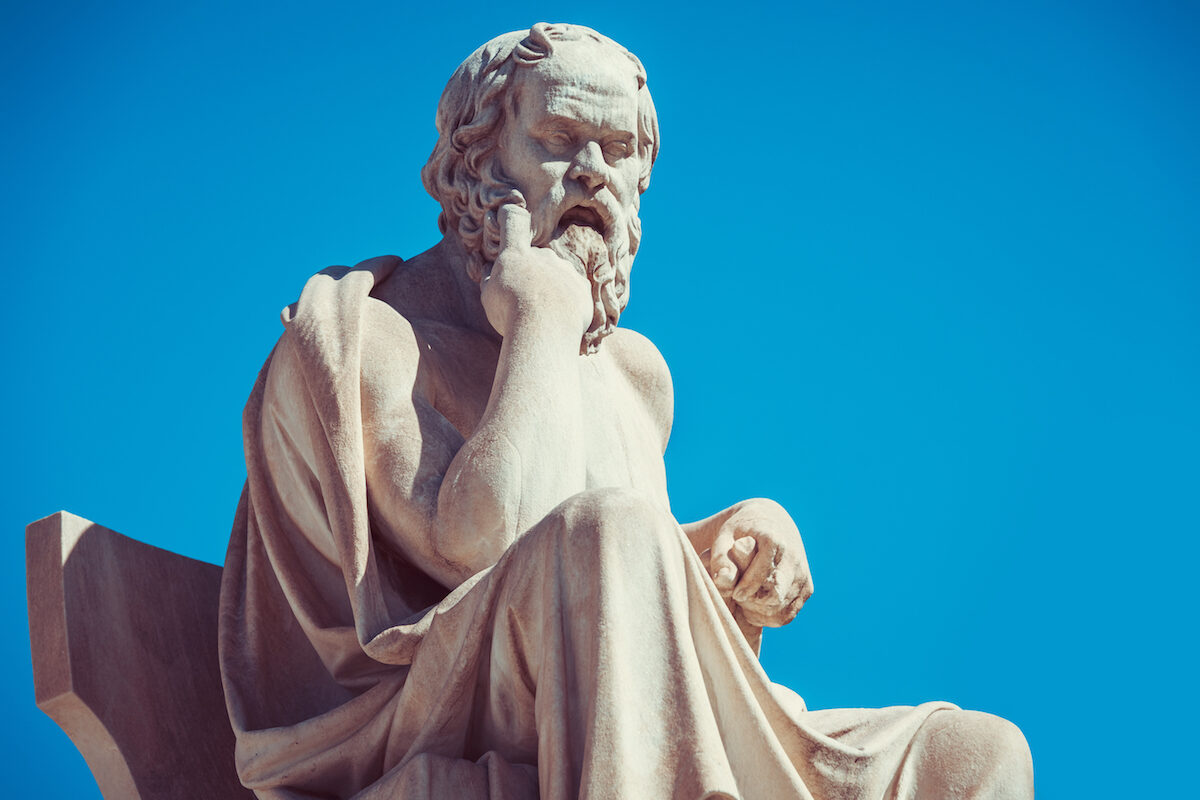
SOCRATES

Socrates of Athens was one of the most famous figures in world history for his contributions to the development of ancient Greek philosophy which provided the foundation for all of Western Philosophy. He is, in fact, known as the “Father of Western Philosophy” for this reason. He was originally a sculptor who seems to have also had a number of other occupations, including soldier, before he was told by the Oracle at Delphi that he was the wisest man in the world. In an effort to prove the oracle wrong, he embarked on a new career of questioning those who were said to be wise and, in doing so, proved the oracle correct: Socrates was the wisest man in the world because he did not claim to know anything of importance.

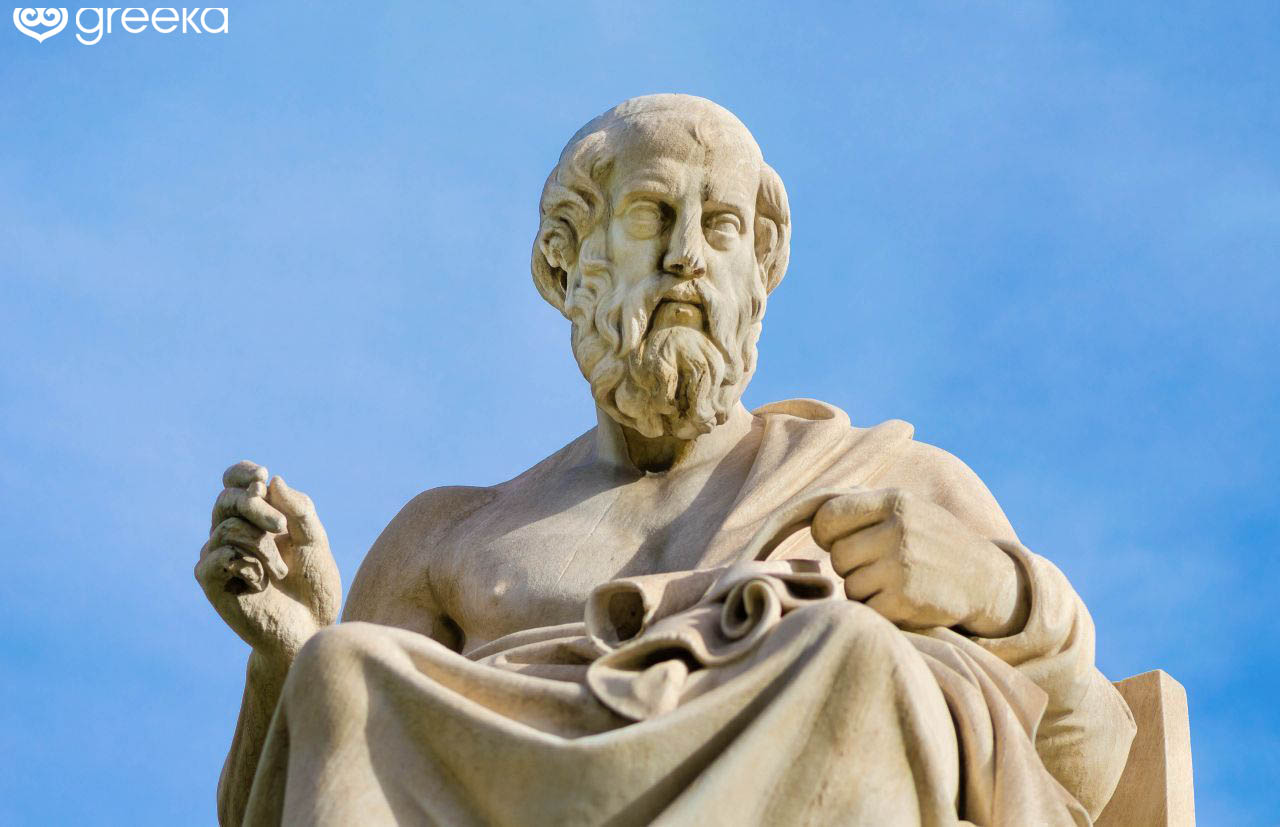
Plato

His most famous student was Plato (l. c. 428/427-348/347 BCE) who would honor his name through the establishment of a school in Athens (Plato’s Academy) and, more so, through the philosophical dialogues he wrote featuring Socrates as the central character. Whether Plato’s dialogues accurately represent Socrates’ teachings continues to be debated but a definitive answer is unlikely to be reached. Plato’s best known student was Aristotle of Stagira (l. 384-322 BCE) who would then tutor Alexander the Great (l. 356-323 BCE) and establish his own school. By this progression, Greek philosophy, as first developed by Socrates, was spread throughout the known world during, and after, Alexander’s conquests.

Early Life

Socrates was born c. 469/470 BCE to the sculptor Sophronicus and the mid-wife Phaenarete. He studied music, gymnastics, and grammar in his youth (the common subjects of study for a young Greek) and followed his father’s profession as a sculptor. Tradition holds that he was an exceptional artist and his statue of the Graces, on the road to the Acropolis, is said to have been admired into the 2nd century CE. Socrates served with distinction in the army and, at the Battle of Potidaea, saved the life of the General Alcibiades. He married Xanthippe, an upper-class woman, around the age of fifty and had three sons by her. According to contemporary writers such as Xenophon, these boys were incredibly dull and nothing like their father. Socrates seems to have lived a fairly normal life until he was told by the Oracle at Delphi that he was the wisest of men. His challenge to the oracle’s claim set him the course that would establish him as a philosopher and the founder of Western Philosophy.

The Oracle and Socrates

When he was middle-aged, Socrates’ friend Chaerephon asked the famous Oracle at Delphi if there was anyone wiser than Socrates, to which the Oracle answered, “None.” Bewildered by this answer and hoping to prove the Oracle wrong, Socrates went about questioning people who were held to be ‘wise’ in their own estimation and that of others. He found, to his dismay, “that the men whose reputation for wisdom stood highest were nearly the most lacking in it, while others who were looked down on as common people were much more intelligent”. The youth of Athens delighted in watching Socrates question their elders in the market and, soon, he had a following of young men who, because of his example and his teachings, would go on to abandon their early aspirations and devote themselves to philosophy (from the Greek ‘Philo’, love, and ‘Sophia’, wisdom – literally ‘the love of wisdom’). Among these were Antisthenes of Athens (l. c. 445-365 BCE), founder of the Cynic school, Aristippus of Cyrene (l. c. 435-356 BCE), founder of the Cyrenaic school), Xenophon, whose writings would influence Zeno of Citium, (l.c. 336-265 BCE) founder of the Stoic school, and, most famously, Plato (the main source of our information of Socrates in his Dialogues) among many others. 

Trial and Death of Socrates

In 399 BCE Socrates was charged with impiety by Meletus the poet, Anytus the tanner, and Lycon the orator who sought the death penalty in the case. The accusation read: “Socrates is guilty, firstly, of denying the gods recognized by the state and introducing new divinities, and, secondly, of corrupting the young.” It has been suggested that this charge was both personally and politically motivated as Athens was trying to purge itself of those associated with the scourge of the Thirty Tyrants of Athens who had only recently been overthrown. His execution was delayed for 30 days due to a religious festival, during which the philosopher’s distraught friends tried unsuccessfully to convince him to escape from Athens. On his last day, Plato says, he “appeared both happy in manner and words as he died nobly and without fear.” He drank the cup of brewed hemlock his executioner handed him, walked around until his legs grew numb and then lay down, surrounded by his friends, and waited for the poison to reach his heart.

The International Day of Indigenous people

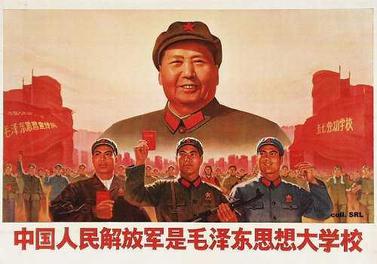
One of the most tragic instances in history would be that of the holocaust – a word that in itself is a definition of six years of European geopolitics. In Russia, Palestine and China, the expulsion of the White Army, the expulsion of the Arabs and the brutual suppression of cultures across China in the name of cultural revolution respectively bring to picture the way in which states and not just people can sometimes be the enemy of people. However, there have been several such instances in history, most of them hidden because they were carried out by the more ancestors of the ones who ended up being economically and intellectually influential communities.

Cultural Revolution - Wikipedia
A poster calling out for Chinese Cultural Revolution

Human history is a record of forced displacements both internal and external, ethnic cleaning and genocides and murders both to the dismay and sponsored by states. When Captain Cook discovered the down under, it led a massive import of British criminals on the continent. With them came officers, scientists and explorers. The businessmen and civilians searching for more opportunities came in later. The people of the continent – the Australian arboginals, the Maoris from Oceania and many more tribes were reduced to a mere holder of small patches of lands and often no land at all by the British who had a superior military.

When the first Irish and British settlers landed in the new World of America, the red Indians offered them food and shelter which soon became a situation where the Red Indians had to fight for the survival of their lives and their cultures which was systematically and quite institutionally taken away by the New World settlers. Similarly, when the Spanish invaded Latin America, it meant a complete and absolute dissolution of their traditions and a genocide that would annihilate their population to an extent where even after 400 years, they would not attain the same.

The Last Days Of The Incas - HistoryExtra
Machu Pichu stands as a testimony to the Grand Incan Empire in the Andes before the Spanish arrived.

To add to all these miseries are the tales of the Rohingya community from Myanmar, the Tamils in Sri Lanka, the Kashmiri Pandits in Indian state of Jammu and Kashmir, the now diminishing sea faring communities in Philippines and Malaysia and many more. Japanese and Italian unifications were also carried out at the cost of the local traditions, cultures and ways that the communities living there had been practicing for a millennia. In India, the use of English and Hindi have slowly gobbled up on the rich culture of local languages that the communities had. In fact, many communities from the state of Bihar and Uttar Pradesh have completely given up on their languages. Bihar – a state where only 6% people had Hindi as their mother tongue now has a minority of about 20%!!

World loses about 1 language every 15 days!!!

Wikipedia defines Indigenous people as – “Indigenous peoples, also referred to as first peopleaboriginal peoplenative people, or autochthonous people, are culturally distinct ethnic groups who are native to a place which has been colonised and settled by another ethnic group. ” But, a broader definition is the fact that indigenous people are defined by their cultures which is at a steady loss across the globe. The most important thing is to treasure the fragments of their traditions that still remain. Because a rainbow is better a rainbow.

COVID-19 and Indigenous peoples | United Nations For Indigenous Peoples

Happy International Day for the Indigenous communites.

Love- Heavenly or Hellhound

 Love. Simple, everyone knows what love is even a five year could tell what’s love is. But do we really know the authenticity of love? The true meaning of love? 

Majority of people accepts or count love only between two individuals who are of opposite sex not the same sex which ain’t the matter at time of growing digital world. Love also counts between families which is whole pole apart from the same gender attractions part but still. 

Love is a transaction

Love for some people is a transaction which they can turn or and off which they says and believe. For some love is Thier true motto to achieve in their life. A happy ending with their partner. 

Humans not only fell love but the other living beings such as mammals and even tinnest creatures breathing on this planet knows and crave for love. 

Love has devine actions leading, Love for some is a hope for their better future. A ray of light which will aid to bring them out of their miserable life that they live. Love for some become obsession which they craves to control and need to tamed in leading to drastic ends of live. 

Love is a beautiful feeling far far toxic than it seems for some people. It’s in our hand to which means we are going to hold the love in our live. To a heavenly end or in hellhound. 

PARADISE ON EARTH

A new State comprising three distinct religions of Jammu, Kashmir and Ladakh was formed with Maharaja Gulab Singh as its founder ruler. It was established on 14 May 1954.

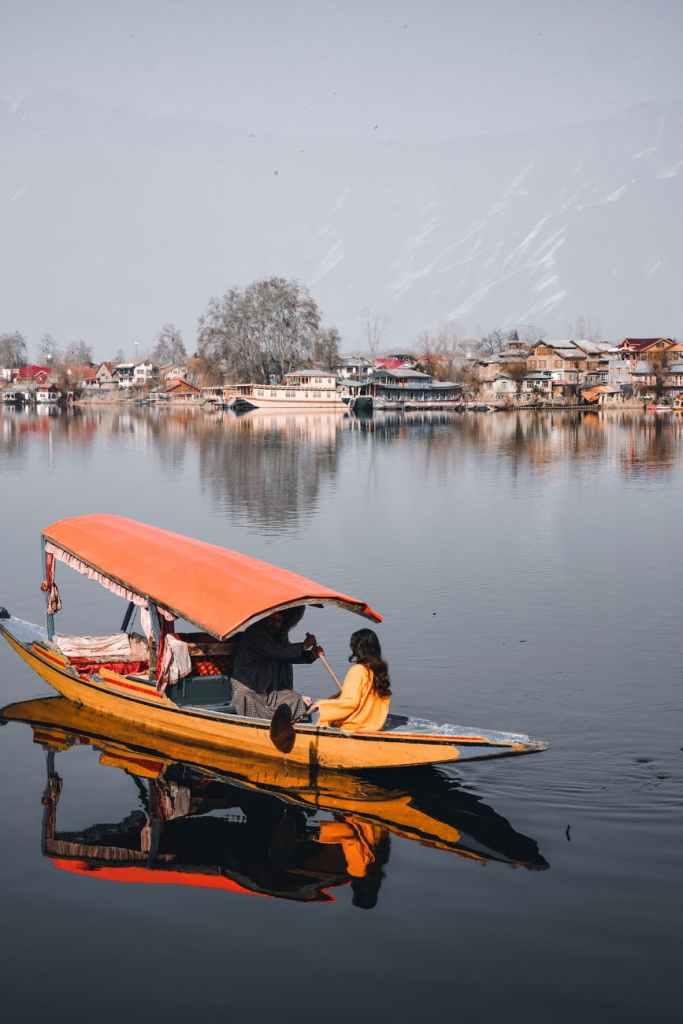
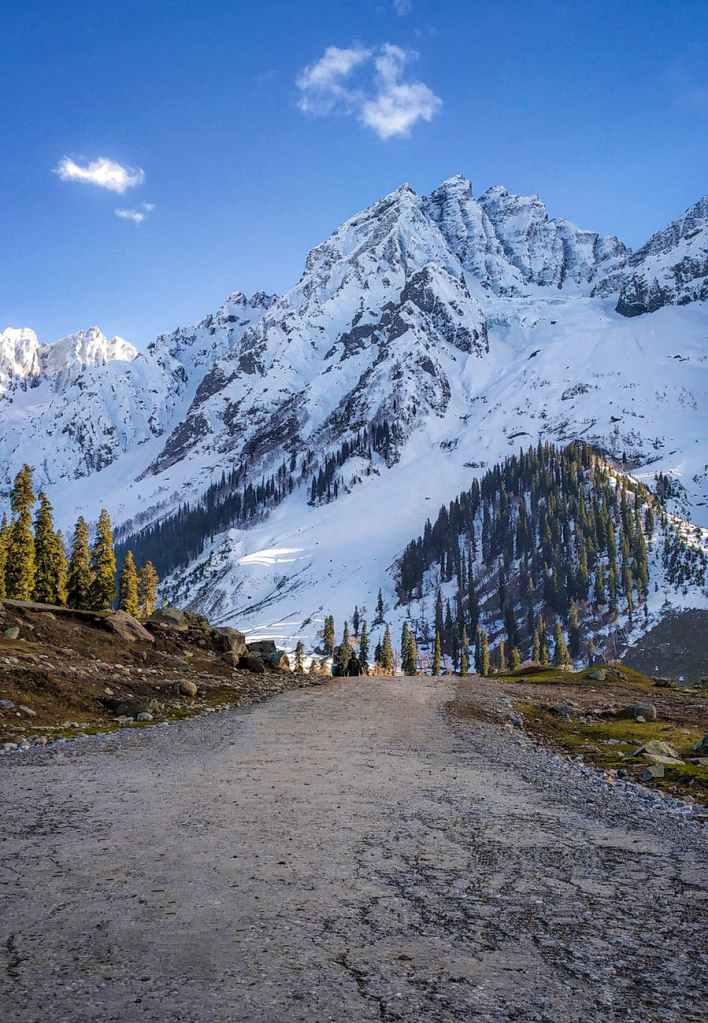
Popularly known as the “Paradise on Earth”, Jammu and Kashmir is world famous for its scenic splendour, snow-capped mountains, plentiful wildlife, exquisite monuments, hospitable people and local handicrafts.

Jammu and Kashmir is a region administered by India as a union territory and consists of the southern portion of the larger Kashmir region, which has been the subject of a dispute between India and Pakistan since 1947, and between India and China since 1962. The Line of Control separates Jammu and Kashmir from the Pakistani-administered territories of Azad Kashmir and Gilgit-Baltistan in the west and north. It lies to the north of the Indian states of Himachal Pradesh and Punjab and to the west of Ladakh, which is also subject to the dispute as a part of Kashmir, and administered by India as a union territory.

Provisions for the formation of the union territory of Jammu and Kashmir were contained within the Jammu and Kashmir Reorganisation Act, 2019, which was passed by both houses of the Parliament of India in August 2019. The act re-constituted the former state of Jammu and Kashmir into two union territories, Jammu and Kashmir and Ladakh, with effect from 31 October 2019.

The state of Jammu and Kashmir was accorded special status by Article 370 of the Constitution of India. In contrast to other states of India, Jammu and Kashmir had its own constitution, flag and administrative autonomy. Indian citizens from other states were not allowed to purchase land or property in Jammu and Kashmir.

Jammu and Kashmir had three distinct areas: Hindu-majority Jammu region, Muslim-majority Kashmir Valley and Buddhist-dominated Ladakh. Unrest and violence persisted in the Kashmiri Valley and, following a disputed state election in 1987, an insurgency persisted in protest over autonomy and rights.

The Bharatiya Janata Party (BJP) came to power in the 2014 Indian general election and five years later included in their 2019 election manifesto the revocation of Article 370 of the Constitution of India, in order to bring Jammu and Kashmir to equal status with other states.

A resolution to repeal Article 370 was passed by both the houses of the Parliament of India in August 2019. At the same time, a reorganisation act was also passed, which would reconstitute the state into two union territories, Jammu and Kashmir and Ladakh. The reorganisation took effect from 31 October 2019.

In September 2019 nearly 4,000 people, including two former Chief Ministers and hundreds of other politicians, were arrested by the Indian authorities in Kashmir; the state was put under a lockdown and communication and internet services were suspended.

Jammu and Kashmir is home to several valleys such as the Kashmir Valley, Chenab Valley, Sindh Valley and Lidder Valley. Some major tourist attractions in Jammu and Kashmir are Srinagar, the Mughal Gardens, Gulmarg, Pahalgam, Patnitop and Jammu. Every year, thousands of Hindu pilgrims visit holy shrines of Vaishno Devi and Amarnath which has had significant impact on the state’s economy.

The Kashmir valley is one of the top tourist destinations of India. Gulmarg, one of the most popular ski resort destinations in India, is also home to the world’s highest green golf course. The decrease in violence in the state has boosted the state’s economy, specifically tourism.

Jammu and Kashmir is also famous for its scenic beauty, flower gardens, apple farms and more. It attracts tourists for its unique handicrafts and the world-famous Kashmiri Shawls.

Recent Major Administrative Reforms

Recently, the Union Government gave the information on Major Administrative Reforms which were introduced in recent years and emphasised the importance of these reforms in making governance more accessible.

These reforms aim to encourage greater efficiency, transparent and corruption free governance, accountability and reduce scope for discretion. The Government follows the maxim “Minimum Government – Maximum Governance”.

Mission Karmayogi

  • This is a National Programme for Civil Services Capacity Building (NPCSCB). It is a comprehensive reform of the capacity building apparatus at individual, institutional and process levels for efficient public service delivery.
  • It is aimed at building a future-ready civil service with the right attitude, skills and knowledge, aligned to the vision of New India.
  • The capacity building will be delivered through iGOT-Karmayogi digital platform, with content drawn from global best practices.

Lateral Entry

  • Lateral entry means when personnel from the private sector are selected to an administrative post of the government despite them not being selected in or being part of a bureaucratic setup.
  • This is significant because contemporary times require highly skilled and motivated individuals at the helm of administrative affairs, without which public service delivery mechanisms do not work smoothly.
  • Lateral Entry helps in bringing the values of economy, efficiency, and effectiveness in the Government sector. It will help in building a culture of performance within the Government sector.

e-Samiksha

  • real time online system for monitoring and follow up action on the decisions taken by the Government at the Apex level in respect of implementation of important Government programmes/projects.
  • It is a digital monitor for bureaucracy to rein in slackers.
  • Also, the government has been taking an intensive review for weeding out inefficient and Officers of doubtful integrity by premature retirement.

e-Office

  • e-Office Mission Mode Project (MMP) has been strengthened for enabling Ministries/Departments to switch over to paperless office and efficient decision making.

Citizen Charters

  • Government has mandated Citizen Charters for all Ministries/Departments which are updated and reviewed on a regular basis.
  • It is a written document that spells out the service provider’s efforts taken to focus on their commitment towards fulfilling the needs of the citizens/customers.

Good Governance Index 2019

  • It assesses the Status of Governance and impact of various interventions taken up by the State Government and Union Territories (UTs).
  • The objectives of GGI are to provide quantifiable data to compare the state of governance in all States and UTs, enable States and UTs to formulate and implement suitable strategies for improving governance and shift to result oriented approaches and administration.
  • It has been launched by the Ministry of Personnel, Public Grievances & Pensions.

National Conference on e-Governance

  • It provides a platform for the government to engage with experts, intellectuals from industry and academic institutions to exchange experiences relating to e-Governance initiatives.
  • In 2020, the 23rd National Conference on e-Governance was organised by the Department of Administrative Reforms and Public Grievances (DARPG) along with the Ministry of Electronics and Information Technology (MeitY) in Mumbai.

Centralized Public Grievance Redress and Monitoring System (CPGRAMS)

  • It is an online web-enabled system developed by National Informatics Centre (Ministry of Electronics & IT [MeitY]), in association with Directorate of Public Grievances (DPG) and Department of Administrative Reforms and Public Grievances (DARPG).
  • The CPGRAMS provides the facility to lodge a grievance online from any geographical location. It enables the citizen to track online the grievance being followed up with Departments concerned and also enables DARPG to monitor the grievance.

National e-Governance Service Delivery Assessment: It aims at assessing the States, UTs and Central Ministries on the efficiency of e-Governance service delivery.

Comprehensive restructuring of the Scheme for ‘Prime Minister’s Awards for Excellence in Public Administration’ in 2014 and thereafter in 2020.

Way Forward

  • Reforms are an obvious response to the new challenges confronting the state institution managing public affairs; what lies at the root of such an exercise is the effort to enhance administrative capability in the changed scenario.
  • Since the civil servants are accountable to political executives and that results in politicisation of civil services, the focus must be on external accountability mechanisms like citizen charters, social audits and encouraging outcome orientation among civil servants.
  • Civil servants should provide unbiased, rational and meritorious suggestions to the political executive in policy formulation. It requires an impartial Civil Services Board that can look after all the aspects related to promotions, transfers, posting and suspensions.

Is Climate Change happening now?

 The effects of climate change are very evident with the temperature rise experienced globally. Change in temperature, frequent forest fires, melting of ice, extreme and unusual rainfall, should be a wake up call for us to consider the phenomenon of climate change seriously. 

In 2020, the number of fire alerts for wildfires went up by 13% globally as per the World Wide Fund for nature (WWF). The planet became 5 degrees warmer in 5,000 years, but the predicted rate of warming in the next century is 20 times faster. The matter of concern is that a 3 degrees celsius rise in temperature can affect upto 43% of the glaciers of the Himalayan mountains. As a consequence of losing the glaciers, the region can suffer from water scarcity


Climate Change in India

In a recent report in the Indian Express, the director general of the Indian Meteorological Department (IMD), Mr. Mrityunjay Mohapatra had explained the causes and projections of extreme weather conditions in India. Heavy rainfall was seen in states like Gujarat, West Bengal, Odisha, and Maharashtra. Whereas a low rainfall was seen in Kerala, Jharkhand and some other areas. But the total amount of rain received remained constant. This indicates that in some places, either it rained to an extreme extent or there was no rain at all. 

The reason for this extreme weather condition was cited to be the rise in temperature. The Global rise in temperature has gone up by 1.2 degrees Celsius as compared to the past hundred years. In India, it has increased by 0.6 degrees Celsius. It has mostly affected the Northern, Central and Eastern parts of the country. 

This rise in temperature not only affects the surface but also the troposphere. The moisture holding capacity of the atmosphere increases, as a result of which extreme rainfall is experienced. The recent trends show that light and moderate rainfall has decreased and heavy rainfall has increased. 

This extreme weather leads to an increase in floods, rainstorm, thunderstorm and lightning. A rise in the intensity of cyclones from the Arabian Sea has also been reported. The current projection by IMD is frequent and intense weather events. According to the weather bureau chief, the probability of experiencing heavy rainfall has increased. 

The UN Secretary-General Antonio Guterres had also expressed his concern over the issue of climate change recently. On 25th July 2021, he called for the leadership of G20 to address the issue of climate change.  Climate Change and extreme weather conditions are a raging concern for the world right now and also predicted to be in the future.


Swachh Bharat Abhiyan

Introduction

Swachh Bharat Abhiyan is a clean drive that aims to cover 4041 legal cities and cities throughout India. Cleaning roads, roads, and other infrastructure in the country.

Beginning of Swachh Bharat Abhiyan

Swachh Bharat Abhiyan is also known as the clean Indian name for Clean India driving in the Swachh Bharat campaign. It is a national-level campaign by the Indian government to cover all cities that are legally back to clean up. The campaign includes the construction of a toilet that will improve sanitation in rural areas, clean up roads and change the country’s infrastructure to lead the country. Mahatma Gandhi, the father of the nation, once said that “sanitation is more important than independence” in his pre-independence India era. And he was well aware of the deplorable and unclean state of India. As he emphasizes to many people in India about its cleanliness and hygiene and its use in daily life. But the failure was less effective due to incomplete human participation. Prior to the campaign it was officially launched by the Prime Minister Mr Narendra Modi on the 145th birthday of Mahatma Gandhi on October 2, 2014 at Rajghat in New Delhi, which is the site of Mahatma Gandhi’s cremation.

People Selected for the Swachh Bharat Campaign

The first nine people nominated by the Prime Minister for the campaign are Salman Khan, Anil Ambani, Kamal Hassan, comedian Kapil Sharma, Priyanka Chopra, Baba Ramdev, Sachin Tendulkar, Shashi Tharoor and the team of Taarak Mehta Ka Ooltah Chashmah (the popular TV series). And few other celebrities have helped to promote this work or campaign such as Akhilesh Yadav, Swami Rambhadracharya, Mohammad Kaif, Dwivedi, Manoj Sharma, Kailash Kher, Raju Shrivastav, Suresh Raina, Amitabh Bachchan, etc.

How You Are Viewed

People all over the world are cleaning the place and the place to keep their place clean and green. The Prime Minister called on all Indians to take the campaign as a challenge and to try their hand at a successful campaign. The chains of nine people are like a branch of a tree.

He asked ordinary people to take part in the event and upload a video or photo of hygiene to the internet through various social media websites such as Facebook, Twitter, etc.

Significance of the Swachh Bharat Campaign

The campaign helps the government solve the problem of sanitation by improving India’s waste management practices.

Benefits of the Swachh Bharat Campaign

The completion of the Swachh Bharat project could indirectly attract business investors to India, which will boost road and road growth. Attention by tourists from all over the world brings a variety of employment resources, lowers health costs, lowers the mortality rate, and reduces the incidence of deadly diseases, and much more. Pure India will attract more tourists and improve its economic situation.

The conclusion

The work of Swachh Bharat Abhiyan Clean India should not only be the responsibility of the government or ministers of India, but also the responsibility of the union of all citizens living in the country . Achieving the goal of a clean India will never happen until unless we work together and join hands to clean up our environment and stop others from being polluted. A healthy country and a healthy society needs its citizens to be healthy and clean in all aspects of life.

Rich dad poor dad : review

Book Review


Name of the Book: Rich Dad Poor Dad
Name of the Author: Robert Kiyosaki
Publisher: Plata Publishing; Second edition (11 April 2017)
Language: English
Originally published: 1997
Pages: 336
Genres: Personal finance, Economics, Non-fiction

About Robert Kiyosaki
Robert Kiyosaki is an American businessman who founded Rich Global LLC and the Rich Dad Company. The latter focuses on private financial education through the mediums of books, videos, and speeches. He is also the author of over 26 books, including this book.
Introduction
Rich Dad Poor Dad has been called the number one personal finance book of all time. Robert Kiyosaki illustrates the mindsets and beliefs that define those who become wealthy. He contrasts these mindsets with those who are poor. In this book, Robert’s example of a poor man was his dad, while the rich man was Robert’s financial mentor. Robert’s father was a genius, while his mentor didn’t even finish eighth grade. The only meaningful difference was their mindset.
Summary
Education & two perspective
In this book Kiyosaki believes that an individuals attitude towards money and their tendency to be richer or poorer can be traced back to the education they receive at home. Parents are responsible for teaching the fundamentals of finances as it’s not something that schools focus on. Kiyosaki explains that this education at home is the driver behind the rich getting richer, the poor getting poorer and the middle class continues to struggle with constant debt. He believes that the considerable debt that countries face is a result of politicians and government officials having very little education on money, yet being in a position of power.
Robert Kiyosaki emphasizes six key points through out the book. These points — which differentiate between his “poor” dad (his real dad) and the “rich” dad that helped him understand business and become wealthy — are:
The rich don’t work for money
The importance of financial literacy
Minding your own business
Taxes and corporations
The rich invent money
The need to work to learn and not to work for money
Good Points in this Book
Flawed Educational System
As Robert mentions many times in the book, our traditional educational system is flawed. Our education system is designed primarily to create employees and could be a negative influence for an entrepreneur. As Kiyosaki mentions, he’s not suggesting that people skip higher education; he’s suggesting higher education does not assist with “street smarts.” Financial literacy is something that is rarely discussed in school, and if it is discussed, it is only at basic levels. Based upon my personal background, I’ve made this a personal focus and will make sure my children are well educated in this subject.
Strong Points:
The original idea of the book Rich Dad,Poor Dad, and also the extremely effective presentation of educational financial concepts are not as simple as they seem.
An incredibly motivating book inspired by the personal experience of the author, who is himself a millionaire,
Weak Points:
A certain lack of detail in some areas mentioned by the author is regrettable.
As he says himself, his books are motivational tools, not books by a financial expert.
Why I chose this book
This book teaches us many important lessons which apply in our daily life. In this book Robert describes how you can get started in your journey towards financial education and wealth which was not included in any bookbook in easy language.
My Learning from this book
I learned many important things from this book that is:

  • Choose your friends carefully: Don’t choose your friends based on how much money they have. That said, you should be careful about being around cynics or people who don’t like talking about money. They will rub off on you. Do your best to learn from people who support you, teach you, and make you a better person.
  • Pay yourself first: If you don’t do this, you’ll find nothing left to pay yourself. This is an essential shift in mentality.
  • Assets buy luxuries: Don’t buy a luxury until you have created an asset that pays for it.
  • Teach, and you shall receive: The more you teach people, the more you will learn.
  • Look for new ideas: Read books on different subjects and learn from them.
  • Be willing to learn: Learn every skill you can. Never assume you are already knowledgeable enough on a topic.
  • Learn from history: Study successful people from the past and emulate them.
  • Action always beats inaction: If you are not sure what to do, you should just do it. Imperfect action is better than perfect inaction
  • Conclusion- Rich Dad, Poor Dad is an extraordinary book, in the literal sense. I cannot fully express how much this book transformed my vision of money and most especially my perception of wealth. Before I read this book part of me was convinced that all “rich people” were born that way. That you needed to have money to get rich and that the only solution was to join the rat race, although that is not what I called it at the time. Nowadays, I am firmly convinced that you can learn how to become rich and that financial freedom is a realistic goal if you move towards it methodically and patiently.
  • The poor and the middle class work for money. The rich have money work for them.Fear is what keeps people in jobs that they don’t enjoy. Assets and liabilities are different. Assets generate money whereas liabilities suck up your money.A rich man’s perspective is that your income is a direct result of your assets, not your job. Therefore you need to commit to investing in the right assets.
    In order to be rich, you need to have a decent financial IQ. This is made up of considerable knowledge in accounting, investing, understanding markets, and the law. Rich people “groom” their children so that they can have a complete understanding of business operations and how the family manage their finances. Management skills that should be taught include managing cash flow, managing systems and managing other people.
    Reference
    Rich Dad Poor Dad Book by Robert Kiyosaki

Hygiene

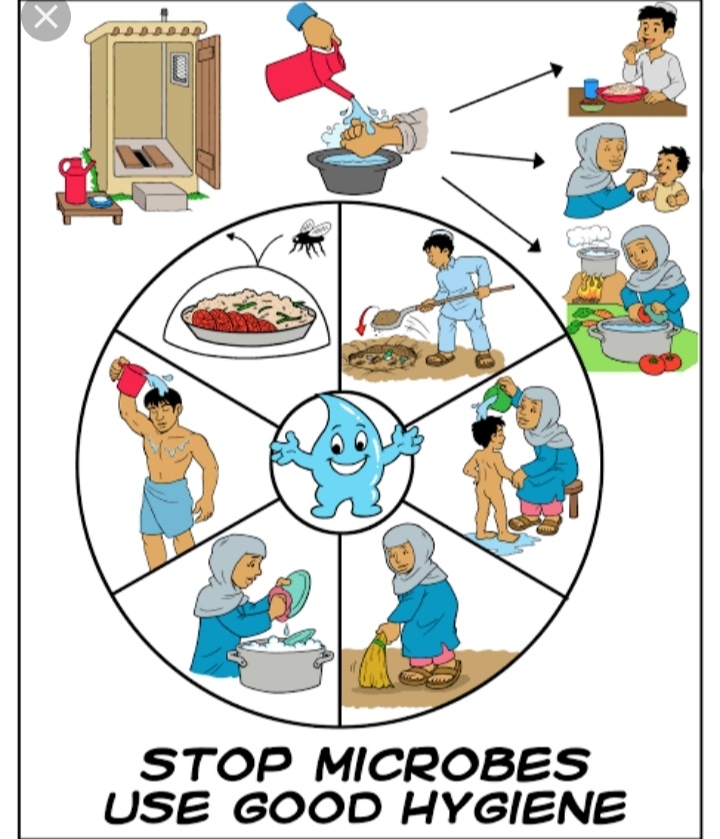
Hygiene is the science of rules of healthy living. Food hygiene is very important for healthy living because most of the diseases and disease producing germs are transmitted through food. The food may be contaminated at any stage during its journey from the producer to the consumer. It is contaminated during handling, distribution and serving. Hence hygiene refers to hygiene in the production, handling, distribution and serving of all foods. Each and every item of the food should be maintained under hygiene condition. Thus there are milk hygiene, meat hygiene, fish hygiene, fruit hygiene, vegetable hygiene, personal hygiene, etc.

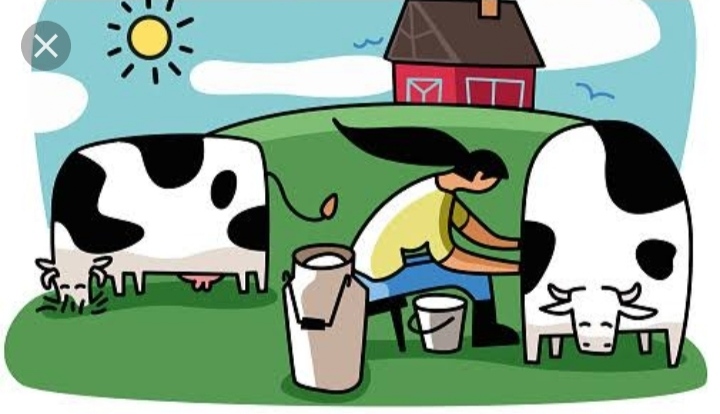
Milk Hygiene

Milk is a suitable medium for most of the disease producing germs. Hence it is an efficient vehicle for many disease producing germs. It is contaminated by three main agents. They are:

The dairy animal. The human. The environment comprising contaminated vessels, polluted water, flies, dust, etc. The important diseases which are transmitted through milk are as follows:

Typhoid and paratyphoid fevers. Tuberculosis. Diptheria. Salmonellosis and streptococcal infections.

The milk hygiene is maintained by the following methods:

The dairy animal should be maintained clean and healthy. The udder should be washed and cleaned before and after milking. The dairy house should be sanitary. The vessels must be sterile and kept closed. Water used must be free from bacteria. Milkers must be free from contagious diseases. Milkers must wash their hands properly before milking. Milk should be stored at 50°F after milking. This will prevent bacterial growth.

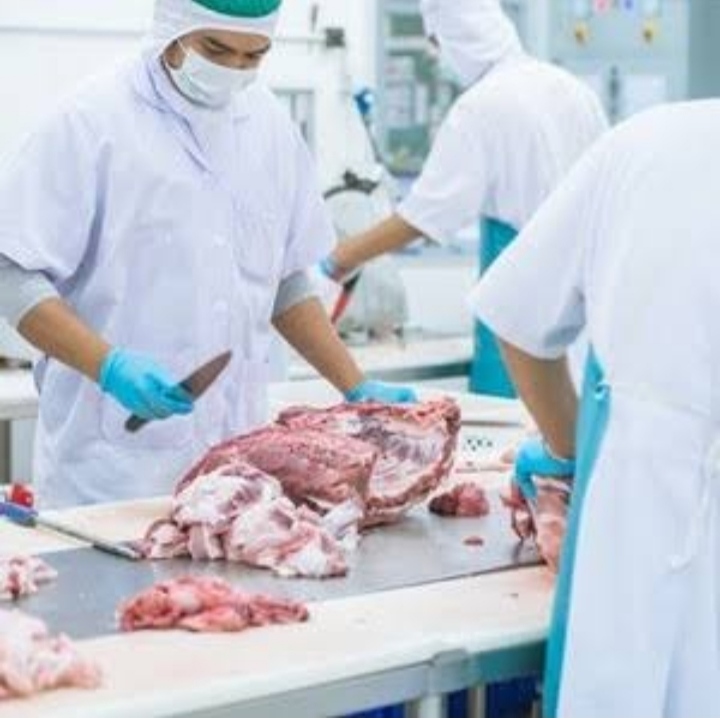
Meat Hygiene

Meat includes a variety of edible animal tissues. The common diseases transmitted through meat are tape worm infestations and bacterial infections. Meat Hygiene is maintained by 1. Meat inspection and 2. Hygiene slaughter houses.

1. Meat Inspection:

The slaughtering animals should be subjected to proper antemortem and postmortem inspection. The unhealthy infected and pregnant animals should be eliminated.

2.Slaughter House:

The places where edible animals are killed are called slaughter houses. The hygiene of slaughter houses is very important to prevent contamination of meat. The slaughter house should satisfy the following conditions:

1. It should be located away from residential places. 2. Floors and walls should be easy to clean. 3. Provision for antemortem and postmortem inspection. 4. Provision for adequate and continuous water supply. 5. Other animals should not be allowed. 6. Meat should be stored in fly-proof and rat-proof rooms.

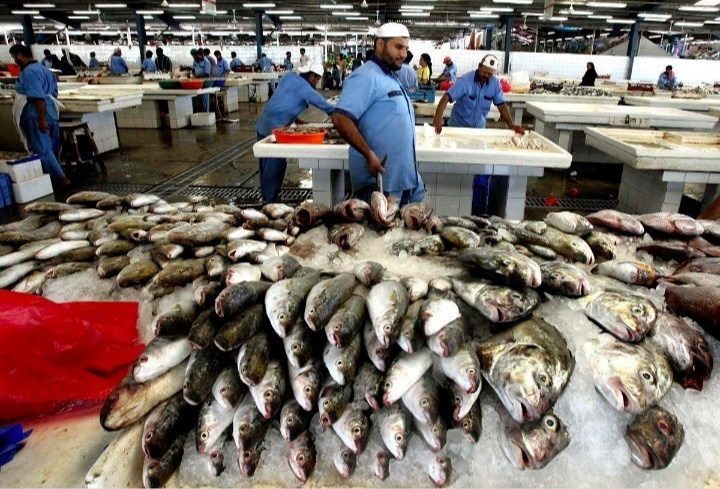
Fish Hygiene

Fish loses its freshness or deteriorates because of autolysis after death. The deterioration of fish is due to the infection of bacteria. The stale fish should be condemned. The signs of good fish are:

1. Stiffness or rigor mortis. 2. Gills are bright red and 3. The eyes are clear and prominent.

Hygiene of Fruits and Vegetables

Fruits and vegetables should be properly washed before they are used.

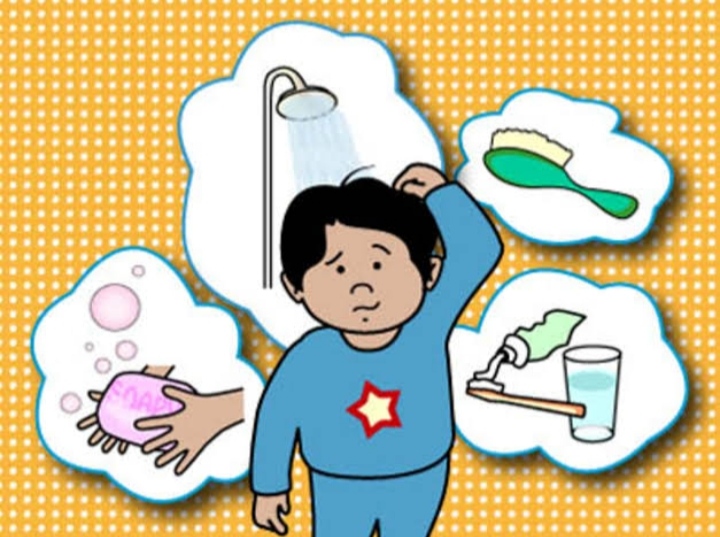
Personal Hygiene

1.The food handlers should be thoroughly examined medically and physically at the time of appointment.2. Hands should be properly washed and cleaned before handling food. 3. Finger nails should be trimmed and free from diet. 4. Head coverings should be provided, especially in the case of women to prevent loose hairs entrance into foodstuffs. 5. Coughing and sneezing should be avoided near the food. 6. Licking the fingers before picking up a food is prevented. 7. Smoking is avoided.