Every individua ‘s life and work are closely related to his environment . Man has progressed in various fields of life such as industrialisation , mechanisation, transport and science, etc. Therefore, this age is called an electronic age or space age. But on the other hand, this development has created such conditions that a person may get injured anywhere and at anytime.
In spite of good measures aimed at industrial safety and the development of safety devices and techniques, the number of accidents is still high in industries and specially in day to day life. Indeed, there is no definite time of such injuries. These can happen to anyone, anywhere and at anytime. Injuries usually occur in industries and on the farm, during the repair, maintenance and operation of vehicles of various kinds, during games and sports and in various situations everyday. These often happen by accident, so it is impossible to anticipate the time and place of an accident. Someone may get fractured, another may be bitten by snake. So, it can be said that every individual is trapped in one way or the other by accidents. In fact, it is very difficult ton get medical aid to victims at the sport of the accident. At that moment, some immediate possible aid is required to the victim. So, first aid is the first help which is given to the wounded or accidental victims before the arrival of the doctor.
In other words, ” It is an immediate and temporary care given to a victim of an accident or sudden illness before the services of a physician is obtained.”
In can also be said that first aid is that aid is that aid which is provided to the injured in case of an accident, injury or sudden illness. It enables the trained persons to render the help to preserve life, promote recovery of the injury until the arrival of the doctor.
In fact, the area of field of sports and games is such a field, where getting injured is very common. Any player can be injured at least once during his/her sports career. The facilities of a qualified doctor are available in national or international level competitions but usually such facilities or services of a doctor are not available during practice, training or competitions of normal levels. The teacher of health and physical education should also have enough knowledge of first aid so that he may provide first aid to the players at the time of training and competitions.
Well known South-Indian actor Sudeep was born on September 2nd 1971. He started his life journey as an actor from the year 1997, sandalwood’s “Thayavva” was his first film which is a flop. Priya Sudeep is his wife they married on 18th October 2001, she produced the film “Manikya” in which Sudeep had a major role of hero. They have a daughter named Saanvi Sudeep.
“Badhshah of sandalwood” kiccha Sudeeep always attracts his fans through his inspirational words, handsome looks, trendy hairstyles and attractive dress codes. He hosts the reality show bigg boss kannada, waiting to see him in weekend episodes roasting the bigg contestants was a uphill work for his fans and memers. His advises to the contents were so great and inspirational, no one knows whether all that words are scripted or it comes with the flow. Everyone agries that no one can manage the hosting of bigg boss better than Sudeeep. His fans are eagerly waiting watch his upcoming film “Vikranth Rona”.
I won’t take it for too long finally, don’t forget
“There is no formula for success. All you need to do is put in your best.”- Sudeep.
>>Stay connected to eduindex.org for more updates.
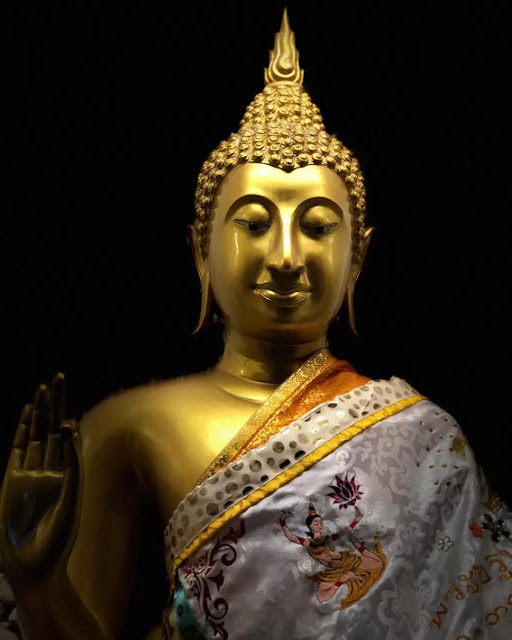
“Your purpose in life is to find your purpose and give your whole heart soul to it”-Lord Goutam Buddha
Lord Goutam Buddha was a spiritual preacher from ancient India who founded Buddhism. The time of birth and death of buddha is uncertain. However, most of the historians believe his lifetime to 563BC to 483BC. He was born at Lumbini in kapilavastu (now Nepal). His Father was king Suddhodana and queen Maha Maya (Mahadevi). His infant name was Siddhartha and family name goutama. His mother died at his birth and he was brought up by his mother’s sister Maha Prajapati. When he attained the age of 16 ,his father arranged his marriage to a cousin named yasodhara. He gave birth to a son named Rahula and spent 29 years as a prince in Kapilavastu. Although his father provided Siddhartha with everything he could want or need, he felt that material wealth was not life’s unlimited goal. At the age of 29 he left his palace for the life of a mendicant. Some days after being seated under a peepal tree Known as Bodi Tree in Bodh Gaya, India, he attained ‘Enlightment’ and there after he was known as Buddha or Awakened One to his Followers. He realised complete insight into the cause of suffering and steps necessary to eliminate it.
These discoveries became known as the ‘Four Nobel Truth’. And through these truths, a state of supreme liberation or ‘Nirvana’ is possible for any mortal being. He himself reached Parinirvana or the final deathless stage at the age of 80, according to the Buddhist Scripture.
Kindness is an act of showing generosity, empathy, and friendliness towards others. A kind person always possesses positive energy towards them. One prominent trait about kind people is that they treat everyone the same. We often notice some selfish people who only try to please their superiors and treat other people with disrespect.
Kind people are always surrounded by people who love them. Their friendly and helpful nature is what attracts everyone towards them. They are also very compassionate, emphatic, and sympathetic. They not just listen and understand the issues people face but they also try to help them.
Kindness is important in today’s World, where no one cares about each other. Everyone just lives for themselves without helping the people in their surroundings. We all wish to be kind, but then we think about how selfish everyone is, and that no one cares about us. This should motivate us to be kind because we don’t like how people are mean and selfish. So, we need to be kind so others don’t feel this way.
Imagine this situation, a person mistreated their waiter and made them feel low. Now, the waiter comes to serve you. If you empathize with them and make them feel good about the situation, they will always remember your act of kindness.
Even small acts of kindness given below help create a positive change in someone’s life.
Treating people equally
Helping the animals in need
Listening to people’s issues and empathising with them
Making someone feel better on a bad day
Not being rude to people
Forgiving people
Being a helping hand to people
Giving honest compliments
Being polite and not using harsh language
All these acts mean a lot to the people we are kind towards. Whenever we do something kind, we always feel good inside. It makes us happy. In the same way, we love meeting people who are kind and friendly. No one likes meeting selfish people who only care about themselves.
I still remember the acts of kindness people showed towards me. Once when I had to recharge my metro card, I was short of a coin or two I think I dropped it on the way. But, this kind lady standing in line paid for me. I asked her to take the money I have but she refused and went by. Now, this may obviously seem like a small thing to her, but I will always remember her act of kindness.
In the World of cruel, inconsiderate, and selfish people even small acts of kindness like opening a door for someone or helping someone pick the groceries mean a lot to the person we helped. Giving food to the needy or feeding the dogs on the streets are all things we need to do in our daily lives. We cannot just die living for ourselves. If we have the money and the resources that could help the people around us, we need to do it. Street animals do not have a job that would provide them food. We as human beings have built buildings and roads everywhere and took away nature from animals. It is our duty to give them food, water, and shelter.
Acts of kindness do not make a person small. It only makes them look bigger. People will always appreciate you for your kind behavior. I hope you are now going to help make the World a better place to live in where we treat everyone with love and compassion.
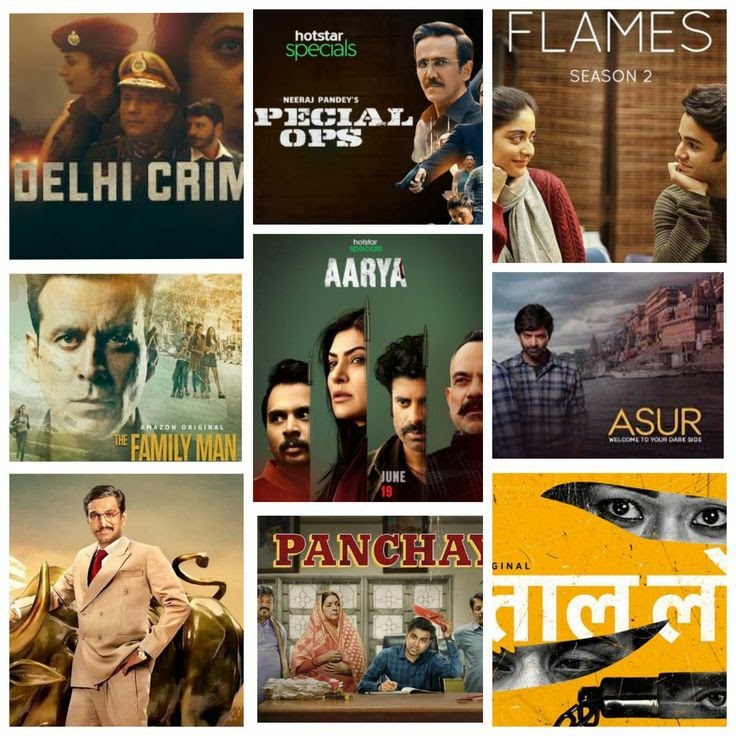
Over the last few years, the internet has become a hub of new talent and an amazing collection of hindi web series that has made binge-watching our favourite activity. While with the emergence of the Hindi web series in the country, a fresh wave has made us watch innovative and interesting Indian web series content. Today creators are not shying away from thinking and creating excellent content and this is helping the audience as well to understand the depth of cinema and enjoy it at the same time. Indian web series have grown to become one of the best sources of inspiration and entertainment, thanks to the advent of Netflix and amazon prime.To get you started, we’ve compiled a list of the best Indian web series that you’d love to watch on repeat.
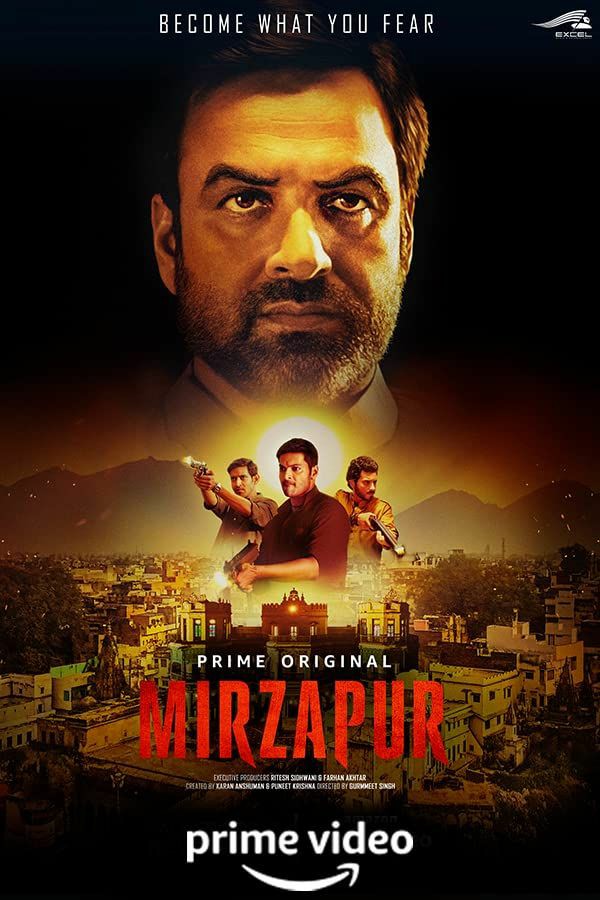
mirzapur(2018- ), IMDb- 8.4
Mirzapur is an Indian action crime thriller streaming television series on Amazon Prime Video, created by Karan Anshuman, who wrote the script along with Puneet Krishna and Vineet Krishna. Anshuman directed the first season of the series, along with Gurmmeet Singh and Mihit Desai, who also directed the second season of the series. The series is produced by Rithesh Sidhwani and Farhan Akhtar of Excel Entertainment.
The story follows the rule of Akhandanand Tripathi (Pankaj Tripathi), also known as Kaleen Bhaiya, the mafia don and proverbial ruler of Mirzapur in the Purvanchal region of Uttar Pradesh
Asur(2020- ), IMDb- 8.5
Asur is a 2020 Indian Hindi-language crime thriller web series, produced by Tanveer Bookwala of Ding Entertainment for the video on demand platform Voot. The series stars Arshad Warsi, Barun Sobti and Amey Wagh. The series is set in the context of a modern day serial killer having religious ties. Arshad Warsi made his OTT debut through this series.
Set in the backdrop of the mystical city of Varanasi, Asur follows Nikhil Nair, a forensic-expert-turned-teacher, who returns to his roots at the Central Bureau of Investigation, and along with his former mentor Dhananjay Rajpoot, finds himself caught in a cat-and-mouse game with a brutal serial killer. What follows is a blend of suspense, mythology and the murders of some people totally unrelated.
Delhi crime(2019- ), IMDb-8.5
Delhi Crime is an Indian crime drama streaming television series written and directed by Richie Mehta. It is a Netflix Indian original series produced by Golden Karaven, Ivanhoe Productions, Film Karavan and Poor Man’s Productions Starring Shefali Shah, Rasika Dugal, Adil Hussain and Rajesh Tailang, the series is set in the aftermath of the 2012 Delhi gang rape.
It received mostly positive response from critics praising the script, premise and performance of the main cast members. At the International Emmy Awards held in September 2020, Delhi Crime received the award for Outstanding Drama Series becoming the first ever Indian series to win this award
sacred games(2018-2019) , IMDb-8.6
Sacred Games is an Indian crime thriller streaming television series based on Vikram Chandra’s 2006 novel of the same name. India’s first Netflix original series, it was produced and directed by Vikramaditya Motwane and Anurag Kashyap as Phantom Films.Sacred Games is the only Indian series to appear on The New York Times’ “The 30 Best International TV Shows of the Decade” list.
Sartaj Singh (Saif Ali Khan) is a troubled police officer in Mumbai who receives a phone call from gangster Ganesh Gaitonde (Nawazuddin Siddiqui), who tells him to save the city within 25 days; the series chronicles the events which follow.
The family man(2019- ), IMDb- 8.8
The Family Man is an Indian espionage action thriller streaming television series created by Raj Nidimoru and Krishna D.K. for the streaming service Amazon Prime Video.The series was announced in June 2018, with the filming of the first season began simultaneously in Mumbai, Delhi, Kerala, Jammu and Kashmir, Ladakh and was wrapped up within May 2019. Filming for the second season began in November 2019, and was wrapped up in September 2020.
It features Manoj Bajpayee as Srikant Tiwari, a middle-class man secretly working as an intelligence officer for the Threat Analysis and Surveillance Cell (TASC), a fictitious branch of the National Investigation Agency.
Scam 1992(2020- ), IMDb-9.5
Scam 1992: The Harshad Mehta Story is an Indian financial thriller streaming television series on SonyLIV directed by Hansal Mehta. The series is adapted from journalist Sucheta Dalal and Debashish Basu’s 1992 book The Scam: Who Won, Who Lost, Who Got Away.
Scam 1992 was premiered on SonyLIV on 9 October 2020. The series eventually received praise from the performances of the cast members, writing and the major technical aspects. It became the most viewed web series on the streaming platform.In March 2021, SonyLiv and Applause Entertainment announced the second installment of the franchise titled Scam 2003. It is to be directed by Hansal Mehta.
for more information related to the topic , please vist the link below 👇
Scientists who assess the planet’s health see indisputable evidence that Earth has been getting warm in some cases rapidly. Many believe that human activity, especially the burning of fossil fuels and the resulting collection of greenhouse gases in the atmosphere, have caused this warming trend. In the last decade scientists have documented record-breaking average annual surface temperatures and have observed other signs of change all over the planet: in the distribution of ice and temperatures of the oceans.
Ice is changing everywhere on the Earth. The famous snows of Kilimanjaro have melted more than 85 percent since 1911. Glaciers in the Indian Himalayas are retreating so fast that researchers fear that most central and eastern Himalayan glaciers could actually disappear by 2035. Arctic sea ice has thinned so much over the past half century, and its extent has declined by about 10 percent in the past 30 years. NASA’s repeated laser altimeter readings show the edges of Greenland’s ice sheet shrinking continuously. Freshwater ice breakup in the Northern Hemisphere now occurs nine days earlier than it did 150 years ago, and autumn freeze-up ten days later. When temperatures rise and ice melts from the icebergs, more water flows to the seas from glaciers and ice caps, and ocean water eventually warms and expands in volume. This combination of effects is the most important factor in raising average global sea level between ten and twenty centimeters in the past hundred years, according to the Intergovernmental Panel on Climate Change (IPCC).
There are absolutely no words to describe how much, and how fast, the ice is changing. Researchers predicted long ago that the most visible impacts from a globally warmer world would occur first at higher latitudes: rising sea temperatures air, earlier snowmelt, later ice freeze-up, reduction in sea ice, worse erosion, increase in storm intensity. All these impacts have been documented in Alaska. “The changes observed here provide an early warning system for the rest of the planet,” says Amanda Lynch, an Australian researcher who is the chief investigator on a project that works with Barrow’s residents to help them implement scientific data into management decisions for the city’s infrastructure.
Ian Hall, also of Cardiff University, who co-directed the scientific expedition, indicates that the results can contribute to understand how the Earth’s climate will respond to anthropic changes. Similarly, Jiménez Espejo, noted that last year, during an expedition aboard Hespérides, the French Navy research vessel, they were able to observe the various huge icebergs that had just broken into several pieces next to the islands of South Georgia. Ocean warming may cause the trajectories and the melt patterns of these large icebergs to change in the future, in a way affecting the currents and, therefore, our climate and the reliabilty of the models that scientists can use to predict it.
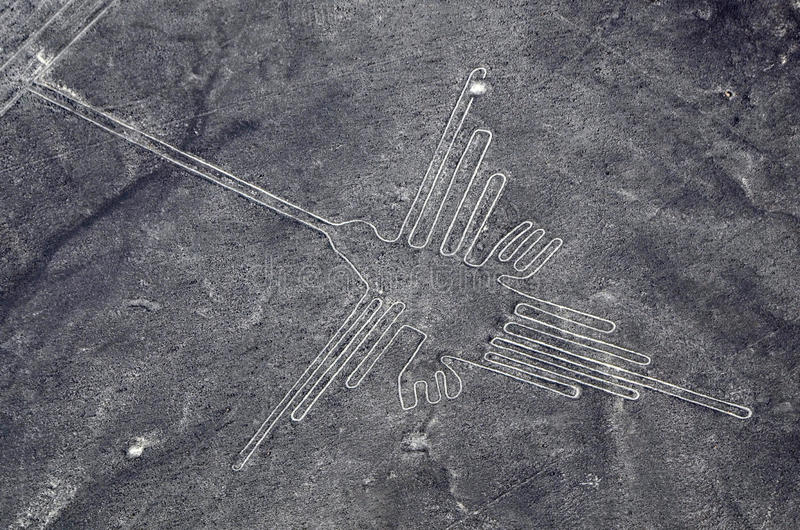
There are three basic types of Nazca Lines: straight lines, geometric designs and pictorial representations.
There are more than 800 straight lines on the coastal plain, some of which are 30 miles (48 km) long. Additionally, there are over 300 geometric designs, which include basic shapes such as triangles, rectangles, and trapezoids, as well as spirals, arrows, zig-zags and wavy lines.
The Nazca Lines are perhaps best known for the representations of about 70 animals and plants, some of which measure up to 1,200 feet (370 meters) long. Examples include a spider, hummingbird, cactus plant, monkey, whale, llama, duck, flower, tree, lizard and dog. The Nazca people also created other forms, such as a humanoid figure (nicknamed “The Astronaut”), hands and some unidentifiable depictions.
How the Nazca Lines Were Created
Anthropologists believe the Nazca culture, which began around 100 B.C. and flourished from A.D. 1 to 700, created the majority of the Nazca Lines. The Chavin and Paracas cultures, which predate the Nazca, may have also created some of the geoglyphs.
The Nazca Lines are located in the desert plains of the Rio Grande de Nasca river basin, an archaeological site that spans more than 75,000 hectares and is one of the driest places on Earth.
The desert floor is covered in a layer of iron oxide-coated pebbles of a deep rust color. The ancient peoples created their designs by removing the top 12 to 15 inches of rock, revealing the lighter-colored sand below. They likely began with small-scale models and carefully increased the models’ proportions to create the large designs.
Purpose of the Nazca Lines
More recent research suggested that the Nazca Lines’ purpose was related to water, a valuable commodity in the arid lands of the Peruvian coastal plain. The geoglyphs weren’t used as an irrigation system or a guide to find water, but rather as part of a ritual to the gods—an effort to bring much-needed rain.
Some scholars point to the animal depictions—some of which are symbols for rain, water or fertility and have been found at other ancient Peruvian sites and on pottery—as evidence of this theory.
In 2015, researchers presenting at the 80th annual meeting of the Society for American Archeology argued that the purpose of the Nazca Lines changed over time. Initially, pilgrims heading to Peruvian temple complexes used the geoglyphs as ritual processional routes. Later groups, as part of a religious rite, smashed ceramic pots on the ground at the point of intersection between lines.
One 27th MARCH 2020, a long periodic comet with near parabolicorbit was discovered by a group of astronomer during the NEOWISE Mission the Wide-field Infrared Survey Explorer (WISE) space telescope. At that time, it was an 18th-magnitude object, located 2 AU (300 million km; 190 million mi) away from the Sun and 1.7 AU (250 million km; 160 million mi) away from Earth.
C/2020 F3(NEOWISE)
Discovered by NEOWISE Discovery date March 27, 2020 Orbital characteristics A Epoch 2458953.5 (April 14, 2020) Observation arc 113 days Number of observations 376 Orbit type Long period comet Aphelion 538 AU (inbound) 710 AU (outbound) Perihelion 0.29478 AU Semi-major axis 270 AU (inbound) 355 AU (outbound) Eccentricity 0.99921 Orbital period ~4400 yrs (inbound) ~6700 yrs (outbound) Inclination 128.93° Node 61.01° Argument of periapsis 37.28° TJupiter −0.408 Earth MOID 0.36 AU (54 million km; 140 LD) Jupiter MOID 0.81 AU (121 million km) Dimensions ~5 km (3 mi) Last perihelion July 3, 2020 Next perihelion unknown
HISTORY AND OBSERVATION
The object was discovered by a team using the WISE space telescope under the NEOWISE program on March 27, 2020.It was classified as a comet on March 31 and named after NEOWISE on April 1. It has the systematic designation C/2020 F3, indicating a non-periodic comet which was the third discovered in the second half of March 2020.
Comet NEOWISE made its closest approach to the Sun (perihelion) on July 3, 2020, at a distance of 0.29 AU (43 million km; 27 million mi). This passage through the planetary region increases the comet’s orbital period from about 4400 years to about 6700 years.Its closest approach to Earth occurred on July 23, 2020, 01:09 UT, at a distance of 0.69 AU (103 million km; 64 million mi) while located in the constellation of Ursa Major.
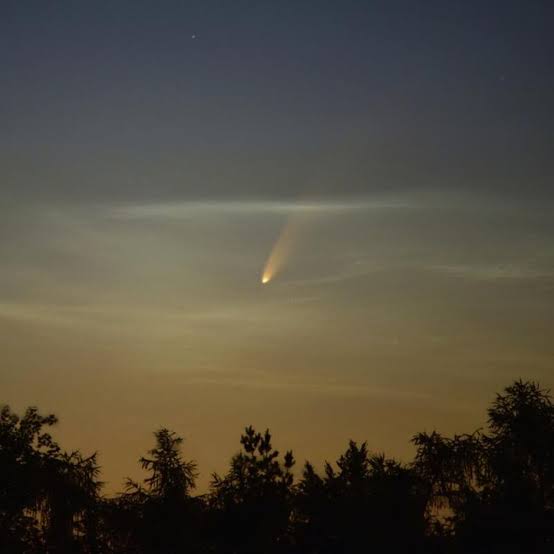
In early July, the comet could be seen in the morning sky just above the north-eastern horizon and below Capella. Seen from Earth, the comet was less than 20 degrees from the Sun between June 11 and July 9, 2020. By June 10, 2020, as the comet was being lost to the glare of the Sun, it was apparent magnitude 7,when it was 0.7 AU (100 million km; 65 million mi) away from Sun and 1.6 AU (240 million km; 150 million mi) away from Earth. When the comet entered the field of view of the SOHO spacecraft’s LASCO C3 instrument on June 22, 2020, the comet had brightened to about magnitude 3, when it was 0.4 AU (60 million km; 37 million mi) away from the Sun and 1.4 AU (210 million km; 130 million mi) away from Earth.
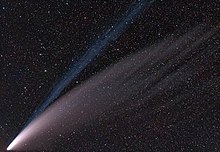
By early July, Comet NEOWISE had brightened to magnitude 1, far exceeding the brightness attained by previous comets, C/2020 F8 (SWAN), and C/2019 Y4 (ATLAS). By July, it also had developed a second tail. The first tail is blue and made of gas and ions stretching almost 70° from its nucleus. There is also a red separation in the tail caused by high amounts of sodium which is nearly stretched 1°. The second twin tail is a golden color and is made of dust stretched almost 50°, like the tail of Comet Hale–Bopp. This combination resembles comet C/2011 L4 (PANSTARRS). The comet is brighter than C/2011 L4 (PANSTARRS), but not as bright as Hale–Bopp was in 1997. According to the British AstronomicalAssociation, the comet brightened from a magnitude of about 8 at the beginning of June to −2 in early July.This would make it brighter than Hale–Bopp. However, as it was very near to the Sun, it was reported as 0 or +1 magnitude and remained that bright for only a few days. After perihelion, the comet began to fade, dropping to magnitude 2. Its nucleus activity subdued after mid-July, and its green coma was clearly visible after that.
On July 13, 2020, a sodium tail was confirmed by the Planetary Science Institute’s Input/Output facility. Sodium tails have only been observed in very bright comets such as Hale–Bopp and C/2012 S1 (ISON).
From the infrared signature, the diameter of the comet nucleus is estimated to be approximately 5 km (3 mi). The nucleus is similar in size to Comet Hyakutake and many short-period comets such as 2P/Encke, 7P/Pons-Winnecke, 8P/Tuttle, 14P/Wolf, and 19P/Borrelly. NASA’s Parker Solar Probe had captured an image of the comet, from which astronomers also estimated the diameter of the comet nucleus at approximately 5 km (3 mi). Later in July 2020, other observations were also reported, including those related to coma morphology and spectrographic emissions. On 31 July 2020, strong detection of OH 18-cm emission was observed in radio spectroscopic studies at the Arecibo Observatory. On August 14, 2020, the rotation period of the comet was reported to be “7.58 +/- 0.03 hr”.
A glimpse
TRAJECTORY
Comet NEOWISE retrograde orbit crossed to the north of the plane of the ecliptic, to which it is inclined at approximately 129 degrees, on June 29, 2020, 01:47 UT. It made its closest approach to the Sun (perihelion) on July 3, 2020, at a distance of 0.29 AU (43 million km; 27 million mi). This passage increases the comet’s orbital period from about 4400 years to about 6700 years.On July 18 the comet peaked at a northern declination of +48 and was circumpolar down to latitude 42N. Its closest approach to Earth occurred on July 23, 2020, 01:09 UT, at a distance of 0.69 AU (103 million km; 64 million mi) while located in the constellation of Ursa Major.
On 31 December 2019 in China and on 27 January 2020 in India, the first case of COVID-19 was reported and we are still fighting against this disease. Later on 24th March 2020, the Indian government ordered the nationwide lockdown for 21 days because of the rapid increase in COVID-19 cases. While, on one hand, we all were confined to stay at our homes with work and education. On the other hand, doctors, nurses, all the medical staff, the essential servants, and the police officers were on duty even in a global pandemic. They are truly our “COVID HEROES”. The virus has divided the world into two parts; Home & Hospital. Between these two, we are at home spending quality time with our family while the covid heroes struggling to their every breath with ambulance runs, carrying patients, working 24/7, only to provide the patients with the best treatments. Millions of doctors in this critical situation are putting their health, families aside & are risking their own lives for us selflessly. Some of them lost their lives too trying to save their patients. And after all of this sacrifice, what they get is assault, hate, abuse, disrespect. Is it what they deserve after risking their own lives for us? They ain’t asking much in return but just us to appreciate their efforts and hard work, to respect them, and help them by staying home. Can’t we do these small things for them? Is staying home for our own well-being that tough? The stories of covid heroes are really inspiring but heartbreaking at the same time. All we can do from our side is be grateful to them. So, let’s take a moment to thank COVID WARRIORS; who are relentlessly fighting this battle for our safety. WE SALUTE YOU!
The International Monetary Fund (IMF) is a global organization that promotes financial stability, economic growth and international trade. It also aims to reduce poverty around the world. The IMF describes its mission as “to foster global monetary cooperation, secure financial stability, facilitate international trade, promote high employment and sustainable economic growth, and reduce poverty around the world.”
The IMF was originally founded in 1945 to support expansion of trade and economic growth, discouraging policies that hampered international relations and promoting international monetary cooperation. From the 1970s the IMF has promoted floating exchange rates, meaning that market forces determine the currency value relative to one another. It is based in Washington, D.C and started with just 40 member countries. Today, it has 189 member countries. Each of the member countries have a representation proportional to its financial power on the IMF’s executive board. Quotas of member countries are a key determinant of the voting power in IMF decisions. They are based on something called special drawing right (SDR). SDRs are an international type of monetary reserve currency created by the IMF as a supplement to the existing money reserves of member countries. Votes comprise one vote per 100,000 special drawing right (SDR) of quota plus basic votes.
The IMF carries out 3 main operations to attain their goals. These are:
Surveillance- Large amounts of data are collected on a country’s international trade, state of global economy and provides regular economic forecasts. They also advise on how the current fiscal, monetary and trade polices will affect the country’s financial stability and its foreign relations.
Lending- The IMF often gives out loans to countries that are in serious debt or in some other economic predicament. This is so that they don’t fall into a financial crisis. Member countries pool in funds to form the loan. In 2019, the total loan amount the IMF had was $11.4 billion. However, these loans are not unsecured. It is almost always conditional on the country making some serious financial reforms to increase their potential for growth.
Capacity development- Member countries are given training, advice on policy decisions through capacity development programs. These programs include training in data collection and its analysis, which feed into the IMF’s role of monitoring national and global economies.
The IMF is accountable to its member country governments. At the top of the organization structure is the Board of Governors, consisting of one governor and one alternate governor from each member country, usually the top officials from the central bank or finance ministry. The Board of Governors meets once a year at the World Bank Annual Meetings. The executive board has 24 members and they oversee the day to day operations. The total staff in the IMF amounts to over 2,700 and they come from more than 150 different countries.
One of India’s biggest sweet, snacks and restaurants, Haldiram’s is easily one of the most recognizable food brands in the Northern part of India. The company has its humble origins dating pre-Independence in 1937 by the father of Ganga Bhishen Agarwal who used to sell Bhujia in Bikaner, Rajasthan. Agarwal later left his family due to a dispute and started selling namkeen on the street which was prepared by his wife at home.
In 1946, the first Haldiram store was opened which sold Bikaneri Bhujia. The name “Haldiram” has his origin in Agarwal’s nickname given by his mother. The Bhujia sold by Haldiram’s was reinvented by the addition of moth flour which made it thinner, this change proved to be successful and increased the income manifolds.
By the early 1930s, the price of bhujia went up from 2 paise a kilo to 25 paise, making it a successful business venture for the whole family to live off. Merchants on their way to Kolkata stopped by to purchase this bhujia for friends and family back home and the seeds of a global empire began to be sowed. When Ganga Bhishen went to Kolkata to attend a wedding ceremony, who knew that at this time his life as well as the appeal of the bhujia was to be changed forever. He had an idea to open a shop in Kolkata. This was their first branch out of Bikaner and laid the foundations of expansion of this successful bhujia business in 1970.
While the second generation did not expand the business further, it was his grandsons Manhoharlal and Shiv Kishan who took the business to Nagpur and the capital Delhi. Business in Delhi began in 1983 in Chandni Chowk but, unlike the other cities they had ventured into, bhujia was not a unique product in Delhi. The brothers faced immense competition from established players such as Ghantewala and Bikanerwala. As a strategy, they differentiated themselves by focusing on adjusting flavours and innovation to meet the needs of the market and soon began to break even. Once business picked up, they turned their apartment into a factory, where the entire family pulled long sleepless nights, trying to keep up with demand. Soon, the single Chandni Chowk location was not enough and Manohar Lal began looking for factory space to begin large-scale production. The first factory was set up in the late ’80s. After that, distribution became one of their greatest strengths, one of the secrets to their success in the capital. This was followed by restaurants in major cities in India and countries abroad including the United States, Canada and Thailand.
Currently Haldiram is producing more than 400 products. It offers all different categories of Veg frozen food, various types of Namkeen snacks and a variety of sweets. A testament of their success is that today at railway stations and stalls around the country, the ₹5 Haldiram’s bhujia packet is used as currency, as a substitute for loose change.
Ganga Bhishen Agarwal left for the heavenly abode on 23rd February 1980 but he wouldn’t have imagined that one day his products will sell globally and it would be a business with a net worth of ₹7,130 crore.
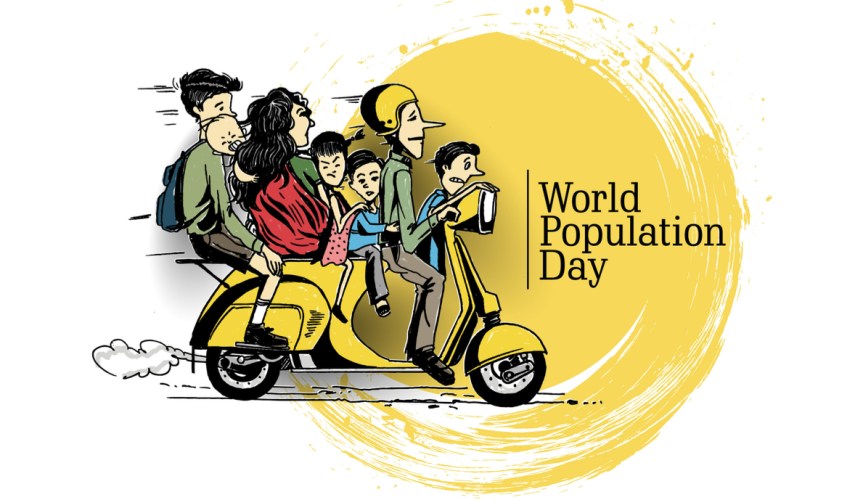
One of the biggest challenges that we are facing still now is the rise of world population. World population day is annually celebrated on July 11. The main purpose this is to bring awareness about the rising population issues and how to tackle these issues. Population issues includes family planning, gender equality, child marriage, human rights, right to health, baby’s health, etc. World Population Day was established by the Governing Council of the United Nations Development Programme in 1989. It was inspired by the public interest in Five Billion Day, the approximate date on which the world’s population reached five billion people on July 11, 1987.
Every year there is a specific theme for World Population Day and the theme of World Population Day 2021 is “Rights and choices are the answer: Whether baby boom or bust, the solution to shifting fertility rates lies in prioritizing the reproductive health and rights of all people.”
US, India and China are the top three countries that have the largest population count. The size of a nation’s population has a major impact on its development and operations. Population growth has always been a concern. The number of human beings is increasing every year, but the resources that sustain human life are still unable to regenerate. The growth rate has also been increasing rapidly. Put this fact in perspective: the population broke the 2 billion marks in 1927. By 1999, the population was recorded as 6 billion. Therefore, the population growth rate has increased significantly year by year. It is very urgent to control the population. It causes some irreparable damage to the environment and atmosphere. A large number of people means the rapid and unfair consumption of environmental resources. Natural resources such as land, water, and air are limited. They cannot be manually produced. The rapid consumption of these resources has caused huge losses.
According to UN Secretary-General Antonio Guterres,” Sustainable Development 2030 agenda is the world’s blueprint for a better future for all on a healthy planet. On World Population Day we recognise that this mission is closely interrelated with demographic trends including population growth, aging, migration, and urbanisation”.
The Population Division works closely with agencies, programs, funds and bodies of the UN system in order to execute work program on population. Activities organized on this day include seminars, discussions, educational meetings, open competitions, slogans, workshops, debates, songs, etc. Not only that, even TV channels, news channels, and radio programs broadcast various programs related to the importance of population and family planning. Demographic issues also create tensions in society: there are more heinous crimes committed in the field of gender inequality and human rights than ever before, especially in developing countries.
The government of each country must formulate effective policies and plans to control the growing population. Without immediate control, the ever-increasing world population will lead to some unbearable situations. Policies such as family planning and use of birth control should be implemented on a large-scale basis.
India is a country with vast culture and several religions within itself. Before, getting into the context let us know what exactly the word culture mean.
Culture can be defined as knowledge of a particular group of people, cuisine, religion, rituals, language, arts and music, etc.
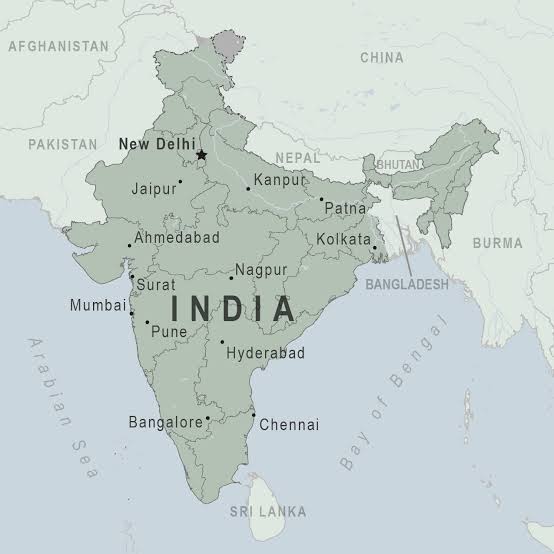
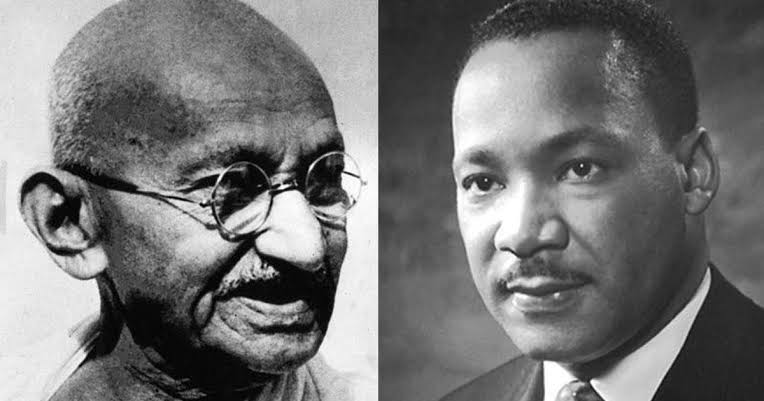
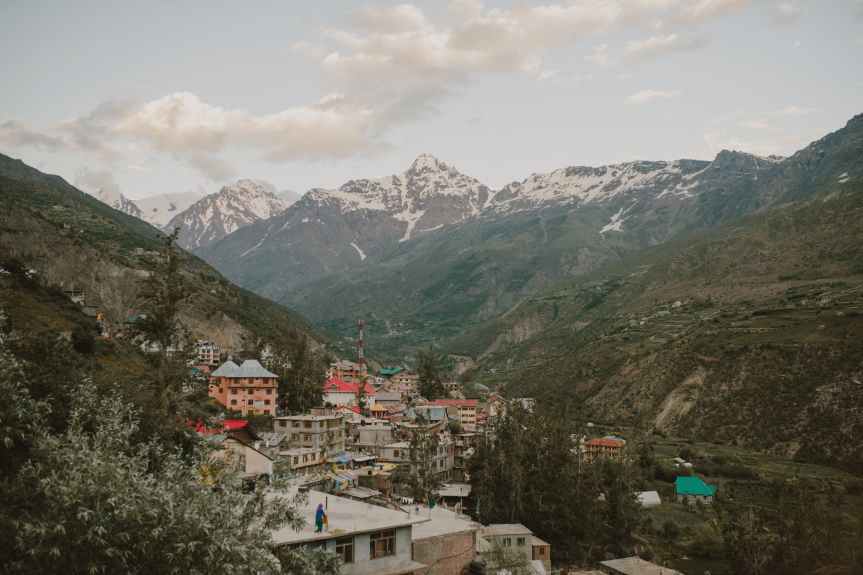
Indian culture is one of biggest and most complex cultures to understand in the world. With 29 states and 8 union territories and more than 4 religions in a single country, India stands rich in its literature. Even though, the nation has 80.5% Hindus, 13.4% of Muslims, 2.3% Christians, 1.9% Sikhs with 2 billion followers in total the unity of the nation holds strong. There is always culture in everything from God to Art in India . It has to be mentioned here that ‘Indian Gods’ play a major role in the ocean-like Indian mythologies. From Mahabharat, India has had the culture of giving priority to prayers. The religions that originated in India are based on the concepts of dharma and karma (Hinduism, Jainism, Buddhism and Sikhism). Ahisma, being an important aspect of Indian culture, has played a major role in India’s struggle for Freedom. Mahatma Gandhi, a freedom fighter, followed Ahimsa to gain freedom for the nation which was later took as an inspiration by Martin Luther King Jr. Atheism is seen as a rejected concept by most of the Indians. Atheists are seen as aliens in the country. Even though, it is a personal choice of a person it is often not understood by many, which shows their deep passion for religions, gods and prayers.
Mahatma Gandhi (left) and Martin Luther King Jr ( right)
This country with vast culture celebrates several festivals. With half of them being celebrated by the nation together (Diwali, festival of lights) and rest celebrated by a particular group of people from an area or state (Onam being celebrated by Keralites). The three national holidays in India, the Independence Day, Republic Day and Gandhi Jayanthi are celebrated with great enthusiasm.
Diwali – festival of light
India has five major languages that includes Hindi, Tamil, Telugu, Malayalam and Kannada. Each language has its own history with Tamil being considered as one of the oldest and classical languages in the world. Hindi being considered as the national language by many.
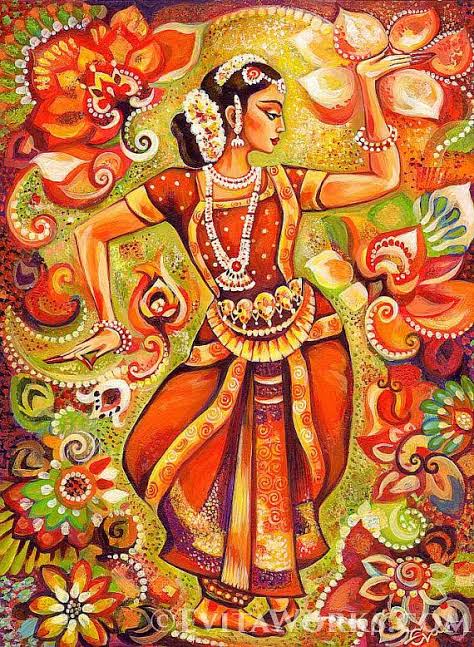
India has eight classical forms of dance. Indian Art has always had mythological elements in it. With Bharatanatyam from Tamil Nadu, Kuchipudi from Andhra Pradesh, Mohiniattam from Kerala, Yakshagana of Karnataka, Manipuri from Manipur, Odissi from Odisha, Sattriya from Assam and Kathak from Uttar Pradesh. Apart from the classicals dance forms, Indian regions have a strong dance tradition from Bhangra of Punjab to Dekhnni of Goa.
Bharatanatyam- a classical dance form
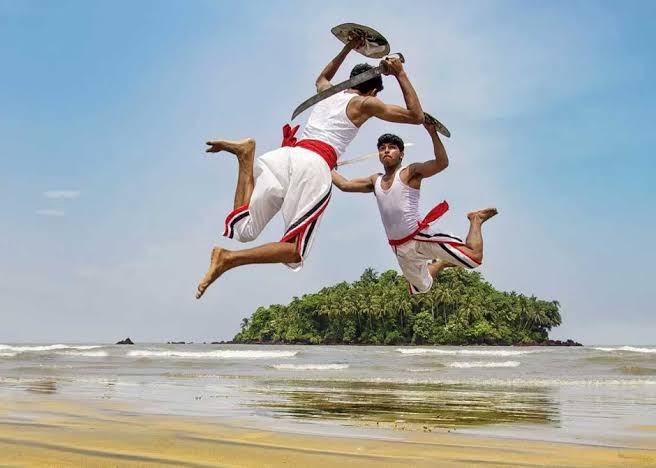
Hockey is often seen as the national game of India, though Indian Government has denied it. Indian Government has clarified India currently doesn’t have any national game. Martial Arts being another traditional sport that originates in Kerala. Kalaripayattu (400 BCE-600 CE) in the Sangam literature is one of the oldest martial arts in the world. Ayurvedic Massage with Sesame oil is also considered as a form of Martial Arts. India being a roof for varied cultures and religions, still stays together and strong.
When one commits suicide then it is that single moment when one does not care for anyone, neither parents, nor family or friends, but just want to culminate his or her life for one particular reason. He or she wants to rest in peace. But who knows about life after death, whether life after death is peaceful or do we have to go through our previous karmas in future lives or where God will send us or what he will make us. There are many mysterious questions that cannot be answered. This means that you know nothing about your condition after death. So, presuming death is peaceful than life is not 100% true.Young Indians especially wealthy and educated are more likely to commit suicide as development is forcing youth to the condition of hopelessness. Job anxiety, competition, educational pressure, and society can also increase the number of suicide cases in India. As more and more number of young ones are relying on electronic gadgets than their family, the frustration level is increasing. The younger generation is also facing pressure from their families to get higher marks and many parents believe that their kids should come first in the class. This is one of the leading causes of suicides in the school-going generation in India. But whatsoever may be the reason, this step is not a solution to any problem. One must be strong enough to face the realities of life. Accept both good and bad with open arms and do not let anything disturb you.
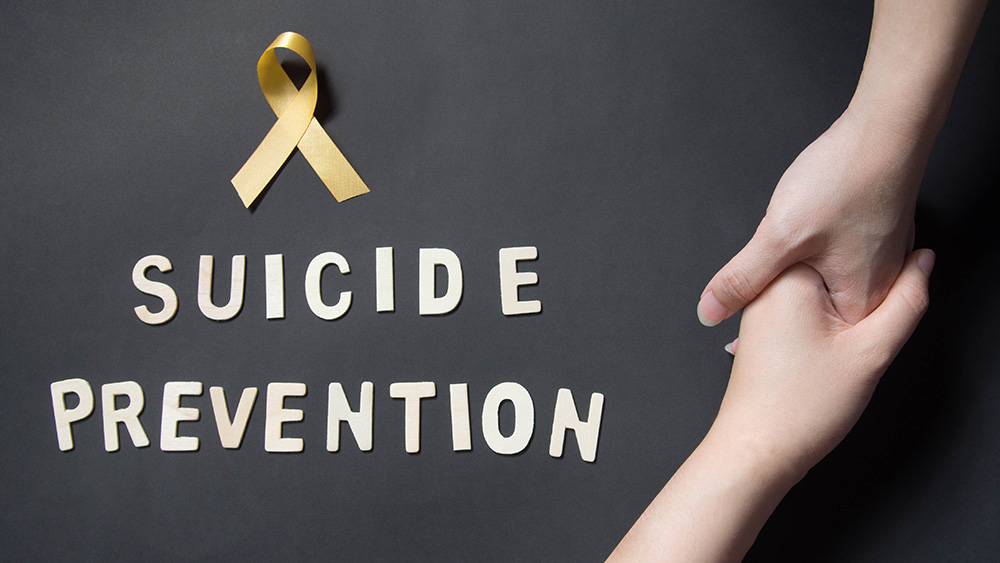
Suicide is preventable
Together, we must all stand up, speak up, and advocate for better policies and implementation of resources for mental health. We must view suicide as a conditionneeding treatment, not as a punishment. A multi-pronged approach must be taken to decrease the world’s suicide rate. Mental health education and resources for dealing with symptoms of mental health should be taught and promoted from an early age. Doing so will provide an avenue for the maintenance of dignity and help-seeking behavior. If you know someone who is feeling suicidal or is emotionally distressed, tell them that you care for them. Being an active listener and being aware of signs of distress can help you to be there and make the person realize that you will help them and that they deserve to be helped. Being empathetic helps the person feel understood and heard. It is important to realize that feeling suicidal is not the nature of the person but a mere state of mind. People feel suicidal because they feel nothing else will work out and their death will solve the problem. Suicidal thoughts are often linked with a mental disorder and can be treated well.
World Suicide prevention Day
World Suicide Prevention Day is an awareness day observed on 10 September every year, in order to provide worldwide commitment and action to prevent suicides, with various activities around the world since 2003. The aim of the day is to research and collect data on suicidal behavior, determine the various causes and why its signs go unnoticed, and developing sound practices and policies for suicide prevention. Events and activities on World Suicide Prevention Day include conferences, seminars, and discussion forums; formulating new policies for suicide prevention; the use of media as a tool for promoting awareness; memorial ceremonies to remember those who lost the battle to mental illness; educating adolescents on suicide and who to reach out to if needed; and establishing support groups and special facility centers as resources for depression and suicide awareness and treatment.


















 Eduindex
You must be logged in to post a comment.