Toycathon aims to position India at 100 billion USD global toy manufacturing market

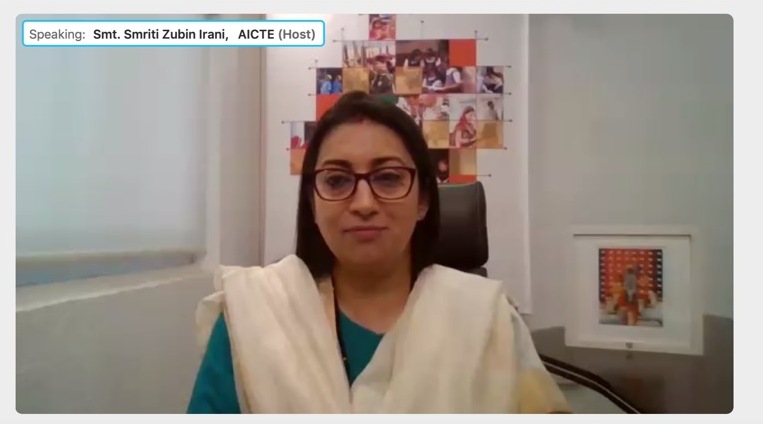
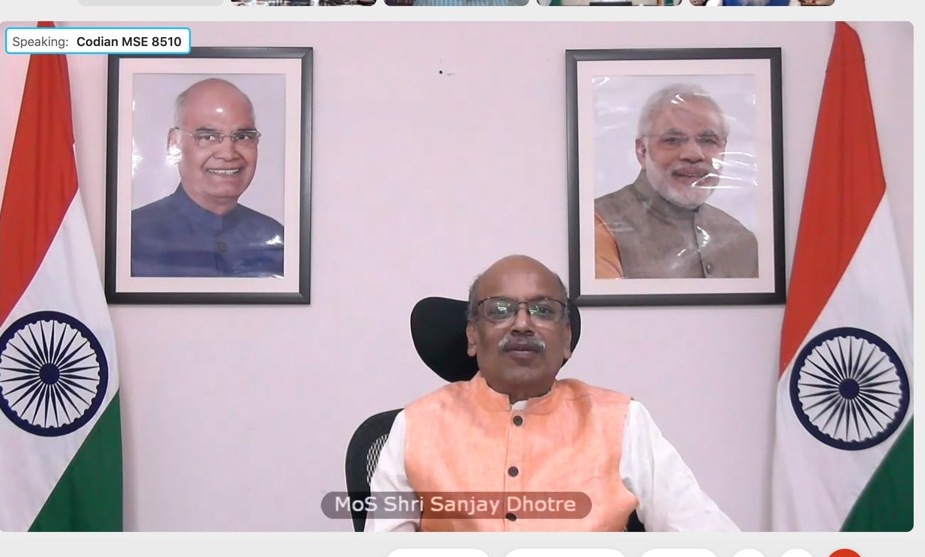
 Union Minister Women and Child Development and Textiles Smt. Smriti Zubin Irani and Minister of State for Education Shri Sanjay Dhotre virtually inaugurated Toycathon 2021 grand finale today. Shri Amit Khare, Secretary, Higher Education, Ministry of Education; Shri Upendra Prasad Singh, Secretary, Ministry of Textiles; Prof. Anil D. Sahasrabudhe, Chairman, AICTE; Dr. Abhay Jere, Chief Innovation Officer, Ministry of Educations Innovation Cell; Dr. M.P. Poonia, Vice Chairman, AICTE and Dr. Mohit Gambhir, Director, MoEs Innovation Cell were present at the inauguration session.

The Toycathon 2021 is being organized jointly by Ministry of Education in coordination with five other Ministries viz: Ministry of Women and Child Development, Ministry of Information and Broadcasting, Ministry of Commerce &Industry, Ministry of Small and Medium Enterprises, and Ministry of Textiles. This inter-ministerial Toycathon focuses on conceptualizing new and innovative toys using local materials which are economical, affordable, safe, environment friendly, with exceptional high quality for both Indian and global markets.

Speaking on the occasion, Smt. Smriti Zubin Irani marked the moment as historical where the nations first toy hackathon is being dedicated to the world. The Minister complimented 17749 individual teams that submitted the ideas at Toycathon 2021. She hoped that many more ideas from this toycathon grand finale be commercialized. She emphasized that the toys have huge impact on psychomotor abilities of children, impact their memory skill and generate huge responsibility towards ensuring future autonomy of the child.

She expressed her concerns that 85% toys that our children are playing with are imported and are predominantly made of plastic. Drawing inspiration from Prime Ministers global commitment for sustainable development, Minister invited research bodies and toy manufacturers to make sustainable toys. She also advised that India is known for its engineering potential and our technologists should equip toy sector with adequate and innovative technologies for electronic toys.

Shri Dhotre said Indian toy market stands at around $1.5 billion USD and currently we are importing a major chunk from outside. The global toy market is estimated to be more than 100 billion USD, we must channelize our creative, innovative and manufacturing power to have our share in these areas. This toycathon will provide opportunity to our young innovative minds to lead the path to manufacture toys in India for the world.He suggested that the use of toys could ease the burden of rote learning science and other subjects.

Speaking on the occasion, Shri Upendra Prasad Singh  highlighted the commercial as well as pedagogical importance of toys in inculcating the values, ethos and awareness about our history and culture. He said we have a very large number of clusters and very good artisans, but one thing which is required is to innovate, innovate as per the changing requirement of not only our country but for abroad as well. He hoped that the ideas generated in this toycathon will be very useful for the said purpose. 

Shri Amit Khare expressed his concerns that economical value of imported toys is huge and it is a roadblock for atmanirbhar Bharat. He said, The curb on import of toys will generate new opportunities for our artisans. He added that the National Education Policy 2020 advocates for 5+3+3+4 system and it asks for activity-based learning for children through toys and games, here the importance of regional Indian toys is very significant in connecting young minds with our history and culture.

On Inaugural occasion Prof. Anil D. Sahasrabudhe, Chairman, AICTE said that early child education should not be stressful and it should be fun based learning through toys, stories and games. He added, Edutainment, which is entertainment and education at the same time,  is required.He praised the organizing team for developing a robust digital platform which could bring the participants, evaluators and organizers on one platform to facilitate this toycathon.

Dr. Abhay Jere, Chief Innovation Officer, Ministry of Educations Innovation Cell, welcomed the dignitaries and motivated the participants to do best as per their abilities.

Dr. Mohit Gambhir, Director, MoEs Innovation Cell, who mastered the inaugural ceremony emphasized the importance of grassroot innovation. He said In todays time it is well understood that the future innovations will spring from the base of pyramid – where common men-women will innovate for their needs. This base of pyramid is very critical for holistic development of society and needs to be trained.

The hackathon was initially conceptualized in physical as well as digital mode. Due to the prevailing Covid 19 pandemic and owing to the safety of participants the physical edition has been deferred and now only digital edition is being conducted from 22ndJune to 24thJune 2021. Toycathon 2021 majorly focuses on conceptualizing new and innovative toys using local materials which are economical, affordable, safe, and environment friendly, of exceptionally high quality for Indian as well as global market.

The ongoing Toy Hackathon have 3 tracks:

Track 1for Junior Level Participants i.e., primarily SCHOOL STUDENTS. They mainly focus on designing toys for kids of age group 0-3 years and 4-10 years. 

Track 2 for Senior Level Participants i.e., students and faculty from Higher education institutions. This group focus on developing concepts for 0-3 years, 4-10 and 11 years and above. This segment primarily focused on Electronics, Sensors, Mechatronics, and toys based on AI and ML approaches, AR-VR-XR and Robotics.

Track 3 for Startup-Professional Level that incudes overall innovation and development of prototypes. These prototypes are expected to enable toy industry in boosting up the production along with improving the quality of toys in Indian market.

During three-day Toycathon 2021 grand finale, participating teams of all tracks will be mentored through specialized mentoring session in morning half of the day and then they will be evaluated in later half of the day for initial two days and then there will be a power judging round for participating teams to declare winners for Toycathon 2021 Digital Edition. For this purpose, Ministry of Education Innovation Cell has engaged 645 mentors and evaluators for 1567participating teams. 85 Nodal centers have been selected to support Ministry of Educations Innovation Cell and All India Council for Technical Education, which are the organizing agencies for this Inter-ministerial Toycathon.

***

Designing a New Town

 A new town built on land strongly controlled under unified public or semi public ownership, should be distinguished by combination of town and country life style and of environment, an uninterrupted greenbelt encircling and intersecting the town. A planned urban community that combines residential, commercial and recreational areas. Due to increasing population, we provide new town for reducing the burden of the city. Designing a new town for self-sufficient and providing housing, commercial, basic facilities and recreational area . 

New towns are playing in the economic development of the countries they are emerging in, it is clear that economic motives are the dominant factor behind most new town initiatives. The present new towns are populated by the middle and upper classes, while the lower income groups live in the old city or in self organized cities and slums.

The New Town Movement 

The new town movement refers to towns that were built after World War II and that have been purposefully planned, developed and built as a remedy to overcrowding and congestion in some instances and to scattered and settlements in others. The main reason for it was to decongest larger industrialized cities, rehousing people in freshly built, new and fully planned towns that were completely self-sufficient and provided for the community. 
Records exist of plans for new towns back as far as the ancient Egyptians. Most of the “planned towns” in history were based on providing for military, trade or harbor needs. The idea of planning a city for the needs of the people who would live there didn’t crystallize until the end of the 19th century when Sir Ebenezer Howard, first suggested a series of “garden cities” north of London. However, it was another 50 years, at the end of World War II, when these garden cities really began to flourish. 
The world was moving into a new era of rapid urbanization. The problems of pollution, traffic congestion and the impersonalized isolation of urban sprawl were growing. The concept of creating new towns spread across Europe with the creation of planned communities to deal with these problems. These “new towns” sought to plan in advance the design and growth of cities. Some of the key features were: 

  • Pedestrian friendly walkways separated from vehicle traffic to promote the safe movement of people between neighborhoods, schools and shopping 
  • Architecturally innovative housing 
  • Community owned land to create activity areas and a sense of openness 
  • Community works of art 
  • Close proximity of commercial and industrial parks for people to live close to where they work 
  • A development philosophy to respect the land 

Need For New Towns 

Developing new towns for various purposes, such as, to exploit natural resources, to provide raw material to industries, to serve nuclei and act as catalytic agents for stimulating economic growth in backward areas, for administration and for special purposes. Although in most cases new towns are expensive to build and they take several years to develop fully, still they offer several benefits. Building of new towns does not mean that, we should stop the growth of major cities. Major cities develop, but new towns reduce the rate of growth of metropolitan cities. In this regard it is necessary to prepare national and state physical plans. The national physical plan should be the physical and ecological guide of the policies, programmes and strategies relating to population changes and distribution. 

15th November declared to be observed as Janjatiya Gaurav Divas every year

 Scheduled Tribes (ST) constitute approximately 8.6 percent of population of India numbering around 10.4 crores. There are over 705 Scheduled tribes notified under article 342 of the Constitution of India. In keeping with the vision of Prime Minister Shri Narendra Modi of ‘Sabka Saath, Sabka Vikas, Sabka Vishwas’, the Government of India has focused on development of tribes and conservation of their heritage and culture as a priority.

The Ministry of Tribal Affairs in line with this vision and its enduring commitment for welfare of tribals geared itself to ensure sectoral development through enhanced allocation of financial resources, convergence of efforts, re-engineering of planning and implementation mechanism of the Ministry.

The budget of MoTA also increased from Rs. 3850 crores in 2014-15 to Rs. 7484 crores in 2021-22. This enhanced availability of resources has enabled the Ministry to chart a new progress path with greater commitment to ensure holistic development of tribal communities.

  The major highlights of the Ministry of Tribal Affairs during the year 2021 are as follows:

  • Cabinet approves declaration of 15th November as Janjatiya Gaurav Divas 

The Union Cabinet, chaired by the Prime Minister Shri Narendra Modi has approved declaration of 15thNovember as Janjatiya Gaurav Divas dedicated to the memory of brave tribal freedom fighters so that coming generations could know about their sacrifices about the country. 
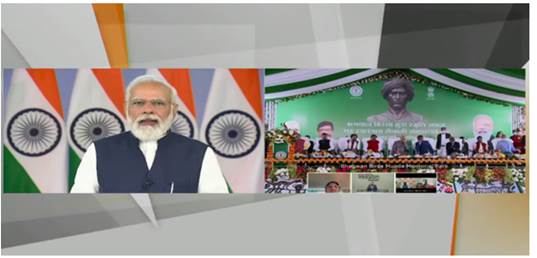
The date is the birth anniversary of Sri Birsa Munda who is revered as Bhagwan by tribal communities across the country. Pursuant to the speech of Prime Minister on Independence Day of 2016, Government of India has sanctioned 10 tribal freedom fighter museums across the country. Tribal Freedom 

  • Inauguration of Bhagwan Birsa Munda Museum in Jharkhand by Prime Minister

 Prime Minister, Shri Narendra Modi, inaugurated the Bhagwan Birsa Munda Tribal Freedom Fighters Museum and Park. Congratulating citizens of the state and the tribal society, PM Modi dedicated the Birsa Munda Memorial Udyan and Museum to the nation. A 25-feet tall statue of Birsa Munda was installed on the premises. “The project has been developed, in association with the Jharkhand government,” 
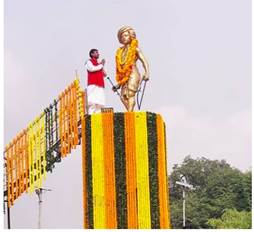
  

It demonstrates the way tribals struggled to protect their forests, land rights, their culture and displays their valour and sacrifices, which is vital for nation-building.

  • Prime minister Shri Narendra Modi laid foundation stone of 50 new Eklavya Model Residential Schools on occasion of Janjatiya Gaurav Divas as part of Azadi Ka Amrit Mahotsav

On the occasion of Janjatiya Garav Divas Prime Minister Shri Narendra Modi laid the foundation stone for the construction of 50 new Eklavya Model Residential Schools (EMRSs) in 27 districts of 7 States and 1 UT through  virtual mode from Bhopal  at an event to commmeorate Azadi ka Amrit Mahotsav (India @ 75). The Ministry of Tribal Affairs has been making continuous efforts in the direction of welfares of the tribal community; education being one of its key areas of intervention. The presently held stately stone laying foundation event marks the indomitable spirit of the Ministry aiming to niche education as a powerful driver for tribal students to pave the roads for future success and accomplishments.  

  • Minister Shri Arjun Munda and MoS Shri Bisheshwar Tudu laid the foundation stone of 11 EMRS in Jharkhand and Odisha.

Shri Arjun Munda and MoS Shri.Bisheshwar Tudu laid the foundation stone of 11 EMRS in Jharkhand and Odisha between July and September 2021. Total 84 EMRS foundation stones were laid during 2021; out of which foundation stone for 50 EMRS was laid by Prime Minister Shri Narendra Modi, total 27 EMRS foundation stone was laid by Tribal Minister Shri Arjun Munda and MoS Shri Bisheshwar Tudu. Other than these, 7 foundation stone of EMRS was laid by State Ministers.

639 EMRSs have been sanctioned, which include 288 under the old scheme and 351 in the new scheme. There are 367 functional EMRSs across the country with around 85,232 students currently enrolled. The construction is under progress in 173 EMRSs, out of which 66 are in the old scheme and 107 are under the new scheme.

These schools are envisaged to be brought at par with Navodaya Vidyalayas. National Education Society for Tribal Students (NESTS) as an autonomous body under the Ministry has been set up to provide overall support and policy directions to the schools in order to bring uniformity in the administration of the schools. The State/UT EMRS Societies at the State/UT level have been set up for day-to-day Administration and Management of the schools.

  • Ministry of Tribal Affairs organized Janjatiya Gaurav Saptah 

The Government of India has announced 15th November, the Birth Anniversary of Bhagwan Birsa Munda as ‘Janjatiya Gaurav Divas’ to pay tribute to the sacrifices and contributions of tribal freedom fighters and for the preservation of cultural heritage and promotion of Indian values of valour, hospitality and national pride.

More than 125 events / activities were organized during the week-long Azadi ka Amrit Mahotsav celebrations from 15th to 22nd November in various parts of the country to mark the Iconic Week to remember the great unsung tribal heroes who have sacrificed their lives and contributed to nation-building.

  • Union Home Minister Shri Amit Shah lays foundation stone for Rani Gaidinliu Tribal Freedom Fighters Museum at Luangkao village in Manipur

The Union Minister of Home Affairs and Minister of Cooperation, Shri Amit Shah, laid the foundation stone of the ‘Rani Gaidinliu Tribal Freedom Fighters Museum’ at Luangkao village, in Manipur’s Tamenglong district. The museum will inspire the youth of the country in dedicating their service to the nation apart from realizing the spirit of the freedom struggle.

Addressing on the occasion the Union Home Minister Shri Amit Shah said that “It has been 75 years since the country achieved independence from the British, and the country has a strong commitment to become a superpower of the globe while celebrating its 100th year of independence 25 years later,”.

The Union Home Minister also remembered the life and sacrifices made by Rani Gaidinliu, whose struggle to free her people from the British began from an early age. Mentioning the freedom fighters of Manipur and others from the northeast region, the Union minister also reminded the gathering of the Central government’s decision to rename Mount Harriet, the third-highest island peak in Andaman and Nicobar Islands, where Manipur’s Maharaja, Kulchandra Singh, and 22 other freedom fighters were imprisoned after the Anglo-Manipur war (1891).

  • Ministry of Tribal Affairs and Microsoft sign MoU on Joint initiative for Digital Transformation of Tribal Schools

The collaboration seeks to skill educators and students in next-generation digital technologies, including Artificial Intelligence. With a vision to build an inclusive, skills-based economy, the Ministry of Tribal Affairs (MoTA) linked a Memorandum of Understanding (MOU) with Microsoft to support the digital transformation of schools such as Eklavya Model Residential Schools (EMRS) and Ashram Schools, among others under the Ministry, at an online event ‘Empowering Youth for Success’. Under affirmative action initiative, Microsoft will make AI curriculum available to tribal students in both English and Hindi at all EMRS schools under the Ministry to skill educators and students in next-generation technologies, including Artificial Intelligence. 

Under this programme in the first phase, 250 EMRS schools were adopted by Microsoft, out of which 50 EMRS schools were given intensive training, and 500 master trainers were trained, in the first phase. 

  • Ministry of Tribal Affairs and CBSE jointly launched an online certificate course on Experiential Learning for the 21st Century for EMRS and CBSE teachers

As part of celebrations of Azadi ka Amrit Mahotsav, the Secretary, Ministry of Tribal Affairs, Shri Anil Kumar Jha and Chairman, CBSE, Shri Manoj Ahuja, jointly launched a certificate course on Experiential Learning for the 21st Century for educators from CBSE and Eklavya Model Residential Schools (EMRSs) in collaboration with Tata Trusts, CETE, TISS (Centre of Excellence in Teacher Education, Tata Institute of Social Sciences), Mumbai and MGIS (Mahatma Gandhi International School), Ahmedabad.

The programme was deployed for 350 educators in 6 States and the event was attended by Shri Asit Gopal, Commissioner, National Education Society for Tribal Students (NESTS), an autonomous organization under the Ministry of Tribal Affairs. Dr Naval Jit Kapoor, Joint Secretary, Ministry of Tribal Affairs and Mr R. Pavithra Kumar of Tata Trusts were also present, on the occasion.

  • Ministry of Tribal Affairs and NCERT join hands for the NISHTHA Capacity Building Programme for EMRS Teachers and Principals

To fulfil the long-standing vision of the Ministry of Tribal Affairs (MoTA) and to achieve academic excellence in Eklavya Model Residential Schools (EMRSs), 120 EMRS teachers and principals from 3 states completed a 40 days’ NISHTHA-National initiative for School Heads and Teachers Holistic Advancement Program’. It was a national flagship program of the NCERT on 19th June 2021. The Capacity Building programme aimed at building competencies among teachers and school principals, additionally, improving the quality of School Education through Integrated Teacher Training.

MoTA recently collaborated with the National Council of Educational Research and Training (NCERT), a national apex education body of several programmatic initiatives and interventions and conducted similar programmes across 350 functional EMRS schools pan India.

  • Shri Pramod Kumar Shukla, English Lecturer from Eklavya Model Residential School, Chattisgarh, receives National Award for Teachers-2021 from President Sh Ram Nath Kovind on Teacher’s Day.

The Hon’ble President, Shri Ram Nath Kovind, on September 5th 2021, presented the National Teacher Award to 44 talented teachers selected from all over the country on the occasion of Teachers’ Day. 
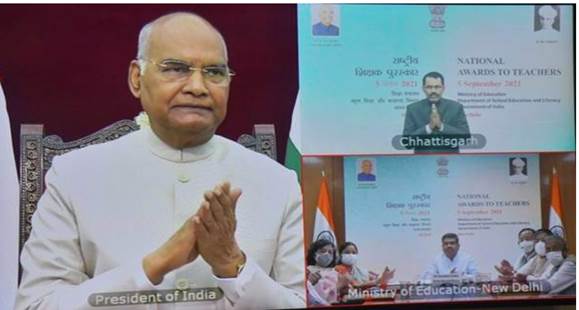
The award was also bestowed upon Shri. Pramod Kumar Shukla, English Lecturer of Eklavya Model Residential School (EMRS), Karpawand, Bastar Chattisgarh. It is the second award in a row for EMRS teachers and holds special significance for Eklavya Model Residential Schools established under the Ministry of Tribal Affairs. In 2020, Smt. Sudha Painuli, Vice Principal, EMRS-Kalsi, Dehradun, Uttarakhand, was felicitated with the award. With the implementation of National Education Policy- 2020, it is believed that greater thrust shall be given to teachers as they gain centre-stage, empowering the teachers to implement the NEP recommendations. It holds direct insinuations to change the facets of EMRSs established for providing quality education to tribal students at the behest of talented and committed teachers.

  • 35.2 lakh tribal students disbursed Pre and Post Matric Scholarships through DBT during 2020-21

The Ministry disbursed an amount of Rs. 2500 crores to 35.2 lakh tribal students under Pre and Post-Matric Scholarship Scheme through Direct Benefit Transfer during 2021, amid the Coronavirus pandemic situation to provide essential support for the continuation of education. In this regard, the State’s portals of Pre-Matric and Post-Matric Schemes have been integrated with DBT Tribal Portal and DBT Bharat Portal. Moreover, 331 Universities have been assimilated into this scheme, while an online student verification process has been undertaken to identify and verify the student’s details.

The total Budget Outlay for Pre/Post Matric, National Fellowship and Scholarship, and the National Overseas Scholarship has been upgraded to Rs. 2546 Crores in 2021 from the previous budget outlay of 2013. Over 32, 08,154 students benefitted from these scholarships and the mode of implementation of this scheme remained fully online, to shift from paper-based application to data-based application as well to reduce the release time of the scholarship.

  • Union Education Minister and Union Tribal Affairs Minister jointly launched School Innovation Ambassador Training Programme

The Union Education Minister, Shri Dharmendra Pradhan and the  Union Minister of Tribal Affairs, Shri Arjun Munda, jointly launched the ‘School Innovation Ambassador Training Program’ for 50,000 school teachers. It aims at training 50,000 School Teachers on Innovation, Entrepreneurship, IPR, Design Thinking, Product development, Idea generation, among others.

  • Ministry of Tribal Affairs Bags Prestigious SKOCH Challenger Award for “Best Performance In E-Governance” & 3 Gold Awards for Its Initiatives

The Ministry of Tribal Affairs (MoTA) received the coveted “SKOCH Challenger Award”- “Best Performance in e-Governance” today for its various initiatives such as Digital Dashboard and Digital Transparency on its 20+ Online Portals with updated information of its implemented schemes, taken during last year. The Award was received by the Union Minister for Tribal Affairs, Shri Arjun Munda, at the Virtual SKOCH Summit. 

The Ministry also received 3 Gold Awards for its initiatives namely “Eco-Rehabilitation of tribal villages through Innovative design in water management using Ice-stupas”, Swasthya: Tribal Health and Nutritional Portal and the Performance Dashboard “Empowering Tribals Transforming India” which were received by Dr Naval Jit Kapoor, Joint Secretary, on behalf of the Ministry. 

  • Ministry of Tribal Affairs bags Award of Appreciation in the 18th CSI SIG E-Governance Awards 2020

The Ministry of Tribal Affairs bagged the prestigious Award of Appreciation in the Project Category-Central Government Entity – in the 18th CSI SIG e-Gov Awards 2020 for their ‘Performance Dashboard Empowering Tribals Transforming India through various ICT initiatives”. The award was received by the Joint secretary of the Ministry of Tribal Affairs, Dr. Navaljit Kapoor from the Chief Minister of Uttar Pradesh Shri Yogi Adityanath in Lucknow.

  • Tribal women making Rakhis with seeds of indigenous trees under Vruksha Bandhan Project

In a unique initiative Ministry of Tribal Affairs in partnership with The Art of Living Foundation, Aurangabad, and Maharashtra launched Vrushka Bandhan Project where 1100 tribal women created Rakhis for Raksha Bandhan with seeds of indigenous trees, which is a unique contribution to increasing forest cover & combating climate change.

The Rakhis were made of indigenous seeds stuck on naturally dyed, soft indigenous, non-toxic, biodegradable cotton. Once used, the seeds can be sown in soil, thereby benefiting the environment. It is expected that thousands of trees would be planted under this project and project will provide employment to tribal women associated with the project.

  • Tribal Affairs Ministry and AIIMS organized workshop for NGOs for mission of Sahi Poshan-Desh Roshan as part of POSHAN MAAH
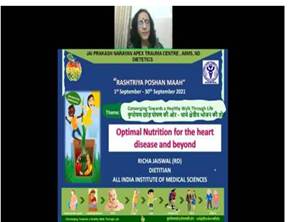
A workshop for Non-Governmental Organizations on Nutrition and Health was organized by the Ministry of Tribal Affairs on 09th September, 2021, as part of its POSHAN MAAH activities. The purpose of the workshop was to closely associate NGOs working with Ministry of Tribal Affairs in the mission of Sahi Poshan-.Desh Roshan. The workshop was attended by more than 70 NGOs who are working in the health sector in tribal areas.

  • 86 ST Entrepreneurs from Southern States honoured as part of Azadi Ka Amrit Mahotsav Week Celebrations of Tribal Affairs Ministry

In a bid to promote entrepreneurship amongst the tribal community and encourage successful entrepreneurs, a grand event was organized by the National Scheduled Tribes Finance and Development Corporation (NSTFDC) and Ministry of Tribal Affairs, Government of India honoured tribal entrepreneurs on 22nd November 2021 at Visakhapatnam in association with TRICOR-Andhra Pradesh

  • Tribal Affairs Ministry has taken up several initiatives to promote leadership qualities and talent among tribal youth

GOAL (Going Online as Leaders) is a joint initiative of Ministry with Facebook for digitally-enabled mentorship and empowering tribal youth to become leaders in their area of interest. Through the GOAL initiative, renowned people from the industry, arts, politics, business etc., known for their leadership skills or roles, are mobilized to personal mentor tribal youth through a digital medium. GOAL program has so far covered 23 States / UTs.

Ministry of Tribal Affairs continuously strives for fostering partnerships with reputed organizations: working for the welfare of tribes like Microsoft, Art of Living Foundation, Tata Foundation, and SECMOL aimed at taking the project with community participation and for creating awareness about leadership among tribal youth.

  • One Day National Conference on Provisions of the Panchayats (Extension to the Scheduled Areas) Act, 1996 (PESA) organised to celebrate 25th year of PESA 

One of the themes of Amrit Mahotsav is the ‘whole of Government approach’ and ‘Jan Bhagidari’. Taking this into consideration, the Ministry of Tribal Affairs planned several activities during this period both at the National as well as the State Level.

PESA is a significant Act for the welfare of the tribal communities. Officials of the State and Public representatives were asked to visit tribal regions and comprehend the issues of the Tribal at the grassroots level. During the gathering, it was accentuated that safeguarding the culture of the tribal communities is a necessary measure, to be transparent with the tribals and show them the ray of development under rapidly evolving scenarios. Endeavors were made toward this path in many states; different exercises were embraced under PESA in Maharashtra resulting in the economic empowerment of tribals.

  • National Aadi Mahotsav held in Dilli Haat, INA, New Delhi– A Celebration of Tribal Culture, Crafts and Commerce

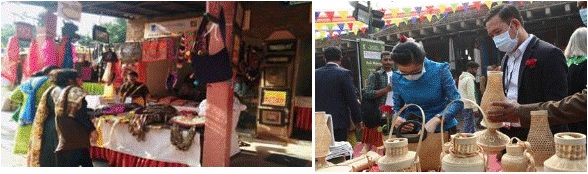
The National Aadi Mahotsav was held at Dilli Haat, INA, New Delhi, from the 1st to the 15th February 2021. It celebrated several aspects of tribal culture that evinced a lot of interest and witnessed much footfall in the first place. The festival was an attempt to familiarize the people with the rich and diverse craft, the culture of the tribal communities across the country in one place. 

The fortnight-long National Tribal Festival witnessed the participation of thousands of tribal artisans, chefs, artists and cultural troupes from 25 states across the country. The rich tribal culture was evident in the forms of rare tribal handicrafts, handloom and natural products, tribal cuisines as they were exhibited in about 200 stalls. The Aadi Mahotsav succeeded in winning the hearts of the residents of Delhi and witnessed heavy footfall over 15 days and the sales registered. It observed tribal artisans register approx. Rs 4 Crore in direct sales over the past fortnight. Moreover, a purchase order worth Rs 8 Crores was placed by TRIFED; leading to a total of approx. Rs 12 Crores in business transactions for the tribals participating in this festival. The Aadi Mahotsav was in its entirety a celebration of the spirit of tribal life – crafts, culture and cuisine. 

  • Tribes India – Aadi Mahotsav 

As India is celebrating the Azadi ka Amrit Mahotsav, Aadi Mahotsav from 16th November to 30thwas organised in Dili Haat. 
cap 1.png

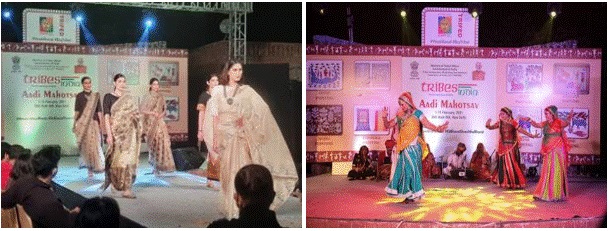
With more than 200 stalls from across the country and about 1000 artisans and artists participating with their unique stories, the AadiMahotsav is a way to draw the Adivasis into the mainstream. Showcasing traditional art and handicrafts, and the cultural heritage of the country, this festival connects the tribal artisans with larger markets and brings to focus the diversity and richness of the tribes of India.
Cap2.png

The Aadi Mahotsav is a mini-India where the exquisite craft traditions of tribal artisans – weavers, potters, puppeteers, and embroiders – are all in one place. With a wide range of artefacts like paintings be it in the Warli style or Pattachitras; jewellery handcrafted in the Dokra style to bead necklaces from the Wancho and Konyak tribes to the famous Toda embroidery from the South; from virgin coconut oil of the Nicobar Islands to multi-flavoured Nutra-beverages of north-east; from colourful puppets and children’s toys to traditional weaves such as Dongri shawls, Bodo weaves, Kota Doria from Rajasthan; iron craft from Bastar to bamboo craft and cane furniture; pottery such as blue pottery and Longpi pottery from Manipur, the festival is a feast for the senses.

  • Shri Arjun Munda, Minister of Tribal Affairs virtually launched the nationwide campaign “COVID Teeka Sang Surakshit Van, Dhan aur Uddyam” to accelerate the pace for COVID vaccination among tribals in India. 

The campaign was launched to leverage the 45,000 Van Dhan Vikas Kendras (VDVK) of the Tribal Co-operative Marketing Development Federation of India (TRIFED), a national level cooperative body under the administrative control of the Ministry of Tribal Affairs, Government of India.

  • M/o Tribal Affairs and Goa Government Jointly Launch Shramshakti Digital Data Solution Tomorrow for Migrant Workers and Tribal Migrant Cell

In a move that would effectively help in the smooth formulation of State and National level programs for migrant workers, the Union Ministry of Tribal Affairs (MoTA) launched “Shram Shakti”, a National Migration Support Portal and Shram-Saathi, a training manual for migrant workers in Goa. To facilitate and support approximately 4 lacs migrants who come from different States to Goa, the Chief Minister of Goa will also launch a dedicated Migration cell in Goa. MoTA has also sanctioned Tribal research Institute, Tribal Museum, Van Dhan Kendras and Tribal Lok Utsav in Goa.

  • Tribal Affairs Minister Shri Arjun Munda launched ‘Adi Prashikshan Portal’ and 3 -Day Online Capacity Building Programme for ST PRI Members 

Hon’ble Union Minister of Tribal Affairs, Shri Arjun Munda, launched the ‘ADI PRASHIKSHAN’ portal and inaugurated a three-day training programme on “Capacity Building Training of Master Trainers for ST PRI Members” as part of Azadi Ka Amrit Mahotsav in New Delhi. 
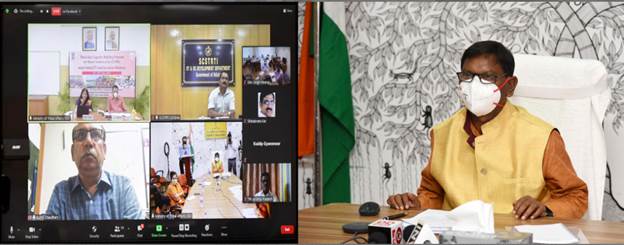
The Adi Prashikshan portal developed by the Ministry acts as a Central Repository of all training programs conducted by Tribal Research Institutes (TRIs), different divisions of Ministry, National Society for Education of Tribal Students (NESTS), Centre of Excellence funded by the Ministry of Tribal Affairs and National Tribal Research Institute.  

  • M/o Tribal Affairs organised the second National Conclave on Sickle Disease in India on World Sickle Cell on 19th June, 2021 Unmukt project to eliminate Sickle Cell Disease launched

To commemorate World Sickle Cell Disease Day on 19th June 2021, the Ministry of Tribal Affairs (MOTA) organized the Second Online National Conclave on Sickle Cell Disease in India’, in partnership with FICCI, Novartis, Piramal Foundation, Apollo Hospitals, NASCO and GASCDO.The event brought together a group of experts on Sickle Cell Disease across India to deliberate on recent advances in Sickle Cell Disease management-ranging from early diagnosis to the latest medicines and advances in the treatment of the disease.
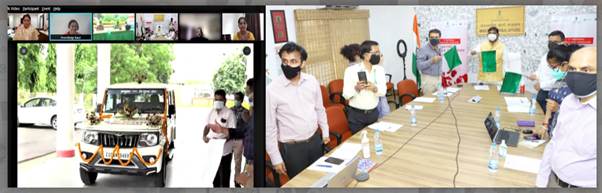


Shri Arjun Munda, Union Minister and Renuka Singh Sauta flagged off mobile vans under the Unmukt project for strengthening screening and timely management of SCD in Khunti district of Jharkhand and Kanker in Chhattisgarh, two tribal districts with a high prevalence of sickle cell disease among tribals.

  • Tribal Health Collaborative ‘Anamaya’: A Multi Stakeholder Initiative to enhance Tribal Health and Nutrition launched

Anamaya, the Tribal Health Collaborative, was launched by Union Minister of Health and Family Welfare Dr Harsh Vardhan and Union Minister of Tribal Affairs, Shri Arjun Munda, at a function in New Delhi . The Collaborative is a multi-stakeholder initiative of the Tribal Affairs Ministry supported by the Piramal Foundation and Bill and Melinda Gates Foundation (BMGF). It will converge efforts of various Government agencies and organisations to enhance the health and nutrition status of the tribal communities of India.

  • Joint Communication for more effective implementation of the Forest Rights Act signed by Environment and Tribal Affairs Ministries

The Forest Rights Act (FRA) 2006 recognizes the rights of the forest-dwelling tribal communities and other traditional forest dwellers. These communities are dependent on forest resources for a variety of needs, including livelihood, habitation and other socio-cultural needs.

A “Joint Communication” was signed by Shri R.P. Gupta, Secretary, Ministry of Environment, Forest & Climate Change (MoEFCC), and Shri Anil Kumar Jha, Secretary, Ministry of Tribal Affairs (MoTA), in the presence of Minister of Environment, Shri Prakash Javadekar and Minister of Tribal Affairs, Shri Arjun Munda. 

The Joint Communication, addressed to all Chief Secretaries of States/UTs, pertains to more effective implementation of the Forest Rights Act (FRA), 2006 and for harnessing the potential for livelihood improvement of the Forest Dwelling Scheduled Tribes (FDSTs) and Other Traditional Forest Dwellers (OTFDs).

  • Shri Arjun Munda, Union Minister for Tribal Affairs inaugurates New Building complex for the Tribal Cultural Research & Training Mission (TRI), Andhra Pradesh as part of Azadi Ka Amrit Mahotsav

Union Minister of Tribal Affairs, Sh. Arjun Munda; MoS Tribal Affairs, Renuka Singh Saruta, and Dy. Chief Minister & Minister for Tribal Welfare, Andhra Pradesh, Smt.Pamula Pushpa Srivaniji virtually inaugurated the New Building complex for the Tribal Cultural Research and Training Mission (TRI) of Andhra Pradesh on 15th  August 2021 as a part of Azadi Ka Amrit Mahotsav India @ 75.

  • Measures undertaken by the Government to improve the livelihood of Tribals during COVID situations

The Ministry of Tribal Affairs provided funds to the State Governments based on their proposals for undertaking various livelihood activities, including agriculture, horticulture, animal husbandry, fisheries and other non-farm based livelihood activities etc. under the schemes ‘Special Central Assistance to Tribal Sub-Scheme (SCA to TSS)’, ‘Development of Particularly Vulnerable Tribal Groups (PVTGs)’ and ‘Grants under Article 275(1)’ during 2020-21. An amount of Rs. 587.47 crore was approved/sanctioned by various State Governments for launching various livelihood activities.

Further, funds to the tune of Rs. 12355.43 crore have been provided as Scheduled Tribe Component (STC) by the other Central Ministries / Departments under livelihood related schemes during 2020-21 and 2021-22.

  • Institutional Support for Development and Marketing of Tribal Products/Produce:
  • Under the scheme, TRIED has been promoting E-Commerce sale of tribal products from its own portal http://www.tribesindia.com and also present on all major e-commerce portals like Amazon, Snapdeal, Flipkart, Paytm, and GEM.
  • TRIFED has made the online sales of Rs. 99.74 lakhs in financial year 2020-21.  During the current financial year 2021-22, TRIFED has made the sale of Rs.127.54 lakhs (Upto 30.11.2021).
  • TRIFED has established a network of 145 Outlets i.e. 97 own Sales outlets, 33 outlets on consignment sale and 15 franchise outlets located across the country as on 30.10.2021.
  • The total number of suppliers/producers empanelled with TRIFED as on 31.10.2021 is 2915.
  • Sale of tribal products by TRIFED during 2019-20 – Rs. 40.30 cr, 2020-21 – Rs. 29.63 cr and 2021-22 (as on 30.10.2021) – Rs. 18.43 cr.
  • Minimum Support Price (MSP) for Minor Forest Produce (MFP) SCHEME:
  • MSP for majority of Minor Forest produce have been increased.
  • 37 new items under the MSP for MFP scheme list from 2020-21.
  • No. of MFP under MSP scheme increased from 50 to 87 during 2020-21.
  • Procurement of MFPs under MSP for MFP scheme by States from GoI funds is Rs. 317.89 Cr. since the implementation of the scheme.
  • Van Dhan Vikas Karyakaram:
  • Under the scheme of ‘MSP for MFP’ Van Dhan Vikas Kendra Clusters (VDVKCs) act as common facility centres for procurement cum value addition to locally available Minor Forest Produce.
  • Rs. 254.64 cr. released to TRIFED in last three years for setting up Van Dhan Vikas kendra Clusters (VDVKCs).
  • 3110 VDVKCs have been sanctioned till date since its inception in 2019-20 benefitting 9.28 lakh MFP gatherers of more than 52000 SHGs.
  • Equity Support to NSTFDC/STFDCs:
  • NSTFDC extends concessional loans to the eligible Scheduled Tribe persons for undertaking any income generation activities/ self-employment through its implementing agencies.
  • Rs. 748.75 cr have been disbursed by NSTFDC in the last three years (2019-20 to 30.11.2021) to 4.04 lakh tribal beneficiaries under its five schemes.
  • NSTFDC has signed MoU with KVIC to act as implementing agency under PMEGP scheme. The MoU aims at providing concessional loans to tribal entrepreneurs seeking financial assistance through banks and SCAs and the ST beneficiaries will get back ended subsidy up to 35% of the unit cost.

****

Initiatives to boost domestic and foreign investments

 Government has taken various steps to boost domestic and foreign investments in India. These include reduction in Corporate Tax Rates, easing liquidity problems of NBFCs and Banks, improving Ease of Doing Business, FDI Policy reforms, Reduction in Compliance Burden, policy measures to boost domestic manufacturing through Public Procurement Orders, Phased Manufacturing Programme (PMP), Schemes for Production Linked Incentives (PLI) of various Ministries. To facilitate investments, measures such as India Industrial Land Bank (IILB), Industrial Park Rating System (IPRS), soft launch of the National Single Window System (NSWS), National Infrastructure Pipeline (NIP), National Monetisation Pipeline (NMP), etc, have also been put in place.

As a result, India registered the highest ever annual FDI Inflow of US$ 81.97 billion (provisional figure) in the financial year 2020-21. FDI inflows in the last 7 financial years (2014-21) is US$ 440.27 billion, which is nearly 58% of the total FDI inflow in last 21 financial years (2000-21: US$ 763.83 Billion). Top five countries from where FDI Equity Inflows were received during April, 2014 and August, 2021 are Singapore (28%), Mauritius (22%), USA (10%), Netherlands (8%) and Japan (6%). Computer Software & Hardware sector attracted the largest share of FDI inflows at 19%, followed by Service (15%), Trading (8%) and Telecommunications & Construction (Infrastructure) (7% each) during the same period in the last more than seven years.

Empowered Group of Secretaries (EGoS) &Project Development Cells (PDCs)

With a view to support, facilitate and provide investor friendly ecosystem to investors, the Union Cabinet approved constitution of an Empowered Group of Secretaries (EGoS), and also Project Development Cells (PDCs) in Ministries to fast-track investments in coordination between the Central Government and State Governments and thereby grow the pipeline of investible projects in India to increase domestic investments and FDI inflow. 

  1. have now been established in 29 Ministries of the Government of India, headed by Joint Secretary-level officers. All PDCs are executing clearly defined investor engagement strategies, which includes identification of prospective investors, multi-level engagement with investors who have shown interest, active engagement with a wide range of stakeholders to resolve existing investors’ issues, to develop new projects and to promote existing investment opportunities. 

Estimates point out that a total of 863 Investment Projects are under active consideration by the PDCs with an investment of $121 Billion. This includes 272 Highly Probable (more than 90% probability) worth $41 Bn, 279 Moderately Probable (51-90%) proposals worth $69 Bn and Long Term (less than 50%) projects worth $11 Bn.

Production Linked Incentive (PLI) Schemes

Keeping in view India’s vision of becoming ‘Atmanirbhar’ and to enhance India’s Manufacturing capabilities and Exports, an outlay of INR 1.97 lakh crore (over US$ 26 billion) has been announced in Union Budget 2021-22 for PLI schemes for 13 key sectors of manufacturing starting from fiscal year (FY) 2021-22.

The 13 key sectors include already existing 3 sectors namely (i) Mobile Manufacturing and Specified Electronic Components, (ii) Critical Key Starting materials/Drug Intermediaries & Active Pharmaceutical Ingredients, (iii) Manufacturing of Medical Devices and 10 new key sectors which have been approved by the Union Cabinet in November 2020. These 10 key sectors are: 

(i) Automobiles and Auto Components, (ii) Pharmaceuticals Drugs, (iii) Specialty Steel, (iv) Telecom & Networking Products, (v) Electronic/Technology Products, (vi) White Goods (ACs and LEDs), (vii) Food Products, (viii) Textile Products: MMF segment and technical textiles, (ix) High efficiency solar PV modules, and (x) Advanced Chemistry Cell (ACC) Battery. 

PLI Scheme for an additional sector, Drones and Drone Components, has also been approved by the Union Cabinet in September 2021. With the announcement of PLI Schemes, significant creation of production, employment, and economic growth is expected over the next 5 years and more. 

The schemes have been specifically designed to attract investments in sectors of core competency and cutting edge technology; ensure efficiency and bring economies of size and scale in the manufacturing sector and make Indian manufacturers globally competitive so that they can integrate with global value chains. 

It is expected that the PLI schemes will lead to significant creation of production (US$ 504 billion plus), enhance employment (nearly 1 crore plus) and economic growth expected over the next 5 years and more.

Make in India

‘Make in India’ was launched on September 25, 2014, to facilitate investment, foster innovation, building best in class infrastructure, and making India a hub for manufacturing, design, and innovation. The development of a robust manufacturing sector continues to be a key priority of the Indian Government.

It was one of the first ‘Vocal for Local’ initiatives that exposed India’s manufacturing domain to the world. The sector has the potential to not only take economic growth to a higher trajectory but also to provide employment to a large pool of our young labour force.

Since its launch, Make in India has made significant achievements and is now focusing on 27 sectors under Make in India 2.0. DPIIT is coordinating Action Plans for 15 manufacturing sectors, while the Department of Commerce is coordinating for 12 service sectors. DPIIT is also working closely with 24 sub-sectors which have been chosen keeping in mind the Indian industries strengths and competitive edge, need for import substitution, potential for export and increased employability.

Investment Clearance Cell (ICC)

While presenting Budget 2020-21, the Finance Minister announced plans to set up an Investment Clearance Cell (ICC) that will provide “end to end” facilitation and support to investors, including pre-investment advisory, provide information related to land banks and facilitate clearances at Centre and State level. The cell was proposed to operate through an online digital portal.

Envisioned as a one-stop for taking all the regulatory approvals and services in the country, NSWS [www.nsws.gov.in], was soft-launched on 22nd September 2021 by the Commerce & Industries Minister, Shri Piyush Goyal. This national portal integrates the existing clearance systems of the various Ministries/ Departments of Govt. of India and State Governments without disruption to the existing IT portals of Ministries/ Departments. Approvals of 19 Ministries/ Departments and 11 States Single Window Systems havebeen on-boarded in Phase I. Complete on-boarding of 32 Central Ministries/ Departments and 14 States would be in next phases, all remaining States will be on-boarded in a phase manner.

One District One Product (ODOP)

Government of India is working on a transformational initiative to foster balanced regional development across all districts of the country. This is called the One District One Product (ODOP) initiative, with the objective of identifying and promoting the production of unique products in each district in India that can be globally marketed. This will help realise the true potential of a district, fueling economic growth, generating employment and rural entrepreneurship. ODOP initiative is operationally merged with the ‘Districts as Export Hub’ initiative being implemented by DGFT, Department of Commerce with DPIIT as a major stakeholder to synergize the work undertaken by DGFT. The major activities that are being facilitated by DPIIT with Invest India under ODOP initiative are manufacturing, marketing, branding, internal trade and e-commerce.

Under the initial phase of the ODOP, 106 Products have been identified from 103 districts across the country. Considerable success has been achieved for boosting exports under ODOP initiative.


Planning In India In A Globalizing World

As history has shown, India’s approach to development always remains contextual. This is evident when the nationalist leaders opted for a Soviet type centralized planning as perhaps an effective means for development. The idea was widely acclaimed regardless of the ideological differences among those who presided over India’s destiny following decolonization. The Planning Commission which was constituted in 1950 was hailed as an instrument to bring about quick development in India. India’s trajectory of development however proved otherwise : instead of being instrumental in contributing to a uniform development in the country, the Planning Commission failed to accomplish the goal; it was felt that centralized planning did not appear to be effective in attaining the goal that the nationalist leadership sought to attain.

The impact of the Planning Commission on India’s development cannot be easily ignored since it had been in place for more than six decades following the withdrawal of colonisation in India in 1947 while the NITI Aayog is too new to have any sway on the trajectory of growth in the country.

What is striking is the fact that while the Planning Commission was considered to be a piece of ideological baggage borrowed from the former Soviet Union, the NITI Aayog represents an effort toward articulating India’s neoliberal endeavour for sustainable economic growth. Ideologically drawn, both the planned development of the erstwhile era and its opposite, as conceptualized by the NITI Aayog, remain important pillars of India’s growth trajectory since independence. Centralized planning may have become futile though it undoubtedly had its role in the state directed development era.

Planning And Economic Development

With the formation of the Planning Commission in 1950, India was ushered in the state-led development era in which the state became a critical economic actor. Despite its historical antecedents, the idea of the state directed planned economic development gained significant salience in independent India, especially with Jawaharlal Nehru, India’s first prime minister, at the helm of affairs. Given his staunch opposition to the Gandhian model of democratic decentralization, Nehru always preferred the state-driven economy as perhaps the only driving force for India’s rapid socioeconomic regeneration in the aftermath of colonial rule.

There are two fundamental questions that need to be addressed: first, has the idea of the state-driven economic development lost its relevance just because of its failure to accomplish the stated goals or due to its vacuous claim in contrast with the rising importance of a market-driven counter ideology providing an alternative to the erstwhile strategy of the state-directed economic development? There is a connected second question: whether the market – driven strategy shall be useful for peripheral societies, including India, where the proportion of the people living below the poverty line is staggeringly alarming.

The Objective Of Economic Development

The following were the original objectives of economic planning in India:

  • Economic Development: This is the main objective of planning in India. Economic Development of India is measured by the increase in the Gross Domestic Product (GDP) of India and Per Capita Income
  • Increased Levels of Employment: An important aim of economic planning in India is to better utilise the available human resources of the country by increasing the employment levels.
  • Self Sufficiency: India aims to be self-sufficient in major commodities and also increase exports through economic planning. The Indian economy had reached the take-off stage of development during the third five-year plan in 1961-66.
  • Economic Stability: Economic planning in India also aims at stable market conditions in addition to the economic growth of India. This means keeping inflation low while also making sure that deflation in prices does not happen. If the wholesale price index rises very high or very low, structural defects in the economy are created and economic planning aims to avoid this.
  • Social Welfare and Provision of Efficient Social Services: The objectives of all the five year plans as well as plans suggested by the NITI Aayog aim to increase labour welfare, social welfare for all sections of the society. Development of social services in India, such as education, healthcare and emergency services have been part of planning in India.
  • Regional Development: Economic planning in India aims to reduce regional disparities in development. For example, some states like Punjab, Haryana, Gujarat, Maharashtra and Tamil Nadu are relatively well developed economically while states like Uttar Pradesh, Bihar, Orissa, Assam and Nagaland are economically backward. Others like Karnataka and Andhra Pradesh have uneven development with world class economic centres in cities and a relatively less developed hinterland. Planning in India aims to study these disparities and suggest strategies to reduce them.
  • Comprehensive and Sustainable Development: Development of all economic sectors such as agriculture, industry, and services is one of the major objectives of economic planning.
  • Reduction in Economic Inequality: Measures to reduce inequality through progressive taxation, employment generation and reservation of jobs has been a central objective of Indian economic planning since independence.
  • Social Justice: This objective of planning is related to all the other objectives and has been a central focus of planning in India. It aims to reduce the population of people living below the poverty line and provide them access to employment and social services.
  • Increased Standard of Living: Increasing the standard of living by increasing the per capita income and equal distribution of income is one of the main aims of India’s economic planning.

REFERENCES : Public Administration By Bidyut Chakrabarty and Prakash Chan Kandpal

प्रधान मंत्री ने पेश किया पीएम केयर्स फंड का नया संशोधन।

प्रधानमंत्री नरेंद्र मोदी ने कहा कि उनकी सरकार का उद्देश्य देश के हर जिले में कम से कम एक मेडिकल कॉलेज खोलना है। वह गुरुवार को अखिल भारतीय आयुर्विज्ञान संस्थान (एम्स) ऋषिकेश में 35 राज्यों को 35 प्रेशर स्विंग ऐडसोरप्सन(पीएसए) ऑक्सीजन संयंत्र समर्पित करने के लिए आयोजित एक समारोह में बोल रहे थे।

ये प्लांट पीएम केयर्स फंड के तहत स्थापित किए गए हैं। उन्होंने कहा कि कुछ साल पहले देश में बहुत कम एम्स थे लेकिन अब हर राज्य में एक एम्स खोलने का प्रयास किया जा रहा है।

उन्होंने कहा कि नवरात्रि पर्व के पहले दिन के अवसर पर उत्तराखंड आना उनके लिए सौभाग्य की बात है। पीएम ने कहा कि उन्होंने 20 साल पहले इसी तारीख को गुजरात के सीएम के रूप में शपथ ली थी और कहा कि इस यात्रा की शुरुआत उत्तराखंड के गठन के साथ हुई थी।

उन्होंने प्रसन्नता व्यक्त की कि जिस धरती से योग और आयुर्वेद जैसी जीवनदायिनी शक्तियों को बल मिला, उसी धरती से आज ऑक्सीजन प्लांट समर्पित किए जा रहे हैं। महामारी की अवधि के दौरान अपनी सरकार की उपलब्धियों की सराहना करते हुए, पीएम ने कहा कि महामारी से पहले सिर्फ एक परीक्षण प्रयोगशाला से लगभग 3,000 परीक्षण प्रयोगशालाओं का एक नेटवर्क बनाया गया था। उन्होंने कहा कि भारत ने दुनिया का सबसे बड़ा और सबसे तेज टीकाकरण अभियान लागू किया है।

उन्होंने कहा कि पहले देश में एक दिन में 900 मीट्रिक टन लिक्विड मेडिकल ऑक्सीजन का उत्पादन होता था, लेकिन जैसे-जैसे मांग बढ़ी, भारत ने मेडिकल ऑक्सीजन के उत्पादन में दस गुना से अधिक की वृद्धि की।

पीएम ने यह भी कहा कि कोविड -19 वैक्सीन की लगभग 93 करोड़ खुराक दी गई है और जल्द ही देश 100 करोड़ का आंकड़ा पार कर जाएगा।

पीएम ने कहा कि अब सरकार इस बात का इंतजार नहीं करती कि नागरिक अपनी समस्याएं लेकर उसके पास आएं और फिर कोई कदम उठाएं, लेकिन अब सरकार नागरिकों तक पहुंच रही है।

अनन्या कौशल द्वारा संपादित।

Five Jobs That Disappear in Few Decades

As the universe is developing with many artificial intelligence. We are going to face some crisis that some jobs that will disappear in next few decades.

1) TRAVEL AGENTS

A person engaged in selling and arranging transportation, accommodations, tours, or trips for travelers. Travel agents offer advice on destinations, plan trip itineraries, and make travel arrangements for clients. Travel agents sell transportation, lodging, and admission to entertainment activities to individuals and groups planning trips.https://en.wikipedia.org/wiki/Travel_agency

2) CASHIER

A retail cashier or simply a cashier is a person who handles the cash register at various locations such as the point of sale in a retail store.https://en.wikipedia.org/wiki/Cashier. By using artificial intelligence many companies developing robots and machine to fill the cashier duties.

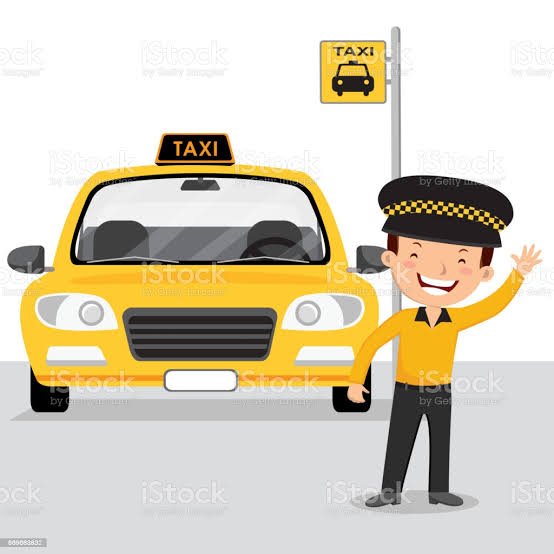
3) TAXI DRIVER

A taxi driver is a professional driver who transports passengers to their chosen destinations through the use of a taxi cab. By transporting their passengers, they earn a fare depending on the length of the taxi cab ride. … They may also drive around for different hours of a shift to pick up waiting passengers for fares.https://www.careerexplorer.com/careers/taxi-driver/. Similar to above job, these aslo disappear because of the artificial intelligence.

4) FOOD DELIVERIES

Food delivery is a courier service in which stores, restaurants, or third-party applications delivers food to consumers on demand. These days, orders are executed through mobile apps, websites or via telephone. Deliveries include cooked dishes as well as groceries from supermarkets.https://productmint.com/the-food-delivery-business-model-a-complete-guide/ Because of developing robots using artificial intelligence and machines this will do the food delivery activities with efficient way.

5) REFEREE/UMPIRE

A referee is an official, in a variety of sports and competition, responsible for enforcing the rules of the sport, including sportsmanship decisions such as ejection. https://en.wikipedia.org/wiki/Referee. While some feel that a move to artificial refereeing is a positive thing and reduces the scope for error, others argue that many sports rules are open to interpretation and that the possibility of human error increases the drama and spectacle of the match.https://www.careeraddict.com/disappearing-jobs

UMPIRE
REFEREE

What Is Fast Fashion?

Clothes shopping used to be an occasional event—something that happened a few times a year when the seasons changed or when we outgrew what we had. But about 20 years ago, something changed. Clothes became cheaper, trend cycles sped up, and shopping became a hobby. Enter fast fashion and the global chains that now dominate our high streets and online shopping. But what is fast fashion? And how does it impact people, the planet, and animals?

It was all too good to be true. All these stores selling cool, trendy clothing you could buy with your loose change, wear a handful of times, and then throw away. Suddenly everyone could afford to dress like their favourite celebrity or wear the latest trends fresh from the catwalk.

Then in 2013, the world had a reality check when the Rana Plaza clothing manufacturing complex in Bangladesh collapsed, killing over 1,000 workers. That’s when consumers really started questioning fast fashion and wondering at the true cost of those affordable t-shirts. If you’re reading this article, you might already be aware of fast fashion’s dark side, but it’s worth exploring how the industry got to this point—and how we can help to change it.

What is fast fashion?

Fast fashion can be defined as cheap, trendy clothing that samples ideas from the catwalk or celebrity culture and turns them into garments in high street stores at breakneck speed to meet consumer demand. The idea is to get the newest styles on the market as fast as possible, so shoppers can snap them up while they are still at the height of their popularity and then, sadly, discard them after a few wears. It plays into the idea that outfit repeating is a fashion faux pas and that if you want to stay relevant, you have to sport the latest looks as they happen. It forms a key part of the toxic system of overproduction and consumption that has made fashion one of the world’s largest polluters. Before we can go about changing it, let’s take a look at the history.

How did fast fashion happen?

To understand how fast fashion came to be, we need to rewind a bit. Before the 1800s, fashion was slow. You had to source your own materials like wool or leather, prepare them, weave them, and then make the clothes.The Industrial Revolution introduced new technology—like the sewing machine. Clothes became easier, quicker, and cheaper to make. Dressmaking shops emerged to cater to the middle classes.

Many of these dressmaking shops used teams of garment workers or home workers. Around this time, sweatshops emerged, along with some familiar safety issues. The first significant garment factory disaster was when a fire broke out in New York’s Triangle Shirtwaist Factory in 1911. It claimed the lives of 146 garment workers, many of whom were young female immigrants. By the 1960s and 70s, young people were creating new trends, and clothing became a form of personal expression, but there was still a distinction between high fashion and high street.

In the late 1990s and 2000s, low-cost fashion reached its zenith. Online shopping took off, and fast-fashion retailers like H&M, Zara, and Topshop took over the high street. These brands took the looks and design elements from the top fashion houses and reproduced them quickly and cheaply. With everyone now able to shop for on-trend clothes whenever they wanted, it’s easy to understand how the phenomenon caught on.

How to spot a fast fashion brand

Some key factors are common to fast fashion brands:

  • Thousands of styles, which touch on all the latest trends.
  • Extremely short turnaround time between when a trend or garment is seen on the catwalk or in celebrity media and when it hits the shelves.
  • Offshore manufacturing where labour is the cheapest, with the use of workers on low wages without adequate rights or safety and complex supply chains with poor visibility beyond the first tier.
  • A limited quantity of a particular garment—this is an idea pioneered by Zara. With new stock arriving in store every few days, shoppers know if they don’t buy something they like, they’ll probably miss their chance.
  • Cheap, low quality materials like polyester, causing clothes to degrade after just a few wears and get thrown away.

What’s the impact of fast fashion?

On the planet: Fast fashion’s impact on the planet is immense. The pressure to reduce costs and speed up production time means that environmental corners are more likely to be cut. Fast fashion’s negative impact includes its use of cheap, toxic textile dyes—making the fashion industry the second largest polluter of clean water globally after agriculture. That’s why Greenpeace has been pressuring brands to remove dangerous chemicals from their supply chains through its detoxing fashion campaigns through the years.

Cheap textiles also increase fast fashion’s impact. Polyester is one of the most popular fabrics. It is derived from fossil fuels, contributes to global warming, and can shed microfibers that add to the increasing levels of plastic in our oceans when washed. But even ‘natural fabrics’ can be a problem at the scale fast fashion demands. Conventional cotton requires enormous quantities of water and pesticides in developing countries. This results in drought risks and creates extreme stress on water basins and competition for resources between companies and local communities.

The constant speed and demand mean increased stress on other environmental areas such as land clearing, biodiversity, and soil quality. The processing of leather also impacts the environment, with 300kg of cehmicals added to every 900kg of animal hides tanned. The speed at which garments are produced also means that more and more clothes are disposed of by consumers, creating massive textile waste. In Australia alone, more than 500 million kilos of unwanted clothing ends up in landfill every year.

On workers: As well as the environmental cost of fast fashion, there’s a human cost. Fast fashion impacts garments workers who work in dangerous environments, for low wages, and without fundamental human rights. Further down the supply chain, the farmers may work with toxic chemicals and brutal practices that can have devastating impacts on their physical and mental health, a plight highlighted by the documentary The True Cost.

On animals: Animals are also impacted by fast fashion. In the wild, the toxic dyes and microfibres released in waterways are ingested by land and marine life alike through the food chain to devastating effect. And when animal products such as leather, fur, and even wool are used in fashion directly, animal welfare is put at risk. As an example, numerous scandals reveal that real fur, including cat and dog fur, is often being passed off as a faux fur to unknowing shoppers. The truth is that there is so much real fur being produced under terrible conditions in fur farms that it’s become cheaper to produce and buy than faux fur!

On consumers: Finally, fast fashion can impact consumers themselves, encouraging a ‘throw-away’ culture because of both the built-in obsolescence of the products and the speed at which trends emerge. Fast fashion makes us believe we need to shop more and more to stay on top of trends, creating a constant sense of need and ultimate dissatisfaction. The trend has also been criticized on intellectual property grounds, with some designers alleging that retailers have illegally mass-produced their designs.

The Violence of Development: Lakshadweep Development Authority Regulation, 2021

ABOUT LAKSHADWEEP

Lakshadweep is the smallest Union Territory of India and covers an area of 32 sq. km. It has 36 islands out of which 10 are inhabited. The island is directly under the control of Central Government through an administrator. It has 3 main group of islands:

  • Amindivi Islands (Northernmost Island)
  • Laccadive Islands
  • Minicoy Islands (Southernmost Island)

It has tiny islands of coral origin and are surrounded by fringing reefs (hence called as Atoll). The capital is Kavaratti, which is the principal town of the UT and the Pitti Island (uninhabited) has a Bird Sanctuary.

The island has a population of 64,429 (according to Census of India, 2011). More than 93% of the population is indigenous and are Muslims. Because of the populations economic and social backwardness, the entire population is classified as Scheduled Tribes and there are no Scheduled Castes in the UT. The main occupation of the people is fishing, coconut cultivation and coir twisting. And tourism is an emerging industry. Under Participatory Guarantee System (PGS) of India, the entire island was declared as an Organic Agricultural Area.

WHAT IS LDAR 2021 ?

The latest Draft Lakshadweep Development Authority Regulation, 2021, for the creation of a Lakshadweep Development Authority (LDA) which will be the administrative body for the island and will pan the development of the island.

PROVISIONS

  1. CONSTITUION OF LAKSHADWEEP DEVELOPMENT AUTHORITY : The LDAR empowers the government to be identified as the administrator of the island and has the power to constitute Lakshadweep Development Authority. The authority will plan the development of any area in the island, which could be identified in a bad layout or in obsolete condition. This authority has power to prepare land use pans, zonation’s of land uses, indicate areas for different types of development etc. And only Cantonment areas are exempted from this.
  2. Definition of ‘Development: Development is defined as the process of carrying out of building, engineering, mining, quarrying or other operations, in, on, over or under land, cutting of a hill or any portion thereof or the making of any material change in any building or land or in the use of any building or land.
  3. LEGAL PENANLTIES: As per the DDAR, the development plan will not be questioned by anyone, either before or after being approved. It empowers the administering body to forcibly relocate or remove residents or citizens from their own property for carrying out any developmental activity. It establishes penalties for those who will violate the laws. Such as imprisonment for obstructing the development plan’s work or workers.
  4. FEES FOR CHANGING ZONES: It stipulates that islanders and citizens must pay a processing fee for changing zones, which implies that localities will be paying fees to gain approval for altering or changing zones as per the development plan as well as for permission to develop their own land.

CRITICISMS

Following concerns were raised by the people of Lakshadweep:

  1. VIOLATION OF FUNDAMENTAL RIGHTS : The LDAR provides the Government and Development Authority constituted by Government, the supreme powers to acquire, alter and transfer the properties owned by the residents of the island which violates the fundamental rights of the residents of Lakshadweep as guaranteed in Article 14 and 21 of the Constitution.
  2. INTERESTS ON REAL ESTATE : Many residents have been suspecting and fearing that LDAR might seeking real estate interests to usurp the small landholdings and properties owned by the native islanders. There have been proposals of bringing “Transferable Development Rights” to the island which has raised another major concern and fear among islanders for being migrated forcefully.
  3. FORCIBLE RELOCATION AND EVICTION: The LDAR has given the power to relocate people for development plans has become one of the major concerns and issues. According to the regulations provided, the owner has to develop his holding as per the plan prepared by the authority or else they will be penalized in case of non-compliance with the regulation.
  4. ECOLOGICAL CONCERNS: Lakshadweep is a part of coral ecosystem and it has inherited this cultural and ecological uniqueness as well as fragility. This ecosystem can get destroyed easily if the development activities around them are not regulated. The regulations which provide the government supreme powers for acquiring and developing land can be disastrous for this ecosystem.
  5. THREATEN THE CULTURE AND LIFE: The island is very vulnerable to destruction and any further large-scale infrastructural development can have large ecological and social footprint which can negatively affect the potentiality and sustainability of the area as well as the life forms present in the island.
  6. IGNORES PEOPLE’S NEEDS AND GEOGRAPHICAL REALITIES: Lakshadweep has unique geography, ecology and culture and for protecting and preserving this uniqueness it is important to limit the development activities in the island. The LDAR tries to expand the road connectivity ignoring the geographic conditions of the island and the interests of the people. And the LDAR has also provided the regulation that no one can raise or question the strategies or actions provided by the development authority, before or after being approved. This shows that the needs, interests and concerns of the people are undermined.
  7. VIOLATES THE OBJECTIVES OF LAND ACQUISITION ACT, 2013: The Act promotes the consultation with institutions of self-government and Gram Sabha’s, local people and tries to have a transparent and informed process for land acquisition.

HOW DID K-POP AND K-DRAMA BECOME SO POPULAR ?

Prior to going to that point we should concentrate some set of experiences about South Korea also called Republic of Korea. South Korea got it autonomy on 15 August 1947 same as India. However, why it grew so quick that now it is considered as evolved country. At the point when South Korea got it’s freedom around then it was extremely poor. The food that U.S.A used to supply was just sustenance around then for individuals. Pushing forward, in the year 1997 South Korea was confronting major financial emergency. It was such a lot of that individuals didn’t have anything to eat, they were losing their employment and were neglecting to accomplish considerably pitiful assets. Around then Korean government took a credit of 58 billion dollar from I.M.F which should be paid off by 24 August 2001. So without with nothing to do the entire nation comes right into it. They began giving their gold, cash to the public authority.

K-Drama Couples - Free Instagram Stories Template by @itsmariaalyssa |  Korean drama list, Korean drama tv, Kdrama

SETTING UP THE K-POP INDUSTRY

Yet at the same time in the wake of doing that much they had the option to gather just 8 billion dollar actually left with 50 billion dollars. To take care of the remainder of the cash, they set up Korean inventive substance agency(KOCCA)which objective was to put Korean melody on the map in other nation to bring in cash. They got going by playing a Korean show in a Hong Kong’s T.V station free of charge. This didn’t give cash however offered a brief look at Korean culture in western market which as a trade off benefits them. They before long passed a law in which they will give 1% of state financial plan in culture. Three major organizations accepted the open door and they made the Korean Music Industry.

12 Times K-Pop Groups Made History In The Last Decade | Soompi

Korean music doesn’t have any one performer, it comprises of numerous individuals actually like BTS has 7 individuals. To interface with more western crowd they keep their gathering name in English and they additionally have some English verses in their tunes. These gathering individuals are prepared for quite a long time in singing, rapping and dancing. They buckle down since youthful age to turn into a part in a K-Pop group. However, online media likewise assumed a significant part in accomplishment of K-Pop and K-Drama. Gangnam style was the primary Korean music to contact the worldwide crowd. It was the first run through when individuals paid attention to Korean music however bunches like BTS, BLACKPINK and EXO have mainstreamed it. Till now BTS has added 3.6 billion dollar to Korean economy. BTS has additionally started a mission with UNICEF called Love Myself mission and they likewise gave 1 million dollars to BLACK LIVES MATTER.

BTS are encouraging the world to #SpeakYourself in their UN speech

Isn’t it’s extraordinary that the music business which was framed to take care of the obligation turned into the greatest music industry on the planet. This is the primary driver of South Korea’s turn of events.

RESOURCES:

Why Skyscrapers are not that great.

The story of early skyscrapers begins in the late 19th and early 20th century America. Between 1884 and 1945 numerous skyscrapers were built American cities of New York City and Chicago. The two cities competed with each other with many subsequent constructions surpassing the earlier one. The growth of the skyscrapers in the 20th century American cities were mainly fueled by dynamic economic growth as the demand for various new office spaces to hold America’s expanding workforce of white-collar employees continued to grow. With better engineering and construction methods it became easier to construct taller buildings.    

Flatiron Building in New York City finished its construction in June 1902. The 22 floors building was one of the first tallest skyscrapers and later in the subsequent decades even taller buildings were constructed.

But the developments of modern skyscrapers have many challenges and questions that need to be cleared. Though the growth of skyscrapers has not subsided, they are not the most ideal form of buildings. According to engineer Tim Snelson, of the design consultancy, a typical skyscraper will have at least double the carbon footprint of a 10-story building of the same floor area. This tells us that skyscrapers are not environmentally sustainable. Also, any additional methods to minimize the environmental impact will require overcoming the fight of the handicap of being a tall skyscraper in the first place. As the majority of the building is made with glass and steel frame, high-rise buildings are subject to the consequence of the substantial amount of sunlight and a lot of wind on their mostly glass skins. Glass is inherently inefficient in keeping excessive heat out of the buildings in summer or keep heat trapped in the colder months. This also leads to the reliance on continuous Air Conditioning.

The modern construction of skyscrapers in the cities of today is no longer driven purely by economic growth or the need for commercial office space, but instead, it is more driven by glamorous architecture construction and many times the dirty money gets funneled into the construction of Skyscrapers.  High rises also separate people from the street and people lose a connection to nature and the outdoors. The occupants in the tall buildings are often isolated from the street of the city and meaningful contact with ground-level events is often disconnected with taller buildings.  

High-rise buildings also lead to gentrification and inequality. It is no surprise that taller buildings often tend to be luxury units as the higher a building rises, it becomes more expensive to construct. This means that high rises also inflate the prices of the adjacent lands and driving out the affordable properties, thus increasing the inequality. The areas near the skyscrapers are often dark and swept under the shadow of these tall buildings.

Contrary to the popular notion, skyscrapers are not the only way to build high-density construction. The mid-rise buildings are often more able to house more amount of people per area compared to the high rises. Mid rises are also more flexible to affordable.  The mid-rises can work as a good middle ground between the taller buildings and low-density buildings. Instead of blindly building taller buildings we will have to look at the construction of our future buildings that are more sustainable, affordable, and efficient.

References:

Twitter vs Instagram. What’s better for business?

Before we get into the details about marketing on Twitter and Instagram, let us learn quickly about some of the key features of both Twitter as well as Instagram.
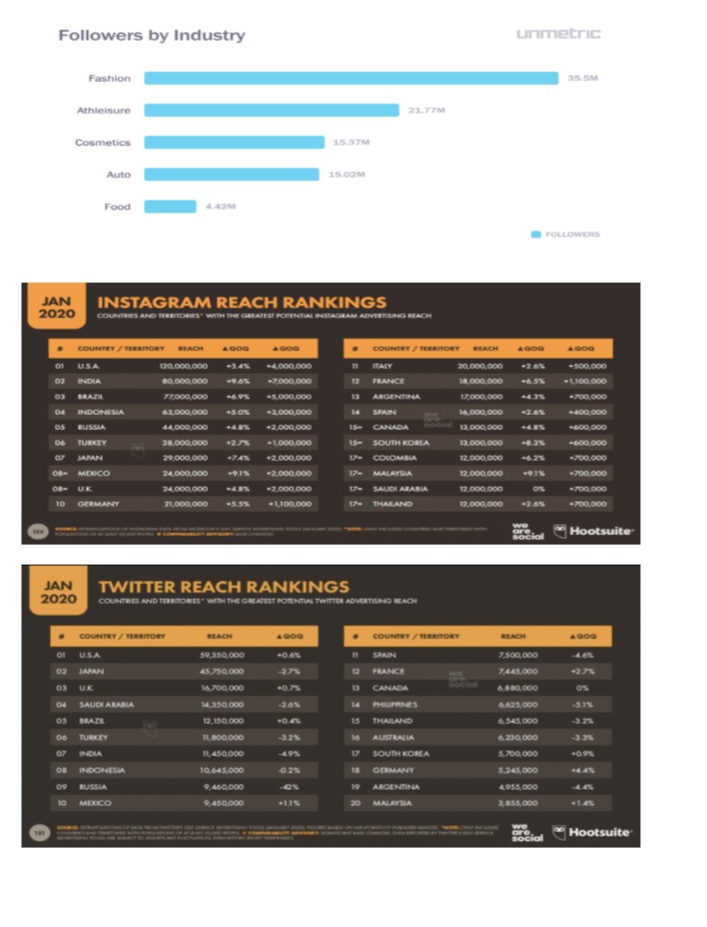
Twitter was launched in 2006 whereas Instagram was founded in 2010. As of 2020, there are 1.3 billion twitter accounts out of which only 330 million are monthly active users globally whereas there are 1.2 billion Instagram accounts out of which 1 billion are monthly active users globally.


About 293 million Instagram users are aged between 15 and 24 and 338 million users are aged between 25 and 34. Talking about Twitter, 80% of its global population is below 50 years old. Twitter ranks slightly behind Instagram when it comes to users 60+ users.

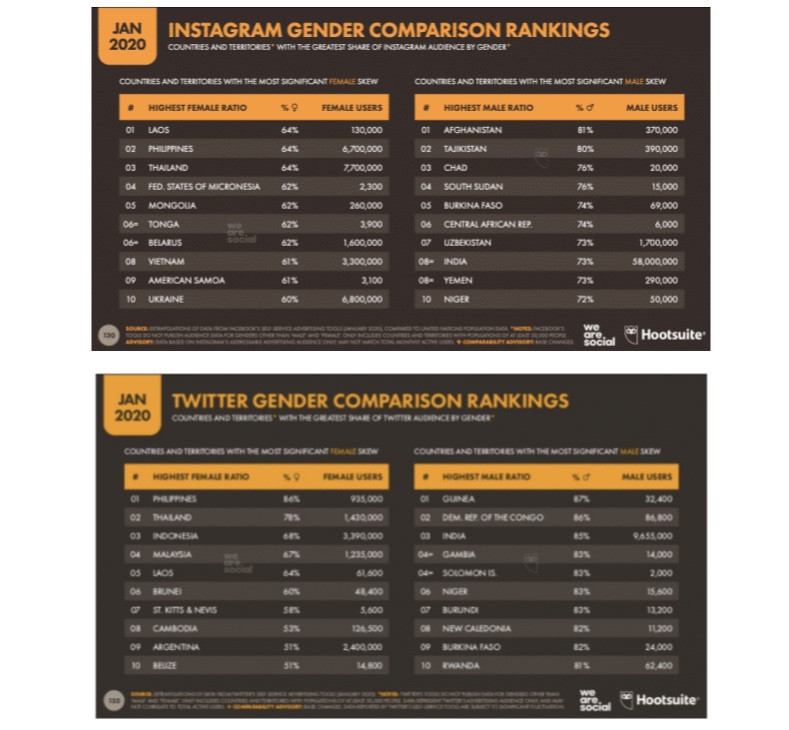
When it comes to the worldwide gender split, about 51% of Instagram users are female and 49% are male and when we talk about Twitter 62% are male and 38% are female. 85% of India’s Twitter audience is male, ranking the country third highest for male-to-female ratio.

With the help of the above graphs, we come to know that Laos has highest female ratio when it comes to Instagram and for Twitter its Philippines with highest female ratio.

1. USER ENGAGEMENT REACH

One of the commonality between Instagram and Twitter is that maximum of their active users are aged between 18 and 29. And if a business is looking for a young audience, then surely it has to select both Instagram and Twitter.
From the above two graphs, it is quite evident that user traffic is much higher on Instagram than any other platform.
However, it is important to note that maximum Twitter users are inactive and Instagram users are mostly active with over 500 million people using Instagram daily whereas only 330 million Twitter users are active monthly. So if a new business wants to enter the market and wants easy and quick promotion, Instagram is a better option any day.

2. Sales

Instagram has separate business profiles specifically for collaborations and business deals. Email, contact number can be directly attached on profiles whereas same does not happen with Twitter.
Another important characteristic where Instagram leads over Twitter is its “Trackable” feature. Sales and Leads can be tracked through Instagram Advertisements and hence we can see clear Return on Investment.

According to Shopify, an e-commerce platform, average price tag for a sale referred from Instagram is $65 and it is $55 for Facebook and $46 for Twitter.
With Instagram settings, we can link our profile to other social media accounts such as Facebook and Twitter but the same is not possible with Twitter and this can indirectly help in increasing sales.

Instagram being a more visual platform with variety of formats available is doing better than Twitter in driving sales.
In the graph below, it is found that traffic on Instagram is more than Twitter. So it is obvious, Instagram is ahead of Twitter when it comes to generating sales.

It is also important to note that Sales on social media platforms also depend on the country and the business field one is in.
After analysing the below three graphs, we will be able to understand that it is better to avoid using any of these applications for our business if our target audience is not into these fields and countries.

3) Return on Investment

Providing a link on our Instagram bio can fetch a lot of traffic and doing the same on our Tweets would also increase our traffic. Making good investment on Instagram sponsor advertisements and Twitter advertisement also increases our user traffic dramatically as Twitter shows our advertisements on “TRENDS” while Instagram shows our advertisements on stories.
Mostly, influencers prefer Instagram over any other platform since it is easy to handle and even users like Instagram posts as compared to other formats. And at the end all a business wants to do is to increase sales and earn profits. This is possible more on Instagram due to its unique yet diverse formats, high user engagement and efficient promotional techniques, so definitely ROI is bound to be more in Instagram than on Twitter.

Also, as mentioned before, Instagram Business profiles provide each and every detail about insights, engagements, and sales and as a result it gives better information regarding ROI in comparison to Twitter.
Two examples of Sales Tracking, User Enagagement and ROI information are given below.

Conclusion: Both Instagram and Twitter are doing well when it comes to marketing strategy and business. If we talk about situation half a decade ago, Twitter was leading but in 2020, Instagram is unbeatable winner.
Growth of the business also depends on the industry, for example fashion industry will do better on Instagram while News Industry will do better on Twitter.

Acid Rain

“The unthinkable is that we’re distorting this atmospheric balance. We’re shifting the chemical balance so that we have more poisons in the atmosphere – ozones and acid rain on ground level – while we’re also changing the thermal climate of the earth through the greenhouse effect and – get this – simultaneously causing destruction of our primary filter of ultraviolet light. It’s incredible. Talk about the national-debt crisis – we’re piling up debts in the atmosphere, and the piper will want to be paid.”

~ Michael Oppenheimer

Introduction

Acid rain, or acid deposition, is a broad term that includes any form of precipitation with acidic components, such as sulfuric or nitric acid that fall to the ground from the atmosphere in wet or dry forms. This can include rain, snow, fog, hail or even dust that is acidic.

Acid rain is caused by a chemical reaction that begins when compounds like sulfur dioxide and nitrogen oxides are released into the air. These substances can rise very high into the atmosphere, where they mix and react with water, oxygen, and other chemicals to form more acidic pollutants, known as acid rain.

It can have harmful effects on plants, aquatic animals, and infrastructure.

Effects of Acid Rain

The ecological effects of acid rain are most clearly seen in aquatic environments, such as streams, lakes, and marshes where it can be harmful to fish and other wildlife. As it flows through the soil, acidic rain water can leach aluminum from soil clay particles and then flow into streams and lakes.

Acid rain has been shown to have adverse impacts on forests, freshwaters, and soils, killing insect and aquatic life-forms, causing paint to peel, corrosion of steel structures such as bridges, and weathering of stone buildings and statues as well as having impacts on human health.

Acid rain also causes the corrosion of water pipes. Which further results in leaching of heavy metals such as iron, lead and copper into drinking water.

Prevention

1. The only precaution that we can take against acid rain is having a check at the emission of oxides of nitrogen and sulphur.
2. We have so far seen the details of acid rain and its harmful effect on animals, plants and the monuments.
3. Being responsible citizens, one should be aware of the harmful effects they cause and of the industries which give out nitrogen and sulphur compound wastes unethically. 4.A great way to reduce acid rain is to produce energy without using fossil fuels. Instead, people can use renewable energy sources, such as solar and wind power. Renewable energy sources help reduce acid rain because they produce much less pollution.

Acid Rain in India

Analysis of rainwater samples from Nagpur, Mohanbari (in Assam), Allahabad, Visakhapatnam and Kodaikanal in the decade 2001-2012 showed a pH level varying from 4.77 to 5.32, indicating that these places have actually been receiving ‘acid rain’. Rainwater with pH below 5.65 is considered acidic.

As energy requirements in India will grow rapidly in tune with the economy, coal dependence is expected to increase threefold over the current level of consumption, making the clouds of acid rain heavier over many highly sensitive areas in the country – the northeast, parts of Bihar, Orissa, West Bengal ,etc ,.

The rains in the Indian Ocean and the Arabian Sea and the Bay of Bengal have become acidic. Studies show the importance to regularly monitor more places for acid rains. But the mechanism to study acid rains is at present inadequate in India. imd stations are not located in the most polluted areas in the country.

Link

How to Restore Our Sleep Cycle

Pandemic has a huge impact on the sleep pattern of the people around the world. Some of them are tossing side to side to get a proper sleep during night time, other stay long awake but unable to regulate their usual pattern. Many experts also suggested that these days people often faces troubled sleep, with many going to bed far later and sleeping longer than usual.

Image: Shutterstock

Our sleep schedules do vary from person to person, depending in large part on the environmental causes. Because according to our circadian clock , that control our sleep schedules are sensitive to light like things like how much sunlight we’re exposed to throughout the day and what types of light we’re exposed to at night affect our sleep schedules. It’s really a huge problem, having a disrupted sleep schedule can result in deteriorating sleep pattern. But this will led to severe health ailments linked to several chronic health problems, such as sleep disorders, obesity, diabetes, depression, bipolar disorder, and seasonal affective disorders etc.

Image: Banala lite

But there are some suggested ways to get our disrupted sleep back on track:

  • A proper bed time routine: Try to stick to a schedule of sleep, like keeping your sleep-wake cycle the same. Our bodies have a circadian rhythm and walking up at different times disrupts it. The less you deviate from your normal bed and wake up times, the better you sleep. To get to sleep earlier, even doctors recommends going slowly and in small increments, adjusting no more than 15 minutes earlier every two to three days.
  • A touch of nature: Get a good amount of sunlight every morning. It serves an important purpose: it shuts down the release of melatonin, this hormone promotes sleep. Aim to get at least 15 minutes of sunlight every morning.

      Image: NPR

  • Cut off caffeine before sleep: Caffeine has a half-life of six to eight hours and a quarter-life of 12 hours. That means if you drink coffee at 4 pm, you’ll still have a quarter of the caffeine floating around in your brain at 4 am.
  • Limit your drinking habit: Alcohol suppresses REM sleep cause sleep disruptions. If you drink alcohol, limit that to two drinks or stop the intake at least three hours before bed.
  • Limit the screen timings: Avoid screen timings just before going to bed. As blue light of mobile screen interfere with sleep habits by sending wrong signals to stay awake. But many of us do it anyway. Avoid screen time before 2 hours of going to bed.
  • Journaling: You can’t get a proper sleep if something is bothering you, it’s always better to pen down your worries in a diary. Making this a habit can lessen your worries. Sit down with a blank piece of paper one to two hours before bed each night. Writing down your thoughts, especially anything that is bothering you. It will help you to schedule your activities and calm your mind.
Image: Unsplash

Meditation and Music: Meditation eases your woes by giving a direction to your thoughts. To get a proper sleep one should practice this 10 minutes daily routine. On the other hand, music calms mind and listening to a relaxing one will help to achieve sleep.

  • Avoid sleeping at day time: To promote better sleep one should avoid day time nap, so as to get a better sleep at night.
  • Environment: Make a good sleeping environment like switching off unnecessary lights and put on the curtains to prevent the entry of noise and lights. Take a warm bath and play some relaxing music, for instance. Make sure your bed is comfortable, the room is dark, and the temperature is not too warm.

These are the ways which enable us regain our disturbed sleep pattern. Sleep, itself promotes body healing. So, this is advised to get a proper 7-8 hours of sleep during night time.

Image: PBS