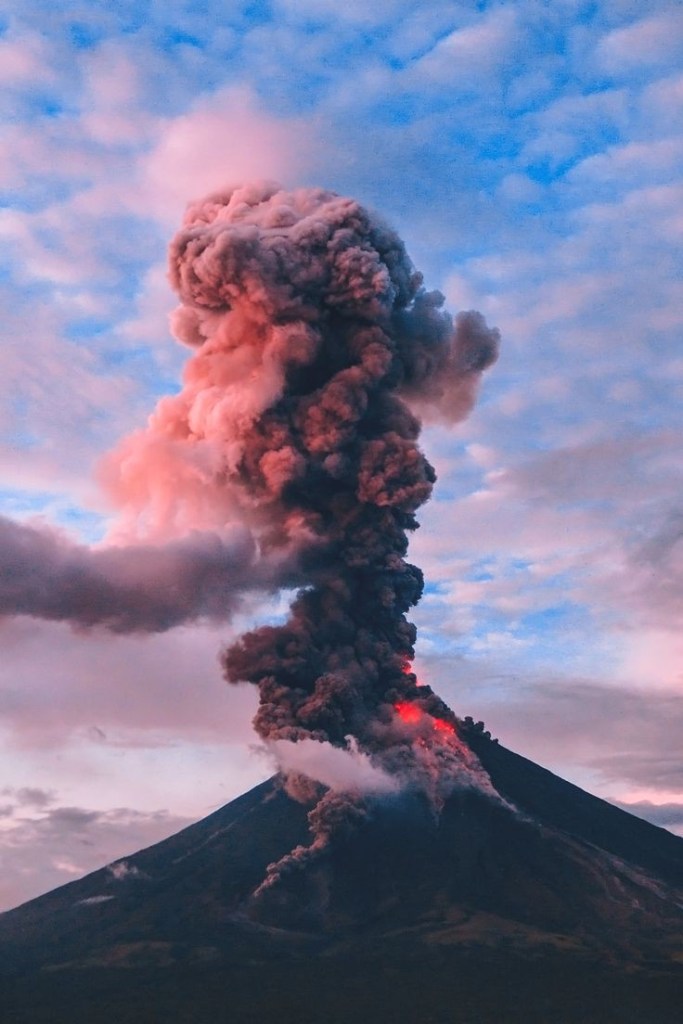
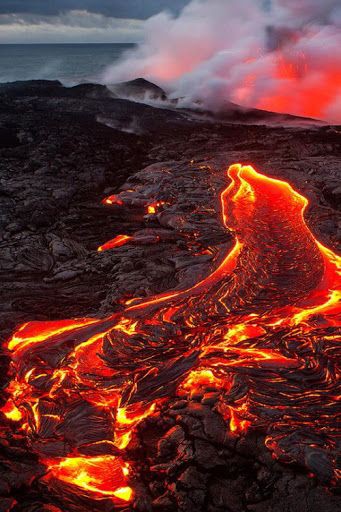
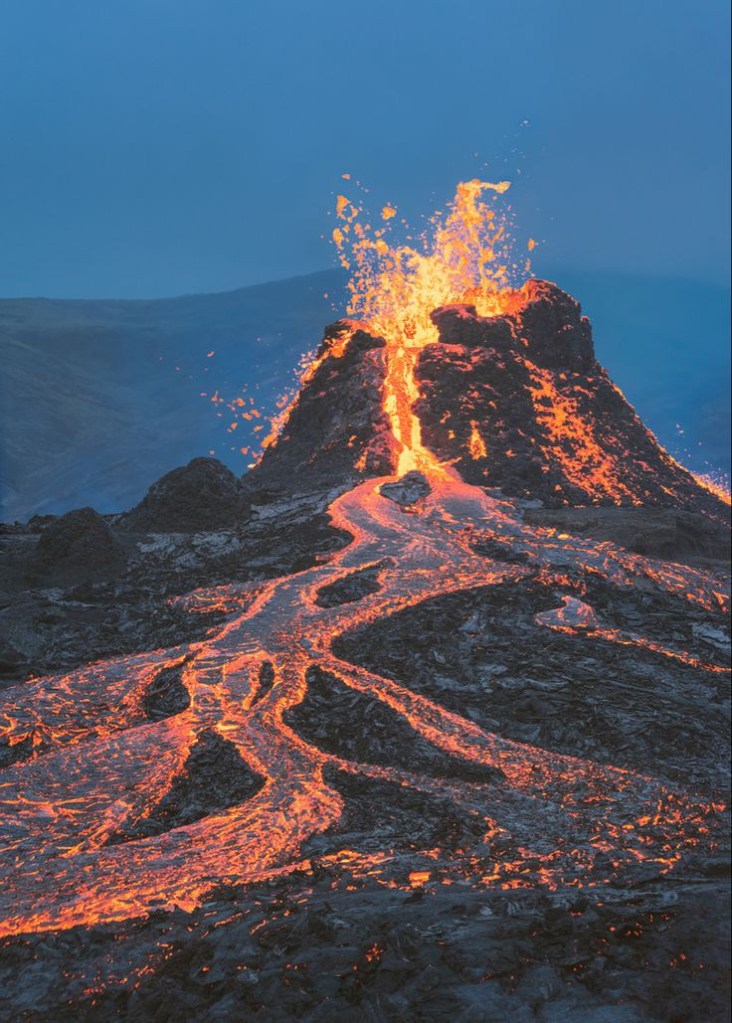
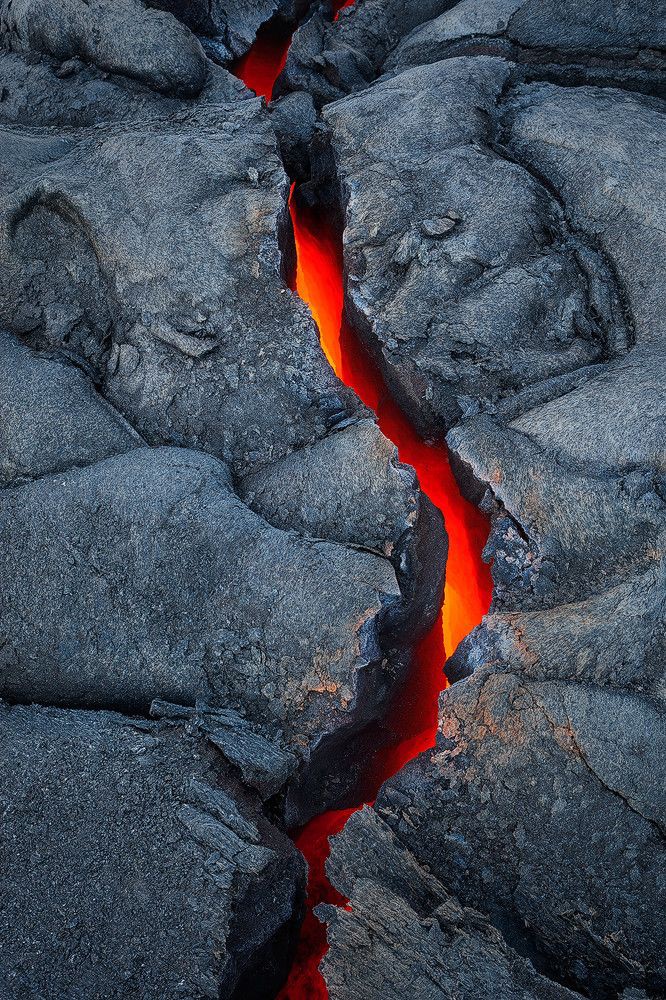
Volcano Eruption

“We are, all of us, growing volcanoes that approach the hour of their eruption, but how near or distant that is, nobody knows- not even God.”

~ Friedrich Nietzsche

We always talk about , what it would be like to see volcano eruption in front of your eyes ?

How amazing it would be like to find out , how the volcano erupt ?

There are many things that we don’t know exist in our earth 🌍. Do you want to know about it . If yes , than read the editorial .

Introduction

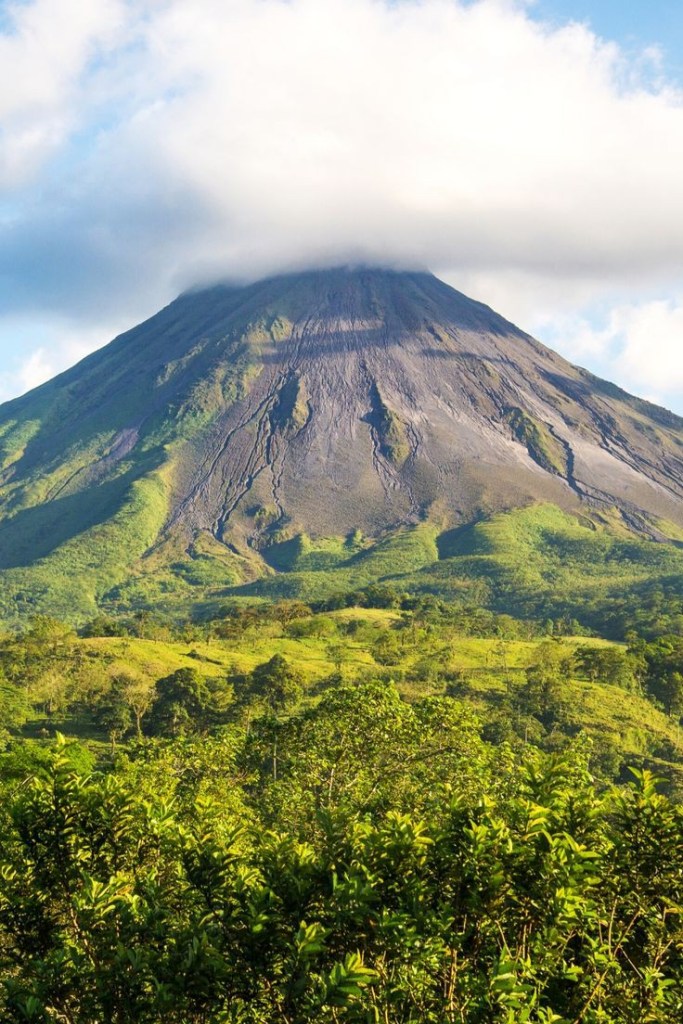
A volcano is a rupture in the crust of a planetary-mass object, such as Earth, that allows hot lava, volcanic ash, and gases to escape from a magma chamber below the surface.

On Earth, volcanoes are most often found where tectonic plates are diverging or converging, and most are found underwater.

The word volcano is derived from the name of Vulcano, a volcanic island in the Aeolian Islands of Italy whose name in turn comes from Vulcan, the god of fire in Roman mythology.

Many ancient accounts ascribe volcanic eruptions to supernatural causes, such as the actions of gods or demigods. To the ancient Greeks, volcanoes’ capricious power could only be explained as acts of the gods, while 16th/17th-century German astronomer Johannes Kepler believed they were ducts for the Earth’s tears.[87] One early idea counter to this was proposed by Jesuit Athanasius Kircher (1602–1680), who witnessed eruptions of Mount Etna and Stromboli, then visited the crater of Vesuvius and published his view of an Earth with a central fire connected to numerous others caused by the burning of sulfur, bitumen and coal.

Types of eruptions

  • Hydrothermal eruption. An eruption driven by the heat in a hydrothermal systems.
  • Phreatic eruption. An eruption driven by the heat from magma interacting with water.
  • Phreatomagmatic eruption.
  • Lava.
  • Strombolian and Hawaiian eruptions.
  • Vulcanian eruptions.
  • Subplinian and Plinian eruptions.

How do volcanoes erupt?

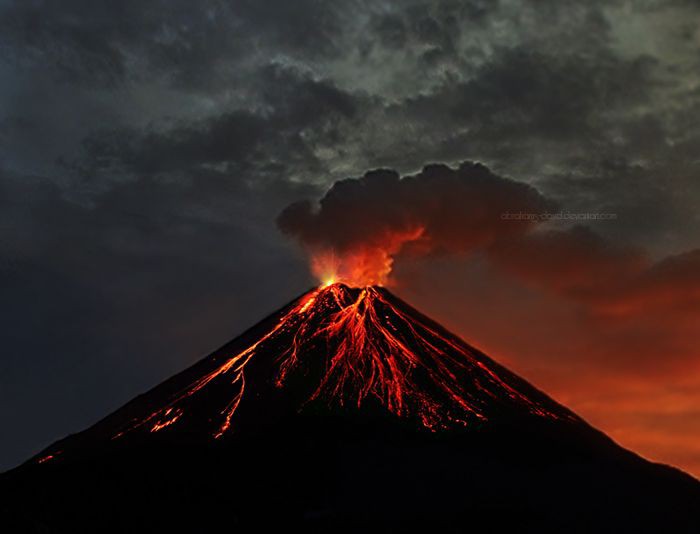
Deep within the Earth it is so hot that some rocks slowly melt and become a thick flowing substance called magma. Since it is lighter than the solid rock around it, magma rises and collects in magma chambers. Eventually, some of the magma pushes through vents and fissures to the Earth’s surface. Magma that has erupted is called lava.

The explosivity of an eruption depends on the composition of the magma. If magma is thin and runny, gases can escape easily from it.
Explosive volcanic eruptions can be dangerous and deadly.

Humans and volcanoes

Volcanic eruptions pose a significant threat to human civilization. However, volcanic activity has also provided humans with important resources.

Although volcanic eruptions pose considerable hazards to humans, past volcanic activity has created important economic resources.

Volcanic ash and weathered basalt produce some of the most fertile soil in the world, rich in nutrients such as iron, magnesium, potassium, calcium, and phosphorus.

Volcanic activity is responsible for emplacing valuable mineral resources, such as metal ores.

The paradox of volcanoes was that they were symbols of destruction but also life. Once the lava slows and cools, it solidifies and then breaks down over time to become soil – rich, fertile soil.
She wasn’t a black hole, she decided. She was a volcano. And like a volcano she couldn’t run away from herself. She’d have to stay there and tend to that wasteland.
She could plant a forest inside herself.

Matt Haig, The Midnight Library

Link

Agriculture

When tillage begins, other arts follow. The farmers, therefore, are the founders of human civilization.”

— Daniel Webster

Introduction

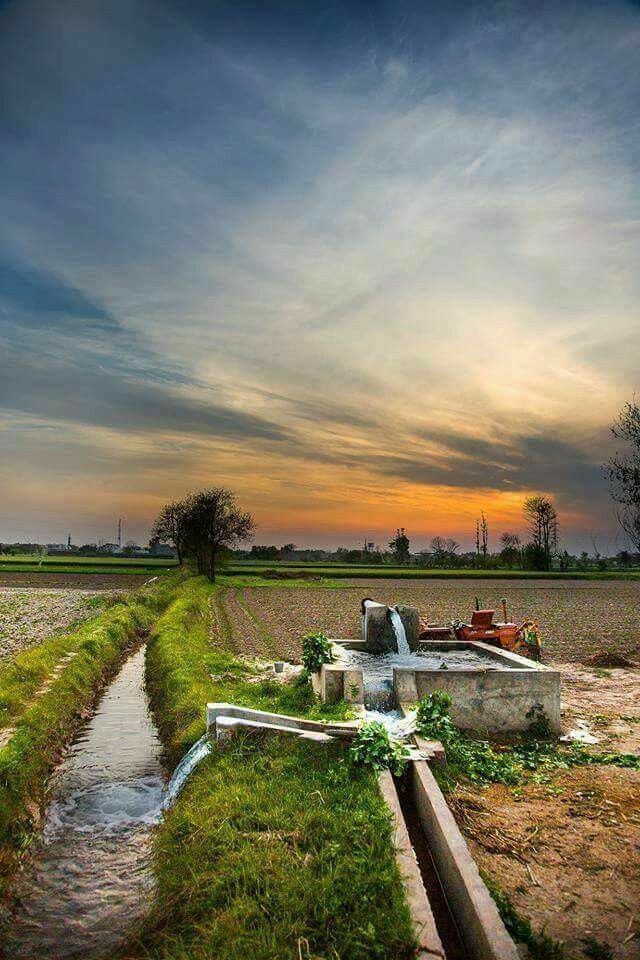
It all started thousand of years ago , when the human civilization came into existence . Agriculture was a key to survival . People were farming for there domestic purpose , not for the others .

As the civilization started to grow accustomed of agriculture , they grew food in surplus that enabled people to live in cities. Plants were independently cultivated in at least 11 regions of the world.

The development of agriculture enabled the human population to grow many times larger than could be sustained by hunting and gathering.

It was the beginning of different civilization in different parts of the World. From those civilizations , one of them was our’s The Indus Valley Civilization . Vedic literature provides some of the earliest written record of agriculture in India. Rigveda hymns , describes plowing, fallowing, irrigation, fruit and vegetable cultivation.

Some of the ancient and historical evidence suggests rice and cotton were cultivated in the Indus Valley.

Agriculture : In India and World today .

India ranks second worldwide in farm outputs. As per 2018, agriculture employed Indian work force and contributed 17–18% to country’s GDP.

In 2016, agriculture and allied sectors like animal husbandry, forestry and fisheries accounted for 15.4% of the GDP (gross domestic product) with about 41.49% of the workforce in 2020.India ranks first in the world with highest net cropped area followed by US and China.The total agriculture commodities export was US $ 3.50 billion in March – June 2020.

Agriculture is the primary source of livelihood for about 58% of India’s population. Share of agriculture and allied sectors in gross value added (GVA) of India at current prices stood at 17.8 % in FY20.

During 2019-20 crop year, food grain production reached a record of 296.65 million tonnes. In 2020-21, Government of India is targeting food grain production of 298 million tonnes.

India is among the 15 leading exporters of agricultural products in the world. Agricultural export from India reached US$ 38.54 billion in FY19 and US$ 35.09 billion in FY20.

Agriculture is an important industry in the United States. The agriculture industry, which includes both crops and livestock, is responsible for producing most of the world’s foods and fabrics. Agriculture impacts so many things that it’s hard to imagine a world without this important industry.

Schemes and Initiatives

Due to the high requirement of agriculture . It is important for the government to take initiatives and provide better infrastructure to the farmers. However , the required level of investment for the development of marketing, storage and cold storage infrastructure is estimated to be huge.

The Indian Council of Agricultural Research (ICAR), established in 1905, was responsible for the search leading to the “Indian Green Revolution” of the 1970s. The Union Minister of Agriculture is the president of the ICAR. The Indian Agricultural Statistics Research Institute develops new techniques for the design of agricultural experiments, analyses data in agriculture, and specialises in statistical techniques for animal and plant breeding.

Schemes by government for Indian agriculture :

  • Dairy Entrepreneurship Development Scheme.
  • Rainfed Area Development Programme (RADP)
  • Paramparagat Krishi Vikas Yojana (PKVY)
  • Pradhan Mantri Krishi Sinchai Yojana (PMKSY)
  • National Agriculture Market (e-NAM)
  • Pradhan Mantri Kisan Maandhan yojana.
  • Pradhan Mantri Fasal Bima Yojana (PMFBY)
  • Kisan Credit Card (KCC) scheme.
  • Pashu Kisan Credit Card Scheme.
  • PM-Kisan Scheme.

Conclusion

Agriculture sector is one of the prominent sector in India as well as all over the world . India is becoming self – sufficient in pulses and other crops .

Gone are the days , when India was unable to provide sufficient amount of food to the citizens . Gone are the days , when people used to think agriculture was not as important as other sectors . Gone are the days , when people used to think less of farmers . And gone are the days , when people were less educated about agriculture.

Farming is a profession of hope.

— Brett Brian

Link

The World of Nepotism

Welcome to the anti-meritocratic world, this world. What are you going to do about it? Will you stand back and watch while cronyism, nepotism, the old school tie, the private club, the right university, the right accent, the right background, the right secret society, the right religion, the right family, destroy merit so that their chosen ones can prosper at your expense. It’s time to smash the conspiracy. Break up all the mechanisms that allow privileged groups within society to rig the system in their favour and penalise anyone who doesn’t belong to their insidious cliques.

Michael Faust, The Meritocracy Party

Well , Its a very complicated questions . In the world, where one’s knowledge didn’t get recognition .

What would you do , when you get acknowledged not on the basis of your knowledge but on the basis of your relation with the owner ?

What would you do , if you don’t get promoted because you are not his /her relative ?

Do you ignore the fact that you are not the one , whom your boss approves?

Well , if you think it’s favouritism than you are absolutely correct . You may also come accross the word NEPOTISM and if you don’t than start reading the passage . (I did as well )

This 8 letter word is destroying everyone in today’s world. And who is responsible for creating such a hypocrite. We the people have to repose this curse and make sure to control it with our coming generations, else it will destroy the whole world. And there’ll be no humanity left in this world” –

Ikramul Hannah.

Introduction

Nepotism is a the practice among those with power or influence of favouring relatives or friends, especially by giving them jobs.

Nepotism is generally defined as “the bestowal of patronage by public officers in appointing others to positions because of blood or marital relationship”.

Nepotism is found in almost all the fields but it is practiced most in business, politics, sports and entertainment sectors. It has been in practice since time immemorial, but some special cases have made it to the limelight in the past few decades.

Nepotism in India :

India has it’s fair share in the field of NEPOTISM . Well , have you ever expected that . I say , YES . Because being one of the largest country , people might become more thirsty for power . “When constantly reaching out for more, you forget what you have” Christine Szymanski.

Nepotism can be characterized as ‘the demonstration of utilizing force or impact to get out of line preferences for individuals from one’s family’.

You must be conflicted , why does nepotism exist even today ? We are living in 21st century , than why we have such orthodox thinking ? Who says no one can define what is going on in one’s mind ( well I say , isn’t is obvious ) .

From the politics to the Entertainment , from the owner to the customer, from the Bollywood to the Judiciary ; Nepotism is everywhere .

Like in OJO -MOJO , After the submission of writing competition , OJO’s class teacher asked him who wrote better . Is it MOJO or OLLY , what do you think whom he would choose . MOJO thinks OJO will choose OLLY because he likes her . But when the result announced MOJO was astounded because OJO choose MOJO’s writing . So , what do you think is it nepotism or not . Think and you will know the answer .

Bias has become the first qualification to join a party, and extreme bias the virtue to become a leader.

Link

Climate change : In India and World today .

Let’s double down on solar energy, let’s be more energy-efficient, let’s weatherize our homes. We can build a better, healthier economy based on good-paying, clean energy jobs.”

Ian Somerhalder, Actor

Being one of the second largest country , climate change in India is having profound effect on India and all over the world . India is ranked fourth among the list of countries most affected by climate change in the period from 1996 to 2015 .

With 7% of global emissions , India emits about 3 gigatonnes (Gt) CO2eq of greenhouse gases each year; about two and a half tons per person, which is half the world average.

Due to the rise in temperature , the Tibetan plateau are causing problem to Himalayan glaciers . It directly effect in increasing the flow rate of the Ganges , Brahmaputra, Yamuna and other major rivers.

The Indira Gandhi Institute of Development Research has reported that, if the prediction of the Intergovernmental Panel on Climate Change is correct about Global warming than it may cause fall of GDP upto 9%.

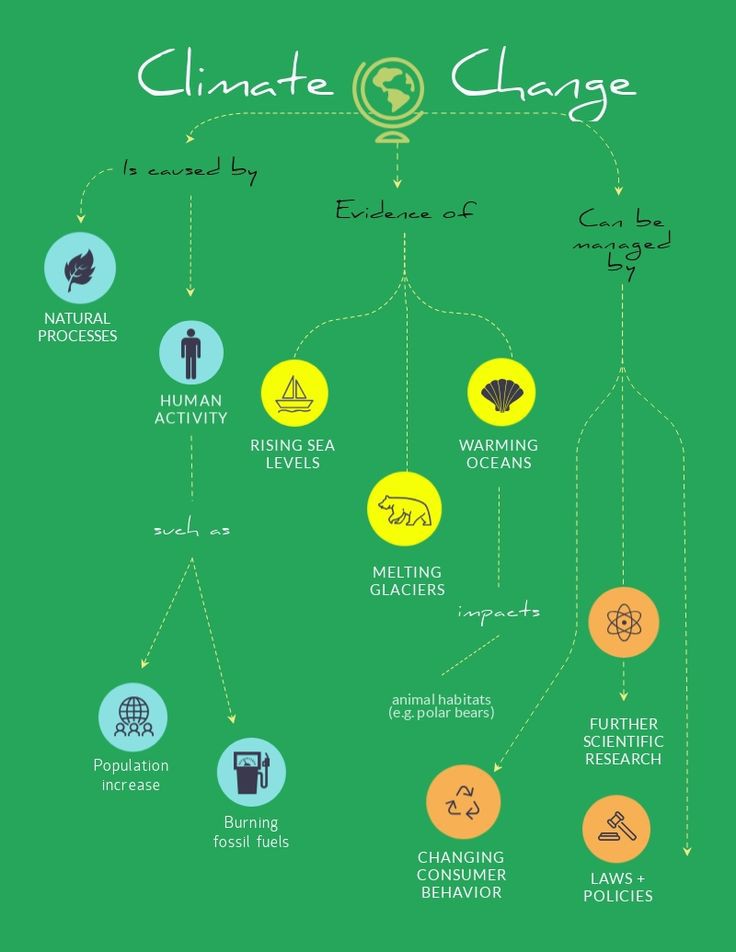
In all over the world , climate change is drastically affecting the change in temperature of the globe 🌎 . Climate change includes both global warming driven by human-induced emissions of greenhouse gases and the resulting large-scale shifts in weather patterns.

Causes :

Human envision and green house gasses are two important causes in the climate change. Greenhouse gases affect Earth’s energy balance and climate .Human activities have added greenhouse gases to the atmosphere. Human activities are changing the climate.

Other causes :

  • Power Plants.
  • Farming .
  • Deforestation.
  • Fertilizers.
  • Oil drilling.
  • Natural gas drilling.
  • Permafrost.
  • Garbage .
  • Volcanic eruption.
  • Pollution.

Campaigns

There are many campaigns that are going on . One of them is The ActNow campaign . It was launched at the UN Climate Change Conference (COP 24) in December 2018, with a call from Sir David Attenborough in conjunction with the award-winning “People’s Seat” initiative.

It signifies individual action on climate change and sustainability. By changing our habits and making choices that have less harmful effects on the environment, we can tackle the climate emergency and build a more sustainable world.

It is also working with other campaigns like The Good life goals , Anatomy of action , 170 actions to combat climate change , lazy person guide to saving the world , connect4climate , climate neutral now , trash hack , stop the waste , Think. Eat. Save. , Clean seas , breathe life , glowing glowing gone . Their may be others as well .


Prevention :

Becoming more energy efficient is a great way to prevent pollution. It causes the power plants to expend less energy that can lead to the production of greenhouse gases. … Replace your light bulbs with energy-efficient light bulbs that help you save electricity too.

  • Speak up!
  • Power your home with renewable energy.
  • Weatherize, weatherize, weatherize.
  • Invest in energy-efficient appliances.
  • Reduce water waste.
  • Actually eat the food you buy—and make less of it meat.
  • Buy better bulbs.
  • Pull the plug(s).

Conclusion

In the times , where the world is changing and taking measurements for saving the globe . Many Environmentalist , Actors , Politicians , Countries are taking precautions and actions on the climate change . It is our duty to prevent our world from falling . Take Initiative To Save The World .

Climate change is real. It is happening right now, it is the most urgent threat facing our entire species and we need to work collectively together and stop procrastinating.

Leonardo Di Caprio, Actor & Environmentalist

Link

IMPACT OF COVID-19 ON CARBON EMISSIONS

The unprecedented global disruption caused by the coronavirus pandemic is likely causing a sharp, brief drop in carbon emissions. 

  • Due to global lockdown ‘s impact on transport, demand for oil has fallen at an unprecedented scale. 
  • Gas demand falls less than oil or coal. 
  • The country’s CO² emission fell down by 15% during March and fell 30%in April. 
  • According to Daily data from the national grid. Coal – fired power generation fell 15% in March and 31% in April. 
  • Renewable energy generation increased by 6.4% in March. 
  • Due to reduced power generation, Industrial activity and transport volume. Thus, it has reduced fossil – related and cement – induced CO² emission. 

China is  the first country where the virus’s impact on carbon emissions  became visible

Carbon dioxide emission in China

According to China Emissions Accounts and Datasets(CEADs) :

  • Reduction of 257.7 Mt. (11%) over Q1 2019
  • Secondary industry contributed 186.8Mt.(72.5%) CO² to the total reduction (largely due to lower coal consumption and cement production). 
  • Hubei contributed 40.6Mt. reduction (due to decrease of 48.2%in secondary industry).
  • Transportation significantly contributes 65.1Mt. With a change of – 22.3% in freight transport and – 59.1% in passenger transport compared with Q1 2019.

      Globally :

  • Aviation decreased by 75%.
  • Surface Transport by 50%.
  • Power generation by 15%.
  • Industry – uncertain but~35%.
  • Small increase in residential buildings of 5%.

     Fossil Fuel:

  • Drop 8% in 3 month and peak drop 17% unprecedented 
  • Emissions in individual countries decreased by ~27%.
  • Emission from surface transport accounted for 43% of decrease, industry and power together accounted 43% and aviation. 
  • Drop in CO² Emissions had no detectable impact on atmospheric CO² or Climate change 
  • It is extremely small compared to the emission accumulated. 

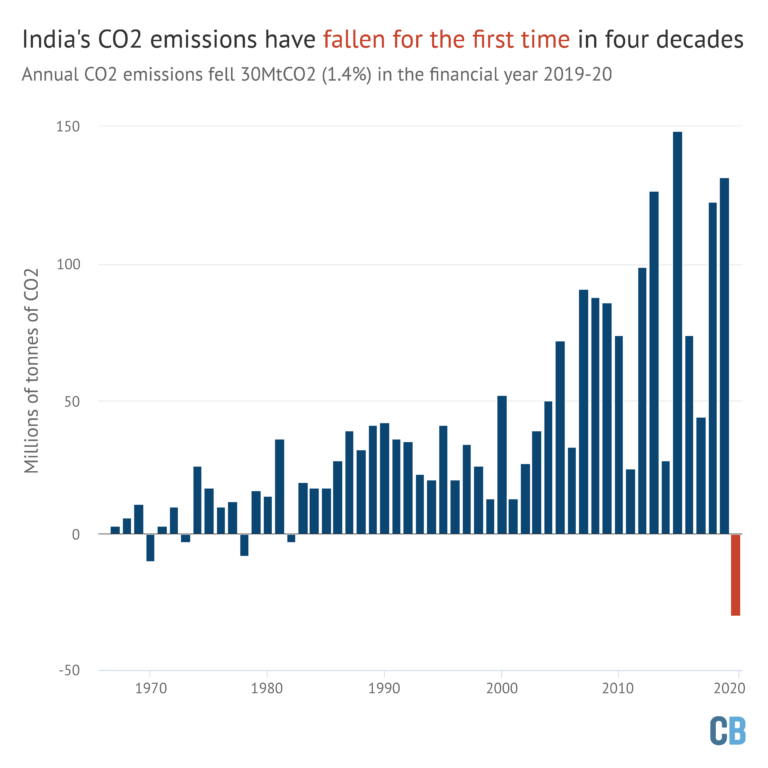
Carbon dioxide emissions in India 

  • As lower power demand growth and competition from renewables weakened the demand for thermal power generation through the last 1 year. 
  • CO² emission fell by an estimated 15% during March and 30% in April. 
  • The fiscal year ending March, coal sales by main coal producer Coal India Ltd. Fell by 4.3%.

Coal import increased by3.2%

Total coal delivery fell by 2%

  • In March, coal output increased 6.5%. 

     Oil Demand :

  • Oil consumption slow down since early 2019.
  • During national lockdown, oil consumption fell 18% on March 2020.
  • Crude oil production in India decrease 5.9% compared to last financial year.

Thus, CO² emissions fell by 30mt.(1.4%) in fiscal year ending March. 

Environmental health due to Carbon Emission during Global lockdown

  • The positive effect of lockdown is to decrease the CO2 emission by −17% (−11 to −25%) by 7th April 2020 with respect to the mean level of emission in 2019.
  •  Air quality index (AQI) is the assessment of air quality. The lower the AQI value, the better is the air. The normal air quality index range is (100−200) and presently it is in the satisfactory range (50–100) category as reported by Gurfam being a scientist at SAFAR. 
  • Zambrano-Monserrate et al. (2020) reported that the air quality index (AQI) has decreased by 44%, 33%, 29%, 15% and 32% in north, south, east, central and western India respectively. 
  • The same study also shows that from March 16th to April 14th, 2020, 22 cities of India show the reduction of PM10 (Particulate matter), PM2.5, CO, NO2, by 43, 31, 10 and 18%. During the quarantine period in COVID-19, the amount of NO2 was decreased by 22.8 μg/m3 and 12.9 μg/m3 in Wuhan and China respectively. 
  • In 367 cities, the PM2.5 fell by 18.9 μg/m3. As per the report of CAMS 2020 reduction of 20–30% of PM2.5 is observed in a wide area of China.
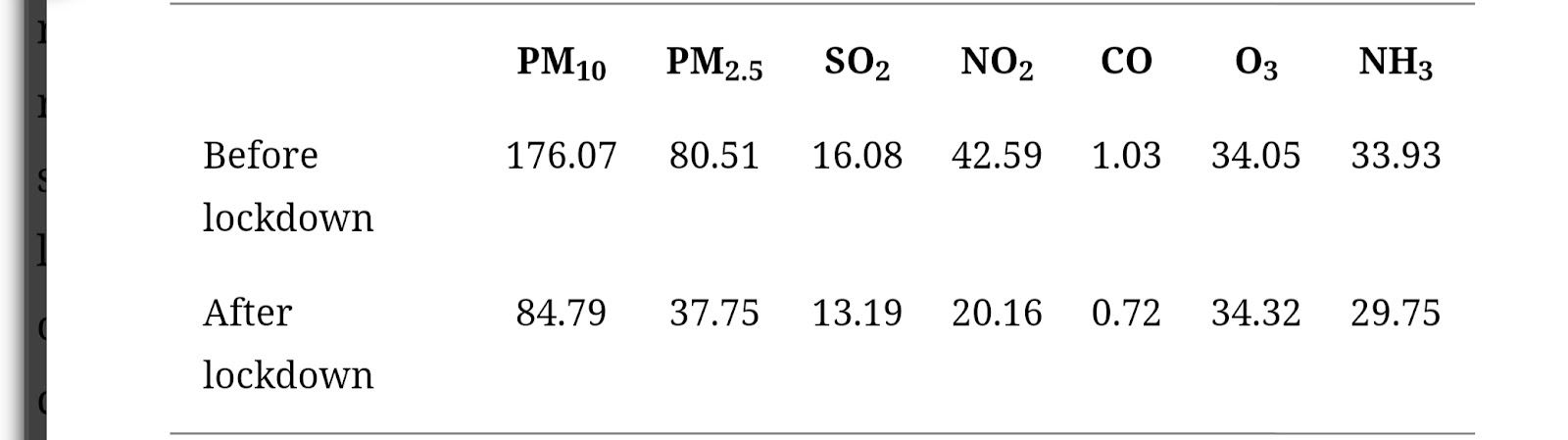
  •  Mahato et al.investigated that after three weeks of lockdown period from 24th March 2020, pollution of the Delhi, India, has experienced a noticeable reduction of different air pollution causing materials in the following Table

Comparison between different pollutants present in air before and after lockdown.

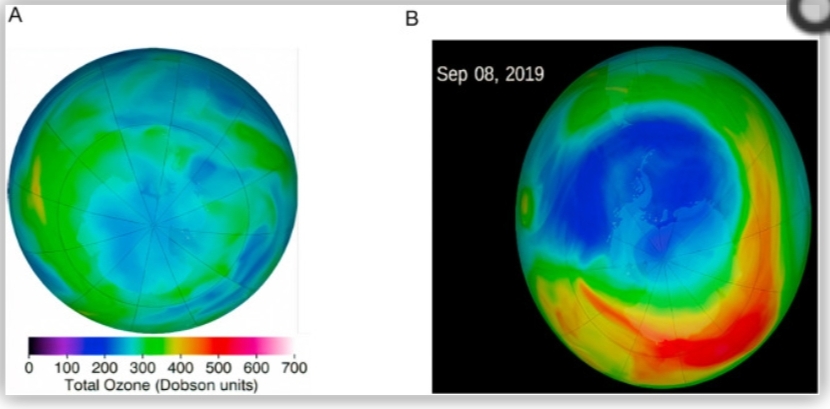
Reduction in carbon emission also lead to Ozone layer recovery over Antarctica:

  • The ozone layer is found in the upper atmosphere called the stratosphere between 10 and 50 km from the earth. 
  • The ozone layer acts as a natural sunscreen and plays a very important function by absorbing the harmful U—V rays from the sun. 
  • Ozone-depleting substances (ODS) are gases such as chlorine and/or bromine which breaks the ozone layer in the stratosphere. Various ODS are present in the environment are chlorofluorocarbon (CFCs), hydrochlorofluorocarbon (HCFCs), Methyl chloride and various halones.
  •  By the reaction with UV sunlight, these gases form chlorine and bromine and they are responsible for the depletion of the ozone layer. 
  • The international community signed the Montreal Protocol on substances about the depletion of the ozone layer, 30 years ago.
    •  According to the protocol, the consumption and production of ozone-depleting compounds should be regulated.
    •  By banning chlorine-containing synthetic compounds the rate of depletion declined and scientists expect to recover back to the 1980 level up to 2070.
    •  As per the scientific data of 2018, the stratosphere recovered at the rate of 1–3% per decade since 2000.
  •  After the lockdown began on Jan 23, the particulate matter pollution decreased by an average of 35% and NO2 decreased by an average of 60%. 
  • At the same period, scientists found the average surface ozone concentration increased by a factor of 1.5–2. 
  • Emission of ozone-depleting substances is also natural or man-made.
  •  All man-made emission is controlled because of lockdown during COVID-19. 
  • Production and consumption of ODS are also reduced. The World meteorological Organization (WMO) states that economic activity has been limited during COVID-19 which results in a decline in CO2 emission.
  •  In 2019, As per NASA and NOAA reported that the south pole region of Antarctica has warm temperature in the upper atmosphere which caused a small ozone hole since it was first seen in 1982 . 
  • On 23rd April 2020 Copernicus, atmospheric monitoring services (CAMS) announced that the largest hole was ever seen in the ozone layer over the arctic has been closed.
  •  Although lockdown is surely showing the prominent sign of nature, balance restoration of the ozone layer .
The map of holes in the ozone layer over Antarctica (a) 23rd May, 2020  (b) September 08, 2019

Impact of COVID 19 on Energy resources

The breakout of the Coronavirus Disease (COVID-19) toward the end of 2019 and its culminating transformation into a global pandemic sent shockwaves across the nations. Not only people lost their lives to it, but also numerous industries and governments as a whole succumbed to its impacts. To prevent the spread of the disease, many countries have resorted to observing country-wide lockdowns, damaging the normalcy of their economy. The world economy has seen new lows by trillions of dollars during this period, giving rise to times of constant anxiety about the future. The renewable energy sector, which has always been one of the leading areas to promote sustainability in terms of the environment, too is not spared from being affected by the pandemic. An amalgamation of the effects of the pandemic on the global economy and fluctuating oil prices resulting from country-wide lockdowns across the world further triggered its impact on the renewable energy industry. This work highlights the extensive impacts of COVID-19 on the renewable energy sector of India, a country that has proved itself to be proactive and progressive when it comes to solutions toward sustainable development. It showcases the present impacts of the pandemic on the sector and highlights future projections of the way it may continue to affect this sector as the world continues to struggle with the pandemic. The authors have brought up a set of their opined regulations that the administration and policymakers of the renewable energy sector of India can adopt to avert or reduce the extensivity of the impact of COVID-19 on their sector.

Earth- Sweet Home

11]Earth- Sweet Home 

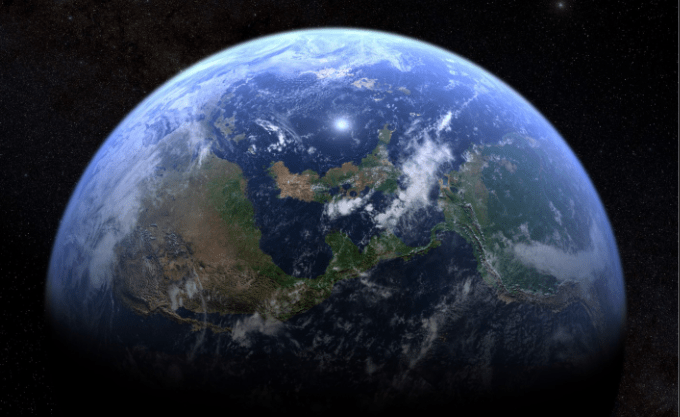
Earth is the third planet from the Sun. We have learnt about Earth since childhood. Here I will cover some facts and provide quick glances at the basic information which everyone must know about our home planet.

Some facts about Earth:

Diameter- 12,742 km

Orbital period-  365.25 days

Day-   23 hours, 56 minutes, and 4 seconds

Axis tilt- 23.5 degrees

Distance from sun- 1AU

 Hydrosphere:

Earth is the only object known to harbor and support life in the universe so far.  About 29.2% of Earth’s surface is land consisting of continents and islands. The remaining 70.8% is covered with water, mostly by oceans, seas,  lakes, rivers, and other water bodies, which together constitute the hydrosphere.  Much of Earth’s polar regions are covered in ice and many glaciers are present. 

Lithosphere and Structure of Earth

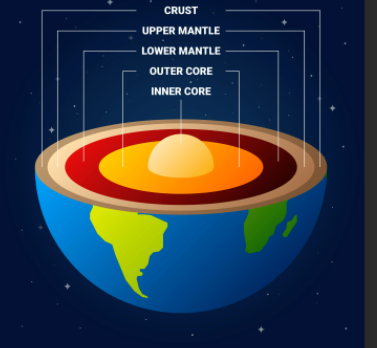
Earth is the densest planet in the Solar System and the largest and most massive of the four rocky planets. Earth’s outer layer is divided into several rigid tectonic plates that migrate across the surface over many millions of years, while its interior remains active with a solid iron inner core, a liquid outer core that generates Earth’s magnetic field, and a convective mantle that drives plate tectonics.  The Earth’s crust ranges from 5–70 kilometres (3.1–43.5 mi) in depth and is the outermost layer. Earth’s mantle extends to a depth of 2,890 km, making it the planet’s thickest layer.

See the source image

Atmosphere

Earth’s atmosphere consists of various gases which are (by volume) -78.09% nitrogen, 20.95% oxygen, 0.93% argon, 0.04% carbon dioxide, and small amounts of other gases. The atmosphere has various layers. From highest to lowest, the five main layers are:

  • Exosphere: 700 to 10,000 km (440 to 6,200 miles)
  • Thermosphere: 80 to 700 km (50 to 440 miles)
  • Mesosphere: 50 to 80 km (31 to 50 miles)
  • Stratosphere: 12 to 50 km (7 to 31 miles)
  • Troposphere: 0 to 12 km (0 to 7 miles)

Gravity and Orbit

The gravitational acceleration on Earth’s surface is considered to be 9.8 ms-2 . Earth’s gravity interacts with other objects in space, especially the Moon, which is Earth’s only natural satellite. Earth orbits around the Sun in about 365.25 days. Earth’s axis of rotation is tilted with respect to its orbital plane, producing seasons on Earth. The gravitational interaction between Earth and the Moon causes tides, stabilizes Earth’s orientation on its axis, and gradually slows its rotation. 

History of Earth and Life

According to radiometric dating estimation and other evidence, Earth formed over 4.5 billion years ago. Within the first billion years of Earth’s history, life appeared in the oceans and began to affect Earth’s atmosphere and surface, leading to the proliferation of anaerobic and, later, aerobic organisms. Some geological evidence indicates that life may have arisen as early as 4.1 billion years ago. Since then, the combination of Earth’s distance from the Sun, physical properties, and geological history have allowed life to evolve and thrive. In the history of life on Earth, biodiversity has gone through long periods of expansion, occasionally punctuated by mass extinctions. Over 99% of all species that ever lived on Earth are extinct. Almost 8 billion humans live on Earth and depend on its biosphere and natural resources for their survival. Humans increasingly impact Earth’s surface, hydrology, atmospheric processes, and other life.

Our responsibility

Recently, Earth has been facing many problems due to human activities. It is the responsibility of humans to fix these problems- Global warming and climate change. Carbon emissions and overpopulation is leading to the creation of many environmental as well as social problems. We must stand up for our Earth and contribute as much as we can, since every step matters.

Structure of Earth – Wikipedia
https://www.nasa.gov/topics/earth/index.html
https://en.wikipedia.org/wiki/Earth

Mass Extinctions: The Troughs of Biological Evolutionary History

With 2020 turning out to be a very abysmal year, complete with natural disasters and pandemic, I’m positive that many of us, at some point in time, have heard, seen or shared jokes about how the ‘end’ is approaching. Though it doesn’t intimidate our dear Earth,as it already has some experience in witnessing the wiping out of most of the life forms, then, in habitation. Infact, this occurrence, known as mass extinction, has been a part of evolutionary history for several times. So, now the question arises; who, when, how and also, how many times? Let’s find out.

Introduction

Earth is believed to be approximately 4 billion years old, which gives ample time to geological and biological evolution. The compilation of all those changes and evolutions structure the present day Earth, aside the anthropogenic modifications. And some of the major events of the evolutionary history of Earth are mass extinction. That’s right. Even the destruction of species after species has contributed to the shaping of Earth’s present. 

The Catastrophes: Mass Extinction

Extinction is a natural phenomenon that takes place due to changes in the environment. Complete disappearance of a species is its extinction. A species is a group of organisms with similar biological, physiological and anatomical characteristics and which can interbreed and produce fertile offspring. The species which cannot adapt with the environmental changes, cannot evolve with subsequent reproduction or cannot reproduce fast enough to keep up with the decline of their population, perish and become extinct. 

A typical species becomes extinct within 10 million years of its first appearance. It is estimated that 99.9% of all species that ever habituated Earth are now extinct.

Mass extinction is referred to as the event which results in the simultaneous extinction of a large number of species present on Earth. These events resulted in severe reduction in the number of organisms in a short amount of time and also decreased the speciation. Hence, the rate of reproduction slowed down, and eventually led to the extinction. It is identified by sharp change in diversity and abundance of organisms.

Mass extinction has some special characteristics:.

  • It took place over a short span of time and were quite intense
  • It was a global phenomenon and included a large diversity of organisms
  • Extinctions were believed to be more severe in case of marine organisms
  • It is considered that plant species are more resistant to extinction than animals.

Mass extinction evidences can be found in fossils trapped in rocks and rock layers, which had been deposited on Earth’s surface for billions of years. On the basis of the incomplete fossil records, 5 major mass extinctions have been identified. In the descending order of age, they are:

  1. Ordovician- Silurian Mass Extinction/Late Ordovician Mass Extinction (450-440 million years ago) at Ordovician-Silurian transition

In May 2020, studies suggested that due to global warming, caused mainly due to volcanism and anoxia, killed off 27% of all families, 57% of all genera and 60%-70% of all the species.49-60% of marine genera and nearly 85% of marine species were eliminated. There were two main causal events. In terms of percentage of genera becoming extinct, these are regarded as the second largest of the five major extinctions.

The LOME is considered to have occurred in two distinct pulses, one at the boundary of the between Katian and Hirnantian stages of the Late Ordovician Period. The second pulse occurred in the later half of the Hirnantian stage, and is associated with intense worldwide anoxia(oxygen depletion) and euxinia (toxic sulfide production), persisting through the Rhuddanian age of Silurian period.

The other plausible causes that were/are debated are glaciation, toxic metal poisoning, gamma-ray burst and weathering

  1. Late Devonian Mass Extinction (375-364 million years ago) near the Devonian- Carboniferous transition

A prolong series of extinction resulted in elimination of 19%of all families, 50% of all genera and at least 70% of all species. It might have lasted for as long as 20 million years.The beginning and end of this period is marked by Kellwasser event and Hangenberg event respectively. According to Late Devonian sedimentary records, it was a period of several environmental changes, which might have directly affected biodiversity and caused extinction. Evidence of rate of carbon burial shooting up and widespread anoxia at ocean bottoms have been discovered. Possible triggers of these changes are:

  • Asteroid impact 
  • Supernovae event, which lead to drastic drop in atmospheric ozone ultimately resulting in genetic material damage due to UV rays.
  • Plant evolution and expansion
  • Weathering due to plant evolution, which caused drastic changes in nutrients cycles. That, in turn, led to deposition of surplus nutrients in water bodies, leading to eutrophication and subsequent anoxia.
  • Reduction of atmospheric carbon dioxide, again due to evolution of plants
  • Magmatism
  1. Permian Triassic Mass Extinction/ Great Dying (252 million years ago) at Permian-Triassic transition

It is considered to be the most severe extinction in the evolutionary history of Earth. About 96% of all marine species and 70% of terrestrial vertebrates went extinct. In case of insects, 57% of all biological families and 83% of all genera faced extinction.

Evidence of about 1 to 3 pulses/phases of extinction are identified. The potential causes that had been identified include:

  • Meteor impact event(s)
  • Massive volcanic eruptions
  • Climate changes due to large production of methane
  • Sea level changes
  • Increasing anoxia
  • Increasing aridity
  • Hydrogen sulfide emission
  1. End Triassic Mass Extinction (201 million years ago) at Triassic-Jurassic transition

 In marine biodiversity, a whole class(conodonts) and 23-24% genera went extinct. The terrestrial organisms which suffered extinction include archosauromorphs (excluding crocodylomorphs, pterosaurs) and some dinosaurs went extinct. Groups like aetosaurs, phytosaurs etc., which were previously abundant, went extinct. The Jurassic age saw a diverse evolution of dinosaurs and  pterosaurs.

The possible causes of this mass extinction include:

  • Gradual climate change, sea-level fluctuations or a pulse of oceanic acidification, decreasing diversity of land biomes
  • Trend of increasing aridification
  • Drop in sea level
  • Extraterrestrial causes; includes impact from an asteroid or comet
  • Volcanic eruptions
  1. Cretaceous Tertiary Mass Extinction (65 million years ago) at Cretaceous-Paleogene transition 

This extinction is responsible for about 80% of all species of animals, including all the dinosaurs and many marine invertebrates. It also includes a range of fishes, mammals,pterosaurs and plesiosaurs, amongst other groups of animals. The main trigger for this extinction is considered to be asteroid impacts. This period recorded several large asteroid impacts.This hypothesis is further solidified by unusually high levels of iridium in the rocks of that period, which is usually not available on the surface of earth. 

As the after effect of this extinction,’impact winter’ was set into motion. Due to all the ash, dust and other matter that were dispersed in the atmosphere due to the asteroid impacts, blocked out sunlight for a long period of time.As a result, plants could not effectively perform photosynthesis, and keep up the oxygen level in the atmosphere. It also resulted in shortage of food for animals. The worst hit animals were the dinosaurs, due to their massive size.The smaller animals, on the other hand, strived with storage food and lesser oxygen, and thrived after the danger passed.Other calamities induced were tsunamis, earthquakes and increased volcanic activities.

Apart from these, scientists have identified several other minor extinctions, with the help of fossil and petrological records. 

Holocene Extinction: Living through History

At present, we are living through an extinction referred to as Holocene extinction or Anthropocene Extinction, which is considered to be the sixth major mass extinction. It is, needless to say, majorly a result of human activities. The current rate of extinction of species is 100 to 1000 times higher than the natural rate of extinction. The direct causes include hunting, deforestation, pollution, introduction of non native species in various diverse geographical regions etc.

If this doesn’t give mankind the wakeup call that it direly needs, I don’t know what would.

Websites referred:

https://en.m.wikipedia.org/wiki/Extinction_event

https://en.m.wikipedia.org/wiki/Holocene_extinction

Environmental Pollution

Pollution is the presence of particles or elements in a natural environment and thereby degrading the quality of it. It causes adverse changes to natural environment. Pollution is caused by contaminants and they can be of various types. Contaminants can be particles like chemical substances, gases or energy. They can be foreign substances or naturally occurring ones. Depending on the kind of contaminants and the environment, there are different forms of pollution – air pollution, light pollution, litter, noise pollution, plastic pollution, soil contamination, radioactive contamination, thermal pollution, visual pollution, and water pollution.
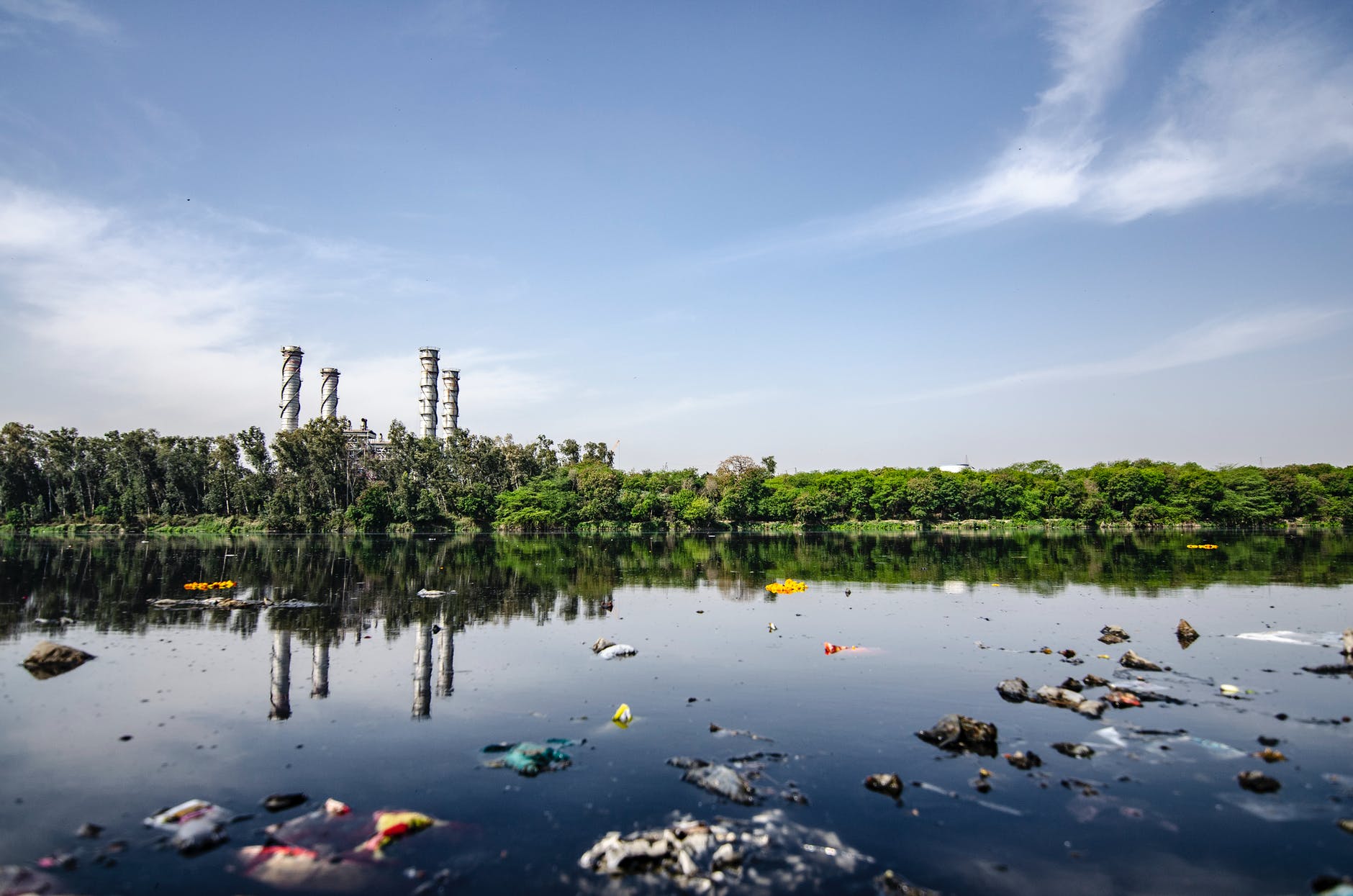
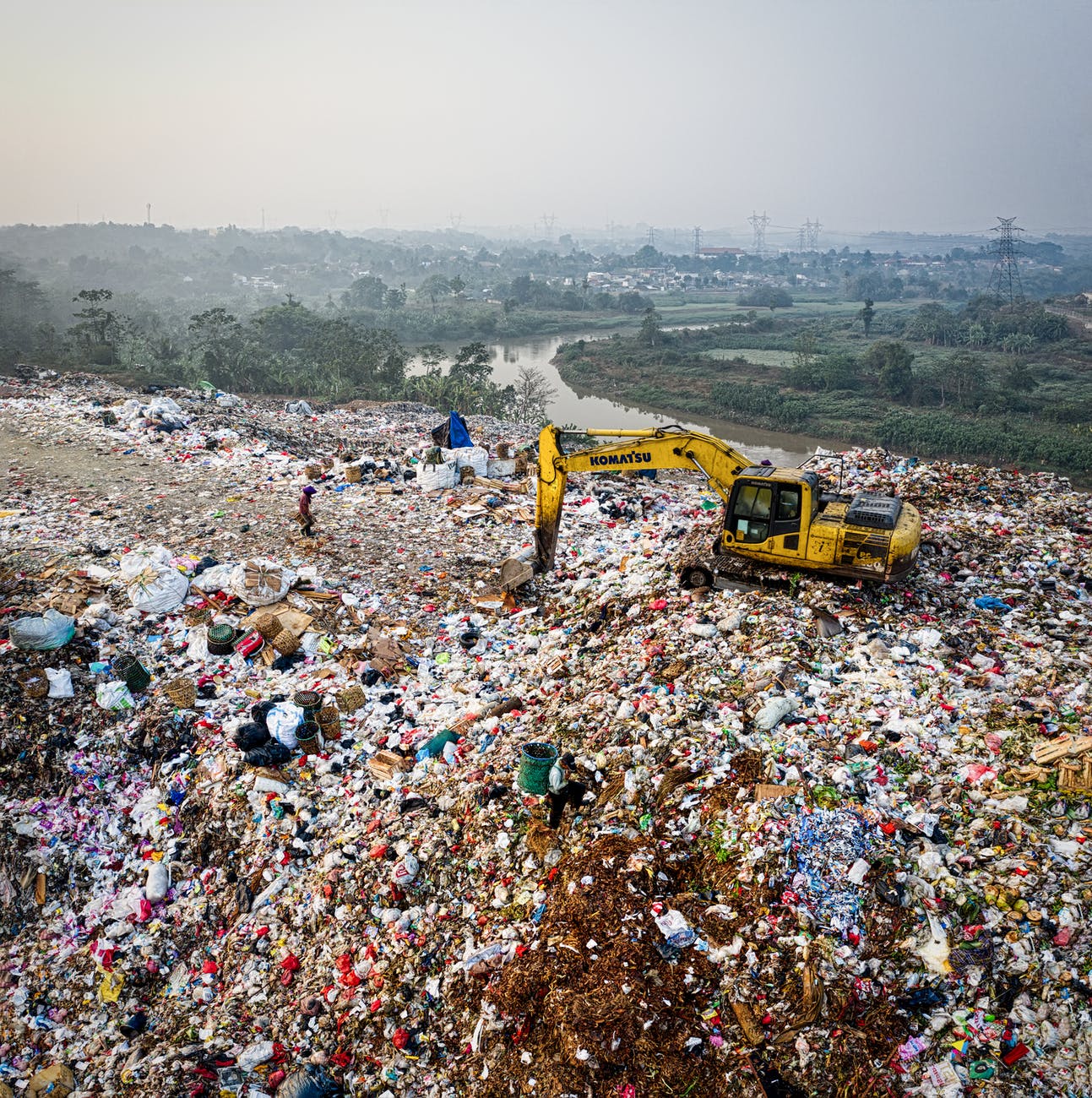
Pollution exists mainly in urban societies. The burning of coal and wood increase carbon content in air and make the cities the primary sources of pollution. The Industrial Revolution had brought an infusion of untreated chemicals and wastes into local water resources which supplied water to the people. Early instances include the time when King Edward I of England banned the burning of sea-coal by proclamation in London in 1272, after its smoke became a problem.

Photo by Yogendra Singh on Pexels.com

The major forms of pollution are described as follows:

Air pollution – It is caused by the release of chemicals and particulates into the atmosphere. Common gaseous pollutants are carbon monoxide, sulfur dioxide, chlorofluorocarbons (CFCs) and nitrogen oxides which are produced by industry and motor vehicles.

Electromagnetic pollution – It is caused due to the overabundance of electromagnetic radiation in their non-ionizing form, like radio waves, etc. Nowadays people are constantly exposed to these radiations.

Light pollution – It includes light trespass, over-illumination and astronomical interference. There have been instances when over illumination of a natural environment by artificial lights have caused birds to be awake at night. It disturbs their natural time cycle.

Noise pollution – It includes noise from all sorts of sources like roadway noise, aircraft noise, industrial noise as well as high-intensity sonar.

Photo by Tom Fisk on Pexels.com

Plastic pollution – This involves the accumulation of plastic products and microplastics in the environment and thereby affecting the wildlife, wildlife habitat, and humans.

Soil contamination – It is caused by chemicals released by spills or underground leakages. Among the most significant soil contaminants are hydrocarbons, heavy metals, MTBE herbicides, pesticides and chlorinated hydrocarbons.

Radioactive contamination – This has increased the 20th century due to activities in atomic physics, such as nuclear power generation and nuclear weapons research, manufacture and deployment.

Thermal pollution – This is a temperature change in natural water bodies. The most common reason is human influence. For example, the use of water as coolant in a power plant.

Visual pollution – It refers to the presence of overhead power lines, motorway billboards, scarred landform, open storage of trash, municipal solid waste or space debris.

Water pollution – It is caused by the discharge of wastewater from commercial and industrial factories into surface waters resources. It also includes discharges of untreated domestic sewage, and chemical contaminants, such as chlorine, treated sewage; pesticides and fertilizer components reaching water bodies through irrigation water. Groundwater pollution is caused from waste disposal including pit latrines and septic tanks; eutrophication and littering.

With growing evidence of local and global pollution, more and more people have started getting informed over time. Issues such as global warming and climate change have also developed in recent years. These have given rise to environmentalism and environmental movements. There are environmental activists who work to raise awareness and to limit human impact on the environment.

To MARS, Or Not To MARS ?

Strap yourself in, we are going on a trip in our favorite rocket ship, steering through the clouds like little Einsteins. Climb aboard and get ready to explore, the Red Planet- Mars. From hostile deserts, to lonely islands and the highest mountains, wherever there is space to expand into, humans do so.

Hence it is hardly surprising that we are all ready to set foot into Mars and create the first permanent colony outside of Earth maybe even terraform another planet and turn it into a second blue home.

If you don’t know who is Elon Musk, then you better start googling his name and get to know him. Not only is he the billionaire founder of Tesla Motors, this a.k.a. Iron man superhero Tony Stark has ambitious plans to send humans to Mars by 2025.

If this is a trip then like any other, there is a need for a checklist with list of items to be taken to Mars and items we can conveniently leave back on Earth. Let’s get started fellow Martians.

A MARS COLONY CHECKLIST :

  • PORTABLE OXYGEN GENERATOR- You need to breathe. In case of emergency, a standby kit to generate oxygen is required. But considering humans, we might need a mask too because air is our favourite natural element to pollute.
  • PORTABLE SOLAR POWER KIT- Low battery and no charger sounds as scary as the trip itself. Whatever electronics you are bringing, as long as there is no electricity, forget about your entertainment. You don’t want to die of boredom.
  • PORTABLE WATER FILTER- We know there is frozen water on the planet. But we dont know if ita drinkable. All the ice deserves a drink, so bring a filter and soda-making machine if excess luggage permits (check with your airline)
  • PLANT SEEDS- Once you run out of your snacks you should look into farming. Be prepared, bring some seeds and check some tutorials on gardening (preferably in space).
  • LONELINESS- Self isolation might be needed to avoid radioactive exposure, well looks like the year 2020 is indeed a good practice for it. Also aren’t we all lonely from inside (No? just me? Okay…. *crawls back into my hole*)
  • NUCLEAR REACTORS- For creating a safe atmosphere and not the nuclear weapons that Nations own for “defense purposes” Let those weapons stay on Earth along with the people who threaten to use them because there isn’t much spice in their lives.
  • MULTIMILLION DOLLAR SPACESHIP – So large that it could fit the 150 Million homeless around the world, people who have been disappointed by the Politicians and their promises.
  • A HIGH TOLERENCE – A tolerance level higher than what we have to everything on social media and to the lifestyle of new generations.
  • MAA KE HAAT KA KHANA – A nice Tupperware tiffin box with food made by your Moms because, The M.O.M on Mars doesn’t cook or do ALL your work. (M.O.M –Mars Orbiter Mission also called Mangalyaan)

Lastly a desire to get away from it all. Elon Musk is not crazy, but a visionary, a modern adventurer who dares to dream. NASA is behind him by committing to send the first batch of astronauts on his mission. More than 200,000 people have signed up for the one-way ticket to Mars including Leonardo DiCaprio. Musk hopes to send 1 million people to the Red Planet and a ticket is estimated to cost around USD200,000 for each passenger (Hefty I know, but you get to travel with Leo as your travel buddy, hopefully this space- SHIP doesn’t sink).

Well as scary and uncertain as everything sounds it all comes down to one very important factor, Does Mars have Wi-Fi?