Population Explosion: The cause of poor living conditions of indians

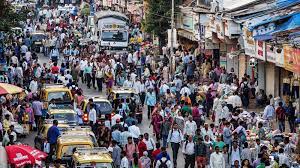
India is a over-populated country. It is the second most populated country in the world, after China. However, researchers say that India is all set to surpass China in population density by 2024. That means India is about to become the country with the highest population density across the world.

The population of India is increasing at an alarming rate. India is not the country with the highest number of people. There are countries which has more number of people than India like Russia. But they are not overpopulated. Those countries have enough space to fit in the number of people. India has more people than the country could fit in. The number of people residing in per unit square of land in India is much higher than that of other countries. This makes India an over-crowded country.

The huge population of India makes a lot of people live in poverty. The country’s economy is not enough to sustain its population. Adding to the problem, the country’s wealth is not equally distributed. The economic gap between the rich and the poor is widening. The major chunk of the country’s wealth is held by the rich and the powerful who are quite few in number compared to the country’s huge population. A large chunk of the population live below poverty line who do not have enough money to afford their meals thrice a day.

Also, the country does not have enough employment opportunities for all its citizens. This leads to unemployment, economic distress, stress and mental health problems. Unemployment increases the amount of crimes, theft and illegal business practices.

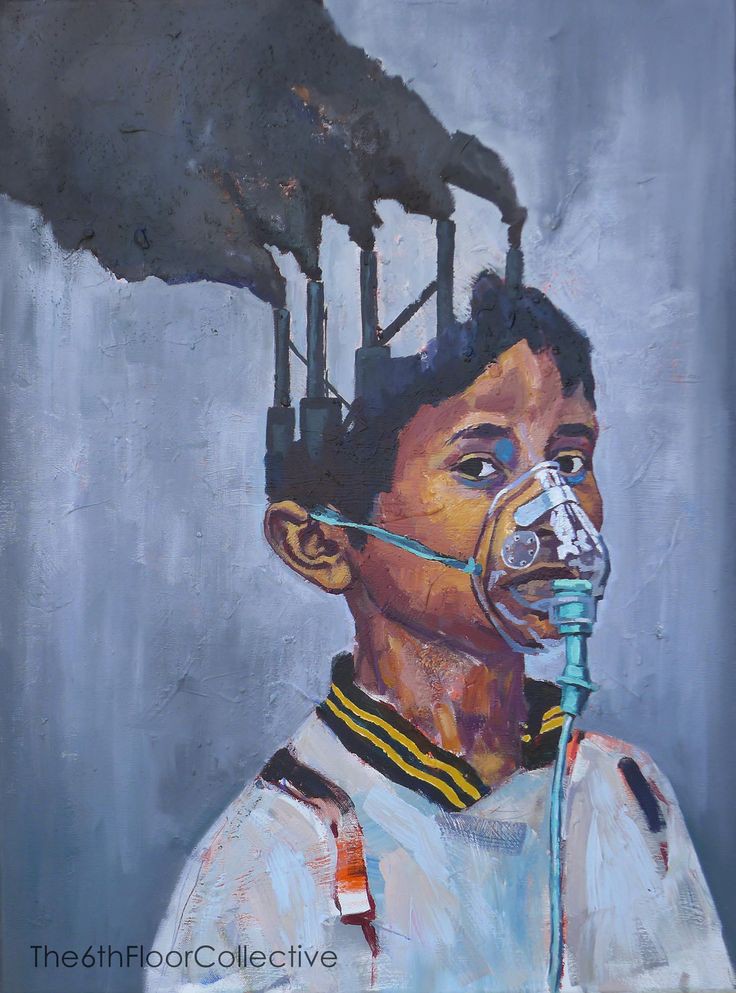
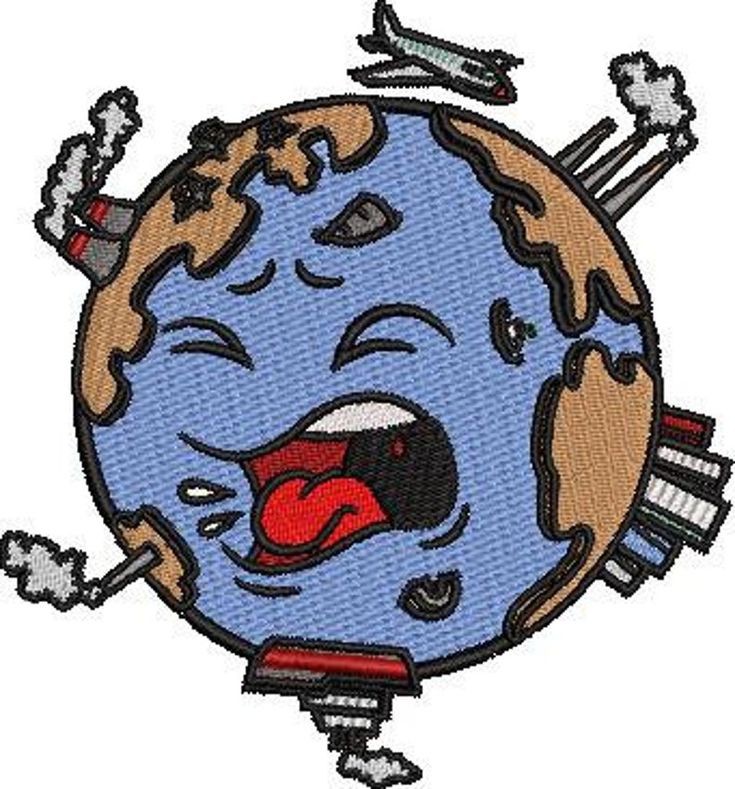
Along with wealth and job opportunities, India’s natural resources are also limited and not enough for its huge population. Over-consumption of natural resources would exhaust them and leave none for our future generations. Overpopulation is also a threat to our environment. The air and water bodies are becoming more and more polluted day by day. Too much burning of fossil fuels, congested roads and too many vehicles are releasing toxic gases in the air.

Accommodation is also a problem in India. Thousands of people live in slums which are over-crowded with unhealthy living conditions. More houses and buildings are being constructed which leaves no place for plants and nature. Forests are cut down to make room for construction projects. The cutting down of trees leads to increase in the level of carbon dioxide in the atmosphere.

Population explosion is a serious problem which needs to be addressed at any cost. The Indian population should be controlled to improve the lives of the people. Awareness drives and contraceptive alternatives should be adopted with immediate effect.

Is it the end or the begining of new era.

“Everything that has a beginning has an ending. Make your peace with that and all will be well.” ~

Jack Kornfield

Life is not always meant to fill with bliss and happiness . It also has its demon and darkness . And we are unable to understand the consequences that can be happen in future .

This is what we are facing now and it’s popularity is all over the world . Well well .. we all met the celebrity i.e., known as “ CORONA VIRUSE ”

Yes yes I know how much amazed we all were when we get to know about it . The excitement leads to the death of 1/4 of a population . Let’s move on from the gossip girls .

“But you are involved in the world, and your actions have consequences for other people, and if you don’t recognize that, then that’s the supreme kind of cruelty. Everyone shares someone else’s fate to some extent.” ~

Malcolm Bradbury

Like a gentle men he is . Malcolm has distracted us from the main theory that is “ Every action has equal and opposite reaction ”

From the past decades , census has been directly pointing out the deterioration in Nature . It leads to the extinction of wild life . More than one million of species had been reportedly facing problem and extinct .

So what do you think . Is it a revenge that nature is taking in the form of corona virus ?

Or

Is it a lesson to the human kind for playing with the nature ?

Well in both questions we get one thing clearly that is human kind has to pay .

Based on the report by WHO more than 3.3 million people died due to COVID19 in January . Their are “excess death” of people which caused mass havoc in the mind of the people all over the world .

So where were we virus , death , human kind , extinction . Ohh yeah now I remember we were talking about the hate of nature for human beings . Ops , sorry . Don’t mind sometimes I just flow with sentiments .

Well , yeah we were talking about the devastation in the human world by nature .

I am not a socialist or a misanthrope . I loved nature as much as you do . But what we didn’t understand is that how much we hurt our environment . And when we come to the realisation .

It’s being like OJO run his lovely Siren on MOJO . What , who is Siren . Siren is OJO’s favourite truck . Yeah I know I am very funny .

Reality hits us with the truck in the form of COVID .

I really do talk about COVID in this editorial rather than I used in my daily life .

We need to recreate our life in the form that It will not harm the nature . I know it’s a tough time to speak about this but until we will not stop ourselves for our wrong doing . It will come back to us and hit it with the force that no human kind can protect themselves from the destruction.

Embrace a new perspective.

Let move together to the new world where we can live with nature

This given editorial is written under one’s perspective. I am not judging anyone’s decision . You have youern own perspective and i am standing with that .

Indian festivals!

Festivals in India are celebrated in many parts of India, as India is subdivided into different Linguistic States. The local Government in each State also specifies certain festivals, in addition to Central Government festivals and holidays, depending on the local population which have elected them.

INDIA

INDIA
Festivals of India


Festivals in India
Festivals in India are celebrated in many parts of India, as India is subdivided into different Linguistic States. The local Government in each State also specifies certain festivals, in addition to Central Government festivals and holidays, depending on the local population which have elected them.

India is a multi-cultural country
India is a multi-cultural country, and it is reflected in the Festivals of India: Festivals of India is about various social, religious, and national festivals celebrated in different parts of India. India has been rightly described as a sub-continent and of its major festivals, many are region-specific festivals too. There are many festivals which are celebrated as national festivals; while a number of them are celebrated by members of particular religious or social groups. India is a land of festivals. These Indian festivals bind all Indians together of different castes, religions, etc there is no discrimination while celebration. When there is no discrimination then it is called INDIA.


The major festivals are from religious groups as under:


Diwali or Deepawali
Dussehra
Raksha Bandhan
Krishna Janmastami
Ugadi
Maha Shivaratri
Ramanavami
Makar Sankranti
Holi
Pongal
Onam
Bonalu
Hanuman Jayanthi
Vasant Panchami
Thaipusam
Chaitra Navratri
Gangaur Festival
Mahavir Jayanti
Rath Yatra
Mahavir Jayanti
Guru Purnima
Ganesh Chaturthi
Maharishi Valmiki jayanti
Karva Chauth
Dhanteras
Govardhan Puja
Bhai Dooj
Eid-ul-Fitr
Muharram
Ramzan
Barawafat
Milad-Un-Nabi
Giaravahin Sharif
Hazarat Ali’s Birthday
Shab-e-Barat
Jamat-Ul-Vida
Id-ul-Zuha (Bakrid or Eid-Ul-Zuha)
Good Friday
Easter
Christmas
Losar
Buddha Purnima
Hemis Gompa
Ullambana
Guru Nanak’s Birthday Jayanti
Guru Govind Singh’s Birthday Jayanti
Guru Teg Bahadur’s Martyrdom Day
BaisakhiMJNJ

And many more! But this is the power of our Indian culture we celebrate all of the festivals together and happily.

The unheard cry of manual scavengers

Democracy is not merely a form of Government…It is essentially an attitude of respect and reverence towards fellowmen.”

The above words were uttered by an impeccable leader, who stood against colonisation bravely, Leader, ‘B.R Ambedkar’ Which is perfectly suitable for a cruel system of manual scavenging which still engages in a democratic country like India.

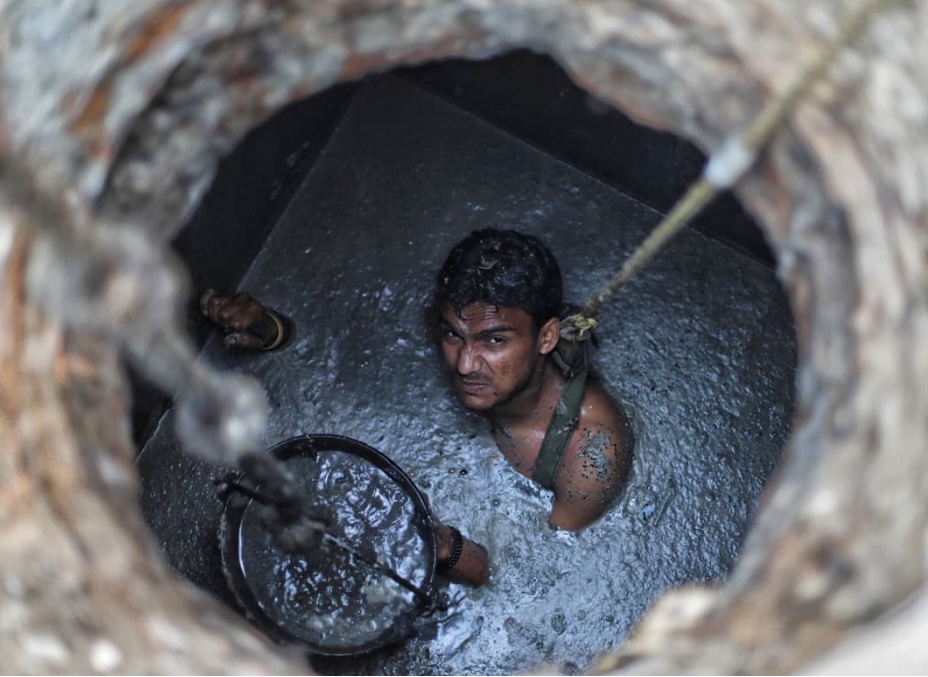
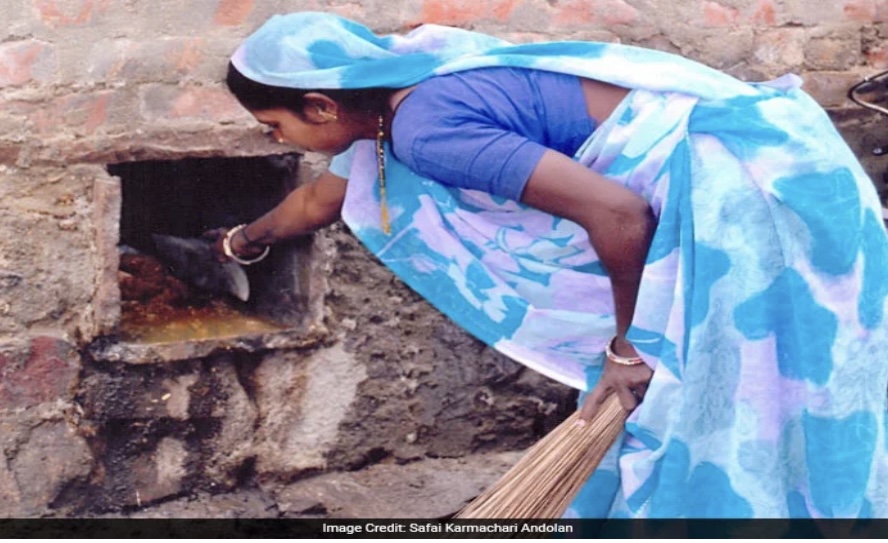
Manual scavenging is an inhuman act of making lower caste people clean drainages, public and private toilets and open drains which are contained with human excretion. As brutal as it sounds, this practice has been engaging since a very long period of time in numerous parts of south Asia, mainly in India.

The fact that this kind of malpractice is only said to be done by lower caste people who are termed as so-called, ‘untouchables’ is completely devastating. Lower caste people are designated as colonised and leveled at the very bottom of an hierarchical scale created by upper caste groups, for lower caste groups to do odd jobs like manual scavenging or cleaning human waste.

    This designation of lower caste people by higher caste groups, causes preconceived notions among individuals that they are ‘unclean’ and creates extensive bias perpetually.

The first initiative to restrict manual scavenging in India, was taken in 1993 by the Indian government in order to forbid employment of manual scavengers and construction of dry latrines. In fact ever since India’s independence in 1947, legislative assembly and government reinforced policies to end the practice of manual scavenging and therefore rationalisation of sanitising and prohibition of engaging any individual to practise manual scavenging was enforced to restrain disposal Human feces. 

Although numerous enforcement of acts against manual scavenging was initiated, due to lack of implementation of laws and lack of awareness among people, they remained manual scavengers. However, a survey reports that several women faced threats when they refrained from cleaning toilets in the households they served in order to gain for their families. As compensation for leaving, they were said to be evicted and lose access to the land and resources they own. It’s claimed that some women were threatened with violence when they turned down on manual scavenging.

Currently, a new amendment reinforced in 2021 adding to the 1993 act and 2013 act as a further step by demanding proper mechanisation and legal basis for punishment, if an individual forces a person to practise manual scavenging. Hoping for a vast improvement and change in deprivation of lower caste people performing jobs like manual scavenging at least after this new amendment brought by the Indian government against any kind of malpractice.

Few recommendations and suggestions to restrain manual scavenging

  • Strict laws to prevent people from practising such inhumane acts should be implemented.
  • Severe actions against members  threatening and intimidating people for refraining themselves from manual scavenging should be taken immediately.
  • Enforce amendments against free government officials who themselves hire people as manual scavengers.

No human is superior to anyone and human is inferior to anyone. In my opinion, I believe every human deserves reverence and basic human rights to live peacefully. Nobody deserves to clean another human’s excreta and get treated in the utmost submissive state. The number of consequences caused by being in contact with human feces frequently is inevitable and creates numerous issues and diseases which are cruel. Deprivation of lower caste people by higher caste people is still engaging in many parts of South Asia for a long time. 

Anticipating a good democratic nation without zero discrimination and provision of equal rights to every individual.

World that lives inside : In consideration to Mental Health .

“There is hope, even when your brain tells you there isn’t.”

John Green

A great quote by a great person , yeah I also believe it but do you ? .

Who am I ? Am I gaining weight , what if people doesn’t like me ?

What will happen when I tell her I am depressed ?

How do I know I’m unwell ?

How do I react if my relatives finds out ? .


These are some questions that we asked ourselves in our daily life . 5Ws and 1H (Why , who , how , what , when, where ) . Aristotle used them as an element in order to distinguish vocabulary. And what we are doing. is we are using them to explain one’s personality ,distinguish them and then despise them .


That’s how it starts , THE MIND GAMEPLAY . We differentiate , we compare , we make fun of others , we got jealous , we take harsh decisions, we judge others and we ask ourselves that where I was wrong .

Then , we start to get depressed , cry , nervous – breakdown , anxiety and so on……. This cycle is more complicated than Ojo – mojo friendship . Just kidding …

Let’s get in the topic .

Yes , we are talking about mental health . Which most of us ignore more than advertisements on TV’s . Like I said doesn’t matter . But what matters the most is the ignorance of your own health .

In present scenario , mental health takes a major role world wide and our mother land India is not far behind .


As , the pandemic takes a harsh troll on people of all over the world . Others died due to the confined places , loneliness , family members death and anxiety attacks caused by lack of oxygen and also one of the important aspect of mental illness.

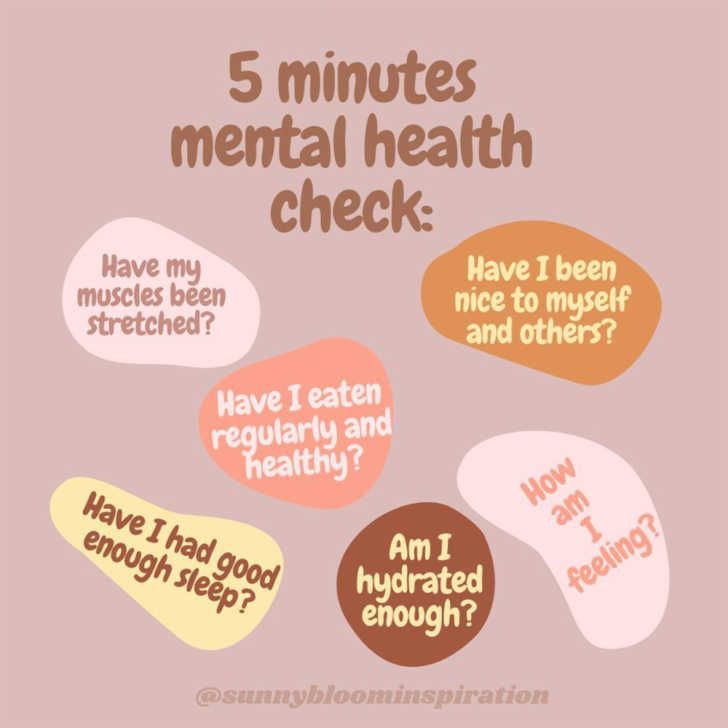
How we can check our metal health ? Are we mentally fit or not . Now , if you ask me I do have solution . And u want to know about one secret . It will only take 5 min. so now you don’t have to waste more time on search .


5 min. Mental Health Check :-

1. Have my muscles been streched ? 2. Have I been nice to myself and others?
3. Have I eaten regularly and healthy ?
4. Have I had good enough sleep ?
5. Am I hydrated enough ?
6. How am I feeling ?
And yes last but not the least be truthful to yourself .
And like this you get to know that you are mentally healthy or not .


Conclusion

Like physical health , mental health is equally important .
Small things can cause a lot of problems . So before things get out of your hands , grip it with a tight leash .

“You don’t have to control your thoughts. You just have to stop letting them control you.”

Dan Millman

Recent reports show an increase in number of the malnourished in India

According to the Center for Science and Environment (C.S.E.) State of India Environment Report – 2021, the corona epidemic has had a lasting impact on the health and economic conditions of 37.5 million children across the country.

CSE Director General Dr. Sunita Narayan, said that children from new-born to 14 years will have more health-related problems. There is a possibility of low weight of children, lack of physical development according to age and increase in mortality.

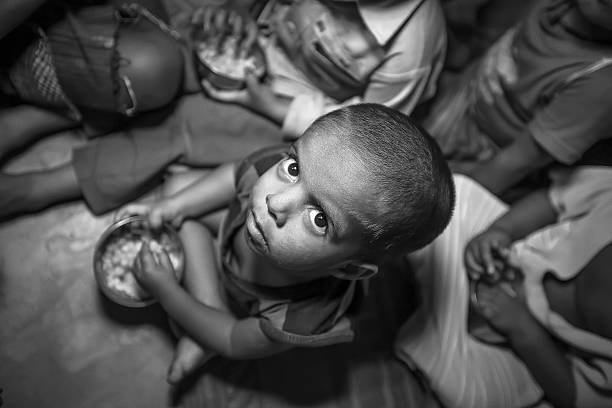
Child from a poverty stricken family gets a free meal at his school.The schools are run by some volunteer organisations or individuals and have inadequate facilities. Yet some people are working relentlessly to help these poor children.

One of the reasons could be India’s struggling with Covid-19 lock down interrupted crucial government schemes that benefit hundreds of millions of women and children. But that still doesn’t explain the rise in malnutrition rates in the years leading up to the outbreak of Covid-19 in 2020.

According to reports, India’s latest National Family Health Survey (NFHS), which shows that children in several states are more undernourished now than they were five years ago, is based on data collected in 2019-20. The survey was conducted in only 22 states before the onset of the pandemic – so experts fear the results will be much worse in the remaining states, where the survey began after the lock down ended.

In rural places the problem seems to have begun earlier. Rural areas have seen a steep rise in the proportion of undernourished children compared with 2015-16, when the last survey was conducted.

Due to malnutrition in infants and young children stunting in growth and even experience wasting away of muscle and anemia. The proportion of severely underweight children has risen. Stunting refers to lower than expected height for age, wasting shows lower than expected weight for height, and anemia is a deficiency of hemoglobin in blood.

Most of the Indian women are anemic and poor women, especially so. According to the experts, the worsening rate of malnutrition could be a result of women struggling to access nutrition benefits because undernourished mothers give birth to undernourished babies.

Migration to cities is also a reason for this. Many families migrate to cities to make a better living. But that also means being left out of massive government schemes that are mostly delivered at local level – so benefits aren’t easily transferred across districts or states.

The National Family Health Survey-5 report, the latest data set on health and nutrition, showed that of the 22 states and Union Territories in the year 2019-20, a majority reported an increase in malnutrition parameters such as stunting and wasting of children, anemia in children and in women between 15-49 years of age.

Due to poor health of children, there may be adverse effects on education and workplace too. This report released online, has been prepared by 60 environmental and other experts from all over the world. The epidemic forced approx. 50 crore children over all the world to leave school. More than 50 percent of these children are in India. Dr. Sunita Narayan said, “An additional 115 million people have come under extreme poverty due to the epidemic.” Most of them live in South Asia.

Given this situation, there is a need to enhance allocations for government schemes to address child malnutrition as well as for schemes promoting nutrition for pregnant and lactating mothers. A group of people should be assigned who provide health and nutrition counseling to pregnant mothers. Better health care and nutritious meals for the pregnant mother, because with proper pre-natal care, adequate food and timely health check-ups, a pregnant woman stays fit and gives birth a healthy child and for that there is a need for huge amount of investments. Different sectors of the government need to coordinate to handle this problem effectively. There are some independent organizations who are working actively to help the unprivileged sections of India and educating others about the problem and with enough funds and support from us maybe they can tackle with the problem more effectively.

Indian Economy

The economy of India is characterised as a developing market economy. It is the world’s fifth-largest economy by nominal GDP and the third-largest by purchasing power parity (PPP). According to the IMF, on a per capita income basis, India ranked 139th by GDP (nominal) and 118th by GDP (PPP) in 2018. From independence in 1947 until 1991, successive governments promoted protectionist economic policies with extensive state intervention and regulation which is characterised as Dirigism. The end of the Cold War and an acute balance of payments crisis in 1991 led to the adoption of a broad program of economic liberalisation. Since the start of the 21st century, annual average GDP growth has been 6% to 7%, and from 2014 to 2018, India was the world’s fastest growing major economy, surpassing China. Historically, India was the largest economy in the world for most of the two millennia from the 1st until 19th century.

The long-term growth perspective of the Indian economy remains positive due to its young population and corresponding low dependency ratio, healthy savings and investment rates, and is increasing integration into the global economy. The economy slowed in 2017, due to shocks of “demonetisation” in 2016 and introduction of Goods and Services Tax in 2017. Nearly 60% of India’s GDP is driven by domestic private consumption and continues to remain the world’s sixth-largest consumer market. Apart from private consumption, India’s GDP is also fueled by government spending, investment, and exports. In 2018, India was the world’s tenth-largest importer and the nineteenth-largest exporter. India has been a member of World Trade Organization since 1 January 1995. It ranks 63rd on Ease of doing business index and 68th on Global Competitiveness Report. With 520-million-workers, the Indian labour force is the world’s second-largest as of 2019. India has one of the world’s highest number of billionaires and extreme income inequality. Since India has a vast informal economy, barely 2% of Indians pay income taxes. During the 2008 global financial crisis the economy faced mild slowdown, India undertook stimulus measures (both fiscal and monetary) to boost growth and generate demand; in subsequent years economic growth revived. According to 2017 PricewaterhouseCoopers (PwC) report, India’s GDP at purchasing power parity could overtake that of the United States by 2050. According to World Bank, to achieve sustainable economic development India must focus on public sector reform, infrastructure, agricultural and rural development, removal of land and labour regulations, financial inclusion, spur private investment and exports, education and public health.

Challenges faced by Indian Economy :

Indian economy faces many challenges that include Unemployment, Poor educational standards, Poor infrastructure, Balance of payments deterioration, High levels of Private Debt, Large Budget Deficit, Rigid labor Laws, Inefficient agriculture, Poor tax collection rates, Business difficulties, Inequality within regions.

Unemployment –

The causes of high unemployment and under-employment in India are subject of intense debate among scholars. A group of scholars state that it is a consequence of “restrictive labor laws that create inflexibility in the labor market”, while organized labor unions and another group of scholars contest this proposed rationale. India has about 250 labor regulations at central and state levels, and global manufacturing companies find the Indian labor laws to be excessively complex and restrictive compared to China and other economies that encourage manufacturing jobs, according to the economist Pravakar Sahoo.

Poor Educational Standards –

Modern education in India is often criticised for being based on rote learning rather than problem solving. New Indian Express says that Indian Education system seems to be producing zombies since in most of the schools students seemed to be spending majority of their time in preparing for competitive exams rather than learning or playing. BusinessWeek criticises the Indian curriculum, saying it revolves around rote learning and Express India suggests that students are focused on cramming. Preschool for Child Rights states that almost 99% of pre-schools do not have any curriculum at all. Also creativity is not encouraged or is considered as a form of entertainment in most institutions.

Poor Infrastructure –

Poor infrastructure is among the biggest hurdles facing the Indian government’s ambitious program, called “Make in India,” which aims to improve the nation’s manufacturing capabilities and support higher growth for generating employment. We believe corporate growth and investments can be hampered if the government fails to close the infrastructure deficit, which some experts estimate costs about 4%-5% of GDP due to inefficiencies. Infrastructure development can not only help remove some of these inefficiencies contributing immediately to economic expansion but also support stronger long-term growth.

Balance of Payments Deterioration –

The balance of payments of a country is the difference between all money flowing into the country in a particular period of time and the outflow of money to the rest of the world. These financial transactions are made by individuals, firms and government bodies to compare receipts and payments arising out of trade of goods and services. The balance of payments consists of three components: the current account, the capital account and the financial account. The current account reflects a country’s net income, while the capital account reflects the net change in ownership of national assets.

Inefficient Agriculture –

The Indian food distribution system is highly inefficient. Although India has attained self-sufficiency in food staples, the productivity of its farms is below that of Brazil, the United States, France and other nations. Indian wheat farms, for example, produce about a third of the wheat per hectare per year compared to farms in France. Rice productivity in India was less than half that of China. Other staples productivity in India is similarly low. Indian total factor productivity growth remains below 2% per annum; in contrast, China’s total factor productivity growths is about 6% per annum, even though China also has smallholding farmers. Several studies suggest India could eradicate its hunger and malnutrition and be a major source of food for the world by achieving productivity comparable with other countries.

Large Budget Deficit –

A budget deficit occurs when expenses exceed revenue and indicate the financial health of a country. The government generally uses the term budget deficit when referring to spending rather than businesses or individuals. Accrued deficits form national debt. The gap between the revenue and expenditure during the same period in 2019-20 stood at 61.4% of the budgeted target, according to data on the website of the Controller General of Accounts. India’s fiscal deficit target estimated in the Union Budget 2020-21 was Rs.7.96 lakh crore, or 3.5% of the gross domestic product.

Business Difficulties –

Controls on business creation also lead to poor infrastructure development. India started having balance of payments problems in 1985, and by the end of 1990, the state of India was in a serious economic crisis. The economic impact of the 2020 coronavirus pandemic in India has been largely disruptive. According to Nomura India Business Resumption Index economic activity fell from 82.9 on 22 March to 44.7 on 26 April.

Organic Farming: Beneficial for the farmers,For the ConsumersAnd to the Nature

Article by – Shishir Tripathi

Intern at Hariyali Foundation
In collaboration with
Educational News

In the present times with new inventions in the field of chemicals and agriculture various fertilizers have been invented and are sold to the farmers to be used in farms. Farmers use those fertilizers and get higher yields in the starting one or two years but after some years the fertility of the soil starts falling. At the end, the farmland needs more and more fertilizers and failing to provide fertilizers in high amount to the soil, the fields are left uncultivated and hence the lands turns barren.

But wait!, in this world of new scientific inventions, some people have found a new technique which will help the soil regain its lost fertility and stay fertile for some more years. Yes, the technique is Organic Farming. Though the name sounds somewhat scientific, in actual it is scientific but will not at all harm the soil but will maintain its fertility for many years.

Organic farming is an integrated farming system that strives for sustainability, the enhancement of soil fertility and biological diversity while prohibiting synthetic pesticides and antibiotics, synthetic fertilizers genetically modified organisms and other unnatural methods of growth.

When talking about fields or farms, growing different cops on the same farm at the same time will help the soil to have a balance of nutrients otherwise it happens that certain crops consume more nutrients from the soil and there are lesser nutrients for the crop grown in the other season. This method of farming different crops is known as polyculture. Planting a variety of vegetable crops supports a wider range of beneficial insects, soil microorganisms, and other factors that add up to overall farm health. Crop diversity helps environments thrive and protects species from going extinct.

Secondly, the organic farming is concerned with management o soil. The soil loses nutrients each time a crop is grown on it, so for regaining those nutrients, compost, vermicompost and green manure can be used. These are environment friendly techniques having good impact on the soil for years. Also other techniques like crop rotation, crop covering, reduced tillage; intercropping and other similar techniques are needed to be followed for increasing the productivity of soil. Also crop residues can be ploughed once again with soil and will work as manure.

Thirdly, weed management on the fields is equally important. Weeds are those unwanted plants that consume nutrients from the soil and affect the growth of the crops. Removal of weeds from the fields is important so that the crop grown can grow in the soil without any hindrance in the process of consuming nutrients by unwanted plants of the other types. Weeds can be removed by introducing animals who do not consume the crop grown and just consume the weeds. Techniques like Mulching, flame weeding, thermal weeding, mowing and cutting, etc could be used for removal of weeds from the fields.

There are different factors other than weeds that affect the natural crop growth on farms like nematodes, fungi, bacteria, rodents, pests, etc. there are certain methods to remove such factors from the soil like introduction of beneficial insects for the soil against the harmful insects, using insect traps for capturing rodents, introducing good microorganisms for the soil, rotation of crops every season or using natural insecticides and herbicides.

Introduction of livestock onto the fields and providing them natural conditions to feed there and coming back again to their shelters in the evening. This nothing new but an old technique that was used by people in the past times as people had other work to do, they used to drop the cattle at the fields and go for other work. Also, before leaving the fields entirely for the cattle it must be ensured that whatever the cattle is eating it should be organic in nature, nothing else otherwise that will harm their health and overgrazing is also not done by the cattle.

And lastly composting is to be done by the farmers so that the crop gets its nutrients from time to time. Vegetable wastes, unwanted weeds removed from the fields and other dried leaves and the crop residuals are needed to be buried down in a pit and earthworms and red worms are introduced to decay it and these residual materials along with worms is covered by soil. The compost gets ready after three or four months and is very beneficial to the soil. Even some farmers call it as ‘Black Gold’.

In such way organic farming is done by the farmers along with keeping the livestock at the farms and exposing the fields entirely to the natural techniques that are important for the crop growth and helpful in maintaining the soil fertility. The crops, vegetable and the other products are really nutritious for human health. Therefore, people prefer Organic foods these days and the farmers too can get good amount for their produce.


All in all organic farming is really productive technique for the crops and the farms, a way of earning good income to the farmers and the only way for the consumers get naturally produced and nutritious foods.

Cooperatives: Providing Livelihood to people and empowering them with new jobs, new roles and new opportunities

Article by – Shishir Tripathi
Intern at Hariyali Foundation
In collaboration with
Educational News

In the present day times, where a virus is killing lives and people losing jobs each day, it is really important to have some skill, some qualification so that the contribution of an individual to the firm, to the organization or to the government cannot be ignored and the jobs are maintained like the previous times. But creation of new jobs is a slightly difficult thing at present and starting a business all on own is risky too. Now what next then?

This problem is being faced by most of the youth at present in India. To overcome this problem creation of Cooperatives by people can be a very great option. Cooperative society or Cooperative is an association or a group created voluntarily with the aim of fulfilling the common interests of its members.

One can easily decode cooperative as simply a group that is being created by people of similar interests or occupation that come together and start a new venture collectively.

People in many parts of India have come together at the local level and are running cooperatives together and earning good amount of income.
Starting a cooperative society is not so difficult task. According to Societies Act, 1860 a minimum of 7 people can form a cooperative.

For creating a cooperative, a proper mutual understanding between its members should be there regarding the work to be done, contribution of each member into the work done and other investments, distribution of profit after the work between the members and many more issues having a possibility of arising conflicts between the members of the society.
Cooperatives are different from other businesses because they function more for the benefits of their members rather than just earning profit for the investors.

Cooperatives are organized to provide competition, reducing costs, improving the bargaining power, expand new and existing market opportunities, improve product or service quality or both, and obtain unavailable products or services (those products or services that profit-driven firms don’t offer because they consider them as unprofitable).

In Businesses, the share of the person who has invested to the highest amount in the profit is highest. But in Cooperatives the profit earned is distributed among its members as per their contribution in the work or in the production process.


In the process of setting up of a cooperative, a core committee should be formed to represent the cooperative and those members who are good at a particular skill which is required for the growth of the cooperative.

Secondly, a proper study regarding the market should be done so that whichever product or service will be provided by the Cooperative, it gets its consumers in no time it arrives in the market.

All cooperatives have to be incorporated under the appropriate state statute. Selecting a legal counsel to draft or review the articles of incorporation and bylaws is equally important. A cooperative can start out with very basic bylaws and just refine them after developing the business plan.

Lastly, creating a proper plan regarding the techniques for efficient product of goods to be manufactured or following efficient ways to provide the services is important during setting up of a Cooperative. And also, it should be decided that how and when the services of the cooperative will be expanded in order to meet the demand requirements and overall well being of the members of the group.

There are many such examples of Cooperative societies in India that started from scratch and reached to a very high level in future not only across state borders but International borders too. Amul is one such example from India that started from the state of Gujarat in 1950 and is at the present the largest milk cooperative in the world. Amul is owned by 3.6 million milk producers and produces 4.5 million litres of milk per day with an annual turnover of more than 52,000 crores.


Another cooperative from Mumbai known as Shree Mahila Griha Udyog popularly known as Lijjat Papad brand created with the objective of empowerment of women by providing them employment opportunities. With total 43000 members all across the country, it has an annual turnover of more than 801 Crores producing Papad, soaps and detergents, Masale (spices), Gehu Atta (wheat flour), bakery products, Khakhra, Appalam, Chapati,etc.

Therefore people should talk about their interests and mission and collaborate together in the form of cooperatives and can work together and earn their livelihood and good profits by the means of production and various other services.

This needs to be read by every individual who’s not having job, or has lost his or her job, or fears to start a business all alone. Cooperatives will help people get stable income and overall prosperity to the locality, to the nation and obviously to the person who is working and his or her family too.

Agricultural Marketing; a boost for Agro-Products and their contribution towards G.D.P.

Article by – Shishir Tripathi
Intern at Hariyali Foundation
In collaboration with
Educational News

For an Agrarian Economy like India, the agricultural sector should contribute more than any other sector in the Gross Domestic Product (G.D.P) but even after being an occupation of almost 55 -60% of people, agriculture is contributing just 15 – 20% in the G.D.P. Being an occupation of such a large group of people and still minimal share in the G.D.P. of the economy means that there are certain limitations which are needed to be overcome.


The biggest limitation is that the agricultural products right from the simple wheat to a produced wheat bread, there is absence of proper agricultural marketing.

Now, when one uses this terms agricultural marketing, he or she is simply referring to an organized process of planning, organizing, directing and handling of agricultural produce in such a way as to satisfy the farmers, intermediaries and consumers. It involves numerous inter connected activities like planning production, growing and harvesting, grading, packing and packaging, transport, storage, agro and food processing, provision of market information, distribution, advertising and sale.

Agricultural marketing is based upon the idea of reducing the distance between the farmers (producers) and the consumers. It is a broader concept not just limited to villages and small towns but across the International borders too. Planned agriculture which comes under agricultural marketing is important so that whatever crop is produced it meets the demand of the consumers in the form of finished products. It aims in such a way that there is neither a situation of excess supply or excess production (that is just left uncared without good storage facilities) nor a situation of excess demand.

It also includes growing and harvesting of crops paying extra attention towards the techniques followed in the production process and efficient use of land and human resource along with technological resources too.

Grading is also done amongst different types of harvested crops and other agricultural products so that different types of products are available to different types of consumers with different requirements and available financial resources.

After Grading, the product is needed to be packaged in such way that it must be appealing to the consumers including use of different images and colors, and involving the details of the ingredients and the nutritional value of the product. Packaging the products in such a way that they must last longer and can be stored as well at the stockrooms and at consumers’ place as well.

Storage facilities are needed to developed by the government and other concerned authorities so that whichever good is produced in ample amounts, it can be stored for future without any degradation in the quality of the product due to insects, rats and other factors like moisture, rain, heat, etc.

Various researchers are trying to study markets and find the idealistic market structure for people living in villages and small town. The emphasis to markets is given in such a way that they meet the requirements of all the people living in that particular area.

Also, the transportation facilities are needed to be facilitated properly and should be made available to the producers in the remote areas of the country. The transportation costs must be affordable so that every producer willing to transport his produce or product should not stop himself or herself in being a part of this long chain and enjoying the benefits after the final sale of the produce or other agricultural products.


Now the most important of all is branding and advertising. Even if any other foreign firm or domestic firm is willing to sell the product under its label then also proper advertising should be there for the given product through Television ads and promotions through social media on various Apps. Advertising should be done in such a way that the product should look so appealing to the consumer and an urgent feel of purchasing the concerned product should be felt by the consumer after watching the advertisement. The buyers must feel that how important the product is to them in their daily lives after watching the product’s advertisement.

And the market for the product is again very important whether the product is sold online through e-commerce sites or is sold by various outlets in the cities and towns. A well managed system is needed so that the good that is sold to consumer is of the best quality and a justified price and the producers along with the intermediaries involved in this long chain are satisfied and get their share after the sale of a good.

Agro products not only include crop produce and other products manufactured from those crops but also the products produced by the people at local level such as milk from cattle, honey from bee-keeping, etc.

Such mechanisms will increase the share of primary sector in the G.D.P. The state and the central governments should make provisions and provide incentives to the producers and the intermediaries for developing such a fruitful mechanism that will be giving good returns to the country as well in the form of overall growth of people in remote areas and prosperity of the nation too.

Yoga : Morning breakfast and Evening supper to the Body and the Soul

Article by – Shishir Tripathi

Intern at Hariyali Foundation
In collaboration with
Educational News

In the present times, everyone is just running all the time. Whether the person works in an office, or he or she is a home maker or a student too, everyone is so busy in their daily schedule that hardly few people extract time for their physical and mental self. Along with advancements in the field of technology, there are advancements in the diseases too. New diseases are taking birth and troubling the humans.


Individuals post on social media and say ‘Back to Basics’, without even knowing its true meaning. People think that being back to basics means that living a life in a remote area and eating the forest products. But returning to basics in true sense means living in the same surroundings and adopting the good techniques in life to make it disease free and simple too.


For the Indian people, from the ancient times ‘Yoga’ was a very good way to explore the inner self and finding peace of mind. But, the mentality of the people is just going to an air conditioned gym and spending huge amount of money on gym and the protein supplements. Whereas, Yoga is such a simpler exercise that anyone can do it at their place just with a mat beneath them and some time.


Yoga evolves from the Yoga Sutras which were written by Patanjali. Patanjali was a sage in India who is the author of many Sanskrit works including the most important, The Yoga Sutras. The Yoga Sutras of Patanjali are a collection of 196 Sanskrit sutras (aphorisms) on the theory and practice of Yoga. The Yoga Sutras were compiled sometime between 500 BCE and 400 CE by Patanjali in India who synthesized and organized knowledge about yoga from much older traditions.


Swami Vivekananda was the first person to promote and encourage Yoga at the global level. He published a book called ‘Raja Yoga’ in America in 1985 where he wrote about the productivity and the benefits of yoga for an individual. He took references from the Patanjali Yoga Sutras and told the world about the physical, mental and spiritual influence of Yoga in an individual’s life.


Doing Yoga practices early in the morning at the time of sunrise or after it and in the evening too is so beneficial for the body. Asanas in Yoga helps to cure Vata, Pitta and Kapha defects of the Human body. In the physical body, Vata is the subtle energy of movement, Pitta the energy of digestion and metabolism, and Kapha the energy that forms the body’s structure.
The most beneficial Yoga Asana is the Surya Namaskar (Sun Salutation). Under this asana, different other asanas like Pranamasana, Hasta Uttanasana, Hasta Padasana, Ashwa Sanchalanasa, Chaturanga Dandasana, Ashtanga Namaskara, and Bhujangasana. Various other Asana in yoga like Kapaalbhati, Anulom-Vilom, Brahmari,etc which are so helpful for the body.


There are various videos of Yoga teachers teaching Yoga Asanas on Youtube and there are students too pursuing graduation and post graduation in yoga who teach it to others around them. Practicing Yoga and doing it daily afterwards all by self will help an individual to get rid of different types of physical and mental disorders. There is OM chanting too in which the Yogi (person doing Yoga) chants OM, in which there is a practice of breathing along with acquiring spiritual peace at the same time.


At present, the most influential promoter and the best instructor of Yoga is Swami Ramdev. Swami Ramdev is instructing people Yoga in India and all across the globe since 2002. He is the co-founder of the Patanjali brand producing different Ayurvedic products that are useful for the Human body.


Yoga is being practiced by children right from the age of 3, and also by the elderly people of age 65-70 and even more. It is a symbol of Indian culture as it evolved from India. Indians should necessarily know that what Yoga is and how it is performed. It is the reason behind the sharp mind and a healthy body. Not only children, middle aged people and elderly people but the younger generation which is contributing each day a lot in the economy, should practice Yoga each day so that they can tell this precious art to the future generations.

For a sound body, sound mind and a sound nation, Yoga is the only solution”

Rainwater Harvesting : A Technique of great help to Indian Farmers

Article by – Shishir Tripathi
Intern at Hariyali Foundation
In collaboration with
Educational News

The Indian economy is basically an ‘Agrarian Economy’ that implies that most of the country’s working population depend upon agriculture for their livelihood. Relying upon the figures, it’s noticeable that almost 60-65% of the Indian workforce is engaged in agriculture. Being an occupation for such a large group of people in the country, agriculture in India still has a lot of problems and challenges in it.


The primary problem is the problem of irrigation. The villages and farms located near river banks and big canals are the ones who hardly face this problem of irrigation. As of June 25, 2019, nearly 65% of the country’s reservoirs were running dry. One of the worst affected areas has been the west-central state of Maharashtra, where six of the 17 reservoirs are dried out.


There are not just big farmers in the country of India. Here in India, there are tenants who work on the farms of others and those farmers too who have just a very small patch of land which they cultivate for their livelihood. Small farmers in India don’t have financial resources to get access to techniques like Drip Irrigation, availability of own tube wells, etc. Many a times, it happens that the farmers have to either take loans from moneylenders at high rates or just leave the farms parched.

The partial solution to the problem of water scarcity and the irrigation is Rainwater Harvesting. Rainwater Harvesting is simply the process of collection and storage of rain, rather than allowing it to run off freely into drains. Rainwater is collected from a roof-like surface and redirected to a tank, cistern, deep pit (well, shaft, or borehole), aquifer or a reservoir with percolation.


Now moving ahead from the ideal definition stated from Wikipedia, in reality people just have to go for a roof like system above their houses and the roofs of their dried tube wells. In this system of Rainwater harvesting, the water from the first rain showers is drained of and the rest of the water is collected. The water gets collected in a big tank throughout the rainy season and is used afterwards.


The rainwater being the purest form of water can even be used for purposes of drinking, cooking, bathing, etc. Some people collect the rainwater in underground built tanks of depth 10 -12 feet and in hotter regions like Rajasthan people collect rainwater in big rooms adjacent to the living rooms. As the water filled tanks (rooms) are just attached to the normal living rooms, it gets so cooler and pleasant in hot summers. Big tanks can be built later in future after seeing the amount of rain in the first year of trying rainwater harvesting. Farmers can use the same water for irrigation purposes too.

Though, some crops require more water but the technique of rainwater harvesting will really help the farmers to a very great extent. Government should think about providing some subsidies to the poor farmers for building some tanks like this for saving the precious rain water.

First of all it will be an ecofriendly technique and secondly a cost saving technique too.
People living in the regions of North – East have adopted the similar technique for saving water. There are pipes built from bamboo that are used to supply water from one place to another. The tanks are built at the bottom of the hills; these are community tanks built by all the villagers together. The walls and the floors of the tanks are plastered with paddy husk to avoid seepage of water and later whenever the tank gets empty the soil and the silt at the base is used as manure by the farmers.


Similar Environment friendly techniques are needed to be promoted and implemented in other parts of India so that the farmers should not suffer from problems like scarcity of water. And also there should be techniques for the storage of water that gets logged in towns and villages. The same water should be treated and used for recharging the ground water resources which are getting empty by each passing day.


Therefore, the shift towards eco-friendly techniques like Rainwater Harvesting will give sustained prosperity in the field of Agriculture.

Unemployment : A problem that largely multiplied after the advent of Corona Virus

Article by – Shishir Tripathi
Intern at Hariyali Foundation
In collaboration with
Educational News

An individual for living a life with pride and respect with a roof above the head and Food on the dining table, a steady employement is required. But after the arrival of Covid19 into the scenario the whole situation has been changed and the virus has affected a lot of bindividuals’ livelihood to a very great extent.

The economy was suffering since the slowdown which came into the country after the year 2018-19. The automobile sector wasthe kne which was affected to the maximum extent.  Sales were low and the market was lesser and lesser demand from the marketside and as a result after the end of the fiscal year, a lot of inventory was left with the automakers.


India’s automobile industry accounts for 49% of the country’s manufacturing GDP, and it directly and indirectly employs 37 million workers. According to the Society of Indian Automobile Manufacturers (SIAM), 3, 50,000 jobs (mostly contractual) have been lost because of this slowdown and over a million are at a risk due to plant shutdowns and bankruptcy of dealers and component makers.


The services sector is the largest sector in India. The services sector accounts for 53.66% of total India’s GVA of Rs. 137.51 lakh crore. The industrial sector is at the second spot and contributing around 31% of the Indian GDP.


As many as 41 lakh youth in India lost jobs due to the Covid-19 pandemic with most job losses in the construction and farm sector, according to a joint report by the International Labour Organization and the Asian Development Bank.
Youth will be hit harder than adults (25 and older) in the immediate crisis and risk bearing higher longer-term economic and social costs, said the report.

There are job disruptions in the form of reduced working hours and earnings, and job losses for both paid workers and the self-employed; disruptions in their education and training; and difficulties in transitioning from school to work, and moving between jobs in a recession.


Data from the Centre for Monitoring Indian Economy (CMIE), an independent body that measures and tracks economic indicators, has said that salaried jobs took a big hit during the COVID-19 lockdown, with the total loss estimated to be at 18.9 million during April 2020-July 2020.


The plight of salaried employees has worsened since the lockdown, with a loss of 17.7 million salaried jobs in April, additional 0.1 million jobs in May, followed by a gain of 3.9 million jobs in June and then again a loss of 5 million jobs in July.


Salaried job loss are very rare, but once lost they are further so difficult to be retrieved again. Another report says that salaried jobs were nearly 19 million short of their average in 2019-20.


As per the World Economic Forum (WEF), the Coronavirus pandemic is putting up to 50 million jobs in the global travel and tourism sector at risk. Of the 50 million jobs that could be lost, around 30 million would be in Asia.

Data from bloombergquint.com, timesofindia.com and theeconomicstimes.com

Moving ahead from the data of organized sector, there’re huge job losses in the unorganized or informal sector where there are no regulations, no rules and hence no correct data. Over 122 million people in India lost their jobs in April, according to estimates from Centre for Monitoring Indian Economy. Around 75% of them were small traders and wage-labourers. Local manufacturers previously also were not in a very good state because of big foreign producers availing goods at cheaper prices, but after the lockdown and the corona virus, their condition have turned to be even more inferior.


Small street food sellers, vendors who generally earn on daily basis, without savings and without sale have shut down their small business and are in a very bad state prolonging to have some credit and start the business again.


Even after introduction of various budgets and relief funds by the department of finance but still, daily wage labourers, and the small businesses are still suffering. Though the relief funds and other budgetary measures are taken by the government but this help is not reaching to the people at the root level. Proper disbursement of financial help directly to all the concerned groups should be there and the benefits of the schemes and other employment generation programs should reach to every sufferer.


Cumulative efforts by the government and other bodies will help the working population and various business to grow again and retaining their same positions like earlier in comparatively lesser time.

Healthy Human Resource and A Healthy Economy

Everyone is talking about GDP growth rate, national income, total debt, international economic transactions, fiscal deficits, production rate, raw materials and what not. But an economy is driven by its citizens, the population – who in actual are contributing each single moment for their economy. An individual can be an asset for an economy only when he or she is healthy.


Now, when one talks about health it not only includes physical health but mental health too. According to World Health Organization, Health is a state of complete physical, mental and social well-being and not merely the absence of disease or infirmity.


An individual contributes a lot in the economy. He works in fields, he is in the production department, he is the one building the infrastructure of an economy, he is the one undertaking all the financial transactions, he is the one who frames economic policies, he’s in the service sector and hence he is the backbone, the brain or simply the driver of an economy.


An economy can only function properly when its population is physically, mentally and socially fit. But in the present times, there are few economies who give emphasis to mental and social health of its working population. Nobody cares about the mental well being of an individual. Firms and economies just want their employees and the working population to achieve the desired goals before the deadline. Whether the individual coming to the office, to the factory, to the workplace is fine or not, he or she is happy or not, nobody cares about it.


The policy makers, or more particularly the employers and hirers must ponder upon the thought that a physically healthy and mentally happy individual will be in much better state to contribute more to the firm, to the economy.


Though, for the sake of earning money for a two square meal and a roof above head, even being in a bad mood, sad state , he or she will definitely do the work being assigned but still every rational thinker knows that an unhealthy person cannot contribute more than a healthy person.


Whether someone is unhealthy physically or mentally, he or she will really not be able to work properly and will certainly exhaust him or her even more.

An economy, a firm exists solely because of its working population, the Human Capital. And if that human capital is not fit, how could one say that an economy is fit.


That’s certainly a very big question to the employers, hirers, the firms and the economies.


According to the latest report on depression and anxiety, issued by the World Health Organization, the total estimated number of people living with depression worldwide increased by 18.4% between 2005 and 2015 to 322 million. A major share of this group is the working population itself. Hence, this is fact that certainly these people could not give their hundred percent to the work being assigned to them.


Talking about India will make the situation clearer. According to a study conducted by W. H. O., around 200 million in India may suffer from depression i.e. one out of every five people is not mentally well.


The reason for not being in good mental state could be work pressure, financial problems, family matters, personal matters, addiction to drugs or a bad habit, or hormonal imbalance sometimes.


Realizing the growth of increasing mental health problems among the working population due to number of reasons, firms and economies should take necessary steps including promotion of healthy working environment and separate interactive counseling classes in which individuals can speak their heart out and share their problems with either professionals or their own colleagues. This will help people to be more free and happier and arise out of the ocean of sadness, depression, loneliness.


It will help in building better personal relationships with the colleagues, with family, with friends and with everyone else.


Therefore, a happier and healthier brain will be in a much better state to build a prosperous and healthy economy.

Article by – Shishir Tripathi
Intern at Hariyali Foundation in collaboration with Educational News

GDP: Why India’s growth rate is shrinking rapidly?

India’s economy posted the biggest contraction among major economies last quarter, with a recent surge in coronavirus infections weighing on the outlook for any recovery.

Gross domestic product shrank 23.9% in the three months to June from a year earlier, the Statistics Ministry said in a report Monday. That’s the sharpest decline since the nation started publishing quarterly figures in 1996, and was worse than any of the world’s biggest economies tracked by Bloomberg. The median estimate in a survey of economists was for an 18% contraction.

Once the world’s fastest-growing major economy, India is now on track for its first full-year contraction in more than four decades. While there are early signs that activity began picking up this quarter as lockdown restrictions were eased, the recovery is uncertain as India is quickly becoming the global epicenter for virus infections.

Economists had anticipated the economy shrinking anywhere between 15-25% while an ET Now Poll projected Q1FY21 GDP at -19% YoY.

As largely expected, agriculture was the only silver lining among all sectors as it grew by 3.4% in the April-June quarter.  

Manufacturing, construction and trade (hotels, transport, communication & services related to broadcasting) shrank by 39.3%, 50.3% and 47% during the quarter. Interestingly, governmetn expenditure during the quarter also contracted by 10.3% as per NSO figures.   

Let us find the reasons in this article that what are the reasons behind the decline in the Indian GDP

1. Sharp decline in overall demand:

Increment in the employment opportunities leads to further demand of the other products in the economy. Since last few months Indian economy is facing the problem of lower demand which ultimately trapped the whole economy.

2. Sharp fall in consumption

Consumption has accounted for 55-58% of GDP. Remember consumption is at the core of domestic demand in India. Indian economy experienced a sharp decline in private final consumption expenditure from 7.2% in the March quarter to 3.1% in the June.

3. Decline in investment

The value of declared investments in the same quarter is Rs 71,337 crore, which is also the lowest since September 2004. This is a big indication that industries are not yet confident in India’s economic future.

4. Poor condition of banking sector

The recent announcement of the mergers of the banks may further create the atmosphere of anarchy in the mind of the investors and depositors.