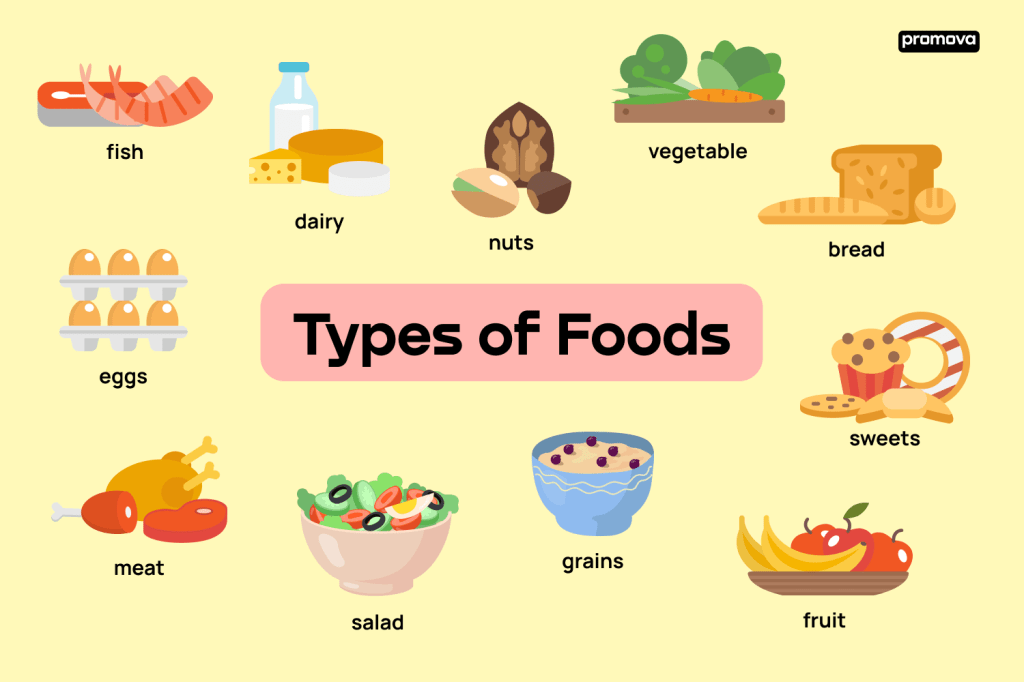
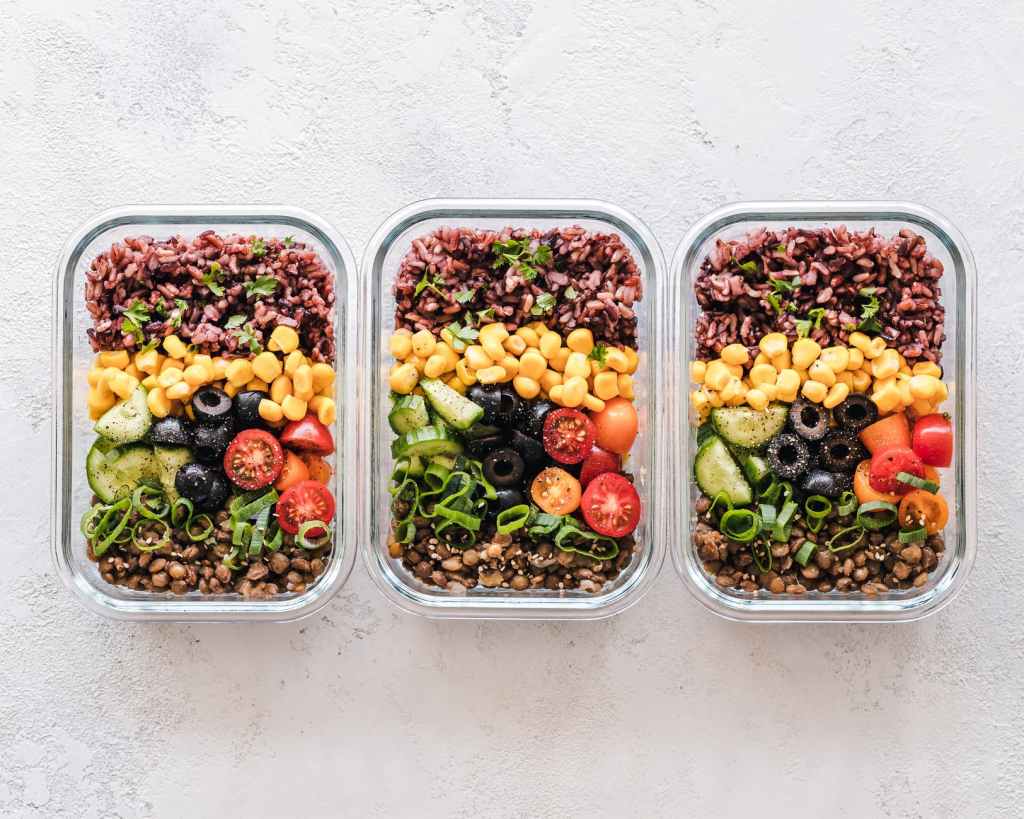
Types of Foods: A Detailed Overview

🍽️ Types of Foods: A Detailed Overview

Food can be classified in various ways depending on nutritional content, source, and function. Below is a comprehensive breakdown:


1. 🌾 Cereals and Grains

  • Description: Staple foods rich in carbohydrates, providing energy.
  • Examples: Rice, wheat, maize (corn), barley, oats, millet, rye, sorghum, quinoa.
  • Uses: Basis for bread, pasta, noodles, breakfast cereals, and baked goods.
  • Nutritional Value: High in carbohydrates, moderate protein, some vitamins (B-complex) and minerals.

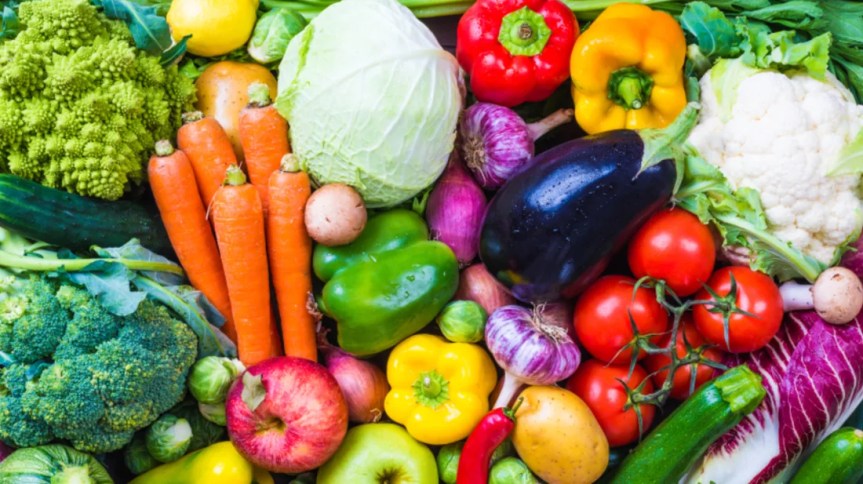
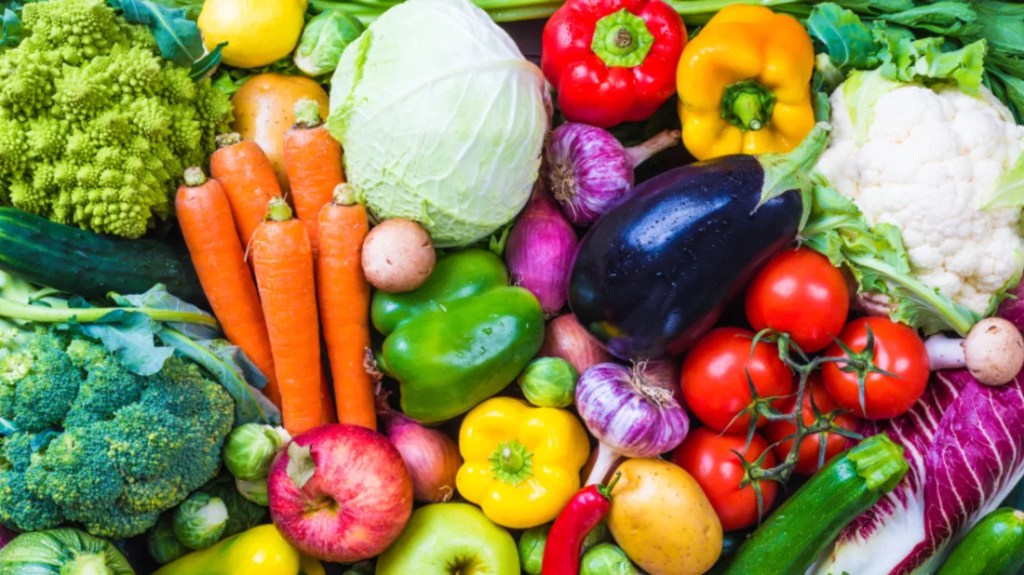
2. 🥦 Vegetables

  • Description: Edible plant parts such as roots, stems, leaves, flowers, and tubers.
  • Examples:
    • Roots & Tubers: Carrot, beetroot, potato, sweet potato, yam.
    • Leafy Greens: Spinach, kale, lettuce, cabbage, fenugreek.
    • Other Vegetables: Tomato, cucumber, broccoli, cauliflower, brinjal (eggplant), okra.
  • Nutritional Value: Rich in dietary fiber, vitamins (A, C, K), minerals (iron, potassium), antioxidants, and low in calories.

3. 🍎 Fruits

  • Description: Edible fleshy products of plants, often sweet or sour.
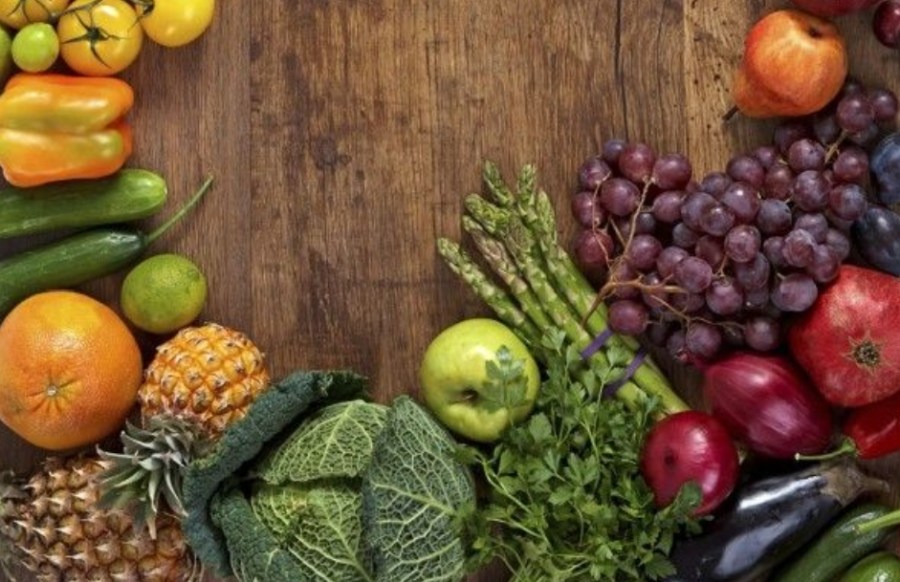
  • Examples: Apple, banana, mango, orange, grapes, pomegranate, papaya, watermelon, berries, pineapple.
  • Nutritional Value: Source of natural sugars, vitamins (especially vitamin C), minerals, fiber, and antioxidants.
  • Types:
    • Citrus fruits (orange, lemon)
    • Stone fruits (mango, peach, plum)
    • Berries (strawberry, blueberry)
    • Tropical fruits (banana, papaya, pineapple)

4. 🥛 Dairy Products

  • Description: Foods made from milk and milk derivatives.
  • Examples: Milk, yogurt, cheese, butter, cream, paneer (cottage cheese), ghee.
  • Nutritional Value: Rich in protein (casein), calcium, vitamin D, vitamin B12, fats, and probiotics (in fermented dairy).

5. 🍗 Meat, Poultry, and Seafood

  • Description: Foods derived from animals and birds.
  • Examples:
    • Meat: Beef, pork, lamb, goat.
    • Poultry: Chicken, turkey, duck.
    • Seafood: Fish (salmon, tuna, cod), shellfish (shrimp, crab, lobster).
  • Nutritional Value: Excellent source of protein, iron, zinc, vitamin B12, and omega-3 fatty acids (in fish).

6. 🥚 Eggs

  • Description: Highly nutritious food from poultry birds, primarily chicken eggs.
  • Nutritional Value: Rich in protein, vitamins (A, D, B12), choline, minerals, and healthy fats.

7. 🥜 Legumes, Pulses, and Nuts

  • Description: Plant-based protein-rich foods.
  • Examples:
    • Legumes/Pulses: Lentils, chickpeas, kidney beans, black beans, peas.
    • Nuts: Almonds, walnuts, cashews, peanuts, pistachios, hazelnuts.
    • Seeds: Sunflower seeds, flaxseeds, chia seeds, pumpkin seeds.
  • Nutritional Value: High in plant-based protein, fiber, minerals (magnesium, iron), healthy fats, and antioxidants.

8. 🥥 Oils and Fats

  • Description: Foods that provide concentrated energy and essential fatty acids.
  • Examples: Vegetable oils (olive oil, sunflower oil, soybean oil), butter, ghee, coconut oil, animal fats.
  • Nutritional Value: Source of essential fatty acids, vitamins A, D, E, K, and energy (9 kcal/g).

9. 🍫 Sugars and Sweets

  • Description: Foods high in refined sugars, often used for taste and quick energy.
  • Examples: Sugar, honey, jaggery, chocolates, candies, desserts, pastries.
  • Nutritional Value: Provide quick energy but low in vitamins and minerals (“empty calories”).

10. 🍵 Beverages

  • Description: Liquids consumed for hydration, refreshment, or nutrition.
  • Examples: Water, tea, coffee, fruit juices, soft drinks, milkshakes, soups, alcoholic beverages.
  • Nutritional Value: Varies—water hydrates, milk gives protein and calcium, tea/coffee provide antioxidants, while sugary drinks may add empty calories.

11. 🌱 Herbs and Spices

  • Description: Plant-based flavoring agents used in cooking.
  • Examples: Turmeric, cumin, coriander, cinnamon, black pepper, cardamom, ginger, garlic, basil, thyme, oregano.
  • Nutritional Value: Rich in antioxidants, phytochemicals, and medicinal compounds.

12. 🥗 Processed and Convenience Foods

  • Description: Foods that are altered from their natural state for preservation, taste, or convenience.
  • Examples: Bread, biscuits, canned foods, frozen meals, instant noodles, packaged snacks.
  • Nutritional Value: Often high in salt, sugar, and unhealthy fats; limited vitamins and minerals depending on processing.

13. 🌿 Functional and Health Foods

  • Description: Foods that provide health benefits beyond basic nutrition.
  • Examples: Probiotic yogurt, fortified cereals, soy products, green tea, oats, spirulina.
  • Nutritional Value: Help in preventing diseases, improving immunity, and promoting overall well-being.

✅ Conclusion

Foods are broadly classified into plant-based and animal-based categories, and further into nutrient groups like carbohydrates, proteins, fats, vitamins, and minerals. A balanced diet should include a variety from all groups to maintain health, energy, and disease prevention.

Green and efficient synthesis of hydrogen peroxide under sunlight could benefit the industry

Daily writing prompt
Where would you go on a shopping spree?

Researchers have found an efficient, less energy-intensive, and environmentally friendly way of synthesizing hydrogen peroxide, a chemical that is crucial to the industry for disinfection, paper bleaching, and so on.

Hydrogen peroxide (H2O2) is a versatile oxidizing agent that is widely used in environmental disinfection, chemical synthesis, paper bleaching, and fuel cells. In addition, the growth of this market is driven by the increasing awareness of disinfection, the rise in the number of surgeries, the prevalence of hospital-acquired infections, and so on. Currently, over 95% of H2O2 is produced industrially using the anthraquinone oxidation process, which is very energy intensive, expensive and produces many hazardous chemicals as by-products.

Scientists are therefore looking for an environmentally friendly and economical strategy to produce H2O2 from renewable resources with minimal environmental impact. In this context, a new class of porous and ordered polymers with modifiable catalytic sites and light-harvesting properties in visible range, called covalent organic frameworks (COFs), have emerged as promising photocatalysts.

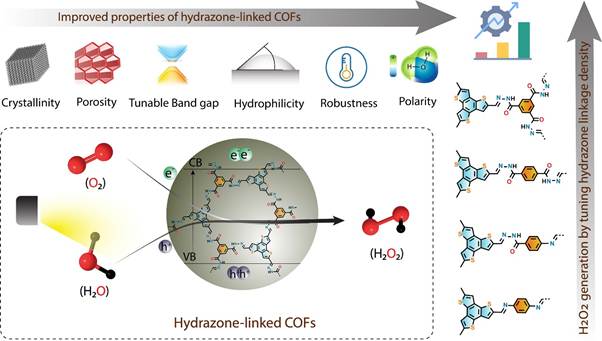
Figure 1.  Sustainable synthesis and versatile applications of hydrogen peroxide.

Researchers at S. N. Bose National Centre for Basic Sciences, Kolkata, an autonomous institute under the Department of Science and Technology (DST), have designed and prepared a series of COFs having good water affinity through careful control of the hydrazone linkage density and studied their effect on the photocatalytic performance for H2O2 generation. It was observed that the hydrazone-linked COFs provide abundant docking sites for water and oxygen, thereby promoting water oxidation reaction (WOR) and oxygen reduction reaction (ORR) – two main pathways for photocatalytic H2O2 generation.

As a result, the hydrazone-linked COF exhibited exceptional photocatalytic H2O2 production without external sacrificial electron donors when irradiated with a 40 W blue LED (λ = 467 nm). Interestingly, a significant amount of H2O2 (550 μmol g-1 h-1) was also produced under sunlight irradiation, which outperforms most organic photocatalysts under similar conditions, thus demonstrating a clean and sustainable pathway.

Furthermore, as-synthesized hydrazone-linked COFs can generate H2O2 up to 21641 μmol g-1 h-1 using an aqueous benzyl alcohol solution (water: benzyl alcohol = 90:10) by preventing the degradation of H2O2. This strategy of using a mixture of water-benzyl alcohol solution will be helpful in developing a continuous flow reactor for the sustainable production of H2O2 and will reveal a laboratory-to-industry technology transfer for the benefit of mankind.

***

Top Restaurants in Pune

Daily writing prompt
What is your favorite restaurant?

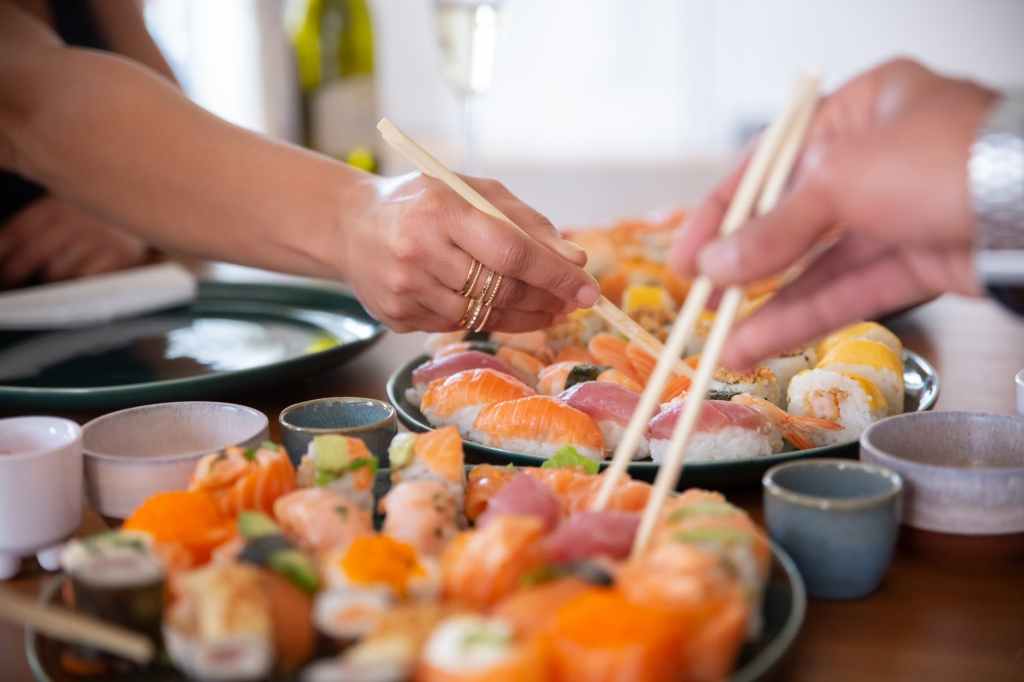
Pune, a vibrant city in Maharashtra, India, is renowned for its rich culinary heritage, blending traditional Maharashtrian flavors with diverse culinary influences from across India and the world. Here’s a glimpse into some of the top restaurants in Pune that offer an exquisite dining experience:

Photo by Helena Lopes on Pexels.com
  1. Shreyas: Nestled in the heart of Pune, Shreyas is celebrated for its authentic Maharashtrian thali, showcasing a delightful array of traditional dishes served in a classic ambiance. From delectable sabzis to fragrant rice and mouthwatering desserts, Shreyas offers a culinary journey through the flavors of Maharashtra.
  2. Paasha: Perched atop the JW Marriott Hotel, Paasha offers panoramic views of Pune along with an extensive menu of North Indian cuisine. With its elegant décor and sumptuous dishes, Paasha promises a memorable dining experience, featuring flavorful kebabs, rich curries, and indulgent desserts.
  3. Baan Tao: Located in the Hyatt Pune, Baan Tao invites diners to savor the flavors of Asia in a contemporary setting. Specializing in Thai, Chinese, and Vietnamese cuisine, this restaurant offers an innovative menu crafted with fresh, high-quality ingredients and impeccable presentation.
  4. Malaka Spice: Known for its vibrant ambiance and eclectic menu, Malaka Spice is a beloved destination for lovers of Southeast Asian cuisine. From fragrant Thai curries to tangy Vietnamese salads, Malaka Spice offers a diverse culinary experience that delights the senses.
  5. German Bakery: A Pune institution, the German Bakery is cherished for its cozy atmosphere and delectable baked goods. Whether it’s freshly baked bread, savory quiches, or decadent pastries, this charming café is a favorite among locals and tourists alike.
  6. Café Moshes: Tucked away in Koregaon Park, Café Moshes is renowned for its relaxed vibe and delicious comfort food. From hearty sandwiches to indulgent desserts, this café offers a menu that caters to diverse tastes, making it a popular choice for casual dining.
  7. The Flour Works: With its emphasis on fresh, seasonal ingredients and artisanal bread, The Flour Works has carved a niche for itself in Pune’s culinary scene. Whether it’s a leisurely brunch or an intimate dinner, this charming café offers a menu that celebrates the joys of simple yet flavorful cuisine.
  8. Arthur’s Theme: Inspired by the legendary King Arthur, this restaurant exudes old-world charm and sophistication. Known for its European-inspired menu and extensive wine list, Arthur’s Theme offers an elegant dining experience that transports diners to a bygone era.

These are just a few highlights from Pune’s vibrant culinary landscape, which continues to evolve with new flavors and experiences waiting to be discovered. Whether you’re craving authentic regional cuisine or international flavors, Pune’s top restaurants promise a gastronomic adventure like no other.

Sweets: A Delightful Journey into Culinary Bliss

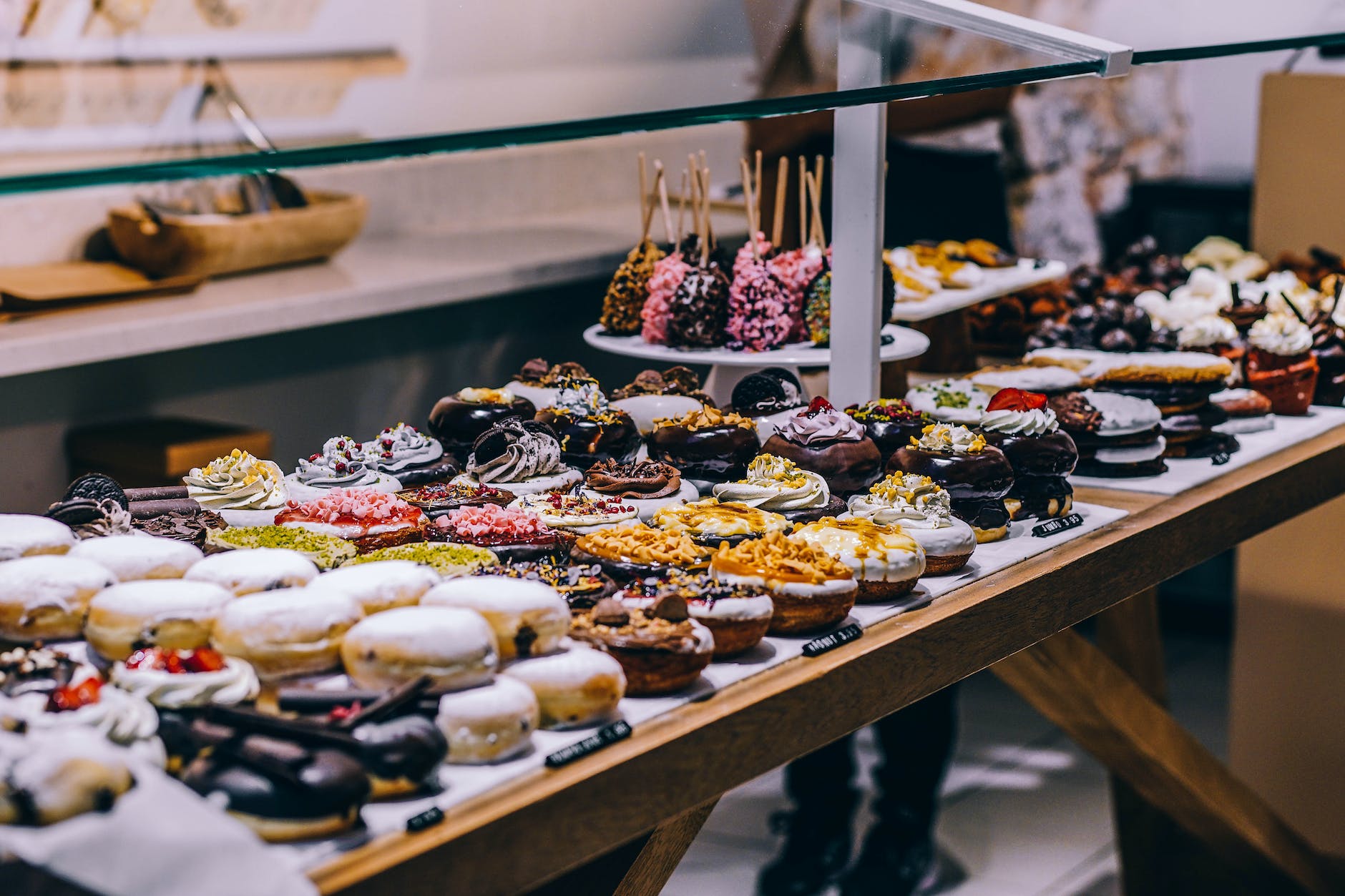
 Sweets, also known as desserts or confections, hold a special place in culinary traditions worldwide. From a simple piece of chocolate to elaborate multi-layered cakes, sweets come in a dazzling array of flavors, textures, and forms, making them a universally beloved treat. The history of sweets is as diverse as the sweets themselves, often rooted in cultural and regional traditions, showcasing the creativity and craftsmanship of generations of confectioners.

Photo by Igor Ovsyannykov on Pexels.com

A History of Sweetness

The love for sweets is not a recent phenomenon. Sweets have been an integral part of human culinary history for centuries. Ancient civilizations such as the Egyptians, Greeks, and Romans were known to indulge in various forms of sweet treats made from ingredients like honey, dates, and nuts. These early desserts laid the foundation for the diverse range of sweets we enjoy today.

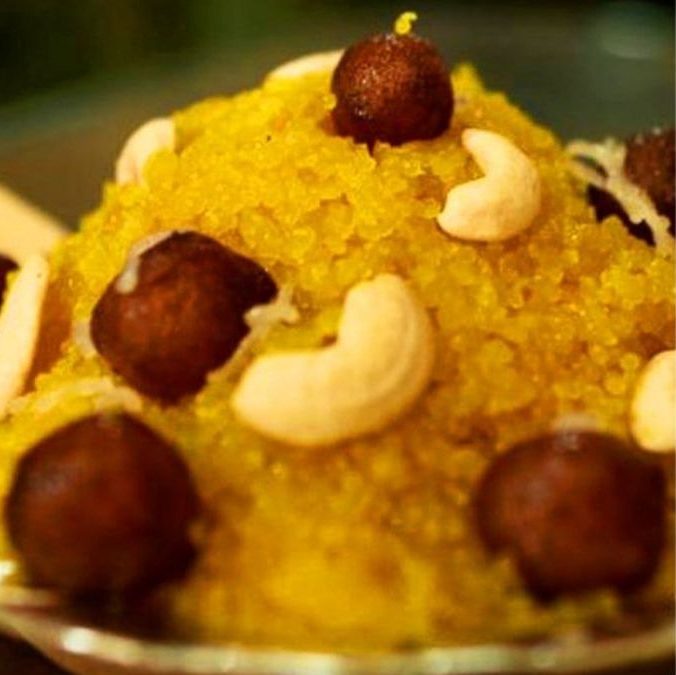
In the Indian subcontinent, sweets have an incredibly rich history, with a plethora of traditional sweets known as “mithai.” Sweets like Gulab Jamun, Jalebi, and Rasgulla have been enjoyed for generations and are an essential part of festivals, celebrations, and daily life.

Types of Sweets

The variety of sweets available around the world is astounding, but they can be broadly categorized into several types:

  1. Chocolate: Chocolate, made from cocoa beans, has a universal appeal. Whether in the form of creamy bars, truffles, or hot cocoa, chocolate satisfies cravings for both sweetness and a hint of bitterness.
  2. Baked Sweets: This category includes cakes, pastries, pies, and cookies. The world of baking offers an endless array of textures and flavors, from the buttery layers of a croissant to the fluffy tenderness of a sponge cake.
  3. Candies: Candies encompass everything from hard, fruit-flavored sweets to chewy caramels and gummies. They often come in a dazzling array of colors and shapes.
  4. Fruit-Based Sweets: Many sweets are made from fruits, either dried or fresh. Think of fruit jams, fruit preserves, or candied fruit peels.
  5. Ice Cream and Frozen Desserts: Cold, creamy, and available in countless flavors, ice cream is a go-to sweet treat. Frozen desserts also include sorbets, gelato, and frozen yogurt.
  6. Traditional Sweets: Every culture has its traditional sweets that are deeply rooted in their history and traditions. These sweets can be made from a wide variety of ingredients, including milk, grains, and spices.

The Art of Making Sweets

Crafting sweets is often an intricate and labor-intensive process. Skilled artisans, such as pastry chefs and confectioners, dedicate themselves to perfecting the art of sweet-making. The process can involve precision, patience, and an innate understanding of flavors and textures.

Sweets in Celebration and Culture

Sweets are an integral part of cultural celebrations and rituals around the world. In India, for example, sweets are exchanged during festivals and special occasions as a symbol of love and good fortune. Similarly, weddings often feature a grand display of elaborate sweets, showcasing the culinary traditions of the region.

Health Considerations

While sweets are a source of immense pleasure, it’s important to consume them in moderation. High sugar and calorie content can lead to health issues if consumed excessively. However, the enjoyment of sweets in moderation is a delightful aspect of life that connects people through the simple pleasure of sharing a sweet treat.

In conclusion, sweets are a testament to the diverse and creative world of culinary arts. Their history is a journey through time, their flavors a delight to the senses, and their cultural significance a bond that transcends borders. Whether you’re indulging in a simple piece of dark chocolate or savoring an intricately crafted dessert, sweets are a reminder of the sweetness of life itself.

Top Ten Foods of India


Top Ten Foods of India

India is known for its diverse and flavorful cuisine, with each region and state having its own unique dishes and cooking techniques. Here are the top ten foods of India:
Butter Chicken – A famous dish from North India made with tender chicken cooked in a creamy tomato-based gravy with butter and spices.
Biryani – A fragrant and flavorful rice dish made with aromatic spices, meat or vegetables, and yogurt.
Dosas – A South Indian delicacy made with fermented rice and lentil batter, usually served with chutney and sambar.
Samosas – A popular snack across India made with a crispy pastry shell filled with spiced vegetables or meat.
Chaat – A savory snack that originated in North India, made with crispy fried dough, chickpeas, potatoes, yogurt, and a variety of chutneys and spices.
Tandoori Chicken – A popular dish made by marinating chicken in a mixture of yogurt and spices and then cooked in a tandoor oven.
Rogan Josh – A Kashmiri dish made with tender pieces of meat cooked in a rich tomato-based gravy with a blend of spices.
Idli and Dosa – A popular breakfast option in South India, made with fermented rice and lentil batter.
Chole Bhature – A North Indian dish made with spicy chickpeas served with a deep-fried bread called bhature.
Pav Bhaji – A popular street food from Mumbai, made with a spicy vegetable curry served with a soft bread roll called pav.
These top ten foods of India showcase the country’s rich culinary heritage and are a testament to the skill and creativity of its people. They are a must-try for anyone visiting India and are sure to leave a lasting impression on your taste buds.

‘Food Street Project’ to develop 100 Healthy and Hygienic Food Streets across the country

 Union Minister of Health and Family Welfare, Dr. Mansukh Mandaviya reviewed the ‘Food Street Project’ to develop 100 healthy and hygienic food streets across the country with senior officers of Health Ministry and Food Safety and Standards Authority of India (FSSAI). The aim of this project is to encourage safe and healthy food practices among food businesses and community members, thus, reducing foodborne illnesses and improving the overall health outcomes.

To operationalize the food streets, the National Health Mission (NHM) of the Ministry of Health and Family Welfare will provide an assistance of Rs. 1 crore per food street as a pilot project to support 100 such food streets at different locations across the country. The grant will be routed under NHM, in the ratio of 60:40 or 90:10, with the condition that branding of these food streets will be done as per FSSAI guidelines.

The financial assistance would be provided for activities such as provision of safe drinking water, hand washing, toilet facilities, tiled flooring of common areas, appropriate liquid & solid waste disposal, provision of dustbins, using billboards, façade preparation and signage of permanent nature, common storage space, lighting, specialized carts for specific type of trades, branding etc.

The initiative will be implemented through NHM in convergence with Ministry of Housing and Urban Affairs (MoHUA), apart from FSSAI’s technical support. The technical assistance will include assistance in designing of food streets, preparation of an SOP and providing training under Hazard Analysis and Critical Control Points (HACCP) protocol.

Street food has been an integral part of the Indian food culture and has played an immense role in sustaining and shaping the Indian food economy. It is not only a source of affordable and delicious food for millions of Indians but also a major contributor to the country’s economic growth. With rapid urbanization, street food hubs have led to an easy access to food but food safety and hygiene at these hubs remain a matter of concern.

The Ministry of Health and Family Welfare has taken various steps to improve the hygiene and food safety standards protocols for food street hubs. These initiatives include training of food handlers, independent third-party audits, and certification under Clean Street Food Hub initiative of the Eat Right India movement.

The state-wise list of suggestive number of food streets is as under:

S.N.

State/UT


No. of food streets

1

Andhra Pradesh

4

2

Assam

4

3

Bihar

4

4

Chhattisgarh

4

5

Delhi

3

6

Goa

2

7

Gujarat

4

8

Haryana

4

9

Himachal Pradesh

3

10

Jammu & Kashmir

3

11

Jharkhand

4

12

Karnataka

4

13

Kerala

4

14

Ladakh

1

15

Madhya Pradesh

4

16

Maharashtra

4

17

Odisha

4

18

Punjab

4

19

Rajasthan

4

20

Tamil Nadu

4

21

Telangana

4

22

Uttar Pradesh

4

23

Uttarakhand

4

24

West Bengal

4

25

Arunachal Pradesh

1

26

Manipur

1

27

Meghalaya

1

28

Mizoram

1

29

Nagaland

1

30

Sikkim

1

31

Tripura

1

32

A & N Islands

1

33

Chandigarh

1

34

DI) & DNH

1

35

Lakshadweep

1

36

Puducherry

1


Total

100


****

Korean wave in India.

The  Korean wave has certainly seen a significant  rise in India during the pandemic, and K-Drama and K-Pop are seeing massive demand from fans and new followers as well. In response to the growing popularity of the Korean wave in the country, many  online and offline events are held to show people  what they are consuming online. And these extend not only  to K-Drama and K-Pop, but also  to food, beauty and culture in general.
Korean singer PSY’s 2012 viral hit “Gangnam Style” may have started the Korean wave in India, but it certainly wasn’t the origin. The existence of K-POP in India dates back to the late 90’s when in Northeastern part  in Manipur Bollywood films were not allowed to watch because law imposed by the Separatist group Revolutionary Peoples Front to make Manipur independent.Not so much offered, the locals turned to Korean content and it got it’s popularity from their on.

Increasing demand for Korean content is fueling competition between India’s Amazon Prime Video and Netflix. Amazon Prime Video is the first company to launch Parasite and Minari in the country. Hotstar, MX Player, Viki and Viu are also involved in the Korean wave effect. Discovery + launched the “Star vs Food” series featuring the Korea Tourism Organization (KTO) and K-POP idols to introduce Korean food to India. Some prominent dramas are: Crash Landing on You, Squid Games, Descendants of the Sun and many more more , the reason of these Korean content popularity is that as an audiance, Indian’s  find Korean content relatable to them.

According to Hyun Woo, Kross Komix co-founder, president and CEO Thomas Kim predicts that South Korea’s webtoon, or digital comics, will be the next big thing.Kross Komics is India’s only webtoon platform  launched in December 2019. In just about 1.5 years of operation, the app has been downloaded more than 4.5 million times, about half of which are women. “With the numerous webtoons in the romance / romantic comedy category and the world’s best-selling stories, this new format of content has become a very interesting alternative to the dramas and movies”.

“In 2020, the blockade caused by Covid-19 is said to be one of the reason to the popularity and acceptance of Korean culture in India through dramas available on multiple video streaming platforms and the different Korean music band whose craze is extraordinary. South Korea’s food exports hit a record high,  boosted by social media posts from Asian celebrities and the popularity of the movie like “Parasite” and drama like”Crash Landing on You”. The widespread  of k-pop, k-movies, and k-drama has evolved into a  fan culture, especially among the  urban youth of the country. Following k-pop music and movies, K-Food and cooking have undergone a major makeover to reach the larger Indian market. K-cuisine is all the rage, especially on social media, in the form of food challenges like Mukbang, “said Hwang Il-young, director of the Korean Culture Center India .

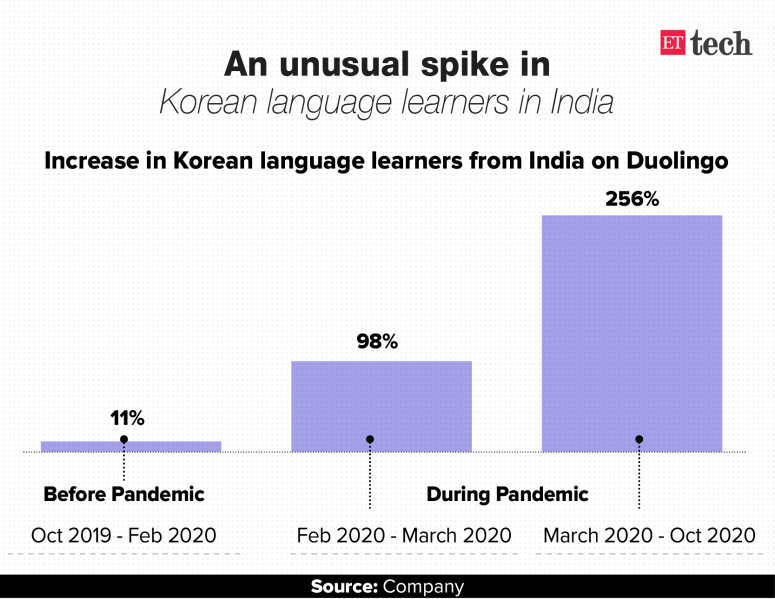
The Korean wave,  the growing global popularity of  Korean culture, swept India a few years ago, but  exploded during a pandemic. Supported by the OTT platform, which has a large investment in Korean programs, the number of people who started watching K-Drama and listening to K-Pop has skyrocketed. Recently, the language learning app Duolingo surveyed 1,013 people in 10  cities in India and found that Korean is  the fastest growing language in India. It was the 7th most popular language for Indians in 2020, but it has risen to the 5th in 2021 and will  continue to rise. Duolingo’s 2021 audio report attributed this primarily to the release of Squid Game in 2021.

Healthy snacking to switch to.

Snacking refers to the intake of foods during the day other than your main meals. Snacks typically consist of smaller food portions distributed between meals. While research on whether snacking aids weight loss is mixed, some evidence suggests that increasing your meal frequency through snacking may help manage hunger and improve blood sugar regulation. By planning ahead and focusing on nutrient-rich foods, snacks may support your weight management goals by managing hunger and keeping you satisfied between meals. Think of a healthy snack as a mini-meal. It should be more than just a handful of popcorn or a bag of chips. Like a meal, it should contain some protein, carbs, and healthy fats. Bonus points for fibre, as that helps fill us up and slows digestion leaving you feeling fuller longer. Here are some options for healthy snacking you can switch to-

1. Mixed nuts

Nuts are an ideal nutritious snack, providing the perfect balance of healthy fats, protein, and fiber.Aside from being tasty; they’re linked to numerous health benefits and very filling. There are plenty of nuts you can choose from, including walnuts, almonds, Brazil nuts, hazelnuts, pine nuts, macadamia nuts, cashews, and pistachios. Because they don’t require refrigeration, they’re a great choice for snacking on the go.

2. Kale chips

Kale is incredibly healthy, as it’s loaded with fiber and antioxidants like beta carotene, lutein.It’s also a good source of minerals, such as calcium and phosphorus. It has a lower level of oxalic acid, an anti-nutrient that impairs calcium absorption, than many other leafy greens .Pairing kale with olive oil not only makes more delicious and crispy chips but also a more balanced and filling snack.

3. Protein smoothie

A protein smoothie can be a filling snack for when you need something substantial until your next meal.They’re an easy and convenient way to increase your protein intake. You can add just about any other ingredient to the mix, from fruits and veggies to healthy fats like avocado, nut butter, or chia seeds, for a nutrient-rich snack.

4. Oatmeal

Oatmeal is a truly versatile snack that you can enjoy hot or cold — at home or on the go. Oats are a nutritious whole grain that provides a good amount of fiber and higher protein content compared with other cereals.What’s more, you can satisfy your sweet tooth with oatmeal topped with fruit, cinnamon, cocoa powder, and chocolate chips, or go for a savory version by adding eggs, avocado, and veggies like mushrooms or tomatoes.

5. Cucumber slices with hummus

Cucumber’s fresh flavour and crunchy texture go very well with the rich creaminess of hummus. Hummus is typically made from chickpeas, tahini, olive oil, and garlic. Thus, it provides a mix of plant-based protein, fibre, and heart-healthy fats. You can also pair them with some whole grain crackers or pretzel sticks for a heartier snack.

When your next craving hits, aim for whole foods that add nutrition to your day instead of highly processed, less nutritious options.Having some healthy choices in reach can help you stay satisfied, add more nutrients to your diet, and support weight management. Healthy snacking can be benifically in all aspects of life , so start making choices of what you intake.

Healthy snacking to switch to.

Snacking refers to the intake of foods during the day other than your main meals. Snacks typically consist of smaller food portions distributed between meals. While research on whether snacking aids weight loss is mixed, some evidence suggests that increasing your meal frequency through snacking may help manage hunger and improve blood sugar regulation. By planning ahead and focusing on nutrient-rich foods, snacks may support your weight management goals by managing hunger and keeping you satisfied between meals. Think of a healthy snack as a mini-meal. It should be more than just a handful of popcorn or a bag of chips. Like a meal, it should contain some protein, carbs, and healthy fats. Bonus points for fibre, as that helps fill us up and slows digestion leaving you feeling fuller longer. Here are some options for healthy snacking you can switch to-

1. Mixed nuts

Nuts are an ideal nutritious snack, providing the perfect balance of healthy fats, protein, and fiber.Aside from being tasty; they’re linked to numerous health benefits and very filling. There are plenty of nuts you can choose from, including walnuts, almonds, Brazil nuts, hazelnuts, pine nuts, macadamia nuts, cashews, and pistachios. Because they don’t require refrigeration, they’re a great choice for snacking on the go.

2. Kale chips

Kale is incredibly healthy, as it’s loaded with fiber and antioxidants like beta carotene, lutein.It’s also a good source of minerals, such as calcium and phosphorus. It has a lower level of oxalic acid, an anti-nutrient that impairs calcium absorption, than many other leafy greens .Pairing kale with olive oil not only makes more delicious and crispy chips but also a more balanced and filling snack.

3. Protein smoothie

A protein smoothie can be a filling snack for when you need something substantial until your next meal.They’re an easy and convenient way to increase your protein intake. You can add just about any other ingredient to the mix, from fruits and veggies to healthy fats like avocado, nut butter, or chia seeds, for a nutrient-rich snack.

4. Oatmeal

Oatmeal is a truly versatile snack that you can enjoy hot or cold — at home or on the go. Oats are a nutritious whole grain that provides a good amount of fiber and higher protein content compared with other cereals.What’s more, you can satisfy your sweet tooth with oatmeal topped with fruit, cinnamon, cocoa powder, and chocolate chips, or go for a savory version by adding eggs, avocado, and veggies like mushrooms or tomatoes.

5. Cucumber slices with hummus

Cucumber’s fresh flavour and crunchy texture go very well with the rich creaminess of hummus. Hummus is typically made from chickpeas, tahini, olive oil, and garlic. Thus, it provides a mix of plant-based protein, fibre, and heart-healthy fats. You can also pair them with some whole grain crackers or pretzel sticks for a heartier snack.

When your next craving hits, aim for whole foods that add nutrition to your day instead of highly processed, less nutritious options.Having some healthy choices in reach can help you stay satisfied, add more nutrients to your diet, and support weight management. Healthy snacking can be benifically in all aspects of life , so start making choices of what you intake.

Bengali Mishtis: The Delectable Sweet Affair of Bengal

Traditional Sweets of Bengal

Introduction

Bengal is well-known for its music, cinema and delicious food, especially the mouth-watering sweets. In fact, it’s rather hard not to run into a sweet shop in almost every corner of the land, including the narrowest of the lanes. And, it’s equally hard to find a Bengali who is not in love with their ‘mishti’. Bengalees are incredibly proud of the sweets of Bengal and their unique appeal. And for a good reason too — Bengali sweets have wooed Indians and foreigners alike.

Bengali Mishtis

History of Sweets in Bengal

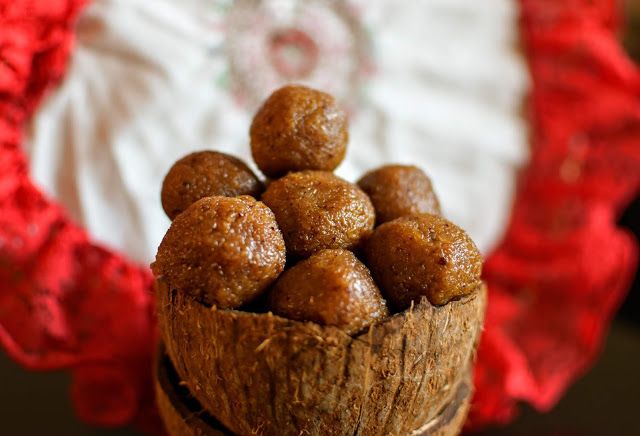
The prominent presence of sweets in Bengali cuisine can be noted throughout history. Ancient Bengal was known as ‘Gauda Banga’, a name believed to be originated from the term ‘Gur’ or molasses that were harvested in abundance in the region. The early Bengali sweets were made from the delicious jaggery or molasses and coconuts. There were several sweets made from ‘khoya and kheer’, which are Bengali names for milk solids and condensed milk, respectively. Sweets like ‘Naru’, ‘Moya’ and ‘Takti’  were popular in ancient Bengal. The uses of different fruits to make a variety of sweets were also prevalent. Books like Manasa Vijaya Kavya, written by 15th-century Bengali poet Bipradas Pipilai, also account for how varieties of ‘pithe’ or Indian Cake made from rice flour, jaggery, kheer and milk solids have been an integral part of Bengali rituals and festivals.

Traditional Coconut Balls or Narkel Naru
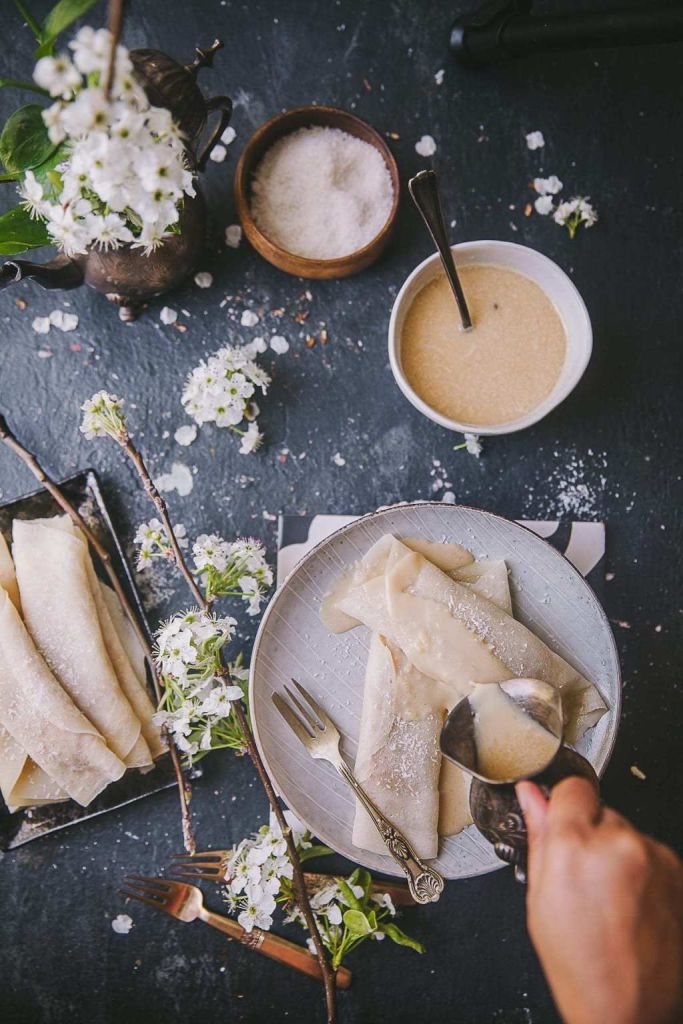
Patisapta or Eggless Crepes
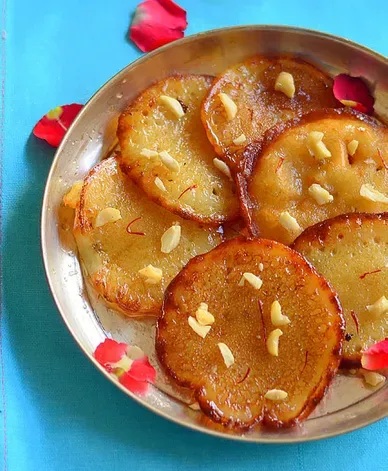
Malpua or Indian Pancakes

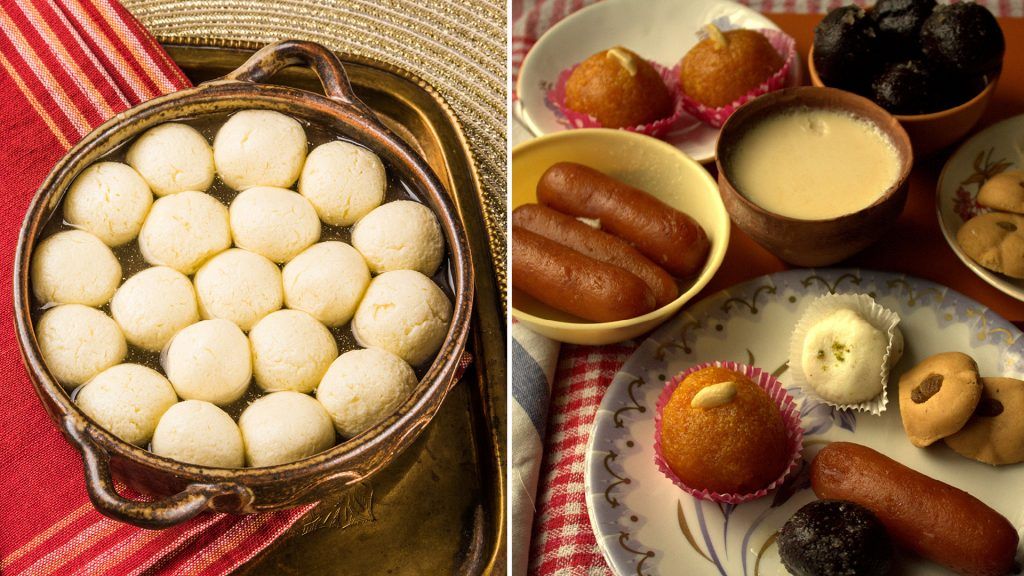
The introduction of ‘Chhana’ (Cottage Cheese) in Bengali cuisine happened after the Portuguese invaded Bengal, yet it’s interesting how today most of the characteristic Bengali sweets are made primarily from fresh ‘chhana’ (cottage cheese) and sugar. The curdling of milk with an acidic substance was forbidden according to Hindu cultures, but the Portuguese loved their cheese. After settling down in and around Kolkata in the 17th century, the Portuguese tradition of making sweets with cheese inspired the local cuisine as well. The Bengali confectioners then picked up this incredible art of curdling milk and creating mouth-watering ‘Sandesh’ and ‘Rosogollas’ among others.

Some Famous Bengali Sweets

Bengalees love all their sweets but among those, some are all time winners who can brighten up moods on a tiring day, and can even spoil a diet that you are maintaining for too long! Let’s dive deep into the varieties of some scrumptious and unique Bengali Mishtis.

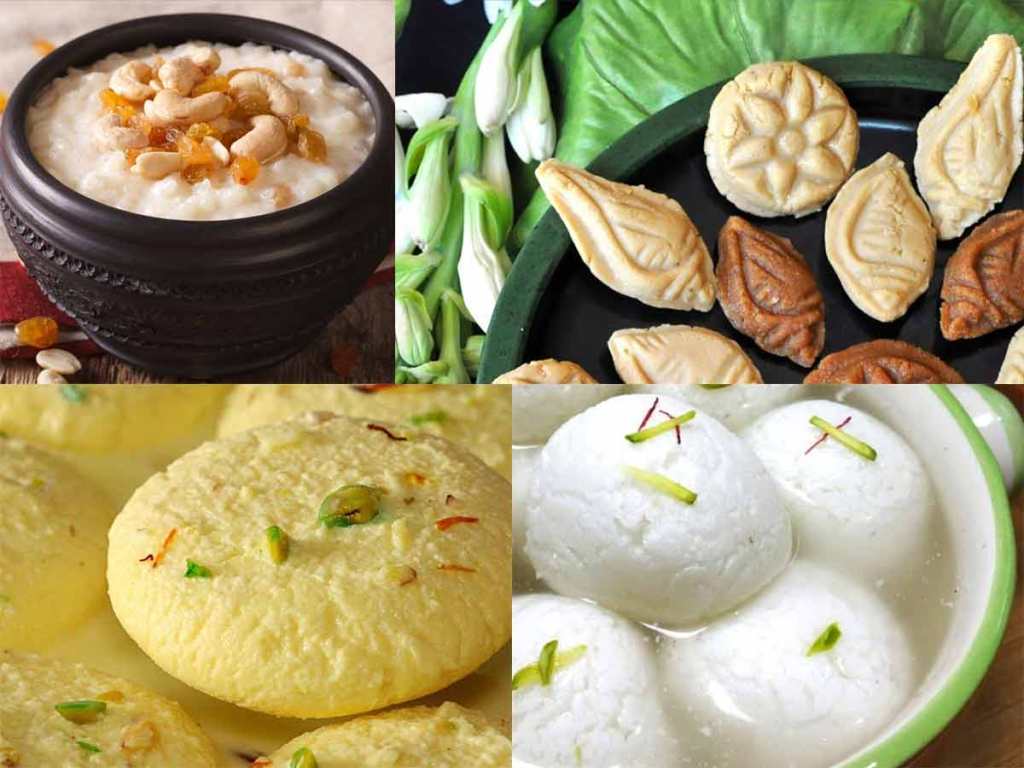
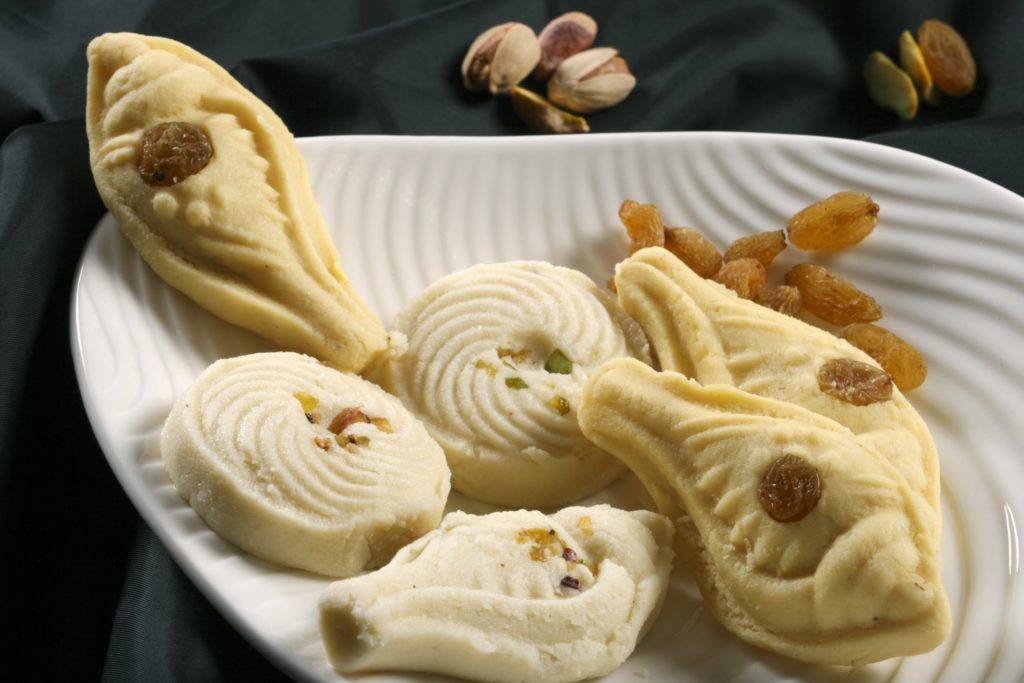
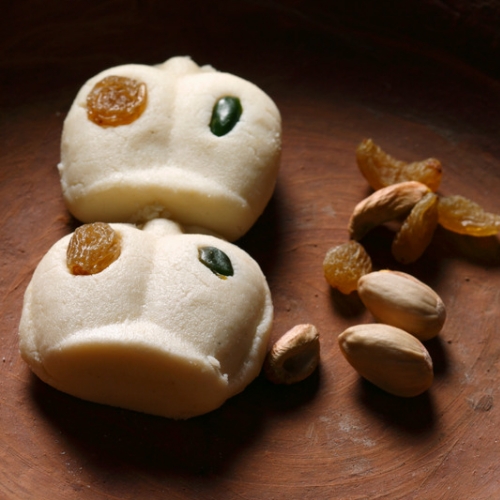
Sandesh

The simplest yet one of the most loved sweet of Bengal, is Sandesh. Generally, made by fine kneading of fresh cottage cheese along with sugar powder, cardamom essence and pistachios to garnish. If jaggery is used, instead of sugar then, it’s called Nolen Gurer Sandesh.

Sandesh

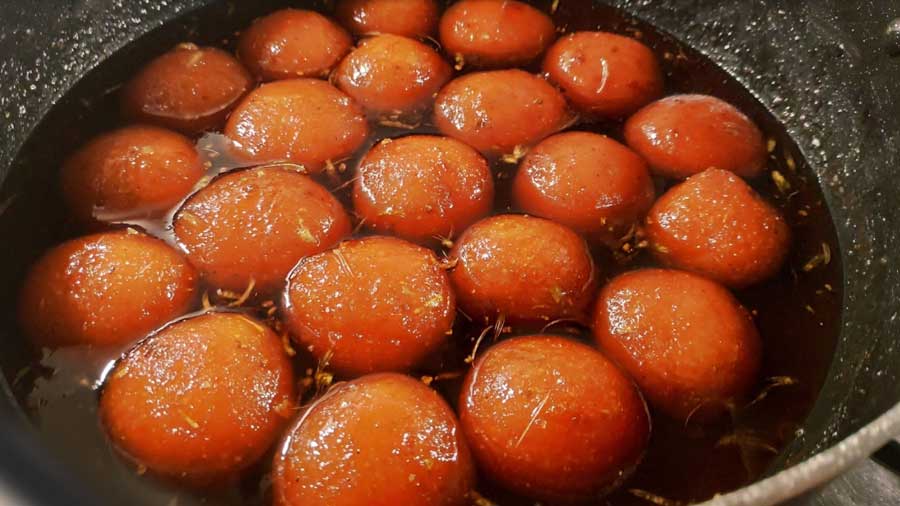
Pantua

One of Bengal’s most loved syrupy sweets, is Pantua. Though it has an uncanny similarity with North India originated Gulab Jamun, taste and procedure wise they are quite different. Balls made of cottage cheese, semolina are deep fried and then tossed in sugar syrup until completely soaked in. And unlike Gulab Jamun, they can be served cold too.

Pantua

Kheer Kadam

The name of this sweet is suggestive of a flower named Kadamphool in Bengal. The flower is bright yellow in colour cover by soft, white spikes and has a distinctive smell. This Mishti resembles the flower, and has a layer of Sandesh covered over small Rosogollas .

Kheer Kadam

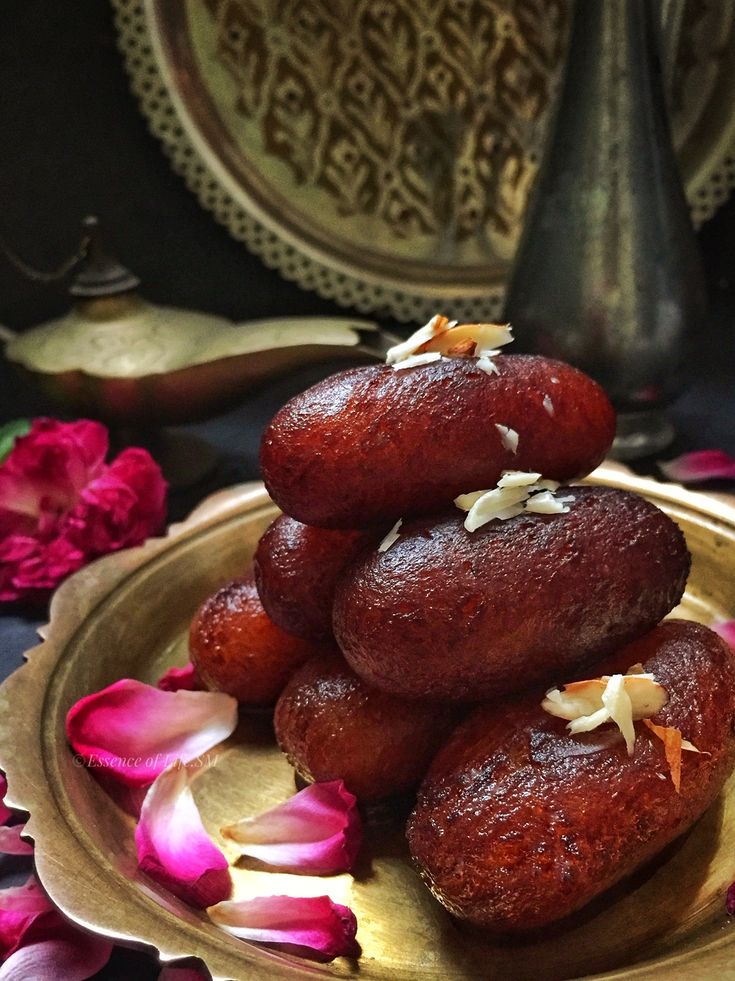
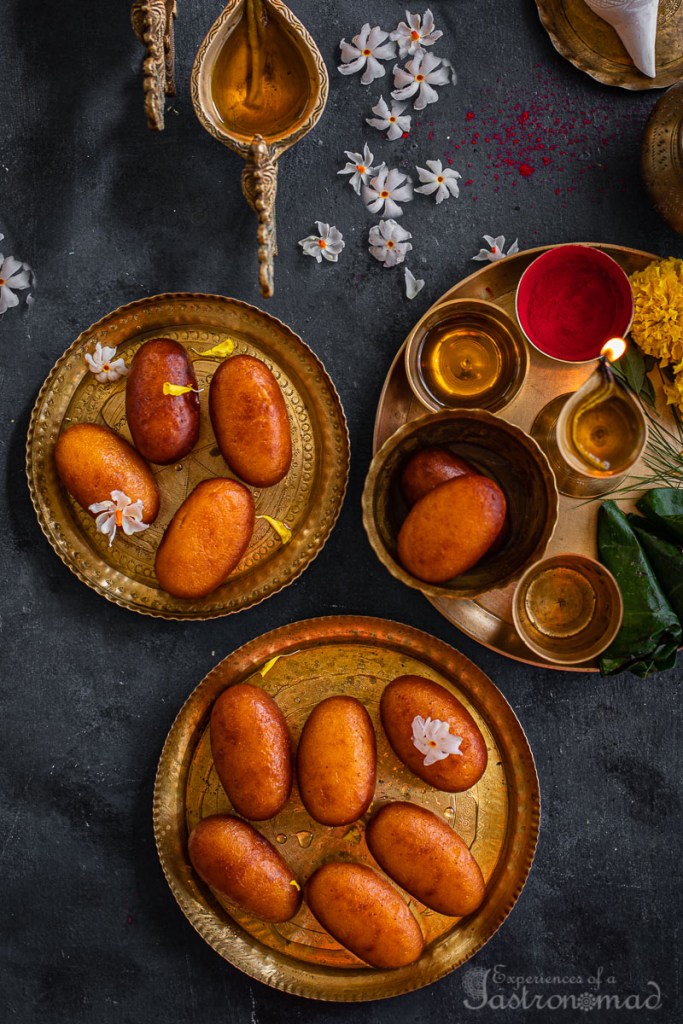
Lyangcha

Lyangcha is a cylindrical fried sweet, soaked in sugar syrup and prepared with Fresh Chhena (Cottage cheese) and Mawa/ Khowa. To make soft and tasty Lyangcha use of Fresh Chhena is must. Originated from Shaktigarh, around 80kms from Burdwan in West Bengal, Lyangcha is a staple of Traditional Bengali Mishtis.

Lyangcha

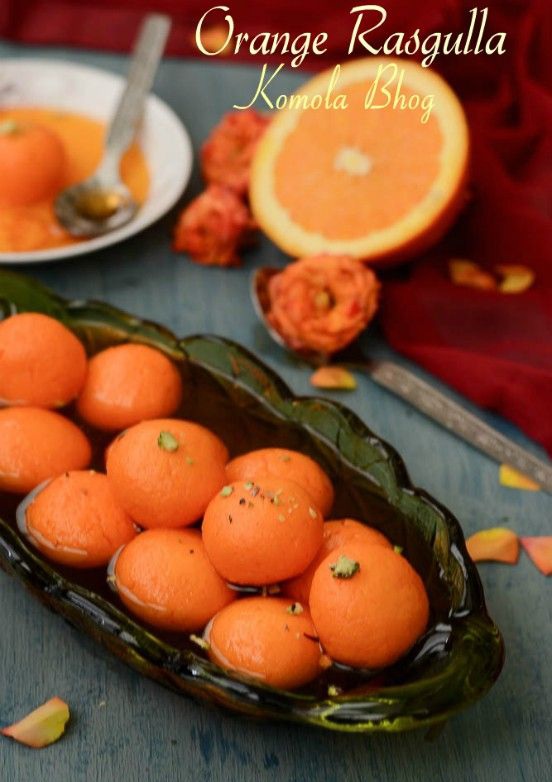
Komola Bhog

As the name suggests, Komola Bhog is literally the orange flavored Rosogolla, (Komola means Orange in Bengali) with the sweetness of Rosogollas and the tanginess of Orange. And of course, they are bright Orange in colour.

Komola Bhog

Jolbhora Sandesh

Jolbhora Sandesh, also known as Taalsas, is a sweet shaped like a ‘taal’ or kernel of the palm fruit. The sweet was created on the event of ‘Jamaisasthi’ by Surjya Modak. It is filled with sweet ‘Nolen gur’ inside and thus got its name. According to stories, Bandopadhay family of Chandernagar requested these sweets for their son-in-law. When he took his first bite of the sweet, the sweet juice spilled out. The sweet, thus, got well-known among the Bengalis.

Jol Bhora or Taal sas Sandesh

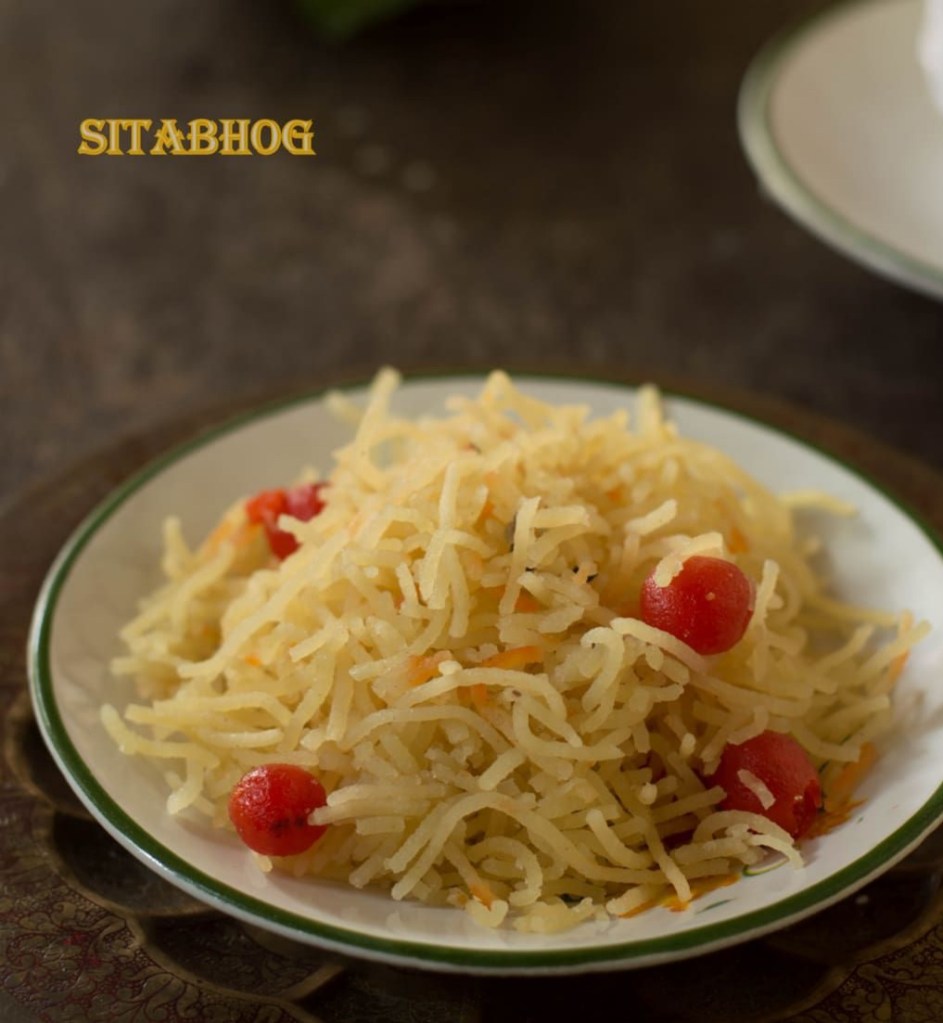
Sitabhog

Originated from Burdwan in Bengal, Sitabhog, according to Legends, was Goddess Sita’s favourite dessert and hence the name. Sita Bhog is prepared by frying a dough made of cottage cheese and powdered rice in ghee and then soaking it in sugar syrup. The final product looks like vermicelli served along with mini Gulab jamuns.

Sitabhog

Mihi-Dana

Originated from Burdwan in Bengal , these are one of the famous sweets, that has similarities with Motichur. These are granular, deep fried and soaked into sugar syrup. Recently, Mihi-Dana has received GI Tag from UNESCO and has received its first enormous foreign order to export to The Kingdom of Bahrain.

Mihi-Dana

Ledikeni/ Lady Kenny

Ledikeni or lady Kenny has been a popular Bengali dish since the British rule. The dish is named after Lady Canning, the wife of Charles Canning who was the Governor-General of India during the 19th century. The dish a light brown sweet ball made of Chenna which is fried and then soaked in sugar syrup. It tastes divine and is prepared on most auspicious days. 

Lady Kenny

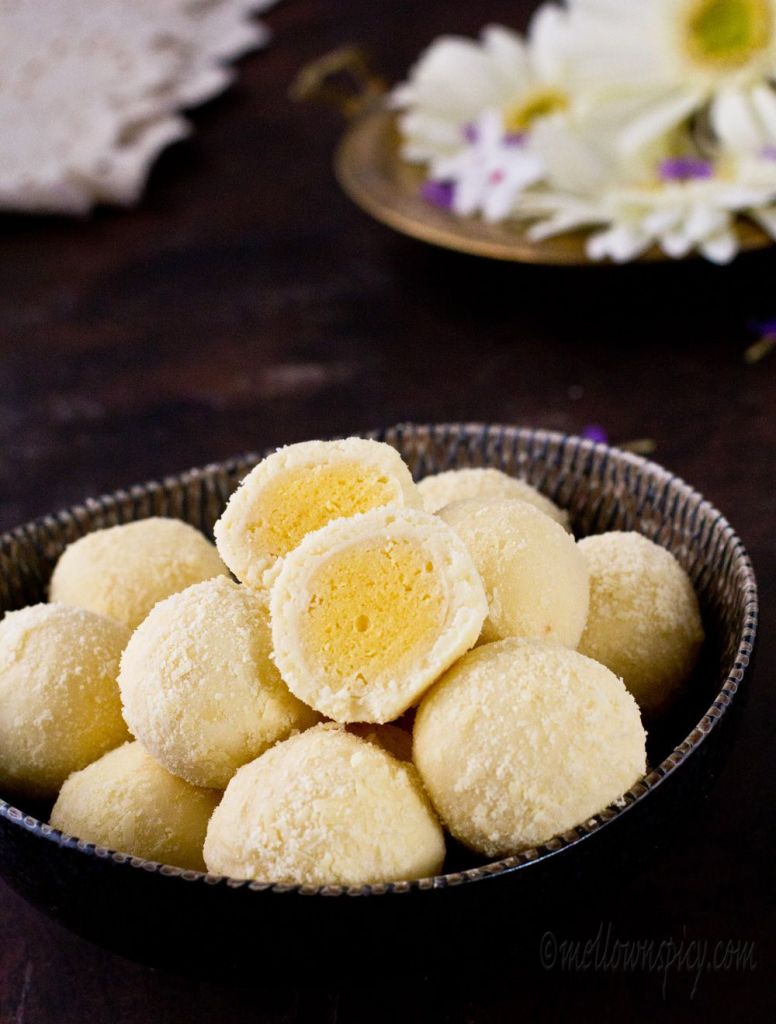
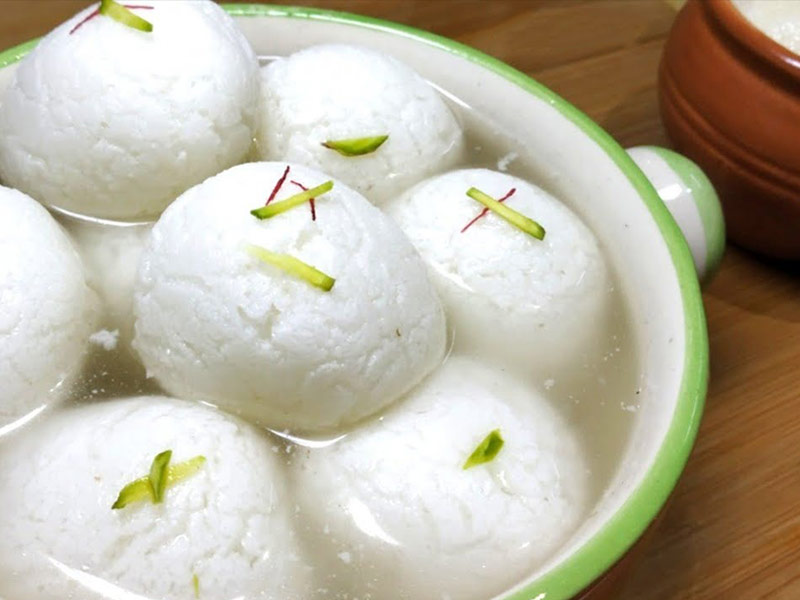
Rosogollas

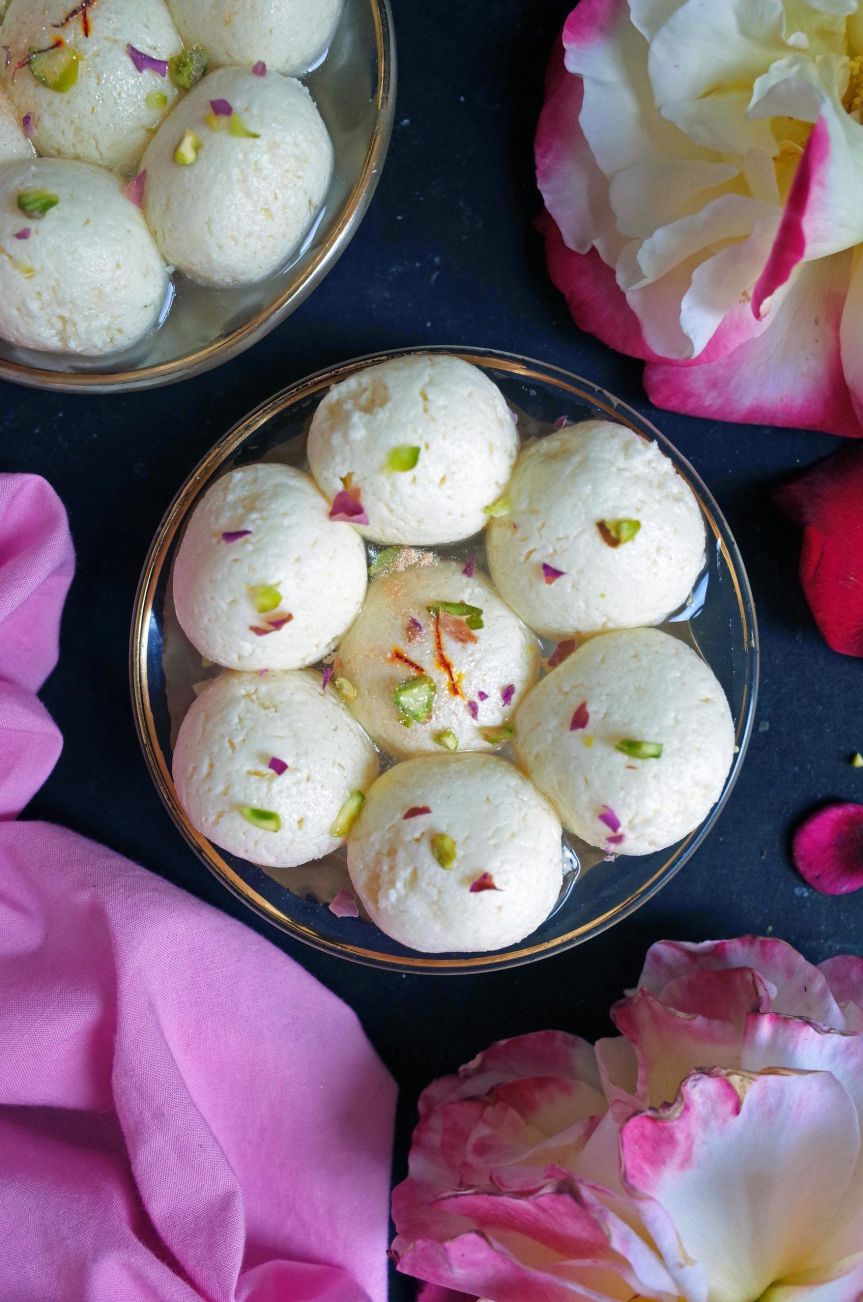
Rosogollas has done the honourable deed of introducing many, if not all, North Indians to the Bengali cuisine. These magical balls are prepared by dipping a mixture of cottage cheese and semolina dough into a sweet sugar syrup. The mere thought of those soft and spongy balls makes the mouth water.

Rosogollas

Laal Mishti Doi (Caramelized Sweet Yogurt)

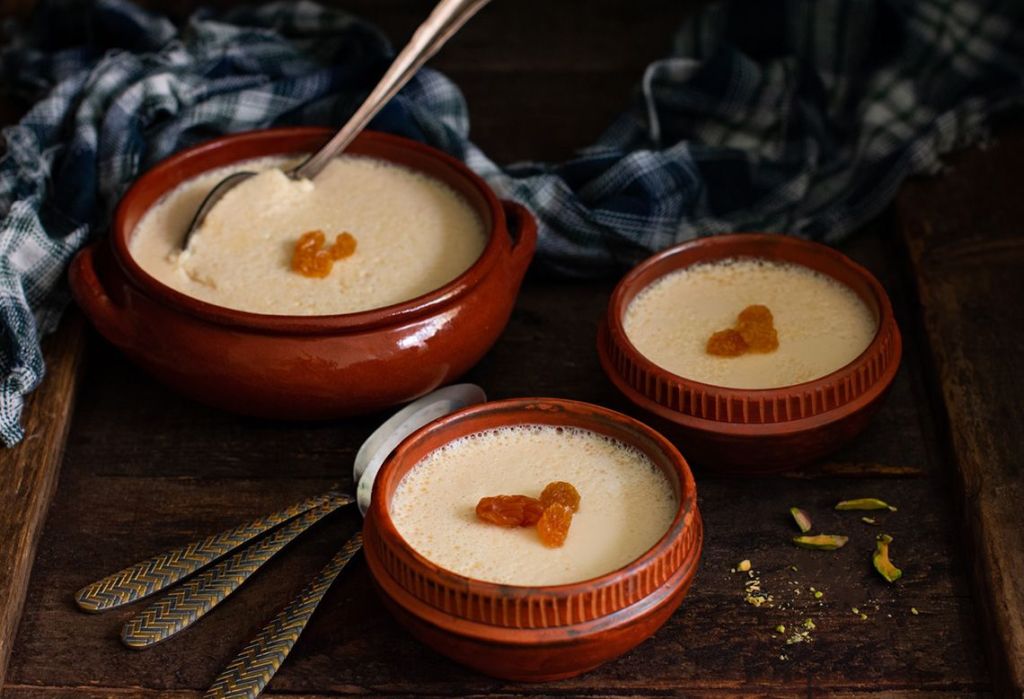
Just like the name, this Bengali dessert is extremely simple and sweet. Mishti Doi is essentially sweetened yogurt which is prepared by adding sugar to boiling milk, then leaving it to ferment overnight and is served chilled. This quintessential dessert is often served in small earthen pots which add to the aesthetics of this dish.

Laal Mishti Doi

Conclusion

Ending on a sweet note, Mishtis are also an important part of the culture and tradition of Bengal. Be it during the festivals or weddings or just greeting guests, Bengali Mishtis are always the stars of the show. If you’re a sweet-tooth, you should try these once in a while. And good news is, that many of them are now available online to order from in India and abroad.

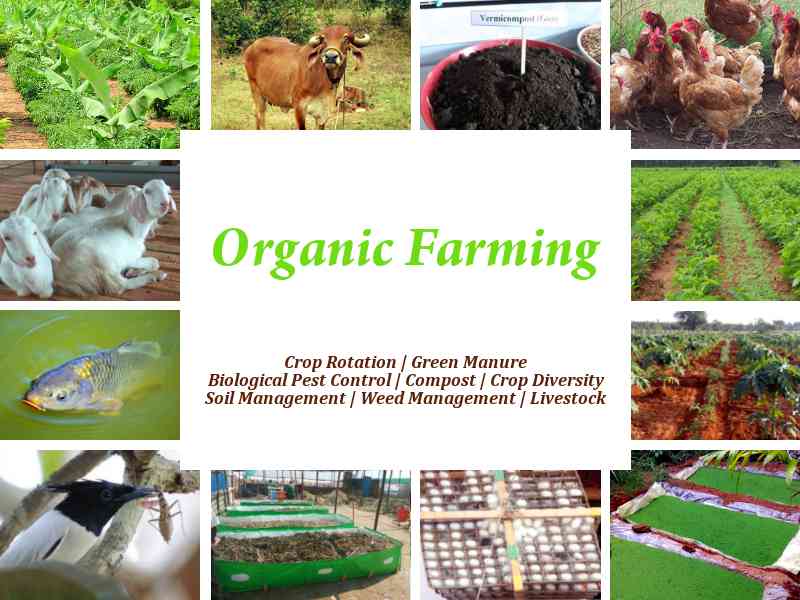
Organic Farming in India: The Future of Sustainable Agriculture

Organic Farming Produce

Introduction

The term ‘organic’ was first coined by Northbourne, in 1940, in his book entitled ‘Look to the Land’. In recent years, organic farming as a cultivation process is gaining increasing popularity . Organically grown foods have become one of the best choices for both consumers and farmers. Organically grown foods are part of go green lifestyle.

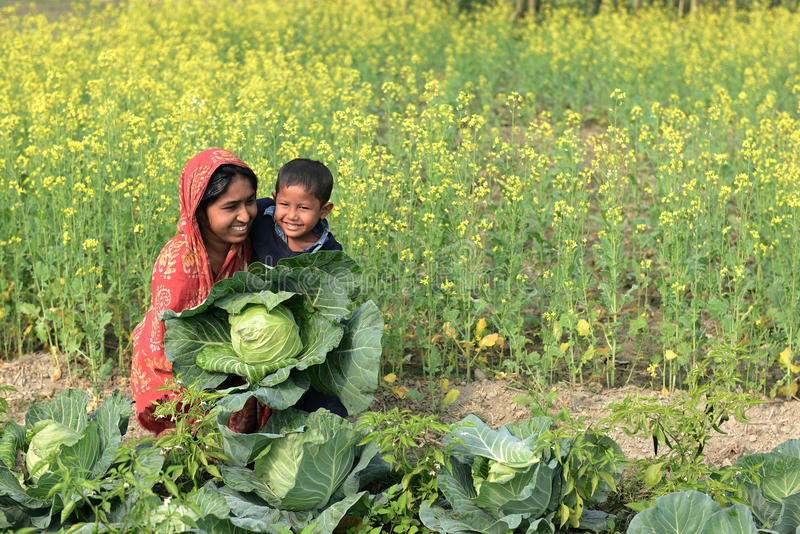
Farmers showing their Organic Harvest

Why Being Preferred These Days: The Importance of Organic Farming

Food quality and safety are two vital factors that have attained constant attention in common people. Growing environmental awareness and several food hazards (e.g. dioxins, bovine spongiform encephalopathy, and bacterial contamination) have substantially decreased the consumer’s trust towards food quality in the last decades. Intensive conventional farming can add contamination to the food chain. For these reasons, consumers are quested for safer and better foods that are produced through more ecologically and authentically by local systems. Organically grown food and food products are believed to meet these demands.

Organic Farming Processes

Organic Farming Process

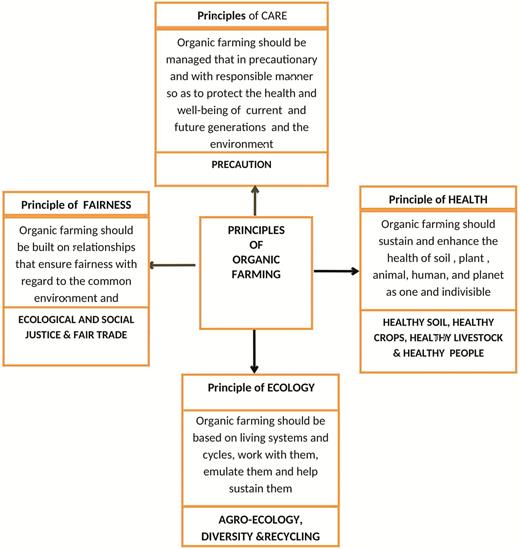
Organic farming and food processing practices are wide-ranging and necessitate the development of socially, ecologically, and economically sustainable food production system. The International Federation of Organic Agriculture Movements (IFOAM) has suggested the basic four principles of organic farming, i.e. the principle of health, ecology, fairness, and care . The main principles and practices of organic food production are to inspire and enhance biological cycles in the farming system, keep and enhance deep-rooted soil fertility, reduce all types of pollution, evade the application of pesticides and synthetic fertilizers, conserve genetic diversity in food, consider the vast socio-ecological impact of food production, and produce high-quality food in sufficient quantity.

Principles of Organic Farming  

According to the National Organic Programme implemented by USDA Organic Food Production Act (OFPA, 1990), agriculture needs specific prerequisites for both crop cultivation and animal husbandry. To be acceptable as organic, crops should be cultivated in lands without any synthetic pesticides, chemical fertilizers, and herbicides for 3 years before harvesting with enough buffer zone to lower contamination from the adjacent farms. Genetically engineered products, sewage sludge, and ionizing radiation are strictly prohibited. Fertility and nutrient content of soil are managed primarily by farming practices, with crop rotation, and using cover crops that are boosted with animal and plant waste manures. Pests, diseases, and weeds are mainly controlled with the adaptation of physical and biological control systems without using herbicides and synthetic pesticides. Organic livestock should be reared devoid of scheduled application of growth hormones or antibiotics and they should be provided with enough access to the outdoor. Preventive health practices such as routine vaccination, vitamins and minerals supplementation are also needed.

Principles of Organic Farming

Types of Organic Farming

Organic Farming are of two types. Here are the two types of Organic Farming being performed in India.

(a) Pure Organic Farming – pure organic farming, there is avoiding every unnatural chemical. In the process of pure farming, fertilizer and pesticides obtain from natural sources. It is called a pure form of organic farming. Pure organic farming is the best for high productivity. 

(b) Integrated Organic Farming – Integrated organic farming consists of integrated nutrients management and integrated pest management.

Organic Farming in India

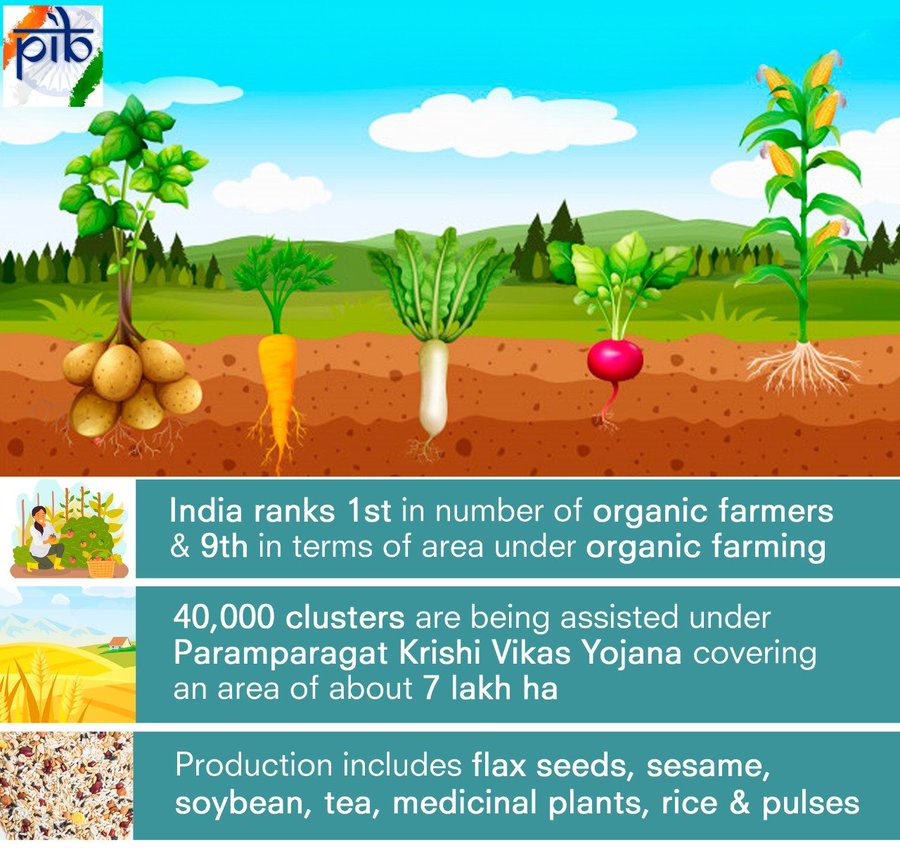
Organic farming is in a nascent stage in India. About 2.78 million hectare of farmland was under organic cultivation as of March 2020, according to the Union Ministry of Agriculture and Farmers’ Welfare. This is two per cent of the 140.1 million net sown area in the country. A few states have taken the lead in improving organic farming coverage, as a major part of this area is concentrated only in a handful of states. Madhya Pradesh tops the list with 0.76 million of area under organic cultivation — that is over 27 per cent of India’s total organic cultivation area. The top three states — Madhya Pradesh, Rajasthan and Maharashtra — account for about half the area under organic cultivation. The top 10 states account for about 80 per cent of the total area under organic cultivation. Sikkim is the only Indian state to have become fully organic so far. Even though India has very small organic area under cultivation, in terms of number of organic farmers it is being ranked first. India has over 1.9 million farmers as of March 2020, which is 1.3 per cent of 146 million agricultural landholders.

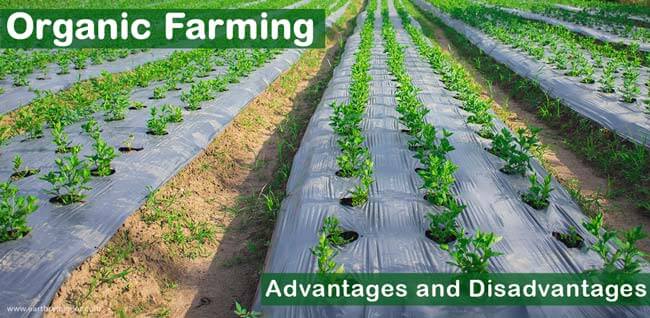
Advantages and Disadvantages of Organic Farming

Advantages of Organic Farming

Organic farming in India is very economical, it uses no expensive fertilizers, pesticides, HYV seeds for the plantation of crops. It has no expenses. 

With the use of cheaper and local inputs, a farmer can earn a good return on investment. This is one of the most important benefits of organic farming in India. 

There is a huge demand for organic products in India and worldwide and can earn more income through export.

Organic products are more nutritional, tasty, and good for health to chemical and fertilizer utilized products. 

Organic farming in India is very environment friendly, it does not use fertilizers and chemicals. 

Disadvantages of Organic Farming

Organic farming in India has fewer choices, and off-season crops are limited.

Organic agricultural products are low in the early years. Farmers find it difficult to accommodate mass production.

The main disadvantage of organic farming is the lack of marketing of the products and Inadequate infrastructure.

Organic Farming in India

Future of Organic Farming in India

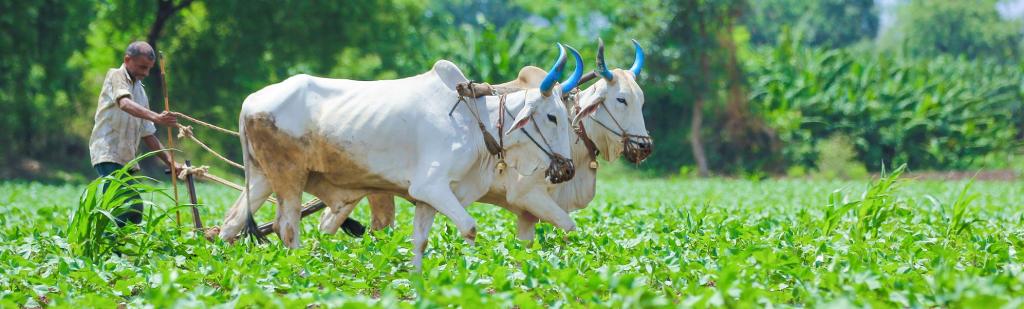
India is an agriculture-based country with 67% of its population and 55% of manpower depending on farming and related activities. Agriculture fulfils the basic needs of India’s fastest-growing population accounted for 30% of total income. Organic farming has been found to be an indigenous practice of India that practised in countless rural and farming communities over the millennium. The arrival of modern techniques and increased burden of population led to a propensity towards conventional farming that involves the use of synthetic fertilizer, chemical pesticides, application of genetic modification techniques, etc.

Organic Farming leads to Sustainability and Holistic Growth

Even in developing countries like India, the demand for organically grown produce is more as people are more aware now about the safety and quality of food, and the organic process has a massive influence on soil health, which devoid of chemical pesticides. Organic cultivation has an immense prospect of income generation too. The soil in India is bestowed with various types of naturally available organic nutrient resources that aid in organic farming.

As per data collected from Government of India

Conclusion

India is a country with a concrete traditional farming system, ingenious farmers, extensive drylands, and nominal use of chemical fertilizers and pesticides. Moreover, adequate rainfall in north-east hilly regions of the country where few negligible chemicals are employed for a long period of time, come to fruition as naturally organic lands. Organic farming yields more nutritious and safe food. The popularity of organic food is growing dramatically as consumer seeks the organic foods that are thought to be healthier and safer. Thus, organic food perhaps ensures food safety from farm to plate. The organic farming process is more eco-friendly than conventional farming. Organic farming keeps soil healthy and maintains environment integrity thereby, promoting the health of consumers. Moreover, the organic produce market is now the fastest growing market all over the world including India. Organic agriculture promotes the health of consumers of a nation, the ecological health of a nation, and the economic growth of a nation by income generation holistically. India, at present, is the world’s largest organic producers and with this vision, we can conclude that encouraging organic farming in India can build a nutritionally, ecologically, and economically healthy nation in near future.

The Easiest Dessert Recipe You Can Follow

Let’s face it, many of you watch a recipe video or a blog post about a certain food you are craving and you want to try making it. As soon as you enter the kitchen and list off the few ingredients you need, your mom hits you with the, “We don’t have any of those, Beta.” Well, I have been a victim of that too, so I curated the easiest technique of making donuts. I can give you 99.9% (not a 100 because even Dettol doesn’t guarantee you that 1%) guarantee that you will have all the ingredients you’ll need in the cabinets and drawers of your kitchen.

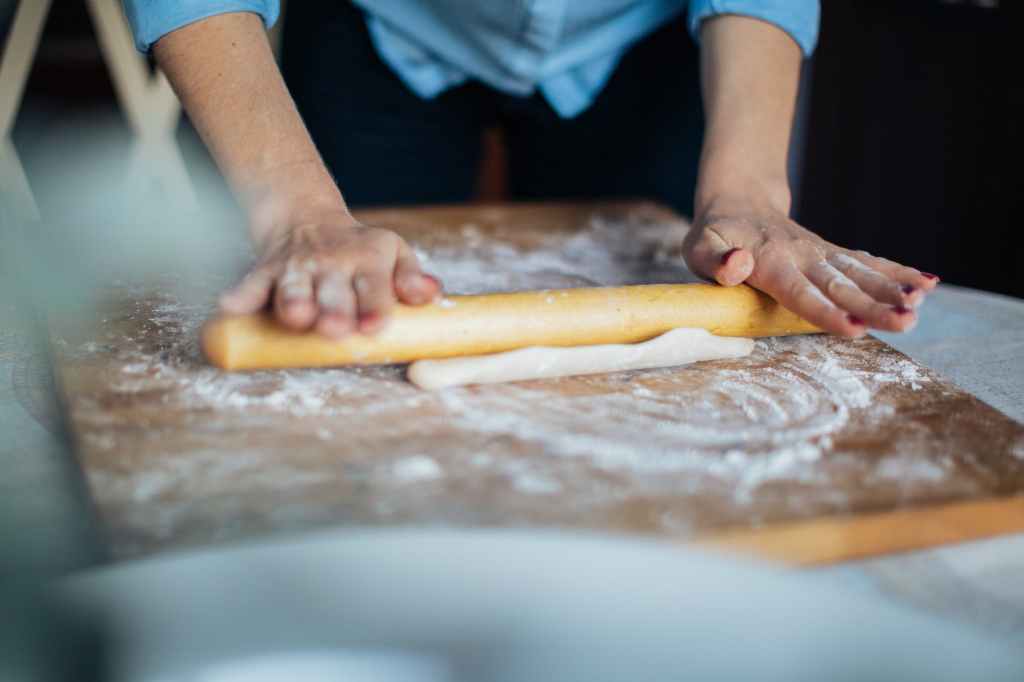
Donuts, or doughnuts, is made by frying sweetened dough, topped with toppings of your choice. Noticed I said fried? Yes, you read it right, you don’t need an oven to make these sweet, puffy and warm delicacies.

Moving on, let me show you what you’ll need and how you can make the easiest and the tastiest donuts in the comfort of your home.

Ingredients

  • Refined wheat flour
  • Sugar
  • Yeast
  • Butter
  • Baking powder
  • Refined oil
  • Chocolate (optional)
  • Vanilla extract (optional)

Steps

  1. To activate the yeast, add a teaspoon of sugar in a cup of warm water and stir until dissolved, sprinkle in some yeast and let sit until frothy—for about 8 minutes.
  2. In a clean bowl mix the activated yeast with flour, butter, sugar and half a teaspoon of baking powder. Add vanilla extract if available to enhance the flavour. When the dough is ready, cover it with a clean cloth and let it rise for a few hours.
  3. Once the dough has risen, roll the dough ½” thick and cut out circles in it with the help of a doughnut cutter or 3″ and 1″ biscuit cutters. You can even use a clean container lid and punch holes using a smaller container lid.
  4. Heat the oil for 3 minutes on medium and pop in 2-3 donut rings. Cook on both sides until the colour is slightly deep golden and place them on a baking sheet for 5 minutes.
  5. Coat with powdered sugar or melted chocolate—lo and behold, your homemade donuts are ready to be devoured!

Try out this recipe once, you’ll never regret it! As for store-bought donuts, you can bid them goodbye!

Foods with preventive powers

There are a lot of benefits some foods serve us. Like mustard contains manganese and phosphorus, which contribute to strong bones and teeth so help prevent osteoporosis. Many other foods have similar preventive powers such as:

Asparagus for high blood pressure.

Image result for asparagus
Asparagus contains the natural diuretic asparagine, which helps your body get rid of excess salt and fluid. For people with oedema caused by high blood pressure, eating asparagus can be very helpful. Asparagus also has B-vitamins that help fight early cognitive decline and depression.

Onions For lung cancer

Image result for onion
Studies have found that dietary flavonoids that are found in onions, reduce risk of lung cancer. Onions may also help boost your good cholesterol.

Cheese for dental health.

Image result for cheese
The fat that is naturally present in cheese coats your teeth and acts like a natural barrier against bacteria. Cheese also contains caesin, a protein that provides protection.

Lemons and limes for kidney stones

Lemons and lime contain citric acid that helps reduce the excretion of calcium in urine so it prevents kidney stones from forming. Lemon rinds are also rich in a component called rutin, which helps strengthen the walls of the capillaries, potentially reducing the pain and severity of varicose veins.

Papayas for arthritis

Image result for papaya
Papaya is an excellent source for vitamin C. Thus help prevent the ailment, if consumed regularly.

Beets for a better brain.

Beets produce nitric oxide, which helps blood flow throughout your body and brain. Which decreases the risk of developing Alzheimer’s disease and vascular dementia.

Consumer Affairs, Food and Public Distribution

 From Price Monitoring and Price Stabilisation to tightening noose over violators of Consumer Protection Act, the Department of Consumer Affairs under Ministry of Consumer Affairs, Food and Public Distribution made concerted efforts round the year to bring relief and provide protection to the Consumers. 

Some of the key initiatives and achievements of the Department are: 

In the area of Prime Monitoring, the Department of Consumer Affairs strengthened the mechanism through: 

Price Monitor Cell monitors wholesale and retail prices of twenty-two essential commodities (Rice, Wheat, Atta, Gram Dal, Tur (Arhar) Dal, Urad Dal, Moong Dal, Masur Dal, Sugar, Gur, Groundnut Oil, Mustard Oil, Vanaspati, Sunflower Oil, Soya Oil, Palm Oil, Tea, Milk, Potato, Onion, Tomato and Salt) based on data collected from 179 market centres spread across the country. These prices are collected through the Mobile App.  The following are the achievements during the year:

  • 57 new price reporting centers were added. Thus, the number of price reporting centers has increased from 122 on 01/01/2021 to 179 till date
  • Operational Guidelines of the scheme for Strengthening of Price Monitoring Cell were issued on 19/08/2021
  • During the year, Rs. 1,47,01,908/- has been released to States/UTs for strengthening the price monitoring mechanism.
  • Mobile App for reporting was operationalised w.e.f. 1st January, 2021. All price collection centres have migrated to daily price reporting through Mobile App.
  • Predictive price forecasting model has been developed for proactive analysis and thereafter requisite policy-level interventions. 

Similar efforts were made in the area of Prime Stabilization Fund: 

Prices of some of the horticulture commodities especially onion, potato and pulses are highly volatile. At harvest time and soon thereafter, a steep fall in the wholesale and retail prices is normally observed. With depletion of the stored stocks, the prices tend to increase. This phenomenon is more apparent in the case of onions, potatoes and pulses. Price volatility affects consumers in a big way. Abnormal increase in price of these commodities affect the consumers by way of increase in food consumption budget. Wide price fluctuations also lead to speculation which further impact prices in retail market. To mitigate hardships to consumers, buffer stock is created for procurement and distribution of agri-horticultural commodities, utilizing the “Price Stabilisation Fund”. The following has been achieved in PSF during 2020-21:

  • 12.83 LMT of pulses has been Transferred from PSS of DACFW to PSF, DoCA.
  • 4.94 LMT of pulses has been disposed from PSF buffer.
  • Onion buffer of 2.08 LMT built for market intervention. Onion from the buffer has been released in a targeted and calibrated manner to cool down prices. Onion was also offered to States/UTs @ Rs.21/kg ex-storage location for distribution to consumers in their States. 

Release of funds to States/UTs as reimbursement for intra-States transportation and fair price dealer’s margin for distribution of pulses under PMGKAY and ANB

Rs. 35.59 crore was released to States/UTs as reimbursement for expenditure on intra-State movement & handling of pulses, as also fair price shop dealer’s margin and Additional Margin Distribution through PoS Device under the PMGKAY and ANB scheme.

To protect the rights of Consumers, the Department tirelessly worked towards Consumer Awareness:

  • Department of Consumer Affairs (DoCA) implements policies for the benefit of consumers and public at large by strengthening consumer protection and creating awareness.
  • Recognizing the importance of information dissemination, the Department has been conducting country-wide multimedia awareness campaigns titled “Jago Grahak Jago”. Through simple messages, consumers are made aware of fraudulent practices and the mechanism to seek redressal.
  • A media campaign for publicizing Consumer Protection Act, 2019 was run through laptop branding, weather report / news report captions, animated bug logo insertion on DD News, DD Kisan and regional channels of Doordarshan. Scroll messages have been run on DD News and DD Kisan for educating consumers about features of Consumer Protection Act, 2019, BIS standards, MRP, expiry date, National Consumer Helpline (NCH) etc.
  • Scroll messages were run on Lok Sabha TV for educating consumers about features of Consumer Protection Act, 2019, BIS standards, MRP, expiry date, National Consumer Helpline (NCH) etc
  • Sponsored Radio Programmes (SRPs) were run in regional languages in the North-Eastern Region through All India Radio for educating consumers about features of Consumer Protection Act, 2019, Hallmark, MRP, expiry date etc. Branding of 4s & 6s of India- Australia Test Series was done to spread awareness about National Consumer Helpline (NCH). Ad Libs (Live messages by RJs) are also being run during National News as also a special programme for consumer awareness, over AIR.
  • Due to increased digitalization, social media, is a strong influence and helps in advocacy. Regular posts in the form of creatives and audio / visual on Consumer Protection Act, 2019 and other initiatives of the Department are being uploaded on the Department’s social media handles https://twitter.com/jagograhakjago, https://twitter.com/consaff, https://www.facebook.com/ConsumerAdvocacy/ and https://www.instagram.com/consumeraffairs_goi/ to educate and empower consumers. These tweets have helped consumers obtain relevant information, including about in redressal mechanism.
  • Audio and video spots have been produced on the various aspects of Consumer Protection Act, 2019. These spots have been dubbed in 20 regional languages. These audio and video spots, along with video spots on mechanism for redressal of consumer grievances and Legal Metrology and Hallmarking of gold jewellery, have been made available in separate language folders on the website of Department of Consumer Affairs under “Videos and Audios” link under “Publicity” available under “Organisation and Units” tab. Alternatively, they can be accessed at https://jagograhakjago.gov.in/ConsumerAwareness/video/index.html. These details have been shared with the State / UT Governments, State Controllers of Legal Metrology and Voluntary Consumer Organisations with the request to disseminate them widely. Print creatives on Consumer Protection Act, 2019 and other initiatives of Department of Consumer Affairs, have been designed and made available under “Print Creatives” link under “Publicity” available under “Organisation and Units” tab. Alternatively, they can be accessed at https://consumeraffairs.nic.in/organisation-and-units/division/publicity/print-advertisements.  This entire material (audio spots, video spots and  print creatives) can be downloaded by any individual / organization for information and further dissemination.
  • The Department is making use of Common Service Centres (CSCs) across the country by displaying posters on tin plates on consumer awareness through CSCs located in SC dominated, ST dominated and NER areas. These posters are based on features of Consumer Protection Act, 2019, declarations to be seen on packaged commodities, procedure for filing consumer grievances etc.
  • IRCTC is displaying messages on daily ticket confirmation / cancellation mails, e-tickets and Banner Train List Top. These messages relate to Hallmarking of Gold Jewellery, National Consumer Helpline and e-Daakhil.

One of the pioneer institutions under the Department, Bureau of Indian Standards (BIS) also have remarkable accolades:

The Bureau of Indian Standards was set up as a statutory organization under the Bureau of Indian Standards Act, 1986 by taking over the assets and liabilities of the Indian Standards Institution (ISI) that came into existence in 1947. The Bureau has its Headquarters in New Delhi. It has a network of 05 regional offices, 41 branch offices, 08 laboratories and 01 Training Institute.

BIS Act 2016 came into force with effect from 12 October 2017, subsequently Governing Council was reconstituted and its third meeting was held on 01 March 2021 at BIS HQ New Delhi.

The mandate of BIS is to formulate standards that promote quality of goods and services. The Bureau provides technical support to industries and services sector by way of updated standards, developing new standards in emerging areas, and providing certification of goods and services for ensuring quality and safety. The performance of BIS in its principal activities are indicated below: 

  1. STANDARDS FORMULATION
  • During 2021, 1028 standards (624 new and 474 revised) were formulated and 3484 Standards were reviewed. The total number of standards in force, as on 25 November 2021 is 21466. 6816 Indian Standards have been harmonized with ISO/IEC standards. A total of 89 Indian Standards have been published under Services Sector Division Council.
  • As of December 2021, BIS is a member of ISO Technical Management Board (TMB) and IEC Standardization Management Board (SMB). BIS is Participating (P) member in the three Policy Development Committees of ISO(CASCO, COPOLCO and DEVCO), 490 Technical Committees/Subcommittees of ISO and 102 Technical Committees/Subcommittees of IEC, and an O-member in 185 Technical Committees/Subcommittees of ISO and 69 Technical Committees/Subcommittees of IEC. 
  • BIS has successfully contested the membership of ISO Council, the apex governance body of ISO, for the 2022-2024 term and will be represented by DG BIS in the Council.  
  • Presently, BIS has 31 MoUs and 08 BCAs signed with National Standards Bodies and other standards development organizations of other countries. 
  • BIS (India) is currently chair of SARSO Technical Management Board for the three year term starting from Oct 2020 to Oct 2023. 


  1. CONFORMITY ASSESSMENT
  • Product Certification: BIS operates a Product Certification Scheme under the Bureau of Indian Standards Act, 2016 and the Rules there under and BIS (Conformity Assessment) Regulations, 2018. The certification scheme is voluntary in nature, except for 381product standards that have been made compulsory by the Central Government on various considerations. During 01 January 2021 to till date, 4356 new licences were granted, which include 77 products covered for the first time under the scheme. The total number of Indian Standards covered under BIS Certification Marks Scheme is 1101.The total number of operative licences, held by domestic manufacturers as on date, is 39950.
  • Foreign Manufacturer’s Certification Scheme (FMCS): The total number of operative licenses are 1010 against 138 different standards from 56 countries. Total 39 licenses have been granted since 01 March 2021.
  • Compulsory Registration Scheme (CRS): More than 4000 licenses and 7500 requests for inclusion received from Indian and foreign manufacturers have been granted w.e.f. 01 March 2021 till date under CRS. First license for Ortho Phosphoric Acid was granted in November 2021.
     
  1. HALLMARKING
  • During the period from 1st January, 2021 to 25th November, 2021 number of hallmarking registration has grown from 34,487 to 1,25,558 while the number of BIS recognized Assaying and Hallmarking centres have increased from 943 to 976. During the same period, 5.95 crore articles of gold and silver jewellery/artefacts have been hallmarked.
  • Quality control order for mandatory hallmarking of gold jewellery/artefacts has been issued on 23 June 2021 by the Govt. of India which makes hallmarking mandatory in 256 districts of the country where there is atleast one Assaying and Hallmarking centre. 
  • In view of the implementation of Mandatory Hallmarking Order, a new online system for the automation of the assaying & hallmarking activities at AHCs has been made functional with the new Hallmark consisting of six digit HUID (Hallmarking Unique ID). Since the launch of HUID based system for hallmarking, 4.11 crore articles of gold jewellery/artefacts have been hallmarked as on 25 November 2021.
  • Hallmarking of gold Bullion in the fineness of 999 & 995 as per IS 1417:2016 was started in October 2015. Under this scheme, so far, 44 licences have been granted to refineries/ India Government Mint for Gold bullion and coin as on 25 November, 2021.


  1. MANAGEMENT SYSYTEMS CERTIFICATION
  • BIS operates 19 Management Systems Certification Schemes in accordance with ISO/IEC 17021-1:2015 ISO/IEC 17021 Conformity assessment – Requirements for bodies providing audit and certification of management systems– Requirements. 
  • The Quality Management Systems Certification Scheme, the Environmental Management Systems Certification Scheme and Food Safety Management Systems Certification Scheme have been accredited by National Accreditation Board for Certification Bodies (NABCB) against the standard ISO/IEC 17021. 
  • BIS has also applied to NABCB for accreditation of its certification schemes for Occupational Health & Safety Management System (OHSMS) and Energy Management System (EnMS) as per IS/ISO 45001 and IS/ISO 50001 respectively.  
  • Recognition of BIS has been renewed as a Food Safety Auditing Agency as per Food Safety and Standards (Food Safety Auditing) Regulations, 2018 for the following scopes:
  1.  Food Processing
  1. Dairy
  2. Other Sectors (including Packaged Drinking Water, Nuts, Spices, Bakery, Edible Oil, Fruit and Vegetable processing, ready to eat/cook etc.)
  1.  Food Storage/ware house/cold storage
  • As on 25 November 2021, a total of 1236 operative licenses exist under the Management systems certification schemes.


  1. LABORATORY
  • Eight BIS laboratories have facilities for testing of products in the field of chemical, microbiological, electrical and mechanical requirements. In addition to product testing, BIS has established gold assaying lab at Chennai, Sahibabad and Kolkata. Gold assaying lab at Chennai is a referral lab and also tests silver jewellery. 
  • Laboratories at Mumbai, Kolkata, Chennai, Mohali, and Sahibabad have been accredited by the National Accreditation Board for Testing and Calibration Laboratories ( NABL) as per ISO/IEC 17025. 
  • BIS also operates Laboratory Recognition Scheme (LRS) based on ISO/IEC 17025 for recognition of outside laboratories.There are 274 BIS recognized labs.
  • Test facilities for Footwear products have been established in Central Lab and likely to be completed in Eastern Regional Lab (EROL), Kolkata by December’21. Test facility for Energy Meter has been installed at BIS Central Laboratory.
  • New Initiatives:
  1. Development of Laboratory Information Management Software(LIMS)
  2. Interactive sessions with schools, colleges and industries have been organized by BIS Labs.
  3. Gap analysis of the 226 ISS shared with District Administration and 692 ISS shared with Central Government Departments has been initiated.


  1. INFORMATION TECHNOLOGY SERVICES
  • The Standards portal was enhanced to add new features like “Know Your Standard” providing a one-stop solution to access all the standards related data and documents. Another feature implemented in Standards portal was “Weekly Bulletin” to access information about ongoing activity in standards formulation etc. 
  • The BIS website (www.bis.gov.in) has been declared compliant with Guidelines for Indian Government Websites (GIGW) 2.0 by STQC on 10 Aug 2021 (valid till 09 Aug
    2024). Further, in order to have more interactive engagement with stakeholders, separate web-pages (in multi-language) have been developed for all the Branch Offices (BO) and Laboratories of BIS (https://www.bis.gov.in/index.php/bo-lab-webpage/). 
  • New ‘BIS Talks’ Portal has been developed to provide access to all the educational films launched by BIS. 
  • An upgraded version of BIS CARE mobile app facilitates stakeholders to verify authenticity of ISI mark, Registered Jewellers and marked electronic goods under Compulsory Registration Scheme (CRS).The app also facilitates users in submitting complaints. Feature for ‘Know Your Standards’ and finding laboratories empaneled/recognized by BIS have also been added. 
  • e-Office software by NIC was deployed and implemented throughout the
    Headquarter and all the branch offices of BIS to enable paperless file movement and processing. 
  • AHC Automation Software automates the workflow of Assaying and Hallmarking Centre & facilitates jewelers to get their articles hallmarked & enables the progress of work done for the hallmarking requests. The generation of HUID is done using indigenous randomized algorithm using the software. Advanced Hallmarking Dashboard & HUID tracker have been
    deployed which would facilitate BIS officials to monitor the hallmarking activities, get an insight of the statistics and key quantifiable attributes & plan the market surveillance activities accordingly.
  • The conformity assessment portal enables domestic manufacturers to apply for grant of license for use of Standard Mark (ISI) on their products, renewal of such licenses, inclusion in the scope of variety with payment of fees and submission of payment through simplified online means. BIS can process these requests and communicate their decision online, and facilitate real time tracking of the applications by our stakeholders. 
  • Laboratory Information Management System (LIMS) and development of Mobile-App based Surveillance Module have been developed. Entire work-flow of BIS laboratories and around 500 Private and government laboratories recognized/ empaneled by BIS right from the dispatch of product samples to them to the dispatch of test reports by them have been automated with the implementation of LIMS. 
  • A Consumer Engagement Portal has been developed to cater to Consumer
    Engagement and Standards Promotion Activities, Complaints Management and Enforcement Activities. The portal facilitates NGOs/Consumer Organizations to register with BIS in order to take up the activities or programs offered by BIS. 
  • A training portal has been developed by BIS to cater to the emerging training needs of various stakeholders. Portal has been integrated with GST portal to generate invoices in real time. 
  • A portal is in for managing activities of HR, Finance, Accounts and Stores. 
     
  1. CONSUMER AFFAIRS & PUBLIC RELATIONS
    • 462 Standard Promotion programmes were organized by Regional Offices / Branch offices throughout the country during April to November 202 for Consumers.
    • 774 Standard Promotion Activities with Industry activities, including for awareness programs for Jeweller/Artisans were conducted during April to November 2021. 
    • BIS organized 284 activities for students and faculty of colleges and technical institutes during April to November 2021.
    • During April to November 2021, BIS conducted 354 Standard Promotion activities with Government as the primary stakeholder. 
    • State Level Committees on Standardisation have been constituted in 08 States with a view to promoting the use of Indian Standards as a means to creating a robust Quality Ecosystem in the country and protecting the interest of the consumers by ensuring active involvement of the States/UTs in the formulation and use of standards. 
    • 85 standards clubs have been created throughout the country until 25th November 2021.


    • During the year, 211 complaints related to quality of BIS certified products, unauthorized use of BIS Standard Mark and Violation of Quality Control Orders were received and 145 complaints were redressed. As on 01.12.2021, 171 complaints of these categories are under investigation at different stages under different Regional and Branch Offices. In addition, BIS had also redressed 221 grievances received through CPGRAMS portal during the year.


    • BIS conducts enforcement activity to curb unauthorized use of BIS Standard Mark by unscrupulous manufacturers. During the year, BIS carried out 65 Search & Seizure operations at the premises of manufacturers misusing BIS Standard Marks and seized material bearing fake BIS Standard Marks.


    • To publicize ISI mark and Hallmark amongst common consumers, a number of publicity activities are undertaken by BIS HQ, Regional Offices and Branch Offices through Print, Electronic, Outdoor and Digital media.

Towards Consumer Protection, the Department took several steps: 

  • Azadi Ka Amrit Mahotsav’, an initiative of the Government of India to celebrate and commemorate 75 years of independence of progressive India was flagged off on 12th March, 2021 which will end on 15th August, 2023. 
  • The broad mandate of the Central Consumer Protection Authority is to regulate matters relating to violation of rights of consumers, unfair trade practices and false or misleading advertisements which are prejudicial to the interests of public and consumers and to promote, protect and enforce the rights of consumers as a class.
  • To commemorate the monumental occasion of India’s 75 years’ independence, CCPA has initiated some activities which align with the larger vision of the Department of Consumer Affairs of establishing a hassle free, inexpensive, quick, quality redressal of consumer grievances and upholding the consumer right for a safe product .
  • The Central Consumer Protection Authority, with the active participation of stakeholders, has mooted a pan India ranking of Consumer Commissions to reduce pendency by taking concerted efforts to dispose of pending cases through Mediation, holding Lok Adalats, hearing through videoconferencing etc.
  • For assessing the Consumer Commissions, cases pending with them as on 30th September 2021 shall be taken as baseline and progress shall be evaluated on the basis of cases disposed of till 28.2.2022 and the outcome will be declared on the basis of ranking of the State and District Commissions on 15.3.2022 i.e. on ‘World Consumer Rights Day’ i.e. during the iconic week to be observed by the Department of Consumer Affairs from 15.3.2022 to 22.3.2022. For the purpose of assessment of performance of State Commissions and District Commissions, parameters for ranking have been devised. Based on the percentage of disposal and score obtained, State and District Commissions shall be ranked as per the ranking parameters and awarded ‘Best State Commission’ and ‘Best District Commission’.
  • Consumer Protection Act 2019 provides for e-filing of grievances where in consumers can file the grievances in consumer commissions electronically. So far e-filing has been introduced in 24 States / UTs and NCDRC.                                                
  • The following Rules/Regulations under the Consumer Protection Act, 2019 have been notified :


I)         Consumer Protection Search and Seizure and Compounding of Offenses by the Central Authority and crediting of Penalty Rules, 2020

    II)        Annual Accounts Rules relating to Central Consumer Protection Authority

    III)      Central Consumer Protection (Annual Report) Rules, 2021

IV)      Regulations on submission of inquiry or investigation by the investigation wing of Central Consumer Protection Authority 

V)        Consumer Protection (Direct Selling) Rules, 2021


  • Department celebrated World Consumer day with the theme Tackling Plastic Pollution on 15th March, 2021.
  • The Department of Consumer Affairs celebrated the National Consumer Day, 2021 on 24thDecember, 2021 on line, presided over by Shri Piyush Goyal, Hon’ble Minister of Commerce and Industry and Consumer Affairs, Food and Public Distribution and Ministry of Textile. The theme of National Consumer Day was Consumer: Know your rights.
  • During the celebration, following E-Books were released by the Hon’ble Minister:

    i) Landmark judgments on Consumer Law and Practice

   ii) Handbook on Mediation under Consumer Protection Act, 2019

   iii) Handbook of E-filing before Consumer redressal Commission 

  • Besides above, Hon’ble Minister flagged off NTH Mobile Van for Drinking Water Testing.

LEGAL METROLOGY:-

i) Steps taken for Ease of Doing Business

  • The Legal Metrology (General) Rules, 2011 have been amended vide GSR 149 (E) dated 3.3.2021 to make the provisions that:
    • Such weights or measures which are used by the industries for their internal use and which do not affect the quantity delivered to the consumers or are not used in any transaction or for protection, shall not require re-verification.
    • For adopting a uniform procedure throughout the country and to avoid double stamping of the same weights and measures in the interest of industries, the procedure for first time verification and stamping of weights and measures, sent from one State to another State, has been made
  • The Department of Consumer Affairs, Government of India vide GSR No 779(E) dated 2.11.2021 has amended the Legal Metrology (Packaged Commodities) Rules 2011 for enhanced protection of Consumer Rights, ease of doing business and reducing the compliance burden. The requirement for standard pack sizes for various types of commodities have been omitted:  this would reduce the compliance burden for the industries. To ensure that consumers are able to make an informed choice and for protection of Consumer rights, Unit Sale Price for all pre packed commodities meant for retail sale is introduced.
    • The declaration of date of manufacture on the pre packed commodities have been made mandatory for imported commodities. 
    • The declaration of MRP on the pre packed commodities simplified.
    • The declaration of quantity sold in numbers have been made simpler by easing out the manner in which the quantity in number can be expressed.


ii) Enforcement of Legal Metrology on the e commerce Platform

  • During the last one year a number of notice have been issued to the e commerce companies and e market places for violation of the Legal Metrology Act 2009 and the Legal Metrology (Packaged Commodities), Rules 2011.
  • The violation includes the country of origin, charging more than MRP etc. Around 82 companies have compounded till date with total compounding amount of around  Rs 44.55 lakhs.
  • Due to the enforcement actions on the e commerce companies, it is observed that the companies are now giving due diligence on the declarations on the e commerce platform.


iii) Implementation of Government Approved Test Centre

  • The Legal Metrology (GATC) Rules, 2013 have been implemented, as the Government of India vide GSR no 95(E) dated 1st Feb 2021 have allowed the National Accreditation Board for Testing and Calibration Laboratories/ISO:IEC 17025:2017 accredited laboratories for calibration of weights and measures which are in conformity with the GATC rules.
  •  A list of around 70 labs have been provided by the NABL which can work as GATC. Further a draft application form for GATC and flowchart for application of GATC have been submitted by NABL. 
  • The NABL have been assigned the task of accepting the new applications from private NABL accredited laboratories. All the RRSLs of Legal Metrology have been assigned the status of deemed GATC who have started functioning as  GATC.


iv) Digitization of the services of Legal Metrology through its online portal lm.doca.gov.in

  • There are four services of Legal Metrology which have been digitized through the portal lm.doca.gov.in . This has allowed the applicant to apply online for these applications which have reduced the timeline for application and hassles of sending application by post and receiving the certificates though post. 
  • Earlier the entire process of nomination/ registration used to take about 25-30 days from sending the application by post and receiving of certificates, which has been reduced to 3 days. Similarly, the time taken for model approval have reduced from 6 to 9 months to 2 to 3 months.
  • Further it has introduced the contactless applications with submission of fees through Bharat Kosh online which earlier on was very problematic through demand draft.

v) Inauguration of RRSL Varanasi 

Under the Strengthening of RRSL & IILM scheme, The RRSL Varanasi Laboratory has been inaugurated by the Prime Minias a conglomerate of the various testing and calibration facilities shall be very beneficial for the industries like the textile, agricultural, automation and infrastructure etc along with the effective enforcement of Legal Metrology in the region. The laboratory building is ready for the inauguration and is expected to inculcate the feeling of confidence in the industries regarding their performance and production at par with the international standards. As in industrial production the accurate and precise measurement plays a major role for the overall quality. This will be in line with the vision of AtmaNirbhar Bharat mission and Vocal for Local.

vi)        Time Dissemination

The dissemination of time through five RRSLs and NPL project is going on for which the tender for the procurement of the time ensembles shall be done soon through the Global Tender Enquiry. 

The department organized several activities under Azadi Ka Amrit Mahotsav 

Department of Consumer Affairs and the organisations under it have organised training programs lectures webinars and consumer awareness programs on various issues like drinking water, BIS standards, Hallmark, Consumer Protection, Independence of the country, Single Use Plastic, footwear, importance of standards for Nation building and e-commerce websites. These activities involved participation of educational institutions, Self-help Groups and industry bodies. Messages on MRP, pre- packaged commodities, National Consumer Helpline (NCH), BIS standard etc were disseminated through TV and social media. A Nukkad Natak was organised in the India International Trade Fair to create consumer awareness on hallmarking, BIS standards, NCH and importance of taking receipt after purchase. A hackathon on My gov portal was undertaken involving large number of software professionals to provide software solutions for Consumer Court Cases assessment and Legal Metrology registered and approved shops in an area. 

  • The Department will continue to organise consumer awareness activities like training programs lectures webinars Nukkad Natak and dissemination of messages on TV and social media. These activities will create awareness among consumers on various issues. The Department will celebrate its iconic week from 14th March 2022 to 20th March 2022. During this week, the Department will carry out consumer awareness involving participation of various stakeholders. The Department plans to undertake all India ranking of the District and State Consumer Commissions based on their performance and disposal of consumer court cases registered.
  • Department has participated in the Exhibition on Good Governance Week from 20.12.2021 to 26.12.2021 organised by the Department of Administrative Reforms & Public Grievances under Adazi Ka Amrit Mahotsava.


In addition, special cleanliness drive was organized: 

  • A Special Drive on Cleanliness was organized during 2nd to 31st October 2021.  All Sections and common areas were decongested and cleaned up during the drive.  Old obsolete and unserviceable articles, office furniture and electronic waste were disposed of through auction, resulting in freeing of space measuring 3350 Sq.ft and realizing a sum of Rs.172,500/- deposited by the highest bidder.  A total of 43,807 files and registers were reviewed and weeded out, and the statistics and photographs uploaded in the departmental portal as well as submitted to Department of Administrative Reforms & PG.
  • The Department also organized a Consumer Awareness programme on 13th November 2021 at Constitution Club of India.  During the event, Sections contributing to achieving the cleanliness targets were rewarded and Nukkad Natak by the departmental staff members on the theme of `Cleanliness’ and `Consumer Awareness’ were staged.  Two such Nukkad Natak programmes were also performed at India Trade Fair Exhibition venue and Dilli Haat, INA on 26th November and 29thNovember 2021 respectively, by the departmental team on the same theme.


*******

Dubal Collaboration Plans To Build ‘Food Secure Future’ Centers Around India


Food secure future is a significant issue for the United Arab Emirates (UAE) yet in addition for India. Worldwide Food Policy Research Institute (IFPRI), truth be told, cautions that evolving environment, developing worldwide populace, rising food costs and natural stressors will uncertainly affect food security in the coming many years. Notwithstanding, industry specialists and strategy creators accept that the UAE and India can up their synergistic endeavors to handle food security issues towards accomplishing food independence.


This is because the United Arab Emirates is India’s third largest trading partner with the bilateral trade of US$ 59.1 billion in 2019-20. Furthermore, it is a well-known fact that India wants to work very closely with the UAE as a reliable partner in food security. India’s food corridor is slated to attract investments to the tune of US$ 7 billion. Dubai can be a gateway for Indian companies in agriculture and food processing sector to take their products and services globally. This is the opinion of Dr Aman Puri council general of India.

According to him the UA should not be looked at as just a market of 10 million consumers rather it is is beneficial to the entire middle East and North African region. It is considered food secure due to its ability to import food from international markets.


The food technology valley aims at promoting innovation in agriculture to achieve food security from sustainable sources. Dubai is already adopting the new age farming technologies, vertical farming, smart farming, aeroponics, hydroponics, LOT and other new technologies have resulted in a 53% increase in output in agriculture.

The capital intensive nature of the Emirates aptly suits India which needs funding infusions for infrastructure creation. All the sovereign wealth funds have an investor bill capacity of around US$ 1.2 trillion which is growing at a rate of 18 % per annum.


India is on the threshold of a landmark change in the nature of food processing it is now moving towards value-added process and ready to eat foods. Thus, there has never been a better time for the Indian companies to tap the opportunities that the UAE and Dubai throw up. With the peceeding opportunities, both UAE and India face a common challengeas well, in the creation of value chain perspective, that is, end-to-end, farm-to-fork. So, moving forward, the two countries can deepen their collaboration and help each other in achieving this goal.

-Ananya Kaushal