Walking down the street, at every corner, there is either an old, green walled shop or a modern, marble tiled outlet, both adorned with trays of delicious, lip-smacking and beautifully carved out sweets. Be it a festival, or a wedding, none of the events are complete without these little drops of sugar, milk, kheer and sometimes jaggery. Sweets are an integral part of this culture, so much so, even our famous movies such as ‘Gupi Gayen Bagha Bayen’ by Satyajit Ray or ‘Mach Mishti n More’ by Mrinal has a reference to sweets. Sweets define the intricacies of this culture, and there is an incomplete feeling without it.
Kolkata, otherwise known as the ‘City of Joy’ is very well known for its immensely flavoured and mouth-watering sweets. If one decides to take a walk down the streets, especially North Kolkata streets, one is sure to come across the most soulful sweets as one can ever imagine.
So let me hold your hand and greet you with some of the most iconic sweets of our Kolkata.
Rosogolla. Sponge little balls dipped in sugary syrup, invented by Sri Nabin Chandra Das in Baghbazar, will surely melt your heart. Creates such a sugar rush, I can bet none can pass by without having it.
Rosogolla
Sandesh. On the contrast, these are dry sweets of various shapes made using milk, khoya, sugar and variety of condiments such as almonds, dates, pistachios, and others. Be it the simple one or the Nolenguler Sandesh, it is usually stuffed and most people crave for it after a heavy lunch or dinner.
Mishti Doi. Sweetened curd, best enjoyed during the summers afternoon and one of the most coveted dessert for the Bengalis. Another variant of this is the Nolengurer Mishti Doi, enjoyed either solo or with everything during the winters.
Ledikeni. Thanks to the wife of Lord Canning, after whom this dessert derived its name, this brown sweet is just soft, melt in your mouth with a crunch outside. All dipped in sugary syrup, it will definitely steal your heart.
Malpoa. It’s a Bengali version of USA’s pancake but ours is usually stuffed with dry fruits and soaked with the sugary syrup. Best part of this desert is it is soft in the middle and crunchy at the sides.
Payesh. Be it simple one or the Nolengurer one, this desert in milk stuffed with dry fruits are meant to be enjoyed with everything and at any time of the day. Payesh is considered to be an auspicious dessert and usually marks the beginning of an event.
Pithe
Pithe. Winters are just incomplete without this rice rolls stuffed with coconut, kheer and jaggery. Every Bengali household prefers to have this sweet on a winter evening than any other food.
Naru. Little brown balls of kheer, coconut and jaggery, Bengalis use this almost in every festival.
So these are some of the desserts which you should definitely try out in Kolkata. This city is full of sweet shops and the next time you are in Kolkata, do give it a try and let me know if you discover some more it.
India is one among the world’s fasting growing economies. It had been touted as an economic and geopolitical counterweight to China. But recently its growth fell to its slowest pace in six years. Investment has weakened, and unemployment has risen. So what’s causing the slowdown, and how can it be reversed? Since the turn of the century, India’s economy has grown at a rapid rate, helping transform the country. Between 2006 and 2016, rising incomes lifted 271 million people out of poverty, meaning the proportion of Indians still living in poverty has fallen dramatically, from around 55% to twenty-eight . Access to electricity has also improved. In 2007 just 70% of the population had access to power. By 2017, that grew to nearly 93%.
More recently, the Indian government constructed around 110 million toilets — a huge step towards better sanitation designed to prevent the practice of open defecation. It’s a signature program of Prime Minister Narendra Modi, known as Swachh Bharat, or Clean India. All this development has been supported by a booming economy, but as lately , that expansion has begun to run out of steam. In the third quarter of 2019, India’s economic output grew by 4.5% – making it the primary time the country’s growth dipped below 5% since 2013. For context, 4.5% growth remains much above that of developed economies just like the U.S., But with 12 million Indians entering the workforce per annum , economists say the country needs annual growth rates to remain above nine percent to make sure there are enough jobs. So, what’s causing this recent slowdown? Well, officialdom argue turbulence in international financial markets is guilty.
Political uncertainty and U.S.-China trade tensions mean confidence levels among investors and consumers everywhere have sunk. The United Nations has even warned that a global recession in 2020 is now a “clear and present danger”. But back to India – many economists say the country’s growth problems are literally self-inflicted. One obvious culprit is the shadow banking sector. During the 2000s, India saw an investment boom. It was fuelled by state banks dispensing a load of loans for giant infrastructure projects. But some of the companies taking advantage of these loans couldn’t keep up with the repayments. That meant the state banks weren’t getting paid back and therefore struggled to give out new loans. To keep business moving, shadow banks stepped in. These financial institutions, which operate like ordinary commercial banks but don’t follow traditional banking rules, eventually made up an estimated third of all new loans nationwide. The loans played a pivotal role for the millions of small businesses and consumers who would otherwise have no access to credit. But in 2018, shadow banking giant Infrastructure Leasing & Financial Services, defaulted on its debt repayments. Its collapse sent shockwaves through the economy and shook up more traditional banks that had supported the world.
It became harder for people to shop for expensive items like cars. That hurt India’s automotive industry, which is one among the country’s biggest. It employs about 35 million people and makes up about 7% of India’s GDP. Last summer, the industry suffered its worst sales performance in nearly 19 years, and reports suggest tens of thousands of workers are laid off. The agriculture and construction sectors have also been hurting, with small and medium businesses being hit the hardest. The country’s percentage has been on an overall upward trend since July 2017, rising several percentage points to 7.7%. Higher unemployment means consumers are buying less, resulting in the unfortunate cycle of slower manufacturing, production, investment and job creation.
A survey from the Reserve Bank of India found consumer confidence has fallen to its lowest level in five years. But Indians still have a positive outlook for the longer term , with most consumers expecting to feel more optimistic during a year. However, if things don’t improve, debt could become another issue. Expecting better days ahead, many households have continued to spend, by taking out loans and dipping into savings. Household savings as a proportion of GDP has fallen from 23.6% to 17.2%. Meanwhile, household debt has surged to 10.9% during the same period. Critics say the govt in New Delhi has did not spot these risks and hasn’t done enough to urge the economy moving again. The Reserve Bank of India’s former governor Raghuram Rajan recently blamed the lack of significant reforms and a slowdown in investments since the global financial crisis. Even the country’s chief economic advisor recently admitted reforms are needed to form India more friendly to investors.
India has cut its corporate rate , but labor and land laws are still extremely strict. He also says the country must become pro-market, instead of just pro-business, to avoid costly government bailouts of failing sectors. But not all reforms have been good to the economy. In 2016, Prime Minister Modi tried to crack down on corruption, counterfeits and evasion by banning high value bank notes. In one night, the cash ban made 86% of all cash invalid. Three years later, many analysts say the policy disrupted the economy and did not achieve many of its original goals. In 2017, a replacement nuisance tax placed small businesses struggling and a few of them were forced to shut . In mid-2019, India’s government introduced a controversial new tax on foreign investors. Consequently, India’s stock exchange suffered its worst July performance in 17 years. Just one month later, the measure was scrapped.
The government has now refocused its efforts on international trade and investment, and thus the recent changes to the corporate rate could indeed help attract businesses and investors to India. But if the country wants to be a part of the world’s largest supply chains, it’ll need low and consistent tariff levels to encourage outsiders to take a position for the long term.
The country’s shifting export policy has harmed several of its largest industries, particularly clothing. India’s share of the worldwide apparel market has increased only slightly within the past 20 years. And though the Indian workforce is vast, both Bangladesh and Vietnam now export more. On top of that, the country’s import tariffs on the average are much above the world’s biggest economies. They’re also among the highest of the world’s emerging economies. Even U.S. President Donald Trump has called for the country to bring down its duties.
Has India’s growth actually slowed the maximum amount as we think? The government’s former chief economic advisor Arvind Subramanian caused a good little bit of controversy in June 2019, when he claimed the country’s official stats probably overstated GDP growth by 2.5% from 2011-2012 to 2016-2017. He says the bottom line is that India never recovered from the global financial crisis. The government denies this. But none of this has hurt Prime Minister Modi at the polls – he won by a landslide in the most recent election. So how will he keep his promise and double the dimensions of the economy by 2025? Many economists insist a well-explained economic vision would help. As would more long-term investment, better skilled workers and enhancements to infrastructure. It may not matter who or what’s responsible for India’s recent economic challenges, but bottom line – India’s economic process must recover , and fast.
India is that the world’s biggest producer and consumer of dairy. In 2018 alone, India produced 186 million metric tonnes of milk — about 410 billion pounds and 22 percent of the milk produced globally. Almost all of that is consumed domestically thanks to India’s dairy-heavy diet — think creamy curries, yogurt drinks, and a popular type of butter called ghee. A quick note before we proceed: this includes milk from buffaloes, which are an important source of milk in many developing countries. the point is that India loves milk.
In 2011, the French dairy company Danone hoped to capitalize on this by opening a division in India. Danone opened its own processing plant in Haryana and tried to capture some of India’s 1.2 billion dairy lovers. But less than a decade later, Danone shuttered their dairy business in India. That same year, the corporate made 28 billion dollars worldwide and was within the top three global dairy companies. With all this success, elsewhere, why did Danone’s dairy business sour in India? Let’s start with some background on Danone. Their business is broken down into three categories:
1.specialized nutrition, like supplements and formula for babies;
bottled waters and seltzers;
dairy and plant-based alternatives.
That one makes up over half of their global sales, but it’s also the one that failed in India. Danone does still sell specialized nutrition products in the country, but they don’t break out those sales figures separately. This is the same company as Dannon in the U.S. The company decided to rebrand to make the spelling less confusing for American consumers. Anyway, now for some background on India’s dairy industry. There are about 75 million dairy farmers in India. Most of them are women who own one or two buffaloes or cows to supplement the family’s income. Nearly half of India’s milk is not sold, but consumed by the farmers household. This makes India’s dairy industry much more fractured and localized than other countries where Danone operates. Take the company’s native France and one of its biggest customers, the U.S. Each has far fewer dairy farms with herds that dwarf India’s one or two animal average. This was Danone’s first big problem in India: sourcing milk is difficult. Of the half not consumed by farmers’ households, only about 15 percent goes to big organized companies or government run cooperatives. The rest goes to hundreds of small, local milk processors.
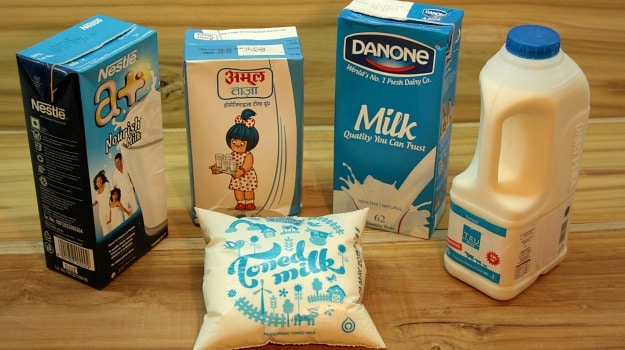
The largest companies like Amul, Mother Dairy, and Nestlé have tiny percentages of the market, and they’ve been there for decades. Market research firms Mintel and Euromonitor declined to release specific market share numbers to CNBC. However, a 2016 piece in The Economic Times of India citing Euromonitor put the figures at about 7 percent for Amul, 3.7 percent for Mother Dairy, and 2.9 percent for Nestlé. In short, tapping into the existing dairy infrastructure is effective but time consuming. Imagine the effort of contacting dozens or hundreds of local and regional dairies, processors, or individual farmers. But establishing a separate supply chain altogether is very expensive — a lesson Danone learned the hard way. And when Danone did get milk, the company focused on the wrong products. Danone pushed plain yogurt and flavored yogurt drinks — popular in places like the U.S. and France with high profit margins to boot. But in India around the time when Danone arrived, yogurt comprised only 7 percent of the dairy consumed.
The real money was in ghee, a type of clarified butter, and plain old fluid milk, a product with razor-thin margins dominated by those hundreds of local small-scale producers. Analysts explained to CNBC the simple reason why Indian consumers shunned Danone’s prepackaged yogurt. And if Indian consumers did want to buy premade yogurt, they had a slew of cheaper options than Danone. Dairy never accounted for more than 10 percent of Danone’s sales in India, a far cry from its global 50 percent. Its specialized nutrition arm picks up the slack, and the company announced a renewed focus on that division when it shuttered its dairy operation. Meanwhile, two of their biggest competitors, Amul and Nestlé, made nearly five billion and 750 million from dairy, respectively. But not all hope is lost for Danone’s dairy in India.
In January 2018, the same time that Danone ended its dairy production there, the investment arm of the company announced its part in a 26.5 million dollar investment in Epigamia, an Indian yogurt startup. This could be a sustainable move for Danone in India’s dairy industry because Epigamia offers consumers products that add value onto the plain yogurt they will make cheaply reception . But perhaps most importantly is this: while much of the population still makes yogurt the old-fashioned way, analysts predict that a growing number of consumers will want to buy premade options as they move into corporate jobs in developing urban centers. Very large numbers indeed. If only 5 percent of India’s 1.35 billion people decides to buy prepackaged yogurt, that’s over 67 million consumers — more than the entire population of Danone’s native France.
Hyderabad is not only famous for Charminar and Ramoji Film City, but it is also widely known for its food specialties like Biryani, Irani Chai, and Kheer. Hyderabadi Biryani is not only a popular delicacy in India but across the world. Tourists visit Hyderabad to taste the unique flavor of its Biryani. Apart from Hyderabadi Biryani, this city also has excellent South Indian Cuisine. Here is a list of five places best for serving delicious food, and you should try them out this Monsoon.
Top Restaurants in Hyderabad
If you are looking for some fantastic restaurants in Hyderabad, which serves you the Hyderabadi Special as well as the delicious South Indian Cuisine, this is the correct place for you. We all known Biryani is the most sought-after food in Hyderabad, and hence, it is also known as the Hyderabadi Special. Do you know, there are a few fantastic places which also offer excellent South Indian Cuisine? Let’s find out about the restaurants:
Paradise Circle, Hyderabad: One of the most renowned restaurants to serve the Hyderabadi Special Biryani is none other than Paradise Circle. They have their restaurants all around India. Their Biryani is the most authentic Hyderabadi Biryani present in India. They won multiple awards, such as the Times Food & Nightlife Award 2018, “Restaurant Serving the Best Biryani” award at the Asian Food Congress, 2019. Their name also got enlisted into the Limca Book of Records for achieving the “Most Biryani Servings Sold in a Year.”
Irani Chai, Hyderabad: Monsoon and Chai go hand in hand, and Irani Chai is one of the most popular Hyderabadi Specials. The place is quite famous for serving the best possible Irani chai and is also known to be affordable. Along with the unique tea, they also make samosa and other snacks.
Almond House, Hyderabad: The Almond House is a famous sweet shop in Hyderabad, for Kheer and other delicious delicacies. They also have a separate section for South Indian desserts such as Ariselu, Bobbatlu, Jangri, and many other sweets. They also serve individualized biscuits and have named them Bisticks.
Udipi’s Upahar, Hyderabad: The most authentic restaurant to serve South Indian Cuisine in Hyderabad, which has been established in 1996. Here, they serve vegetarian dishes like Idli, Dosa, Vada, and different varieties of them. The taste of the food served is unforgettable, and it would remain etched on your memory for a very long time. The restaurant is very hygienic, and they serve high-quality food.
Café Bahar, Hyderabad: Another renowned restaurant to serve Hyderabadi Special Biryani is Café Bahar. They serve varieties of Biryani, and the taste is to die for. The café was established in the year 1973 and has been going strong ever since. If you are in Hyderabad, you cannot miss the delicacies served here.
It would be best if you visited the places in the Monsoon season. No one ever returns home disappointed after tasting the food from these restaurants. Go, have some incredible experience and trust me, you won’t regret it.
Who doesn’t like to eat some McDonald’s now and then? Would you like it if you got to know that now, you can get your favorite burger for free and also discounts on your order? Want to find out how? Let’s find out then, shall we?
McDonald’s is world-known for burgers and fries, but it is also famous for the relationship it maintains with the customers worldwide. They are always on the move to develop for the better. They came up with the www.mcdvoice.com survey in 2020, which focuses on the customer’s needs and whether they are satisfied with the quality and the rules and regulations that McDonald’s follows. Even, McDonald’s has set up a separate portal that gives out the details of the survey. In the www.mcdvoice.com survey, each customer is given a voucher coupon, and the best part of this coupon is that they can redeem it once they buy McDonald’s the next time. The www.mcdvoice.com survey is only to ensure customer satisfaction, and that’s how McDonald’s always makes the bond between them and the customer stronger. Now, they’re focusing on how to reward their customer with the www.mcdvoice.com survey. The survey brings out the best between the company and the customer. This is a beautiful way to be acquainted with the customer’s feedback and if they are liking the food or the service that they are being provided with from the McDonald’s stores. This survey shows how McDonald’s values its customers and how they look forward to evolving their relationship with them. McDonald’s surely made their customers feel friendlier, don’t they?
Want to get some rewards?
Who doesn’t like to get rewards? McDonald’s has just the right survey to make that happen. You can get rewards from McDonald’s only by giving your valuable feedback to them on their mcdvoice.com survey official site. You have to go to their official website and write down how was your last experience at the restaurant, and you get a reward from McDonald’s just for that. Isn’t this amazing?
McDonald’s is going big with the mcdvoice.com customer survey where they are providing the customers with discounts on their next purchase and guess what, “free burgers,” too!
First and foremost, you need to go to the mcdvoice.com survey official site.
Once you enter the mcdvoice.com survey official site, you can choose a language according to your convenience.
After you are done selecting the language, you have to enter the http://www.mcdvoice.com survey code, which you can find on the receipt of your McDonald’s bill.
If you are done entering the www.mcdvoice.com survey code, you will be shown to a page where you find the www.mcdvoice.com survey questions.
Answer the questions given. You have to answer the questions as honestly as you have. The www.mcdvoice.com survey questions are mostly about the food quality, the behavior of the staff and also, the service. The more clarity you have with your answers, the more McDonald’s would get to know about the stores’ real condition.
Once you are done with the questions, submit the feedback.
After presenting the feedback successfully, you will be provided with a www.mcdvoice.com survey receipt code.
You need to write down the www.mcdvoice.com survey receipt code to redeem it once you’re at McDonald’s next.
Yes, there are some rules which one has to follow to get the rewards from McDonald’s.
The customer cannot give much feedback. You can only take five surveys in one month.
The customer has to be 15 years old, and that’s a must. You cannot be less than that to take the mcdvoice.com customer survey.
The www.mcdvoice.com survey receipt code you received at the end of the feedback submission, has a validity of 30 days. You have to redeem it before the end of the following 30 days.
The survey is only for those customers who are from the USA or Canada.
To register for the review, you have to use the www.mcdvoice.com survey code, which is on the receipt of the previous week.
You cannot be a part of this survey if you’re a past employee of McDonald’s.
Last but not least, the www.mcdvoice.com survey can cancel the coupon and are not liable to give you any explanation behind it.
The www.mcdvoice.com survey is made, keeping in mind about the customers and how to keep them happy with the service McDonald’s provides. With the www.mcdvoice.com survey, the company would be able to understand the graph of satisfaction they are proving to their customers. Hence, it’s going to be profitable for their development. On the other hand, you get to have the coupons after you submit the feedback form. Once you get the coupons and are eligible to redeem it, you get discounts and free burgers. That’s how you become profitable too. Hence, it’s a win-win situation for both.
You can brighten up your 2020 by taking the www.mcdvoice.com survey now. You don’t have to do much, take out the last bill you paid to McDonald’s and go through the smooth process to get that free burger. It doesn’t seem so hard now. We can only hope that McDonald’s spreads the www.mcdvoice.com survey outside the USA and Canada. Everyone would like to be a part of this survey, and once the study covers worldwide, McDonald’s would get a far diverse knowledge about if their customers are satisfied throughout the world or not. We all are looking forward to taking the www.mcdvoice.com survey and to get some free burgers.
“Hazard Analysis and Critical Control Points”. It is basically a preventive approach to food safety which is used to find and then eliminate the biological, chemical and physical hazards which may or may not be there in production processes and can cause the final products to be unsafe and unhealthy for human consumption. These are certain principles which have been designed by the government to ensure the food quality and safety. It is a various step process that is followed in any food industry. The HACCP system is followed at each and every level of food chain i.e. in food production and preparation processes which also includes packaging, distribution and even consumption by the consumer. It is therefore known as FARM-TO-TABLE process. This technique was originated by NASA in the 1960s and US food and drug administration gave a particular definition to this. The main objectives of the HACCP system are – • Prevention of food-borne diseases so that no one is affected after the consumption of food. • This system mainly focuses on quality assurance unit i.e. maintains the quality of the food. • HACCP system tends to reduce the cost of analysis of food. • It also reduces the losses which occur due to product recall. • And finally it helps in protecting the reputation of government.
HOW TO CONDUCT A HACCP PLAN?????? Conducting a HACCP plan is a 5 step process as mentioned below –
Collection of HACCP resources and assembling of HACCP team which will look into the all steps.
Description of the product by the team and deciding its method of distribution.
Developing a complete list of ingredients and raw materials which are to be used in the production of the final product.
Developing a flow diagram of the process i.e. how the product will be manufactured, its complete process.
Meeting the requirements for the product to be manufactured safely.
PRINCIPLES OF HACCP There are 7 main principles of conducting successfully a HACCP plan.
To conduct a hazard analysis is the first step in which all the potential physical, chemical as well as biological hazards in the production of the product are identified.
To determine all the critical control points (CCPs). At this step, all the control measures are thought to be applied. Basically at this step, those points are identified where control measures can be applied for the safety. This step is very essential to eliminate hazards completely from the product.
To establish critical limits is the next step i.e. in this step the control measures are actually applied and also the maximum and minimum limits are set for the preventive measures. To each point found in the last step, a critical limit is applied. These limits assure the food safety.
To establish monitoring procedures is the next step in which all the planning which was done yet is monitored and it should be done on a regular basis. This step assures that there is no mishandling of any procedure of the complete plan.
To establish corrective actions is the next step in which appropriate correct actions are taken if after monitoring it is observed that the critical limits are not met. The corrective actions for each point and limit are already pre-decided.
To establish verification procedures is the next and most important step in which the complete HACCP plan is validated. The complete verification of the plan is required to assure that the precautions and preventions are taken carefully.
To maintain record keeping and documentation procedures is the final step in which the record is maintained and established which must be done regularly. It is necessary for validation procedures.
There are various types of interactions between microorganisms and other living organisms. These interactions are natural, constant and also play a significant role in maintaining the ecological balance and stability of the biogeochemical cycle of the nature. Mostly, the food products we consume are obtained from plants and animals and also these foods are rich in variety of microorganisms which may or may not be pathogenic to humans. Growth of microorganisms in food depends on various different parameters which can be broadly classified as INTRINSIC and EXTRINSIC factors. INTRINSIC FACTORS – These are the factors that are present in the food substance in which the microorganism is growing, or it may be said as the internal factors of that particular food substrate. Various intrinsic factors are-
Hydrogen Ion Concentration – All the microorganisms have minimal, maximal, or optimal pH for their growth and survival. Thus, the growth of microorganisms in food is affected by the pH of the food material. Foods may be classified as low pH or high pH foods. Most fruits, fermented foods come under high acid foods whereas most vegetables, meat, fish and milk are low acid foods. pH range of different microorganisms are : • Molds – 1.5-9.0 • Yeasts – 2.0-8.5 • Gram-positive bacteria – 4.0-8.5 • Gram-negative bacteria – 4.5-9.0
Water activity or moisture content – Water activity can be defined as the measure of availability of water present in any substance which can be used for biological functions and it also gives an idea of free water present in any food product. Water is an excellent requirement for microorganism for their growth. It has been observed and noted that the water activity of fresh food substances is 0.99. Also bacteria require more water activity i.e. free water in any food substrate for their growth than molds and yeasts. If specifically studied, it will be observed that gram-negative bacteria have relatively higher water requirements than gram-positive bacteria. Free water in any food substance is an essential requirement for the growth of microorganisms. Water activity of any food can be reduced by various absorption techniques to reduce the affect of spoilage by microorganisms.
Redox Potential – Redox potential can be defined as the reducing and oxidizing power of food and it also greatly influences the growth of microorganisms in food. The concentration of oxygen present in any food sample determines the type of microorganism that will grow in it. Like, aerobic microbes require the oxygen whereas anaerobic microbes can also grow in lack of oxygen. So, it can be said aerobes grow at positive O-R potential whereas anaerobes grow at negative O-R potential.
Composition of nutrients – Food composition is also an another intrinsic factor which influences the growth of microorganisms in food. There are 5 major nutrients group which are counted i.e. carbohydrates, proteins, lipids, vitamins and minerals, amount of each varies with the type of food and so the type and growth of microorganisms. Bacteria require the most nutrient requirement than yeasts and molds. Microorganisms utilize large complex nutrient molecules and convert them into smaller molecules. For e.g. there are some proteolytic bacteria which acts on proteins and hydrolyze it. Also some microbes convert lipids into glycerol with the help of an enzyme lipase. Some microorganisms which require vitamins for their growth are called as fastidious microorganisms.
Inhibitory substances – There are a number of inhibitory substances that are present in foods by their origin which naturally prevent the growth of microorganisms in them. For e.g. some plants contain essential oils possessing antimicrobial properties. Milk also contains several antimicrobials like lactoferrin, conglutinin, etc.
Biological structures – The natural structure of some foods have the remarkable excellence in controlling the entry as well as the growth of microorganisms in or on them. It can be noted as the natural covering of some foods which prevents the entry of microbes. So, the inner parts of the healthy tissues are sterile and possess very less microbial count. For e.g. skin of egg, rind on fruits, etc.
Drying or dehydration can be defined as the removal of water from the food by controlled processes, which can be achieved by either of 3 ways –
Evaporation due to heating of the food product
Osmotic dehydration
Sublimation, or freeze drying
Drying can be explained as a 2 stage process in which in the first stage, the surface water removal takes place which totally depends on the state of air surrounding that food particle such as its temperature, relative humidity, and speed. On the other hand in the second stage of the drying, the moisture which is present within the food particle is allowed to move onto the surface which can be then again removed by the process of the first stage. The rate of drying basically depends on the time that moisture takes to come onto the surface of the food from its inside. Heating of any particle accelerated its time of drying. The shortest time period has been noted in starchy foods. There are 5 basic methods of drying –
TUNNEL DRYING – Many years ago, for the purpose of preservation of agricultural products by the means of drying, a solar tunnel dryer was developed. It is an amazing device which can be used for the hygienic preservation of food and also acts as a good alternative for the seasonal agricultural surplus. Also the foods which are dried using this process are more hygienic and superior rather than other methods.
SOLAR DRYING – I t is also known as sun drying and is a method of drying any substance using natural sunlight. This drying technique offers faster drying rates and greater protection of the product. There are several problems or limitations which are associated which this type of drying technique, such as the drying areas must be free of dust and whenever there are chances of a dust storm or rain, the drying process cannot be continued. There is also a process known as shade drying which can be carried out for the product which can easily lose their color and turn brown if kept in sunlight i.e. they are non-photosynthetic.
SPRAY DRYING – This is a unique technique which ultimately transforms the substrate from a liquid to dried form by spraying the feed into a hot drying medium. It is a continuous process and takes time. The dried products which are ultimately obtained can be in the form of powders, granules or agglomerates. It is a multi-step process.
VACUUM DRYING – Since evaporation of water takes place more easily and effectively at lower pressures, so vacuum drying was developed which is faster than the process of evaporation. This is an expensive method and is used for some specific products.
FREEZE DRYING – This method uses the process of sublimation, which is a process which directly converts solid particles to their gaseous state, without first melting them. It is a technique which is very used in preserving food at low temperatures because at less temperature, chemical reactions occur very rarely and food is rarely attacked by pathogens. It is also a multi-step process which includes freezing, vacuuming, heating and finally condensation of the product.
Food is considered contaminated when unwanted microorganisms are present. Most of the time, the contamination is natural, but sometimes it can be artificial too. NATURAL CONTAMINATION occurs when microorganisms attach themselves to foods while the foods are in growing stages. ARTIFICIAL CONTAMINATION occurs when the food is handled or processed such as when fecal bacteria enter food through improper handling procedures. CAUSES OF FOOD SPOILAGE:
Growth and Activity of microorganisms – Bacteria, yeasts and molds are microorganisms that cause food spoilage. They produce various enzymes that decompose various constituents of food.
Enzyme activity – Action of enzymes start the decomposition of various food components after death of plants and animals.
Chemical reactions – These are the reactions that are not catalyzed by any enzyme. E.g. Oxidation of fats
Vermin – It includes weevils, ants, rats, mice, birds, larval stage of some insects. Vermin are important due to asthetic aspect of their presence, possible transmission of pathogenic agents and consumption of food.
Physical changes – These include changes caused by freezing, burning, drying, pressure etc. SOURCES OF FOOD CONTAMINATION. PHYSICAL SPOILAGE is due to physical damage to food during harvesting, processing or distribution. The damage increases the chance of chemical or microbial spoilage and contamination because the protective outer layer of food is broken and microorganisms can enter through it. CHEMICAL SPOILAGE in food are responsible for changes in the color and flavor of foods during processing and storage. After harvesting, chemical changes begin automatically within foods and lead to deterioration. Every living organism uses specialized proteins called enzymes to drive the chemical reactions in its cell. After death, enzymes play an important role in the decomposition of living tissues in a process called as autolysis (self-destruction) or ENZYMATIC SPOILAGE. MICROBIAL SPOILAGE is due to bacteria, yeasts or molds. They produce various enzymes that decompose various constituents of food. • Besides natural microorganisms, foods can be contaminated with different types of microbes coming from outside sources such as air, soil, sewage water, humans, food ingredients, equipments, packages, insects, etc.
The primary sources of microorganisms in food may include –
Soil and Water – Soil grows agricultural produce and raise animals and birds which might contain several microorganisms. Also, these microbes can multiply in soil and their numbers can be even very high as expected. Fecal materials may also contaminate soils which can act as a source of microorganisms. Sewage water can also contaminate crops with variety of microorganisms when sewage water is used as a fertilizer. So, Sewage must be always treated before using as a fertilizer.
Plants and plant products – The inside tissue of food from plant sources are essentially sterile except for few porous vegetables such as radish, onion and cabbage. Also it has been observed that some plants produce natural metabolites that can limit the presence of microorganisms in those particular foods. Fruits and vegetables contain a variety of microorganisms on their surface and their presence and number depends on various factors such as disease of the plant, storage, etc.
Food utensils – Many different microorganisms can contaminate food utensils from which they can transmit to human body and make them ill if pathogenic. Proper cleansing and sanitization of food utensils is required before serving food in them.
Food handlers – Food handler is a person who touches or handles food. The microorganism may be transmitted from his hand to the food and may be harmful for the person consuming that particular food. The microbes can come from animals or from the environment.
Animal hides and skins – Food animals and birds normally carry various indigenous microorganisms some of which are pathogens and are responsible for food-borne diseases in humans. The number of these microorganisms is less than10/g.
Air and dust – Microorganisms may be present in dust and moisture droplets in the air. The microorganisms which are present in air may be transient or variable depending on the environment. Some pathogenic microorganisms may cause air-borne diseases.
Food is the necessity of our life and we cannot live without it for obvious regions. People and our ancestors have travelled distances in search of better and pure food. Food consists of various constituents helpful for our body to grow well and thus perform well. Proteins, vitamins, some fats and fibre along with carbohydrates helps our body to generate its own energy which helps us to perform our day to day activities. Also some of these helps our body to develop a protective shield which is our immune system which do protect us from various harmful bacteria and virus and thus fight them back, keeping us healthy and fit. Humans have been eating various foods for the purpose of taste and dissolved energy sources in them. Milk is one of them and has helped our dynasties to build up the desired strength from it’s richness in desired components. Milk has been the basics of life as soon as a new baby is born. Mammals feed their babies with their own milk initially which not only keeps the new one feeded but also provides the necessary antibodies and proteins which help him/ her to survive the new environment and protect them by building a strong immune system.
We shifted to animals excreted milk be it cow, goat or sheeps. As we came to know about the nutrition and taste in those dairy products which could be made from these. But with times people’s mindset has seen a change and have shifted to dairy diets thus food which is not made from dairy products and especially milk. Various controversies have come up and people have made a number of claims which do suggest the negative effects of milk on human health. People have come up with the thought that milk and it’s product causes:
Bones to be brittle
Cancer
Disease related to cardio
Allergies
Pesticide in these products
There have been researches and studies which do find relation between milk and it’s cancer causing possibilities.These could be breast cancer, or prostate cancer especially.But from different sources and collecting on a wider scale it was found out to be healthier than unhealthy. Rather various studies on a contrary came up with the possibility of how milk can be healthy for cancer patients as it do build a protective wall and immune system.But still the risk of Prostate cancer was seen as they increase the quantity of milk products in their diet with this also is believed to be incorrect by many scientist and food expert, also no significant result could find any relation between milk causing bones to be brittle,cardiovascular disease and many others. But people do believe that these do consist of pesticides as cattle and other animals do feed on them might have them.But The milk or the products we consume are fully tested and purified and all these adultrants are removed from them, thus making it healthier to drink but facts regarding allergies have been found real especially the acne.
But we know that milk has the desired nutrients, fast, proteins responsible for making our body stronger and healthier. But the other factors which do make these products as suffering is the treatment with cow, as they are impregnated over and over so as to obtain milk from them. Also they are killed when they become non productive to us. But we acknowledge that milk is an important part of our lives and we can not just stop utilizing it. But what could be the other source? Plant based milk is a good option, which includes soy milk and has equal constituents like those of normal milk. There are other sources like almond, coconut and many more. But there are some other ways to make milk also. Various technologies and machines have come up which can prepare alternative milk and identical to the dairy ones this is done by fermentation and gene modifying bacteria.
“Milk is not harmful for humans and not for other animals but it’s production does let to increase in animals suffering. So we need to surely come up with the ideas so as to reduce the harm effect and increase its usage and spread it with more of its benefits and make people around us and the coming generation more healthy and fit”.
Aloo Tikki, Afghani Street Bites, Chaat, Kebabs, Kachori Aloo, Chhole Bhature, Rajma Chawal, Parathas – these are reasons enough to call the Capital Delhi-Belly.
Delhi has always been a diverse city with people coming from all over India to settle and start a new life here. Many people know Delhi to be a city of rich cultural heritage. But Delhi, as a city, is so much more than that. And one aspect of this is the food in Delhi that makes it a great tourist place. The people of different cultures and traditions have brought with them their unique tastes to Delhi too.
It is not a hidden fact that Delhi has no particular food culture; the city acquires the identity of all types of people living here in its food preferences. The maze-like alleyways and marketplaces of Delhi are known to lure foodies with their curbside kiosks serving rich in taste street food while the studded restaurants add their own charm and elegance to the cuisine of the city.
Being an amalgamation of several cultures, Delhi is among the few places where you can find a South Indian devouring a serving of Butter Chicken and a Bengali enjoying Idli Sambhar, and it is not even astonishing anymore. The best part about this is that all these recipes are age-old, being handed down from generations after generations, helping them stay true to their original flavors.
Here’s what Delhi has to offer, apart from the traditional cuisine from all the states:
Mughlai Cuisine: One of the oldest cuisines being served to the Delhiites is the Mughlai cuisine. Even today the taste of the Mughal era can be felt in the Kebabs from the time of Delhi Sultanate while Nihari and Biryani have become a household name. The delicious fruit-flavored sorbets or Kulfi as we know them today were originally served in the Mughal kitchens. Karim’s and Ghantewala, famous for their Kebabs and Karachi Halwa respectively, have also served many of the Mughal emperors in the past.
Street Food: Another group of delicacies bringing the people together is the street food available in almost every lane of the city. Names like Sita Ram Diwan Chand, Bittu Tikki Wala, Nataraj Dahi Bhalla, Daulat Ki Chaat, and Al Jawahar have been churning out some of the country’s best street grub. There is a street named Parathe Wali Gali in Chandni Chowk which in itself is enough to show the love people of this city have for Parathas.
International Cuisine: Along with the traditional dishes, Delhiites have also truly embraced the authentic International cuisines which means there is no trouble finding Chinese, Thai, Italian, and French cuisine to name a few. The Churros with chocolate sauce at La Bodega, the Glass Noodles at Gung, and the Cheese Kunafa at Zizo are gradually making their way into the hearts of Delhiites.
The diversity that Delhi shows in its food culture is a mere reflection of the people who have lived here in the past and the people who call it their home in the present. It is this diversity that brings the people together and makes Delhi a better tourist spot.
Evolution of mankind has led humans to different phases and eras of lifestyle with doors opened to every kind of facility, commodity and comfort. But all this came with all the great efforts and struggles of our ancestors who traveled from place to place in search of food and water initially, then shelter, knowledge,relationship,and many more. So there is and will be a lot more to learn from the finding and struggles of our ancestors. But we humans as we evolved, tried to shift towards things which fascinated us. So we hardly invested in things which were really necessary for us, especially our body truly needed it. The best and finest example for the same is food. Humans and its tribes have walked distances in search of better water and food resources so as to remain fit and healthy. But in today’s world we have totally shifted from the mindset of “What is necessary to our body and health towards What is necessary for our taste”. So doing all this we truly have deteriorated our health and immune system definitely.
Today’s youth has made a quick shift towards these junk and unhealthy foods and love eating it more oftenly. Variety of these outlets have also come up with big brand names around the world , which are into the business of these foods. But this food has affected humans in many ways, especially focusing on the Aggression and Patience level. So to know about this , a survey of around 23000 women who were pregnant was conducted who ate junk food while pregnant, with the one who ate healthy food. It was widely acknowledged that children whose mother ate more junk food during her pregnancy, the children came out to be more aggressive and less patient. Thus the effect of this junk food could widely be seen.
Junk food lacks the main nutrients, vitamins and protein responsible for helping normal humans to perform a number of activities in day to day life. Major thing which these lack is Omega-3 which is responsible for major functioning in our body and helps to fight anxiety and depression, and reduces heart related risk. This was also tested while experiments on Mice as mice-1 was given protein and vitamin rich good while other was provided junk food lacking, Omega-3 , so it was recorded that in the mice who’s diet was rich in vitamin, protein was seen to be calm and healthy whichever the one who’s diet lack vitamins and protein and basically Omega-3 show symptom of anxiety and stress by moving around.
Food and what we eat, do have an effect in our actions and decisions which we perform. If we eat healthy, our mind feels fresh and more often takes decisions in a calm and peaceful manner, while if we eat food which lacks these things, the conditions are reversed. This was seen I’m an experiment where 2 scenarios were taken.
First case the participants were given junk food before the experiment.
The participants were given healthy, protein, and vitamin rich food.
The experiment was like that there will be two participants and the other participant will have 10 dollars, it’s his choice how he divides it between two. If you take the money irrespective of how it is divided, it’s yours but if you challenge the issue of division, then both lose and no one takes the money.
So in the first case when participants went after eating junk food. They show some actions of aggression and impatience. The other participant divided 10 dollars as 2:8 . Which means that the participant would get just 2 dollars whichever the one dividing kept 8 . Most of the experiment resulted in no one taking money, as they fight back for equal share. This all came out if their sudden action due to lack of patience and thinking about.
While in the second case where participants had better food, they seem to be calm and composed. When the other participant divided in the same ratio of 2:8 . Most of the participants believe to take more money than nothing.
So this shows that how food really affects our day to day actions and thus relates reactions to whatever we do.
There are many more significant researches which do show that how our eating habits do affect our actions, our way of dealing with tasks on day to day bases, and surely our health. So one must try to eat healthy food, irrespective of how it tastes or one likes it or not. It is the need of our body and we require it for performing day to day task in the right and peaceful way. One can have these junk for once in a while but including them in day to day lifestyle would surely have a bad impact on our “health” and surely our “relationship“.
“So one must focus on eating healthy , living healthy and thus behaving healthy”.
WHAT ARE PULSES? Pulses are basically a fruit part of leguminous crops that are harvested solely for the seeds. Dried beans, lentils, and peas are the most common known and consumed pulses. Pulses do not include crops which are harvested green – these are the vegetable crops. Also excluded are those crops used mainly for oil extraction and leguminous crops that are exclusively used for sowing purposes. Generally, all pulses have a similar structure, but differ in color, shape, size and thickness of the seed coat. Mature seeds have three components – Seed Coat, Cotyledons and Embryo. The seed coat or hull accounts for 7-15% of whole seed mass, cotyledons accounts for 85% of total seed and embryo for 1-4%.
STRUCTURE The external structures of the seed are testa (i.e. seed coat), hilum, micropyle and raphe. • The testa is the outer most part of the seed and covers almost all of the seed surface. • The hilum is an oval scar on the seed coat where the seed was attached to the stalk. • The micropyle is a small opening in the seed coat next to the hilum. • The raphe is a ridge on the side of the hilum opposite to the micropyle. When the seed coat is removed from the grain, the remaining part is the embryonic structure. The embryonic structure of the pulse consists of two cotyledons (or seed leaves) and a short axis above and below them These two cotyledons are not physically attach to each other except at the axis and a weak protection is provided by the seed coat to these cotyledons. Thus, the seed is usually vulnerable to breakage. The outermost layer of the seed coat is the cuticle, and it can be smooth or rough. • Both the micropyle and the hilum are related to the permeability of the testa and to water absorption.
There are various steps involved in processing of pulses:
SOAKING – Soaking in water is the first step in preparing pulses for consumption. It reduces the oligosaccharides of the raffinose family. It also reduces the amount of phytic acid in pulses.
GERMINATION – It improves the nutritive value of food pulses. The ascorbic acid content of pulses increase manifold after 48 hours of germination. The germination process decreases or eliminates most of the anti nutritional and toxic factors in several pulses.
DECORTICATION – It is a simple method to soak the seeds for a short time in water, the husk takes up more water than the seeds and may be easily separated by rubbing while still moist. In the alternative, the soaked grains may be dried and the husk is removed by pounding and winnowing. Roasting also renders the husk easier to separate.
COOKING – It destroys the enzyme inhibitors and thus improves the nutritional quality of food pulses. It also improves the palatability of the pulse.
FERMENTATION – This process increases the pulse digestibility, palatability and nutritive value. It also improves the availability of essential amino acids and thus, the nutritional quality of protein of the blend.
PULSE MILLING – The removal of the outer husk and splitting the grain into two equal halves is known as milling of pulses.
“Glory to Allah, who created in pairs all things that the earth produces, as well as their own(human) kind and (other) things of which they have no knowledge.”
-The Holy Quran [36:36]
No element on the life sustaining earth exists without its complement. For example, the complement of zero is one; solids and voids; light and dark; if one did not exist, the other would lose its meaning. This refers to both in terms of the one who sustains as well as the energies sustaining them. The balance among the elements of the entire universe is maintained through the various visible as well as invisible energies which in turn exist in pairs. The energy could be classified as the ones within the human who sustain the energies of the earth and the other being the natural forces of the universe that aids the universal equilibrium which further keeps the physical and psychic activity in balance. The harmony of the earth is controlled by the physical as well as the metaphysical energy forces of the cosmic energy. The energy takes part in influencing all the occurrences on the earth be it at architecturally large scale element like a city or a small scale architectural structure as a home. Both would be classified into the microcosmic level of the energy.
“Space is nothing, yet we have a kind of vague faith in it.”
-Robert Smithson
The existence of energy occurs in the place of nothingness. Voids hold the highest sources of energy. The architectural design is nothing but a technique of designing voids to show a flow of spaces making a way for the flow of energy among the various spatial arrangements. Most of the people in the Indian Society prefer Vastu Vidya to be incorporated while designing a space. The major reason being the energies that is considered to be flowing through the designed spaces and to create the balance between the concrete mass and the natural elements. Humans occupy the voids yet they fail to understand the meaning of the unseen energy forces that is felt through the experiences they encounter while inhabiting that particular personalized void that is the physical manifestation of the memories and imagination of their own. The metaphysical aspect of architecture lies within the fact that it influences the user experiences of their inhabited voids in the line of time. It connects the past to present and brings about a psychological and emotional connection.
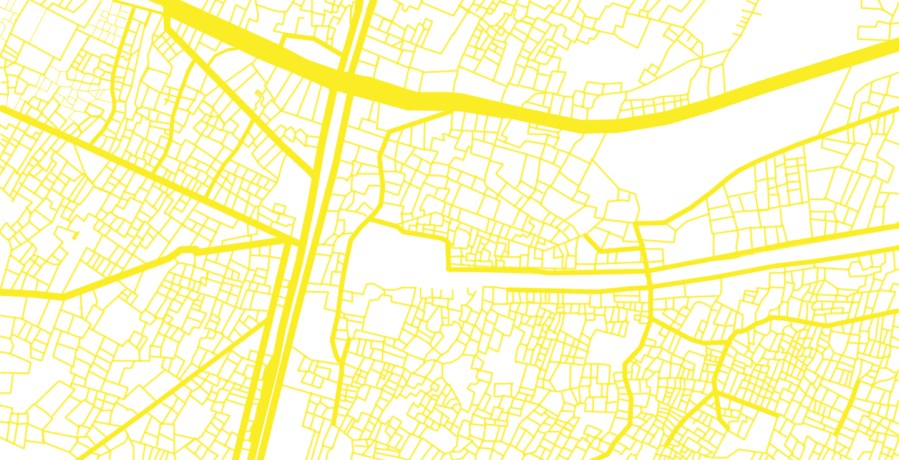
An environology master, David Koh, stated, “When people built the house, the energy inside the house is static. Once the people live in, the energy inside the house is dynamic. People may affect the building, and the building may affect the people. And it’s not positive thinking that the people need, but it’s energy that makes people think positively.” The energy flowing through the various spaces creates an imbalance due to the dynamism of the humans living in. This in turn, creates a flux within the dialects of energy within the physical, emotional and psychic connectivity of the people. Architecture is a living tapestry and a constantly changing phenomena. The connection of the energy within the human body and outside, impacts not only buildings but other elements too that together builds the abstract and hypothetical whole. The spatial fabrication of the concrete masses and the multiplicity of the same in diverse alignments as a whole builds the city fabric. A city is a spatial and temporal dimensions of architecture on a vast scale. The physicality that a city comprises is, districts, landmarks, streets, edges and nodes. The streets become the prominent defining thread of the city, connecting the different entities through its networks. They show a directional shift in motion of spaces with respect to different frames of reference exploring more than what is comprehended by the senses with the metaphysical lens to look behind the abstraction.
To represent the extraordinary within the ordinary, the light is put forth to a street in Kolkata, Topsia, recognized by the number ‘90’, has not yet been identified as one of the most alive streets of the city of joy yet they have the metaphysical fundamentalism. The street is particularly a connectivity to one of the Muslim populated locality of the place. The majority of the population living in the locality belongs to the middle class strata of society. They adapt themselves to the concept of ‘less is more’3 and seek the intangible aspects of the spaces that they use. Considering the theories relating to the energy sources, streets becomes the most dynamic element that could be considered as the life of the whole city. They deal with more than the vehicular and pedestrian movement. The streets deal with the dialects of dynamics of metaphysical consequences.
Figure 1: Layout of Streets of Kolkata; source: author.
Within and outside the realms of architecture, streets pave the way at the microcosmic level for the energy distribution network similarly to the way it functions for the crowd and vehicular activity. The metaphysical lens from different frames of reference gives an opportunity to analyze the impact of the metaphysical link and how it is evoked with the crowd in context to the existing surrounding. Different users feel a variety of different emotions in consideration to one particular space.
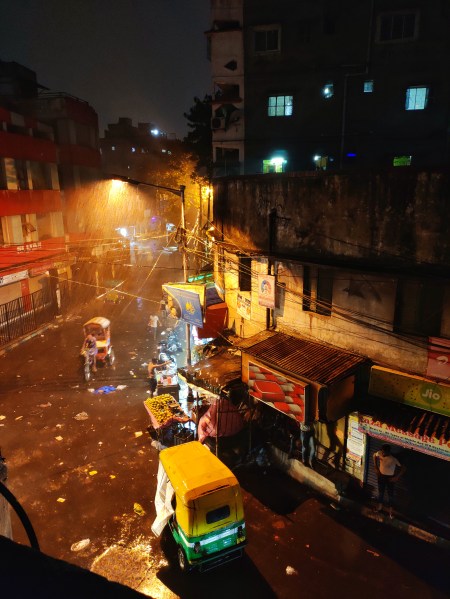
Figure 2: The Street ‘90’ on 12th June, 2019; source: author.
A resident of the place when asked about her experiences with the place said, “We have been staying here for about 15-18 years now. It has an essence of familiarity and home. The existing buildings, the shopkeepers, the vendors, and when I say vendors I really mean it. They are accurate with their location of stalls and wouldn’t trade it with anyone. Ive seen a lot of changes in the place. The building in red and white was built after demolition of an old 3-storey building for commercial purpose yet the upper floors still remain untouched after being built for so many years. The chaos is the essence of this place and without it, this street will lose its essence and identity.”
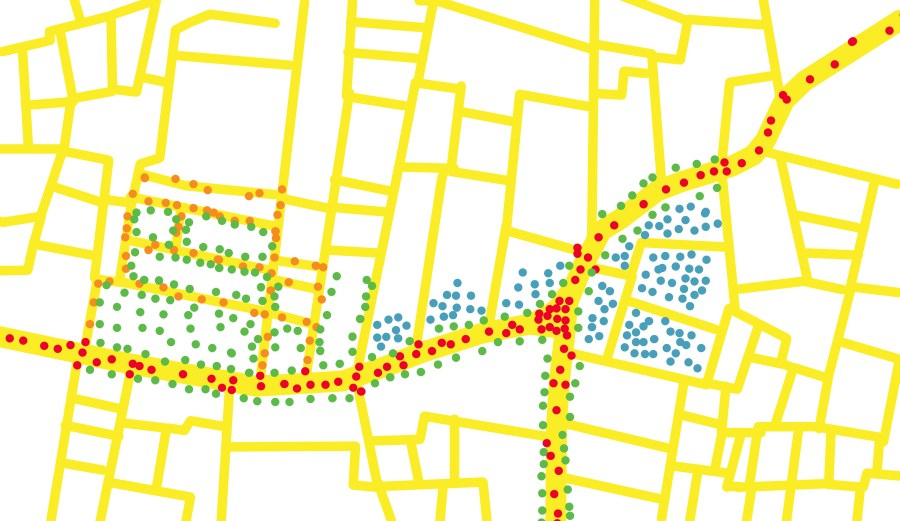
Considering the quantitative aspect of the street, it is about ten meters in width, with two meters of it occupied by the street vendors. An analysis of the street was done in three different phases of the day. When the morning struck, the silence is disturbed only by the daily activities of parents dropping off their half-dozed children to schools either by private or public convenience, which here is the auto rickshaws, who typically place themselves along the edge of the building as shown in Figure 2. Slowly and gradually as the time transcends the vegetable and fruit vendors take the edge of the street as their potential business spot. The traffic becomes evident by the noon with children coming back from school, having there go at the Sharbet waalas. As soon as the sun goes down, the street has an overwhelming response by the users creating itself in a chaotic mess of disoriented vehicles and people trying to make way to get out. Simultaneously, the sequence of functioning of the streets inflects thrrough its natural course. The female crowd encircles the ‘puchka waale bhaiya’, drooling over the smell of the tamarind water. A few steps towards the east would bring us to a smellscape of a multi-cuisine food corner with a large hot plate with parathas being fried, a traditional clay barbeque for the kebabs being cooked upon the coals, another man assorting the shelves with momos, fried crispy chicken and another struggling with delivering the order to the respective customers superimposing each other tones in a competitive streak to get their order first. The edges of the streets are defined by the utilities of all kind such as a pharmacy, general stores, grocery shops, food kiosks and corners, markets within a radius of a hundred meters, a shopping complex built few years back, occupied only the ground floor of the building structure. A fruit vendor defined the street as, “It is a metaphor of how our life is, always moving and moving in the forward direction. Despite the chaos we love our life so do we love this place.”
Figure 3: The Feeling Mapping of the Street (red-chaos, green- rejuvenation, orange-action, blue-contentment); source: author
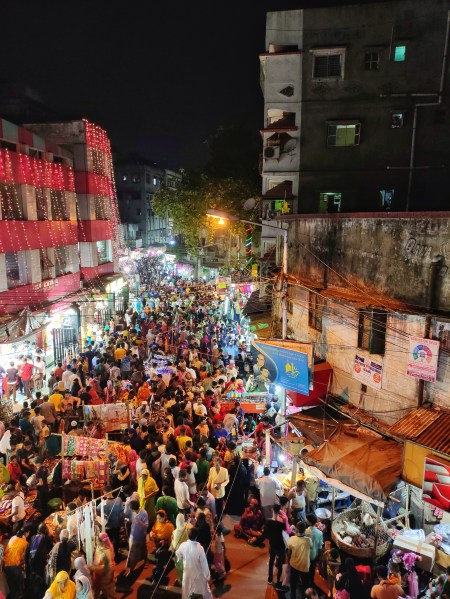
The rhythm of the basic functioning of the street is inflected during the festivities, such as the two Eids and Muharram. The zeal within the crowd becomes evident and the streets stop serving as a vehicular access instead it becomes a hub of utilities as shown in Figure 4.
Figure 4: The Street ‘90’ on 4th June, 2019 (On the Eve of Eid); source: author
In terms of architectural analysis, the flaws couldn’t remain unseen, but what the architects couldn’t see is the intrinsic experiences that the users have with the place. The elegance of the street is a culture of contentment and containment. It depicts the unification of the users belonging to all strata of the society interacting with each other whatever the purpose may be. The dynamics of the streets and the humans represent a whole of the community be it the rich or the poor. In a simple world, the whole of the world can be explored. The local architectural vocabulary of the streets shows motions and emotions of all colours. It depicts joy as well as sorrow. The chaos and the peace, all the comedies and tragedies. The energy drained is rejuvenated with the constant flow of energy on the street. The essence of the chaos in itself shows the intrinsic connection between the built and the unbuilt. The street evokes the intangible aspects of the userrs. The user activity is the result of the concentrated energy source at the micro cosmic level connecting humans with the space at a deeper level. Configuration of the whole of the city is determined by the streets that becomes the highest sources of energy flowing throughout. The built is to exist what the unbuilt is to life. The boundaries defined by the concrete is a personalized space to exist in harmony, but to co-exist, an undefined yet the key that holds the city together. A street has a potential to turn itself into anything it wants. The street is an induced public space. The street has evolved through the line of time of urbanization inflecting the course of its motion. Due to the increasing number of concrete massing, the spatial contraction of the streets are taking place in localities like Topsia in Kolkata whereas due to the urbanization, the expansion of streets also take place with putting an end to the life of the city creating it in a block of monotony and regularity only used as an access not as a space for creating an interaction between the built and the unbuilt, the known and the unknown. Spatial expansion and contraction taking place to accommodate structures. Street is one part to the whole that encapsulates the built and the user. People have a tendency to experience voids hence, they hold human sentiments. We are dehumanizing the streets by making it lose its existence by the loss of depiction of culture and tradition. It is a lost element with the thoughts drowned in hues of grey unaware of how to survive in the chaos. The task of an architect is to blend imagination with practicality by balancing ideas and reviving the true nature of the streets in context to human activities.
REFERENCES
1. The Holy Quran
2. Mustofa, 2011. According to Dr. R Tatang Santanu Adikara, the Head of Bioenergy Research Centre in Surabaya, human gets energy from two sources: inside the human body and outside the human body.
3. Metaphysical Approach for Design Functionality in Malay-Islamic Architecture, article in procedia-social and behavioral sciences-aug 2015
The world is almost ruled by powerful countries like USA, China, Japan, Russia etc. and its none of the wonder that developed countries are helping as well as exploiting the developing countries. Developing countries like India, Pakistan, Srilanka and many more… are mostly dependent on the developed countries, but the biggest question arises will India be list of the superpower countries by 2050. The answer would be yes, but unfortunately due to pandemic situation that number will rise to 2055-2060 because India faced a major setback due to this and also India build a strong relation with other countries with help of our respected Prime Minister sir. Let us look out which factors are going to help to build a nation with superpowers:
1- Economic growth
Chinese economy is based on foreign investment, while India is growing based on a more local economic sector. So if we look in future i.e. after 30-40 India will overtake as it is very slow process. We know very well that many MNCs have begun to invest tremendously in India and has started to rely on Indian engineers for their next generation products. Companies like GM, Boeing, Motorola and many others have begun to build their Research and Development facilities and Asian headquarters in India. They see more potential on Indian market. If India is able to maintain this steady growth, it can definitely become 2nd largest economy by 2050.
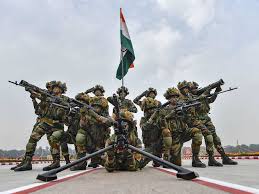
India stands on 4th rank in terms of defense with the budget of 54 billion $ and 13L+ army man. India has a total of 2,102 aircrafts and a naval strength of 295 and is ready to tackle any military emergency. India is gaining new technology and ideas from world and also our DRDO is working very efficient like wise India adopted 5th generation fighter plane from Russia and Defense Drone technology from USA and other technology too from Israel. Therefore if India increases the defense budget in next 3-4 decades, specially in Air force and cyber and New technology than India definitely can handle any worse situation.
Image source: economictimes.com
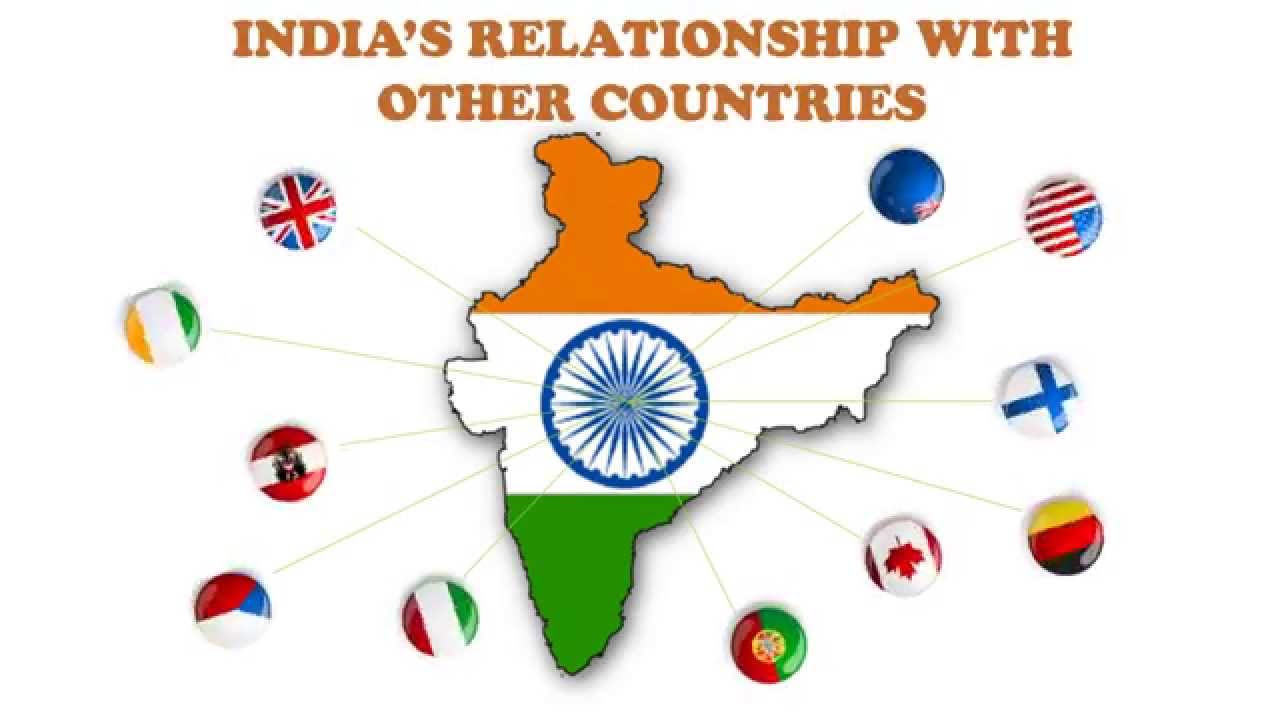
3- Diplomacy and international relations
India’s Diplomacy is standing at a good potions no matter still there are many internal disputes but in the eyes of world India is at a better place. India is able to maintain relation with foreign countries in a stable and steady manner which will ultimately help the people of India. In the coming years India will be able to maintain permanent seat in UN Security Council which will be biggest achievement in diplomatic point of view.
Image source: Kosha group
4) Population
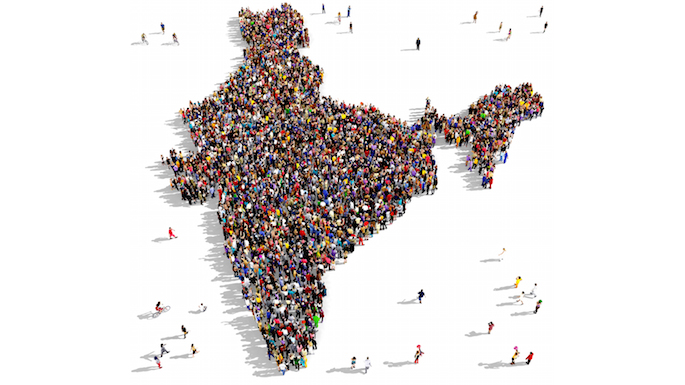
India has highest number of fresh minds, they are handled correctly with innovative and interesting education system than none of the country can stop India to be listed in top 5 countries. Youth is the biggest asset of India and no other country has this much amount of youth in their population. In the coming years, some of the strong nations of the world will face problem of decrease in populations and this will lead to, a decline in workforce, India will face no such problem.
India’s education system need to be modified a bit and student instead of memorizing theories, they should be taught to learn and understand the concept. The subject related to entrepreneurship should be added at early age so that they get knowledge of business at early age which would help them and ultimately help the nation.
Image source: Indiannewsonweb.com
5- Science and Technology
India has greatest potential yet to be showed to the world in the field of science and technology. New and new startups are evolving around us day by day and that will help a lot. Our scientist proved that India can even complete the mission on a budget of bollywood movie. India is also 4th country to land on the moon. India is emerging slowly in the field of software and will create a great impact in the near future.












 Eduindex
You must be logged in to post a comment.