Healthy snacking to switch to.

Snacking refers to the intake of foods during the day other than your main meals. Snacks typically consist of smaller food portions distributed between meals. While research on whether snacking aids weight loss is mixed, some evidence suggests that increasing your meal frequency through snacking may help manage hunger and improve blood sugar regulation. By planning ahead and focusing on nutrient-rich foods, snacks may support your weight management goals by managing hunger and keeping you satisfied between meals. Think of a healthy snack as a mini-meal. It should be more than just a handful of popcorn or a bag of chips. Like a meal, it should contain some protein, carbs, and healthy fats. Bonus points for fibre, as that helps fill us up and slows digestion leaving you feeling fuller longer. Here are some options for healthy snacking you can switch to-

1. Mixed nuts

Nuts are an ideal nutritious snack, providing the perfect balance of healthy fats, protein, and fiber.Aside from being tasty; they’re linked to numerous health benefits and very filling. There are plenty of nuts you can choose from, including walnuts, almonds, Brazil nuts, hazelnuts, pine nuts, macadamia nuts, cashews, and pistachios. Because they don’t require refrigeration, they’re a great choice for snacking on the go.

2. Kale chips

Kale is incredibly healthy, as it’s loaded with fiber and antioxidants like beta carotene, lutein.It’s also a good source of minerals, such as calcium and phosphorus. It has a lower level of oxalic acid, an anti-nutrient that impairs calcium absorption, than many other leafy greens .Pairing kale with olive oil not only makes more delicious and crispy chips but also a more balanced and filling snack.

3. Protein smoothie

A protein smoothie can be a filling snack for when you need something substantial until your next meal.They’re an easy and convenient way to increase your protein intake. You can add just about any other ingredient to the mix, from fruits and veggies to healthy fats like avocado, nut butter, or chia seeds, for a nutrient-rich snack.

4. Oatmeal

Oatmeal is a truly versatile snack that you can enjoy hot or cold — at home or on the go. Oats are a nutritious whole grain that provides a good amount of fiber and higher protein content compared with other cereals.What’s more, you can satisfy your sweet tooth with oatmeal topped with fruit, cinnamon, cocoa powder, and chocolate chips, or go for a savory version by adding eggs, avocado, and veggies like mushrooms or tomatoes.

5. Cucumber slices with hummus

Cucumber’s fresh flavour and crunchy texture go very well with the rich creaminess of hummus. Hummus is typically made from chickpeas, tahini, olive oil, and garlic. Thus, it provides a mix of plant-based protein, fibre, and heart-healthy fats. You can also pair them with some whole grain crackers or pretzel sticks for a heartier snack.

When your next craving hits, aim for whole foods that add nutrition to your day instead of highly processed, less nutritious options.Having some healthy choices in reach can help you stay satisfied, add more nutrients to your diet, and support weight management. Healthy snacking can be benifically in all aspects of life , so start making choices of what you intake.

The Imposter syndrome is more common than you think.

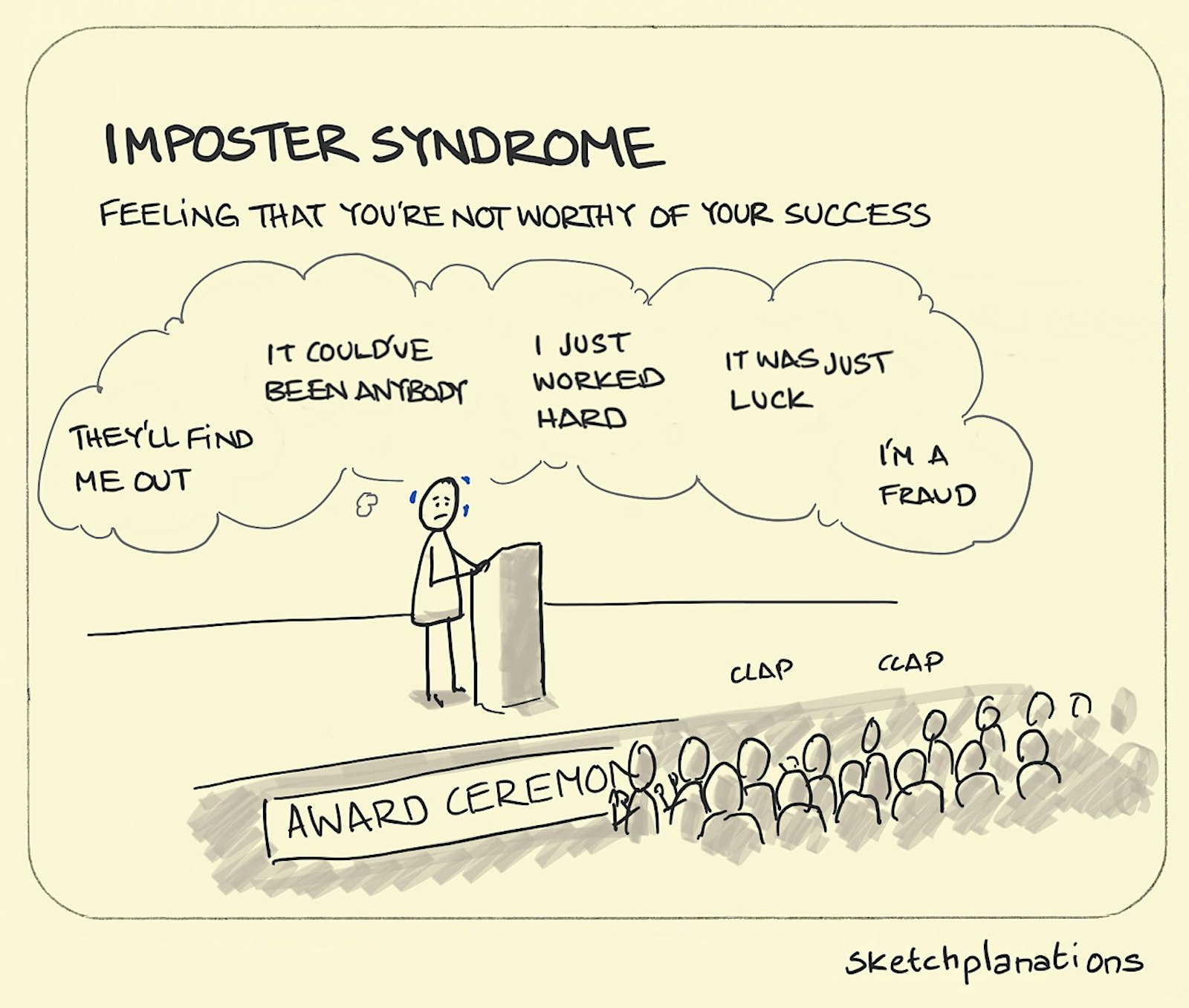
Great minds like Maya Angelo and Albert Einstein accomplished and excelled at their field which is rare to come across , yet the shared something with the common people , the feeling of fraudulence . Impostor syndrome refers to an internal experience of believing that you are not as competent as others perceive you to be. While this definition is usually narrowly applied to intelligence and achievement, it has links to perfectionism and the social context. To put it simply, imposter syndrome is the experience of feeling like a phony—you feel as though at any moment you are going to be found out as a fraud—like you don’t belong where you are, and you only got there through dumb luck. It can affect anyone no matter their social status, work background, skill level, or degree of expertise.

When Clance and Imes first described the impostor phenomenon (sometimes called impostor syndrome), they thought it was unique to women. Since then, a variety of research on the topic has revealed that men, too, can have the unenviable experience of feeling like frauds, according to a recent research review .Many people who feel like impostors grew up in families that placed a big emphasis on achievement, says Imes. In particular, parents who send mixed messages — alternating between over-praise and criticism — can increase the risk of future fraudulent feelings. Societal pressures only add to the problem.”In our society there’s a huge pressure to achieve,” Imes says. “There can be a lot of confusion between approval and love and worthiness. Self-worth becomes contingent on achieving.”

Characteristics of Imposter Syndrome

Some of the common signs of imposter syndrome include:

  • An inability to realistically assess your competence and skills
  • Attributing your success to external factors
  • Berating your performance
  • Fear that you won’t live up to expectations
  • Overachieving
  • Sabotaging your own success
  • Self-doubt
  • Setting very challenging goals and feeling disappointed when you fall short

While for some people, impostor syndrome can fuel feelings of motivation to achieve, this usually comes at a cost in the form of constant anxiety. You might over-prepare or work much harder than necessary to “make sure” that nobody finds out you are a fraud.This sets up a vicious cycle, in which you think that the only reason you survived that class presentation was that you stayed up all night rehearsing. Or, you think the only reason you got through that party or family gathering was that you memorized details about all the guests so that you would always have ideas for small talk

There are many factors that may play a part in imposter syndrome including new roles, family upbringing, personality traits, and social anxiety.

Types of Imposter Syndrome

Imposter syndrome can appear in a number of different ways. A few different types of imposter syndrome may include:The perfectionist: Perfectionists are never satisfied and always feel that their work could be better. Rather than focus on their strengths, they tend to fixate on any flaws or mistakes. This often leads to a great deal of self-pressure and high amounts of anxiety.

The superhero: Because these individuals feel inadequate, they feel compelled to push themselves to work as hard as possible.

The expert: These individuals are always trying to learn more and are never satisfied with their level of understanding. Even though they are often highly skilled, they underrate their own expertise.

The natural genius: These individuals set excessively lofty goals for themselves, and then feel crushed when they don’t succeed on their first try.

The soloist: These people tend to be very individualistic and prefer to work alone. Self-worth often stems from their productivity, so they often reject offers of assistance. They tend to see asking for help as a sign of weakness or incompetence.

Strategies to cope with imposter feelings include talking about what you are experiencing, questioning your negative thoughts, and avoiding comparing yourself to others.For many people with impostor feelings, individual therapy can be extremely helpful. A psychologist or other therapist can give you tools to help you break the cycle of impostor thinking, says Imes.

The impostor phenomenon is still an experience that tends to fly under the radar. Somerville learned the phenomenon existed only after he’d successfully dealt with the feelings on his own. Often the people affected by impostor feelings don’t realize they could be living some other way. “They don’t have any idea it’s possible not to feel so anxious and fearful all the time,” Imes says.

Luckily, it is possible.

You have talent. You are capable. You belong

Ways to a fruitful life for teens

TEENAGE IS OFTEN DESCRIBED AS A BURNING AGE” because this period is of the uttermost importance in an individual’s life as one goes through physical , social, emotional and mental changes through this period. The transition from a child to adult is not easy. It brings with itself many sets of complications.

While 00 to 14 years are categorised under children , the age group between 15 to 24 is categorised as youths. Teenage takes the age group between 13 to 18 years i.e the individuals going through this age are treated at times as children and other times as youths. Now this is a very confusing period, not knowing sometimes when to be a child and when to be an adult. Along with the physical changes that body experiences, comes its own set of insecurities. “Puberty hits everyone differently” is a famous line, and is very true . some elongates in height some in weight, some faces skin problems while some have clear skin. Some experiences hairfall while for others it grows in a lustrous manner. The matter of dressing becomes important in this period and leads to people feeling inferior as they do not set in the standards of “fair, clear skin,lustrous hair and “good height’ categories” set up by the SOCIETY and hence starts feeling lowly of themselves.

It is also a transition from secondary to senior secondary levels to that of college. Which in turn includes more exposure to electronic devices, meeting new people , SOCIETY expecting you to behave “maturely” without actually clarifying what “maturity ” means. People move, shift places to pursue further education meet new people, come out of the protective circle of the family.

all these changes affects the mental as well as emotional development of an individual . The ones good in study lack behind because the generation gap portrays parents more as villians and friends as well wishers. In some cases, these “well wishers” turns out to be actual villians, and to keep up with the company and portray themselves as “cool” and not “old fashioned” along with the lack of maturity that is the difference between right and wrong leads people to take some wrong step whether, it be a career decision, getting addicted to something, getting in wrong relationships. It is okay to commit mistakes but what is important is to learn from them. As the time passes, the past seems distant but the baggage continues. The various changes lead to stress which in turn causes delaying food habits, getting more addicted to somethings like social media which leads to low productivity.

“I FEEL LOW TODAY” is the case with most of us. The actual reason we never know. It can be any one of the above mentioned or something else also. Here are a few tips which will help you to come out of the low phase by yourself because if you succumbed to this phase then you will loose some of the most precious years which included young hearts full of energy and passion

  1. WAKE UP EARLY– One of the major happenings in the low phase is not being able to sleep at night. No matter how late you sleep torture yourself with blazing alarms or asking your family to pour water on you to wake you up but do wake up. Go outside see the sun. It doesnt matter if you dont excercise or jog, just simple rounds while seeing the sun illuminating the sky with its glorious rays, birds flying in groups, calm atmosphere of mornings will give you HOPE that this is a new day , a new beginning. It will refresh your mind and soul which is the best start to the day.
  2. EAT HEALTHY- Do not skip your meals no matter how low you feel. Because if you do, the body will not get required amount of nutrients which will affect the normal functioning. So the body will go to the stand by mode where its priority will be the functioning if essential parts such as heart leaving behind other things. This will lead to lethargy , hairfall , acne and many more problems which in turn will make you more like a panda.
  3. MOVE SOME MUSCLES – Doesn’t matter whether you workout or not, but just some brisk walk or helping in housework using the traditional means to mop and broom the floor will make your body move and will give you energy. The body will feel light and it will increase your productivity.
  4. REDUCE YOUR SCREEN TIME– I don’t think there is any explanation needed to this point. The more you get stick to your screen more you will waste your time and more you will regret.
  5. MEDIATE- Only for five minutes but do it. it will calm your racing mind.

Mental Health should be given Importance

In todays time with the ongoing pandemic, mental health should be the concern for everyone. It can affect every aspect of a person’s life.

Photo by Maksim Goncharenok on Pexels.com

Mental illness can have a negative impact on daily life, relationships, and physical health.


This link, however, also works in the opposite direction. Mental health issues can be caused by a variety of causes, including personal circumstances, interpersonal relationships, and physical conditions. Stress, despair, and anxiety can all have an impact on a person’s mental health and disturb their daily routine.

Taking care of one’s mental health can help one’s ability to appreciate life. To do so, you must strike a balance between your daily activities, duties, and efforts to improve your psychological resilience.

Mental health, according to the WHO, is “more than merely the absence of mental diseases or disabilities.” Peak mental health entails not only avoiding active mental illnesses but also maintaining overall well-being and happiness.”

They also underline the need of protecting and repairing mental health on an individual level, as well as in many groups and societies around the world.

Mental health is essential to our ability to think, emote, interact with others, earn a living, and enjoy life on a collective and individual level. On this basis, mental health promotion, protection, and restoration might be considered a critical concern for individuals, communities, and societies all over the world.

What does mental health basically mean:


Mental health is a condition of well-being in which a person recognizes his or her own potential, is able to cope with typical life challenges, is able to work efficiently, and is able to contribute to his or her community.

Photo by cottonbro on Pexels.com

The early signs of Mental Disorder can be :

There is no reliable physical test or scan that can determine whether or not someone has developed a mental disorder. However, the following are probable indications of a mental health condition that people should be aware of.

1)Avoiding activities that they would typically like withdrawing from friends, family, and coworkers sleeping too much or too little

2)Too much or too little food

3)Feeling despondent

4)Having low energy levels on a regular basis

5)Using mood-altering substances such as alcohol and nicotine on a more regular basis

6)Expressing negative feelings

7)Being perplexed

8)Having persistent thoughts or memories that resurface on a frequent basis being unable to execute daily duties, such as commuting to work or cooking a meal

9)Considering harming yourself or others physically

10)Recognising voices

11)Having hallucinations

SELF HELP IS IMPORTANT

A person dealing with mental health issues will almost always need to make lifestyle modifications in order to be well.

Reducing alcohol consumption, sleeping more, and eating a well-balanced, healthy diet are examples of such adjustments. People may need to take time from work or handle personal relationship issues that are negatively impacting their mental health.

Relaxation techniques such as deep breathing, meditation, and mindfulness may be beneficial to people suffering from anxiety or depression.

Having a support network, whether through self-help groups or close friends and family, is extremely important for mental illness rehabilitation.

Photo by Madison Inouye on Pexels.com

TREATMENT AND CARE OF MENTAL HEALTH

Suicide prevention, the prevention and treatment of mental problems in children, the prevention and treatment of dementia, and the treatment of substance abuse disorders all have a number of successful interventions. The mental health Gap Action Programmed (MH GAP) has developed evidence-based guidelines for non-specialists to help them better identify and manage a variety of mental health conditions.

In the framework of national efforts to design and execute mental health policy, it is critical to not only safeguard and promote citizens’ mental well-being, but also to address the needs of people with specific mental diseases.

LIBRARIES: A BOON TO THE SOCIETY

THE HARD COPY OF LIBRARY

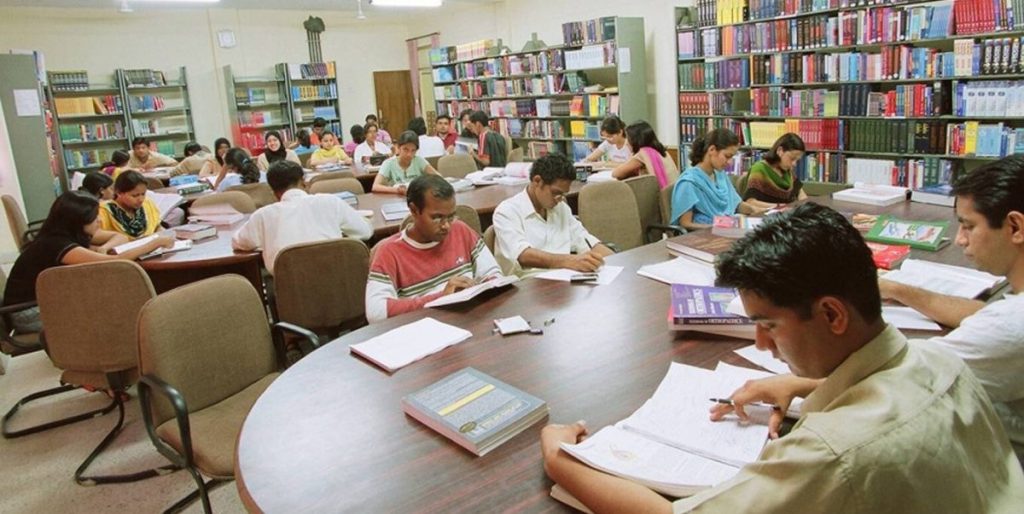
According to WIKIPEDIA, “A library is a collection of materials, books or media that are easily accessible for use and not just for display purposes. It is responsible for housing updated information in order to meet the user’s needs on a daily basis. A Library provides physical (hard copies documents) or digital access (soft copies) materials, and may be a physical location or a virtual space, or both. A library’s collection can include printed materials and other physical resources in many formats such as DVDs, CDs and Cassette as well as access to information, music or other content held on bibliographic databases.”

IMPORTANCE OF LIBRARIES TO MAN

Libraries are said to be the storehouse of culture. If a man is to be known by the company he keeps, society is to be known by the number of good libraries it has. Man’s craving for knowledge is eternal. He wants to know more; he wants to enjoy more. But he cannot always move about for various reasons. He goes to a library and reads books of his choice. Libraries preserve books of various types, old and new. There are also periodicals and daily papers to meet the demands of the people. In all ages, libraries have been considered to be the best medium of public instructions.

The doors of library are exposed to everyone for rewarding the requirement for information. They are run by the government, schools, colleges, and universities. The society members of the neighbouring locality can visit these libraries to boost their information and complete their research.

TYPES OF LIBRARIES

There are different types of libraries, such as public libraries, circulating libraries, private or personal libraries. Of these, public libraries are most important. These are financed either by Government or by public institutions. All readers are allowed to read here. These libraries have two sections-lending and reference. Books are lent out to those who deposit money. Others are allowed to sit a id read books during the period, these are kept open. As libraries spread education, the Government of India have taken up a scheme to establish rural libraries for the benefit of rural people. They sanction annual grants to these libraries in cash or kind. In these libraries, books are stocked to suit the half-literate people of villages.

A FRIEND IN NEED

Government-managed libraries are well equipped and well manned. Only technical men are employed here to help the readers. Quite a large number of scholars, students and members of the public daily attend such libraries for reading and making notes. There are public libraries organised by public institutions. These libraries cater to the needs of a large number of people living in particular localities. Students of schools and colleges also utilise these libraries and derive benefit from them. But these libraries are in bad shape. Government grants to these libraries are not adequate. Public-spirited men now-a-days, are rare. Development of libraries is an important task of a welfare Government. Common people and students get opportunities to read in these libraries. In our country where the percentage of illiteracy is high, these libraries help in expanding the facilities for reading. Public libraries and rural libraries do a lot of good to the localities where they are established. Now the Government has established primary unit libraries, town libraries etc. The Government gives regular grants for the purchase of books and equipment. But still the grants are not adequate. However, they help the public libraries to satisfy the needs and aspirations of the local people.

CONCLUSIONS

So, if we can see deeply a library Builds and helps to connect Community, it Provide Access to the full range of information resources needed to live, learn, govern, and work. It Promote Literacy to both children and adults. It Protect Your Rights to read and offers freedom of information gathering and sharing. People becomes innovative and smart in the company of library, which enhances creation and collaboration.

Types of learners and how to engage them

  1. Auditory and Musical learners

To engage a social learner, encourage both group collaboration and presentation. Consider:

  • Roleplaying historical events or works of literature
  • Collaborating on maths problems
  • Working as a class on comprehension questions

Auditory learners like to hear solutions and examples explained to them, and may gravitate towards music subjects and group learning as a way to understand information. Auditory learners often have a high aptitude for distinguishing notes and tones in music and speech.

Qualities often associated with auditory learners include:

  • Possessing a ‘good ear’ for music and tones
  • May be distractible
  • Likes to talk to self / others / hum / sing

Auditory learners might say words out loud or hum tones to better learn them. This strategy is key for keeping musical learners engaged in class lessons.

How to engage them?

If you’re a music teacher, you’re in luck. Auditory learners will be engaged from start to finish. For other subjects however, engaging aural learners requires some tact and forethought.

The key here is your voice (and the voice of your students). Write down something on the whiteboard, then read it out loud. Work on your delivery so you can express learning material in interesting and engaging tones. Similarly, encourage your students to read back their own notes to themselves (and the class). Hearing the sound of their own voice and the voices of others is engaging to auditory learners, but it can be a great learning tool for students of all types.

Other strategies you can try include:

  • Recording lessons for later listening and reference
  • Encouraging auditory listeners to ‘teach others’ verbally
  • Seating them away from distractions

2. Visual and Spatial learner

Visual learners like diagrams, drawing out concepts, charts and processes. They learn by looking at visual concepts, creating them, and watching other people create them. Visual learners might be organised or creative in their application, and find things like colours and shapes useful.

Visual learners often possess the following qualities:

  • Habitual doodlers / drawers
  • Observant
  • Not easily distracted
  • Enjoys planning
  • Prefers visual instructions

How to engage them?

To engage a visual learner in the classroom you’ll want to include elements like maps, diagrams and imagery. If you have a projector, try to include relevant images to go along with the course content. In geography and history, maps are helpful, while for maths and logic, go with diagrams.

Charts, images and diagrams will aid most students, so catering to visual learners doesn’t mean you have to ignore other types. When it comes to self-driven learning, encourage the spatially aware to sketch out their ideas, create mind maps and flowcharts. It should probably come to them naturally, but a bit of prompting can always help.

Other tactics you can use include:

  • Sitting visual learners near the front
  • Using colour codes and cues
  • Encouraging note taking and recopying notes during study

3. Verbal learner

Verbal learning includes both writing and speaking. Verbal learners might have a preference for reading and writing, word games and poems. Verbal learners know the meanings of a broad category of words, can use them effectively, and actively seek out new words to add to their repertoire.

Some qualities associated with verbal learners include:

  • Intellectual
  • Bookworm
  • Good story teller

Verbal learners often seek out careers in journalism and writing, administration, law and politics.

How to engage them?

Verbal learners will want to write down notes, talk about concepts and potentially present them as well. The trick with verbal learners is knowing what adjacent types of learning apply to them – are they an outgoing or more introspective verbal learner? Some may lean more to talking, while others to reading and writing. Try to cater to preference while also using their verbal abilities to push personal boundaries every once in awhile.

4. Logical and Mahematical learners

Perhaps unsurprisingly, mathematical learners err towards careers in programming, accountancy, science, research and other number and pattern-orientated careers. Some qualities associated with mathematical learners include:

  • Pattern recognition
  • Good with numbers
  • Predisposition towards grouping and classification

How to engage them?

Mathematical learners will greatly appreciate any type of learning that logically explains the subject at hand. For maths, that’s easy. For other subjects, it requires some effort and planning:

  • History and geography: Try to include statistics and classification taxonomy in your lesson plans.
  • Literature: Ask your students “What category of book is this?” Or in poetry, have them learn the meters and explain them to other students.
  • Music: Teach both musical instrument classification (woodwind etc) and the mathematical relationships between notes.
  • Art: A good starting point is the colour wheel and the effects of combining different colours.

With logical students, always look to incorporate a system. If you’re unsure, include the students in the development of that system. They’ll benefit from it greatly.

5. Physical and Kinaesthetic learner

Commonly called hands-on learners, kinesthetics prefer to physically engage with the materials of the subject matter. Some qualities associated with physical learners include:

  • Preference to ‘get their hands dirty’
  • Energetic, may drum fingers or shake legs
  • Action-orientated and outgoing
  • May de-prioritise reading and writing

Physical learners represent about 50% of the population,and gravitate towards careers with lots of hands on work like emergency services, physical education and sports.

How to engage them?

Channeling the energy and excitability of physical learners is key to offering a good lesson. Taking breaks so they can move around can help, but so can encouraging role play and movement within the lesson itself. Physical interaction is also important. The use of props and models will greatly benefit a kinaesthetic learner. Give them something to grab onto and they’ll process information much better than from a book or whiteboard.

Other strategies to engage physical learners include:

  • Encouraging movement during study (don’t punish them for fidgeting)
  • Decluttering desks and surfaces so they can focus on learning

6. Social and Interpersonal learner

Social learners show preference towards groups and collaboration. Some, but not all, will gravitate towards leadership within a group. Some of the qualities often associated with this type of learner include:

  • Extraverted
  • Good communicator
  • Sensitive and empathetic

It’s important for educators to understand that not all social learners are extraverted or highly communicative, and that they can also be visual, auditory, verbal, logical or physical learners. The interpersonal aspect perhaps better describes the settings in which they are most comfortable, rather than how they absorb information.

As such, teachers should be cognisant of the breadth of variation between different types of social learners. For example, social doesn’t strictly mean verbal. Some social learners prefer to listen in a group setting, rather than on their own.

How to engage them?

Interpersonal learners like to ‘do’ and to ‘share’. This can sometimes lead to distraction for other students who are more intrapersonal in their learning habits. To prevent this, try to channel social learners into providing value to the group, giving them tasks that use their energy usefully, with a focus on empathy for their classmates.

7. Social and Intrapersonal learner

Solitary learners can be visual, auditory, physical, verbal or logical learners. Fulfilling all the needs of the solitary student will ensure they are fully engaged. Some of the qualities often associated with this type of learner include:

  • Independent
  • Introspective
  • Private

Intrapersonal learners may gravitate towards careers with a lot of self determination or motivation, as well as solitary workloads. Think:

  • Researchers
  • Writers and authors
  • Programmers and coders

How to engage them?

In a classroom environment it can sometimes be difficult to engage a solitary learner. They might sit silently in the back of the classroom, only to ace the exam at the end of semester. For the educator, it’s important to engage them during class. Provide visual materials, books and learning aids. Designate quiet areas, and collaborate with defined sharing time so the solitary learner can feel adequately prepared.

Mixed learning approach

With large classrooms, it’s not always easy to personalise lessons, but using a mixed learning approach throughout coursework can help you cater to each type of learning style. You may decide to focus on a particular learning type each lesson, or incorporate multiple strategies within each lesson. The most important element is first recognising the differences in student learning – the rest will flow from there.


WHY DO WE NEED TO BE PUNCTUAL?

Know the true value of time; snatch, seize, and enjoy every moment of it——-Lord Chesterfield

ITS MEANING

Punctuality means doing a work at the proper time. To account an engagement at 10 o’ clock in the morning and to arrive at the place to keep it at 10-30 does not become a gentleman. It annoys the other party and it harms the future of the caller. No one who is unpunctual in attendance to work can be depended on or trusted in. On the other hand, a punctual man is one who knows the value of time. Such a man is a perfect gentleman and everybody has faith in his efficiency and character.

IT GIVES A MEANING TO YOUR LIFE

Punctuality is important in every sphere of life. it is rightly said that punctuality is the crown of a king. It is the most precious jewel to the character of a man. A student has to be punctual at school or college. The manager of a big firm or its common clerk has to be punctual in his office. Equally it is necessary for a factory worker, a politician, or a statesman. The greatest value of punctuality is that it is a great time-saver. An unpunctual man is always worried about time. A student who is unpunctual in his class lags behind others in his studies, he creates confusion both for himself and for others in the class. He is considered a disturbing element and is looked down upon by his teachers as well as his classmates.

MISS IT AND WELCOME YOUR HARM

Many battles have been lost on account of unpunctuality. Many Cases in Courts of Law have been lost, because one of the parties did not come in time; many a train has been missed and business lost to unpunctuality. So, unpunctuality leads to dangerous consequences. Relation of free people knows the value of punctuality. Indians are now a free people and they should cultivate punctuality in everywhere. Unpunctuality is a vice and out of it are born other vices like dishonesty, falsehood, idleness and shirking of one’s duty.

So, we observe how punctuality plays a foremost role in anyone’s life. being unpunctual is a curse, we cannot be as winner as others. Besides, this rhythmic world demands punctuality so that all of us can be successful in life.

HOW MUCH ‘INSPIRATION’ DO WE NEED?

“THE PESSIMIST SEES DIFFICULTY IN EVERY OPPORTUNITY. THE OPTIMIST SEES OPPORTUNITY IN EVERY DIFFICULTY.” – Winston Churchill

EFFECTS OF INSPIRATION

The word “Inspiration” rings out many bells in one’s mind. It suggests many feelings such as promise and self-confidence which further charges up the other emotions to move forward in whatever domain one want to. Inspiration is a highly effective dose to bring out all the hidden personalities and characters in one’s disposition, which helps him or her to comprehend the potential and attain the set goals.

IT IS OMNIPRESENT

All the renowned and celebrated people who have made a mark in their life have been inspired and motivated at some or the other point of their life. We can take examples of people in the field of Art, Music and Medicine’ or in the field of Technology. Even politicians and great saints cannot be ruled out. One can get inspired in countless ways, it can be verbal, written or may be through some of the work done or an example set by the person they kind of became role models. When you carry a deep feeling for a person, you start trusting and have a blind faith in his thinking and philosophy and just start following the tracks without even being sure of that.

WE ALL NEED A MENTOR

The person you are impressed with or whom you ae following becomes your counsellor and you have to consider him like your ‘leader’. Only then, benefits can be gained and dreams can be appreciated. If we turn the pages of history Arjuna got so inspired after Lord Krishna’s sermons and he realized that if he did not listen to Lord Krishna at that time, then he will not be able to fight and protect Dharma’, as by that time he was totally influenced.

A TRUE LEADER ENKINDLES OUR FAITH IN THE ACTION

There are many saints who have earned name and fame in people’ s heart by simply following their ‘expert’ for an inspiration in life. So, an inspiration coming from the right person helps us to internalize our goals and we attain our mission Sometimes when we are depressed and are literally down in the junkyards, at that time a Comforting sentence or a gentle hand on the head gives us much required and desirable confidence and assurance. Such motivation goes a long way.

SUPPORT INSPIRATION

Therefore, one can work hard only if there is moral support and inspiration. As the saying goes that there can be perspiration only if there is an inspiration.

FAILURES: REGRESSIVE OR PROGRESSIVE ?

“The only difference between success and failure is ability to take action.”….. Alexander Graham Bell

WHAT IS A FAILURE?

According to Wikipedia, “FAILURE is the state or condition of not meeting a desirable or intended objective, and may be viewed as opposite of success.”

In another definition of “ FAILURE is the act of falling short of a goal of a person, who hasn’t achieved what they set out to. It is a cessation of proper functioning or performance or rather a decline in strength or effectiveness.”

HOW IS IT DIFFER WITH SUCCESS?

Your action in your field of work, in your niche, in your desired goal of life, actually work like a decisive factor. If you feel harassed, defeated, exhausted, and give up pursuing, your efforts are bound to hang in the hands of destiny. These things leave you to procrastinate. Start moving away from the active zone and surrender to a gloomy laziness and here begins your downfall.

Now if you see this entire act in opposite train, you are able to penetrate and grip the reason of failure. You reschedule and reprogram your activity. You put more organised, alive and determined endeavour and keep faith within yourself, you are bound to hug success.

FAILURES ARE OUR BEST TEACHERS.

They are stepping stones to success, or to put it in other Words, they are the pillars of success. Since failures teach us to introspect or peep within, they make us think of our weaknesses and flaws and learn lessons from them and vow not to repeat these mistakes again in life. In this way they are a mirror to our real personality and provide scope for upgrading ourselves. Failures may discourage, depress, or demoralize. Most do shake a person’s confidence at least for some time but nor for ever. The real strength of a man comes out only when he faces the ups and downs of life with patience and perseverance.

BE OPTIMISTIC

Men of courage face each rejection courageously and come out unharmed and unblemished. Failures and sufferings bring out the best of human beings. They learn that life is not a bed of roses only; it is full of challenges, obstacles and obstructions which can be set aside with persistent hard work and repeated efforts. To achieve anything in life one has to be aggressive, as nothing is achieved by being passive or pessimistic. Fear of failure may be a hindrance for some people, but to any daring person, it is just an illusion. You may think something is standing in your way, but there is nothing there.

You have an opportunity to do your best and conquer success. If it turns out that your best was not good enough, you’ll just have to look back and say, maybe I was too afraid to try, it was not good enough. There is nothing wrong with that, but nevertheless, a great eye-opener.

HOW DOES IT WORK LIKE A PROPELLING FACTOR?

Failure always made me try harder the next time. Think positive. and find fuel in failure’ is a sound advice. Failure will surely get you closer to where you want to be. The greatest discoverers had to face hundreds of failures before the final answers were found. The inventors, researchers and pathfinders had to encounter manifold hardships and opposition. But were they deterred by failures? Many often could not taste success but left great legacy to be followed by others to seek inspiration and take up their half-finished work. The world would not have progressed and the march to civilization would have halted if failures could dampen the spirit of the people. It is, therefore, advisable not to be discouraged by failures but to develop positive attitude to life, that obstacles are bound to be there. Only commitment to your mission must be steadfast.

SO…..NEVER GIVE UP

Therefore, when failures appear awfully incontrollable and life appears miserable, one has to remember “The end part of every night is the darkest one and then comes the dawn.” Thus, when nothing appears to work out in the desired way and all roads seems to lead to failures, one has to just remember the advent of the dawn. Therefore, we shouldn’t drop hope but keep on trying till we achieve. No one knows, that the final round exertion may declare one a champion.

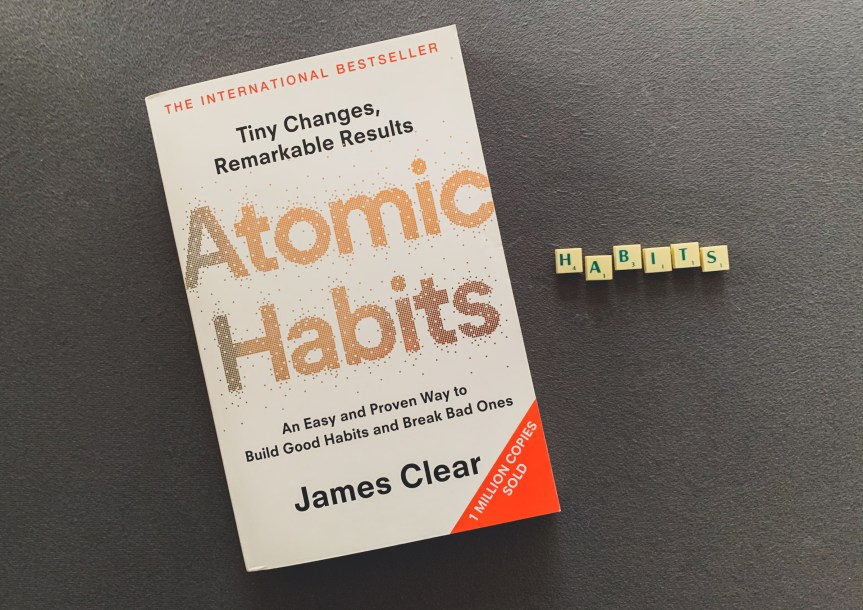
Book Review: Atomic Habits by James Clear

There are very few books in your life that you will read and think “Wow, this was life-changing”. You may enjoy reading books, and may even be a fan of a certain series of books like Harry Potter or Game of Thrones. However, these are generally limited to serving entertainment purposes only and are not the kind of books that will give you deep insights into life or help you reflect on yourself. Having said all this, I do believe the book “Atomic Habits’ that I am going to discuss in this article is the type of self-help book that will change or give you a new perspective on habits and lifestyle choices in general.

General Idea

The general idea of the book is this: small changes or habits you incorporate in your life will compound into much greater results in the long-run. Hence the use of the word ‘atomic’. The author is trying to explain that even small habits materialize into major results if we keep at them. This is a fairly new idea being introduced in this book, as we are often told if we want to change our lives, we have to take drastic steps like moving to a new place or quitting our jobs. This book replaces this notion with a new and improved one: change can occur even through miniscule habits and can provide life-altering results. You do not have to take drastic steps to create change, in fact you are probably better off starting at something very small and sticking with that. The process of building and sustaining these tiny habits, while also stopping or breaking free from bad ones, will help create the positive change we require.

Key Insights

  • The 1% rule – This relates to ‘compounding’ as mentioned before. It works in a similar way to compound interest. As we leave something to develop for a long period of time, eventually the net growth is massive. In this way, if we try to better our lives by even just 1% everyday, then we will be a 37% better version of ourselves after a year. The author provides a very insightful quote “Habits are the compound interest of self-improvement”. We should be careful though, as it also works the other way and even bad habits can compound to make us worse. So, we should focus on the self-beneficial ones while trying to limit or remove the harmful ones.
  • Focus on ‘Systems’ not ‘Goals’ – An important idea stressed upon in the book is on building ‘habits’ and not focusing on ‘goals.’ Our behavior should be such that it becomes repetitive and compelling, and not completely goal-oriented. If we become goal-oriented, we may become disappointed if we don’t meet our goals, but if our sole focus is on building a habit which we will maintain for the rest of our lives, there will be a much greater positive impact. For example, if your goal is to lose 5 kgs in one month, you will become disappointed if you don’t. Even if you do, it is only a temporary achievement and you may gain weight again after that. Instead, you should build the habit of exercising routinely to sustainably lose weight and stay fit.
  • Identity is the north star of habit change – This basically means that we should not solve problems based on their outcomes and results, as this means we only solve them temporarily. To solve problems for the long-term, we need to change our identity itself. This ties into the previous point in essence. For example, instead of saying you want to eat less junk food to lose weight, you should change your identity to a person who likes eating healthy and wants to build a good diet. To quote the book; “The ultimate form of intrinsic motivation is when habits become part of our identity.”
  • How to build a habit – There is a basic 4 step process for building habits: cue, craving, response, reward. Cue triggers the brain to perform an action, Craving provides the motivational force to perform it, Response is the habit/action that we perform and Reward is the end result. So, we should build habits that we want to incorporate into our lives through this process, by making the habit obvious, attractive, easy to perform and satisfying. In case all these are adhered to, the process of habit formation becomes rather easy.

Conclusion

As mentioned earlier, the book really is life-changing for anyone struggling to build a habit or break an old one. The aim should be to build long-lasting and sustainable habits (systems), however small, and to not focus on achieving some set goals in life. It is hard for many of us, in this world of instant gratification, to stick to habits that will show outcomes only after a long time and through a process of compounding, However, this book helps us with this and guides us on how we can build habits in and easy and efficient manner, and also explains the benefit this may have on our lives if we are just able to stay discipled and stick to them. Tiny changes, remarkable results.

SELF-HELP IS THE BEST HELP

“Don’t start your day with the broken pieces of yesterday. Every day is a fresh start. Each day is a new beginning. Every morning we wake up is the first day of our new life.” …….. Self-Help Quotes

WHAT IS SELF-HELP?

Self-help asserts developing one’s competences or solving one’s own problems, fighting against social, physical, professional, and psychological complications, with or without the association with other individuals having similar interests. Self-help demands the use of one’s own efforts, resources, etc. to achieve things, without depending on others. It is a great virtue. It provides courage to meet the difficulties of life bravely. It is the secret of success in life.

SELF-HELP GENERATES SELF-CONFIDENCE WHICH LEADS TO SUCCESS

The life of man is very complex. He is always placed in adverse situations. Every dawn of man comes with a shining hope and a whole day’s gruelling work and crushing ups and downs, frustrate and betray many dreams he had stored for the future. If his dreams depend on others whims and wishes, then his success is questionable. If for every short decision he waits for other assertion then he/she certainly under the shadow of life long pain.  It is his strong will, determination and repeated attempt that help him to overcome difficult situations. His indomitable will power coupled with his irresistible effort for the liberation, help him to rise above all odds. Supports him every moment to beat dark clouds of devastation. Being self-confident he stands like rock and defeats all oppositions. He who depends on his own efforts and resources is the most successful man because the best kind of help comes from within.

GOD HELPS THOSE WHO HELP THEMSELVES.

God has sent us on this earth with many gifts like a body, mind and a soul. How we make use of these gifts is our own discretion. It is the way we use our faculties that makes all the difference. Some people share hard work and believe that whatever is in store for them, would be theirs ultimately. This blind faith in one’s destiny is in itself defeating and damaging. God helps those who help themselves. We have to make efforts: otherwise, all promising opportunity will vanish and will leave us mourn over our sluggish helplessness. One has to sow the seed, till the land and plough the fields, water them, nurture them carefully and only then can we expect good crop. God’s mercy is also important because for good crop, we must have rains at the right time, but if we have not sown the seeds, rain or no rain, we would not get any crop. So, destiny or luck, no doubt, plays an important part in our life but we can’t depend on that only. Destiny, along with right efforts in the right direction, will bless us with our desires fulfilled.

THE BEST KIND OF HELP COMING FROM WITHIN

The deer do not enter into the mouth of a sleeping lion. The lion has to run after it. The fan does not give air by itself. It has to be operated manually or electrically. A plate full of delicious meal doesn’t go automatically within the mouth, hands pick it up and take it to the mouth. A job doesn’t come to the job seeker, he or she has to put her effort to grab it. There are several examples of self-made men and countries. Though Vidyasagar was born poor, poverty could not dampen his spirit. His courage and determination helped him in every field of activity. Japan which was weakened in 1945 in the atomic bomb explosion has now become a superpower because of self-efforts.

So, leaving behind all weakness, closing all the doors of begging attitude and silly dependency, diminishing expectation and appreciating every little step of achievement, come, let us be winner by changing our views about the happening, rewarding world.

A wise man says……

“You can’t go back and change the beginning, but you can start where you are and change the ending.”