Taoism-The art of letting it go.


Laojunshan, China famous Taoist Holy Land

Taoism (also spelled Daoism) may be a religion and a philosophy from ancient China that has influenced folk and national belief. Taoism has been connected to the philosopher Lao Tzu, who around 500 B.C.E. wrote the most book of Taoism, the Tao Te Ching. Taoism holds that humans and animals should sleep in balance with the Tao, or the universe. Taoists believe spiritual immortality, where the spirit of the body joins the universe after death.

Much of the thrust of Daoism, as we’ve seen, naturally motivates a reaction against the moralistic and elitist inclinations of Confucianism. Confucianism stood for a rigid, detailed, traditional pattern of hierarchical social behavior. Duties were assigned to all or any of one’s social roles—and an individual typically had many such roles, e.g., husband, father, minister, younger brother, teacher, student, etc.

One could escape this heavy scheme of obligations mainly in retirement or, paradoxically, the normal duty to spend three years “in mourning” for the death of one’s father. The withdrawal from society, the antipathy toward ritual roles, traditional “morality,” and any social structures or traditional culture suggests a sort of Daoist “ethos” as an antithesis to Confucianism in China.


One of the most ideas of Taoism is that the belief in balancing forces, or yin and yang. These ideas represent matching pairs, like light and dark, hot and cold, action and inaction, which work together toward a universal whole. Yin and yang show that everything within the universe is connected which nothing is sensible by itself.

Taoism became well-known within the eighth century C.E. because the religion of the Tang within the following centuries, it existed alongside Buddhism and Confucianism (another philosophical religion). However, during the Communist takeover in 1959, Taoism, Confucianism, and other religions were banned. This caused a decline within the practice of Taoism in China. Many modern Taoists sleep in Taiwan, although recent reforms in China have increased the amount of Chinese Taoists.

Why should we care about our privacy?

Privacy in general terms is the right to be left alone or freedom from interference or intrusion. In terms of the internet, privacy is the right to have some control over how your personal information is collected and used.

More technical innovation gives way to more efficient and advanced technologies. In recent years the information has become the most important component to cultivate this innovation. As many new people are coming on the internet and the amount of information being shared is increased manifold. Every organization or individual is entering the realm of the digital world and data is the entity of this world. Data is also very essential to understand a user or a customer or a client but sometimes there is no limit to the amount of data that an internet corporation is willing to extract. Somewhere there has to be a line that needs to be drawn. In recent years there have been many issues regarding the privacy policy of many tech corporations. Facebook has been in controversy much time. Recently Whatsapp’s privacy policy also raised many questions, then in an ironic move Whatsapp raised the question of privacy by suing the government regarding the new Information technology rules. But this is just the tip of the iceberg and numerous other aspects get overlooked. First, we will need to understand what this privacy means for us as individuals. Only then we can clearly determine the relevance of these rapidly changing developments in this subject.  

“Arguing that you don’t care about the right to privacy because you have nothing to hide is no different than saying you don’t care about free speech because you have nothing to say.”

-Edward Snowden

It’s not that privacy means that there is something to hide; rather privacy is having things you don’t want to show. For instance, people would not like to post their Bank account online or Bank statements. People would also not like to have a public camera inside their homes. Similarly, there are some things that an individual would not like to share online. Privacy can provide secrecy, but there is more to it. Privacy also provides autonomy and therefore freedom to an individual. Well, there is even more to privacy than the freedom that many people do not realize which is that when we think we’re being watched, we make behavior choices that we believe other people want us to make.  Humans intrinsically like to avoid societal condemnation and perception of whether or not we are in private changes the way we behave. This indicates the benefit that a state can have with surveillance and can lead to a conformist population.

As it is stated by many that data is the oil and for many tech organizations it truly is. We can witness this with the various technological corporations that rely upon user data including Facebook, Google, Amazon etc. But Even Smartphone manufacturers like Xiaomi have realized the lucrative benefits of collecting and selling user data. For these companies, our data is money and they earn billions of dollars with this data. Both the private tech giants have clauses in their privacy policy that allows government agencies and third parties to access the data. The data that gets uploaded on the internet never gets deleted and stays there forever. What we have to realize is that even if the information seems futile today, it may have an importance tomorrow. In conclusion, privacy is not a trivial issue and people will have to understand its importance until it’s too late.

References:

10 Incredible destinations you must visit in your lifetime!

Following a routine is a killer for your soul. Who doesn’t dream of traveling to different places and gaining new experiences and knowledge or do you want to spend your entire life in the same place you grew up in and see the same bunch of people every day and eat the same type of food you’ve always eaten? Because giving excuses to yourself for having no time and money isn’t good enough.

“The core of man’s spirit comes from new experiences” a famous dialogue from the movie ‘Into the Wild’ talks about the same thing; having new experiences. The world is a beautiful place and there are many natural and man-made beauties which you just cannot miss seeing. The world has many picturesque towns, beautiful beaches, museums, and many other incredible destinations which you should not miss before you die. 

Today I am going to discuss with you and suggest you 10 most incredible destinations which you can add to your bucket list.

1.Get off the grid at Venice, Italy– It is an ancient small town built on a lagoon. It is the most visited travel destination. It has the most number of bridges in the world and it is also famous for its canal routes; no wonder it’s why called ‘City of Canals’ & ‘ The floating City’. It is one of the most picturesque cities in Italy. You can easily get lost here while traveling as it’s mapped like a labyrinth. There are many hidden routes and shortcuts but all worth exploring. The cafes in Venice are just like any other cafe in Italy. You’ll find people mostly start their day standing at a bar where they drink coffee with croissants. This city is full of life adorned with stunning art and beautiful architecture.

2. See the coral life at The Great Barrier Reef, Australia – It’s the first coral reef system to be awarded World Heritage status. No wonder why it is one of the seven wonders of the world. There are more than 1500 species of fish. You can also spot Nemo too. Snorkeling and diving are the things tourists mostly come here for. It is one of the best experiences in the world.

3. Eye Capturing Cappadocia, Turkey–  The name is derived from a Persian word called katpaktukya meaning ‘the land of the beautiful horse’. Horses hold a special place in the lives of the people who live there. These locals also use horses as an alternative mode of transport for the tourists.  This place is like nowhere on earth. The main attractions are the stunning landscapes, the Goreme Cave Churches, underground cities and of course the hot air balloons. 

4. Mesmerising Meteora, Greece– Meteora meaning ‘ suspended in the air has earned its popularity from the vertical rocks which have turned and twisted with time into bizarre and yet beautiful rock formations. Here the monasteries which are placed atop these rocks appear as if they are hanging in the air like shown in fairytales. You can go to Meteora if you are looking for a relaxing getaway.

5. Salar de Uyuni, Bolivia – Salar de Uyuni is located in Bolivia is one of the most beautiful and remarkable vistas of South America. It is the world’s largest salt flat area stretching more than 4050 square miles of Altiplano. To experience the breathtaking mirror effect most tourists visit this place in the rainy season which lasts from December to April. This is also a heaven for photographers as the endless horizon allows them to play with perspective and depth of field.

6. The magnificent Grand Canyon, US – This wonder of nature extends up to 277 miles. Here the tourists come from all over the globe to take part in a range of activities. The Grand Canyon also offers breathtaking panoramas and stunning sights. Tourists usually come here for hiking, experiencing the iconic mule trip, rafting, etc.

7. Aurora Australis – To see this is truly once in a lifetime experience thing. While we all know about the famous northern lights called the Aurora Borealis we hardly talk about the southern lights. These lights can only be viewed from the southern latitudes and can only be seen within a limit of a 30-degree latitude line. this phenomenon makes the sky look magical. There you will find the sky dancing in green and red light. 

8. The pyramid of Giza, Egypt – The pyramids have always been a mystery. People usually travel to visit the pyramid of Giza to travel back in time, to see Egypt’s beautiful landscapes and its vast deserts. The Egyptian civilization is one of the oldest civilizations of the world and as it is one of the 7 wonders of the world this fact itself should be the reason enough for you to include it into your bucket list.

9. Swing at the ‘ End of the World’, Banos, Ecuador – The swing is located on top of a mountain alongside the Tungurahua volcano. This became a tourist destination for its picturesque location.
10. Maui, Hawaiian Island – Maui Island is part of an archipelago and is the biggest island in Hawaii. It has become a tourist spot for its beauty and the dormant volcano which adds to the adventurous fun for the tourists to visit it.

Ban On Inter State Bus Transportation

Without leaving even a scintilla of doubt, the Madhya Pradesh High Court Bench at Indore has in a latest, landmark, laudable and learned judgment titled MP Bus Operator Association vs State of MP & others in Writ Petition No. 8597 of 2021 that was delivered on June 29, 2021 has maintained without mincing any words that in the extraordinary situation of a pandemic or disaster involving loss of life and human suffering, the Central Government as well as the State Government are empowered to put any restriction in the larger public interest under the Disaster Management Act, including restriction of movement of public by inter-state bus transportation. It must be apprised here that a Single Judge Bench of Indore Bench of Madhya Pradesh High Court comprising of Justice Vivek Rusia who authored this notable judgment was dealing with a petition filed by MP Bus Operator Association challenging various Government orders restricting inter State bus transportation between State of Madhya Pradesh and Maharashtra owing to the rising number of Covid 19 cases. It was the case of the petitioner association that despite having valid permit to ply inter state buses, the government had restricted them in wake of the second Covid wave. 

To start with, the Single Judge Bench of Justice Vivek Rusia first and foremost puts forth in para 1 that, “Petitioner / M.P Bus Operator Association has filed the present petition being aggrieved by the orders dated 21.03.2021, 31.3.2021 and 22.06.2021 issued by respondent No.3 whereby the inter-State bus transportation between State of Madhya Pradesh and Maharashtra has been restricted from 21.03.2021 to 31.03.2021 and thereafter up to 15.04.2021 and again extended up to 30.06.2021 due to Covid -19 pandemic.” 
While elaborating on the facts of the case, the Bench then lays bare in para 2 that, “The petitioner is an association registered under the Madhya Pradesh Society Registrikaran Adhiniyam, 1973 having its registered office at C-14, Vikas Tower, Navlakha, Indore. The society has authorized its President Mr. Arun Gupta to file the present petition by way of resolution dated 05.04.2021. The members of the petitioner/association are having permit to ply inter-State transport passengers buses. In the second phase of Covid-19 the government has restricted various commercial activities in order to control the spread of Covid virus. Since large number of Covid cases were reported in the State of Maharashtra, therefore, the State Transport Department of M.P. has decided to stop operating buses from the territory of Madhya Pradesh to the territory of Maharashtra and vice versa. According to the petitioner, the Central Government, Ministry of Home Affairs vide order dated 23.03.2021 has issued guidelines to the States and UTs for issuing necessary norms for regulating travel in other modes of public transport like buses etc. and to ensure that same are strictly complied with. All the activities are permitted outside the containment zones and SOPs have been prescribed for various activities including movement of passengers, rail, air travel, metro train, schools etc. It is further submitted that there is no restriction on the movement of passengers by way of air service and trains between these two States, therefore, the Government of M.P. cannot discriminate with the petitioner by way banning the inter-State bus service facility between these two States which is in gross violation of Article 19(1)(g) of the Constitution of India. The members of the association are having fundamental right to practice any profession or to carry on any occupation, trade or business which cannot be restricted by the State Govt. It is further submitted that the State has a right under Article 19(6) of the Constitution to put a reasonable restriction on the fundamental right but that should not be arbitrary or excessive in nature. The movement of public between Madhya Pradesh and Maharashtra is permissible through air, train, cab, taxi and through private vehicles but movement only through buses are restricted without any valid justification. The members of the petitioner are ready to follow any conditions to be put by the State Govt. for operating the buses in order to prevent spread of corona virus. They will not permit any passenger to travel in the buses without negative RT-PCR report, therefore, with certain restrictions the petitioner be permitted to ply buses between these two States.”
In addition, the Bench then also points out in para 3 that, “In support of the above contentions Mr. Manu Maheshwari, learned counsel for the petitioner has placed reliance over the judgments passed by the Apex Court in the case of Chintaman Rao vs. State of M.P- AIR 1951 SC 118; Saghir Ahmad vs. State of U.P & others- AIR 1954 SC 728; Subramanian Swamy vs. Director, Central Bureau of Investigation and another- (2014) 8 SCC 682 & Narinder S.Chadha and others vs. Municipal Corporation of Greater Mumbai and others – (2014) 15 SCC 689.”
As a corollary, the Bench then brings out in para 4 that, “The respondents have filed the reply by submitting that in the second wave of the Covid-19 most of the cases came in the State of Maharashtra and being a neighboring State of M.P, in order to protect the inhabitants of M.P, the State Govt. has restricted the transportation of public by way of buses. The State Govt. has passed the order looking to the public health in exercise of the powers conferred u/s 24 of the Disaster Management Act, 2005 (for short ‘the Act of 2005’). The transportation of the buses cannot be compared with the transportation by trains and airways because trains and airways are under the jurisdiction and control of the Central Govt. and the State Transport is within the jurisdiction of M.P State.”
Furthermore, the Bench then also brings out in para 5 that, “Shri Garg, learned GA appearing for the State has submitted that impugned restriction is temporary in nature and after the things are normalized the government is bound to lift the ban, but as on today there is a forecast of third wave of Covid delta plus coming up in the State of Maharashtra, therefore, the government may extend the period of ban which is going to expire tomorrow i.e. on 30.06.2021. It is further submitted that any tough decision taken in the public interest the interest of individuals are bound to be overlooked . The members of the petitioner society are not only restricted to do their business but other trade and business are being totally shut down like theaters, gym, restaurant, tourism etc. In order to provide essential items, the government is relaxing the restrictions . The petitioner’s members are restricted to operate the buses only to Maharashtra State where the large number of cases of Covid are reported but they are free to operate the buses in other States, hence there is no complete restriction on the right of trade and business, hence the petition kindly be dismissed.”
What’s more, the Bench then observes in para 6 that, “In rejoinder Shri Manu Maheshwari, learned counsel submits that the impugned order has not been issued u/s 24 of the Act of 2005, and only after filing of this petition the respondents came up with the plea that the impugned order has been issued under section 24 of the Act of 2005. The petitioner has filed the list of the trains and flights operating between Madhya Pradesh and Maharashtra in which there is no such restriction by the Central Govt. and submit that the petitioner be also permitted to ply the buses between Maharashtra and Madhya Pradesh and vice versa. It is further submitted that Government of Maharashtra has not imposed such restriction on transportation of passenger buses. Even the railways and airways are not demanding Covid report from the passengers and only on the basis of self-declaration they are permitting public to travel to any part of the country. The petitioner’s members are also ready to abide by all the conditions which are being followed by the rail and airways operators. I have heard the learned counsel for the parties and perused the record.”
Of course, the Bench then states in para 7 that, “It is not in dispute that the second wave of Covid -19 started from the State of Maharashtra and being a neighboring State there is a frequent movement of public between M.P and Maharashtra by all means of transport. Accordingly to the petitioner there is no restriction on transportation by railways and airways. The railways and airways are under the domain of the Central Government and on which the State Government cannot put any restriction. The transportation by stage carriages is under the control of the State Government, therefore, the State Govt. is competent to put restriction or conditions in which there is no discrimination by the State Government.”
Quite significantly, the Bench then holds in para 8 that, “Even otherwise, in transportation through airways and railways the entry and exit points of passengers are fixed and known from where the passengers can be checked about their health conditions but it is not possible in the transportation by buses. The buses can be stopped anywhere and collect the passengers which is not possible in the railways and airways, therefore, both are different classes of transportation. The State Government has put restriction only for the limited period subject to the reduction of cases of Covid. There is no permanent restriction for transportation through buses from Madhya Pradesh to Maharashtra and vice versa. The Government is reviewing the situation after the interval of 10-15 days and extending the restriction for limited period. Except Maharashtra the petitioners are permitted to ply the buses in other part of the country, therefore, there is no 100% restriction on the right of trade and business. In the larger public interest, the individual interest is bound to suffer.”
Most remarkably, the Bench then minces no words to hold in para 9 that, “So far as the applicability of section 24 of the Act of 2005 is concerned, the government has decided to enact a law on disaster management to provide for requisite institutional mechanisms for drawing up and monitoring the implementation of the disaster management plans, ensuring measures by various wings of Government for prevention and mitigating effects of disasters and for undertaking a holistic, coordinated and prompt response to any disaster situation. Section 2(d) defines the word ‘disaster’ and 2(e) defines ‘disaster management’ which means a continuous and integrated process of planning, organizing, coordinating and implementing measures which are necessary or expedient for prevention of danger or threat of any disaster or mitigation or reduction of risk of any disaster. Section 14 authorizes the State Govt. to establish State Disaster Management Authority for the State by way of notification. Section 24(l) gives power to the Central Govt. or the State Govt. to take such steps as are required or warranted by the form of any threatening disaster situation or disaster, therefore, in exercise of the aforesaid powers the State Govt. has decided to restrict or minimize the movement from Maharashtra to Madhya Pradesh. In normal situation the action of the State Government can be examined in respect of putting restriction on any trade and business but in the case of disaster or pandemic where the loss of life or human suffering or damages are in large scale then the Central Government or the State Government is empowered to put any restriction in the larger public interest in exercise of power under section 24 of the Act of 2005. Section 72 gives overriding effect to the provisions of the Act of 2005 over the other Act. The High Court in exercise of powers under Article 226 of the Constitution of India should not interfere in the policy decisions taken by the State Government looking to the interest of public at large.”
Quite rationally, the Bench then holds in para 10 that, “It is expected from the State Government that further extension or restriction of movement of public by inter-State transportation by buses shall not be in mechanical manner but after assessing the facts and figures of Covid -19 cases in the State of Maharashtra.” 
Finally, the last para 11 concludes this brief, brilliant and balanced judgment by holding that, “In view of the foregoing discussion, the petition is disposed of.”
To sum up, this cogent, commendable and convincing judgment by a Single Judge Bench of Justice Vivek Rusia of Indore Bench of Madhya Pradesh High Court sets the record straight by holding that in the extraordinary situation of a pandemic or disaster involving loss of life and human suffering, the Central Government as well as the State Government are empowered to put any restriction in the larger public interest under the Disaster Management Act, including restriction of movement of public by inter-state bus transportation. So such restrictions are valid and cannot be objected to by citizens at the drop of a hat. All citizens are bound to comply accordingly as has been clearly pointed out in this notable case also!
Sanjeev Sirohi


DOPING

To continue the fight against doping - Fondazione Gianni Benzi Onlus

Doping is not new to the people . In ancient Greece, there were specialists who used to offer athletes nutritional ingredients in order to enhance their physical performance. Those specialists may be compared to the current sports medicine specialists . During the Olympic Games in the third century BC, the athletes tried to increase their sports performance by taking mushrooms and opium . In the Ist centaury AD, the Greek runners used to drink a herbal beverage to increase their strength and become capable to run long distance races. Gladiators are also reported to use various substances for enhancing strength . In the modern era , the use of performance enhancing substances and techniques by the top sportspersons across the world has been a presistent issue in the world of sports for nearly four decades. Since the beginning of the 21st century, many athletes have been engaged in taking such substances. Some of them have been tested positive such as Tim Montgomery, Marion Jones, swimmer Phelps, etc.

Concept of Doping

‘Doping’ is the word, which is used in the field of sports, to refer to the situation when athletes use prohibited substances or methods to unfairly improve their sporting performance. In general terms, doping is the use of performance enhancing substances or methods by athletes to gain an advantage over their competitors . In fact , some athletes take illegal substances to enhance their performance . This activity is known as ‘doping’ . Doping in sports is the deliberate or inadvertent use by an athlete of a substance or method banned by the International Olympic Committee. In fact, the ban or prohibition on such substances is necessary to protect the athletes from the unfair advantage which may be gained by those athletes who use prohibited substances or methods to enhance their performance and also from the possible harmful side effects which these substances or methods can produce. The following definitions of doping may help in understanding its exact meaning:

According to International Olympic Committee, ‘‘Doping is the use of any method or substance that might harm the athlete, in a quest to gain an unfair advantage, over his/her fellow competitors”. In fact, doping is the use of prohibited substances or methods designed to enhance an athlete’s physical or mental abilities or to mask the use of such substances or methods during preparation for or participation in a sports competition .

According to World Anti-Doping Agency (WADA) ,” Doping is defined as the occurrence of one or more of the anti-doping rule violations set forth in Article 2.1 through Article 2.8 of the code.”

“Stories We Never Tell”: A Novel of Hope, Light, and Recovery

In our life, there are some bad phases when there is no one with us, and also we’ve handled our problems alone, and we never wanted to talk about or we were afraid to share because it simply hurts very much.

So today we’re going to review a book that talks about all the things that we never shared with someone. This book talks about hope, light, and recovery in the world of loss, darkness, and destruction. Yes, we’re talking about our respected save Sharma’s fictional novel, “Stories We Never Tell”.

Lessons Full of “Inspirations “:

Story of a girl named Jhanvi who is a growing social media influencer. And a boy named Ashray who had a great onset in his life, with his hard work and determination he changed his dreams into reality, where the girl appears to have it all the comforts jointly but, there was a lack of peace and happiness which was missing.

Apart from the characters ashray and jhanvi, Rishi who was the best friend of ashray helps him as his backbone. Rishi’s nature shows that there is always someone behind our success who is with us and helps in any worst conditions. Whereas Kavya who was Jhanvi’s friend, the same as Rishi Kavya existed as a rock to support Jhanvi in any episodes of life. In short, we can say that the story makes us realize that we need more souls like Rishi and Kavya.

The most beautiful character of this story is Ashray’s mom “Akshita”, brave souls like Akshita who always put together “life and people ”, a support group made away by struggling and beating all the challenges in their lives. Moreover, she also proved that love doesn’t require the relation of blood, she gives us a beautiful message that sometimes we fall in love with people because we feel the time is running but that person may not be the correct one.

Story Talks About Mental Health:

Jhanvi and Ashray, as we know that they both were diverse from each other so their stories are also different. As we see in the story Jhanvi is fighting the outside world, while Ashray’s fight is internal. There’s a line ” I need help” when people read that line they should realize what the author makes us understand, in some aspects of our lives most people don’t know if they need any type of help or not.

In general, the author talks about how being depressed affects relationships, the emotions one has to go through, and the road to diagnosis which is quite relatable.

Characters are very diverse, tricky, and dark and we guess as to the author of this book, it would be very hard to show that after all of these characters are showing hope.

Believe in your Story:

In the forgotten world of books where nowadays, people are being practical and choose to listen to podcasts or e-books for rapid listening, Savi Sharma made us introduce with her novels dedicated to everyone who still loves to read books and for them also who are still searching “hope and happiness” in books. She also said that ” I always believed that everyone has a story to tell and everyone is a writer ” and she believed that one day when all of this will end, people will always remember us as stories.

About the Author:

To motivate millions of people through her writings, Savi Sharma Bagrecha left her CA studies to become a writer. Inspired by experiences of real-life activities, her books swirl around the themes of dreams, hope, courage, friendship, love, and the Universe, to fill young readers with positivity and prosperity.

She is the author of “Everyone has a story – 1”, its sequel “Everyone has a story – “2, and “This is not your story”. Savi dreams of a world full of kindness, compassion, empathy, and love. With collective sales of over 6 lakh copies, she is India’s highest-selling female novelist.

You can find all 5 books by the author Savi Sharma which are available on Amazon and Flipkart.

Got admired by her a lot!!You can also read her blogs on http://www.savisharma.com and you can also get connected with her on Instagram, Facebook, and Twitter @storytellersavi.

We hope that you have liked this book review and for more news and blog content stay tuned with https://eduindex.org/

Thank you!!

RIGHT TO PRIVACY AND PERSONAL DATA PROTECTION BILL

Protecting its citizens privacy in 21st century is a part of maintaining democratic character of a nation. Right to privacy is not exclusively mentioned in constitution of India but it is considered as a part of Article 21 which deals with right to life and personal liberty. It has been further interpreted by various cases and their judgements through the years.

Right to privacy is considered basic human right under Article 12 of Universal declaration of human rights act 1948 and India recognizes it through Article 14, Article 19 and Article 21 of Indian constitution which are Equality before law, Freedom of speech and expression and right to life and personal liberty respectively. On occasion India has taken note of importance of Right to privacy through judgements in wiretapping case, Aadhar case, Vineet Kumar case and alike.

Vineet Kumar case stated that tapping of phones should not be permitted unless it is case of public safety and emergency.

The recent case of new privacy policy by WhatsApp caused ruckus among citizens regarding protection of their privacy and immediate need of a legitimate way to deal with it. However, India recognized Right to privacy as fundamental right after Puttuswamy v/s Union of India case (2017) but it was under Article 21 itself. Under section 72A of IT act, breach of data privacy is punishable but it is only relevant in the case of corporate sector and to sensitive information.

India does not have a law dedicated to right to privacy yet. Although Personal data protection bill was put forward by justice Srikrishna committee.

PERONAL DATA AND PROTECTION BILL

Personal data and protection bill which was introduced in Lok Sabha in 2019 finally seems to be moving forward now that it has been through parliamentary scrutiny of a joint committee.

The bill restricts processing of personal data by Government, Companies inside and outside India which are dealing with personal data of Indians. The Bill labeled certain data such as financial data, biometric data, caste, religion and political beliefs as sensitive personal data.

A data fiduciary who is basically an entity or individual who owns the means to process these data is required to take certain accountability measures which includes implementing security safeguards such as data encryption and preventing misuse of data and instituting grievance redressal mechanisms to address complaints of individuals. They are also required to mechanize age verification and Parental consent if procession personal information of children. Therefore, Bill allows data fiduciary to process personal data if consent is provided by the individual. However, in circumstances where state requires data for providing benefits to individual, legal proceedings and respond to the medical emergency Personal data can be processed without consent.

The bill further proclaims that individual has certain rights including right to obtain confirmation from the fiduciary on whether their personal data has been processed, (ii) seek correction of inaccurate, incomplete, or out-of-date personal data, (iii) have personal data transferred to any other data fiduciary in certain circumstances, and (iv) restrict continuing disclosure of their personal data by a fiduciary, if it is no longer necessary or consent is withdrawn.

The Bill seeks to amend the Information Technology Act, 2000 to delete the provisions related to compensation payable by companies for failure to protect personal data. The introduction of personal data and protection bill was a step forward towards democratic data governance and it would further take us closer to constitutionally guaranteed Right to privacy.   

Photo by Pixabay on Pexels.com

HOW TO PRACTICE SELF LOVE

Self love is not only about getting a new haircut or getting new items for yourself. Self love is all about grooming oneself by gaining appreciation through the physical, mental, and emotional support. It’s not something that you can learn immediately, its a long process and you could develop bit by bit. Self love does play a huge part in our life as it is the route to stable mental health and overall happiness.

Here are few tips that are helpful.

1. FORGIVING

There are times when you are hard on yourself and hold yourself accountable for the slightest mistake possible. Self deprecation is very harmful and can break down your confidence. Mistakes are opportunities that help you grow. A better way is to take it easy and forgive yourself.

2. BEING MINDFUL

Are you working on the dreams that you want to fulfill, or are those the dreams the society wants you to fulfill? if you are able to follow what you want, how you want, and when you want it, then it will help you in taking care of your happiness. Try maintaining a journal or even meditating as it helps you stay mindful. Learn to satisfy yourself first.

3. WORK ON YOUR NEEDS

It is very important to figure out the things that make you feel better and the things that make you feel worse. Doing something that you don’t like could overwhelm you and make your day even worse. Choose what YOU want to do. It’s completely okay if you don’t want to go out partying with your friends , you can stay home and maybe watch a movie that could help you relax mentally.

4. BUILD BOUNDARIES

The purpose of setting boundaries is not to kick people out of your life but to help you understand what is acceptable and what is not. You would not want to drain yourself by keeping the company of the toxic ones. Maslow’s hierarchy of needs is a good example that you can use to build boundaries.

5. PROTECTING ONESELF

It is very necessary to keep yourself safe and protected from the bad company or toxic surroundings. You will need to admit the ones who are wanting to take care of you and support you. People who help you mentally and spiritually are the ones that deserve to be held on. Distance yourself from fake friends who are there to just pull you down.

6. STAND UP FOR YOURSELF

This is another important aspect that needs to be taken care of. Being too hard on yourself and punishing yourself for the un-achieved things in your life can harm your confidence and decrease your ability to work efficiently. Try to look at the bonus points and give yourself that candy that you deserve for all the hard work.

7. TAKE TIME FOR YOURSELF

After a very long day you would not want to do things, which is completely okay. Take that long soaking bath that you like or even finish the book that you started. Taking out some time for yourself is one of the best ways that will lead you to self love.

It is impossible to accomplish self love in a day, but the process is beautiful, it sure is long, but it is all worth the hardwork.

Article by : Haniah Mirza

CYBER SECURITY

Protecting networks, data, programs, and other information from illegal access, change, or destruction is the most basic definition of cyber security. Because of recent cyber-attacks and cyber-attacks, cyber security is becoming very important all over the world. Software for data protection is developed by many companies. Many businesses create software for data protection. The data is secured by this program. Cybersecurity is critical since it not only protects data but also protects our systems from viruses. India has the most internet users, followed by the United States and China.

What is the significance of cyber security in today’s society?

You require cybersecurity in the same way that the world requires an ozone layer to protect it from harmful ultraviolet radiation from the sun. And, just as holes in the ozone layer have an impact on our civilization’s destiny, so do vulnerabilities in your company’s cybersecurity. Hackers have gotten more active on the internet during the previous few years. They use advanced techniques to infect unsuspecting individuals and businesses with malware, ransomware, and other destructive attacks. Most of the time, you won’t know if you’ve been hacked or not. Cybersecurity risks are more widespread than you may believe, with one attack occurring every twenty seconds around the globe, according to statistics.

Cybersecurity risks are more widespread than you may believe, with one attack occurring every twenty seconds around the globe, according to statistics. Fundamentally, our society is more technologically dependent than it has ever been, and there is no indication that this tendency will reverse. Data breaches that potentially lead to identity theft are now being made public on social media accounts. Social security numbers, credit card numbers, and bank account data are now kept in cloud storage services such as Dropbox or Google Drive.

Cyber Security Threats and Attacks:

Malware: The most common sort of cyberattack is a malware attack. Malware is harmful software, such as spyware, ransomware, viruses, and worms, that is placed on a computer when a user clicks on a malicious link or email. Malware can block access to essential network components, harm the system, and collect confidential information, among other things, once it has gained access to the system.

Phishing is a type of fraud in which false emails posing as emails from trusted sources are sent with the purpose of stealing sensitive data such as credit cards or login information.

Ransomware assaults are a sort of malware in which an attacker encrypts and locks the victim’s computer system files, then demands payment to unlock and decode them. According to Mimecast’s The State of Email Security Report 2020, 51 percent of organizations have been affected by ransomware in the last 12 months.

Distributed denial-of-service (DDoS) attacks: A distributed denial-of-service (DDoS) attack is a malicious attempt to disrupt regular traffic on a targeted server, service, or network by flooding the target or its surrounding infrastructure with Internet traffic.

Social engineering assaults can be carried out in a number of ways. To carry out the assault, a perpetrator first examines the intended victim to obtain background information such as possible avenues of entry and weak security mechanisms. The attacker then works to acquire the victim’s trust and give stimuli for further acts that violate security protocols, such as exposing sensitive data or granting access to crucial resources.

How To Improve Website Ranking

Many of us often wonder how google determines which website to show for particular keyword searches. According to Backlinko the result which appears first on google gets 31.7% of clicks whereas the website which appears second receives just 0.75% of clicks.

Assume you are a business entrepreneur. You have developed a website that is your digital storefront. Having a digital store is very different from having a brick-and-mortar store. You don’t need a patronizer to call visitors into your store because now what you have are virtual visitors. 

But how do you draw their attention to your website?

The problem with most people is not how they can develop a website or about the blogging in the website; it’s about whether or not they know how to pull maximum traffic for their website.

Among the most important factors which influence search engine optimization and increase the ranking of websites is having a good website’s content, link popularity, and architecture.

  1. Publish Relevant Content.

The content in a website is, without doubt, the number one factor which determines the search engine rankings and there is no substitute for great content. The fact is search engines are designed in such a way that they constantly develop new technologies to reward the quality of content in your website. Among the things that one should be careful of when posting content is having keyword searches including page titles, the format of the text, the links used in the website, its URLs, and its page content. Therefore it is very important to have a good balance of these aspects as they influence the rankings of websites.

  1. SEO Friendly Content.

It is very important to know about what is trending in the market as it generates almost six times more possibility of a website to catch the eye of viewers than it usually does. One needs to write content optimized for the search engine and the users. Having a content length of 1000 to 2000 words can increase the chances of your search engine rankings also.

  1. Website Architecture.

The architecture of a website largely influences the traffic of the website . one should be cautious of having a website that has content that is easy to read. The architecture of a website should be such that it has codes that are well-formed which thereafter makes it easy for the search engines to read the content of the site.

  1. Link Popularity.

The popularity of a website is a great indicator to prove that it has important content in its website. If a website has high traffic it suggests that its website content has relevant information if particular keywords. Many websites also use the trick of using inbound links of other websites to influence the traffic on their website. When a link of another website gets used as a reference to a website, in this case, search engines consider it as a ‘vote of confidence

These are not the only factors which influence the ranking of a website as there are many more factors to it but these are the important factors which you should keep in mind as it does optimize the ranking of a website.

The Evils of Drinking

Drinking is one of the many evils our society from. It is a great social evil and needs to be eradicated. Habits die hard and once this evil habit is formed, it is very difficult to get rid of it. Sometimes people start drinking as a mark of fashion in the beginning and then gradually it becomes a habit. In most of the cases it is the result of bad company. Like any other addiction, drinking is also an addiction and deserves full condemnation. The bad effects of this evil habit are too many to be counted. It leads to bankruptcy, moral degradation, misery, untold suffering, loss of health and character.

Drinking disintegrates families. The families of drunkards undergo lot of suffering as their money is drained off and they become utterly poor and deprived. A drunkard spends his income in drinking and thereby deprives his wife and children of even basic needs of life. A drunkard loses his mental control and indulges in abuses, beating of his family members, specially wife and children. He does not hesitate to pick up a quarrel with others on any pretext under the influence of wine. Thus, a drunkard becomes a social and family nuisance and an undesirable person. Many other evils are closely associated with drinking, these include gambling, prostitution, lying, quarrelling, stealing, cheating etc. A drunkard can stoop to any depth to satisfy his urge for drinking. If need be, he can even commit murder, such is the force of this evil habit.

Mahatma Gandhi was a great social reformer. Drinking was one of the social evils he fought against. He was in favour of total prohibition because he said, “drinking makes a man forget himself. He ceases to be a man for the time being. He becomes less than a beast.” He started a mass movement against the evil. Again Mahatma Gandhi said, “Only those women who have drunkards as their husbands know what havoc the drink devil works in homes that were once orderly and peace loving.”

Drinking id undesirable even in moderation in a country like India where a hot climate prevails. There are many deaths every year in the country because of drinking and yet the evil is on increase. According to a report, in recent years it has increased from one in three hundred to one in twenty. This increase in alcoholism and booze, is alarming. Prohibition in India has failed because of many reasons. Firstly, it has been half-hearted. Secondly, when drinking is prohibited in one state, the other state in neighbourhood remains wet where the drunkards and alcoholics go and enjoy drinking. Thirdly, the corrupt officials, policemen etc take advantage of the prohibition and give protection to bootleggers against huge bribes and then it becomes a big business. The ill gotten money and wealth creates an evil force of mafias. For example, now there is prohibition in the state of Haryana, but wine is freely available there but at about three times the usual price and the political leaders and policemen are minting money. Simply passing laws against drinking and never work unless there is strong political will and public awareness behind the laws. The rules and regulations against the evil should be enforced strictly and both in letter and spirit.

The poor men, the daily labourers and wage earners suffer the most from the evil of drinking. They drink for intoxication to forget their worries and to remove fatigue. Since their diet is never rich, they soon become victims of heart, lung or liver disease and meet their income on booze and this in turn plays havoc with the welfare of their families.

Prohibition is essential and it is the need of the hour. Even alcoholics know that it is an evil and they curse their bad habit. Many of them want to get rid of it. Prohibition will help us in protecting the younger generation against the evil. Prohibition should be countrywide in spite of revenue losses to the States. All out efforts need to be made and short and long term measures taken to make prohibition a success.

The reason behind the rising number of old age homes in India

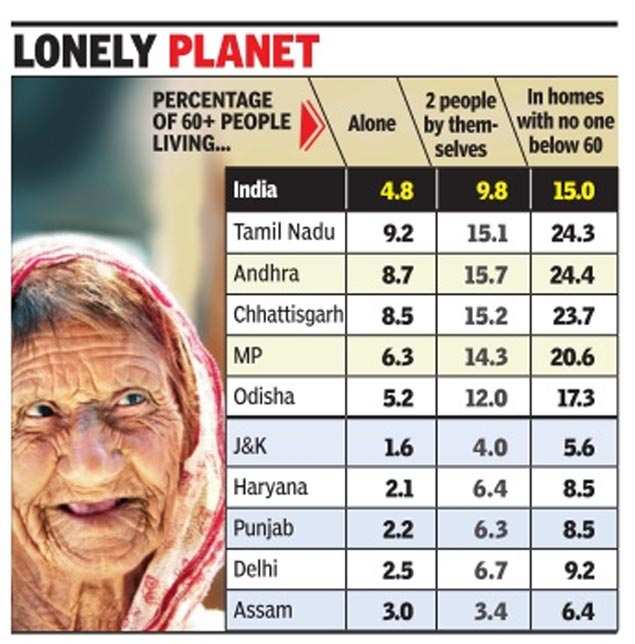
According to Population Census 2011, there are nearly 104 million elderly persons (aged 60 years or above) in India; 53 million females and 51 million males. A report released by the United Nations Population Fund and HelpAge India suggests that the number of elderly persons is expected to grow to 173 million by 2026. Currently 71% of the elderly population resides in urban areas while 29% are in rural areas. With the changing times, children moves out to different cities or even different countries with the aim of gaining better living aspects leaving behind their parents for whom it is not possible to adjust with the lifestyle changes which migration brings . In some cases while the parents agree to move in with their children , in other cases it is observed that when parents age children starts to see them as a burden and a responsibility that they want to get rid off which lead them in abandoning their own parents.

Currently there are 728 old age homes in India, with the information available for 547 homes out of which 325 homes accommodates elderly people free of cost, while 95 others charges for the accommodations while nearly 110 other homes have both free as well as pay staying facility available . Kerala , the state which has the highest literary rate in India is also reported to have the highest number of old age homes i.e. 278.

India has always been a nation of traditions where a child since birth is taught to touch the feet of elders as a mark of respect. It is considered an insult to leave the parents at old age home, to not provide for them in their vulnerable age as many children consider taking care of their aging parents as a forced liability as their growing age weakens their physical ability. This blog will highlight some of the reasons why the number of elderly people in old age homes continuously rising.

The reasons for the rising numbers

The families in India few decades back were joint families with parents, grandparents, siblings their wives and children living together under a single roof in a small town or villages. Those were the times when urbanisation had not really hit the sub continent and the aging elders have does not have to worry about someone taking care of them.

  • The migration which the children go through sometimes from a state to another or to another country, makes it difficult for the elders to adjust with their children’s new surroundings as it is very natural to adjust in an experience to which you are foreign almost your entire life. Even if they do adjust they tend to feel very lonely while the children go to work. As the urban system which consists of living in flats or even houses in the cities had made people isolated in their own world owing to their hectic schedules . In these cases , children feel that if their parents will get the company of their own age then they will feel better and will be able to lead a happy retirement.
  • As the times progressed, opportunities increased children started moving away from their parents as the trend of nuclear families came in fashion. Also, the generation gap between the elderly and the young does not allow elders to accept some of their children’s choices like many still have objections to an independent working daughter in law. These issues creates rift in the family dynamics leaving no option other than to move the parents out of their houses. Since in India children never shy away from taking their parent’s savings which they had saved for their old age for their personal benefits and the middle class families can’t afford another place for the parents to live close by, parents ends up in the old age homes . Also, there are some horrific cases reported where children tend to abandon their parents by the excuse of sending them off to pilgrimage or to any other city leaving them stranded. The reason this occurs is because the younger generation refuse to adjust with the older ones by being cruel and mean to them for their limited physical capability. In such cases, the passer by then drop them to the old age homes.
  • While many children move out of their parent’s house for job or education purposes leaving their parents alone, their security always remain their prime issue. Though many youngsters have surveillance cameras and advanced security systems installed in the house , still the rising number of crimes against the elderly where the houses with just elder people becomes a target for robbery even murder is worth worrying. In such cases children feel the environment of old age to be safe.

The conditions in old age homes

While many old age homes provide good accommodation and facilities many are reported to provide stale and inadequate amount of food, no medical attention even after taking money for the proper services by the children. Their are instances of cases of violence in the old age homes . Such one instance is a time, when an elderly was reported to be beaten by the management for complaining about the quantity and quality of food served.

The people in old age homes are not always happy as somewhere or the other they still miss their children who either comes on weekends and important occasions. While there is this other set of children for whom parents are a forced responsibility , who never show up after giving false hopes of coming every weekend. In the latter cases, it is the management of the homes which take care of the medical needs of the elders through donations. There are also cases when children do not even come after the death of their parents.

Conclusion

Everything in this world is a part of the vicious cycle of Karma with the proverb “As you sow so shall you reap” being true. When a child is born it is completely dependent on its parents for its needs. Similarly there reaches a time when the human body gives up to age making it difficult for the older people even to do their necessary works. In such cases they become dependent on their children who will have to learn to adjust to the maximum to cater their parent’s needs. Else, when their time would come they would also die in old age homes with their own blood having no care about it.

Also, government should work on increasing the number of old age homes in states and also upgrade the security making sure that the elders are safe in the homes.

Dreams: Our own fantasy world

When we are asleep in this world ,we are awake in another .

What is a dream.

Dreams are stories and images that our minds create while we sleep. They can be entertaining, fun, romantic, disturbing, frightening, and sometimes bizarre.

Phases of sleep.

Dreams most likely happen
Dreams feel real while we’re in them. It’s only when we wake up that we realize something was actually strange

There are five phases of sleep in a sleep cycle:

Stage 1: Light sleep, slow eye movement, and reduced muscle activity. This stage forms 4 to 5 percent of total sleep.

Stage 2: Eye movement stops and brain waves become slower, with occasional bursts of rapid waves called sleep spindles. This stage forms 45 to 55 percent of total sleep.

Stage 3: Extremely slow brain waves called delta waves begin to appear, interspersed with smaller, faster waves. This accounts for 4 to 6 percent of total sleep.

Stage 4: The brain produces delta waves almost exclusively. It is difficult to wake someone during stages 3 and 4, which together are called “deep sleep.” There is no eye movement or muscle activity. People awakened while in deep sleep do not adjust immediately and often feel disoriented for several minutes after waking up. This forms 12 to 15 percent of total sleep.

Stage 5: This stage is known as rapid eye movement (REM). Breathing becomes more rapid, irregular, and shallow, eyes jerk rapidly in various directions, and limb muscles become temporarily paralyzed. Heart rate increases, blood pressure  rises, and males develop penile erections. When people awaken during REM sleep, they often describe bizarre and illogical tales. These are dreams. This stage accounts for 20 to 25 percent of total sleep time.

Some interesting facts about dreams.

1. You Forget 90% of Your Dreams.

Within 5 minutes of waking half of your dream is forgotten. Within 10, 90% is gone.

2. Blind People also Dream

People who became blind after birth can see images in their dreams. People who are born blind do not see any visuals, but have dreams equally vivid involving their other senses of sound, smell, touch and emotion

3. In Our Dreams, We Only See Faces That We Already Know

Our mind is not inventing faces – in our dream, we see real faces of real people that we have seen during our life but may not know or remember. We have all seen hundreds of thousands of faces throughout our lives, so we have an endless supply of characters for our brain to utilize during our dreams.

4. Not Everybody Dreams in Color.

A full 12% of sighted people dream exclusively in black and white. The remaining number have full color dreams. Studies from 1915 through to the 1950s maintained that the majority of dreams were in black and white, but these results began to change in the 1960s. Today only 4.4% of the dreams of under-25 year-olds are in black and white. Recent research has suggested that those changing results may be linked to the switch from black-and-white film and TV to color media.

5. Emotions

The most common emotion experienced in dreams is anxiety Negative emotions are more common than positive ones.

even though we have stressful days with alot of failures, but at night in our dreams we can live a life filled with happiness , we also can do things we want to do and can be the way we want us to be …..

FLUTE-MUSIC

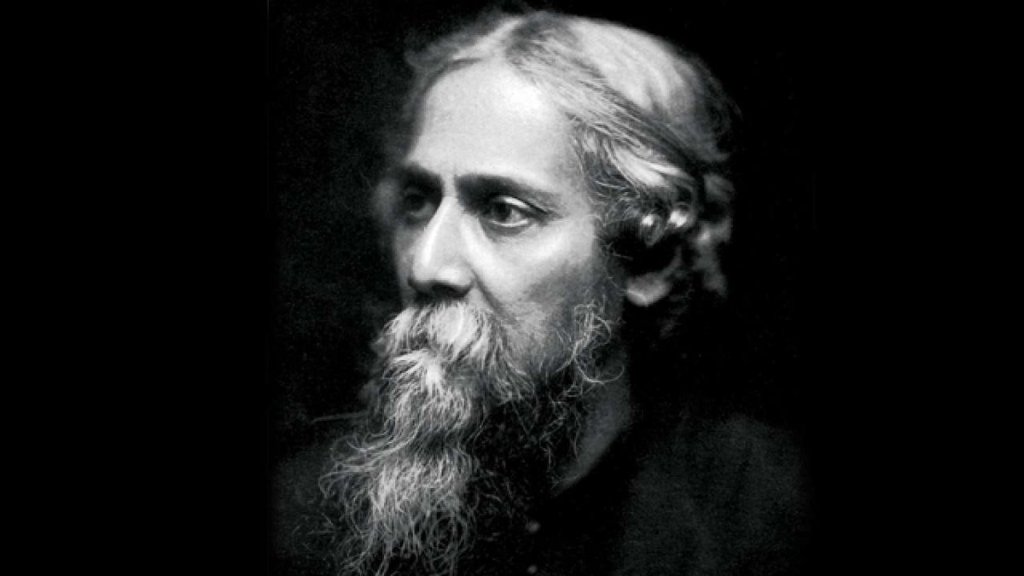
By Rabindranath Tagore

“O master poet, I have sat down at thy feet. Only let me make my life simple and straight, like a flute of reed for thee to fill with music.”— Rabindranath Tagore

ABOUT THE POET

Rabindranath Tagore was born in Calcutta on May 6, 1861. Tagore came from a wealthy Bengali family. He was educated privately and went to England in 1877 to study law but soon returned to India or a time he managed his father’s estates and became involved with the Indian nationalist movement writing propaganda. His characteristic later style combines natural descriptions with religious and philosophical descriptions. He is our greatest poet after Kalidas. His Gitanjali published in 1912, won the Nobel Prize.

Tagore wrote a large number of lyrics in Bengali and translated some of them himself into English. He also wrote novels, short Stories and plays. His best-known novels and poetry include The Gardener, The Crescent Man, Songs of Kabir. ‘Chitra’ etc.

Tagore was a messenger of India who showed Europe some of the beauty and greatness of our ancient land. He brought great glory to his motherland.

THE POEM

‘Flute-music’ is the story of a lower middle-class clerk who lives an abject poverty. He lives in a dingy room on the ground floor of two Storeyed houses. He barely manages to exist on his meagre salary and feels suffocated and nauseated by the darkness and foul smell of the alley. But one evening the music from the flute of one of the Residents makes him dream and he feels uplifted like a king. He dreams of marrying the girl of his dreams and forgets his destitute life.

The poem gives an account of the poverty-stricken existence of a middle-class clerk.

In Kinu, the milkman’s street, on the ground floor room of a double storeyed house lives a poor clerk. The windows of the room have bars, the walls are old and peeling, falling to dust in most places or damp with moisture. On the door of the room is pasted Picture of Lord Ganesh, the god who brings success and prosperity, taken from a roll of cloth. Apart from the clerk there is another inhabitant of the room who lives without paying any rent, it is a lizard. But there is a difference between the lizard and the clerk, unlike him the lizard never goes hungry. The clerk gets a salary of twenty-five rupees a month as a junior clerk in a trading office. The Datta’s give him food for giving tuition to their son. In the evening he goes to Sealdah station to save the cost of electricity in his room and to while away time. Engine’s puff, whistles shriek, coolies shout, passengers hurry past. He stays there till past ten ‘o clock and then goes to sleep in his dark, silent and lonely room.

In a village, situated on the banks of the Dhalesvari river, his aunt’s family resides. He was to marry her brother-in-law’s daughter. The moment was lucky for her, no doubt about that, as he ran away. The girl was saved from marrying him, a poor man and he was saved from her. She did not come as his wife to the room but he was always thinking of her: dressed in a Dacca sari, with the red vermilion on her forehead showing her marital status.

It was raining heavily. His cost of travelling by tram mounts. But still his pay is deducted for reaching office late. In the street are strewn mango peels and stones, pulp of jack-fruit, rotting fish-gills, dead kittens and all kinds of other rubbish. Like his fast-diminishing salary his umbrella is also full of holes. His office clothes are wet and water oozes out like a religious man who has bathed for his prayers. The damp dinginess of monsoon prevails in his room, like an animal that has been trapped, still and shocked. Day and night the clerk feels helpless and bound on to a world which is only partly alive.

At the street corner lives Kanta babu-a man with long hair which has been carefully parted, large eyes and tastes which have been carefully pampered. He regards himself as a good musician who is skilled at playing the cornet: its sound can be heard at intervals, wafting on the vile-smell of the street it is heard sometimes in the middle of the night and sometimes at dawn, sometimes it can be heard in the afternoon when the sun shines brightly and the shadows are also not dark. However, on that particular evening Kanta babu starts playing the notes of Sindhu-Baroya raag on his instrument. The whole sky resounds with the soulful music playing the notes of the pain of separation. At that very moment the filthy street is no longer a reality, as false and dirty as the senseless talk of a drunk man, and the clerk also forgets his reality and feels at par with the Emperor Akbar. His torn umbrella takes the form of an emperor’s royal parasol and his soul rises along with royalty towards the same heaven. He no longer feels humble, the music uplifts him as if he were a king.

The music is what is true, a reality where, in the eternal evening he visualises his wedding, the waters of the Dhalesvari river flow its banks shaded by the leafy tamal trees and the girl waits for him in the courtyard of her house, wearing a Dacca sari, with the red mark of vermillion on her forehead.

NOT ALL MEN ARE RAPISTS

Men are also human beings and honestly speaking some men out there know how to respect a woman for being a woman.

These are the ones who define the term ‘gentleman’.

I too have male friends who are always there to help me, to guide me, to protect me, who will never ever even think of taking advantage of a girl sexually.

Therefore blame the person and not the GENDER.

Yes I myself have heard about the Facebook stories and had conversations with my female friends. It was clear that men feel empowered to whistle, make unsolicited comments, stalk, grope and more.

But why blame every man out there and not the exact person responsible for this?

Why are Indian women denied the freedom of walking on the streets of their own city fearlessly – broad daylight or not! Can they not use their own judgment of appropriate dressing when stepping out of the house – not one stipulated by our narrow minded society?

There are definitely men out there who are also against all this injustice towards their mother, wife, sister or any other female. They know how to stand for them and speak for them.

These men know how to take care of their wife while she is doing a job and handling all the household at the same time. They will help her while she is working alone in the kitchen.

They will understand her menstrual cramps, buy her a chocolate, pamper her. They also know how to take care of their son or daughter as a loving dad.

So let’s take positive steps towards this and respect a MAN. Everyone deserves to be treated right.