Realistic Ways to Save Time and Money in College

The transition to college can be stressful, no matter how prepared you are. As a student, you have many decisions to make, like what to major in, which classes to take, and how to get involved on campus.

Add in the responsibility of paying for school, keeping up with a part-time or full-time job, and a steady load of coursework, and it’s easy to become overwhelmed and financially overextended. As a college student, I learned the hard way what happens when you procrastinate and overspend.

Here are a few tips you can use to save time and money in college, so you can worry less—and feel confident about your future.

How to Make the Most of the Time You Have

Learning to manage your time is an essential skill to being successful in college (and in your future career). While the best approach to time management may look different from one person to the next, here are a few ideas to get started.

Once you’ve picked your classes and have your course syllabi for the semester, buy or create a calendar. From here, outline the semester, highlighting essential dates for midterms, papers, presentations, and other assignments. You can colour-code it and get as creative as you like—the point is to see every deadline coming your way. Once you have this completed, try these things:

1.Plan by week


Schedule out your week in a daily planner, whether on paper or on your phone. If you’re like me and like to schedule everything, record when you’ll go to the gym, break for meals, spend time with friends, study, and pursue other activities. If you prefer a rough outline of your schedule, jot in any significant deadlines for a given week. This technique will keep you on track and help you avoid pulling all-nighters, which can mess with your schedule and, potentially, your grades and mental health.


2.Start with the simple to-dos


Completing easy tasks immediately after class—or as soon as you can—are an easy way to cross off your to-do list without worrying about anything on it falling to the wayside. One of my undergraduate classes required self-reflection pieces each week. I always completed them right after class because the material was fresh in my head, which made the writing process quicker and in a way, more genuine.

For a larger writing assignment, calculate how much time you have to complete it and divide that by the minimum number of pages you’re required to write. For instance, if you’re assigned a 20-page paper and you have 12 weeks to complete it, you’ll need to write about 1.66 pages per week to get it done. It seems much more manageable when you look at it this way.

3.Back up your work


Technology is a beautiful thing, but when it fails us, it can have catastrophic effects. Ever have a 15-page paper due the next morning, and your hard drive dies? Your professor may or may not be understanding, and I would guess that you’d prefer to do without the frustration (and extra work) that a similar incident could cause.

So be sure to email yourself a copy of the writing assignment you were working on and save a copy on a USB. This way, if your computer died, I had two options for getting it back. You can also use Google docs to save your work. It never hurts to have multiple copies of your work.

4.Keep distractions at bay



I can’t stress this enough; there is no more significant time waster than setting aside time to get work done and getting distracted by friends, your cat, the weather, the TV, anything. If you know that you are easily distracted at home, then seek out time at the library or in a study room. If you struggle to focus, set aside an hour to study, take a break, and repeat.

Let’s Talk About Money Management

Money is probably one of the most significant stressors facing college students, thanks in part to growing tuition and fees, additional academic expenses like textbooks, and the limited time to devote to earning money. Here are some ideas on how to maximize your budget.

1.Change up your grocery shopping habits


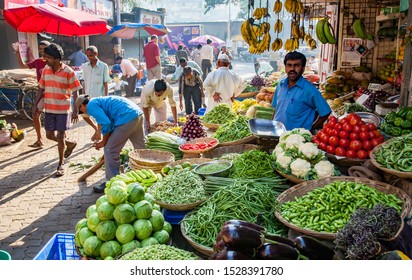
Want to save money on food? Know that thinking cheap doesn’t have to mean scrimping on quality. Most towns and cities have a farmer’s market that offers seasonal produce and other goods at a severely discounted price. If there isn’t a farmer’s market in your area, consider splitting a membership to a warehouse store like spencer’s or Walmart with a few friends or roommates. Planning for regular shopping trips may be enough to let you opt-out of your campus meal plan—and save a fortune on food.

2.Skip the restaurant



As great as not having to cook is, in many cases, what you order at a given restaurant can almost always be made at home for less. For those who see heading out for a meal as a time to catch up and socialize with friends, consider inviting a group over for a communal meal. Not only will you save money, but you’ll also have leftovers and the added fun of making a meal together.

3.Look for freebies


As the old saying goes, “the best things in life are free.” This sentiment rings especially true as a college student. In my experience, most of the outings with friends, guest lectures, and concerts I attended were free and found through local paper, word of mouth, and social media. I made such a routine of it that my the second year, I had barely paid anything for entertainment and other events. The best part was, my friends, became so curious about my adventures that they all started tagging along—and saving money too.


HOW TO IMPROVE WRITING SKILLS?

Writing is an art and not everybody could become an expert without practice. Maybe, everyone can write generally like blogging and things. But professional writing needs certain steps to be followed and practiced. It is not an inborn quality for anyone, it lies in the person’s interest to learn and master it. To stand unique from others and gain appreciation, the person should have a passion for writing from the heart. Here are few steps one could take and follow while writing.

  • HAVE THE HABIT OF READING

Read articles, blogs, and other kinds of stuff as much as you can. The more you read the more you get the ideas and intuitions to write properly. You will also get some inputs before writing. You can notice that it is easier to write after gaining inputs. Reading also helps to improve your vocabulary. One can start the practice of reading from the newspaper. When you read the newspaper, you could get to know at least 5 new words every day. 

  • BRUSH UP YOUR BASICS

Before starting to write, revise the rules in English grammar and writing. Although you don’t need to complete a course on grammar, the basics are required. Build a strong basement with the basics of spelling and grammar. Grammar is very important while writing although it is not paid attention to while speaking.

  • RESEARCH WELL

Ensure you have made the necessary research on the topic. Reach out to the available resources of that topic, make a thorough study and note the key points that are required. This will make you more knowledgeable and you could write easily with a flow. Unless you know more about a topic, you couldn’t expand your ideas and write well.

  • PRACTICE WRITING

To improve your writing, do as much practice as you can. It is the only helper to mould you in the right shape. Learn to frame paragraphs and sentences. Try to bring a coherent sequence of sentences. When you write never doubt yourself or your skills. Don’t do it as a practice, think of it as your job and give your best every time you write. Take up workshops and internships until you feel confident and have become a passionate writer.

  • REVIEW AND EDIT

When you are writing, always start with the rough draft. Read what you have written and make the required changes to make it a better one. Check for spellings and grammatical errors. Edit the rough draft, remove unnecessary words, proofread and frame a fair copy. Try to deliver the content with simple words so that anyone who reads could understand it. Finally, check for plagiarism from the available online tools. This is essential to ensure that your work is not copied from other sources and is unique.

  • HAVE SOMEONE TO READ WHAT YOU’VE WRITTEN

Try to have a person by your side to read, guide, and organize you. The person may be your teacher, colleague, friend, or anyone with enough knowledge in grammar and the language to suggest and give a true opinion on your work. 

These are some of the tips to become a better writer. Nothing comes without effort and so as any language. “Practice makes a man perfect” – so practice more and become a perfect writer. Start simple, make gradual increments and then master the art. Happy learning😊.

Rani Lakshmi Bai- an epitome of bravery and courage.

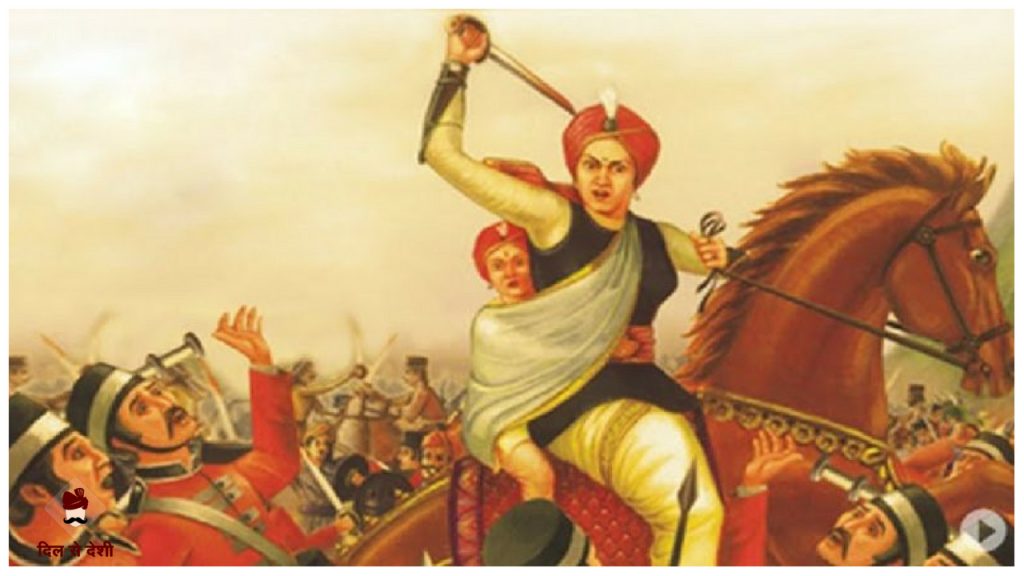
Rani Lakshmi Bai was the queen of the princely state of Jhansi, which is located on the northern side of India in UP. She was one of the leading personalities of the first war of Independence that started in 1857. The name of Rani Lakshmi Bai will be immortal in the history of India. She was considered as the heroine of India’s war of Independence. Her struggle against the British is legendry. She was a true patriot and full of self-respect. She was born on the 19th of November 1835 in the town of Bithur. Her parents were Moropanth and Bhagirathibai. Manikarnika or Manu as she was named at birth, lost her mother at the age of four, Manu was brought up by her father. With education, she also learned skills like sword fighting, horse riding, and using a gun.

  She was married to Gangadhar Rao, the king of Jhansi at the tender age of eight. Thus, she became the Rani of Jhansi. Jhansi is now the district in Uttar Pradesh. There was a treaty between the British and the Raja of Jhansi. One being that if the British needed any help then Jhansi would help them and the other being that the British decide who would be the ruler of Jhansi. On 21st November 1853, Lakshmi’s husband and the only son died. During that period, Lord Dalhousie was the Governor-General of British India. The adopted child was named Damodar Rao. As per the Hindu tradition, he was their legal heir. However, the British rulers refused to accept him as the legal heir. As per the Doctrine of Lapse, Lord Dalhousie decided to seize the state of Jhansi.

  Rani Lakshmi Bai went to a British lawyer and consulted him. Thereafter, she filed an appeal for the hearing of her case in London. But, her plea was rejected. The British authorities confiscated the state jewels. Also, an order was passed asking the Rani to leave the Jhansi fort and move to the Rani Mahal in Jhansi. Lakshmi Bai was firm about protecting the state of Jhansi. Jhansi became the focal point of the uprising. Rani of Jhansi began to strengthen her position. By seeking the support of others, she formed a volunteer army. The army not just consisted of the menfolk, but the women were also actively involved. Women were also given military training to fight the battle. In the revolt, Rani Lakshmi Bai was accompanied by her generals.

  Rani Lakshmi Bai prepared herself well for this fight for freedom. She used to set out on horseback, attired like a man with a metal helmet with a flowing turban, a protective plate bound to the chest, pyjamas, and a sash over them. With weapons like pistols and daggers, Rani was now ready for battle against the British. From the period between Sep-Oct 1857, Rani defended Jhansi from being invaded by the armies of the neighboring rajas of Orchha and Datia. In January 1858, the British army headed its way towards Jhansi. The conflict went for two weeks. Finally, the Britishers succeeded in the annexation of the city. However, rani Lakshmi Bai managed to escape along with her son, in the guise of a man.

   She took refuge in Kalpi. She then attacked the Gwalior fort and the Raja later surrendered. The British army then attacked the fort of Gwalior. Rani and her army fought courageously but got defeated. Rani Lakshmi Bai sustained many injuries. She died on 17th June. It is believed that when she was lying unconscious on the battlefield, a Pandit found her and brought her to an ashram, where she died. For her immense effort, she is referred to as the ‘Icon of Indian Nationalist Movement’. Her story became a beacon for the upcoming generations of freedom fighters.

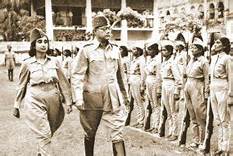
   A lot of literature has been written on the life history of Rani Lakshmi Bai of Jhansi. Heroic poems have been composed in her honor. Rani Lakshmi Bai became a national heroine and is a perfect example of female bravery. When the Indian National Army formed its first female unit, it named the Unit after her. Indian poetess Subhadra Kumari Chauhan wrote a poem in the Veer Ras style about her, while is still recited by children in schools all over India. The Rani of Jhansi was immortalized in bronze statues both at Jhansi and Gwalior.

‘Rani of Jhansi Regiment’ (of Indian National Army)

The crazy ball and the crazy me

Photo by NEOSiAM 2021 on Pexels.com

The balls above bring back memories. Don’t they? Well, they definitely do for me. When I was a kid, mobiles weren’t very popular and so we had to look for other sources of entertainment that included many board games, those plastic bats, plastic cars and later on those remote controlled ones, a soap bubble maker, stuffed cartoons and bears, cartoon characters in balloons and balls- football, stumper ball, leather balls, table tennis balls, plastic balls, even golf balls, balloon balls and my personal favourite -the crazy balls.

Well, what’s so special about them, you ask. Nothing much, except that once thrown they bounce back soo high and the fact that they come in such attractive colors- neon, green, pink, blue, a mixture of pink and blue, green and yellow and soo many more and the rubber like texture of the balls. You couldn’t help but love it.

And this one fine day, when I was out with my mother and visited a stationery, I saw these crazy balls. Not one or two, but a whole packet. I couldn’t believe they still sell this. Now-a-day, kids have so many sources of entertainment and when they do play outside, it’s usually in those professional stadiums. I thought they had stopped making them. So anyways, when I saw the packet, I couldn’t help but want one. With the best puppy like face I could muster, I looked at my mother and pleaded to have one. My mother looked at me in all her seriousness and she said and I directly quote- “Why do you need one? Are you a kid?”. It was when it stuck me, I wasn’t a kid anymore. I was supposed to be all serious and mature. But then again, feeling that child like excitement once again, after soo long felt strange but it felt soo good. I couldn’t help but want it- both that feeling and the crazy ball. And so I looked at my mother and said, “Yes, I am only a kid “. She smiled. What more could she have said and when I didn’t budge she allowed me to have one. Just like those old days, choosing one was soo difficult. There were soo many colors- neon, green, pink, blue, a mixture of pink and blue, green and yellow, red and green. I took the pink and blue ball and clutched it tightly in my hand all the way back home. The crazy ball sure has me crazy over it. So, gotta go. I still have to play with it. And so, if you ever come across any of those or any of your personal favourites, embrace them. Be a kid. Life is short, the pandemic has taught us this, but our childhood was even shorter. And we all miss it somewhere, sometimes. So when life gives you moments like these, don’t just sit and recollect. Go ahead and relive.

CLAUSTROPHOBIA

Claustrophobia is an anxiety disorder that causes an intense fear of enclosed spaces. If you get very nervous or upset when you’re in a tight place, like an elevator or crowded room, you might have claustrophobia. Some people have claustrophobia symptoms when they’re in all types of closed-up areas.

Claustrophobia is often caused by a traumatic event experienced during early childhood. For example, adults may develop claustrophobia if, as a child, they: were trapped or kept in a confined space. were bullied or abused.

Claustrophobia is very common. “Studies have generally indicated that about 7% of the population, or up to 10%, is affected by claustrophobia,” says Bernard J. Vittone, MD, founder and director of The National Center for the Treatment of Phobias, Anxiety and Depression.

Claustrophobia is treatable and people can recover from the condition. For some people, claustrophobia disappears when they get older. If it doesn’t, there are different ways you can treat your fear and physical symptoms, as well as manage your triggers to live an active and fulfilling life.

Claustrophobia can be treated and cured. There are different ways to treat your fear and symptoms so you can have an active and healthy life.

POLO

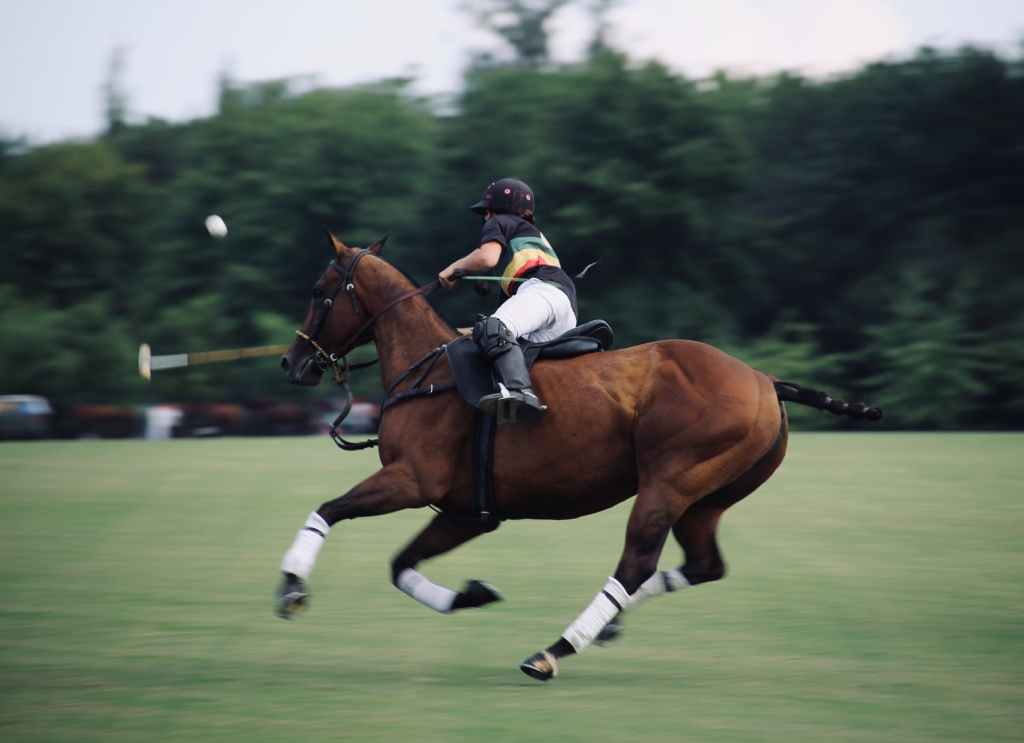
Polo is a horseback ball game, a traditional field sport and one of the world’s oldest known team sports. The game is played by two opposing teams with the objective of scoring using a long-handled wooden mallet to hit a small hard ball through the opposing team’s goal. Each team has four mounted riders, and the game usually lasts one to two hours, divided into periods called chukkas or “chukkers”

Polo has been called “the sport of kings”, and has become a spectator sport for equestrians and high society, often supported by sponsorship. The concept of the game and its variants date back from the 6th century BC to the 1st century AD, originated from equestrian games played by nomadic Iranian peoples. The sport was at first a training game for Persian cavalry units, usually the royal guard or other elite troops.A notable example is Saladin, who was known for being a skilled polo player which contributed to his cavalry training.It is now popular around the world, with well over 100 member countries in the Federation of International Polo, played professionally in 16 countries, and was an Olympic sport from 1900 to 1936.

Polo is played professionally in many countries, notably Argentina, Australia, Brazil, Canada, Chile, Dominican Republic, France, Germany, Iran, India, New Zealand, Mexico, Pakistan, Jamaica, Spain, South Africa, Switzerland, the United Kingdom, and the United States, and is now an active sport in 77 countries. Although its tenure as an Olympic sport was limited to 1900–1939, in 1998 the International Olympic Committee recognised it as a sport with a bona fide international governing body, the Federation of International Polo. The World Polo Championship is held every three years by the Federation.

Polo is unique among team sports in that amateur players, often the team patrons, routinely hire and play alongside the sport’s top professionals.

The playing field is 300 by 160 yards (270 by 150 m), the area of approximately six soccer fields or nine American football fields (10 acres), while arena polo is 96 x 46 metres. The playing field is carefully maintained with closely mowed turf providing a safe, fast playing surface. Goals are posts which are set eight yards apart, centred at each end of the field. The surface of a polo field requires careful and constant grounds maintenance to keep the surface in good playing condition.

Modern Agriculture

Agriculture is the main occupation in India, whilst it is more than an occupation, as it is regarded as the backbone of our country. It does not just a need or merely a source of livelihood but a way of life without which we could not imagine our existence on Earth. On a literal note agriculture means the production and cultivation of crops and livestock on a farm. It provides the highest contribution to national income and is currently the highest contributor to the GDP of India. It is the basic salient factor for the economic growth of a country on the same hand the development of agriculture is very prominent for a country’s development. It plays a crucial role and an integral part in the entire life of an economy which presses the need of its development. Speaking about the enhancement in the field of agriculture there are many methods and technologies in the contemporary world that contributes to its growth. Modern agriculture is the juncture where technologies and agriculture meets.

It is an evolving approach to many innovations in the agricultural field and farming practices that can help the farmers to augment efficiency by implementing several methods and reduce the number of natural resources like water, land, and energy necessary to meet the world’s food, fuel and fiber needs in a more effective form to increase productivity and decreasing environmental impact. It is driven by continuous improvement, using technology, digital tools and data. Precision agriculture allows the farmers to be more accurate that includes the use of Global Positioning Systems which results in the effectual use of resources.

Techniques in modern agriculture

Aeroponics system– It is the process where plants are grown in the air or mist environment without the use of soil. Plants grow in a soilless medium called rockwool. By using this method farmers will have better control over the amount of water to use. Lot of vegetables and fruits like beets, broccoli, cabbage, carrots, cauliflower, cucumber etc can be grown using this method.

Monoculture– It is the raising of a single crop within a specified area which in contrast to the traditional technique of farming , which relied on multiple crops being planted within a specific area. Many indoor farms growing medicinal herbs and flowers are measured to be monoculture farms. Monoculture farming is widely used in both industrial farming and organic farming and has allowed increased efficiency in planting and harvest. It reduced plant opposition for nutrients, space and solar radiation.

Drones in farming – It is an unmanned aerial vehicle applied to farming in order to help increase crop production and monitor crop growth. Sensors and digital capabilities can give farmers a well-heeled picture of their fields. The drones in agriculture have the potential to launch the agriculture industry into a future of sustainability. It is very effective at collecting data to help farmers improve crop health and allows farmers to gain immediate knowledge about the status of the fields.

Hybrid seed technology– It is a cross between two or more unrelated inbred plants. The two dissimilar varieties of plants are cross bred, resulting in a seed that carries one or more favorable traits. They are common in commercial farming, mainly to increase crop yields. It shows enhanced disease resistance, improved crop yields, increased flavor of fruits and vegetables.

Tissue culture – It is a method where the fragments of a tissue plant are introduced into a new, artificial environment, where they continue to function or grow. It is the expansion of tissues or cells separate from the organism. This is naturally facilitated via the use of a liquid, semi-solid or solid. such as broth or agar. It is a fast technique in which thousands of plants can be created in a few weeks time from a small amount of plant tissue and the plants are disease free.

Irrigation technologies-Water is one of the most essential factors in the deciding the survival of plants. The modern methods of irrigation include surface irrigation- flood irrigation, sprinkler- water is sprinkled or sprayed on plants which is similar to rainfall, drip – small diameter pipes with emitter or drippers that lie close to grounds and subsurface. The modern methods are better because it saves more water and also reduces the time and labor.

4 Mysterious places that one must visit!


Have you ever been curious
regarding something mysterious or extraordinary? Do you like to wander into the
woods, or a place which has its own unexplainable aura? Have you ever wanted to
explore the place where you could actually experience Sherlock Holmes in real
life?


If yes, then here are the most 4 interesting and
mysterious places that you would love to visit which could quench your thirst
for curiosity, adventure and can awaken your inner detective as well!


1. Chamoli: The lake of skeletons

Roopkund Lake is located in Uttarakhand. This lake
represents tragedy , melancholy and despair. About 300-600 skeletons can be
seen beneath this frozen lake  every year when the ice melts. According to
, the radiocarbon tests and forensics results state that the corpses date back
to 15th century!

The residents believe that the corpses might be of the
king and queen of Kanauj, who were on their way to pilgrimage but they died in
this lake because of the heavy hailstorm.


2.  ” No Door village”: Houses of
Shani Shingnapur

Shani Shignapur is a small village in Maharashtra
located 35 km away from Ahmednagar. In this place, no building, houses, schools
and shops have doors! The mysterious fact about this village is that in spite
of doors not being there, no single crime or theft has occurred or committed!


People residing in the village believe Lord Shani from
the core of their heart and they also believe that it is due to his blessings
that there is zero crime rate in the village!


 3. ” Cursed Rock” at Shivapur

The Hazrat Qamar
Shrine is listed among the extraordinary places in India as well. It is
famous for its special rock that weighs 70 kg and can only be carried via
single method. 

Eleven people are
required to gather around the rock and they have to chant the name of the saint
loudly who cursed the rock and then the rock rises up in the air magically. The
rock could not be lifted by any other methods no matter how effective those methods
were!  


4. 
Malappuram Mystery!

Malappuram
village is known for its large number of twin births . As soon as one
enters in to the village, one can see twins or triplets everywhere! According to Travel Triangle, The
village is currently home to over 200 pair of twins and two
sets of triplets!
  Moreover, the women who marry a person outside the
village bear twins or triplets too!

According to
doctors, the possible reason behind this mysterious situation might be due to
the chemicals present in the water in that village. The village is also known
as Kodinhi.


kinds of Phobia

We have some kind of fear which we probably state with the term phobia, we heard of many types of phobia, but there are some kind which we rarely thought would exist by which some people around the world is facing from

Here are some :

  • Algophobia – Fear of pain
  • Amaxophobia – Fear of riding a car
  • Androphobia – Fear of men
  • Anthropophobia – Fear of flowers
  • Anthropophobia – Fear of people or society
  • Aphenphosmphobia – Fear of being touched
  • Arachibutyrophobia – Fear of peanut butter
  • Arithmophobia – Fear of numbers
  • Ataxophobia – Fear of disorder or untidiness
  • Automatonophobia – Fear of Human-Like Figures
  • Barophobia – Fear of gravity
  • Bibliophobia – Fear of books
  • Botanophobia – Fear of plants
  • Catoptrophobia – Fear of mirrors
  • Chionophobia – Fear of snow
  • Chromophobia – Fear of colors
  • Chronomentrophobia – Fear of clocks
  • Chronophobia – Fear of Time
  • Claustrophobia – Fear of confined spaces
  • Gynophobia – Fear of women
  • Haphephobia – Fear of touch
  • Heliophobia – Fear of the sun
  • Hemophobia – Fear of blood
  • Hippopotomonstrosesquipedaliophobia – Fear of long words
  • Iatrophobia – Fear of doctors
  • Insectophobia – Fear of insects
  • Koumpounophobia – Fear of buttons
  • Leukophobia – Fear of the color white
  • Octophobia – Fear of figure 8
  • Ombrophobia – Fear of rain
  • Papyrophobia – Fear of paper
  • Philematophobia – Fear of Kissing
  • Philophobia – Fear of love
  • Porphyrophobia – Fear of the color purple
  • Selenophobia – Fear of the moon.
  • Somniphobia – Fear of sleep
  • Venustraphobia – Fear of beautiful women


Those sounds silly but those may be a reason for someone’s frustration. If till some ar of fear of something but there are not sure about it that they are suffering from which need a cure .If there is a sign the consulting with a doctor would be much better.

THE STORY OF LAY’S

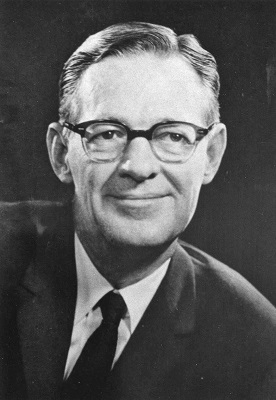
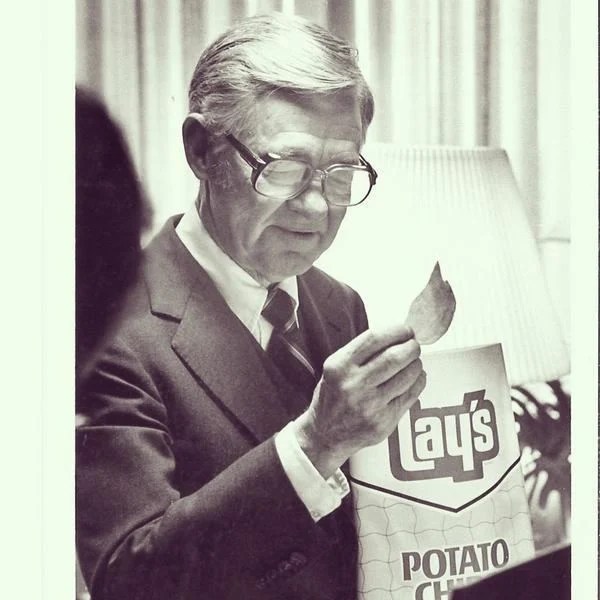
There may not be a single Indian who doesn’t love ‘Lay’s’. It is everyone’s favorite potato chips to snack on. But not many know how it began. It all started with this man.

Herman Lay

Herman Lay, a salesperson in Nashville, Tennessee, was the first to sell Lay’s on behalf of Barrett Food Products Company in 1932. (U.S.). During the Great Depression, he was a traveling salesman, selling his chips from the back of his automobile on the roadway. “He believed in giving the most affordable prices and the highest quality products at an arm’s reach of every consumer,”

After six years, when Barrett fell on hard times, Herman bought the firm and renamed it H. W. Lay & Company. H.W. Lay & Company was the company’s original name until 1944 when Herman chose to condense it to the ICONIC Lay’s Potato Chips.

Lay’s Tennessee Valley Popcorn, not potato chips, was the company’s initial product, released in 1938. H.W. Lay & Company didn’t begin making Lay’s chips until 1944. People rapidly grew enamored with the chips. Lay’s had grossed $16 million in revenue by 1957, making it the largest potato chip and snack food manufacturer in the United States.

It became the first snack food brand to advertise on television, with an animated mascot dubbed Oscar-The Happy Potato.

Around the same time, C.E. Doolin was purchasing the recipe for yet another American staple: Frito corn chips. Doolin began preparing them in his mother’s kitchen. In 1961, the two of them partnered up to form Frito-Lay.

In 1962, Lay’s potato chips first crossed the border into Canada. By 1997, Lay’s potato chips had established itself as a popular choice among Canadians, and they remain the country’s favorite potato chip brand to this day. In 1965, PepsiCo acquired the Lay’s brand. Frito Lays, a PepsiCo subsidiary, manufacture Lays.

Fritos, Doritos, Ruffles, Cheetos, Rold Gold pretzels, Munchos, Funyuns, and Sun Chips are all Frito-Lay products. Lay’s, formerly known as Hostess in Canada until 1996, is also known as Walkers in the United Kingdom and Ireland, Smith’s in Australia, Chipsy in Egypt, Poca in Vietnam, Tapuchips in Israel, Margarita in Colombia, Katkoot in Kuwait, and Sabritas in Mexico. Lay’s flavors vary by region: North America, Europe, Australia, Asia, and Africa.

LAY’S DEBUT IN INDIA

Lay’s debuted in India in 1995 and quickly rose to become one of the Before Lays, Uncle Chips dominated the Indian market. In barely five years, Lay’s positioned itself as the principal rival of ‘Uncle Chips’ and grew to become the largest chip manufacturer in India.

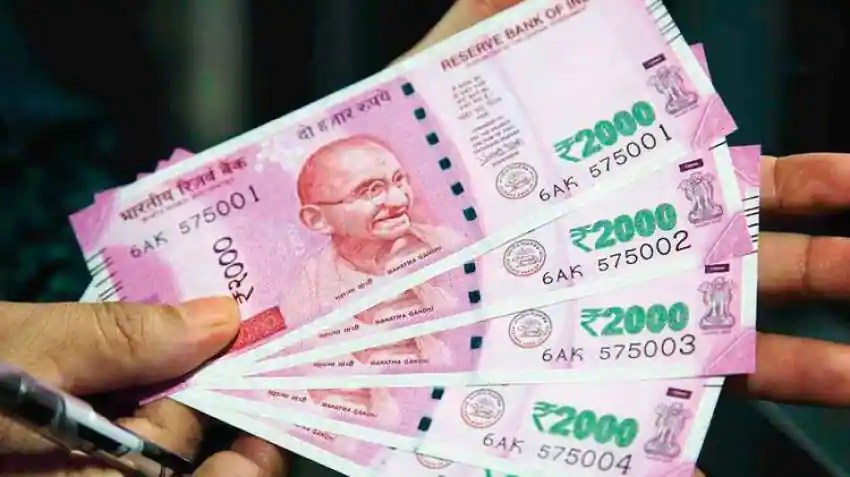
Economical chips packets ranging from Rs.5, Rs.10, Rs.20, and Rs.25 were launched to attract customers & According to a study, more than 72 % of residents felt the cost adequate. In 2016, Lay’s had a 50 percent market share in potato chips in India, according to Statista.

Lay’s are prepared with the finest potatoes, cooked in edible vegetable oils, and flavored with wonderful seasonings. Extensive quality control and production techniques are used. It has ISO 14000 HACCP (Hazard Analysis and Critical Control Point) certification, USA; TQCSI (Australia) accreditation from the American Institute of Baking (USA), and OHSAS 18001 (Occupational Health and Safety Assessment Series) certification, USA.

Lay’s chips come in over 200 different flavors. The chips come in a variety of flavors, like salt & vinegar and barbeque, as well as cappuccino, vegetable soup, and Beer ‘n Brats.

It introduced a variety of Indian and Western flavors, like Classic Salted, American Style Cream & Onion, Chat Chaska, Magic Masala, Tangy Tomato, and Astana Mango, to appeal to both urban and rural markets in India. To attract the health-conscious clientele Frito-Lay potato chips now have zero trans-fats and no added MSG.

What defines Maturity?

Definition of maturity defers from person to person some thought someone who has physically reached adulthood or become old are mature, some says it is ability to listen and expressing your thoughts in best possible way but maturity is moreover than these statements.

Maturity is the ability to respond to problem, environmental issues, being aware of right time, quick and sound decision making. Maturity is define as how persons controls their emotions and know how to react to challenges. Maturity emphasizes a clear comprehension of life’s purpose, directedness.

Maturity doesn’t comes with age nor with puberty. Maturity comes when you realizes your financial problems, health issue, care about studies etc. It comes when you realizes that only you can fix your life problems and make life more valuable. When you know that you’ve responsibility and work hard to carry on.

Simply maturity means finding your true self.

How to keep yourself motivated.

As we all know, motivation is the key to success and that’s why we need to stay motivated to succeed in life. Often, people confuse motivation with productivity but motivation has nothing to do with it. Being motivated means doing your work without considering it as a headache and not for just the sake of accomplishing the goal. And to stay motivated, you need to find a reason to love your life and to love what you do. Achieving purpose should not always be considered as a priority rather finding happiness in your life should be the goal. Because if you’re not happy in your life, not even a single thing will satisfy you and you will end up being frustrated and feel the pressure of your work or day to day life that is detrimental to health. So for that matter, we need to seek prosperity and it will just come up with the idea of being passionate about what you’re doing.

That is why it is necessary to take leisure in between so that you can do things for yourself. Even if you’re not doing something that suits your personality that is completely fine, you just need to take a gap in between so that you can fill that time with the things you love to do. Like for instance, if you’re someone who works in the IT sector, but your inclination is more towards nature or gardening then try to take a break from your work and can do gardening side by side, can water your plants or can go through some research article about anything that makes you happy.

Set your priorities and goal that is the foremost thing that will help you in the long run. When most people create goals, they write them down, stow them away, and promptly forget about them. They let the urgency of day-to-day operations distract them from dynamic growth and, before they know it, six motivation-less months have passed.

Your long-term goals should be so visible they’re consistently on the top of your mind. If they’re not, they won’t be completed; it’s as simple as that.

There are thousands of reasons to stay happy, and they ultimately enhance your motivation level. All we need to do is just introspect so that we can know ourselves better and find that purpose in life.

MONEY MANAGMENT

Money is not life but it's an important part of life, to survive, to give yourself good facilities, and to live in a good condition with two meals a day. Money may not be a power, also it's not like one cannot live without money, but without it one has to struggle to survive, and has to face scarcity in his life. 
As per the slave theory of Aristotle, society cannot be of people with equal living standards. Hence, the entire society especially in the context of Indian society is divided into 3 social classes: Rich people, middle class people and poor people. 
What does this division depict about the people of each class? On what basis these classes are formed? It's on the basis of money, people who are rich, have large amounts of money, they had a good living. Middle class people are the one who are neither rich nor poor, they can make money to live a normal life and can fulfill essential necessities of eating and education easily. Poor class people have to struggle even for the meals, they don't have shelters over their head, they cannot afford education for their children. 
It's said that home is the first school of a child, he learns whatever he sees or feels in his home environment, whatever his parents teach him, he accepts it as their reality. 
A child of a rich class knows that he has money and can make more money in the future, as he is given good education by his parents, he has money in his hand so maybe he knows how to manage it. 
A person of poor class will teach his child about money what? Few among them can barely afford money to give education, he could just say "study and work hard". He himself never had so much money, what will he teach about Money Management to his children. 
In this democratic India where everybody has an equal right to get education, hardly there would be any school who discriminate children on the basis of financial status. The concept of money is taught to children in the home itself, here's where he sees that whether I am poor or I am rich. 
A child of rich parents knows nothing that whatever facilities he is given is because they have enough money and other classes exist in this world who cannot afford it. A child of poor class doesn't know that he is lacking somewhere, he doesn't know that there are people who have all the facilities that he doesn't have. All these things he learns from his parents and the type of environment he understands as he grows up. 
Sometimes even if a child of poor family studies hard and passes with the high grade, the financial conditions and mentality will be same, that he is poor, he can for sure eat well and live well, but he never tries to change himself, to explore himself, except few, all those who have came out of poverty, tries to earn more and more money, firstly for themselves and then for their children. 
The above mentioned things sometimes go wrong because there are many cases, when a person has a good family background, he is born with Silver spoon in his mouth, but a time comes when he is grown up or after several years he is left with nothing and has to face poverty. 
Whereas sometimes a child from a poor section comes up with great talent, determination and struggle and he doesn't face any scarcity of money which he faced earlier. 
So, why these drastic changes occur in the life of people? It is because of the management of money. The amount of money a person handles to fulfill his most important needs, makes life easy and smooth. Money management is a talent, which not everyone has. 
Money management is, how you tackle all your financial aspects, from making a budget and where every penny is being spent,  along with saving money for the future. If a person lacks in money management even the crores or any amount of money proves to be less to him because desires are never ending. 
Under money management one has to learn to say 'NO' to any unnecessary purchasing and 'YES' to the thing which is far more important for the individual. Differentiation between what is unnecessary and what is necessary is also a work of wise human. When one has desire in mind for anything, he cannot resist himself from buying or doing unnecessary spending. 
Money management starts with what assets you are having in your hand, assets like bank balance and property, one has to subtract it from all your debts or liabilities or from the money you have to spend on your essentials. The net amount which is left decides whether you have proper money management or not? If the amount of liabilities is more than assets, it puts your financial conditions in dilemma. 
For proper money management the first and foremost step one should take is setting goal, this helps you to give clarity about which expenses are necessary,  and which one can be cut down. Let's say if a car is your necessity or goal, in order to buy it you have to cut out the expenses of movies, dinners, hiring taxis, buying expensive clothes etc. 
No matter, if sometimes your budget goes up, you should not change your budget and the expenses on different items, this will help you to keep more money as savings and will limit your expenses. Budget should be  changed or should be made of higher expenses if you have increment, or consistently the amount of your money is increasing after sufficient savings. 
People get easily influenced by the magic of market, when one goes to supermarket he/she buys many things which may not be necessary. The marketers and business man plays with the psychology of buyers, they keep goods on offer, give the scheme of buy 1 get 1 free and use many other marketing tricks and there people get stuck in the web of market's beauty. 
When a person lives a student life he gets pocket money from the parents and that becomes the first step of money management, from there a child builds up the quality of money management, and that's the reason parents should leave their children in the world with small amount of money, doesn't matter if he belongs to a rich family. 
Money is something which cannot buy happiness or can give happiness. It's just for fulfilling basic necessities and some hobbies, but yes money makes life easy and comfortable. It can give you a good living and it can motivate you to move ahead. Money is just the necessary evil. 

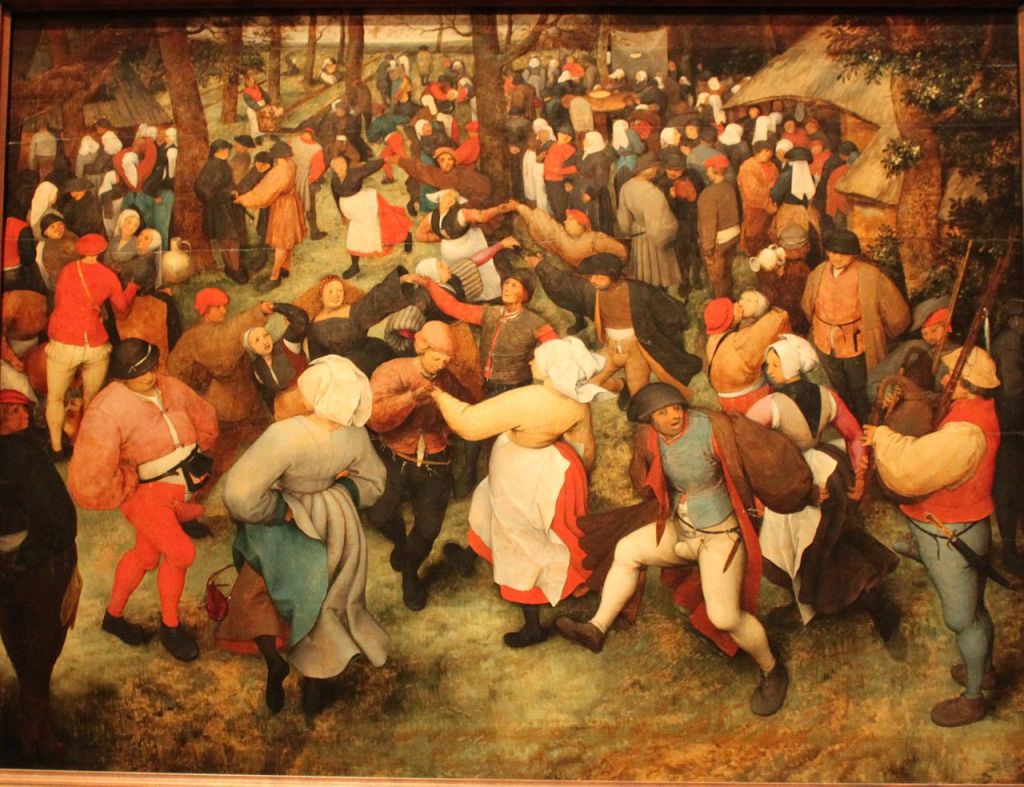
Dancing plague

While we are suffering a great pandemic, with a hope of getting the news of this pandemic to get over, just like that it is a phase of suffocating people to death, but there was a time when people died where not for any but been dancing.


The dancing epidemic occurred in Alsace from July 1518 to September 1518. It started suddenly when a woman began the dance in a street in Strasbourg, around 50 to 400 people took to dance for days. It last long until it took the attention of Strasbourg magistrate and bishop, they appointed doctors for the cure.


It is considered to be controversial, as some sources claim that the plague killed around 15 people per day or some didn’t mention the number of deaths.
Mainly claimed their theory of this epidemic, food poisoning, the dancing been brought due to food poisoning caused by toxic chemicals of ergot fungi which generally grow s on grains, used to make bread.
Or it may be because of Stress-induced mass hysteria, what does that term depict the involvement of individuals suddenly exhibiting the same behavior.