Apple Products

Successful long term innovative companies have a broad vision mantra. Apple’s is “How do we make your life easier.” The main vision for apple product designers is observed to be improved accessibility, simplicity, and increase in functionality. In fact, the design seems to be of utmost importance in apple products that they appear to ignore manufacturing practicalities.

Apple design is more than the way something looks but the way it works on so many levels. Design defines experience because simplicity, clarity, and efficiency depict beauty. The designers work on bringing order to complexity. Almost all Apple products have a unique Unibody software that is thinner, resilient, all made out of a piece of aluminum. Each product is designed from the very beginning, its software.
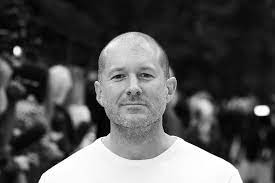
Each product is identified with ways to be better, perhaps even before they are released. As they progressed the products became more intuitive and easy to understand and learn. To quote Jony Ives, “The best designs aren’t reserved, they’re used immediately”.

For example, the Macbook has the most efficient design possible, inventions across many disciplines, new MacBook is thinner and precise, butterfly mechanism, single led is used to illuminate keys, refined from glass to pixels, any moving parts(vents and fans) are eliminated to allow it to operate in silence and it’s extremely portable.

Within a visibly small amount of time, the Macbook Pro was released. It’s built for the extreme level of performance, remarkably portable. Most of the larger apple products give viewing content priority. Apple has a unique quality highlighted in the Macbooks and iMacs are the asymmetric fans that ensure even the lowest frequency of sounds to be heard.

Similarly, the iPhones, iPads, even Operating Systems were continuously developed. The changes and developments were tracked; they were observed and then developed. Most recreations in a more portable and smaller size weren’t reduced from the original version, rather, the main functions were concentrated into the new ones.
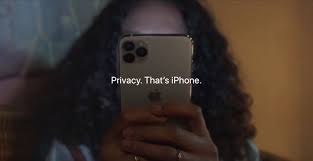
The video shares how much extensive research goes into a product to fit the user in the best way possible. The apple smart watch’s display time was consulted with multiple professionals before adapted into the watch itself. The watch could be highly personalized to fit the user. Self-expression was permitted via – multiple watch faces, different straps, each strap made of different materials, the hardware of aluminum, steel, and gold, wrist locks were made of different designs as well.

As the products progressed, they only became more successful, leaving little to none defective characteristics. Each product became more reliable and relatable. New ideas were easy to adapt.

Apple didn’t advertise its products in comparison to other branded products, but it’s own. The newest additions or improvements were announced first and then the relatability and familiarity are created using older products.  The consistently high-quality products from this brand are one of the reasons why Apple is successful.

IPCC Report: Need for Climate Action

 The latest sixth assessment report released by the Intergovernmental Panel on Climate Change on 9th August, 2021, indicates some key areas of concern related to climate change. According to the report, 1.5 degree celsius warming is likely to be experienced before 2040. The report says that warming is inevitable and immediate climate action is needed to achieve the best case scenario and minimise the level of warming.

A future of Extreme Events

The report pointed out that the increase in intense heat waves, extreme rainfall, dangerous rise in sea-levels, frequent droughts and melting of ice are a direct consequence of human activities. The scientists involved in the assessment have warned about a rise in such extreme events in the present and future. At 2 degrees of global warming, the heat can impact human health as well as agriculture. 

The report also indicated the possibility of rise in “compound events” in the future, as a result of global warming. Compound events are severe and deadly. The lake bursts and landslides that happen in the Himalayan region is an example of a compound event. 


Climate Action and Net-Zero Target

The IPCC report addresses the question of how long it will take to see the results after the immediate implementation of the Climate Action plan and whether good results can be experienced by lowering the carbon emission. The report has suggested immediate cuts in greenhouse gases. This has pressured many countries to renew their Climate Action Plan or the Nationally Determined Contributions(NDCs) decided in the Paris agreement. 

This has triggered the countries to take up the net-zero target. More than 100 countries have agreed to achieve the net zero target by the middle of this century, including the US, China and European Union. Net zero is also known as carbon neutrality. It does not mean cutting the carbon emissions to zero. It means a state in which the carbon emission of the country is compensated by absorption and removal of greenhouse gas from the atmosphere. The gases are absorbed by creating more carbon sinks like forests. 

India is the third largest emitter in the world and a lot of pressure is being built on the developing nations to take up the net-zero target. The report says that global net-zero targets can keep the temperature rise in its best case scenario, and it is not possible without wider cooperation by the countries. 

Alok Sharma, the UK minister who will be presiding over the climate change talks in Glasgow said “The science is clear, the impacts of climate crisis can be seen around the world and if we do not act now, we will continue to see the worst effects, impact lives, livelihood and natural habitat.”


Blood and different blood groups in humans

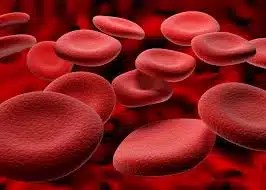
Blood is a red coloured fluid flowing through the heart and blood vessels.it is also sometimes called as river of life because it circulates all the essential nutrients and oxygen to our body.it is made up of liquid part plasma( water and salts) and solid part( RBC and platelets).blood is pumped by heart to our whole body. Blood is a component of circulatory system of our body.

Structure of blood

Blood is formed mainly of two components that are Plasma and blood cells .plasma is a pale yellow fluid part of our blood .it is about 55 % of our blood composition. Blood cells is also called blood corpuscles. they constitutes about 45% of blood. it is of 3 types that is RBC ( Red blood cells) or erythrocytes , WBC(White blood cells) or leucocytes and blood platelets or thrombocytes.

Some Characteristics of blood

  • Blood is heavier and thicker than water
  • its pH lies between 7.3 to 7.4.
  • Blood’s volume in our body is about 5 to 6 litres.
  • It is saltish in tastes

Functions of blood:-

  1. Transportation of gases : The blood carries oxygen from the lungs to the tissues and carbon dioxide from tissues to the lungs.
  2. Transport of food :- It carries digested food like amino acid , glucose and many other s from our intestine to different organs of the body.
  3. Temperature regulation :-It absorbs heat produced by respiration in internal tissues and transport it in to the skin and lungs for dissipation.
  4. Distribution of hormones :- The endocrine glands secrete hormones directly into the blood . Blood helps to transport them in required organs.
  5. Defence against diseases :- It produces certain antibodies which fights against bacteria. white blood cell (WBC) covers the disease causing bacteria and protect the body.

Blood groups in humans

Karl Landsteiner discovered that human beings have glycoproteins on the surface of RBC called antigens. and globulin proteins in the blood plasma called antibodies. therefore, there is 2 types of antigens A and B and two types of antibodies antibody a and antibody b in our body. Based on this concept , there are 4 types of blood groups found in human body.

  1. ABO blood groups
  • person with antigen A are said to be having blood group A.
  • person with antigen B are said to be having blood group B.
  • persons having both antigen A and antigen B are said to be having blood group AB.
  • Person with no antigen is said to be having blood group O.
    • during blood transfusion , we cannot mix two different types of blood group in a body. when blood groups of 2 different types of groups A and B is mixed , clumping reaction occurs. because either the antibodies of recipient ‘s blood destroys the RBC of donor blood or vice versa.

Person with blood group A are called universal donor , because they can donate blood to any of the blood group. while person with blood group AB are called universal recipients because they have no antibodies and can receive blood from any of the blood group.

2.Rh factor ( Rhesus antigen system) : – Human blood also have Rh antigen . it is of two types Rh positive and Rh negative. Transfusion of Rh negative with Rh negative can be done with no problem and same goes for Rh positive to R h positive transfusion.( Source : Veer Bala Rastogi , 96).

The ESSENCE OF INCREDIBLE INDIA

Andhra Pradesh is a state in the south-eastern coastal region of India. It is the seventh-largest state by area covering an area of 162,975 km^2 and tenth-most populous state with 49,386,799 inhabitants. It is bordered by Telangana to the north-west, Chhattisgarh to the north, Odisha to the north-east, Tamil Nadu to the south, Karnataka to the west and the Bay of Bengal to the east. It has the second longest coastline in India after Gujarat, of about 974 km. Andhra Pradesh is the first state to be formed on a linguistic basis in India on 1 October 1953. The state was once a major Buddhist pilgrimage site in the country and a Buddhist learning center which can be seen in many sites in the state in the form of ruins, chaityas and stupas. It is also known as the land of the world-famous diamond Koh-i-Noor and many other globally known diamonds due to their source in its Kollur Mine. It is also known as the “rice bowl of India” for being a major producer of rice in India. Its official language is Telugu; one of the classical languages of India, the fourth most spoken language in India and the 11th-most spoken language in the world.

CULTURE –


Kuchipudi, the cultural dance recognized as the official dance form of the state of Andhra Pradesh, originated in the village of Kuchipudi in Krishna district. It entered the Guinness World Records for performing Mahabrinda Natyam with a total of 6,117 dancers in Vijayawada.

Andhra Pradesh has thirteen geographical indications in categories of agricultural handicrafts, foodstuff and textiles as per Geographical Indications of Goods (Registration and Protection) Act, 1999. It increased to fifteen with the addition of Banaganapalle Mangoes and Bandar laddu. The other GI tagged goods are, Bobbili Veena, Budithi Bell and Brass Craft, Dharmavaram Handloom Pattu Sarees and Paavadas, Guntur Sannam, Kondapalli Toys, Machilipatnam Kalamkari, Mangalagiri Sarees and Fabrics, Srikalahasti Kalamkari, Tirupati Laddu, Uppada Jamdani Sari and Venkatagiri Sari.

ARTS AND CRAFTS –
Kondapalli Toys at a house in Vijayawada
Machilipatnam and Srikalahasti Kalamkari are the two unique textile art forms practised in India. There are also other notable handicrafts present in the state, like the soft limestone idol carvings of Durgi. Etikoppaka in Visakhapatnam district is notable for its lac industry, producing lacquered wooden.

The state has many museums, which features a varied collection of ancient sculptures, paintings, idols, weapons, cutlery, and inscriptions, and religious artifacts such as the Amaravati Archaeological Museum, Visakha Museum and Telugu Cultural Museum in Visakhapatnam displays the history of the pre-independence and the Victoria Jubilee Museum in Vijayawada with a large collection of artifacts.

CUISINE –
Telugu people’s traditional sweet Pootharekulu originated from Atreyapuram village of East Godavari district.

TOURISM –
Undavalli Caves, is a monolithic example of Indian rock-cut architecture and one of the finest testimonials to ancient viswakarma sthapathis.
The state has several beaches in its coastal districts such as Rushikonda, Mypadu, Suryalanka etc.; caves such as, Borra Caves, Indian rock-cut architecture depicting Undavalli Caves and the country’s second longest caves- the Belum Caves. The valleys and hills include, Araku Valley, Horsley Hills, Papi Hills etc. Arma Konda peak located in Visakhapatnam district is the highest peak in Eastern Ghats.

The state is home to various religious pilgrim destinations such as, Tirumala Temple, Simhachalam Temple, Annavaram temple, Srisailam temple, Kanaka Durga Temple, Amaravati, Srikalahasti, Shahi Jamia Masjid in Adoni, Gunadala Church in Vijayawada, Buddhist centres at Amaravati, and Nagarjuna Konda.

LESSONS ON BEING WRONG

As a rule, we are incredibly hard on ourselves when it comes to being wrong and making big decisions in life.

  • If our first five relationships end with a break up, we think we’re destined to be alone forever.
  • If we go to school, get a degree, and spend years training for a job that we end up hating, we feel like a failure for not having it all figured out.
  • If we have a dream of writing a book or starting a non-profit or creating something of value and we stumble on the first try, we say that we’re not cut out for this.

In cases like these, when we are attempting to do something that is complex and multi-faceted, I believe that being wrong is actually a sign that you’re doing something right.

Here’s why…

First Choice vs. Optimal Choice

For some reason, we often expect our first choice to be the optimal choice. However, it’s actually quite normal for your first attempt to be incorrect or wrong. This is especially true of the major decisions that we make in life.

For example…

  1. Finding the right person to marry. Think of the first person you dated. Would this person have been the best choice for your life partner? Go even further back and imagine the first person you had a crush on. Finding a great partner is complicated and expecting yourself to get it right on the first try is unreasonable. It’s rare that the first one would be the one.
  2. Choosing your career. What is the likelihood that your 22-year-old self could optimally choose the career that is best for you at 40 years old? Or 30 years old? Or even 25 years old? Consider how much you have learned about yourself since that time. There is a lot of change and growth that happens during life. There is no reason to believe that your life’s work should be easily determined when you graduate.
  3. Starting a business. It is unlikely that your first business idea will be your best one. It probably won’t even be a good one. This is the reality of entrepreneurship

When it comes to complex issues like determining the values you want in a partner or selecting the path of your career, your first attempt will rarely lead to the optimal solution.

5 Lessons On Being Wrong

Being wrong isn’t as bad as we make it out to be. I have made many mistakes and I have discovered five major lessons from my experiences.

1. Choices that seem poor in hindsight are an indication of growth, not self-worth or intelligence. When you look back on your choices from a year ago, you should always hope to find a few decisions that seem stupid now because that means you are growing. If you only live in the safety zone where you know you can’t mess up, then you’ll never unleash your true potential. If you know enough about something to make the optimal decision on the first try, then you’re not challenging yourself.

2. Given that your first choice is likely to be wrong, the best thing you can do is get started. The faster you learn from being wrong, the sooner you can discover what is right. For complex situations like relationships or entrepreneurship, you literally have to start before you feel ready because it’s not possible for anyone to be truly ready. The best way to learn is to start practicing.

3. Break down topics that are too big to master into smaller tasks that can be mastered. I can’t look at any business and tell you what to do. Entrepreneurship is too big of a topic. But, I can look at any website and tell you how to optimize it for building an email list because that topic is small enough for me to develop some level of expertise. If you want to get better at making accurate first choices, then play in a smaller arena. As Niels Bohr, the Nobel Prize-winning physicist, famously said, “An expert is a person who has made all the mistakes that can be made in a very narrow field.”

4. The time to trust your gut is when you have the knowledge or experience to back it up. You can trust yourself to make sharp decisions in areas where you already have proven expertise. For everything else, the only way to discover what works is to adopt a philosophy of experimentation.

5. The fact that failure will happen is not an excuse for expecting to fail. There is no reason to be depressed or give up simply because you will make a few wrong choices. Even more crucial, you must try your best every time because it is the effort and the practice that drives the learning process. They are essential, even if you fail. Realize that no single choice is destined to fail, but that occasional failure is the cost you have to pay if you want to be right. Expect to win and play like it from the outset.

KERALA , GOD’S OWN COUNTRY

Kerala is a state on the Malabar Coast of India. It was formed on 1 November 1956, following the passage of the States Reorganisation Act, by combining Malayalam-speaking regions of the erstwhile regions of Cochin, Malabar, South Canara, and Travancore. Spread over 38,863 km ^2, Kerala is the twenty-first largest Indian state by area. It is bordered by Karnataka to the north and northeast, Tamil Nadu to the east and south, and the Lakshadweep Sea[16] to the west. With 33 million inhabitants as per the 2011 census, Kerala is the thirteenth-largest Indian state by population. It is divided into 14 districts with the capital being Thiruvananthapuram. Malayalam is the most widely spoken language and is also the official language of the state.


CULTURE –

The culture of Kerala is composite and cosmopolitan in nature and it is an integral part of Indian culture. It is a synthesis of Aryan, Dravidian, Arab, and European cultures, developed over millennia, under influences from other parts of India and abroad. It is defined by its antiquity and the organic continuity sustained by the Malayali people. It was elaborated through centuries of contact with neighbouring and overseas cultures. However, the geographical insularity of Kerala from the rest of the country has resulted in the development of a distinctive lifestyle, art, architecture, language, literature and social institutions. Over 10,000 festivals are celebrated in the state every year. The Malayalam calendar, a solar sidereal calendar started from 825 CE in Kerala, finds common usage in planning agricultural and religious activities. Malayalam, one of the classical languages in India, is Kerala’s official language. Over a dozen other scheduled and unscheduled languages are also spoken. Kerala has the greatest consumption of alcohol in India.

MUSIC –
The development of classical music in Kerala is attributed to the contributions it received from the traditional performance arts associated with the temple culture of Kerala. The development of the indigenous classical music form, Sopana Sangeetham, illustrates the rich contribution that temple culture has made to the arts of Kerala. Carnatic music dominates Keralite traditional music. This was the result of Swathi Thirunal Rama Varma’s popularisation of the genre in the 19th century. Raga-based renditions known as sopanam accompany kathakali performances. Melam; including the paandi and panchari variants, is a more percussive style of music: it is performed at Kshetram-centered festivals using the chenda. Panchavadyam is a form of percussion ensemble, in which artists use five types of percussion instrument. Kerala’s visual arts range from traditional murals to the works of Raja Ravi Varma, the state’s most renowned painter. Most of the castes and communities in Kerala have rich collections of folk songs and ballads associated with a variety of themes; Vadakkan Pattukal (Northern Ballads), Thekkan pattukal (Southern Ballads), Vanchi pattukal (Boat Songs), Mappila Pattukal (Muslim songs) and Pallipattukal (Church songs) are a few of them.

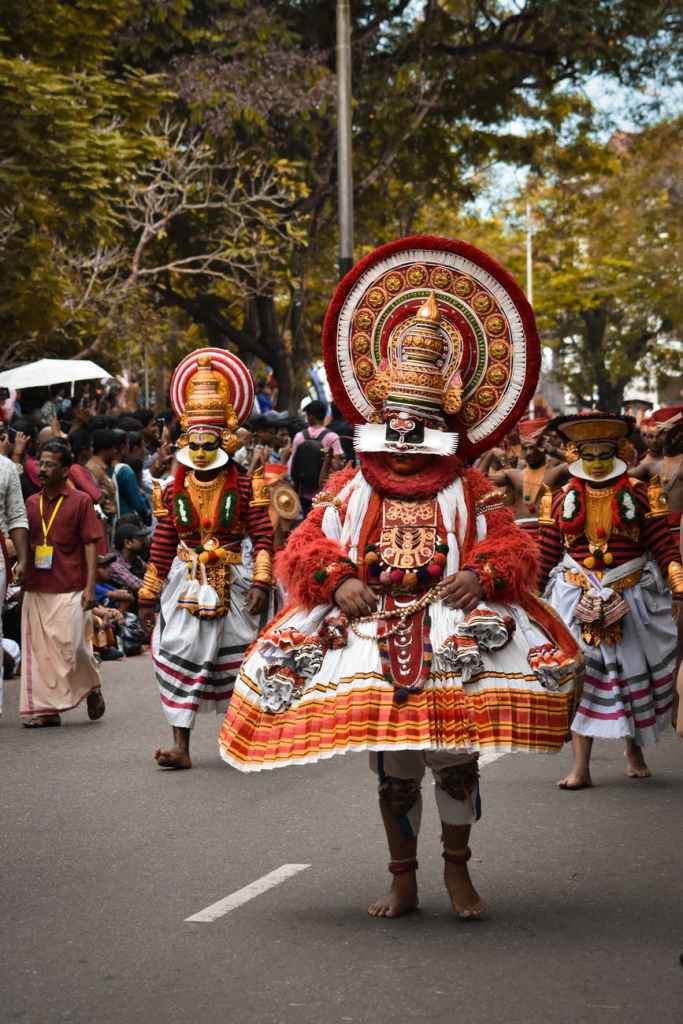
DANCE – Kerala is home to a number of performance arts. These include five classical dance forms: Kathakali, Mohiniyattam, Koodiyattom, Thullal and Krishnanattam, which originated and developed in the temple theatres during the classical period under the patronage of royal houses. Kerala natanam, Thirayattam, Kaliyattam, Theyyam, Koothu and Padayani are other dance forms associated with the temple culture of the region. Some traditional dance forms such as Oppana and Duffmuttu were popular among the Muslims of the state, while Margamkali and Parichamuttukali are popular among the Syrian Christians and Chavittu nadakom is popular among the Latin Christians.

TOURISM –
Kerala’s culture and traditions, coupled with its varied demographics, have made the state one of the most popular tourist destinations in India. In 2012, National Geographic’s Traveller magazine named Kerala as one of the “ten paradises of the world” and “50 must see destinations of a lifetime”. Travel and Leisure also described Kerala as “One of the 100 great trips for the 21st century”. In 2012, it overtook the Taj Mahal to be the number one travel destination in Google’s search trends for India. CNN Travel listed Kerala amongst its ’19 best places to visit in 2019′.

Kerala’s beaches, backwaters, lakes, mountain ranges, waterfalls, ancient ports, palaces, religious institutions and wildlife sanctuaries are major attractions for both domestic and international tourists. The city of Kochi ranks first in the total number of international and domestic tourists in Kerala. Until the early 1980s, Kerala was a relatively unknown destination compared to other states in the country. In 1986 the government of Kerala declared tourism an important industry and it was the first state in India to do so. Marketing campaigns launched by the Kerala Tourism Development Corporation, the government agency that oversees the tourism prospects of the state, resulted in the growth of the tourism industry.

The Girl on the Train – A bewildering tale


                                                                       (Photo: Twitter)

The Girl on the train is the story of Rachel Watson’s life, post-divorce. She is an alcoholic who rides on a train aimlessly. On her way, she travels past an old house where she and her then-husband, Tom used to live. However, there is one house that she waits to see each day. She watches Megan in her seemingly perfect relationship with her husband. Then one day Rachel sees Megan cheating on her husband. So, she decides to communicate with her. However, she has a blackout and is awaken with bruises in her apartment. Soon she learns that Megan is missing and detective Rilly interrogates her since she was seen wandering in the area.

The language used in this book is simple, understandable, and subtle which makes the readers get interested in reading the book. The themes of the novel are that of gaslighting, manipulation through questioning or validating a person’s sanity as the three women are abused by the men in their lives. It also deals with a very strong theme that some things are not always what they seem to be. In some respect, the novel is a connectional mystery.

Rachel Watson is the titular girl on the train and novel’s protagonist. She is complicated and an invaluable character. She is a divorced and deeply depressed person because of her impotence and failed marriage. Megan Hipwell is a young, sensitive woman with a dark past. Megan is not at all the model wife that Rachel imagines her to be. Megan begins dwelling into the depth of her trauma of losing her baby. Anna Watson is threatened by Tom’s ex-wife for calling and texting Tom all the time. She fails to see the unearthed trauma and pain in Rachel’s odd behavior and views her as a loser. Tom Watson disguises himself as a loving husband but in reality, he is a liar, cheater, murderer, and antagonist of the novel.

The Girl on the Train is a 2015 psychological thriller novel by Paula Hawkins. The novel debuted in the number one spot on The New York Times Fiction Best Sellers of 2015 list dated 1 February 2015, and remained in the top position for 13 consecutive weeks. In January 2016, it became the number 1 best seller again for two weeks. The book has also sold 15 million copies around the world. The readers of this book loved it warm-heartedly. The author did a really great job with the three character’s voices. It deals with powerful themes all the while weaving the story into a heart wrenching tale of obsession and madness. One cannot help but get reeled into the chaos of it all, questioning oneself at times of who is what, and whether everything is as it is.

There is no need of any suggestions for this novel as it is one of its kind. The writing is quite masterful as the writer gives away only enough with each chapter. Hence, this novel is perfectly paced.

TAKE A STRESS REDUCTION BREAK ! DO THIS…

” Don’t stress the could haves , if it should have , it would have “

Above thought is the thing which we all understand & will praise & will say that it is right . BUT , what happens to us when we have to apply this above thought ? We as a human being are much concerned about the could haves , the could haves which are not even certain , their uncertainty gives us stress . Why we don’t understand that taking stress for things which are not even certain in our lives would affect out health . And because of this we can suffer from health issues that would result severe in their future lives .

Every one wants to get relief from stress , but very few work on reducing stress . Let me tell you the fast & quick way to relive from your stress

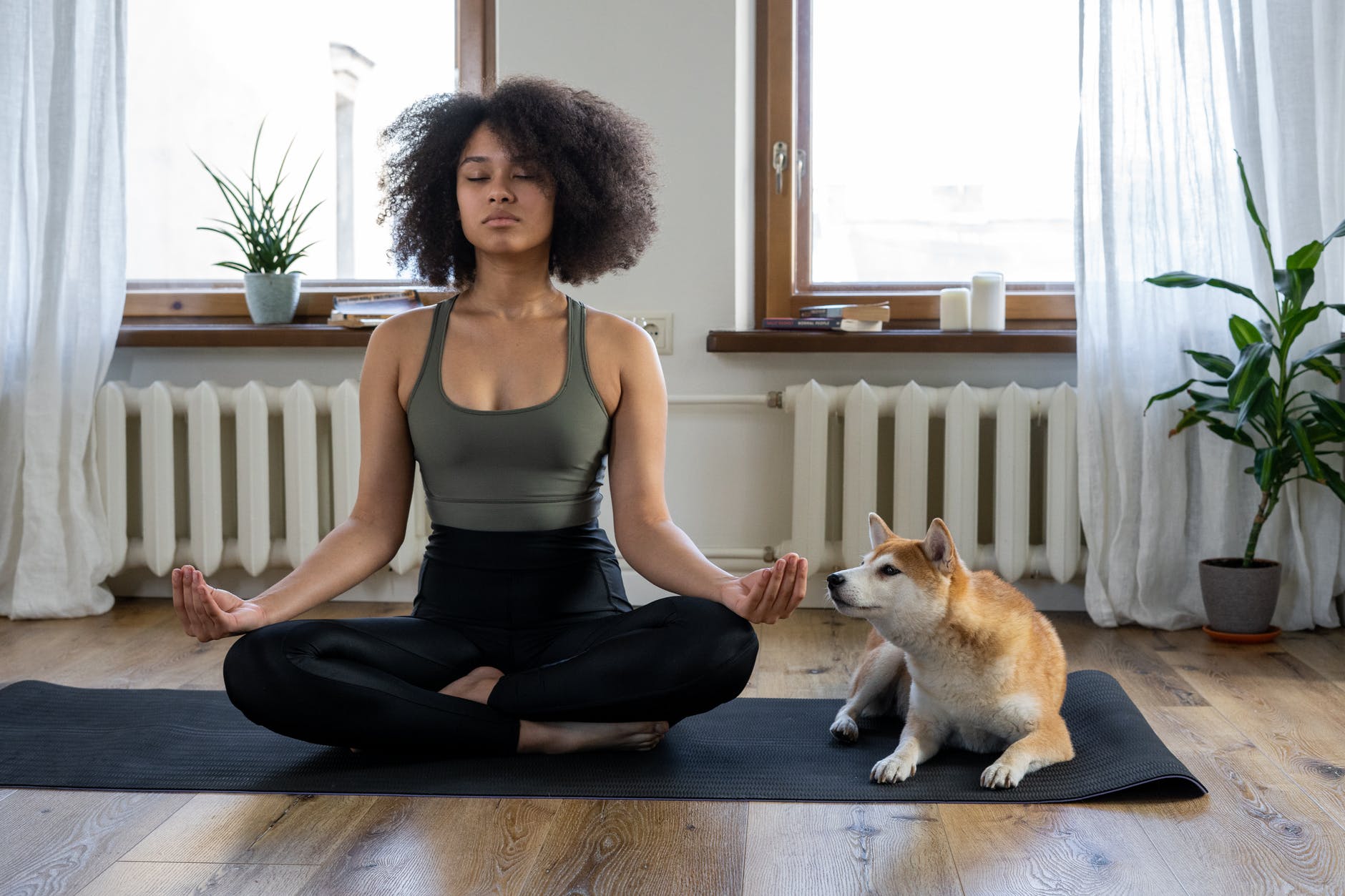
MEDITATION IS THAT WAY !

If stress has you anxious, tense and worried, consider trying meditation. Spending even a few minutes in meditation can restore your calm and inner peace. Anyone can practice meditation. It’s simple and inexpensive, and it doesn’t require any special equipment. And you can practice meditation wherever you are — whether you’re out for a walk, riding the bus, waiting at the doctor’s office or even in the middle of a difficult business meeting, or while studying .

During meditation you have to be n full attention , close your eyes & should try to concentrate , it will work out best when you will do it with Chinese flute . It will fill your eyes , ears & mind with relaxation , & hence you will forget all your stress . Doing such meditation for just 10 mins in a day will fill you with energy & enthusiasm & also you will feel relief from your stress . Meditation can give you a sense of calm, peace and balance that can benefit both your emotional well-being and your overall health. And these benefits don’t end when your meditation session ends. Meditation can help carry you more calmly through your day and may help you manage symptoms of certain medical conditions. Meditation might also be useful if you have a medical condition, especially one that may be worsened by stress.

While a growing body of scientific research supports the health benefits of meditation, some researchers believe it’s not yet possible to draw conclusions about the possible benefits of meditation. With that in mind, some research suggests that meditation may help people manage symptoms of conditions such as: anxiety, asthma , cancer ,chronic pain , depression, high blood pressure , sleep problems , tension headaches , etc. Don’t let the thought of meditating the “right” way add to your stress. If you choose to, you can attend special meditation centers or group classes led by trained instructors. But you can also practice meditation easily on your own. And you can make meditation as formal or informal as you like, however it suits your lifestyle and situation. Some people build meditation into their daily routine. For example, they may start and end each day with an hour of meditation. But all you really need is a few minutes of quality time for meditation.

As we always says , ” its not the quantity but the quality that matters . Hence you should spend the quality time doing mediation , & give you body a boost instead of stress .

The Scout Movement

Student hood is a time of honoring. One of the student organizations that helps is The Scout Movement. Let’s think about that a bit here.

Background, Origin and Development

The Scout Movement originated in South Africa. The Boer War took place. The city of Mafeking ( now called Mahikeng ) was surrounded. The task of guarding the city was entrusted to Robert Baden-Paul. He co-founded many of the 12- to 17-year-olds. He taught them the lessons of patriotism, virtue, companionship, first aid, collective responsibility, living according to circumstances, and understanding the gestures of others. He was involved in espionage, Won.

Swami Vivekananda said, “Give me 100 energetic young men and I shall transform India.” Similarly, the Scout Movement, founded in South Africa by Robert Baden-Paul with twenty young men, is growing like a tree with millions of ideal volunteers in many countries around the world today. 

The Scout Movement in India

The Scout Movement was started by Annie Besant long before Indian independence. After the liberation of India, it became known as the The Bharat Scouts and Guides. There are two divisions in this movement: Boy scouts and Girl scouts.

Pledges and Terms

The scout boy must make these promises.

1. I will fulfill my duties to god, the king, the mother, the father, and the elderly.

2. I will be ready to help others.

3. I will abide by the laws of the scout movement.

The scout’s salutation with three fingers signifies these promises.

There are ten rules. They are,

1. Being Honorable: A scout should not deviate from the truth, no matter what trials may befall him. 

2. Devotion: Must have devotion to God, devotion to Guru etc.

3. Benevolence: Always be ready to help others. The goal of this campaign is to ‘be ready’. If he is healthy, he can harm others. He also need to know how to give first aid to the injured.

4. Brotherhood: Everyone should be treated as a brother. Caste should be secular. The poor should not discriminate between the rich. 

5. Treat everyone with respect.

6. Compassionate attitude

7. Self-control

8. Courage 

9. Have thrift.

10. Requires purity of mind, vote, action.

Benefits

As students join the army, they will develop qualities such as devotion to God, love, humility, respect, discipline, generosity, and benevolence and will be good to their parents and others. Will provide first aid to the injured. Will organize meetings. Will do many more favors.

All students should take part in such a charitable charity and engage in charitable work for the country.

International Youth Day- 12th August 2021

Theme 2021, why do we celebrate this day? Importance to speak up for the coming youth. Movies for youth, what else is celebrated today!

 Theme: “Transforming Food Systems: Youth Innovation for Human and Planetary Health

The main aim is to highlight that every action which needs to be taken for the better of life on Earth, cannot be achieved at a global level without the contribution of the youth. With, Increasing population the need for not only a larger volume of healthier food more sustainably will not ensure human and planetary wellbeing but also poverty reduction, social inclusion, health care, biodiversity conservation, and climate change mitigation.

 The United Nations in 1999 after a recommendation was made by the World Conference of Ministers Responsible for Youth. Then the first International Youth Day took place in the summer of 2000.

 It is mainly to empower young people to participate in public life so that they can have opportunities to contribute to society’s development across the world and be heard completely. It is not just to protect them, but to incorporate them in the development of communities regardless of their ethnicity, background, and status. It honors the traits of young people and acknowledges the challenges that today’s ferocious youth face.

Youth with the support and wisdom of old are the torch-bearers of this world.

Examples:

In partnership with UNDP, Bibliothèque sans frontières (Libraries Without Borders) young staff travel across Burundi, are disturbing knowledge through e-books, paperbacks, educational games, internet-ready mobile devices and so on.

Mercy and Shetuuka, sibling farmers working to reduce hunger. Also, create jobs in Namibia through eco-friendly farming.

In Egypt, a group of tiny activists has been traveling village to village, determined to end female genital mutilation in their country.

One of UNDP’s 600 transportation projects to promote economic development in rural Afghanistan, encouraging more boys and girls enrolling in primary school, while addressing safety concerns on the village’s main road.

The list is endless and we need support, we need to be heard, and taken seriously irrespective of our age. Youth brings many issues which violate basic human rights to surface and fight for them.

https://undp.medium.com/17-ways-youth-are-changing-the-world-505a489e91dc

 Movies putting forward importance of youth participation and their situation:

Into the Wild (2007,Must see)

The Perks of Being a Wallflower (2012).

The Edge of seventeen.(2016)

Moxie.(2021)

Love, Simon. (2018)

Quotes:

Older men declare war. But it is the youth that must fight and die. —Herbert Hoover

The duty of youth is to challenge corruption. —Kurt Cobain

“The surest way to corrupt a youth is to instruct him to hold in higher esteem those who think alike than those who think differently.”
—Friedrich Nietzsche

“In youth, it was a way I had,
To do my best to please.
And change, with every passing lad
To suit his theories.

But now I know the things I know
And do the things I do,
And if you do not like me so,
To hell, my love, with you.”


― Dorothy Parker, The Complete Poems of Dorothy Parker

Other Days Celebrated Today:

Black Womens Equal Pay – United States

World Elephant Day – Canada, United Kingdom, United States & South Africa

Music Of India

India is rich in various types of music played in different traditions, cultures, being played since ages. There are mainly 3 types of music: Classical music, Folk music and Modern music.

Classical Music

It includes Carnatic music and Hindustani music. The basic concepts of this music includes Shruti (microtones), Swaras (notes), Alankar (ornamentations), Raga (melodies improvised from basic grammars), and Tala (rhythmic patterns used in percussion). Thereare seven svaras are Sa, Re, Ga, Ma, Pa, Dha and Ni respectively.

Folk Music

It consists the music according to the state and regions. Some of them are:

Dandiya and Garba

Dandiya or Raas is a form of Gujarati cultural dance that is performed with sticks. The present musical style is derived from the traditional musical accompaniment to the folk dance. There is also another type of dance and music associated with Dandiya/Raas called Garba.

Haryanavi music

The folk Music of Haryana spread because of the Bhats, Saangis, and Jogis. It is sung and played in the state of Haryana, parts of western UP and neighboring districts of Rajasthan and Punjab.

Himachali

Himachal’s folk music varies according to the event or the festival. One of the most popular style of music is Nati Music, where nati being the traditional dance that is done on the song. Nati Music is usually celebratory, and done in fairs or other occasions such as marriages.

Qwallis

It is the traditional form of Islamic songs practiced Northern India. It is also linked to the Sufi tradition and performed with one or two lead singers with several musical instruments like harmonium, tabla, dholak, etc.

Rajasthani music

It is one of the most popular forms of music in India. The essence of Rajasthani music originates from the creative symphony of string instruments, percussion instruments, and wind instruments accompanied by melodious renditions of folk singers.

Gazals

t is a type of music with a short poem with a series of couplets. Each couplet is an independent poem.

Body Neutrality: What is it and how is it different from Body Positivity?

Body positivity has been around for years now, and it deals with challenging society’s view on the “ideal body type.” It refers to the assertion that all people deserve to have a positive body image, regardless of other’s opinions. 

Body Neutrality is, however, a relatively newer term coined somewhere in 2015 by bloggers, celebrities, etc., to disconnect the relationship between physical appearance and self-worth.

It is a philosophy that one should focus on what their body can do for them rather than what it looks like.

“The body positivity movement urges people to love their bodies no matter what they look like, whereas body neutrality focuses on what your body can do for you rather than what it actually looks like,” said Chelsea Kronengold, the associate director of communications at the National Eating Disorders Association.

While people that practice body positivity might say, “I love my legs, cellulite and all; they are beautiful.”

A person practicing body neutrality might say, “I love my legs because they help me run.”

Body neutrality is difficult to navigate when we have been taught that physical beauty can create happiness. But suppose a person recognizes a more petite physique or nose job won’t instantly make them happier. In that case, they can find body peace both before and after they change their body.

“When people become overly invested in changing their bodies to change their experiences of the world, it becomes a really dangerous sort of thing that perpetuates itself,” Wassenaar said. “Because oftentimes I find that you can’t ever change your body enough to make yourself happy.”

Dr. Wassenaar has also talked about how diet and fitness plans that require restriction or pushing our body past its boundaries are not body neutral. Those plans force a person to hold the diet or fitness plan’s specific rules above their body’s natural hunger or physical activity cues.

Body neutrality helps one recognize and prioritize how they feel in their body. This might mean moving your body because it feels good, and you enjoy the movement, and not to “burn off” the food you’ve eaten. It also means you listen to your body to know when to stop or take a day off.

Body Neutrality doesn’t encourage indulging in unhealthy choices; instead, it means that meals usually feature fresh, whole foods, but you also eat intuitively. That one does not have to resist the urge or suppress their cravings or “make up’ for a heavy meal by limiting yourself to salad the next day.

Caring for the motherland

Independence day is celebrated as a festival in India and why not! It marks the day when our nation finally got freedom from the trap of the British empire and established its own identity by laying down its own constitution later on. Our great freedom fighters sacrificed their lives for the sake of the nation’s pride and freedom, leaving a message for all of us to take care and develop our newly independent nation. So it becomes our duty to protect the motherland and respect it. But, did we succeed in doing so? Did we bring justice to the sacrifice made by our leaders during the fight for freedom? Till now we have developed good infrastructure and made a global presence in various fields but still we lack many more things that require immediate attention.

The first and foremost is health and hygiene which is very important for us. Health of the citizens is being compromised against work. Be it the rich or the poor, all face health issues in one or the other way. During the British rule, the citizens were forced to act in accordance with their norms and health was barely taken care of. Similar is being observed now. The workers as well as non-workers(unemployed) suffer health problems either due to scarcity of resources or discrimination. This not only talks about food but other such factors that define good mental and physical health of people. The low-level workers don’t get enough pay and those who get, don’t find time for mental peace; their work load is big. There are a number of unemployed as well who suffer mentally for not getting ideal work/job. These cases are the most often and hence, call for support both physically and mentally.

The poor people who do not have any job, look for maximum they could get from the minimal they afford. They are on high risk when it comes to good health since they try to arrange food for themselves and their family without caring for their health, by working at places full of risks like factories, without using proper equipment. They can’t afford protection equipment for themselves and hence work manually, be it garbage picking or other such works. Their families are often seen living on the footpaths or near the garbage sites, risking their lives. Such children get affected by malnutrition due to shortage of resources with them thereby increasing chances of bad health and hygiene in their upcoming generations as well.

This needs to be sort out for the sake of growth of the whole country. Existence of poverty restricts the development of the nation. There is a need for creation of jobs for the unemployed population since we all are human resource which are very useful for a nation and should not be wasted off.

Having mentioned about garbage, it is a serious problem requiring immediate action. There are hardly any local streets which are completely garbage free. The garbage attracts many diseases which is not in favour of anyone.

People still use plastics knowing how hazardous it is as a waste. The pollution it creates has effects on our health. People call destruction for themselves by cutting down trees and generating more waste side by side. It affects all living creatures in one or the other way. Proper disposal is not followed and it takes years for such garbage to settle down and get converted to minerals in the soil. There are ways developed to cope with the problem but none seems ready to take them up. People should try to minimise the waste they create and use resources efficiently.

“Every drop counts”. Water is used extensively by those who can afford it without caring for the needs of the future generations. This behaviour has led to scarcity and unequal distribution among the population. Water is a necessity and hence everyone has the right to access. There has been a huge depletion in availability of water over the globe and we all know Life will not exist without it. Still people are not realising or following steps necessary to save water.

Our future depends on how we act today. Real growth and development is seen in how well managed are we. These problems show that we still lack much more than achieved. It is not the buildings and roads that define us but the humans residing there and cleanliness followed will show our development. Focus should be on the management of resources in an efficient way and being united for a good cause. This can only be done by supporting each other and caring for the nation.

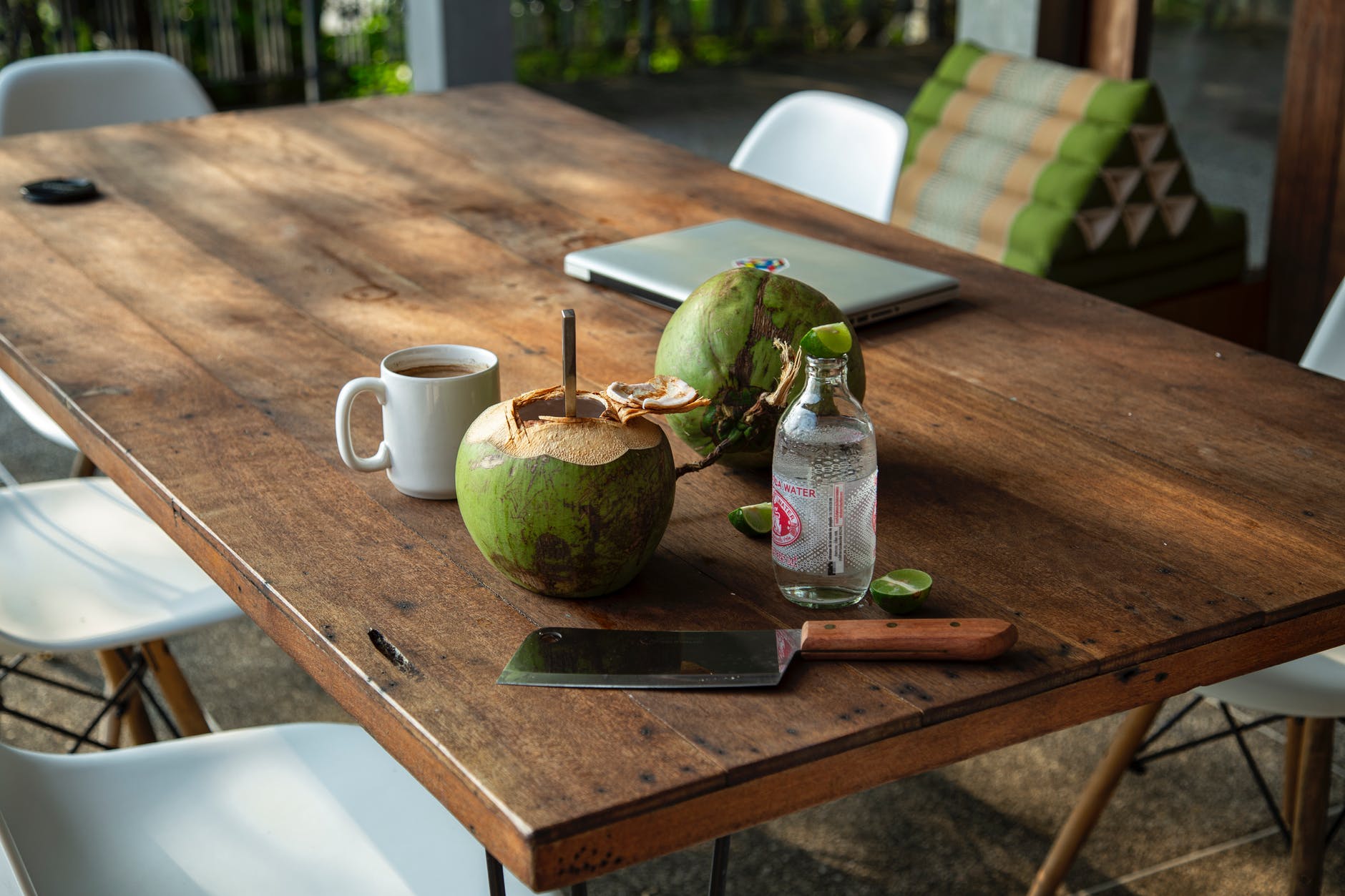
Remedy from heat ! “put your straw in coconut water.”

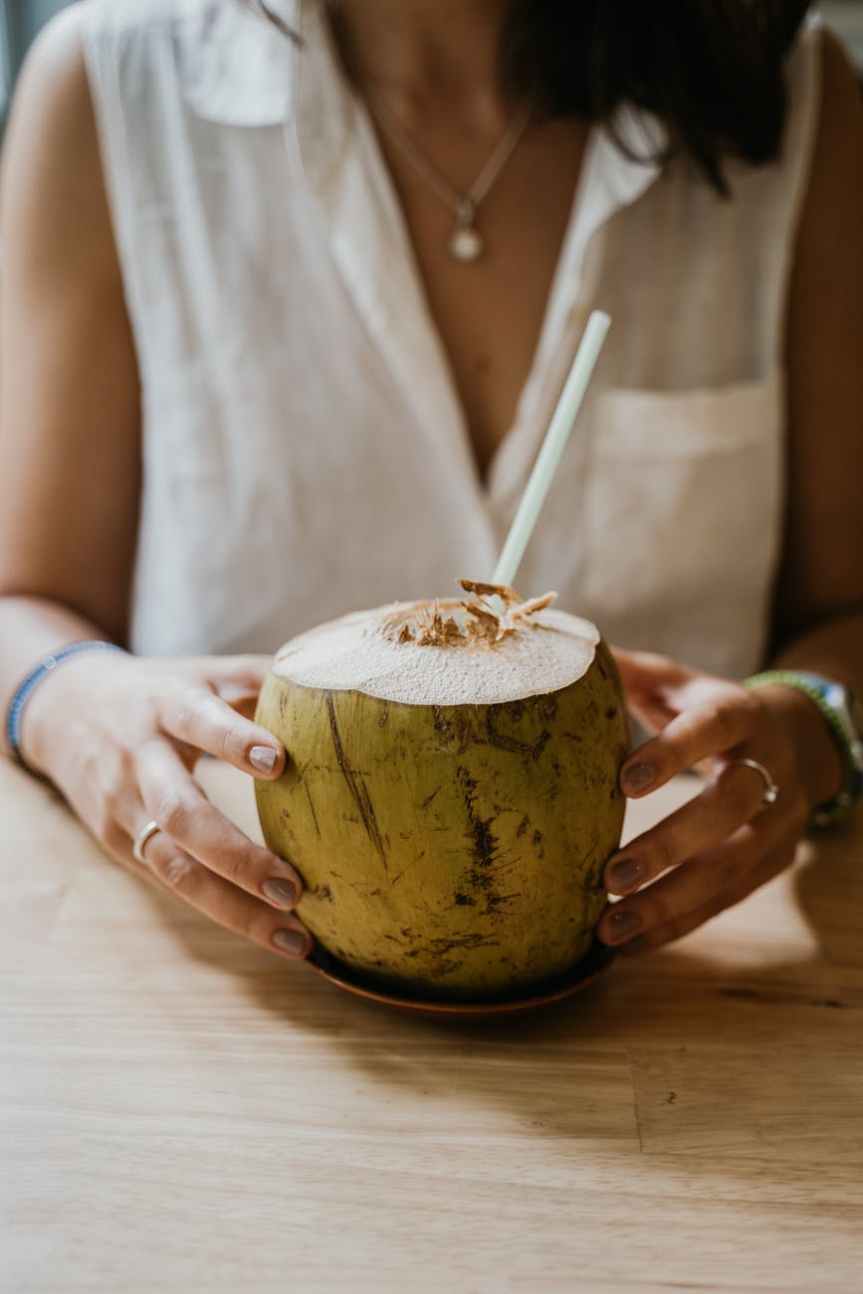
Its time to put your straws in coconut water & hydrate you body at the most of its level . Mostly dubbed as ” Mother Nature’s sports drink” by marketers, the demand is skyrocketing, propelled by celebrity and athlete endorsements and promises to hydrate the body and help with a whole host of conditions, from hangovers to cancer and kidney stones. Low in calories , naturally free of fats & cholesterol , more of potassium than that of four bananas , it is a super hydrating drink which gives you body full energy to go on with the pace that you are required to go with .

WHAT IS COCONUT WATER ?

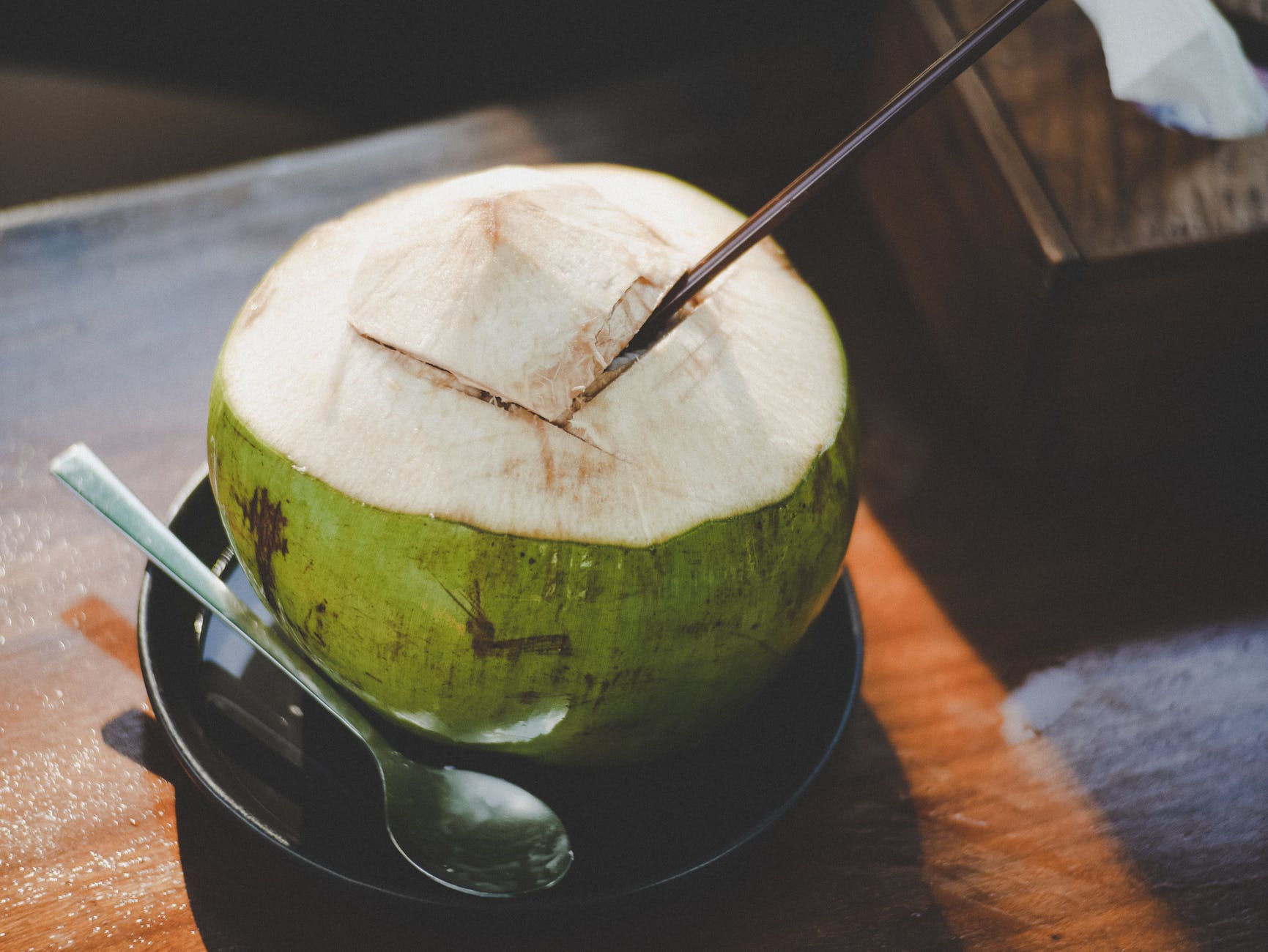
Naturally occurring , coconut water has a sweet & nutty taste . Many people ask this question , how coconut is filled with water . Let me give you an answer of this , As the fresh water assimilated by the roots is conveyed right up to the crowns of the coconut palms through osmosis process, any dissolved salts which exist in the subterranean water automatically get eliminated through this natural filtration. Fresh water that gets accumulated in coconut is actually ‘endosperm’ or the food or nourishment for the coconut’s growth. Coconut water contains easily digested carbohydrates in the form of sugar and electrolytes. Not to be confused with high-fat coconut milk or oil, coconut water is a clear liquid in the fruit’s center that is tapped from young, green coconuts.

Professional tennis player John Isner credits coconut water with keeping him on his feet for his epic 11-hour marathon Wimbledon tennis win. “It is super hydrating and has kept me going in long matches and prevented me from cramping even in the hottest and most humid conditions,” he says. He drinks the mixture of coconut water & water before the night of the match & this helps him to get hydrated all day long in that match .

Sports nutritionist Nancy Clark, author of Nancy Clark’s Sports Nutrition Guidebook, says coconut water won’t rehydrate the body unless you can drink plenty of it. If you enjoy the taste and can tolerate large amounts, it could help keep you hydrated.

A 2007 study shows coconut water enhanced with sodium was as good as drinking a commercial sports drink for post-exercise rehydration with better fluid tolerance. Another study reported that coconut water caused less nausea, fullness, and stomach upset and was easier to consume in large amounts during rehydration. It is naturally occurring drink which will keep you hydrated all day long . In a study conducted, coconut water prevented crystals from sticking to the kidneys and other parts of the urinary tract. It also reduces the number of crystals formed in the urine. Researchers believe that coconut water helped reduce the production of free radicals that occurred in response to high oxalate levels in the urine. From nausea to kidney stones , coconut water has worked as a remedy for most of the health issues , so what are you waiting for ? Go and buy a coconut & enjoy the mother nature’s Sports drink .

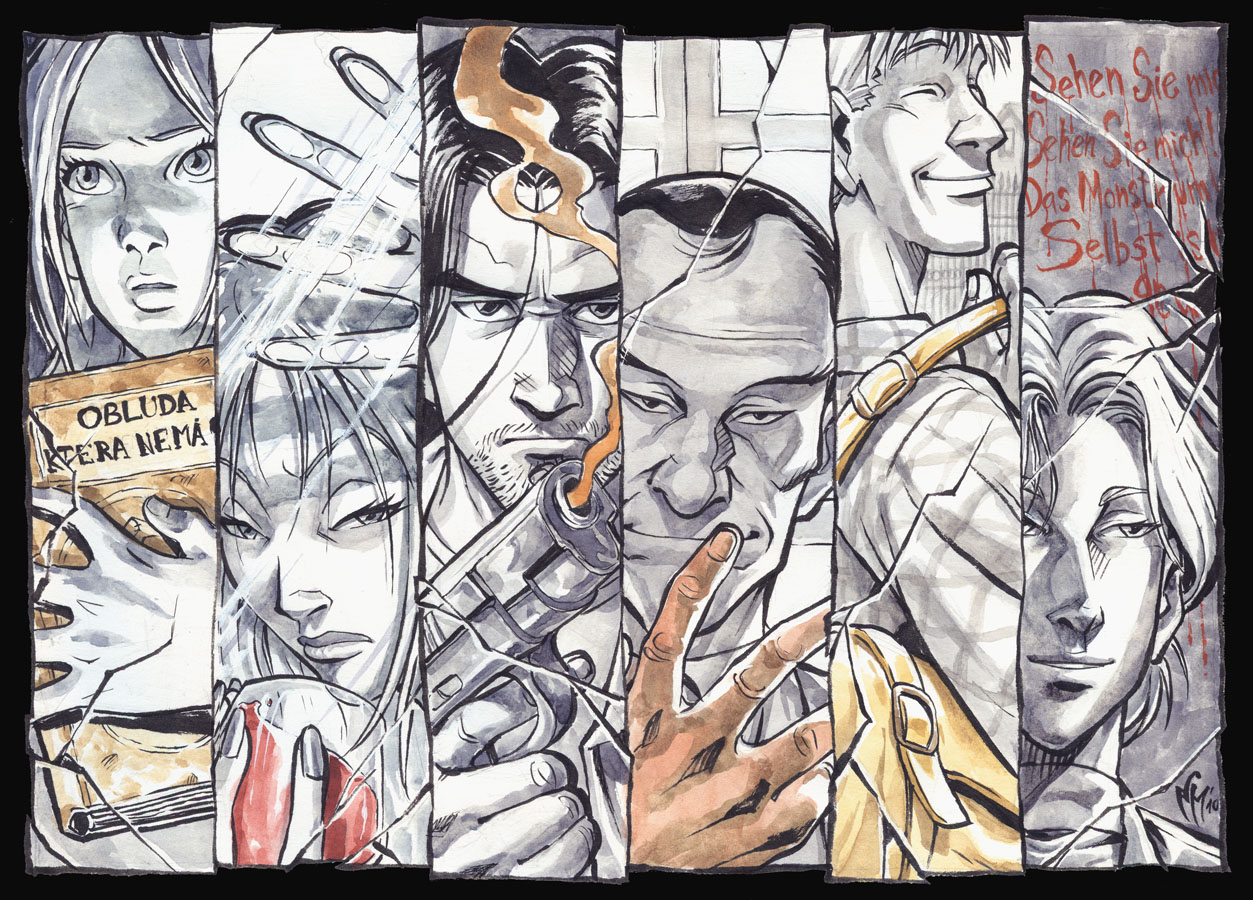
Why you should watch/read MONSTER?

MONSTER is the magnum opus of mangaka Naoki Urasawa and a Cold War psychological thriller – it is a seinen manga manga also adapted into an anime following the whole story exactly. It follows a Japanese neurosurgeon, Dr. Kenzo Tenma, who has residence in Germany to work at Eisler Memorial. Engaged to his boss’ daughter and with optimistic prospects in his medical career, Tenma’s values soon hijacks any stable life as a darkly dramatic irony – he was only trying to do the right decision(s) morally: a tragic statement that ‘right’ doesn’t entail the best results. His life is sidetracked into revolutionary conspiracies from the Soviet bloc, violent machinations of a criminal underworld and a boy, Johan, who’s a nihilistic catalyst of chaos; all these intense affairs are to the backdrop of relatively ordinary existence as a shocking duality showcasing the thin veil between horror and normalcy as is also applicable to our own nature. Stylishly European in every day as an atmospheric overture, with the location rife for intrigue as close to the Iron Curtain, MONSTER is an incisive examination of human nature – the cause of ‘evil’, why and who is truly responsible; the whole work, too, acts as a character study in conscientiously designed personalities who’re palpable as representations to the human condition.

A difficult choice

Dr. Kenzo Tenma sacrifices his career to save Johan as a child in a dilemma of choosing a patient for his expertise – the town’s mayor or an innocent boy shot in the head – and although demanded to save the mayor for financial reasons, he opts for Johan as he arrived first in the staunch belief ‘all lives are equal’. These philosophical and moral systems are the root of MONSTER – how these inform and challenge one’s life choices to the darkness we may encounter as aberrant of all we thought as usual; beliefs are easier in a vacuum of a solitary life or with a confirmation bias. Tenma’s choice would have unforeseen, destructive ramifications for which he takes responsibility, too, for which no attitude could prepare him – he had saved a boy who would evolve into a ruthless, charismatic leader of mass destruction. If he knew of the outcome, would he still have performed his duty as a doctor and thought of Johan as ‘equal’ – this is the central concept that tests Tenma’s view on the worth of lives, his right, too, to intervene and act. As he’s demoted for his failure with the mayor, and his lover leaves him as no longer financially secure, the senior staff at the hospital responsible for his punishment all coincidentally die in a poisoning while the boy, Johan, disappears.

The investigation leads to nowhere and Tenma is restored in his role, he subsequently becomes the Chief of Surgery at the hospital nine years later. Destiny would have him reencounter Johan who’s an adult, however, who callously executes a patient as a clear reality the boy he rescued was indeed evil. This refocuses the old investigation onto Dr. Kenzo Tenma who benefited the most – a detective, Inspector Lunge, of a federal agency is convinced Tenma is behind all these crimes, ‘Johan’ a mere persona of his. Escaping from his normal life as the police seek to frame him, and determined to resolve his responsibility of ‘Johan’, Tenma embarks on a tenacious journey as a fugitive.

Excellent Characters

Supported with a vast cast, who are each developed in an immaculate fashion, and each embroiled into extensive subplots concerning these, MONSTER is a ‘coup de maître’ as a psychologically intimate drama with an array of emotions from these characters as an expository fiction of humanity – powerful from the complex dilemmas and philosophical challenges we see engage them throughout the voluminous narrative. Deliberately meticulous in characterization, contemplative in tone and purposeful in each plot point, MONSTER is a crafted tale sure to resonate with audiences for a long time at a fundamental level – it indulges in themes perpetually inherent to society, no matter the current state. Patience is rewarded in appreciation of the story as an emotive tale crafted into an intricate character study.

Themes

The plot structure is a slow-burn of side plots and miscellaneous errands to establish a vibrant world consisting of of various personalities, agendas and their interactions: no man is the same – each one has their own history – and valid perspective along with sympathetic emotions. The characters and situations are also not limited to the overpowering arc of a showdown between Johan and Tenma – people have their own multifaceted lives to not merely be props for the plot. As a result, Naoki Urasawa’s depicted world is tangibly immersive, both in the depth and also sober art, which explores darkness in a manner that’s not crudely exploitative, it is innocently inquisitive: a treatise of our morals in conflict to the worst of humans.

MONSTER accomplishes itself as a darkly philosophical work on society, people and their beliefs – it is the finest psychological horror, mystery drama and crime thriller in the history of manga as a comprehensive feat; it is a multi-layered narrative – little contrived or for some cheap ulterior purpose – with equally compelling characters. The setting of Eastern Europe in the throes of the oppressive Iron Curtain is unique an aesthetic that feels authentic – a dangerous regime where the authorities are unreliable and a sense of overbearing danger throughout from leadership which does not truly care for the people. I would rank MONSTER on level with Fyodor Dostoevsky’s ‘Crime and Punishment’ as a testament to the quality and feel only the medium, manga/anime, besets a prejudice on qualifying MONSTER to the canals of worthy artistic heritage.