Lata Mangeshkar

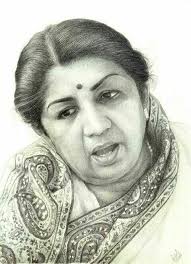
The queen of melody, has sung over five thousand songs in all different languages. She is the most respected singers in India, also has won three national awards and also has won many film fare awards. It is as if she was born to sing, she was also called the nightingale of India. She belonged to a family of singers, and her four siblings are also singers she is the eldest of all. Her songs became extremely popular, her voice suited every heroine and she was the favorite to all the music directors. She had a beautiful voice which can sing any song beautifully let it be a sad songs like  ” Ajeeb dastan hain yeh” or  romantic song like ” Yeh sama sama hain yeh pyar ka” or be any sensous song like” Lag ja gale” these songs always send chills down the spine every time one hears it.

Lata Mangeshkar was the daughter of Pandit Deenanath Mageshkar and Shevanthi. Her father was a marathi and Konkani singer, they used to live in Indore which is in Madhya Pradesh. Her family were a native Goan family that is the Mangheshi family. Lata received her music lessons from her father, he was his first teacher. At the age of five she used to act in her father’s musical acts in the theatre. In 1942 Lata’ s father died because of some heart disease and then her family was taken care of by Master Vinayak who happen to be her family friend then he helped Lata to start her career as an actor but then she turned into singing. Her first song was on 1942 and she sang her first song “Naachu ya gade” in a marathi movie but the song was dropped at the final cut. After that Lata moved to Mumbai in 1945, where she started taking lessons for hindi classical music she sang her first hindi song in a movie where she and her sister Asha also played a small role in the movie. She got a major break from Ghulam haider in the movie Majboor the song was ” dil mera thoda”. Lata Mangheshkar also declared that Ghulam haider was her godfather as he was the first producer to show faith in her voice. Though in the start she had a maharashtrian accent in the start and as most of the songs at that time had Urdu words,  but as the time passed she improved it and no one could point any mistake or question her singing talent. Her very major hit song was from the movie Mahaal the song was ” Aayega aanewala” which was lip synched by Madhubala. She had her own style of singing which was different and Magnificant. She had sung duets with a range of singers from Hemant kumar , Mohammad Rafi, Kishore kumar, Mukesh, Baapi Lahri, Kumar Sanu, Udit narayan, Sonu Nigam. No singer could ever match her Legacy, her voice has soothed people for many decades even now people look up to her as an inspiration. She is now 91 years, then also she does Riyaz every day, she says without that her day cannot start. We all should learn this discipline from her.

Self care

Self care is a need which every one should practice, it is the need of the hour. In this fast pacing life where people are busy with work and responsibilities self care can be refreshment. It does not matter if you have many responsibilities and do not have time for yourself, you should always make some time from your busy schedule to care yourself not only that it will help you to lead a healthy life but it will also help in improving your mood so that you are active the whole day. Start the practice of self care now don’t keep it for tomorrow.
The steps you can follow in order to care yourself in a better ways are

  1. Manage stress- It is very important that you relive yourself from stress, tension stress is just a part of your life your should never treat it or give so much importance to it that it hampers your health. Refresh your mind by doing Yoga and doing breathing exercises. Take a walk to the nearest garden or a park. Taking a shower especially a hot water bath will help you a lot. This refreshment will motivate you and yes it will also increase your productivity and concentration to do your work.
  2.  Have fun – Do things which would make you happy, like being surrounded by your friends , going to watch a movie with them. Revisit your happy childhood memories which will make you feel good. Spend a quality time with your family  talk to them, laugh with them and feel grateful of having people who care about you.
  3.  Develop a hobby- hobbies are something which help you to engross in it and make you feel happy in the process of doing it. Like reading  book always transports you to the era or place where novel has its story plot. For sometime you just forget about your present and feel the book. You can pursue such hobbies so as to  rejuvenate yourself and make yourself happy.
  4.  Get out of your self doubts- Some times we are in a place where we doubt our capabilities, like “Can I Do it?”, these things are normal as you are in a process of achieving something big. At such points give affirmations to yourself that you can do it, it will boost your confidence. Definitely it will give you more strength to go forward for it  and you would strive to succeed in it.
  5.  Physical fitness-  It is very important that to maintain the physical fitness because it is very important to feel good from the inside so as to feel energetised. It does not mean to have a perfect body with six packs  ABSand muscles. It is to be active and fit and fitness is a habit which one has to develop. It is not necessary that one hits the gym but what is required is to do a routine exercise everyday. Like you can dance at home or have do yoga.
    It is really important to eat right, that is to maintain a healthy food eating habit that includes to eat food in time, not to skip meal and also to eat more healthy food.

    These steps will improve your lifestyle and will give you happiness as well as pleasure. Because  we can make others happy only when we are happy.

How India’s massive Election System works?

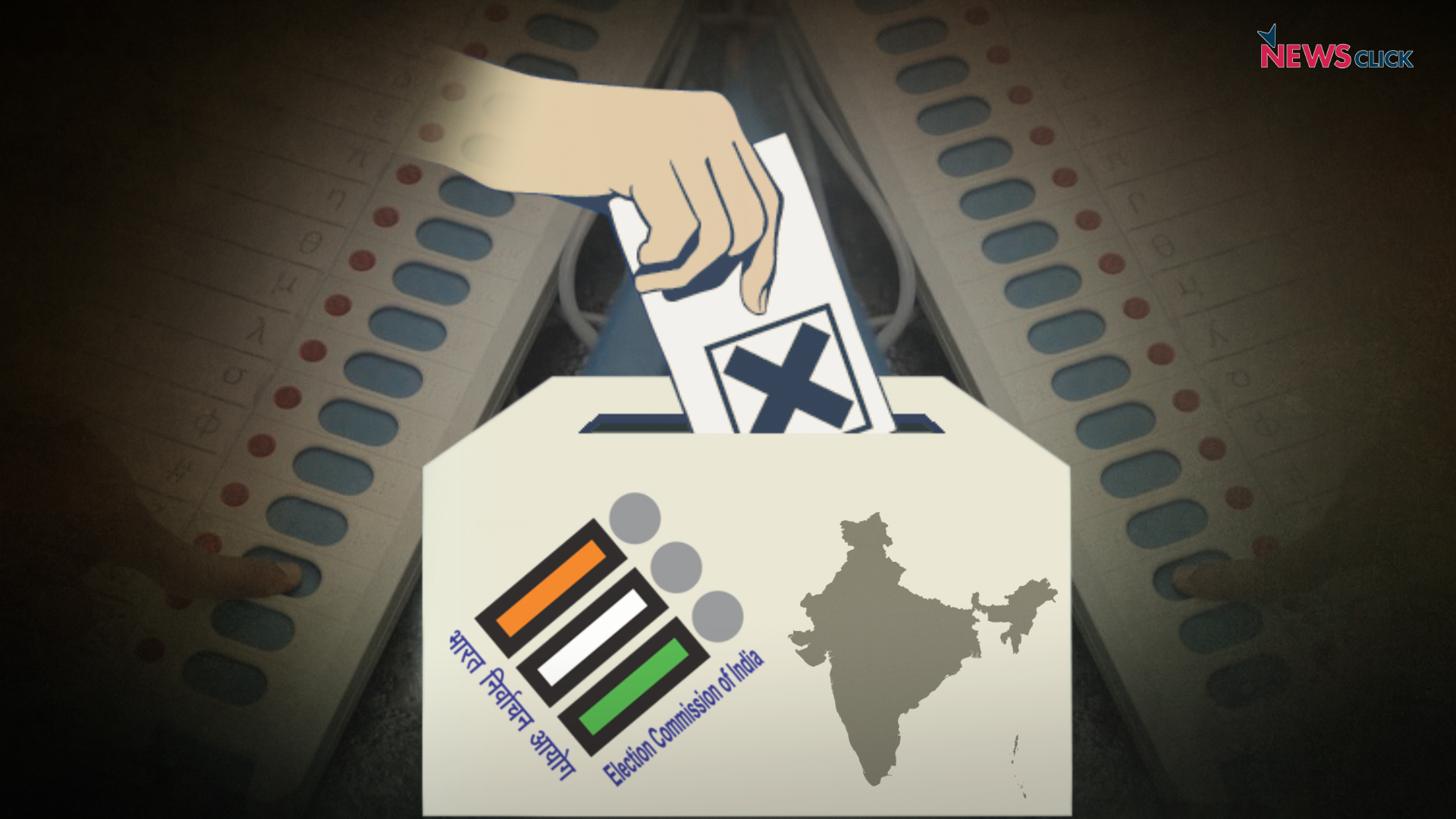
The world’s biggest democracy just had an election. The world’s biggest democratic election It’s a marathon election A mammoth undertaking It’s the world’s biggest exercise in democracy In India, voters picked its central government for the next five years. An eighth of the world’s population was eligible to vote in this election. In the year, 2019, there are 900 million eligible voters in India making this the largest Democratic exercise in the history of humanity.

A vote for reform: Election Commission collaborating with IIT-M on ...

In one of the largest and most populous countries in the world, that isn’t an easy task. India has to reach voters in coastal cities in the south, in the rural regions of the west, and jungles to the east and everywhere in between. And what’s more, they want every Indian citizen to be within 2 km of a voting station. That’s only about 25 city blocks no matter where you are in the country. It’s an incredibly ambitious goal and yet, somehow they’re able to do it. This is the biggest election in the world and I wanted to know how does it work. Every election a team of state officials and security forces, get on a ship within the east of India to require off towards this island. They travel about 100 km to get here, all to securely deliver these Electronic Voting Machines or EVMS, the instrument that logs India’s votes, the heart of this elaborate election process.

Election Commission's crackdown on poll-related monetary ...

India has 2.3 million voting machines for its 900 million voters. So, getting these machines on the brink of every voter may be a big logistical undertaking. That’s why India doesn’t have one polling day , instead, it’s closer to an election month with multiple phases that last weeks. This process takes more than 11 million election officials and security forces, who move from polling station to polling station to polling station from densely populated cities to the rural areas where the majority of Indians live. Once on the island with the EVMs, officials pile on to bike carts and head towards the polling station. Once they arrive, they start setting everything up for the vote.

On Election Day, voters line up, cast their vote, and get their fingers inked to prevent double voting. This is where the process ends for the voters, but for the election officials this is just the beginning. Driving a boat out to a remote island is just one of many ways that officials reach every voter. India’s vast and diverse terrain requires transportation methods of all kinds, like in the jungles of this northern state where elephants transport voting machines to reach a remote town or in the Himalayas where officials hike for hours to bring EVMS for election day. Helicopters, trains, they even use camels. But what makes India’s elections so impressive is not just how they reach everyone in such an enormous country, that’s just half the battle. It’s also the ways they try to include voters of all backgrounds into the process, a challenge that has been a part of India’s elections since the very beginning. India has 22 official languages and hundreds of dialects and when India became an independent nation, less than a quarter of the population could read and write.

Why EC Owes an Answer to the Country Over 'Phantom Votes' | NewsClick

The newly formed Election Commission of India created a range of symbols to correspond to each political party, like an elephant, a lotus, a hand or even an alarm clock so that from the beginning all people regardless of literacy level and language could vote with confidence. Since 1947, the literacy rate has increased significantly, but it’s still only 75 percent, so these symbols are still useful to many when casting a vote. But this is a massive sprawling operation and over the years it’s run into some pretty serious problems like allegations of election rigging and problems with a practice called booth capture, where gangs actually take over polling stations and tamper with the elections. It’s partly because of these problems that the Commission introduced these voting machines in the 1990s.

It also increased security around the elections. These efforts to include all voters and protect elections seem to be working. In 2019, India saw the highest voter turnout yet and for the firsttime women voted just as much as men. India’s elections are only getting bigger and more complicated. India has one among the fastest growing populations within the world. and in 2020, young people will make up more than a third of the country. This is the most important election within the world that takes many officials fanning out across a huge country to assist many millions vote.

Election Commission rejects Opposition demand to tweak VVPAT ...

MHA allows colleges to hold final year exams.

MHA order says the final exams are to be compulsorily conducted according to UGC guidelines. UGC said it is upto colleges to decide how they want to conduct the exams.

New Delhi: Students in universities and colleges across India will have to now “compulsorily” take their final-year exams this year.

In a press statement issued late Monday evening, the Ministry of Home Affairs (MHA) said: “Ministry of Home Affairs, in a letter to the Union Higher Education Secretary, today permitted conduct of examinations by universities and institutions.”

The MHA statement, however, didn’t clarify the mode — online or offline — in which the exams would be conducted.

“The final term examinations are to be compulsorily conducted as per the UGC guidelines on examinations and academic calendar and as per the standard operating procedure approved by the MoHFW (Ministry of Health and Family Welfare),” it added.

UGC also in favour of holding final exams
Following the statement, senior officials in the University Grants Commission (UGC) confirmed to ThePrint the UGC is also in favour of holding final exams, and will ask all states and central universities to conduct the final exams.

The UGC will allow institutes to conduct exams in the mode most feasible to them, officials added.

“There was a meeting of the commission members today and there is a decision in favour of conducting exams. The MHA and MoHFW have also given the due permission now and the universities will be allowed to conduct exams keeping all the social distancing protocols put in place by the government,” a senior UGC official told ThePrint.

“In the interest of the students and academic credibility, exams cannot be bypassed and institutions must have final exams. How they want to do it and when they can conduct the exams is up to them, but they will have to conduct exams,” the official added.

According to the minutes of UGC meeting, accessed by ThePrint, the commission will give universities time until September to finish their final-year exams either in offline or online mode.

“The commission approved the recommendations of the expert committee regarding conduct of final-year examinations to be completed by the end of September 2020 in offline/online/blended mode,” according to the minutes.

States, which cancelled exams, have to reconsider
According to a resolution passed during the UGC meeting, states that have cancelled exams will have to reconsider their decision and they cannot opt for internal assessment.

Many states, including Maharashtra, Rajasthan, Madhya Pradesh and Kerala, have decided to cancel the final exams for university students, while Gujarat, Karnataka and Uttar Pradesh have been waiting for UGC directions.

The UGC had in May released an academic calendar based on suggestions from an expert committee headed by Haryana University Vice-Chancellor R.C. Kuhad.

The calendar had taken into account the pandemic situation during that time, and suggested that pen and paper exams can be conducted in July if local conditions are favourable.

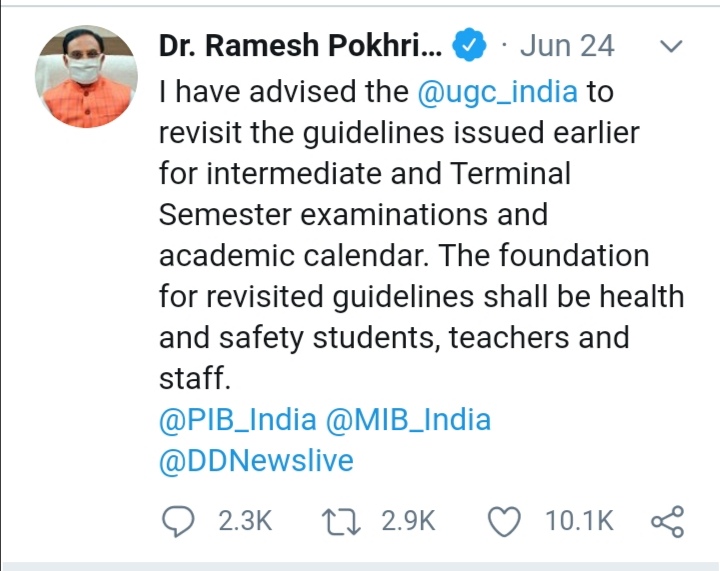
In June, however, looking at the rising number of Covid-19 cases across the country, Minister of Human Resource Development Ramesh Pokhriyal Nishank had asked the UGC to re-visit the guidelines.

New bubonic plague case suspected after covid-19 in China; Alert sounded.

In this hard times of corona virus pandemic , chine has reported another deadly bubonic plague case in the northern China’s inner Mongolia. The detection of the suspected case of bubonic plague has come to light in statement issued by a local health commission on its website.

As per a media report, a third-level warning alert was issued on Sunday. The warning period has been extended to the end of the year. On July 1, state-run Xinhua news agency said that two suspected cases of bubonic plague reported in Khovd province in western Mongolia have been confirmed by lab test results. The confirmed cases are a 27-year-old resident and his 17-year-old brother. The brothers ate marmot meat, the health official said.

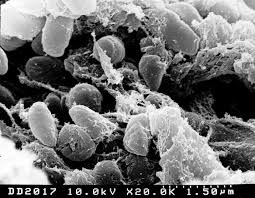
The Yersinia pestis bacteria can be transmitted to humans from infected rats via fleas.  Though the highly-contagious plague is rare in China and can be treated, at least five people have died from it since 2014, according to China’s National Health Commission. 

Bubonic plague symptoms and precautions:

The health commission urged the people in city to take precautions to avoid infection. It is a bacterial disease spread by fleas living on wild rodents such as marmots.

According to World Health Organisation(WHO), the plague can kill an adult in less than 24 hours if not treated in time. Bubonic plague symptoms include headaches, fever and vomiting. Swollen and painful lymph nodes occur in the area close to where bacteria entered skin.

Bawarchi

This is a movie directed by Hrishikesh Mukherjee, and was released in the 1972. A movie staring Rajesh khanna, Jaya Bahaduri, Usha Kiran, Asrani and many more. This movie was narrated by Amitabh Bachan in his very strong voice. Hrishikesh Mukherjee movies are always simple and conveys very beautiful messages which helps us to make our lives simpler. Bawarchi means a cook, this is a story of how Raghu the character played by Rajesh Khanna actually teaches a life lesson to a family who lives in a house named shanti nivas.

In this story the main focus is about a large joint family which lives in a house named shanti nivas named after the wife of the owner. The name is an irony as the word shanti means peace but no one can ever see this happening in the house, there is always some big fight that the family indulges in.  Shivnath sharma who is a retired post man is the eldest in the family. He has 4 sons firstly Ramnath sharma being the eldest son who works as a head clerk in a company his wife Seeta sharma and daughter is Meeta sharma is a trained Kathak dancer and who is preparing for an upcoming dance competion all live in the house. Second brother Kashi Sharma is a school teacher he has his own rules and principles about life which he strictly follows his wife shobha sharma and son Pintoo live in the same house. The third son and his wife died in a car accident their daughter Krishna played by Jaya Bachan also stays with them. She studies in college and has a tution teacher Arun who is her college senior who comes home to teach her for free. The forth son Vishwanath Sharma played be Asrani is a music director in film industry, he is not married and he thinks it is better not because it will just add up to the fight already existing in the house. So many people live in one house, constantly fighting  though they want to be apart but fear that if they go Shivnath sharma also called as Daduji will not give any part of the property to them.

Raghu who comes to their home, pretending that he is in desperate need of work but actually is someone who wants to peace out things in the house. Not directly but by showing how much they love each other and making other members  realize how amazing is it live together with happiness. There are many major lessons to be learnt from this movie which actually tends us to re-evaluate our own life. Such simple movies makes us realize how important is it to be happy in the present moment. In this pandemic times when we are confined at home rather than constantly thinking and stressing out ourselves by the thought  when will everything comeback to normal we can spend a quality time with our family, be happy of the fact that everyone is together. Hug your mom and dad and tell them how much you love and care about them. In a wait for big happiness we often tend to ignore these small small happiness, the number big moments of happiness are  only just fifteen to twenty in in the whole lifetime what makes our lives beautiful is the millions and billions of small happiness that we should never overlook.

celebrate not just a day but life full of yoga

Yoga: understanding fundamentals

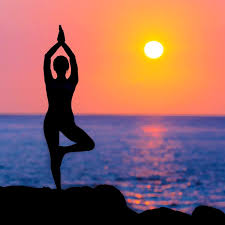
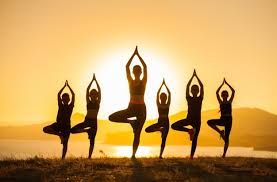
Yoga is a group of spiritual,mental and physical practices originated in ancient India. the modern yoga is seen as exercise to the body which mainly consists of postures or asanas. The practice of yoga has been thought to date back to pre-vedic Indian traditions; possibly in the Indus valley civilization around 3000 BCE. Yoga is mentioned in the Rigveda and also referenced in the Upanishads. Yoga gurus from India later introduced yoga to the West,[17] following the success of Swami Vivekananda in the late 19th and early 20th century with his adaptation of yoga tradition, excluding asanas. Outside India, it has developed into a posture-based physical fitness, stress-relief and relaxation technique. Yoga in Indian traditions, however, is more than physical exercise; it has a meditative and spiritual core.

why yoga ?

There are many reasons why one should keep habit of practicing yoga for at least half an hour a day even if they are busy all the day. yoga is an art whivh cures you from a disease before you get infected by it.

some of the benefits of yoga are:

  • increased flexibility.
  • increased muscle strength and tone.
  • improved respiration, energy and vitality.
  • maintaining a balanced metabolism.
  • weight reduction.
  • cardio and circulatory health.
  • improved athletic performance.
  • protection from injury.

Prominent personalities practicing yoga:

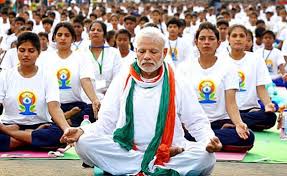
  1. Narendra modi:
If prime minister can do then we can too at least we are not as busy as him.

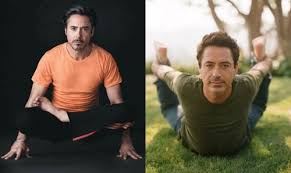
2. Robert downey ,jr.(Iron Man):

Shocked!! yes he also do yoga which has helped him in leaving the bad habit of drugs addiction.

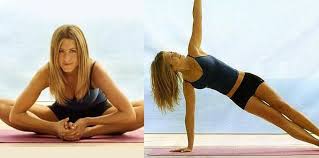
3.Jennifer Aniston (Racheal green in Friends):

she is been practicing yoga since 2005 for at least 20-30 minutes a day regularly

admist her busy schedule.

The list goes on thus it is well known that yoga is key to healthy life. Practice it daily if you don’t know asanas search in google or refer you tube videos. Hope you start practicing Yoga.

8 Genuine ways to earn money from your home!!!

Here are some of the genuine ways to earn in your spare time without any investment.

  1. Transcriber: average earnings per month is hundred and fifty. All you need is actually to have a good pair of headphones and of course you need to get stored to type there now there is a few other sites so you can’t only rely of course on hundred and fifty dollars average earning per month but if you are good at this you can actually earn of course much more but what you can do is you can become a transcriber. rev.com is another site here as a transcriptionist you can anywhere from 24 to 90 cents per audio/video minute basically you can be a video captioner also which is pretty much the same here and you can earn anywhere from 45 cents up to 75 cents.
  2. Micro tasks you can do this on my.com in your spare time you get paid for completing simple tasks here so it can be anything from like tagging objects here helping companies select the best picture the audit user classifying you can see that there is tons of opportunities. Rapidworkers.com is another site where you can earn a decent amount just by doing some micro taskes.
  3. Data entry jobs on Amazon on rapid workers there is micro workers also but there is also assigned like a clickworkercalm.com. You just sign up for a free account and you work independently your schedule is flexible and all you need is a computer and of course and/or a mobile device with an internet connection and it’s totally up to you how much you want to work. You can do text creation, copy editing, research surveys, mystery visit, app testing and photo capturing a lot of opportunities that you can earn money from the comfort on clickworker.com.
  4. Virtual assistant one of my favorite sites is virtual assistant jobs calm and basically you can apply for data entry, call center whatever comes into your mind you can get started here and apply and search for it you might be available only to do this on part time so you can search for part-time flexible with contracts. Jobs.com helps us out there by providing all types of virtual assistance jobs.
  5. Online tutoring if you’re good at something math or English or something like that one side is a shag.com , VIP kid teachers.com which is basically they teach English here and you can earn up to twenty two dollars per hour teaching. There are many students who want to learn extra and out of their books so here comes opportunity by teaching them.
  6. Freelancer totally depends on your skills. There is other popular freelance sites like upwork.com there is freelancer.com there is people per hour so a lot of options actually that you can apply for here as a freelancer. Freelancing is one of the best option as you can work also on your niche and can enhance it for future use.
  7. Affiliate marketer and the good thing with affiliate marketing is that you don’t have to deal with shipping you don’t have to deal with anything at all. You need is just grab a link and promote that offer whatever it is and of course you earn a commission okay so one of the most popular platforms is Clickbank.com. They have thousands of products here probably one of the most popular niches will be health and fitness. You just grab a link here and what you do is you use this link to promote it you can use something like bitly to shorten this ugly link of course and then all you need to do is drive traffic to this offer. Amazon is another option that you can make money as an affiliate marketer they have millions of products here that you can promote ok you can earn a commission from anything you promote inside Amazon here so it works the same way it totally depends on your niche here how you can drive traffic to it.
  8. Sell stuff on eBay you have available that you don’t use at your home you can get stored there to sell this or you can actually use this platform to buy something and sell it much higher. So, you can be a sort of a middleman here so this is another option tons of ways and opportunities to make money eBay and you can of course do this from your home without any investment.


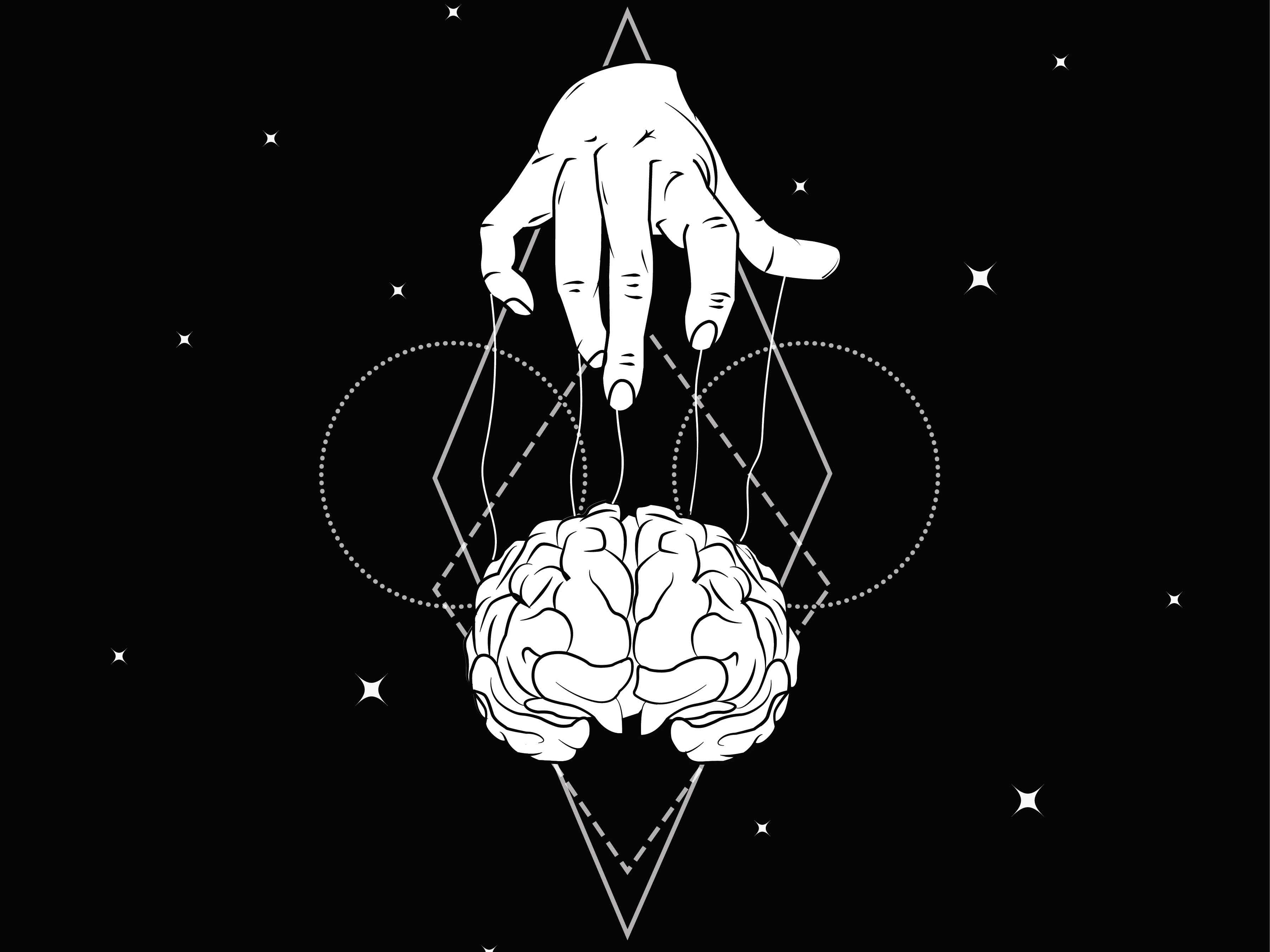
How to control your mind & thoughts through Vipassana Meditation


mind_control-01

A Non-Sectarian Technique

Vipassana meditation is for the purification of the mind. It is the highest form of awareness—the total perception of the mind-matter phenomena in its true nature. It is the choiceless observation of things as they are. Vipassana is the meditation the Buddha practiced after trying all other forms of bodily mortification and mind control, and finding them inadequate to free him from the seemingly endless round of birth and death, pain and sorrow. It is a technique so valuable that in Burma it was preserved in its pristine purity for more than 2,200 years.

Vipassana meditation has nothing to do with the development of supernormal, mystical, or special powers, even though they may be awakened. Nothing magical happens. The process of purification that occurs is simply an elimination of negativities, complexes, knots, and habits that have clouded pure consciousness and blocked the flow of mankind’s highest qualities—pure love (mettā), compassion (karuṇā), sympathetic joy (muditā), and equanimity (upekkhā).

There is no mysticism in Vipassana. It is a science of the mind that goes beyond psychology by not only understanding, but also purifying, the mental process. The practice is an art of living which manifests its profound practical value in our lives—lessening and then eliminating the greed, anger, and ignorance that corrupt all relationships, from the family level to international politics. Vipassana spells an end to daydreaming, illusion, fantasy—the mirage of the apparent truth. Like the sizzling explosion of cold water being thrown on a red-hot stove, the reactions after bringing the mind out of its hedonistic tendencies into the here and now are often dramatic and painful. Yet there is an equally profound feeling of release from tensions and complexes that have for so long, held sway in the depths of the unconscious mind. Through Vipassana anyone, irrespective of race, caste, or creed, can finally eliminate those tendencies that have woven so much anger, passion, and fear into our lives. During the training a student concentrates on only one task—the battle with his own ignorance. There is no guru worship or competition among students. The teacher is simply a well-wisher pointing the way he has charted through his own long practical experience. With continuity of practice, the meditation will quiet the mind, increase concentration, arouse acute mindfulness, and open the mind to the supramundane consciousness the “peace of nibbāna (freedom from all suffering) within.”

As in the Buddha’s enlightenment, a student simply goes deep inside himself, disintegrating the apparent reality until in the depths he can penetrate even beyond subatomic particles into the absolute. There is no dependence on books, theories, or intellectual games in Vipassana.

The truth of impermanence (anicca), suffering (dukkha), and egolessness (anattā) are grasped directly with all the enormous power of the mind rather than the crutch of the intellect. The illusion of a “self,” binding the mental and physical functions together, is gradually broken. The madness of cravings and aversions, the futile grasping of “I, me, mine,” the endless chatter and conditioned thinking, the reaction of blind impulse—these gradually lose their strength. By his own efforts, the student develops wisdom and purifies his mind.


The foundation of Vipassana meditation is sila—moral conduct. The practice is strengthened through samadhi—concentration of the mind. And the purification of the mental processes is achieved through panna—the wisdom of insight. We learn how to observe the interplay of the four physical elements within ourselves with perfect equanimity, and find how valuable this ability is in our daily lives. We smile in good times, and are equally unperturbed when difficulties arise all around us, in the certain knowledge that we, like our troubles, are nothing but a flux, waves of becoming arising with incredible speed, only to pass away with equal rapidity.

Although Vipassana meditation was developed by the Buddha, its practice is not limited to Buddhists. There is no question of conversion—the technique works on the simple basis that all human beings share the same problems, and a technique that can eradicate these problems will have a universal application. Hindus, Jains, Muslims, Sikhs, Jews, Roman Catholics, and other sects have all practised Vipassana meditation, and have reported a dramatic lessening of those tensions and complexes that affect all mankind. There is a feeling of gratefulness to Gotama, the historical Buddha, who showed the way to the cessation of suffering, but there is absolutely no blind devotion.   The Buddha repeatedly discouraged any excessive veneration paid to him personally. He said, “What will it profit you to see this impure body? Who sees the teaching—the Dhamma—sees me.”

Although Vipassana is a part of the Buddha’s teaching, it contains nothing of a sectarian nature, and can be accepted and applied by people of any background. The Buddha himself taught Dhamma (the way, the truth, the path). He did not call his followers “Buddhists”; he referred to them as “Dhammists” (those who follow the truth).

Vipassana courses are open to anyone sincerely wishing to learn the technique, irrespective of race, caste, faith or nationality. Hindus, Jains, Muslims, Sikhs, Buddhists, Christians, Jews as well as members of other religions have all successfully practiced Vipassana. The malady is universal; therefore, the remedy has to be universal. For example, when we experience anger, this anger is not Hindu anger or Christian anger, Chinese anger or American anger. Similarly, love and compassion are not the strict province of any community or creed: they are universal human qualities resulting from the purity of mind. People from all backgrounds who practice Vipassana find that they become better human beings.

The Present-day World Environment

Developments in the fields of science and technology, in transportation, communications, agriculture and medicine, have revolutionized human life at the material level. But, in actuality, this progress is only superficial: underneath, modern men and women are living in conditions of great mental and emotional stress, even in developed and affluent countries.

The problems and conflicts arising out of racial, ethnic, sectarian and caste prejudices affect the citizens of every country. Poverty, warfare, weapons of mass destruction, disease, drug addiction, the threat of terrorism, epidemics, environmental devastation and the general decline of moral values—all cast a dark shadow on the future of civilization. One need only glance at the front page of a daily newspaper to be reminded of the acute suffering and deep despair which afflict the inhabitants of our planet.

Is there a way out of these seemingly insolvable problems? The answer is unequivocally, yes. All over the world today, the winds of change are readily apparent. People everywhere are eager to find a method which can bring peace and harmony; restore confidence in the efficacy of wholesome human qualities; and create an environment of freedom and security from all types of exploitation—social, religious and economic. Vipassana can be such a method.

mind_control-01.jpgVipassana and Social Change

The technique of Vipassana is a path leading to freedom from all suffering; it eradicates craving, aversion and ignorance which are responsible for all our miseries. Those who practice it remove, little by little, the root causes of their suffering and steadily emerge from the darkness of former tensions to lead happy, healthy, productive lives. There are many examples bearing testimony to this fact.

Several experiments have been conducted at prisons in India. In 1975, Mr. S. N. Goenka conducted a historic course for 120 inmates at the Central Jail in Jaipur, the first such experiment in Indian penal history. This course was followed in 1976, by a course for senior police officers at the Government Police Academy in Jaipur. In 1977, a second course was held at the Jaipur Central Jail. These courses were the subject of several sociological studies conducted by the University of Rajasthan. In 1990, another course was organized in Jaipur Central Jail in which forty life-term convicts and ten jail officials participated with very positive results.

In 1991, a course for life-sentence prisoners was held at the Sabarmati Central Jail, Ahmedabad, and was the subject of a research project by the Department of Education, Gujarat Vidyapeeth.

The Rajasthan and Gujarat studies indicated definite positive changes of attitude and behaviour in the participants, and demonstrated Vipassana is a positive reform measure enabling criminals to become wholesome members of society.

In 1995, a massive course was organised for 1000 prisoners in Tihar jail with far-reaching effects. Vipassana was adopted as a prison reform technique in the largest jails of India. A detailed report of the scientific studies carried out to assess the impact of Vipassana meditation on the prisoner’s mental health proves that Vipassana is capable of transforming criminals into better human beings.

The civil service career of S. N. Goenka’s meditation teacher, Sayagyi U Ba Khin, is an example of the transformative effect of Vipassana on government administration. Sayagyi was the head of several government departments. He succeeded in instilling a heightened sense of duty, discipline and morality in the officials working under him by teaching them Vipassana meditation. As a result, efficiency dramatically increased, and corruption was eliminated. Similarly, in the Home Department of the Government of Rajasthan, after several key officials attended Vipassana courses, decision-making and the disposal of cases were accelerated, and staff relations improved.

The Vipassana Research Institute has documented other examples of the positive impact of Vipassana in such fields as health, education, drug addiction, government, prisons and business management.

These experiments underscore the point that societal change must start with the individual. Social change cannot be brought about by mere sermons; discipline and virtuous conduct cannot be instilled in students simply through textbook lectures. Criminals will not become good citizens out of fear of punishment; neither can caste and sectarian discord be eliminated by punitive measures. History is replete with the failures of such attempts.

The individual is the key: He or she must be treated with love and compassion; he must be trained to improve himself — not by exhortations to follow moral precepts, but by being instilled with the authentic desire to change. He must be taught to explore himself, to initiate a process which can bring about transformation and lead to purification of mind. This is the only change which will be enduring.

Vipassana has the capacity to transform the human mind and character. It is an opportunity awaiting all who sincerely wish to make the effort.


Bombay HC Dismisses PIL Alleging Negligence In Management

In a latest and fresh development, the Bombay High Court just recently on July 3, 2020 in Ketan Tirodkar Vs State of Maharashtra & Anr in Case Number: PIL-CJ-LD-VC-29 of 2020 dismissed a public interest litigation (PIL) alleging negligence in management of dead bodies of Covid-19 victims by Municipal Corporation of Greater Mumbai staff after the Corporation filed an affidavit categorically denying the allegations in the PIL and asserting vehemently that the guidelines of the Health Ministry are being strictly followed for disposal of dead bodies. It would be vital to mention here that a Division Bench of Chief Justice Dipankar Datta and Justice NJ Jamadar was hearing a PIL filed by an activist – Ketan Tirodkar who contended that the smoke emanating from the chimneys at crematoriums in Shivaji Park and Chandanwadi is dangerous for the MCGM workers handling the bodies. Ketan’s claims fell through as they could not be substantiated to the satisfaction of the Bombay High Court!

                               To start with, the ball is set rolling in para 1 of this noteworthy judgment delivered by a two Judge Bench of Bombay High Court comprising of Chief Justice Dipankar Datta and NJ Jamadar wherein it is envisaged that, “The petitioner claims to be a social activist. From the cause title of the PIL Petition, it appears that he has been residing at Pune. In this proceeding, styled as ‘Public Interest Litigation’, he seeks to bring to judicial notice alleged negligence in management and disposal of dead bodies of COVID-19 victims by the staff of the Municipal Corporation of Greater Mumbai (hereafter “the Corporation”), more particularly in the crematoriums at Shivaji Park and Chandanwadi. The material paragraph from the PIL Petition, which forms its plinth, reads as follows:-

“3. It has been learnt that Shivaji Park funeral site for Hindus has been receiving bodies of COVID-19 casualties which are neither wrapped in the ‘leak-proof’ bags nor are they applied with ‘hypochlorite’. A worker of Shivaji Park funeral site has been found infected with COVID-19 and presently there are only seven workers on duty performing the high-pressure task.

The smoke emanating from the process of electric funeral goes up around the area creating an eminent (sic, imminent) danger of the residents in the vicinity getting infected.

Huge number of bodies keep coming to various such funeral sites from civic & State hospitals without being wrapped and without being subjected to application of ‘hypochlorite’.

Shivaji Park Crematorium in Dadar West and Chandanwadi crematorium in Charni Road have been receiving major workload as they are in the close vicinity of major State & Civil hospitals. Around 18 to 20 bodies are received every day by these two crematoriums. The staff is not given adequate medication and the protective overalls. Moreover, there is eminent (sic, imminent) danger of the residents in the surrounding localities catching infection due to the smoke emitted by the chimneys.””   

                                        To be sure, it is then stated in para 2 that, “On the basis of such pleadings, it has been prayed in the PIL Petition as follows:-

(a)          This Hon’ble Court may be pleased to direct the Respondent to direct the respondent State to enforce the safety guidelines for applying 1% hypochlorite over the bodies.

(b)         This Hon’ble Court may be pleased to direct the Respondent to ensure that the bodies of the COVID-19 patients are wrapped in the ‘leak-proof’ bags before sending them to the crematoriums, Muslim & Christian burial places.

(c)           This Hon’ble Court may be pleased to direct the Respondent to provide adequate medication, protective overalls and sufficient material to maintain hygiene for the workers engaged at the funeral places.”      

                                         On the contrary, it is then pointed out in para 3 that, “The Corporation, by filing an affidavit-in-reply, has categorically denied the material allegations in the PIL Petition. Referring to the guidelines dated March 15, 2020 issued by the Ministry of Health and family Welfare, Government of India on management of dead bodies and a circular dated June 4, 2020 issued by it laying down Standard Operating Procedures for handling of dead bodies, the Corporation has contended that the provisions of the guidelines are being strictly enforced so as to keep the spread of the virus within manageable limits. Relying on the decision of a coordinate Bench of this Court dated May 22, 2020 passed in LD-VC-46-2020 (Pradeep Gandhy & Ors. vs. State of Maharashtra & Ors.) and other connected matters, which dealt with the issue of decent burial of COVID victims, it has been emphasized that things are moving in the right direction and that there is no case for judicial intervention.”

                               As things stand, para 4 then brings out that, “A rejoinder affidavit has been filed by the petitioner. It has been vaguely alleged therein that the guidelines that are issued are not being strictly followed by the Corporation. Particulars of any specific incident are not provided. When questioned on the point of absence of particulars, Ms. Vhatkar, learned Advocate for the petitioner submits that since the petitioner during the period of lockdown is away in Pune, he has been disabled in furnishing particulars. This is apart from the fact that the rejoinder does not conform to Order VI Rule 15 of the Code of Civil Procedure.”

                                Most significantly, the Bench then after hearing the parties and perusing the pleadings on record then holds in para 6 that, “The allegations made by the petitioner do not as such appear to be based on his personal knowledge, though paragraphs 1 to 8 are verified as true to the best of his knowledge. Whatever he has learnt on reading certain newspaper reports has triggered the institution of this PIL Petition. In course of hearing, Ms. Vhatkar admits that newspaper reports are not admissible evidence. No material has been placed before us which could even remotely support or validate the stand that the petitioner has taken in the PIL Petition. In the absence of the relevant data, we hold his fears and concerns to be misconceived. That the petitioner has been residing in Pune during the lockdown period and alleging mismanagement in Mumbai has also left us to wonder how he could have verified the pleadings in the PIL Petition as true to the best of his knowledge. That the petitioner has been residing in Pune, for which he could not provide  relevant facts and figures for drawing up the PIL Petition in a more comprehensive manner, is also of little importance. Once it is admitted by Ms. Vhatkar that the petitioner did not have any first hand knowledge of whatever has been alleged in the PIL Petition, we are constrained to observe that verifying the contents of the PIL Petition as true to the best of the knowledge of the petitioner has not been a proper exercise.’’

                                     Needless to say, it is then observed in para 7 that, “Even if we keep aside these technicalities and proceed on the merits of the matter, we find on the one hand the emphatic stand of the Corporation that the guidelines dated March 15, 2020 and June 4, 2020 issued by the Ministry of Health and Family Welfare, Government of India as well as the Corporation itself, respectively, are being scrupulously followed and enforced in the matter of management and disposal of dead bodies of COVID victims. Not only has the Corporation pleaded that the polythene bags in which the cadavers are wrapped are of the requisite quality, it is also pleaded that ‘hypochlorite’, to the extent necessary, is being administered on the cadaver so as to prevent the spread of the virus. Reference has also been made to other clauses of the guidelines which the Corporation has been adhering to, to ensure that the people residing in the vicinity of the crematoriums within the municipal limits are kept free from contracting any information to the extent possible.’’  

                                            To put things in perspective, it is then pointed out in para 8 that, “As referred to earlier, there are bare denials in the rejoinder affidavit and vague allegations that the guidelines have not been strictly followed. An action based on vague allegations does not deserve to be proceeded with. The other allegations of the petitioner in the rejoinder affidavit that the Corporation has not furnished full details of how many staff are on its rolls, how many of them are attending work, what steps are being taken against those guilty of absenteeism, etc. are not at all germane to the concerns that the petitioner has expressed in the PIL Petition.’’

                          Of course, the Bench then rightly holds in para 9 that, “The case run in paragraph 3 of the PIL Petition, the statements made in answer thereto by the Corporation in its reply affidavit and the absence of any particulars in the rejoinder affidavit as to any specific incident of mismanagement, apart from reference to unnecessary points, lead us to the unmistakable conclusion that no case for interference has been set up by the petitioner. The PIL Petition stands dismissed, but without any order of cost.’’  

                                   However, it is then made clear in para 10 that, “We, however, hope and trust that the Corporation shall continue to earnestly  adhere to and enforce the extant guidelines so that life of each and every citizen is preserved and that they are not put to unnecessary distress as a result of the contagion.’’

                                       Finally, it is then held in the last para 11 that, “This order will be digitally signed by the Sr. Private Secretary of this Court. All concerned will act on production by fax or e-mail of a digitally signed copy of this order.’’

                               To conclude, the two Judge Bench of Bombay High Court very rightly dismisses a PIL alleging negligence in management of dead bodies of Covid-19 victims by Municipal Corporation of Greater Mumbai staff as they could not be substantiated by the petitioner! If the petitioner had submitted something concrete then certainly the outcome would have been different. There can certainly be no denying it!

Sanjeev Sirohi, Advocate,

s/o Col BPS Sirohi,

A 82, Defence Enclave,

Sardhana Road, Kankerkhera,

Meerut – 250001, Uttar Pradesh

Pen pals

Have you ever thought of sharing your opinions and views to an unknown person. In this present world sharing any information with an unknown person is nothing less than inviting a trouble, but there was a time when people used to share their opinions, emotions or feelings to an unknown person. This was accomplished by writing letters. One used to write letters to those whose name, gender , age, caste etc were not known. The only thing they knew was address. This was the most exciting thing youths of those days used to do. By this they also made friends of their own choice. The friends made are called Pen friends or pen pals.

This practice started from the early 70s and prevailed as a trend for almost 2 decades. Those days there used to be a column in the newspaper, which had the addresses of those people who were interested in having a pen pal. From late 80s people started having pen friends from foreign countries too. Many people were really interested in reading different views and opinions so they had many pen friends. This practice also helped in gaining the knowledge of things happening in other places. Just imagine how different it is to know people like that, you know make friends with people you don’t know and it is your choice to carry it on or to end it.

In late 90s computers were made accessible and Electronic mail came in and started spreading its magic throughout the world. The ritual of handwritten letters were vanishing. Then mobiles made communication more efficient because of which writing letters to even the loved ones were stopped completely.

Pen pal are the purest form of friendship, why not start the trend once again. Lets once again start writing letters to our relatives and friends who are far. You know writing letters is something so personnel, one invests time in it thinks a hundred times what to write and how to write. After scrambling tons of thoughts and papers (does not mean you waste paper, please do not waste paper) the last draft is ready , the anxiety of posting it and then waiting for the reply is another feeling. In this world where everything is fake let us make friendships real. When you friend receives the letter, they would feel you in the letter. When the read it in their mind it would be as if your voice is reading it, which would definitely give a feeling though for just sometime that you are around them narrating your story.

Really how did this wonderful tradition come to an end!!

let us not end it, let us find new friends once again, make Pen friends and lets keep up the friendship for life. Lets share each others happiness and sorrows so that we don’t feel alone and always be feel happy of having a friend somewhere who is always there to listen to our thoughts , opinions and problems and to show that we care about them. May be by doing this we can make a much happier world to live in.

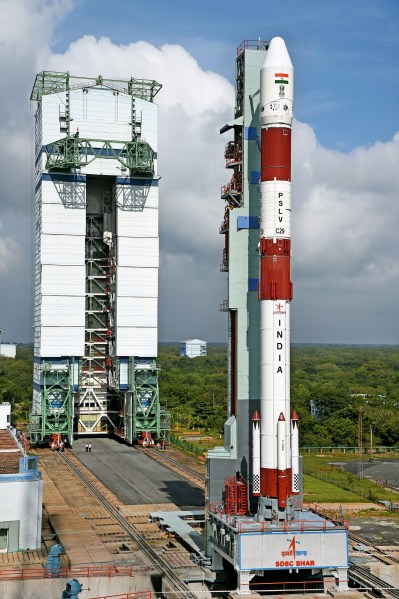
History Blast from the Past : ISRO’s 20 Satellites in One Go through PSLV C34 Achievement >>>>>>>>>>>

SALUTE TO ISRO AND OUR GREAT SCIENTISTS

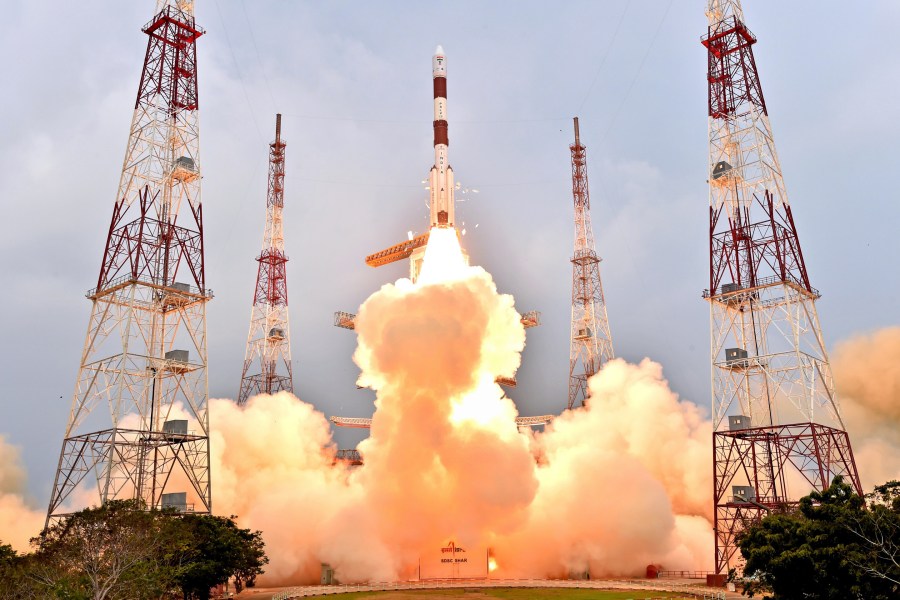
Sometimes rewind the moments related to country pride has quite satisfactory. In the post, I am recalling the ISRO’s historical moment of 2016 … 20 satellites in one go.

Isro scripted history on Wednesday by launching 20 satellites, including those from the US, Germany, Canada and Indonesia, from its Satish Dhawan Space Centre in Andhra Pradesh’s Sriharikota in one go.

The Indian Space Research Organisation used its flagship rocket Polar Satellite Launch Vehicle (PSLV) C34 — standing 44.4 metre tall and weighing 320 tonne — for the lift-off that was lauded by Prime Minister Narendra Modiji.

Credit : Third Party Reference

“Our space programme has time and again shown the transformative potential of science & technology in people’s lives,” he posted after the rocket tore into the morning skies at 9.26 am with a growl breaking free of the earth’s gravitational pull.

“Over the years we developed expertise & capability to help other nations in their space initiatives. This is the skill of our scientists.”

The 20 satellites weighed 1,288kg. The rocket’s main cargo is India’s 725.5kg Cartosat-2 series satellite for earth observation. This satellite is similar to the earlier Cartosat-2, 2A and 2B.

The other 19 satellites weighing around 560 kg are from the US, Canada, Germany and Indonesia as well as one satellite each from Chennai’s Sathyabama University and College of Engineering, Pune. The whole launch mission was over in around 26 minutes.

Isro chairperson AS Kiran Kumar congratulated his team on the successful launch ‘in record time’ and said “PSLV C-34 has done its job”.

“We have the current generation of earth observation satellite of Cartosat 2 series,” ISRO said, and added the space agency had done a “wonderful job”.

The images sent by Cartosat satellite will be useful for cartographic, urban, rural, coastal land use, water distribution and other applications.

The 110kg SkySat Gen2-1 belonging to Terra Bella, a Google company, is a small earth-imaging satellite capable of capturing sub-metre resolution imagery and high definition video, Isro said.

The Planet Labs Dove Satellites are also earth-imaging satellites. A total of 12 Dove satellites each weighing 4.7kg are carried in this mission inside three QuadPack dispensers, the space agency said.

Credit : Third Party Reference

The PSLV rocket also carriedf 85kg M3MSat from Canada. The technology-demonstration mission was jointly funded and managed by Defence Research and Development Canada and the Canadian Space Agency.

The other foreign satellites on board were: 120 kg LAPSN-A3 of Indonesia, the 130 kg BIROS, from German Aerospace Centre, and the 25.5 kg GHGSat-D, Canada.

The 1.5 kg Sathyabamasat from Sathyabama University will collect data on green house gases while the 1kg Swayam satellite from College of Engineering, Pune will provide point-to-point messaging services to the HAM radio community.

In 2008, the Isro had launched 10 satellites with the PSLV rocket. Till date India has launched 57 foreign satellites successfully.

Reference – https://divyanshspacetech.wordpress.com

Day to Day Sings & Symptons…DAY 1 to 22

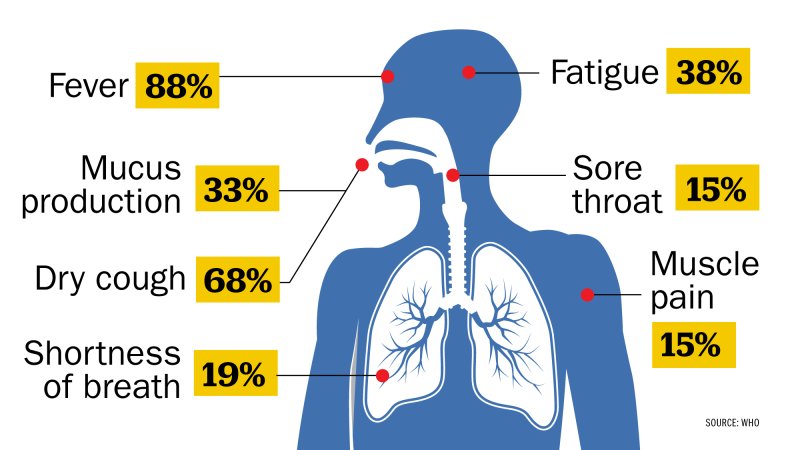
Day to Day Signs and Symptoms of Coronavirus DAY TO DAY SYMPTOMS OF COVID-19 Before proceeding, please note that this general overview is compiled for initial self-assessment only and should vary for each individual. If you are not feeling well, you ought to immediately consult a medical man to possess an accurate diagnosis and proper treatment of COVID-19. The typical daily symptoms are concluded from the study of 138 patients at Zhongnan Hospital of Wuhan University and another study involving 135 patients from Jinyintan Hospital and 56 patients from Wuhan Pulmonary Hospital.

Update: China reports 1,287 confirmed cases of new coronavirus ...

These symptoms are broken down into:

DAY 1 to DAY 2 the start symptoms are almost like the cold with a light pharyngitis and neither having a fever nor feeling tired. Patients can still consume food and drink as was common .

DAY 3 The patient’s throats start to feel a touch painful. Body temperature reads at around 36.5° celsius. Although it’s uncommon, other symptoms like mild nausea, vomiting or mild diarrhea are possible to set in.

DAY 4 Throat pain becomes more serious. Other symptoms like feeling weak and joint pain start to manifest. The patient may show a temperature reading between 36.5° to 37° celsius.

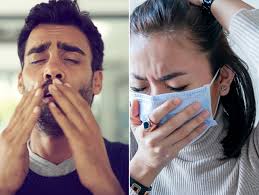
DAY 5 to DAY 6 Mild fever starts. The patients show a temperature reading above 37.2° celsius. The second most common symptom, dry cough, also appears. Dyspnea or breathing difficulty may occur occasionally. Most patients during this stage are easily feeling tired. Other symptoms remain about the same. These four symptoms are among the top five key indications of COVID-19 according to the final report of the initial outbreak conducted by the joint mission of China and WHO.

DAY 7 get more serious coughs and breathing difficulty. Fever can get higher up to 38° celsius. Patients may develop further headache and body pain or worsening diarrhea if there’s any. Many patients are admitted to the hospital at this stage.

DAY 8 to DAY 9 On the 8th day, the symptoms are likely to be worsened for the patient who has coexisting medical conditions. Severe shortness of breath becomes more frequent. Temperature reading goes well above 38°.

DAY 9 is that the average time when Sepsis starts to affect 40% of the patients.

DAY 10 to DAY 11 Doctors are ordering imaging tests like chest x-ray to capture the severity of respiratory distress in patients. Patients are having loss of appetite and should be facing abdominal pain. The condition also needs immediate treatment in ICU.

DAY 12 to DAY 14 For the survivors, the symptoms can be well-managed at this point. Fever tends to urge better and breathing difficulties may start to cease on day 13. But Some patients should be suffering from mild cough even after hospital discharge.

DAY 15 to DAY 16 Day 15 is the opposite condition for the rest of the minority patients. The fragile group must prepare for the possibility of acute cardiac injury or kidney injury.

DAY 17 to DAY 19 COVID-19 fatality cases happen at around day 18. Before the time, vulnerable patients may develop a secondary infection caused by a new pathogen in the lower respiratory tract. The severe condition may then lead to blood coagulation and ischemia.
DAY 20 to DAY 22 The surviving patients are recovered completely from the disease and are discharged from the hospital.

STAY HOME & STAY SAFE

Instagram Launches 'Stay Home' Story & Co-Watching Feature Amid ...

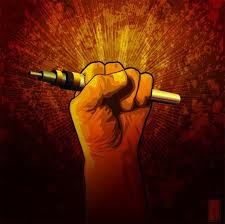
THE POWER OF PEN

Ideas have an impact far more powerful than we imagine. We all wish to express our ideas, and it is the ‘power of the pen’ which helps us express. Who could think that such a small instrument would take such a big space of human life?

When a child, a teacher, a book and a pen come together, they change the world. The teacher using the book directs the child towards self-discovery. A pen gives his innocent dreams the wings and these dreams, hence, see the light of the day. A writer gets to write a new chapter. For him, this pen is everything. He pours all his emotions via a pen on a blank page. This pen becomes the tongue of his mind. A painter gives colours to his imagination. His perspective is serenely painted on a canvas. Anyone who sees it is mesmerized.

In the giant game of construction, some bravely choose a pen. What they create reflects the victory of man’s genius. An architect impeccable shapes homes, giving shelter to many. Cities are constructed based on plans penned by developers.

A hero’s dying wish is that people acknowledge his bravery; not concoct stories which never existed. His pen conveys his heroics. This pen reflected his power. People now know how he served his nation.

In this era, one must learn to protect oneself with the pen, not with the gun. We have journalists who do this for us. They protect our interest when they lift their pen. They give us news with their pen. They keep us updated with the happenings in the world.

In the hands of a doctor, a pen prescribes medicine and saves someone’s life.

Life is given to words with the power of the pen where the spoken words have no place, the written one’s triumph.

The declaration of our independence and its sovereignty was written using a pen without which there would be none of its existence. An actor lifts his pen for an autograph. Design created by this object gives his name value.

Swords are short and sharp, but a pen, the pen is sharper.

The pen is so powerful that if it goes in the hands of a liar, he will not only tongue the false but also deceive by writing.

For some, a pen is as important as a beak is to hen.

A teacher finds it magical for it is she who sees the textures and tone that a mere pen point produces in an exam paper. Lives are created and destroyed in that examination hall. If the pen works you pass and if it doesn’t you fail the test.

This is the ‘Power of Pen’. Let us embrace it and shape a better world together.