Learning is the process of acquiring new understanding, knowledge, behaviors, skills, values, attitudes, and preferences. The ability to learn is possessed by humans, animals, and some machines; there is also evidence for some kind of learning in certain plants.
The term marketing sounds simple right? But do you have the clear idea about what is the whole concept of marketing mix? No worries you will have it after going through this article.
Marketing mix refers to the elements or components that are mixed by the marketers in order to interact with the customers in a much better way. These are basically the tactics used to promote the products. It provides broad guidelines for putting the right products in the right place, at the right time and price. Hence marketing mix plays a very important role for achieving the objectives . Majorly it is divided into the following elements:
Product:
Product is something that is actually offered to the customers for satisfying their needs and wants. Marketers need to clearly look out the conditions in the market before launching a product because customer is the king in today’s market scenario and if the product is not satisfactory for them they will switch over to some other brand as there is stiff competition in the market. There can be two situations the product can be known to the market or it can be the newly launched. More efforts will be required in new one because there will be the need of attracting the new customers and making them aware about that product along with the requirement of that product to the market. Product can be tangible that can be seen and touched or intangible which can’t be seen nor touched.
Price:
Price is the cost charged for a product. It is the most important element of marketing mix as it plays a very crucial role in attracting customers . Price must be set up in such a manner that it must be beneficial on behalf of both the customers and the sellers. Some products involve huge prices that gives them luxury while for some of the necessity products the prices offered are comparatively low.Marketers must link the price to the product’s real and perceived value, but they also must consider supply costs, seasonal discounts, and competitors’ prices.
Place:
It refers to the ultimate place where the product is being offered. Mostly the product is produced in one part and demanded in various parts so various distribution channels are used to make that product available to the customers who are more likely to buy it. Also product can be sold virtually the main difference in that case will be that there will be no personal touch between the buyer and the seller.
Promotion:
It involves adopting all those strategies that are responsible for making the customers aware about a particular product to increase the sale. These strategies leads to the huge changes in the profit potential of a business by helping the business to achieve its goals. It can be done through:
We have always come across the word “Fantasy”, which is different for every person in this universe. For a poet, it is a place where they can get lost and live in those unending stories which don’t have any obstacles. Whereas for some philosophers, fantasy would be something which makes them realize as a beautiful place to live, and for saints, it would be a place where they can encounter God and live a peaceful life.
Sometimes, Fantasy is when a dreamer dreams about their dreams. However, this is a controversial topic as for some fantasy is just a mere illusion of Thoughts.
Although, Fantasy is where unexplored ideas pop up and due to fantasy many great personalities have contributed their best parts to the world of notions.
However, the feeling of Fantasy gives us satisfaction to tackle the real world and provides us a sense of delight in accomplishing our dreams.
“These mortal wizards are the explorers of their wonderland, where they traipse, fondle, gaze over their mystical thoughts.”
The substantiality of our existence is revealed through our reality and our delusion of unrealistic thoughts. Those fictitious stories sprinting through our nerves and then vigorously to our hearts make us feel like the fairies of the fantasy land.
We mortal beings are so devoid within ourselves but are fulfilled with the phantasm which exists within our heads forever. It is like the unrealistic elements of those magical fables which make us feel accomplished and satisfy our existence.
Our existence relates to those oblivious thoughts which are every time inside us, inside our minds. Maybe this virtual world is filled with infinite fictional stories which are yet to be discovered. These never-ending illusioned stories flickering might be part of those parallel universes which is still a mystery.
It is the conundrum of my abundant conviction. We are the wizards of our concocted minds, which are still drifting around these mystifying islands. The mortals have a different notion.
The shattered humans are astray from their delusion and ponder about their fictional characters drifting in those summer haze forests, valleys which are still a blur of memories in this mortal world.
They are emancipated with those clasped thoughts between the virtual land and the magic land. Perhaps, these fantasies are the mirage of our parallel universe, maybe it’s just the artistry of thoughts popping up out of the crafted minds.
In those fantasies lies the stripped and naked pain or grief of those humans who are escaping from the harsh reality. The mortal beings are fragmented into deep emotions, sparkling in those never-ending illusions.
These artists dilute themselves in those fantasizing moments to get lost, lost from the truth. These tales are smoldering with the reality of their aura, possibly their identity lies somewhere deep under the ocean of those unreal dragons, or the mermaids which is still make oneself a bliss whenever he/she is living on those islands.
Being frail or fragile is the reason for he/her to be the daredevil in their cloud of thoughts. It’s very outlandish but it is the reality of oneself hiding through their existence.
“Perhaps it’s an eerie or a bewilderment of one’s self.”
Arrogance is having excessive pride over one’s or a particular group’s accomplishment to an extent wherein we believe that our abilities are nothing compared to others and the success would have come sooner if I had done it alone.
In psychological context, there are two kinds of pride.
Authentic pride- Positive feeling about ourselves, loved one’s success, our actions after successfully coming out from comfort.
Hubristic pride- It usually involves ego coupled with arrogance. Has an exaggerated self-concept.
PRIDE
Any act that boosts our self-esteem, building trust about what we are capable of, and recognizes it, accepts our flaws. It pushes you to perfect your talent and bring forth a blooming personality.
You accept the potential of those working with you and try to form a group that will put in collective work to achieve your collective goal.
Values other’s input and doesn’t hesitate to ask for guidance.
Accepts constructive criticisms, filters their work to make it more productive.
Never slacks off.
Is aware of strengths, weaknesses, and areas which can be improved.
Keeps striving better (Knows that knowledge is boundless).
ARROGANCE
Believes that I have everything I need and that my gifts are beyond immeasurable.
Believes that I have no flaws and cannot make a mistake or create complications from my actions.
Every bad outcome is due to the people affiliated with my work.
Looks for external validations.
Thinks that there is no need to practice or attend meetings because I can win no matter in the end.
Is okay to not follow moral rules (Legal ways) to achieve my needs.
Other’s input is worthless (but will take others’ great ideas making it own saying you got this idea from me) and find them distracting.
Works alone even though being a part of a group activity.
SELF-REFLECTION
If you need to know, whether you really are being arrogant due to impatience or intentionally or people are envious of your success, potential; self-reflecting on your actions, thoughts, and intention will help you resolve your doubts and get back on track with change in yourself or environment.
Self-reflection: Ability to witness and evaluate our own cognitive, emotional, and behavioral processes. To give an objective thought about your behaviors, thoughts, attitudes, and desires.
You work hard, burn the midnight oil, respect everyone and their opinions, and achieve success. But in the end, you get judged as an overachiever, arrogant and rude. Those judgements try to bring your down, make you doubt yourself.
Well, let me just highlight that it is okay. These doubts usually arise because you care about how you respect not only yours but others’ effort that goes into bringing about results which is beneficial for everyone.
Look at few differences I have mentioned above and reflect.
Are you dismissive of your colleagues’ efforts? Do you assure them to implement their ideas but you end up doing completely different without informing them? Do you go late to meetings and displace your external anger on their capabilities?
Few more points to take note of:
Not being honest about their work, where you want improvements, and blaming entire failure on their recklessness. (This is concerning leadership).
Thinking you are superior and forcing rules obnoxiously while you try to put them down.
Seeking constant validation.
Yes, you have achieved great things, burnt that midnight oil but boasting about it is not going to change the outcome of your efforts. You have to keep learning and communicate and inculcate views of your colleagues to bring the best out of them and to bring about a team with the same goals and motivation.
Negative critics/members with less motivation, insecurity and less self-esteem may see you with the lens blurred with their issues.
Reach out, write a diary, and find out ways to bring out the best in you. People will usually have prejudices regarding your ethnicity, your way of leading, the cause of your goals, gender, religion, race, color, and everything that has nothing to do with you or your work but everything about themselves.
Do not give up because just like supporters exist, people against you will try to affect you. Believe in yourself, your teammates, reflect occasionally, and keep moving forward with your head held high.
As more schools have transitioned to online learning, the platforms or apps that offer online learning have come up to be extremely useful. One such is Google Classroom. It was initially released publicly on August 12, 2014, but its usage increased recently during the pandemic period. Reportedly, its usage increased sharply, in 2020, when many schools shifted to remote education during the COVID-19 pandemic. Since then It has got a far wider use.
What is Google Classroom?
According to Wikipedia, Google Classroom is a free web service developed by Google for schools that aims to simplify creating, distributing, and grading assignments. The primary purpose of Google Classroom is to streamline the process of sharing files between teachers and students.
Uses Of Google Classroom
It has got a variety of usage which varies depending on the category of the user and can be categorized as follows :-
A Teacher Can
Start a video meeting.
Create and manage classes
Create assignments and assign grades on them
Add materials to the assignments, such as YouTube videos, a Google Forms survey, and other items from Google Drive.
Use the class stream to post announcements
Send Invitation to parents and guardians to sign up for email summaries.
A Student Can
Keep a track of classwork
Submit assignments.
Check feedback and grades
Share resources inside the class stream.
A Parent/Guardian Can
Receive an email summary of the child’s work.
Review announcements and activities.
Why Google Classroom?
It offers a free service to schools or anyone with a personal Google Account, making it easy for learners and instructors to connect both inside and outside of schools.
It allows teachers to set assignments and have work submitted by students, mark them, and can even return grades on them and that too digitally. Thus reducing the usage of papers in classes. It saves time and makes it easy to communicate and stay organized.
What does Google Classroom cost?
Google Classroom is free to use. It also has a paid version for those who want some extra features. But as such there’s not much difference and one can get all the necessary things done via the basic unpaid version itself.
Key Features :
Make Assignments :
It allows the teachers to create assignments for the students. The assignment can be further supplemented with any necessary documents. Students are notified about the assignments via e-mail alert. When finished, The students can “turn in” the assignments that the teacher can then grade.
Make Announcements :
The teachers can make announcements that go out to the entire class. Any announcements made, appear on the home screen of the respective class in Google Classroom and are visible to all the students who are added to the classroom. Also, an email message is sent out so that everyone is notified.
Store classroom materials:
The materials that are added to the assignments get stored in the google drive of the respective user.
Allow students to interact:
Students can comment on assignments and announcements and e-mail each other through the Classroom interface.
Google Classroom – Where teaching and learning come together
In Psychological Disorders Part 6, Disruptive Disorders were discussed. They are rare and chronic but can be controlled with the help of medication and therapy, so if you think you have any, you should consult a psychologist. This article will discuss Depressive and Substance-Related Disorders.
Depressive Disorders
Depression is a mood disorder that involves a persistent feeling of sadness and a loss of interest. It is also called a major depressive disorder or clinical depression. This can cause trouble in doing daily activities. It is also important to remember that you cannot just snap out of it and it takes time but medication and therapy can help with it. Symptoms for depression are:
Feeling of sadness, hopelessness, or emptiness
Frustration and angry outbursts
Loss of interest in normal activities
Sleep disturbance like insomnia or hyposomnia
Reduced appetite or increased appetite
Lack of energy
Slowed thinking
Anxiety or restlessness
Unexplained physical problems like headache and backache
Trouble concentrating and remembering things
Suicidal thoughts
Feeling worthless
Although there are different types of depressive disorders based on the duration and timing:
Disruptive mood dysregulation disorder is a childhood condition in which the child has extreme anger and irritability.
Major depressive disorder is when the person feels a loss of interest in activities.
Persistent depressive disorder (dysthymia) is chronic depression.
Unspecified depressive disorder is when the case cannot be categorized into one particular category.
Premenstrual dysphoric disorder is a type of premenstrual syndrome (PMS) wherein the person feels depression, anxiety, and irritability before a week or two of the menstruation date.
Substance depressive disorder is when the person experiences the symptoms of depression while using alcohol or any other such substance.
Depressive disorder due to medical condition is when the person is going through depression because of another medical condition.
The cause for this is firstly, biological, people with depression have physical changes in their brains, secondly, brain chemistry, difference in the functioning of neurotransmitters, thirdly, hormones, change in the level of hormones can also cause depression like after delivery which is known as postpartum, and lastly, inherited traits, you are more likely to have depression if someone in your family has or had it.
Substance-Related Disorders
These are the disorders that involve the use of alcohol and drugs. Examples of this disorder are:
Alcohol-related disorders involve consuming alcohol wherein the person has a problem controlling the alcohol consumption. Symptoms include being unable to limit alcohol consumption, wanting to cut down the consumption but being unable to, spending a lot of time drinking or recovering from the use of it, craving alcohol, failing to fulfill major obligations because of the consumption, continuing to drink knowing the problem it is causing, giving up on work and hobbies, developing a tolerance for alcohol resulting into consuming more, experiencing withdrawal symptoms like nausea and using alcohol in unsafe situations like driving.
Drug-related disorders involve the inability to control the use of legal or illegal drugs or medication which affect the person’s brain and behaviour. Symptoms are the same as alcohol-related disorders, the only difference is of the substance being used.
It is important to note that substance-related disorders negatively affect the health and immunity of the person.
Conclusion
Depressive and Substance-related disorders are very common and serious. The way to deal with both of them is to approach psychologists and doctors. It is important to note that these two disorders can often be related, meaning that a person starts abusing alcohol because of depression and a person suffering from depression because of alcohol-related disorder. Depression is a very serious disorder, please consult a psychologist immediately if you think you are suffering from it.
In Tibetan Buddhism, a ‘Lama’ is a spiritual teacher and ritual expert who fulfils many types of roles for his community, and ‘Dalai’ generally refers to big or mighty. So, the Dalai Lama is a title conferred to the spiritual and political leaders of the Tibetan People. The Dalai Lamas are believed by Tibetan Buddhists to be manifestations of Avalokiteshvara or Chenrezig, the Bodhisattva of compassion and the patron saints of Tibet. Bodhisattvas are realized beings, inspired by the wish to attain complete enlightenment, and who have vowed to be reborn in the world to help all living beings. Throughout much of history, the Dalai Lamas were just as much political leaders as they were spiritual leaders. Tibetan Buddhists believe that the Dalai Lama reincarnates as a child when he dies, and thereby establish a line of successors based on who they identify as the reincarnations of the previous Dalai Lama.
The Current Dalai Lama
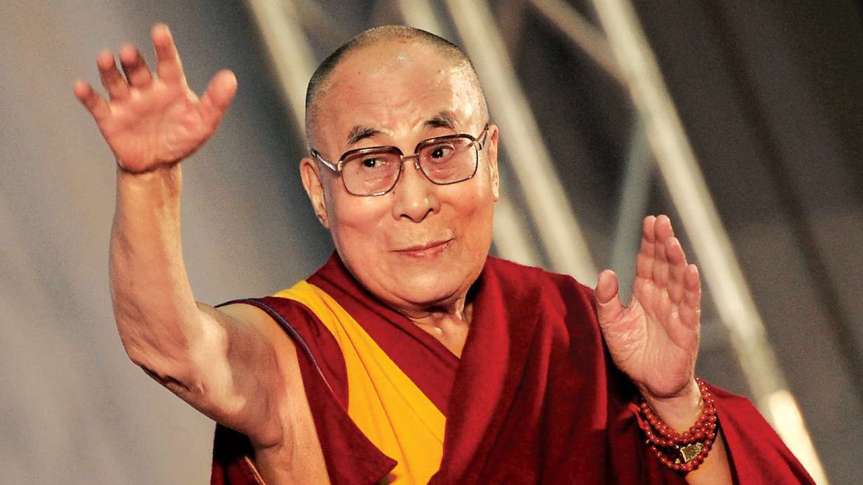
Tenzin Gyatso is the 14th and current Dalai Lama of Tibetan Buddhism. He was born on July 6, 1935, to a farming family located in Taktser, Amdo, north-eastern Tibet. He was recognized as the incarnation of the 13th Dalai Lama in 1937, and was thereafter enthroned as the 14th Dalai Lama in 1940. After China’s invasion of Tibet in 1950, His Holiness was vested with full political powers as head of state in Tibet. Using his political power, In 1954 he went to Beijing and met with Mao Zedong and other Chinese leaders to negotiate over China’s invasion of Tibet. Eventually, in 1959, following the brutal suppression of the Tibetan national uprising in Lhasa by Chinese troops, His Holiness was forced to escape into exile for fear of being kidnapped by the Chinese government. Since then, he has been living in Dharamshala, northern India.
The Dalai Lama set up a government-in-exile in Dharamshala, in the Himalayan Mountains. In 1989 he was awarded the Nobel Peace Prize for his non-violent struggle for the liberation of Tibet. He has consistently advocated policies of non-violence, even in the face of extreme aggression. He also became the first Nobel Laureate to be recognized for his concern for global environmental problems. Despite his past as a political leader, in 2011 he gave up his political powers and focused more on religious and ethical teaching.
The succession of the current Dalai Lama is under threat, due to his history of anti-Chinese resistance in Tibet, and the Chinese government has long worked to undermine the Dalai Lama’s authority. They have banned displaying a photo of the Dalai Lama and have launched re-education campaigns that force Tibetan dissenters to disown the Dalai Lama and embrace Chinese authority. In the first decade of the 21st century, the Dalai Lama suggested that his successor could be appointed by him rather than selected as his reincarnation, but this idea was rejected by the Chinese government. The Chinese government declared that the tradition of appointing a new Dalai Lama had to be upheld, as the title of ‘Dalai Lama’ itself is granted by China’s central government. Since 2011, after he stepped down as head of the Tibetan government-in-exile, he has written a number of books on Tibetan Buddhism and an autobiography.
The Future
The current Dalai Lama has gone on record to say that he may be the last Dalai Lama. He stated that the Dalai Lama institution will cease one day, and that there is no guarantee that some incompetent Dalai Lama won’t come next, who will disgrace himself or herself. So, it is much better that a centuries-old tradition should cease to exist at the time of a quite popular Dalai Lama.
Even if the institution continues, the Dalai Lama has stated that no recognition or acceptance should be given to a candidate chosen for political ends by anyone, including those in the People’s Republic of China. In other worlds, the Dalai Lama cannot be chosen as political puppet by anyone, especially China who would benefit from having a candidate that is submissive to their interest. Therefore, on 24 September 2011, clear guidelines for the recognition of the next Dalai Lama were published, leaving no room for doubt or deception.
As of today, the Dalai Lama has still not made his intentions clear, but has said that he will consult leading Lamas of Tibet’s Buddhist traditions, the Tibetan public, and other concerned people with an interest in Tibetan Buddhism to assess whether the institution of the Dalai Lama should continue after him. However, the Chinese government probably has their own plans too. This is an example of politics and religion being intertwined. As a historically political figure, the reincarnation of the Dalai Lama is not just a matter of theology and doctrine, it also has major implications on the future of the Tibetan people and the future of religious freedom rights in China.
In Psychological Disorders Part 5, Sleep Disorders were discussed. It is extremely important to consult a psychologist if you think you have any sleep disorders. This article will discuss Disruptive Disorders. These are all chronic disorders.
Disruptive Disorders
These are also known as impulse-control disorders, these are the disorders when a person is unable to resist a destructive urge. That is, an inability to control emotions and behaviours which end up in harm to self or others.
Kleptomania
Kleptomania is the inability to resist the urge to steal items that are generally not needed and have very little value. It is a rare yet very serious disorder as it holds the potential of causing emotional pain to the person and their loved ones. Symptoms for this are the inability to resist the urge to steal things of no need, feeling increased anxiety which leads to theft, feeling gratification while stealing, feeling shame after the theft, and the recurrence of the urge to steal. People with this disorder don’t steal for their gain, but because of the urge. The cause of this can be low levels of serotonin, addictive disorder because of the release of dopamine while stealing, and an imbalance in the brain’s opioid system which regulates the urges.
Pyromania
Pyromania is an impulse control disorder in which a person is unable to resist starting fires. People with this disorder know that it is harmful but it tends to be the only way they can get rid of the anxiety they get from the urge. Symptoms for this are setting a fire on purpose more than once, feeling tense before starting a fire, being obsessed with fire, and feeling gratification when setting a fire. This is an extremely rare disorder.
Intermittent Explosive Disorder involves repeated and sudden episodes of aggressive and violent behaviour, it can also include impulsive angry verbal outbursts. These outbursts are very out of proportion with the situation. These can cause a lot of distress and negatively impact the relationships of the person suffering. Some of the symptoms before an aggressive episode are rage, irritability, increased energy, tingling, palpitations, chest tightness, racing thoughts, and tremors. Some symptoms in case of explosive verbal and behavioural outbursts are heated arguments, property damage, assaulting people or animals, temper tantrums, shouting, slapping, physical fights, and tirades. This disorder can begin in childhood after the age of 6 years. Its possible causes are said to be the firstly, environment; if a child is exposed to such behaviour at their house, they are likely to have the same, secondly, genetics, it can be passed down from parents and lastly, it may be caused because of a difference in the structure and chemistry of the brain.
Conduct Disorder
Conduct Disorder is a serious emotional and behavioural disorder that can occur in children and teenagers. A child with this disorder may show a pattern of violent behaviour with problems in following rules. Symptoms of this are aggressive behaviour like fighting and bullying, destructive behaviour like the destruction of property and vandalism, deceitful behaviour like lying and shoplifting, and violation of rules like running away and skipping school. Children with this disorder have low self-esteem, temper tantrums, and often abuse drugs and alcohol. It is important to note that teenagers usually have behaviour related problems but this disorder only exists if the behaviour is long-lasting.
ODD
Oppositional Defiant Disorder (ODD) is a disorder in which a child or teenager has a pattern of anger, arguing, irritability, and defiance towards authority figures. Symptoms for an angry and irritable mood are easily losing temper, being easily annoyed by others, and is often angry and resentful. Symptoms for argumentative and defiant behaviour are often arguing with the person in authority, actively defying the adults, deliberately annoying people, and blaming others for their mistakes. Symptoms for vindictiveness are being spiteful and showing spiteful behaviour at least twice in six months. Its causes are genetic and environmental, the type of supervision from the parents.
Conclusion
These are the impulse-control disorders that disrupt the daily life of the person with the disorder as well as their loved ones. Although these disorders are chronic and there aren’t any permanent solutions to them, they can be controlled and monitored with the help of some medications and therapy. If you have any of the above-mentioned disorders are ashamed to come forward and seek therapy, please understand that it is not your fault and it is okay to seek help to protect yourself and your loved ones.
We’ve all heard about self-defense since we were young, and living in the terrible world of the twenty-first century, when no one is entirely safe, it’s a responsibility to recognize that we are the only ones who can protect ourselves. If we look at the most fundamental definition, it is the act of defending oneself from external danger.
The “right to self-defense” is a legal term that refers to the use of self-defense in legal jurisdictions. It is critical to know how to defend yourself in today’s environment.
According to statistics, one out of every three women will be the victim of a violent attack at some point in her life. It is taught in training to block an assault, but it is much better if one can escape it!
As a result, the training should also cover how to avoid an attack in the first place. Which form of karate do you want to learn to defend yourself?
Knowing something as powerful as Karate gives you the confidence and strength to believe that you are not weak and that you have the ability to achieve your goals.
Self-defense techniques
1)Jujutsu\sTaekwondo
2)Krav Maga is a martial art that was developed in Israel.
3)Aikido
4)Wing Chun is a martial art that originated in China.
5)Brazilian Jiu-Jitsu is a martial art that originated in Brazil.
6)Muay Thai is a type of Thai boxing.
You may wish to learn self-defense for a variety of reasons. The most obvious reason is that you want to be able to protect yourself or your family if you ever find yourself in a dangerous situation. It is extremely rare to come across someone who wishes to hurt you. You are extremely vulnerable if you have no preparation for dealing with such issue.
According to the Department of Justice and the Centers for Disease Control and Prevention, one out of every six women has been sexually assaulted or attempted sexually assaulted.
The odds were 1 in 33 for men. No attack is ever the fault of the victim, and not all attacks can be prevented. However, we do know that mastering self-defense can assist victims in stopping or escaping their abusers. Self-defense training is required in a variety of situations, including rape.
A mugging or a house invasion are both circumstances in which self-defense training may help you better deal with the threat, defend yourself and your family, and find strategies to limit the harm the criminal can cause. It’s all about how to protect oneself and think effectively in high-pressure situations. It’s all about developing the confidence to better control situations that would otherwise be utterly out of your control.
Slowly, over time, the corporation became aware of the problem and began holding workshops for women working in the same industry. In fact, we now believe that every parent should include self-defense lessons in their child’s education. Self-defense has become a need for every growing child and individual today, alongside school, art programmed, and swimming sessions.
Suitable for children It instils discipline in youngsters, provides a pleasurable pastime, and aids in the development of confidence. Children who acquire self-defense skills are more alert of their surroundings and are taught how to defend themselves against assailants of all ages, including adults and children. It teaches students how to deal with regular bully scenarios without turning become bullies.
2. Women will love it. Self-defense can be beneficial to women and young girls for a variety of reasons. It boosts self-assurance. It also aids them in levelling the playing field with an assailant who may be far larger than they are. It’s also beneficial for any lady looking for a physical, hands-on workout.
3. Men will love it. For the same reasons as women, males can benefit from this training. The training plan is a wonderful all-around workout that complements any other sports activity.
4. Excellent for the Elderly We all know that age has little to do with learning new things. Older people can learn new practices, which will help them improve their health.
Self-defense provides you the tools and abilities you need to analyze a dangerous situation with confidence and manage it successfully. Nothing could be more powerful than that. It aids in the development of confidence and control over your anxieties, and confidence is a superpower in and of itself.
Self-defense enhances your concentration and focus. As a result, you will learn to concentrate under stressful situations.
It allows you to learn simple maneuvers as well as more complex skills to defend oneself during an attack. Knowing how to defend oneself can make you feel less worried in public or afraid when you’re out late at night alone.
Self-defense is a fun and effective method to strengthen your body, burn calories, and enhance your overall health. Exercise also improves your mood, which is beneficial to persons who are suffering from depression.
One must be both physically and emotionally prepared for an attack. By learning self-defense, you will maintain your muscle and endurance through practicing along with other exercise activities. Thus improving your overall fitness will improve.
Your awareness of your surroundings will improve as a result of self-defense. You never know when you’ll be attacked; no one anticipates being attacked, so we must always be aware of our surroundings.
Improving balance not only includes the physical balance of your core muscles but also a mental balance for improving your focus. Self-defense teaches you how to focus on your target while you control your body. Not having balance, it is almost impossible to fight. Body control and balance help in protecting ourselves mentally and physically.
If you get into a battle, movement is crucial. You can’t just stand there and wait for your adversary to strike again; you have to move and react instinctively. It will aid in the development of your reflexes and the acquisition of a fighter’s reflex, allowing you to move fast and strategically in a situation like this.
“Business is all about putting oneself in the customer’s shoes!”
– The Laconic Writer
A New Customer is like an Angel who visits you with Nectar (Money) 😉 However, these Angels lend you their time when they consider the conditions with you and your company as comfortable and trustworthy. In short, these Angels need to be pleased just as we devote our time in prayers pleasing the lord so that he would fetch us some customers. Your prayers are answered because we will be revealing the ways of pleasing your customers and making them approach you. After reading this, you should gain some confidence in effective customer satisfaction services.
Customers approach you through two possible ways: Either they read about your services and felt tempted to try you out or they were told about your impeccable quality of services and thus, this good feedback made them trust you. The former case needs more creativity because in that vast section of content, you want your advertisement to be noticed, either through digital or print medium. Thus, you may have to work on uniqueness to stand out. The way you present your ad matters a lot. Use beautiful and stunning colours in case of print medium while digital medium would demand creativity in the message imparted. The latter case however, includes good customer service and high quality delivery of the same which would incline the customer towards you and force them to generate sweet words regarding your services to others. In the process, you not only get a regular customer but also an appreciating puppet! In short, customer pleasing is all about standing out and being on top of the competition. This is the first stage of customer pleasing before they enter and alight on this journey with you.
Moving to, after they get aboard and select you as their messiah over all other brands.An important point here is, that a business owner mustn’t take regular customers for granted. Just because they visit you almost every time, their importance in your company shouldn’t diminish. Most of the times, people tend to pay more attention to the newly arriving set of customers instead of the regular ones and thus, lose them in the process which isn’t a smart move. Also, since they are your family customers by now, make sure that you treat them with discounts and interesting attractions in an attempt to show that they matter. It is because these regular customers can scatter golden gossiping words that could uphold your company and its services. Regular customers should be your priority because they are responsible in fetching you a fresh set of customers. Attend them first and be extremely courteous to them so that they can, with the power of words, fetch you more regular customers. Of course, making regular customers requires that perfect attitude which should pass right through their hearts.
Interact more with customers so that they don’t feel left out and ignored. However, interact with patience and love so that they don’t get offended with your remarks while leaving with a bad impression which too, with the power of feedbacks, could ruin your business. So, remember to take careful steps in business.
Business is all about being friendly and honey coated! Dip your words in honey and sugar syrup before opening your mouth. Be lenient and patient when it comes to disclosing your services because customers sometimes tend to simply inquire without purchasing. However, a businessman shouldn’t have that myopic perspective of entertaining customers who would make a purchase and ignoring the ones who won’t. As stated earlier, every type of customer is important and shouldn’t be taken for granted because the customer may be testing your patience and estimating the quality of your services through your behavior. At times during such, patience is the key to success.
Introduce attractions like giveaways, buy 1 get 1 free offers, sales, discount coupons, lucky draw competitions, limited period offers etc. to grab attention of your customers. However, remember to set a reasonable rate of your products and services when pricing so as to make it seem appealing. When beginning your business, remember to have economical pricing since you need customers to start with, and after gradually experiencing a hike in the same, slowly but steadily increase the prices at a turtle’s pace. You don’t want to annoy your regular customers with inflation! 50 pounds shouldn’t escalate to 60 pounds in one go! 50 pounds should be increased to 52 pounds in two months and then gradually reach 60 till the end of the year. In fact, that’s what I would do. This is a great strategy to avoid terrified and annoyed customers whom we don’t intend to lose. Nobody wants a downfall after all and the customers too would understand that a hike in prices is obvious by the end of the year! So, be strategic and smart working when it comes to business.
In short, Business is all about honey coated words, excellent customer service, using attractions and benefits to show that customers matter, maintaining good interaction, and possessing the uniqueness to stand out!
Ecotourism is now described as “responsible travel to natural regions that conserves the environment, supports local people’s well-being, and includes interpretation and education” (TIES, 2015).
Both staff and visitors are expected to participate in education.
Ecotourism has been hailed as a panacea around the world: a way to fund conservation and scientific research, benefit rural communities, promote development in poor countries, improve ecological and cultural sensitivity, instill environmental awareness and social conscience in the travel industry, satisfy and educate discriminating tourists, and some claim and bring world peace
Ecotourism is a type of tourism that aims to have a low environmental impact, is environmentally friendly, and avoids the negative consequences of many large-scale tourism projects in previously undeveloped areas.
History of eco-tourism
Although the origins of the term “ecotourism” are unknown, Heizer (1965) appears to be one of the first to use it, identifying four “pillars” or principles of responsible tourism: minimizing environmental impacts, respecting host cultures, maximizing local benefits, and maximizing tourist satisfaction.
In the 1970s and 1980s, ecotourism grew out of the environmental movement’s womb. Growing environmental concerns, along with a growing discontent with mass tourism, resulted in a surge in demand for alternative outdoor experiences.
At the same time, developing countries came to recognize that nature-based tourism may be a source of foreign cash while also being a less resource-intensive alternative to forestry and agriculture.
Many Definitions of Eco-Tourism
Ecotourism, according to Ceballos-Lascurain, is “travelling to relatively undisturbed or uncontaminated natural areas with the specific goal of studying, admiring, and enjoying the scenery and its wild plants and animals, as well as any existing cultural manifestation (both past and present) found in these areas.”
Ecotourism is defined as “responsible travel to natural regions that conserves the environment and improves the well-being of local people,” according to the Ecotourism Society.
“Ecotourism is nature-based tourism that combines teaching and interpretation of the natural environment and is managed to be environmentally sustainable,” according to the Ecotourism Association of Australia.
This definition emphasises that the word “natural environment” encompasses cultural elements, and that “ecologically sustainable” refers to a fair return to the local people as well as long-term resource conservation.
Ecotourism, according to Tickell, is “travel to appreciate the world’s wonderful diversity of natural life and human culture without harming either.”
Ecotourism is a type of environmentally friendly tourism that promotes environmental and cultural awareness, appreciation, and conservation.
We defined mass tourism as a more traditional kind of tourism development in which short-term, free-market principles predominate and profit maximization is the primary goal. Tourism development was once thought to be a desirable and generally “clean” business for nations and regions to pursue.
This was especially true in terms of gains in foreign exchange profits, job creation, and infrastructure development, such as transportation networks.
We are more prone these days to demonize or portray traditional mass tourism as a beast; a creature with few redeeming features for the destination place, its people, and its natural resource base.
This isn’t to say that “mass tourism” hasn’t generated issues; it has. There has been a legitimate need to establish an alternative way to tourism growth that mitigates the harmful effects of mass tourism.
As a result, the concept of “alternative tourism” has gained popularity. This alternate strategy has been referred to as a “competing paradigm” to mass tourism, but it may also be seen as a complimentary approach. That is, there is no such thing as “alternative tourism.”
As a result, the dispute devolves into a semantic one. It may be best to recognize that alternative tourism is a natural result of a growing awareness of tourist development and its strengths and weaknesses.
Alternative tourism is a broad phrase that refers to a variety of tourist tactics (e.g., suitable, eco, soft, responsible, people to people, and green tourism), all of which claim to provide a more environmentally friendly alternative to traditional mass tourism in specific areas.
However, as Weaver correctly points out, alternative tourism is not without its detractors. It is apparent that just because alternative tourism arose in response to mass tourism’s negative repercussions does not mean it is less destructive or better than its alternatives.
Nature of Ecotourism
Between 2008 and 2017, tourism is predicted to rise at a rate of 4.3 percent per year in real terms. Ecotourism, often known as nature-based tourism, is the fastest-growing segment of the tourism business, increasing three times faster than the overall industry.
There can be little doubt that rising environmental concerns, along with the historically common habit of travel as a means of escape to nature, are encouraging people to seek solitude with nature, resulting in an increase in the number of visitors to national parks and other protected places.
Nature-based tourism encompasses a variety of aspects. Although not all forms of travel to natural places are necessarily ecotourism, this is an important step in distinguishing nature-based tourism from ecotourism and provides us with a number of levels at which to differentiate the link between certain tourism activities and nature:
Those activities or experiences that rely on the natural world. Those activities or experiences that are made better by the presence of nature. Those activities or experiences that happen to take place in a natural context. Nature-based tourism is divided into numerous categories, each of which employs a combination of these dimensions.
Camping, too, is an activity/experience that is frequently enhanced by nature. Most people would rather camp in a natural area than along the side of a busy highway.
As a result, while nature is an important aspect of these experiences, it is not the driving force behind them.
Guru Purnima symbolizes offering gratitude towards Gurus; it is celebrated on the day of full moon of Ashada. The teacher not only guides a student but also shapes his life by instilling true knowledge and by giving him direction. As full moon holds an attraction and magnetism that uplifts mind, similarly gurus have that aura which makes the disciple to acknowledge the true sign and inner light. Widely celebrated by the Hindus, Sikhs and Buddhist communities all over the world.
Image : Rkalert
A true guru spread the light of knowledge and wisdom to his disciples. Like the shine of silvery moon gives joy to everyone, a guru is also like that; he blesses the entire world with auspiciousness.
A guru is one who guides us through the knowledge of eternal self. A disciple should be ready to take the knowledge, keen to learn, should have faith, reverence and devotion to guru every moment.
Beside that a true guru reside all of us, the need is to look into self. So, why do we need an external guru? For example, children who want to become a researcher have to study for years under the supervision of expert educators. If we desire for knowledge, we must need an expert masters.
Image: Bee bulletin
Like a dark room can be lit only when somebody enters with a light or candle, the disciple also needs a guru to realize its true self. A guru can remove darkness with the light of wisdom; the inner lamp needs to be lit with the guidance of a Guru. There is a mirror within us but due to the hustle bustle of life, we are unable to visualize our inner guru. The mirror can be cleaned when you realize the true self and open to take the light within to remove the darkness of ignorance.
We all need a true guru who can show us the way through the journey of our life.
Vowels are sounds in which there is no obstruction to the flow of air as it passes from the larynx to lips . Vowels are thus produced with a stricture of ‘open approximation ‘, that is the tongue (active articulator ), is raised towards , the roof of the mouth (passive articulator),so that there is enough gap between them for the air to flow out freely and continuously , without friction . Vowels are essentially a ‘tone’ or ‘hum’ issuing from the glottis with the vocal cords vibrating . Hence all vowels are voiced sounds .The quality of a vowel depends on the shape of the cavities of the pharynx ,the mouth and the nose , which in turn depend on the position of the soft palate , the tongue and the lips during its articulation .
CLASSIFICATION OF VOWELS
Vowels may be either long or short ./I/ for example ,is short while /i:/ is long Usually vowels from the ‘nucleus’ in a syllable . They are soft , voiced and musical .Vowels can be classified on the basis of
THE HEIGHT TO WHICH THE TONGUE IS RAISED
THE PART OF THE TONGUE THAT IS RAISED
THE POSITION OF THE LIPS
CARDINAL VOWELS
For the proper study of vowel sounds ,we need a set of fixed vowel points as references .The vowel sounds specially selected for this purpose are called Cardinal vowels .They are used as references to describe , classify and compare the the vowels of any language . If we learn them we are learning about the range of vowels that human vocal organs can make.
Work is an important aspect of everyone’s lives. Our income ensures that the lights are kept on, that there is food on our table, and the rainy-day fund is full. In today’s volatile and incredibly quick corporate environment, achieving work-life balance is a difficult challenge.
As we become more linked via social media and the internet, it becomes increasingly difficult to distinguish our workplace from our personal life. It is standard practise to read emails at all periods of the day and night, to handle business calls at the dinner table, and to work on our computers on weekends. How did this come to be regarded as acceptable?
Jobs are starting to require more and more from their employees, putting them under intense pressure to provide better outcomes. As a result, employees work harder and longer and spend less time at home.
Despite overwhelming proof that working longer is damaging to both individuals and employers, several workers continue to struggle to alter their beliefs — and strongly established behaviours — about work hours.
Establishing a healthy work-life balance is not only beneficial to one’s health and wellbeing, but it could also boost one’s efficiency and, consequently, performance. Simply stated, if your employees do not see work as a chore, they will work even harder, commit fewer errors, and are much more inclined into becoming company supporters.
How To Improve Your Work-Life Balance While Working From Home
Allow yourself to just let go of perfection
We should constantly aim for excellence rather than perfection; this really is especially crucial when balancing work and life while working remotely. You are unlikely to have everything you need to do your tasks exactly as you would at the office. You won’t have access to all of your files, computer, copier, or even the fax machine you barely use once a month. It’s time to make changes and just do the utmost you can with the resources you have. It’s a little mental adjustment, but it makes a massive impact.
Disconnect
If you’re always available, your working hours never conclude. You require those periods when you switch off. Allow yourself some time away from work. It might be something as easy as not reading emails in the evenings or on weekends. Give yourself periods of tranquilly rather than racing through each activity.
Exercise
Exercise should always be the first thing we make time for when our routine is interrupted in such a major way. It decreases stress, increases endorphins, and improves your mood. Don’t even have an hour to work out? Begin by stretching for 15 minutes with yoga. It will provide you with the same benefits (although on a smaller scale) as well as an extra sense of achievement and self-care.
It’s understandable that when gyms and sports centers are shut, it might be difficult to find alternative forms of exercise. Several trainers and gyms now offer online lessons, and you may even find free classes on YouTube. When working at home, exercising is a wonderful method to attain work-life balance.
Have proper meals
While munching on snacks during the day while working from home may sound appealing, it does nothing for your productivity or feeling of work-life balance. At work, we may feel more driven to take a lunch hour when our colleagues urge us to do so – this doesn’t really occur when you are working from home. Ensure that you schedule time in your day for a decent break. Create a calendar or phone alert about it.
Create transitions going in and out of the work mindset
We frequently take our transit time for granted and wish we can get there sooner. However, we rarely recognise the chance it provides to psychologically prepare. You don’t usually sign off on a large project and then head home to cook dinner. Allow your mind to press the reset button. Get a signal to serve as a buffer at the start and conclusion of your day.
Remember to socialise
When the whole company begins working from home, you are shut away from several informal everyday contacts. If you’re not accustomed to working alone, this might be isolating. Occasional social contacts can break up your day and make it feel unique, whereas isolation may make each day seem like Groundhog Day, except we’re all working.
Resist this by speaking with your coworkers several times during the day. Take a video coffee break, inquire how they did over the weekend, check up on their personal happenings, reach out and exchange that joke or meme, or simply talk about the series you’re currently binge-watching. Continue to chat to them on a certain issue if you typically do.
When working from home, these small encounters might help you maintain your work-life balance.
When we say cheese everyone starts to have water in their month. Everyone in the world likes cheese and they have tasted it at least once in their whole lifetime and there is no denying it .I’m here to talk about the way more different types of cheese available around the world.
most expensive cheese in the world:
pule donkey cheese
Pule is made exclusively at Serbia’s Zasavica Special Nature Reserve located 30 miles outside of Belgrade. At roughly $576 a pound it is the world’s most expensive cheese and its extreme price tag is made all the more surprising when you discover it’s made using donkey milk.
worstcheese in the world : yuck!!!
Casu martzu:
Casu martzu literally rotten cheese .In Sardinian, is a traditional Sardinian sheep milk cheese that contains live insect larvae (maggots). A female P. casei is allowed inside the cheese and it can lay more than 500 eggs at one time. The eggs hatch and the larvae begin to eat through the cheese. The acid from the maggots’ digestive system breaks down the cheese’s fats, making the texture of the cheese very soft by the time it is ready for consumption, a typical Casu Martzu will contain thousands of these maggots. They eat the cheese with that transparent worms inside alive !!
best cheese in the world :
MADISON:
A gruyere from Switzerland has been named the world’s best cheese, chosen from a record number of entrants from 26 nations in the World Championship Cheese Contest in Wisconsin. The cheese from Bern, Switzerland made its maker, Michael Spycher of Mountain Dairy Fritzenhaus a two-time winner. It has a wide variety of cheeses .These cheeses are made from cow milk as well as goat milk.
cheapest cheese in the world :
Cheddar cheese Ireland
Irish cheddar is the most widely recognized type of cheese from Ireland. Irish cheddar is most often made from pasteurized milk. Irish cheddar cheese is made from milk that is curdled and kneaded with salt to drain the whey before the curds are packed into blocks for aging. Kneading the curds with salt is a process called cheddaring.
softest cheese in the world :
Buffalo mozzarella :
mozzarella made from the milk of Italian Mediterranean buffalo. The term mozzarella derives from the procedure called mozzare which means “cutting by hand” is the process of separation of the curd into small balls and serving them in individual pieces . It is appreciated for its versatility and elastic texture and often called “the queen of the Mediterranean cuisine”, “white gold” or “the pearl of the table”.
hardest cheese in the world :
Nepal’s chHurpi:
chhurpi is often called the world’s hardest cheese, a single piece can last mountain folks hours in their mouth: biting, chewing, gnawing, and slowly dissolving into a delicious, and filling, creamy cheese. Traditionally, chhurpi is made out of chauri milk, a mix between a yak and a cow.
Yoga is basically a spiritual discipline which is based on an extremely subtle science that concentrates on bringing harmony between mind and body. It is a science and an art of healthy and sound living. The word ‘Yoga’ is derived from the Sanskrit word ‘Yuj’, signifying ‘to join’ or ‘to combine’ or ‘to unite’. Both Yoga and Ayurveda are historically closely related and have developed in tandem with each other since ancient times. According to Yogic sacred writings the act of Yoga prompts the union of individual consciousness with that of the Universal Consciousness, showing an ideal congruity between the mind and body, Man and Nature. Yoga is believed to balance the three doshas i.e Vata , Pitta & kapha. As indicated by modern scientists, everything in the universe is only an appearance of a similar quantum atmosphere. One who experiences this oneness of existence is said to be in yoga, and is named as a yogi, having achieved a state of freedom alluded to as Mukti, Nirvana or Moksha. Therefore, the prime objective of Yoga is Self-realization, to overcome all types of sufferings prompting ‘the state of salvation’ (Moksha) or ‘freedom’ (Kaivalya). Living with freedom in all aspects of life, health and harmony is the primary focus of yoga practice. “Yoga” likewise alludes to an inward science including an assortment of strategies through which people can understand this union and accomplish authority over their destiny.Yoga, being generally considered as an ‘Immortal cultural outcome’ of Indus Saraswati Valley civilization – going back to 2700 B.C., has substantiated itself taking into account both material and spiritual upliftment of humanity.Basic humane values are the very Identity of Yoga Sadhana.
20 ways yoga Improves health:
1. Builds muscle strength – Strong muscles do more than look good. They also protect us from conditions like arthritis and back pain, and help prevent falls in elderly people. And when you build strength through yoga, you balance it with flexibility. If you just went to the gym and lifted weights, you might build strength at the expense of flexibility.
2. Improves your flexibility – Improved flexibility is one of the first and most obvious benefits of yoga. During your first class, you probably won’t be able to touch your toes, never mind do a backbend. But if you stick with it, you’ll notice a gradual loosening, and eventually, seemingly impossible poses will become possible. You’ll also probably notice that aches and pains start to disappear. That’s no coincidence. Tight hips can strain the knee joint due to improper alignment of the thigh and shinbones. Tight hamstrings can lead to a flattening of the lumbar spine, which can cause back pain. And inflexibility in muscles and connective tissue, such as fascia and ligaments, can cause poor posture.
3. Perfects your posture – Your head is like a bowling ball—big, round, and heavy. When it’s balanced directly over an erect spine, it takes much less work for your neck and back muscles to support it. Move it several inches forward, however, and you start to strain those muscles. Hold up that forward-leaning bowling ball for eight or 12 hours a day and it’s no wonder you’re tired. And fatigue might not be your only problem. Poor posture can cause back, neck, and other muscle and joint problems. As you slump, your body may compensate by flattening the normal inward curves in your neck and lower back. This can cause pain and degenerative arthritis of the spine.
4. Prevents cartilage and joint breakdown – Each time you practice yoga, you take your joints through their full range of motion. This can help prevent degenerative arthritis or mitigate disability by “squeezing and soaking” areas of cartilage that normally aren’t used. Joint cartilage is like a sponge; it receives fresh nutrients only when its fluid is squeezed out and a new supply can be soaked up. Without proper sustenance, neglected areas of cartilage can eventually wear out, exposing the underlying bone like worn-out brake pads.
5. Protects your spine – Spinal disks—the shock absorbers between the vertebrae that can herniate and compress nerves—crave movement. That’s the only way they get their nutrients. If you’ve got a well-balanced asana practice with plenty of backbends, forward bends, and twists, you’ll help keep your disks supple. Long term flexibility is a known benefit of yoga, but one that remains especially relevant for spinal health.
6. Betters your bone health – It’s well documented that weight-bearing exercise strengthens bones and helps ward off osteoporosis. Many postures in yoga require that you lift your own weight. And some, like Downward- and Upward-Facing Dog, help strengthen the arm bones, which are particularly vulnerable to osteoporotic fractures. In an unpublished study conducted at California State University, Los Angeles, yoga practice increased bone density in the vertebrae. Yoga’s ability to lower levels of the stress hormone cortisol may help keep calcium in the bones.
7. Increases your blood flow – Yoga gets your blood flowing. More specifically, the relaxation exercises you learn in yoga can help your circulation, especially in your hands and feet. Yoga also gets more oxygen to your cells, which function better as a result. Twisting poses are thought to wring out venous blood from internal organs and allow oxygenated blood to flow in once the twist is released. Inverted poses, such as Headstand, Handstand, and Shoulderstand, encourage venous blood from the legs and pelvis to flow back to the heart, where it can be pumped to the lungs to be freshly oxygenated. This can help if you have swelling in your legs from heart or kidney problems. Yoga also boosts levels of hemoglobin and red blood cells, which carry oxygen to the tissues. And it thins the blood by making platelets less sticky and by cutting the level of clot-promoting proteins in the blood. This can lead to a decrease in heart attacks and strokes since blood clots are often the cause of these killers.
8. Drains your lymphs and boosts immunity – When you contract and stretch muscles, move organs around, and come in and out of yoga postures, you increase the drainage of lymph (a viscous fluid rich in immune cells). This helps the lymphatic system fight infection, destroy cancerous cells, and dispose of the toxic waste products of cellular functioning.
9. Ups your heart rate – When you regularly get your heart rate into the aerobic range, you lower your risk of heart attack and can relieve depression. While not all yoga is aerobic, if you do it vigorously or take flow or Ashtanga classes, it can boost your heart rate into the aerobic range. But even yoga exercises that don’t get your heart rate up that high can improve cardiovascular conditioning. Studies have found that yoga practice lowers the resting heart rate, increases endurance, and can improve your maximum uptake of oxygen during exercise—all reflections of improved aerobic conditioning. One study found that subjects who were taught only pranayama could do more exercise with less oxygen.
10. Drops your blood pressure – If you’ve got high blood pressure, you might benefit from yoga. Two studies of people with hypertension, published in the British medical journal The Lancet, compared the effects of Savasana (Corpse Pose) with simply lying on a couch. After three months, Savasana was associated with a 26-point drop in systolic blood pressure (the top number) and a 15-point drop in diastolic blood pressure (the bottom number—and the higher the initial blood pressure, the bigger the drop.
11. Regulates your adrenal glands – Yoga lowers cortisol levels. If that doesn’t sound like much, consider this. Normally, the adrenal glands secrete cortisol in response to an acute crisis, which temporarily boosts immune function. If your cortisol levels stay high even after the crisis, they can compromise the immune system. Temporary boosts of cortisol help with long-term memory, but chronically high levels undermine memory and may lead to permanent changes in the brain. Additionally, excessive cortisol has been linked with major depression, osteoporosis (it extracts calcium and other minerals from bones and interferes with the laying down of new bone), high blood pressure, and insulin resistance. In rats, high cortisol levels lead to what researchers call “food-seeking behavior” (the kind that drives you to eat when you’re upset, angry, or stressed). The body takes those extra calories and distributes them as fat in the abdomen, contributing to weight gain and the risk of diabetes and heart attack.
12. Makes you happier – Feeling sad? Sit in Lotus. Better yet, rise up into a backbend or soar royally into King Dancer Pose. While it’s not as simple as that, one study found that a consistent yoga practice improved depression and led to a significant increase in serotonin levels and a decrease in the levels of monoamine oxidase (an enzyme that breaks down neurotransmitters) and cortisol. At the University of Wisconsin, Richard Davidson, Ph.D., found that the left prefrontal cortex showed heightened activity in meditators, a finding that has been correlated with greater levels of happiness and better immune function. More dramatic left-sided activation was found in dedicated, long-term practitioners.
13. Founds a healthy lifestyle – Move more, eat less—that’s the adage of many a dieter. Yoga can help on both fronts. A regular practice gets you moving and burns calories and the spiritual and emotional dimensions of your practice may encourage you to address any eating and weight problems on a deeper level. Yoga may also inspire you to become a more conscious eater. One of the benefits of yoga is how the practices resonate through other areas of your life.
14. Lowers blood sugar – Yoga lowers blood sugar and LDL (“bad”) cholesterol and boosts HDL (“good”) cholesterol. In people with diabetes, yogahas been found to lower blood sugar in several ways: by lowering cortisol and adrenaline levels, encouraging weight loss, and improving sensitivity to the effects of insulin. Get your blood sugar levels down, and you decrease your risk of diabetic complications such as heart attack, kidney failure, and blindness.
15. Helps you focus – An important component of yoga is focusing on the present. Studies have found that regular yoga practice improves coordination, reaction time, memory, and even IQ scores. People who practice Transcendental Meditation demonstrate the ability to solve problems and acquire and recall information better—probably because they’re less distracted by their thoughts, which can play over and over like an endless tape loop.
16. Relaxes your system – Yoga encourages you to relax, slow your breath, and focus on the present, shifting the balance from the sympathetic nervous system (or the fight-or-flight response) to the parasympathetic nervous system. The latter is calming and restorative; it lowers breathing and heart rates, decreases blood pressure, and increases blood flow to the intestines and reproductive organs—comprising what Herbert Benson, M.D., calls the relaxation response.
17. Improves your balance – Regularly practicing yoga increases proprioception (the ability to feel what your body is doing and where it is in space) and improves balance. People with bad posture or dysfunctional movement patterns usually have poor proprioception, which has been linked to knee problems and back pain. Better balance could mean fewer falls. For the elderly, this translates into more independence and delayed admission to a nursing home or never entering one at all. For the rest of us, postures like Tree Pose can make us feel less wobbly on and off the mat.
18. Maintains your nervous system – Some advanced yogis can control their bodies in extraordinary ways, many of which are mediated by the nervous system. Scientists have monitored yogis who could induce unusual heart rhythms, generate specific brain-wave patterns, and, using a meditation technique, raise the temperature of their hands by 15 degrees Fahrenheit. If they can use yoga to do that, perhaps you could learn to improve blood flow to your pelvis if you’re trying to get pregnant or induce relaxation when you’re having trouble falling asleep.
19. Releases tension in your limbs – Do you ever notice yourself holding the telephone or a steering wheel with a death grip or scrunching your face when staring at a computer screen? These unconscious habits can lead to chronic tension, muscle fatigue, and soreness in the wrists, arms, shoulders, neck, and face, which can increase stress and worsen your mood. As you practice yoga, you begin to notice where you hold tension: It might be in your tongue, your eyes, or the muscles of your face and neck. If you simply tune in, you may be able to release some tension in the tongue and eyes. With bigger muscles like the quadriceps, trapezius, and buttocks, it may take years of practice to learn how to relax them.
20. Helps you sleep deeper – Stimulation is good, but too much of it taxes the nervous system. Yoga can provide relief from the hustle and bustle of modern life. Restorative asana, yoga nidra (a form of guided relaxation), Savasana, pranayama, and meditation encourage pratyahara, a turning inward of the senses, which provides downtime for the nervous system. Another by-product of a regular yoga practice, studies suggest, is better sleep—which means you’ll be less tired and stressed and less likely to have accidents. Sleep is one of the key benefits of yoga that nearly every practitioner can experience no matter what their skill level.









:max_bytes(150000):strip_icc():format(webp)/dsm-5-criteria-for-substance-use-disorders-21926_V2-c979cb0780134583bc6fa3a6f2315d63.png)





















 Eduindex
You must be logged in to post a comment.